
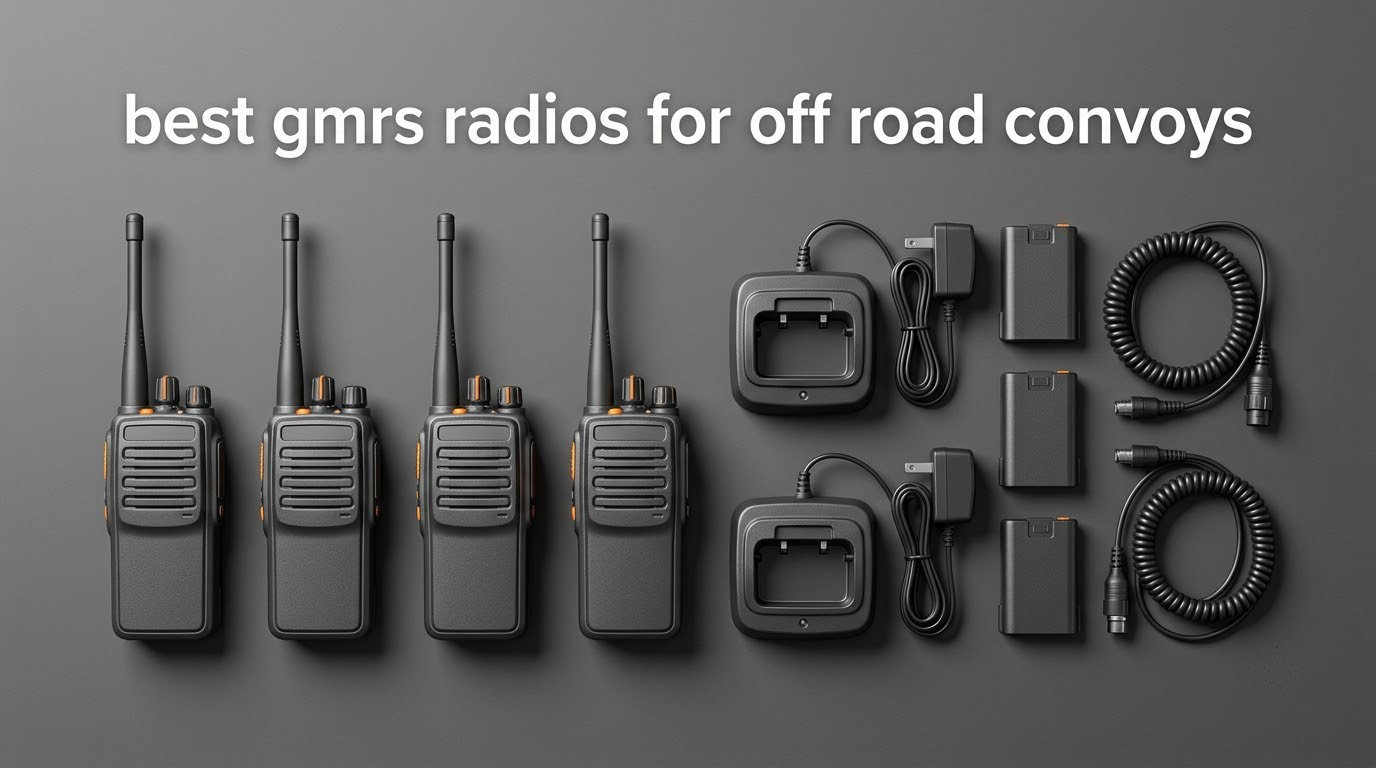
Short answer: the best GMRS radios for off-road convoys are a 20W to 50W mobile radio with a roof-mounted antenna in every vehicle, plus one 5W IP67 handheld per person for when you are on foot. The Baofeng UV-5G Plus is the best handheld on this list for clubs that program their own channels, and the Midland MXT575 MicroMobile is the most straightforward mobile to install in a convoy rig.
That combination is what separates a convoy that stays together from one that loses contact at the first washout. A mobile in the dash talks to the whole group past a treeline or around a bend; a handheld goes with you when you are on foot behind a rig, checking a water crossing or walking a line up a slickrock climb.
I have spent the last few seasons running exactly this setup, and the failure points are always the same. Antennas mounted in the wrong place, power pulled through a thin cable, and radios left on mismatched privacy codes so half the convoy hears silence and nobody says anything.
This guide covers twelve GMRS radios that work off-road, plus the antenna, wiring and channel-plan details that decide whether they actually reach. Where marketing claims and trail reality disagree, I have said so. GMRS radios also cannot reach emergency services, which is worth understanding before the trip, not during it.
Table of Contents
- Top 3 Best GMRS Radios for Off-Road Convoys (October 2026)
- All 12 GMRS Radios Side by Side in 2026
- 1. Baofeng UV-5G Plus – best handheld for clubs that program their own channels
- 2. Midland MXT575 MicroMobile – best mobile radio for a full convoy install
- 3. Radioddity DB20-G – Top Rated mobile for a first convoy radio
- 4. Baofeng UV-9G – best sealed handheld pair for muddy creek crossings
- 5. Baofeng GM-15 Pro – best budget handheld pair for a new convoy
- 6. Midland GXT67 PRO – best handheld when mud and water are certain
- 7. Rugged Radios GMR2 Plus – best handheld for clubs that want zero setup
- 8. Retevis RB48 Plus – best handheld for dust and sandstorm runs
- 9. Retevis Ailunce HA1G – best handheld for rock crawling with a spotter
- 10. BTECH GMRS-50V2 – best mobile for repeaters and wideband receive
- 11. Radioddity DB40-G – best mobile for long legs between waypoints
- 12. BTECH GMRS-50PRO – best mobile for fleet GPS coordination
- Handheld vs Mobile: the Build Convoys Actually Need
- Power Output: What 5W, 10W, 25W and 50W Buy You on Trail
- Antenna Placement: Where Convoy Range Actually Comes From
- Vehicle Power and Wiring for 20W to 50W Mobiles
- Your Convoy Channel Plan, Call Signs and Crew Roles
- Realistic Range by Terrain Instead of Marketing Miles
- Licensing, Repeaters and What GMRS Cannot Reach
- Frequently Asked Questions
- What is the best GMRS radio for off-roading?
- Which GMRS radio is best for off-roading?
- What is the best walkie talkie for a car convoy?
- What GMRS channel do off-roaders use?
- How far can GMRS go with repeaters?
- What GMRS radio has the longest range?
- Is there a waterproof GMRS handheld radio available?
- Do I need a licence to use a GMRS radio?
- The GMRS Convoy Kit We Would Build in 2026
Top 3 Best GMRS Radios for Off-Road Convoys (October 2026)

Baofeng UV-5G Plus
- 999 programmable channels
- CHIRP support
- 2500mAh USB-C battery
- 15.5 inch high-gain antenna

Baofeng UV-9G
- IP67 waterproof and dustproof
- 128 channels
- 30 GMRS channels preloaded
- 2 pack with 1800mAh batteries
As an Amazon Associate we earn from qualifying purchases. CERTAIN CONTENT THAT APPEARS ON THIS SITE COMES FROM AMAZON. THIS CONTENT IS PROVIDED 'AS IS' AND IS SUBJECT TO CHANGE OR REMOVAL AT ANY TIME.
All 12 GMRS Radios Side by Side in 2026
The table below lists every radio in this guide with its type, output power and the features that actually change how a convoy operates. Five are vehicle-mounted mobiles and seven are handhelds, and the mix matters because they solve different problems.
| Product | Specifications | Action |
|---|---|---|
|
Baofeng UV-5G Plus
|
|
Check Latest Price |
 Midland MXT575 MicroMobile
|
|
Check Latest Price |
 Radioddity DB20-G
|
|
Check Latest Price |
|
Baofeng UV-9G
|
|
Check Latest Price |
|
Baofeng GM-15 Pro
|
|
Check Latest Price |
 Midland GXT67 PRO
|
|
Check Latest Price |
 Rugged Radios GMR2 Plus
|
|
Check Latest Price |
 Retevis RB48 Plus
|
|
Check Latest Price |
 Retevis Ailunce HA1G
|
|
Check Latest Price |
 BTECH GMRS-50V2
|
|
Check Latest Price |
 Radioddity DB40-G
|
|
Check Latest Price |
 BTECH GMRS-50PRO
|
|
Check Latest Price |
We earn from qualifying purchases. CERTAIN CONTENT THAT APPEARS ON THIS SITE COMES FROM AMAZON. THIS CONTENT IS PROVIDED 'AS IS' AND IS SUBJECT TO CHANGE OR REMOVAL AT ANY TIME.
1. Baofeng UV-5G Plus – best handheld for clubs that program their own channels
BAOFENG UV-5G Plus GMRS Handheld Radio, 999 CHs Chirp Compatible, 2 Pack
- Up to 8W output
- 999 programmable channels
- 2500mAh USB-C battery
- 15.5 inch antenna included
Pros
- CHIRP programmable with 999 channels for cloning a club channel plan
- includes both 8 inch and 15.5 inch high-gain antennas
- 2500mAh battery with USB-C charging from a power bank or car
- large 1.9 inch colour display
Cons
- Not water resistant
- 12 hour stated battery life is short for multi-day trips
- transmit use needs an FCC GMRS licence
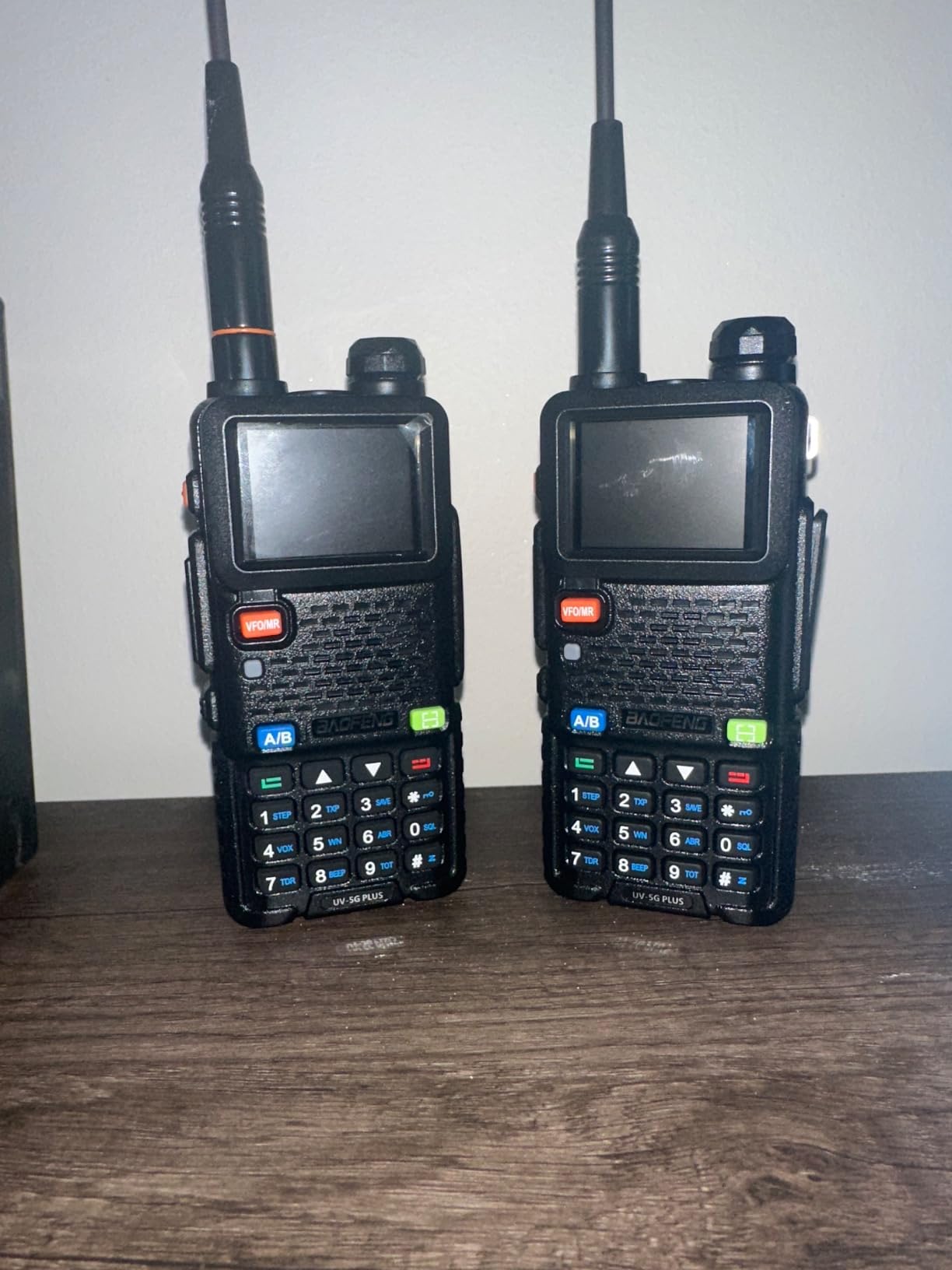
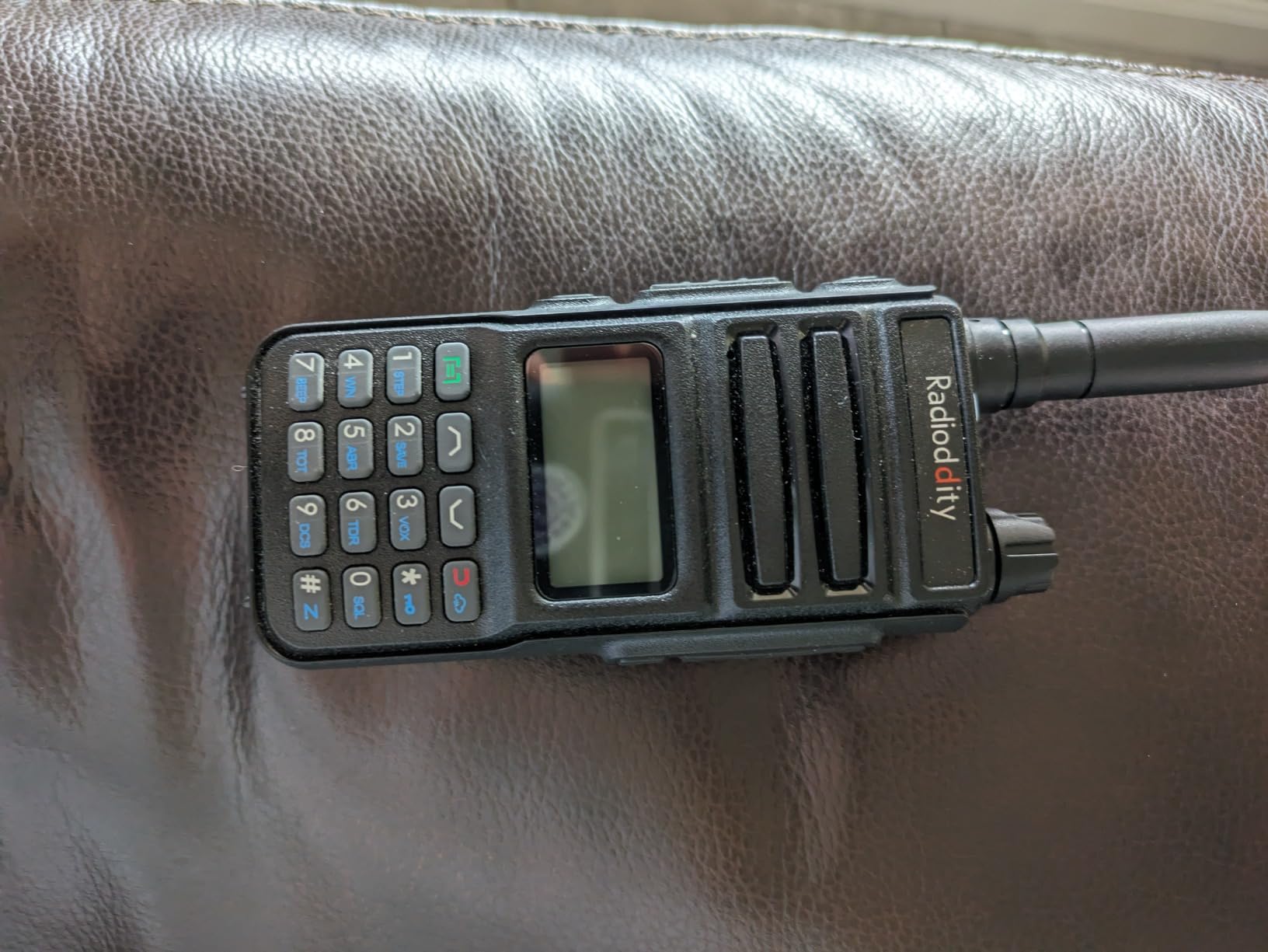
The UV-5G Plus is the radio I keep reaching for when a club needs to build its own channel plan rather than settle for a factory default. It carries 969 to 999 fully customisable channels with a frequency copy function, so you can clone a working setup from one radio to the rest of the group in minutes rather than keying each channel by hand.
Transmit output reaches up to 8W on channels 15 to 30, which is unusually high for a handheld this size and roughly matches what a 5W unit gives you in the hardest part of the trail. On top of that sits a 1.9-inch colour display, big enough to read channel name and signal detail at a glance while wearing gloves.
The included antenna options are the quiet hero here. You get both an 8-inch and a 15.5-inch high-gain whip, and the longer one makes a real difference when a convoy stretches out across open ground. The SMA-female connector also means you can add an external vehicle or rooftop antenna later without replacing the radio.
Battery capacity was raised to 2500mAh with USB-C charging, so you can top up from a power bank, a PC, a car socket or a wall unit. For a group running a two-day trip, charging from the vehicle on the move is a small thing that removes a whole category of problem.
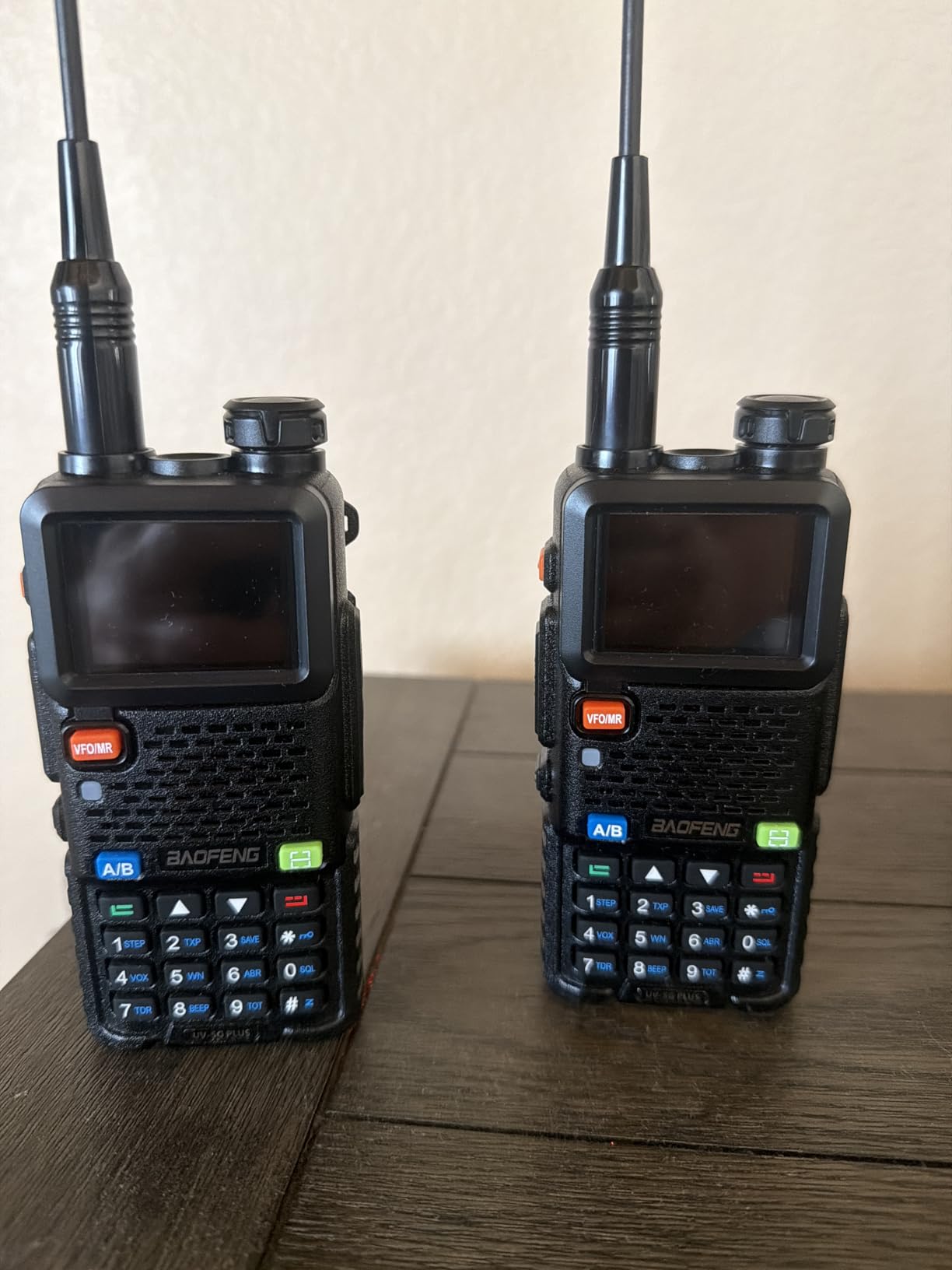
What gives me pause is the ingress rating. There is none, which means this belongs in a dry bag or a jacket pocket rather than strapped to a roll cage through a creek crossing. Buyers also note the stated 12-hour battery life is modest for multi-day trips, so carry spare cells if you are away from the vehicle for a day.
Programming is supported through CHIRP, and you can preset repeaters with split tones for several towns, which is what you want if the route crosses more than one repeater footprint. It ships as a two-pack, which is the natural unit for a spotter pair working together on a rock crawl.
Why it suits a club convoy
The clone and CHIRP workflow is the deciding factor. A club leader can build the convoy plan once, export it, and hand out identical settings, which removes the single most common convoy failure of people arriving on different channels and different privacy codes.
With 1209 reviews averaging 4.5, this is also the most thoroughly reported handheld in the group, which means the quirks are documented rather than mysterious. If someone asks me which single handheld a club should standardise on, this is the one I name.
Where it falls short
Skip it if your route is a creek-and-mud run and you cannot protect the radio from water. The lack of an IP rating is the honest limitation, and no amount of spare power makes up for a radio that failed.
The other drawback is battery headroom on multi-day trips. For a single-day run the 2500mAh pack is fine; for a week in the backcountry, pack spares or run a mobile in the vehicle and treat the handheld as a short-range on-foot tool.
2. Midland MXT575 MicroMobile – best mobile radio for a full convoy install
Midland MXT575 50W MicroMobile GMRS Two-Way Radio
- 50W GMRS output
- 15 high-power channels
- 8 repeater channels
- NOAA weather scan
Pros
- Integrated control microphone puts every control in the handset
- 50W of legal GMRS power for long legs
- backlit display for night driving
- USB-C charging with magnet mount cable
Cons
- Not water resistant
- only 15 channels limits programme design
- heaviest unit in this guide at 3.8 pounds
The MXT575 is the mobile I recommend when a club wants a rig that a member can install without a weekend of wiring. Everything you touch in motion lives in the integrated control microphone, so the driver’s hand never leaves the PTT and the display sits where they can read it.
At 50W of legal GMRS output it covers the ground where a handheld simply quits. It runs 15 high-power channels plus 8 repeater channels with 142 privacy codes, and NOAA weather scan sits alongside, which matters when a storm cell is building over the route you planned in the morning.
The backlit display handles night driving, and the USB-C charging with magnet mount cable is a small quality-of-life feature that stops the phone and the radio from fighting over the same socket on a long day. Owners consistently describe it as a straightforward, durable unit for vehicle-mounted convoy comms.
Across 271 reviews averaging 4.5 with 79% five-star ratings, the satisfaction pattern is clear: people like the power and the handset, and the complaints cluster on channel count and water resistance rather than on how it performs.
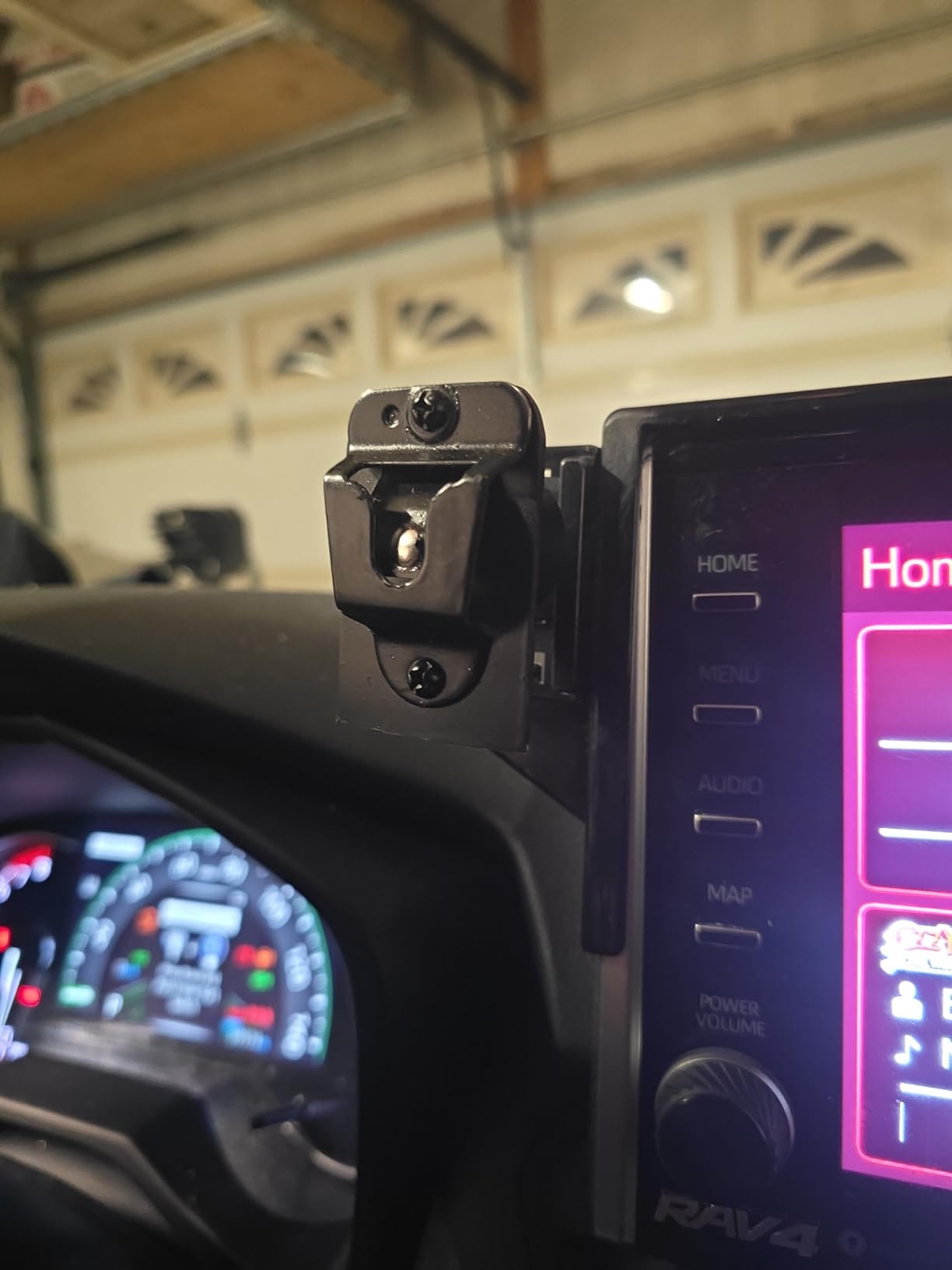
The chassis is explicitly not water resistant, so mount it inside the cabin or in a protected location rather than on a trailer’s exposed tongue. A dusty trail is survivable; a water crossing through an open window is not something the case is designed for.
Fifteen channels is the real constraint. That is enough for a well-organised convoy with a primary, a secondary and some spares, but it is tight if you want separate working channels for different sections of a large club run. Plan the channel list before the trip rather than improvising it.
Why it suits a convoy build
One handset, all controls. Drivers can change channel, check a signal reading and scan weather without taking their eyes off the trail for more than a second, which is the whole point of a dash-mounted unit.
The 50W output is what lets the tail vehicle check in from behind a ridge instead of waiting for line of sight. On a long desert crossing that difference decides whether a problem gets reported early or after the group has already split.
Where it falls short
If your club runs a large channel programme, 15 channels will feel cramped and you will outgrow it. And if your vehicles are open-topped or spend time in water, this is the wrong mobile to leave outside the cabin.
At 3.8 pounds it is also the heaviest unit here, which matters if you plan to swap it between vehicles rather than leave it permanently installed in each one.
3. Radioddity DB20-G – Top Rated mobile for a first convoy radio
Radioddity DB20-G GMRS Mobile Radio 20W, Long Range, 500 Channels
- 20W GMRS output
- 500 channels
- 1075 privacy codes
- VHF, UHF and NOAA receive
Pros
- Simplex setup is connect antenna
- plug in power and transmit
- includes speaker mic
- programming cable and 12V car charger
- display syncs channel name and number
- compact enough to move between vehicles
Cons
- Bundled CPS software is awkward
- channels 8 to 14 are receive-only under factory programming
- included microphone feels cheap
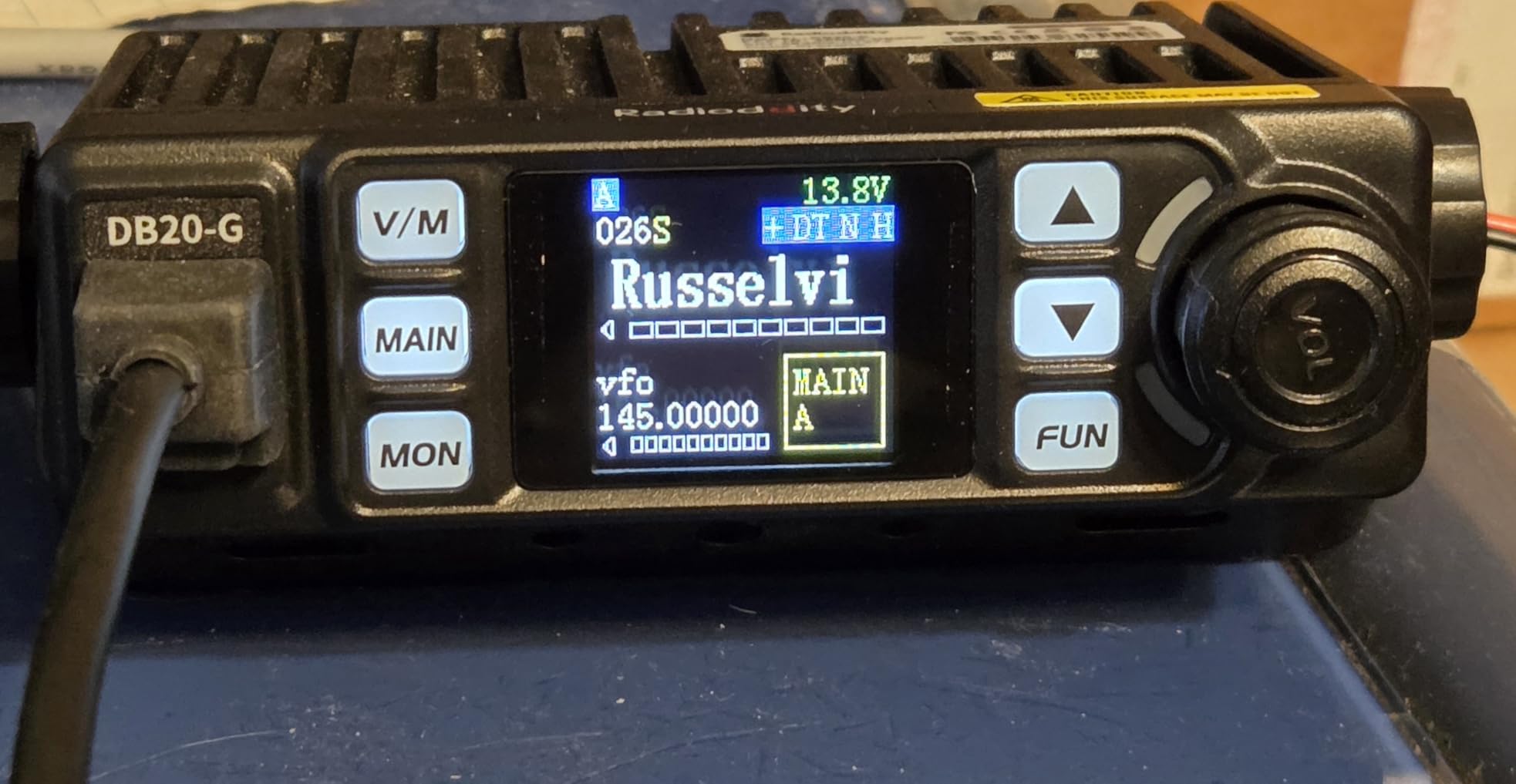
The DB20-G is how I recommend people get a working mobile into a convoy without a big commitment or a complicated install. The simplex setup really is what it claims: connect an antenna, plug in the 12V car charger, and transmit. That simplicity is worth a lot when half your group is new to this.
Twenty watts is enough to hold a convoy across open terrain, and with 500 channels and 1075 privacy codes there is plenty of room to organise sections of a large run. It scans VHF, UHF and NOAA bands on receive, so you can keep an eye on weather and other services without changing radios.
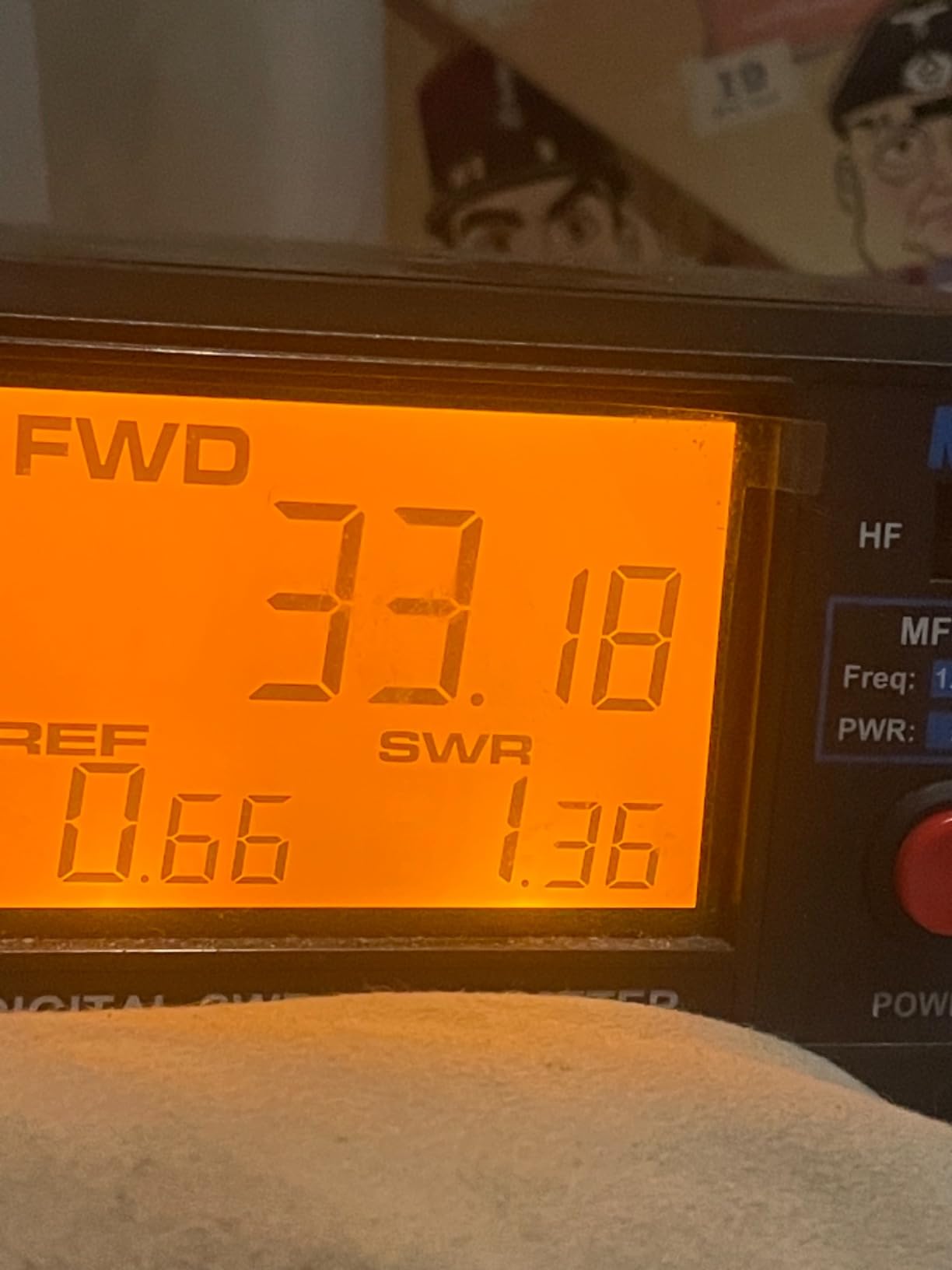
The display syncs channel name, frequency and channel number, which removes the squinting at a small screen problem when the vehicle is moving badly. Reviewers also report measuring roughly 16 to 19 watts on an SWR and power meter, with audio quality they describe as excellent.
With 715 reviews at a 4.5 average and 76% five-star, this is one of the most thoroughly reviewed mobiles in the guide and the one with the clearest picture of what it does well. Response from customer support and the 18-month warranty are also reported as solid.
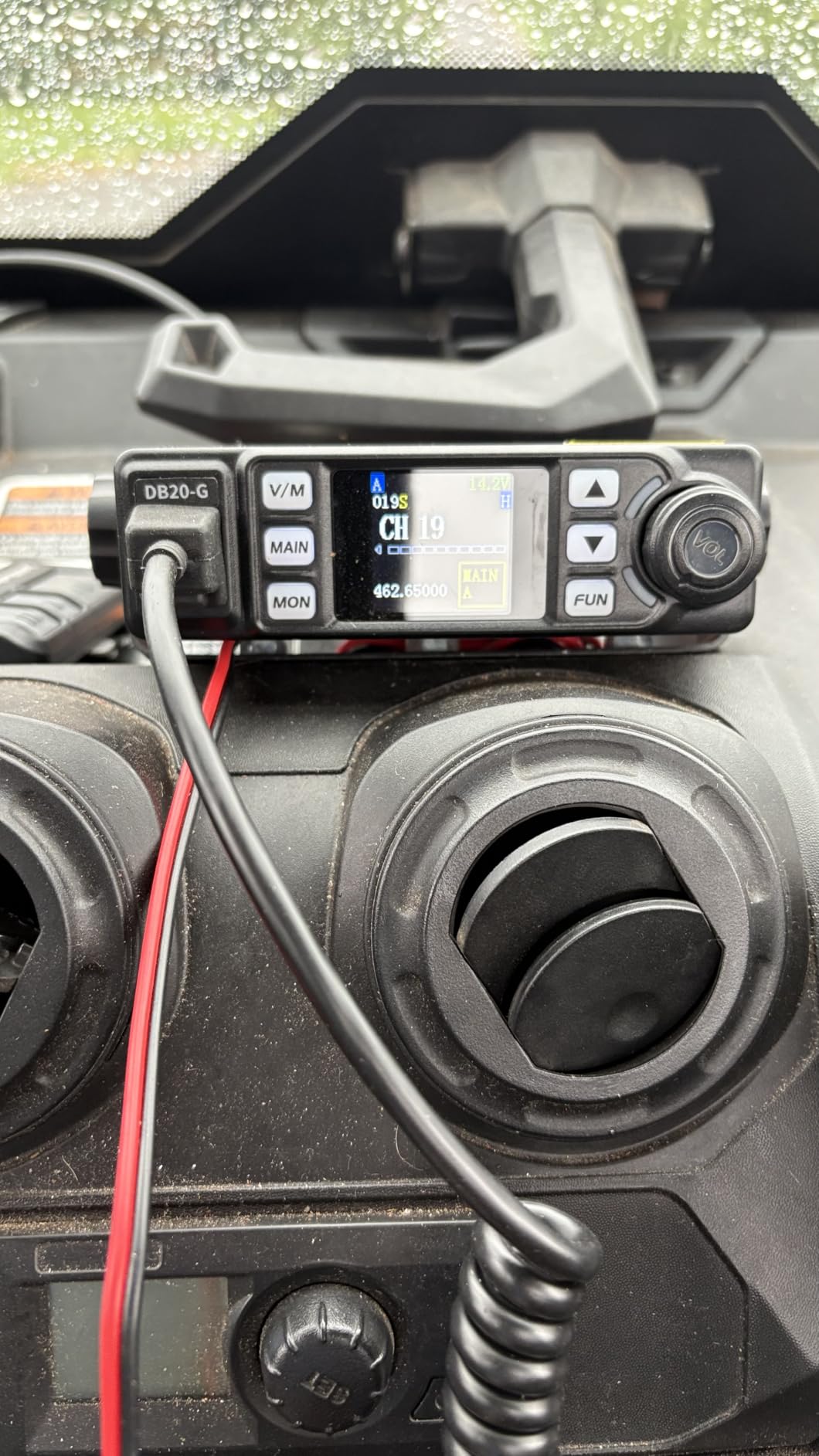
The bundled CPS programming software is the most common complaint, and CHIRP compatibility is not consistent, so expect some work if you want to clone the whole group’s settings. The instruction manual is also unclear for first-time users, which is why this sits well below the UV-5G Plus on programming.
Check your channel list before the trip. Channels 8 to 14 are receive-only under factory programming with no power adjustment, so a convoy plan that puts its main working channel there will not transmit.
Why it suits a first convoy install
It includes the speaker mic, programming cable, 12V car charger, mic holder and mount bracket, so one purchase covers a working install in a single vehicle. Nothing else in the box needs chasing down before the first run.
Because it is small at 4.5 by 5 by 2 inches, owners regularly move it between a truck and a base station in seconds. For a group that swaps vehicles often, that flexibility is worth more than a feature list.
Where it falls short
If your club insists on computer-cloned programming from one master radio, the CPS software is a fight. The included speaker mic also feels cheap, and the PTT lacks a firm click, which matters to drivers who want positive feedback under load.
Twenty watts will not reach past heavy terrain on its own. It needs a sensible antenna and honest expectations about where the range ends.
4. Baofeng UV-9G – best sealed handheld pair for muddy creek crossings
BAOFENG UV-9G GMRS Handheld Radio, Waterproof Walkie Talkies IP67, 2 Pack
- IP67 waterproof and dustproof
- 128 channels
- 30 GMRS channels preloaded
- 2 pack with 1800mAh batteries
Pros
- Genuine IP67 sealing rated to 3 feet of water for 30 minutes
- channels 31 to 54 work as DIY repeater channels
- 30 GMRS and 11 NOAA channels ready out of the box
- works with other brands on GMRS frequencies
Cons
- 1800mAh battery is smaller than newer models
- 5 mile rated range drops with obstacles
- programming needs the included cable
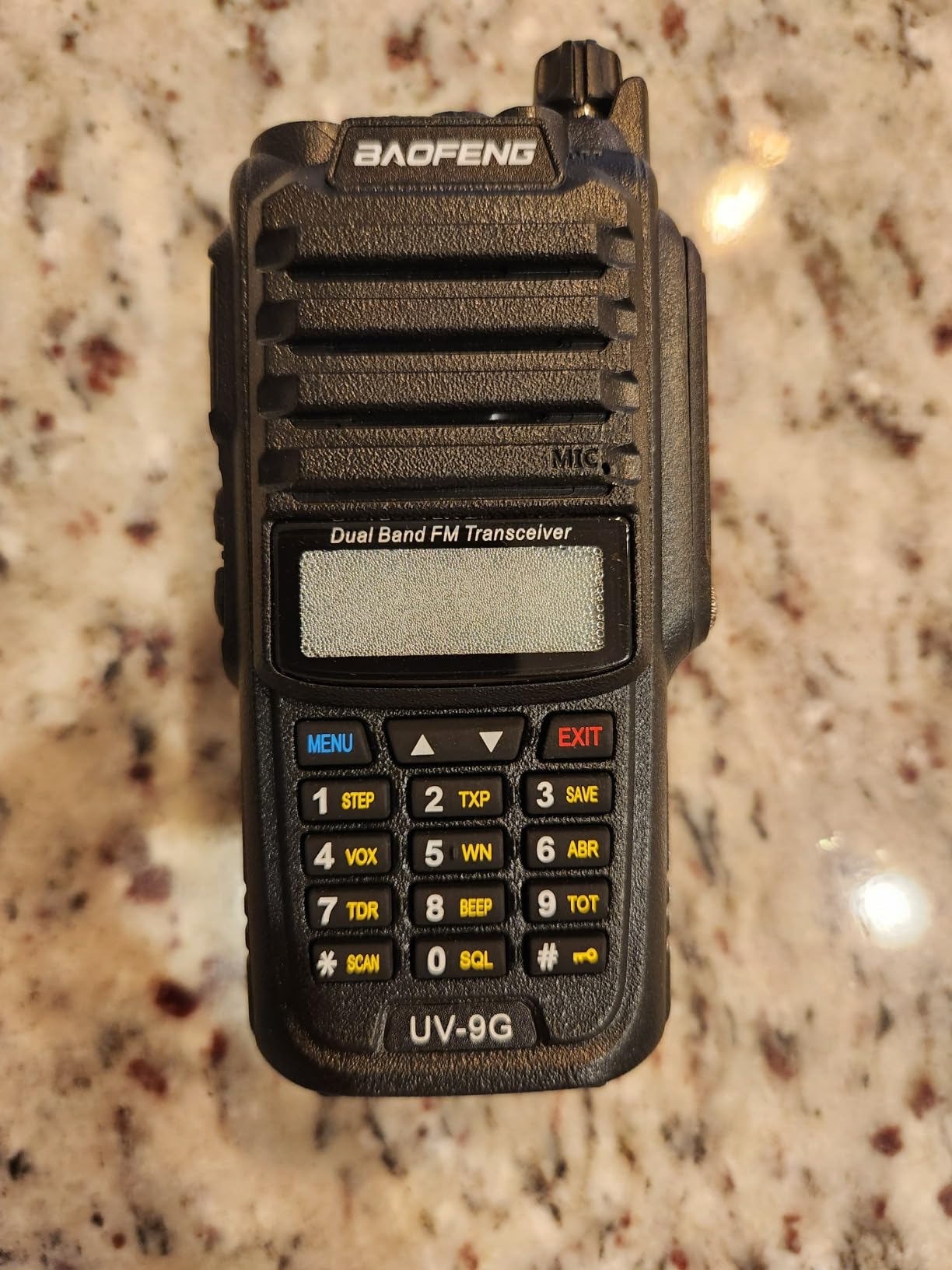
The UV-9G is the pair I hand to people whose route involves water. The IP67 sealing is rated to 3 feet of water for 30 minutes and includes dust protection, so a radio that ends up in a muddy ford or rolled in a creek bed is not automatically a dead radio.
It ships as a two-pack, which is the right unit for spotter and driver working a crawl together. Thirty GMRS channels and 11 NOAA weather channels are preloaded, so it works the moment it comes out of the box without any computer setup.
The unusual feature is channels 31 to 54 as DIY repeater channels across four repeating groups with CTCSS and DCS options. That gives a group a way to build its own small relay network where no commercial repeater covers the trail, which is exactly the situation on a remote loop.
It pairs with any radio operating on GMRS frequencies, including the mobiles in this guide, so it works as the on-foot companion to a 50W dash unit. A VHF and UHF receiver, tri-colour LCD and built-in flashlight round out a genuinely useful trail package.
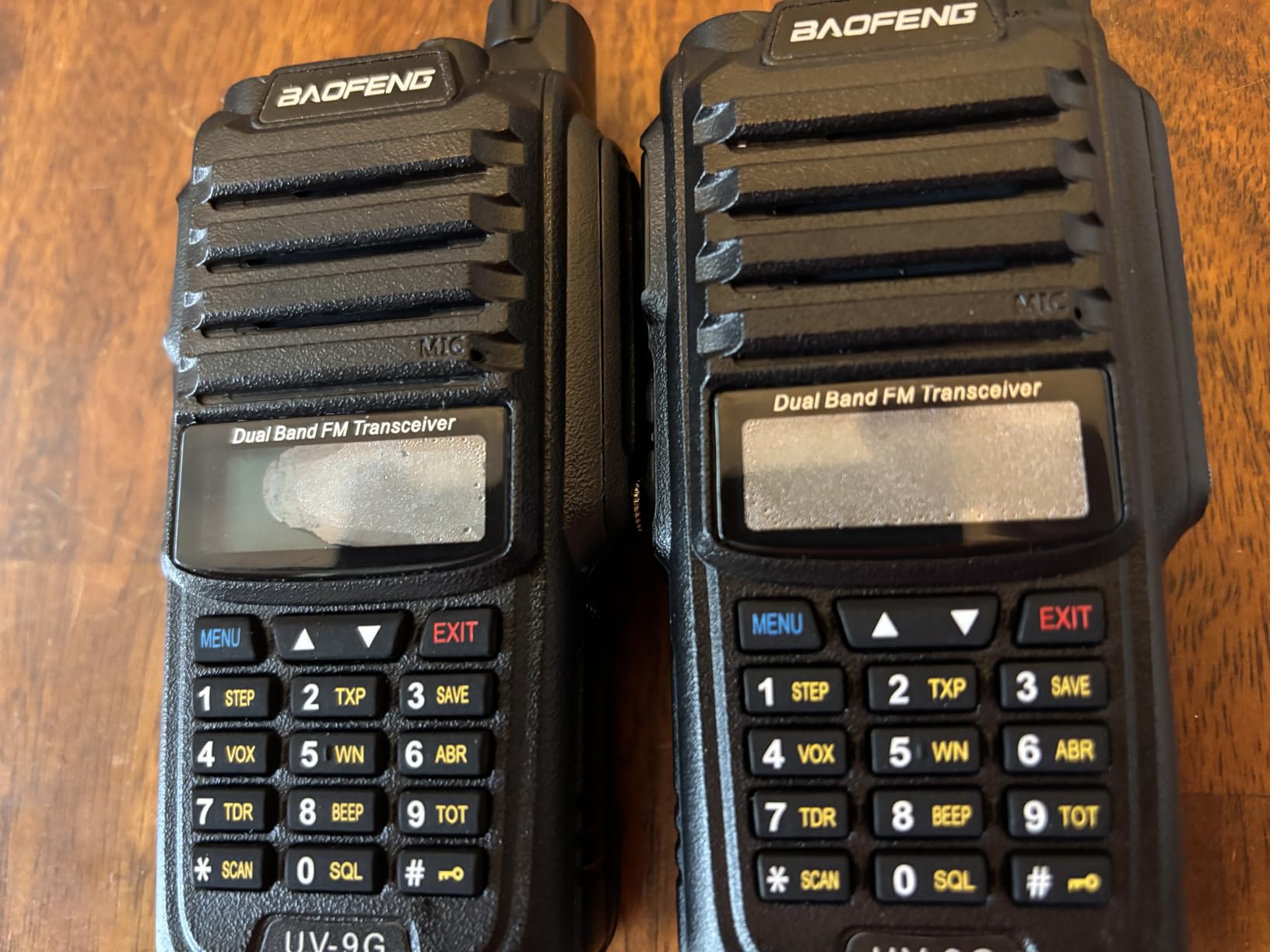
Across 1799 reviews the average settles at 4.3 with 68% five-star. Buyers point to the real IP67 sealing, the DIY repeater channels and the out-of-the-box GMRS and NOAA channels; the recurring limits are battery capacity and range in obstructed terrain.
The 1800mAh battery is smaller than newer models in the range, so plan a midday charge or carry cells for multi-day runs. The included 15.5-inch RA-MD2 antenna helps reception, but it does not stop the stated 5-mile rating from shrinking behind a ridge.
Why it suits wet and muddy routes
Water and mud are the two things that kill handhelds, and this is the one in the guide rated to survive both. For creek days, slot canyons and wet season runs, that rating matters more than any menu feature.
VOX hands-free calling is useful on a slow crawl where the driver should not be reaching for the PTT, and the flashlight is genuinely handy at a night campsite or during a recovery.
Where it falls short
Do not expect the 5-mile figure to hold in real terrain. Reviewers expect less once trees, walls and rock are in the way, which is normal for a handheld but worth remembering before a group relies on it across a long gap.
Programming requires the included cable and a software request, so if you want custom channels in each radio, budget time for it rather than assuming the keypad will do it quickly.
5. Baofeng GM-15 Pro – best budget handheld pair for a new convoy
BAOFENG GMRS Radio Handheld Long Range GM-15 Pro 8W Walkie Talkie with Earpiece NOAA Weather Receiver Rechargeable GMRS Repeater Two Way Radio with USB-C Charger for Hunting Survival Gear,2Pack
- 8W GMRS output
- 250 memory channels
- 1500mAh USB-C battery
- 2 pack with earpieces
Pros
- 250 memory channels including 22 GMRS and 8 repeater channels usable out of the box
- 154 privacy codes across 50 CTCSS and 104 DCS
- 11 NOAA weather channels with scanning
- USB-C charging from power bank
- PC
- car or wall
Cons
- Not water resistant
- range drops to roughly 3 to 4 miles in forest and 2 to 3 miles in town
- keypad programming is tedious
The GM-15 Pro is the two-pack I suggest when a group is starting out and wants working radios without spending on each member. It arrives with 250 memory channels including 22 GMRS channels and 8 repeater channels already loaded, so it is useful before anyone touches a computer.
Eight watts of output is a genuine step up from a 5W handheld when a convoy is strung out along a valley. It also brings 24 customisable repeater channels and 154 privacy codes split across 50 CTCSS and 104 DCS tones, which gives a club enough flexibility to separate working groups without a fight.
Power comes from a 1500mAh rechargeable battery charged over USB-C from a power bank, PC, car or wall, and it carries SOS alarm, flashlight, VOX hands-free and a battery saver mode. For a scout that walks a line ahead of the vehicle, the alarm and the flashlight are the features that get used most.
With 762 reviews at 4.4 and 70% five-star, buyers consistently mention the channel flexibility, out-of-the-box GMRS setup and USB-C charging. The most common complaints are the absence of water resistance and shorter real-world range than the headline figure.
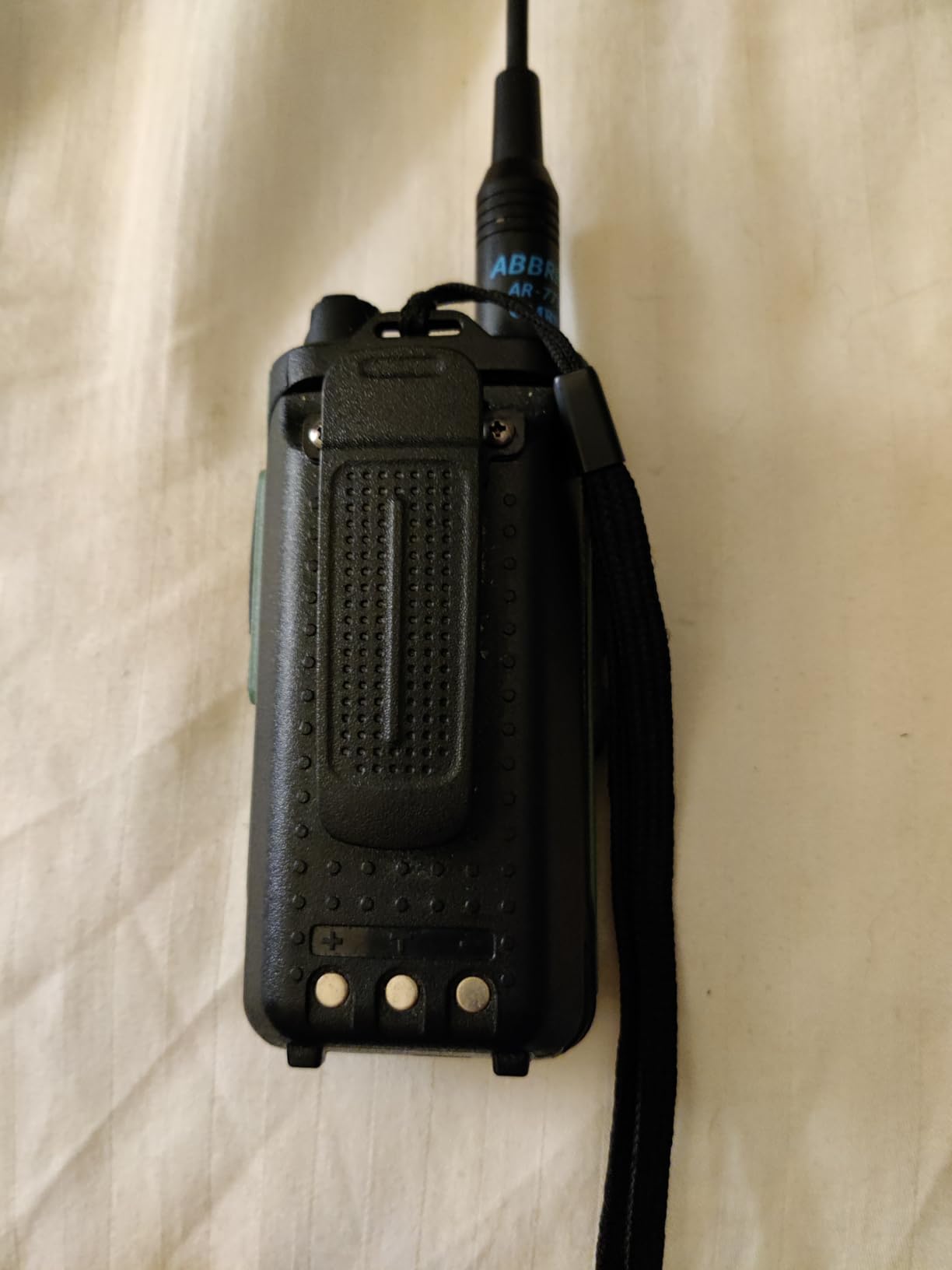
It is not water resistant at all, which is the deciding limitation. On a dry desert run or a maintained fire road that is acceptable; on a wet season route it is a radio that has to live inside a jacket.
Reviewers put real range closer to 3 to 4 miles in forest and 2 to 3 miles in town conditions, well under the 5-mile rating. Keypad programming is also tedious compared with PC or CHIRP software, so do the setup once at home rather than at the trailhead.
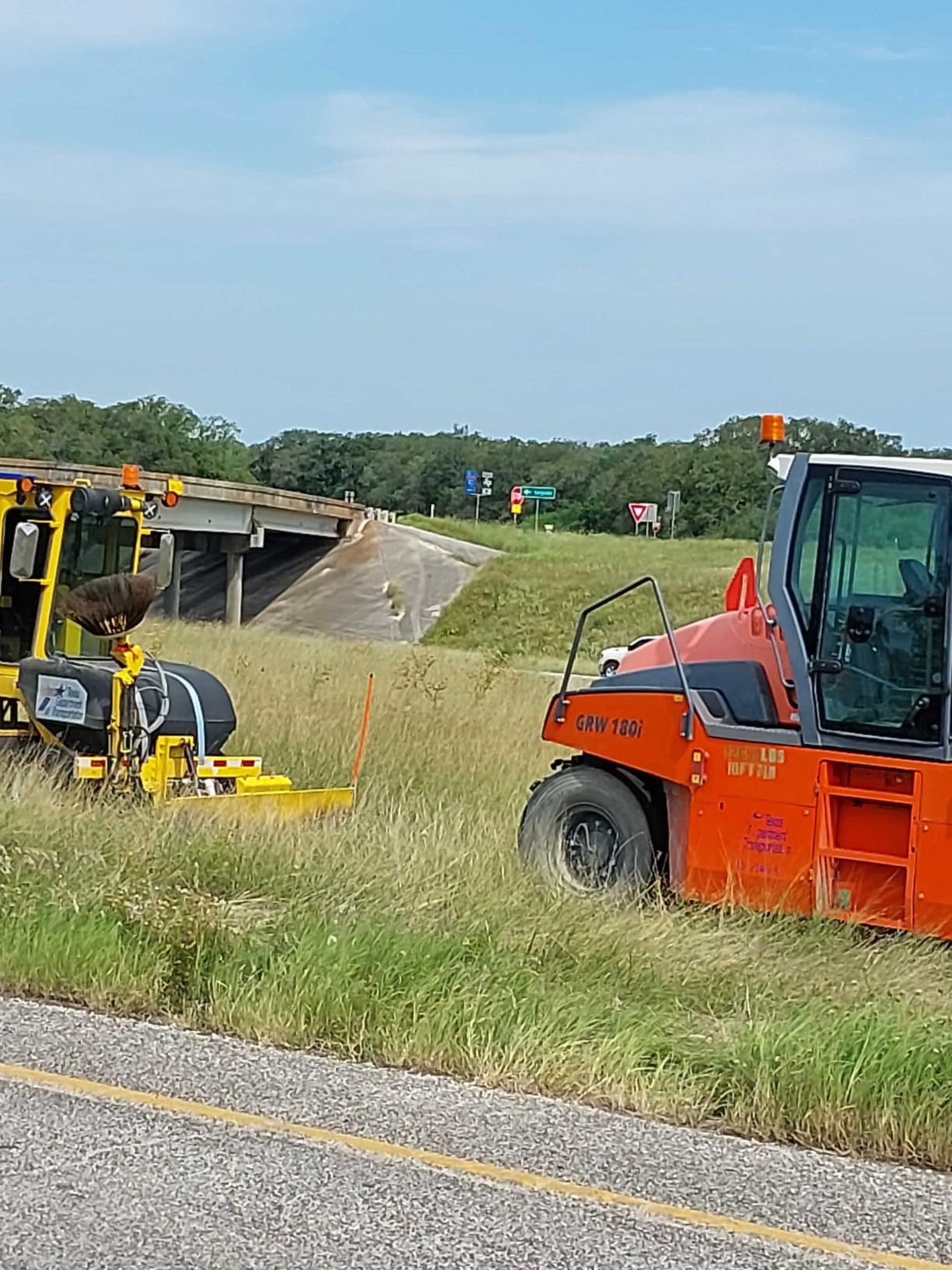
Why it suits a new convoy
The lowest-cost route into a working handheld group with real GMRS channels and privacy codes already in the box. For a club that wants everyone carrying a radio before it worries about mobiles, that is the sensible starting point.
The eight watts give it more punch in a valley than a typical 5W unit, and the preloaded repeater channels mean it can talk to a group relay without configuration on the trail.
Where it falls short
Rain and mud are the limits. There is no water resistance, no sealed buttons and no rating to lean on, so keep it out of the weather or accept that a water crossing can end the radio’s life.
At 1500mAh it also has less headroom than the newer packs in this guide, so treat it as a daytime radio rather than an all-night one.
6. Midland GXT67 PRO – best handheld when mud and water are certain
Midland GXT67 PRO 5W GMRS Two-Way Radio – Long Range Walkie Talkie, 1 Pack
- IP67 sealed to 3 feet
- 5W transmit power
- 99 channels and 28 privacy codes
- 4 day battery
Pros
- Fully sealed IP67 chassis that survives mud
- dust and 3 feet of submersion
- repeater capable and preprogrammed with 22 channels
- high-visibility backlit display with oversized glove-friendly buttons
- includes travel case
- desktop charger and AC and DC adapters
Cons
- Fixed antenna cannot be removed for a vehicle or higher-gain antenna
- sealed non-replaceable battery means no field spares
- charges on a model-specific interface rather than USB-C
The GXT67 PRO is the handheld I reach for when the trip is going to be hard on equipment. The chassis is fully sealed and rated to 3 feet of submersion, and overlanding, UTV and storm-response users consistently point at that when they describe why they bought it.
It runs a full 5 watts of transmit power, which is what carries a radio through a treeline or across a valley where a lower-powered unit drops out. It comes repeater capable and preprogrammed with 22 channels and 28 privacy codes, so it interoperates with a mobile out of the box.
The backlit display is high visibility and the buttons are oversized enough to find with gloves on, which is exactly the condition you are in when you are calling a spotter on a slow crawl. A four-day stated battery life removes the daily charge from the trip plan entirely.
It is designed to pair with Midland MXT series microMobiles as a vehicle spotter radio, which makes it the natural on-foot companion to a dash-mounted mobile in the same brand ecosystem. The included travel case, desktop charger and AC and DC adapters cover charging at home, in camp and in the vehicle.
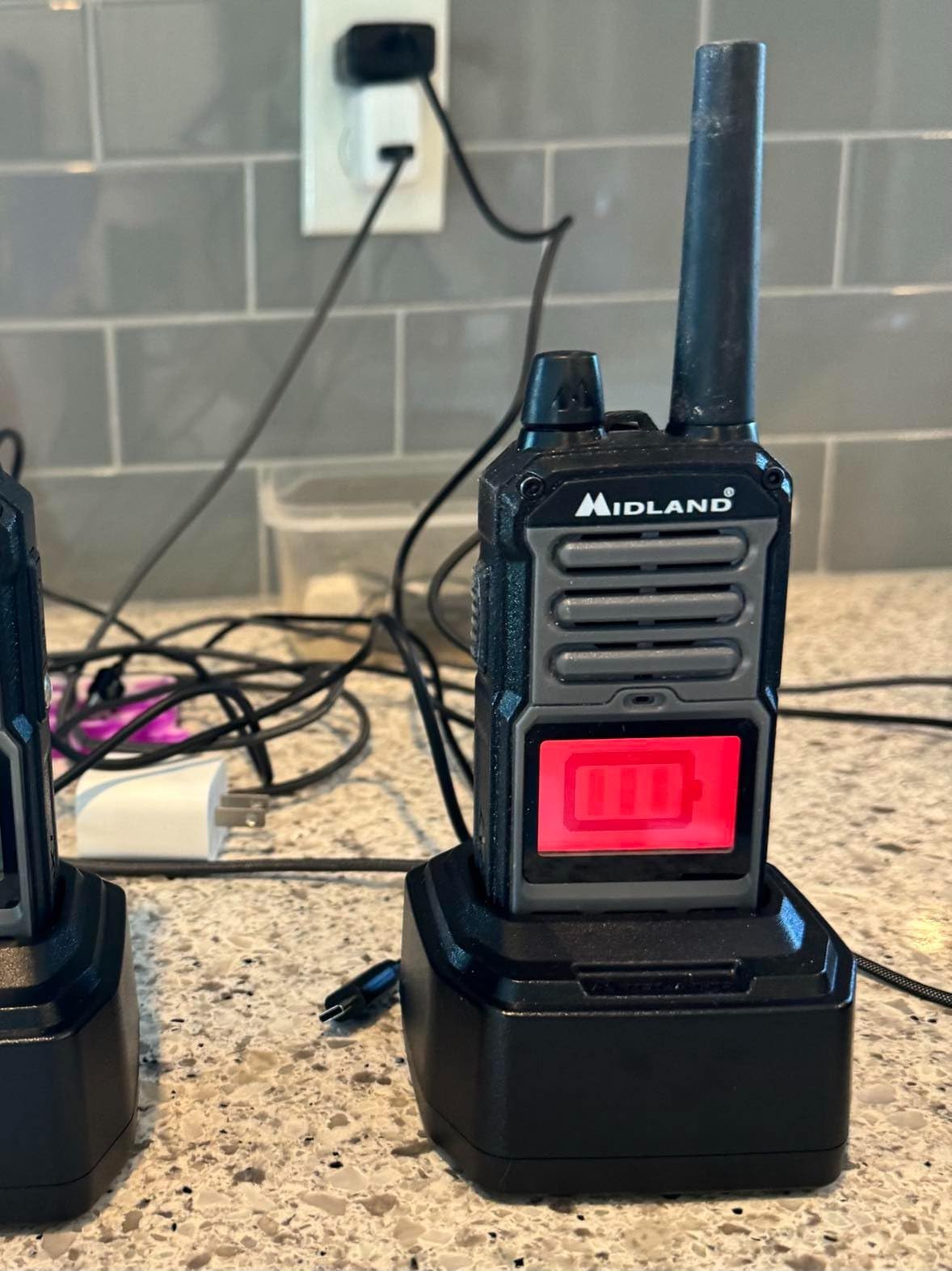
With 206 reviews at 4.3 and 73% five-star, owners compare the build favourably to professional Motorola HT radios, which tells you how the housing feels in the hand. The complaints are all about the same three things rather than about performance.
The antenna is fixed and cannot be removed, so you cannot move this radio onto a vehicle mount or fit a higher-gain whip when the range falls short. The battery is sealed and non-replaceable, which means no field spares on a long trip.
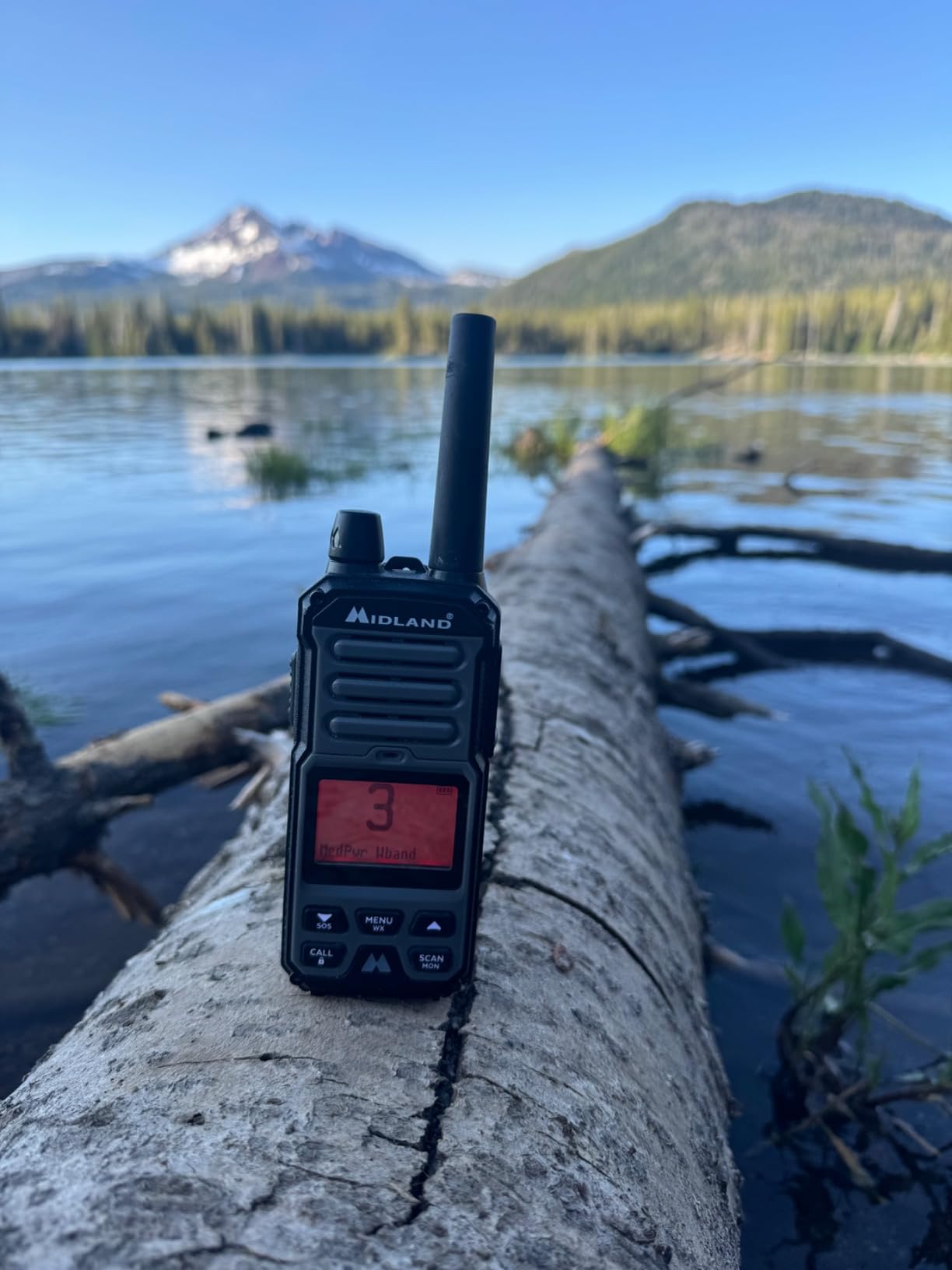
Why it suits hard trails
Sealed to 3 feet of submersion is the difference between a radio that survives a swamp crossing and one that does not. When the route is wet by design, that rating is worth more than any menu depth.
Four days of stated battery life and glove-friendly controls make it the least demanding handheld to run for a whole crew. Nobody is looking for a charger in the dark at camp.
Where it falls short
You give up flexibility. A fixed antenna and a sealed battery mean you cannot upgrade either one, and charging uses a model-specific interface rather than the USB-C you probably carry anyway.
It also carries a higher price tag than most of the handhelds here, which is hard to justify for a dry-weather trip where a simpler unit would do the same job.
7. Rugged Radios GMR2 Plus – best handheld for clubs that want zero setup
Rugged Radios GMR2 Plus GMRS Handheld Radio for Off-Road & Camping
- 22 GMRS channels
- 121 privacy codes
- NOAA weather and FM radio
- 3 year warranty
Pros
- Highest average rating in this group at 4.7 with 87% five-star ratings
- works with any GMRS or FRS handheld or mobile radio
- NOAA weather channels plus FM radio for camp use
- built-in flashlight and easy-to-read LCD
Cons
- Modest baseline range of about 3 miles
- not water resistant
- 22 channels is a limited plan for a large organised group
The GMR2 Plus is the simplest radio I can hand to a club meeting without an instruction session. Twenty-two GMRS channels and 121 privacy codes, a clear LCD, an intuitive button layout and NOAA weather channels, all ready when you take it out of the box.
It works with any device operating on the same GMRS or FRS channels, which covers every radio in this guide and most of the group kit members already own. A built-in FM radio and flashlight make it useful at camp as well as on the trail.
Owners in off-road and overlanding groups consistently report clear sound, good range for 4×4 and Jeep convoy use, and a build that holds up to rain, dust and drops while covering a full day on a charge. A 4.7 average across 206 reviews with 87% five-star ratings makes it the highest-rated unit in this guide.
The warranty runs three years on radios, intercoms and headsets, which is longer than most of the handhelds here and worth noting for a club buying in volume.
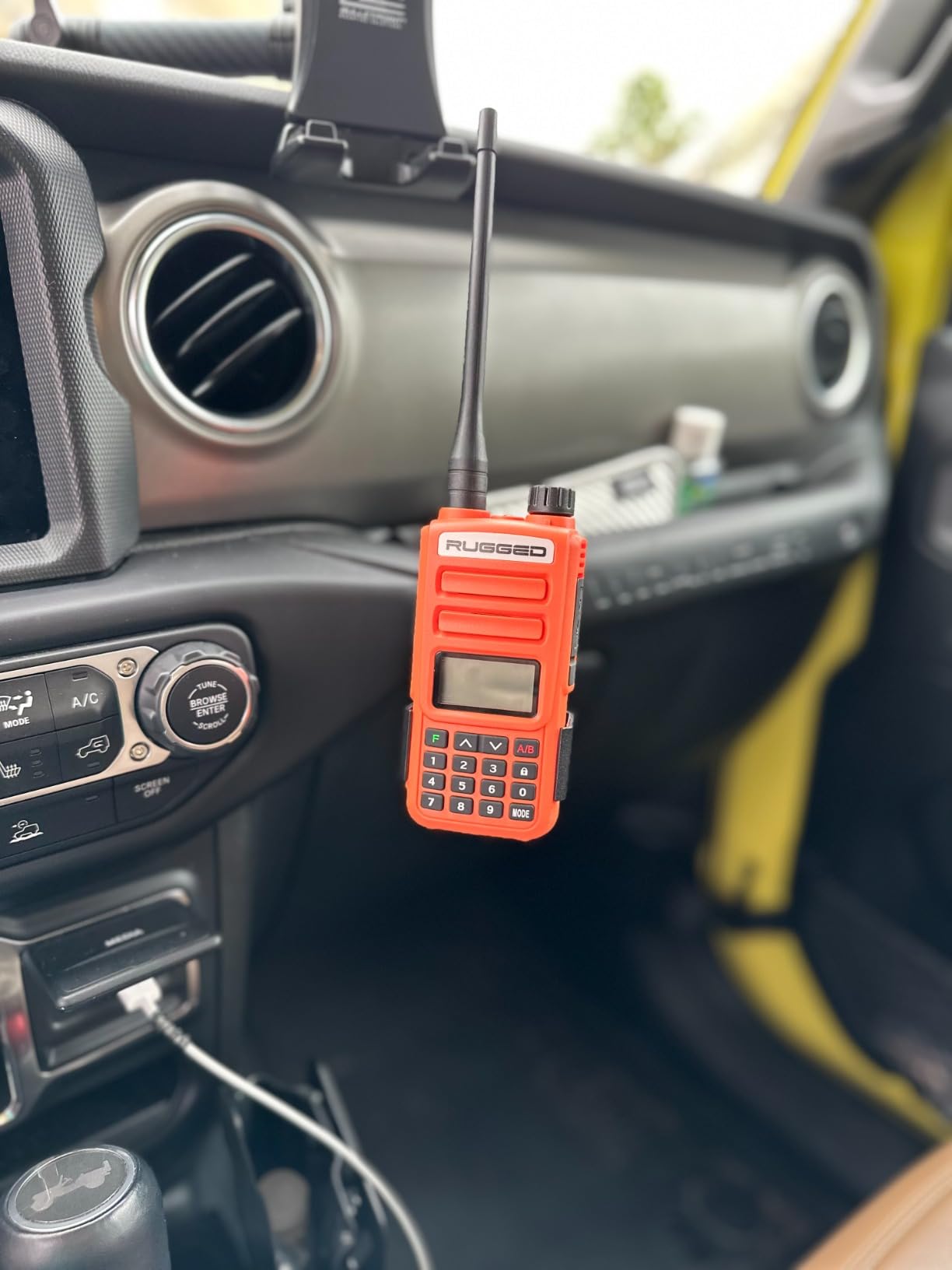
The range is the trade. Baseline figures sit around 3 miles, better if a local repeater covers the area, and it is not water resistant so mud and river crossings still need a bag.
Twenty-two channels is a tight plan for a large organised group. If your club wants separate working channels for each section, this is not the radio to standardise on.
Why it suits club setups
Everyone can operate it without training, which removes a real source of convoy friction. When the route changes and the plan moves to a spare channel, nobody has to work through a menu tree at the trailhead.
The universal compatibility means it drops into a group that already mixes brands and radios, which is more common than people admit. That matters more than feature count when half the group arrived with something else.
Where it falls short
Three miles is a short baseline for a convoy that stretches out on a fast road section. Pairs well with a mobile in the lead vehicle; struggles as a standalone link.
If water is part of the route, pick something with an IP67 rating instead. And for a big club that wants multiple working channels, the channel count will not stretch.
8. Retevis RB48 Plus – best handheld for dust and sandstorm runs
Retevis RB48PLUS GMRS Walkie Talkies Long Range,IP67 Waterproof 2 Way Radio
- IP67 waterproof and 0.1 micron dustproof
- Rated to 2 metre drops
- 30 channels with 8 repeater channels
- 18 hour battery
Pros
- IP67 waterproof and 0.1 micron dustproof with a 2 metre drop rating
- 2000mAh batteries give 18 hours of use and about 100 hours standby
- dual large PTT buttons that work with gloves
- vibration and ring alerts so a channel call is not missed
Cons
- Stated maximum range of only about 3 miles
- 30 channels is a small plan for a larger club
- emergency alarm and SOS are basic
The RB48 Plus is the dust answer. Alongside IP67 waterproofing it is rated to 0.1 micron dustproof and survives 2 metre drops, and reviewers specifically describe it holding together through rain, sandstorm and rough handling conditions.
Thirty channels including 8 repeater channels give a group a little more structure than a bare 22-channel set, and the 2000mAh batteries deliver 18 hours of use with roughly 100 hours on standby. That combination works well for a day of driving with the group split into sections.
Two large PTT buttons are easy to hold, including with gloves, which matters when the person using it is also holding a map or a recovery board. Vibration and call ring alerts mean you do not miss a transmission because the radio was buried under a jacket.
The button lock prevents accidental channel switching mid-conversation, a small feature that prevents an entire morning of confusion when somebody drops a radio into a door pocket. The warranty runs five years on the radio body.
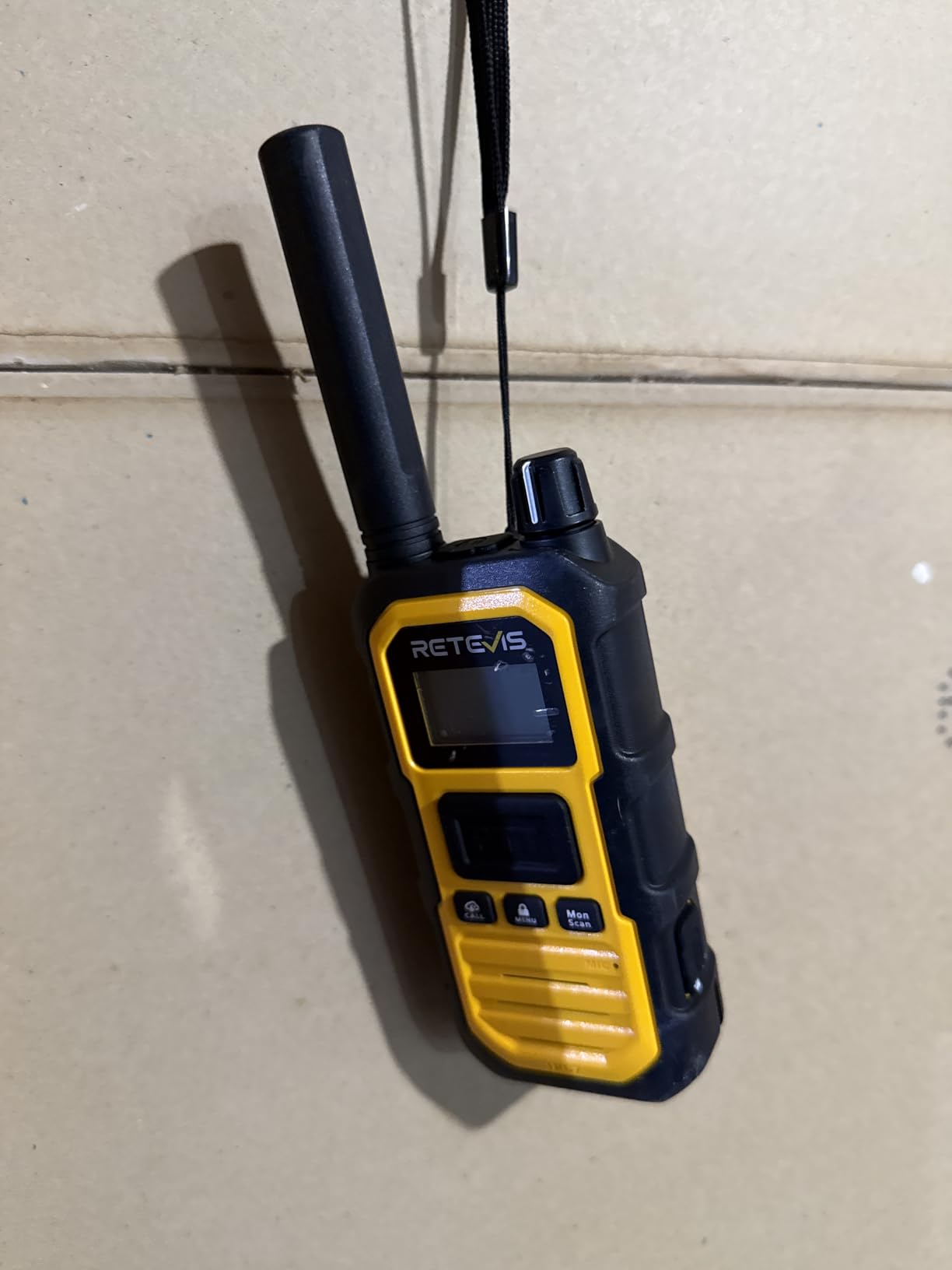
The conservative range figure is the drawback. Stated maximum is about 3 miles, shorter than most GMRS handhelds here, and reviewers treat that as the main limitation rather than a flaw.
Thirty channels is a small plan for a larger club, and the emergency alarm and SOS are basic compared with higher-end units. It pairs as a two-pack, which suits a spotter pair but means one unit covers two people.
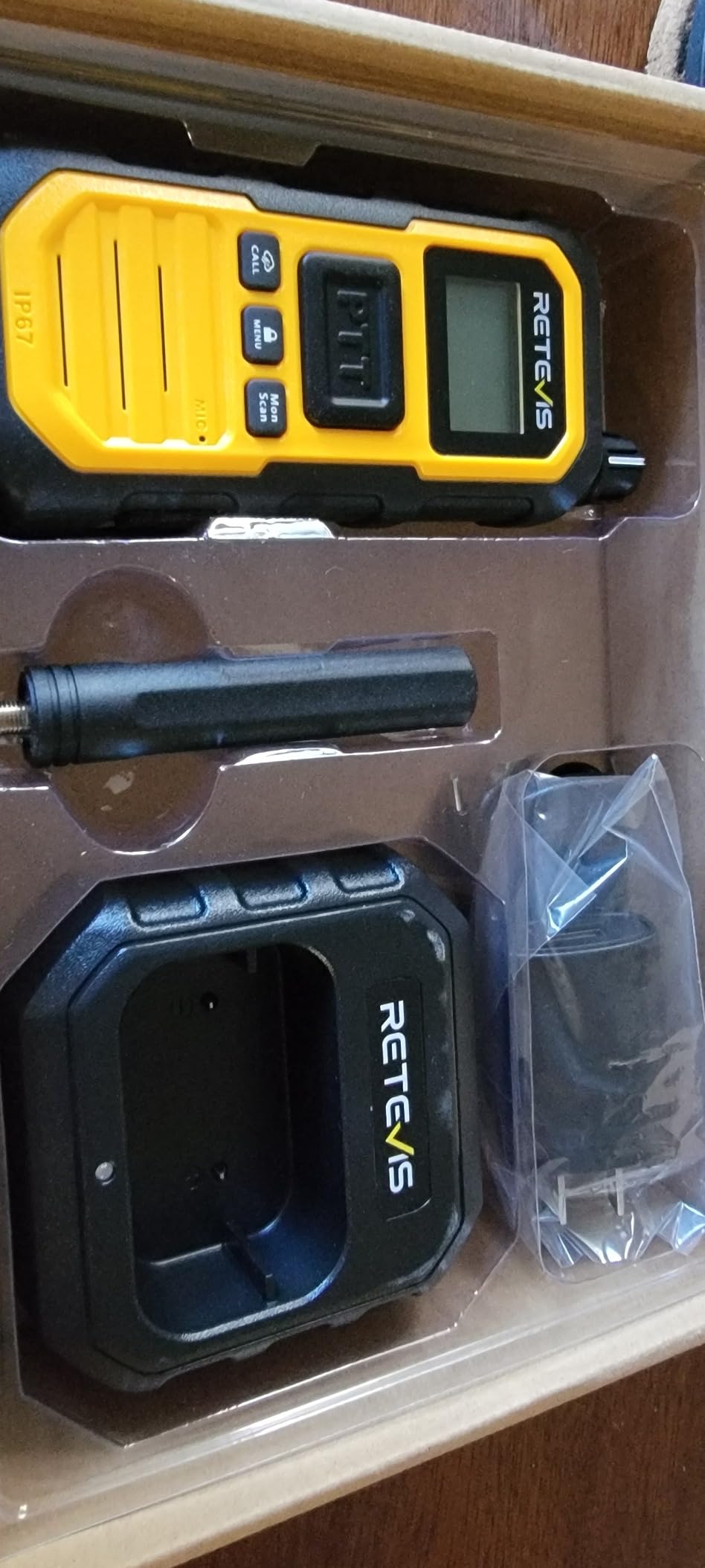
Why it suits sand and dust
The dust rating is what separates it. Fine dust gets into everything that is not sealed, and a radio that dies from grit on a desert crossing ends the link for the whole group.
Two metre drops and 18 hours of use per charge mean it tolerates the day-to-day violence of dune bashing far better than a lighter unit.
Where it falls short
Three miles is a modest baseline for a fast convoy. Treat it as an on-foot or spotter radio alongside a mobile rather than the primary link.
And the emergency features are basic. Pair it with a proper personal locator beacon rather than relying on the radio in a real emergency.
9. Retevis Ailunce HA1G – best handheld for rock crawling with a spotter
Retevis Ailunce HA1G GMRS Handheld Radio, GMRS Radio with IP67 Speaker Mic
- IP67 body with IP67 shoulder mic
- 2800mAh Type-C battery
- 256 channels and VOX
- 20 hour battery life
Pros
- IP67 waterproof body plus a separate IP67 shoulder speaker mic for off-road use
- VOX lets you transmit through the shoulder mic hands-free while driving
- squelch and mic gain controls improve clarity in noisy engine environments
- 1.77 inch colour backlit screen with adjustable brightness
Cons
- 20 hours of stated battery life is modest for multi-day trips
- earphone and shoulder mic add bulk for pocket carry
- 5 mile rated range only
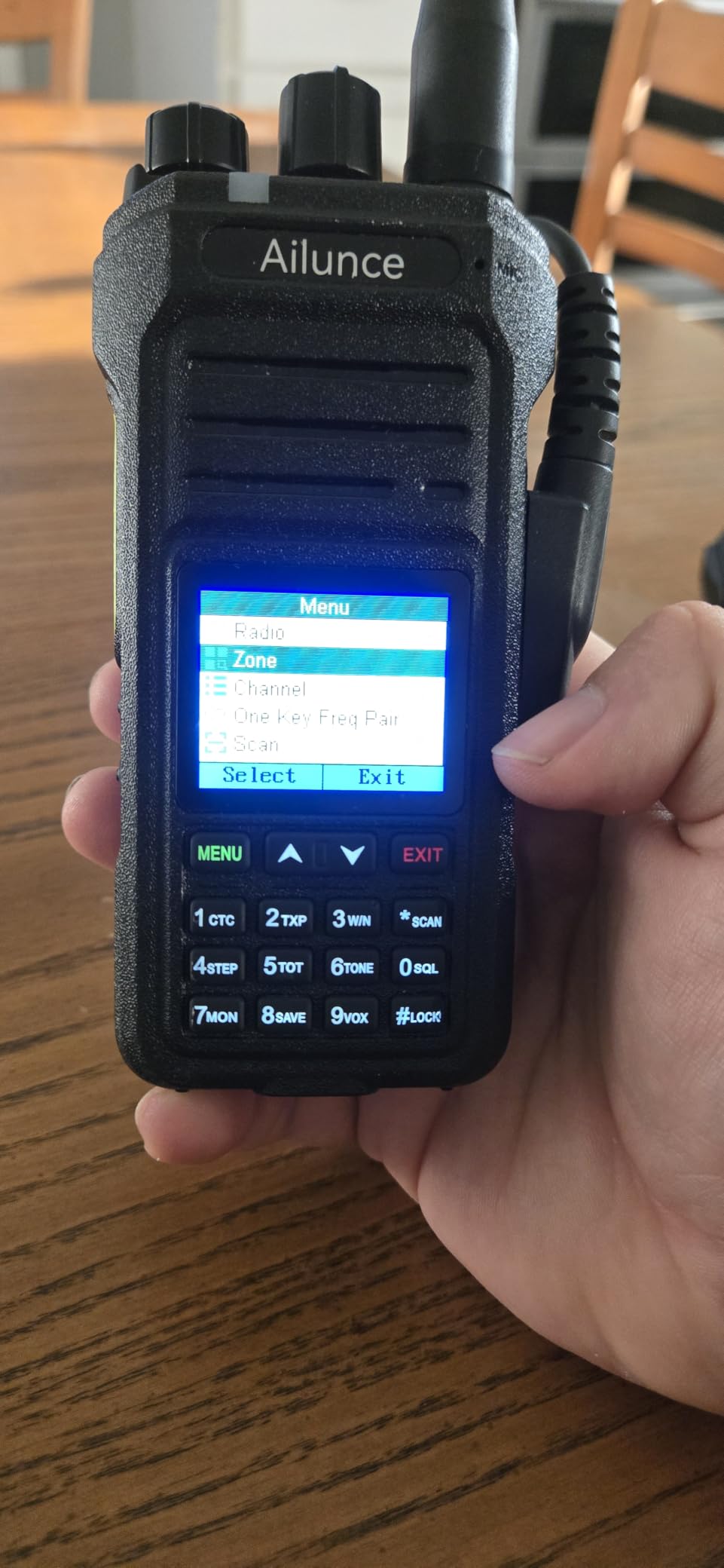
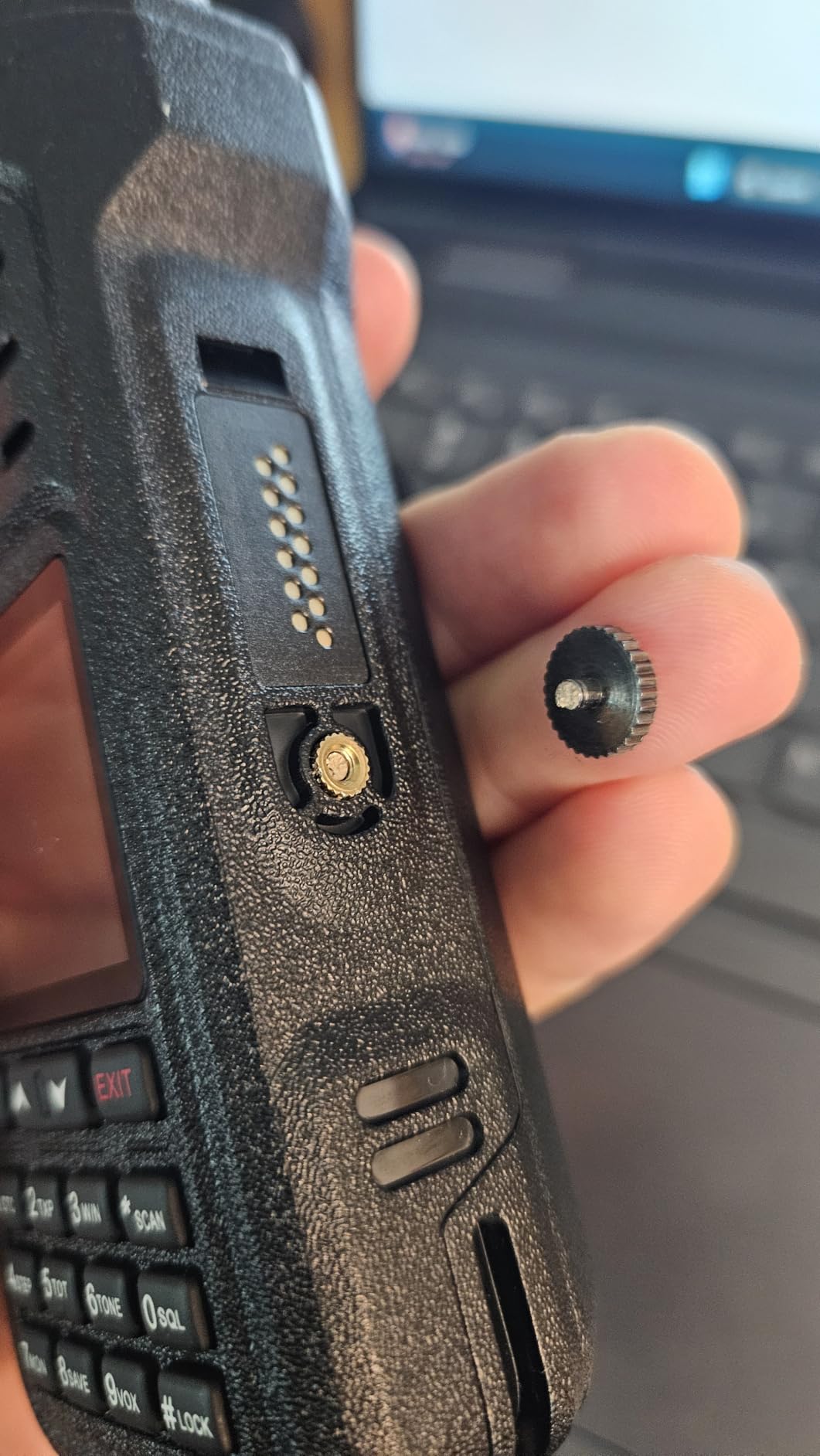
The Ailunce HA1G is built around the speaker mic, and that is the part that makes it interesting for rock crawling. The mic is separately rated IP67, sits on a shoulder strap, and works with VOX so the driver can transmit hands-free while both hands are needed on the controls.
Squelch and mic gain controls are the detail experienced users notice. On a noisy trail with a diesel engine and rock strikes around the rig, being able to tune the mic gain is the difference between a readable transmission and a scratchy one.
A 2800mAh Type-C battery gives roughly 20 hours of use, and the 1.77-inch colour backlit screen with adjustable brightness is readable in direct sun. It supports 256 channels, CHIRP programming and VFO mode, with 12 NOAA weather channels and an emergency alarm with siren and flashing lights.
Across 371 reviews at 4.2, owners particularly like the shoulder mic with VOX for convoy driving, the large battery and the bright screen. Reviewers note the bulk of the speaker mic setup and a battery figure that is adequate rather than exceptional.
Twenty hours of stated battery life is the honest limitation for multi-day trips. It is one full active day rather than two, which is fine for a day run and marginal for a week.
The earphone and shoulder mic add bulk, so it is not a pocket radio. And with a 5-mile rated range, it is a close-range tool that complements a mobile rather than replacing one.
Why it suits rock crawling
VOX through a shoulder mic is the feature that changes the workflow on a technical climb. The spotter can talk continuously while watching the line, and the driver never has to let go of the wheel or the shifter to answer.
The mic gain control matters as much as VOX in an engine bay. Adjusting it once for the vehicle, then leaving it, is what keeps a crawl conversation intelligible rather than a string of shouted fragments.
Where it falls short
The size is the compromise. A shoulder mic on a strap is comfortable for a long shift but awkward to carry when you are climbing or walking a route.
At 20 hours and 5 rated miles it is not a solo radio for a long-distance link. If your route needs more than a few hundred metres of separation, pair it with a mobile.
10. BTECH GMRS-50V2 – best mobile for repeaters and wideband receive
BTECH GMRS-50V2 50W 256 Fully Customizable Channels Mobile GMRS Two-Way Radio. Repeater Compatible, Dual Band Scanning (VHF/UHF), FM, & NOAA Weather Broadcast Receiver
- True 50W GMRS output
- 256 fully customisable channels
- Quad watch for four channels
- IP54 rated
Pros
- True 50W output with repeater compatibility
- 256 fully customisable channels plus 30 modifiable GMRS channels
- quad watch monitors a primary channel plus three others
- NOAA monitoring and FM broadcast receive with wideband VHF and UHF scanning in one box
Cons
- Needs a proper 13.8V 20A power source
- a tuned 50 ohm GMRS antenna is not included
- software-driven repeater setup has a learning curve
The GMRS-50V2 is the radio I recommend when the group wants to hear more than one thing at once. Quad watch lets you monitor a primary convoy channel plus three others simultaneously, which is how a club leader keeps the working channel clear while monitoring a secondary and a weather channel.
It delivers true 50W output with repeater compatibility, and 256 fully customisable channels plus 30 modifiable GMRS channels give real room to build a structured programme rather than a single shared setting. Receiving side covers NOAA, FM broadcast and wideband VHF and UHF scanning.
Because it is radio, not a consumer device, it comes with what an install needs: a direct-connect 13.8V DC power cable, a microphone, an RJ45-to-K1 audio cable and mounting hardware. The IP54 rating covers dust and splash in an engine bay or a trailer.
With 376 reviews at 4.1 and 66% five-star, owners value the 50W power, quad watch and repeater flexibility. Fourteen percent one-star reviews concentrate on the install friction rather than the radio itself.
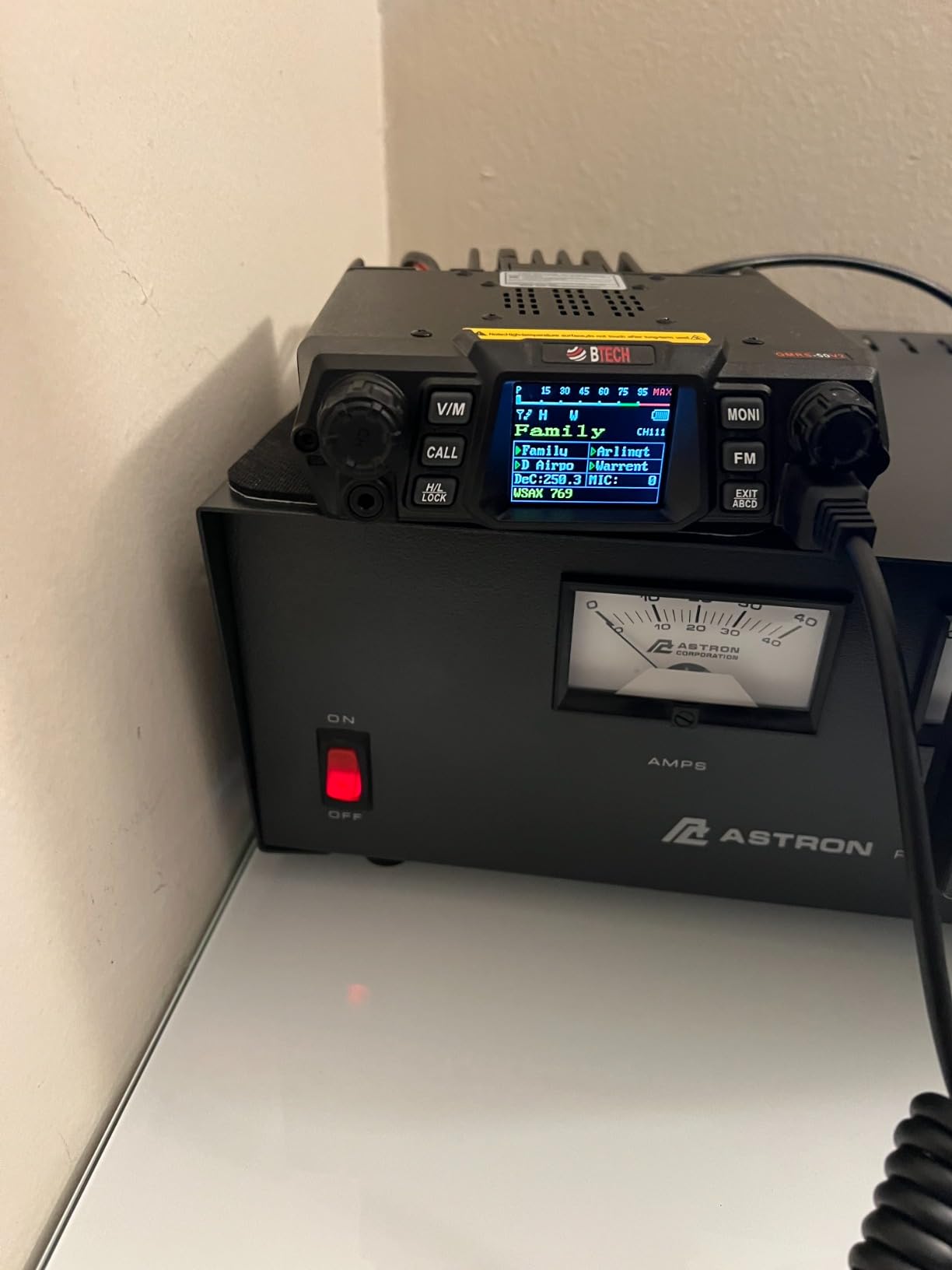
It requires a proper 13.8V 20A power source, and a cigarette-lighter outlet is not adequate for this unit. That means a real fused supply run from the battery, which is the single biggest source of first-install frustration.
A tuned 50 ohm GMRS antenna is not included and has to be added separately, so the purchase is not finished until you have an antenna and coax. The software-driven setup for repeater channels also has a real learning curve.
Why it suits repeater-based groups
Quad watch is the feature that changes convoy operations. Keeping the main channel live while monitoring a backup means a dropout does not become a silence, because the tail vehicle can move to the alternate and be heard.
The wideband receive lets a group monitor local chatter and weather without a separate scanner, which is useful when a route crosses into a different area mid-trip.
Where it falls short
It is a project, not a purchase. Without a fused power path and a proper antenna, the 50W is wasted, and most of the unhappy reviews trace back to exactly that.
The 4.1 average also reflects real software friction. If nobody in the group is willing to do the programming, a simpler mobile will serve you better.
11. Radioddity DB40-G – best mobile for long legs between waypoints
Radioddity DB40-G GMRS Mobile Radio 40W, Dual Display, 199 Channels
- Up to 40W GMRS output
- 199 channels with 169 modifiable
- Dual watch and dual display
- 13.8V DC power
Pros
- Up to 40W output with real-world repeater contacts at 40 to 60 miles and beyond on low power
- an 11-item menu makes programming far easier than a 45-menu generic handheld
- dual watch and dual display let you monitor two channels at once
- runs cool with clean received audio
Cons
- Display contrast is faint in daylight and not adjustable
- manufacturer software has almost no options
- channel 23 ships programmed with the wrong factory frequency
The DB40-G is the middle ground in the mobile range here, and for long open legs it makes sense. It pushes up to 40W, sits between the 20W DB20-G and the 50W units, and reports real repeater contacts at 40 to 60 miles and beyond when run at lower power.
What surprised me in the reviews is the menu. An 11-item menu makes programming far easier than a 45-menu generic handheld, which matters more than any spec when you are cloning a group plan in a driveway the night before the trip.
Dual watch and dual display let you monitor two channels at once, so a convoy can run a working channel and a spotter channel without switching. It runs cool rather than hot during long transmits and users report clean received audio with good signal readings.
It carries 169 fully customisable channels plus repeater channels and UHF receive, and the included handheld mic, brackets, mounting hardware, spare fuse and cable cover the install. The 18-month warranty is standard for the brand.
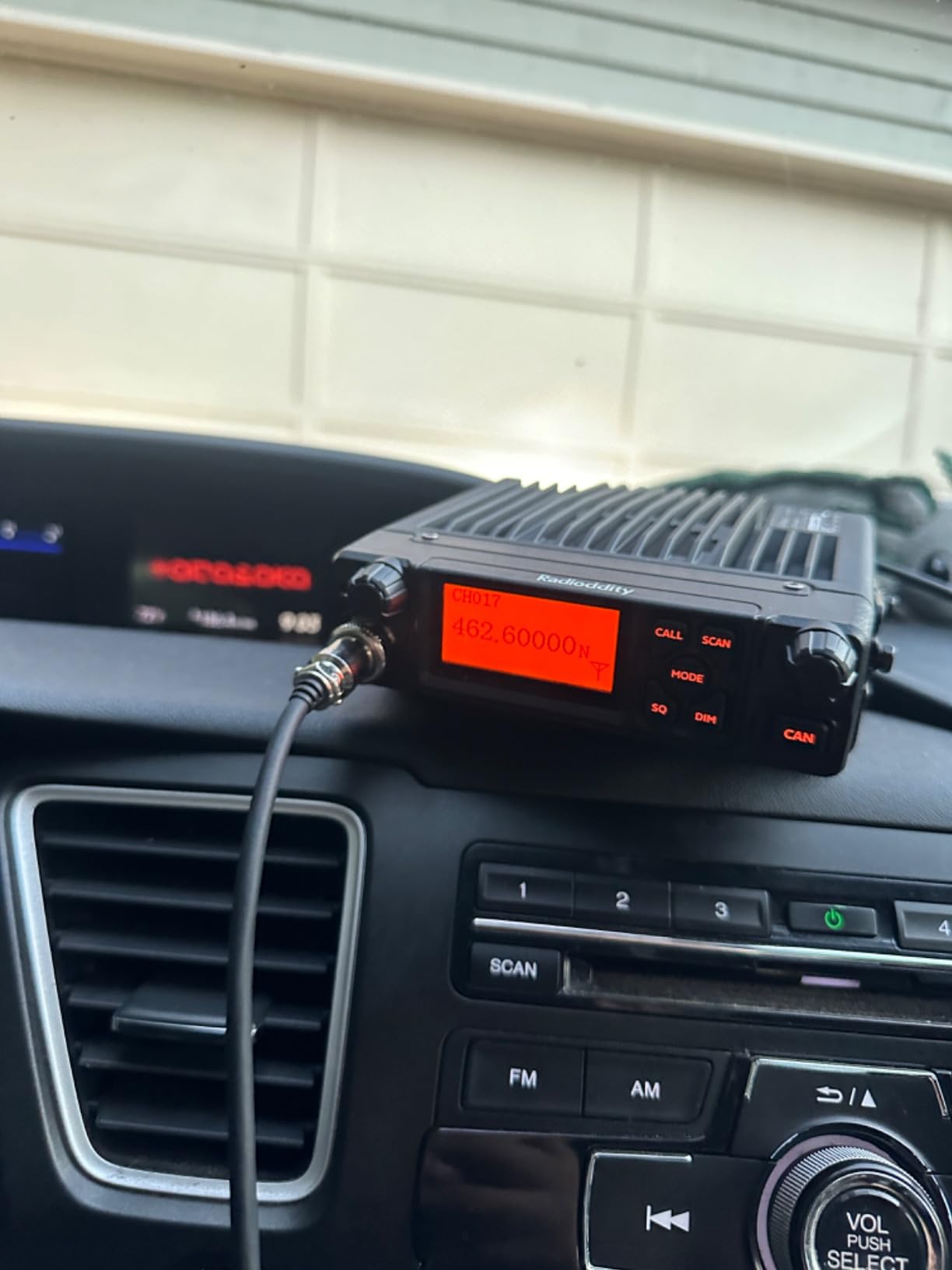
The display is the weak point, and for a driving radio that is not minor. Contrast is faint in daylight and reviewers report there is no way to change what is on screen through the manufacturer software.
Channel 23 also ships programmed with the wrong factory frequency, which you will discover at the worst possible moment unless you check it at home. The written manual is poor and the download software is not friendly to current Windows versions.
Why it suits long desert legs
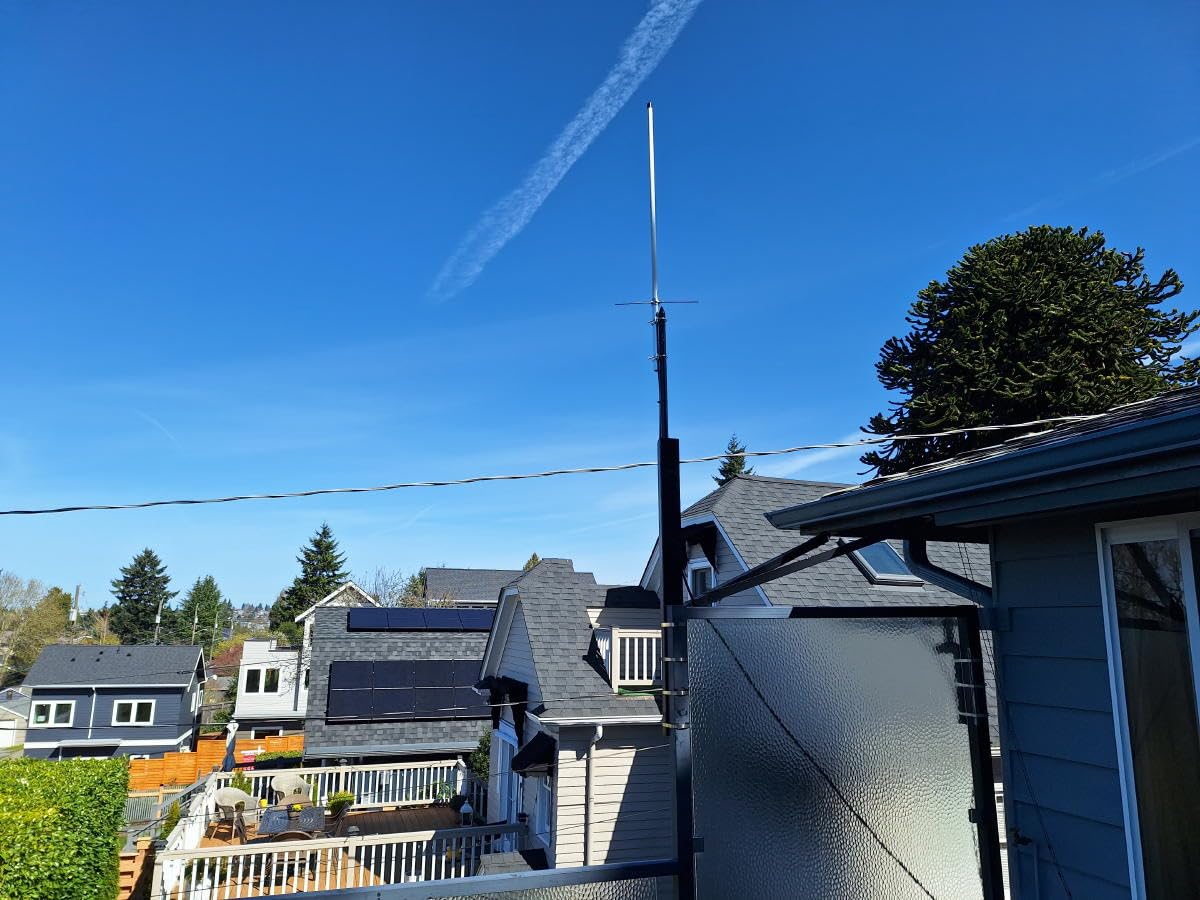
Forty watts plus a sensible roof antenna is the combination that carries a link across open desert where terrain, not power, is the limit. Reported repeater contacts at 40 to 60 miles suggest real-world behaviour rather than a marketing number.
Running cool matters over a long transmit-heavy day. A mobile that overheats and steps down its output changes your range plan without telling you.
Where it falls short
A faint display you cannot adjust is a genuine safety issue in a bouncing truck at midday. Test it in daylight before the trip and plan around it if it fails.
It also ships without a 12V cigarette-lighter adapter, so the install needs a real 13.8V supply. Budget for the wiring before the trip.
12. BTECH GMRS-50PRO – best mobile for fleet GPS coordination
BTECH GMRS-50PRO IP54 Weatherproof 50-Watt GMRS Base Station Radio with Bluetooth, GPS, NOAA, and Advanced Features, Dual Band (VHF/UHF) Scanner, Long Range Two-Way GMRS Walkie Talkie
- True 50W GMRS output
- Bluetooth app programming
- CSV import and export
- Built-in GPS, 180 channels
Pros
- Colour mic display keeps key information visible while driving
- Bluetooth app programming on iOS and Android with CSV import and export for cloning a fleet
- built-in GPS for location sharing and group coordination
- Bluetooth HFP audio routes radio audio through vehicle audio and headsets
Cons
- IP54 protects against dust and splash only
- needs a 13.8V vehicle or auxiliary DC supply
- app-based programming depends on phone and software support
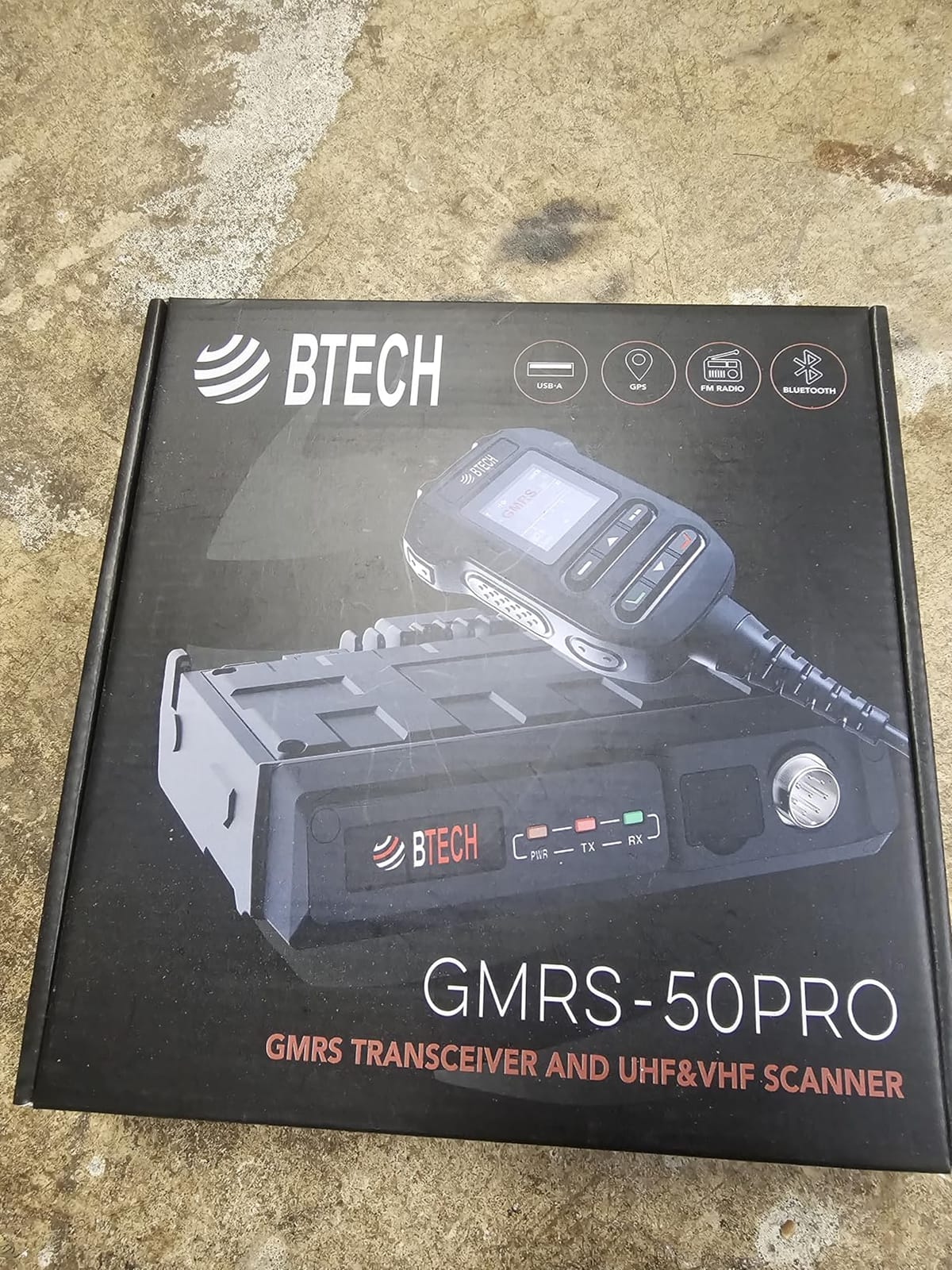
The GMRS-50PRO is the one I recommend when the group wants position on a map as well as voice, and when somebody will own the programming. Built-in GPS supports location sharing and group coordination, so a convoy can see roughly where the stragglers are instead of guessing from silence.
The colour microphone display is the feature drivers notice first. Channel, tone and signal information stay visible, so you spend less time navigating menus while moving, which is the difference between a usable radio and one nobody touches on a bumpy trail.
Programming happens over Bluetooth through an app on iOS and Android, and CSV import and export makes cloning a setup across a fleet or club quick. For a club rolling out an identical channel plan to twenty vehicles, that is a genuinely useful workflow.
Bluetooth HFP audio lets radio traffic play through the vehicle audio system and a headset, so the driver hears the group without holding anything. NOAA weather alerts, VOX and Bluetooth PTT options round out a well-integrated mobile package in an IP54 alloy chassis.
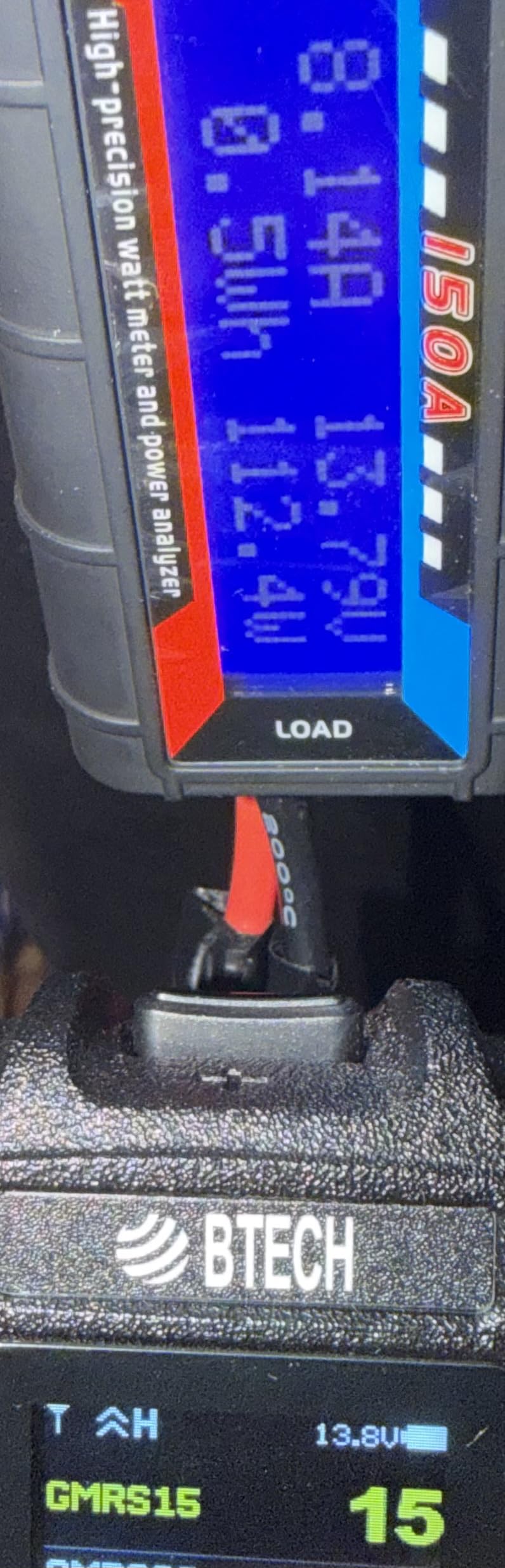
IP54 protects against dust and splash only, not submersion, so mount it where it will not sit in water. It needs a 13.8V vehicle or auxiliary DC supply to operate, so the wiring is part of the purchase decision.
App-based programming also creates a dependency on your phone and on software support continuing. If the group would rather never open an app, this is the wrong mobile for you.
Why it suits larger organised groups
CSV import and export is the feature that scales. A club that runs fifteen vehicles can build the channel plan once on a laptop and push it out, instead of touching every radio.
GPS position sharing gives a trail leader a picture of where the group has spread out, which is the information you need before deciding whether to hold at the next junction or push on to the water crossing.
Where it falls short
It is the least reviewed unit in this guide at 108 reviews, so the long-term owner record is thinner than the alternatives. Fewer people have tested it across seasons.
And it demands a committed install. Fused power, a proper antenna and a phone-based programming session are all prerequisites rather than extras.
Handheld vs Mobile: the Build Convoys Actually Need
The correct convoy build is one mobile radio installed in each vehicle plus one handheld per person. The mobile handles the link between vehicles; the handheld handles everything that happens on foot, behind a rig or out of sight of the trail.
A handheld alone is a short-range tool. Reviewers consistently describe handheld figures in terms of a few miles, with real performance closer to 3 to 4 miles in forest and 2 to 3 miles in town conditions depending on the unit. Crest Communications reports that two vehicles can become separated by a mile or two on the trail, at which point an FRS walkie-talkie stops bridging the gap and GMRS still holds.
A mobile changes that entirely. At 20W to 50W with a roof antenna, the link survives a ridge, a treeline and a section of fast road. In the SERP for this query, forum threads are full of the same question: whether 25W or 50W is worth installing versus just running a 5W handheld. On a route with terrain between you, it is.
The practical rule is simple. If the group can see each other, handhelds are enough. If the group can lose sight of each other, install a mobile in every vehicle before the trip rather than after the first time the tail vehicle goes quiet.
Power Output: What 5W, 10W, 25W and 50W Buy You on Trail
Power output matters, but not the way the numbers suggest. Going from 5W to 10W helps most in obstructed terrain where the signal is weak but present. Going from 25W to 50W helps where distance is the constraint and both ends have a clean antenna.
Five watts is the handheld default and covers spotter-to-driver distance comfortably. Eight watts, as on the Baofeng GM-15 Pro, gives a little extra punch in a valley without changing how the radio feels to carry.
Twenty watts is the sweet spot for most convoy installs. The Radioddity DB20-G measures in the high teens on an SWR and power meter according to owners, and that is enough to hold a group across most trail terrain with a roof antenna.
Forty and fifty watts are for open, long routes and for reaching a repeater. Real benefit arrives only with a tuned antenna and a real power supply; a 50W radio on a bad mag-mount behind a steel roof performs worse than a 20W radio with a proper antenna, which is the single most common installation mistake reported on these forums.
Antenna Placement: Where Convoy Range Actually Comes From
Antenna placement matters more than the wattage on the box. A radio that is technically capable of 50W but mounted badly will lose to a modest setup with a clean antenna on a rooftop mount.
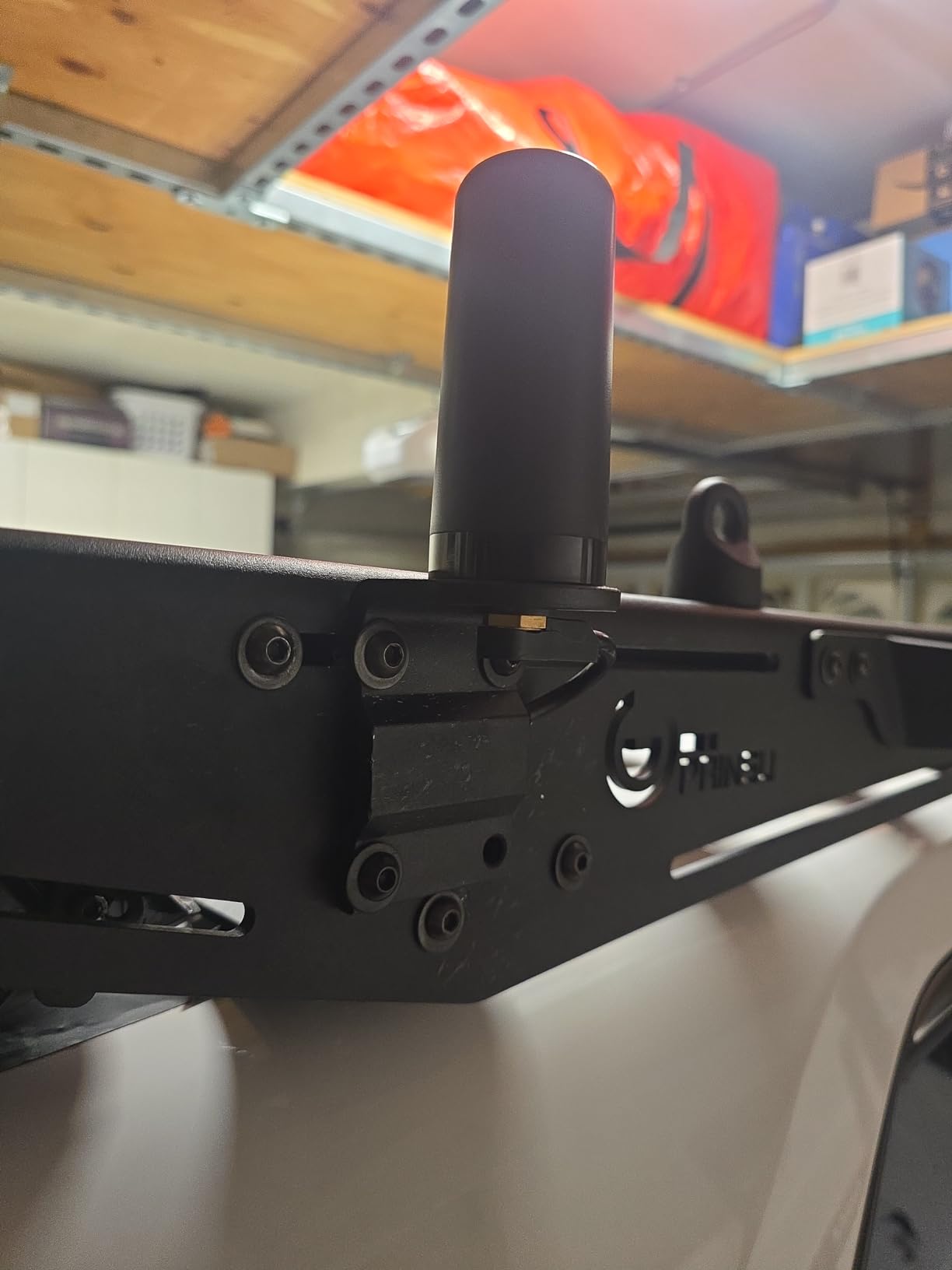
Get the antenna as high as the vehicle allows and as far from people as possible. Roof and rack mounts are the strongest option on a metal-bodied vehicle because the body becomes part of the ground plane. Higher is better in almost every other respect too.
Watch for the mag-mount problem that comes up repeatedly in off-road radio threads: a magnetic antenna stuck on a metal roof or a steel trailer without a proper ground plane performs poorly and is easy to knock off on a trail. If you use a mag-mount, give it a large ground plane and secure it properly.
Keep the coax run short and use quality cable. A long thin cable with cheap connectors loses more signal than most people expect, and the loss shows up as reduced range at the far end of the convoy, which is exactly where you need it.
For handhelds, the included long whip is worth carrying as a spare. Swapping to the taller antenna on a climb or an open section costs nothing and buys real receive sensitivity.
Vehicle Power and Wiring for 20W to 50W Mobiles
A cigarette-lighter socket is fine for a 20W mobile in a passenger vehicle and inadequate for a 50W unit. Owners and forums agree on this point, and BTECH lists a proper 13.8V 20A supply as a requirement for its 50W model.
Run a fused supply directly from the battery for high-power installations. Use an inline fuse sized for the cable, secure the run so it cannot chafe on a bracket, and keep it away from exhaust and moving suspension parts.
For a weekend run, driving from the starter battery is workable if you keep transmits short and do not run accessories at low state of charge. For overlanding where the vehicle sits for days, a second battery with a fused feed is the correct answer and it protects the starting battery.
Remember that many of the mobiles here also power a handheld from the same lead. Confirm your voltage and connector before assuming a cigarette-lighter plug will fit, since several units in this guide ship without one.
Your Convoy Channel Plan, Call Signs and Crew Roles
The most common convoy failure is not radio hardware. It is a group split across two channels or two privacy codes, with everyone assuming somebody else is talking to them. Set the plan before the trip, not at the trailhead.
First, agree on one primary channel and one secondary. Off-road groups commonly standardise on a GMRS channel with a fixed privacy code rather than running several, because a single shared setting is easier for members who joined late or borrowed a radio.
Second, match privacy codes exactly. A CTCSS or DCS code is an inaudible tone that gates a channel; if one radio has a code and another does not, both will key the channel and hear nothing from the other. Mismatched codes are the quiet reason a convoy splits into two silent groups.
Third, assign call signs by position rather than by name. Tail, spotter, lead and sweep are self-explanatory to anyone joining mid-trip, which matters when a member you have never met picks up the radio. A short, clear call sign beats a long one at 40W with a bad antenna.
Fourth, appoint a spotter and a tail. The spotter handles line and obstacle calls when the vehicle is crawling; the tail confirms the last vehicle is through and closes the gap. These two roles prevent the two classic convoy mistakes, moving on too early and leaving someone behind.
Fifth, set an interval discipline. Agree on check-in points at junctions, water crossings and the end of long sections, and keep transmissions short during the drive. Repeated chatter in a group of ten vehicles is how the trail leader gets stepped on and how a warning gets lost.
Sixth, test before you leave. With everyone in the parking lot, run the full plan: switch to the secondary, change a channel, verify a handheld can reach a mobile and back again. Fixing a privacy code mismatch in a parking lot takes two minutes; fixing it on a trail takes twenty.
Realistic Range by Terrain Instead of Marketing Miles
Stated maximum range figures for these radios run from about 3 miles on a small handheld to 100 miles on a 50W mobile. None of those numbers describe a convoy on a real trail, and treating them as a promise is how groups lose contact and blame the radio.
In open desert with high antennas and little obstruction, 50W mobiles can carry a link far enough that the vehicles stay in sight of each other on the horizon. This is the one terrain where the big figures approach reality, and even then terrain decides.
In dense forest, handheld performance is commonly cited at roughly 3 to 4 miles and 20W to 50W mobiles do considerably better than handhelds because height and power both help through trees. UHF propagation suits this better than VHF.
In canyons and deep valleys, terrain blocks rather than distance ends the link. Here antenna height matters more than power, and a rooftop mount beats a hood mount every time.
On fast road sections the problem is different. Vehicles close to within a mile on a straight run and then drop behind a hill instantly, which is why interval discipline matters as much as hardware. Plan check-in points instead of assuming continuous contact.
Licensing, Repeaters and What GMRS Cannot Reach
In the US, GMRS operation above two watts requires an FCC licence. It is a no-test licence, and one licence covers the whole family, so a convoy club pays once rather than per member. Handhelds at two watts or below generally fall below the threshold, but a radio that can be programmed above it still needs the licence for transmit use.
Repeaters extend range by re-transmitting from a fixed high location, and most of the radios here are repeater compatible. For a moving convoy they help less than people expect, because a repeater only helps when at least one vehicle is near the site.
That said, on a loop with a known high point, a club repeater or a portable repeater station can hold a group that would otherwise split, and several handhelds here offer DIY repeater channels for exactly that purpose.
The limit worth stating plainly is that GMRS cannot reach emergency services. Radio operators are not dispatched to a rescue call, and no amount of repeater coverage changes that. Carry a personal locator beacon or a satellite communicator alongside the radio if the route leaves cell coverage, and tell someone your plan before you go.
One more interoperability note for mixed clubs. On OverlandBound forums, CB is still the most popular radio among the off-road set, particularly Jeep clubs, because it is familiar and simple. If your group includes members on CB or ham equipment, agree who bridges the two rather than assuming everyone can hear you.
Frequently Asked Questions
What is the best GMRS radio for off-roading?
The best GMRS radio for off-roading is a 20W to 50W mobile radio with a rooftop antenna installed in each vehicle, supported by one IP67 handheld per person. The Baofeng UV-5G Plus is our pick for club handhelds because it is CHIRP programmable with 999 channels, and the Midland MXT575 MicroMobile is the most straightforward 50W mobile for a convoy rig. Handhelds alone reach a few miles in real terrain, so terrain between vehicles is what makes the mobile worth installing.
Which GMRS radio is best for off-roading?
It depends on whether you need on-foot range or vehicle-to-vehicle range. For hand work behind a rig, the Baofeng UV-9G or Midland GXT67 PRO give you IP67 sealing that survives mud and three feet of submersion. For holding a group together across open terrain, a mobile such as the Radioddity DB20-G at 20W or the BTECH GMRS-50V2 at 50W is the correct tool. Most groups end up running both.
What is the best walkie talkie for a car convoy?
The best walkie talkie for a car convoy is one that matches the group’s channel plan and has a sealed chassis, because a handheld that fails in a creek ends the link for that person. Rugged Radios GMR2 Plus is the easiest for members who will not set up radios, while Baofeng UV-5G Plus is the best choice when a club leader will program and clone the settings. Handhelds are for inside the group; the vehicle-to-vehicle link needs a mobile.
What GMRS channel do off-roaders use?
Off-road groups usually standardise on one GMRS channel with a single agreed privacy code, because a shared setting is simpler for late arrivals and borrowed radios. There is no official off-road channel; the convention is to pick a channel that is not in use locally and tell every member the same channel and the same CTCSS or DCS code. Use a second channel as a backup and switch the whole group together. Verify the code matches on every radio before you leave the trailhead.
How far can GMRS go with repeaters?
Repeaters help when at least one vehicle is close to a repeater site, so they matter most on loops and fixed locations rather than for a convoy moving steadily across open ground. Owners of high-power mobiles in this guide report real repeater contacts at 40 to 60 miles, though terrain and antenna height dominate the result. Several handhelds also offer DIY repeater channels so a group can run its own relay where no commercial coverage exists.
What GMRS radio has the longest range?
Range comes from three things together: transmit power, antenna height and terrain. The 50W mobiles here, such as the Midland MXT575 and the BTECH GMRS-50V2, have the most power available, and a 25W mobile rig is widely described in GMRS owner threads as strong value for a vehicle install. None of them will reach a stated maximum reliably on a trail. A rooftop antenna and a fused power supply do more for real range than the extra watts do.
Is there a waterproof GMRS handheld radio available?
Yes. The Midland GXT67 PRO, the Baofeng UV-9G and the Retevis Ailunce HA1G and RB48 Plus are all rated IP67, meaning dust-tight and submersible to three feet for around thirty minutes. The Retevis Ailunce HA1G extends IP67 to its shoulder speaker microphone, which is the part that takes the abuse on a rock crawl. Several cheaper handhelds here have no ingress rating at all and should be kept out of the weather.
Do I need a licence to use a GMRS radio?
In the US you need an FCC GMRS licence for transmit use above two watts, and it is a no-test licence with no exam. Many of the handhelds in this guide can be programmed above two watts, so assume you need one. One licence covers a family or a club, so the cost is shared rather than paid per vehicle. Note that GMRS cannot contact emergency services in any case, so carry a personal locator beacon or satellite communicator on remote routes.
The GMRS Convoy Kit We Would Build in 2026
For a working convoy in 2026, we would put a mobile in every vehicle. The Midland MXT575 MicroMobile is the pick for a group that wants installation to be simple, with all controls in the handset and 50W of output. The Radioddity DB20-G covers groups that want the least fuss and the smallest learning curve, and the BTECH GMRS-50V2 fits a club that needs quad watch and repeater control.
On foot, we standardise on the Baofeng UV-5G Plus because a club leader can clone one channel plan to everyone, and pair it with the Baofeng UV-9G or Midland GXT67 PRO wherever water and mud are part of the route. Carry one handheld per person rather than per vehicle, because the person behind a rig is the one who needs to reach the driver.
Then do the unglamorous work: rooftop antennas, a fused power supply, one agreed channel with one agreed privacy code, call signs by position, and check-in points agreed before the first wheel turns. That preparation is what turns the best GMRS radios for off-road convoys into a convoy that stays together, and it costs nothing compared with the hardware.