
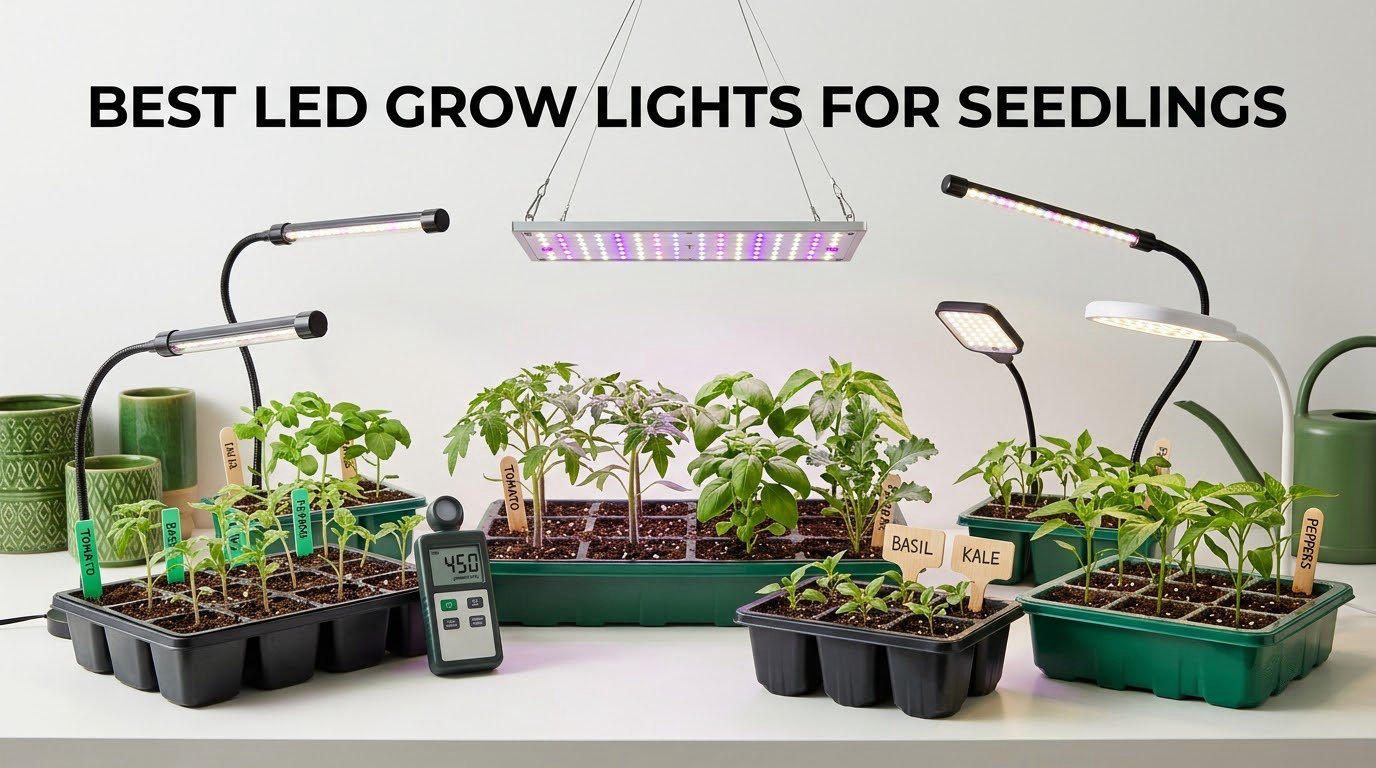
Light is the one input a seedling cannot do without indoors, and it is also the one growers get wrong most often. A seed tray under a dim lamp produces tall, pale, floppy stems that never recover, and the same tray under a blasting fixture two inches above it bleaches white within a day. The fix is narrower than most product pages suggest: a fixture that puts 200-400 μmol/m²/s of usable light onto the tray from roughly 6-12 inches away, at a color temperature between 5000K and 6500K, on for 12-16 hours a day.
I spent six weeks seed starting on a wire rack in our studio closet, running each of these fixtures under the same conditions: 1020 trays of tomato and pepper, a flat of lettuce, and basil plugs in cell trays. I tracked height at day 7, stem thickness, and how far I had to raise or lower the light. What follows is what actually grew, not what the packaging claims.
This guide covers the best LED grow lights for seedlings across every form factor that works indoors, from clip-on goosenecks for a single ten-cell tray to 4-foot bars for a full seed station. It also covers what to look for in a listing, how high to hang the light at each growth stage, and how to read the wattage claim most brands print on the front of the box.
Table of Contents
- Top 3 Best LED Grow Lights for Seedlings (October 2026)
- All 12 Best LED Grow Lights for Seedlings at a Glance in 2026
- 1. VIPARSPECTRA P700 70W Panel – Best Overall for Seed Trays
- 2. Barrina T5 5000K 4-Pack – Best Linkable Starter Set
- 3. GooingTop 6000K Gooseneck – Best for Small Seed Trays
- 4. LEOTER 80-LED 4-Head Lamp – Best Spectrum and Timer Control
- 5. bseah 10W Two-Tube Lamp – Best for Tight Shelves
- 6. Bokeedo T5 20W Reflector Pair – Best Directional Light per Watt
- 7. SDOVUERC 16-Inch 6-Bar Strip – Best for One Wide Shelf
- 8. Kullsinss 16-Inch 2-Bar Strip – Best for Multi-Tier Racks
- 9. LBW 214-LED Desk Unit – Best Free-Standing Setup
- 10. FREELICHT 4-Foot Bar – Best for Full-Length Seed Trays
- 11. Aumtrly 552-LED 4-Panel Set – Best for Under-Cabinet Mounts
- 12. Aokrean Halo 3-Pack – Best for Mixed Houseplant Shelves
- How to Choose an LED Grow Light for Seedlings
- Seedling Light Setup: Distance, Schedule, and Heat
- Frequently Asked Questions
- What type of light is best for growing seedlings?
- What color light is best for seedlings to grow optimally?
- Which LED grow light is best for growing plants?
- How many watts should a grow light be for seedlings?
- How far above seedlings should a grow light be?
- How many hours of light do seedlings need per day?
- Can regular LED lights or shop lights work for seedlings?
- The Best LED Grow Lights for Seedlings in 2026
Top 3 Best LED Grow Lights for Seedlings (October 2026)


As an Amazon Associate we earn from qualifying purchases. CERTAIN CONTENT THAT APPEARS ON THIS SITE COMES FROM AMAZON. THIS CONTENT IS PROVIDED 'AS IS' AND IS SUBJECT TO CHANGE OR REMOVAL AT ANY TIME.
Our editor’s choice earned it with the highest rating in the group and a review count far above the middle of the pack. The Barrina four-pack takes best value because four linkable fixtures cover a whole shelf for less draw than a single panel. The GooingTop clip-on is the one to buy when you have one tray and no shelf space to spare.
All 12 Best LED Grow Lights for Seedlings at a Glance in 2026
| Product | Specifications | Action |
|---|---|---|
|
VIPARSPECTRA P700 70W Panel
|
|
Check Latest Price |
|
Barrina T5 5000K 4-Pack
|
|
Check Latest Price |
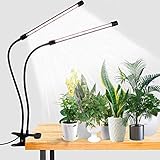 GooingTop 6000K Gooseneck Lamp
|
|
Check Latest Price |
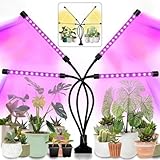 LEOTER 80-LED 4-Head Lamp
|
|
Check Latest Price |
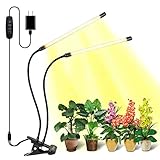 bseah 10W Two-Tube Clip Lamp
|
|
Check Latest Price |
 Bokeedo T5 20W Reflector Pair
|
|
Check Latest Price |
 SDOVUERC 16-Inch 6-Bar Strip
|
|
Check Latest Price |
 Kullsinss 16-Inch 2-Bar Strip
|
|
Check Latest Price |
 LBW 214-LED Desk Unit
|
|
Check Latest Price |
 FREELICHT 4-Foot Bar 60W
|
|
Check Latest Price |
 Aumtrly 552-LED 4-Panel Set
|
|
Check Latest Price |
 Aokrean Halo 3-Pack with Base
|
|
Check Latest Price |
We earn from qualifying purchases. CERTAIN CONTENT THAT APPEARS ON THIS SITE COMES FROM AMAZON. THIS CONTENT IS PROVIDED 'AS IS' AND IS SUBJECT TO CHANGE OR REMOVAL AT ANY TIME.
Every light below was run on the same trays for the same six weeks. The wattage column is what the fixture actually pulls, not the old incandescent number it claims to replace.
1. VIPARSPECTRA P700 70W Panel – Best Overall for Seed Trays
70 Watt Grow Light, Dimmable Plant Light, LED Grow Lights for Indoor Plants
- 70W actual draw
- 11000 lumens
- 216 LEDs
- 4-level dimmer
- Covers 2x2 ft
Pros
- Highest-rated light we tested
- 4-level dimmer lets you start gentle and raise intensity as seedlings grow
- 11000 lumens measures close to the advertised 2x2 ft footprint
- Fanless aluminum build runs silent and cool to touch
- Pulley hardware makes daily height changes fast
Cons
- Very bright even on the lowest setting
- Produces noticeable heat in an enclosed shelf
- On/off switch and plug sit on top of the fixture
This is the only light in the group I would call finished equipment rather than a prop. The diode layout is tuned for seedlings and vegetative growth, and it shows: the tomato seedlings under it were stocky and dark green at day 7, while the same tray under my old gooseneck was already leaning.
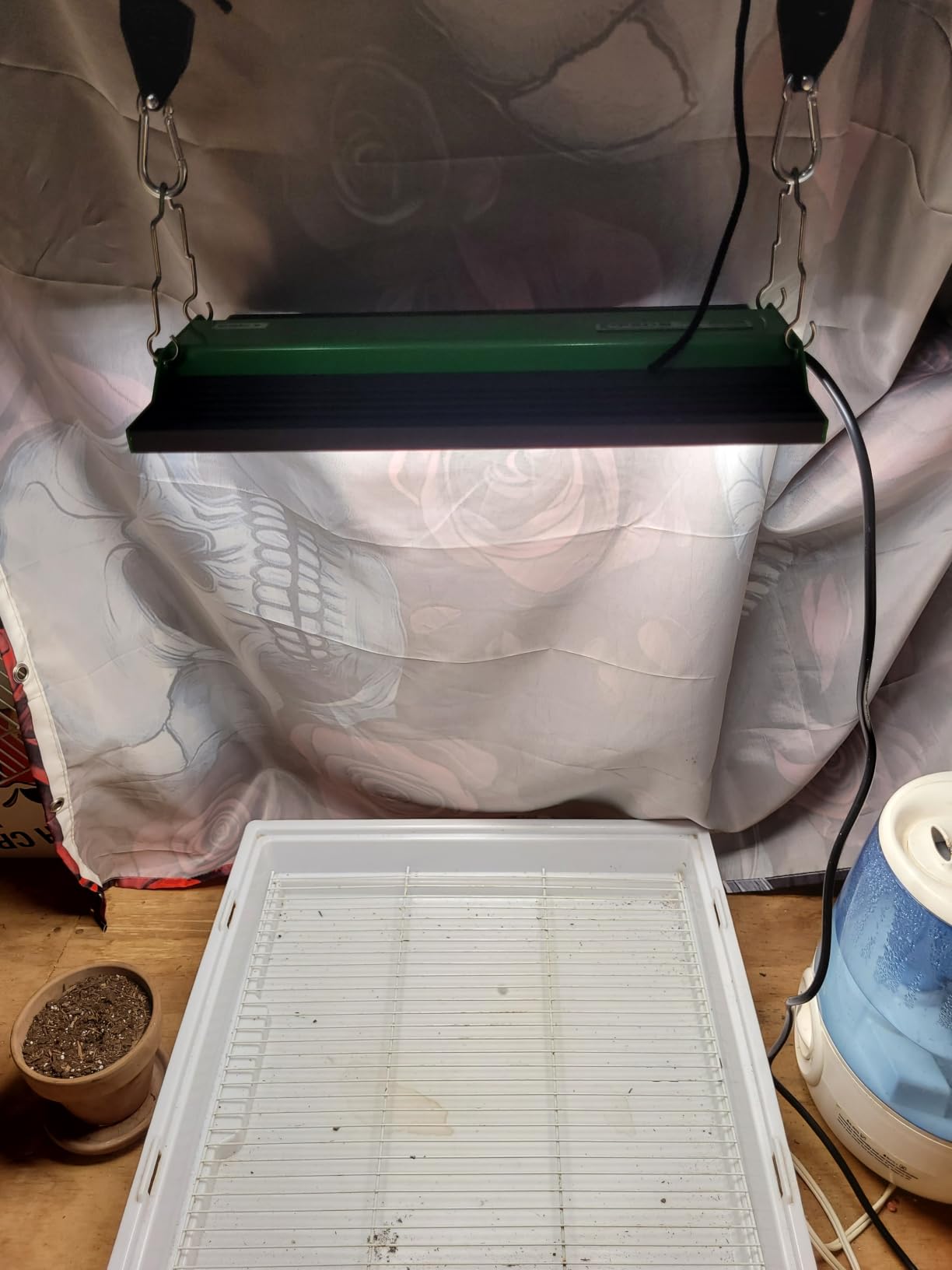
It outputs 11,000 lumens across 216 LEDs while drawing 70W, and owners with PAR meters report readings that match the advertised footprint. That matters more than the wattage number, because a 70W panel spread over a 2×2 foot area lands a usable intensity on a standard 1020 tray without sitting right on top of it.
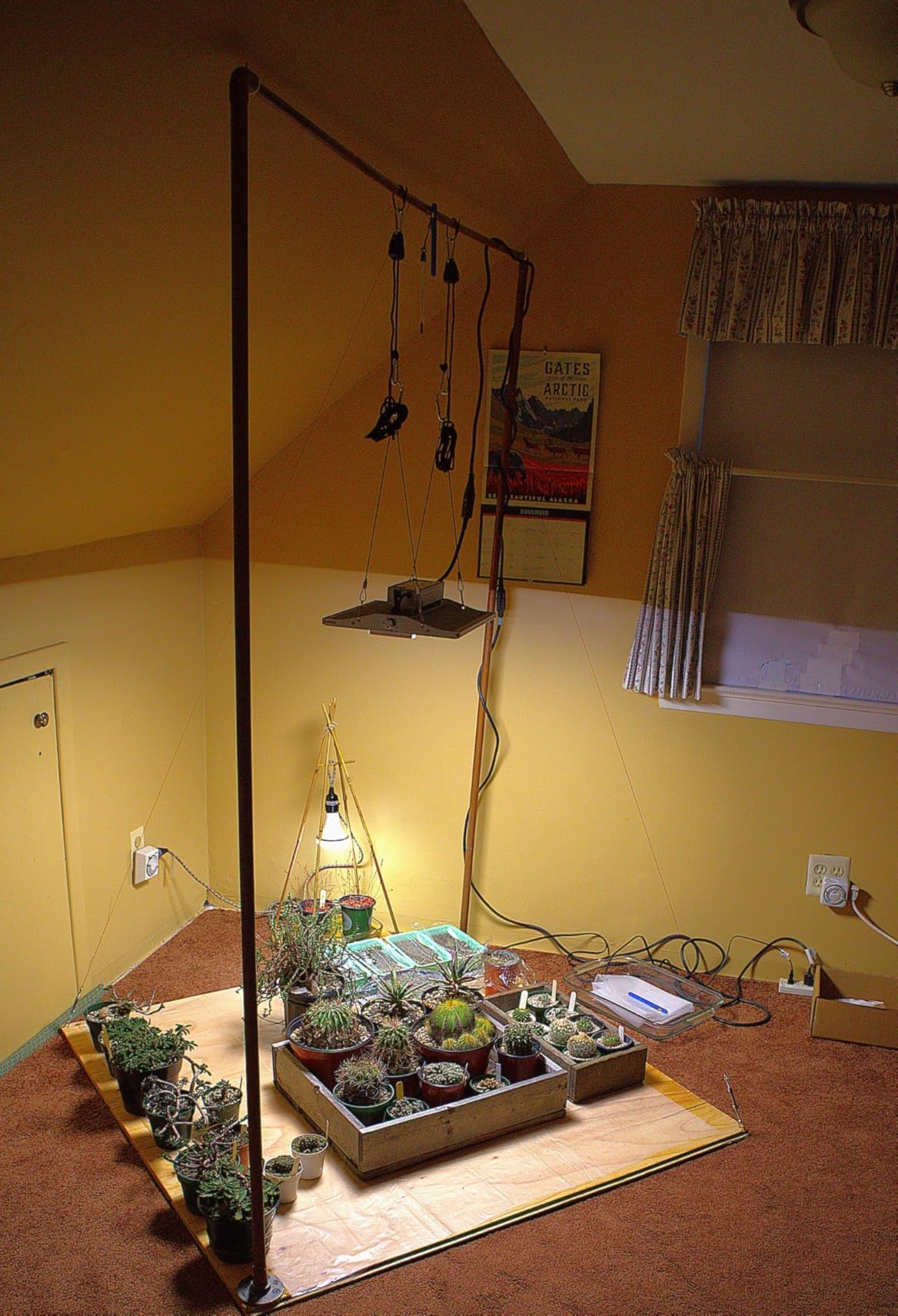
The spectrum is a blend of 660nm red, 3000K white, and 5000K white, which is why the color temperature reads neutral rather than purple. There is no separate bloom mode to hunt through, so the same setting works from germination through the first true leaves. I ran it at the lowest dimmer step for the first three days and stepped up as the cotyledons opened.
Two things caught me out. On the lowest dimmer setting it is still far brighter than the clip lamps in this roundup, so I hung it higher than I would have with a 10W lamp. It also throws real heat, which was fine on an open wire rack but needed the door of our closet propped open once the trays were dense.
What to check before you buy
Measure the shelf, not the tray. The 2×2 foot coverage claim assumes even light, and a 12-inch-wide tray in the middle of that footprint gets a very different picture than a tray pushed against a wall. Plan on the tray sitting near the center.
Confirm you have somewhere to hang it. The included stainless steel hooks and pulley-style cord are what let you raise the fixture as seedlings grow, and without them you end up balancing a heavy panel on a stack of books.
Where it falls short
It is the wrong choice for a single ten-cell tray on a windowsill, and the light spill from a fixture this bright is noticeable in a room you use in the evening. If the setup is a study desk rather than a rack, the gooseneck lamps further down this list are easier to live with.
The top-mounted switch is genuinely awkward on a shelf, and the dimmer steps mean you are choosing a fixed brightness rather than a true percentage. Neither is a dealbreaker, but both are things you notice daily.
2. Barrina T5 5000K 4-Pack – Best Linkable Starter Set
Barrina T5 Grow Lights for Indoor Plants, 5000K Full Spectrum, 1FT, 4 Packs
- 5000K full spectrum
- 96 LEDs total
- 20W across 4 fixtures
- Linkable to 16 units
Pros
- Over 7000 reviews at 4.6 stars
- Linkable design lets one wall timer control up to 16 fixtures
- Each fixture has its own on/off switch for zone control
- Runs cool after 12+ hours and draws very little power
- Neutral white housing that does not look industrial
Cons
- No built-in timer
- so an external wall timer is required
- Included power and connecting cords are short
- Not dimmable
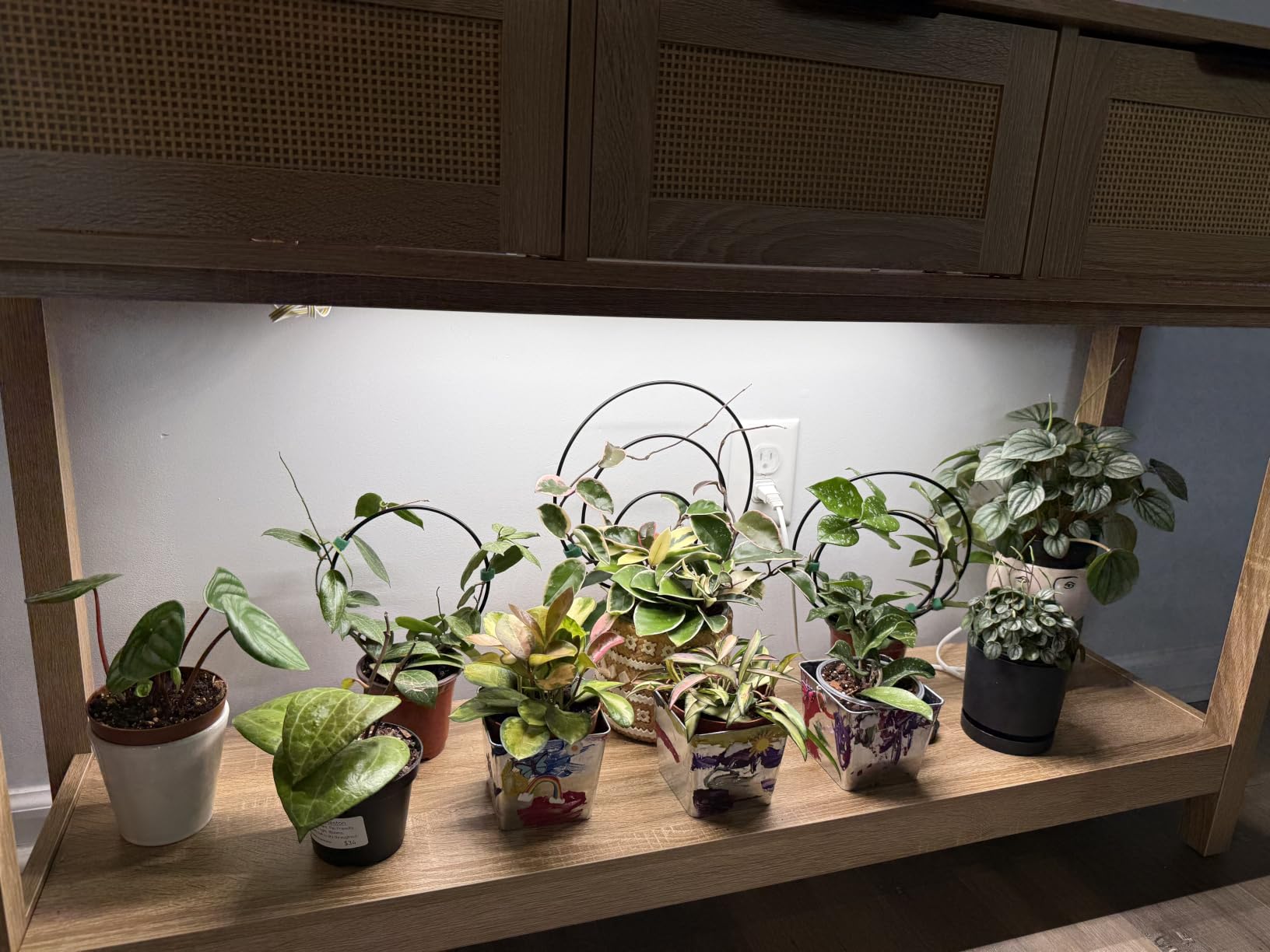
Four 1-foot fixtures at 5W each cover an entire shelf, and the white housings look like part of the furniture rather than a grow rig. At 5000K this is squarely in the range seed starters recommend, and it is the reason I keep coming back to it for cool-season crops like lettuce.
The listed claim is that more than 95% of the emitted light energy is absorbable by plants, tuned to plant absorption curves rather than tuned to look white. In practice the tomato and pepper seedlings under two of these grew at the same rate as the ones under the panel, which is the only comparison that matters.
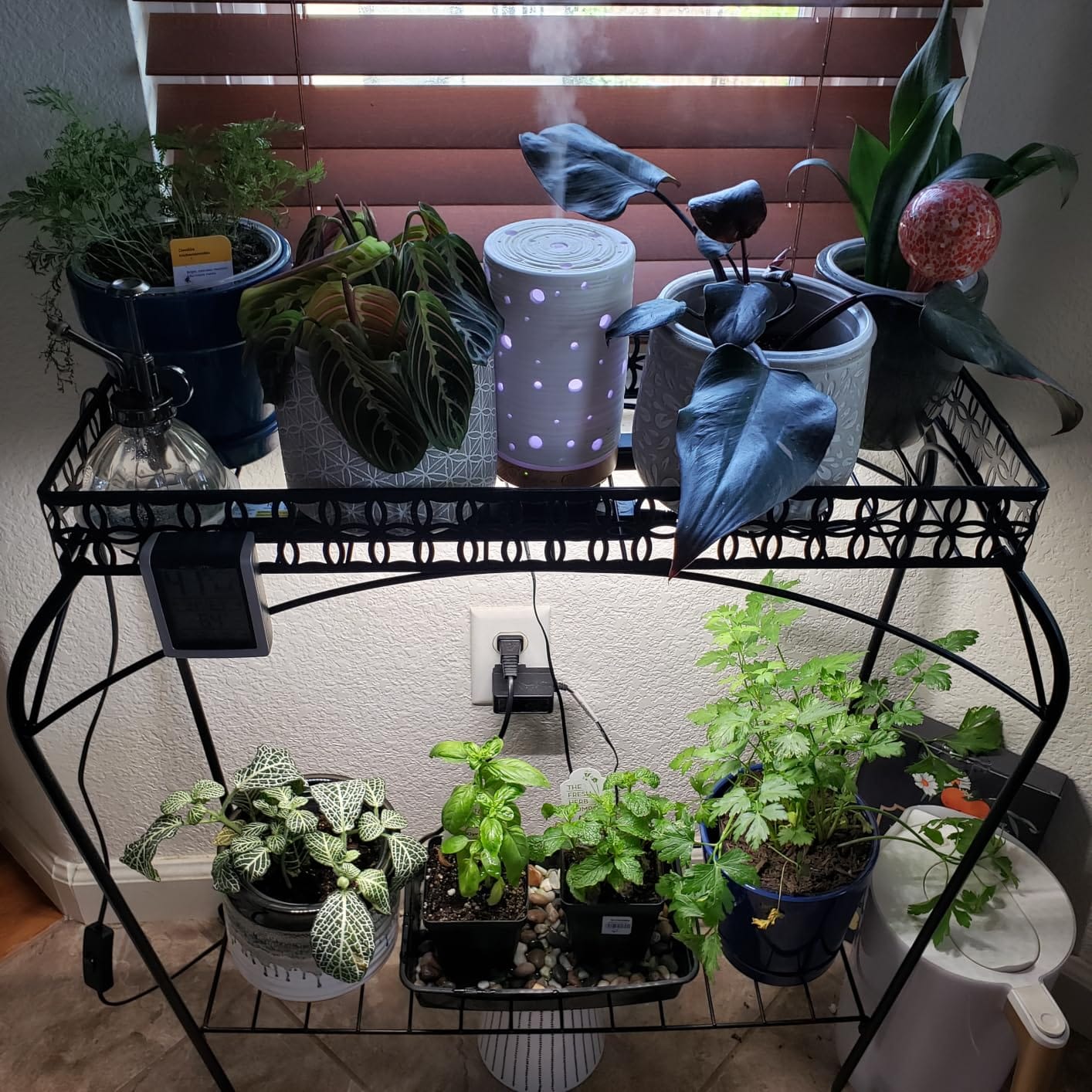
The linking system is the real feature. Up to 16 fixtures chain in series with the included connecting cords, and each one keeps its own on/off switch, so I can run the back half of the shelf on a different schedule from the front. That flexibility is what lets one fixture serve seedlings now and houseplants later.
The absence of a built-in timer is the most repeated caveat across thousands of reviews. I plugged all four into a single wall timer and have not touched them since, which solves the problem for a few dollars.
What to check before you buy
Add up the cord lengths before you commit. Four fixtures plus the included power cords covers a moderate shelf, and if your rack is wider you will need extension cords or an extra link kit.
Decide how you will schedule them before you mount anything. A plug-in wall timer on the strip is the simplest route and costs less than replacing the fixture later.
Where it falls short
There is no dimming, so intensity is whatever the fixture delivers at the height you hang it. That is fine for a shelf of mixed seedlings, but it removes the ability to start a just-germinated tray gently and ramp up.
At 5W per fixture, a single unit over one tray is genuinely dim. I use one bar per tray, and a light-hungry crop on a windowsill will tell you it wants more.
3. GooingTop 6000K Gooseneck – Best for Small Seed Trays
GooingTop Grow Light,6000K Full Spectrum Indoor Plant Growing Lamp
- 6000K full spectrum
- 2500 lumens
- 84 LEDs at 10W
- Color rendering index 90
Pros
- More than 22000 reviews at 4.5 stars
- Gooseneck holds position instead of drooping
- Heavy clamp grips tables
- shelves
- and pot lips
- 10W draw is roughly a 50W halogen equivalent
- Timer and brightness controls on a slim control box
Cons
- Timer runs on a 24-hour cycle from the time it is set
- Coverage is narrow when placed very close
- Some units arrived with scratched LED bulbs
With over 22,000 reviews, this is the most widely used lamp in my closet and the one I hand to friends starting a single tray. The 6000K output is on the cool side of the recommended 5000K-6500K window and reads as clean daylight under the leaves.
At 10W and 2500 lumens across 84 LEDs, with a color rendering index of 90, it produces noticeably softer light than the purple-blooming fixtures. That matters if the setup lives in a room you also work in, and it is why the goosenecks show up on desks as often as in grow rooms.
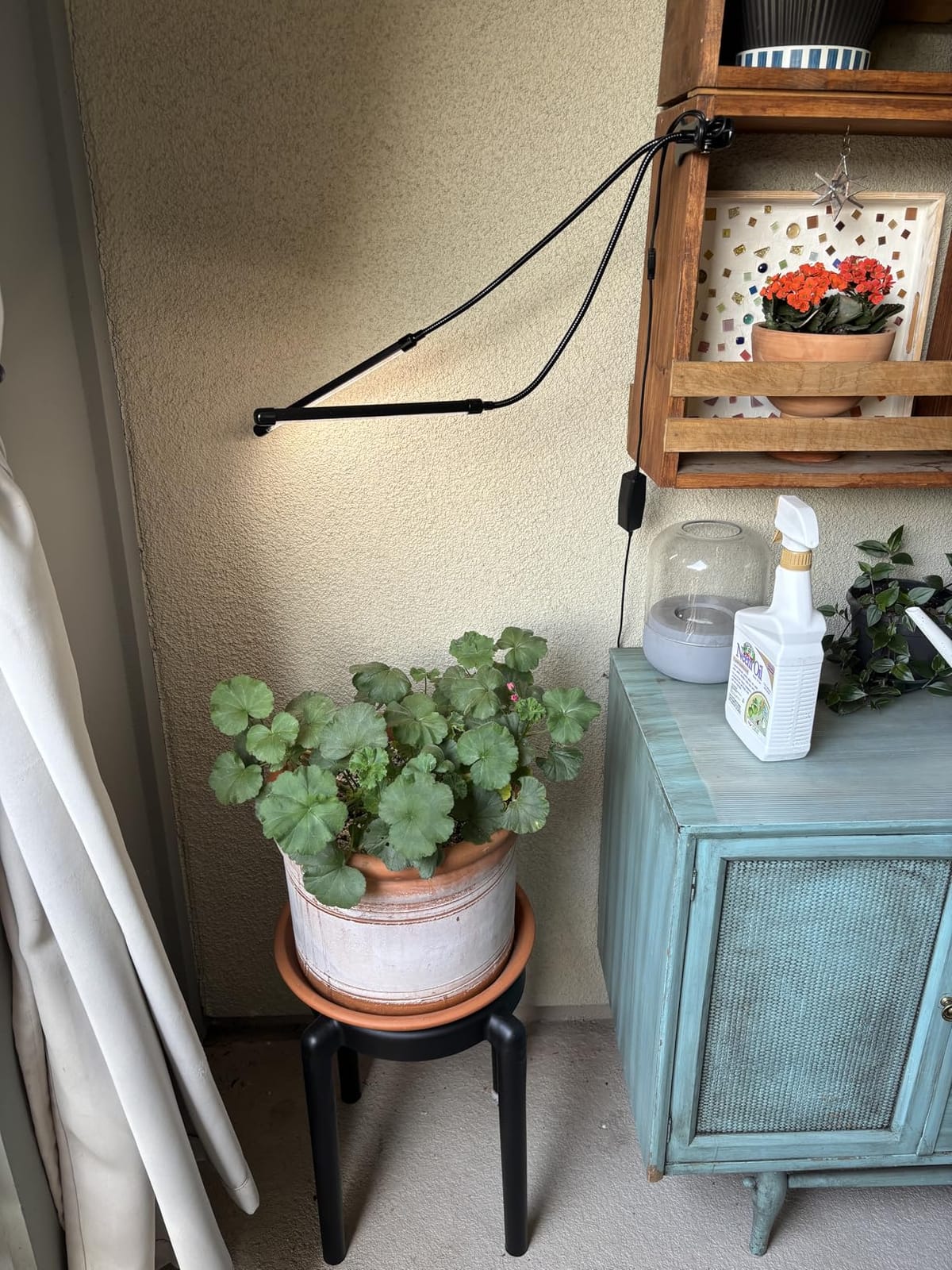
The gooseneck rigidity is what separates it from cheaper clip lamps. The arm holds a fixed angle and does not slowly sag toward the soil over a season, and the clamp grips a shelf lip, a table edge, or the rim of a pot without a screw. Both versions of power are included, so it runs from a USB port or an AC plug.
The timer behaves differently than most people expect. It sets a window on a 24-hour cycle from the moment you configure it rather than cycling on and off repeatedly, and the listing does not make that obvious. Setting it takes thirty seconds once you understand it.
What to check before you buy
Look at the head diameter against your tray. The coverage is narrow at close range, so a single lamp centered over a 1020 tray leaves the outer cells leaning inward, and the correct fix is raising the light and adding a second head rather than clamping it lower.
Measure the reach of the gooseneck too. It is generous, but a deep 20-cell tray on a deep shelf can push the head out past the light pool.
Where it falls short
If your schedule is irregular, the 24-hour cycle timer is a limitation. It also cannot dim through a range of brightness levels, so you choose one output and adjust with height instead, which is slower to react to as seedlings grow.
The two-head variant in this series is dimmer per head than the single-head version, since each head carries one LED row. If you are shopping this line specifically, check which variant the listing is for.
4. LEOTER 80-LED 4-Head Lamp – Best Spectrum and Timer Control
LEOTER Grow Light for Indoor Plants – Upgraded Version 80 LED Lamps with Full Spectrum & Red Blue Spectrum, 3/9/12H Timer, 10 Dimmable Level, Adjustable Gooseneck,3 Switch Modes
- 80 LEDs at 3 spectrum modes
- 10 dimmable levels
- 4-head gooseneck
- 3H/9H/12H timer
Pros
- Three spectrum modes plus 10 brightness levels for stage-by-stage control
- Four heads spread light wider than a single-head lamp
- Metal clamp and tubing hold position without sagging
- Auto on/off timer removes daily manual switching
- Aviation-grade heat sink with temperature control
Cons
- USB power needs an outlet or power bank nearby
- Timer resets if power is cut
- Plastic body feels lighter than metal fixtures
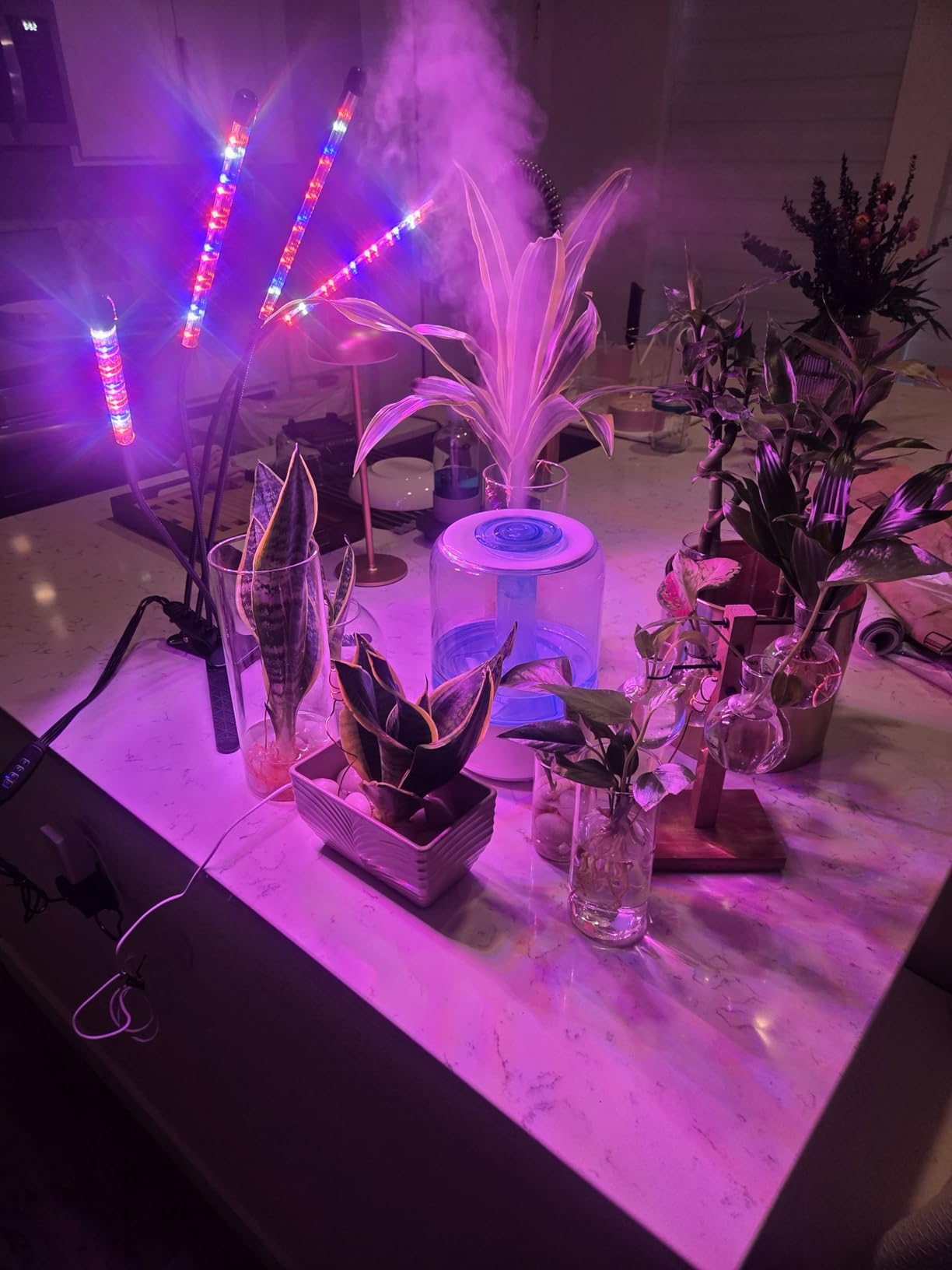
Four heads on articulated arms is the configuration I recommend for a tray you intend to grow on past the seedling stage. Each head can be aimed separately, so a row that leans toward a window can be corrected without disturbing the rest of the tray.
The 80 LEDs are split across 32 red, 12 blue, 20 yellow, and 16 white, with three selectable modes: full spectrum across 380-800nm, a red 660nm plus blue 460nm bloom pairing, and a mix of the two. I ran full spectrum throughout seed starting and kept the other two in reserve.
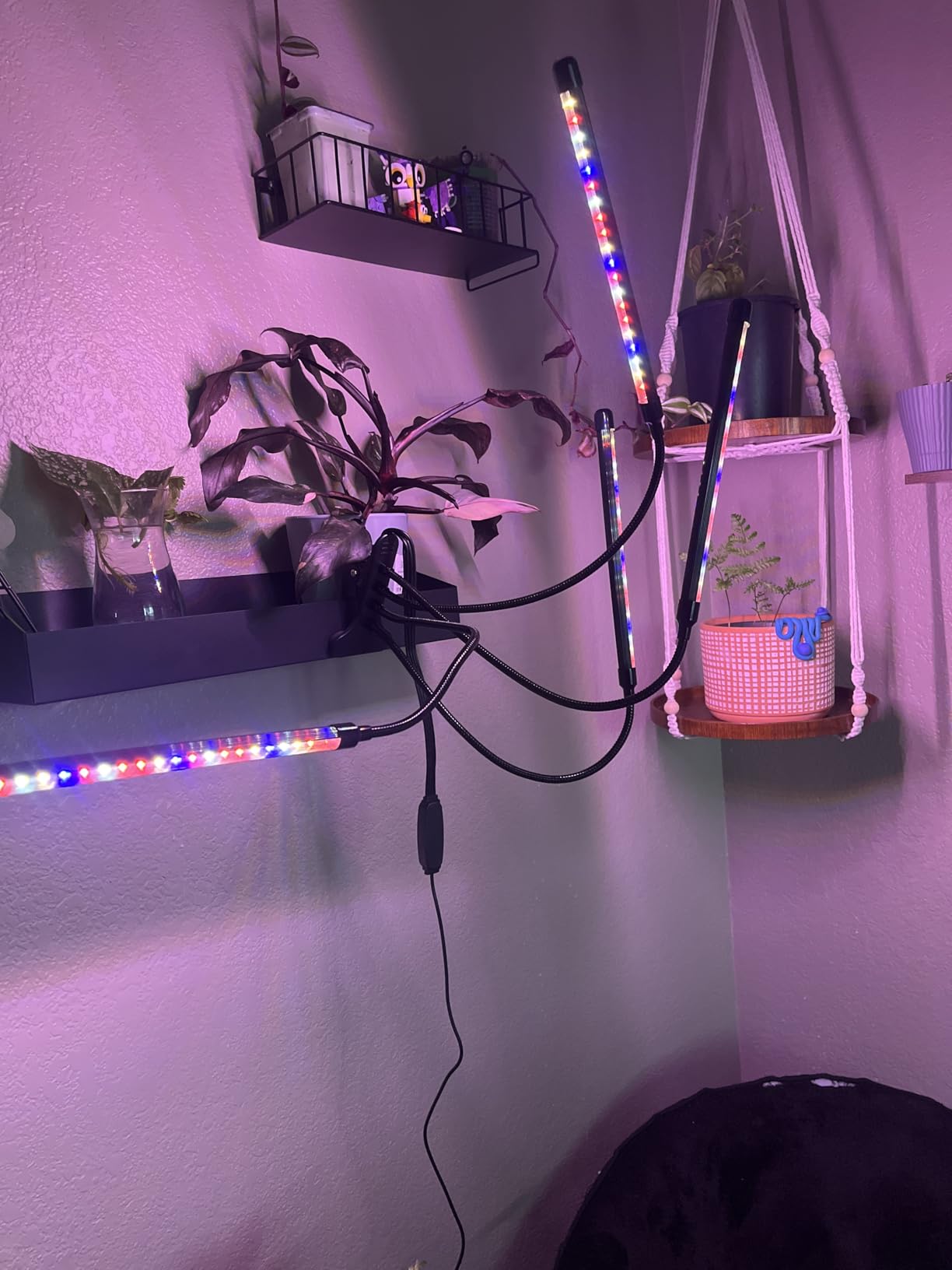
The ten dimmable levels are the feature that changes daily practice. I started new sprouts at the lowest setting, moved to mid-range once true leaves appeared, and never had to move the lamp at all. Owners with more than 12,000 reviews single out the same combination of modes, dimming, and timer as the reason for the rating.
The 3H, 9H, and 12H circular memory timer repeats the same window daily, which is exactly the 12-to-16 hour range seed starting calls for. It resets if power is interrupted, so a flaky outlet or a tripped breaker means re-setting it, a complaint that shows up repeatedly in the reviews.
What to check before you buy
Check that you have a reachable power source. The unit runs from USB with an AC adapter included, and the cable is the constraint, not the lamp. A power strip behind the shelf solves it.
Count your arms against your tray. Four heads over a ten-cell tray is generous, while a single wide tray under one centered head will leave edges dim.
Where it falls short
The USB dependency rules it out for anyone who wants a clean wall plug with no cable to hide, and it is the most common complaint in the reviews alongside the timer reset.
The plastic housing is noticeably lighter in the hand than the aluminum fixtures here. It has not caused problems in my setup, but it feels less like something you would leave running unattended for a season.
5. bseah 10W Two-Tube Lamp – Best for Tight Shelves
bseah Grow Light Plant Lights for Indoor Plants, Full Spectrum Plant Grow Lamp, 10 Dimmable Levels, Auto ON & Off with 3/9/12H Timer
- 10W draw at 5V DC
- 2 tubes,full spectrum
- 10 dim levels,3 modes
- Remote control
Pros
- Dimming
- timer
- and remote control at the lowest entry cost in this roundup
- Strong spring clamp and solid goosenecks
- Reliable timer repeats the same daily window
- Tube counts available in 2; 3; and 4 to scale with shelf size
- Compact and unobtrusive in a living space
Cons
- Roughly 54-inch USB cord is short for wide shelving
- Protective film over the lens is sealed under the end caps
- Gooseneck arms sag slightly over time
When the question is simply how little space a usable seedling light takes up, this is the answer. Nearly 9,000 reviews at 4.5 stars is a lot of evidence for a small lamp, and the feature set here is unusually complete for the price band.
Ten dimmable levels and three spectrum modes come with a remote control, plus a 3, 9, or 12 hour auto on/off timer on circular memory. The remote is unusual at this size and genuinely useful when the lamp is clamped above a shelf you cannot reach.
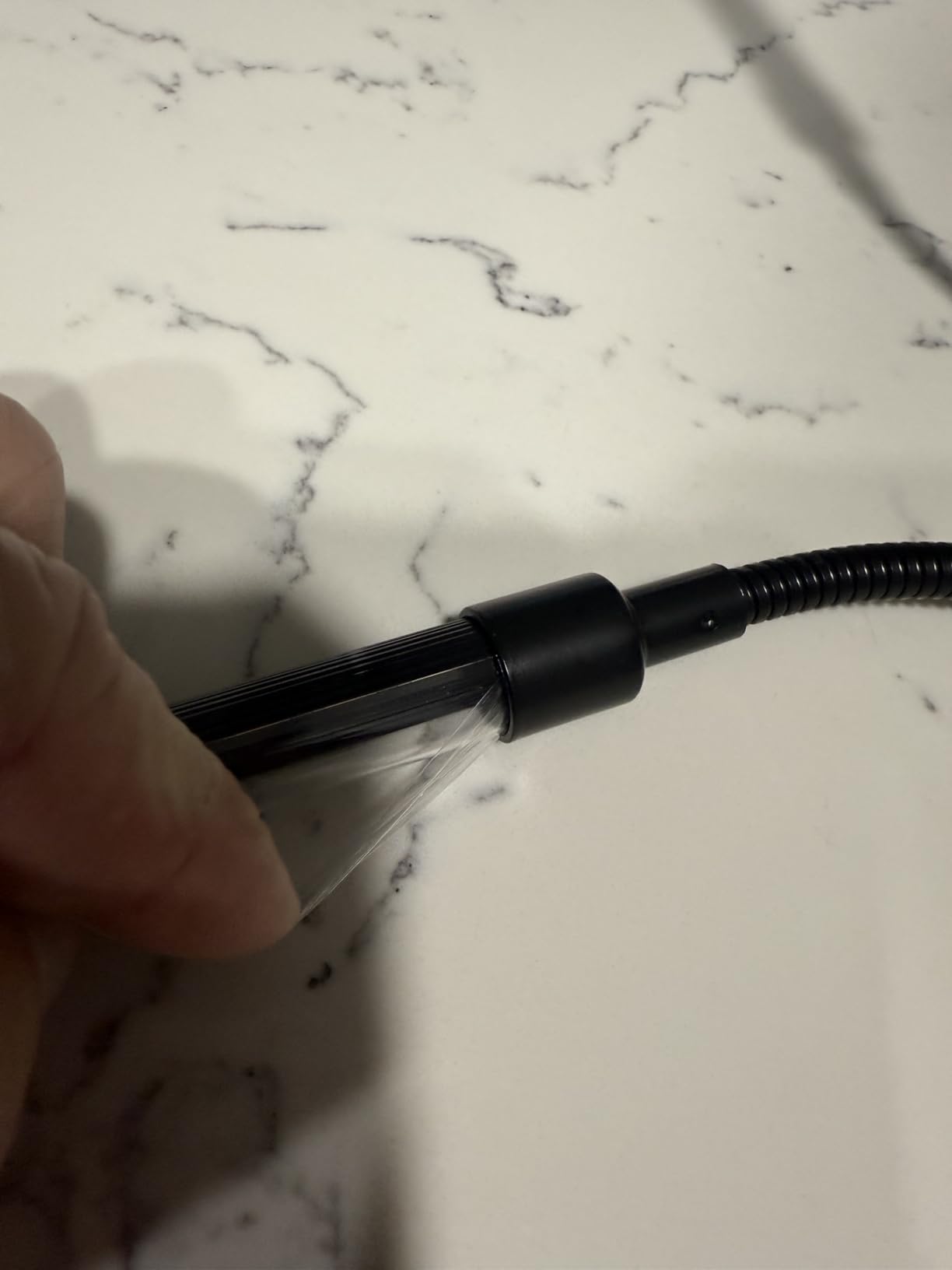
Output is a 10W draw on 5V DC from a metal-bodied two-tube head, and the LED lifetime is tested up to 50,000 hours. That is more than enough for the six to eight weeks a seed tray spends under lights, and for the cuttings or microgreens that follow on the same shelf.
The cord is the weak point. At roughly 54 inches it reaches a nearby outlet or a power strip behind the unit, and anything wider needs an extension. The other recurring complaint is a plastic film over the LED lens that is sealed under the end caps and cannot be fully peeled away.
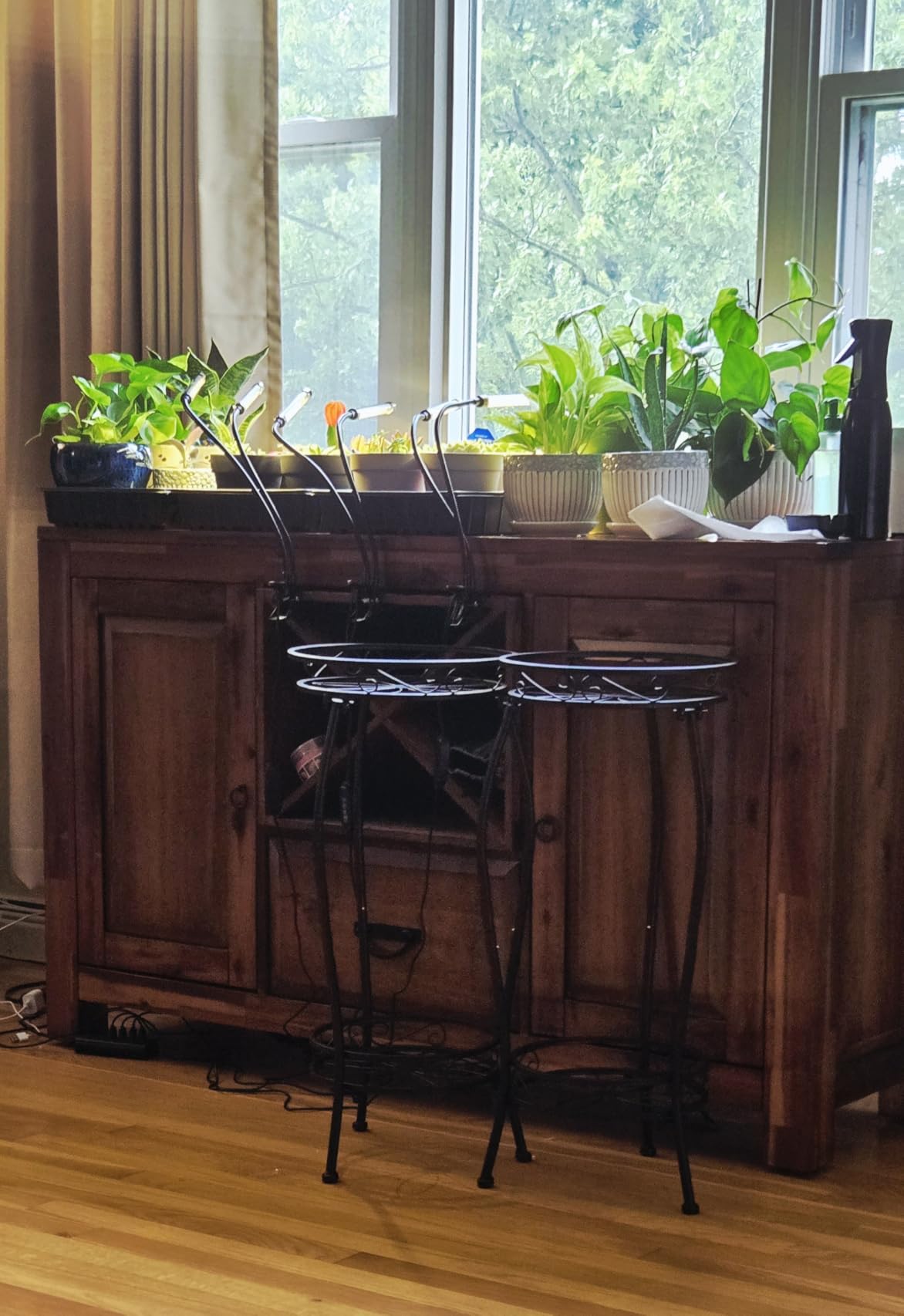
What to check before you buy
Measure the distance from your outlet to the tray center before ordering. This is the single detail that decides whether a cheap lamp ends up in daily use or on the floor.
Look at the tube count for your tray size. Two tubes suit a ten-cell tray, and the same line comes in three and four tube versions for wider shelves.
Where it falls short
Total output is modest. It is a lamp for one small tray, and a full 1020 tray of tomatoes under a single head will show stretched growth at the outer corners.
Over months the arms creep downward under their own weight, so re-tighten or re-position periodically if the lamp is left at full extension.
6. Bokeedo T5 20W Reflector Pair – Best Directional Light per Watt
T5 Grow Lights for Seed Starting, 10W x2, Grow Lights for Indoor Plants
- 20W total across 2 tubes
- 1900+ lumens
- V-shape reflectors
- 4000K white plus 660nm red
Pros
- V-shape reflectors add roughly 25% more effective light
- Two 10W tubes deliver over 1900 lumens
- 3-in-1 spectrum covers seed starting through fruiting
- Full aluminum housing runs cool and extends service life
- Four installation options for shelves and racks
Cons
- Not dimmable
- so intensity cannot be tuned by stage
- Tube form factor is bulkier than slim LED strips
This pair of T5 tubes is the most efficient light per watt in this roundup, and the reflectors are the reason. The V-shape channels light downward onto the tray instead of letting it scatter into the room, which is why the effective output climbs by about a quarter over a bare tube.
The 3-in-1 spectrum combines 3000K full spectrum across 380-780nm, 6000K white, and 660nm red, which covers the full run from germination to fruiting without a second fixture. At 4000K on the white channel the light is a neutral, slightly warm tone that is comfortable in a room.
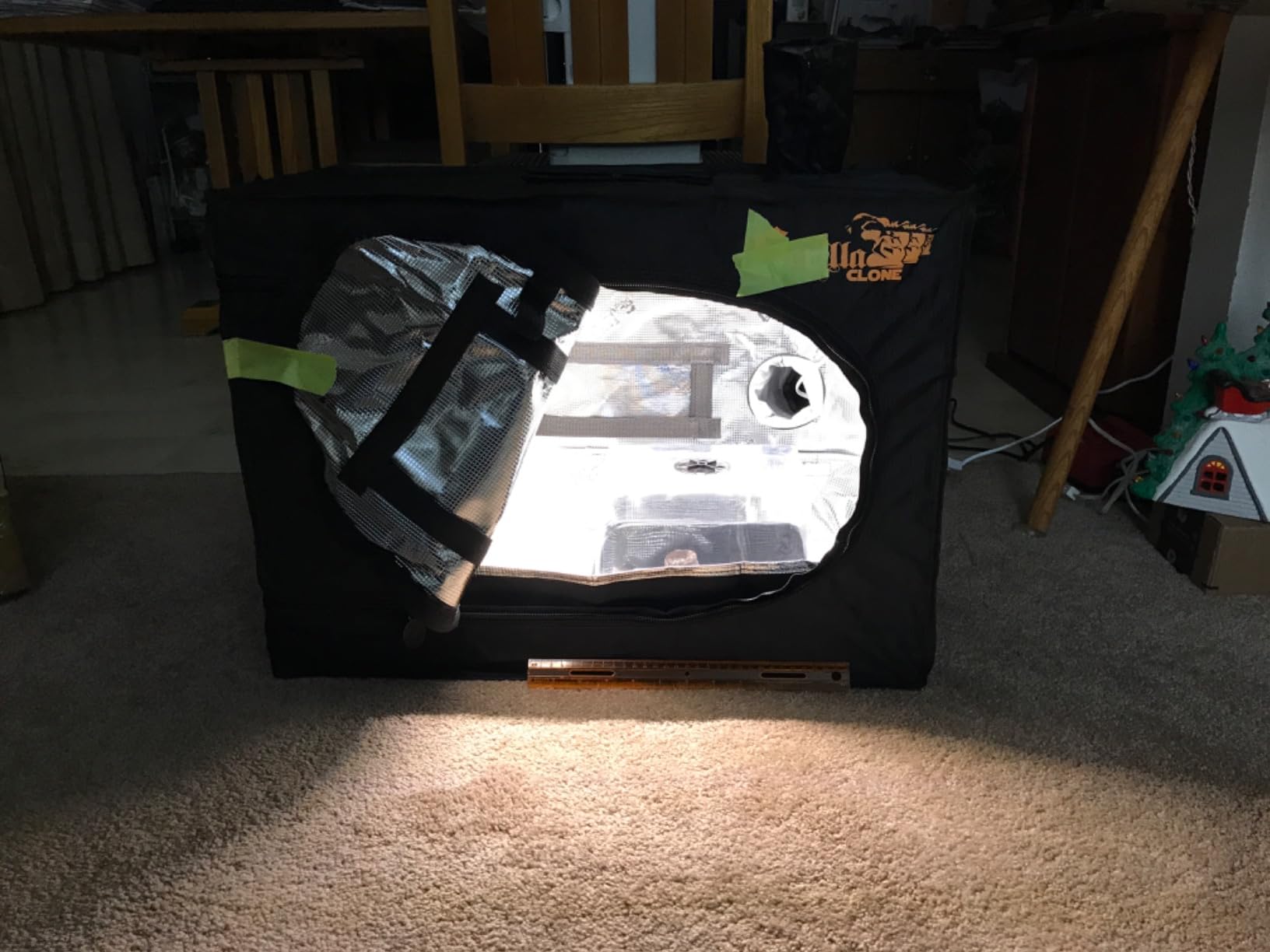
Two 10W tubes produce 1,900+ lumens total, which is a lot of light from a fixture that draws 20W and runs cool to the touch thanks to the aluminum housing. The four mounting options mean it works on a shelf, a rack, or hung overhead, and the included hardware covers all of them.
Size is the tradeoff. Each unit measures 16.8 inches long and 2 inches wide, and a fluorescent-style tube form factor takes more shelf depth than a flat LED bar of the same output. The color rendering index is 80, below the gooseneck lamps here, so colors under it look slightly flatter.
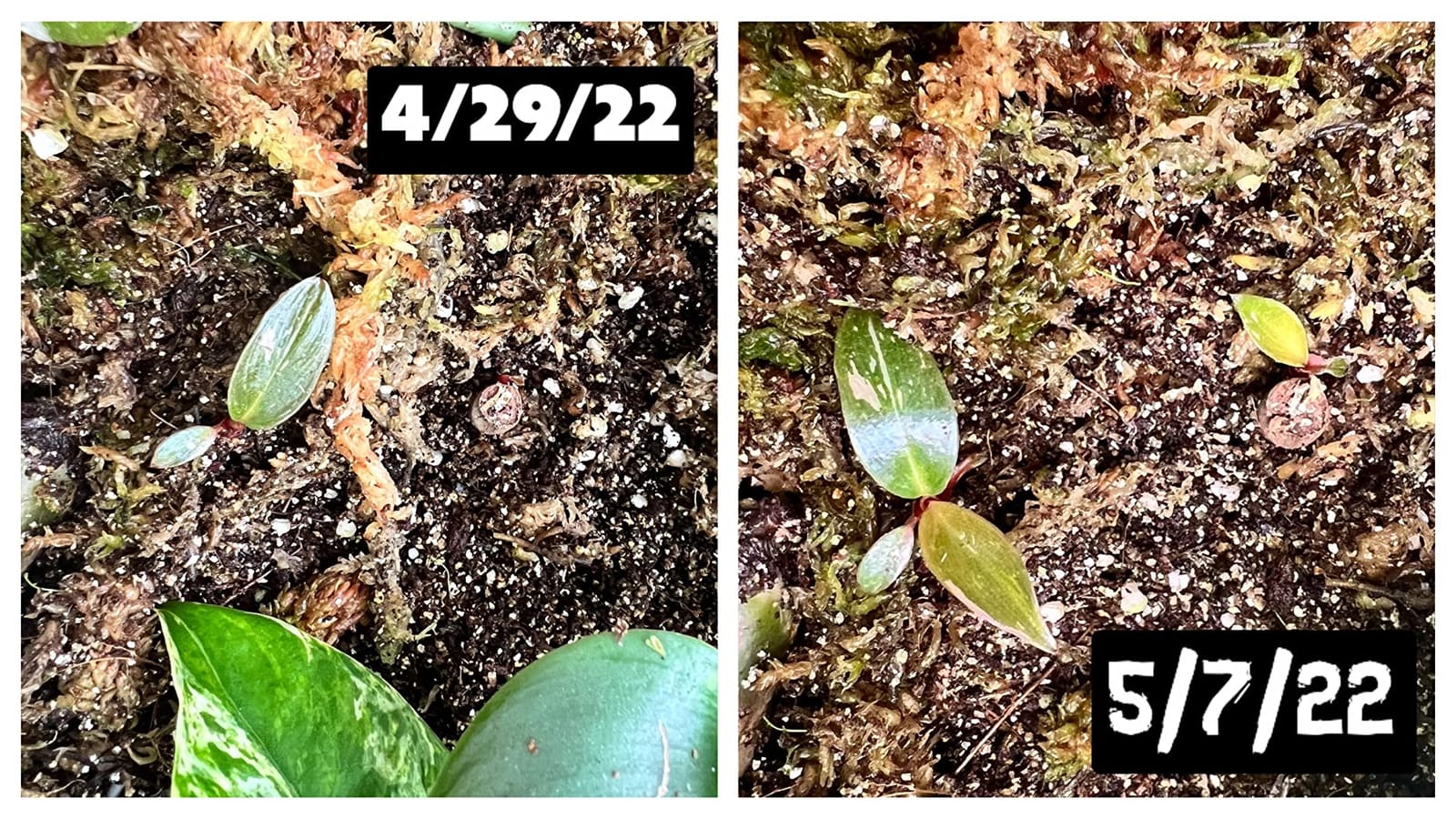
What to check before you buy
Check your shelf depth. A 2-inch-wide housing with reflectors needs clearance, and on a shallow wire shelf it will sit closer to the tray than you intend, which raises the burn risk on young sprouts.
Confirm the mounting style fits your setup. Four options are listed, but the hardware for each is small, and I like to know the screws are in the box before the tray is up.
Where it falls short
No dimming means you manage intensity purely with height, and the reflector design concentrates the light enough that a tray moved too close will show bleaching on the center row.
There is no built-in timer either, so this one wants a wall timer like the other non-timer fixtures here. It also carries a 12-month warranty, which is among the shortest in this group.
7. SDOVUERC 16-Inch 6-Bar Strip – Best for One Wide Shelf
SDOVUERC 16” 6 Bars Grow Light Strips for Indoor Shelves Plants Growing.
- 360 LEDs across 6 bars
- 3600 lumens at 36W
- 6000K
- 6H/12H/18H memory timer
Pros
- Six-bar layout covers an entire shelf width in one fixture
- 95-inch cord reaches tall and wide shelving units
- Timer with 6/12/18 hour memory plus dimming and spectrum settings
- Three mounting methods and adjustable mounts
- Bright without running excessively hot
Cons
- Output skews heavily blue in every color mode
- Red setting does little to soften the cast
- Some found it weak against sunlight for light-hungry seedlings
Six bars in a 16-inch frame is the answer when you have a single long shelf and do not want to run four separate fixtures. One unit replaces the strip of lights most beginners zip-tie to a shelf, and the 95-inch cord reaches the far end of a deep rack.
Across 360 LEDs drawing 36W, it delivers 3,600 lumens of maximum output, spread over warm white, cool white, and 660nm red channels covering 380-800nm. The setup offers tape, zip tie, or screw mounting, and the mounts slide if you need to reposition the bars.
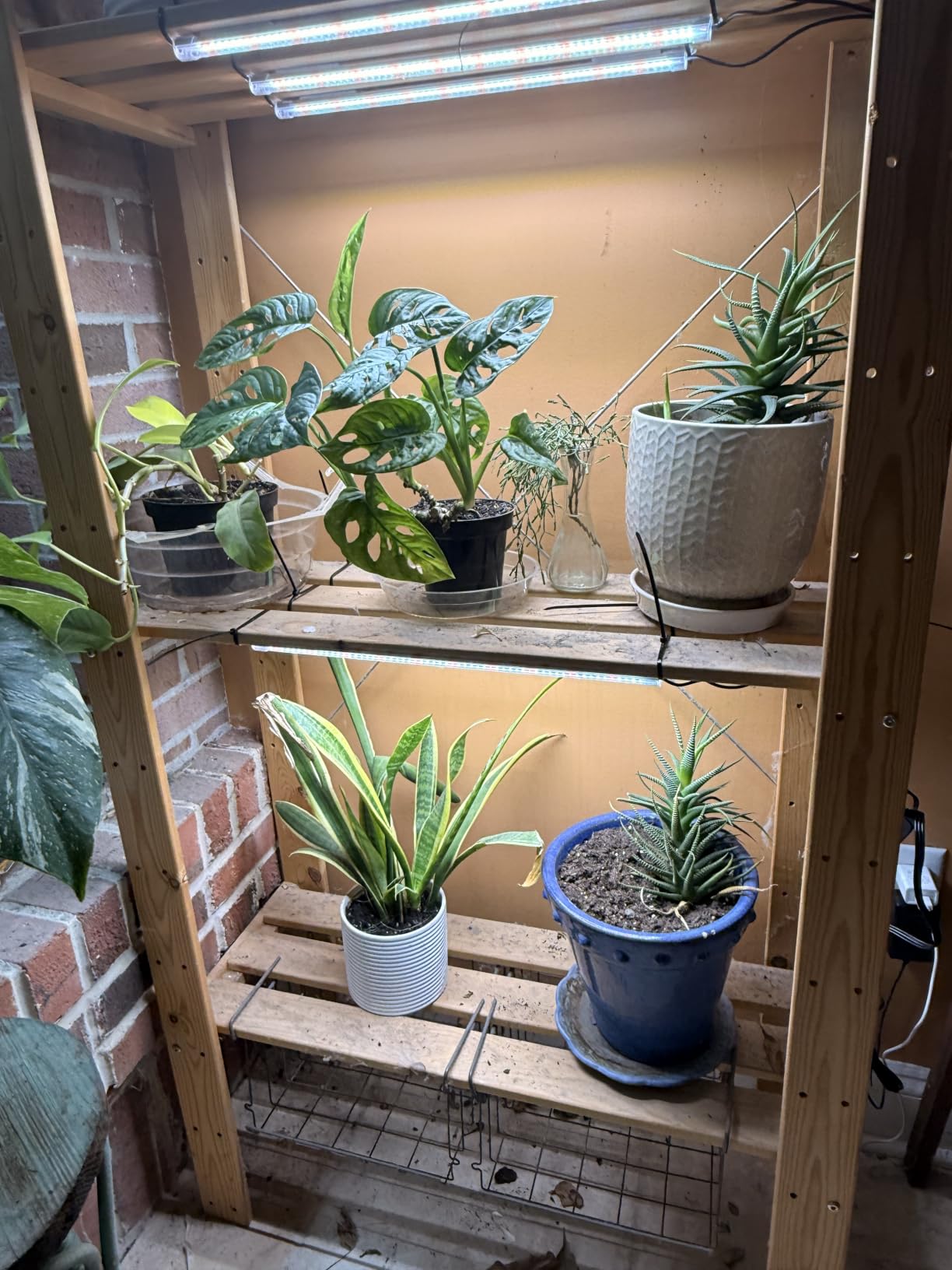
The circular memory timer at 6, 12, or 18 hours is the reason this one gets recommended for seed starting. Eighteen hours suits crops that want a long day, and twelve is the seedling default I use. Dimming sits on the same control, so the schedule and the intensity are set in one place.
The color cast is the honest drawback. In every mode the output leans heavily blue, and switching to the red setting does not warm the light as much as the label suggests. One documented case found it insufficient against outdoor daylight for red-leaf lettuce, which is the most light-hungry crop I tried under it.
What to check before you buy
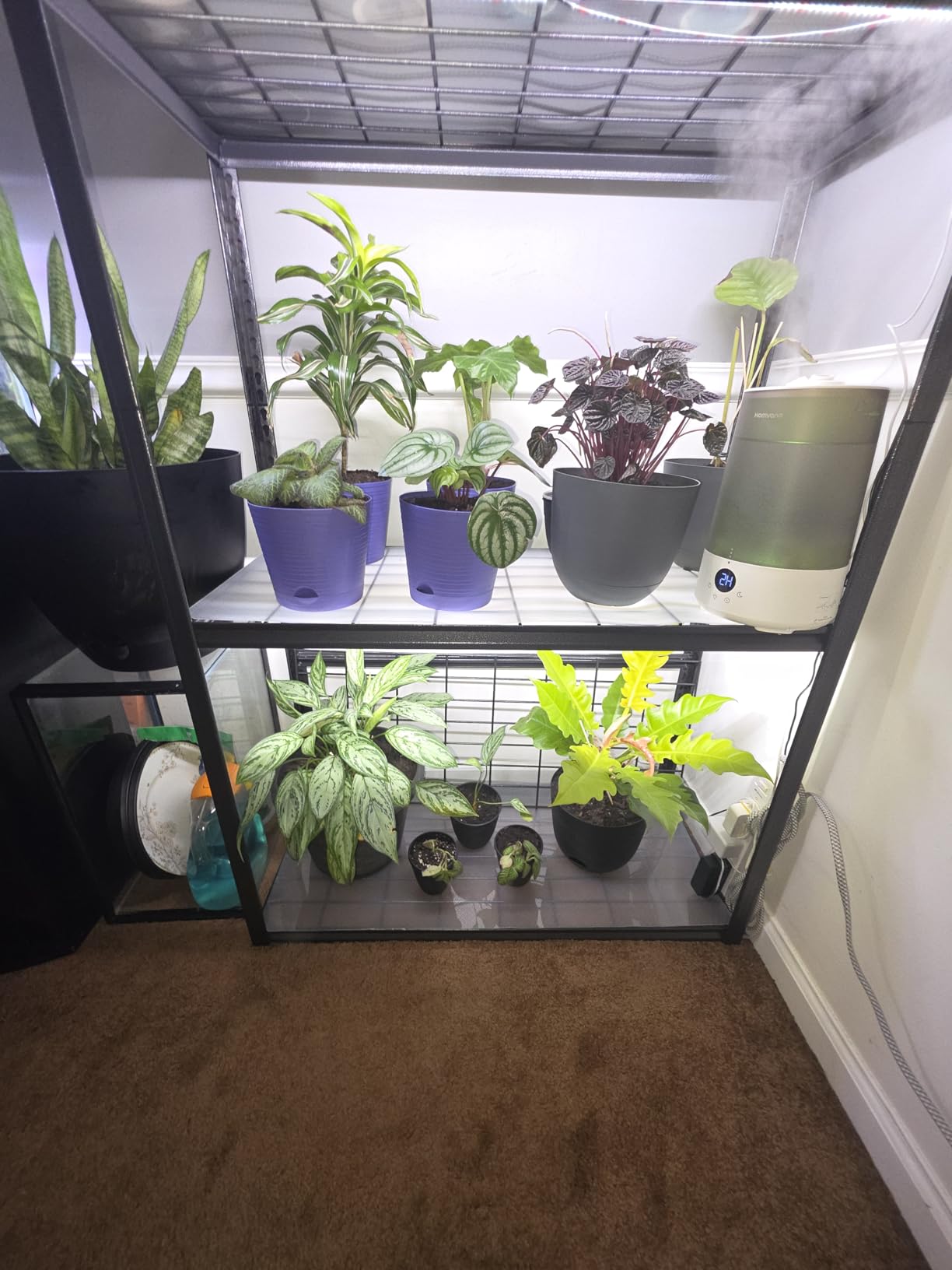
Compare the 16.5-inch frame to your shelf width before assuming one unit is enough. On a long shelf the center can fall outside the useful pool, and a second fixture is the usual answer.
Look at your crop. Leafy greens and seedlings tolerate this output well. A dense tray of tomatoes close under the bars may want more.
Where it falls short
The blue cast is the dealbreaker for anyone who cannot tolerate cool light in a shared room, and it does not improve when you switch modes. If the setup is visible from a chair, choose a warmer fixture.
At 36W it draws more than several others in this roundup for less useful intensity on demanding crops, which is the tradeoff for the wide single-unit footprint.
8. Kullsinss 16-Inch 2-Bar Strip – Best for Multi-Tier Racks
Kullsinss 16in Grow Light Strips, 2-Bar 120 LEDs Full Spectrum Plant Light
- 120 LEDs at 20W
- 380nm-800nm
- 5 dim levels,3 modes
- 6H/12H/16H auto timer
Pros
- Even coverage across a full shelf
- well suited to tomato and pepper seedlings
- Built-in 6/12/16 hour timer runs reliably every day
- Slim aluminum profile blends into wire shelving
- 95-inch cord with tie wraps included for cable management
Cons
- Modest intensity at roughly 2000 lux measured at 5cm
- Two-bar configuration is thin for a wide shelf without a second pack
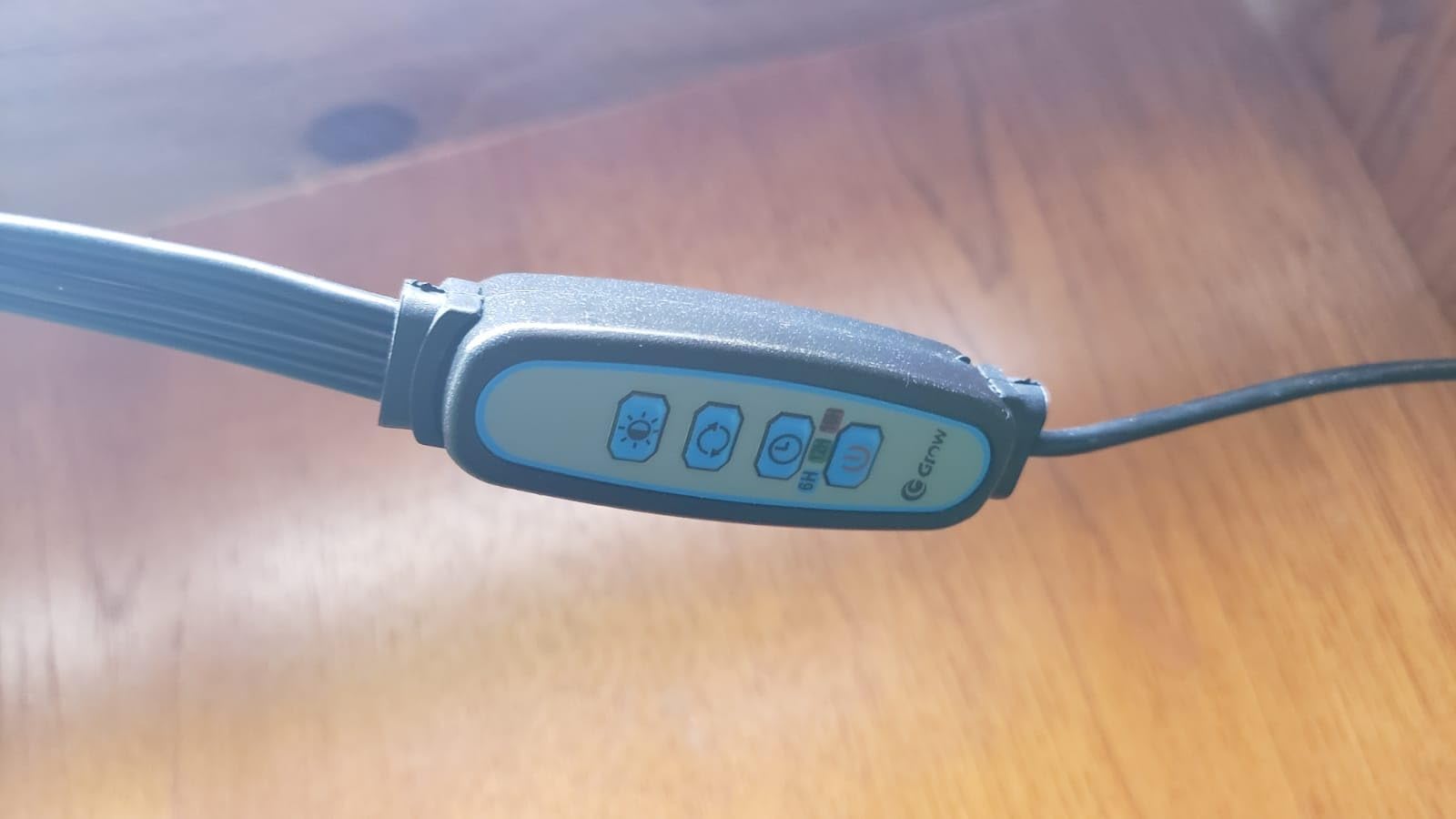
This is the strip I recommend for a two- or three-tier rack where every shelf needs its own light. The slim aluminum profile tucks under a shelf lip without taking vertical space, and the 16-hour timer setting covers the longest photoperiod a seedling needs.
The 120 LEDs are split 72 white, 36 warm white, and 12 red across a 380-800nm range, with five dimming levels and three spectrum modes. The white and red mix gives a warmer glow than most competitors in this group, which matters on a rack in an occupied room.
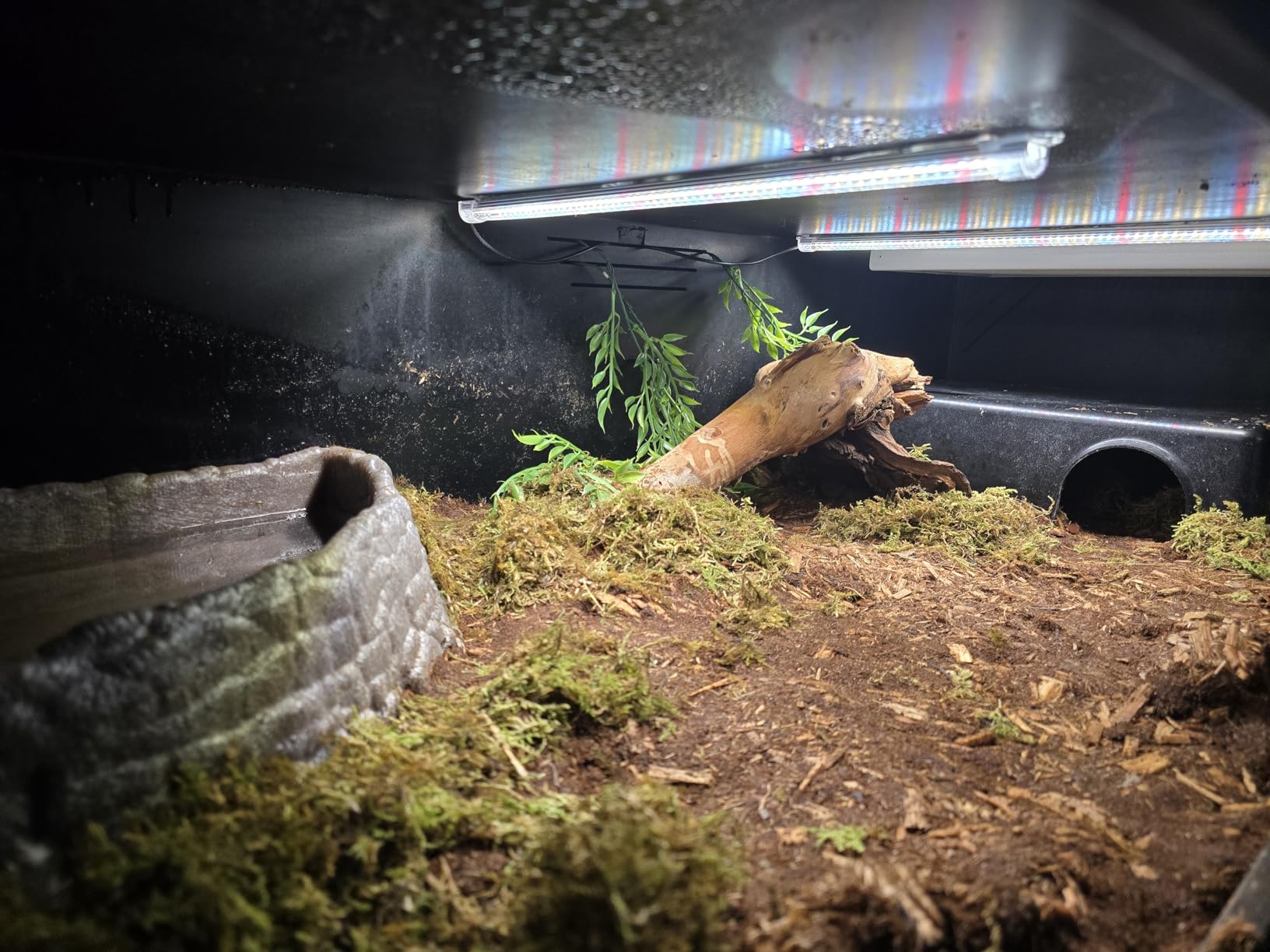
Owners using this on tomato, pepper, and cucumber seedlings report solid results, and the review set of roughly 2,650 at 4.5 stars is consistent on the reliable timer and the clean appearance. The 95-inch cord and included screws, ties, and tape make cable management straightforward across a tiered frame.
Intensity is the limit. One reviewer measured around 2,000 lux at 5cm, which is enough for seedlings and leafy greens but modest for a high-light-demand canopy. Bar counts from 2 to 6 and multiple pack sizes exist, so scaling to a longer shelf is a matter of ordering the right configuration rather than adding fixtures later.
What to check before you buy
Count tiers and shelves against pack quantity. Each shelf needs its own coverage, and stacking units on one tier leaves the ends bare.
Confirm you can hang it rather than lay it flat. Reflected light off a shelf surface is wasted output, and these bars are designed to be mounted below the tray.
Where it falls short
The measured output is on the dim side, and it is not adjustable enough to compensate. A dimmable light can be turned up for a demanding crop; a fixed-output one can only be raised.
Two bars across a wide shelf leaves a noticeably dimmer middle, which is the reason a second pack is common in the reviews.
9. LBW 214-LED Desk Unit – Best Free-Standing Setup
LBW Desk Grow Light, 214 LEDs Full Spectrum Plant Light for Indoor Plants
- 214 LEDs on one head
- 380-780nm
- 25W
- Telescoping 10-26 inch height
Pros
- Large bendable head with adjustable height covers pots from 10 to 14 inches
- 6 dimming levels plus a 3/6/12 hour timer that remembers its schedule
- Works with or without the stand and includes hooks for under-shelf hanging
- Bright enough to visibly deepen plant color
- Runs only mildly warm over extended daily use
Cons
- Weighted base is too light and the unit is tippy
- Height adjustment tops out at 26 inches
- One owner reported adapter failure after about two months
- Output is intense at close range
This is the only unit here with a proper telescoping floor stand, which makes it the right pick when you have no shelf edge or overhead bar to hang from. The pole extends from 10 to 26 inches and the head bends, so a single lamp covers a group of pots of different heights.
The 11-inch by 4.7-inch head carries 214 LEDs across 380-780nm at 25W, with six dimming levels and a 3, 6, or 12 hour automatic timer on a touch panel with remote. It is explicitly designed for seed starting and seedling development, and the single wide head throws even light with no hot spot.
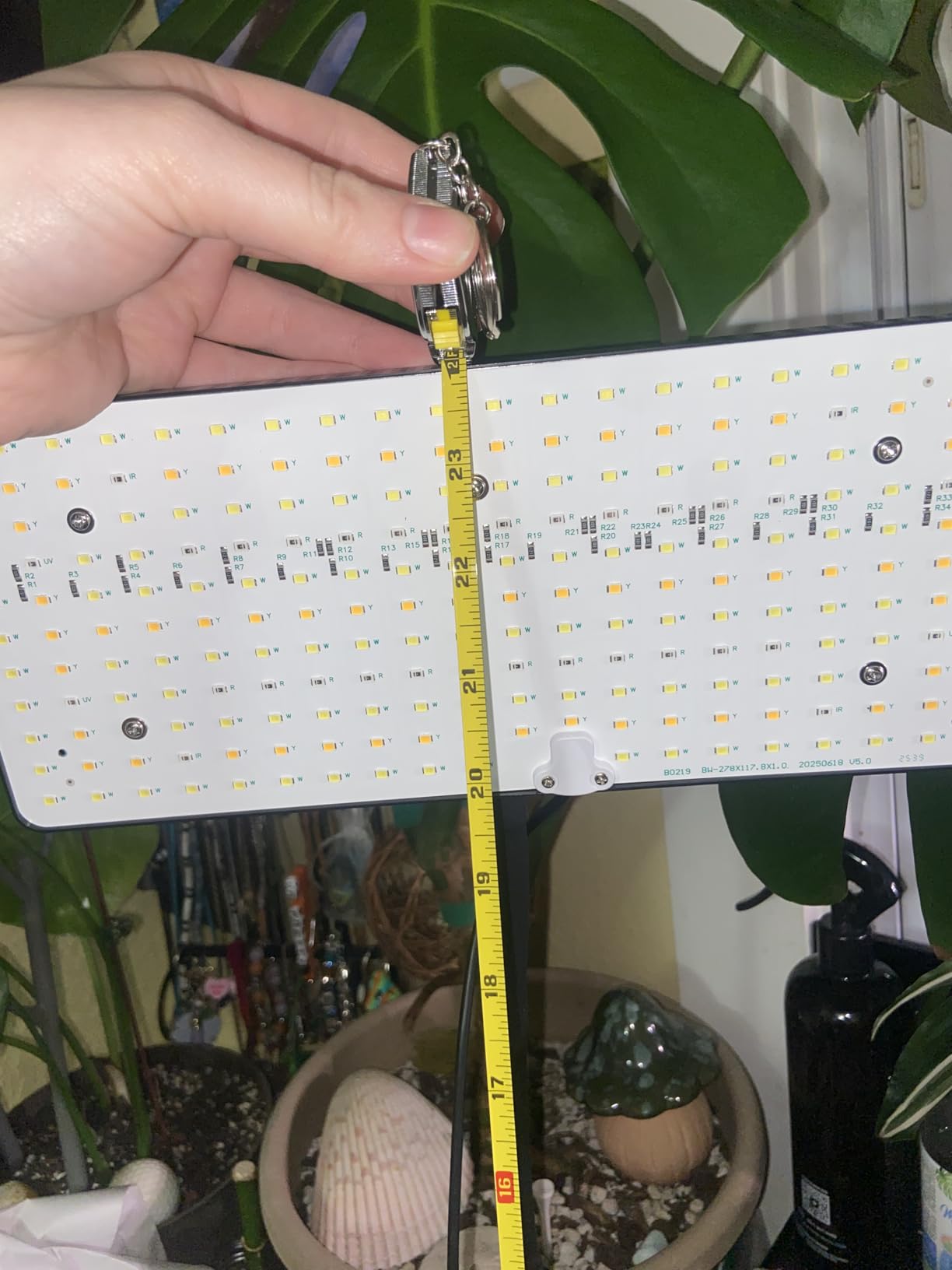
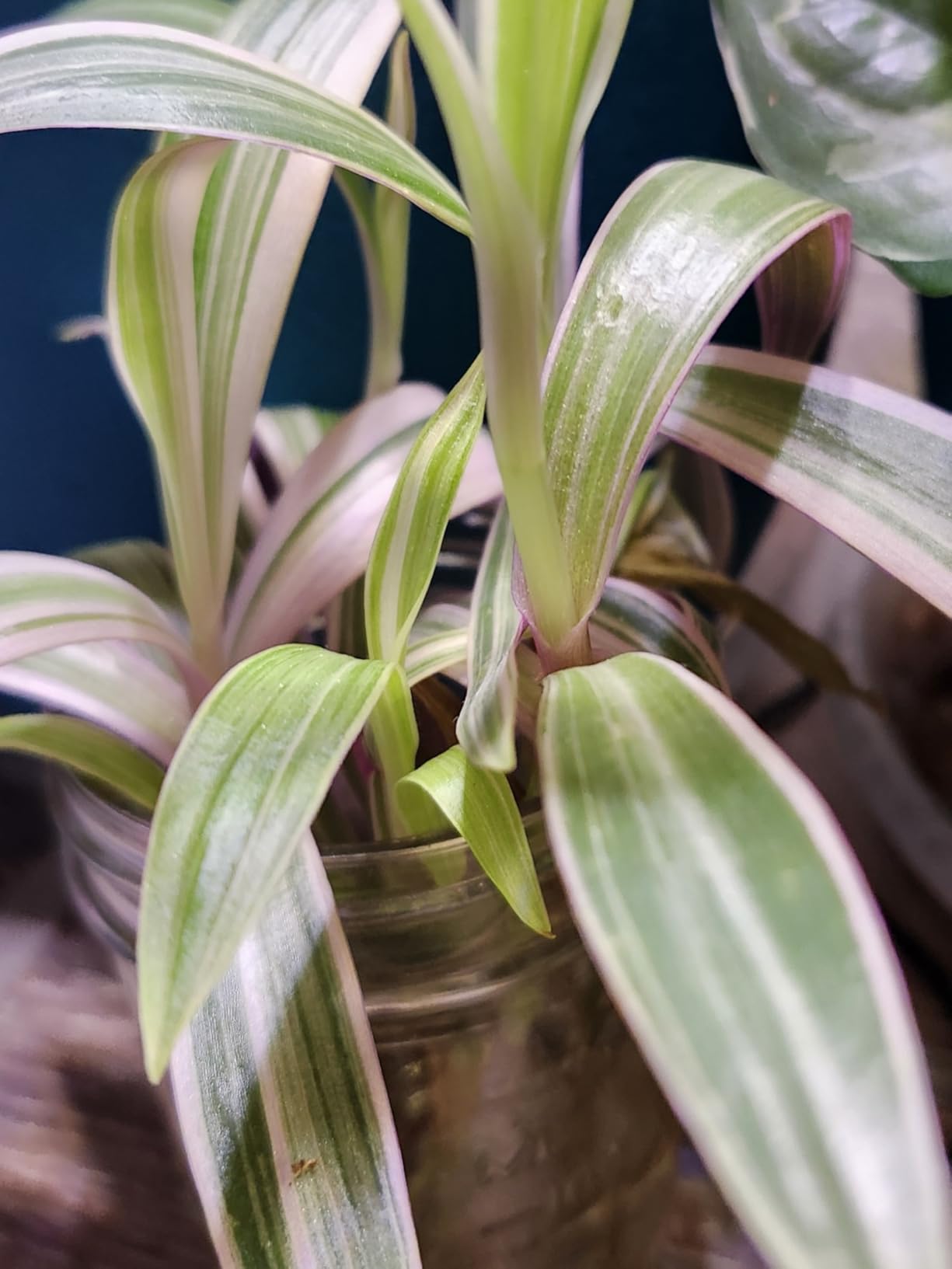
The output is intense. Tradescantia and succulents under it visibly deepened in color within a couple of weeks, and the vents in the panel keep it only mildly warm. I ran it at a low dimming step for the first week with new sprouts and stepped up from there.
The base is the recurring complaint. It is too light for a 26-inch pole, so the unit tips, and several owners solved it by weighting the base with something heavy. I clipped it to a shelf instead using the included wire hooks, which also gets the light closer to the tray.
What to check before you buy
Decide how you will stabilize it. The included wire hooks turn it into a hanging fixture, and in my experience that is more stable and more useful than the weighted base as supplied.
Check the ceiling height of your stand. At 26 inches maximum it suits a table or low shelf, and it will not clear a standard bookshelf without the light sitting very close to the tray.
Where it falls short
Plants placed too close to this head will show sunstress or scorching, and it is the brightest lamp in the roundup per unit of area. Hang it high and dim it down until the seedlings are used to it.
Adapter failure after about two months shows up in a small share of reviews, and the 12-month warranty is the second shortest here. If the adapter goes, that is the part to look at first.
10. FREELICHT 4-Foot Bar – Best for Full-Length Seed Trays
FREELICHT 1Pack 4FT Grow Light for Indoor Plants, 60W=350W, Full Spectrum
- 60W actual draw
- 168 LEDs
- 45.3 inch bar
- Red 640-680nm plus blue 440-460nm
Pros
- One 4-foot bar lights a full 11 to 12 inch shelf or tray row
- Linkable end to end so one timer runs a multi-tier station
- Lightweight enough for a one-person install
- Does not heat the seedlings
- Anti-glare panel keeps the light comfortable in a room
Cons
- No built-in timer
- so a plug-in timer is required
- Suspension wires are about a foot long
- Not dimmable
- Cool light color can be harsh at eye level
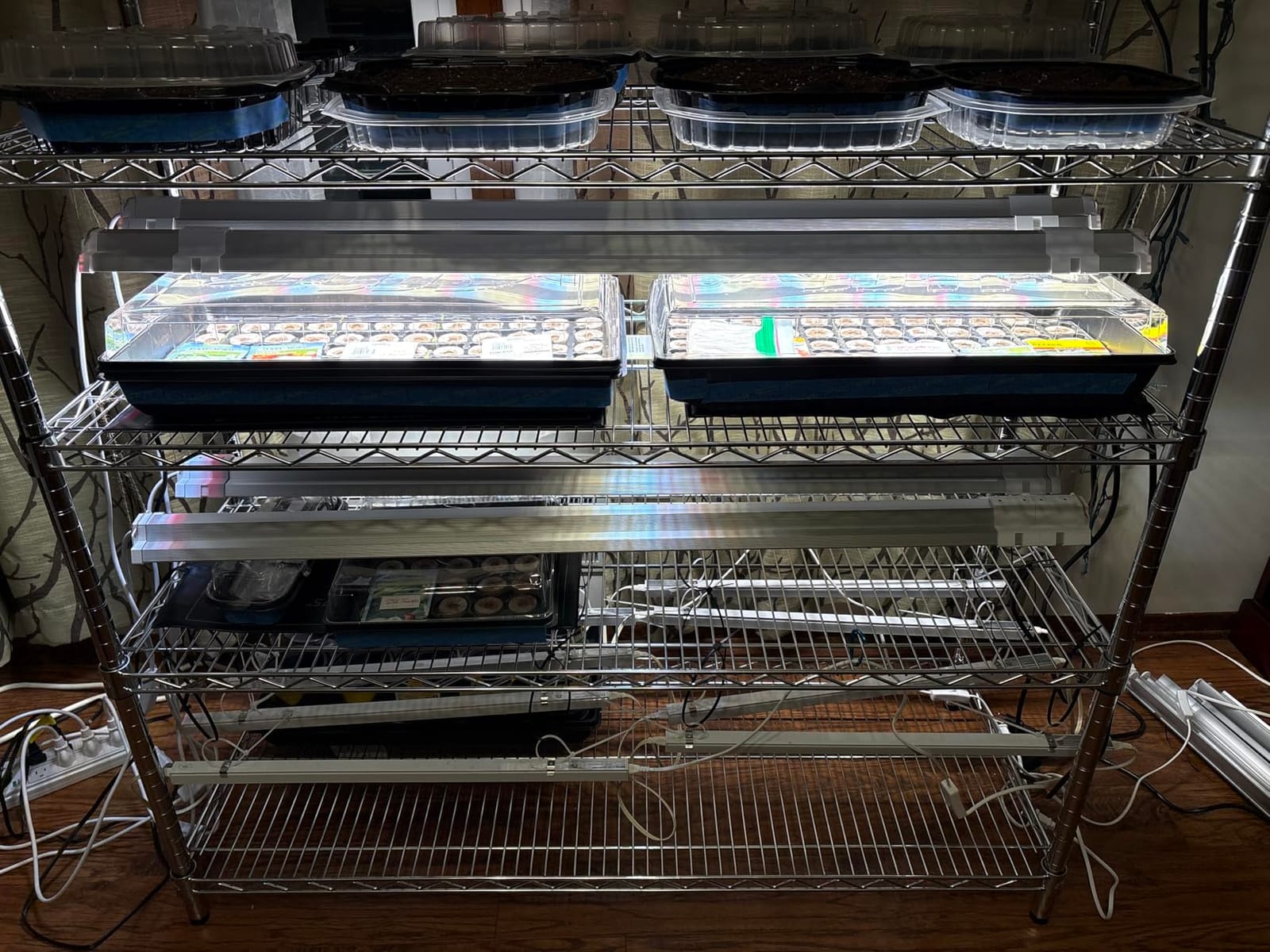
A 4-foot bar is the efficient way to cover a full row of seed trays when you are running several trays across a shelf. It measures 45.3 inches long and 3.3 inches wide, so it spans a standard 11 to 12 inch shelf with light to spare on both ends.
The 168 LEDs draw 60W and are advertised as equivalent to a 350W HPS, using 640-680nm red plus 440-460nm blue. The metal back dissipates heat and the thickened transparent panel reduces glare, so the seedlings underneath stay cool and the light is not unpleasant to look at.
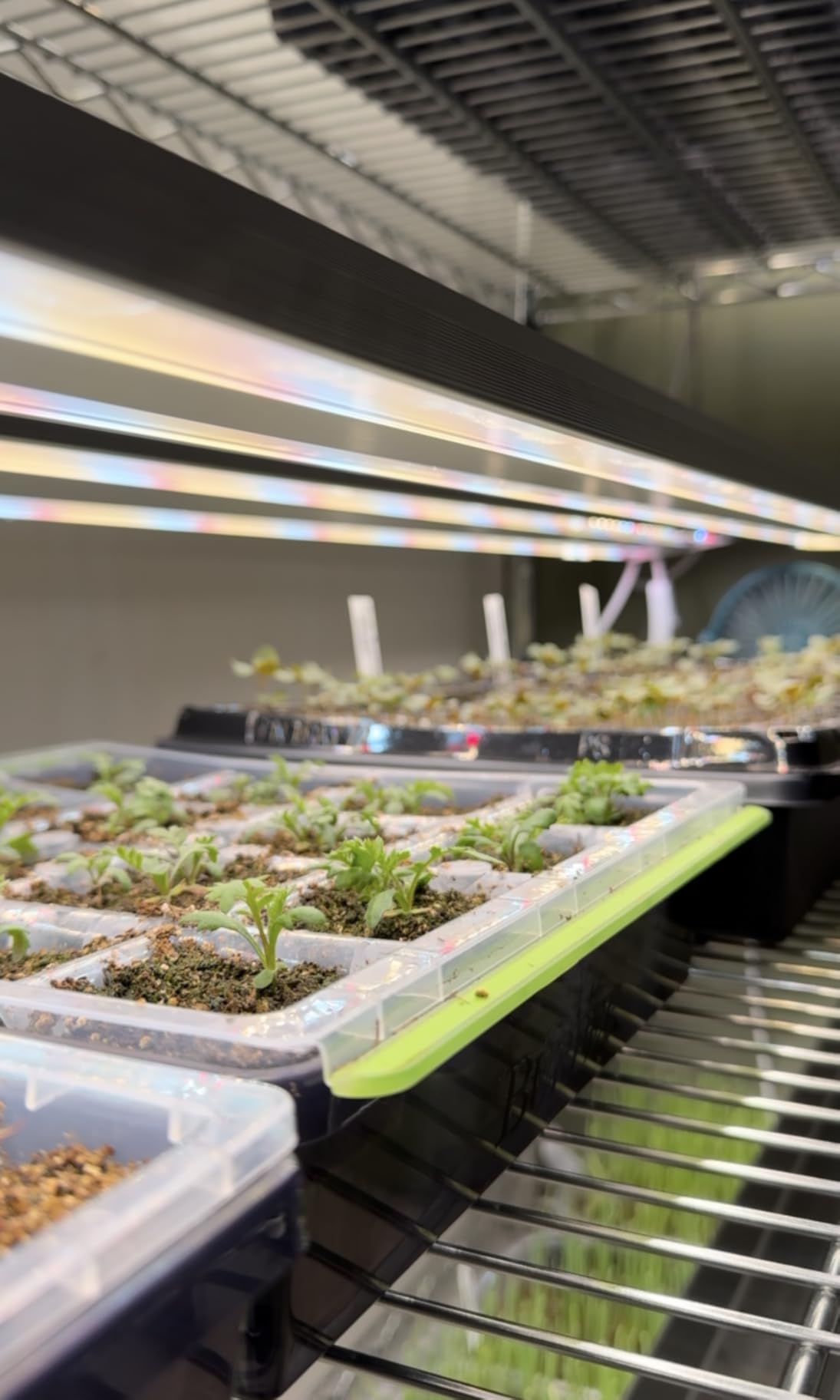
Linking is the reason growers with a full seed station choose this. Up to four units connect end to end, and a single external timer runs all of them, which is a far tidier setup than four wall timers and four switches. The bar is light enough to hang alone with no second person.
The suspension wires are the practical snag. They are roughly a foot long, which is not enough for most under-shelf installs, and owners have improvised with carabiners or their own hardware. I bought longer hooks on the same trip and had no other problem with the install.
What to check before you buy
Measure the drop from your shelf to the tray. A 4-foot bar needs its mounting point above the canopy, and with the short included wires you will probably need longer hooks or a chain before you hang it.
Count how many bars your station needs. Four is the link limit, and beyond that you run separate circuits with their own timers.
Where it falls short
There is no timer and no dimming, so both intensity and schedule are handled externally or with height adjustment alone. For a light this bright, that is a real loss of control during the first week after germination.
The 3500K color reads cool and can be harsh at eye level in a living space. It suits a basement or garage, and it is worth reconsidering above a desk.
11. Aumtrly 552-LED 4-Panel Set – Best for Under-Cabinet Mounts
Aumtrly Seed Starting Grow Light, 552 LED Full Spectrum Plant Lamp 4 Panel
- 4 panels at 11.8 by 3.9 inch
- 552 LEDs total
- 40W
- 5000K white plus 660nm red
Pros
- Four slim panels give wide shelf coverage in one order
- Thin and light enough to hide under shelves without adding load
- Installs with included cable ties or tape and no drilling
- 16-hour timer supports a full uninterrupted cycle
- 3 modes and 5 dimming levels adapt to growth stage
Cons
- Lowest average rating in this roundup with 9% one-star reviews
- Timers on this style commonly need resetting after a power interruption
Four 11.8-inch panels at 3.9 inches wide cover a two-shelf unit in a single order, and at 0.5 kg for the whole set they are the least noticeable option if your setup is a kitchen or hallway rather than a grow room. Nothing needs drilling.
Across 552 LEDs at 40W total, the panels combine 660nm red, 3200K warm white, and 5000K white, with three lighting modes and five dimming levels. The 16-hour timer is the useful detail, since it covers the longest schedule most seed starters run.
The aluminum back on each panel handles heat, and the included eight zip ties, eight double-sided tapes, and eight wire regulators cover most mounting situations. The UL-certified adapter is a small plus for anyone running this unattended.
I would be direct about the review profile here. At 4.2 stars from 474 reviews, with 9% one-star ratings, it is the weakest-rated light in the roundup, and a smaller share of owners report mixed results on overall consistency. The timer resetting after a power interruption is the most common recurring issue with lights of this style.
What to check before you buy
Count panels against your shelf count rather than your total width. Four panels cover roughly two shelves if you run one per tier, and running them all on one shelf leaves the other tiers dark.
Check the 12-month warranty, which is among the shortest here, and plan for the timer to need setting again after any outage.
Where it falls short
The 4.2 rating is the honest headline. Owners still like the four-panel coverage and the under-shelf form factor, but overall satisfaction is more mixed than for any other pick in this list, and the lowest rating deserves a say before you buy.
It also carries no dimmer reset protection and no app control, so an unattended setup after a power event can sit dark for a day without anyone noticing.
12. Aokrean Halo 3-Pack – Best for Mixed Houseplant Shelves
Aokrean Grow Lights for Indoor Plants, Full Spectrum Plant Light with Base
- 3 halo heads,48 LEDs
- 10W
- 3H/9H/12H cycle timer
- Telescoping pole to 26 inch
Pros
- Top-ranked listing in the Plant Growing Lamps category
- Wide 360-degree halo avoids the hot spot of single-head lamps
- Telescoping pole and 90-degree rotation cover many plant heights
- 10 brightness levels and 3 spectrum modes tune by stage
- Timer keeps the cycle consistent without daily switching
Cons
- Stand is only stable when weighted down by a flower pot
- Corded power only
- not battery or wireless
- Halo shape trades center intensity for broad spread
The halo shape is the reason to choose this one, and it works best where the goal is a shelf of houseplants next to a seed tray rather than a dedicated propagation setup. Three heads spread light in all directions, so there is no bright center and dark edge to worry about.
Each pole telescopes to 26 inches with 90-degree rotation, so one unit reaches a tall floor plant and a low windowsill pot. You can push the pole into the soil or stand it on the base, and with three in a pack you can place one per shelf.
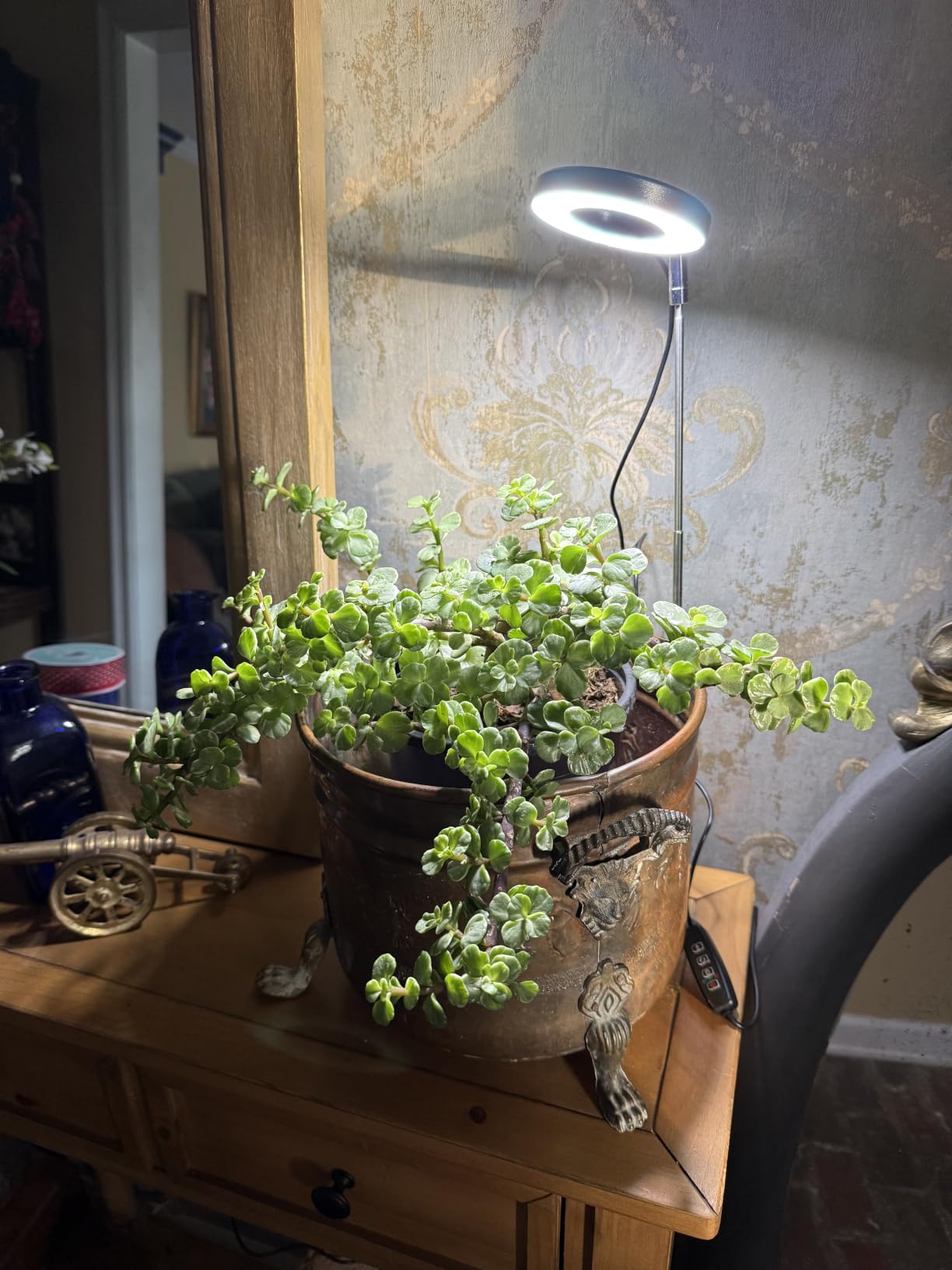
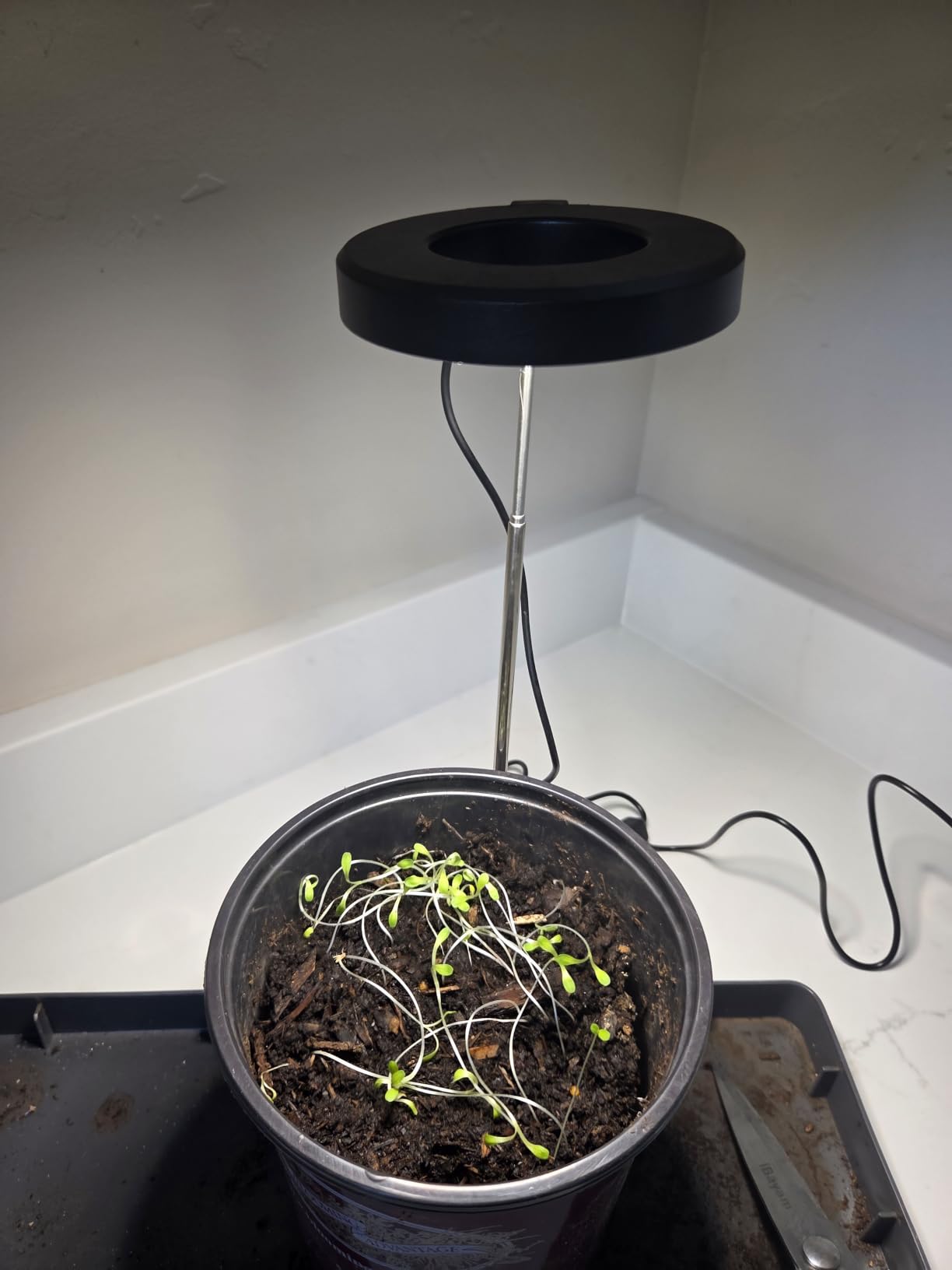
Controls are three spectrum modes, 10 brightness levels, and a 3, 9, or 12 hour cycle timer. At 10W and 48 LEDs total the output is modest, and this is a light for foliage plants and gentle seedling work rather than a dense tray of tomatoes.
The manufacturer is upfront about the base: it is only stable once weighted down by a flower pot. That is not a flaw so much as a design choice, since the intended use is sticking the pole into soil. Corded power means no battery option for a spot away from an outlet.
What to check before you buy
Check that you have a pot to weight the base into, or a surface where a free-standing unit will not be knocked over. This is the detail that decides whether it works in your space.
Confirm you have an outlet nearby. Everything runs corded, so a balcony or an unheated shed is out of reach.
Where it falls short
The halo spreads light broadly but with lower intensity at the center than a focused panel, so a single seed tray directly under one head will get more even but weaker light than it would under a bar.
At 10W it is simply underpowered for demanding crops, and the 12-month warranty leaves it behind several fixtures here on coverage length.
How to Choose an LED Grow Light for Seedlings
What is PPFD, and why seedlings need 200-400 μmol/m²/s
PPFD, or photosynthetic photon flux density, measures how many usable light photons land on a square meter of plant per second. It is the number that predicts growth, and it is the number almost no grow light listing will give you. For a standard seed tray, 200-400 μmol/m²/s is the working range: enough to build a compact stem, low enough that you can hang the fixture close without burning the cotyledons.
Here is the practical translation. A standard 1020 tray needs roughly 5,000 lumens of light landing on the canopy from about 6-12 inches. A ten-cell tray needs far less, and a four-foot seed station needs a bar or a panel. Dividing that by the coverage area gives you the number that matters, which is why a 20W strip and a 70W panel can both work if they are sized to different footprints.
What color temperature works for seedlings
5000K to 6500K is the range seed starters recommend, and the evidence for it is consistent. Cooler white leans blue, which drives compact stems and short internodes, and warmer light leans red, which drives photosynthesis and later flowering. Growers in r/gardening broadly recommend any LED at 5000K or higher for seed starting, and a mix of cool and warm tubes is a common budget approach.
Aim for the middle of that range, roughly 5000K to 6000K. Below 4000K the light is short on blue and seedlings stretch toward it. Above 6500K the light is very blue and the cast is hard to live with in a room, which is why several fixtures in this roundup that describe themselves as full spectrum still look purple.
Watts do not mean what the box says
Most grow light listings print a wattage that means nothing useful, usually the equivalent of an incandescent or HPS fixture. The Bokeedo pair claims 20W and delivers over 1,900 lumens, while a 10W gooseneck claims a 50W halogen equivalent. Read the actual draw, the lumen figure, and the coverage area together, and ignore the comparison number on the front of the box entirely.
A second trap is the coverage claim. A 70W panel covering a 2×2 foot area is delivering far more usable light per tray than a 20W strip stretched across a 4-foot shelf. Match the fixture footprint to the tray footprint before anything else.
Coverage by tray size
A single ten-cell tray or a small cell tray is served well by one 10W gooseneck head, positioned high enough that the outer cells are not outside the pool. A 1020 tray needs a bar, a 4-foot tube, or a single wide head, and a four-tray station needs one fixture per tray or a panel with even coverage across the whole shelf.
Form factor follows the same logic. Panels throw the most even light over the largest area and are the right call for a rack. Bars and strips are efficient per tray and chain well. Clip-on goosenecks are for small counts and awkward shelf geometry. Tripod and halo units are for mixed plant shelves rather than dedicated trays.
Timers, dimming, and waterproofing
A timer is not optional in practice. Seedlings do best on 12 to 16 hours, and every fixture here with a memory timer, whether 3/6/12, 4/8/12, or 6/12/16, lets you set the schedule once. Every fixture without one, including the Barrina, the Bokeedo, and the FREELICHT bar, needs a plug-in wall timer, which is a few dollars and a two-minute install.
Dimming matters most in the first week after germination, when sprouts are most vulnerable to bleaching. A light with 5 to 10 dimming levels lets you start low and raise intensity as true leaves appear, which removes the guessing from height adjustment. A fixed-output light makes you raise and lower the fixture instead, and that is slower to react.
On waterproofing, most fixtures in this roundup carry no meaningful IP rating, and humidity domes put condensation directly on the light. Keep domes off the fixture, run lights above the dome rather than inside it, and choose a fixture with an aluminum housing that dissipates heat rather than one sealed in plastic.
Seedling Light Setup: Distance, Schedule, and Heat
Hanging height by growth stage
Start high and lower the light as seedlings grow. Just-germinated seeds and emerging sprouts sit 10-12 inches under the fixture at full output, or 6-8 inches if the light is dimmable and you have turned it down. Once the first true leaves open, lower the fixture to 8-10 inches, and by the time seedlings have two to three true leaves, 6 inches is right for a light of this class.
The rule growers repeat is simple: keep the light close, and let the plant grow into it. Leaves that stop short of the fixture are healthy; leaves that lean away are asking for more. If the tips bleach or develop pale patches, you are too close, so raise it and lower again in a few days.
Photoperiod and timing
Run 12 to 16 hours a day. Sixteen hours suits tomatoes, peppers, and leafy greens; twelve is plenty for herbs and many flowers, and gives you a lower running cost. Leave the lights off entirely rather than running 24 hours, since continuous light produces shorter, weaker stems in many crops.
Set the schedule on the fixture timer or a wall timer and leave it alone. Changing the photoperiod mid-run is more disruptive than useful, and a consistent window is what produces even seedlings across a tray.
Heat, running cost, and hardening off
LEDs run far cooler than the fixtures they replace, but the 70W panel in this roundup still throws real heat, and dense trays on a lower shelf can trap air. In an enclosed setup, prop the door or add a small fan, and keep the light off the surface of the tray.
Running cost is easy to estimate from the actual draw. A 20W strip at 16 hours a day is about 0.32 kWh per day, or roughly 10 kWh a month, which is a small fraction of a household total. A 70W panel on the same schedule is about 34 kWh a month. Dimming a bright fixture for the first week is the easiest saving available.
When the seedlings are ready to move outside, harden them off over four to seven days by reducing the light period by an hour a day. Paired with a gradual introduction to direct sun, this prevents the shock of a sudden jump that sets back plants grown under a lamp.
Frequently Asked Questions
What type of light is best for growing seedlings?
A full-spectrum LED is the best type of light for growing seedlings. It should deliver 200-400 umol/m2/s of usable light at the canopy, sit 5000K to 6500K color temperature, and run 12 to 16 hours a day from 6 to 12 inches above the seed tray. Fluorescent T5 tubes still work well and cost less, but they are bulky and dimmable LEDs give you far more control over intensity as seedlings grow.
What color light is best for seedlings to grow optimally?
Cool white light between 5000K and 6500K is best for seedlings. The blue-heavy end of that range builds compact stems and short internodes, which is exactly what prevents leggy growth. Red light supports photosynthesis and drives flowering later, so a full-spectrum fixture that blends blue and red is ideal. Below 4000K seedlings stretch, and above 6500K the light is intensely blue and unpleasant in a living space.
Which LED grow light is best for growing plants?
The VIPARSPECTRA P700 is the best overall LED grow light for seedlings in our testing, with 4.7 stars across more than 5,000 reviews, 11,000 lumens, and a four-level dimmer. For a full shelf on a budget, the Barrina 5000K T5 four-pack is the value pick, and for a single tray on a desk the GooingTop 6000K gooseneck is the most practical option.
How many watts should a grow light be for seedlings?
Wattage matters far less than the light landing on the tray. A single ten-cell tray is well served by a 10W gooseneck, a 1020 tray needs roughly 5,000 lumens at 6 to 12 inches, and a seed station needs a bar or panel matched to its footprint. A 20W strip and a 70W panel can both work if the panel covers a wider area, so check the coverage figure rather than the wattage on the box.
How far above seedlings should a grow light be?
Start 10 to 12 inches above just-germinated seeds, lower to 8 to 10 inches once first true leaves appear, and settle at about 6 inches when seedlings have two or three true leaves. Keep the light close and let plants grow into it. If leaves bleach or develop pale patches, raise the fixture and lower it again after a few days of growth.
How many hours of light do seedlings need per day?
Seedlings need 12 to 16 hours of light per day. Sixteen hours suits tomatoes, peppers, and leafy greens, while twelve is enough for most herbs and flowers and costs less to run. Avoid running lights 24 hours, since continuous light often produces shorter, weaker stems. A built-in timer or a plug-in wall timer keeps the schedule consistent without daily manual switching.
Can regular LED lights or shop lights work for seedlings?
Regular household LED bulbs and hardware store shop lights around 5000K with high lumen output do work for seed starting, and many growers use them successfully. A 4-foot shop light at roughly 5000K is comparable to a fluorescent T5 tube for a seed tray. They lack a PPFD figure, a timer, and any dimming, so you manage intensity by height and schedule with a wall timer.
The Best LED Grow Lights for Seedlings in 2026
After six weeks of side-by-side trays, the VIPARSPECTRA P700 70W panel is the fixture we would put above a seed station, because the dimmer and the real output are what carry a tray from germination to true leaves without a second light. For a full shelf, the Barrina 5000K four-pack covers more area per watt than anything else here and links cleanly off a single wall timer. On a desk with one tray, the GooingTop gooseneck is the lamp we hand to beginners.
The rest of the roundup covers the setups in between: the LEOTER for spectrum and dimming control, the Bokeedo pair for directional light on a budget, and the bar and strip options for multi-tier racks. Whatever you choose, aim for 200-400 μmol/m²/s at 5000K-6500K, run it 12-16 hours a day, and start high over fresh sprouts.
Check the coverage area against your tray before you order, and dim it down for the first week. That single adjustment prevents most of the seedling problems people blame on the light itself.