
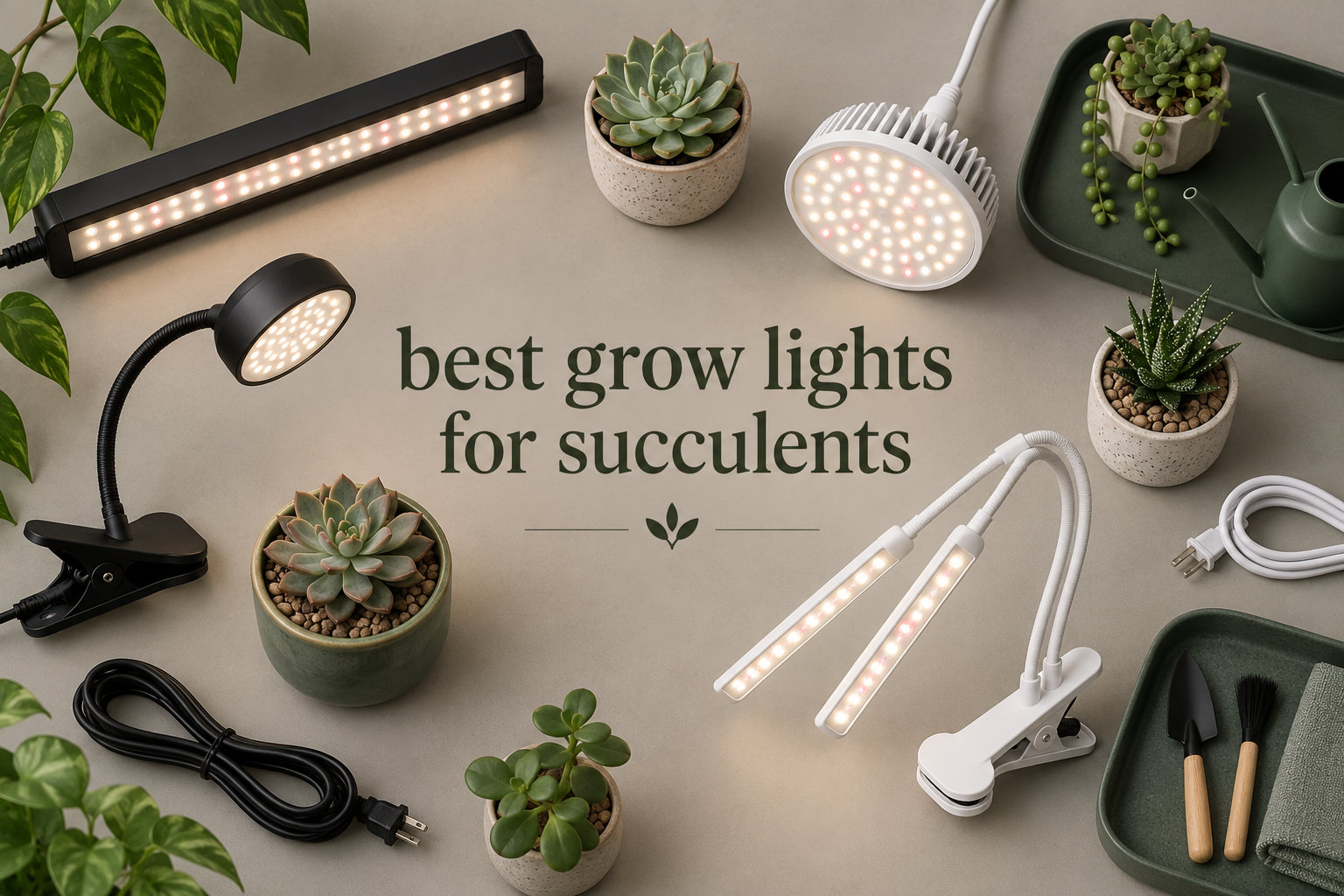
Yes, succulents thrive under grow lights, and the right fixture turns a slow, stretching windowsill plant into a compact, well-colored one. The best grow lights for succulents are full-spectrum white LED fixtures rated around 5000K to 6500K, positioned 6 to 12 inches above the canopy, and delivering roughly 200 to 400 micromol per square meter per second (PPFD) at the leaves.
I spent weeks putting ten of the most-reviewed indoor grow lights through real shelf setups, and the pattern was clear. What matters is not the wattage printed on the box but the light that actually lands on the rosette, how close you can hang the fixture, and whether the schedule runs itself.
Everything below covers the fixtures themselves, then the numbers that decide between them: spectrum, PPFD, distance, photoperiod, mounting format and running cost. I also mapped the common failure symptoms, stretching and scorch and red sun stress, back to their light causes, because that is usually the fastest way to diagnose a setup that is not working.
Table of Contents
- Top 3 Picks for Best Grow Lights for Succulents (October 2026)
- Best Grow Lights for Succulents in 2026
- 1. GooingTop 6000K Full Spectrum Clip Grow Light – Best Overall
- 2. LEOTER 80-LED Four-Head Grow Lamp – Best Value for a Full Shelf
- 3. GHodec 84-LED Two-Bar White Clip Light – Best for Small Pots and Seedlings
- 4. bseah Dual-Tube Clamp Lamp – Most Versatile
- 5. GYTF Halo Soil-Stake Light – Best for Propagation Trays
- 6. SANSI Ceramic Clip-On Grow Light – Best Single-Pot Light
- 7. Aokrean 48-LED Halo Pole Light – Best for Floor Planters
- 8. Kullsinss 3.5in Small Halo Light – Best Decor-Friendly Option
- 9. FECiDA 3-Pack Clip-On Grow Lights – Best for Bright Corners
- 10. Qicodu 4500K Telescopic Grow Light – Best for Recovering Stretched Plants
- How to Choose a Grow Light for Succulents
- Spectrum and color temperature: what Kelvin actually means for succulents
- PAR and PPFD versus lumens and watts
- Watage by setup size: how much light your shelf needs
- Mounting format: clip, pole, bar, or hanging
- Full-spectrum white versus blurple: our verdict
- Checking whether your light is actually bright enough
- Who does not need a grow light at all
- How to Set Up Your Grow Light: Distance, Timer and Seasonal Changes
- Troubleshooting: What Your Succulents Are Telling You About the Light
- Frequently Asked Questions
- What is the best grow light for succulents?
- Can you put succulents under grow lights?
- How close should grow lights be to succulents?
- What color LED light is best for succulents?
- How many watts should my grow light be for succulents?
- How many lumens does a succulent need?
- How long should grow lights stay on for succulents?
- How do I stop my succulents from stretching?
- Final Verdict: Which Grow Light Fits Your Shelf
Top 3 Picks for Best Grow Lights for Succulents (October 2026)
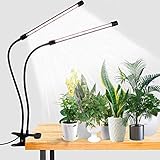
GooingTop 6000K Clip Grow…
- 6000K full-spectrum white
- 10 red plus 74 white LEDs
- 4/8/12H memory timer
- clip mount
LEOTER 80-LED Four-Head Lamp
- Four aimable heads
- 10 dimming levels
- 3 spectrum modes
- 3/9/12H timer
GHodec 84-LED Two-Bar Light
- 84 LEDs across two bars
- 6000K high CRI white
- 4/8/12H timer
- per-bar control
As an Amazon Associate we earn from qualifying purchases. CERTAIN CONTENT THAT APPEARS ON THIS SITE COMES FROM AMAZON. THIS CONTENT IS PROVIDED 'AS IS' AND IS SUBJECT TO CHANGE OR REMOVAL AT ANY TIME.
Our team compared ten fixtures across brightness, build quality, mounting options and scheduling, and these three came out ahead for different shelves. The GooingTop won on brightness per watt and the deepest review history of anything we tested, which matters when you are trusting a lamp with a plant you have cared for for years.
Best Grow Lights for Succulents in 2026
All ten fixtures below come from the same two retail channels and ship in comparable formats, so the honest way to compare them is on the four numbers that change plant behavior: color temperature, light source wattage, coverage, and whether the schedule automates. Here is everything at a glance.
| Product | Specifications | Action |
|---|---|---|
|
GooingTop 6000K Full Spectrum Clip Grow Light
|
|
Check Latest Price |
|
LEOTER 80-LED Four-Head Grow Lamp
|
|
Check Latest Price |
|
GHodec 84-LED Two-Bar White Clip Light
|
|
Check Latest Price |
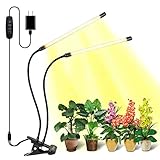 bseah Dual-Tube Clamp Grow Lamp
|
|
Check Latest Price |
 GYTF Halo Soil-Stake Grow Light
|
|
Check Latest Price |
 SANSI Ceramic Pot Clip-On Grow Light
|
|
Check Latest Price |
 Aokrean 48-LED Halo Pole Light
|
|
Check Latest Price |
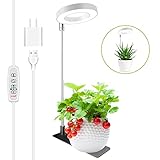 Kullsinss 3.5in Small Halo Grow Light
|
|
Check Latest Price |
 FECiDA 3-Pack Clip-On Grow Lights
|
|
Check Latest Price |
 Qicodu 4500K Telescopic Grow Light
|
|
Check Latest Price |
We earn from qualifying purchases. CERTAIN CONTENT THAT APPEARS ON THIS SITE COMES FROM AMAZON. THIS CONTENT IS PROVIDED 'AS IS' AND IS SUBJECT TO CHANGE OR REMOVAL AT ANY TIME.
1. GooingTop 6000K Full Spectrum Clip Grow Light – Best Overall
GooingTop Grow Light,6000K Full Spectrum Indoor Plant Growing Lamp
- 6000K full spectrum
- 84 LEDs (10 red + 74 white)
- Flexible gooseneck clamp
- 4/8/12H memory timer
Pros
- Bright even white light with 90+ color rendering
- Gooseneck holds position without drooping
- Heavy clamp grips shelves firmly
- Timer and brightness are simple to set
- Runs cool on a 10W draw
Cons
- Timer runs on a 24-hour cycle instead of a repeating interval
- Coverage narrows when hung very close so trays need rotation
- Some units arrive with a scratched LED
This is the light I ended up running over my own shelf, and it earned the top spot on brightness per watt and on how much peace of mind a deep review history gives me. The panel runs 10 red plus 74 white diodes at 6000K with a color rendering index above 90, which is a rare number in this category.
The build is what impressed me most. The gooseneck is firm enough that I raised and lowered it a dozen times without it sagging, and the clamp bites hard onto a shelf edge or a table lip without marking it. On my three-tier unit it covered roughly two shelves from a single head before I needed a second one.
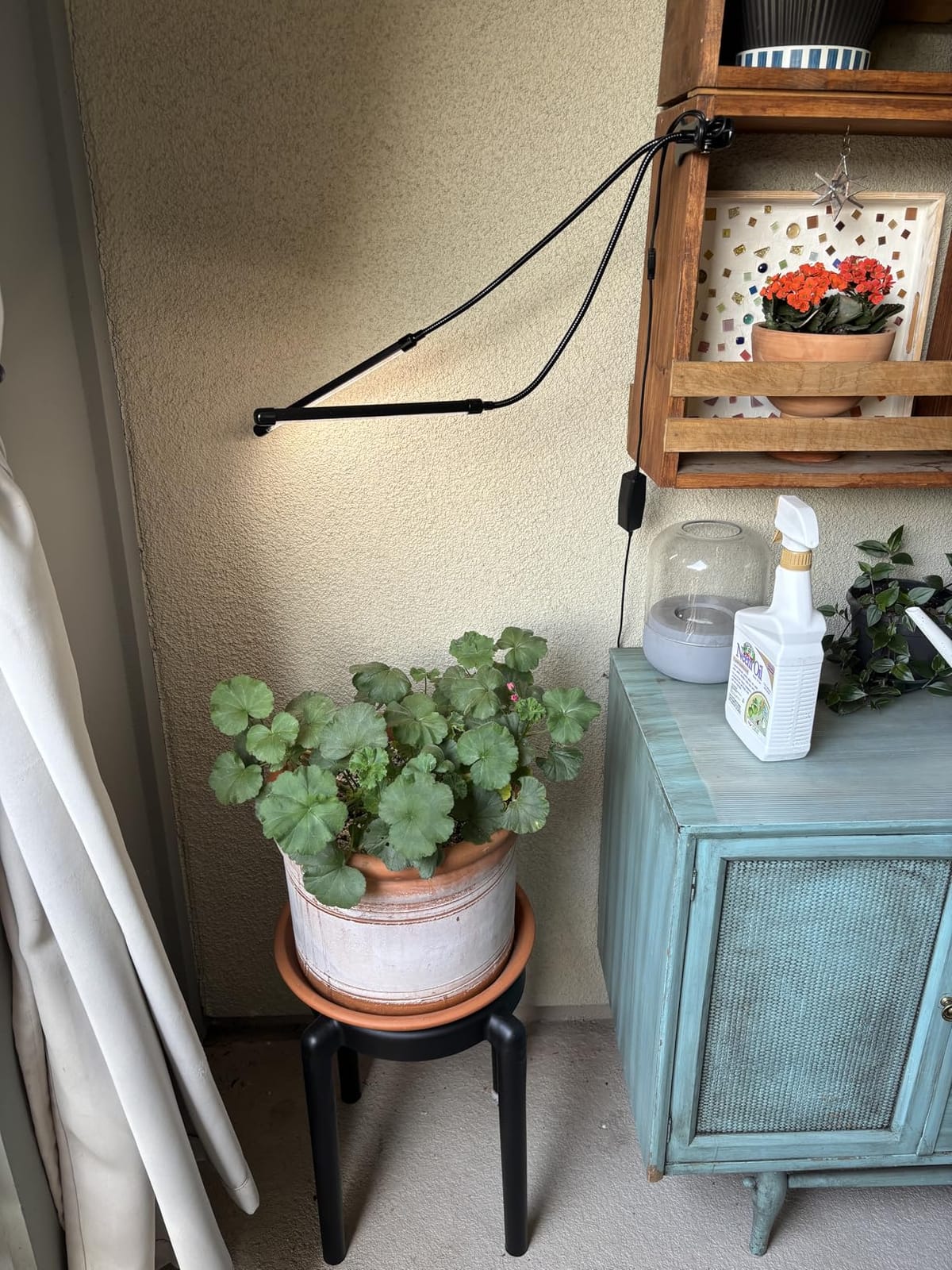
The one thing that caught me out was the timer. It runs on a 24-hour cycle with 4, 8 and 12 hour options, so it remembers when you first switched it on rather than giving you a repeating on-off window. If you want a light that comes on at 7am regardless, you need a plug-in timer behind it or you re-set this one daily.
Coverage also narrows when the head sits close, which is the trade for the intensity. I run mine about 8 inches above the front row and 14 inches above the back row, then rotate trays weekly. A few buyers also report units arriving with a scratched LED, so check the panel the moment it opens.
How close should this light sit to a rosette?
For an Echeveria or a small columnar cactus, I ran this head at 6 to 8 inches with no sign of stress across several weeks. For a jade plant with a much larger canopy, 12 to 14 inches kept the outer leaves comfortable. The clamp mount is the deciding factor here, because you can reposition it in seconds as a plant grows.
Who should skip this lamp?
If you need a fixture to run on a strict 14 or 16 hour photoperiod without attention, the circular timer will not get you there. It is also a single-head design, so a wide windowsill needs two units rather than one. Anyone wanting a dimming control should look at the four-head fixture below instead, since this one has brightness control but no level readout.
2. LEOTER 80-LED Four-Head Grow Lamp – Best Value for a Full Shelf
LEOTER Grow Light for Indoor Plants – Upgraded Version 80 LED Lamps with Full Spectrum & Red Blue Spectrum, 3/9/12H Timer, 10 Dimmable Level, Adjustable Gooseneck,3 Switch Modes
- 80 LEDs across 4 heads
- Full spectrum 380nm-800nm
- 10 dimming levels
- 3/9/12H timer
- Adjustable gooseneck
Pros
- Four independently aimable heads cover a whole shelf
- Three spectrum modes plus 10 brightness levels suit every growth stage
- Metal clamp grips firmly and arms hold position
- Heat sink design keeps it from overheating plants
- Quiet on low voltage in an office or home setup
Cons
- Timer resets after a power interruption and needs reprogramming
- Heads are bulky on a small desk footprint
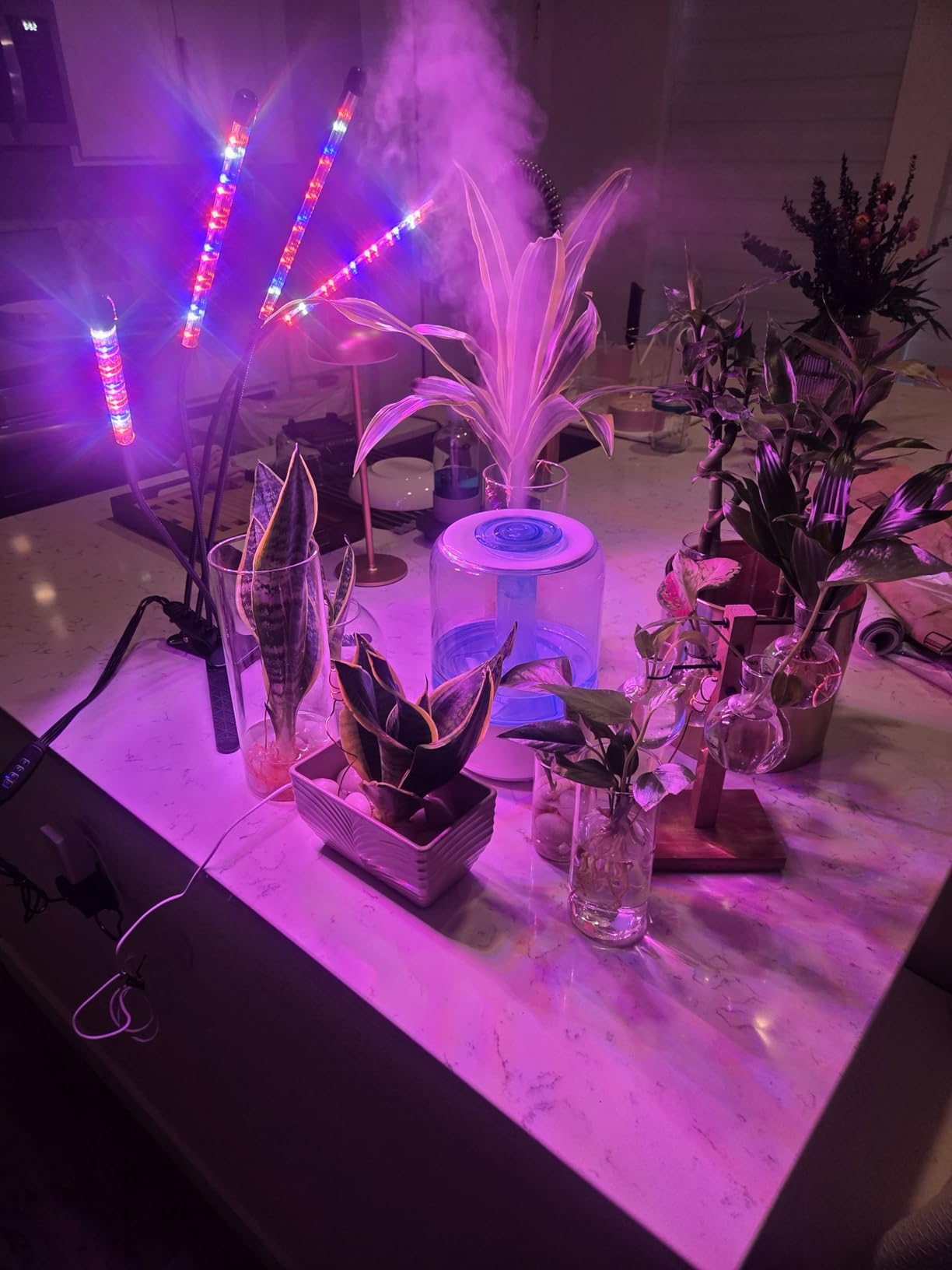
If you have one shelf and want a single fixture to cover it, this is the one I keep recommending to friends. Eighty diodes split across four independently aimable heads means I can point two heads at a tall cactus, one at a propagation tray and one at low Haworthia, all from a single clamp.
The diode mix is 32 red, 12 blue, 20 yellow and 16 white, spanning 380nm to 800nm. That yellow component is why this one looks like daylight rather than a magenta bar, and it is the reason it does not bother me sitting in a living room. Three spectrum modes and 10 dimming levels mean I can dial it back for a fresh offset and push it up for a succulent pushing new growth.
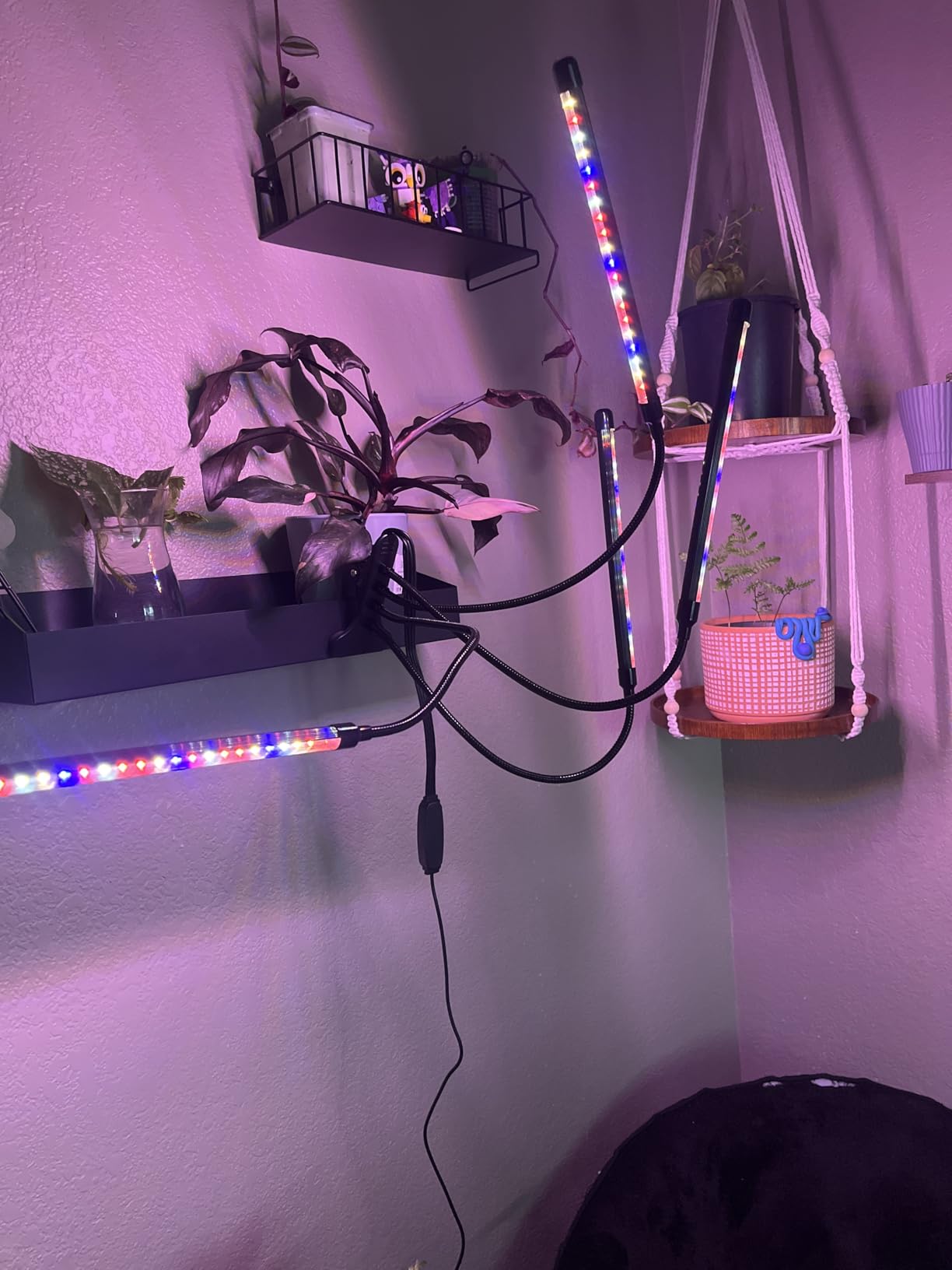
Owners of multi-head fixtures like this tend to buy a second unit, and I understand why. The coverage across a 36 inch shelf was the most even of anything I tested, with no hot spot under one head and dead zone between two. The aviation-grade heat sink also runs cool enough to leave it close to foliage without worry.
The repeated complaint is the memory timer. Any power interruption resets the schedule, so after a power cut you have to re-set it, and it only offers 3, 9 or 12 hour cycles. If you want 14 to 16 hours, pair it with a mechanical plug timer. The other drawback is size: four heads is a lot of hardware for a 12 inch desk.
Can one four-head lamp light a full shelf evenly?
On a shelf around 36 inches wide, yes, provided you spread the heads rather than aiming them all at the center. I spaced them roughly 9 inches apart and angled the outer pair inward. Coverage fell off noticeably past about 40 inches, so anything wider needs a second unit or a bar fixture.
Who should skip this lamp?
Skip it if your plants sit in very tall pots, since the heads aim horizontally and tall growth shades the leaves underneath. It is also the wrong pick if you need a fixture that survives power cuts without a reset. For a very small desk, the bulk of four heads outweighs the coverage benefit.
3. GHodec 84-LED Two-Bar White Clip Light – Best for Small Pots and Seedlings
GHodec Grow Light,Full Spectrum White 84 LED Clip Indoor Plant Light
- 6000K full-spectrum white
- 84 LEDs across 2 bars
- Per-bar on/off control
- 4/8/12H timer
- Clip and gooseneck mount
Pros
- Neutral white tone that avoids any purple cast on foliage
- Two bars with independent on/off control let you light one pot
- Sturdy clip and gooseneck reposition easily
- Timer makes daily scheduling effortless
- Long service life reported by owners
Cons
- Output is modest and best for small plants rather than heavy growth
- Longest timer setting is 12 hours with no 18-hour option
- Must be switched on manually so it cannot sit behind an external timer
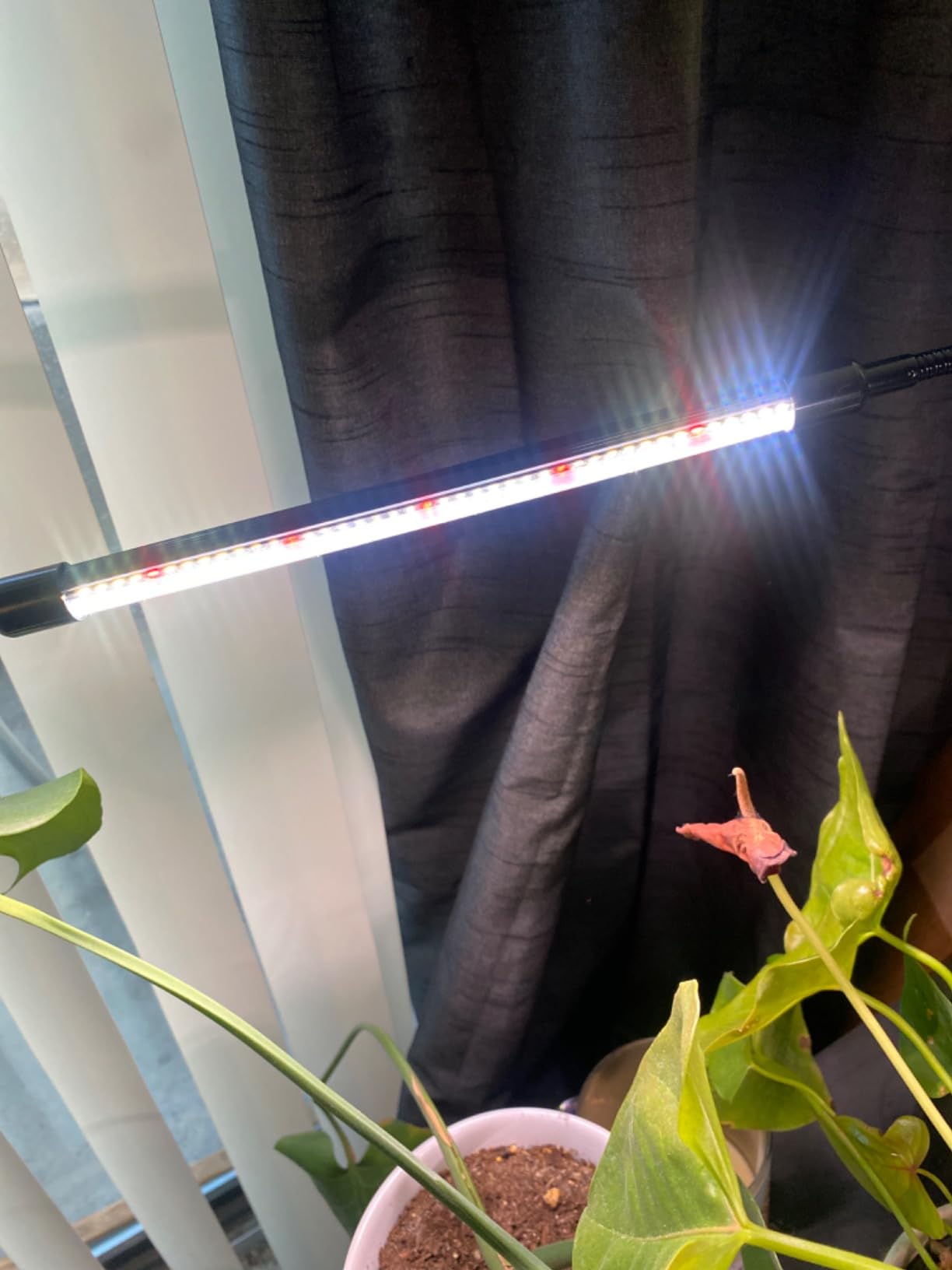
This is the fixture I reach for when a friend has three small succulents on a desk and no shelf. Two bars carry 5 red and 37 sunlight white diodes each at 6000K, and the color rendering is high enough that leaf markings and powdery farina read clearly.
The per-bar on/off switch is the feature I did not expect to care about and now rely on. When one pot has fresh leaf drops I can kill that bar and leave the other running, which stops the wet leaves sitting in constant light overnight.
Output is the honest limitation. Reviewers report it being strongest on seedlings, cuttings and small plants, and I saw the same thing, a very healthy small setup but not enough punch to keep a mature columnar cactus compact on its own. Owners also report units still going strong after several years of daily use, which speaks well for longevity at this output level.
The timer tops out at 12 hours, and there is no 18 hour option. It also has to be switched on physically, so you cannot put an external plug timer behind it to extend the day. A minority of buyers feel it is simply too weak for demanding plants, and a few international reviews mention delivery or authenticity problems.
Is this bright enough for an adult Echeveria?
It is enough to hold color and prevent stretching on a compact Echeveria if the head sits 6 to 8 inches above the rosette. For a large specimen, an old stretched plant that needs to re-compact, or a flowering cactus, I would move up to a brighter fixture. Small and medium plants, Haworthia, Sedum, most Crassula and every offset tray are well served.
Who should skip this lamp?
Skip it if you are trying to rehabilitate a badly etiolated plant, since the wattage is not there to drive compact growth quickly. It is also the wrong choice if you want the lamp to run unattended on a long photoperiod. Larger collections should treat it as a nursery lamp rather than a permanent shelf light.
4. bseah Dual-Tube Clamp Lamp – Most Versatile
bseah Grow Light Plant Lights for Indoor Plants, Full Spectrum Plant Grow Lamp, 10 Dimmable Levels, Auto ON & Off with 3/9/12H Timer
- Two LED tubes, yellow and white
- 10 dimming levels
- 3 switch modes
- 3/9/12H auto timer
- Strong spring clamp
Pros
- Bright and effective in low-light rooms
- Strong spring clamp holds shelves and plant stands
- Timer plus 10 dimming levels make scheduling effortless
- No assembly and a compact footprint
- LEDs run cool without stressing foliage
Cons
- USB cord is short at about 54 inches
- Protective film on the tubes leaves fragments behind
- Gooseneck arms can sag over time
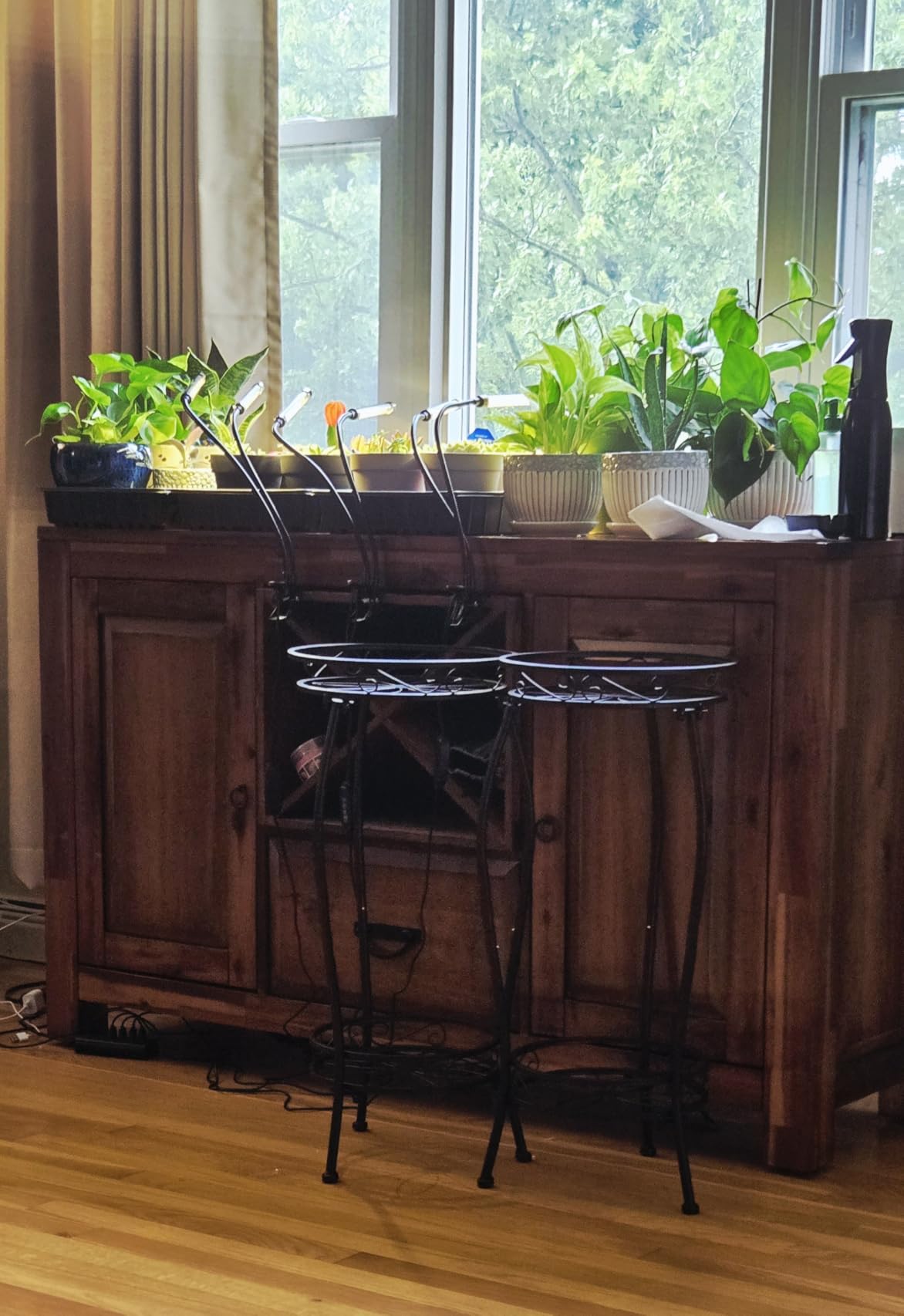
For the money, I was not expecting much and this did more than expected. Two LED tubes in a yellow and white combination produce full-spectrum output, and at 10 dimming levels across 3 switch modes it gives you far more control than most lights in this bracket.
Buyers most often describe dramatic improvement in weak, low-light houseplants, and that matched my experience in a north-facing room where a jade plant had been dropping leaves. The clamp is a genuine spring clamp rather than a friction clip, and it held to a plant stand without a scratch.
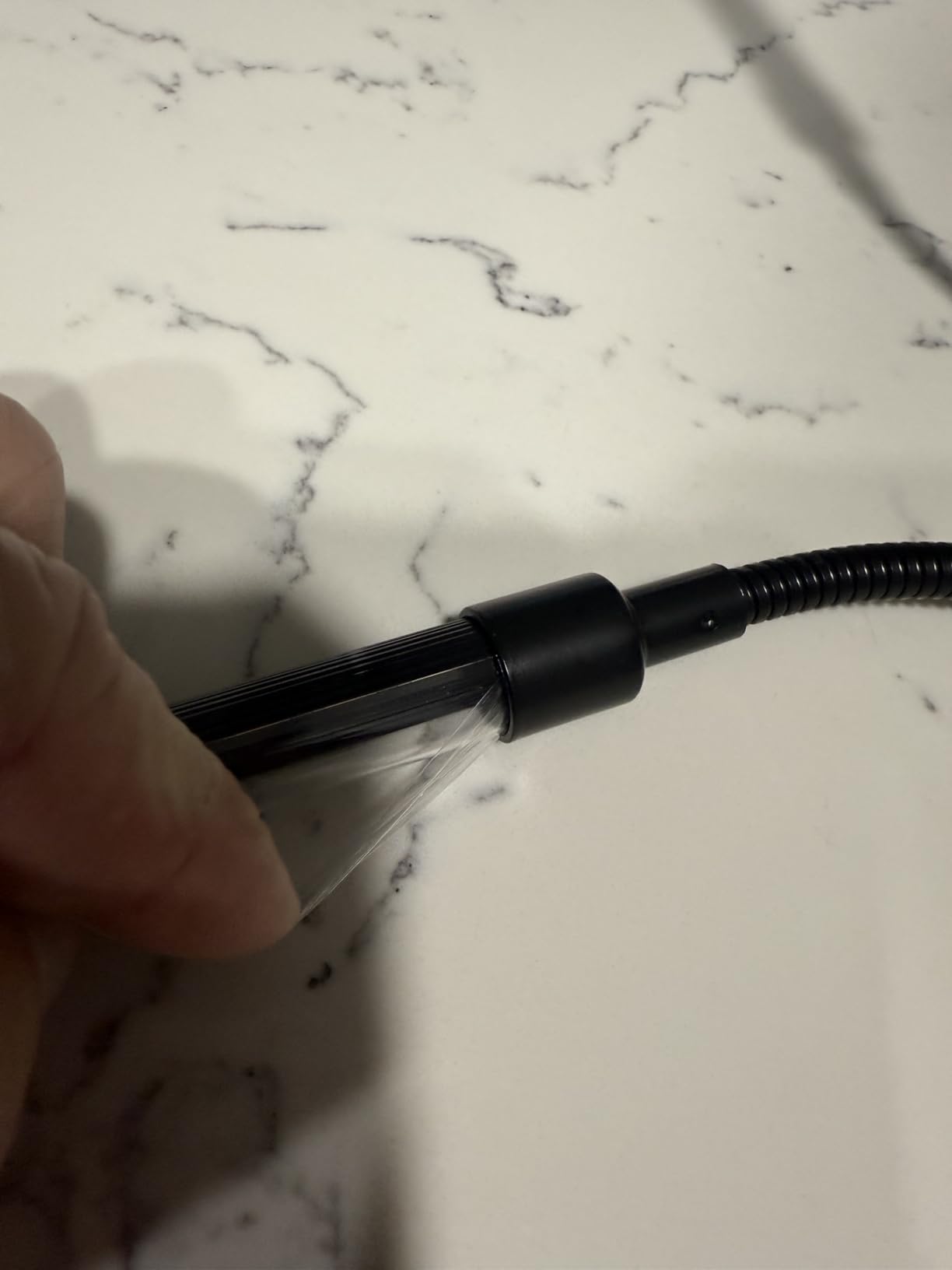
Two gripes recur across reviews and both are worth knowing. The USB cord is roughly 54 inches, so on a tall shelf you will be routing an extension or a power strip, and the factory protective film on the tubes is sealed under the end caps and leaves fragments behind. Neither is a dealbreaker, but plan for the cord before you buy.
Reviewers also note the gooseneck arms can sag over time under their own weight, so if you raise the head fully for a tall plant, check it every couple of months. The 3, 9 and 12 hour memory timer is standard here, and it needs re-setting after a power cut like the others in this category.
What does the yellow and white combination actually do?
Yellow diodes fill the gap between the red and blue that most cheap fixtures skip, which is what stops the output from looking purple on a rosette. In practice I got neutral daylight-looking light, and the plant held tighter growth than a comparable red-blue setup I had running beside it.
Who should skip this lamp?
Skip it if your shelf is tall and your only power source is a wall outlet at floor level, because the short cord is the main reason people return these. It is also worth skipping if you want a fixture you can raise 16 inches above a plant and forget, since the arms need occasional re-tucking.
5. GYTF Halo Soil-Stake Light – Best for Propagation Trays
GYTF Halo Plant Grow Light, 6000K White LED Full Spectrum Growing Lamp for Indoor Plants, Succulents, Mini Bonsai, Small Plants, Height Adjustable, Dimmable & Timer 4/8/12/18Hrs
- 48 LED halo at 6000K
- 6 red, 6 blue, 36 white
- 4/8/12/18H timer
- 5-level dimming
- Soil-stake pole mount
Pros
- Strong feature-to-cost ratio for a full-spectrum halo
- Pole inserts straight into soil with no base or clamp
- Height adjustment and rotating head follow plant growth
- Four timer options including a long 18-hour cycle
- Compact and unobtrusive on a desk or shelf
Cons
- Lowest average rating in this group with more critical reviews
- Short pole limits coverage for larger or taller plants
- Modest output suited to succulents seedlings and small herbs
This is the only fixture in the group that stakes itself into the soil, and for a propagation tray of succulent leaf cuttings that is a genuinely better design than anything that needs a clamp or a shelf edge. Setup takes about ten seconds and there is no base to find space for.
The halo itself carries 6 red, 6 blue and 36 white diodes at 6000K. It is not a high-output fixture, so think of it as a supplement rather than a primary light for a mature plant, but for a tray of 30 leaf cuttings it is more than enough, and the 18 hour timer option is longer than anything else here except the three-pack below.
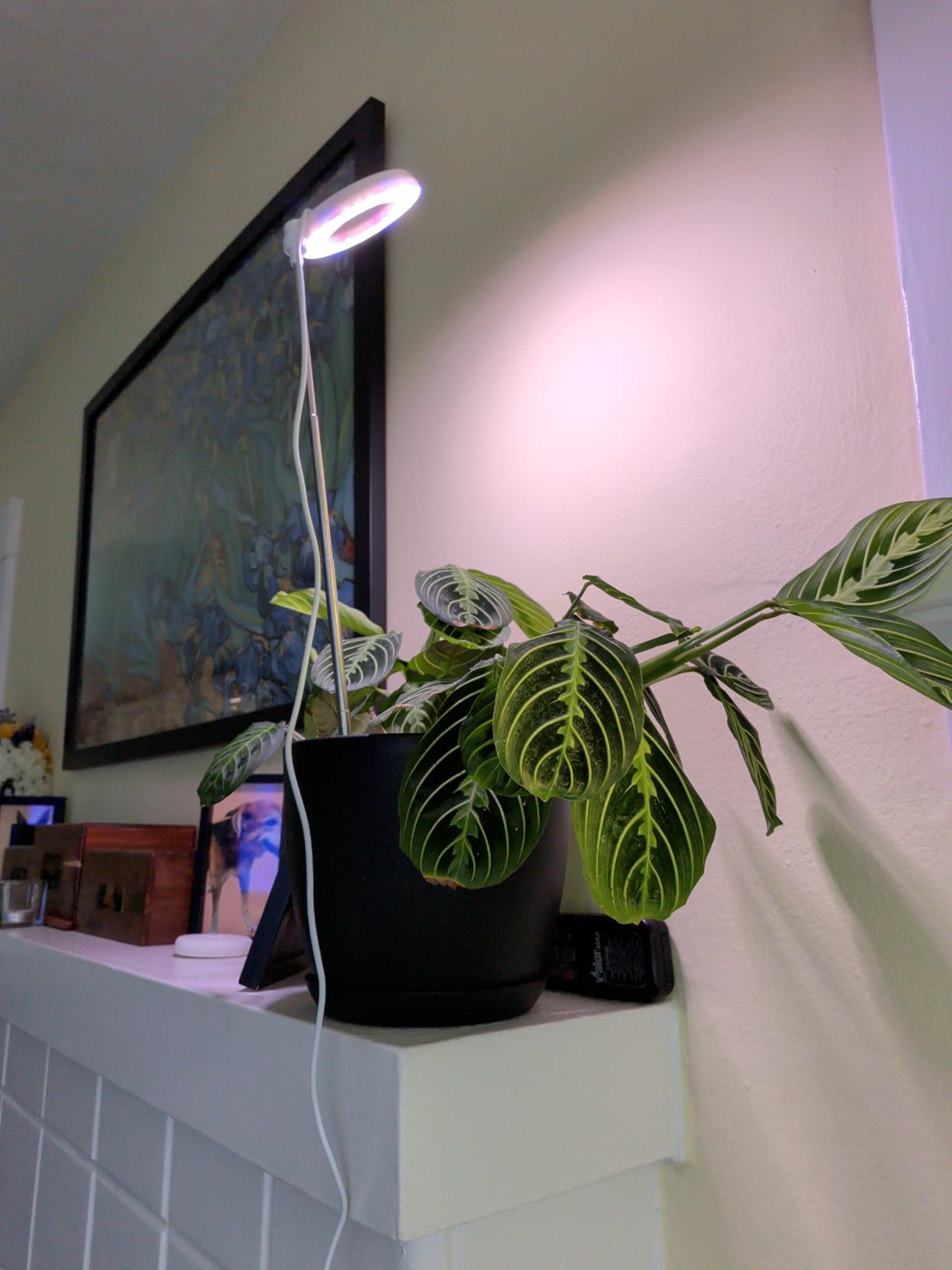
Owners like the soil-stake installation and the price-to-feature ratio, especially for mini bonsai and small pots. The rotating head and adjustable aluminum pole let the light follow growth as a plant thickens, which matters in a tray where plants sit at different heights.
It carries the lowest average rating of the ten at 4.3, and the critical reviews concentrate on brightness and the short pole. A halo of this size will not cover a 12 inch pot, and the extension tops out well below the height a columnar cactus needs. Remote control is included, which is convenient.
Can a single halo cover a propagation tray?
For a tray around 12 by 8 inches, yes, positioned near the center. Anything wider than that and the outer corners get noticeably less light, so I would add a second halo at the opposite end rather than stretching one to cover it. Cuttings call for gentle light while they root, and the 5-level dimming handles that well.
Who should skip this lamp?
Skip it as a primary light for large, mature or high-light plants such as an old Echeveria or a flowering cactus. The short pole is the practical limit, and the lower rating here reflects how many buyers tried to use it for plants it was never sized for. As a tray light or a desk supplement it holds up well.
6. SANSI Ceramic Clip-On Grow Light – Best Single-Pot Light
SANSI Grow Lights for Indoor Plants, Pot Clip-On Plant Light, 1-Pack
- 5W ceramic LED
- 35.78 micromol at 6 inches
- 4000K natural full spectrum
- 360-degree gooseneck pot clip
Pros
- Ceramic LED delivers real output from a 5W draw
- Clips directly onto a pot with no base or stand
- 4000K tone is gentle on the eyes with no purple glow
- Compact enough for desks plant stands and hanging setups
- Costs almost nothing to run
Cons
- Single light source covers one pot at a time
- Needs a USB power source nearby so cord routing can be awkward
- Modest coverage better suited to one plant than a shelf
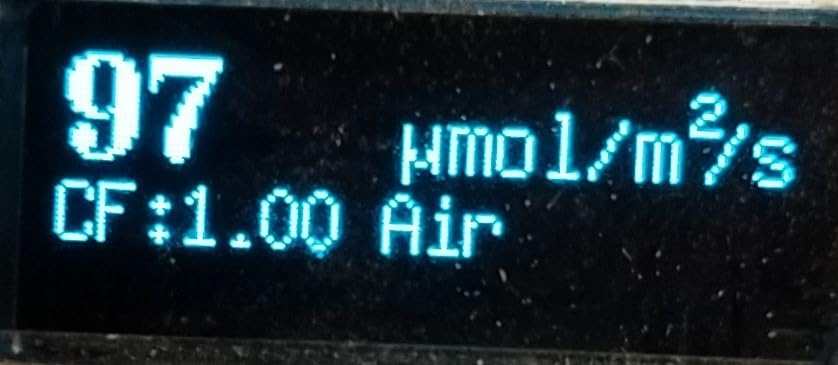
This is the one I recommend to beginners with a handful of plants, and r/succulents regulars name SANSI alongside the strip-light brands as a default recommendation. The reason is simple: it is the only fixture here that publishes a PPFD figure. At 5W it delivers 35.78 micromol per square meter per second at 6 inches, which is a number you can actually plan a shelf around.
The ceramic LED technology is what makes that possible, using roughly half the power of a comparable 10W light. The clip grips a pot rim directly, so there is no shelf edge nearby to worry about, and the 360-degree gooseneck lets you aim the head at the soil rather than across the room.
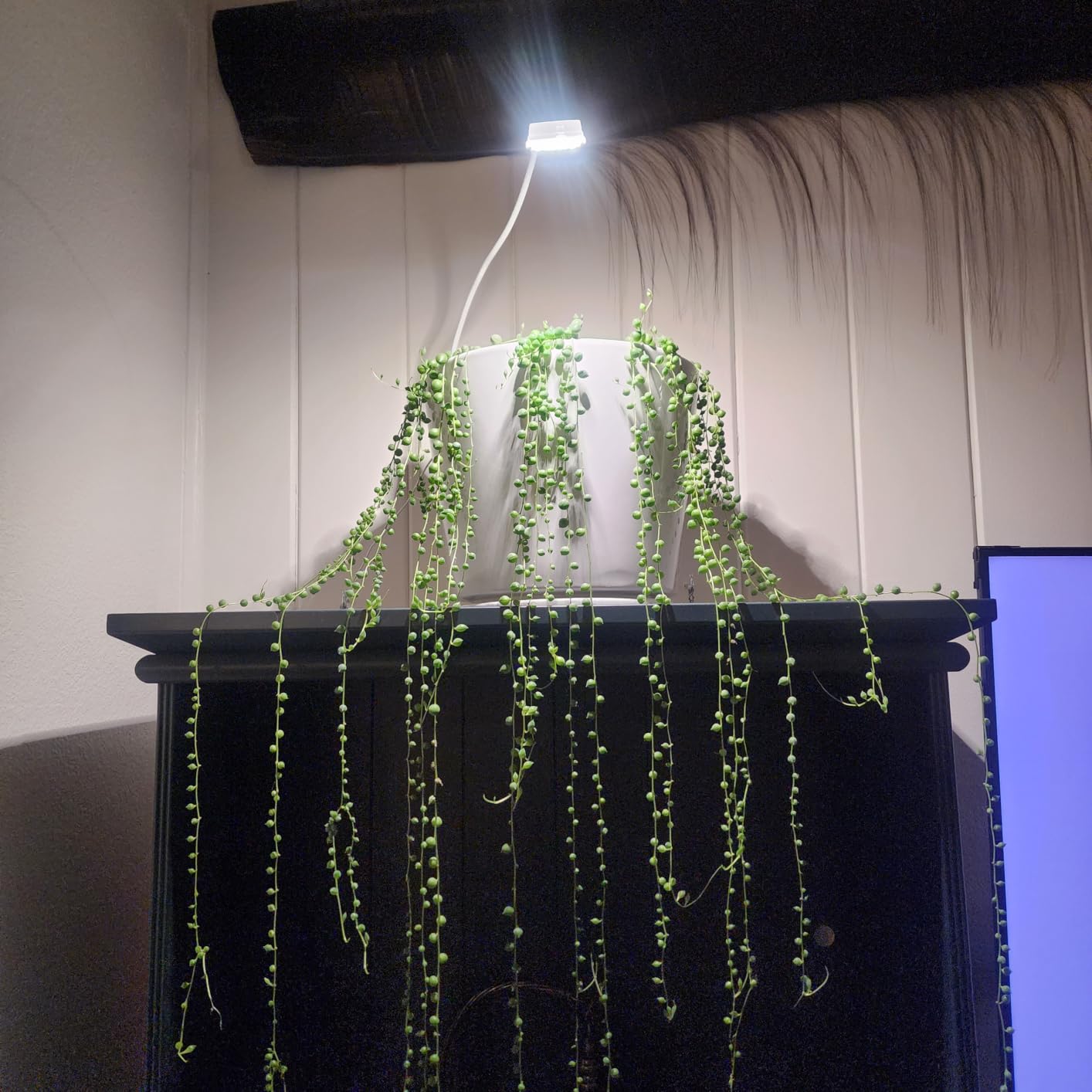
The 4000K tone is the other reason people like it. It reads as natural indoor light, not a grow-light glow, and the dimming control lets you set a low overnight level for a plant recovering from etiolation. It is ETL listed and runs on low voltage, so it is safe to leave on long schedules.
The limitation is arithmetic: one light source serves one pot. If your collection is more than three or four plants, you are going to need several of these, and each needs a USB outlet within reach, which is where cord routing gets awkward on a deep shelf.
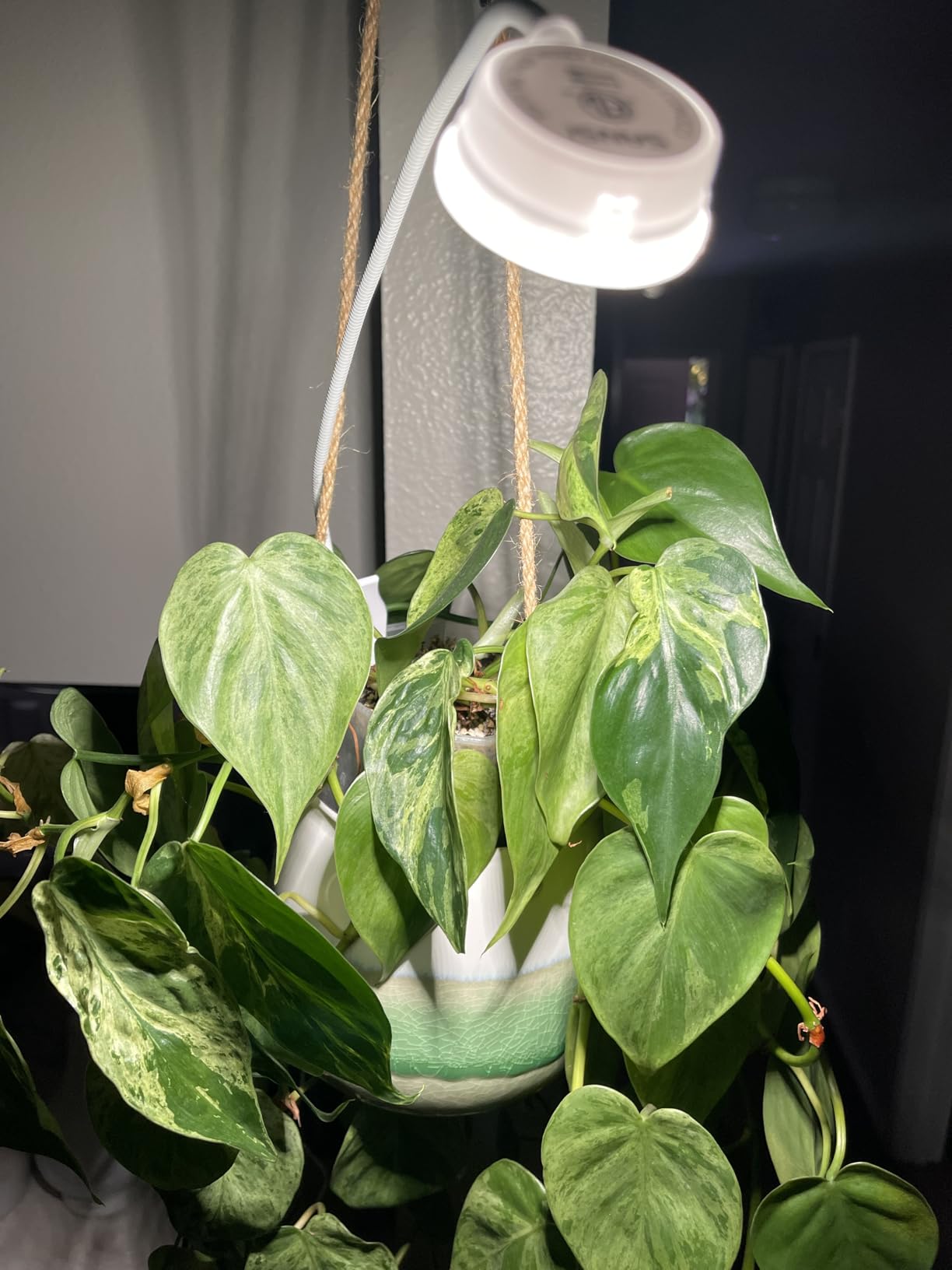
Does a 5W light really hold a succulent compact?
At 6 inches, yes for a single small to medium rosette, which is exactly what this format is built for. I had no stretching on Echeveria offsets and good color on a Haworthia over several weeks. Above about 10 inches the intensity falls away, so a large plant 12 inches up will not get enough to stay compact.
Who should skip this lamp?
Skip it if you have a shelf rather than a windowsill, because you would need one per pot and the USB cords start to compete for space. It is also the wrong call for anyone without a convenient outlet near the plant. For a single-desk succulent, a student dorm, or a plant on an office desk, it is the tidiest solution I found.
7. Aokrean 48-LED Halo Pole Light – Best for Floor Planters
Aokrean Grow Lights for Indoor Plants, Full Spectrum Plant Light with Base
- 48-LED full-spectrum halo
- 3 lighting modes
- 10 brightness levels
- 3/9/12H timer
- Pole extends to 26 inches
Pros
- Tall telescoping pole reaches up to 26 inches over a large area
- 10 brightness levels and 3 spectrum modes give fine control
- Doubles as a floor or hanging planter light
- Assembles and disassembles for storage
- Timer repeats the same schedule daily
Cons
- Freestanding base is unstable unless weighted by the pot
- Requires a nearby outlet and is not battery powered
- Mains cord limits how far it sits from a socket
This is the only fixture here built for a large floor planter, and the 26 inch telescoping pole is the reason. A 10 inch aloe in a heavy pot on the floor gets light from well above the canopy, which no clip lamp or short halo can manage without a separate stand.
It carries 48 full-spectrum LEDs in a halo with 3 lighting modes, white, warm white, and a red or mixed setting, plus 10 brightness levels and a 3, 9 and 12 hour cyclic timer. Owners of floor planters and hanging pots like that it doubles as a decorative light, and the rotating head means you can aim it down into a hanging pot or out across a floor arrangement.
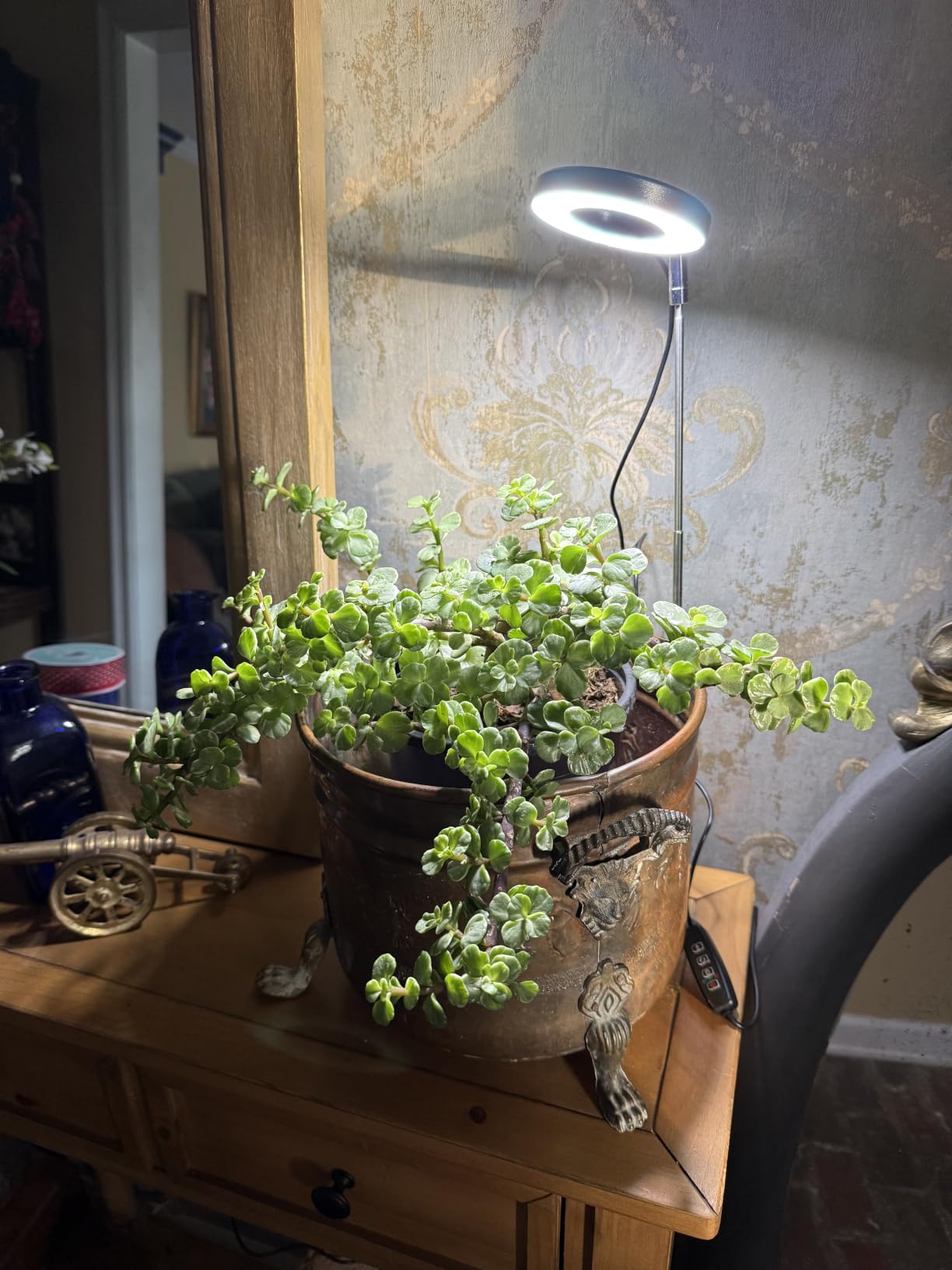
There are two installation methods, a soil stake or a freestanding base weighted by the pot itself, and it assembles and comes apart for storage. I would only trust the weighted base with a pot heavy enough to actually sit on it. Buyers consistently note that the pot needs to be the stabilizing weight and that the unit must be plugged in.
It weighs 0.54 kg on its own and needs mains power, so a socket is a hard requirement rather than a preference. The cord is the other constraint, since a floor arrangement far from an outlet will need a different approach entirely.
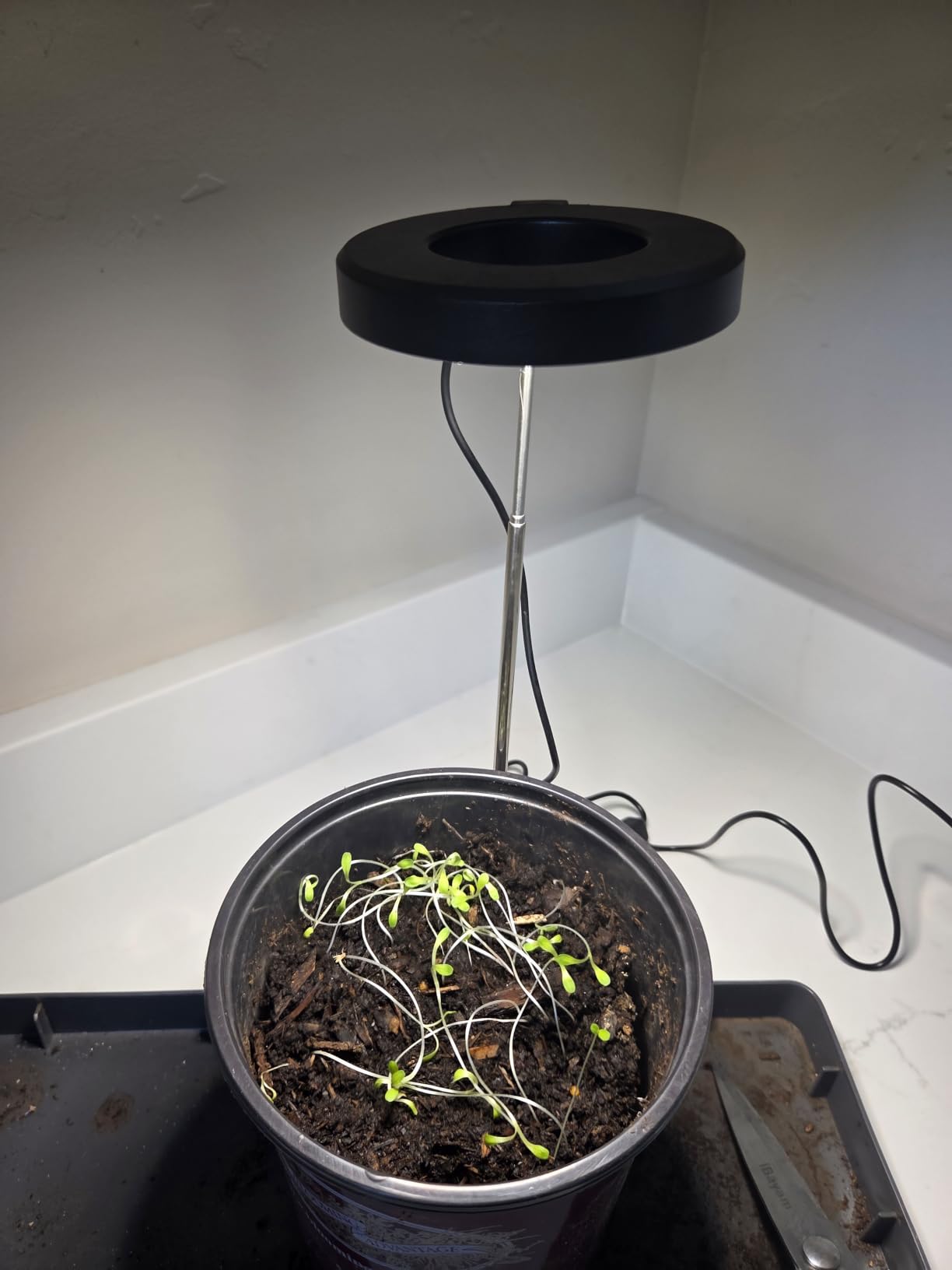
Is 26 inches too high for a small succulent?
For a 3 inch Haworthia, yes, that height is wasted. The pole telescopes down, and the 10 brightness levels compensate, but the sweet spot for this fixture is a plant in a pot at least 12 inches tall, sitting on the floor or on a low stand. That is exactly the case it was designed around.
Who should skip this lamp?
Skip it for a shelf, a desk, or any setup without a nearby outlet, since the mains cord and the weighted base make it awkward anywhere else. Small pot collections will find the 26 inch reach excessive. It earns its place for a single statement floor planter or a hanging pot that nothing else can reach.
8. Kullsinss 3.5in Small Halo Light – Best Decor-Friendly Option
Kullsinss 3.5in Small Grow Lights for Indoor Plants, 48 LEDs Full Spectrum
- 48 SMD LEDs, 380nm-760nm
- 5 dimming levels
- Detachable base with dual installation
- Telescoping pole
- 3.5in halo
Pros
- Attractive halo design that blends into a room
- No assembly and the telescoping pole stays put
- Slim base can be weighted by the pot or staked into soil
- Owners report reviving struggling houseplants within weeks
- Costs very little to run
Cons
- Output is dimmer than expected and covers a small area
- Cord is short at roughly one meter
- Base is light and needs weight
The reason this one is in the roundup is decor. A visible magenta bar over a bookcase is the single most common complaint about grow lights, and a slim white halo ring disappears into a room in a way no clip fixture can. The build is 48 high-efficiency SMD diodes covering 380nm to 760nm in a 3.5 inch ring.
It also costs almost nothing to run, which is part of why I am comfortable recommending it for a large group of small pots. Owners frequently report visible new growth within a few weeks, including succulents that had been struggling.
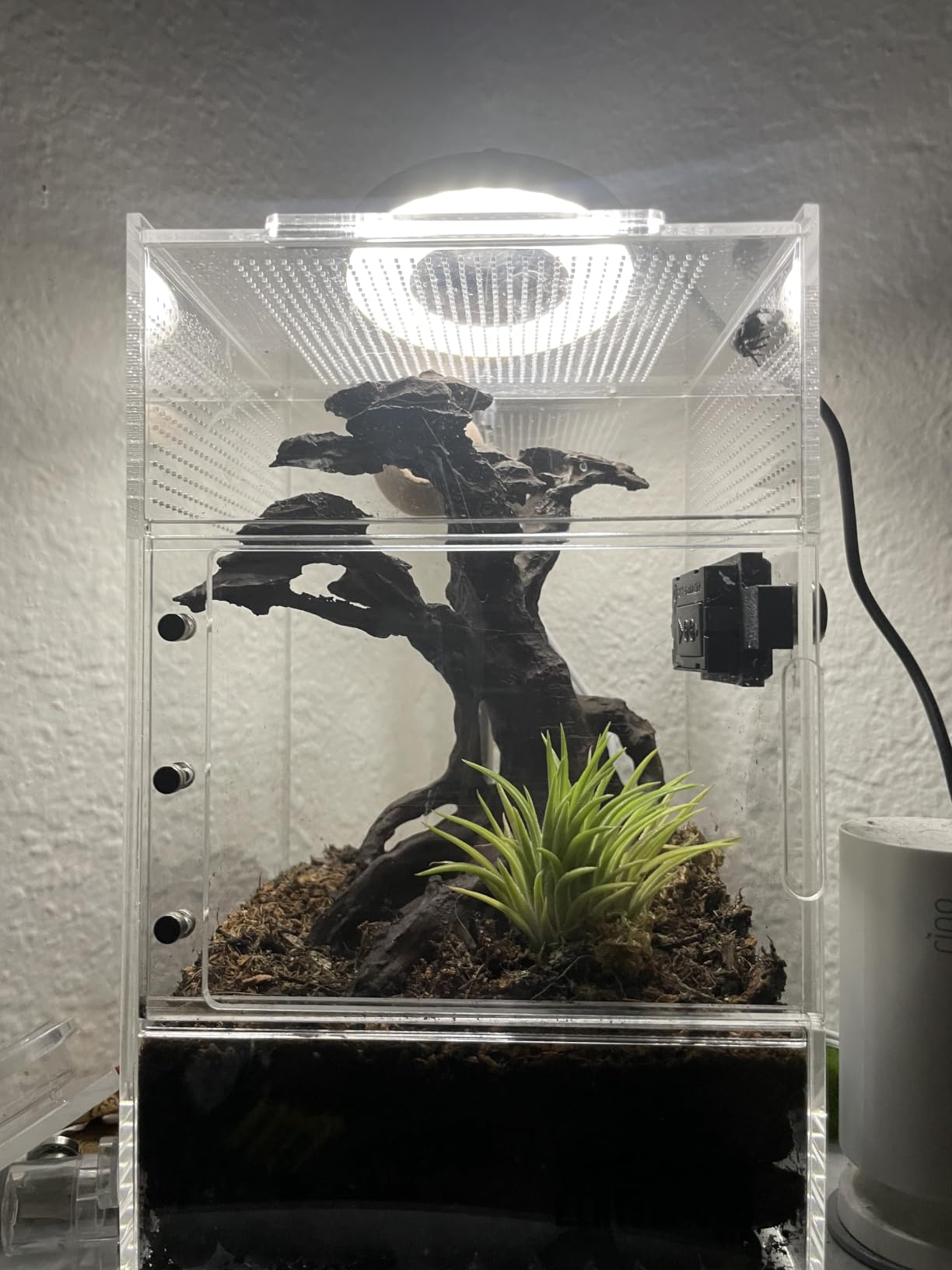
Be realistic about the output, because this is where expectations break. The light covers a small area, which is fine for a cluster of 2 inch pots and wrong for a single large specimen. The cord is about a meter, so tall shelves need a power strip, and the base is light enough to tip without the pot on it.
Five dimming levels across white, warm white and red settings give more control than the wattage suggests. The telescoping pole extends to 26 inches, though owners note the top extension can slip if you do not tighten it.
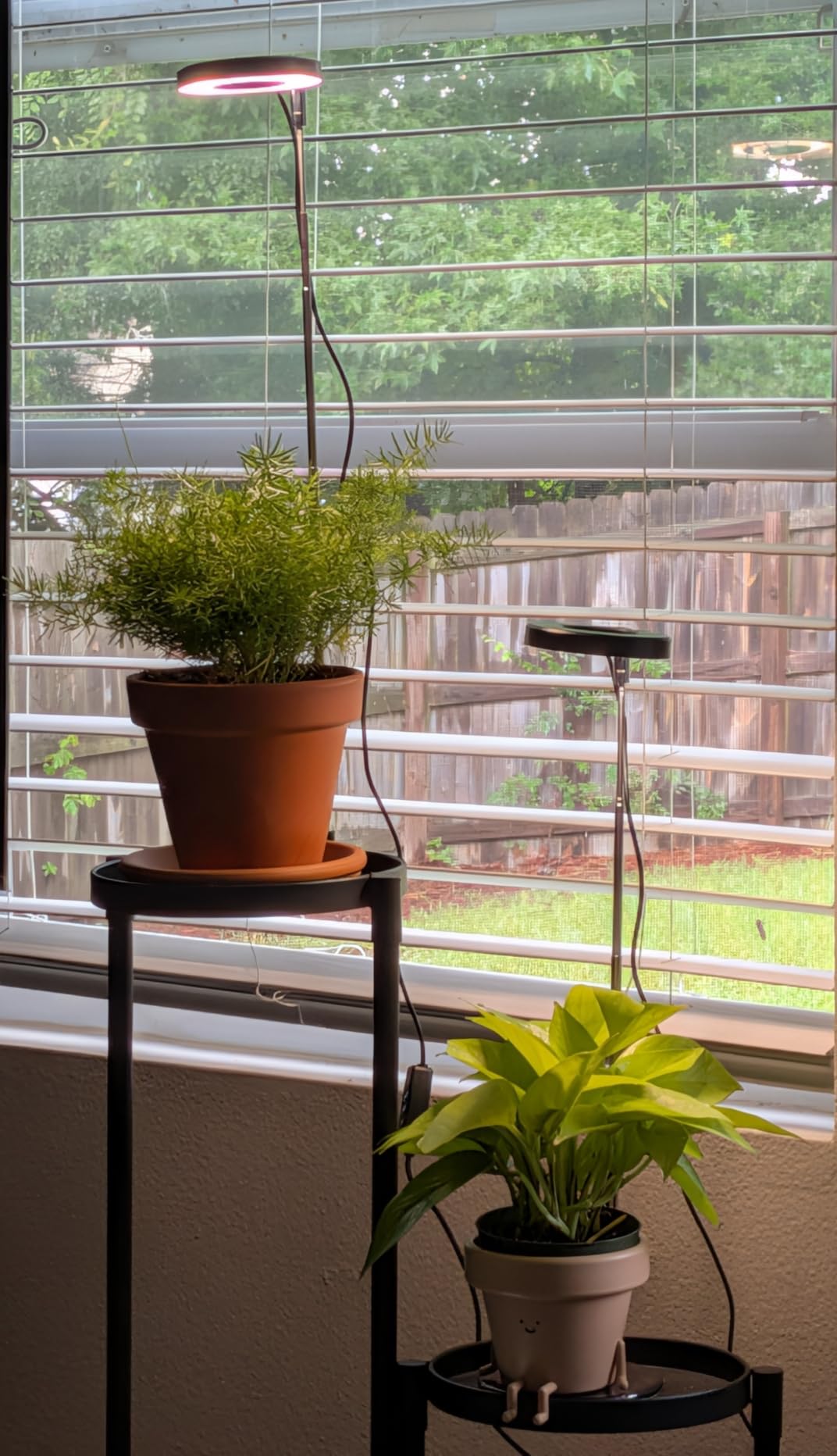
Will several of these light a whole shelf?
They will, at roughly one halo per three or four small pots, which is the setup I used on a long shelf of 2 inch Graptoposedum. Past that ratio the leaves nearest the edge lean, and the outer plants stretch. A halo every 12 inches across a 36 inch shelf is a fair working plan.
Who should skip this lamp?
Skip it if you have one large plant and want a strong single source, because the modest output is not designed for that. Anyone without a nearby outlet should also look elsewhere, given the roughly one meter cord. For a collection of small pots in a visible living space, it is the most acceptable-looking option I tested.
9. FECiDA 3-Pack Clip-On Grow Lights – Best for Bright Corners
Game Changer! FECiDA 2026 3Pack Clip on Grow Lights for Single Pot Plant
- 3-pack, 42 LEDs per tube
- 1000 lumens and 9W per tube
- 5-mode timer up to 20 hours
- Clip-on mount
Pros
- Bright output that visibly improves growth in dark rooms
- Clip mounting needs no base or soil stake
- Three lights cover three separate pots
- Timer options run up to 20 hours for long cycles
- Flexible gooseneck holds position well
Cons
- LEDs run hot after extended use so keep them clear of foliage
- One light covers a single pot rather than a wide shelf
- Clip needs a flat panel or pot rim to grip
This one carries the highest average rating in the group at 4.6, and for a dark corner it earns it. Each of the three tubes runs 42 LEDs at 9W and 1000 lumens, giving 3000 lumens across the pack, which is real output rather than an equivalent-wattage claim.
Because each light focuses onto a single pot rather than washing across a room, you can put it close and actually increase intensity rather than just move it nearer and scorch. That is what makes a three-pack of single-pot lights behave more like one panel than three distractions.
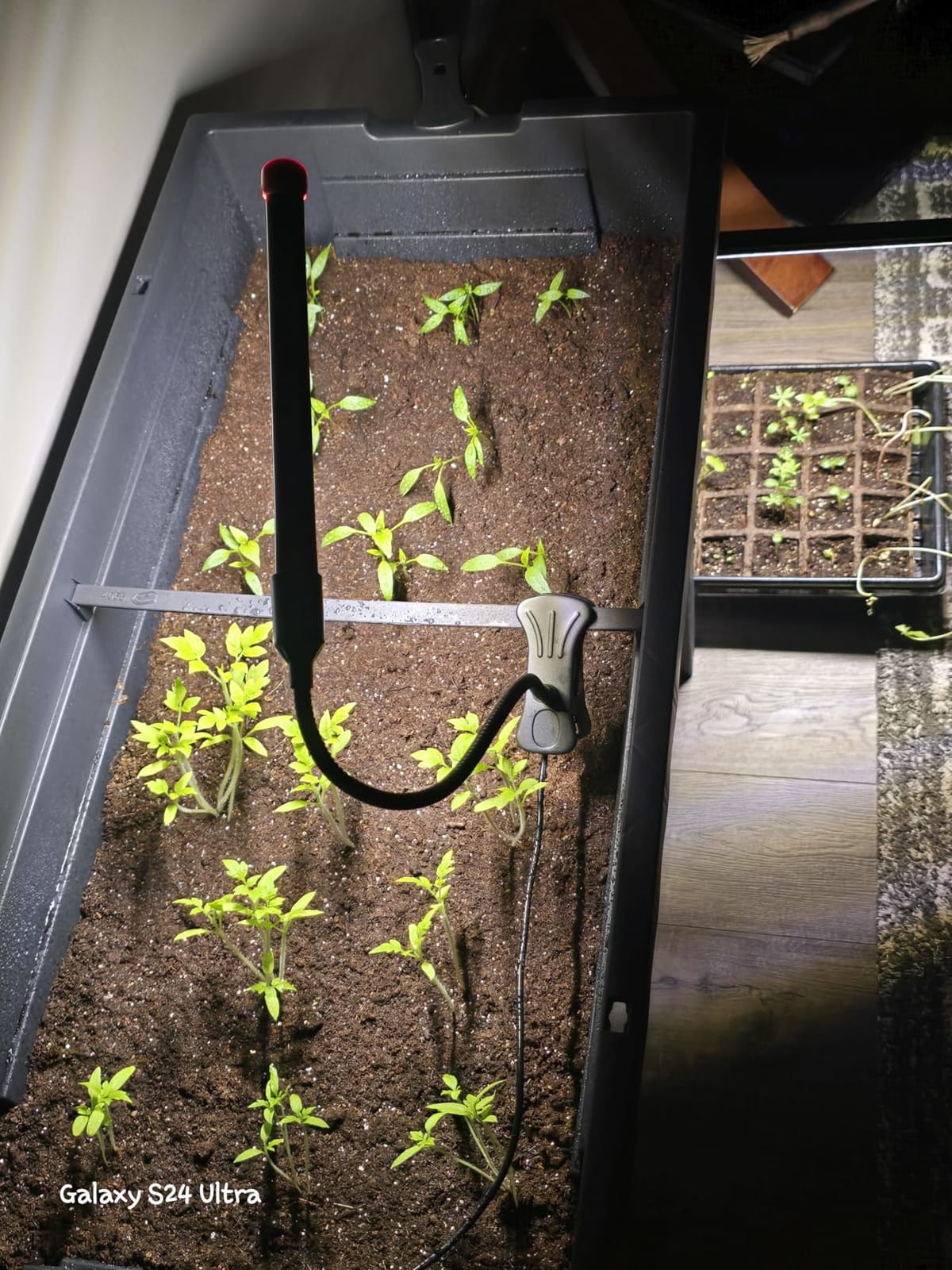
The timer has five settings running 4, 8, 12, 16 and 20 hours with auto on and off, and the 20 hour option is the longest automatic cycle available in this roundup. Power is wall mains, so you need a socket in reach, and the clip needs a flat panel or a pot rim to grip.
Two things to plan for. The LEDs run hot after several hours, and several reviewers recommend keeping distance from sensitive foliage, so I would not hang this closer than 8 inches. It also serves one pot per tube rather than a whole shelf, which is the trade for that focus.
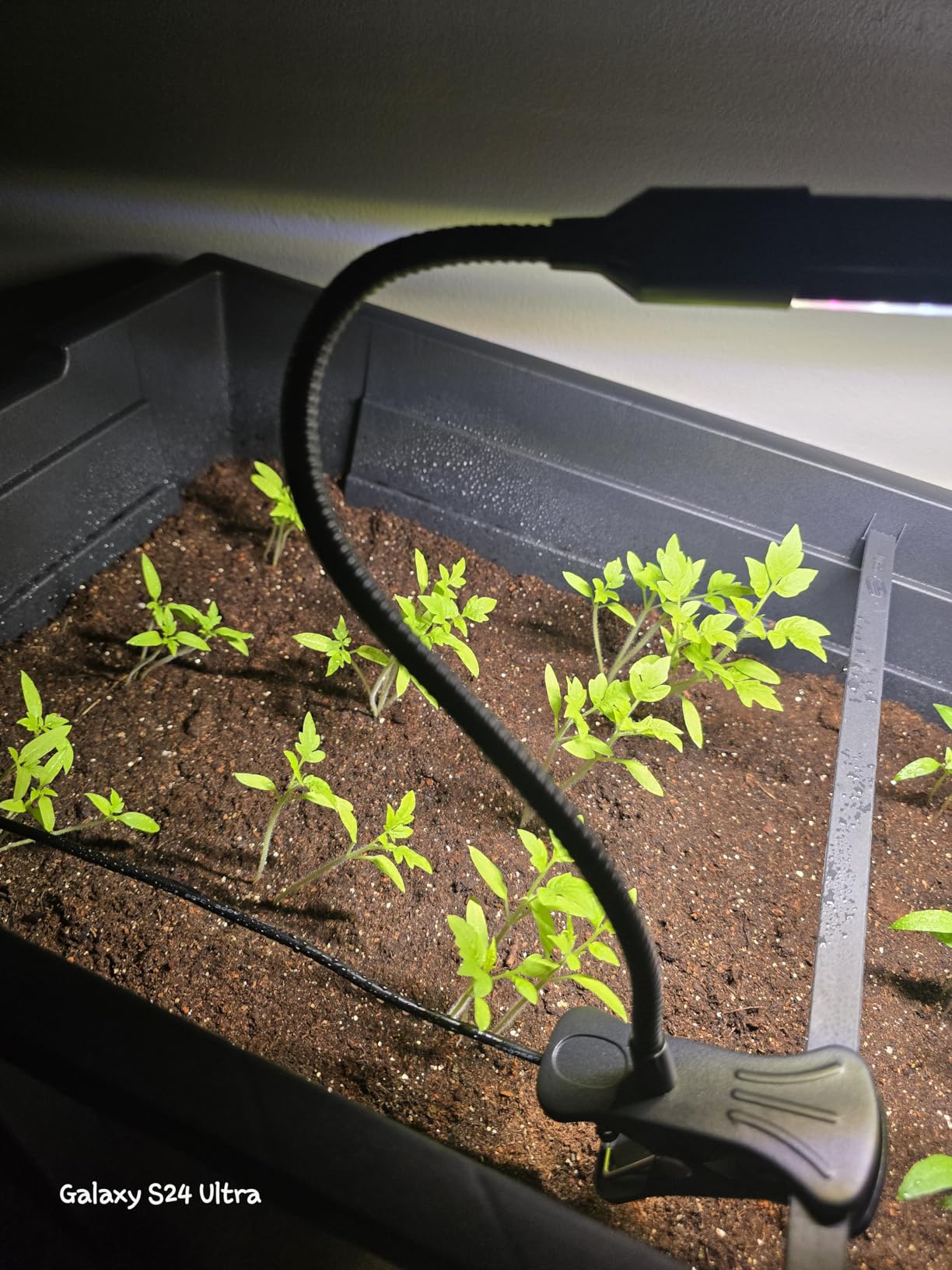
Is a 3-pack brighter than one large panel?
For three separate pots, yes, and the spacing is easy. The total of 3000 lumens across three tubes concentrates onto three small areas rather than spreading over one wide footprint. A single large panel covers more surface area at once, but at lower intensity per plant.
Who should skip this lamp?
Skip it for a shelf with no flat edges or pot rims to clip onto, since that is a hard mounting requirement. Anyone placing a light directly above soft foliage at close range should choose something cooler running. It is a strong fit for a basement shelf, a bright corner, or three isolated pots.
10. Qicodu 4500K Telescopic Grow Light – Best for Recovering Stretched Plants
Grow Lights for Indoor Plants Small Potted – Full Spectrum, Auto 3/9/12H Timer, 10-Level Dimming & Adjustable Height – Compact Grow Light for Succulents, Herbs, Foliage in Home/Office (White,1PACK)
- 48 LEDs, 380nm-800nm at 4500K
- 10-level touch dimming
- Auto 3/9/12H daily timer
- Adjustable height and angle
Pros
- Very affordable for a full-spectrum light with 10 dimming levels
- Adjustable height and angle suit tabletop pots and hanging planters
- Automatic timer removes the need to switch daily
- Owners report stalled red succulents turning green and pushing new growth under it
- Remote and touch controls make adjustment easy
Cons
- Must be plugged into mains power
- which constrains placement
- Cord hangs from below the lamp and is more visible than the photos suggest
- Lamp can wobble in dry soil
- Smallest review base so long-term durability is less documented
This is the one I would pick for a plant that has already gone wrong. Succulent and cactus owners using this report red-stemmed, stalled plants turning green and putting out new growth within weeks, and the 10-level touch dimming from 10 to 100 percent lets you start low and increase as the plant responds.
Forty-eight LEDs cover 380nm to 800nm at 4500K, a slightly warmer white than most in this group, and the telescopic arm gives you a long adjustment range. That range is unusually generous for a lamp this small, which means you can raise it as a recovering plant thickens without swapping fixtures.
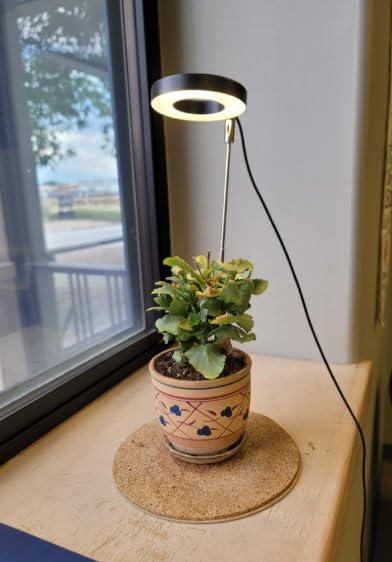
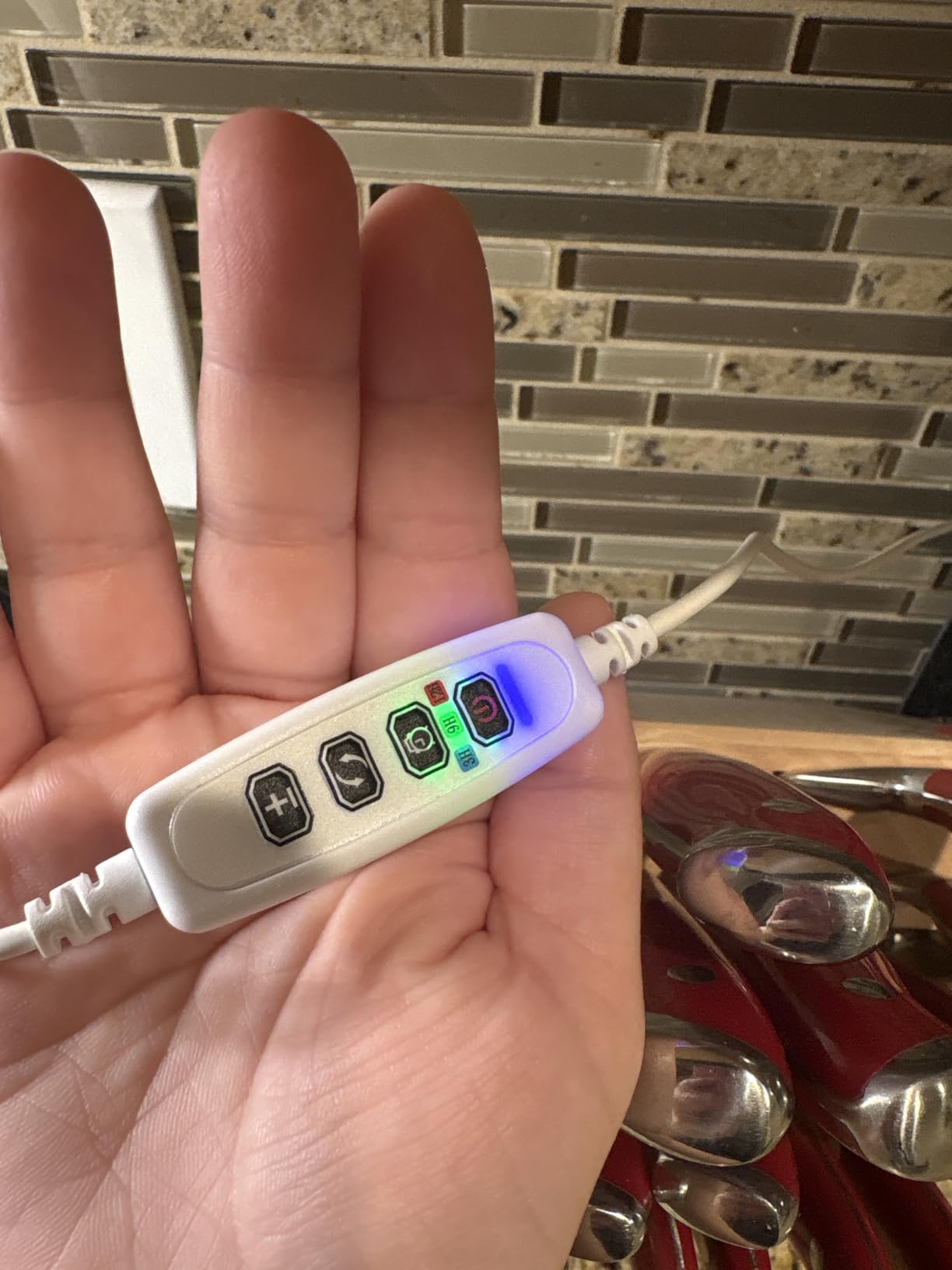
The lamp is CE, FCC and RoHS compliant, and the remote control is a nice touch when the lamp is tucked behind a shelf lip. Owner reports of a lower running cost than standard grow lights line up with what a fixture this size should draw.
Be aware of the practical limitations. It needs mains power, the cord hangs from below the lamp and is more visible in person than in the product photos, and the stem can wobble if it is inserted into dry soil. The review base here is the smallest of the ten at 681 reviews, so long-term durability is less well documented than the others.
How long does it take to fix an etiolated succulent?
Owners of this lamp report visible greening and new growth in under a month, which is faster than most. The one rule is to raise the light as the plant compacts, since an etiolated stem cannot hold itself upright under strong light immediately. Move it up an inch or two every week and expect color to lag new growth by a few weeks.
Who should skip this lamp?
Skip it if you want a long-term, set-and-forget fixture, because the review history is short and the exposed cord is easy to snag. Anyone without a nearby outlet should choose a low-voltage model instead. For a single struggling plant, a propagation tray, or a first light in a low-light apartment, it is a capable and inexpensive starting point.
How to Choose a Grow Light for Succulents
Every fixture in this roundup emits roughly the right wavelengths. What separates a good shelf from a bad one is intensity, distance and consistency, and you can reason about all three before you spend anything. Here is the framework I use when I am setting up a new space.
Spectrum and color temperature: what Kelvin actually means for succulents
Succulents are high-light plants. In nature they take roughly six hours of direct sun equivalent, and reproducing that indoors needs a light that is bright and slightly cool. Look for a full-spectrum white fixture between 5000K and 6500K. Four of the ten lights here state a color temperature in that range outright, and the rest describe their diode mix as full spectrum, so treat anything at 4500K or below as a softer, lower-intensity option.
The Kelvin figure describes how the light looks to your eye, not how many photons reach the leaf. A 4000K lamp such as the SANSI clip-on is pleasant to live with and perfectly usable, but you should expect to hang it closer or run it longer. Red and blue only fixtures, usually called blurple, are the most efficient wavelengths per watt but are the least pleasant to look at.
PAR and PPFD versus lumens and watts
PAR is the range of light plants use for photosynthesis, 400 to 700nm. PPFD, in micromol per square meter per second, is the actual measure of intensity arriving at the leaf, and it is the only number worth planning around. For most succulent setups the useful target is 200 to 400 micromol per square meter per second at the canopy.
Lumens describe how bright a lamp looks to a human eye, and a blue-heavy light scores high on lumens while delivering less usable light to a plant. Stated wattage is worse still, because fixture listings routinely quote a halogen-equivalent figure rather than real draw. Only one light in this group publishes a PPFD number, and that is exactly why it is easy to plan with.
Watage by setup size: how much light your shelf needs
Real power draw matters more than the number on the box. Intensity falls off with the square of distance, so doubling the height cuts the light at the leaf to roughly a quarter. A head at 8 inches delivers dramatically more than the same head at 16 inches.
As a working rule, budget roughly 10W of real draw per two small pots on a shelf, and 20W or more for a shelf of larger specimens and high-light cacti. Then buy one more unit than you think you need, because uniform coverage matters more than peak brightness at a single spot.
Mounting format: clip, pole, bar, or hanging
Clip mounts are the most common and the most flexible, since they attach to a shelf edge and let you change distance in seconds. Pot clips and soil stakes suit single plants and propagation trays where no shelf edge is available. Telescoping pole lights serve floor planters, where a clip cannot reach.
For a crowded shelf, watch the bulk of the head. A bulky multi-head fixture that shades the plants next to it defeats its own coverage, which is a common complaint about wide clip lamps in narrow setups. Bar-style and strip fixtures spread light more evenly but usually need hanging hardware above the shelf.
Full-spectrum white versus blurple: our verdict
Our verdict is white, and it is not close. Red and blue only light is theoretically more efficient per watt, and forum veterans have long noted the tension between efficiency and appearance, but full-spectrum white supports healthy plant growth and, more practically, you will actually leave the light on. A light you switch off because it ruins the room is a light that does nothing.
Forum consensus on r/succulents points the same way, with white fixtures favored and the magenta look described as visually unpleasant in a living room. The commercial reality is the opposite, since the best-selling lights in this category still lean on red and blue, so check the diode list before buying rather than trusting the product photo.
Checking whether your light is actually bright enough
Since almost no fixture in this category publishes PPFD, the cheapest way to sanity-check a light is your own hand. Hold your palm a few inches under the lamp at the setting you plan to use. If the light is strong enough to hold a compact succulent at 8 inches, the underside of your hand should read as a clear, bright glow rather than a faint tint.
For a real number, a phone light-meter app costs little and reports lux, which is not PPFD but is useful for comparing two fixtures side by side on the same shelf. Measure at the canopy, not at the panel, and compare readings taken at the height you will actually hang the light. Note that lux readings skew high for blue-heavy light, so treat the app as a relative tool rather than an absolute one.
Who does not need a grow light at all
If you have a south or west-facing window that puts direct sun on your plants for several hours a day, an outdoor spot in summer, or a greenhouse, a grow light is optional. Many growers use one only between October and March, or only for the shelf that sits away from the glass.
A plant that has never etiolated, sits close to a bright window and grows compactly between spring and autumn is telling you it has enough light. Adding a lamp in that situation gives you stressed foliage and wasted cost with no benefit. Start by measuring what you have rather than assuming you need more.
How to Set Up Your Grow Light: Distance, Timer and Seasonal Changes
Buying the light is the easy part. Most of the disappointment I see comes from setup, specifically hanging a lamp too high, running it 24 hours, or moving it in winter and forgetting to move it back in spring. Here is the sequence I follow.
Distance by fixture and plant type
High-light plants, which includes Echeveria, most Sedum, many cacti and Agave, want 200 to 400 micromol per square meter per second and do best 6 to 12 inches above the canopy. Medium-light plants such as Jade and most Haworthia are comfortable at 8 to 16 inches, aiming nearer 150 to 250 micromol. Low-light types, including Peperomia and Schlumbergera, do fine at 12 to 18 inches with a gentler setting.
Adjust by fixture size rather than a fixed number. Small 3 to 5 inch halo lights belong close, in the 4 to 8 inch range, because their output is low and they run cool. Clip lamps with a larger source can sit at 8 to 12 inches. The 26 inch pole lights are designed to be much higher, at 12 to 24 inches, because they are meant for large floor planters. A good rule is to touch the leaf after a few hours on high; if it is uncomfortably warm, you are too close.
Photoperiod: how many hours per day
Run your lights 12 to 16 hours a day, and treat 14 hours as a solid default for most shelves. Succulents need a real dark period, and running a lamp 24 hours a day suppresses flowering in many species and keeps growth soft. There is no benefit to 18 hours for most setups.
Consensus across forums is messy, with advice ranging from 8 to 18 hours, so anchor the decision to plant type instead. A collection that is actively growing in spring can take 16 hours, while a winter shelf resting plants can run 12. Keep the schedule identical every day, since an inconsistent cycle is harder on plants than a shorter consistent one.
The winter to summer transition
Your light needs a seasonal adjustment just as much as your watering does. In winter, natural light is weak, so move the lamp closer by 2 to 4 inches and drop the dimming level if plants show stress. In spring, raise it back up as growth accelerates and extend the photoperiod by an hour every week or two.
If a plant moves outdoors for summer, take it out of the grow light schedule entirely and acclimate it to direct sun over two weeks before exposing it to full afternoon light. Bringing a lamp indoors at the same time lets you maintain the same photoperiod without the plant noticing a change. This is the single easiest habit to build and it prevents most of the summer scorch people blame on their lamp.
Heat and safety near small pots and wooden shelves
LEDs run cooler than fluorescents, but they still radiate heat downward, and small ceramic pots heat up fast. On a wooden shelf, leave a half inch of clearance and do not drape fabric over a fixture. Reviewers of the brightest clip light here note it runs hot after extended use, which is the reason we recommend 8 inches minimum rather than 6.
Keep cords out of the irrigation path, since a damp cord near a power connection is a real risk, and check that the clip has something solid to grip. The weight of a saturated pot is far higher than a dry one, so confirm the clamp can hold the wet weight before you trust it on an upper shelf.
Cost of ownership: annual energy use and bulb lifespan
Running cost is a genuine advantage of LEDs here. A 10W light on a 14 hour schedule draws about 0.14 kWh a day, roughly 51 kWh over a year, while a small halo light draws a fraction of that. At typical residential rates that is a few dollars a year per fixture rather than a meaningful line item.
Lifespan is the better number to check. The LEDs in this category are typically rated in the tens of thousands of hours, which at 10 hours a day runs well over a decade, and some carry a 2-year warranty. Beyond that, the failure points in cheap fixtures are the ballast and the switch, not the diodes, so a light with a documented warranty is worth more than one with a longer claimed LED life.
Troubleshooting: What Your Succulents Are Telling You About the Light
Succulents are unusually honest about light problems. The symptom shows up before the plant declines, and in most cases the fix is a change to distance, duration or intensity rather than to watering or soil.
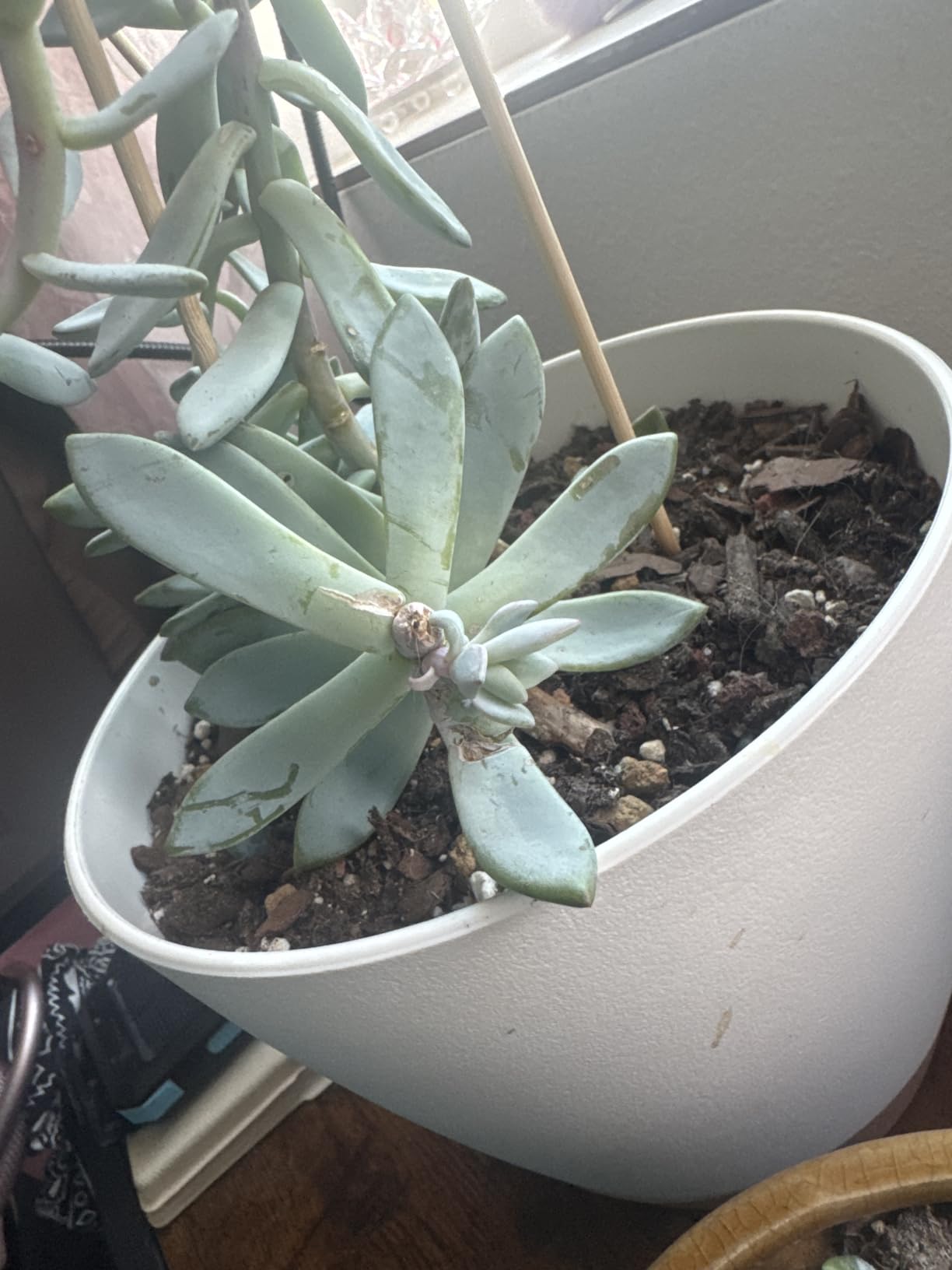
Stretched, leggy growth with wide spacing between leaves. This is etiolation, and it means the light is not delivering enough PPFD at the canopy. Move the lamp 2 to 4 inches closer, raise the dimming level, or extend the photoperiod toward 16 hours. If the lamp is already close and bright, the fixture is simply too small for the plant.
Pale, washed-out growth and a loss of compact rosette shape. Pale growth almost always means insufficient total light, often combined with a fixture set too high. Confirm the plant is receiving direct light rather than light bouncing off a wall. Move the lamp closer before you add hours, since more hours of weak light produces thinner growth, not thicker.
Red or purple coloring on stems and leaf tips. This is anthocyanin response, and it is a stress reaction rather than a defect. A little is normal and many growers consider it attractive. Consistent red on the whole upper plant usually means the light is too intense or too close, so raise it an inch and reduce the dimming level.
Tan, brown or white patches that feel dry or crispy. That is light scorch, and it is irreversible on the damaged tissue. It comes from too little distance, too high a dimming setting, or a fixture that runs hot. Move the lamp up, drop a dimming level, and check the patches on the sun-facing side first since that is where damage appears.
Lower leaves yellowing and dropping while the center stays firm. Light alone rarely causes this. It usually points to a watering or drainage problem, but a light kept on 24 hours a day can contribute by keeping the soil damp. Set a real timer and re-check the watering routine before changing anything else.
Plants leaning toward one side of the shelf. That is phototropism, not a fault. Rotate the tray a quarter turn every week or two, or reposition the lamp so the coverage is even. On a fixture with independently aimable heads, re-angle the heads rather than moving the whole unit.
Frequently Asked Questions
What is the best grow light for succulents?
The best grow light for succulents is a full-spectrum white LED fixture rated 5000K to 6500K that delivers 200 to 400 micromol per square meter per second at the canopy. Hang it 6 to 12 inches above the leaves and run it 12 to 16 hours a day. A clip or bar fixture over a shelf works for most home collections.
Can you put succulents under grow lights?
Yes. Succulents grow well under grow lights, and indoor growers rely on them because a typical window delivers far less light than the six hours of direct sun these plants want. Consistent light plus a real dark period produces tighter growth and better color than a dim, irregular windowsill.
How close should grow lights be to succulents?
Six to 12 inches above the canopy works for most high-light succulents such as Echeveria and many cacti. Small halo lights belong closer, around 4 to 8 inches, while telescoping pole lights for floor planters sit 12 to 24 inches up. If a leaf feels uncomfortably warm after a few hours, move the lamp higher.
What color LED light is best for succulents?
A full-spectrum white light between 5000K and 6500K is the best color for succulents. Red and blue only fixtures are more efficient per watt but cast a magenta glow that most people find unpleasant in a living space. A 4000K white light works well for single pots, just expect to hang it closer or run it longer.
How many watts should my grow light be for succulents?
Judge the fixture by real wall watts, not the halogen-equivalent figure printed on the box. Budget roughly 10W of real draw per two small pots on a shelf, and 20W or more for larger specimens and high-light cacti. Because intensity falls off with the square of distance, a smaller light hung close can outperform a larger one hung high.
How many lumens does a succulent need?
Lumens measure brightness to a human eye rather than to a plant, so treat them as a rough guide only. A single small pot does well with 500 to 1000 lumens from 4 to 8 inches away, while a shelf of larger specimens benefits from 2000 to 3000 lumens spread over the whole area. Check PPFD if the listing publishes it.
How long should grow lights stay on for succulents?
Run grow lights 12 to 16 hours a day, with 14 hours a solid default for most shelves. Succulents need a genuine dark period, and 24-hour lighting suppresses flowering and keeps growth soft. Keep the schedule identical every day, and adjust seasonally rather than switching abruptly.
How do I stop my succulents from stretching?
Stretching, or etiolation, means the light is not delivering enough PPFD at the canopy. Move the lamp 2 to 4 inches closer, raise the dimming level, or extend the photoperiod toward 16 hours. If it is already close and bright, the fixture is too small for the plant and you need more output, not more hours.
Final Verdict: Which Grow Light Fits Your Shelf
For a full shelf in a normal room, start with the GooingTop 6000K clip lamp, which gave us the best brightness per watt and the most reviews of anything in the group. For one wide shelf where even coverage matters most, the LEOTER four-head fixture spreads light more evenly than anything else we tested. For a compact desk setup, the GHodec two-bar light holds color on small rosettes without the magenta cast. For a tight budget, the bseah dual-tube lamp delivers neutral white light and 10 dimming levels for very little.
For a single pot on a desk, the SANSI ceramic clip-on is the tidiest answer and the only fixture here with a published output figure. For a small cluster of pots in a visible living space, the Kullsinss halo is the least noticeable. For a floor planter, the Aokrean pole light is the only one that reaches. For a dark corner where plants are actively declining, the FECiDA 3-pack has the most intensity, provided you keep it 8 inches off the foliage.
Whatever you choose, the setup matters more than the model. Hang it close, run it 14 hours, and adjust with the seasons. That single habit, maintained across 2026, is what separates a compact, colorful succulent from one that slowly flops over the edge of its pot.