
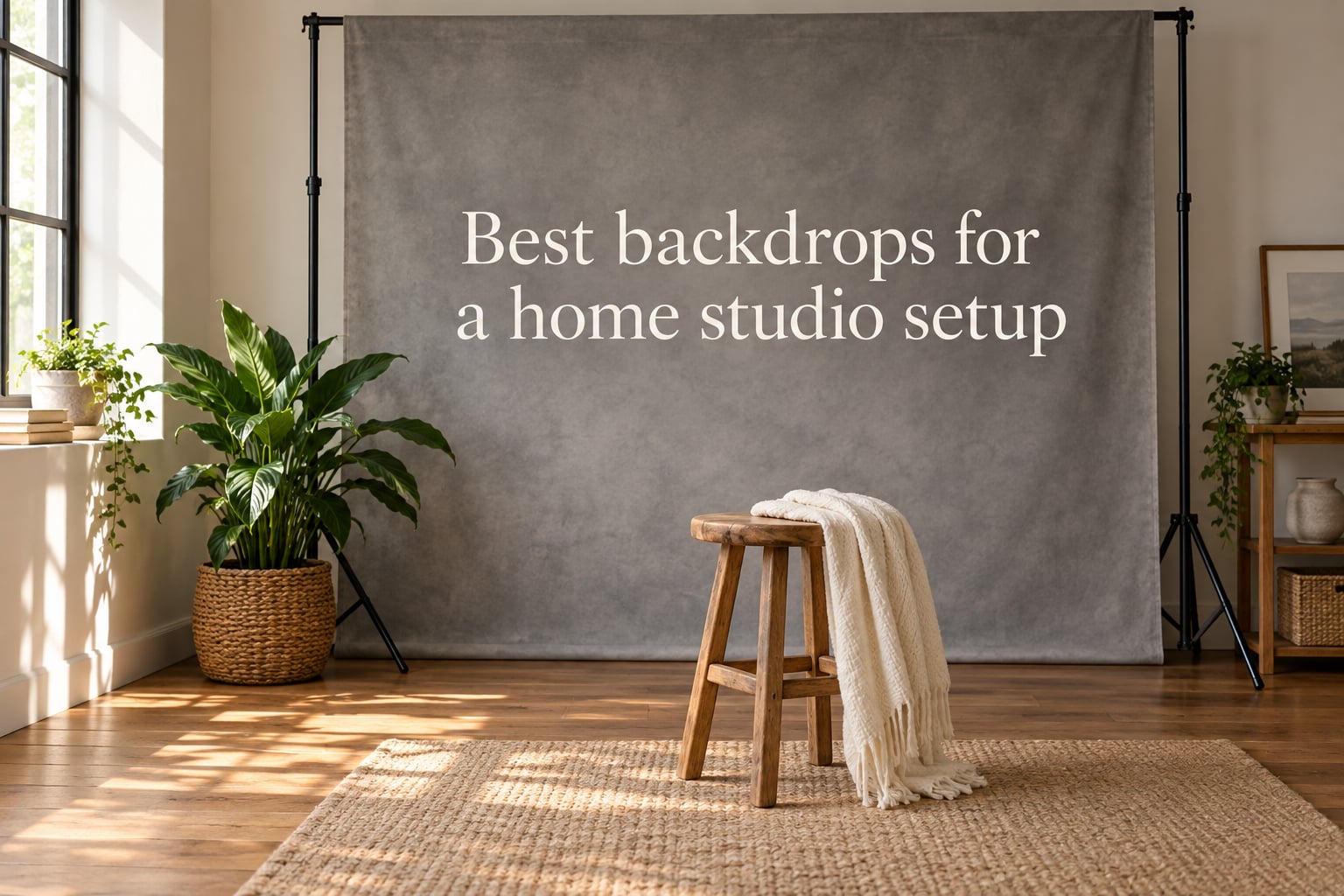
Setting up a home studio is exciting, but the backdrop you choose quietly decides whether your images look polished or homemade. After shooting hundreds of family sessions in our own small home studios, we have learned that the best backdrops for a home studio setup are the ones that match your space, your subject, and your light. This guide walks you through the backdrop materials, sizes, and colors that work in real homes, plus the mistakes we have seen trip up new photographers.
You will find direct answers to the questions photographers ask most often, a side-by-side comparison table that none of the bigger guides publish, and a family portrait perspective we use ourselves. Whether you are shooting newborns, products, headshots, or YouTube content, there is a backdrop here that fits your room.
Table of Contents
- What Is the Best Material for a Studio Backdrop?
- What Makes a Great Home Studio Backdrop?
- The Top Backdrop Materials for a Home Studio
- Backdrop Material Comparison: Side by Side
- Choosing the Best Background for Studio Pictures by Style
- How to Match Backdrop Color to Your Photography
- Backdrop Stands, Hardware, and Storage for Small Spaces
- DIY Studio Backdrop Ideas for Small Spaces
- Common Backdrop Mistakes to Avoid
- Frequently Asked Questions
- Final Thoughts on Building Your Home Studio Backdrop Kit
What Is the Best Material for a Studio Backdrop?
There is no single best material for every home studio, but for most photographers the best studio backdrop is a matte, wrinkle-resistant surface that does not fight your lighting. Seamless paper and muslin are the two most common choices, with vinyl and V-Flats filling specific needs like high-traffic product work or tight spaces.
- Seamless paper – clean, smooth, and inexpensive; best for portraits and product photography.
- Muslin or canvas fabric – forgiving texture that flatters skin; ideal for family and newborn portraits.
- Vinyl – wipe-clean and durable; great for food, kids, and messy sessions.
- V-Flats and foam board – lightweight and portable; perfect for small studios and headshots.
- DIY surfaces – painted walls, wallpaper, or reclaimed wood; budget-friendly and full of personality.
Pick one neutral material first, then add colors and textures as your sessions grow. A single 9-foot wide gray muslin covers roughly 80 percent of what most home studios shoot in their first year.
What Makes a Great Home Studio Backdrop?
A great home studio backdrop removes distractions, flatters your subject, and plays nicely with your lights. We score every backdrop we test on the same six criteria, and you should too before you buy.
Matte, Non-Reflective Finish
A matte backdrop absorbs light instead of bouncing it back at your lens. Vinyl with a high gloss creates hot spots that ruin portraits, even if the color looks pretty in person. When in doubt, choose matte.
Wrinkle Resistance
Wrinkles steal attention from your subject. Seamless paper and tightly woven muslin resist creasing better than loose cotton. If you store fabric backdrops rolled rather than folded, wrinkles almost disappear.
Right Size for Your Subject and Room
For full-body family portraits, a 9×10 foot backdrop is the practical minimum. For headshots and products, a 5×7 or 6×9 foot backdrop fits a tighter room. Measure from the floor up to where your subject stands and add at least 4 feet for headroom.
Lighting Compatibility
A backdrop should never be brighter than your subject’s face. Mid-tone grays and soft beiges give you the most control because they accept directional light without going pure white or pure black.
Durability and Cleaning
Family sessions mean juice, mud, and glitter. Vinyl wipes clean in seconds. Muslin is washable but takes time to dry. Paper is single-use once scuffed. Match the surface to the kind of mess you expect.
Portability and Storage
In a home studio, every square foot matters. A roll of paper stands upright in a closet. Muslin folds flat. V-Flats stack against a wall. Choose what disappears when the shoot ends.
The Top Backdrop Materials for a Home Studio
Each material has a personality. Here is what we have learned from using all five in real home studios, including the pros and cons we wish someone had told us before we bought our first rolls.
Seamless Paper Backdrops
Seamless paper is the workhorse of portrait studios. It hangs from a crossbar, drops to the floor, and gives you a perfectly smooth sweep with no visible seam. The surface is matte, so it does not reflect your strobes, and rolls come in widths from 4.5 feet up to 12 feet.
Paper is forgiving when you spill coffee on it: you cut off the damaged section and keep going. The drawback is that paper tears if a toddler grabs it, and once it is creased, the wrinkle is permanent. Photographers on Reddit consistently name Savage seamless paper as the most reliable starter roll.
Muslin and Fabric Backdrops
Muslin is a soft, woven cotton that drapes naturally and absorbs light. It flatters skin in a way paper cannot, which is why family portrait studios lean on it. Fabric backdrops are washable, last for years, and travel well because you can fold or roll them.
The downside is that muslin wrinkles. You will need a steamer or iron before most sessions, and you will repeat that step after every shoot. Pre-washed, tight-weave muslin resists creasing better than budget cotton blends.
Vinyl Backdrops
Vinyl is a heavy, wipe-clean plastic that hangs flat without steaming. It is the top choice for food photography, product photography with liquids, and sessions with small children where spills are guaranteed. The surface is durable and resistant to tears.
The catch is that cheap vinyl reflects light like a shower curtain and creates glare on portraits. Always buy matte vinyl, and test a sample under your strobes before committing to a roll.
V-Flats and Foam Board
V-Flats are two large foam boards hinged together that fold into a V shape. They stand on the floor, take seconds to set up, and give you a pure white or pure black background plus a built-in light bounce. They are the single best backdrop solution for small home studios with no storage room.
V-Flats are limited to solid colors unless you cover them with fabric or paper, and they do not create a floor sweep. For tight headshot setups and newborn sessions on a posing table, though, they are unbeatable.
DIY and Natural Material Backdrops
A smooth painted wall, a peel-and-stick wallpaper panel, a reclaimed wood plank, or even a sheer curtain with string lights behind it can become a backdrop. DIY options cost almost nothing, and they add a texture or mood that off-the-shelf rolls cannot match.
The trade-off is inconsistency. Painted walls scuff, wallpaper peels at the edges in humidity, and natural wood needs sealing so sap does not transfer to clothing. Treat DIY surfaces as accents rather than your main backdrop.
Backdrop Material Comparison: Side by Side
This is the comparison table we wish existed when we built our first home studio. Each row scores the five major backdrop materials on the criteria that matter in a small room.
| Material | Durability | Wrinkle Resistance | Lighting Behavior | Portability | Best For |
|---|---|---|---|---|---|
| Seamless paper | Single-use rolls | Excellent when new | Matte, neutral | Rolls stand upright | Portraits, products |
| Muslin fabric | Years of use | Needs steaming | Soft, light-absorbing | Folds flat | Family, newborn |
| Matte vinyl | Very high | Excellent | Matte, even | Heavy, rolls | Food, kids, products |
| V-Flats | Years of use | Perfect | Solid white or black | Stack against wall | Headshots, small studios |
| DIY surfaces | Varies | Varies | Depends on material | Permanent or freestanding | Accents, lifestyle |
For most home studios, the winning combination is a 9-foot gray muslin for portraits plus a pair of white V-Flats for headshots and quick sessions. Add a roll of seamless paper in your second favorite color when budget allows.
Choosing the Best Background for Studio Pictures by Style
The best background for studio pictures is the one that supports your subject without competing for attention. Different photography styles call for different surfaces, and we match them by use case below.
Family and Newborn Portraits
Use a soft, neutral muslin in warm gray, oatmeal, or cream. The texture softens skin tones, hides small fabric wrinkles during candid moments, and stays flattering across years of family photos. Avoid bright colors that date the image.
Product Photography
Use a wide roll of seamless white or light gray paper for a clean e-commerce look, or a curved vinyl sweep for reflective items like watches and bottles. The sweep hides the seam between floor and wall and keeps the focus on your product.
Food Photography
Use matte vinyl in dark gray, charcoal, or reclaimed wood. Spills wipe away, and the darker tones make ingredients pop without competing with the plate. Always keep a microfiber cloth handy.
Headshots and YouTube Videos
Use a pair of V-Flats painted flat gray or pure white. They double as light modifiers, take up almost no floor space, and let you swap colors in minutes by covering them with a fabric drape.
How to Match Backdrop Color to Your Photography
Color choice matters as much as material. Start with neutrals because they survive seasonal trends and clothing changes without clashing.
White backdrops brighten the scene but can blow out highlights on light skin and clothing. Gray is the most flexible choice because it accepts any lighting style and flatters every outfit. Black creates drama but compresses dark hair and dark clothing into the background. Beige and oatmeal tones add warmth that is especially kind to newborn skin and rustic family sessions.
If you shoot brand colors often, choose a complementary mid-tone rather than a matching color. A teal dress pops against a soft warm gray far more than against a flat gray wall of the same hue.
Backdrop Stands, Hardware, and Storage for Small Spaces
Even the perfect backdrop fails without the right stand. Most home studios do not need a heavy studio crossbar system. A lighter 10-foot adjustable stand, two grip heads, and four sturdy clamps will carry any paper, fabric, or vinyl roll up to 9 feet wide.
Wall-mounted hooks are the secret weapon of small home studios. A row of three or four hooks along one wall holds a backdrop flat without a freestanding stand, freeing the floor for posing props and lighting. Combined with a telescoping crossbar, a hook system sets up in under a minute.
For storage, roll paper backdrops on the original core and store them upright in a closet corner. Fold muslin around a pool noodle to prevent hard creases, and lean V-Flats against the wall behind a door. A clean backdrop storage system means you spend less time setting up and more time shooting.
DIY Studio Backdrop Ideas for Small Spaces
Small home studios benefit from DIY backdrops that cost almost nothing and add personality. Try these five ideas we have tested in our own rooms.
- Painted wall sweep. Paint one wall and a 3-foot section of the floor the same mid-gray. The result is a permanent backdrop that disappears when you pull furniture back into place.
- Peel-and-stick wallpaper panels. Mount a textured wallpaper panel on foam board for a movable accent backdrop. Works for maternity and lifestyle sessions.
- Reclaimed wood planks. Stand three or four planks against a wall for a rustic backdrop that flatters food, products, and styled family sessions.
- Sheer curtain with string lights. Hang a white sheer panel and place warm fairy lights behind it for a soft glow that flatters newborn and maternity portraits.
- Bookshelf or styled shelf. A real bookshelf behind a subject adds scale and personality for senior portraits and brand shoots.
Mix one or two DIY ideas with one commercial backdrop and your home studio looks larger than its square footage.
Common Backdrop Mistakes to Avoid
After watching new photographers set up their first home studios, we see the same five backdrop mistakes repeat. Avoid these and your images will look more polished from day one.
- Choosing a glossy vinyl that reflects your strobes. Always buy matte vinyl or test under your lights before committing.
- Skipping the floor sweep. A backdrop that ends at the wall looks amateur. Curve paper or fabric onto the floor for a clean, professional finish.
- Pulling the backdrop too tight. Over-stretched muslin shows every wrinkle when it relaxes. Leave a small drape and steam before the shoot.
- Using bright colors that fight the subject. Loud reds and neon shades pull attention away from faces. Keep bold colors for products and styled sessions only.
- Ignoring backdrop size. A 5×7 backdrop works for headshots but crops full-body family portraits. Match the backdrop to your subject.
Frequently Asked Questions
What is the best material for a studio backdrop?
For most home studios the best backdrop material is a matte, wrinkle-resistant surface such as seamless paper or muslin. Paper is best for clean portraits and products, while muslin is the most forgiving choice for family and newborn portraits.
How big should a home studio backdrop be?
A 9-foot wide backdrop is the practical minimum for full-body family portraits, with a 5×7 or 6×9 foot backdrop being enough for headshots and product work in a small room. Always measure from the floor up to where your subject stands and add at least 4 extra feet for headroom.
What color backdrop is best for portraits?
Soft neutral colors like warm gray, oatmeal, and cream are the most flattering backdrop colors for portraits. They complement skin tones, survive clothing changes, and stay timeless across years of family photos.
What are some DIY studio backdrop ideas for small spaces?
Popular DIY studio backdrop ideas include a painted wall with a matching floor sweep, peel-and-stick wallpaper panels mounted on foam board, reclaimed wood planks, sheer curtains with string lights, and styled bookshelves. Each idea is budget-friendly and adds personality to a small home studio.
What are common backdrop mistakes?
The most common backdrop mistakes are choosing glossy vinyl that reflects your lights, skipping the floor sweep, over-stretching muslin so wrinkles show, using bright colors that fight the subject, and choosing a backdrop that is too small for full-body portraits.
Final Thoughts on Building Your Home Studio Backdrop Kit
The best backdrops for a home studio setup are the ones that match how you actually shoot. For family and newborn portraits, start with one warm gray muslin and a pair of white V-Flats. Add a roll of seamless paper in a second color once you know what your clients ask for most. Keep your backdrop kit simple, stored neatly, and ready in minutes, and your home studio will look more professional than rooms twice its size.