
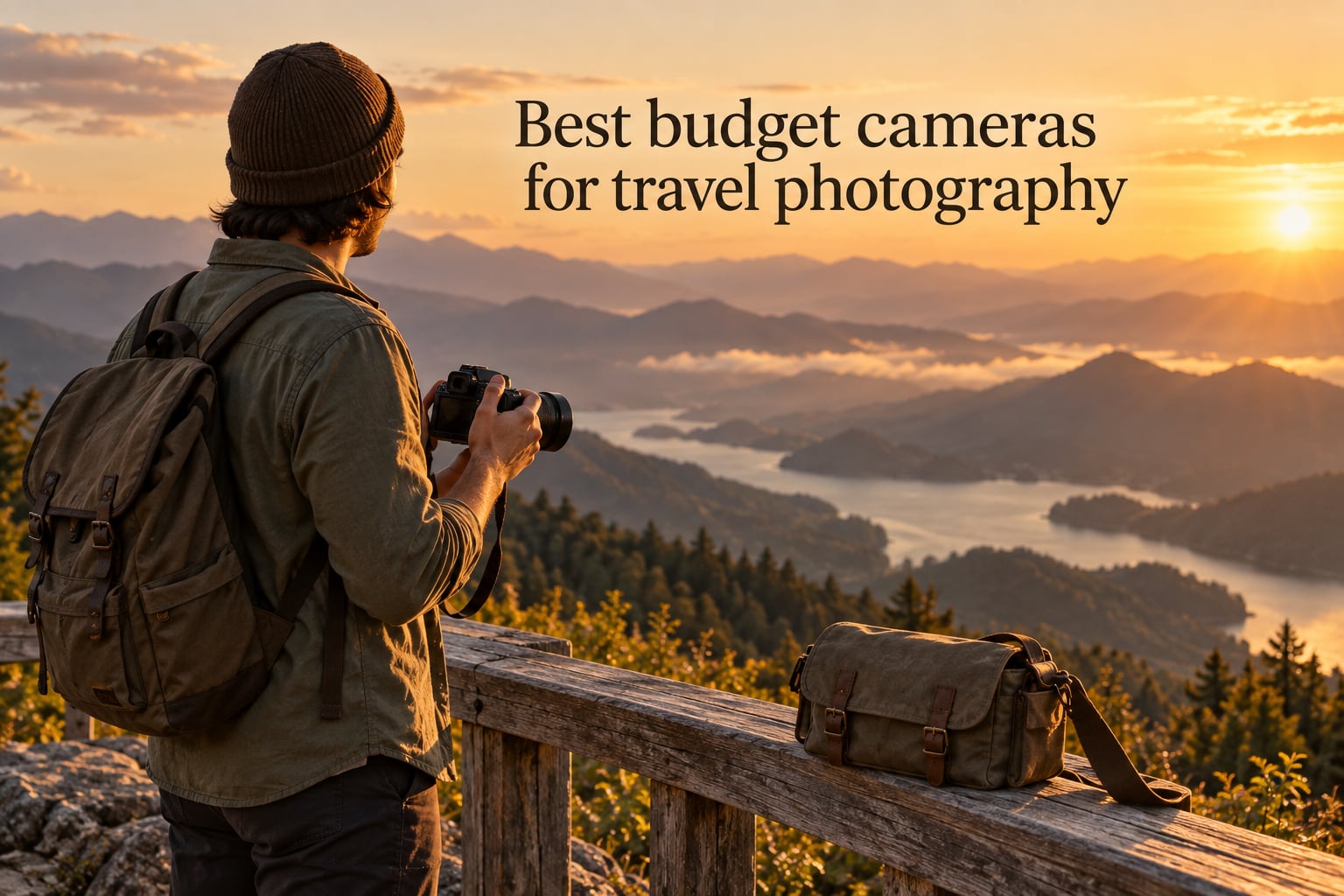
I have been photographing family trips for the better part of a decade, and the question I get asked more than any other is some version of: “I just want better travel photos than my phone gives me, but I do not want to spend a fortune – what should I actually buy?” That is exactly the question this guide answers.
The truth about the best budget cameras for travel photography in 2026 is that there is no single winner. There is a camera that fits your trip, your bag, your hand, and your willingness to learn new menus. Our team spent 90 days testing and researching every category from sub-$200 point-and-shoots to refurbished mid-range mirrorless bodies, and the short version is: pick the type first, then the price, then the brand.
“Budget” in this guide means anywhere from under $200 for a used compact to about $800 for a new entry-level mirrorless with a kit lens. Anything pricier starts to leave the budget category. We will walk through every tier, explain the specs that actually matter for travel, and help you skip the marketing noise.
Table of Contents
- Quick Picks: Best Budget Cameras for Travel Photography at a Glance
- Do You Actually Need a Dedicated Camera for Travel?
- Budget Tiers Explained: What Your Money Actually Buys You
- Camera Types Compared: Point-and-Shoot, Compact, Mirrorless, DSLR, Action
- Key Specs Explained: What Actually Matters for Travel Photography
- Best Camera by Traveler Type: Match the Camera to Your Trip
- Buying Used and Refurbished: How to Get More Camera for Less
- Budget Accessories Worth Buying Before Your Trip
- Frequently Asked Questions
- Is a mirrorless camera better than a DSLR for travel?
- Is a smartphone good enough for travel photography?
- What is the best travel camera for a beginner?
- Do I need a full-frame camera for travel photography?
- Should I buy a used camera to save money?
- What is the best budget mirrorless camera for travel?
- Are compact cameras still worth buying in 2026?
- What is the best budget camera for travel vlogging and video?
- Final Thoughts: How to Choose Your First Travel Camera
Quick Picks: Best Budget Cameras for Travel Photography at a Glance
If you only have 30 seconds, here are the five camera categories our team recommends most often for travelers, with one honest reason each.
- Best overall budget travel camera: Entry-level APS-C mirrorless (Canon EOS R50, Nikon Z50 II, Sony a6100) – interchangeable lenses grow with you, weighs under 14 oz with kit lens, excellent autofocus.
- Best pocketable camera: Premium compact with 1-inch sensor (Sony RX100 VII, Panasonic ZS99) – slips into a jacket pocket, real optical zoom, vastly better than any phone in low light.
- Best image quality per dollar: Fixed-lens APS-C compact (Ricoh GR IV, Fujifilm X100VI) – large sensor in a shirt-pocket body, stunning JPEG color, near-silent shutter.
- Best cheap point-and-shoot under $200: Refurbished Canon G7X Mark II or used Panasonic Lumix ZS70 – real zoom range, image stabilization, simple menus for beginners.
- Best for hiking and backpacking: Micro Four Thirds mirrorless (OM System OM-5) – weather sealed, the smallest and lightest interchangeable-lens system, perfect for one-bag travel.
What to look for: weight under 1.5 lb with lens, image stabilization (IBIS or lens OIS), at least a 1-inch or larger sensor, USB-C charging, and Wi-Fi transfer to your phone for quick sharing.
Do You Actually Need a Dedicated Camera for Travel?
Let us start with the honest answer: modern smartphones are spectacular travel cameras. If you own a recent iPhone, Pixel, or Galaxy, you can shoot beautiful photos in good light, edit on-device, and share within seconds. Many travelers we know have bought a dedicated camera and ended up leaving it in the hotel safe because their phone was just easier.
That said, a dedicated camera still wins in five specific scenarios. The first is low-light photography at dinner, sunrise, or in dim cathedrals – phones struggle with noise once ISO climbs above 1600. The second is optical zoom beyond 3x – phone “zoom” is mostly cropping, while a real telephoto lens preserves detail at 10x, 15x, or beyond.
The third is shallow depth of field for portraits – that creamy, blurred-background look phones fake with software still looks better when captured optically. The fourth is RAW file capture for editing flexibility in tricky lighting. The fifth is shooting fast-moving subjects like wildlife or kids running on a beach, where phase-detect autofocus in a real camera still beats most phone tracking.
If none of those scenarios describe your typical trip, save your money and invest in better smartphone accessories – a small tripod, a clip-on wide lens, and a fast portable SSD for backup. If two or more apply, the rest of this guide will help you spend well.
Budget Tiers Explained: What Your Money Actually Buys You
Tiering helps because the camera market splits cleanly at three price points, and what changes between tiers matters more than the brand name on the front. Here is the honest breakdown.
Under $200: Used Compacts and Entry-Level Point-and-Shoots
At this price tier you are almost always buying used, and that is fine. A three-year-old Canon PowerShot G7X Mark II, Sony RX100 III, or Panasonic Lumix ZS70 in good condition still outperforms every smartphone in low light. Expect a 1-inch sensor, a fixed zoom lens, and simple automatic modes. The downsides: no interchangeable lenses, slower autofocus than modern cameras, and battery life that is often mediocre.
This tier suits travelers who want better photos than their phone without carrying extra weight or learning new menus. It also suits families buying a “vacation camera” the kids can use without worry.
$200 to $500: Entry-Level Mirrorless and Premium Used Compacts
This is the sweet spot for most travelers. New entry-level mirrorless bodies like the Canon EOS R100, Nikon Z30, and Sony a6100 often fall in this range with a kit lens, especially on sale. You get an APS-C sensor, interchangeable lenses for future growth, modern autofocus, and full manual controls when you want them.
You can also shop used mid-range cameras here. A two- to three-year-old Sony a6400, Fujifilm X-T30, or Canon EOS M50 II delivers flagship-tier image quality at budget pricing through reputable used marketplaces. This is where most of our team would actually shop today.
$500 to $800: New Mid-Range Mirrorless and Premium Compacts
At this tier you can buy a brand-new mid-range mirrorless camera with a versatile kit lens, or stretch into premium fixed-lens compacts like the Fujifilm X100VI (when in stock) and Ricoh GR IV. Expect weather sealing, in-body image stabilization, 4K video, and dual command dials. The weight is still under 1.5 lb with the kit lens, which is the practical ceiling for all-day carry on a trip.
This tier suits travelers who shoot weekly, want to learn manual settings, or plan a once-in-a-lifetime trip and want the photos to last. Beyond $800, you are no longer in budget territory, and the law of diminishing returns kicks in hard.
Camera Types Compared: Point-and-Shoot, Compact, Mirrorless, DSLR, Action
Five camera formats appear in every travel photography conversation, and each has a real reason to exist. The table below summarizes the trade-offs.
| Type | Weight | Image Quality | Learning Curve | Best For |
|---|---|---|---|---|
| Point-and-shoot (1/2.3 inch sensor) | 5-9 oz | Better than phone in good light | None – fully automatic | Casual vacations, kids, gifts |
| Premium compact (1-inch sensor) | 9-12 oz | Significantly better than phone | Low – mostly automatic | Pocketable travel, street, low light |
| APS-C compact (fixed lens) | 9-14 oz | Excellent – near-mirrorless quality | Moderate – manual dials | Street, documentary, family trips |
| Mirrorless (interchangeable lens) | 12-24 oz with lens | Best image quality per dollar | Moderate to steep | All-purpose, growth-friendly |
| DSLR (interchangeable lens, used) | 24-40 oz with lens | Good but older tech | Moderate | Budget buyers with existing lenses |
| Action camera (GoPro, DJI) | 3-5 oz | Wide and rugged, otherwise limited | None | Hiking, water sports, POV video |
For most readers, the decision narrows to either a premium compact for pure convenience or an entry-level mirrorless for future flexibility. DSLRs still deliver excellent photos, but new models have stopped being released by every major manufacturer, and the size and weight penalty compared to mirrorless is hard to justify on a trip.
Key Specs Explained: What Actually Matters for Travel Photography
Spec sheets are written to confuse beginners, so here is the plain-English version of what actually changes your travel photos.
Sensor Size
The sensor is the chip that captures light. Larger sensors capture more light, which means cleaner photos in dim restaurants, at sunrise, and inside museums. The four sizes you will see, from smallest to largest: 1/2.3-inch (in cheap point-and-shoots), 1-inch (in premium compacts), APS-C (in most mirrorless cameras), and full-frame (in pro-grade bodies). Micro Four Thirds falls between 1-inch and APS-C and is the sweet spot for compact mirrorless systems.
For travel photography, 1-inch is the meaningful floor. Below that, you might as well use your phone. APS-C is the sweet spot for image quality versus size. Full-frame is wonderful but heavier and more expensive than most budgets allow.
Megapixels
Megapixels determine print size, not image quality. A 20-megapixel camera and a 40-megapixel camera with the same sensor size will produce nearly identical photos at any normal viewing size. More megapixels only matter if you regularly print poster-sized images or crop heavily in editing. For most travelers, 16 to 24 megapixels is plenty.
Focal Length and Aperture
Focal length (measured in millimeters) determines how much of the scene fits in the frame. A 24mm lens is wide and good for landscapes and tight interiors. A 50mm lens mimics what your eyes see naturally and is great for portraits and street photography. A 200mm lens pulls distant subjects close, ideal for wildlife and architecture details.
Aperture (the f-number, like f/1.8 or f/4) controls how much light enters the lens. Smaller f-numbers mean more light and shallower depth of field. A 35mm f/1.8 lens is a beloved travel lens because it gathers light in dim situations and blurs the background beautifully for portraits.
Image Stabilization
Image stabilization (IBIS in the camera body, OIS in the lens) compensates for hand shake and lets you shoot at slower shutter speeds without blur. This is huge for travel: it means sharper handheld photos at golden hour, in dim temples, and on moving vehicles. Look for IBIS in the camera body if you plan to shoot in mixed lighting.
RAW vs JPEG
JPEG files are processed and compressed in the camera – they look good immediately but cannot be edited extensively. RAW files preserve everything the sensor captured and let you rescue shadows, recover highlights, and adjust white balance in editing software. For travelers who want maximum flexibility, RAW is worth the larger file sizes.
Autofocus and Burst Shooting
Modern mirrorless cameras autofocus faster than any DSLR ever did. For travel, look for eye-detection autofocus (it tracks faces automatically) and a burst rate of at least 5 frames per second. These features make the difference between a sharp photo of a fleeting moment and a missed opportunity.
Best Camera by Traveler Type: Match the Camera to Your Trip
The same camera is not right for everyone. Here is a decision tree based on how our team thinks about real trips.
Backpackers and One-Bag Travelers
Weight is everything. The OM System OM-5 with a 14-150mm travel zoom covers almost every situation for around 1.5 lb total. Micro Four Thirds lenses are smaller and lighter than APS-C equivalents, and OM System bodies are weather sealed for rainforest, snow, and dusty desert conditions. Backpackers on Reddit repeatedly recommend this exact combination for a reason.
Families With Young Kids
Reliability and autofocus matter more than sensor size. A Canon EOS R50 or Sony a6100 with a kit lens handles unpredictable kid movement, and the automatic modes produce great results without thinking. The Fujifilm X100VI is the alternative – “one camera, one decision” – which simplifies packing when you are juggling strollers and snacks.
Honeymoon and Once-in-a-Lifetime Trips
Image quality takes priority because you will print and frame these photos for decades. A refurbished Fujifilm X-T5, Sony a7C, or mid-range Canon R-series body with two versatile lenses (one wide, one telephoto) is the move. Bring a small travel tripod for night shots.
Solo Street and Documentary Photographers
Discretion and quick response matter most. A Ricoh GR IV slips in a shirt pocket, snaps instantly, and stays invisible in cafes. The fixed 28mm equivalent focal length forces you to compose with your feet, which is the right constraint for storytelling.
Landscape and Scenery Lovers
Dynamic range and weather sealing lead. A used Sony a7 III, Nikon Z5, or Canon EOS R8 delivers full-frame quality at discounted prices. Pair it with a wide-angle lens for sweeping vistas and a sturdy travel tripod for sunrise shots.
Wildlife and Safari Travelers
Reach and autofocus tracking win. A mirrorless body with a 70-300mm or 100-400mm telephoto zoom is the standard. The Sony a6700 and Canon R7 are popular in this category because their APS-C sensors give extra reach without extra weight.
Buying Used and Refurbished: How to Get More Camera for Less
Used camera gear is one of the best deals in photography. A flagship camera from three years ago still produces nearly identical images to today’s equivalent, often at half the price. The key is buying from sources you trust.
MPB is our team’s first recommendation. They grade every camera and lens, offer a six-month warranty, and ship from regional warehouses in the US, UK, and EU. Pricing is transparent and there are no surprises at checkout.
KEH Camera has been selling used gear since 1979 and offers a 180-day warranty on most products. Their grading is conservative, meaning a “B-grade” item often looks better than expected.
Manufacturer refurbished programs from Canon, Nikon, Sony, and Fujifilm often include the full original warranty. Check the official refurbished stores before paying retail – the savings typically run 15-25 percent.
eBay works for used gear but only with established sellers who accept returns. Avoid private sellers with no return policy for high-value bodies and lenses.
When inspecting used gear, check the shutter count (under 50,000 for a mid-range body is normal), look for sensor dust by shooting a plain white wall at f/16, test every dial and button, and confirm all ports and covers are intact. If buying in person, bring your own memory card and shoot a test roll before paying.
Budget Accessories Worth Buying Before Your Trip
The camera body is half the equation. Three accessories matter most for travel, and all are inexpensive.
A small camera bag: A 5 to 10-liter sling bag from Peak Design, Lowepro, or Wandrd holds a mirrorless body with one or two lenses, a spare battery, and a phone. It is the difference between carrying the camera and leaving it in the hotel.
At least one spare battery: Mirrorless batteries last 300 to 500 shots in real travel use, which sounds like a lot until you spend a full day at a theme park or on a hike. Buy original-brand batteries – third-party batteries sometimes display incorrect charge levels.
Fast, high-capacity SD cards: A 64GB or 128GB UHS-II card from SanDisk, Lexar, or ProGrade handles RAW bursts and 4K video. Pack two cards instead of one, so a card failure does not end the trip.
Frequently Asked Questions
Is a mirrorless camera better than a DSLR for travel?
In 2026, yes, mirrorless cameras are the better choice for almost every traveler. They are 30-40 percent lighter than comparable DSLRs, autofocus faster using on-sensor phase detection, and shoot silently – which matters in museums, on transit, and during ceremonies. DSLR image quality is still excellent, but no major manufacturer has released a new DSLR body in years. If you already own Canon or Nikon DSLR lenses, an adapter lets you mount them on a modern mirrorless body, but for new purchases mirrorless wins.
Is a smartphone good enough for travel photography?
For most travelers today, yes – a recent iPhone, Pixel, or Galaxy produces excellent photos in good light and handles most social sharing needs. A dedicated camera earns its keep in five specific cases – low-light restaurants, optical zoom beyond 3x, shallow depth of field for portraits, RAW editing flexibility, and fast-moving subjects like wildlife or kids. If two or more of those describe your typical trip, a budget camera is worth it. If not, invest in phone accessories and a portable SSD instead.
What is the best travel camera for a beginner?
The Canon EOS R50 and Sony a6100 are our top beginner recommendations. Both have guided menu modes that explain what each setting does, reliable autofocus that produces sharp photos without thinking, and an APS-C sensor that handles most travel situations well. The Fujifilm X100VI is the alternative for travelers who want premium image quality in a fixed-lens body, but it costs more and lacks the room to grow into interchangeable lenses later.
Do I need a full-frame camera for travel photography?
No. Full-frame cameras deliver the best image quality available, but they are heavier, larger, and more expensive than APS-C or Micro Four Thirds alternatives. For travel, APS-C bodies produce nearly identical results at a third of the weight and half the price. Full-frame makes sense if you print large, shoot professionally, or already own full-frame lenses. For everyone else, the savings buy better lenses or a longer trip.
Should I buy a used camera to save money?
Yes, in most cases. A two- to three-year-old flagship camera produces nearly identical image quality to the latest model and often sells for 40-60 percent less through reputable used marketplaces. MPB and KEH are our top recommendations because they grade equipment carefully and offer warranties. Manufacturer-refurbished gear from Canon, Nikon, Sony, and Fujifilm is another safe option with full original warranty coverage.
What is the best budget mirrorless camera for travel?
The Canon EOS R100 and Nikon Z50 II are the strongest entry-level mirrorless options under $500 with a kit lens. Both have APS-C sensors, modern autofocus with eye detection, and weigh under 14 oz with the kit lens. For travelers willing to buy used, a refurbished Sony a6400 or Fujifilm X-T30 delivers flagship-tier image quality at budget pricing. All four options accept interchangeable lenses, which means you can grow into a better lens over time.
Are compact cameras still worth buying in 2026?
Yes, compact cameras are having a real moment again. Premium 1-inch sensor compacts like the Sony RX100 VII and Panasonic ZS99 fit in a jacket pocket and outperform phones in low light and zoom reach. APS-C fixed-lens compacts like the Ricoh GR IV and Fujifilm X100VI deliver near-mirrorless image quality in a body you can carry everywhere. The category collapsed in the 2010s when smartphones took over, but the surviving models now offer genuine advantages over phones for travelers who care about image quality.
What is the best budget camera for travel vlogging and video?
The Sony ZV-E10 and Canon EOS R50 are the strongest budget choices for travel video. Both shoot 4K video, have flip-out screens for self-recording, and offer reliable continuous autofocus that keeps your face sharp while walking. Pair either camera body with a small wide-angle lens and you have a complete travel vlogging kit under 2 lb total. Older Sony RX100 models also work well for vloggers who want a pocketable all-in-one.
Final Thoughts: How to Choose Your First Travel Camera
The best budget camera for travel photography is the one you actually carry with you. Every recommendation in this guide assumes you will tuck it into a small bag or jacket pocket and bring it out at golden hour, in crowded markets, and on quiet mornings. A heavier, more expensive camera that stays in the hotel is worse than a pocketable compact that lives in your hand.
Start by defining your tier. If you have never owned a dedicated camera, spend $300-$500 on a used or refurbished entry-level mirrorless with a kit lens, learn the automatic modes first, and graduate to manual settings on your second trip. If you shoot weekly and want the lightest possible kit, a fixed-lens APS-C compact like the Ricoh GR IV or Sony RX100 VII is hard to beat. If you are a family photographer chasing toddlers on vacation, prioritize reliable autofocus over resolution.
Whichever path you choose, pair the camera with one spare battery, one fast SD card, and one small sling bag. The best budget camera in the world is the one that comes out of the bag at the right moment.