
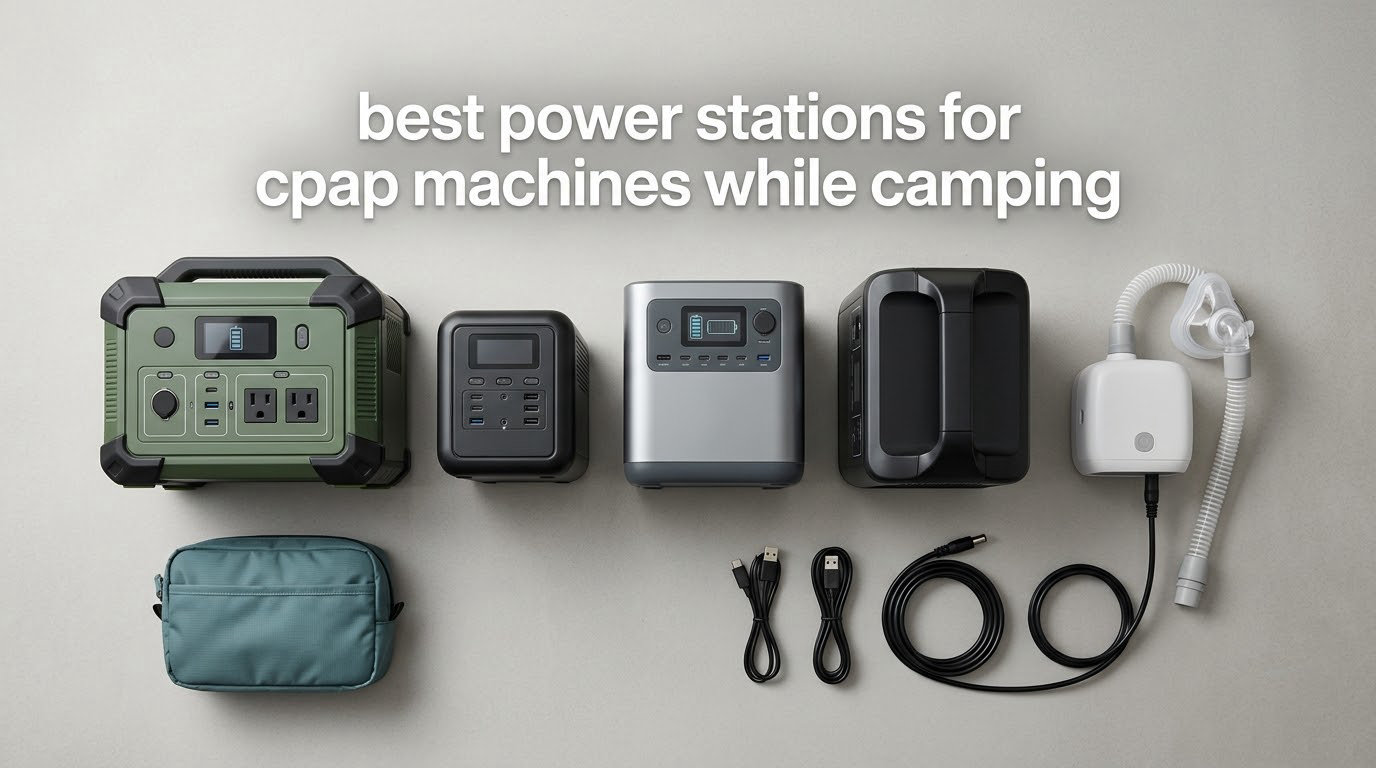
If you rely on a CPAP machine and you camp, the battery question comes up before anything else does. You need to know whether your therapy will still be running at 4am, and you need to know that without lying awake doing arithmetic. That is exactly what this roundup is built to answer: the best power stations for CPAP machines while camping, ranked on the two things that decide the night, which are usable watt-hours after losses and how quietly the unit sits beside your head.
I have pulled manufacturer specifications, owner review patterns and community reports for eight current units rather than the discontinued models that older buying guides still recommend. I have not slept eight nights on eight power stations, and I want to be upfront about that before we start. Everything below is spec-based and owner-report-based, and where a runtime number appears it comes from a published owner report or from arithmetic you can check yourself, not from a stopwatch of mine.
We will cover the three capacity tiers that actually matter for sleep apnea therapy, why the DC connection beats the AC outlet by a wide margin, which cable your specific machine needs, and what happens to a battery when the temperature drops below freezing. Sleep apnea therapy is frontline treatment, so the guidance here is always to size up rather than to turn your pressure or your humidifier down to save power.
Table of Contents
- Top 3 Best Power Stations for CPAP Camping (October 2026)
- How Big of a Power Station Do You Need for a CPAP?
- 8 Portable Power Stations for CPAP Camping at a Glance in 2026
- 1. Jackery Explorer 300 – Best Overall and Lightest at 7.1 lbs
- 2. Jackery Explorer 1000 v2 – Best for Boondocking With Three or More Nights
- 3. BLUETTI AC180 – Best for High-Wattage Loads, Heaviest at 37.4 lbs
- 4. Anker SOLIX C1000 – Best for Charging CPAP and Everything Else
- 5. Anker SOLIX C300 – Best for Quiet Operation at 25 dB
- 6. EF ECOFLOW RIVER 2 – Best Value With a One-Hour Wall Recharge
- 7. BLUETTI Elite 30 V2 – Best for Low Self-Consumption
- 8. BLUETTI Elite 100 mini – Best Watt-Hours Per Pound
- DC vs AC: Where Your Runtime Actually Goes
- Which DC Cable Does Your CPAP Machine Need?
- Why a Power Station Instead of a Dedicated CPAP Battery Pack?
- Boondocking, Solar Recharging and Cold Weather
- How We Picked These Eight
- Frequently Asked Questions
- How big of a power station do I need for a CPAP machine?
- How long will a portable power station run a CPAP machine?
- Do I need a DC or AC power station for my CPAP?
- Will a portable power station run a CPAP?
- How much power does a CPAP use per night in watt-hours?
- Is it safe to run a CPAP off a power station overnight?
- Can a CPAP machine run off a car cigarette lighter?
- What is the best power bank for CPAP camping?
- Bottom Line on the Best Power Stations for CPAP Camping
Top 3 Best Power Stations for CPAP Camping (October 2026)


As an Amazon Associate we earn from qualifying purchases. CERTAIN CONTENT THAT APPEARS ON THIS SITE COMES FROM AMAZON. THIS CONTENT IS PROVIDED 'AS IS' AND IS SUBJECT TO CHANGE OR REMOVAL AT ANY TIME.
Our top pick is the Jackery Explorer 300, because a CPAP draws far less than most people assume and the lightest unit that clears a full night is the one you will actually be happy carrying in the dark. The Jackery Explorer 1000 v2 takes the multi-night boondocking slot with 1,070Wh and a 30 dB overnight charging mode. The Anker SOLIX C1000 rounds out the three for trips where the station also has to recharge your phone, camera batteries and a dozen lights.
How Big of a Power Station Do You Need for a CPAP?
A bare CPAP machine with the humidifier off typically draws 30-60W. Turn on the humidifier and a heated hose and you are looking at 70-100W. Multiply your machine’s draw by the hours you sleep, then add a second night’s worth of capacity if you cannot recharge daily. A 300Wh station covers roughly three to four nights at a 30W draw, but only about one night at 90W.
Before you size anything, measure your own machine. Owners who plug a Kill-A-Watt or similar inline meter between their machine and the wall read their real number, and several report finding a much lower draw than the specification sheet implies. Run the test twice: once with the humidifier off, once with the humidifier and heated hose on, and note the pressure setting you slept at.
Then subtract losses. A station’s nameplate watt-hours are not the same as the watt-hours you can hand to a medical device. Budget roughly 15% for inverter conversion if you use the AC outlet, plus whatever the unit draws while idle, plus whatever capacity it will not release to protect the battery. Our four sizing rules below do the arithmetic for you.
To size your battery in four steps:
Measure the draw. 30-60W with the humidifier off. 70-100W with the humidifier and heated hose running.
Decide your humidifier plan. Cold dry air often makes a heated hose feel unnecessary, but so does therapy compliance. Size for the setup you will actually use.
Multiply draw by sleep hours. Eight hours at 60W is 480Wh of true consumption.
Add a second night. The two-night rule exists because weather, shade and a failed panel will eventually cost you a recharge.
Apply roughly 15% off for inverter conversion and for the idle draw the unit runs while the inverter is on, and that gives you the capacity tier to buy:
250-300Wh units suit a 30-60W machine and one night at a time, which means recharging every morning from the truck, a campsite pedestal or a solar panel.
500-700Wh units handle a heated-humidifier setup comfortably across two nights without a mid-trip recharge.
1,000Wh-plus units are the ones boondockers choose, since they cover three or more nights at a 90W draw and absorb a couple of bad weather days.
There is one more number most guides skip: self-consumption, the watts the station burns just sitting there with its inverter on. The BLUETTI Elite 30 V2 idles at 4.5W on standby and 8W on AC, while the BLUETTI AC180 draws roughly 15-20W. Across an eight-hour night that gap is the difference between finishing with real margin and finishing with a number that makes you nervous.
8 Portable Power Stations for CPAP Camping at a Glance in 2026
| Product | Specifications | Action |
|---|---|---|
|
Jackery Explorer 300
|
|
Check Latest Price |
|
Jackery Explorer 1000 v2
|
|
Check Latest Price |
 BLUETTI AC180
|
|
Check Latest Price |
 Anker SOLIX C1000
|
|
Check Latest Price |
 Anker SOLIX C300
|
|
Check Latest Price |
 EF ECOFLOW RIVER 2
|
|
Check Latest Price |
 BLUETTI Elite 30 V2
|
|
Check Latest Price |
 BLUETTI Elite 100 mini
|
|
Check Latest Price |
We earn from qualifying purchases. CERTAIN CONTENT THAT APPEARS ON THIS SITE COMES FROM AMAZON. THIS CONTENT IS PROVIDED 'AS IS' AND IS SUBJECT TO CHANGE OR REMOVAL AT ANY TIME.
1. Jackery Explorer 300 – Best Overall and Lightest at 7.1 lbs
Jackery Explorer 300 Portable Power Station,292Wh
- 292Wh LiFePO4
- 300W AC, 600W surge
- 7.1 lbs
- 2 AC, 100W USB-C, 2 USB-A, 120W car port
Pros
- Only 7.1 lbs so it is easy to carry from the truck at night
- LiFePO4 chemistry rated over 4000 cycles
- AC and car port plus USB-C PD
- Reaches 80 percent from a 100W panel in about 2.8 hours
Cons
- 292Wh is the smallest capacity here and limits multi-night use
- 300W continuous output is modest
- Only 2 AC outlets
- Solar panel sold separately
This is the unit we keep coming back to, and the reason is simple arithmetic rather than excitement. At 292 watt-hours it clears a full night for a machine in the 30-40W range with room left over, and at 7.1 pounds you can carry it from the vehicle to the bedside without resenting the trip. That second point matters more than spec sheets suggest, because a power station you dread carrying is one you will end up using for two hours instead of eight.
Owners consistently describe the Explorer 300 as dependable rather than remarkable. Across more than 11,000 reviews the praise concentrates on the weight, the LiFePO4 durability and clean pairing with a Jackery solar panel. The same reviews identify the same limitation: 292Wh is genuinely small, and if your machine runs with a heated hose at 90W, this will not carry you two nights.
The technical details matter here. Output is 300W continuous with 600W of surge, more than a CPAP will ever pull, so the inverter is never the bottleneck. Ports cover two AC outlets, a 100W USB-C PD port, two USB-A ports and a 120W car port, which is enough to run the machine and top up two phones from the same box. Battery chemistry is lithium iron phosphate, which is the chemistry I would want next to a medical device all night.
Recharge options are the quiet strength. It takes about four hours on wall power, and a 100W solar panel brings it to 80% in roughly 2.8 hours, while a smaller 40W panel takes around 7.5 hours. That means a daily-recharge camping rhythm works well: charge the panel during the day, run the machine at night, repeat.
Is 292Wh enough for a full night with a heated humidifier?
For one night, usually yes. For two, usually no. A 292Wh station gives you roughly three to four nights at a 30W draw and about three hours at 90W. If you run the heated hose and heated humidifier every night, treat this as a single-night unit that you refill each morning.
What should I check before relying on it as a home outage backup?
Check the DC output first. The 120W car port is where a CPAP should be plugged in, and you need the right DC cable for your machine. If you only have the AC inverter path, you are giving away about 15% of the capacity on conversion alone, which on 292Wh is meaningful.
Who is this unit wrong for?
It is wrong for a boondocker planning three nights without touching a plug or a panel, and it is wrong for anyone whose machine runs hot at high pressure with the humidifier on. For anyone else who sleeps eight hours and recharges daily, it is the most pleasant unit to own and the one I would put in the truck first.
2. Jackery Explorer 1000 v2 – Best for Boondocking With Three or More Nights
Jackery Explorer 1000 v2 Portable Power Station,1070Wh,1500W
- 1,070Wh LFP
- 1,500W pure sine wave AC
- 23.8 lbs
- 3 AC, 2 USB-C, USB-A, car port
Pros
- 1070Wh covers three or more nights on a heated setup
- 1500W pure sine wave output is gentle on sensitive electronics
- 30 dB overnight charging mode suits sleeping beside it
- Full recharge in about an hour with the app setting enabled
Cons
- 23.8 lbs is a real carry weight at night
- Solar input works with Jackery panels only
- One-hour fast charge must be armed in the Jackery app first
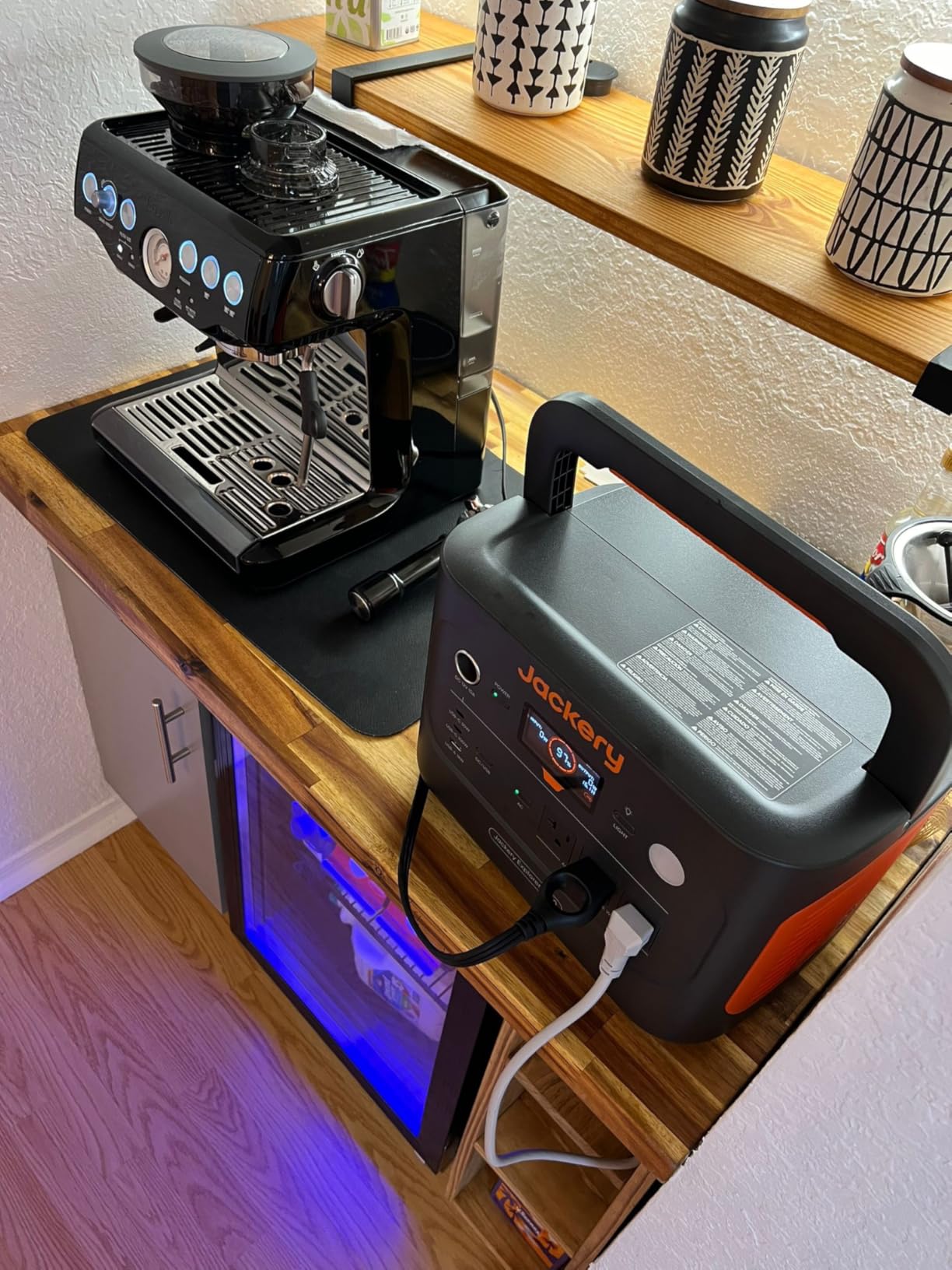
Once you stop being able to recharge every morning, capacity stops being a convenience and becomes the whole decision. At 1,070 watt-hours with a low-draw machine, this covers four nights comfortably, and with a 90W heated-humidifier setup it still clears three. That is the difference between a camping trip and a camping gamble.
Owners rate it 4.7 across 3,623 reviews and single out three things: the capacity-to-weight ratio for its class, the pure sine wave output, and the app-controlled charging modes, including a 30 dB quiet overnight setting that is genuinely useful when the unit is three feet from your pillow.
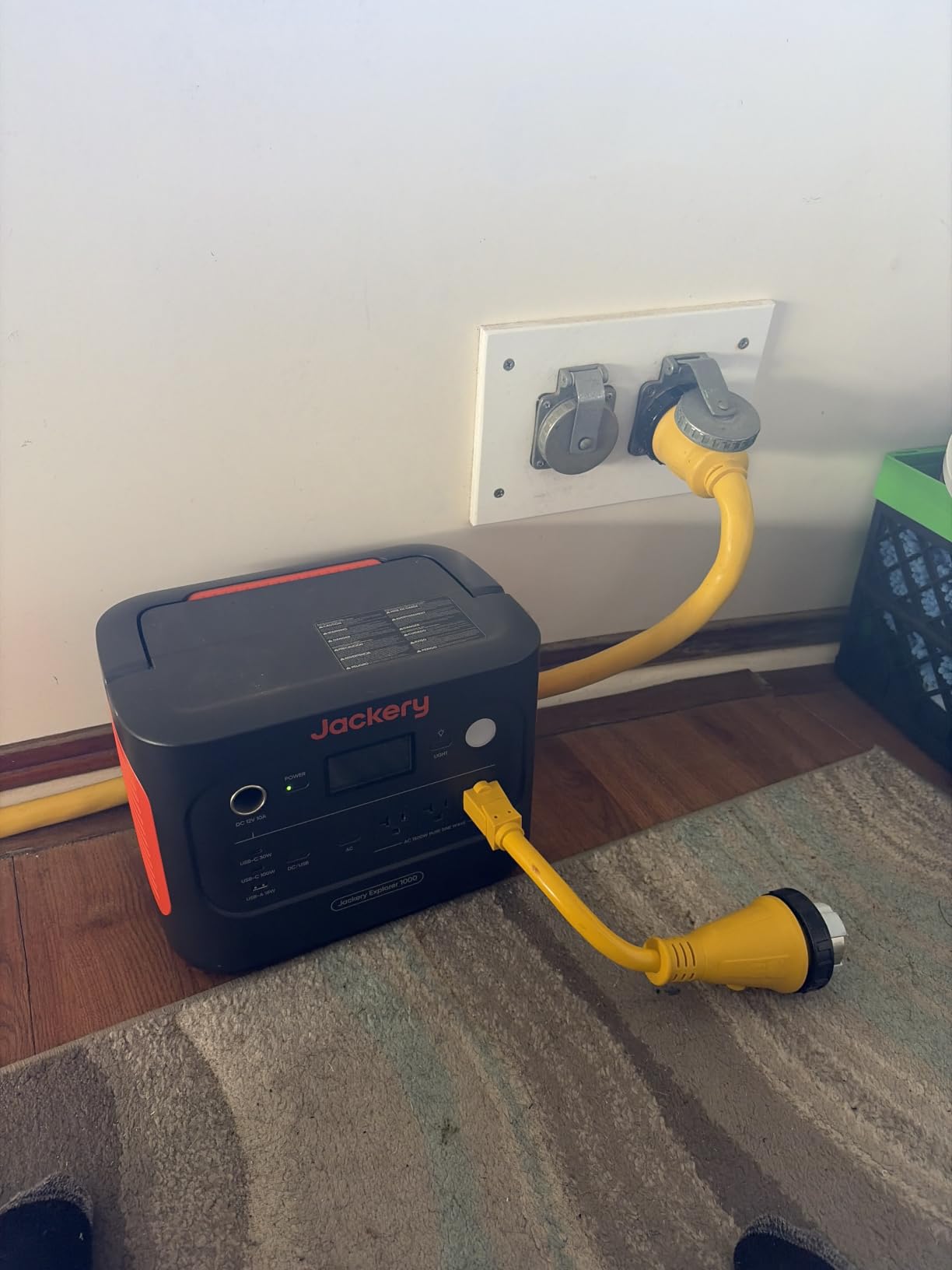
On the technical side you get 1,500W continuous AC with 3,000W of surge, which means the CPAP is never close to the limit and you have headroom for a water pump, a coffee maker or an electric blanket later in the trip. Ports are three pure sine wave AC outlets, two USB-C, one USB-A and a DC car port, plus LED lighting. The battery is LFP rated to hold over 70% of capacity after 4,000 cycles.
Charging is where the caveats live. The headline one-hour recharge is real but it is an emergency mode you enable in the Jackery app, and the default full charge takes 1.7 hours. If you plan your mornings around a specific recharge time, set the mode before you leave rather than fumbling with a phone in the dark.
How many nights will 1,070Wh actually cover?
Four nights at a 30W draw, three nights at 60W, and two to three nights at the 90W end with a heated hose. Those figures already subtract the inverter and idle losses, so treat them as the planning number and keep the two-night rule as your floor.
Is the 23.8-pound weight a problem for camping?
Only if you are moving it regularly. From a truck tailgate to a campsite chair is a two-person job at worst and a firm one-person carry at best. For an RV, a truck-bed setup or a fixed tent, 23.8 pounds is manageable and buys you the multi-night margin.
What are the compromises I should know about?
Solar input is restricted to Jackery’s own panels, so a panel from another brand may not negotiate correctly. And the fastest charging mode is app-gated, which is fine if you plan ahead and annoying if you do not.
3. BLUETTI AC180 – Best for High-Wattage Loads, Heaviest at 37.4 lbs
BLUETTI Portable Power Station AC180, 1152Wh LiFePO4 Battery Backup w/ 2 1800W (2700W peak) AC Outlets, 0-80% in 45Min, Solar Generator for Camping, Off-grid, Power Outage
- 1,152Wh LiFePO4
- 1,800W output, 2,700W app-boosted
- 37.4 lbs
- 20 ms UPS switchover
Pros
- Largest capacity in the group at 1152Wh
- 1800W output covers CPAP plus household loads
- 20 ms UPS switchover keeps sensitive electronics running
- Full charge in about an hour at 1440W AC input
- 5-year warranty
Cons
- 37.4 lbs is heavy for carrying any real distance
- Top wireless charging pad reported unreliable by several owners
- About 15-20W of idle inverter draw trims usable capacity
- Manual caps usable capacity near 90 percent
The AC180 is the unit to buy if your station also has to run something bigger than a CPAP. At 1,152 watt-hours and 1,800W of continuous output, it handles the machine, a fridge, lights and a phone charger at the same time without thinking about it, and the app can boost output to 2,700W when you need to start something with a compressor.
Rated 4.6 from 2,622 reviews, it draws praise for charging speed, port selection and app control. Several owners confirm multi-night use with small loads in camp. The recurring complaint is weight: at roughly 35-37 pounds, this is a set-it-down-once-and-leave-it box rather than something you reposition around camp.
The 20 ms UPS switchover is the sleeper feature for CPAP users specifically. It means the machine can ride through a power interruption without rebooting mid-therapy, which is the kind of detail that matters far more for a sleep machine than for a kettle. There are 11 total outlets covering AC, USB-A, USB-C and the car port, and solar input accepts up to 500W for a 2.8 to 3.3 hour solar charge.
Now the honest part. Idle inverter draw runs about 15-20W on this unit, and the manual caps usable capacity near 90 percent for battery protection. Across an eight-hour night that overhead is real. If your machine draws 60W, plan on the effective figure rather than the headline number, and if your machine idles low the difference is smaller.
Is the AC180 overkill for a CPAP-only trip?
If you are only running the machine, yes, slightly. You would be carrying 37.4 pounds for capacity you do not need. It earns its weight when the station is also powering a camp kitchen, tools, or a fridge, and that is the scenario its owners describe.
What does the idle draw do to my overnight runtime?
It eats into it steadily. Fifteen to twenty watts over eight hours is between 120 and 160 watt-hours of your capacity going to keeping the inverter warm. On a heavy-humidifier setup that can shorten a night by roughly an hour, which is enough to matter.
Who should skip it?
Skip it if your trip is a single vehicle, a short weekend and a machine that draws under 60W. Choose it if you are dry camping with no hookups for a week, or if anything else in camp needs real watts.
4. Anker SOLIX C1000 – Best for Charging CPAP and Everything Else
Anker SOLIX C1000 Portable Power Station with Car Charging Cable, 1,056Wh
- 1,056Wh LiFePO4
- 1,800W with 2,400W surge
- 27.6 lbs
- 11 ports, 600W solar input
Pros
- 4.7 rating with the highest five-star share in this group
- 1800W continuous with 2400W surge
- 80 percent charge in 43 minutes and full in under an hour
- 11 ports cover AC
- USB-C
- USB-A and car socket
Cons
- Fastest charging mode requires the Anker app and a phone
- 27.6 lbs is heavy to carry over distance
- Solar input capped at 600W
- Fast charging limited to 68-122F
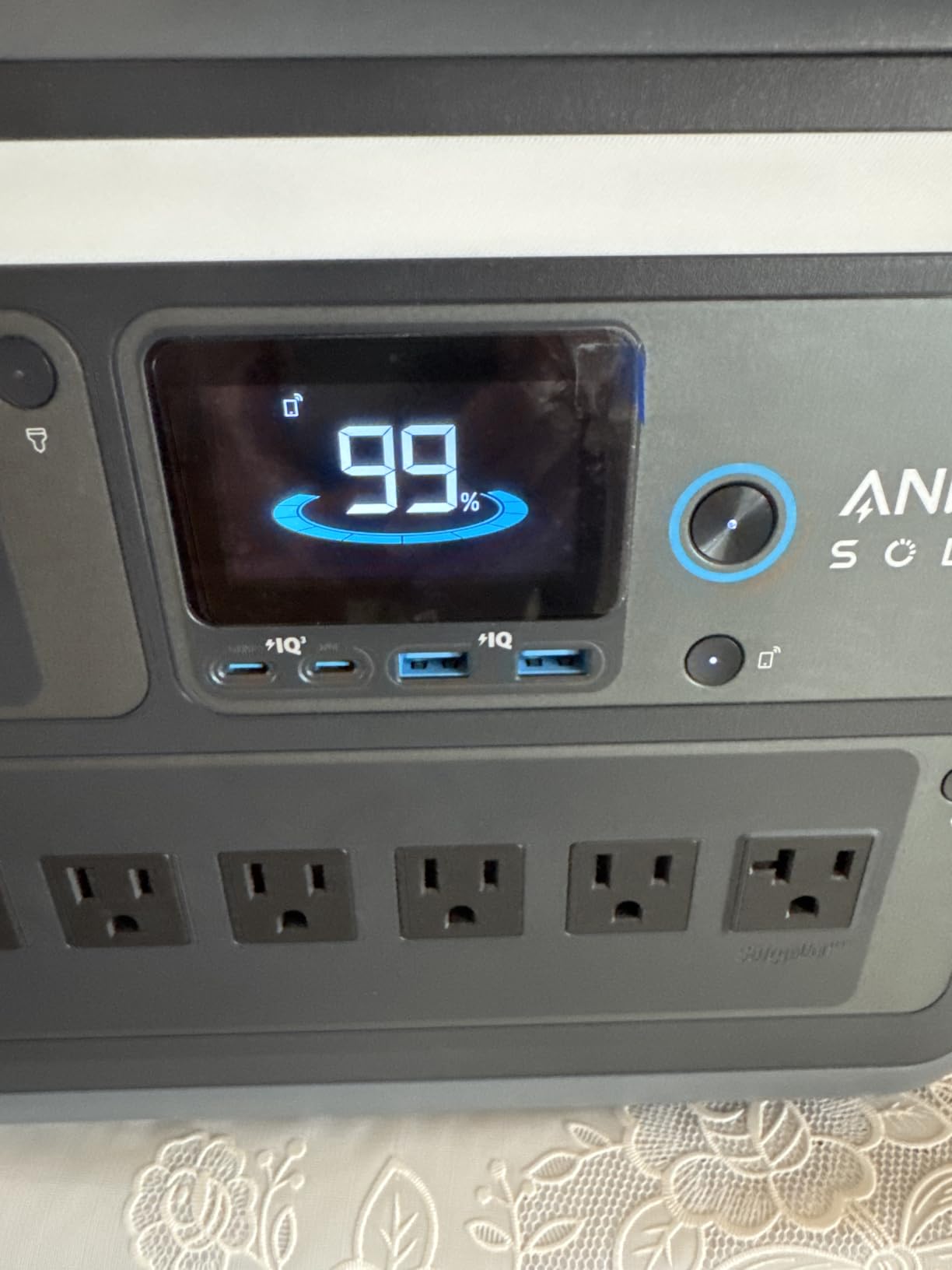
On paper the C1000 and the Explorer 1000 v2 look like the same purchase, and on paper they are close. The difference is charging speed, which is what decides the trip. The C1000 reaches 80% in 43 minutes and completes a full charge in under an hour, which means a station that died at midnight can be back in service before the coffee is made.
It holds a 4.7 across 2,130 reviews with 86% five-star, the highest five-star share in this group. Owners highlight charging speed, port count and how compact a 1kWh-class unit is at 27.6 pounds, roughly 3.8 pounds lighter than the Jackery equivalent.
The battery is LiFePO4 rated for 3,000 cycles across a ten-year lifespan, and the SurgePad technology delivers 2,400W of surge through 11 ports, including 140W USB-C fast charging for your phone and camera batteries. Self-consumption is not the headline here, but the under-10W-class behavior of this generation is what makes the capacity usable overnight rather than theoretical.
Two constraints are worth planning around. The UltraFast charging mode is app-gated, so arm it before the trip. And the fastest charging window is 68 to 122F, which in autumn camping means you may get the full-speed recharge indoors in the evening and the slower one in a cold morning.
Which is better for a three-night boondocking trip?
For pure overnight endurance the two are close, so decide on charging logistics. If you recharge from a wall outlet every morning, the C1000 gets you back to full faster and frees up hours of daylight. If you recharge from solar, the difference between them is small and port count probably matters more.
Can it run a CPAP plus a fridge and lights?
Yes, comfortably. With 1,800W of continuous output and 1,056Wh of capacity, a CPAP at 60W, a 12V fridge and camp lighting is a light load that the inverter will not notice.
What are the tradeoffs?
Weight at 27.6 pounds, a 600W ceiling on solar input, and an app dependency for the charging speed that makes the difference. None of these are serious for a vehicle-based setup.
5. Anker SOLIX C300 – Best for Quiet Operation at 25 dB
Anker SOLIX C300 Portable Power Station, 288Wh Solar Generator for Camping
- 288Wh LiFePO4
- 300W output, 600W surge
- About 9 lbs
- 25 dB measured at 3.3 ft
Pros
- 25 dB running noise suits light sleepers
- About 9 lbs with a 15 percent smaller footprint
- Two 140W two-way USB-C ports plus AC and car socket
- 80 percent recharge in 50 minutes from a wall outlet
Cons
- 288Wh is the second smallest capacity here
- 300W continuous AC output is modest
- Shoulder strap sold separately
- Solar compatibility limited to Anker panels
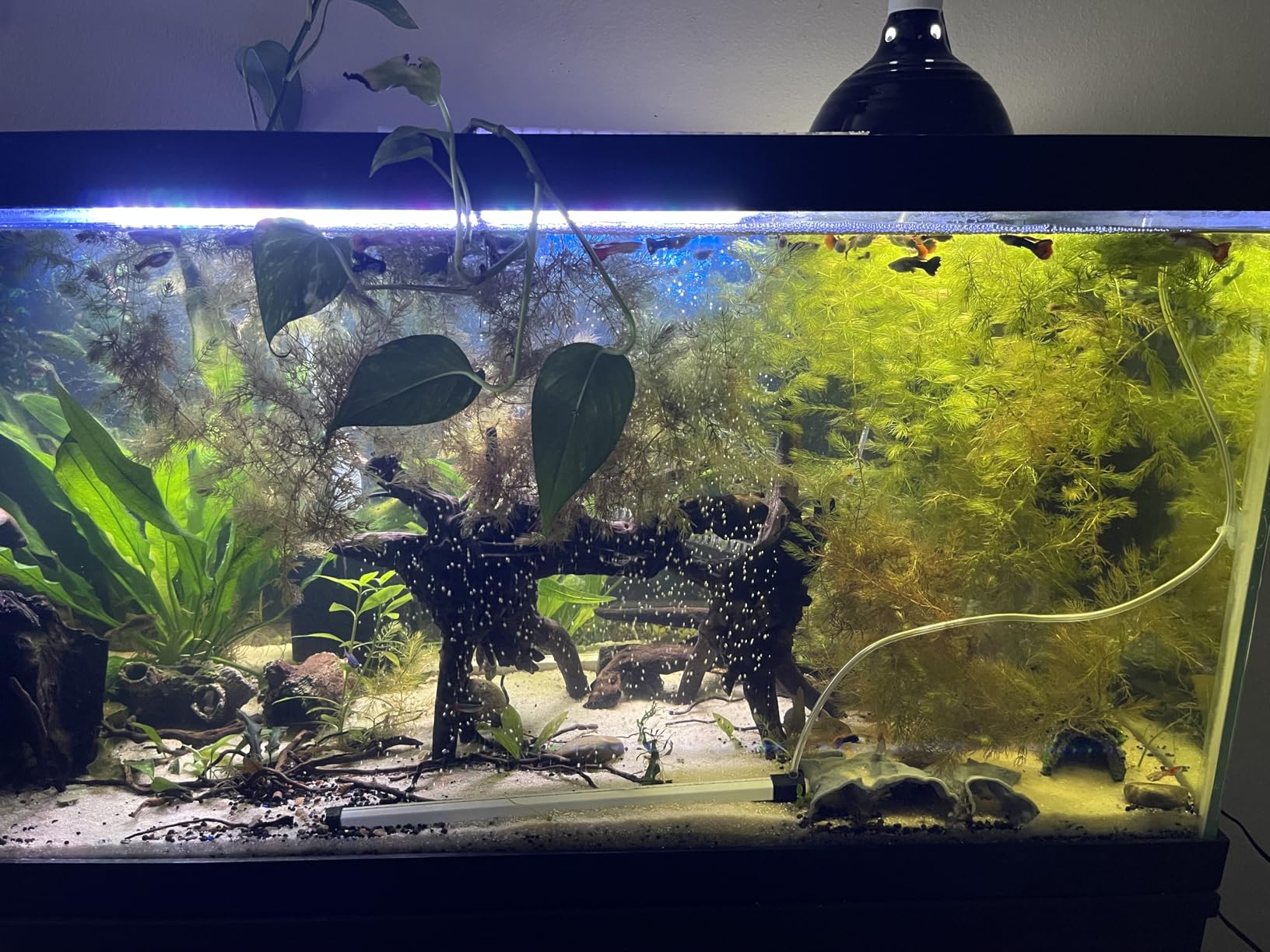
The C300 is the pick if noise is what wakes you. It measures 25 dB at 3.3 feet, which is quieter than most CPAP machines themselves, and that figure matters more at bedtime than another 200 watt-hours of capacity you never use.
At 288Wh it sits in the same single-night tier as the Explorer 300, but the port layout is different and arguably better for a camping setup: three AC outlets, a 120W car socket, two USB-C ports at 140W each, one USB-C at 15W and one USB-A.

Owners rate it 4.6 from 1,914 reviews and concentrate their praise on portability, quiet operation and USB-C fast charging. The battery is LiFePO4 rated for 3,000 cycles with a five-year warranty and smart temperature control, which is reassuring given how much cold-weather camping happens on this topic.
Solar compatibility is the catch. It will take a 100W or 60W Anker panel, and several owners report problems with third-party panels and with Anker’s own PS30, PS200 and PS400 models. If you are pairing solar, confirm the panel works with this specific unit before you depend on it.
Is it quiet enough to sleep beside?
Yes. At 25 dB from 3.3 feet it sits below normal conversation and below the airflow of most CPAP machines. The thermal fan ramps up under heavier load, so keep the CPAP on DC rather than AC if you want the fan to stay at its lowest speed all night.
How many nights will it last?
Roughly four nights at a 30W draw, two nights at 60W, and one night at 90W with a heated hose. That last number is the honest limit of a 288Wh station and the reason we treat these units as daily-recharge gear.
What should I know before buying?
The shoulder strap is sold separately, which matters more at night than you would think. And solar panel compatibility is narrower than the marketing suggests, so check your panel before you build a plan around it.
6. EF ECOFLOW RIVER 2 – Best Value With a One-Hour Wall Recharge
EF ECOFLOW Portable Power Station RIVER 2, 256Wh 300W
- 256Wh LFP
- 300W AC with 600W X-Boost
- 7.7 lbs
- 6 outlets, sub-30ms EPS switchover
Pros
- Lightest option here at 7.7 lbs with a built-in handle
- Full AC recharge in about an hour
- Sub-30ms EPS switchover keeps sensitive gear running
- LiFePO4 cells rated for 3000+ cycles
Cons
- Lowest rating in the group at 4.3 with 9 percent one-star
- Some units reported losing standby charge over a few days
- Battery charge-level reporting has drifted for some owners
- Single 60W USB-C port
- Inverter draw reduces usable capacity for small loads
The RIVER 2 draws 4,530 reviews, and it is also the lowest rated here at 4.3 with a 9% one-star share. That combination makes it easy to judge: this is a well-known, widely supported product with a real, documented reliability complaint attached to its battery management.
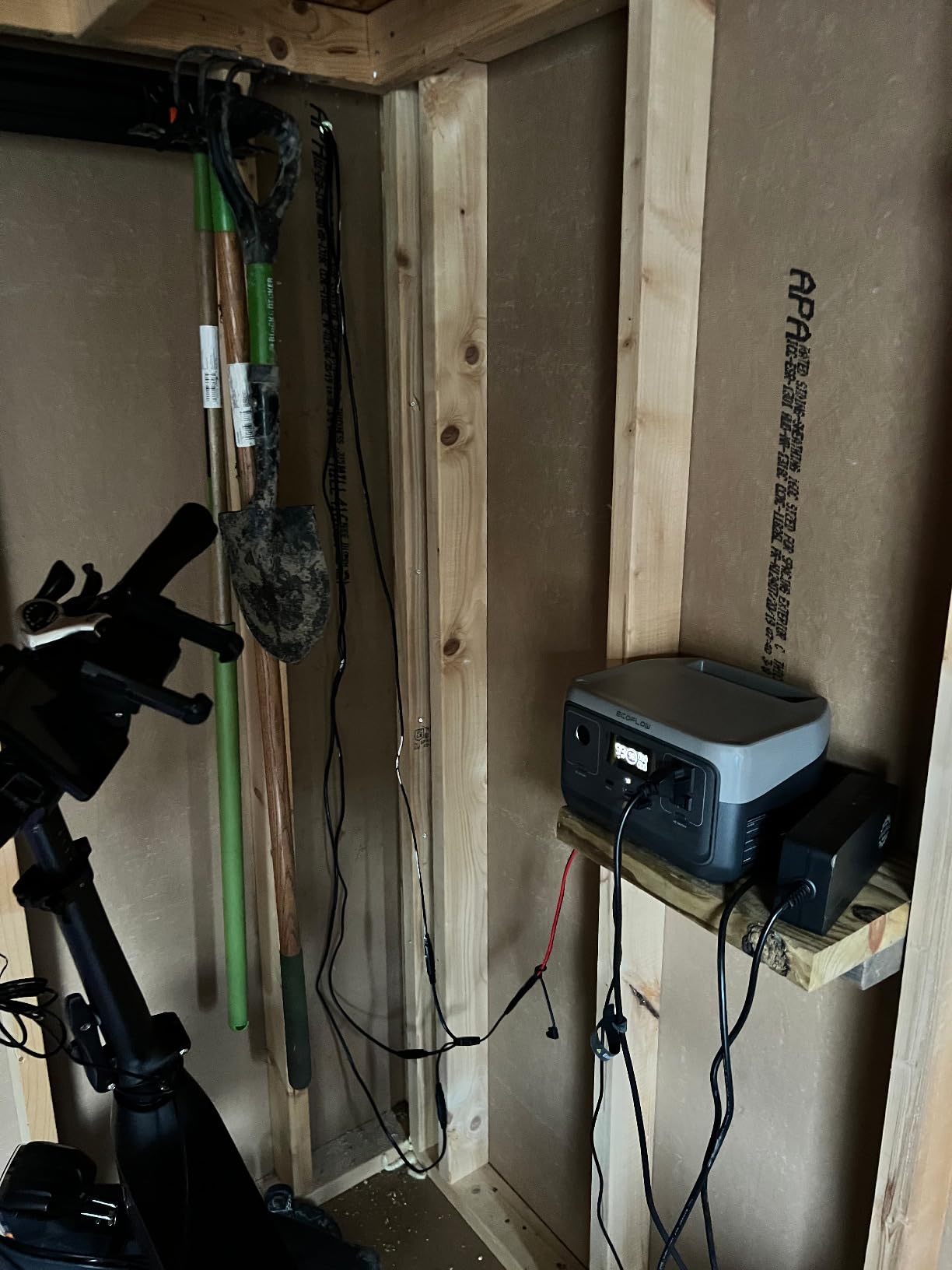
What it gets right is charging and weight. Seven point seven pounds with a built-in handle, a full AC recharge in about an hour using X-Stream technology, and an EPS switchover under 30 milliseconds that keeps sensitive gear from rebooting during an interruption.
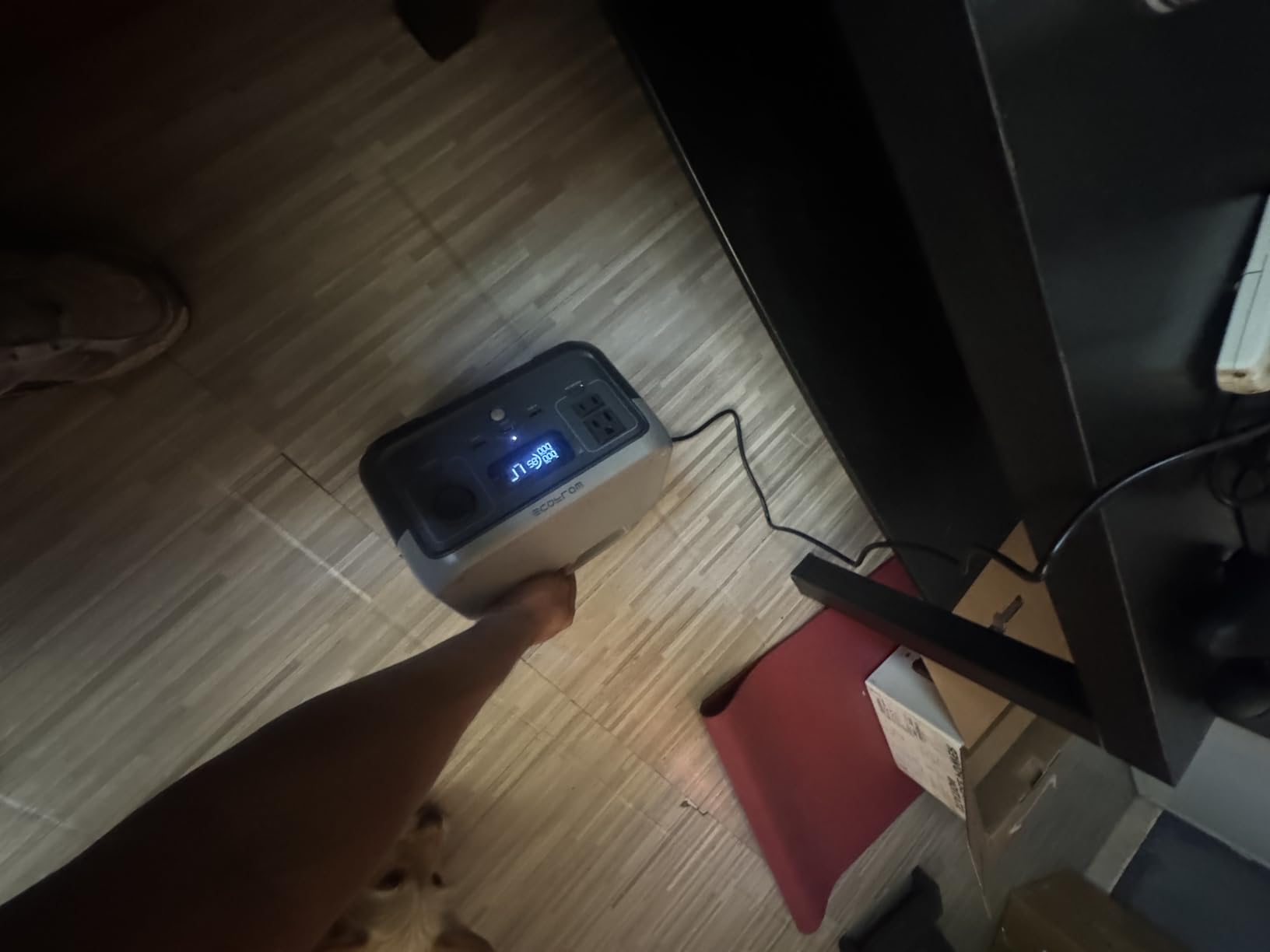
Enthusiastic reviews concentrate on the one-hour recharge, the weight and the switchover timing. The negative cluster is consistent and specific: units losing standby charge within a few days, and charge percentage readings that drift over time so the display stops telling the truth about remaining capacity.
For a CPAP that second problem matters more than it would for a camping fridge. Runtime anxiety is the dominant complaint across sleep-apnea camping forums, and a battery whose percentage drifts removes the one number you use to decide whether to turn anything off. If you buy this unit, treat the percentage as an estimate and log hours instead.
Is it worth the lower rating?
For a weekend where you recharge every morning and only need a 30-60W machine, yes. For a boondocking trip where a flat battery at 3am means no therapy, we would pick a unit with cleaner battery management even at the cost of weight.
What is the standby charge complaint about?
Owners report units sitting unused for several days and coming back noticeably lower than they left it. With a CPAP load the effect is less about drain and more about how much headroom you actually have, so check your starting percentage every morning rather than trusting the trend.
What are the other compromises?
A single 60W USB-C port means your phone charging is slower unless you bring a second cable. Inverter draw on the 120V output reduces usable capacity noticeably for small loads, and the solar charging cable is not included in the box.
7. BLUETTI Elite 30 V2 – Best for Low Self-Consumption
BLUETTI Elite 30 V2 Portable Power Station 288Wh 600W LFP Solar Generator
- 288Wh LFP
- 600W continuous, 1,500W lifting
- 9.5 lbs
- 4.5W standby, 10ms UPS
Pros
- Lowest self-consumption in the group at 4.5W standby and 8W AC
- 10ms UPS switchover explicitly aimed at CPAP use
- 600W continuous output is double most 288Wh units
- 0-80 percent in 45 minutes and full in 70 minutes
Cons
- 288Wh leaves limited margin once a phone is charging
- One owner reported faster-than-expected drain on a CPAP
- No USB communication port for PC auto-shutdown
- Some settings require the BLUETTI app and a passcode
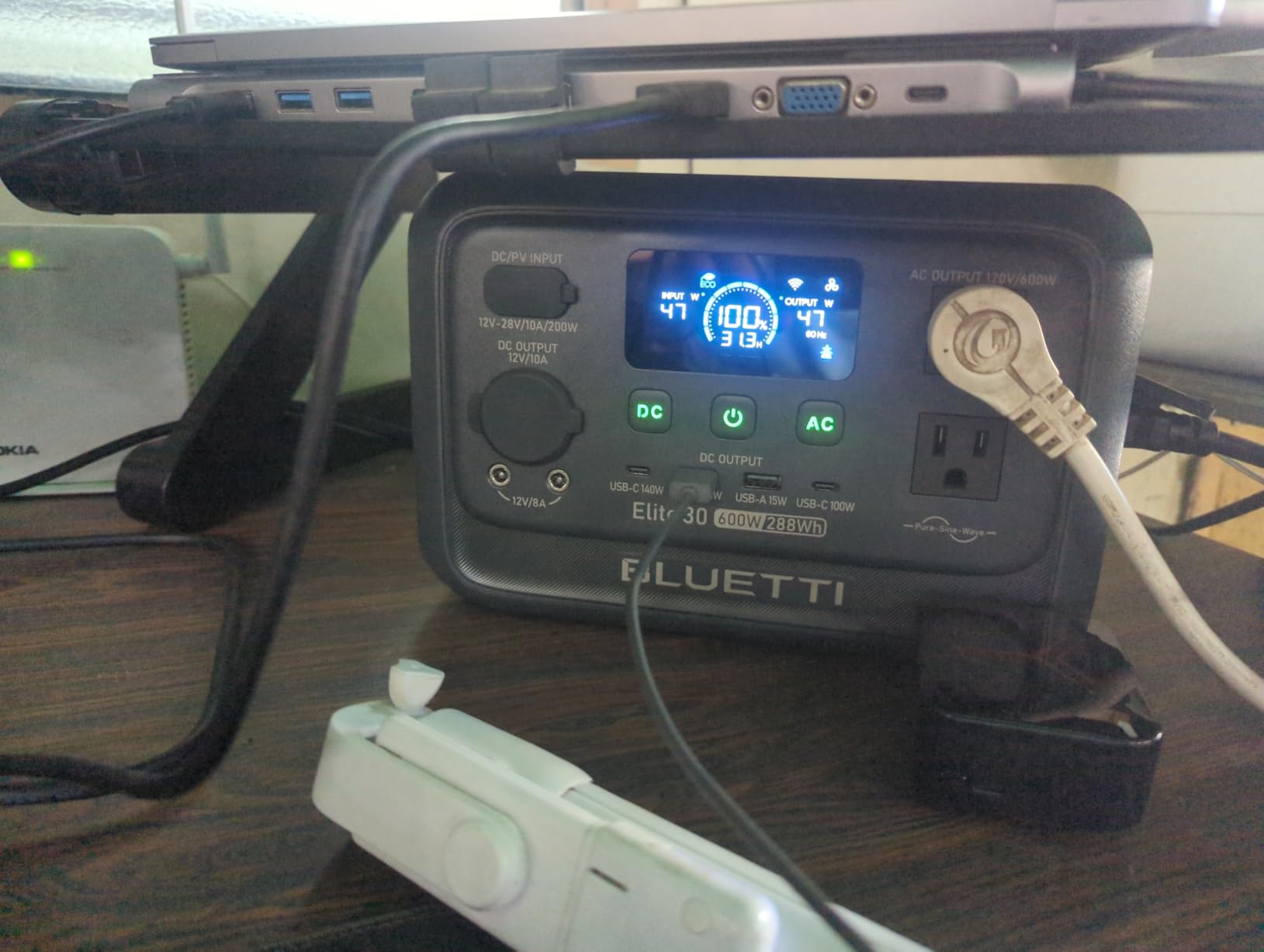
This is the most directly CPAP-focused unit in the group. BLUETTI lists the 10ms UPS switchover as protecting CPAP machines, laptops and routers during blackouts, and the low self-consumption is the number that matters most for an overnight load: 4.5W on standby, 5W on DC and 8W on AC.
At 4.5 from 1,172 reviews, one owner bought it specifically for off-grid CPAP use and reported 5 hours of therapy with 16% of the battery left, crediting the low AC self-consumption. That is a real owner report, not a calculated one, and it is the kind of data most roundups never surface.
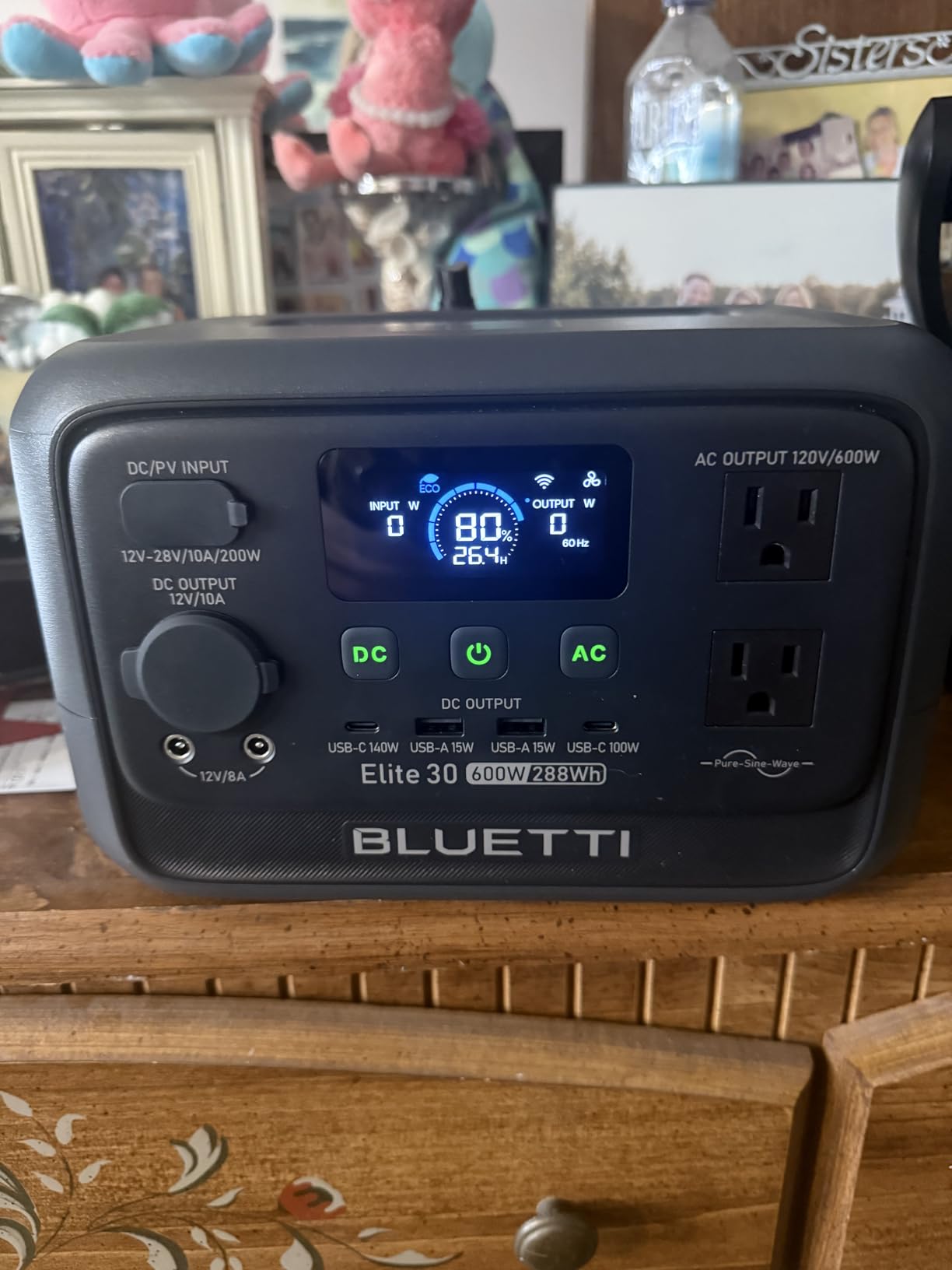
The output figure is unusual for the class. Where most 288Wh stations deliver 300W, the Elite 30 V2 delivers 600W continuous with a 1,500W Power Lifting Mode. That headroom means the inverter is never the constraint, which is reassuring if your machine surges on startup or if you plan to run a small appliance alongside it.
Charging is quick, with 0-80% in 45 minutes and 0-100% in 70 minutes on a 380W wall input, and it supports eight charging modes including solar and car charging. There are nine ports with 140W PD fast charging, and the warranty runs five years.
Does low self-consumption really change the night?
At 8W on AC, the overhead across eight hours is about 64 watt-hours, which is meaningful on a 288Wh unit and negligible on a 1,000Wh one. That efficiency is why this unit punches above its capacity tier and why it ranks so well against larger units for a low-draw machine.
How long did the reported CPAP run last?
The owner report describes 5 hours of therapy finishing with 16% remaining. A CPAP rarely runs its full eight hours unless full-night therapy is prescribed, so for most users that leaves usable margin for a longer night or an extra phone charge.
What should I watch out for?
At least one owner reported faster-than-expected drain while running a CPAP, so log hours before trusting the percentage. Some settings also need the BLUETTI app and a passcode, which is friction you will not enjoy in the dark.
8. BLUETTI Elite 100 mini – Best Watt-Hours Per Pound
BLUETTI Elite 100 mini Portable Power Station for Camping 1004.8Wh 700W LFP
- 1,004.8Wh LFP
- 700W AC with 1,400W surge
- 23.5 lbs
- 10ms UPS, 6,000+ cycles
Pros
- 1004.8Wh at only 23.5 lbs
- the best capacity-to-weight here
- Under 10W self-consumption preserves usable overnight capacity
- 6000+ cycle battery is the longest rated lifespan in the group
- Vertical footprint suits an RV counter or vehicle cargo area
Cons
- Only 3 AC outlets
- 700W continuous output is lower than other 1kWh units here
- 4-year warranty is shorter than the 5 years some rivals offer
- 23.5 lbs is still a substantial carry weight
If weight is the constraint and you still need three nights of capacity, this is the unit. At 1,004.8 watt-hours and 23.5 pounds it delivers more runtime per pound than anything else we looked at, in a vertical body that fits on a counter, a shelf or in a vehicle rather than sprawling across a picnic table.
Owners rate it 4.6 from 1,767 reviews and single out exactly the combination that matters here: true 1kWh capacity in a 23.5-pound body, under-10W self-consumption, and a 10ms UPS that BLUETTI names for CPAP machines specifically.
The battery is the long-hauler. BLUETTI rates the UltraCell LFP cells at 6,000+ cycles with more than 50 built-in safety protections, the highest cycle rating in this group by a wide margin. Self-consumption under 10W keeps more of the 1,004.8Wh available to your machine, which is the quiet efficiency win for overnight use.
The tradeoffs are real but modest. Output is 700W continuous with 1,400W of surge, which is plenty for a CPAP and light loads but well short of the 1,800W the Anker and BLUETTI AC180 deliver. There are only 3 AC outlets, and the warranty is four years rather than five.
How many nights does 1,004.8Wh cover?
Roughly five nights at a 30W draw, three at 60W, and two to three at 90W with a heated hose, once you subtract conversion and idle losses. That lands squarely on the two-night rule with real margin above it.
Is 700W enough for a CPAP setup?
Far more than enough. A CPAP with a heated humidifier and heated hose is well under 200W. The 700W limit becomes relevant only if you plan to run a power tool, a microwave or several heaters off the same unit.
Why would you skip it?
Skip it if you need more than three AC outlets, if you want the strongest warranty in the category, or if you need to power heavy appliances alongside the machine. For a CPAP-focused trip with three nights of margin, it is hard to argue with.
DC vs AC: Where Your Runtime Actually Goes
Plug your CPAP into the station’s DC car port and it draws what it needs. Plug it into the AC outlet and the station converts DC to AC first, and that conversion costs roughly 15% before the machine ever sees the power. Community reports describe the gap as dramatic, with one owner describing a switch to a DC adapter producing several times the runtime on the same battery, and that gap is the single biggest decision you make when choosing a station for CPAP use.
Two numbers explain most of it. First, the inverter conversion loss of about 15%. Second, self-consumption, which is the watts the station burns with its inverter switched on and nothing plugged in, ranging from 4.5W on the BLUETTI Elite 30 V2 up to 15-20W on the BLUETTI AC180. Over an eight-hour night those two effects compound.
Use DC whenever you can. Reserve the AC outlet for things that have no DC equivalent, like a standard wall appliance, and use the USB-C ports for phones and camera batteries. A machine running on DC also keeps the station’s thermal fan at its lowest speed, which helps at bedtime.
Which DC Cable Does Your CPAP Machine Need?
This is the most repeated question on sleep-apnea camping forums and almost no roundup answers it. You need the DC power supply designed for your machine, and the connector is not universal across brands. The generic rule: match the machine’s own DC adapter, and confirm the output voltage and polarity match what your machine expects.
The main families you will encounter are ResMed, which covers the AirSense and AirMini travel machines, Philips Respironics, which covers the DreamStation and DreamStation 2 lines, DeVilbiss, and Fisher and Paykel. ResMed and Philips machines are the most commonly asked about, and buyers most often report being unsure whether an off-brand cable is safe.
Our advice is to buy the manufacturer DC supply for your machine rather than a generic adapter. A machine that is powered from an unregulated source can fault, run warm, or refuse to start, and the cost of a proper adapter is trivial next to a trip where your therapy stops at midnight. Confirm the connector, the voltage and the polarity rating before you leave, and carry a spare cable.
Why a Power Station Instead of a Dedicated CPAP Battery Pack?
Dedicated CPAP battery packs exist, and they do one thing well. For a single night with a machine under about 40W, a dedicated pack is simpler, smaller and lighter than any station here. That is a legitimate choice and we do not think it deserves to be talked down.
The reason to choose a power station is everything else on the trip. A station doubles as a power bank for your phone, a camera battery charger, a light source and a coffee pot, and many models accept solar, car and wall charging. It also gives you a display showing remaining capacity, which converts bedtime anxiety into a number you can check.
Owners on camping forums commonly describe picking a station over a dedicated pack precisely because it stops the CPAP from competing with lights, water pumps and other draws for the same budget, so they know at 9pm exactly what is left for the night. The trade is weight and price. Choose a dedicated pack for a lightweight single-night trip, and a station when the trip has more than one electrical need.
Boondocking, Solar Recharging and Cold Weather
Solar works, but plan it honestly. A 100W panel in good conditions will get a 300Wh unit to 80% in roughly 2.8 hours, and larger units accept more input, with the Anker SOLIX C1000 accepting up to 600W and completing a solar charge in about 1.8 hours. On a cloudy day assume a fraction of the rated panel output, which is why the two-night rule exists.
Check panel compatibility before you build a plan around it. The Anker SOLIX C300 is reported as incompatible with several third-party panels and with some Anker SOLIX models, and the Jackery Explorer 1000 v2 is documented as working with Jackery panels only. Car charging is the reliable fallback, and every unit here accepts a 12V car cable.
Cold weather reduces what a lithium battery will give you, and a station sitting in a cold vehicle all morning will deliver less than its display suggests on the first night. Keep it inside your sleeping area rather than in the truck bed, and give it an hour to warm up before you plug the machine in on a cold morning.
On placement and safety: keep the station on a hard surface away from your head with ventilation clear, do not tuck a charging unit under blankets or sleeping bags, and run the machine on DC so the inverter and its fan stay at their quietest. Never reduce your pressure settings to save battery without your physician’s approval, and size up instead.
How We Picked These Eight
This guide is spec-and-owner-report based. We did not hands-on camp with all eight units, and we would rather say so than dress up a spec sheet as a field test.
Selection criteria were usable watt-hours after losses, DC 12V availability and output quality, continuous wattage headroom, carry weight, chemistry and cycle life, warranty length, and owner-reported behaviour around CPAP use specifically. Products whose review histories showed battery-management failures, unclear idle draw or unsupported solar input were either flagged prominently or left out. We deliberately excluded several discontinued models that older guides still recommend.
Finally, test your own setup at home for one full night before you leave. Log your starting percentage, your ending percentage, your hours and your settings. That single evening tells you more than any table on this page, and it is the advice that shows up most often in the communities where this topic gets discussed.
Frequently Asked Questions
How big of a power station do I need for a CPAP machine?
For a single night, 250-300Wh covers a 30-60W machine with the humidifier off. With a heated humidifier and heated hose drawing 70-100W, you want 500-700Wh for two nights or about 1,000Wh for three or more nights. Measure your machine’s real draw first, then subtract roughly 15% for inverter conversion and idle losses.
How long will a portable power station run a CPAP machine?
Divide your machine’s draw into the station’s usable watt-hours. A 292Wh station gives roughly four nights at 30W, two nights at 60W and one night at 90W. A 1,056Wh unit gives about four nights at 60W or three at 90W. Running on the DC port instead of the AC inverter buys back about 15 percent.
Do I need a DC or AC power station for my CPAP?
Use the DC port whenever possible. Running through the AC inverter costs roughly 15 percent in conversion loss and makes the station’s cooling fan work harder at bedtime. Reserve the AC outlet for appliances that have no DC equivalent. You still want a station with an inverter as a backup, but your machine should live on DC.
Will a portable power station run a CPAP?
Yes. A CPAP draws 30-60W with the humidifier off and 70-100W with a heated hose, while every station in this roundup delivers 300W to 1,800W of continuous output. Match the DC cable to your machine’s manufacturer adapter, confirm voltage and polarity, and run a full test night at home before your trip.
How much power does a CPAP use per night in watt-hours?
A machine drawing 30W over eight hours consumes about 240Wh, a 60W machine consumes about 480Wh, and a 90W heated-humidifier setup consumes about 720Wh. Measure your own draw with an inline watt meter rather than trusting a specification sheet, and note the reading with the humidifier off and on.
Is it safe to run a CPAP off a power station overnight?
Yes, provided you use the correct DC supply for your machine, keep the station on a hard surface with ventilation clear, and place it away from your head. Do not tuck a charging unit under blankets or sleeping bags, and never change pressure settings to extend battery life without your physician’s approval. Size up instead of turning features down.
Can a CPAP machine run off a car cigarette lighter?
For a drive day, sometimes, but a 12V socket cannot deliver meaningful watt-hours for a full night and many machines fault on an unregulated source. A dedicated CPAP battery pack is the safer choice for drive-day therapy, and a power station is the right choice when you want a display showing remaining capacity and the ability to recharge overnight.
What is the best power bank for CPAP camping?
For a single night with a low-draw machine, a dedicated CPAP battery pack is simpler and lighter. For anything longer or multi-night, a 1,000Wh-class power station gives you margin, a capacity display and power for your other devices. Our pick for the balance of capacity and weight is the BLUETTI Elite 100 mini at 1,004.8Wh and 23.5 pounds.
Bottom Line on the Best Power Stations for CPAP Camping
The Jackery Explorer 300 is our top pick for a reason that has nothing to do with specs: at 7.1 pounds and 292 watt-hours it clears a full night for a typical machine and is small enough to carry in the dark without resenting it. For boondocking three nights or more, move up to the 1,000Wh class, where the Anker SOLIX C1000 leads on recharge speed and the BLUETTI Elite 100 mini leads on capacity per pound.
Whichever you choose, run your machine on the DC port, buy the manufacturer’s DC cable for your ResMed, Philips Respironics, DeVilbiss or Fisher and Paykel machine, and test the whole setup at home for one full night. Sizing up is always cheaper than waking up without therapy, and 2026 is a perfectly good year to stop doing bedtime arithmetic.