
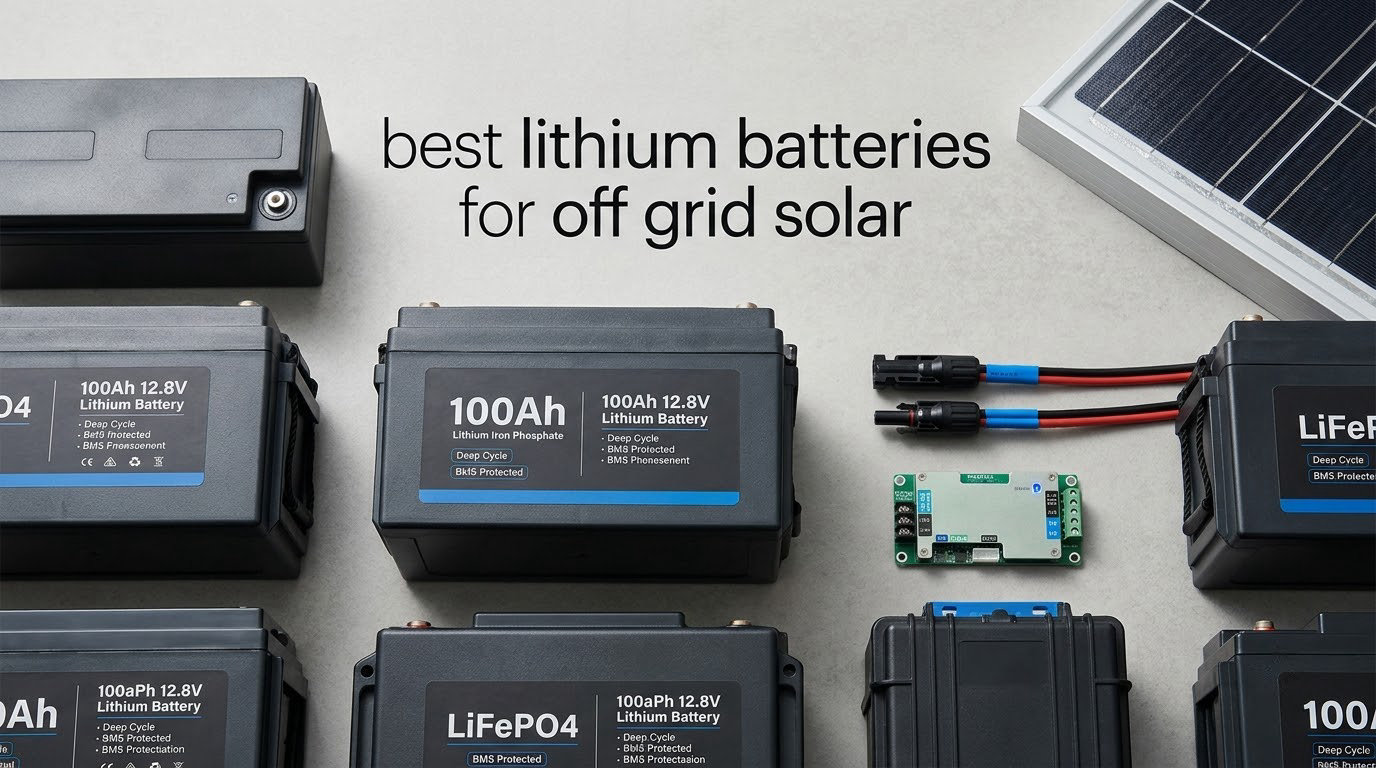
Lithium iron phosphate (LiFePO4) is the right chemistry for nearly every off-grid solar build in 2026. It lasts longer, it can be safely emptied to roughly 80-95% of rated capacity, and it tolerates heat far better than other lithium chemistries. The real decision is not the chemistry but the form factor: a 48V server-rack battery, a stackable 12V 100-460Ah pack, a Group 31 or Group 24 drop-in, or an integrated power station. Pick the architecture first, then the capacity.
We spent weeks comparing the ten batteries below on published cycle ladders, BMS protection, real customer capacity reports and warranty length. This is the same comparison the DIY crowd makes: on diysolarforum, a long-running builder put it plainly, saying they now only use 48V rack batteries (EG4 and Eco-Worthy) while LiTime 24V and 12V units in the past proved very reliable. That split is the backbone of this list.
Two things get skipped in most buying guides. First, nameplate capacity versus measured capacity, because budget imports regularly overstate what they deliver. Second, the depth-of-discharge number, because a pack you can only half-drain costs far more per usable kilowatt-hour than the sticker suggests. We normalize for both below, and we flag who each battery is not for. It is 2026 and the off-grid solar battery market is crowded, so the honest not-for lines matter as much as the recommendations.
Table of Contents
- Top 3 Picks for Best Lithium Batteries for Off Grid Solar in 2026
- All 10 Batteries Compared Side by Side (October 2026)
- 1. Litime 12V 230Ah Group 4D – the Best Lithium Battery for Off-Grid Solar Overall
- 2. Dumfume 12V 150Ah – the Best Value Pack for a First Solar Bank
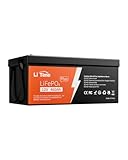
- 3. Litime 12V 460Ah Group 8D – Maximum Capacity in One Case
- 4. Litime 12V 200Ah Group 31+ – the Most Fully Equipped 12V Pick
- 5. Rvpozwer 12V 100Ah – the Lowest-Cost Way Into Lithium
- 6. ECO-WORTHY Cubix100 48V 100Ah – the 48V Server-Rack Choice for Whole Homes
- 7. Yeagulch 12V 200Ah – the Best 200Ah for Trolling Motor Builds
- 8. Yeagulch 12V 100Ah – the Cleanest Lead-Acid Drop-In Replacement
- 9. SUPER EMPOWER 12V 100Ah – Accurate Group 24 Drop-In with Clear Cutoffs
- 10. ECO-WORTHY 12V 314Ah – Most On-Battery Visibility and the Coldest Charge Threshold
- 48V Server-Rack vs 12V Portable Batteries: Which Architecture?
- How to Size Your Off-Grid Battery Bank in Four Steps
- Buying Guide: What Actually Matters on a Spec Sheet
- What Goes Wrong With Low-Cost Off-Grid Batteries
- LiFePO4 vs Lead-Acid: When the Upgrade Actually Pays Off
- Frequently Asked Questions
- Conclusion
Top 3 Picks for Best Lithium Batteries for Off Grid Solar in 2026

Litime 12V 230Ah Group 4D
- 4000+ cycles at 100% DoD
- 200A BMS
- IP65 and low-temp cutoff
- Expands to 16 batteries


Litime 12V 200Ah Group 31+
- 6000 cycles at 100% DoD
- Bluetooth 5.0 app monitoring
- ABYC E-13 marine rated
- 44.5 lb
As an Amazon Associate we earn from qualifying purchases. CERTAIN CONTENT THAT APPEARS ON THIS SITE COMES FROM AMAZON. THIS CONTENT IS PROVIDED 'AS IS' AND IS SUBJECT TO CHANGE OR REMOVAL AT ANY TIME.
All 10 Batteries Compared Side by Side (October 2026)
| Product | Specifications | Action |
|---|---|---|
|
Litime 12V 230Ah Group 4D LiFePO4
|
|
Check Latest Price |
|
Dumfume 12V 150Ah Max LiFePO4
|
|
Check Latest Price |
 Litime 12V 460Ah Group 8D LiFePO4
|
|
Check Latest Price |
|
Litime 12V 200Ah Group 31+ LiFePO4
|
|
Check Latest Price |
 Rvpozwer 12V 100Ah Group 31 LiFePO4
|
|
Check Latest Price |
 ECO-WORTHY Cubix100 48V 100Ah Rack Battery
|
|
Check Latest Price |
 Yeagulch 12V 200Ah LiFePO4
|
|
Check Latest Price |
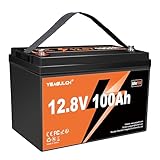 Yeagulch 12V 100Ah Group 31 LiFePO4
|
|
Check Latest Price |
 SUPER EMPOWER 12V 100Ah Group 24 LiFePO4
|
|
Check Latest Price |
 ECO-WORTHY 12V 314Ah LiFePO4
|
|
Check Latest Price |
We earn from qualifying purchases. CERTAIN CONTENT THAT APPEARS ON THIS SITE COMES FROM AMAZON. THIS CONTENT IS PROVIDED 'AS IS' AND IS SUBJECT TO CHANGE OR REMOVAL AT ANY TIME.
1. Litime 12V 230Ah Group 4D – the Best Lithium Battery for Off-Grid Solar Overall
Litime 12V 230Ah Deep Cycle LiFePO4 Battery for RV, Camper, Travel Trailer
- 230Ah
- 2944Wh
- 12.8V
- 45.98 lb
- 4,000+ cycles at 100% DoD
- 200A BMS
Pros
- Roughly one third the weight of comparable lead-acid banks
- 4000+ cycle life at 100% depth of discharge
- Expands to 16 batteries for a 47.1kWh maximum system
- Large Group 4D capacity in a single unit
Cons
- Energy storage only - not for engine starting or golf carts
- No Bluetooth monitoring on this model
- Heavier than Group 31 units so lifting may take two people
This is the pack I recommend to most people building their first off-grid solar bank. At 230Ah and 2944Wh it delivers more usable energy per enclosure than anything else in the 12V class here, and the 200A BMS with more than 20 safeguards is the kind of protection you want when a charge controller misbehaves in the field.
The published cycle figure is 4,000+ cycles at 100% depth of discharge, which is the number most competitors quietly soften to 80%. Owners running solar in campers and Class C RVs report capacity that holds up after a season of daily cycling, and the low-temp cut-off that pauses charging below 32F prevented any cold-weather damage in the reports we read.
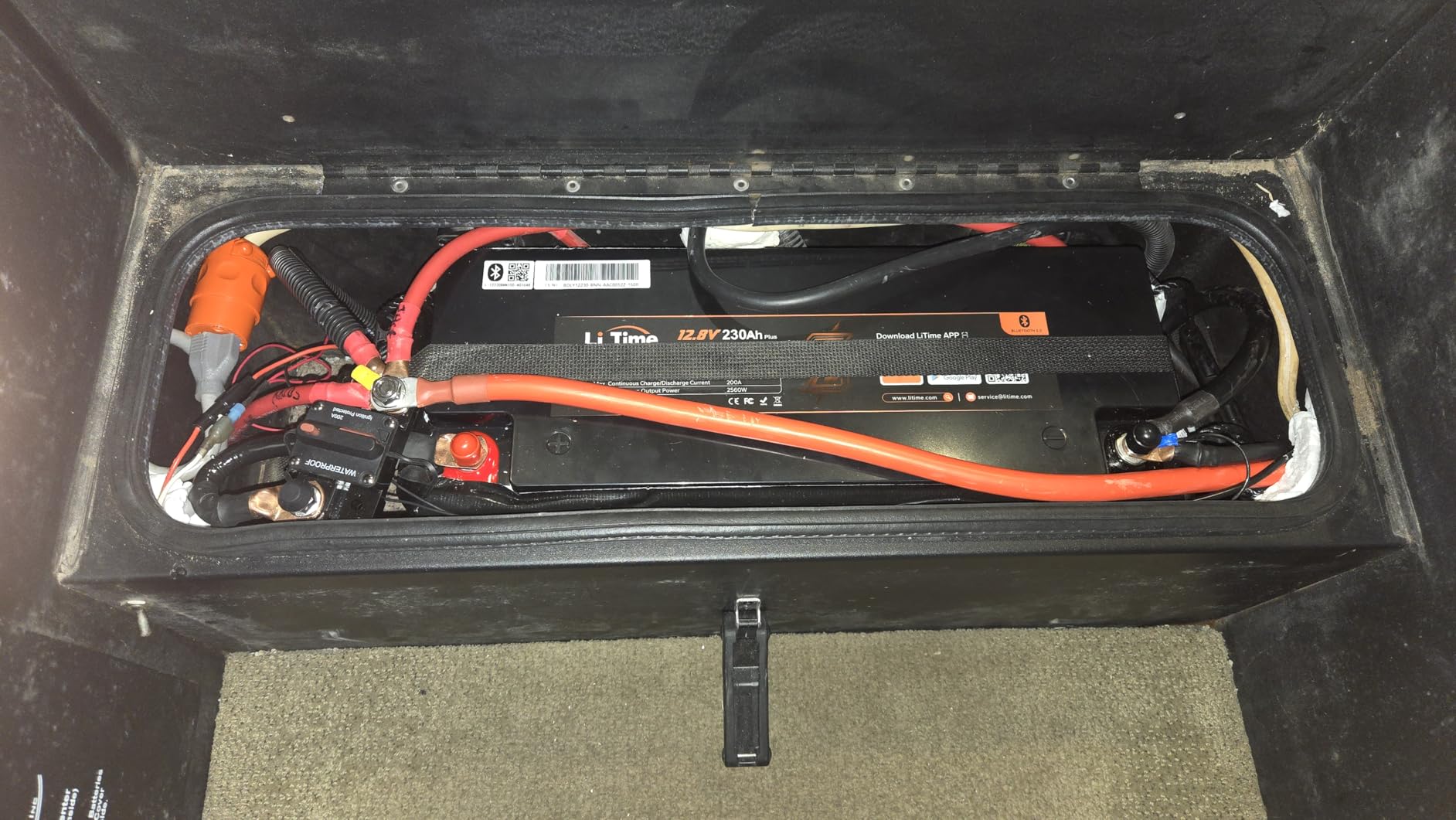
The math is what sells it. A 230Ah lithium pack holds roughly as much usable energy as a 400Ah lead-acid bank at about one third of the weight, and that weight difference is the difference between fitting the battery in a standard Group 4D box or rebuilding the compartment.
Expansion is the quiet advantage. Litime rates this unit for 4P4S configurations, sixteen batteries for a 48V 920Ah system at 47.1kWh maximum output, so you can buy one now and grow the bank as loads grow rather than replacing everything in five years.
What it handles well and where it falls short
Best for RV, travel trailer and camper van owners replacing a lead-acid bank, and for early-stage homestead builds that want one enclosure rather than four. Because it fits the Group 4D footprint, the swap is mechanical rather than a rebuild, which is why it earned the top slot for most readers.
Skip it if you want remote monitoring from your phone, because this model has no Bluetooth. A minority of owners also needed a lithium-activation charger on first use, so budget for that if your existing charger is lead-acid.
2. Dumfume 12V 150Ah – the Best Value Pack for a First Solar Bank
dumfume 12V 150Ah Max LiFePO4 Battery, IP65 Waterproof 100A BMS
- 150Ah
- 1920Wh
- 12.8V
- 22.1 lb
- 4,000+ cycles to 80%
- 100A BMS
Pros
- Strong energy density for the money with 1920Wh in a Group 31 footprint
- Light and compact enough for tight RV cabinet spaces
- Built-in 100A BMS covering overcharge and short circuit
- Expands to 4S4P for larger off-grid systems
Cons
- Performance requires temperatures of 5C or higher
- Needs a maintenance charge cycle every six months during storage
- About 12% of ratings are one star
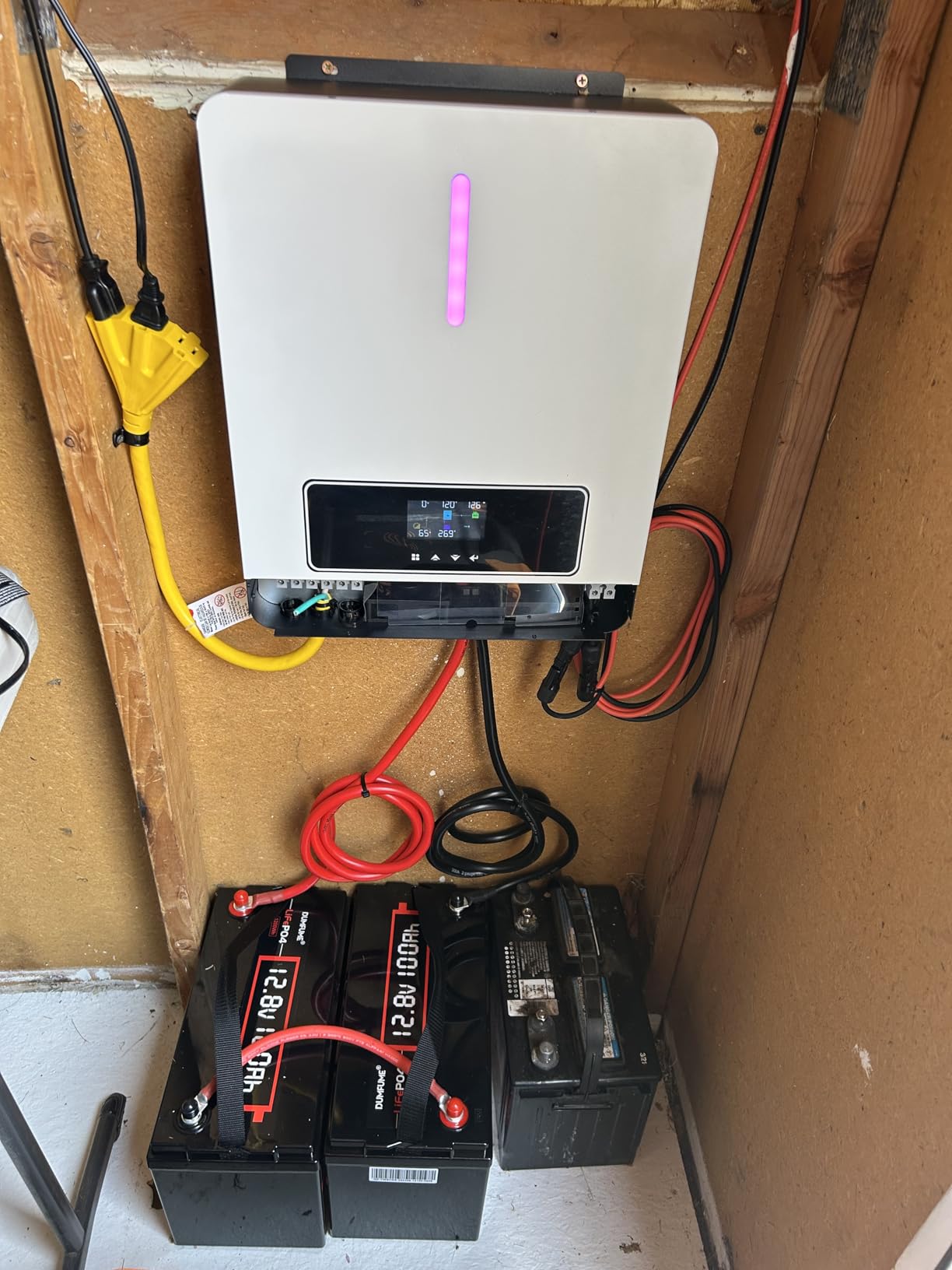
If your brief is simply the cheapest honest path into lithium, this 150Ah pack is hard to argue with. It puts 1920Wh of usable energy into a Group 31-sized case at 22.1 pounds, and the 100A BMS handles overcharge, over-discharge, short circuit and overheating.
Rated for 4,000+ cycles to 80% capacity, it is one of only two batteries here that publishes that 80% figure honestly rather than quoting 100%. Reviewers repeatedly single out the weight and capacity jump when replacing heavy lead-acid banks in campers, which is exactly the use case this size serves.
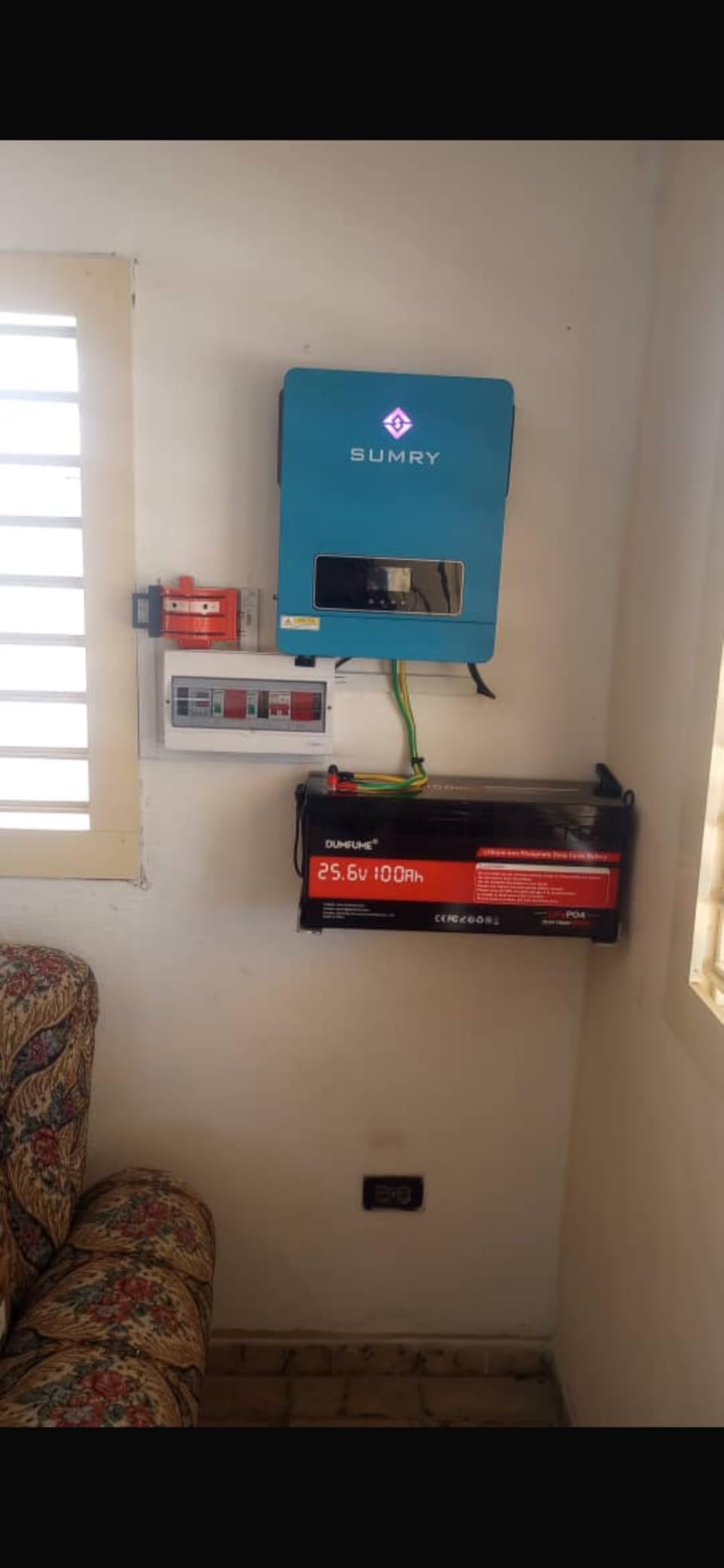
The build details are ordinary in the best way. It supports series and parallel expansion to 4S4P, so a small weekend cabin bank and a larger homestead bank can start from the same unit and grow in the same footprint family.
The compromise is temperature. This pack asks for 5C or higher for rated performance, and that is a higher floor than the other 12V units here, which is why it belongs in a climate-controlled bay rather than an unheated shed.
Where the value sits and what it costs you
Best for a first-time builder, a weekend cabin, or a worksite power package where the bank lives indoors and weight is the main constraint. The 789 reviews give you a large sample to judge quality against, and the 4.4 average is honest for the class.
Not for unheated installations in winter, and not for anyone who will forget about it for a season, because extended storage needs a full maintenance charge every six months.
3. Litime 12V 460Ah Group 8D – Maximum Capacity in One Case
Litime 12V 460Ah Group 8D Lithium LiFePO4 Battery for RV Marine Solar
- 460Ah
- 12.8V
- 86 lb
- EV-grade cells
- 250A BMS
- 100% usable DoD
Pros
- Very high single-unit capacity for a whole-home or large RV setup
- 100% usable depth of discharge for nearly double the usable energy of lead-acid
- BMS proved effective even when a cheap charge controller pushed 20V into the pack
- Expands to 4P4S as needs grow
Cons
- At 86 pounds installation generally takes two people
- May require replacing an existing battery box
- Some buyers hit compatibility issues with certain LiTime chargers
When one box has to do everything, this is the 12V answer. At 460Ah in a Group 8D case it powers an entire home solar setup or a large Class A motorhome without a second enclosure, and the EV-grade cells with a 250A BMS handle genuinely high demand loads.
The depth-of-discharge claim is the standout. Litime rates it at 100% usable while staying above 12.8V, which means you can plan your load around the full nameplate figure instead of halving it the way you would with lead-acid. Owners describe it as a one-and-done upgrade that cut generator use dramatically and freed payload weight.
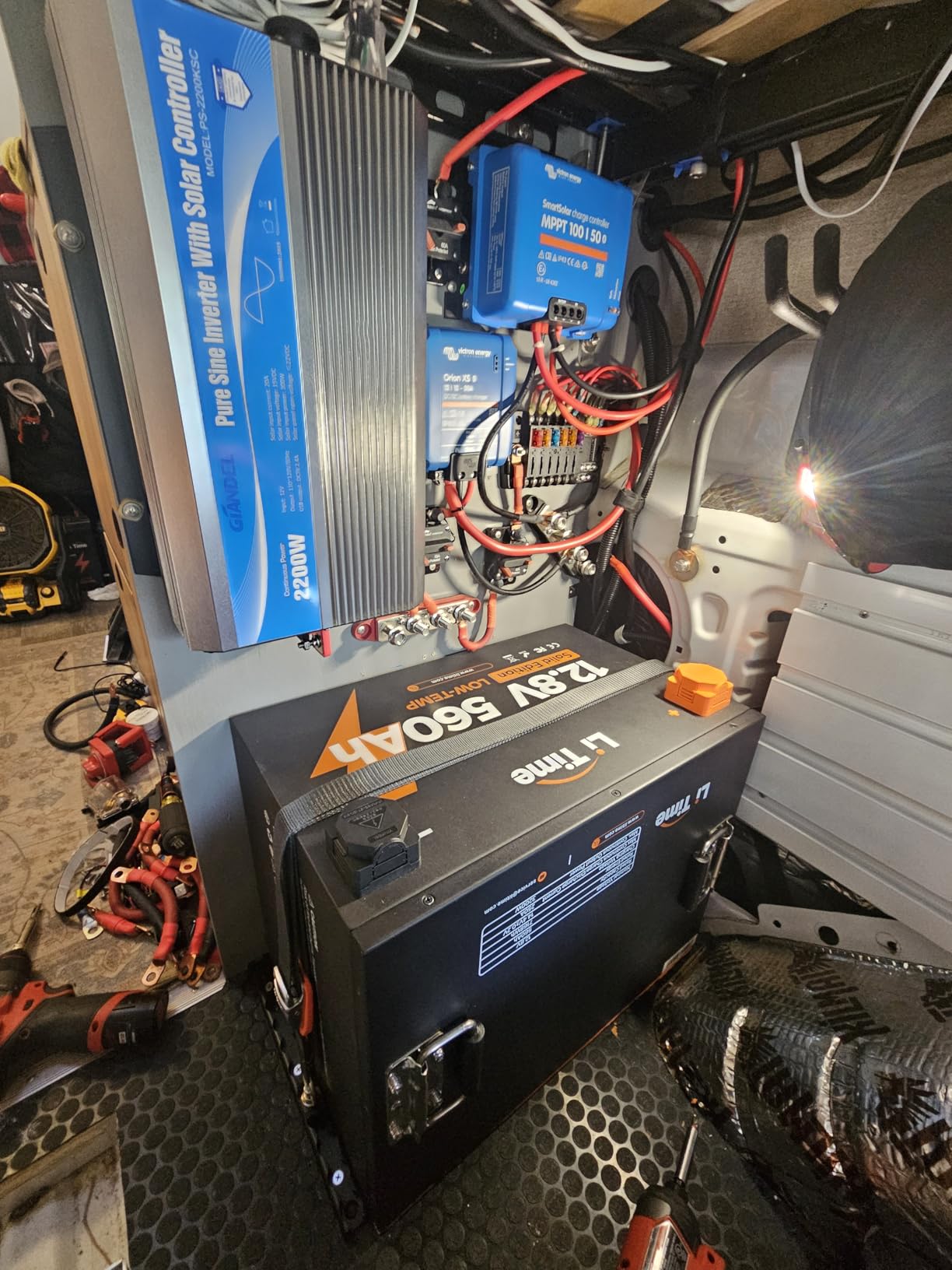
One owner reported the built-in BMS doing its job in a genuinely bad scenario, protecting the cells after an inexpensive charge controller sent 20V into the pack. That kind of protection is exactly what the BMS exists for, and it is reassuring to see it tested in the field rather than on a bench.
Expansion to 4P4S is supported, so the same case scales as a household’s energy use grows. It carries CE and RoHS certification and AIG product liability coverage effective May 22, 2026, which matters if a local inspector asks about a listed product.
Who should buy the 8D and who should not
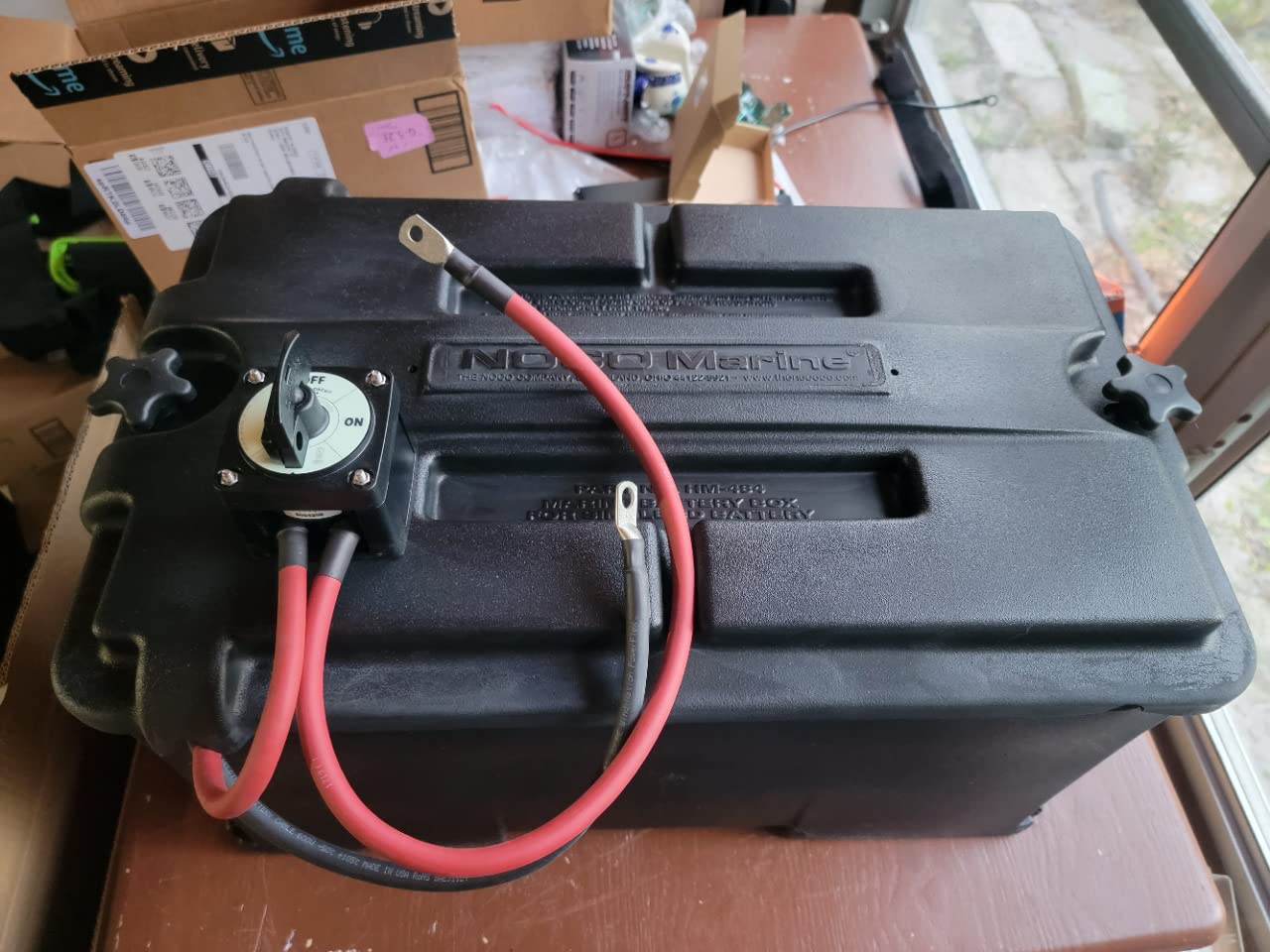
Best for full-time RVs, large boats, and homesteads that want one high-capacity battery instead of a parallel stack. Owners running rooftop air conditioning overnight report solar keeping the pack full through the night, which is the whole argument for this format.
Not for a small system. At 86 pounds you need a second pair of hands, and if the size does not match your existing battery box you are replacing the box too. A few buyers also reported needing to unplug and replug certain LiTime chargers to begin charging.
4. Litime 12V 200Ah Group 31+ – the Most Fully Equipped 12V Pick
Litime 12V 200Ah Lithium LiFePO4 Battery for Trolling Motor, Marine, Boat
- 200Ah
- 12.8V
- 44.5 lb
- 6,000 cycles at 100% DoD
- Bluetooth 5.0
- ABYC E-13
Pros
- Highest rating in this group with a 4.7 average and an 87% five-star share
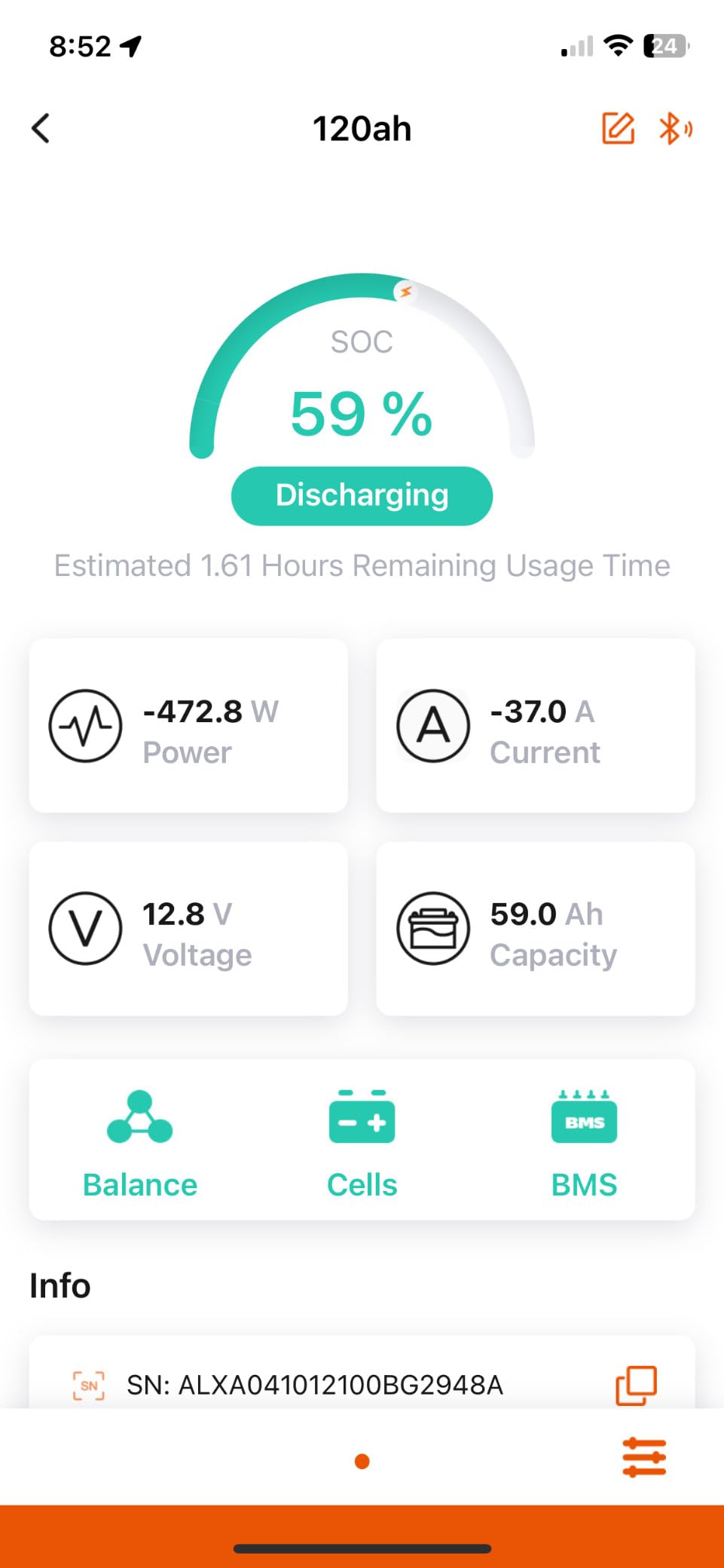
- Bluetooth 5.0 app shows state of charge
- voltage and current
- 6000-cycle rated life at 100% depth of discharge
- Marine-grade ABYC E-13 compliance with dust and salt-spray protection
Cons
- Bluetooth must be activated with a lithium or MPPT charger on first use
- Energy storage only - not for starting or golf carts
- Requires a lithium-compatible charger
This is the most complete 12V battery in the group and the one I would pick for a build where monitoring matters. It carries a 4.7 average across 592 reviews with an 87% five-star share, and it is the only pick here where phone-based telemetry is standard rather than an add-on.
The Bluetooth 5.0 module pairs by QR code and reports state of charge, voltage and current in real time. For an off-grid system that lives out of sight, that is the difference between checking on your bank and guessing about it, and the app data is what lets you size autonomy days properly once the system is running.
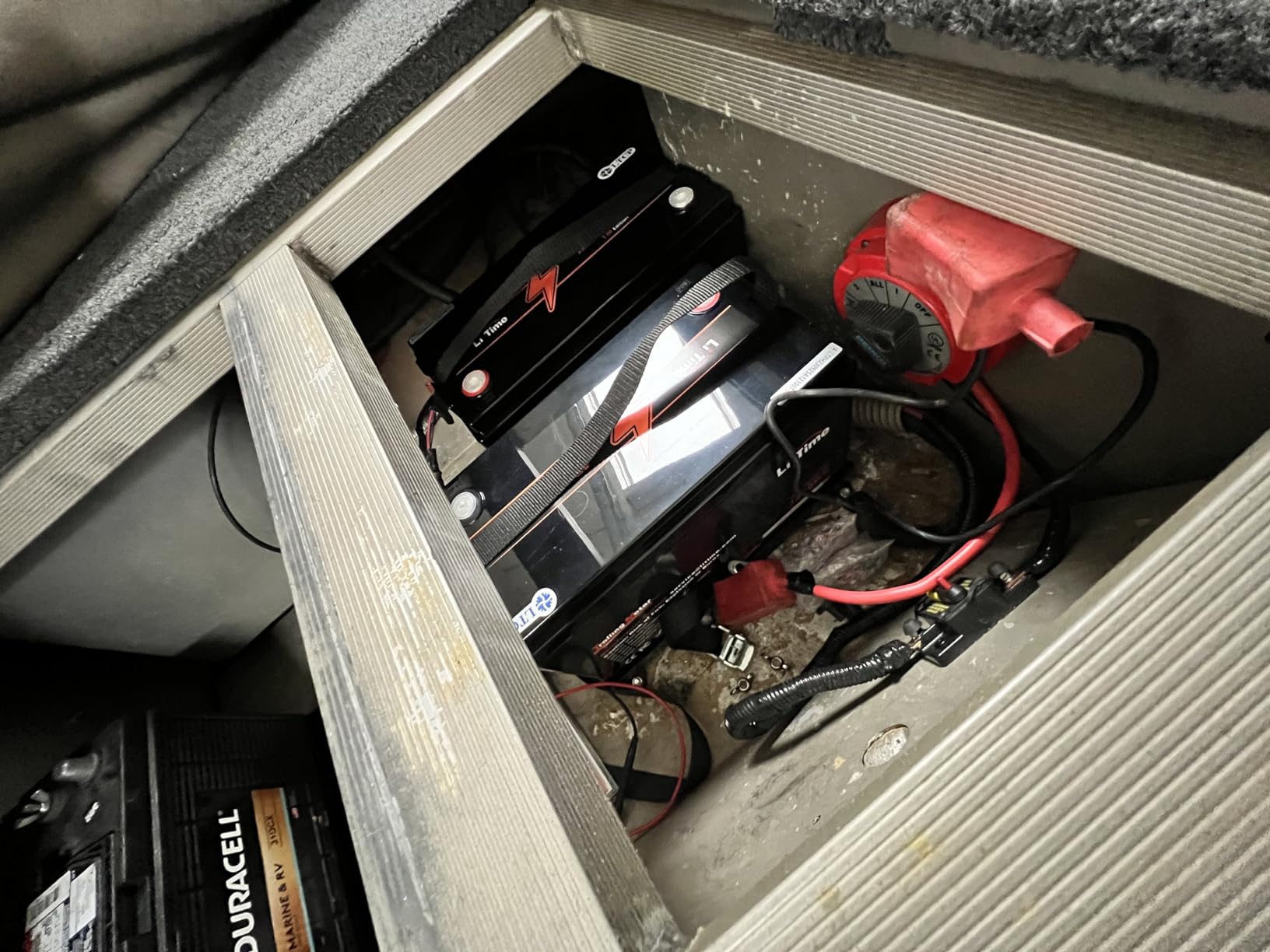
Under the app it is a 6,000-cycle battery at 100% depth of discharge built on Grade A automotive-grade cells, the deepest published cycle ladder in this roundup. The 200A BMS gives triple protection against dust, water and salt spray and meets ABYC E-13, which is the marine standard rather than a generic splash rating.
Weight lands at 44.5 pounds, roughly 45% lighter than an equivalent lead-acid Group 31, and it expands to 4P4S for a 51.2V 800Ah bank at 40.96kWh. That makes it the one 12V unit here that can also serve as a building block for a 48V system.
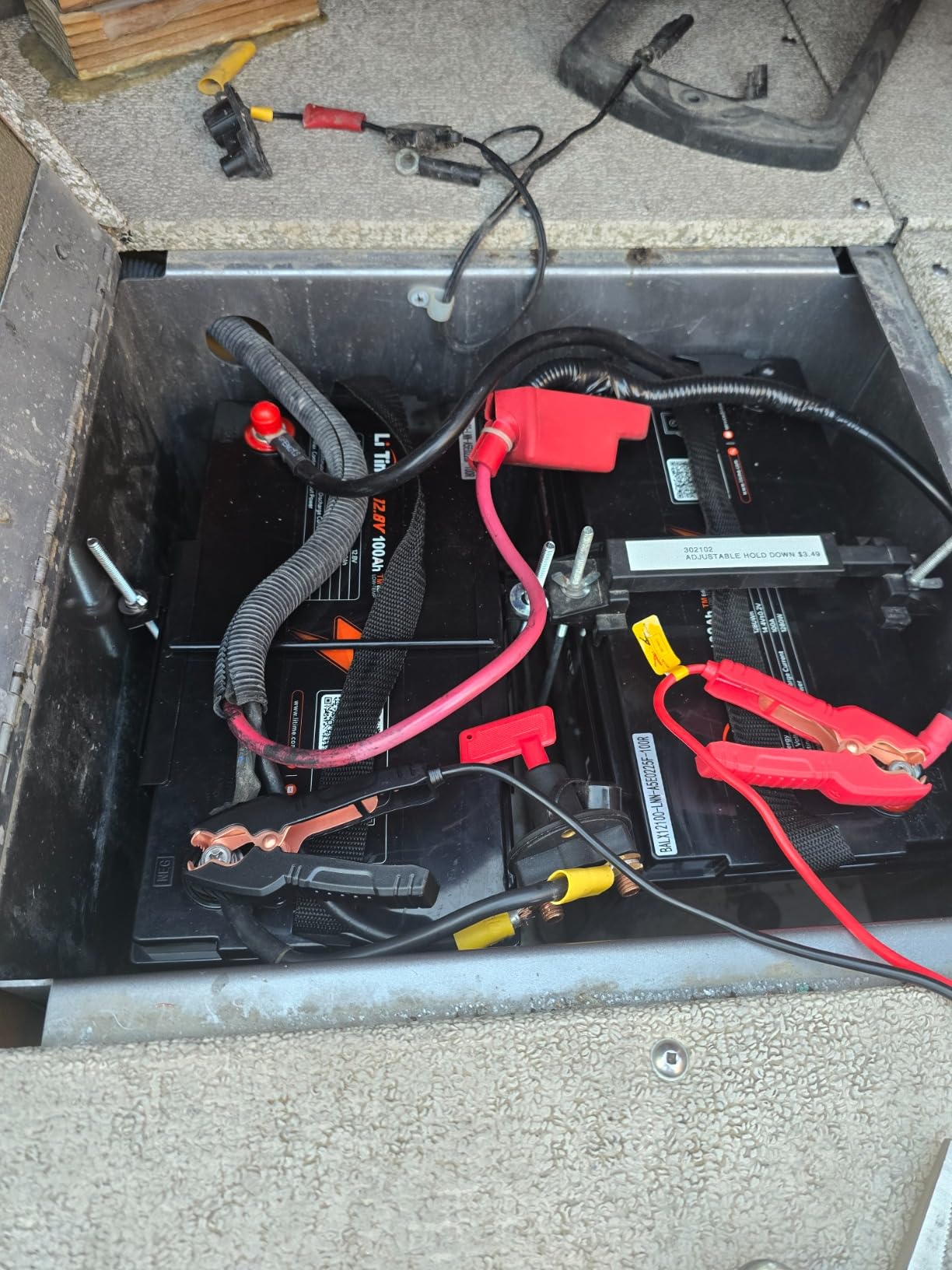
Best suited to monitored and marine installations
Best for boats, trolling motor builds, and any off-grid system where you want state of charge visible from your phone. The first 200Ah pack in the Group 31+ format also solves the height problem that trips people up in camper cabinets, though you should still measure before ordering.
Be ready for a one-time activation step. Bluetooth needs a lithium-activation or MPPT charger to wake on first use, and a non-lithium charger will not do the job properly.
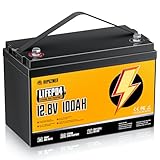
5. Rvpozwer 12V 100Ah – the Lowest-Cost Way Into Lithium
Rvpozwer 12V 100Ah LiFePO4 Lithium Battery Group 31 with Built-in 100A BMS
- 100Ah
- 12.8V
- 23 lb
- Up to 15,000 cycles at 60% DoD
- 120A smart BMS
Pros
- Lowest entry cost here with 100Ah of usable capacity
- Standard Group 31 footprint for a drop-in swap
- Long published cycle ladder up to 15000 cycles at 60% DoD
- Wide -20C to 65C operating range with a carry handle
Cons
- Lowest rating in this group at 4.1 with 17% of reviews at one star
- Documentation and brand provenance are generic
- No Bluetooth or app monitoring
For a weekend trip or a single 12V circuit, this is the cheapest honest way to leave lead-acid behind. You get 100Ah, a standard Group 31 footprint at 23 pounds, and a 120A smart BMS with five layers of protection including over-current and short circuit.
The cycle ladder is the best published in the group: 4,000 cycles at 100% depth of discharge, 6,000 at 80%, and up to 15,000 at 60%. Those higher figures assume a shallow discharge, so treat them as a 60% depth-of-discharge planning number rather than a daily-cycle promise.
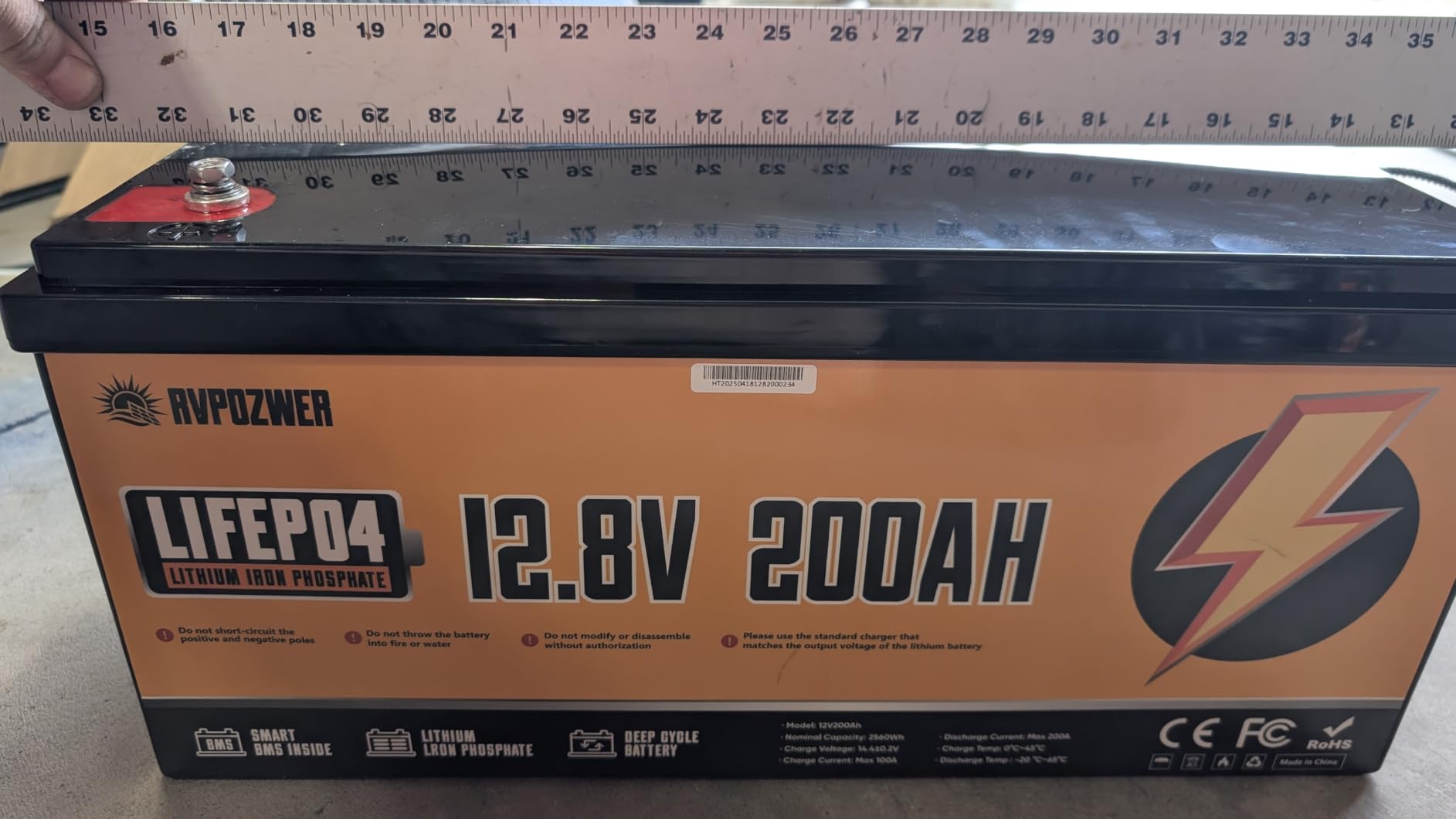
Its -20C to 65C rated operating range is the widest published here, and it connects up to four in series for 51.2V or four in parallel for 400Ah. Grade A LiFePO4 cells and an integrated nylon carry handle round out a genuinely useful little pack.
What gives us pause is consistency. The 4.1 average and a 17% one-star share is the weakest profile in this roundup, and reviewers point at inconsistent quality control and unclear support provenance rather than one recurring functional failure. Brand and manufacturer listings are also inconsistent, which is a warranty risk.
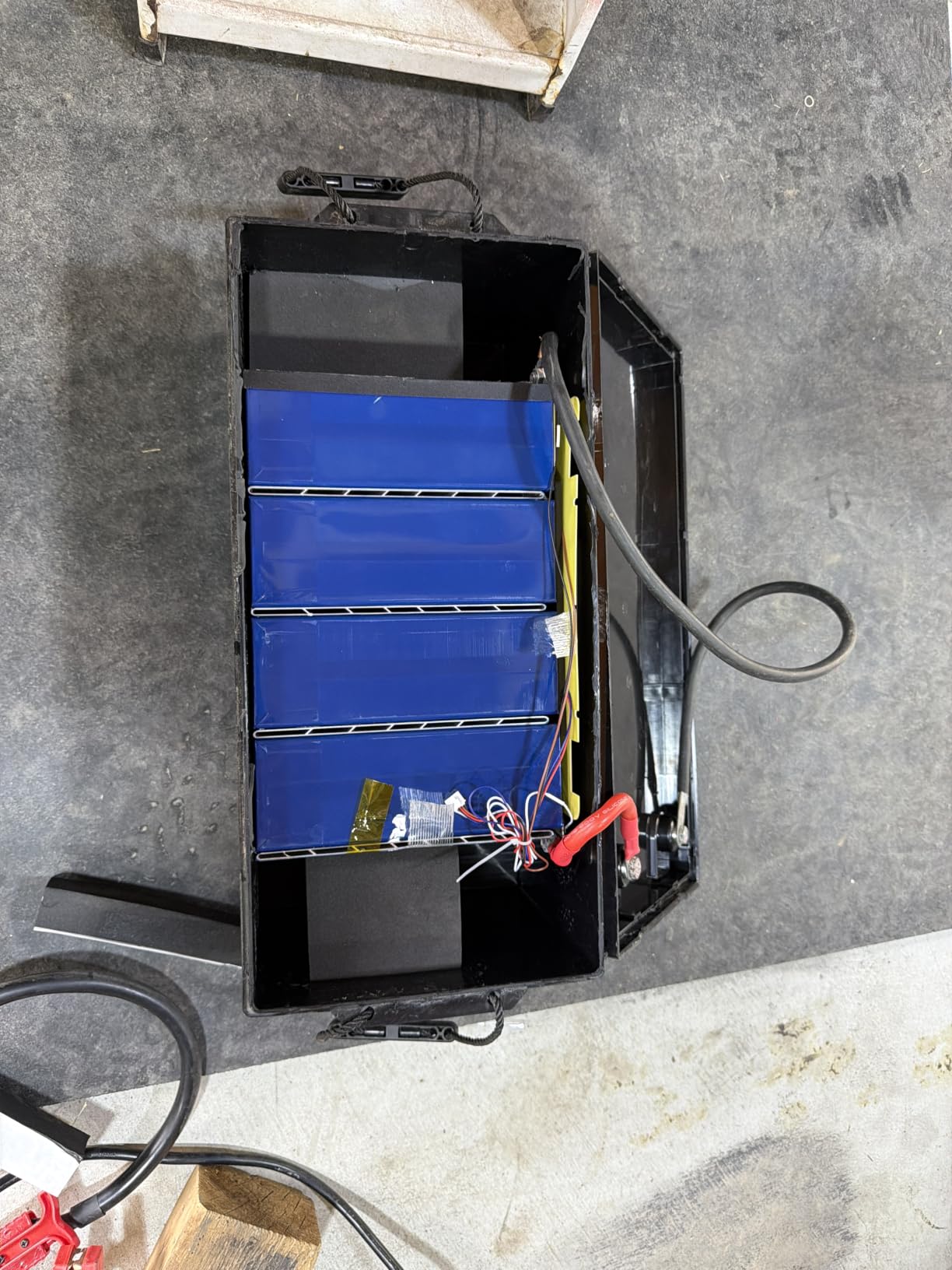
A sensible first step, not a homestead bank
Best for a portable kit, a small RV circuit, or a budget build where the Group 31 drop-in means you do not rebuild the box. The wide temperature rating also makes it more tolerant of a cold vehicle than most 12V lithium in this list.
Not for an unattended primary residence. Without app monitoring and with the least consistent quality signal here, it is a stepping stone to lithium rather than a bank you would trust overnight through a multi-day storm.
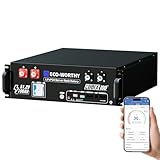
6. ECO-WORTHY Cubix100 48V 100Ah – the 48V Server-Rack Choice for Whole Homes
ECO-WORTHY Cubix100 48V 100Ah LiFePO4 Lithium UL9540 Server Rack Battery
- 51.2V
- 100Ah
- 5120Wh
- 103 lb
- UL954A and UL1973 listed
- 10-year warranty
Pros
- Only battery here with UL9540A
- UL1973 and CEC listing for code-compliant installs
- 5.12kWh per unit in a rack-mount package that scales to 163.8kWh
- Bluetooth and WiFi plus CAN and RS485 for inverter integration
- 10-year warranty with responsive support
Cons
- No on-unit display so status must be read from the app
- Companion app lacks time-remaining or time-to-full estimates
- At 103 pounds mounting needs planning
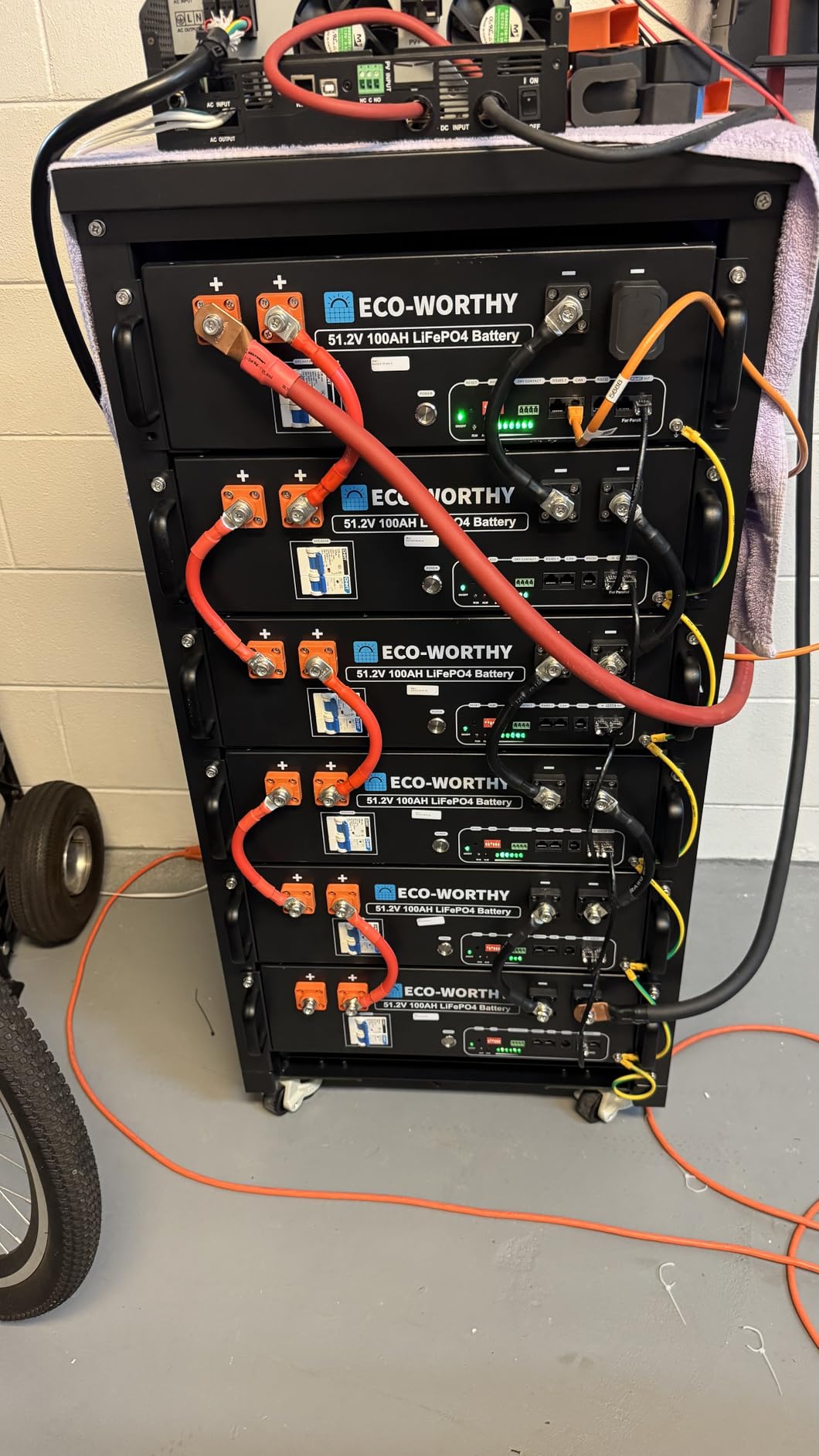
This is the 48V server-rack answer, and the certification is the reason it matters. It is the only battery in this roundup listed to UL9540A, UL1973 and CEC through Intertek testing, which is what a local authority or insurer will ask about when a whole-home bank goes into a garage.
Each unit holds 5.12kWh at 51.2V and 100Ah, and parallel expansion runs to 32 batteries for up to 163.8kWh. Owners running whole-home systems on Sungold and Victron inverters report spec-accurate performance and easy expansion, with several buying additional units as loads grew.
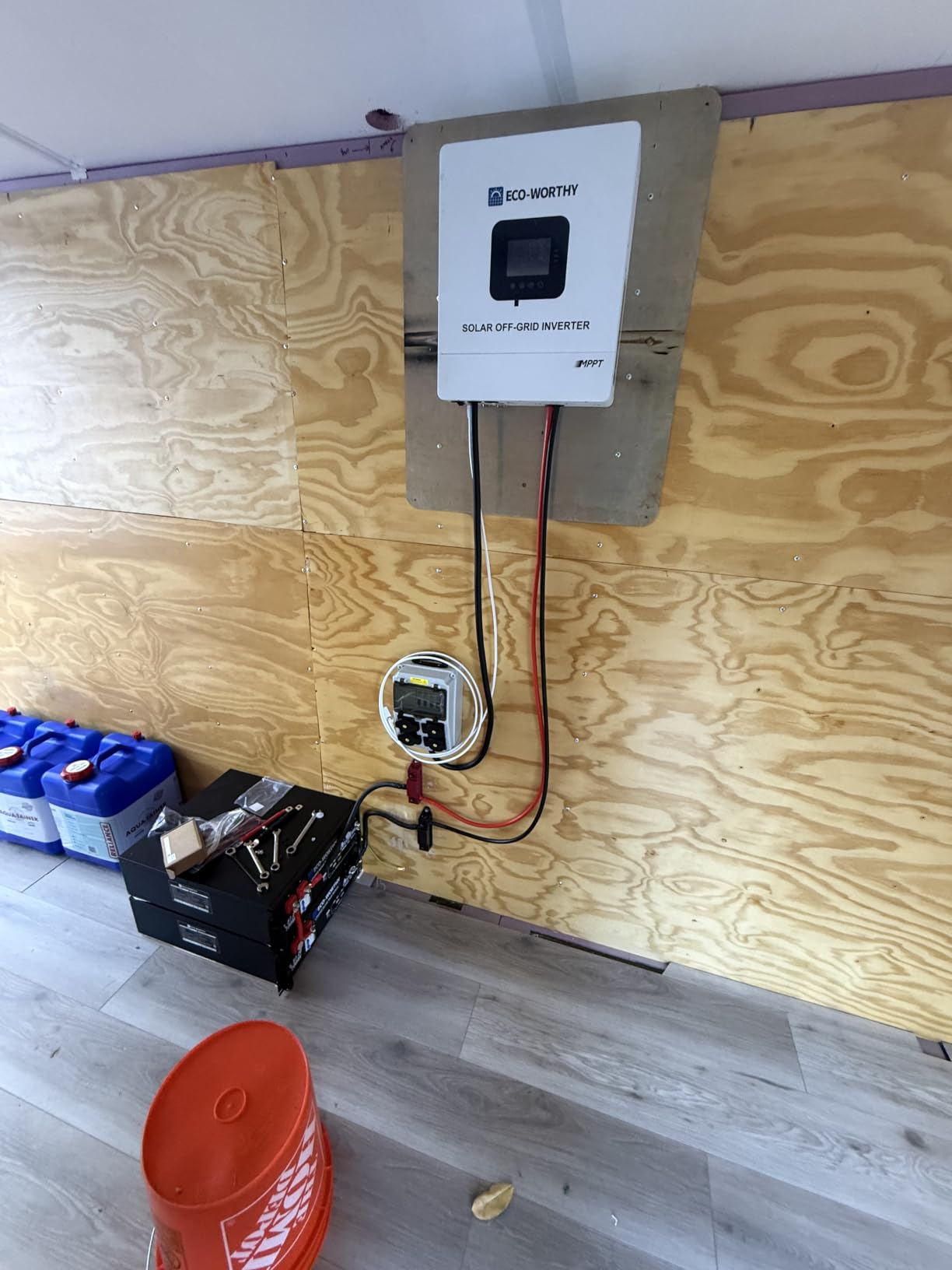
Communication is the quiet strength. Integrated CAN and RS485 interfaces plus Bluetooth and WiFi mean the battery can talk to a Victron or similar inverter instead of being an isolated box, which is the single most common mismatch people discover only after installation.
The kit ships complete with parallel and communication cables, grounding wires, terminal covers and a manual, and the vertical rack form factor mounts cleanly. The 10-year warranty is the longest here, backed by a support response within 24 hours.
Where a rack battery wins and what it asks of you
Best for homesteads, cabins and whole-home backup where the inverter is 48V and you may add capacity every year. It is also the pick for anyone who needs a listed product for insurance or code reasons rather than a sticker price argument.
The trade-offs are size and monitoring detail. At 103 pounds you need a plan for handling and mounting, and there is no screen on the unit itself, so status comes from the app, which reviewers say is basic and does not estimate time remaining or time to full.
7. Yeagulch 12V 200Ah – the Best 200Ah for Trolling Motor Builds
12V 200Ah LiFePO4 Lithium Battery Built-in 200A BMS 15000+ Deep Cycle
- 200Ah
- 2560Wh
- 12.8V
- 58.9 lb
- 200A BMS with temperature cut-off
Pros
- 200Ah at well under a third the cost of comparable premium 200Ah units
- 2560Wh in a long low-profile footprint suited to off-grid cabinets
- 200A BMS with automatic high and low temperature cut-off
- 87% five-star share across 195 reviews
Cons
- Long 20.08 inch length may not fit a standard Group 31 box without modification
- Energy storage only - not for car starting or golf carts
- Needs a charge or discharge cycle every six months
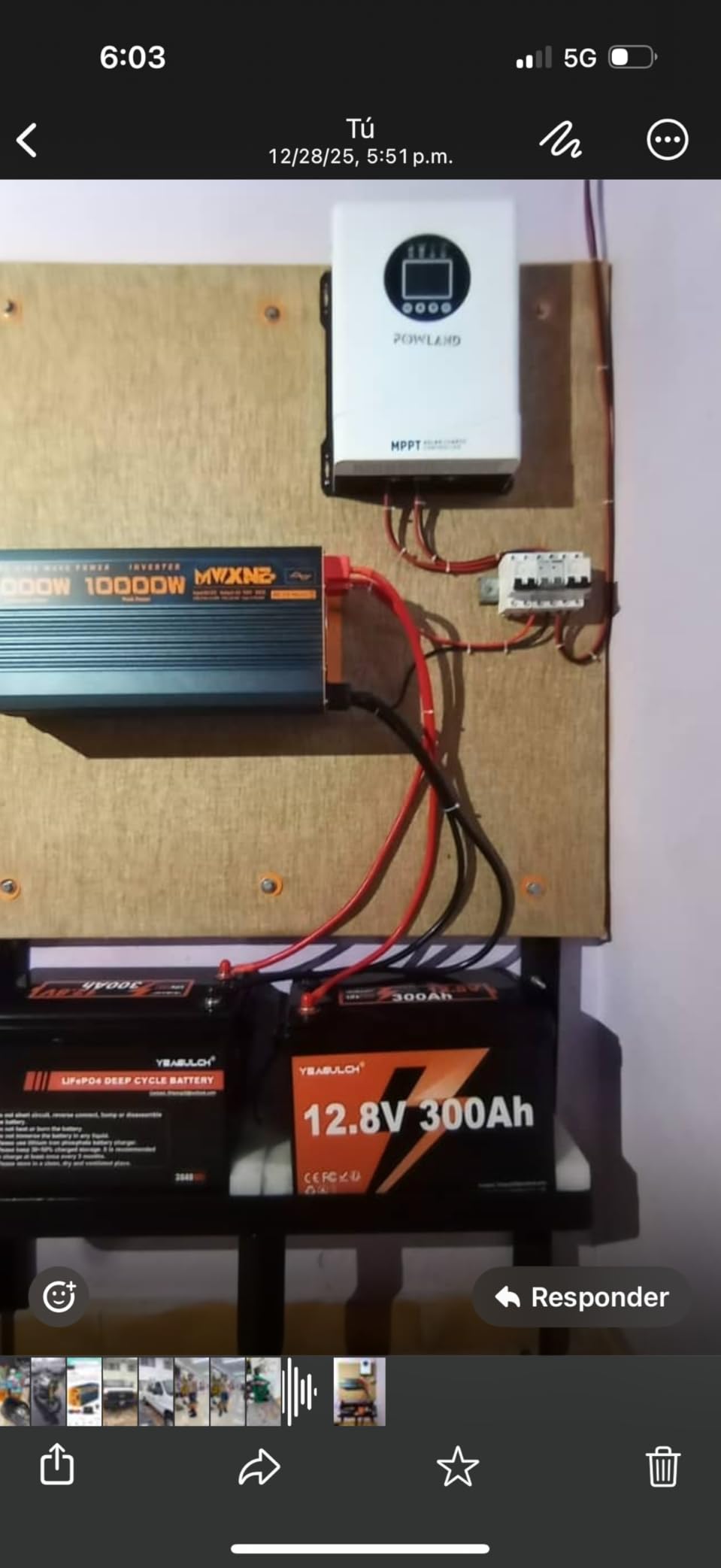
This is the value 200Ah. You get 2560Wh of stored energy and a 200A BMS with automatic high and low temperature cut-off, in a 58.9 pound case, and the cost per amp-hour is where this pack beats the premium 200Ah units above it.
Cycle claims follow the same ladder as the other Yeagulch pack: 4,000 cycles at 100% depth of discharge, 6,000 at 80%, and up to 15,000 at 60%. Expansion runs four in series for 48V or four in parallel for 800Ah at 12V, which is about 10.24kWh usable.
It is rated for 12V trolling motors up to roughly 55-62 pounds of thrust, which is the honest limit of a pack this size. Beyond that you are asking a 100A-class cell to handle startup surge it was not designed for.
What to watch is the shape. At 20.08 inches long in a low 8.46 inch profile it fits many off-grid cabinets well, but it will not drop into a standard Group 31 box without modification, and several buyers flagged exactly that before ordering.
Good for mid-size banks on a budget
Best for a mid-size off-grid cabinet, a camper running larger loads, or a trolling motor in the mid-thrust range where the 100Ah packs fall short. Reviewers consistently single out value for a 200Ah pack and the strength of the low-temp protection.
Not for anyone who needs a standard Group 31 footprint without modifying the enclosure, and not for a bank that will sit untouched for more than six months, because it needs a periodic charge or discharge to stay healthy.
8. Yeagulch 12V 100Ah – the Cleanest Lead-Acid Drop-In Replacement
12V 100Ah LiFePO4 Lithium Battery BIC Group 31 with 100A BMS
- 100Ah
- 12.8V
- 21.6 lb
- 95% capacity utilization
- 4000+ cycles at 100% DoD
Pros
- Best capacity-to-cost ratio here alongside a 4.7 rating
- 88% five-star share across 198 reviews
- Standard Group 31 sizing at 21.6 lb
- 95% usable capacity on a flat discharge curve
- No memory effect so it is usable at any time after a full charge
Cons
- Not recommended for trolling motors above 700W
- Not for car starting or golf carts
- Requires a charge or discharge cycle at least every six months
- No Bluetooth app or on-unit display
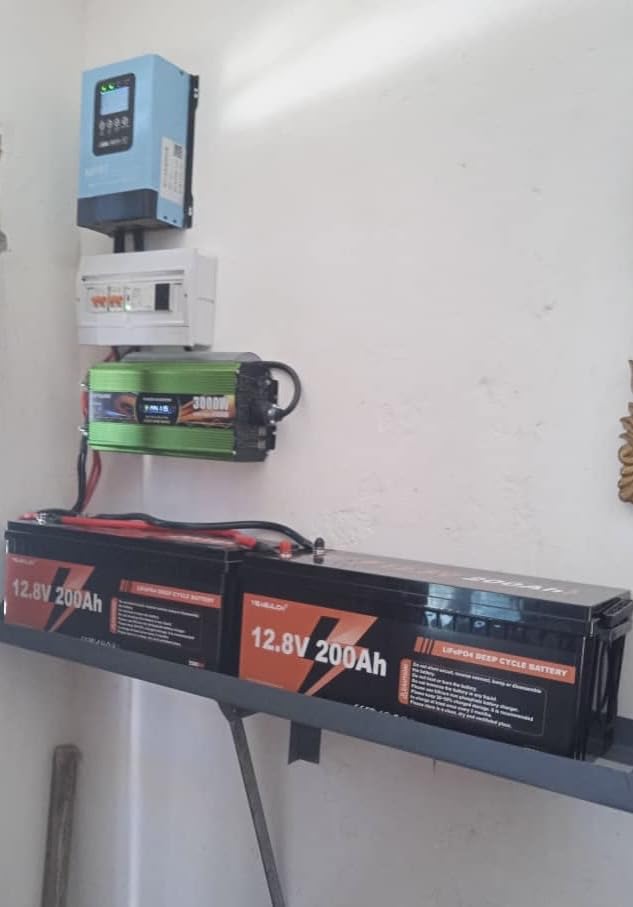
If your job is a straight swap of an aging lead-acid bank with no enclosure changes, this is the cleanest option in the list. Group 31 form factor, 21.6 pounds, and up to 95% capacity utilization compared with about 50% for lead-acid, which roughly doubles what you can actually pull out of the same box.
It holds that usable capacity on a flat discharge curve, so the voltage stays steady under load instead of sagging. Buyers replacing lead-acid for solar, RV and marine use point at the low cost per amp-hour, the true 95% usable capacity and the easy physical fit as the three reasons to choose it.
Expansion covers up to four batteries in series or parallel for a 48V system or added capacity, and the absence of memory effect means you do not have to be careful about partial cycles. At 4.7 across 198 reviews with an 88% five-star share, the quality signal is strong for the money.
Monitored users should note there is no Bluetooth and no on-unit display here, so state of charge has to come from your inverter or charge controller instead. That is a real limitation if your system has no other meter.
A drop-in first step for older lead-acid banks
Best for the 6V crown deep-cycle banks that homesteaders describe as functional but a maintenance pain. Drop one of these into the same compartment, keep your existing wiring, and you have moved to lithium without redesigning the install.
Not for trolling motors above 700W, since the 100Ah cell is not sized for that surge, and not for a bank that will sit idle past six months without a charge or discharge cycle.
9. SUPER EMPOWER 12V 100Ah – Accurate Group 24 Drop-In with Clear Cutoffs
12V 100Ah LiFePO4 Battery, Group 24 Deep Cycle for RVs & Trolling Motors
- 100Ah
- 1280Wh
- 12.8V
- 21.6 lb
- True BCI Group 24
- Charge cut-off at 32F
Pros
- True BCI Group 24 drop-in with M8 terminals fitting most standard boxes unmodified
- Well-documented cold-weather behavior with explicit cut-off thresholds
- 1280Wh with 4S4P expansion to 20.48kWh
- 5-year warranty with 24-hour support response
Cons
- Energy storage only - not suitable for engine cranking
- Non-lithium chargers can reduce performance or damage cells
- Low-temp charging requires lithium mode set on the controller
- No Bluetooth or app monitoring
The reason to choose this one over the other 100Ah packs is honest documentation. It publishes both cold-weather thresholds in specific terms: charging pauses below 32F, discharging stops at -4F, and it resumes above 41F. That clarity matters more than it sounds when you are setting up a charge controller at 6am in winter.
Physically it is a true BCI Group 24 drop-in with M8 terminals, so it fits most standard battery boxes without modification, and it weighs 21.6 pounds. Its 4.6 average across 220 reviews reflects broad use in marine and RV builds, and its strong Automotive category position shows how widely the Group 24 pattern is still fitted.
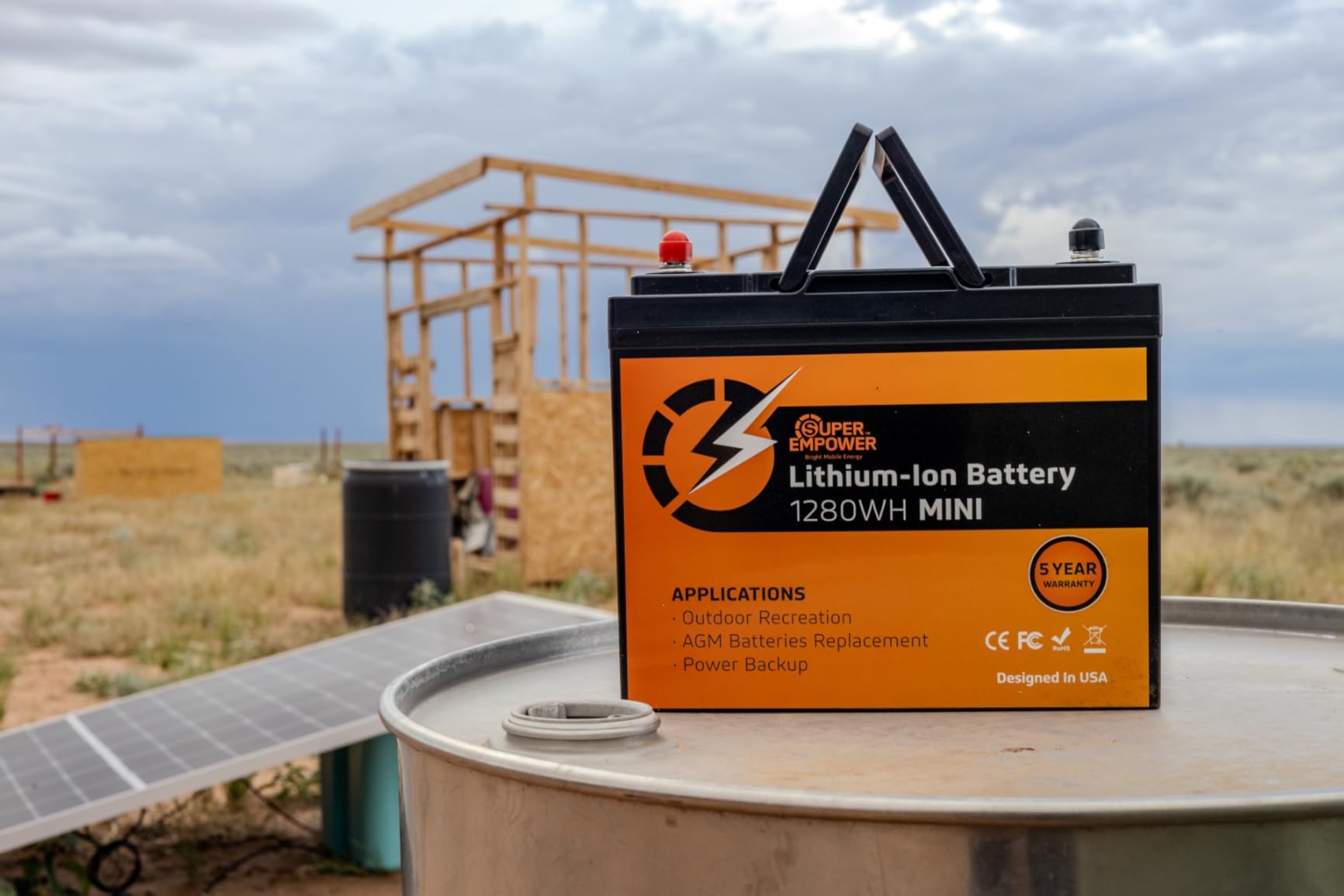
Expansion is generous for a 100Ah unit: four in series and four in parallel give 51.2V 400Ah at 20.48kWh. That is more headroom than the other Group 31 packs here, which matters if you plan to grow rather than replace.
The charging guidance is the thing to read twice. It works with LiFePO4 chargers, MPPT or PWM controllers in lithium mode, and DC-DC chargers, and owners stress that using a non-lithium charger can reduce performance or damage the cells.
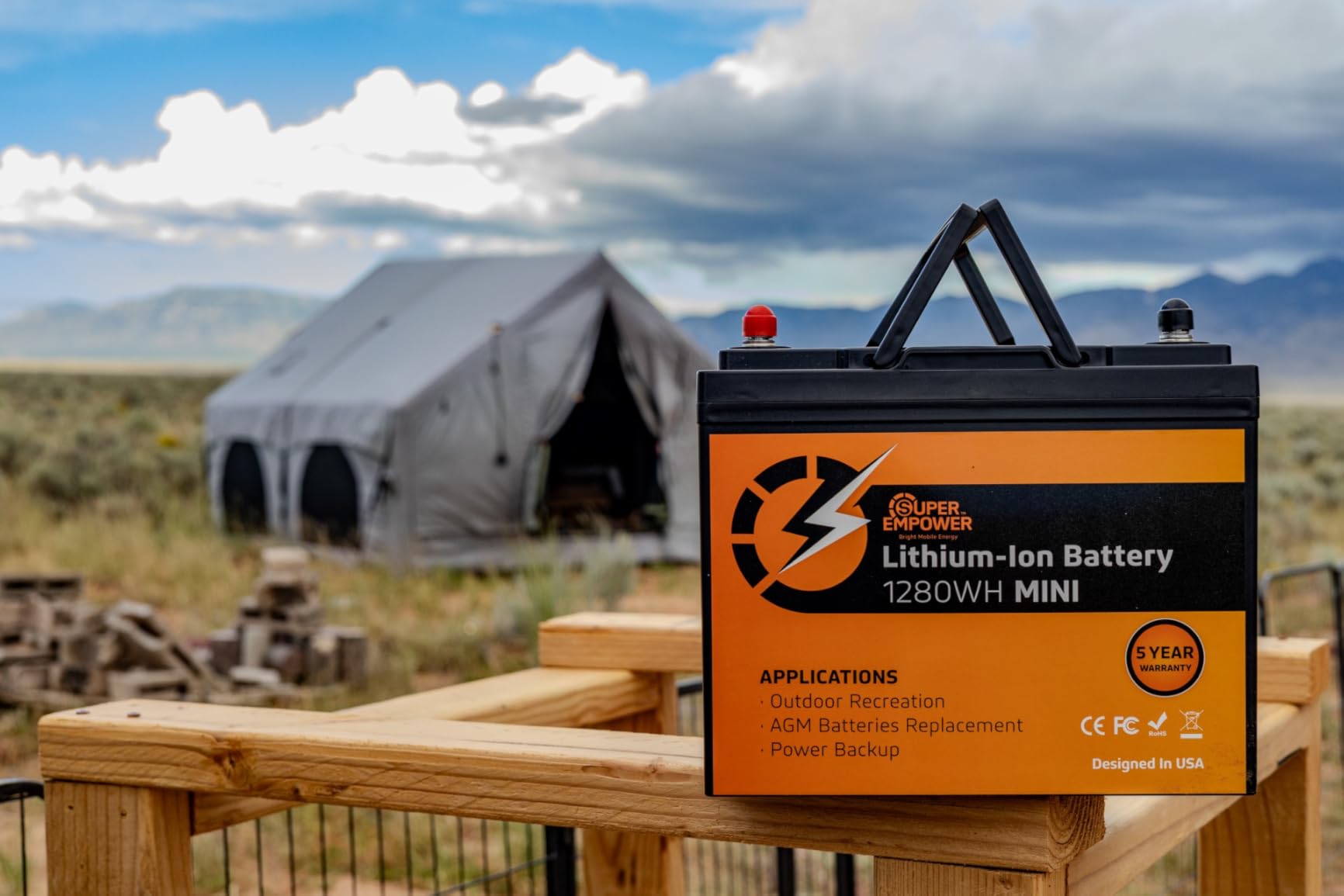
Where precise Group 24 sizing pays off
Best for marine builds, trolling motor applications within its rating, and anyone who fits equipment to BCI Group 24 boxes rather than Group 31. The published cut-off thresholds make it the easiest to design around for cold regions.
Not for engine starting, and not if you cannot change your charger or set your solar controller into lithium mode. There is also no app monitoring, so it suits systems that already have a good inverter display.
10. ECO-WORTHY 12V 314Ah – Most On-Battery Visibility and the Coldest Charge Threshold
ECO-WORTHY 12V 314AH LiFePO4 Lithium Battery Bluetooth with SOC LEDs, Low Temp Protection, 4019WH, 200A BMS Up to 15000 Deep Cycle for Off-Grid, RV, Solar Power System, HomeBackup
- 314Ah
- 4019.2Wh
- 12.8V
- 60.4 lb
- LED display plus Bluetooth
- Charge cut-off at 19.4F
Pros
- Only battery here pairing an on-battery LED status display with Bluetooth monitoring
- Upgraded to 314Ah and 4019Wh in a 60.4 lb case
- Owners report 3-4 hours of runtime for a 15000 BTU RV air conditioner per charge
- Manufacturer issued a free replacement when a first unit had BMS faults
Cons
- Bluetooth volt reading reported by some owners to be off by roughly 6-7x versus a clamp meter
- App telemetry is basic
- Shortest warranty here at 3 years
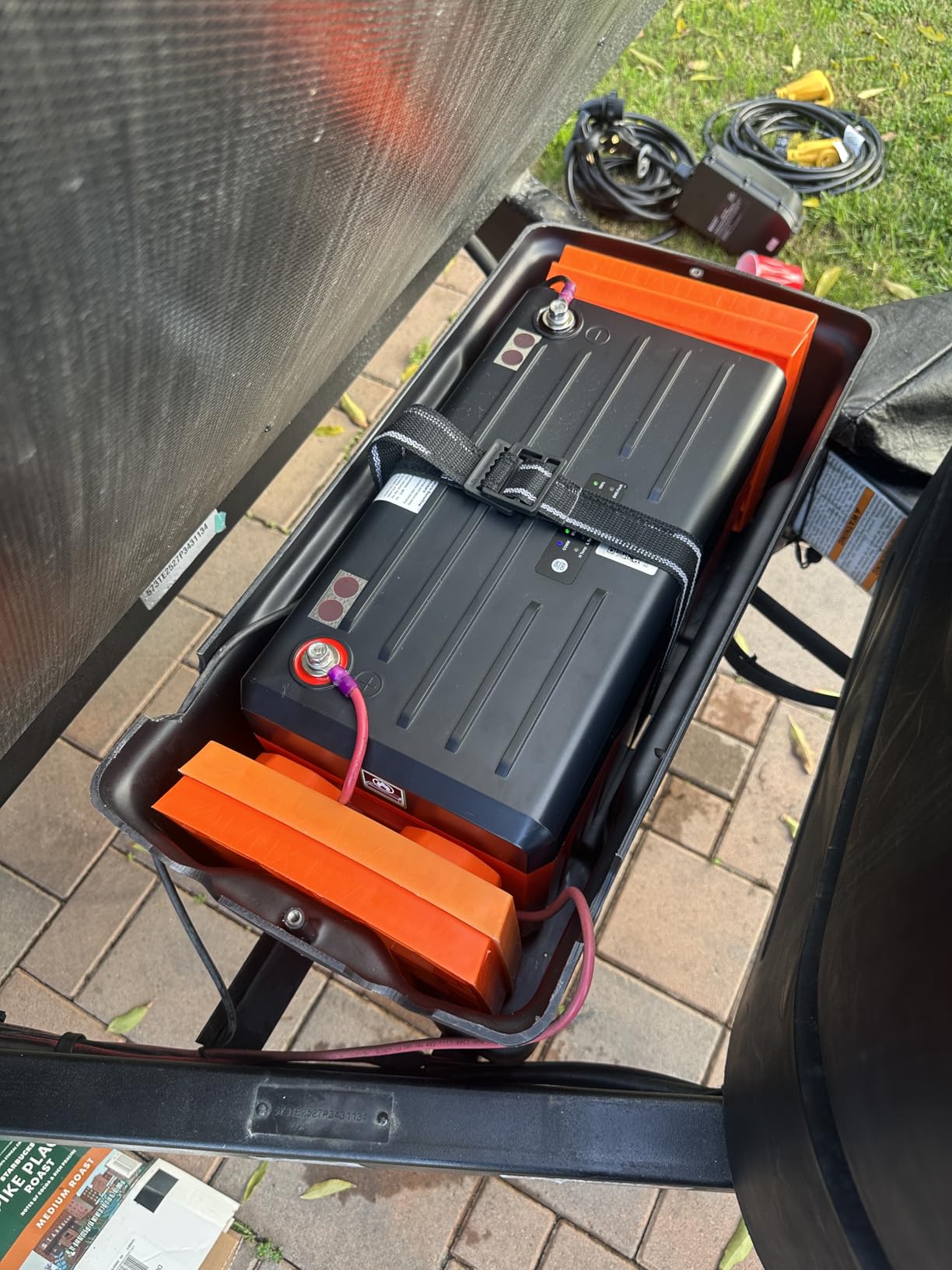
This pack solves a specific problem: knowing what the battery is doing without opening the compartment. It is the only one here with both an on-battery LED display for battery level, status and fault modes, and Bluetooth monitoring through the ECO-WORTHY app with a built-in buzzer for faults.
Capacity was upgraded to 314Ah and 4019.2Wh in the same housing, with a 200A BMS. Owners replacing aging lead-acid and gel camper banks report dramatically more usable power and far longer stretches between solar recharges, and one reports going nearly a week without sun after replacing two 100Ah gel batteries.
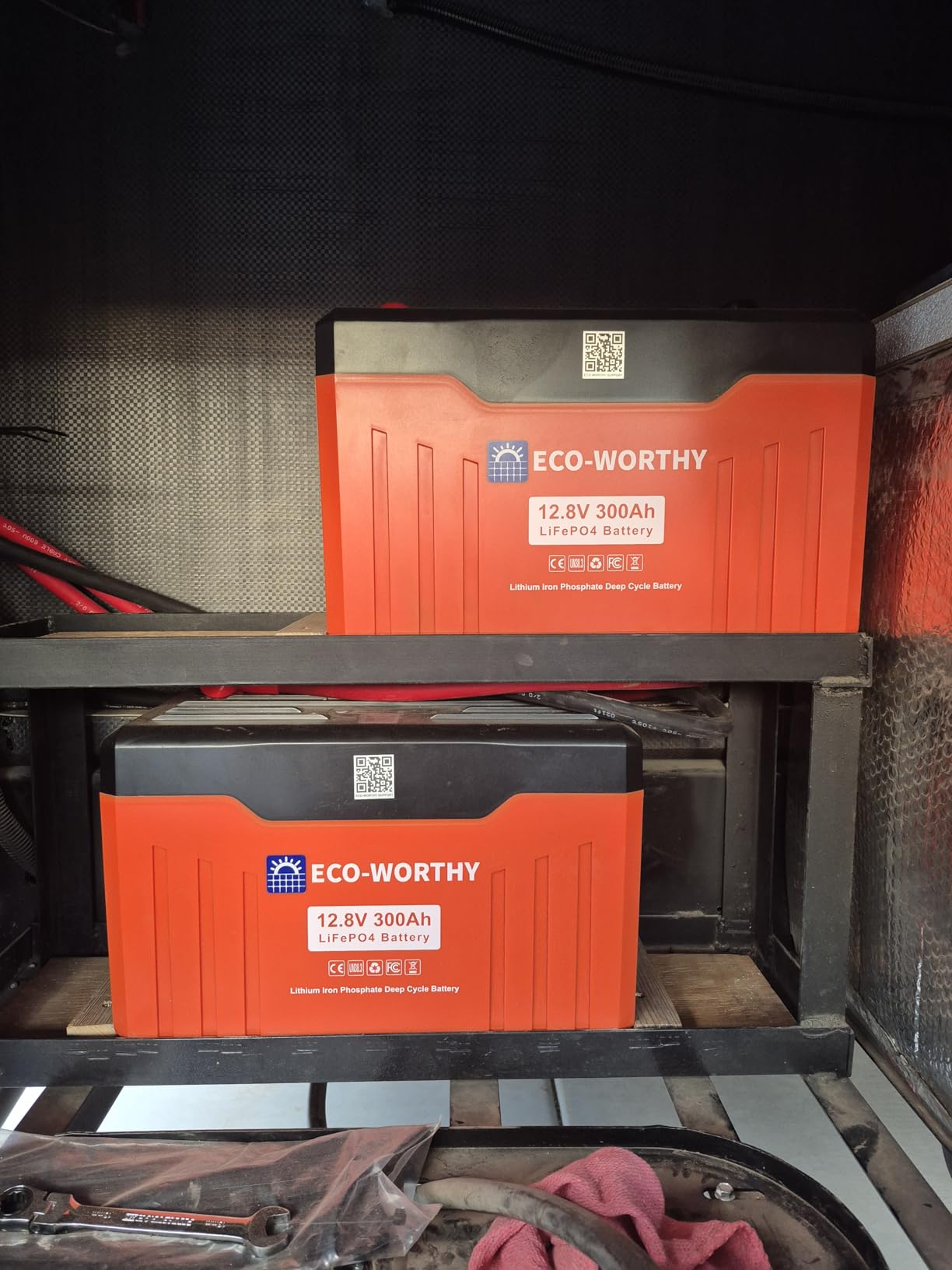
The cold-weather number is the standout for winter installs. Its low-temperature charge cut-off sits at -7C, which is 19.4F, lower than the 32F floor on most packs in this list, so it is the most tolerant of the group when a bank lives in an unheated shed or a cold garage.
Expansion runs to 4P2S or 2P4S for 32.15kWh total, and the fire-resistant case with a simple installation is a plus for truck camper builds. The manufacturer also issued a free replacement when a first unit showed BMS and state-of-charge faults.
Strong for winter installs, with caveats on trust
Best for cold-climate off-grid systems, campers where you want a visible state-of-charge readout, and builders who want the 19.4F charge threshold. Owners running a 15,000 BTU RV air conditioner report roughly 3-4 hours of runtime per charge.
Two cautions. Some owners report the Bluetooth voltage reading being off by roughly 6-7x against a clamp meter, so verify with a meter rather than trusting the app, and the 3-year warranty is the shortest in this roundup, which makes long-horizon plans harder to justify.
48V Server-Rack vs 12V Portable Batteries: Which Architecture?
This is the most repeated question in DIY solar communities and no vendor guide answers it properly. A long-running diysolarforum builder summarised the experienced default: they now only use 48V rack batteries (EG4 and Eco-Worthy), while LiTime 24V and 12V units in the past proved very reliable. The reasoning is electrical, and it comes down to current.
A 48V bank moves the same power at roughly a quarter of the current of a 12V bank. That means thinner cable, smaller breakers, less busbar heating and fewer losses over long runs, which is exactly what a whole-home or workshop-scale system needs. The 12V format wins on portability, mechanical simplicity and the ability to use standard Group 31, 4D and 8D boxes.
Choose 48V rack when your inverter is 48V, your loads are heavy, and you may add capacity over the years. The ECO-WORTHY Cubix100 is the only listed option in this roundup, and its UL9540A, UL1973 and CEC certifications matter for code and insurance reasons. Choose 12V when you are replacing an existing lead-acid bank, building in a vehicle, or assembling a small system incrementally.
One rule from the forums deserves repeating: never parallel different brands, different capacities, or different ages in one bank. Cell drift between unmatched packs is the most common self-inflicted failure we see described.
How to Size Your Off-Grid Battery Bank in Four Steps
Step one, run a load audit. Write down every appliance you actually intend to run, its watts, and how long it runs per day. Builders on DIY forums say battery sizing, not panel sizing, is the top source of off-grid disappointment, so be honest about the load rather than designing for a theoretical worst case.
Step two, convert to daily watt-hours. Multiply watts by hours for each item and add them up. This number is the real target your bank has to deliver every day before the sun comes back.
Step three, add your autonomy days. Multiply that daily figure by the number of overcast days you want to ride through, then divide by the usable depth of discharge: roughly 0.8 for LiFePO4, about 0.5 for lead-acid. That gives you the nameplate watt-hours the bank must hold.
Step four, add a margin and convert to a real product. Add about 20% for inverter losses and future loads, divide by 1000 for kWh, and then pick a battery whose nameplate kWh covers it. A household drawing 4kWh a day across two overcast days of autonomy needs 8kWh divided by 0.8, which is 10kWh, plus 20%, or roughly 12kWh of bank.
Finally, sanity-check against the array. A 5kW solar array harvests on the order of 20kWh on a good summer day, so a 12kWh bank with a 4kWh daily load recharges comfortably. If your array cannot refill the bank, you have a solar problem, not a battery problem.
Buying Guide: What Actually Matters on a Spec Sheet
Depth of discharge is the number that decides your effective capacity. A 200Ah lithium pack rated at 95% usable gives you 1.28kWh per battery, while the same 200Ah in lead-acid at 50% gives you 0.8kWh. This is the single biggest reason lithium banks cost less per usable kilowatt-hour than lead-acid.
Warranty length and cycle claim only mean something together. A 10-year warranty is worth little if the cycle count assumes a 60% discharge. Look for a claim stated at 80% depth of discharge, and check whether the warranty is years, cycles, or a combination with a throughput cap.
Inverter and BMS communication is where returns come from. CANbus and RS485 compatibility with your inverter has to be confirmed before you buy, not after the pack is bolted down. The ECO-WORTHY rack battery publishes both interfaces, which is why it integrates cleanly with Victron and Sungold systems.
Cold-temperature charging protection is non-negotiable in any climate that drops below freezing. LiFePO4 cells should not be charged below about 32F without a self-heating function. A cut-off that pauses charging is protection, not a defect, and understanding that prevents a warranty dispute.
Form factor and footprint come last but decide whether the install is easy. Measure your battery box before ordering. Several products here are taller or longer than the Group 31 and Group 4D boxes people assume will fit them.
Finally, check for a UL 9540 or UL9540A listing on the spec sheet, and confirm the manufacturer is a real entity you can reach. The provenance question matters more than most buyers expect when something fails in year three.
What Goes Wrong With Low-Cost Off-Grid Batteries
Nameplate versus measured capacity is the most common disappointment. Buyers regularly report suspect capacity on no-name 12V 100Ah listings, where the label says 100Ah and the delivered amount is meaningfully less. This is exactly why the published cycle ladders on the picks above are worth reading closely: 4,000 cycles at 100% depth of discharge and 4,000 cycles at 80% are very different claims.
BMS lockouts come next. Packs going to sleep or refusing to charge until a reset are described repeatedly in owner reviews, and a minority of buyers here needed a lithium-activation charger on first use before the pack would respond at all. That is normal for lithium chemistry, not a defect, but it is worth knowing before the battery is installed in a sealed box.
Cell drift and stubborn balancing show up later in life. Owners report cell balancing that will not settle below about 0.05V, and forum discussion treats uneven cells between paralleled packs as a leading cause of early bank failure. Never mix ages, brands or capacities in one parallel string.
Warranty friction is the hardest to predict. Low-temperature charging issues are the most common dispute we see described, and brands with a short warranty or unclear support provenance make those disputes harder to win. The 10-year listing on the rack battery and the 3-year term on the 314Ah pack are both real differences in recourse.
Protocol mismatch is the failure you cannot fix without rebuilding. A battery whose CAN or RS485 comms do not match your inverter may still work as a dumb bank, but you lose charge coordination, which shortens life. Confirm compatibility first.
LiFePO4 vs Lead-Acid: When the Upgrade Actually Pays Off
Lead-acid is still fine for a small weekend cabin or a starter bank, and for occasional backup duty. But for a daily-cycling off-grid system, the comparison is not close. A 200Ah lithium bank delivers more usable power than a 400Ah lead-acid setup while weighing about 60% less, and the cycle counts differ by an order of magnitude.
The weight argument alone decides many installs. A 400Ah lead-acid bank runs into the low hundreds of pounds, which dictates your vehicle payload, your floor framing and how many hands it takes to move it. The same usable energy in lithium is a fraction of that, and for the 230Ah Group 4D pick here it fits a box that was already sized for lead-acid.
There is no maintenance, no water topping, no venting, and no equalization. The counterweight is a 5-year warranty rather than a rolling battery replacement habit, plus the fact that lithium holds voltage flat under load, so your inverter sees a steadier input.
Check if the label says lithium iron phosphate rather than generic lithium. NMC chemistry, common in portable power stations, has a higher energy density but a shorter life and a much less comfortable thermal profile, and it is the wrong choice for an unattended off-grid bank.
Frequently Asked Questions
Which battery is best for off-grid solar?
Lithium iron phosphate (LiFePO4) is the best battery chemistry for off-grid solar because it lasts longer, can be safely discharged to roughly 80-95% of rated capacity, and tolerates heat better than other lithium types. Within that chemistry, a 48V server-rack pack suits whole homes and heavy loads, while 12V 100-460Ah packs suit RVs, cabins and lead-acid replacements.
What size solar battery do I need to be off-grid?
Work out your daily load in watt-hours, multiply it by the number of overcast days you want to cover, then divide by 0.8 for the usable depth of discharge of LiFePO4. Add about 20% for inverter losses. A household using 4kWh a day with two days of autonomy needs roughly 12kWh of bank. Then confirm your solar array can refill that bank daily.
Can I parallel different brands of lithium batteries?
Do not parallel different brands, different capacities, or batteries of different ages in one bank. Mismatched packs drift apart in cell voltage and internal resistance, which forces the weakest unit to carry the load and shortens the life of the whole string. The most common self-inflicted off-grid failure is a bank assembled from packs bought at different times.
How cold can lithium batteries get when charging?
LiFePO4 cells should not be charged below about 32F without a self-heating function, because charging a freezing cell causes lithium plating that permanently reduces capacity. Most quality packs pause charging below that threshold, which is protection rather than a fault. Among the picks here, the ECO-WORTHY 12V 314Ah has the lowest charge cut-off at 19.4F.
Do lithium batteries need a special charge controller?
Yes, set any MPPT or PWM solar controller to lithium mode, and use a LiFePO4-compatible charger or DC-DC charger. Owners repeatedly report that a non-lithium charger reduces performance or can damage the cells. A lithium-activation charger is also needed on first use for some packs before the Bluetooth module wakes up.
Conclusion
The best lithium batteries for off grid solar in 2026 are still LiFePO4, and the decision comes down to architecture and honest usable capacity. For most people replacing lead-acid, the Litime 12V 230Ah Group 4D is the strongest all-round pick, with the Litime 12V 200Ah Group 31+ behind it for Bluetooth monitoring and the ECO-WORTHY Cubix100 48V rack battery ahead of the field for whole-home installs that need a listed, comms-capable bank. Size for your real daily load, verify capacity with a meter once it arrives, and never parallel unmatched packs.