
The best audio baby monitors for light sleepers are not the ones with the loudest speakers. They are the ones that stay quiet until your baby actually needs you, and that give you a way to read the room without producing a single sound. Get that wrong and a monitor meant to help you rest becomes the thing that wakes you at 2am because the house creaked.
That is the whole problem. A standard audio monitor fires on any sound above a fixed threshold, which means a partner turning over, a house settling, a dog shifting on the floor, or a white noise machine humming at a level the microphone hears perfectly well. For a light sleeper, a false alert is not a small annoyance. It is the difference between seven hours of sleep and four.
We spent weeks going through the sound-only monitor category with one question front and centre: how quiet can this thing stay and still tell me something useful? Every pick in 2026‘s list earns its place on two criteria you will rarely see weighted anywhere else, adjustable microphone sensitivity and the ability to alert silently through vibration or a light bar. Six monitors made the cut. The video and WiFi models did not, because a glowing screen in a dark nursery is its own problem for someone who wakes at the smallest sound.
Table of Contents
- Top 3 Picks for Best Audio Baby Monitors for Light Sleepers (October 2026)
- Why Light Sleepers Need a Different Monitor
- Best Audio Baby Monitors for Light Sleepers in 2026
- 1. VTech DM221-2 Digital Audio Baby Monitor with Two Parent Units
- 2. VTech TM8212-2 Two Parent Unit Monitor with Glow-on-Ceiling Night Light
- 3. VTech DM271-102 Audio Baby Monitor with Door Sensor and Projector
- 4. Motorola Nursery AM21 Audio Baby Monitor
- 5. Motorola Nursery PIP12 Rechargeable Travel Monitor
- 6. Motorola Nursery PIP10 Sound-Activated DECT Monitor
- How We Evaluated These Monitors
- Buying Guide: What Light Sleepers Should Look For
- Tuning a Monitor So It Stops Waking You
- Where to Put the Baby Unit to Cut False Alerts
- White Noise Machines and Monitor Sensitivity
- DECT Versus WiFi Monitors for Light Sleepers
- When a Monitor Is the Wrong Tool
- Frequently Asked Questions
- Final Verdict
Top 3 Picks for Best Audio Baby Monitors for Light Sleepers (October 2026)

VTech DM221-2
- Two parent units with belt clips
- Vibrating alert and 5-level LED sound bar
- DECT 6.0 with 1000ft range
- Two-way talk-back intercom

Motorola PIP12
- Rechargeable USB-C
- up to 10 hours
- 1500ft range with out-of-range alert
- Two-way talk and travel case

Motorola PIP10
- Sound-activated transmission
- DECT private connection
- 1000ft range
- Cry detection with volume control
As an Amazon Associate we earn from qualifying purchases. CERTAIN CONTENT THAT APPEARS ON THIS SITE COMES FROM AMAZON. THIS CONTENT IS PROVIDED 'AS IS' AND IS SUBJECT TO CHANGE OR REMOVAL AT ANY TIME.
Those three cover the most common light-sleeper situations. The DM221-2 wins when two adults share the load. The PIP12 wins when battery anxiety and portability matter more than features. The PIP10 wins on one specific mechanism, sound-activated gating, that does more to protect your sleep than any other single feature in this category.
Why Light Sleepers Need a Different Monitor
Most baby monitor reviews rank on sound quality, range and battery. Those matter, but none of them address the thing that decides whether a monitor helps or harms your sleep: how easily it is triggered by something that is not your baby.
A microphone-based monitor has a sensitivity threshold, and everything above that threshold is transmitted. On a sensitive unit the threshold sits low enough to catch a sleepy whim, which sounds wonderful until you learn it also catches a door closing two floors away. On an insensitive unit you stop hearing anything until the crying has been going for a while. Adjustable sensitivity is what lets you choose where on that spectrum you sit, and it is the single feature a light sleeper should care about most.
Then there is the alert itself. Continuous open-mic audio means you are listening to the nursery whether you intend to or not, which is a low but constant cognitive load. Sound-activated mode, often called VOX, keeps the channel closed until the nursery crosses a meaningful threshold, so a quiet room produces silence. Reviews of the Motorola PIP10 describe exactly this behaviour, with owners noting the transmission stays quiet until the baby reaches a meaningful level rather than relaying a white noise hiss all night.
Silent alerting is the third piece. A vibrating alert wakes your hand and your body without producing a tone your partner can hear, and a five-level LED sound bar tells you the baby is stirring at a volume you chose not to hear. When both exist, you can set the speaker volume low or off and still catch a real cry. That combination is rare, and it is the reason the picks below rank where they do.
Best Audio Baby Monitors for Light Sleepers in 2026
| Product | Specifications | Action |
|---|---|---|
|
VTech DM221-2
|
|
Check Latest Price |
 VTech TM8212-2
|
|
Check Latest Price |
 VTech DM271-102
|
|
Check Latest Price |
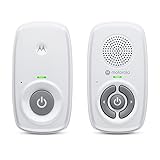 Motorola AM21
|
|
Check Latest Price |
|
Motorola PIP12
|
|
Check Latest Price |
|
Motorola PIP10
|
|
Check Latest Price |
We earn from qualifying purchases. CERTAIN CONTENT THAT APPEARS ON THIS SITE COMES FROM AMAZON. THIS CONTENT IS PROVIDED 'AS IS' AND IS SUBJECT TO CHANGE OR REMOVAL AT ANY TIME.
Every monitor here transmits over DECT or a comparable dedicated frequency, needs no app and no account, and works through a power cut. None of them require a phone in your hand at 3am, which parents on parenting forums consistently say matters more than any feature list.
1. VTech DM221-2 Digital Audio Baby Monitor with Two Parent Units
VTech DM221-2 Digital Audio Baby Monitor with 2 Parent Units, DECT 6.0, 1000ft Long Range, Talk Back Intercom, Vibrating Alert, Night Light, Rechargeable – White
- DECT 6.0, 1000ft range
- Vibrating alert and 5-level LED bar
- Two parent units
Pros
- Interference-free DECT 6.0 audio with frequency hopping
- Vibrating alert and 5-level LED indicators allow monitoring with no sound at all
- Two parent units let two adults listen in different rooms or on different floors
- Open-mic design with 5 sensitivity settings catches soft whimpers not just loud cries
- Two-way talk-back intercom works clearly across multiple floors
Cons
- Parent unit battery life is short when away from the charger
- Baby unit has no internal battery backup and drops out on a power cut
- Occasional unlinked state needing a manual power-cycle reboot
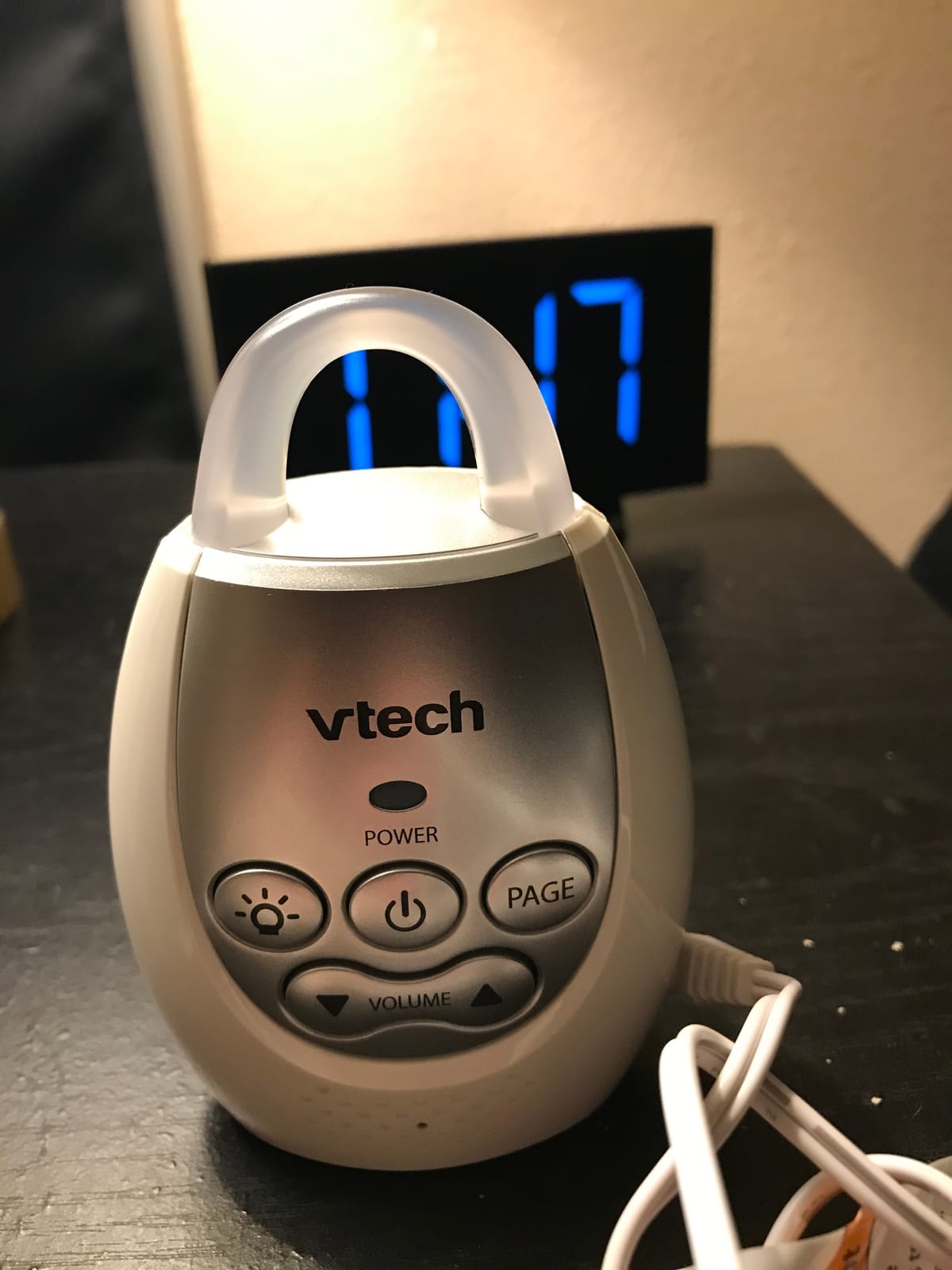
This is the monitor we recommend to almost every light-sleeper household we talk to. It is not the fanciest unit in the category, and it does not need to be. The DM221-2 does the two things that decide the outcome: it can alert you without making a noise, and it comes with two parent units so the burden of listening does not fall on one person.
The silent alerting is genuinely well executed. A vibrating alert runs through the parent unit, and a five-level LED sound bar shows how loud the nursery is getting. Set the speaker low and you can feel a real cry rather than hear one. For couples sharing a room or a bed, that is the feature that ends arguments rather than starting them at 4am.
Sensitivity is adjustable across five settings, and the open-mic design means the channel is live rather than gated behind a trigger. That is a deliberate trade-off. You get every stir and sigh transmitted, including the ones you did not want, but you also get the quiet pre-cry sounds that a hard-gated monitor can swallow entirely. For a light sleeper who has already decided they can handle more information as long as it is not noisy, the open mic works well.
The audio itself is clean. DECT 6.0 transmission over the 1.88 to 1.90 GHz band uses frequency hopping, so the signal does not drop into other people’s transmissions or hiss around the house. Rated audible noise is 30 dB, and the five channels mean neighbours on the same band rarely interfere.
Why the DM221-2 works for two light sleepers
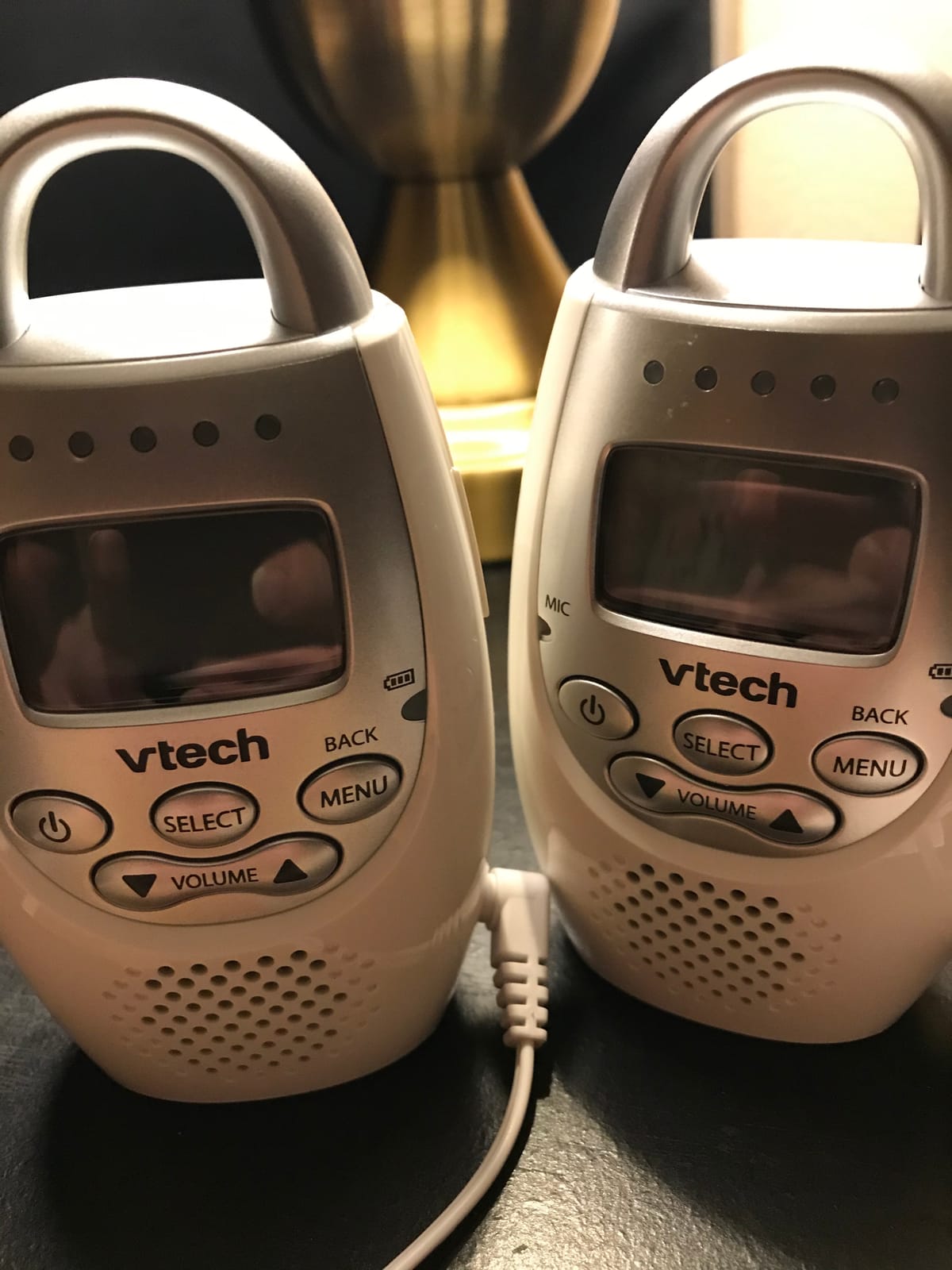
The second parent unit is the feature that changes behaviour rather than specs. One parent can carry the handset on a belt clip through the house while the other sleeps undisturbed with vibration on and volume off, then hand it over for the second half of the night. Forum discussions about audio monitors come back to this same point again and again, with parents on r/BabyBumps and r/daddit describing dual-unit setups as the thing that made monitoring sustainable past the newborn weeks.
The rechargeable parent units also remove the most common late-night failure. Reviewers on parenting forums repeatedly identify dead batteries at 3am as the worst failure mode of an audio monitor, and rechargeable units are the fix. Average battery life is listed at around 7 hours, which covers most nights if you dock it as you go.
Where the DM221-2 falls short
Battery life away from the charger is the most repeated complaint in reviews, and parents note that it can be a few hours rather than the full evening. Second, the baby unit carries no internal battery, so a power cut means no signal at all until power returns. Third, an occasional unlinked state appears in reviews, resolved by power-cycling both units, which is an inconvenient thing to discover at 2am.
One more detail catches some buyers: the battery compartment is rechargeable-only even though some listings imply AAA compatibility. There is a mention of 6 AAA batteries required in the specification details, which does not match what owners report actually fitting. Check the packaging carefully if you plan to swap cells.
2. VTech TM8212-2 Two Parent Unit Monitor with Glow-on-Ceiling Night Light
VTech 2 Parent Units Digital Audio Baby Monitor with Glow-on-Ceiling Night Light, Up to 1,000ft of Range, Vibrating Sound-Alert, Two-Way Talk Intercom, Sound Indicator, Secure Transmission: TM8212-2
- DECT 6.0, 1000ft range
- Glow-on-ceiling starry light
- Vibrating alert and 5-level bar
Pros
- DECT 6.0 keeps background noise out for a stable room-to-room connection
- Silent vibrating alert works in noisy homes and quiet moments
- Glow-on-ceiling starry light projects a scene with zero screen glow
- 5-level sound indicator plus volume control give visual feedback
- Two portable parent units serve two caregivers in different rooms
Cons
- Small review pool with 17 percent 1-star ratings
- so reliability is less proven
- Parent unit battery life averages around 7 hours
- No way to visually confirm the nursery beyond the ceiling glow
This model solves one specific light-sleeper problem that almost nothing else addresses: screen glow. There is no display on the parent unit in normal use, and the baby unit projects stars onto the ceiling instead. For a room where a partner needs genuine darkness, a monitor with a backlit screen in the corner of the bed is a real problem, and this is the pick that avoids it.
Alerting works the same way as the DM221-2, with a silent vibrating alert and a five-level sound indicator on the parent unit. DECT 6.0 handles interference, and the listed range is up to 1000 feet across five channels. Two parent units are included in the box, so the two-adult split-shift setup is covered.
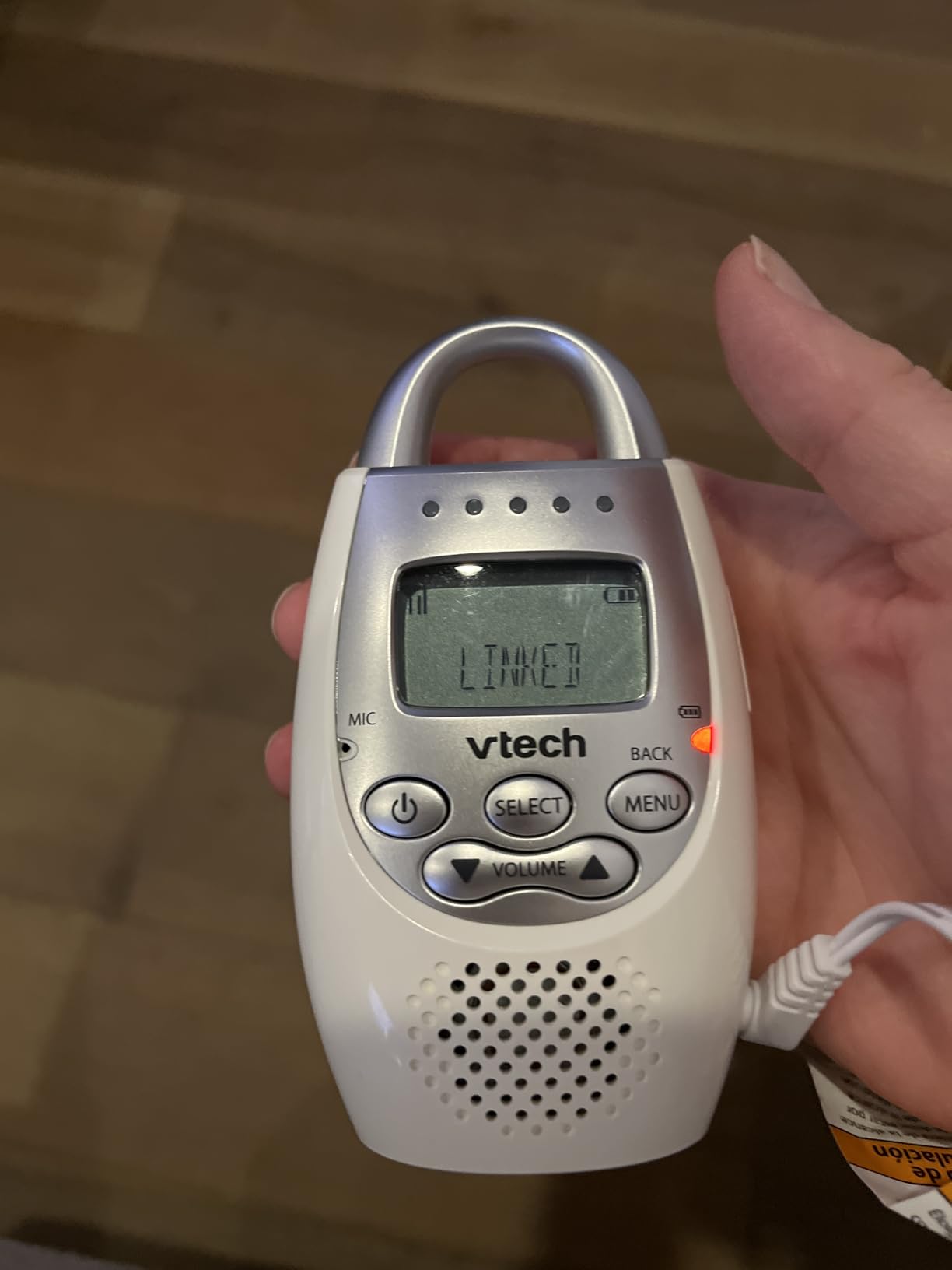
The ceiling projector is the feature buyers mention most. Reviewers like that it casts a soothing scene with no screen in the room, and that a light sleeper can use the visual sound indicator without opening their eyes against a display. Volume control on the parent unit is direct rather than buried in menus, which matters when you are using the device at half awareness.
Battery life is listed at around 7 hours on the parent unit, and it takes two AAA batteries per unit. As with every model here, treat that as an evening’s charge and dock when you can.
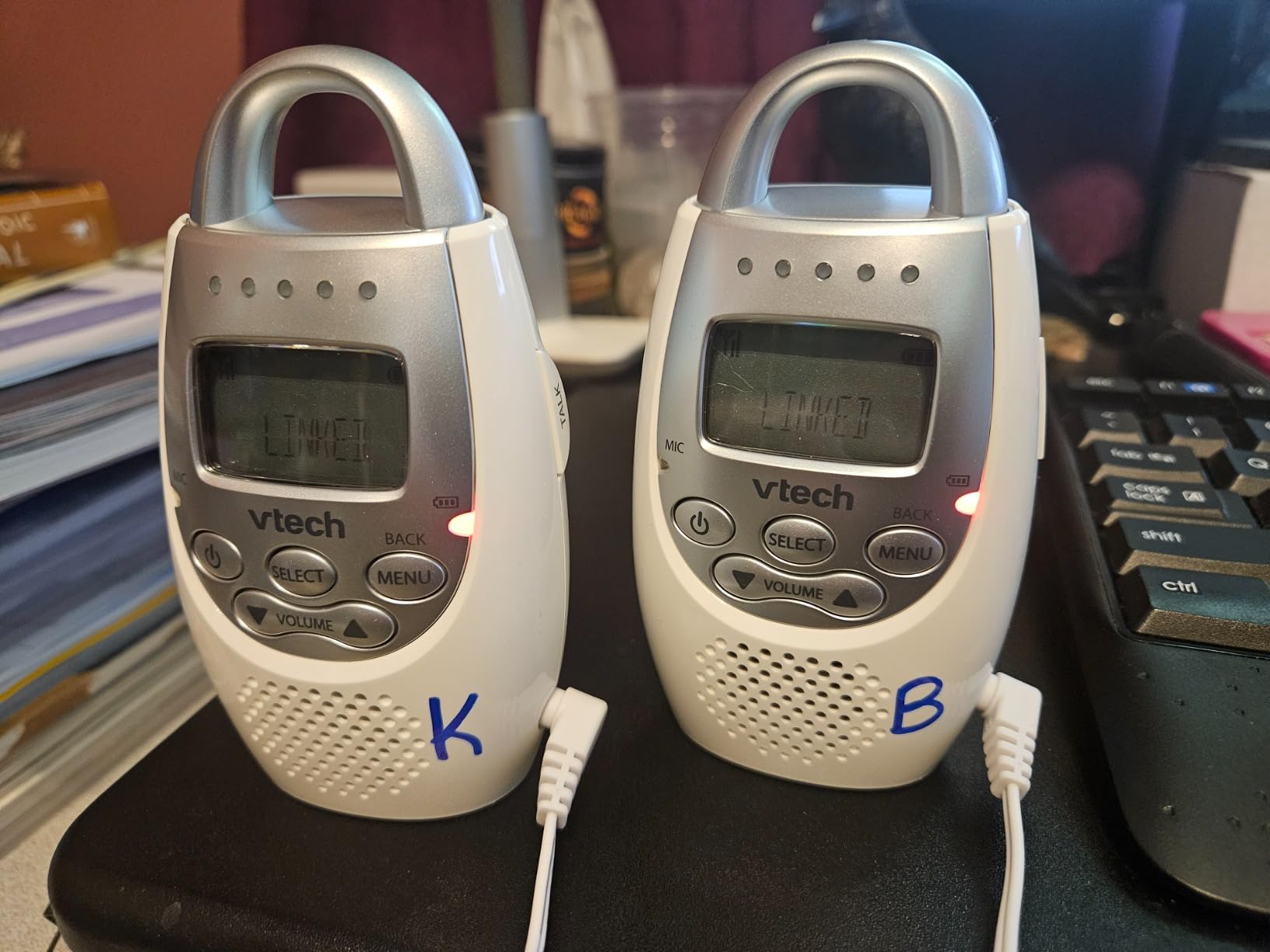
When the TM8212-2 is the right fit
Choose it when darkness in the bedroom is non-negotiable, or when a partner wakes to any light source at all. It is also a sensible second unit for grandparents or a partner on a different floor, since the whole point is having two handsets that stay silent until needed.
For apartments and small houses, the DECT 6.0 connection holding steady room to room is a genuine plus, and reviewers note it eliminates background noise for a clear signal.
When to look elsewhere
This is a new listing with a thin review pool of 40 ratings, and 17 percent of those are 1-star. Long-term reliability is simply less proven than the specification sheet suggests, and that matters when you are relying on the monitor overnight for months. If you want a monitor with a long, deep body of owner feedback behind it, the DM221-2 has over 12000 reviews to compare against.
Also note it is listen-oriented only in terms of confirmation. There is no camera and no visual check of the nursery beyond the ceiling glow, so if you need to see blanket position or confirm a baby has stopped crying, audio alone will not confirm it.
3. VTech DM271-102 Audio Baby Monitor with Door Sensor and Projector
VTech DM271-102 Audio Baby Monitor with Glow-on-Ceiling Night Light, Open or Closed Door/Window Sensor, Vibrating Sound-Alert, Talk Back Intercom & Belt Clip
- DECT 6.0, 1000ft range
- Noise filtering cuts white-noise hiss
- Glow-on-ceiling projector
Pros
- Ceiling projector shows stars and the moon with no screen light in the room
- Aggressive ambient-noise filtering means you hear the baby rather than a white noise hiss
- Door and window open-close alerts log with date and time
- Vibrating sound alert keeps alerts silent overnight
- Built-in lullabies plus talk-back intercom and belt clip
Cons
- Some units reported intermittent sound cutting out within days
- Two separate returns after baby unit then parent unit failures
- Warranty claim process described as cumbersome
If you run a white noise machine in the nursery, the filtering on this model is the part to care about. Reviews describe aggressive ambient-noise filtering that means the parent unit stays quiet through a white noise hiss and only speaks up when the baby does. That is a different mechanism from a sensitivity dial, and for a light sleeper with a sound machine running it can matter more than sensitivity steps.
The door and window sensor is unusual for an audio monitor. It sends an alert with date and time logging when a door or window opens or closes, which some parents use for a toddler-proofing reminder or simply to know the room is sealed. It is not baby monitoring, but it is a feature no other unit in this list has.
Silent alerting is present through the vibrating sound alert, and DECT 6.0 with 1000 feet of listed range handles the signal. Built-in lullabies and a talk-back intercom are included, and the parent unit is light enough to carry on the belt clip.
Why the noise filtering matters more than it sounds
A white noise machine produces a steady, fairly loud signal that most microphones treat as continuous sound. On a monitor with an open mic, that becomes hours of background noise in your ear, which is exactly the pattern that makes light sleepers tense and wake easily. Gated models avoid it by design. This one handles it through filtering, and the reviews suggest it does a good job of not relaying the hiss.
The practical effect is that the parent unit can sit beside you all night without becoming the thing keeping you awake. Combined with a vibrating alert, you can keep volume very low and still be told something changed.
The reliability problem you should read before buying
Reliability is the weak point, and reviews are unusually specific about it. Some owners report intermittent sound cutting in and out within days of setup. Others describe returning a unit after a baby unit failure, then a second return when the parent unit failed within weeks. The 4.4 rating reflects good features weighed against that pattern, with 10 percent of ratings at 3 stars and 4 percent at 2 stars.
Two smaller annoyances round it out. The projector does not stay on all night and cannot be switched from the parent unit, so you set it and forget it. And owners describe the VTech warranty claim process as cumbersome, which matters if a unit fails at 4am in month two.
4. Motorola Nursery AM21 Audio Baby Monitor
Motorola Nursery Audio Baby Monitor, No WiFi, Long Range 1000 ft, Volume Control, DECT Private Connection, Cry Detection, Portable Battery Parent Unit, Ideal for Safe Monitoring, No App, AM21
- DECT connection, 1000ft range
- Cry detection with high-sensitivity mic
- LED status indicators
Pros
- No WiFi
- app or account needed so it keeps working when the internet does not
- DECT connection keeps audio private and free of household interference
- Lightweight 0.27 kg parent unit you can carry between rooms
- High-sensitivity microphone picks up subtle sounds with cry detection
- LED indicators for power
- sound detection and out-of-range status
Cons
- No two-way talk-back so you cannot speak to the baby through the unit
- Parent unit batteries are not included and need regular swapping
- No night light or visual sound-level display
This is the cheapest way into a private, app-free audio monitor, and for some light sleepers that is enough. There is no WiFi, no subscription and no account, so the monitor behaves the same whether the internet is up, down or being used by someone else in the house. Parents on forums who want a closed, dedicated system rather than a phone dependency tend to land in this category.
The microphone is described as high-sensitivity with cry detection, which is the feature that matters for a light sleeper who wants a threshold rather than continuous open-mic audio. Cry detection is more selective than a general sound trigger, so a room that is not silent is less likely to produce random alerts.
LED indicators cover power, sound detection and out-of-range status, and the parent unit weighs 0.27 kg, light enough to move between rooms without thinking about it. DECT transmission on the 1.88 to 1.90 GHz band keeps the signal private across five channels, with listed range up to 1000 feet.
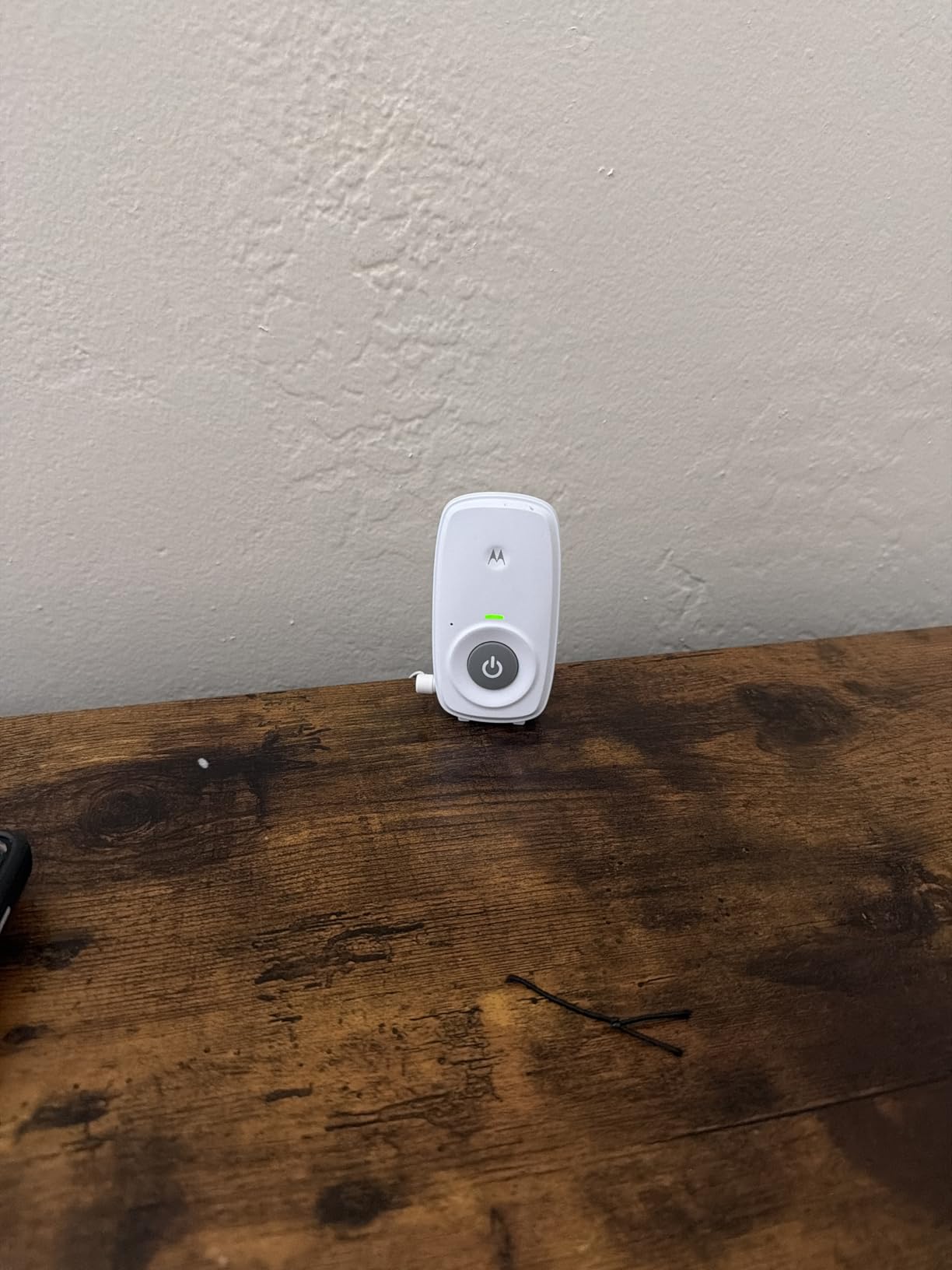
Where the AM21 earns its place
It suits nightstands and small apartments, where 1000 feet of listed range is generous and the priority is a monitor that quietly does one job. Direct volume control on the parent unit is simple enough to find in the dark, which is more than can be said for menu-driven units.
It also works well as a second or backup monitor, or for short trips where you do not want to charge anything. Parents also use audio-only monitors like this for elder care, where the priority is knowing you heard something without a second device going off in another room.
What you give up to save
There is no two-way talk-back, so you cannot speak through the unit to settle your baby. For a household that relies on talking your baby down from the doorway, that is a real functional loss rather than a minor one.
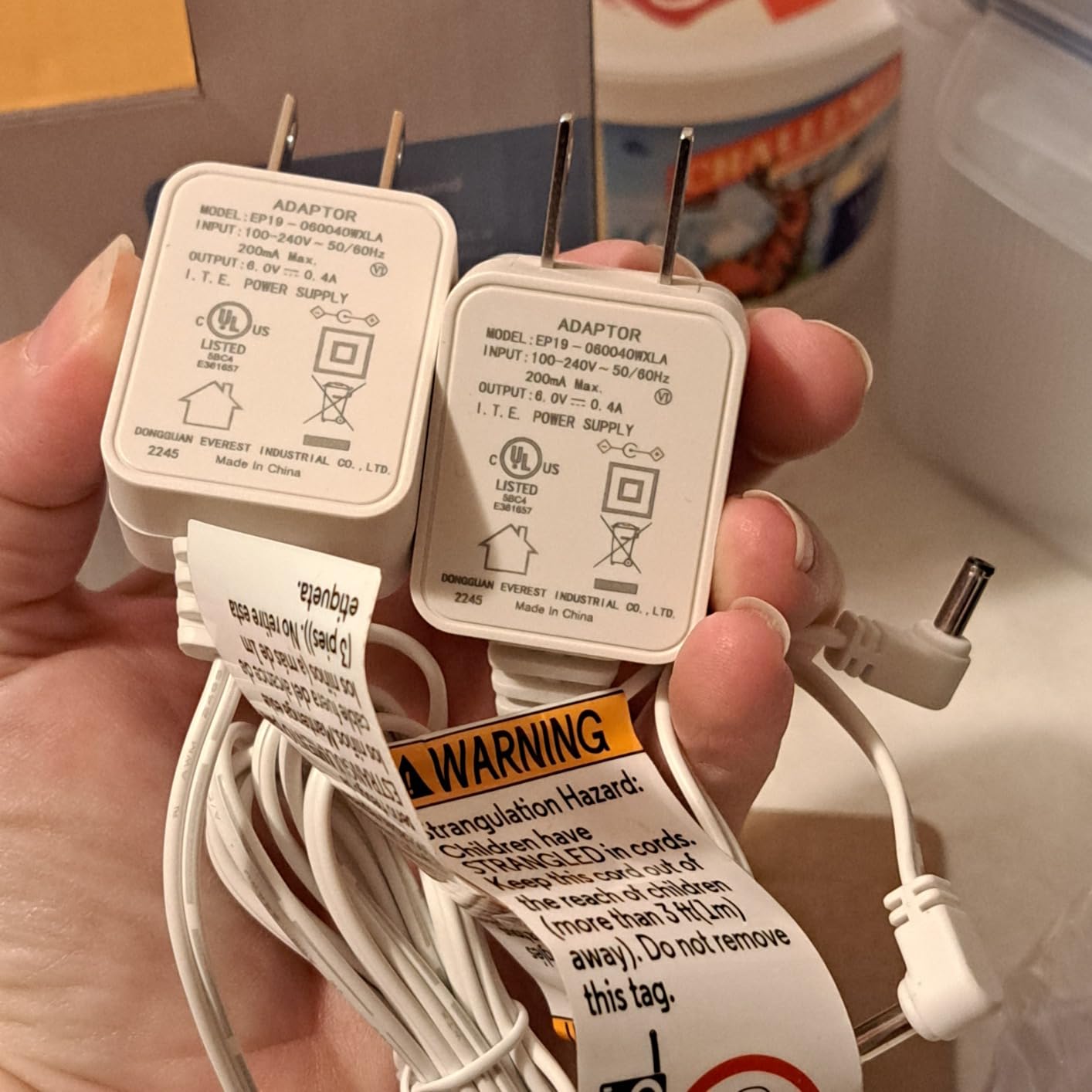
There is also no night light and no visual sound-level display, which removes the two features light sleepers tend to lean on hardest. And the parent unit runs on AAA batteries that are not included, so you are managing spare cells instead of a charger. If battery anxiety at 3am is your main worry, this is the wrong model despite the low entry point.
5. Motorola Nursery PIP12 Rechargeable Travel Monitor
Motorola Nursery Audio Baby Monitor, No WiFi Needed, Two-Way Talk, Portable and Rechargeable, 1500ft Range, HD Sound, Water-Resistant Travel Case, PIP12
- Rechargeable USB-C, up to 10 hours
- 1500ft range with out-of-range alert
- Two-way talk
Pros
- Rechargeable USB-C batteries give roughly 10 hours
- far better than AAA rivals
- Magnetic docking and compact size make it easy to move between rooms or pack
- No WiFi or app so it works overseas and through a power cut
- Two-way talk sounds natural and settles the baby without entering the room
- Loud enough volume to hear the baby over a shower or television
Cons
- Real-world battery life can fall short of the stated 10 hours
- Range drops noticeably through walls versus the 1500ft headline figure
- Weak magnetic back for hands-free placement
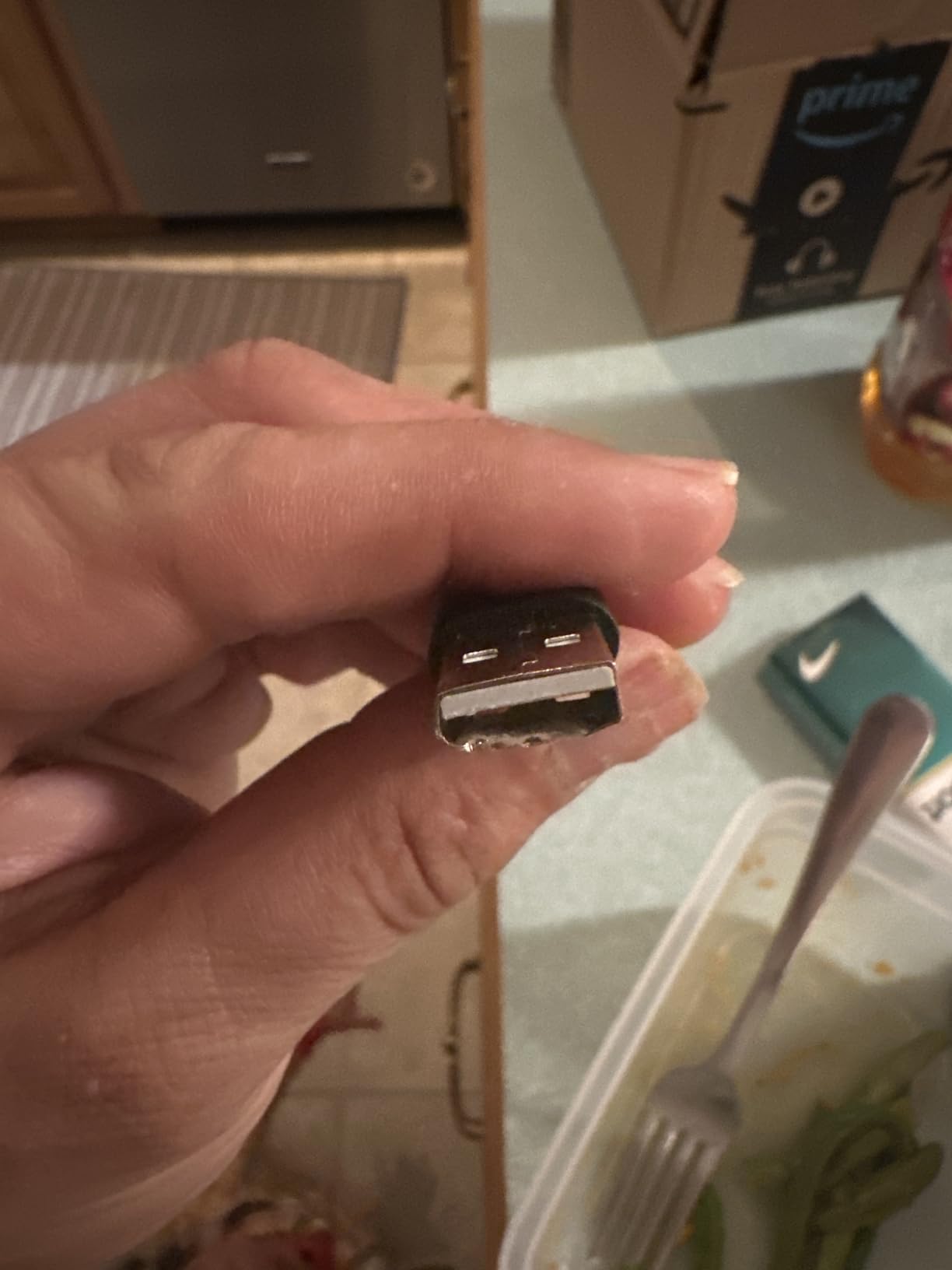
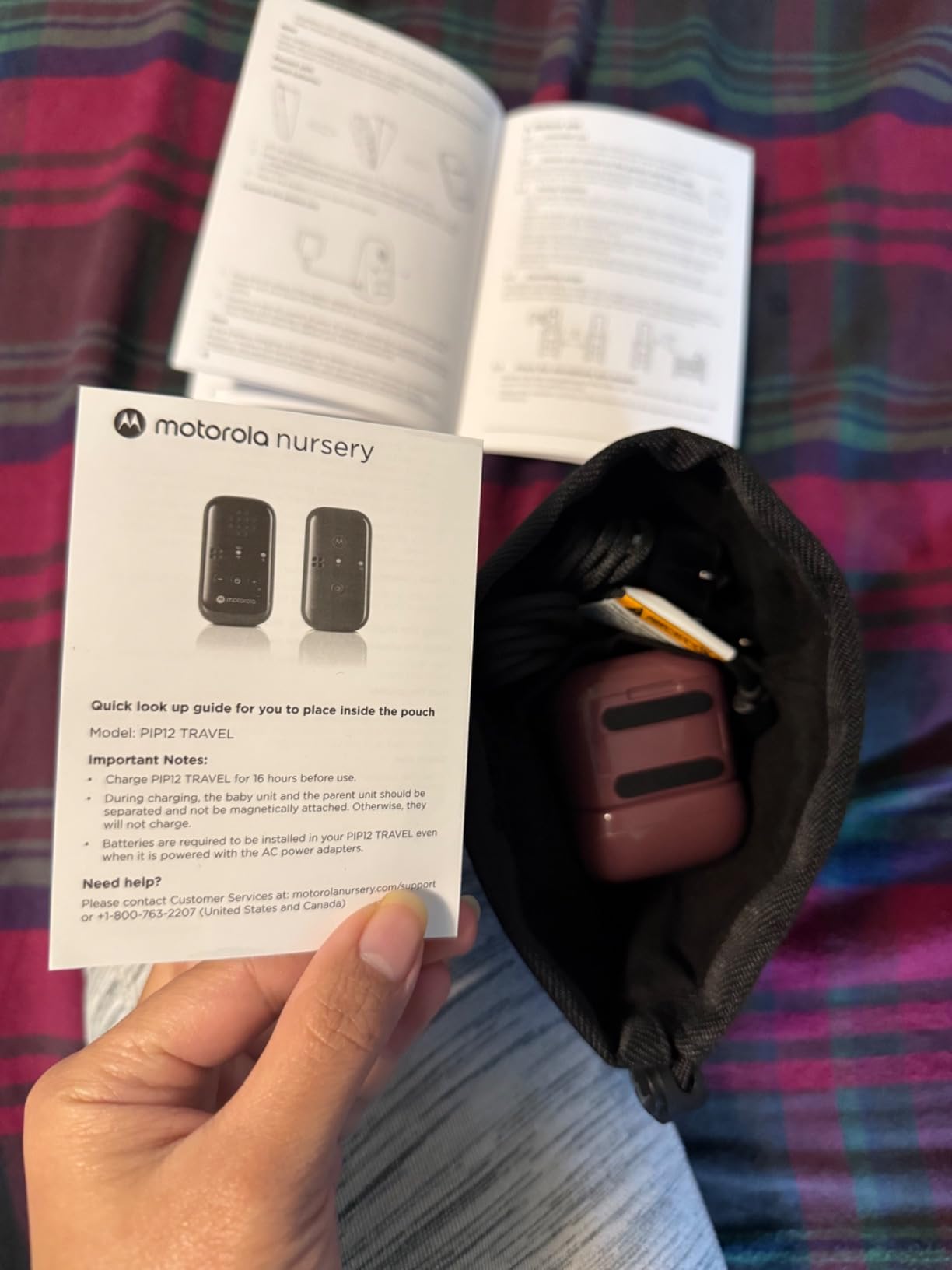
Battery life is where this one pulls clear of the field, and battery life is the failure mode that ruins sleep most reliably. Rechargeable USB-C cells give up to 10 hours on both units, and the parent unit docks magnetically. No battery shopping, no cell swapping at midnight, and a full night is one charge.
It is also the loudest-sounding option in this list by owner report, with reviewers noting the volume carries over a shower or a television. If your household runs loud and you would rather have headroom on the volume dial than a monitor that whispers, that matters. It also has two-way talk, which reviewers describe as natural-sounding to children and useful for settling without entering the room.
Range is listed at up to 1500 feet, the highest figure here, with an out-of-range alert so you know the moment the link drops. The water-resistant travel case is included, and plenty of owners use this as a camping or grandparent’s-house monitor rather than a nursery unit.
Why the PIP12 suits a light sleeper on the move
Two weeks in a hotel or at a relative’s house is exactly when a WiFi monitor becomes a liability, and this one needs no app, no account and no pairing. USB-C means one cable for the phone and the monitor, and the magnetic dock makes it a one-handed move between rooms.
The combination of a rechargeable parent unit and strong volume means you can run the speaker low most of the night and turn it up when you need to, which is the behaviour a light sleeper wants. Range holds up across a large, multi-floor home in owner reports, though not through heavy obstruction.
Where the PIP12 disappoints
Real-world battery life sometimes falls short of the stated 10 hours, so treat that as a ceiling rather than a guarantee. Range also drops noticeably through walls compared with the 1500-foot headline, so the figure is best read as open-air reach.
Two smaller irritations show up repeatedly. The baby unit beeps loudly if you plug it in while it is switched on, which is exactly what you do at bedtime. And the magnetic back is weak for hands-free placement, so it needs a surface rather than a hand.
There is no vibration alert or LED sound bar here, which is the trade for all the battery and volume capability. If silent alerting is your top priority, look at the VTech options.
6. Motorola Nursery PIP10 Sound-Activated DECT Monitor
Motorola Nursery Audio Baby Monitor, No WiFi, 1000ft Range, Cry Detection, Portable Parent Unit, DECT, PIP10
- DECT connection, 1000ft range
- Sound-activated transmission
- Volume control with mute
Pros
- Sound-activated transmission stays silent until the baby reaches a meaningful level
- Cheap
- simple and reliable with no WiFi
- app or account
- DECT connection holds across two floors and through multiple walls
- Lightweight 0.3 kg parent unit with volume control and mute
- LED indicators for power
- out-of-range and mute on both units
Cons
- One-way audio only with no talk-back to the baby
- Parent unit batteries not included and the battery door is hard to open
- Sound can be crackly and maximum volume fairly low
Sound-activated transmission is the defining feature here, and reviews describe its behaviour in exactly the terms a light sleeper cares about: the channel stays silent until the baby reaches a meaningful decibel level, which avoids relaying white noise or house noise all night. Nothing else in this list gates quite this decisively, and it is an inexpensive way to get that behaviour.
The rest is a competent no-frills DECT monitor. Listed range is 1000 feet across five channels, and owners report the connection holding across two floors and through multiple walls. The parent unit weighs 0.3 kg, has direct volume control with a mute option, and shows LED indicators for power, out-of-range and mute on both units.
The warranty is the longest stated in this group, at 26 months for quality-related issues, which is worth something given the reliability complaints the cheaper models attract.
Why sound activation beats a low volume for sleep
Turning the volume down is an incomplete fix, because a monitor at low volume still transmits everything the microphone picks up, including the creak, the pipe and the partner’s breathing. A sound-activated unit removes the signal before it reaches you at all. For a light sleeper whose problem is not volume but interruption, that is the more effective lever.
Reviews also note that the gating is why this monitor is often chosen as a secondary unit for a relative or a partner sleeping elsewhere in the house. You get told about a real cry and nothing else.
Where the PIP10 falls short
It is one-way only, with no talk-back, so you cannot settle your baby by speaking. Maximum volume is described as fairly low and the sound as sometimes crackly, so it is not the choice for a loud household.
The battery compartment is genuinely annoying, with owners reporting the door is very hard to open and that batteries are not included. Some units emit random beeps or lose connection and beep until reconnected, and others disconnect entirely when the room goes silent, which defeats the continuous monitoring you may still want during a quiet stretch. If a monitor that goes dead in a silent room bothers you, the 8 percent of 1-star ratings reflect it.
How We Evaluated These Monitors
Every product here is sound-only, which means the screen and app comparison that dominates most monitor reviews simply does not apply. We evaluated these six on the criteria that decide whether a monitor helps or harms a light sleeper’s night.
Sensitivity and gating: does the unit keep quiet through house noise, or does it transmit everything above a low threshold? Does it have adjustable sensitivity, sound activation, or active filtering, and how do owners describe its behaviour with a white noise machine running?
Silent alerting: is there a vibrating alert, a visual sound-level indicator, or neither? A monitor that can only tell you something by making a noise is a monitor that wakes your partner.
Power and reliability: rechargeable or disposable cells, listed runtime, and whether the baby unit survives a power cut. We also weighed how long each model has been on sale and how deep its review pool is, because an unreviewed unit is an untested unit.
Everyday handling: one-button controls usable in the dark, belt clip or kickstand, and whether the unit is easy to move between rooms or pack for travel.
Buying Guide: What Light Sleepers Should Look For
Start with silent alerting, because it is the only feature that can stop the monitor from waking the person next to you. A vibrating alert plus an LED sound bar means you can run the speaker volume at its lowest setting or off and still know the baby is stirring. Only four of the six monitors here offer both.
Second, decide how you want the signal gated. Continuous open-mic audio tells you everything including the things you would rather not know. Sound-activated mode waits for a meaningful threshold and is the quietest option. Active noise filtering, as on the DM271-102, is a third approach that works when a white noise machine is running. There is no single right answer, but you should be able to say which mechanism you are relying on.
Third, think about volume headroom rather than volume. A monitor rated at 30 dB that gets drowned out by running water is less useful than one that clears household noise, because the alternative is turning it up at 2am. The PIP12 is the model reviewers describe as loud enough to hear over a shower.
Fourth, count the adults who need to listen. Two parent units let you split the night so nobody is permanently on call. If you are a shift-working household, that is worth more than any feature on this list.
Finally, treat battery type as a sleep feature. A rechargeable parent unit removes the single most common 3am failure, and one owner account on r/BabyBumps described a monitor that is still working reliably after three years, which is the kind of long-term durability that matters more than feature count.
Tuning a Monitor So It Stops Waking You
Most false-alert frustration is a setup problem, not a product problem. These five steps fix the majority of it.
Start at the least sensitive setting your unit offers and leave it overnight. You are establishing a floor, and the aim is a night with no alerts rather than a night where nothing is missed.
If a sound machine is running in the nursery, raise sensitivity one step at a time and stop at the first level where you still hear a real cry. If your unit has active filtering rather than sensitivity steps, use that as your baseline and leave the dial alone.
Switch on silent alerts before you tune anything else. Set the vibrating alert on and drop the speaker volume to its lowest setting so the real test is whether vibration alone is enough to get you up.
Agree a signal with your partner. A short buzz pattern you both recognise means you never have to raise your voice, which wakes a light sleeper more reliably than any alert tone.
Re-tune after two weeks. Babies get louder, and houses get quieter or noisier. A setting that was right at week one is usually wrong by week four.
Where to Put the Baby Unit to Cut False Alerts
The baby unit’s position does more to determine your false-alert rate than the sensitivity dial does, and this is where most of the frustration originates.
Place it away from windows, air vents and door gaps, all of which carry corridor noise and outdoor sound straight into the microphone.
Keep it off any surface that resonates. A hard shelf amplifies every footstep on the floor above, and a unit next to a radiator or vent picks up constant airflow noise.
Aim the microphone at the cot rather than the doorway. Room coverage is less important than cutting the sounds that travel in from outside the room.
Re-run the tuning steps after any repositioning. Placement and sensitivity are a matched pair, and changing one without the other is how people end up with a monitor they think is broken.
White Noise Machines and Monitor Sensitivity
A white noise machine in the nursery changes how you should think about a monitor, and this is the most common light-sleeper configuration in the category. A sound machine produces steady sound at a level most microphones treat as real audio, so on an open-mic monitor you can spend eight hours listening to a hiss.
Three approaches work. Sound-activated transmission, as on the PIP10, keeps the channel closed until the baby crosses a meaningful threshold. Active noise filtering, as on the DM271-102, treats the hiss as background and stays quiet until the baby registers. Or simply tune the sensitivity high enough that the machine falls below your trigger, which is the cheapest fix and the easiest to get wrong.
Check where the machine sits relative to the baby unit. A sound machine pointed at the nursery wall and a monitor microphone pointed the same way is a bad combination, because the machine becomes the loudest steady sound in the room from the microphone’s point of view.
DECT Versus WiFi Monitors for Light Sleepers
Every monitor on this list uses DECT or a comparable dedicated digital frequency band, needs no app and no account, and keeps working through a power cut or an internet outage. That is the core reason sound-only monitors suit light sleepers.
WiFi monitors stream through your phone, which means the audio arrives with a delay and often with compression artefacts, and the phone is the thing that runs out of battery at the worst moment. Parents on forums describe exactly this reluctance, preferring closed, dedicated systems they do not have to babysit.
DECT uses frequency hopping within its band, so the signal does not collide with other transmissions in the 1.88 to 1.90 GHz range, and the audio stays private rather than travelling across a shared wireless network. The trade-off is that you need the handset in your hand, not on your nightstand across the room.
What you give up is confirmation. WhatToExpect forum users lean toward video monitors for a reason: audio cannot tell you whether your baby is on their back, or whether a feed has stopped. If that kind of confirmation matters to you, a sound-only monitor is the wrong tool, whatever your sleep habits.
When a Monitor Is the Wrong Tool
Monitors are a convenience, not a safety system. Movement and breathing trackers such as the Owlet and Babysense are sold as SIDS risk reduction, and parents on r/BabyBumps and r/NewParents ask about them constantly, but no medical body recommends them as a way to prevent sudden infant death syndrome, and no monitor substitutes for a baby sleeping on their back on a firm, flat surface.
There is also a limit worth naming. If you are relying on a monitor because you are exhausted, the deeper fix is a support plan, not a better microphone. For some households the most useful outcome of testing these monitors is realising that the problem is staffing the night rather than hearing it.
Frequently Asked Questions
What is the best audio only baby monitor?
The VTech DM221-2 is our pick for most households. It pairs a vibrating alert and a five-level LED sound bar, so you can monitor with no sound at all, with two parent units and belt clips so two adults can share the load across the night. It runs on DECT 6.0 for interference-free audio across 1000 feet, with rechargeable parent units that remove the 3am battery problem.
Are audio only baby monitors still good?
Yes, for a lot of families they are the better choice. Audio-only monitors use DECT rather than WiFi, so there is no app, no account and no phone in your hand overnight, and they keep working when the internet does not. The compromise is confirmation, since audio cannot tell you your baby is on their back or whether a cry has stopped. For a light sleeper, no screen glow in a dark room is often the deciding factor.
How do I stop my baby monitor from false alerts?
Tune it in five steps. Start at the least sensitive setting and run a full night. Raise sensitivity one step at a time if a sound machine is running, stopping at the first level where a real cry still comes through. Switch on the vibrating alert and drop speaker volume to its lowest setting before anything else. Agree a distinct buzz pattern with your partner so you never need to speak. Re-tune after two weeks, and re-tune again if you move the baby unit.
Can an audio baby monitor wake up light sleepers?
Yes, and the design of the monitor is usually the cause rather than the volume. Continuous open-mic audio transmits every creak and pipe, so turning the volume down does not remove the problem. Sound-activated mode, adjustable sensitivity and a vibrating alert all reduce interruptions, and running a white noise machine below the trigger threshold stops the most common false alerts. The VTech DM221-2 combines all three mechanisms.
What is the difference between DECT and WiFi baby monitors?
DECT monitors use a dedicated digital frequency band with frequency hopping, so audio stays private and free of interference, and they work without an app, an account or an internet connection. WiFi monitors stream through your phone or a hub, which adds latency and compression, ties the monitor to your phone battery and network, and sometimes adds a subscription. For a light sleeper, DECT usually wins because there is no screen and no phone to manage overnight.
Final Verdict
The best audio baby monitors for light sleepers in 2026 are the ones that can tell you something without making a sound. The VTech DM221-2 takes the overall spot because it pairs a vibrating alert and a five-level LED sound bar with two parent units, which is the combination that keeps two light-sleeping adults on the same page through a whole night.
Take the Motorola PIP12 if battery life and portability come first, the PIP10 if you want the quietest gating behaviour available, and the VTech TM8212-2 if darkness in the bedroom is absolute. Whichever you pick, spend the first ten minutes tuning sensitivity and switching on silent alerts, because that setup work does more for your sleep than any feature on the box.