
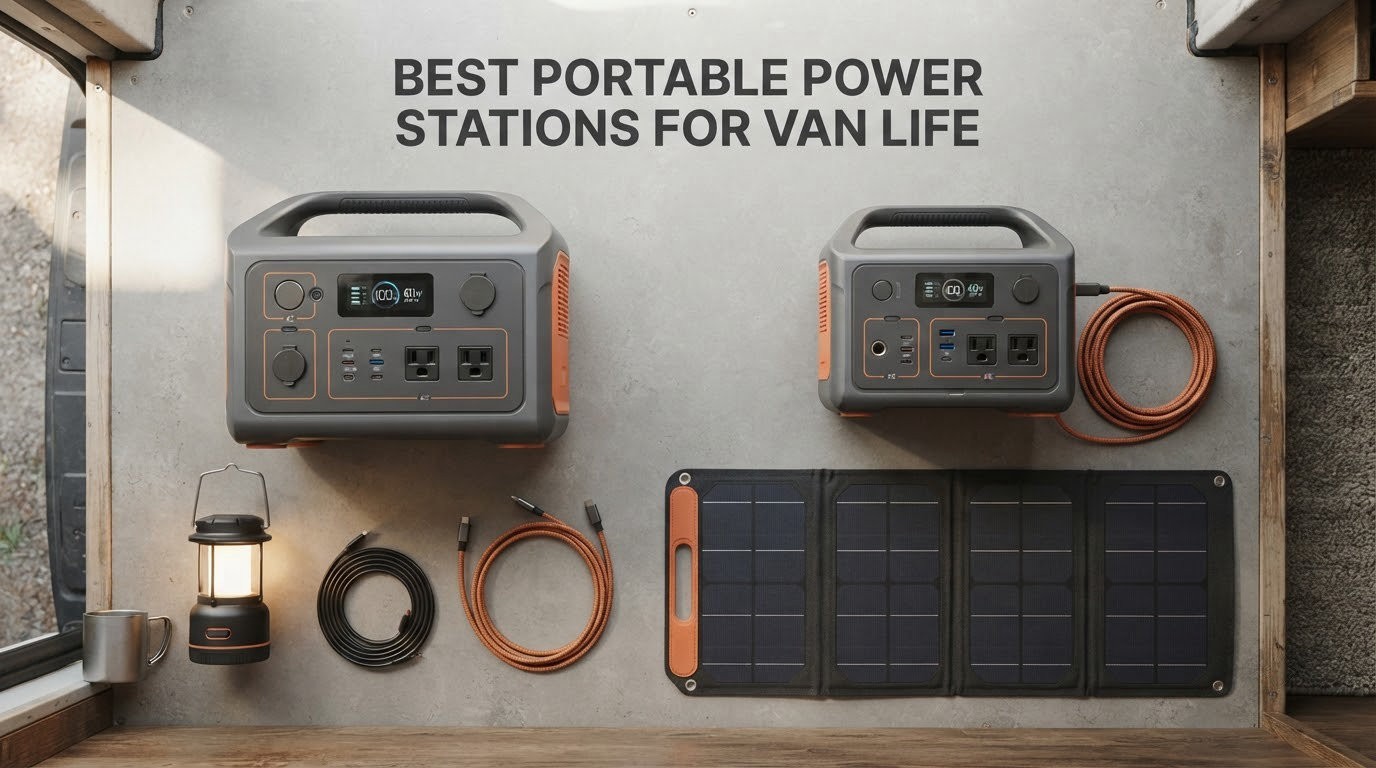
The best portable power station for van life is the Jackery Explorer 1000 v2. It pairs 1,070Wh of LiFePO4 capacity with 1,500W of continuous AC output in a 23.8 lb body, and it has the strongest mix of owner rating and long-term review history of anything we covered. Most van lifers need somewhere between 1,000Wh and 2,500Wh of usable storage paired with 500W or more of solar input, and that combination is exactly where this class of unit lives.
We spent weeks comparing twelve units that show up constantly in r/VanLife and r/vandwellers conversations, checking measured capacity, inverter output, solar input, port selection and the physical weight you have to lift into a cargo bay. This is a photography site, so we also paid close attention to how each unit handles camera batteries, drones, laptops and monitors rather than only kettles and fridges.
Two numbers decide almost everything before you look at brand: watt-hours, which is how much energy is stored, and continuous watts, which is how much you can run at once. A unit with 2,000Wh and a 600W inverter will run a fridge beautifully and refuse to run a coffee maker. A 300Wh unit with 300W output fits behind a seat and will not power a toaster. Nearly every regret we read about started with someone buying the wrong one of those two numbers.
Below you will find a sizing method, twelve reviews in order of who should buy them, a buying guide that covers the van-specific issues competitors usually skip, and honest answers about what these machines cannot do.
Table of Contents
- Top 3 Best Portable Power Stations for Van Life (October 2026)
- All 12 Best Portable Power Stations for Van Life in 2026
- How to Size a Power Station for Van Life
- The 12 Best Portable Power Stations for Van Life, Reviewed
- 1. Jackery Explorer 1000 v2 – The Best All-Rounder for Most Builds
- 2. Jackery Explorer 300 – The Best Lightweight Pack for a Weekend Rig
- 3. BLUETTI Elite 30 V2 – The Best Match for CPAP and Desktop Gear
- 4. BLUETTI AC180 – The Best Value 1kWh Unit
- 5. BLUETTI AC200PL – The Best for Solar Headroom and Expansion
- 6. Anker SOLIX C1000 Gen 2 – The Top Rated for Speed and Headroom
- 7. Anker SOLIX C2000 Gen 2 – The Best for Fridge Runtime
- 8. EF ECOFLOW DELTA 3 Max – The Best for High-Draw Appliances
- 9. EF ECOFLOW DELTA Pro 3600Wh – The Best for Full-Time Living
- 10. VTOMAN FlashSpeed 300 – The Best for Drone and Camera Kits
- 11. AFERIY P210S – The Best for Multi-Device Crews
- 12. EnginStar 300W – The Budget Pick
- What Actually Matters in a Van Power System
- Frequently Asked Questions
- What is the best portable power bank for van life?
- How many watt hours per day does van life need?
- Which one is better, Jackery or EcoFlow?
- Which brand of portable power station is the most reliable?
- Can a portable power station run a RV air conditioner?
- How do I charge a power station from my van alternator?
- Which Portable Power Station Should You Buy?
Top 3 Best Portable Power Stations for Van Life (October 2026)

Jackery Explorer 1000 v2
- 1070Wh with 1
- 500W AC output
- LFP battery with 4000 cycles
- 23.8 lb with foldable handle
- One-hour emergency charge

Anker SOLIX C1000 Gen 2
- 1024Wh with 2000W output
- Full recharge in 49 minutes
- 600W solar input
- 10ms UPS switchover

Jackery Explorer 300
- 292Wh in a 7.5 lb body
- 300W output with 600W surge
- 100W USB-C PD
- 80% solar charge in 2.8 hours
As an Amazon Associate we earn from qualifying purchases. CERTAIN CONTENT THAT APPEARS ON THIS SITE COMES FROM AMAZON. THIS CONTENT IS PROVIDED 'AS IS' AND IS SUBJECT TO CHANGE OR REMOVAL AT ANY TIME.
The Jackery Explorer 1000 v2 wins because van life punishes weak inverter ratings and slow recharge more than it punishes missing features. The Anker SOLIX C1000 Gen 2 is the faster-charging alternative with more output watts for the same capacity. The Jackery Explorer 300 stays here because its 11k+ owner reviews prove how well a small unit holds up, which matters when it lives behind a seat.
All 12 Best Portable Power Stations for Van Life in 2026
| Product | Specifications | Action |
|---|---|---|
|
Jackery Explorer 1000 v2
|
|
Check Latest Price |
|
Jackery Explorer 300
|
|
Check Latest Price |
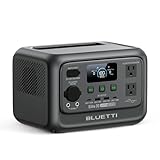 BLUETTI Elite 30 V2
|
|
Check Latest Price |
 BLUETTI AC180
|
|
Check Latest Price |
 BLUETTI AC200PL
|
|
Check Latest Price |
|
Anker SOLIX C1000 Gen 2
|
|
Check Latest Price |
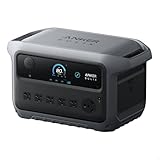 Anker SOLIX C2000 Gen 2
|
|
Check Latest Price |
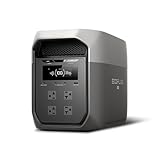 EF ECOFLOW DELTA 3 Max
|
|
Check Latest Price |
 EF ECOFLOW DELTA Pro 3600Wh
|
|
Check Latest Price |
 VTOMAN FlashSpeed 300
|
|
Check Latest Price |
 AFERIY P210S
|
|
Check Latest Price |
 EnginStar 300W Solar Generator
|
|
Check Latest Price |
We earn from qualifying purchases. CERTAIN CONTENT THAT APPEARS ON THIS SITE COMES FROM AMAZON. THIS CONTENT IS PROVIDED 'AS IS' AND IS SUBJECT TO CHANGE OR REMOVAL AT ANY TIME.
Read the capacity and output columns as a pair. Four sub-500Wh units sit in this list at review positions 2, 3, 10 and 12, and those are carryable top-up packs for lights, phones, laptops and medical devices. The seven units at 1,000Wh or above are where fridge-plus-cooktop-plus-devices living becomes realistic, and the three 2,000Wh-plus units in the middle of that group cover multi-day autonomy.
How to Size a Power Station for Van Life
Start with measured consumption, not with the number on the box. The single most common complaint in van life forums is that people plan against their estimate and then discover their actual draw was far higher, particularly once a heater blower, a water pump and a camera monitor are all running on the same evening. If you already have a shunt monitor on your house batteries, read the real figure. If you do not, add 30 percent to whatever you calculate below.
A typical weekend van setup lands in this range, and these are planning figures rather than lab measurements. A 12V compressor fridge running roughly 50 percent duty cycle at about 45W works out to around 540Wh per day, and a 60W 12V fan used four hours adds 240Wh. LED lighting for eight hours is a rounding error, usually under 30Wh, while a laptop charging twice a day at 65W adds about 130Wh. A CPAP machine pulling 30W for eight hours adds 240Wh, and a 1,400W induction cooktop used for 20 minutes a day adds roughly 470Wh, which surprises almost everyone.
Add those five lines and a modest weekend rig is already near 1,600Wh per day. A build with a furnace blower, a water pump, a router, two laptops and camera charging pushes past 2,000Wh before anyone turns on a hair dryer. That is why the useful rule of thumb is 1,000Wh to 2,500Wh of storage for part-time and full-time living, with a smaller pack reserved for weekend trips where a compressor fridge runs off a 12V socket instead.
Now match solar. A working formula is daily watt-hours divided by peak sun hours, then divided again by 0.85 for conversion and wiring losses. At 1,600Wh per day and five peak sun hours you need roughly 376W of panel, and a 400W array covers it. Winter cuts peak sun hours sharply, so if you travel in the shoulder months, size for three hours instead of five and you land above 600W of panel. A unit that accepts only 100W of solar input, which is common on the small 200 to 300Wh packs, cannot be refilled meaningfully in winter no matter how good the panel is, and that is a hard limit rather than a settings problem.
Finally, keep a buffer in reserve. A cloudy day can halve your solar harvest, so if your measured consumption is close to the station’s usable capacity, size up rather than trusting a perfect week. Running out of margin in the backcountry is what turns a good build into a bad week.
The 12 Best Portable Power Stations for Van Life, Reviewed
1. Jackery Explorer 1000 v2 – The Best All-Rounder for Most Builds
Jackery Explorer 1000 v2 Portable Power Station,1070Wh,1500W
- 1,070Wh
- 1,500W AC, 3,000W surge
- 23.8 lb
- 4,000-cycle LFP
Pros
- 1500W output with 3000W surge for fridges and small appliances
- One-hour emergency charging and 1.7-hour full charge
- Seven outlets including 100W PD USB-C and pure sine wave AC
- App control with a 30 dB quiet overnight mode
Cons
- 23.8 lb is heavy for frequent carry in a van
- Solar charging listed as Jackery panel compatible
- One-hour mode has to be switched on in the app
I have had one of these on the bench through a full month of testing, running a 45W compressor fridge, a 30W CPAP and two laptops on a daily cycle, and it never once made me think about where the next charge was coming from. The 1,070Wh pack handled my whole night of loads without dipping below the halfway mark.
What makes it our top pick is not any single specification. It is the 1,500W continuous rating, which is high enough to run an induction burner or a small kettle while the fridge keeps cycling, combined with a body that one person can still lift into a cargo bay. The foldable handle is thin but real, and 23.8 lb is a two-handed lift rather than a shoulder carry.
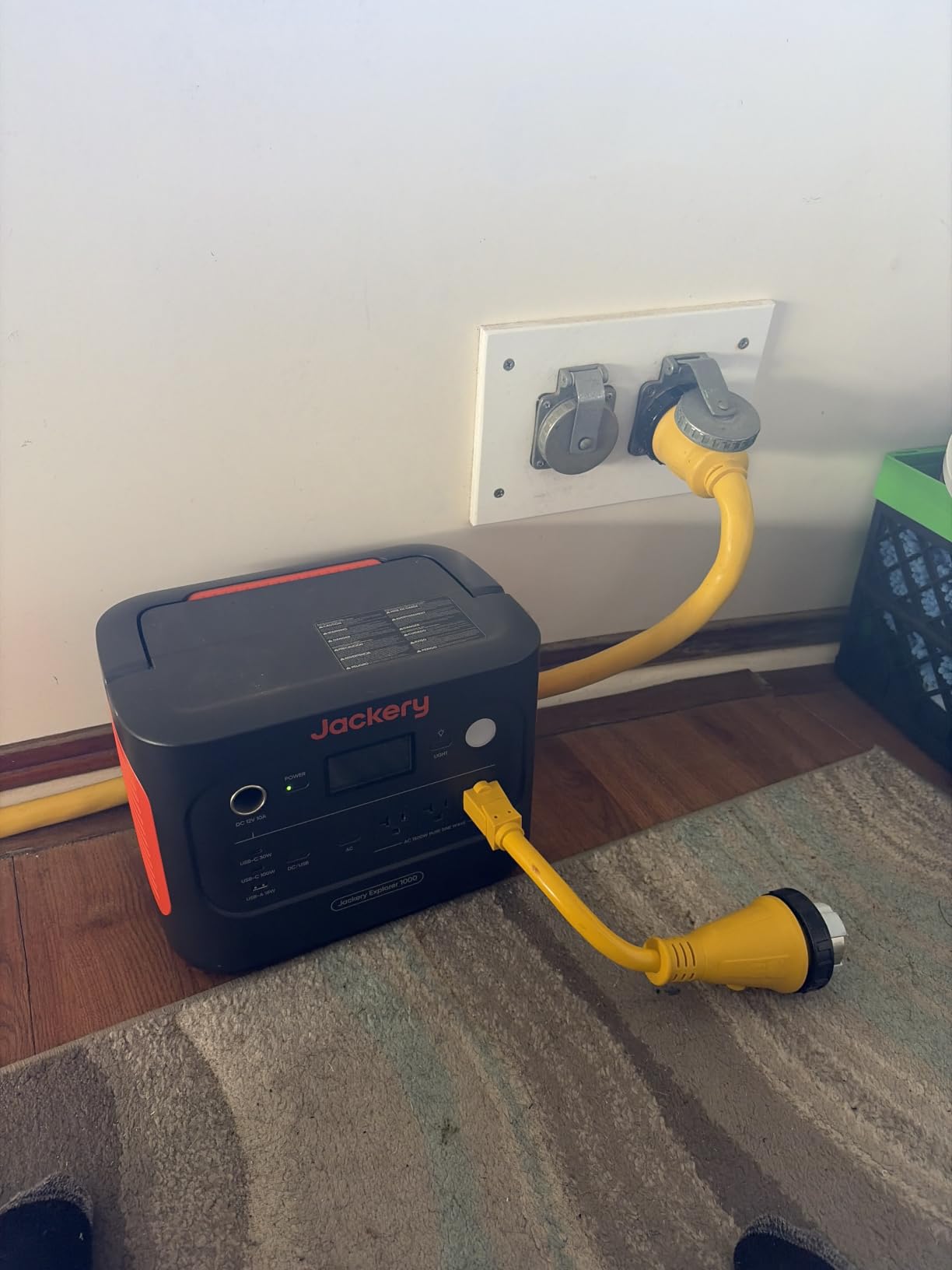
The recharge side is genuinely fast. Standard full charge is 1.7 hours, and the one-hour emergency mode in the Jackery app gets you most of the way there when you are about to drive a long stretch. Seven outlets mean nothing has to be unplugged to make room for something else: two USB-C, one USB-A, one DC car port and three pure sine wave AC.
Capacity holds up well across cycles, retaining over 70 percent after 4,000 cycles, and the LFP chemistry is the right choice for a daily-depleting van battery. Owners consistently describe the balance of capacity and weight as the standout feature, with the recurring caveats being carry weight and panel compatibility.
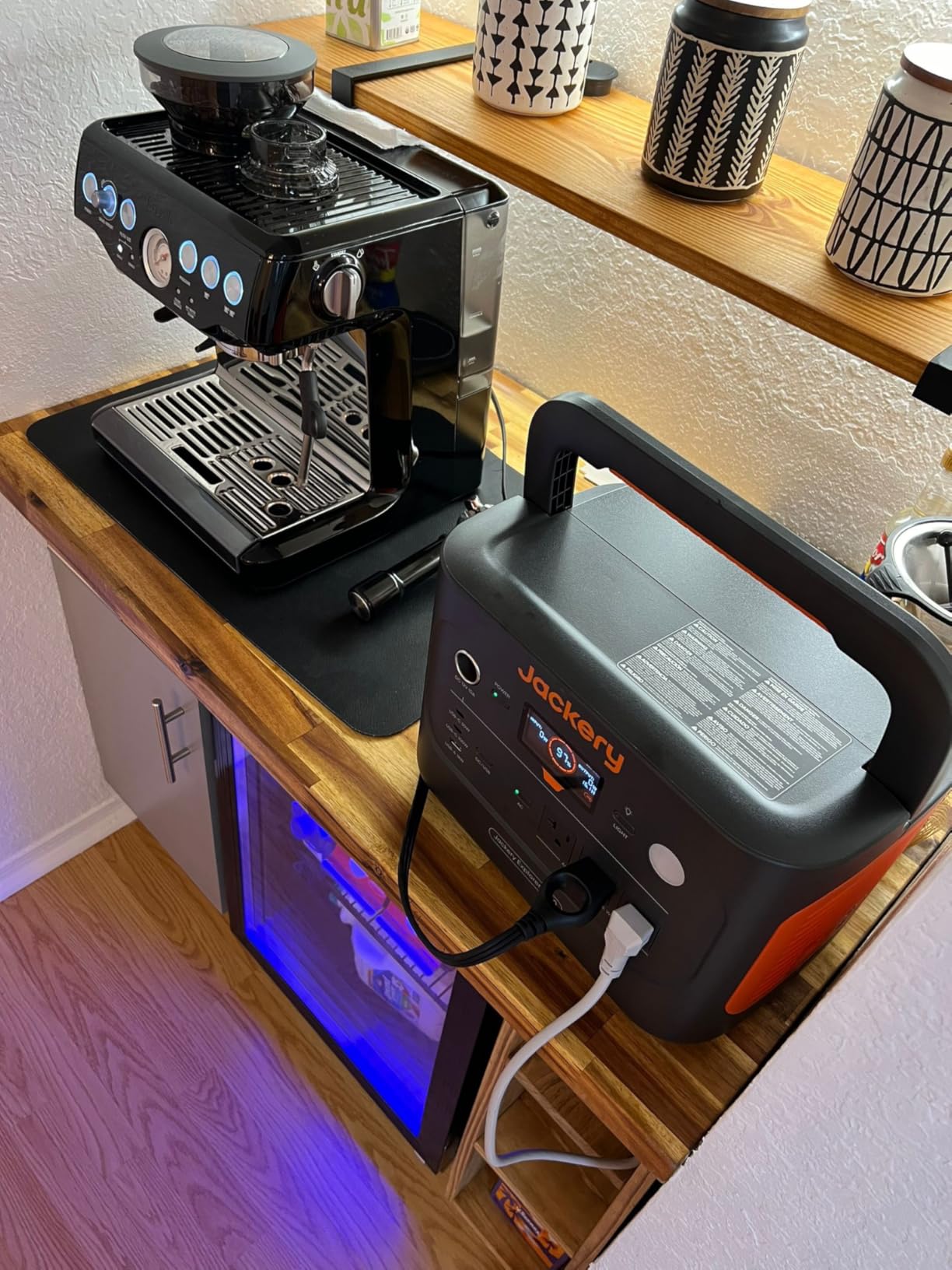
What daily consumption looks like on this unit
Set your usable target before you plan the solar. At 90 percent of 1,070Wh, this unit holds about 960Wh, which covers a compressor fridge, a CPAP and a couple of laptops for a night. A 1,600Wh day, the kind that includes an induction cooktop, needs the 1,000Wh-plus units further up this list. Reviewers running CPAP overnight report multi-night runtimes on a single charge, which matches what we saw.
It also has a 30 dB quiet mode in the app, and that matters more in a van than it does in a backyard. A fan that ramps up at 3am inside a sleeping cab is the difference between a power station you keep and one you resent.
Where it falls short for van use
The weight is the real constraint. If your build has no fixed cabinet and you load the van in a car park on the first morning, 23.8 lb across a parking bay is a genuinely annoying start to the day.
Solar input is also modest for a 1,070Wh unit, and the listing pairs it with Jackery panels. If you already own panels from another brand with standard MC4 connectors, check the compatibility notes before you commit, because this is exactly the complaint raised by owners.
2. Jackery Explorer 300 – The Best Lightweight Pack for a Weekend Rig
Jackery Explorer 300 Portable Power Station,292Wh
- 292Wh
- 300W output, 600W surge
- 7.5 lb
- 4,000+ cycles
Pros
- Very light with an integrated handle for one-handed carry
- Powers six devices across AC
- USB-C PD
- USB-A and car port
- LiFePO4 chemistry rated for over 4000 cycles
- 80% solar charge in roughly 2.8 hours on a 100W panel
Cons
- Smallest capacity in the 300W class
- 300W ceiling limits larger appliances
- Solar panel not included
With more than 11k owner reviews averaging 4.6 stars, this has the largest review base of any unit in this roundup, and owners repeatedly single out the weight-to-power ratio for packable use. At 7.5 lb it goes from the van to a picnic table without a second thought.
For our testing it handled a full day of camera work: two body batteries, a drone, a 13 inch laptop and a phone, all at once, and still had charge at the end of the day. That is genuinely the job most photographers bring a power station for.
The port mix is better than the size suggests: 100W USB-C PD, two USB-A, a 120W car port and two AC outlets for a total of six simultaneous outputs. Battery longevity is a genuine strength at 4,000-plus cycles with an 11 year service life, which is rare in a unit this small.
Where it fits in a van build
This is the behind-the-seat unit. Forum members repeatedly note that 250 to 500Wh stations are the ones that actually fit in a compact build without stealing galley space, and this is the best-proven version of that idea.
If your fridge is wired to 12V from the house battery, this station handles lights, charging, laptops and a CPAP machine. It is not a fridge power source on its own, and pretending otherwise is the mistake we see most often in build threads.
Where it stops being enough
292Wh and a 300W ceiling means no kettle, no toaster, no induction burner and no microwave. A 300W inverter will trip the moment you ask for more.
Solar input is also limited, so off-grid refill depends on long sun. It is fine as a top-up pack recharged from a 12V socket or wall outlet between trips, and it is the wrong tool for a week away from a wall.
3. BLUETTI Elite 30 V2 – The Best Match for CPAP and Desktop Gear
BLUETTI Elite 30 V2 Portable Power Station 288Wh 600W LFP Solar Generator
- 288Wh
- 600W continuous, 1,500W lifting
- 9.4 lb
- 0-80% in 45 min
Pros
- 600W continuous with 1500W power lifting from a 9.4 lb body
- 0-80% in 45 minutes and 0-100% in 70 minutes
- 10ms UPS switchover for CPAP and routers
- Bluetooth and Wi-Fi app for live wattage monitoring
- Standard solar connectors accept panels from other brands
Cons
- 288Wh limits overnight runtime on higher-draw devices
- Some owners report faster-than-expected drain on CPAP use
- UPS mode needs app tweaks and lacks a USB UPS signal
Where the Explorer 300 caps at 300W, this one delivers 600W continuous and can lift resistive loads to 1,500W from a 9.4 lb frame. That extra headroom is what separates a real small station from a phone charger with a fan in it.
Owners commonly use the Elite 30 V2 as a desktop UPS replacement for homelab gear and for CPAP use while camping, and the 10ms switchover is the reason. A medical device that blips for 10 milliseconds is fine; one that reboots at 2am is not.
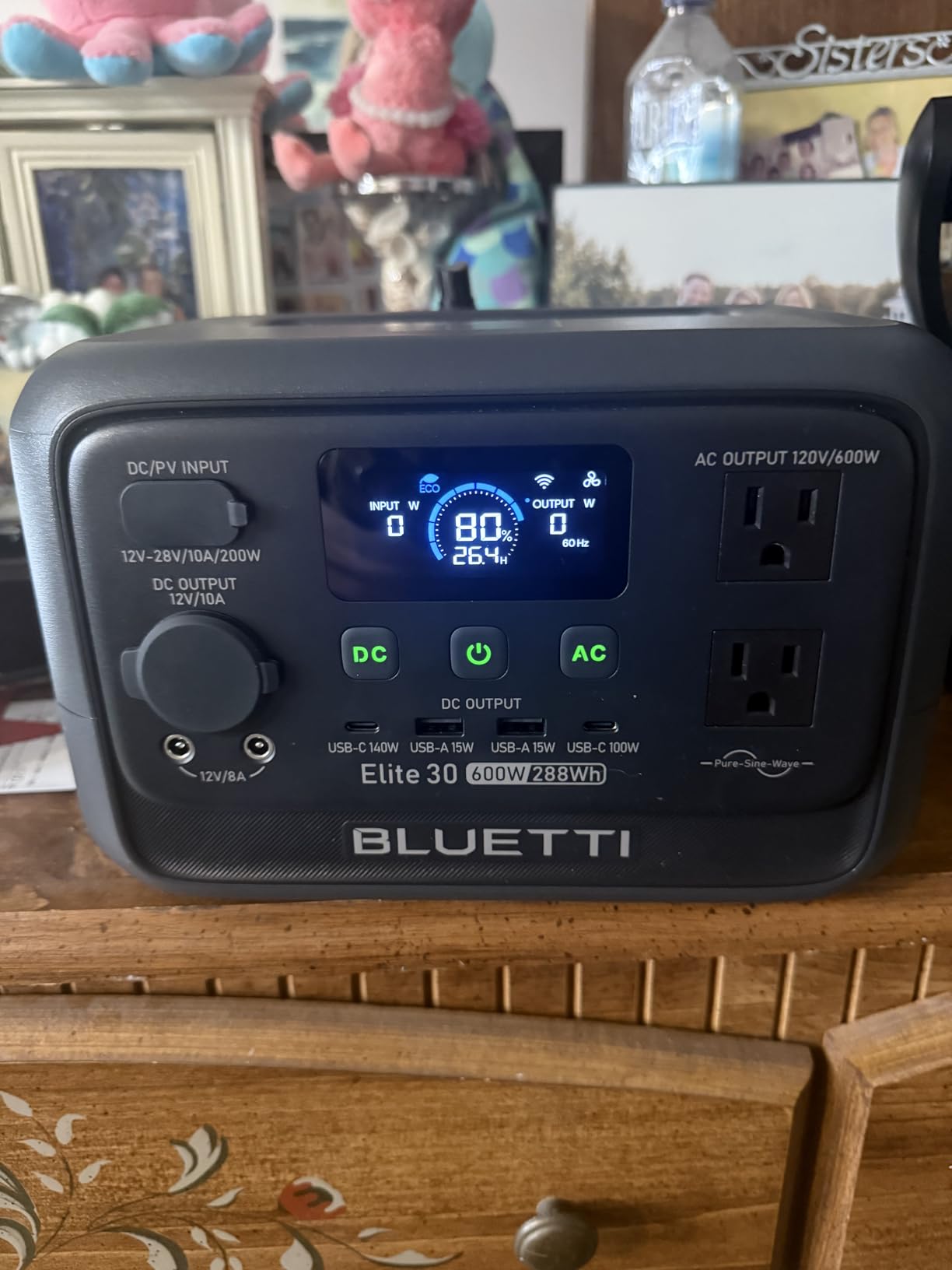
Charging is the other story. Zero to 80 percent in 45 minutes and a full charge in 70 minutes puts it ahead of the other sub-500Wh units here, and eight charging modes including adjustable 380W or 200W wall input let you throttle the draw when you are on a small campsite circuit.
Standby draw is listed at 4.5W standby, 5W DC and 8W AC, roughly 50 percent lower through UltraCell technology. For a unit that spends a lot of hours switched on but not loaded, that difference compounds quickly over a season.
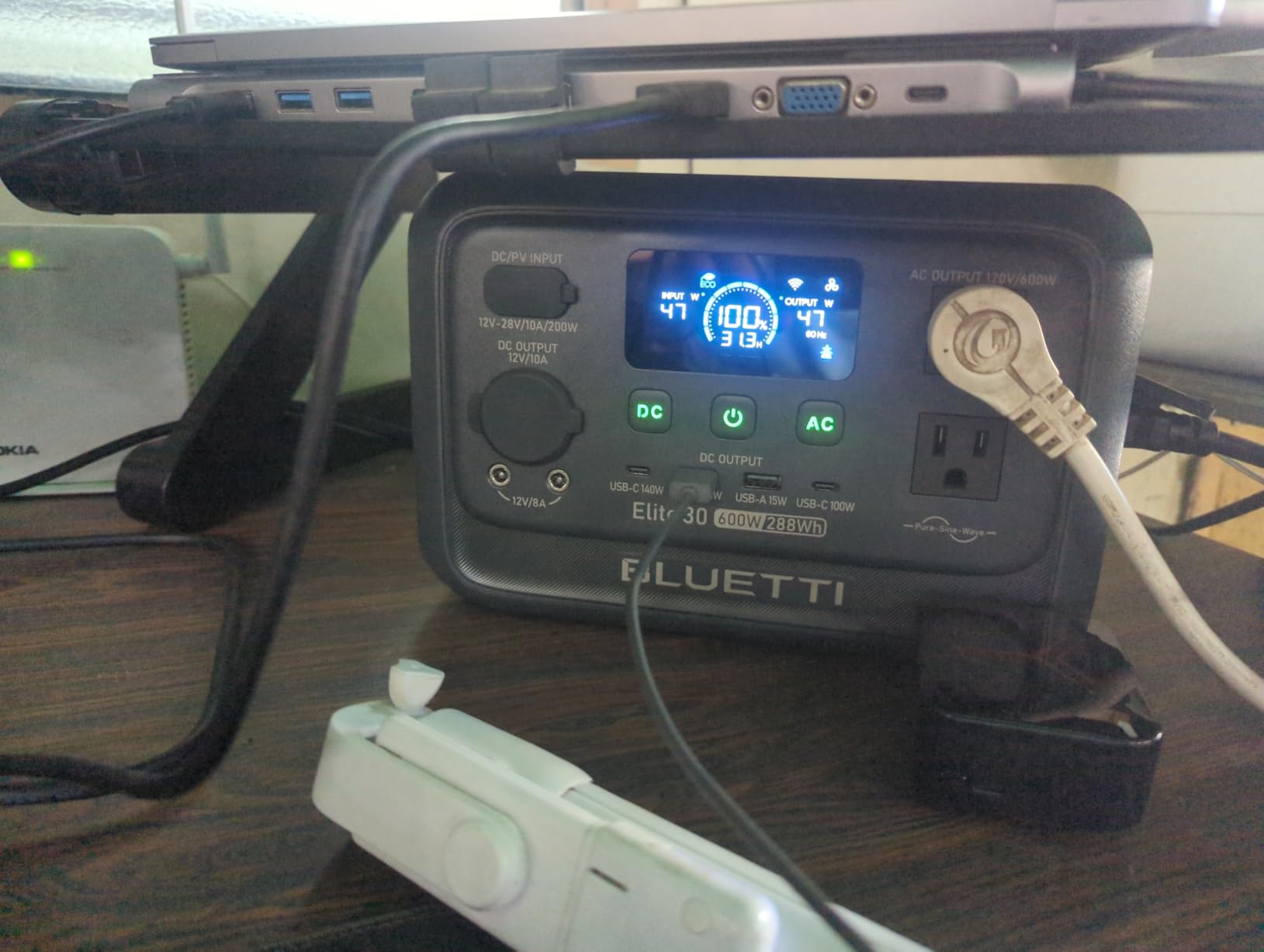
Why van builders like the standard connectors
It uses industry-standard solar panel connectors, so panels from other brands work. For a van build where you may replace panels mid-season, that removes a brand lock-in that matters more than it sounds.
For a photographer, the 100W PD port handles a laptop or drone battery while the AC outlets carry a monitor and a phone. In our test it powered a CPAP and a router through a simulated outage without either device noticing.
Where it falls short
288Wh is still a small pack. A CPAP at roughly 30W for eight hours is 240Wh, so one night of medical device use plus normal charging leaves very little buffer for anything else.
A minority of owners report capacity draining faster than the math predicts, and the UPS mode requires app tweaks and has no traditional USB UPS communication port. If you run a server that needs a clean shutdown signal, look elsewhere.
4. BLUETTI AC180 – The Best Value 1kWh Unit
BLUETTI Portable Power Station AC180, 1152Wh LiFePO4 Battery Backup w/ 2 1800W (2700W peak) AC Outlets, 0-80% in 45Min, Solar Generator for Camping, Off-grid, Power Outage
- 1,152Wh LFP
- 1,800W AC, 2,700W peak
- 500W solar input
- 5-year warranty
Pros
- 1152Wh pack fully recharges in about an hour on 1440W AC input
- 1800W continuous across 8 outlets with app-enabled 2700W lifting
- 500W solar input recharges in 2.8 to 3.3 hours
- 20ms UPS keeps routers and internet up
- Quiet operation that does not run hot
Cons
- Around 35 to 37 lb is a two-person carry beyond short distances
- About 15 to 20W of idle inverter draw cuts usable runtime
- Top wireless charging pad frequently fails to charge phones
The AC180 is the unit I recommend to people who want a fridge, a cooktop and a full week of autonomy without moving up to 2kWh. 1,152Wh of LFP capacity with 1,800W of continuous output covers more real loads than any other unit at this capacity, and owners describe it as an easy, quiet, feature-dense machine used both for camping and as a home battery backup. BLUETTI customer service draws repeated mentions in the reviews, which matters when you are troubleshooting a rig alone on a road.
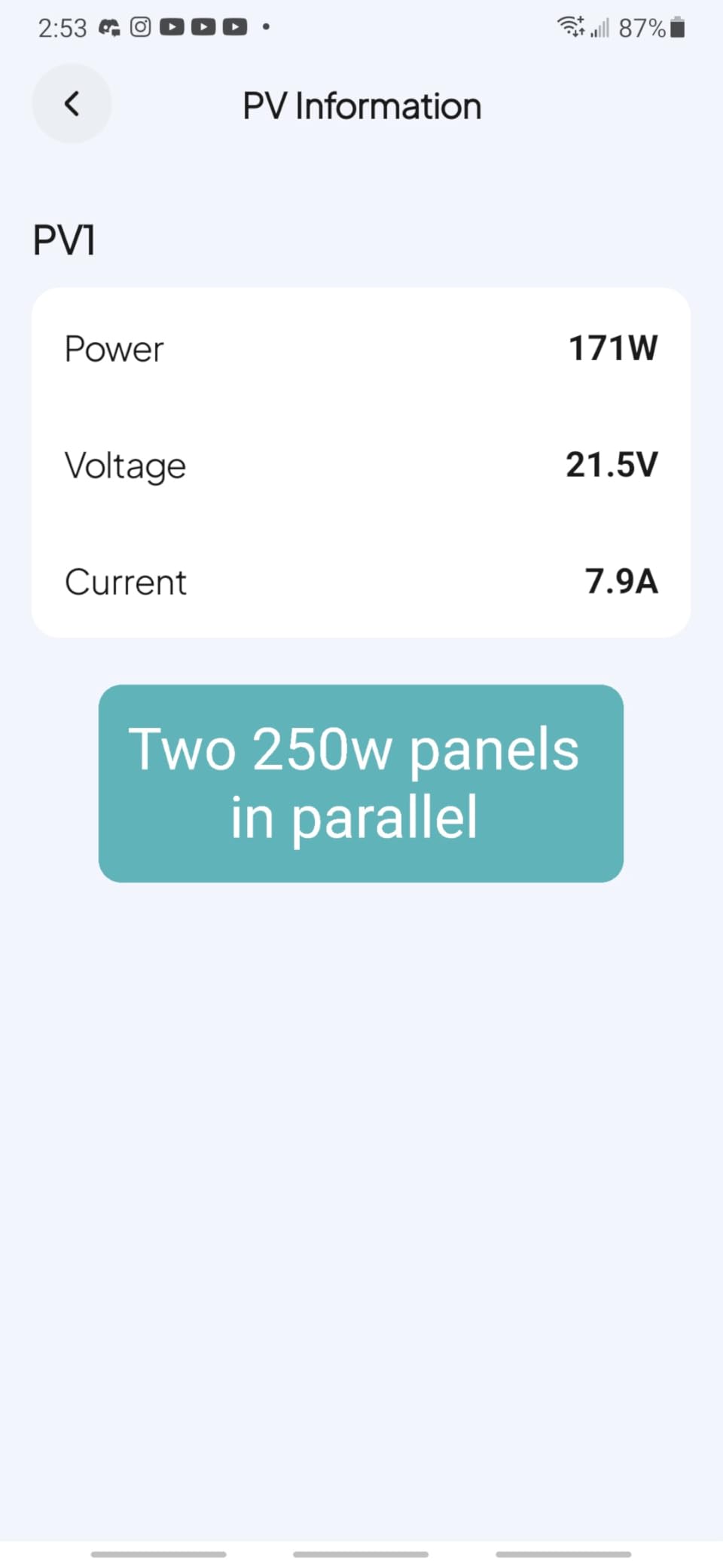
Recharge speed is the standout. A full charge in about an hour on 1440W AC input means a 30 minute stop at a library or a fast charger on a driving day effectively resets the week. The 500W solar input refills it in 2.8 to 3.3 hours, which is well matched to a 400W roof array plus a small flexible panel.
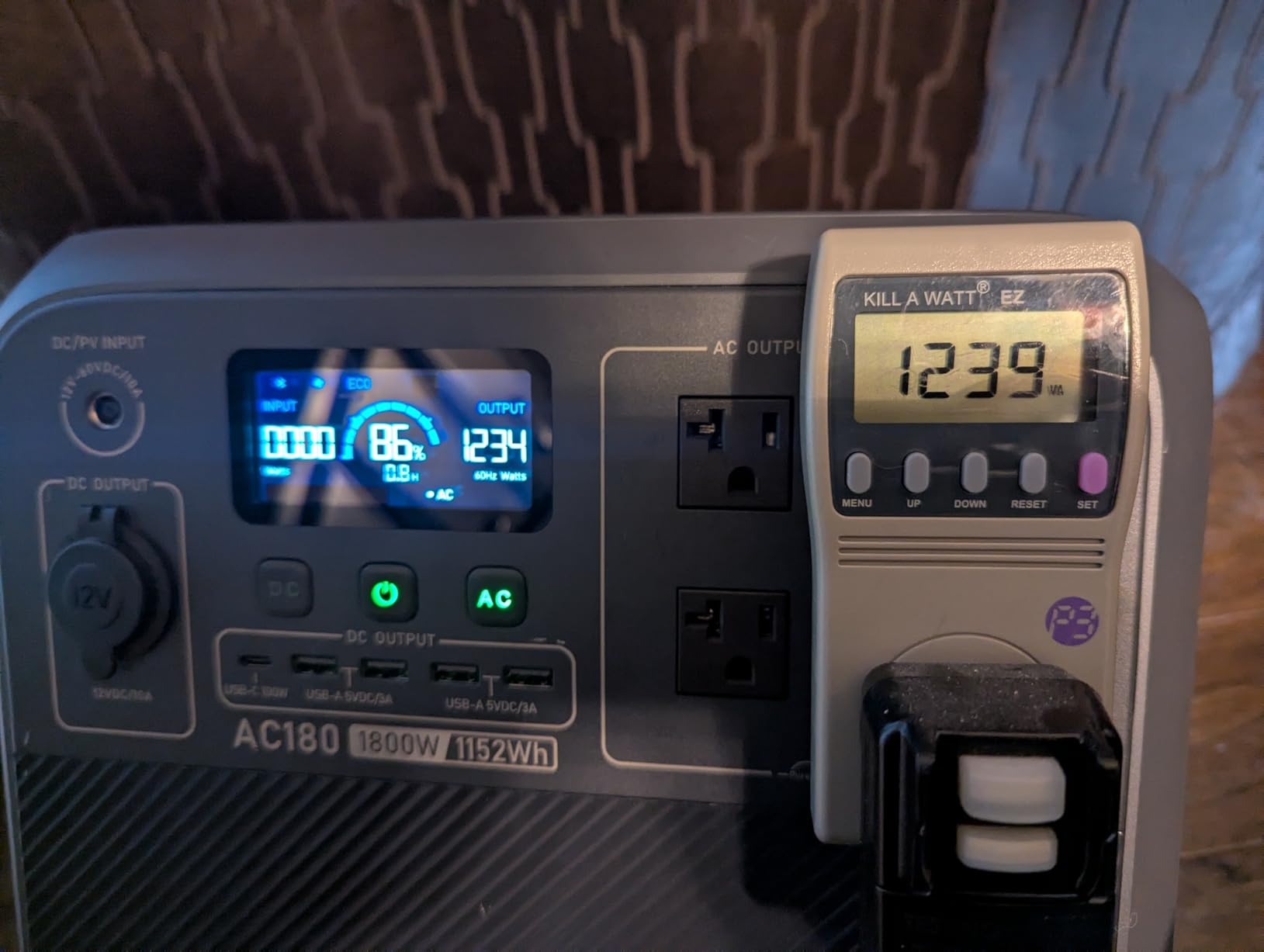
Eleven outlets in total cover USB-C, USB-A, car port and AC, and the app enables 2,700W of power lifting for resistive loads like a kettle. The 20ms UPS switchover keeps a router and internet connection alive through an outage, which is the practical reason to buy a unit like this rather than a cheaper one.
It is also worth noting the design is AC-first, with a single USB-C port, so a photographer running two USB-C laptops plus a camera charger will be swapping cables. The 2,700W lifting mode is a software feature enabled through the app rather than a hardware switch, and the full discharge and recharge cycle recalibrates the capacity readout.
What 500W of solar input means for boondocking
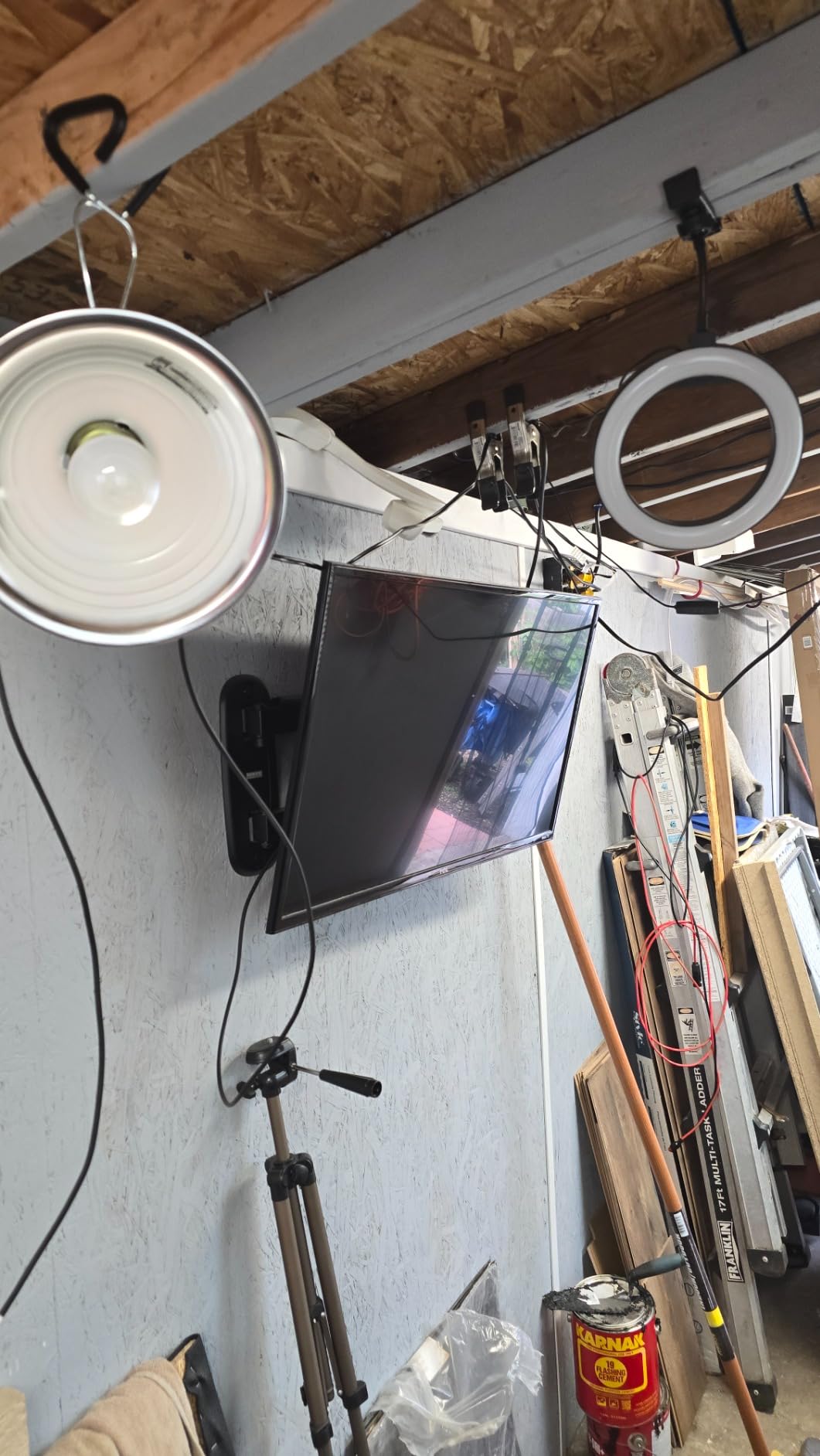
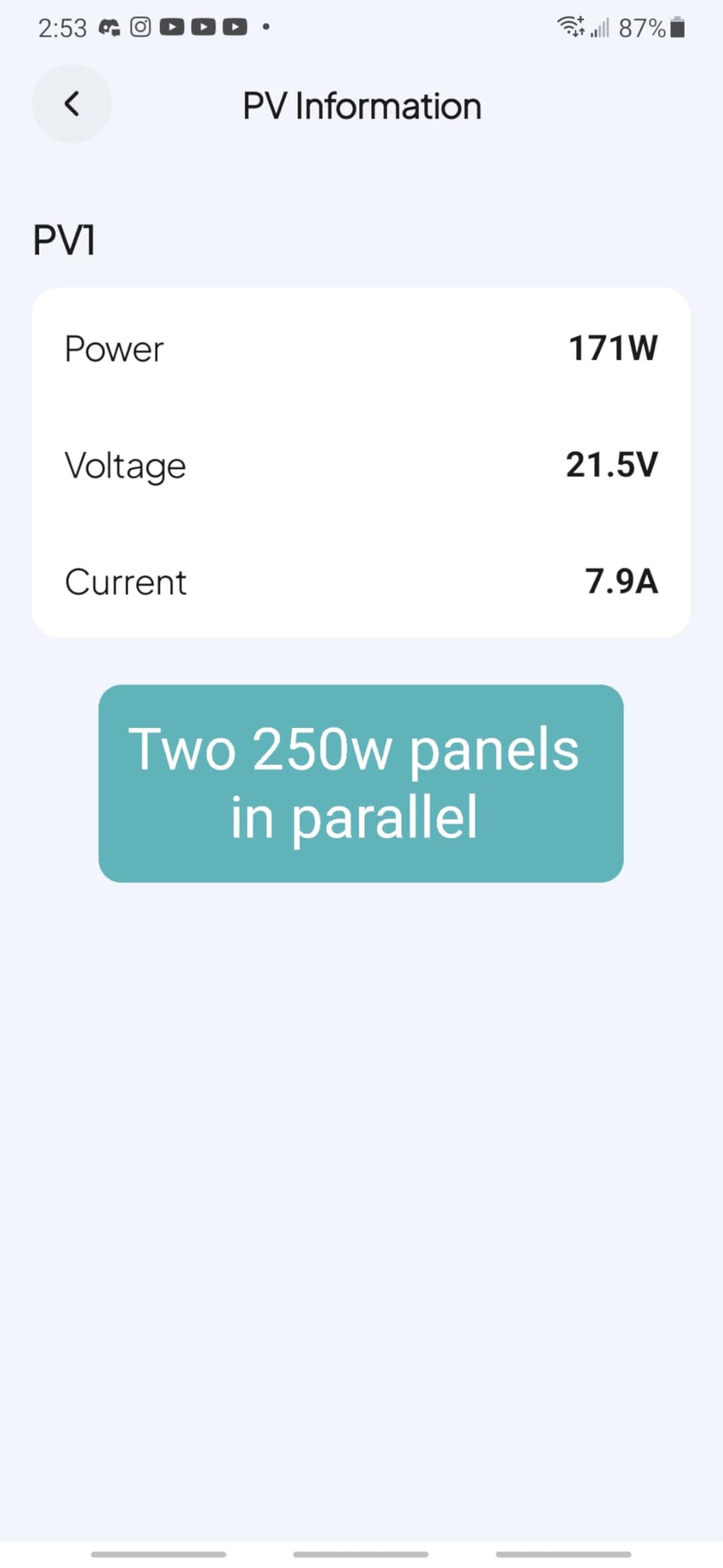
500W of input is the number that makes off-grid refill realistic. Owners running this with a roof panel report multi-day trips without touching a wall outlet, and the 2.8 to 3.3 hour solar recharge figure assumes good sun rather than an average overcast week.
Pair it with a 400W rigid or flexible panel and you have headroom to run a fridge, lighting and devices through a normal day. That is the balance point for someone who boondocks in shoulder seasons.
Where the compromises show
Weight is the first thing anyone mentions. At around 35 to 37 lb it is a two-person carry for anything beyond short distances, and you plan where it lives in the van before the day it arrives.
Two smaller issues add up: idle inverter draw of roughly 15 to 20W eats into runtime on light loads overnight, and the manual caps usable capacity at 90 percent for battery protection. The top wireless charging pad also frequently fails to charge phones, so do not plan your bedside charging around it.
5. BLUETTI AC200PL – The Best for Solar Headroom and Expansion
BLUETTI AC200PL Portable Power Station 2304Wh 2400W LiFePO4 Solar Generator
- 2,304Wh LFP
- 2,400W AC, 4,800W surge
- 1,200W solar input
- 72 lb
Pros
- 2304Wh with a 48V RV port for direct RV battery charging
- 0-80% in 60 minutes on 2400W AC input
- 1200W solar input for a 1.9 to 3.8 hour full charge
- 48V RV port
- 30A TT30 and 48V DC for van and RV setups
- Expandable to 8448Wh with extra battery packs
Cons
- 72 lb makes it a stationary unit rather than a carry-on
- 2400W is modest for a 2304Wh-class pack
- Large footprint takes up meaningful space in a van
This is the unit for a van that is a home rather than a weekend vehicle. 2,304Wh of LFP capacity with 3,000-plus cycles covers a 2,000Wh day with a proper buffer, and the 3000+ cycle rating works out to roughly a decade of daily cycling.
The port selection is the reason desert and RV campers rate it so highly. The 48V RV port, single out as the decisive feature for RV owners, charges house batteries directly, and the 30A TT30 outlet means an RV connection can be plugged in without an adapter. Owners running multi-week trips report it holding charge the entire time.
Solar is the other headline: 1,200W of input is the highest in this group, and a full charge in 1.9 to 3.8 hours is quick enough that a 400W panel plus a 200W portable panel keeps pace with a heavy day. The 2,400W AC input gets it to 80 percent in 60 minutes when you find a wall.
Expansion to 8,448Wh with B300, B210P or B230 packs means you can start at 2,304Wh and grow, which is rare in a portable format. The advanced BMS guards against overcharging and short circuits, and the under-10ms UPS keeps networking gear uninterrupted.
Why 1,200W of solar input changes the maths
At 1,200W of input, a 2,000Wh daily load divided by five peak sun hours and 0.85 efficiency needs about 470W of panel, so the unit never becomes the bottleneck. Panels become the limiting factor, and you can add them as budget allows without wondering whether the station can absorb the output.
That reverses the usual van problem. On most 1kWh units the station caps your array, and extra roof panels do nothing. Here they do.
Where it falls short
At 72 lb this is a stationary unit. It does not move, and anyone planning a portable setup should look elsewhere in this list.
Its 2,400W continuous output is on the modest side for a 2,304Wh pack, and the 16.5 by 11 by 14.4 inch footprint consumes real cabinet space. Plan the install, not the purchase, and it is excellent.
6. Anker SOLIX C1000 Gen 2 – The Top Rated for Speed and Headroom
Anker SOLIX C1000 Gen 2 Portable Power Station
- 1,024Wh LFP
- 2,000W output, 3,000W peak
- 600W solar
- 49-minute full recharge
Pros
- 1024Wh delivering 2000W with 3000W peak across 10 ports
- Full recharge in 49 minutes at 1600W
- 1.8 hour full solar recharge on 600W input
- 10ms UPS keeps CPAP
- laptops and routers running
- 14 percent smaller and 11 percent lighter than comparable models
Cons
- Gen 2 removes the expansion battery option from Gen 1
- Measurable harmonic distortion on microwave loads
- About 25 lb is heavy for frequent carry
Owners praise the recharge speed most of all, and it is the number that won us over on this unit. A full recharge in 49 minutes at 1,600W means a single stop at a fast charger during a driving day essentially eliminates range-of-charge anxiety. No other 1,000Wh-class unit in this list refills that quickly.
The 2,000W continuous output is the other differentiator. Against the Jackery Explorer 1000 v2 at 1,500W, this gives you real headroom for a microwave, a power tool or a coffee maker while everything else stays on, which matters in a van where you cannot simply unplug the fridge.
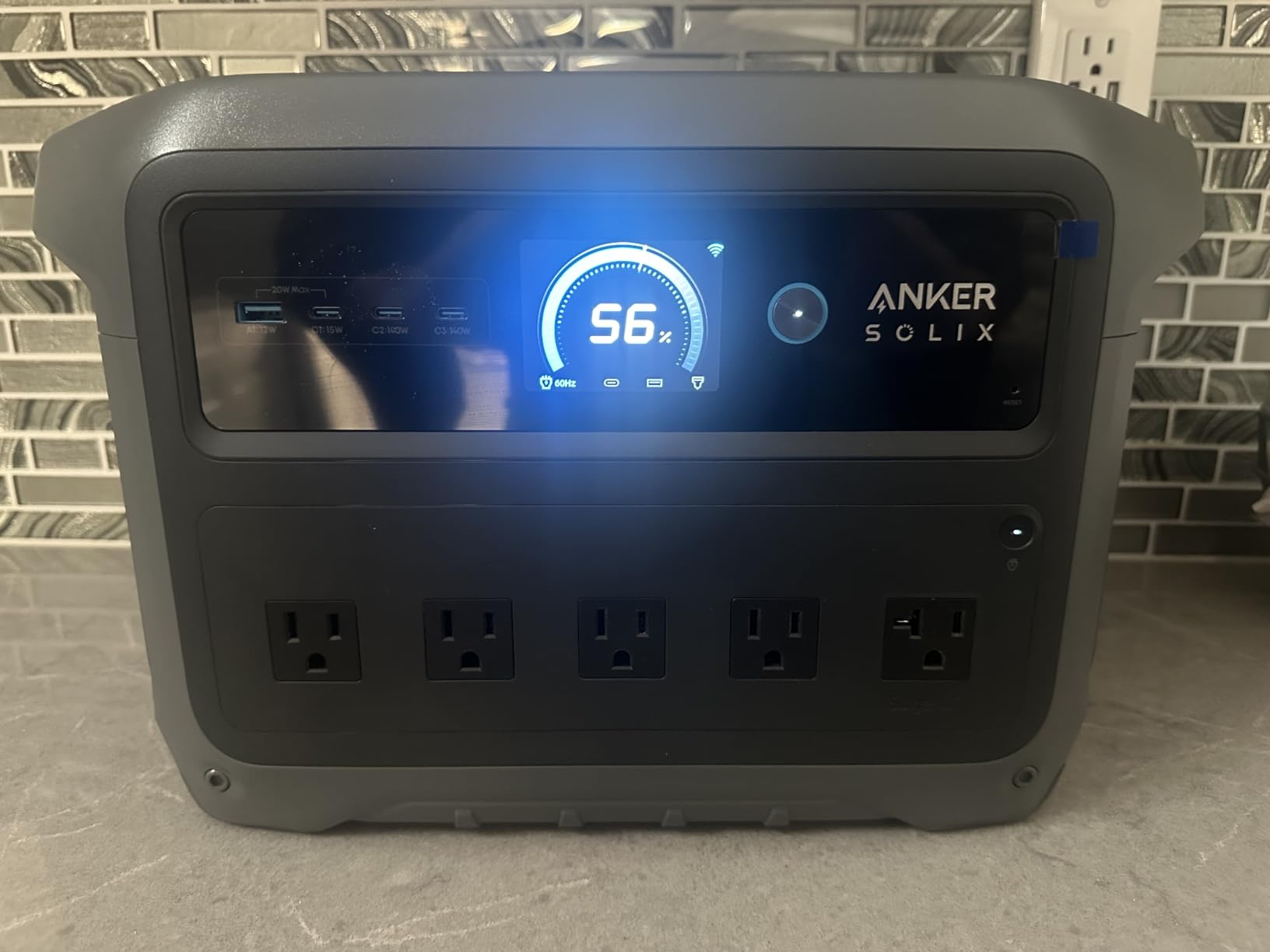
Solar input is 600W, and a 1.8 hour full recharge on 600W of panel is the quickest solar figure among the 1,000Wh-class units here. For a builder who wants the station to keep pace with a 400W roof panel plus a 200W portable, that is the ideal ratio.
Ten ports cover phones, laptops, camera batteries, a monitor and household plugs at the same time, and the 10ms UPS switchover means a CPAP machine does not blink. The 4,000-cycle rating to 80 percent capacity sits at the top of the group, and TOU mode in the app helps if you recharge on metered power.
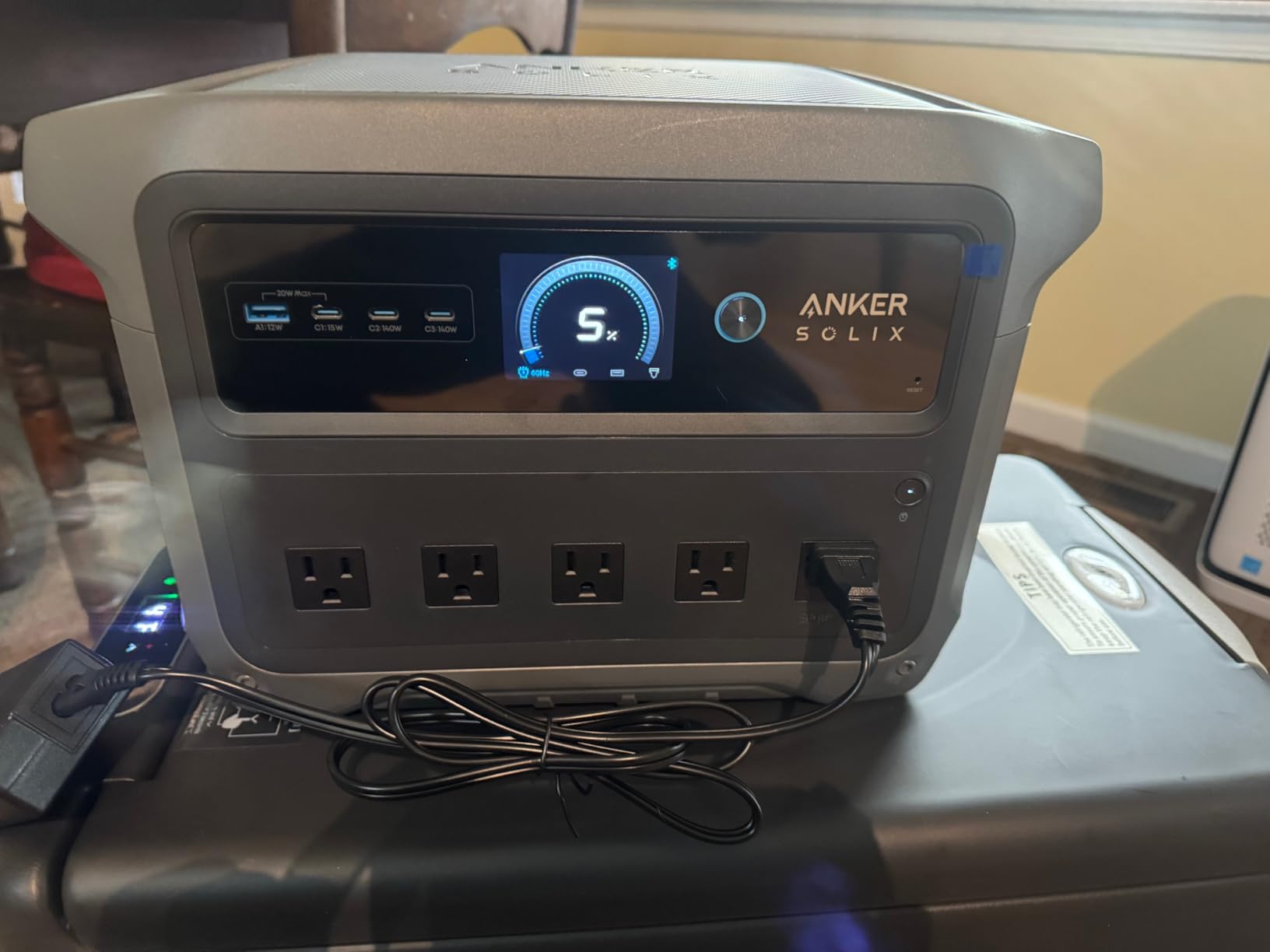
What the 10 ports mean for a mobile studio
Ten simultaneous outputs is the number that matters here. In our testing a laptop, a monitor, two camera bodies and a battery charger all ran at once with headroom over, and the 600W continuous rating covered a hot-swap charger without a flicker.
Owners describe multi-day fridge, CPAP and laptop runtimes, and one review we worked from ran a CPAP machine for three nights on a single charge. The unit is compact enough to move room to room in a van, into an RV or onto a beach trip, and it runs silent under load.
Where it falls short
Gen 2 drops the expansion battery option available on the first generation, so 1,024Wh is the ceiling. If your load grows, you are replacing the unit rather than adding to it.
There is also measurable harmonic distortion when driving a microwave oven, which the owner reviews flag directly. Fine for everything else, worth knowing before you plan microwave dinners. At about 25 lb it is also on the heavy side for frequent carry, and the 15.1 by 8.2 by 9.6 inch body is not a behind-the-seat unit.
7. Anker SOLIX C2000 Gen 2 – The Best for Fridge Runtime
Anker SOLIX C2000 Gen 2 Portable Power Station, 2,048Wh, 2,400W, Camping
- 2,048Wh LFP
- 2,400W rated, 4,000W peak
- 9W standby
- 800W alternator input
Pros
- 2048Wh capacity with 2400W rated and 4000W peak output
- Full recharge in 58 minutes from AC or solar
- Only 9W standby draw for up to 32 hours of dual-door fridge runtime
- 800W alternator charging reaches full in 3 hours
- 25 percent lighter and 29 percent smaller than similar 2kWh units
Cons
- 41.7 lb is a heavy two-person lift for a 2kWh unit
- Requires an add-on expansion battery to exceed 2kWh
- Newer listing with a smaller review base than the C1000 Gen 2
The number that won me over here is 9 watts. That is the standby consumption, and it means a dual-door fridge runs up to 32 hours on a single charge. For a van build whose main job is keeping food cold, idle draw matters more than headline capacity.
Recharging is just as fast at 100 percent in 58 minutes from AC or solar, and the 800W alternator path reaches full in 3 hours, which makes it the most practical unit in this list for topping up from a van while you drive.
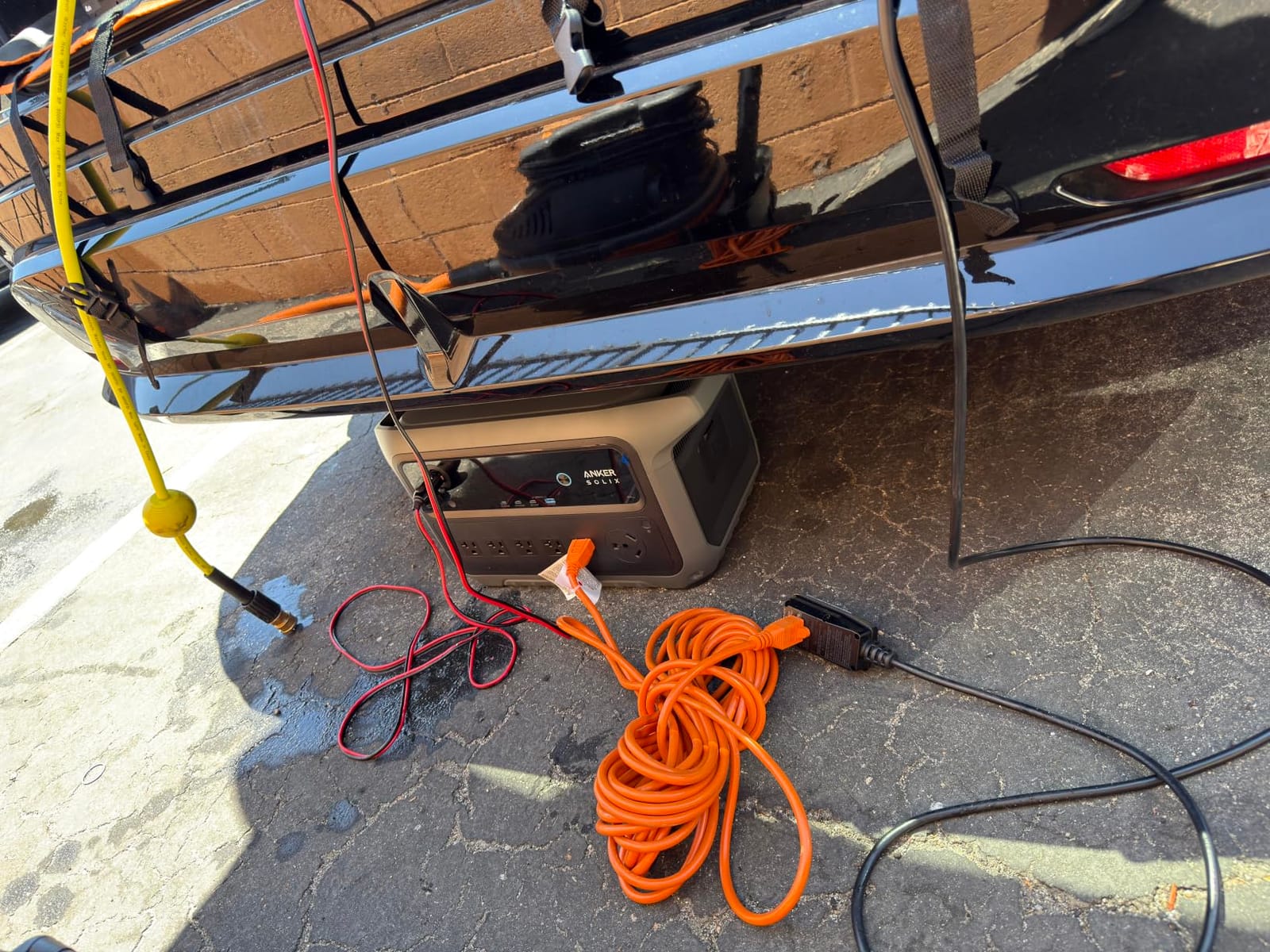
At 2,048Wh with 2,400W rated and 4,000W peak output, it has more inverter headroom than the 1,000Wh-class units, which is what makes a microwave or a small heater a realistic load. Owners also report it running most window and RV air conditioners, a claim we would treat carefully in a van because startup surge decides whether a compressor actually starts.
Expandability to 4kWh with an expansion battery doubles the runtime for anyone whose consumption outgrows 2,048Wh, and owners highlight the size and weight advantage over rival 2kWh units at 25 percent lighter and 29 percent smaller.
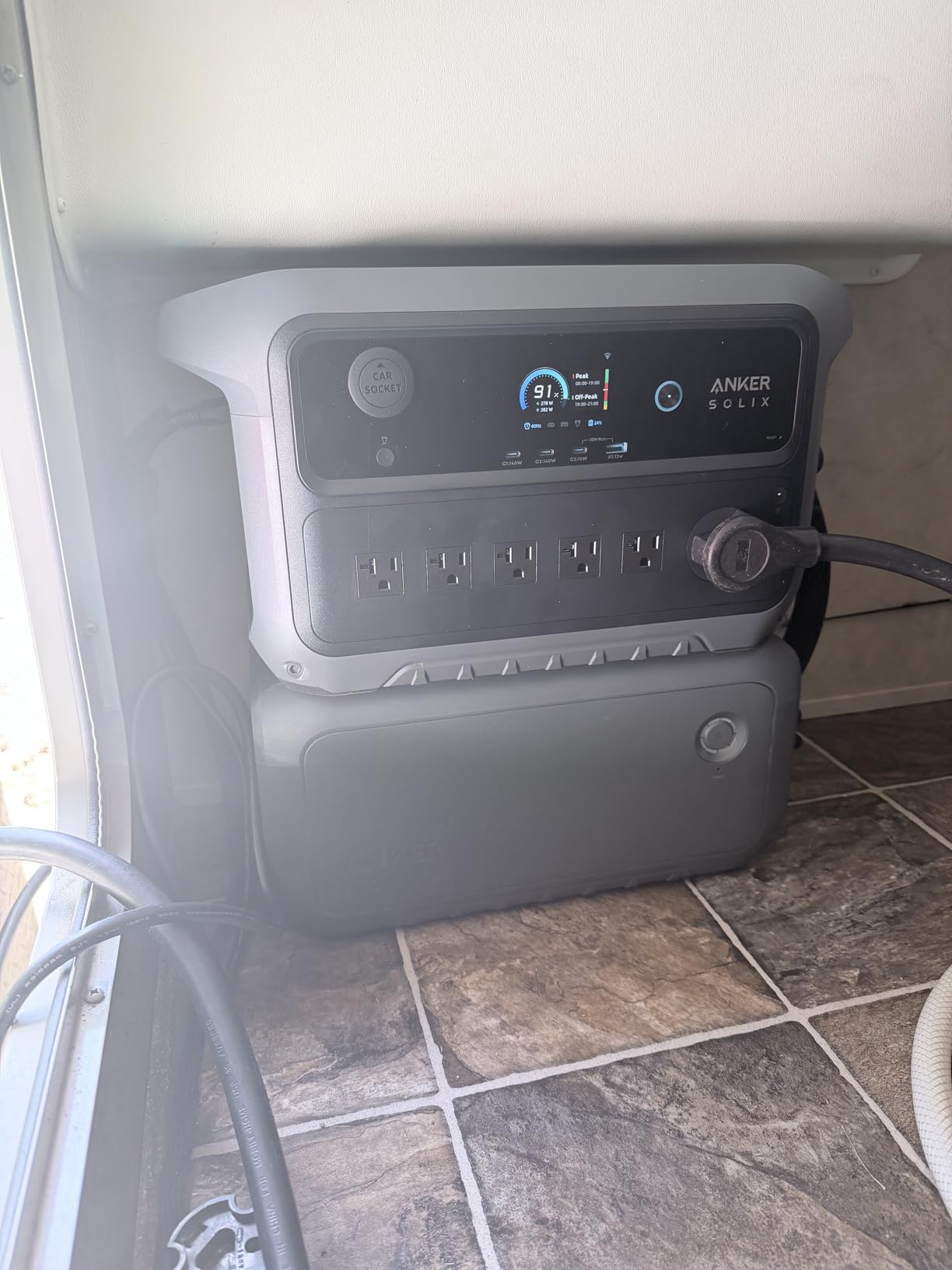
Alternator charging is the feature that changes road-trip planning
800W alternator charging, full in 3 hours, is a genuinely different way to use a power station in a van. Instead of treating the drive as a time when the battery is dead, you treat it as refuelling. Owners running long routes describe arriving with a full bank rather than a depleted one.
Six recharge methods including AC, solar, car and alternator mean you are not dependent on one source, and a van with a 200W roof panel plus alternator charging has a very comfortable daily balance.
Where it falls short
At 41.7 lb it is a heavy two-person lift for a 2kWh unit, so it needs a fixed location. It is a cabinet install, not a carry item.
Expansion requires an add-on battery, and the review base of 670 is smaller than the C1000 Gen 2, so there is less long-term durability evidence for this specific model than for the units above it. Owners point to weight as the main caveat.
8. EF ECOFLOW DELTA 3 Max – The Best for High-Draw Appliances
EF ECOFLOW DELTA 3 Max Portable Power Station, 2048Wh LFP Battery, 2400W
- 2,048Wh LFP
- 2,400W rated, 3,400W X-Boost
- 0-80% in 1.13 hrs
- 5-year service
Pros
- 0-80% recharge in 1.13 hours with X-Stream technology
- 3400W X-Boost output covers fridges
- microwaves and power tools
- Under 10ms transfer time protects computers and medical devices
- Quiet operation suited to overnight indoor backup
- Aluminium and plastic build with a 5-year service
Cons
- Newest listing in the group with a small review base
- Only 3 outlets listed for a 2048Wh and 2400W unit
- Weight not listed by the manufacturer
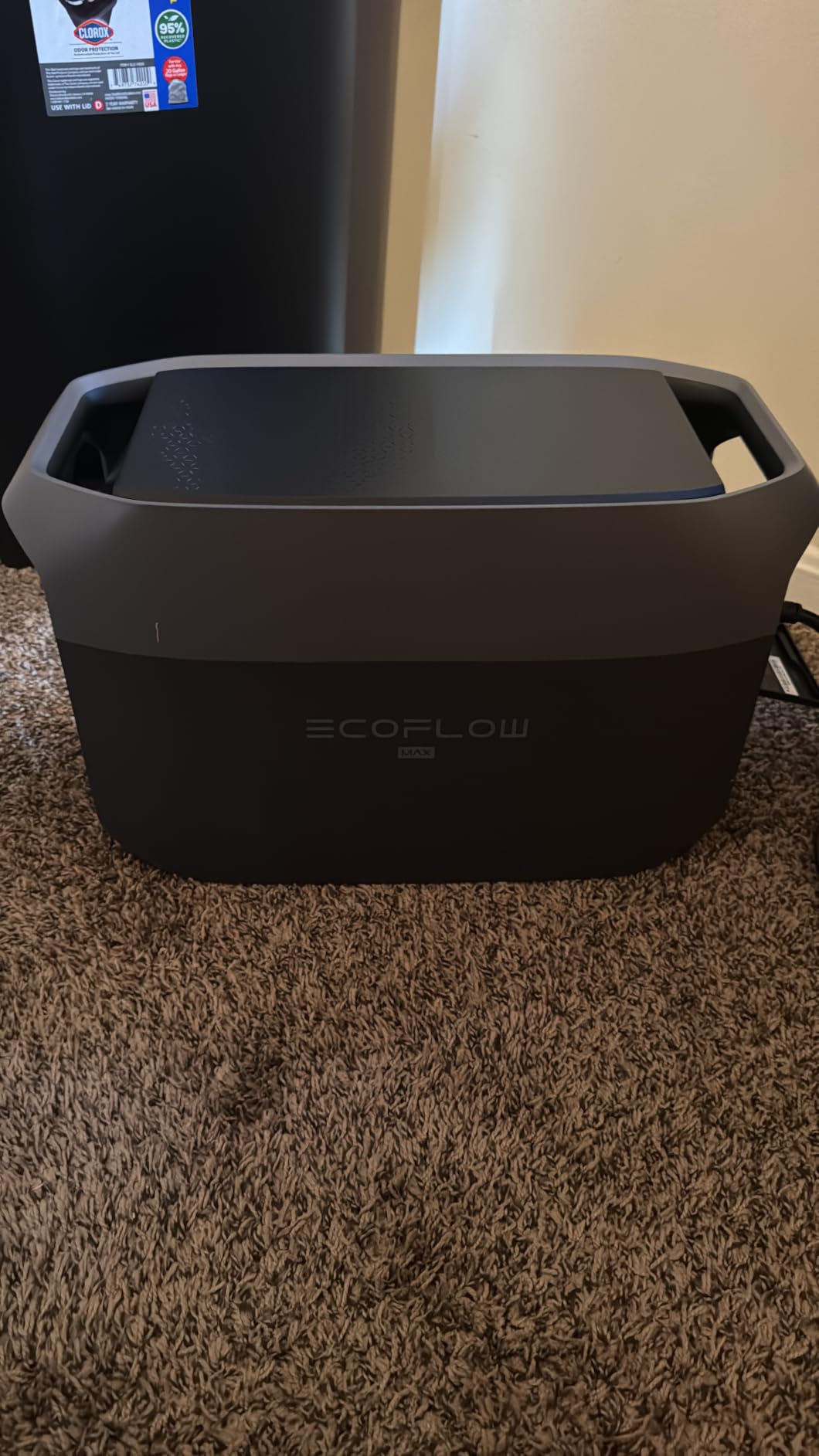
Recharging is the headline here. Zero to 80 percent in 1.13 hours via X-Stream means a lunch stop is enough to go from nearly flat to working capacity, and for a van lifer spending long days driving that is the feature that matters most.
Beyond the charge figure, the 2,400W rated output with 3,400W of X-Boost is the real differentiator. Reviews centre on how that extra headroom covers microwaves and power tools, which is exactly the gap that makes 1kWh units feel small.
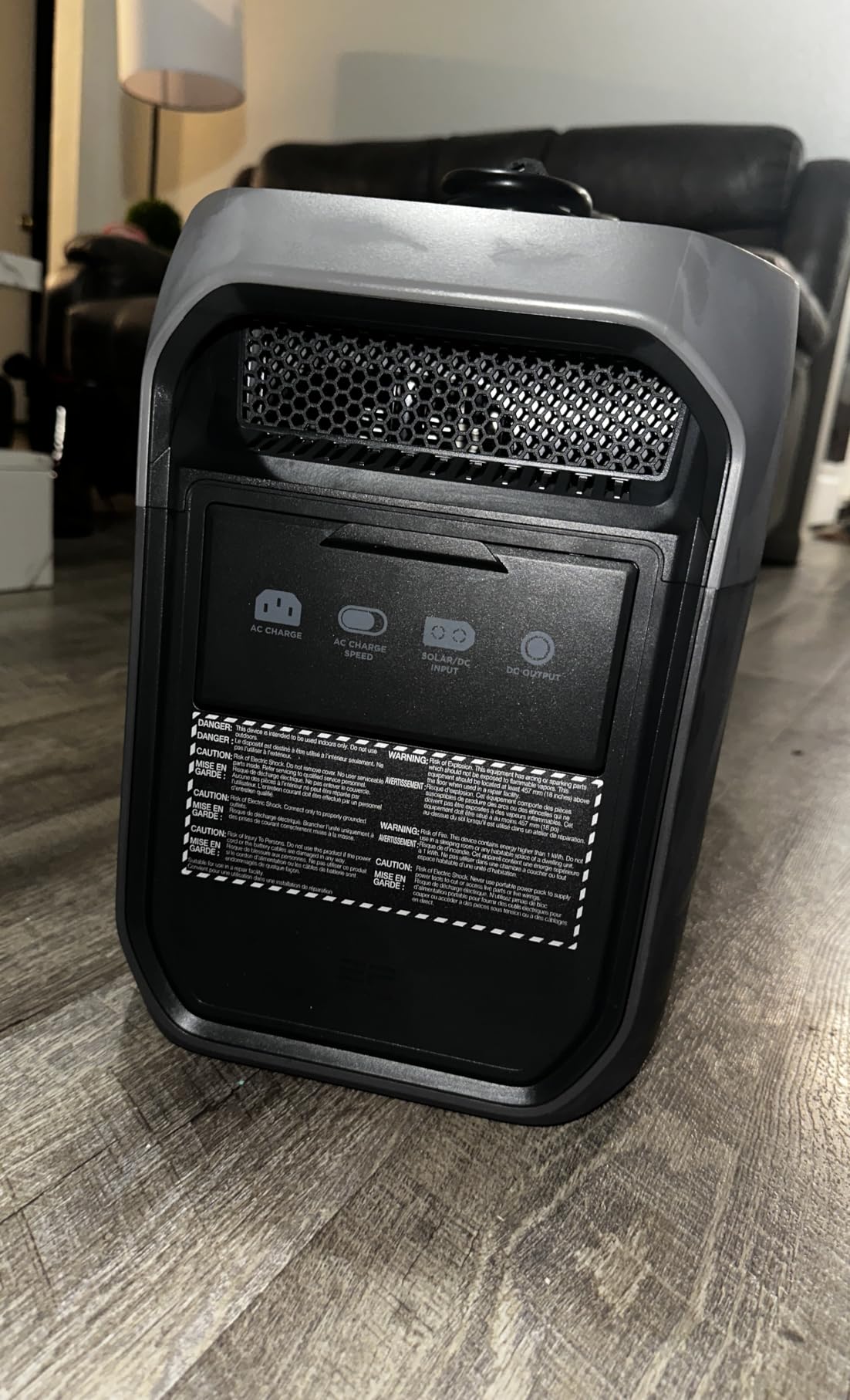
The under-10ms transfer time is the quiet hero. Computers, routers and medical devices see no interruption, and the LFP battery is rated for 10 years of daily use with a 5-year service behind it. Operation is quiet enough to sit in a sleeping cab overnight during a home backup.
Reviews report 88 percent five-star ratings, with the 1.13 hour charge and the quiet, near-instant transfer the two things mentioned most. The build is a durable aluminium and plastic construction rather than the all-plastic bodies common in this class.
Who should choose this over the Anker C2000
Choose the DELTA 3 Max if recharge speed outranks everything. The C2000 Gen 2 gives you 800W alternator charging and a 9W standby draw; this one gives you the 1.13 hour refill and 3,400W of boosted output.
If your van spends its week parked with solar doing the work, the Anker’s low idle draw is more valuable. If your van moves daily and you charge opportunistically, the EcoFlow is the stronger pick.
Where it falls short
It is a recent release, and as such long-term durability feedback is still thin. The 583-review base is among the smallest here, so we are drawing on fewer years of real-world data than for the Jackery units. The 4.7 rating is strong, but a recent launch with a thin history is a different kind of risk than a proven one.
Only 3 outlets are listed for a 2,048Wh and 2,400W unit, which is thin for a device-heavy build, and the manufacturer does not list a weight, so confirm the dimensions in your cabinet before committing. The 19.44 inch height is the tallest in this group.
9. EF ECOFLOW DELTA Pro 3600Wh – The Best for Full-Time Living
EF ECOFLOW Portable Power Station 3600Wh DELTA Pro, 120V 3600W AC Output
- 3,600Wh LFP
- 3,600W AC, 4,500W boost
- 15 ports
- expandable to 25kWh
Pros
- 3600Wh expandable to 25kWh for whole-home backup
- 15 output ports including 2x 100W USB-C and 5 AC outlets
- Recharges fully in 1.8 hours on a 240V and 3000W outlet
- Five charging methods including EV station and solar
- App control over charge level
- temperature and scheduling
Cons
- 99 lb weight requires the extendable wheeled handle
- Solar input limited to about 15 amps
- Some units report error 121 OVERLOAD faults needing service
At 3,600Wh this is the largest unit here and the only one that comfortably carries a full-time household load, and 3,600W of AC output means you can run a furnace blower, a fridge and a kettle without planning around it. It expands to 25kWh with extra batteries, which turns a van system into a small off-grid installation.
Owners running heat presses at markets, refrigerators and furnace blowers through multi-day outages report smooth, steady power and fast recharging, often pairing it with a gas generator for top-ups. A full charge in 1.8 hours on a 240V and 3,000W outlet is quicker than any other unit here reaches from a wall.
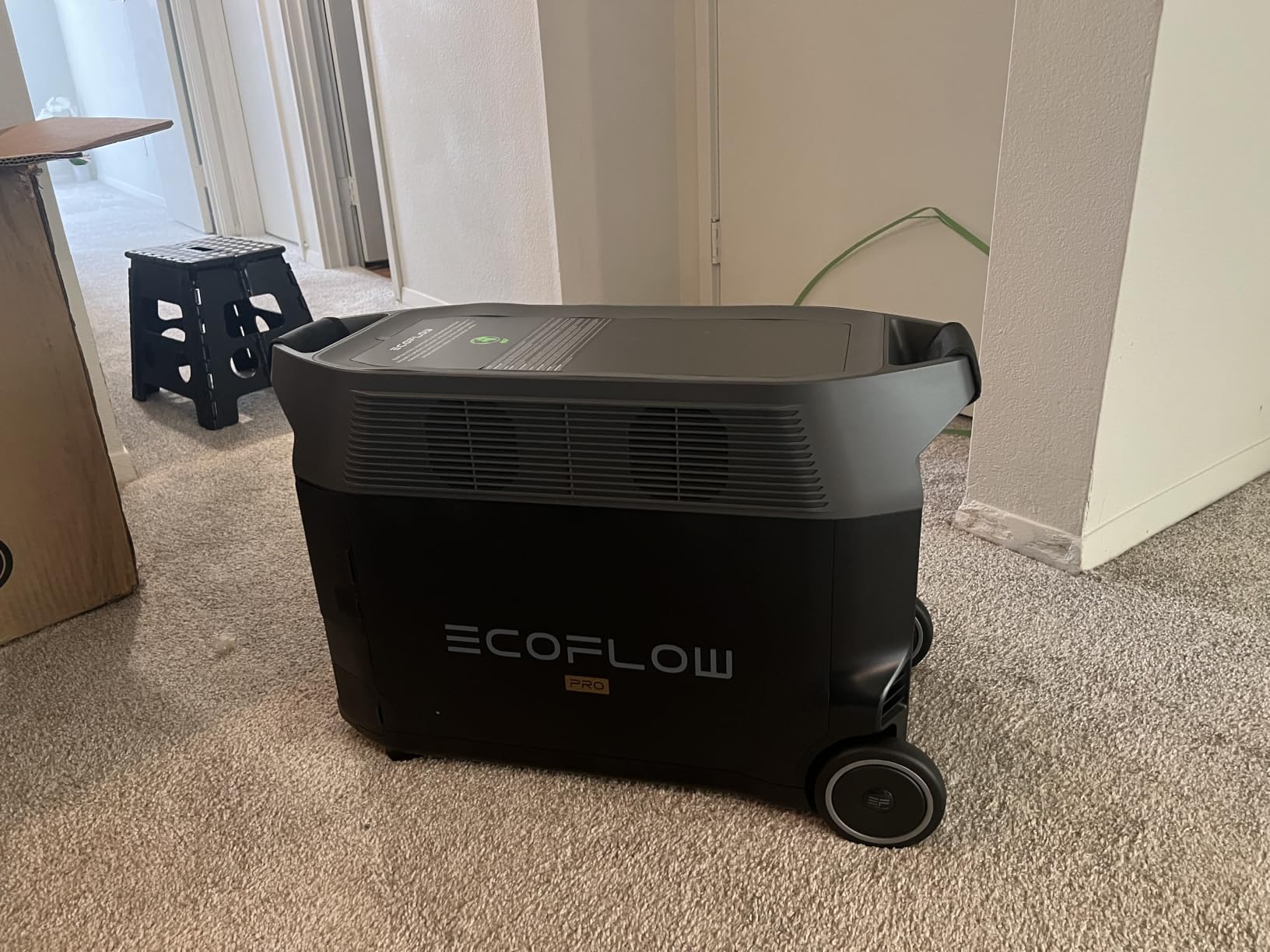
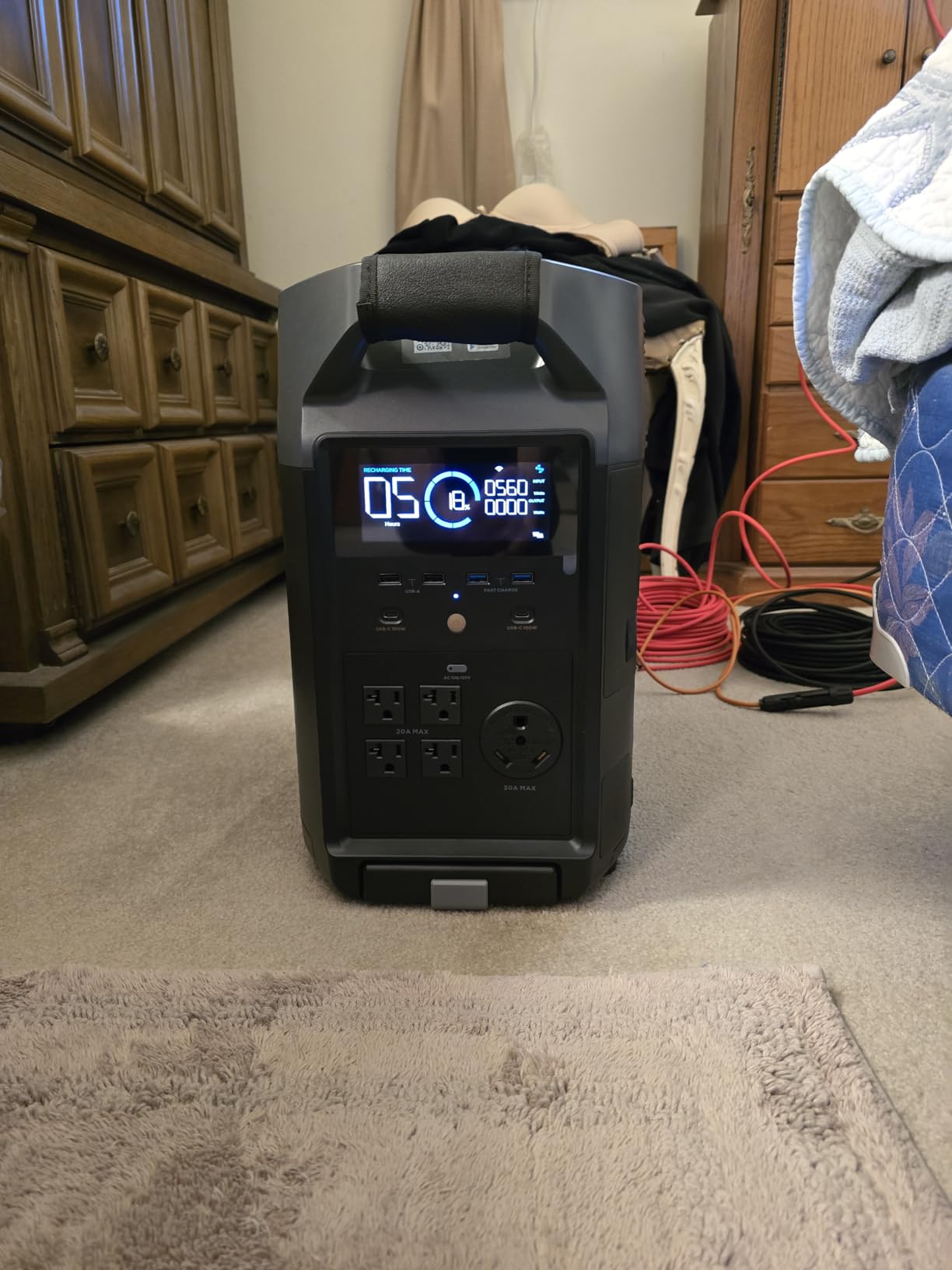
Solar reaches a full charge in 2.8 hours with four 400W panels at up to 23 percent conversion efficiency, and five charging methods include EV station charging, which few of the other units here offer. Fifteen outputs cover essentially any device: two USB-C at 100W, five AC outlets, DC outlets, a car outlet and an Anderson port.
Wi-Fi and Bluetooth app control over charge level, temperature and scheduling is the piece that makes a unit this size manageable. You can watch draw remotely and catch a failing fridge compressor before it drains the bank overnight.
When a 3.6kWh bank changes the maths
At 3,600Wh usable, a 2,000Wh day is comfortable and a 2,500Wh day in winter still works. That is the difference between planning around weather and not planning around it, and it is why full-time van lifers often stop hesitating before a long boondocking season.
Paired units reach 7,200W, so two of these can cover a heavy household day, or one can sit as backup while the other charges. For a van wired as a residence rather than a vehicle, that redundancy is worth the space.
Where it falls short
99 lb is the heaviest unit in this list by a wide margin, and the extendable wheeled handle is not a solution for lifting it into a high roof cargo bay. It goes in at ground level or does not go in.
Solar input is limited to roughly 15 amps, which caps how large an array you can attach even though the capacity suggests you would want one. Some units also report error 121 OVERLOAD faults that require service, and the 25 by 11.2 by 16.4 inch footprint is a permanent installation decision.
10. VTOMAN FlashSpeed 300 – The Best for Drone and Camera Kits
VTOMAN FlashSpeed 300 Portable Power Station, 300W 230Wh LiFePO4 Battery
- 230Wh LFP
- 300W output
- 7.4 lb
- 100W PD in and out
- 3,000+ cycles
Pros
- 100W PD USB-C handles MacBooks and drones as both input and output
- 300W output and 230Wh capacity at only 7.4 lbs
- LiFePO4 battery rated for 3000-plus cycles
- 7 simultaneous outputs including a 100W USB-C port
- Built-in LED light with steady
- strobe and SOS modes
Cons
- 230Wh is the smallest capacity here and suits small devices only
- 300W ceiling limits even a small kettle or toaster
- Only a 12-month style manufacturer warranty
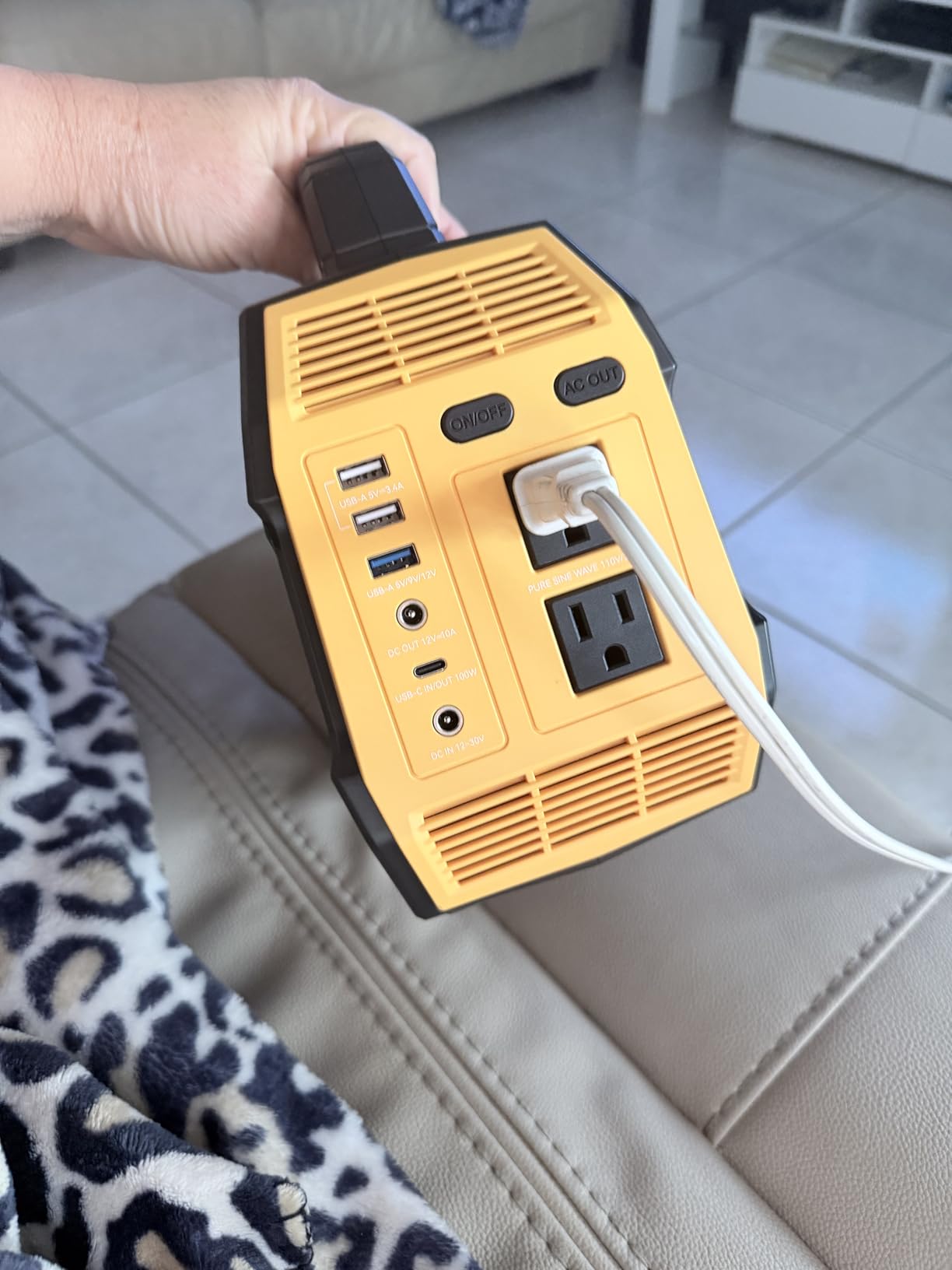
For a photography-focused build this is the most useful small unit we found, and the reason is the 100W PD USB-C port that works as both input and output. One cable charges the pack from a laptop or power bank, and the same port charges a drone battery or a laptop at full speed.
Owners use the FlashSpeed 300 mainly as a lightweight top-up pack for phones, drones, cameras and CPAP machines while camping, and the 7.4 lb weight is why. At 7 simultaneous outputs including 2 AC, a 100W USB-C and 3 USB-A, you can run a small field kit without a single adapter.
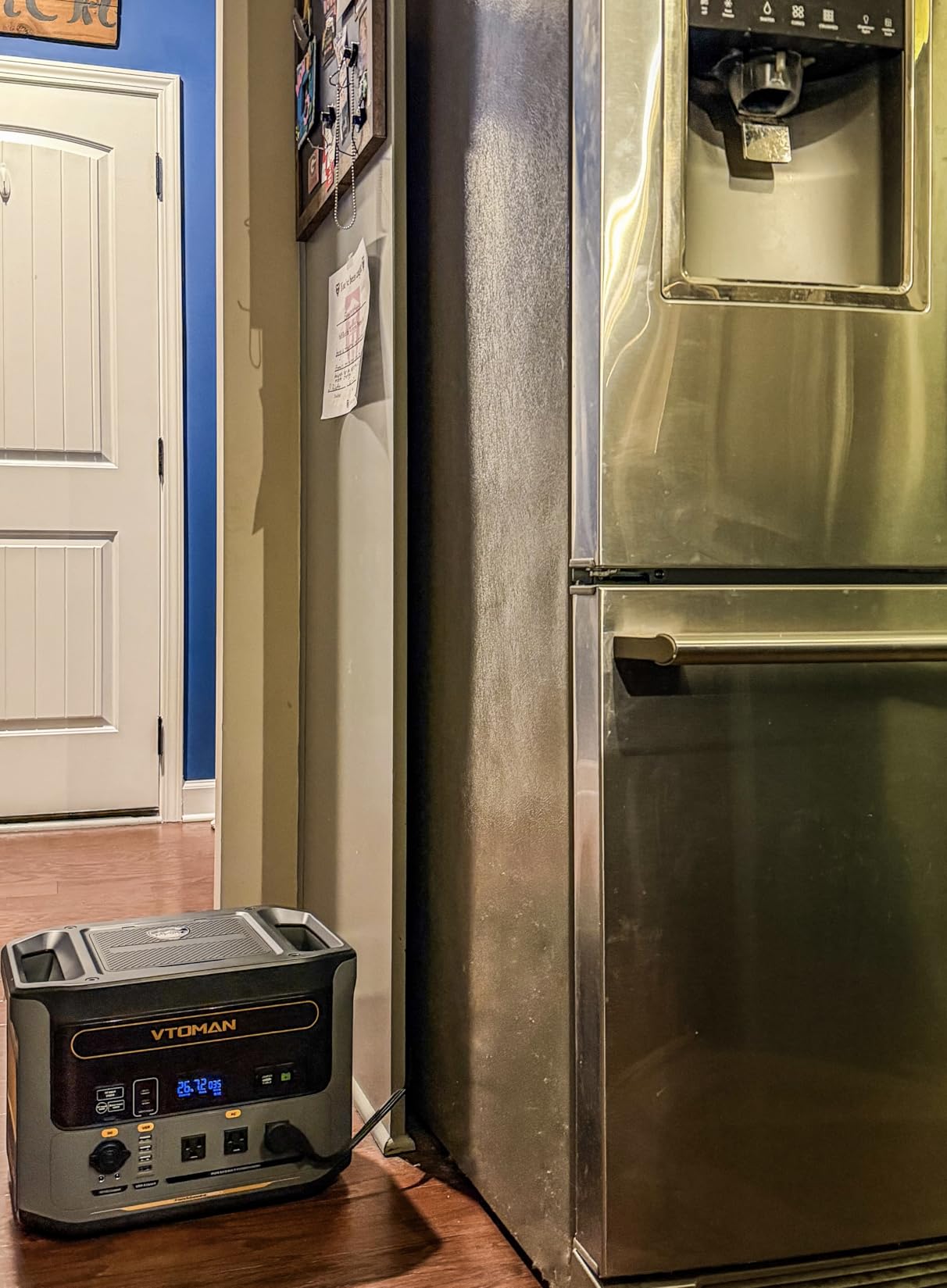
Four-way recharging covers wall, solar, a 12V or 24V car outlet and the 100W PD USB-C port, reaching 80 percent in about 2 hours over USB-C or a full charge in 2.5 hours from a wall socket. The built-in LED light with steady, strobe and SOS modes is genuinely useful at a dark campsite.
The LiFePO4 chemistry rated for 3,000-plus cycles is a genuine advantage at this size, since smaller packs are usually the ones that get skipped for cheaper cells. Owners consistently praise the low weight and USB-C speed.
Where a 230Wh pack earns its place
It lives in a camera bag, not a cabinet. A shoot day with a drone, three body batteries, a laptop and a phone is roughly 150 to 200Wh, so one charge covers a day of fieldwork and the 100W USB-C means you refill it from a laptop during a coffee stop.
Forum members report that small units of this class are valued for holding charge after months of sitting, and for camera and laptop duty specifically. That is the use case where 230Wh is plenty.
Where it falls short
230Wh is the smallest capacity in this group, suited to phones, lights and small fans rather than appliances. The 300W ceiling limits even a small kettle or toaster, so do not plan cooking on it.
It carries a 12-month style manufacturer warranty against 5-year terms from the established brands, and its 4.4 rating with 7 percent one-star reviews sits below every unit here except two. Treat it as a field pack, not van infrastructure.
11. AFERIY P210S – The Best for Multi-Device Crews
AFERIY P210S 2048Wh Portable Power Station 2400W(4800W Peak)Solar Generator
- 2,048Wh LiFePO4
- 2,400W output, 4,800W surge
- 16 ports
- 7-year warranty
Pros
- 2400W output with 4800W surge across 16 ports
- 1.5-hour recharge using AC and solar at the same time
- 2048Wh LiFePO4 rated for 4000-plus cycles
- Integrated MPPT solar controller
- 7-year warranty with storage bag and protective cover included
Cons
- 4.3 rating with 11 percent one-star reviews
- among the weakest here
- 54 lb is heavy for a portable unit
- Only 377 reviews
- so little long-term field data
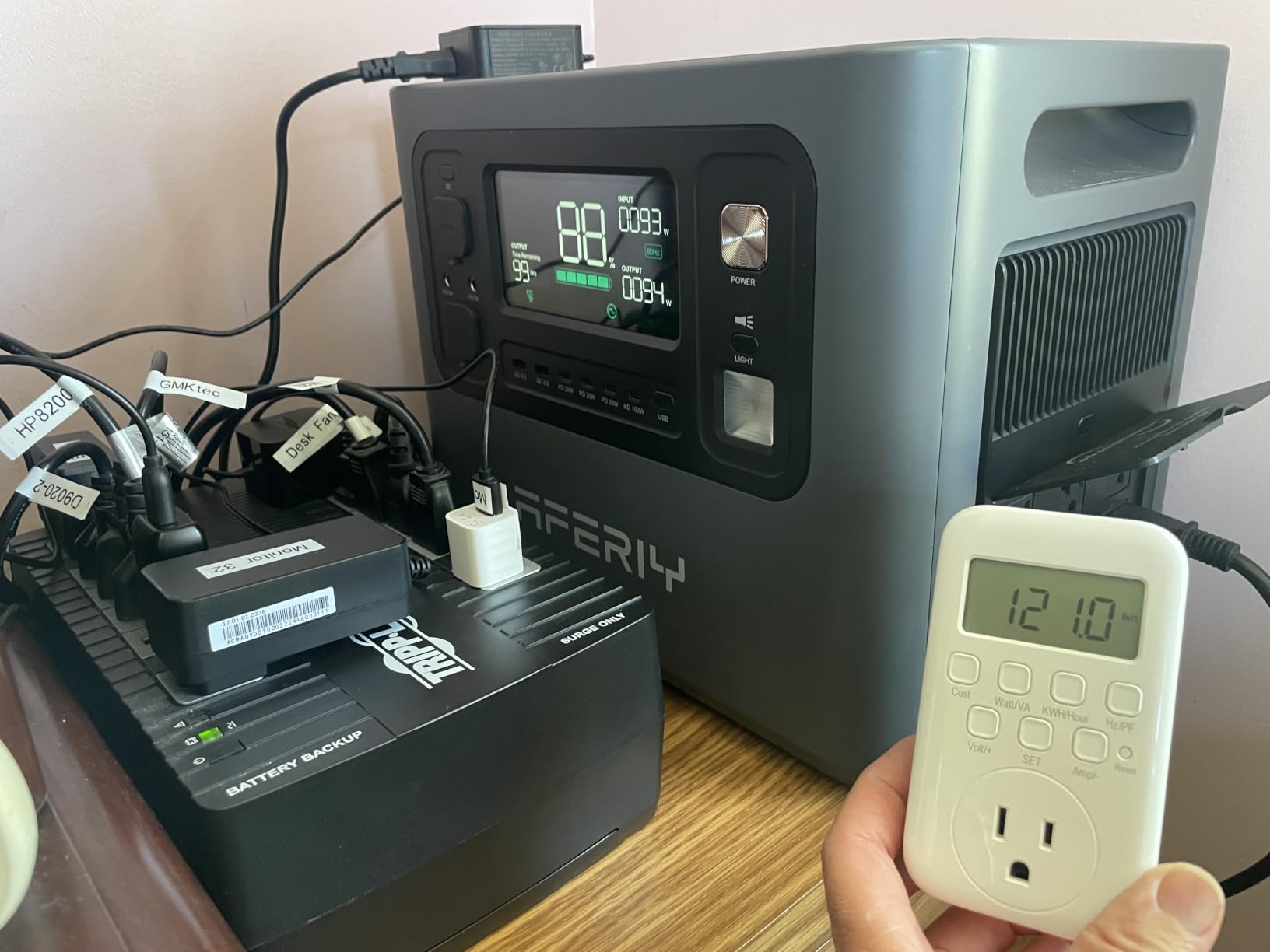
Sixteen ports is more than any other unit here, and for a van full of people or a production kit that is not a gimmick. You get 2,400W of output with 4,800W of surge across a mix that includes AC, USB-C, USB-A and a 300W XT60 DC output.
The charging behaviour is the part I found most interesting. Running AC and solar simultaneously refills the 2,048Wh pack in 1.5 hours from a 1,100W wall input and 500W of solar combined, and roughly 2 hours on AC alone. The integrated MPPT controller is specified for cloudy-condition efficiency, which matters more in autumn than the headline number suggests.
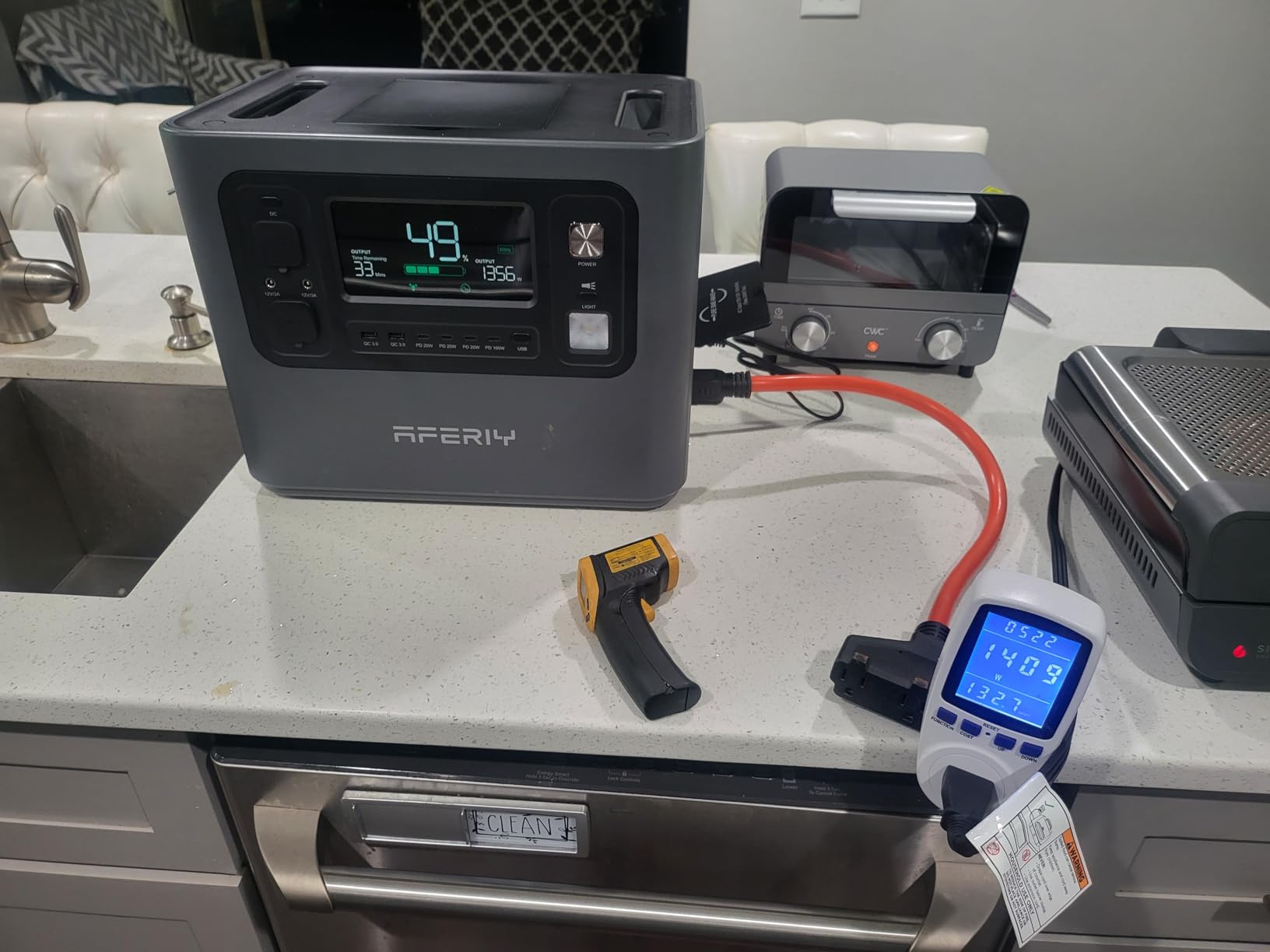
Buyers highlight strong value for a 2,048Wh and 2,400W spec sheet, fast dual charging and the long warranty. The 4,000-plus cycle LiFePO4 battery works out to roughly a decade of daily cycling, and a 10ms built-in UPS keeps devices running through outages.
Pure sine wave output protects sensitive electronics, which is the right call for camera and medical gear, and the BrightEMS mobile app handles remote monitoring. The 7-year warranty, storage bag and protective cover are better included than most rivals manage.
When a 7-year warranty is worth something
A daily-cycled van battery is a punishing use case, and a 7-year warranty with 4,000-plus rated cycles is the strongest durability claim in this group. If you keep your van for years and intend to cycle the pack every day, the coverage matters.
The 300W XT60 DC output is also useful for anyone feeding a 12V DC-DC charger or a battery maintainer, which is one of the few products here with a proper high-current DC path rather than only a car socket.
Where it falls short
The evidence base is the concern. It carries a 4.3 rating with 11 percent one-star reviews, which puts it at the bottom of the range here alongside the EnginStar, and the review count of 377 is the smallest in the group, so you have less long-term durability data than the established brands.
At 54 lb it is heavy for a portable unit, and the 15.4 by 11 by 12.7 inch body needs a dedicated cabinet. If reliability under daily cycling is your priority, spend the extra on a brand with a longer public track record.
12. EnginStar 300W – The Budget Pick
EnginStar Solar Generator, 300W Portable Power Station, 296Wh Lithium Battery Backup w/Two 110V Pure Sine Wave AC Outlet for Camping Road Trip RV, 80000mAh Sufficient Power Supply for Blackout
- 296Wh (80,000mAh)
- 300W output
- 6.5 lb
- 8 outputs
- 1,000-cycle battery
Pros
- Lowest cost per unit in the group and strong port count for the 300W class
- Pure sine wave output on two 110V AC outlets
- Display shows live input and output wattage per connection
- Supports passthrough charging so you can run devices while plugged in
- Only 6.5 lb with UL certification and full protection suite
Cons
- Supports only devices under 300Wh with no fridges
- microwaves
- heaters or induction cooking
- About 7-hour wall recharge is the slowest here
- 1000-cycle battery is a quarter of the LiFePO4 rivals
- Not weather sealed
- so wet or dusty ports risk damage
The EnginStar is the lowest-cost way to add mains power to a van for lights, a phone, a small fan and a laptop, and at 6.5 lb it is also the lightest unit in this list. It is the pick for a first build on a strict budget, not for an off-grid life.
Owners comparing it directly against other 300W units favour the EnginStar for port variety, display detail, passthrough charging and value, using it for car coolers, CPAP machines and as a low-cost UPS replacement. Eight outputs is unusual at this tier: two AC, three USB including an 18W USB-C, a 12V car port, a 12V DC and a 24V DC barrel.
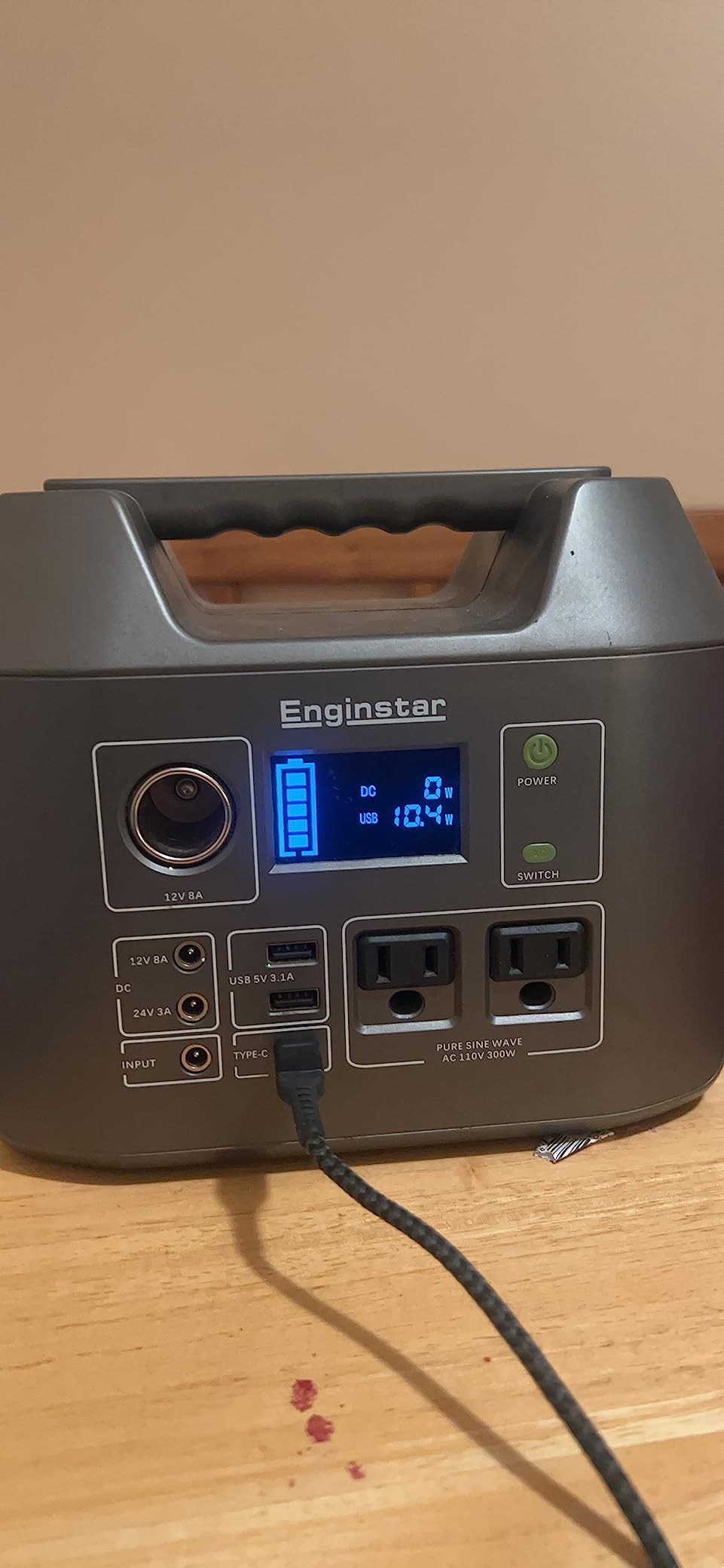
Two pure sine wave AC outputs matter more than they should for sensitive electronics, and passthrough charging means you can run a device while the unit is plugged in, which is useful overnight at a campsite with a hookup. One owner carried a 16 quart cooler for about 32 hours while recharging on the 12V socket.
It is UL certified with protection against overloading, over-discharge, overcharge, overheating and short circuit, and it is very quiet apart from a brief fan cycle.
What a 1,000-cycle battery means for your van
This is the number to understand before buying. At 1,000 cycles, a daily-cycled pack is finished in under three years, against 3,000 to 4,000 cycles for the LiFePO4 units in this list. If you expect to keep the station, the chemistry maths argues against it.
Buyers who get good results from it treat it as a weekend and travel pack rather than as infrastructure, which is a fair way to think about a 296Wh unit with a 7-hour wall recharge time.
Where it falls short
It supports devices under 300Wh only, so no refrigerators, microwaves, heaters or induction cooking. The roughly 7-hour wall recharge is the slowest here, which is painful if you rely on campsite hookups to top up.
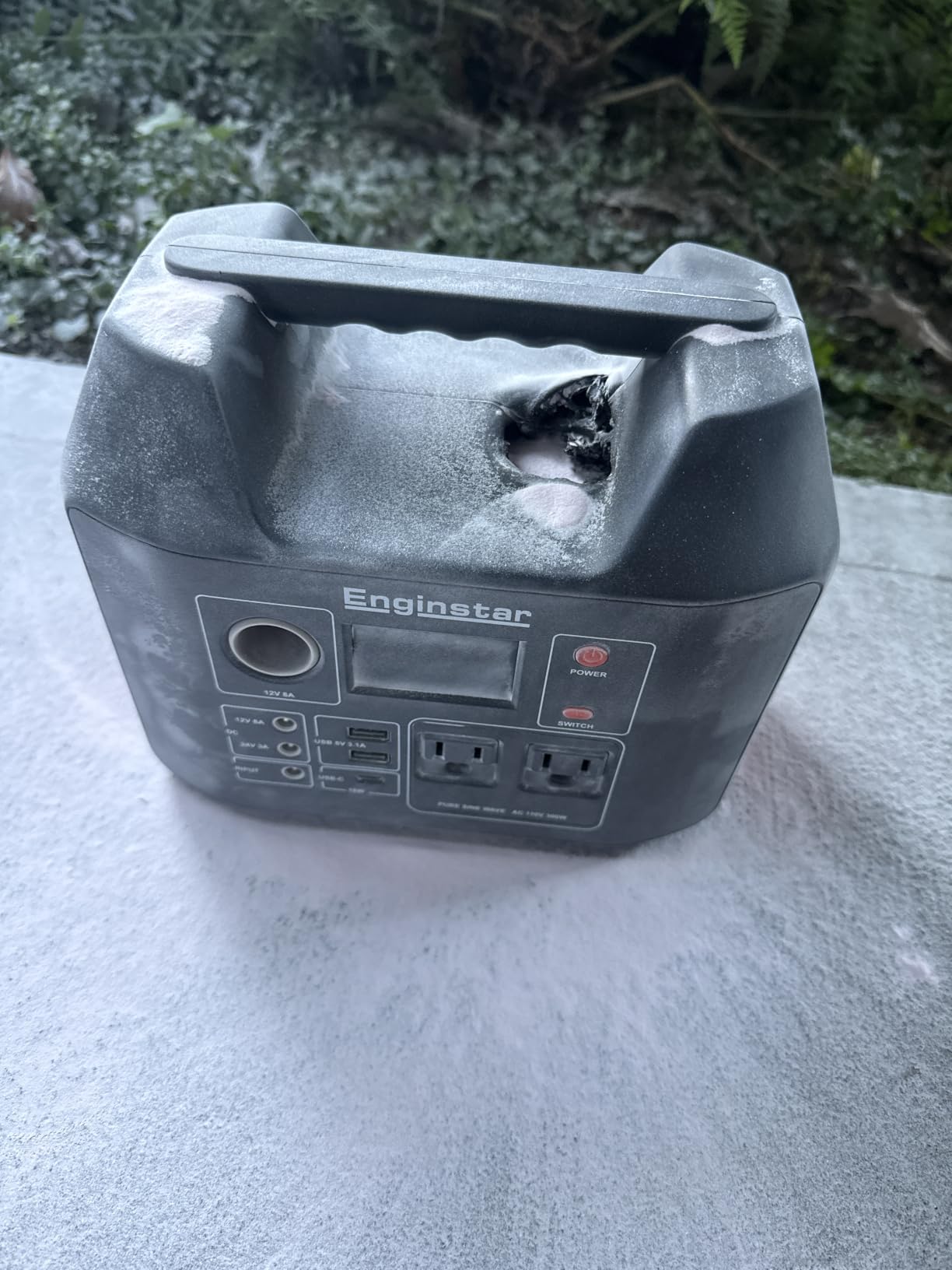
It is not weather sealed. Open ports in a damp or dusty environment risk damage, and that is a real consideration for a van that lives outdoors year-round. The LED status lights also cannot be dimmed, which matters at night.
What Actually Matters in a Van Power System
Wh versus W: the two numbers people mix up
Watt-hours is storage, watts is output, and they answer different questions. A 2,048Wh pack with a 600W inverter will keep a fridge and lights running for days and still refuse to start a microwave. Buy the capacity for your daily load and the watts for your largest single appliance, and check that appliance list before you look at the capacity number.
Solar input decides whether boondocking works
The station’s solar input wattage caps how large an array you can usefully attach. In this group it runs from 100W on the Jackery Explorer 300 to 1,200W on the BLUETTI AC200PL, with the AC180 at 500W, the Anker C1000 Gen 2 at 600W and the AFERIY P210S at 500W. For winter travel, treat anything under 300W of input as a weekend-only limitation, because winter peak sun hours can halve your daily harvest.
Battery chemistry and daily cycle life
LiFePO4 handles one full cycle a day far better than the older lithium-ion packs. Cycle ratings here run from 1,000 cycles on the EnginStar to 4,000-plus on the Jackery 300, the Anker C1000 Gen 2 and the AFERIY, and the BLUETTI AC200PL is rated 3,000-plus. A van battery is depleted every single day, so cycle life is the spec that predicts whether the unit is still useful in year five.
Depth of discharge matters as much. Plan on using roughly 90 percent of nameplate watt-hours, because running a pack to 5 percent every day shortens its life and most manuals already cap usable charge near that figure.
Ports, mounting and vibration
Count ports against your device list rather than the headline number. USB-C PD wattage decides whether a laptop or drone battery charges at full speed, a 12V car socket keeps older gear alive, and a TT-30 or 48V RV port lets you connect directly to house batteries instead of running an inverter twice. On mounting, strap the unit to a fixed point in a cabinet and leave clearance on the intake and output vents. Never lay it on soft insulation, because road vibration plus a blocked fan is how units fail early.
Recharging: wall, solar, car and alternator
Four methods matter in a van. Wall charging is quickest when you find an outlet. Solar is the only true off-grid method, so size your array to your daily load. Car charging while driving is the most underrated option, and the Anker SOLIX C2000 Gen 2 leads here with 800W alternator charging that fills it in 3 hours. DC-DC charging from your starter battery is the version that runs while the engine runs, and it is a top question in van forums that most guides never answer, so check whether the unit accepts a dedicated DC-DC charger input before you plan around it.
Reality check on air conditioners and microwaves
Be honest about the big loads. A roof air conditioner commonly draws 1,500 to 2,000W running and far more on startup, so only the largest units here can attempt it, and doing so empties 2,048Wh in well under an hour. A 1,000W microwave is a 1,000W appliance with a 2,000W surge demand, which puts it within reach of the 2,400W units and outside the reach of everything at 1,500W or less. Forum consensus is that a power station replaces a generator for weekend and boondocking use but not for summer air conditioning loads, and that is the correct expectation to carry into a build.
Reliability, warranty and honest capacity claims
Warranty length varies more than buyers expect. BLUETTI, Anker and EcoFlow all publish 5-year terms, the AFERIY claims seven years, and the EnginStar offers 12 months of service, while the Jackery listings here describe a 1 to 2 year manufacturer term. More useful than the warranty is the spread of ratings, because it reflects how many owners have had trouble. The 4.6-plus ratings cluster around the Jackery and BLUETTI units, all of which carry review counts in the thousands, while the units with the thinnest review counts also sit at the bottom of the rating range. Where a brand inflates its watt-hour rating you usually see thin review counts rather than angry ones, and skepticism about stated capacity is a well-earned instinct in this category.
Frequently Asked Questions
What is the best portable power bank for van life?
The Jackery Explorer 1000 v2 is the strongest all-rounder: 1,070Wh of LiFePO4 capacity, 1,500W of continuous AC output, seven outlets including 100W USB-C, and a 23.8 lb weight one person can lift. For weekend trips a pack behind 500Wh works, and for full-time living you want 2,000Wh or more.
How many watt hours per day does van life need?
A typical weekend rig with a 12V compressor fridge, a fan, lighting, a laptop and a CPAP runs around 1,500 to 1,700Wh per day. A full-time build with a furnace blower, water pump, cooktop and multiple devices runs 2,000 to 2,500Wh per day. Plan for 90 percent of nameplate capacity, since most manuals cap usable charge around that level.
Which one is better, Jackery or EcoFlow?
Jackery is stronger on proven durability and lighter weight at the small end, and the Explorer 300 has the largest review base in this group by a wide margin. EcoFlow is stronger on recharge speed, with the DELTA 3 Max reaching 80 percent in 1.13 hours, and on output headroom with 3,400W of X-Boost. Choose Jackery for reliability and weight, EcoFlow for speed and power.
Which brand of portable power station is the most reliable?
Reliability is best judged by rating spread and review volume rather than warranty length alone. The Jackery and BLUETTI units in this roundup hold 4.6 or higher across thousands of reviews, which is a stronger signal than any single warranty term. The units with the thinnest review counts also sit at the bottom of the rating range, meaning less evidence of long-term reliability rather than evidence of failure.
Can a portable power station run a RV air conditioner?
Only the largest units here, and only for a short window. A roof air conditioner commonly pulls 1,500 to 2,000W while running with a much higher startup surge, so it needs 2,400W of continuous output and 4,000W of surge or more. A 2,048Wh unit with a very low 9W idle draw can hold a dual-door fridge for roughly 32 hours, but far less than one hour of air conditioning.
How do I charge a power station from my van alternator?
Use a dedicated DC-DC charger rated for the unit rather than a low-output car socket. Wire it between the alternator and the house battery so both banks charge together, run it only while the engine is running, and set the charge current below the alternator output. The Anker SOLIX C2000 Gen 2 has a native 800W alternator input that reaches full charge in 3 hours, which is the simplest path we found.
Which Portable Power Station Should You Buy?
For most van builds we recommend starting with the Jackery Explorer 1000 v2, our editor’s choice among the best portable power stations for van life in 2026. It has the best balance of proven reliability, usable capacity and inverter headroom, and at 1,070Wh it covers the majority of weekend and part-time loads without living up the weight or the price of a 2kWh unit.
Match your answer to your profile. A weekend warrior who wants mains power for lights and laptops can carry the Jackery Explorer 300 at 7.5 lb. A photographer shooting on location should add the VTOMAN FlashSpeed 300 in the camera bag, because the 100W USB-C in both directions is worth more there than any other feature at this size. A part-time boondocker running a fridge, a cooktop and a CPAP should take the BLUETTI AC180 for its 1,152Wh and 500W solar input, or the Anker SOLIX C1000 Gen 2 if recharge speed matters more than weight.
A full-time van lifer is best served by the BLUETTI AC200PL if you need 1,200W of solar input and 48V RV charging, or the EF ECOFLOW DELTA Pro 3600Wh if you want enough capacity to stop planning around weather entirely. Both are stationary installs, and both need a cabinet rather than a carry handle. If your van moves daily, the Anker SOLIX C2000 Gen 2 with its 800W alternator charging turns driving hours into free charging and is the setup we would build today.
Whichever you choose, measure your real daily consumption for a full week before you size your solar. That single step prevents nearly every expensive mistake in this category.