
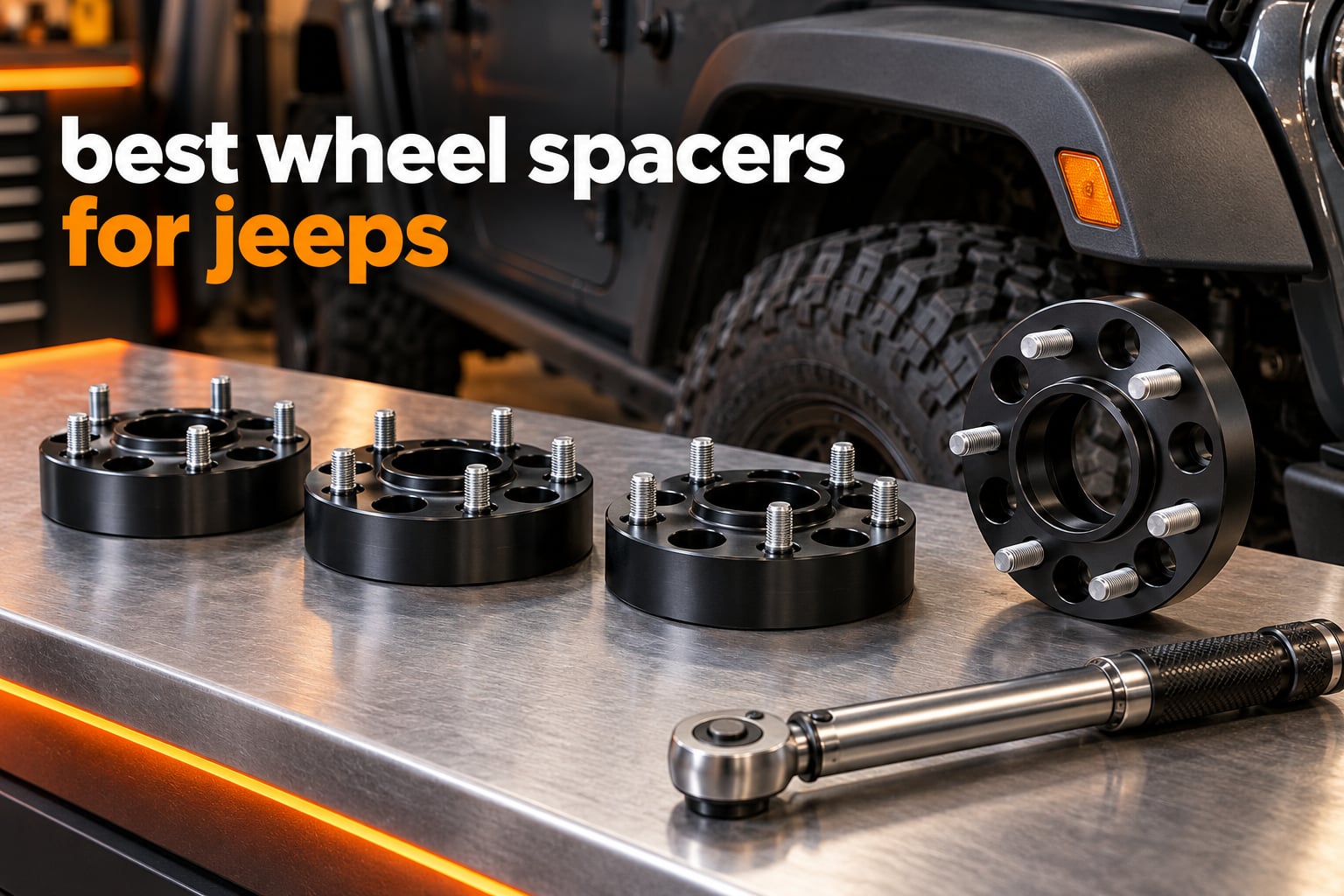
Wheel spacers are safe on a Jeep when they are true hub-centric units matched to your generation’s bolt pattern, stud thread and hub bore, installed with a torque wrench and re-torqued on schedule. A lug-centric spacer, an oversized bore, or a stud that does not protrude far enough is where problems start, not the spacer itself.
We ran the best wheel spacers for Jeeps through fitment first rather than ranking them generically. Twelve kits are covered here, and every one of them states its bolt pattern, thread pitch, hub bore, thickness and who should skip it before any narrative starts. A Wrangler TJ owner and a Wrangler JL owner do not have the same answer, and pages that blur those two are the reason people buy the wrong part.
The single biggest source of wasted money in this category is a pattern mismatch. Jeep ran 5×4.5 (5×114.3mm) and 5×5 (5x127mm) bolt patterns across its lineup, and it also ran 1/2-20 and M14x1.5 stud threads. A spacer that bolts to the hub but hangs on the wrong studs is not a cheap mistake, because the clamping load never reaches the hub surface.
How we picked: this roundup is built on published manufacturer specifications, review volumes and star distributions, plus the consensus that shows up repeatedly in Wrangler owner forums. We are not claiming to have driven 15,000 miles on every kit below. We are claiming that we read the failure reports closely enough to tell you which ones fail, and why.
Table of Contents
- Top 3 Best Wheel Spacer Picks for Jeeps (October 2026)
- How We Picked These Wheel Spacers
- Best Wheel Spacers for Jeeps in 2026
- Jeep Generation Fitment: Bolt Pattern, Thread and Hub Bore
- Hub-Centric vs Lug-Centric: Which Design to Buy
- How Thick Should Your Spacers Be?
- Material, Stud Grade and Bolt Pattern Compatibility
- Installation and Torque Guide for Jeep Wheel Spacers
- Are Wheel Spacers Legal for Road Use?
- When Not to Buy Wheel Spacers
- 1. OMT 5×5 1.5 Inch Wheel Spacers – Best Overall for JK, WK and XK
- 2. KSP 5×5 1.5 Inch Wheel Spacers – Best Complete Kit for JK Owners
- 3. dynofit 1.5 Inch 5×5 Wheel Spacers – Tightest Machined Bore
- 4. AA Ignition 1.5 Inch 5×5 Spacers – Best Warranty Backing on a 5×5 Kit
- 5. dynofit 2 Inch 5×4.5 Wheel Spacers – Most Clearance for TJ, XJ and ZJ
- 6. Richeer 1.5 Inch 5×5 Wheel Spacers – Best for JL, JLU and Gladiator JT
- 7. Richeer 1.5 Inch 5×4.5 Wheel Spacers – Best Match for YJ, TJ and ZJ
- 8. FLYCLE 1.5 Inch 5×4.5 Wheel Spacers – Thread Locker in the Box
- 9. Rough Country 1.5 Inch 5×5 Wheel Spacers – Best Branded Option for JK
- 10. KSP 2 Inch 5×5 Wheel Spacers – Thickest Hub Ring for Modern Jeeps
- 11. Rough Country 1.5 Inch 5×4.5 Spacers – Lightest Pick for TJ and XJ
- 12. ECCPP 1.5 Inch 5×5 Hubcentric Spacers – Longest-Running Listing
- Frequently Asked Questions
- Are wheel spacers safe for Jeeps?
- What size wheel spacers do I need for my Jeep?
- What bolt pattern and stud thread does my Jeep Wrangler use?
- Should I buy hub-centric or lug-centric wheel spacers, and do they cause vibration?
- What torque should I use to install wheel spacers on a Jeep?
- Do I need an alignment after installing wheel spacers, and do they need re-torquing?
- Conclusion: Match the Spacer to Your Generation First
Top 3 Best Wheel Spacer Picks for Jeeps (October 2026)
These three cover the three most common Jeep fitment groups. If you know your generation, one of them is almost certainly the right starting point.


KSP 1.5in 5×5 Spacers
- 6061-T6 forged billet
- 10.9 grade studs preinstalled
- 20 lug nuts included

As an Amazon Associate we earn from qualifying purchases. CERTAIN CONTENT THAT APPEARS ON THIS SITE COMES FROM AMAZON. THIS CONTENT IS PROVIDED 'AS IS' AND IS SUBJECT TO CHANGE OR REMOVAL AT ANY TIME.
How We Picked These Wheel Spacers
Every kit below passed the same four filters, and a kit that failed a hard filter would not have made the list regardless of how many ratings it carries.
The first filter is fitment truthfulness. The listing has to name a bolt pattern, a thread pitch and a hub bore that match the Jeep generations it claims. Oversized bores of 80.5mm and 82.5mm are not true hub-centric on a Jeep hub, and we treat that as a design tradeoff rather than a defect, but buyers need to hear it.
The second is hardware specification. We want a stated aluminum grade, a stated stud grade, and a torque figure from the manufacturer. Brands that publish none of those were pushed down the list no matter what their star rating looked like.
The third is review volume and star share together. A 4.7 from 400 ratings tells you something different from a 4.5 from 5,000, and a kit whose five-star share sits in the mid-70s is telling you something specific about its weak points.
The fourth is forum consensus, which is where the practical install advice lives. Owner threads on Wrangler forums consistently repeat the same four things: check stud length before you order, use threadlocker, hand-tighten the spacer to the hub before wrenching, and never finish-torque with an impact gun. Those four points shaped the torque section below.
Best Wheel Spacers for Jeeps in 2026
All twelve kits at a glance, with the specs that decide fitment. Always check the model-year range on the listing before you order, because fitment lists are the detail most often wrong.
| Product | Specifications | Action |
|---|---|---|
|
OMT 1.5in 5×5 Wheel Spacers
|
|
Check Latest Price |
|
KSP 1.5in 5×5 Wheel Spacers
|
|
Check Latest Price |
 dynofit 1.5in 5×5 Wheel Spacers
|
|
Check Latest Price |
 AA Ignition 1.5in 5×5 Spacer Set
|
|
Check Latest Price |
|
dynofit 2in 5×4.5 Wheel Spacers
|
|
Check Latest Price |
 Richeer 1.5in 5×5 Spacers for JL and JT
|
|
Check Latest Price |
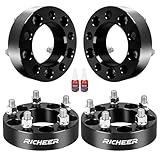 Richeer 1.5in 5×4.5 Wheel Spacers
|
|
Check Latest Price |
 FLYCLE 1.5in 5×4.5 Wheel Spacers
|
|
Check Latest Price |
 Rough Country 1.5in 5×5 Spacers for JK
|
|
Check Latest Price |
 KSP 2in 5×5 Spacers for JT and JL
|
|
Check Latest Price |
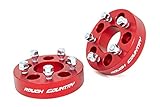 Rough Country 1.5in 5×4.5 Spacers for TJ and XJ
|
|
Check Latest Price |
 ECCPP 1.5in 5×5 Hubcentric Spacers
|
|
Check Latest Price |
We earn from qualifying purchases. CERTAIN CONTENT THAT APPEARS ON THIS SITE COMES FROM AMAZON. THIS CONTENT IS PROVIDED 'AS IS' AND IS SUBJECT TO CHANGE OR REMOVAL AT ANY TIME.
Jeep Generation Fitment: Bolt Pattern, Thread and Hub Bore
This is the table to bookmark. If your generation, pattern and thread do not match a row, the spacer will not bolt up, no matter how good the machining is.
The 5×4.5 pattern, also written 5×114.3mm, covers the older and leaf-sprung Jeeps: the Wrangler YJ, the Wrangler TJ, Cherokee XJ, Grand Cherokee ZJ, Comanche MJ and Liberty KJ/KK. Those are 1/2-20 thread, which is the same coarse thread used across most of that group.
The 5×5 pattern, written 5x127mm, covers the Wrangler JK and JK Unlimited, Grand Cherokee WJ and WK, and the Commander XK. Those are also 1/2-20. The bore on a real hub-centric kit for this group is 71.5mm.
The modern group is where threads change. The Wrangler JL and JLU, the Gladiator JT, the Grand Cherokee WK2 and WL, and the Durango all use 5×5 with M14x1.5 studs. This is the detail that catches people out, because a JK and a JL look identical from the driver’s seat and take completely different hardware.
Bore diameter is the second filter. A 71.5mm bore is a true fit to a Jeep hub. Bores of 80.5mm and 82.5mm appear in this category because they are common on other vehicles that share the 5×4.5 pattern, and they leave a visible gap on a Jeep hub. That gap is exactly how highway vibration starts.
One more generation note. The 5×5 kits for the JK group explicitly do not cover the JL, and the 5×4.5 kits for the TJ group do not cover the JK. Same brand, same 1.5 inch thickness, entirely different part. Read the fitment line, not the title.
Hub-Centric vs Lug-Centric: Which Design to Buy
Buy hub-centric. A hub-centric spacer has a raised lip that pilots into the wheel’s center bore, so the wheel’s load path runs through that lip into the hub rather than hanging off the bolt threads.
A lug-centric spacer has no lip. The wheel is located by the studs alone, which means cornering and braking loads try to shift the wheel laterally on the studs. On a Jeep running wider tires, that movement is what you feel as a shimmy through the steering wheel at motorway speed.
There is a subtlety worth understanding, because it catches even careful buyers. Hub-centric is only true when the bore matches the hub. A spacer with a 71.5mm bore on a Jeep hub is hub-centric. The same spacer with an 80.5mm or 82.5mm bore is not, because nothing is being centred by anything. Three of the kits in this roundup use those larger bores, and we have flagged each one rather than quietly recommending them.
The practical symptom to watch for is vibration that appears between roughly 40 and 60 miles per hour and fades above it. That pattern almost always points to a centering problem rather than a balance problem, and swapping the wheel to verify it takes five minutes.
Wider track does have a real cost. Every inch of spacer pushes harder on the wheel bearing and, on a factory suspension, on the ball joints and tie rods. That is not a reason to skip spacers, but it is a reason to stay at 1.5 inch unless your tire and lift combination genuinely needs more.
How Thick Should Your Spacers Be?
For most Jeeps, 1.5 inch is the answer. It clears the sway bar and the inner fender lip on a factory-height suspension, it stays inside the fender line, and it keeps the added bearing load within what factory components tolerate.
One inch is rarely worth it on a Jeep. The clearance gain over factory is small, the visual change is hard to see on factory rims, and you still push harder on the wheel bearing. If your problem is cosmetic, one inch will not solve it visually and you will end up buying 1.5 inch six months later.
Two inch is the right call in a narrower set of situations. If you are running 33s or larger on a lifted Jeep, two inch often removes the rub that one inch leaves behind. If you are on 31s with a 2 to 3 inch lift, two inch is usually enough. If you are on a 4 inch or taller lift, the fender gap is already large and you probably do not need spacers for clearance at all.
Thickness and lift height interact in a way most guides ignore. On a factory-height Jeep, spacers do nearly all the clearance work. On a lifted Jeep, the lift has already moved the fender up, so the same spacer thickness produces a much larger visual gap and a much higher unsprung load. Match the spacer to the combination of tire size and lift, not to the tire size alone.
There is a hard ceiling at the fender line, and it is both a style and a legal line. A spacer that pushes the tire past the widest part of the fender flare looks unfinished and can attract attention at an inspection. Check your clearance with the wheel turned to full lock before you commit.
Material, Stud Grade and Bolt Pattern Compatibility
Look for a stated aluminum grade. Nearly all of the credible kits in this category use 6061-T6, and several specify forged rather than cast. Forged 6061-T6 is what you want on a spacer over about one inch thick, because cast aluminum in that shape can crack at the stud holes under impact loading. Steel is heavier and harder to break, but you carry that weight at every corner.
Stud grade is the second spec. Grade 10.9 studs are the sensible default because they deform before they snap, which is a deliberate safety margin. Grade 12.9 studs are harder and stronger, and they appear in several kits here. The trade-off is that a very hard stud can snap instead of deforming, so the argument for 10.9 in a spacer application is about controlled failure rather than raw strength.
On thread compatibility, the rule is simple. A spacer with 1/2-20 studs needs 1/2-20 wheel holes, and a spacer with M14x1.5 studs needs M14x1.5 wheel holes. Most factory steel wheels on the JK use the 1/2-20 pattern with larger clearance holes, and most alloy wheels use the matching fine thread. The failure mode is a wheel that physically will not go on, which is the good outcome.
The real compatibility problem is a wheel whose mounting face is thinner than the spacer plus the existing stud length. That combination will not clamp properly no matter which brand you buy, and it is the number one installation complaint in the review data for this roundup.
Corrosion matters more than most buyers expect. Road salt attacks cheap hardware faster than it attacks the spacer body. Kits that ship Dacromat or Geomet coated bolts, or anodized bodies, hold up better in winter climates, and two of the kits in this roundup also ship threadlocker in the box.
Installation and Torque Guide for Jeep Wheel Spacers
Torque figures vary by brand, and the honest answer is to use the number your spacer’s manufacturer publishes rather than a number from a forum post. The published figures in this category cluster at 75 to 85 ft-lb for most 1.5 inch 5×4.5 and 5×5 kits, and 85 to 90 ft-lb for the heavier M14x1.5 kits on the modern platforms.
The install sequence matters more than the number. Jack the Jeep on a rated stand, remove the wheel, and confirm your OEM studs protrude far enough through the spacer to hold full thread engagement. If they stop short, the wheel is not being clamped and you need longer studs before you go any further.
Clean the hub face and the spacer’s mounting face before assembly. A spacer that rocks on a dirty hub is a spacer that never reaches full torque, and that is the most common cause of the vibration complaints in this category.
Hand-thread the spacer onto the studs first and spin it until it seats against the hub with no wobble. Only then start the bolts. Hand-tightening first is the step that separates a centered install from a slightly off-center one, and skipping it is the mistake that ends up in the one-star reviews.
Apply the included threadlocker if your kit has it. If it does not, buy a medium-strength automotive threadlocker before you start rather than assuming plain studs will hold.
Tighten in a star pattern so the spacer pulls down evenly, then set the final torque with a calibrated torque wrench in the correct units for your tool. Never finish-torque with an impact gun. An impact gun applies uncontrolled preload, and loose hardware after a few hundred miles is the predictable result.
Re-torque after 50 to 100 miles, which is the interval the manufacturers and the owner forums agree on. After that, check every 3,000 to 5,000 miles, and check immediately after any off-road impact or a curb strike.
Whether you need an alignment afterwards depends on how much track you added. A 1.5 inch spacer on an otherwise factory-spec Jeep usually leaves toe alone. Two inch or more, or a spacer on a Jeep that already has a lift, can change camber enough to wear tires unevenly, so an alignment is cheap insurance at that point.
Are Wheel Spacers Legal for Road Use?
Wheel spacers are legal for road use in the United States, but the rules differ by state and are mostly enforced at the state level.
The most commonly cited restriction is the fender line. Several states and localities have language covering a wheel or tire that extends beyond the bodywork, and that is the threshold most likely to matter if you run 2 inch spacers with a narrow tire. Keep the outer face of the tire inside the fender flare and you stay well clear of the argument.
Inspection is the practical concern. States that run annual safety inspections vary in how they treat wheel modifications, and an officer writing a tire that sticks out past the flare can cost you more than the spacers did. We cannot give you a fifty-state answer, so check your own state’s vehicle code before a large purchase.
Insurance is the third question. A failure that traces back to a modification the insurer did not know about is the scenario owners worry about most. If you have a spacer or a lift, tell your insurer. The disclosure takes five minutes and the conversation is far cheaper than a denied claim.
Nothing in this section changes our recommendations. Every kit below is a road-legal bolt-on spacer when installed to a vehicle it fits. The legal question only becomes real when thickness and stance push the tire past the body line.
When Not to Buy Wheel Spacers
Some of the most useful advice in this category is advice not to buy. Owner forums are fairly unanimous on the point that most Jeeps do not need spacers at all, and the top thread on the subject opens by asking whether the owner actually has a clearance problem or just wants the look.
Skip spacers if you are on a factory-height Jeep with factory-size tires and no rub. There is nothing to fix. The stance change at 1.5 inch on factory rims is subtle, and you add bearing and ball-joint load for a cosmetic result.
Skip spacers if you already run a 4 inch or taller lift. The fender gap is already there, the unsprung mass is already meaningful, and adding spacers compounds a load problem you already have rather than solving a clearance problem.
Skip spacers if your tire rub is a lift-height problem wearing a spacer-shaped costume. If the tire contacts the fender at the top of the bump travel, no spacer thickness will fix it, and a 2 inch spacer will simply move the rub to the sway bar and the steering linkage.
Skip spacers if you drive a lot of cracked pavement and mostly commute. Each added inch increases unsprung mass, and unsprung mass is what rides every expansion joint. On a daily commuter, 1.5 inch is a reasonable ceiling, not a starting point.
Skip spacers if you are not prepared to re-torque them. A spacer that is never checked after the first 100 miles and then every few thousand is a loose spacer within a year, and that is the failure the one-star reviews describe.
Skip spacers if your wheels are unknown. Before spending anything, confirm your bolt pattern, your thread pitch, your hub bore and your wheel’s mounting face depth. It is a ten-minute job with a tape measure that saves a return shipment.
1. OMT 5×5 1.5 Inch Wheel Spacers – Best Overall for JK, WK and XK
OMT 5×5 Wheel Spacers with 71.5mm Center Hub Bore, Set of 4
- Thickness: 1.5 inch
- Pattern: 5x5 (5x127mm)
- Bore: 71.5mm
- Studs: 1/2-20
Pros
- Widest review base here at over 5400 ratings
- True 71.5mm hub-centric bore for JK and WK hubs
- Dacromat coated 1/2-20 bolts resist corrosion
- Slotted rear face eases removal
- Covers JK and JK Unlimited plus WJ WK and XK
Cons
- 5x5 pattern excludes TJ YJ and JL platforms
- Adds track width that raises bearing and ball-joint wear
- Only one year of warranty coverage
Here is the direct answer: this is a 1.5 inch, 5×5, 71.5mm hub-centric kit with 1/2-20 studs, and it fits the Wrangler JK and JK Unlimited, Grand Cherokee WJ and WK, and Commander XK. The bolt pattern is 5×5 (5x127mm), the bore is a true 71.5mm, and the studs are 1/2-20.
What sets it apart is the review base. At more than 5,400 ratings this is the most widely reviewed kit in the roundup, and the star distribution holds at 4.6 with roughly 80 percent five-star. A large sample does not guarantee a flawless product, but it does mean the failure modes are documented rather than hypothetical.
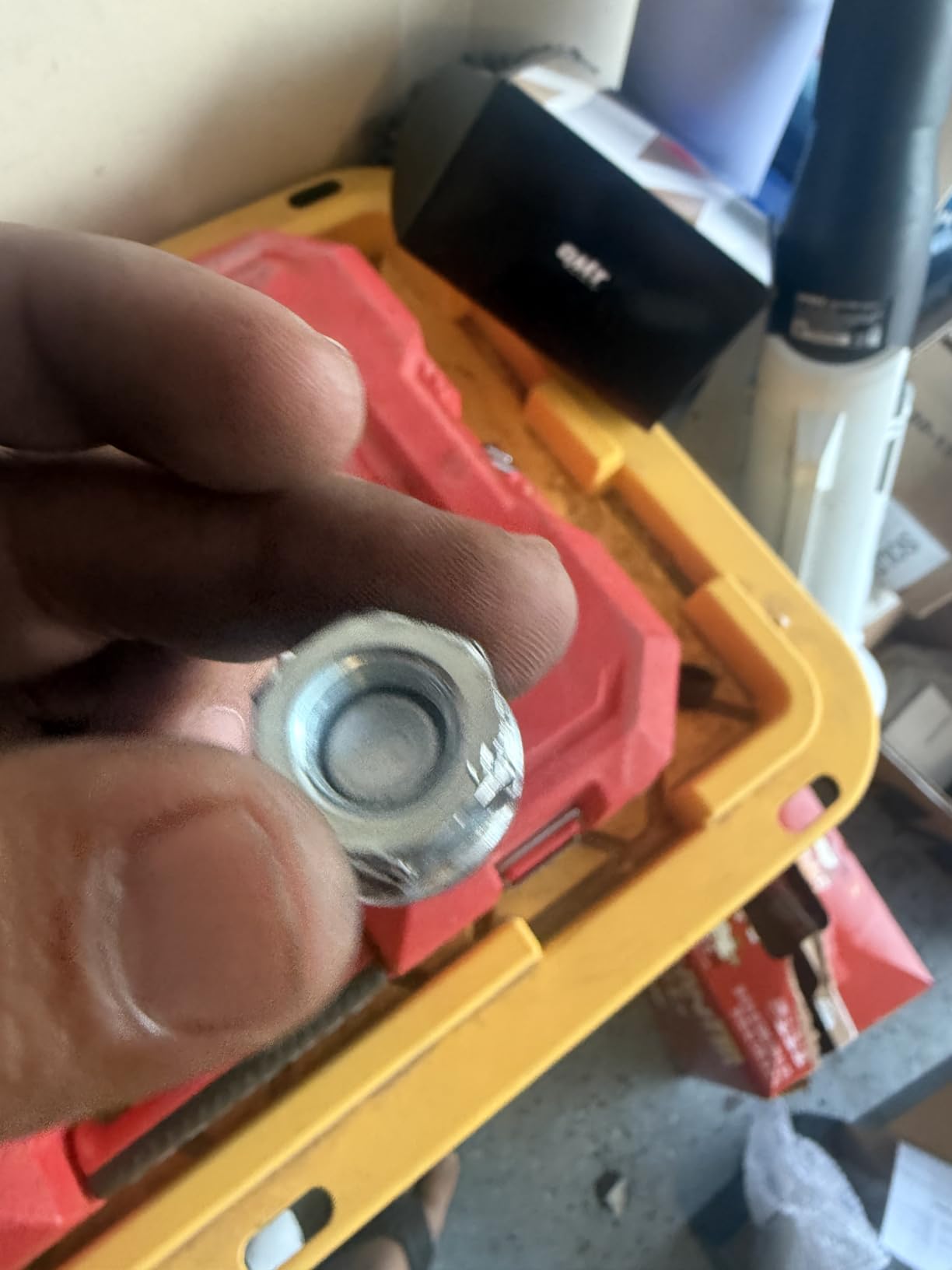
The design choices are the ones that matter at speed. The hub-centric lip is real, so the wheel is centred by the lip rather than hanging on the studs, and the rear face is slotted, which reviewers consistently credit with making removal years later less likely to damage the spacer. The body is machined from T6 billet aluminum, and the 20 included bolts are Dacromat coated, which the manufacturer rates at seven to ten times the corrosion resistance of standard zinc.
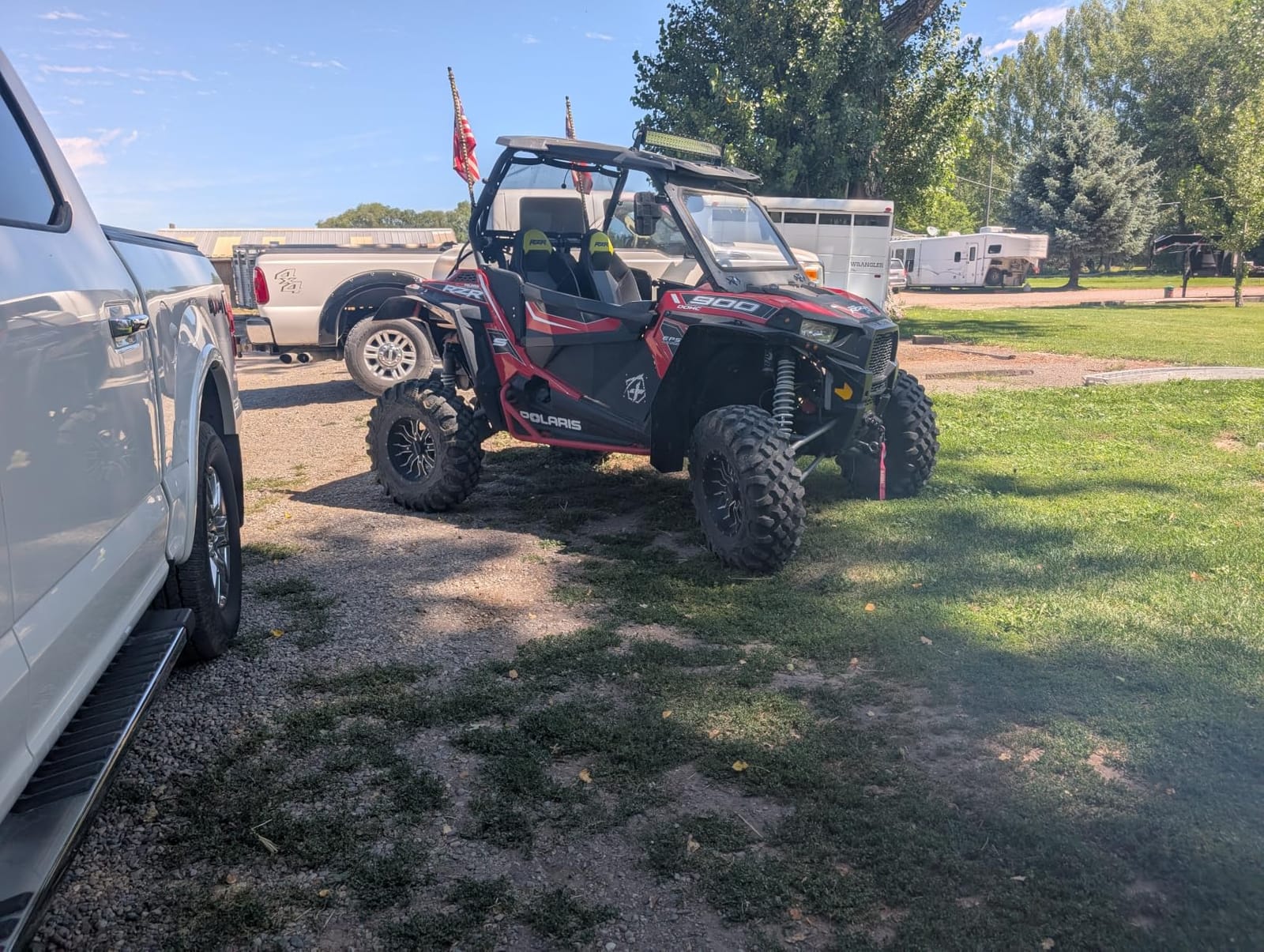
The stated effect on the vehicle is up to 3 inches of extra track across the axle, which is 1.5 inches per side. Reviewers report a visibly wider stance and calmer highway behavior, and one owner reported running the same kit on both a Grand Cherokee and a Wrangler across 40,000 miles without an issue.
What you should know before you buy
Confirm your Jeep is on the 5×5 list. This kit does not cover the TJ, the YJ, or any JL-era model, and the 1/2-20 thread is shared with the 5×4.5 Jeeps, so the thread alone will not tell you whether it fits. If your hub has five studs and the wheel bolts to the current setup with no play, you are probably looking at the JK or WK family.
Expect to feel the added width. Every review that criticises this kit criticises the physics, not the product: more track puts more sideways load on the wheel bearing and, on factory suspension components, the ball joints and tie rods. On a lifted JK running 33s or larger, the added wheel mass helps absorb that sideways load and most owners report a calmer result than the geometry would predict.
Who should skip it
Skip this if you are on a JL or Gladiator, because those need M14x1.5 studs and a different kit entirely. Skip it if your problem is a one-inch clearance shortfall on a factory-height Jeep, because 1.5 inch is already more than most of those setups need, and the visual difference over a thinner spacer is small.
Skip it if you want a long warranty. The one-year coverage is the shortest guarantee attached to any kit here, which is a fair trade for the volume and the machining consistency but worth knowing before you buy.
2. KSP 5×5 1.5 Inch Wheel Spacers – Best Complete Kit for JK Owners
KSP 5×5 1.5inch Wheel Spacers for Wrangler 2007-18 Grand Cherokee 1999-2010
- Thickness: 1.5 in (38mm)
- Pattern: 5x5 (5x127mm)
- Bore: 71.5mm
- Studs: 1/2-20
Pros
- Forged 6061-T6 billet with heat-treated 10.9 grade bolts preinstalled
- Wheel-centric lip centres the wheel to kill vibration
- 20 open-end lug nuts included in the box
- Complete bolt-on kit with all hardware
- Handles street driving and intermediate trail work
Cons
- Not for 2011-2017 WK2 or for JL TJ YJ and ZJ
- 1.5 inch leaves some Rubicon builds wanting more poke
- Factory hub retainers must be removed for a flush fit
The direct answer: a 1.5 inch (38mm) forged 6061-T6 spacer, 5×5 pattern, 71.5mm bore, 1/2-20 studs, supplied as a set of four with 20 open-end lug nuts. Fitment covers the 1999-2004 Grand Cherokee WJ, 2005-2010 WK, 2006-2010 Commander XK, and the 2007-2018 Wrangler JK and JK Unlimited.
What makes this the value pick is what arrives in the box. Studs, lug nuts and hardware are all included, so there is no second order and no guessing whether the nuts you already have are long enough. For a first-time spacer install, removing that variable is worth more than a spec-sheet difference between two forged 6061-T6 kits.
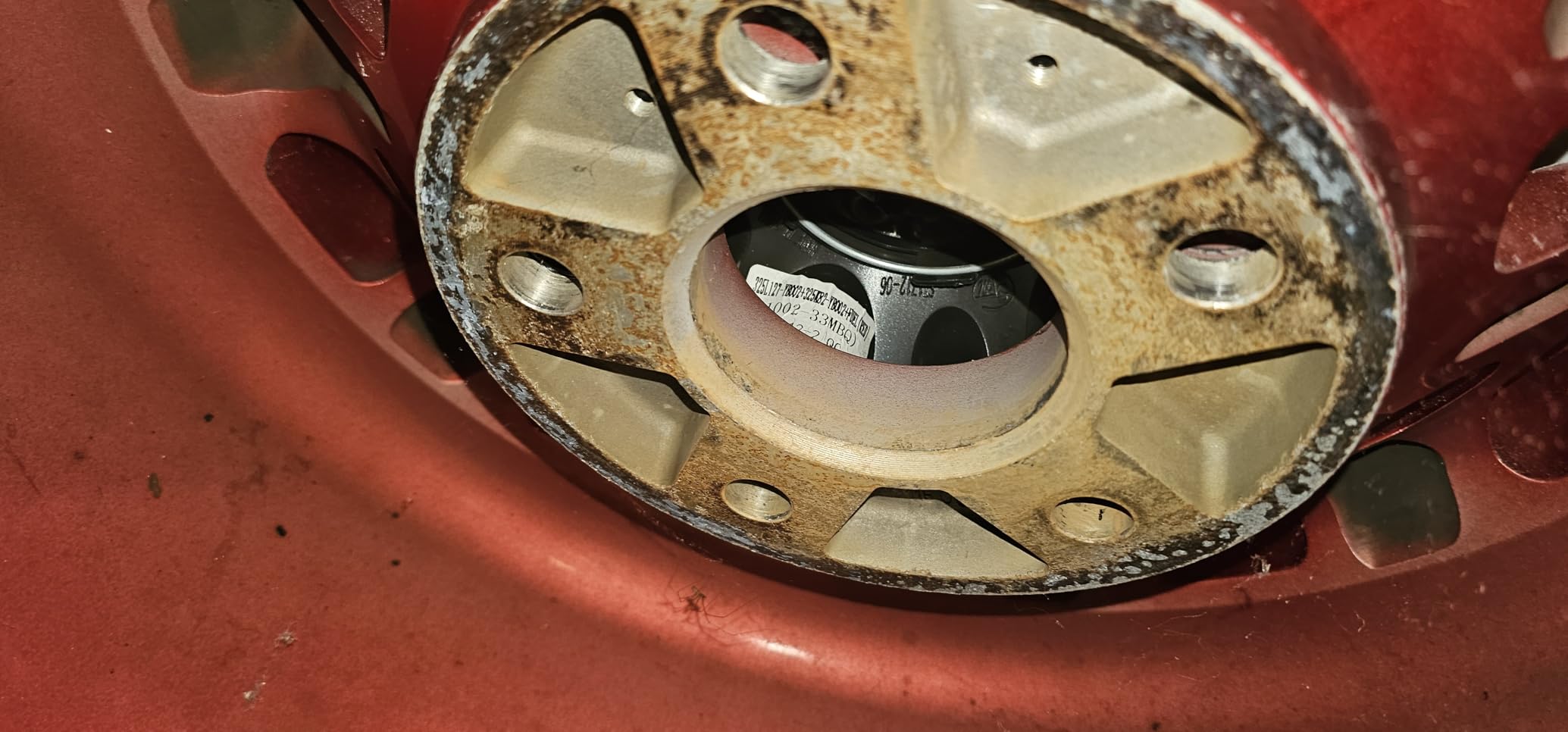
The studs are heat-treated 10.9 grade and preinstalled, and the body is machined from 6061-T6 billet with an anodized surface for corrosion resistance. The wheel-centric lip is the part that shows up in owner satisfaction: reviewers describe the fit as a snug match with no gapping at the hub, and they rate the result comparable to kits costing noticeably more.
At 4.7 stars from more than 1,300 ratings with around 84 percent five-star, this is one of three kits tied at 4.7, and the review language is unusually consistent about fit quality rather than about appearance or value alone.
What you should know before you buy
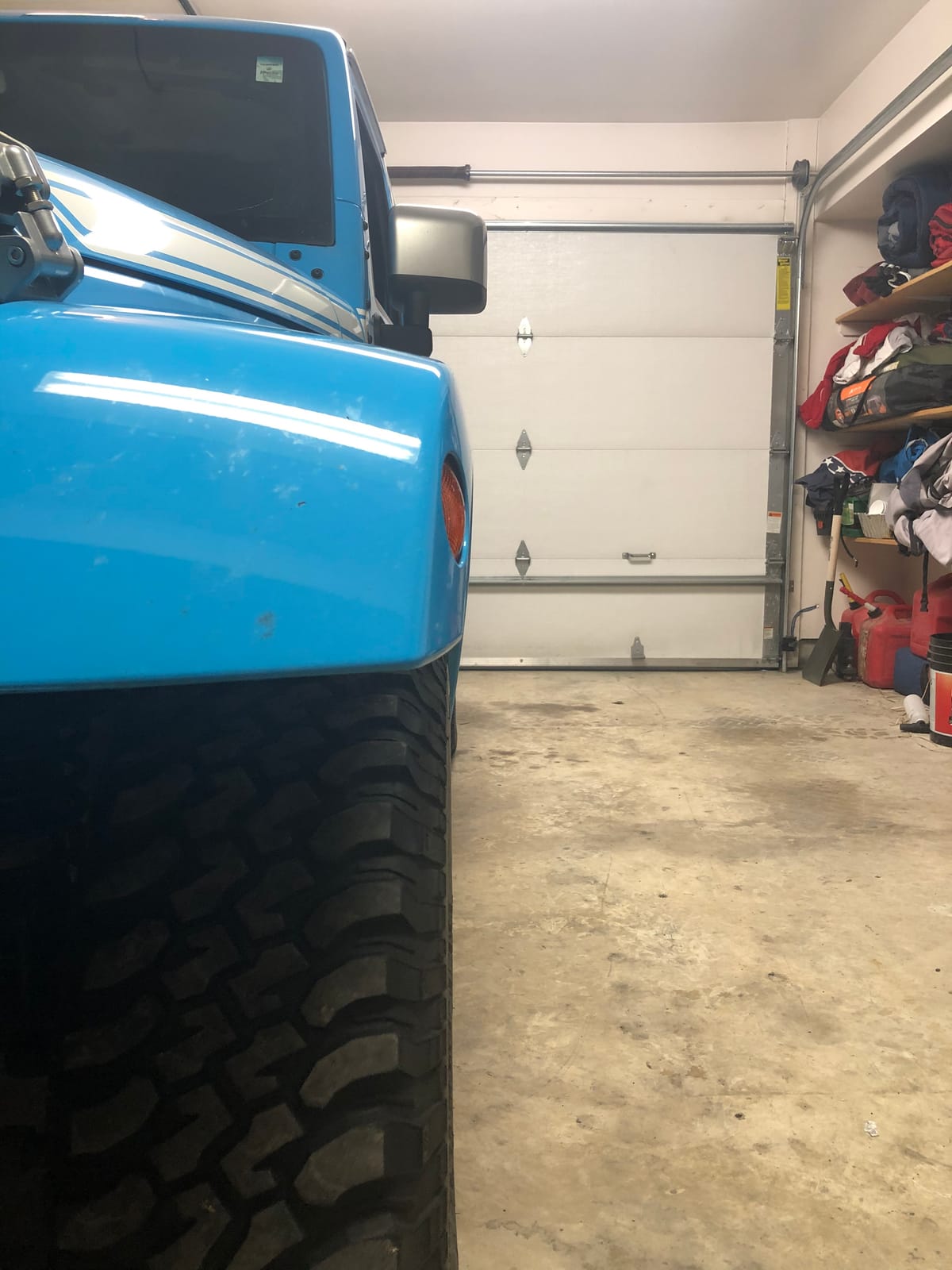
It will not fit a 2011-2017 Grand Cherokee WK2. That chassis moved to a different bolt and thread arrangement, and the KSP fitment line for this kit explicitly excludes it. It also will not fit a JL or Gladiator, and the listing calls out TJ, YJ and ZJ exclusions as well.
Plan on removing the factory hub retainers. That is not an optional step, and it is the most common reason a first install leaves the wheel sitting proud instead of flush. Clean the hub face, hand-thread the spacer until it seats with no wobble, and only then start the bolts.
Who should skip it
Skip it if your build is a JK on a 2 inch or taller lift running 35s, because 1.5 inch will likely not clear the rub you are trying to solve and you would be back at the store in a month. Skip it if you drive salted roads and do not want to disassemble the wheels each winter, because 1.5 inch of extra stack makes the studs harder to reach with a socket in a slushy wheel well.
3. dynofit 1.5 Inch 5×5 Wheel Spacers – Tightest Machined Bore
dynofit 1.5″ Wheel Spacers 5×5 for 2007-2018 Jeep Wrangler JK, 1999-2010 Grand Cherokee WJ WK, 71.5mm Hub Centric 5×127 Wheel Adapters for 2005-2010 Commander XK, 1/2″-20 Studs, 4Pcs Forged Spacers
- Thickness: 1.5 in (38.1mm)
- Pattern: 5x5 (5x127mm)
- Bore: 71.5mm
- Studs: 1/2-20
Pros
- Forged rather than cast so it resists cracking under load
- Grade 10.9 Dacromet studs deform before snapping
- Precision bore seats flush with no slop
- Seller replaces quality issues quickly
- Added track width improves cornering stability and stance
Cons
- Does not fit the Wrangler JL platform
- Occasional quality variance with one adapter in a set
- Extra track strains factory bearings and steering parts
Direct answer: 1.5 inch (38.1mm) thickness, 5×5 (5x127mm) pattern, 71.5mm hub bore, 1/2-20 studs, four spacers plus 20 open lug nuts. It fits the 1999-2010 Grand Cherokee WJ and WK, 2005-2010 Commander XK, and 2007-2018 Wrangler JK. It does not fit a JL.
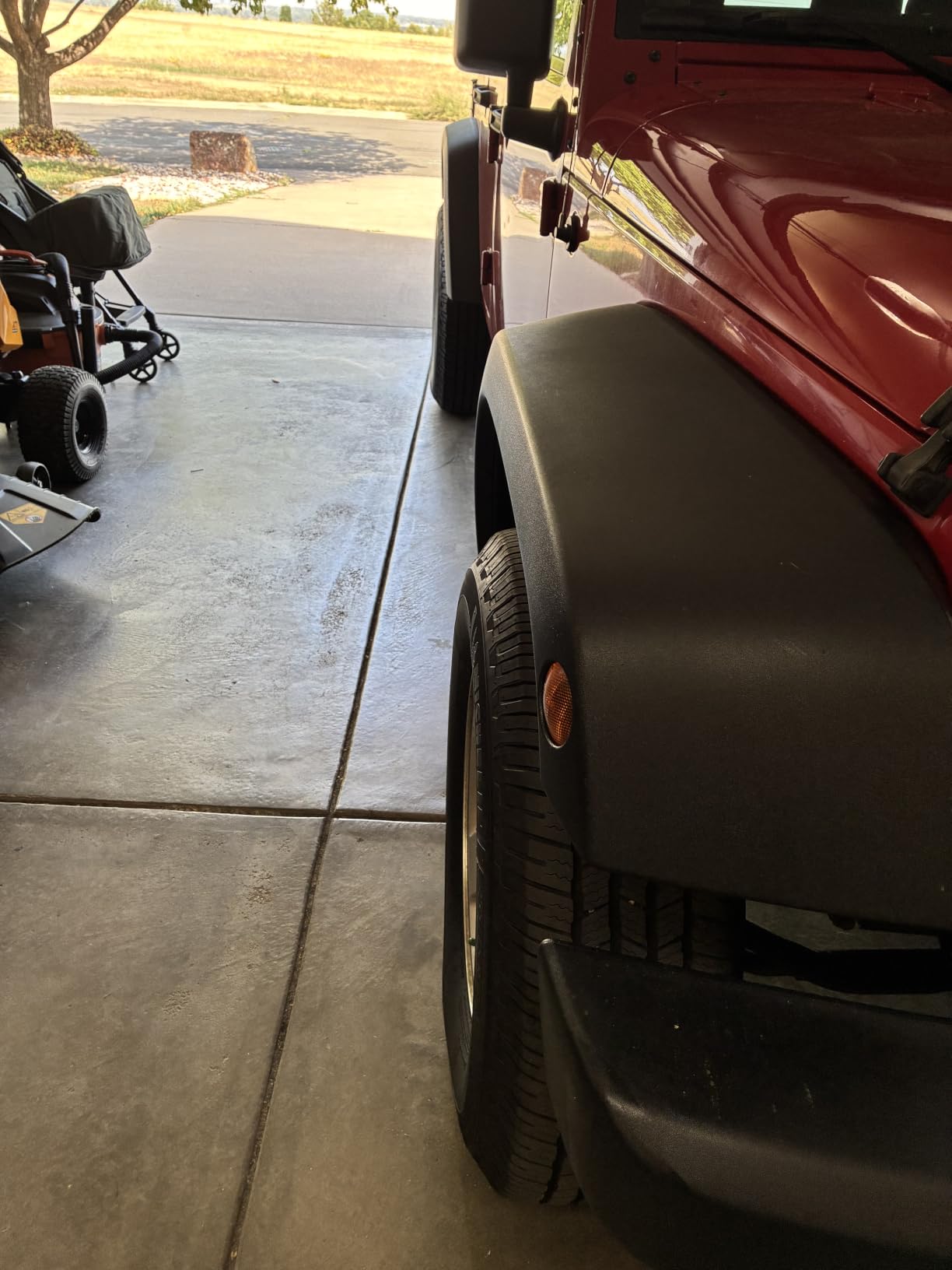
Which product is the machining pick. At 4.7 from roughly 940 ratings with about 84 percent five-star, the review language is dominated by one specific observation: no gapping at the hub. Owners describe the bore as seating flush with no slop.
The construction is forged 6061-T6 aluminum with anodizing and CNC machining, and the bolts are DACROMAT-treated and SGS-approved at Class 10.9. That stud grade is a deliberate choice, not a default: a 10.9 stud is designed to deform under extreme load before it snaps, which converts a sudden failure into a repairable one.
The package weight is 16.4 pounds for the set, and the anodized black finish resists corrosion, which is the kind of protection that matters once a spacer sits in road salt every winter.
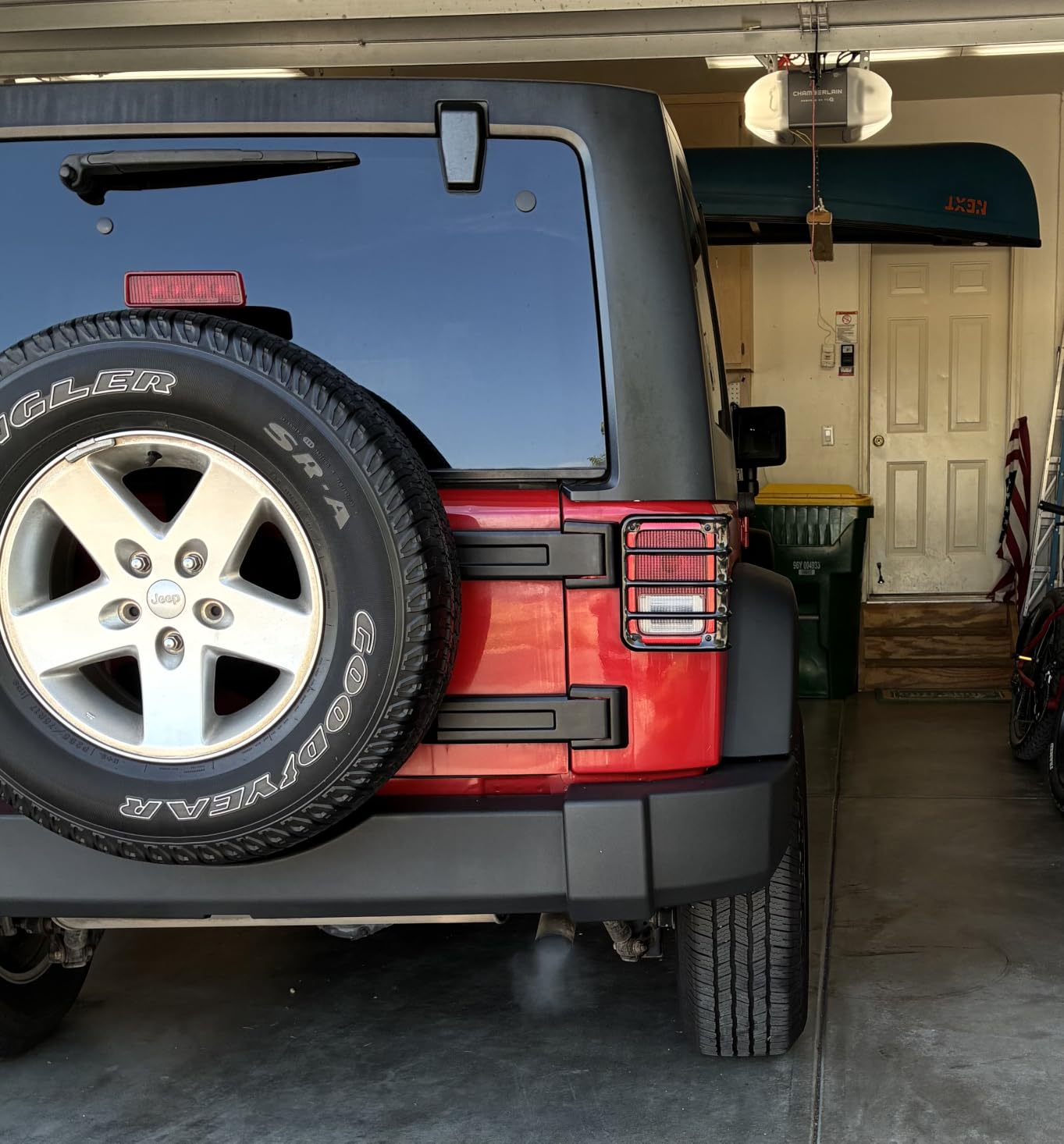
What you should know before you buy
There is a documented quality-control caveat. One detailed review recorded an isolated adapter that was out of tolerance and did not seat fully, and the seller replaced it. That is a single unit in a set rather than a pattern failure, but it is the kind of thing worth inspecting for on arrival, so check all four spacers sit flat on a flat surface before you install anything.
Also note the fitment line stops at 2010 for the Grand Cherokee. A WK2 is a different fitment, and if you own one you want the modern M14x1.5 kits instead.
Who should skip it
Skip it if you need a warranty longer than one year, because the coverage here is one year with a 30-day return window. Skip it if you are on a factory-suspension JK and drive mostly city streets, where the wider track adds bearing load without giving you the highway stability benefit that owners with 33s and larger actually notice.
4. AA Ignition 1.5 Inch 5×5 Spacers – Best Warranty Backing on a 5×5 Kit
Wheel Spacer Set of 4-1.5in Thick – 5x127mm, 5x5in Hub Centric Adapter 71.5mm Bore – 1/2 x 20 Studs – Compatible with Jeep Vehicles – 2007-2018 Wrangler, 06-10 Commander, 05-10 Grand Cherokee
- Thickness: 1.5 inch
- Pattern: 5x5 (5x127mm)
- 71.5mm hub bore
- 1/2-20 studs at 10.9 grade
Pros
- Limited lifetime warranty is rare in this category
- Complete kit includes bolts and lug nuts
- Clears sway bar rub on lifted Jeeps running 33s and 35s
- Hub-centric centering on a true 71.5mm bore
- Owners report stable torque values at re-checks
Cons
- Threadlocker is not included and must be bought separately
- A minority of reviews report a sheared lug bolt after long use
- Heavier than forged aluminum alternatives
Direct answer: a 1.5 inch, 5×5 (5x127mm), 71.5mm bore, 1/2 x 20 stud kit rated at 10.9 grade, sold as a set of four. Fitment runs to the 2007-2018 Wrangler 4WD and JK Unlimited, the 2007-2010 Unlimited 2WD, the 2006-2010 Commander XK, the 1999-2004 Grand Cherokee WJ and the 2005-2010 WK.
What separates this kit is the warranty. A limited lifetime warranty on a component that bolts directly to your hub is a genuinely unusual commitment, and it is the reason this kit earns a place in a roundup where most coverage runs to a single year.
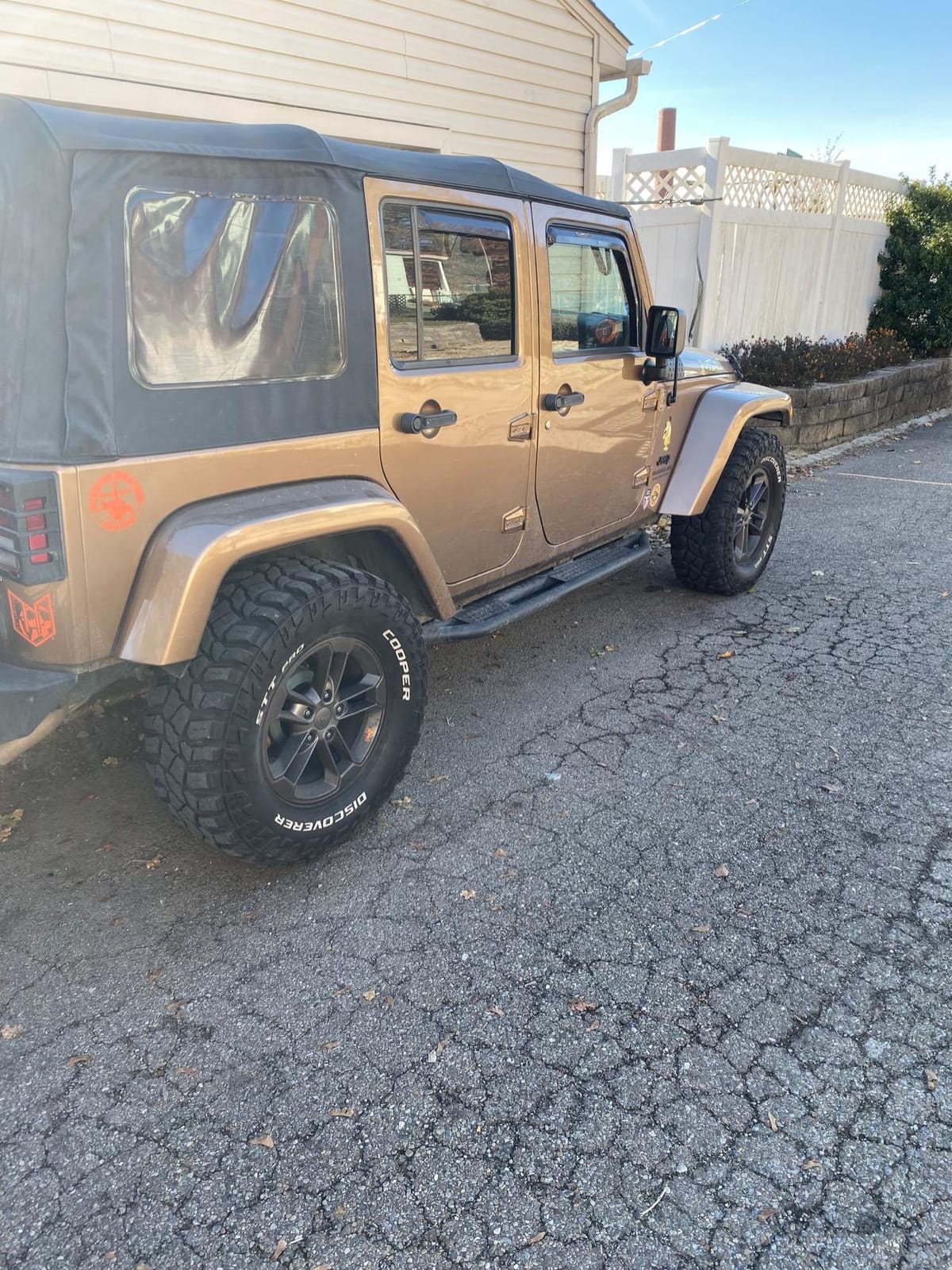
The rest of the spec sheet is conventional in the good way: CNC machined anodized spacers, a 71.5mm hub-centric bore, 10.9 grade studs, and heat-treated lug nuts included alongside the bolts. Reviewers consistently document a clean bolt-on install that resolved tire rub on lifted Wranglers, and several mention stable torque readings when they came back for a re-check.
At 4.6 from around 930 ratings with about 81 percent five-star, this is a dependable mid-tier kit. The one caution that repeats in the long-term reviews is hardware rather than machining, and it is worth reading before you decide.
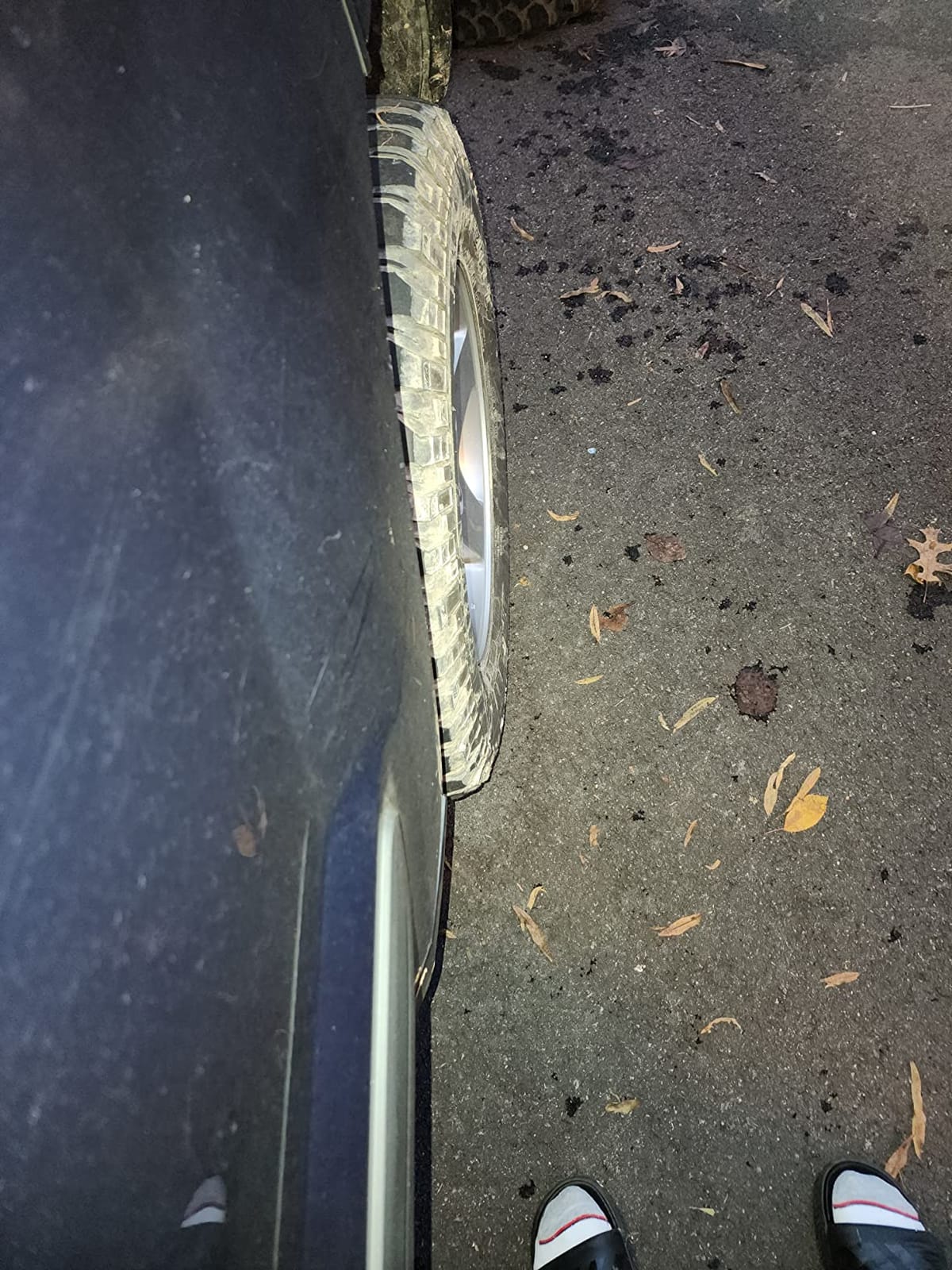
What you should know before you buy
There is a documented long-term hardware complaint. At least one owner reported a sheared lug bolt at a routine re-torque after roughly two years of daily use, and buyers generally attribute that to hardware quality rather than to the spacer body. A sheared bolt is a serious event, so this is the specific reason to inspect your lug bolts visually at every re-torque rather than only checking the torque reading.
Threadlocker is not in the box. Buy a medium-strength automotive threadlocker before the install, because the re-torque schedule below assumes the studs have something other than dry threads holding them together.
Who should skip it
Skip it if your Jeep is a JL or Gladiator, since the thread is wrong for those platforms. Skip it if minimizing unsprung mass is the priority, because the listed construction is steel rather than forged aluminum, and you carry that weight at every corner.
5. dynofit 2 Inch 5×4.5 Wheel Spacers – Most Clearance for TJ, XJ and ZJ
Dynofit 2 inch 5×4.5 Wheel Spacers for XJ KJ KK TJ ZJ, 80.5mm Hub Bore, 1/2″-20 Thread Pitch 5×114.3 Forged Spacer for Mustang Explorer Ranger Cherokee Wrangler Liberty Grand Cherokee
- Thickness: 2 in (50.8mm)
- Pattern: 5x4.5 (5x114.3mm)
- Bore: 80.5mm
- Studs: 1/2-20
Pros
- 2 inches per side is the most clearance in the 5x4.5 group
- Forged 6061-T6 resists fracture better than cast
- Grade 10.9 Dacromet studs deform rather than snap
- Owners report a tight flex-free fit
- Verified by owners on a loaded off-road trailer
Cons
- 5x4.5 pattern means no JK
- 2 inch adds more track width than any other 5x4.5 kit here
- 80.5mm bore is not a true hub-centric fit on a Jeep
Direct answer: 2 inch (50.8mm) thickness, 5×4.5 (5×114.3mm) pattern, 80.5mm hub bore, 1/2-20 studs, set of four, with a published recommended torque of 75 to 85 ft-lb. Jeep fitment covers the 1984-2013 Cherokee XJ, KJ and KK, the 1997-2006 Wrangler TJ, the 1992-1998 Grand Cherokee ZJ and the 2001-2013 Liberty.
Which 5×4.5 product is our clearance pick for the older group. At 2 inches per side it moves the wheel further out than any other kit we list for the 5×4.5 pattern, which is exactly what a TJ on 33s with a rub at the fender lip needs, and it is why we included it despite the bore caveat below.
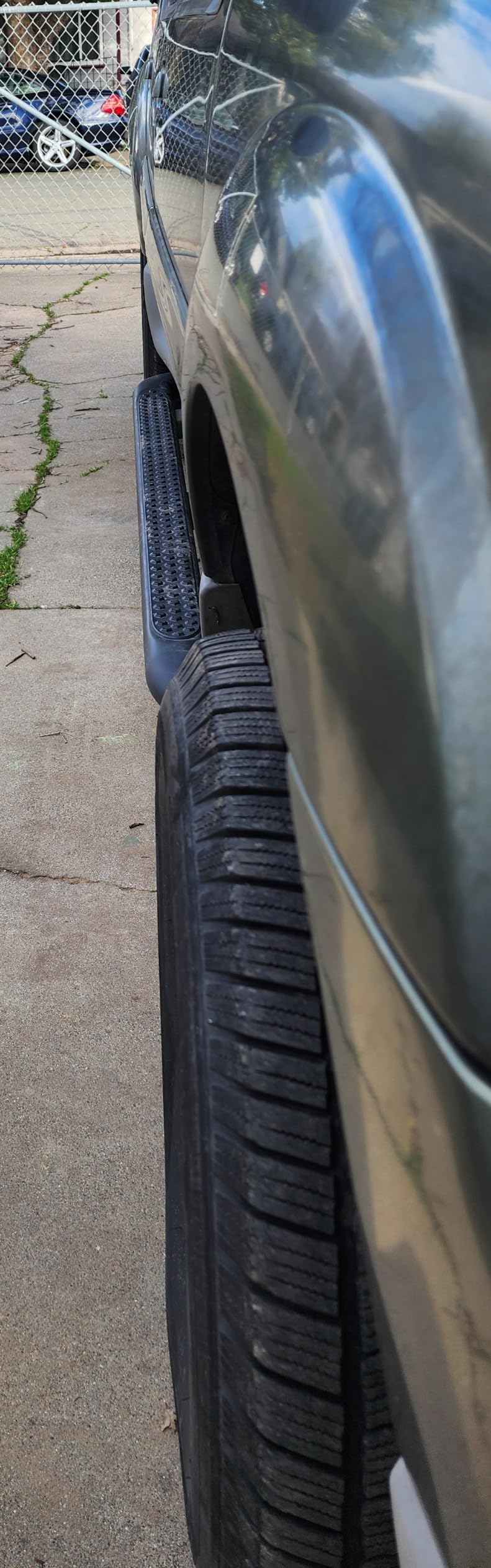
The construction is forged 6061-T6 aluminum with Grade 10.9 Dacromet studs that are designed to deform rather than snap under extreme load. Owners of TJ, ZJ and XJ Jeeps report a tight, flex-free fit, and one reviewer documented towing a loaded off-road trailer over 1,200 miles round trip with no issues at all.
At 4.6 stars from around 880 ratings with about 83 percent five-star, the rating profile is solid, and the small number of 4-star reviews still describe it as good value rather than as a disappointment.
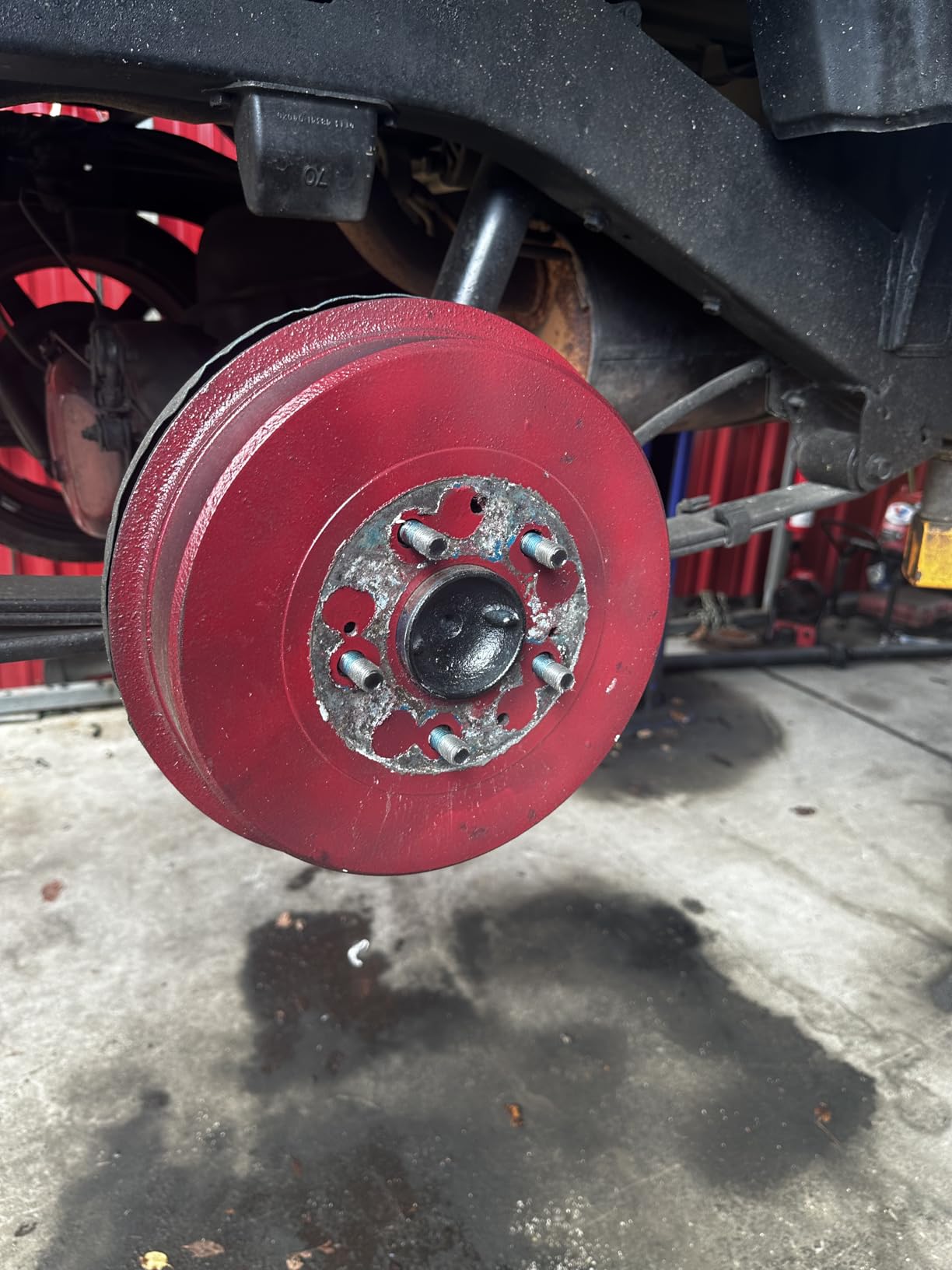
What you should know before you buy
The 80.5mm bore is the detail to understand before you order. A Jeep hub is not 80.5mm, so this spacer does not centre the wheel on the hub the way a 71.5mm spacer does. It is a well-machined and well-reviewed spacer, but on a Jeep hub it functions closer to a lug-centric design, and that is the most likely source of any highway vibration an owner reports.
Two inch is also a genuine load increase. On a leaf-sprung TJ or XJ with factory bearings and factory steering, the extra width accelerates wear on all of them, and the reviews that mention the widest track say the same thing about the cost.
Who should skip it
Skip it if you drive a lot of highway and you are sensitive to vibration, because the oversized bore gives you less centering than the 71.5mm kits. Skip it if you are on a factory-height Jeep with factory tires, since 2 inches on an unlifted setup usually pushes the tire toward the fender line for clearance you do not need.
6. Richeer 1.5 Inch 5×5 Wheel Spacers – Best for JL, JLU and Gladiator JT
Richeer 1.5 inch 5×5 Hubcentric Wheel Spacers for 2018-2024 Wrangler JL
- Thickness: 1.5 in (38.1mm)
- Pattern: 5x5 (5x127mm)
- Bore: 71.5mm
- Studs: M14x1.5
Pros
- The M14x1.5 kit that fits JL and JLU and JT
- Grade 12.9 studs rated to 1000MPa tensile
- Forged 6061-T6 billet with CNC machining and anodizing
- No vibration reported at highway speed after install
- Arrives in expanded foam with parts undamaged
Cons
- One prominent review reports a stud shearing at highway speed
- Some buyers question the origin and hardness consistency of the studs
- Studs must not protrude past the spacer face
Direct answer: a 1.5 inch (38.1mm), 5×5 (5x127mm), 71.5mm bore kit with M14x1.5 threads and a published torque of 85 to 90 ft-lb. Fitment is the 2018-2024 Wrangler JL and JLU, the 2019-2024 Gladiator JT, the 2011-2024 Grand Cherokee WK2, the 2022-2024 WL and the 2011-2024 Durango.
This is the modern-platform answer, and the M14x1.5 thread is the whole point. A JK spacer and a JL spacer look identical in a product photo and will not interchange, so anyone buying for a JL or a Gladiator should start here and not try to make a 1/2-20 kit work.
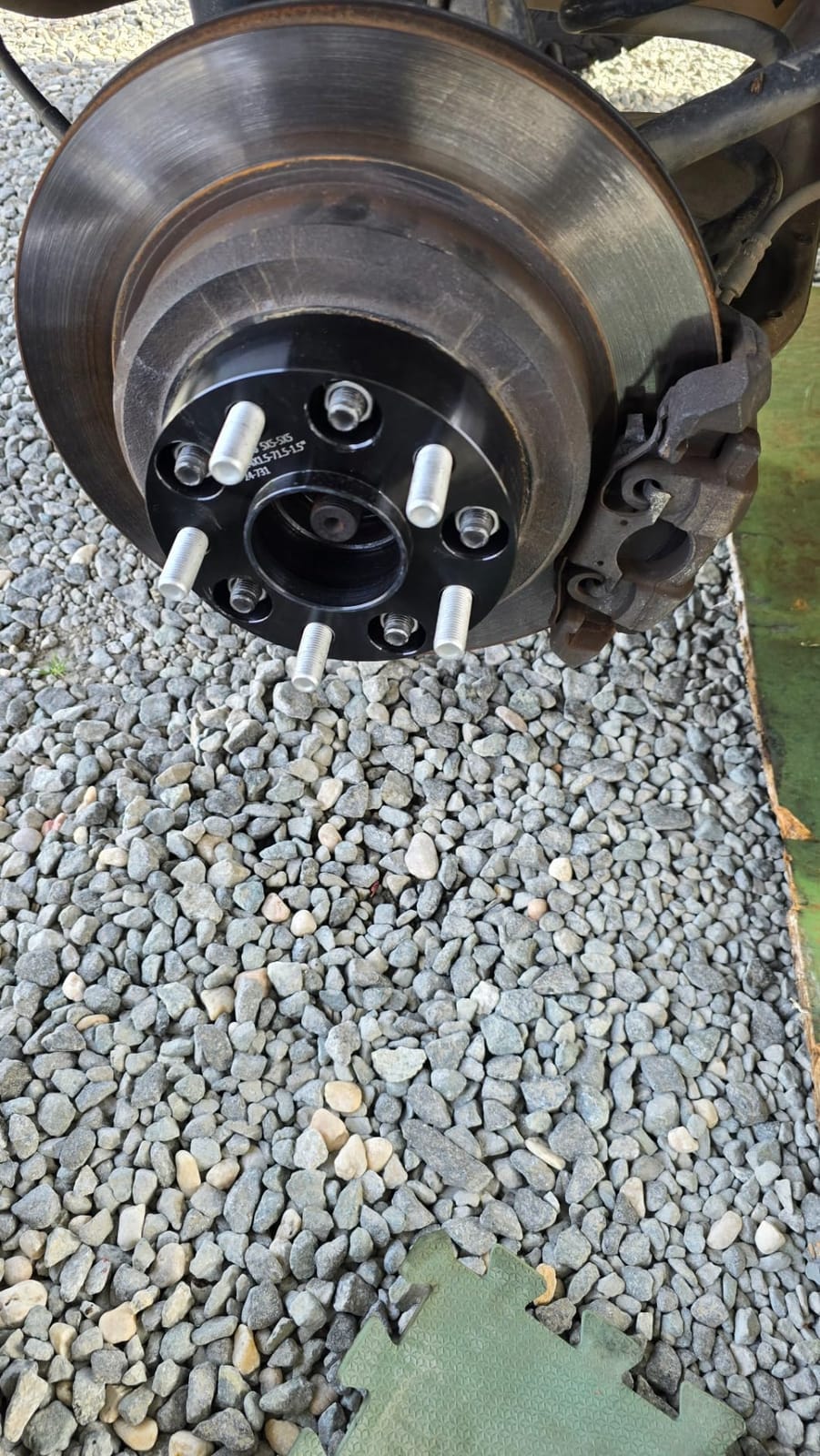
The body is forged 6061-T6 billet, CNC machined and anodized, with a true 71.5mm hub bore, and the studs are Grade 12.9 rated to 1000MPa tensile strength. At 16 pounds for the set it is mid-weight for a 1.5 inch kit, and reviewers report a clean fit with a visibly wider stance on a Gladiator or a JL and no rub in tight turns.
Owners report no vibration at highway speed after installation, which is the outcome you want from a spacer this thick, and the packaging in expanded foam is a small quality detail that a few reviewers specifically noticed.
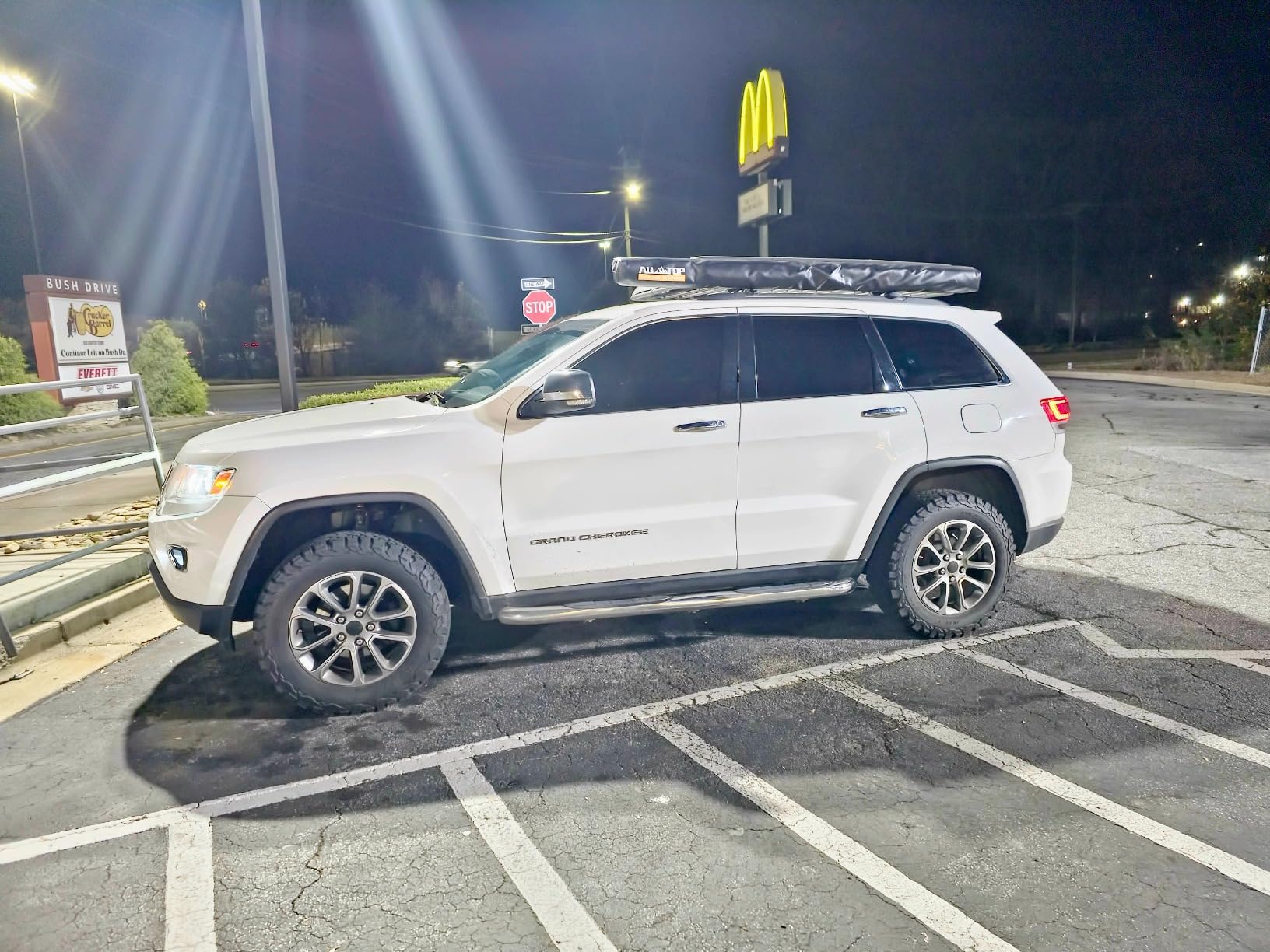
What you should know before you buy
There is one prominent account of a stud shearing at highway speed that damaged the wheel, fender and rotor, and other buyers separately question the origin and hardness consistency of the Grade 12.9 studs. That combination is why we do not hand this kit to a first-time spacer owner without the install discipline below.
The failure mode behind that report is worth understanding, because it applies to every spacer regardless of brand. If the original wheel studs protrude past the face of the spacer, the wheel sits on the studs rather than clamping down on the spacer, and nothing is torqued properly. A certified mechanic documented catastrophic stud failure from an incorrectly seated wheel, and the same caution appears in reviews across multiple brands.
Who should skip it
Skip it if you are on a JK, a TJ or a ZJ, because the thread is wrong for those platforms. Skip it if you are not prepared to measure stud protrusion before installing and to re-torque on a schedule, because this is not the kit for a set-and-forget install.
7. Richeer 1.5 Inch 5×4.5 Wheel Spacers – Best Match for YJ, TJ and ZJ
Richeer 1.5 inch 5×4.5 Wheel Spacers for TJ XJ YJ KJ KK ZJ Explorer Ranger
- Thickness: 1.5 inch
- Pattern: 5x4.5 (5x114.3mm)
- Bore: 82.5mm
- Studs: 1/2-20
Pros
- Good machining quality that fits precisely on XJ YJ TJ and ZJ
- Resolves tire rub on turns for leaf-sprung Jeeps
- Wider stance without a full suspension lift
- One owner logged 10000 miles with no issues
- Good value against larger-brand kits
Cons
- Studs described as soft compared with OEM fasteners
- One review reports receiving only 2 of 4 spacers
- Still rubs on a ZJ running 31s where 2 inch is advised
Direct answer: a 1.5 inch, 5×4.5, 82.5mm bore, 1/2-20 kit for the older leaf-sprung Jeeps. Fitment lists the 1987-2006 Wrangler YJ and TJ, the 1984-2013 Cherokee XJ, KJ and KK, the 1992-1998 Grand Cherokee ZJ, the 2001-2013 Liberty KJ and KK, and the 1986-1992 Comanche MJ.
Owner satisfaction centres on machining quality and fit, with reviewers across multiple platforms reporting that the spacer seats precisely on XJ, YJ, TJ and ZJ hubs. It resolves tire rub on turns, which is the specific complaint on leaf-sprung Jeeps where the axle articulates and the tire moves inboard.
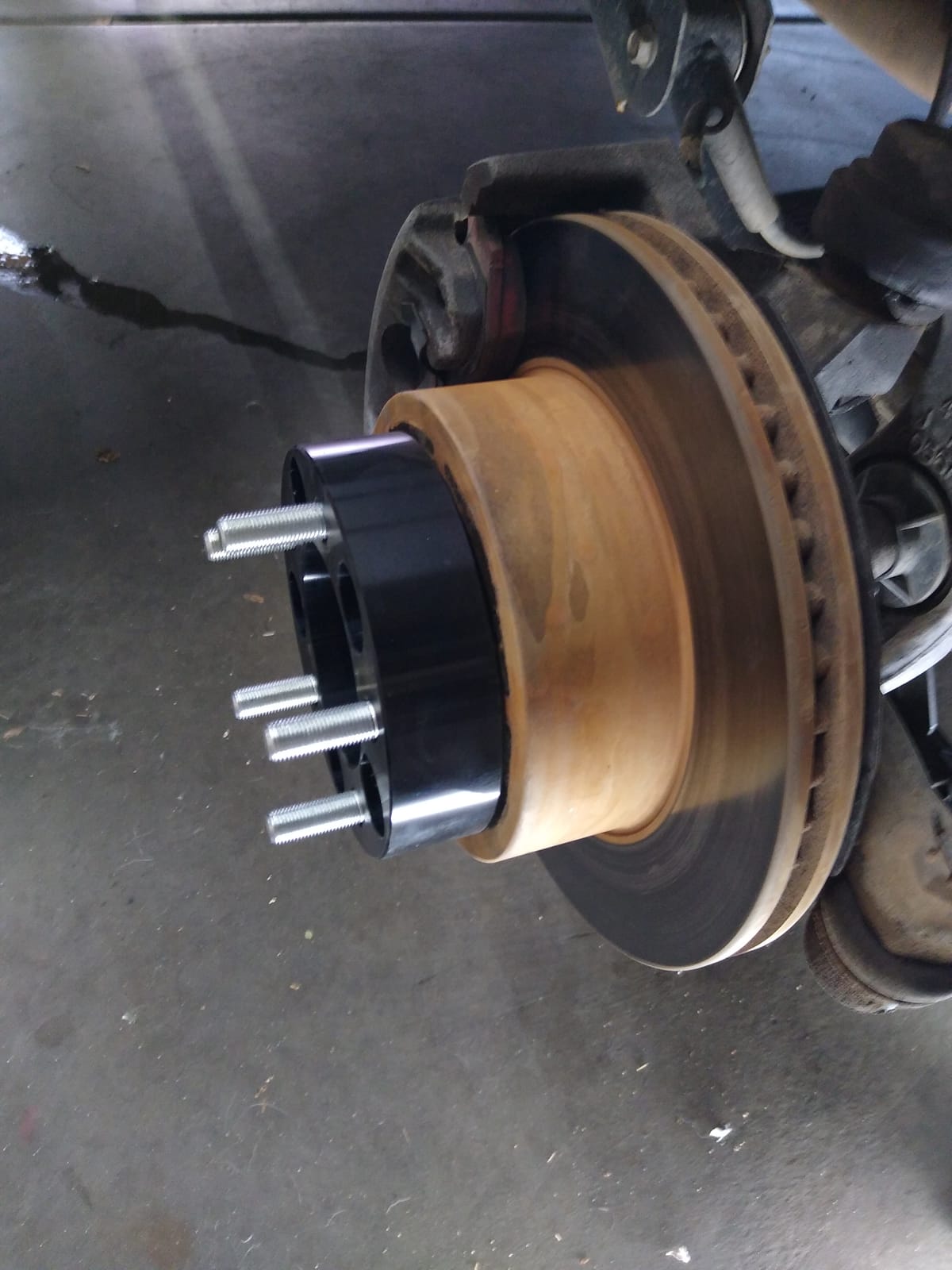
The body is forged 6061-T6 billet, CNC machined with an anodized coating, and the studs are Grade 12.9 rated to 1000MPa. The set weighs 13.31 pounds, which puts it in the lighter half of this roundup, and that matters more on a leaf-sprung Jeep than the spec sheet suggests.
At 4.5 from around 700 ratings with about 79 percent five-star, it sits slightly below the JK-group kits on star share, and the review themes line up with that.
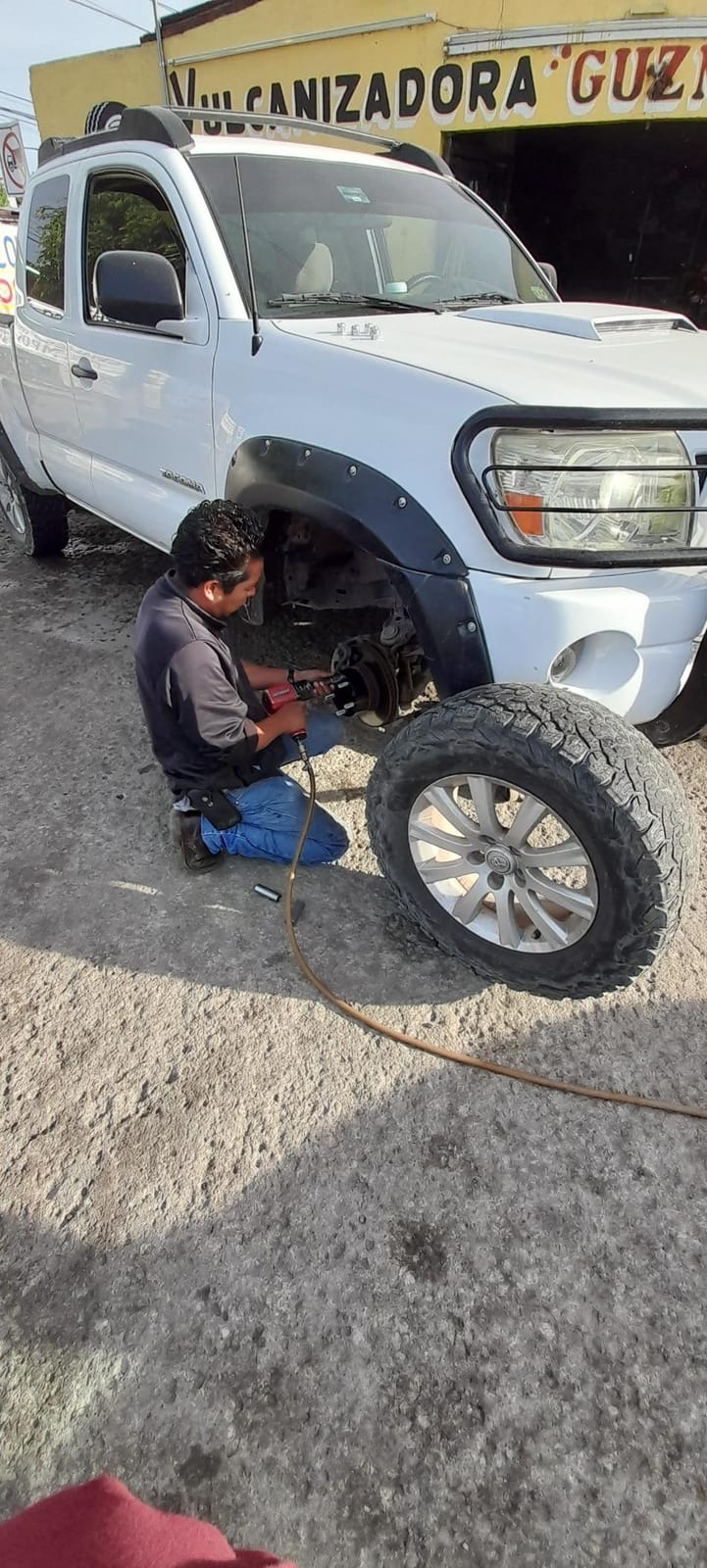
What you should know before you buy
The recurring hardware complaint is that the studs feel soft compared with OEM fasteners, and one review reports a short shipment of two spacers instead of four. The fitment list has also been reported as inaccurate for some vehicles, so confirm your model year against the list rather than assuming a generation is covered.
And the 82.5mm bore is the same centering caveat as the other 5×4.5 kit here. It is larger than a Jeep hub, so it does not give you the true hub-centric pilot that a 71.5mm bore does.
Who should skip it
Skip it if you are running 31s on a ZJ, because owners consistently report that 1.5 inch still allows rubbing in that combination and recommend stepping up to a 2 inch spacer instead. Skip it if you are buying for a JK or a JL, because the bolt pattern and thread are both wrong.
8. FLYCLE 1.5 Inch 5×4.5 Wheel Spacers – Thread Locker in the Box
FLYCLE 1.5 inch 5×4.5 Wheel Spacers for TJ YJ XJ MJ KJ KK ZJ, 1.5” 5×114.3mm Wheel Spacer for Wrangler Ranger Explorer Mustang Edge with 1/2-20 Studs 82.5mm Center Bore
- Thickness: 1.5 in (38.1mm)
- Pattern: 5x4.5 (5x114.3mm)
- Bore: 82.5mm
- Studs: 1/2-20
Pros
- Threadlocker included which most competing kits omit
- Forged 6061-T6 with CNC machining plus anodizing and heat treatment
- Installs in about an hour on a factory hub
- Light set at 12 pounds
- Visibly widens the stance and improves cornering
Cons
- One review reports a wheel coming off shortly after installation
- Factory Jeep studs may not reach far enough on some models
- One reviewer received visibly used and dinged parts
Direct answer: a 1.5 inch (38.1mm), 5×4.5 (5×114.3mm), 82.5mm bore, 1/2-20 kit with Grade 12.9 studs, a published torque of 75 to 85 ft-lb, and two bottles of high-strength threadlocker plus a manual in the box. Fitment is the 1987-2006 Wrangler YJ and TJ, 1984-2013 Cherokee XJ, KJ and KK, 1992-1998 Grand Cherokee ZJ, 2001-2013 Liberty and 1986-1992 Comanche MJ.
The threadlocker is the reason this kit earns a place on the list. It is the only item in this roundup that supplies two bottles of it, and for anyone who does not already have a tube of automotive threadlocker on the shelf that removes a step and a mid-install trip to a shop.
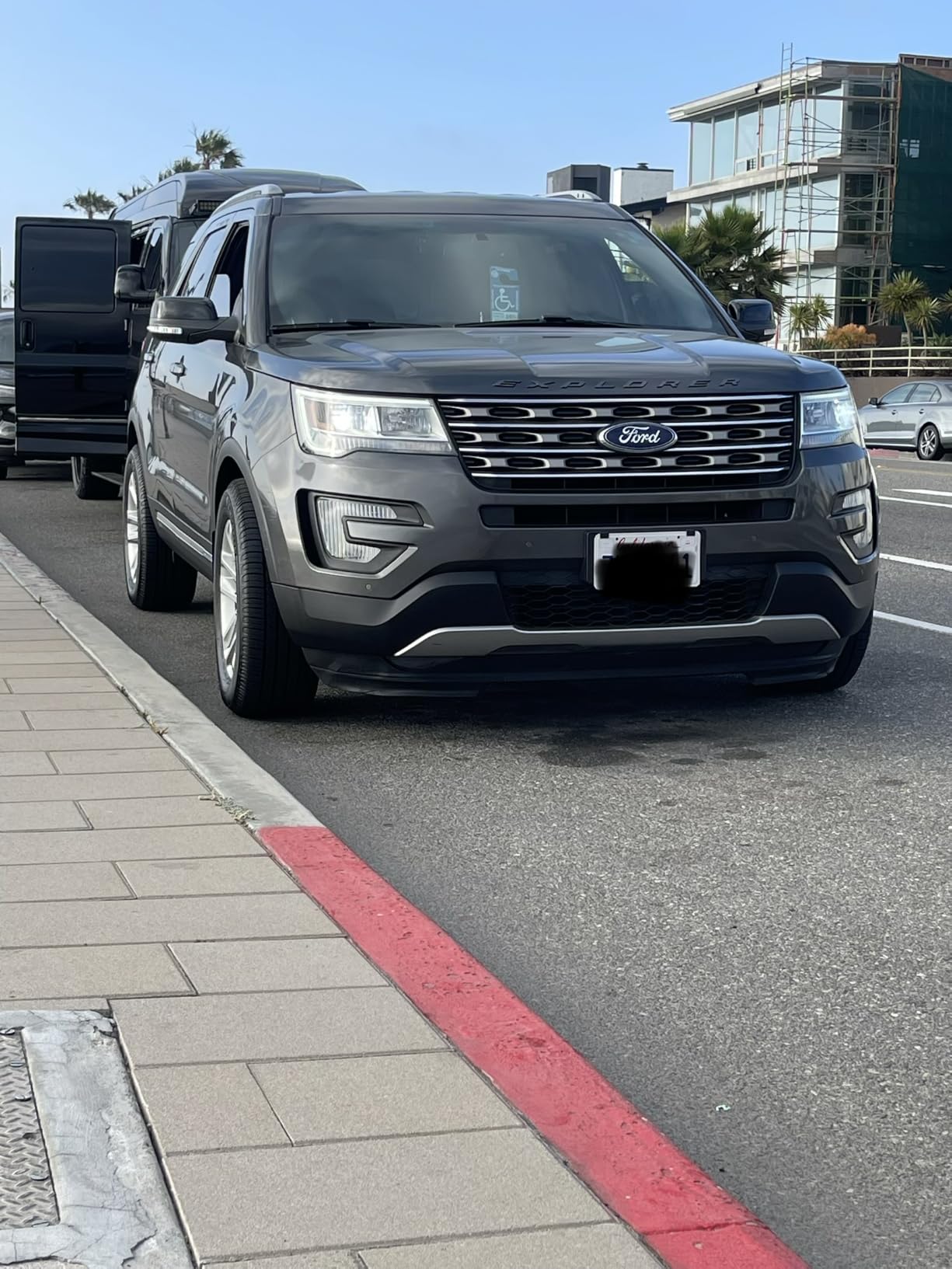
The body is forged 6061-T6 aluminum alloy with CNC machining, anodizing and heat treatment, and the set weighs 12.03 pounds, which puts it in the lighter half of this roundup.
Owners describe a precise fit that installs in about an hour, and reviewers rate the forging and machining quality as high for the money.
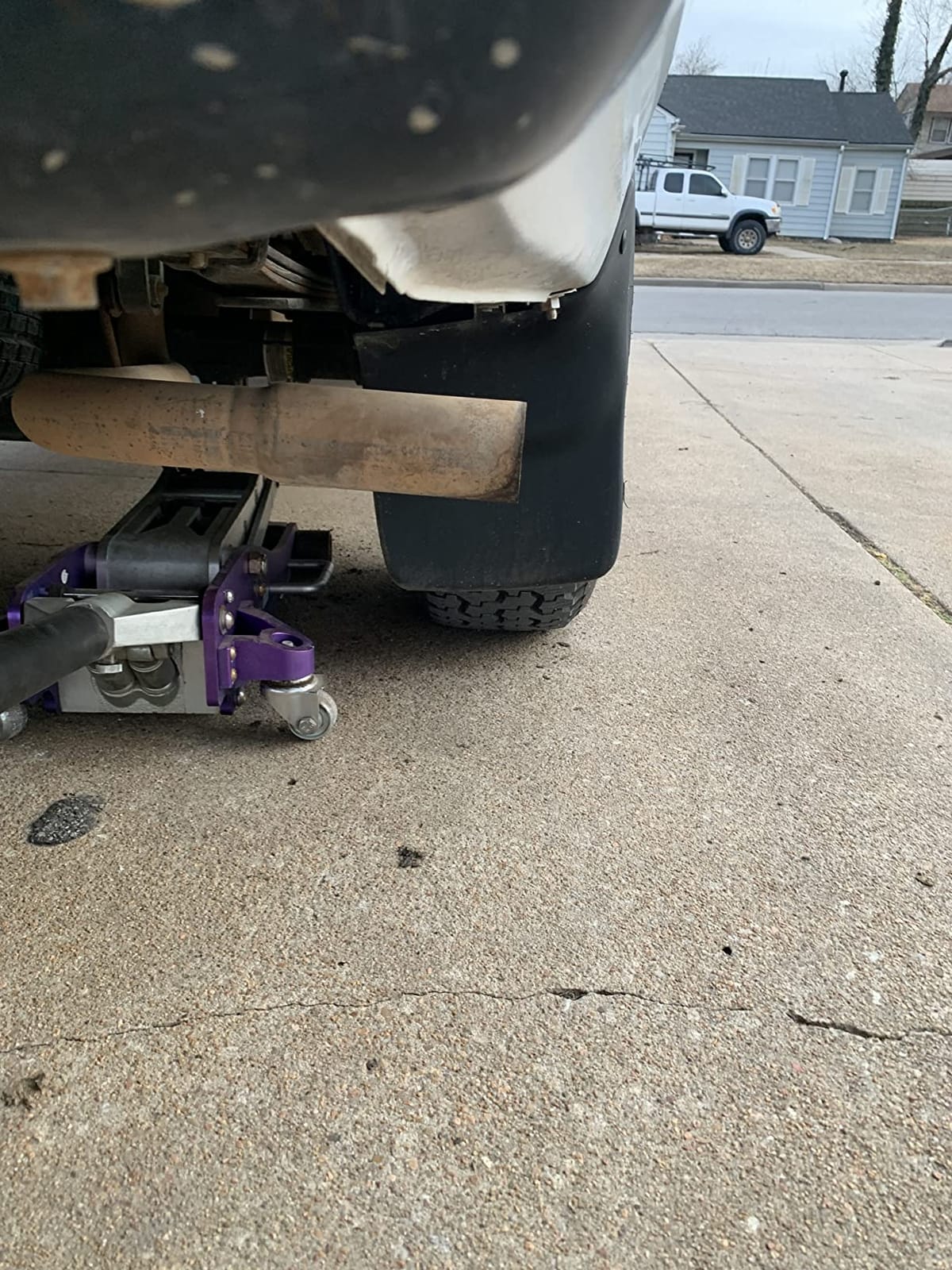
What you should know before you buy
Stud length is the practical warning that appears again and again. On some Jeeps the factory studs do not reach far enough through the spacer for full engagement, and one owner replaced the studs to get a correct installation. Measure before you order, not after the wheel is off.
There is also a one-star report of a wheel coming off a Tacoma shortly after installation, and a separate review reporting visibly used, dinged parts in the box. Inspect the set on arrival and check torque again after the first 100 miles.
Who should skip it
Skip it if you already have threadlocker and want the highest five-star share of the 5×4.5 kits, because the low share here reflects more mixed experiences.
9. Rough Country 1.5 Inch 5×5 Wheel Spacers – Best Branded Option for JK
Rough Country 1.5″ 5×5 Wheel Spacers for 2007-2018 Jeep Wrangler JK – 1091
- Thickness: 1.5 inch
- Pattern: 5x5 (5x127mm)
- Hub-centric with preinstalled studs
- Material: 6061-T6
Pros
- Recognizable suspension brand with a lifetime replacement warranty
- 6061-T6 aluminum with preinstalled studs for a fast install
- Light 5x5 kit in the list at 10.5 pounds
- Clears sway bar rub on a JK running 33s and 34s
- Owners report improved ride smoothness after a year
Cons
- Sold as a pair so a full set needs two purchases
- Some owners perceive a slightly darty steering feel
- Visual change is subtle at 1.5 inch on factory rims
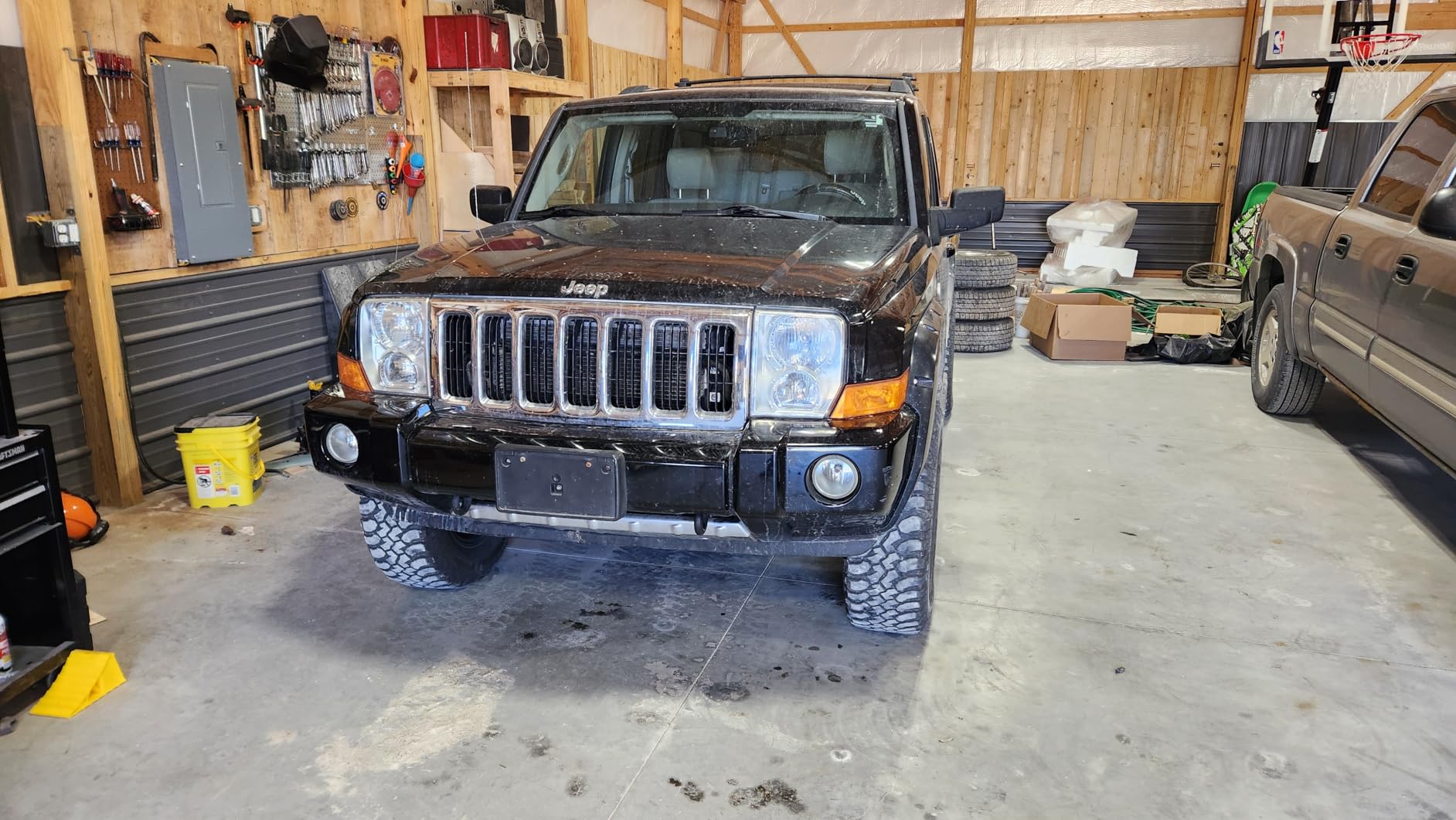
Direct answer: a 1.5 inch, 5×5 (5x127mm) hub-centric spacer in 6061-T6 aluminum with preinstalled studs, made for the 2007-2018 Wrangler JK. It is sold as a pair, so a full vehicle needs two of these kits. Warranty is Rough Country’s lifetime replacement.
The warranty is the headline. A lifetime replacement commitment from an established suspension brand is a different kind of risk profile from a one-year warranty on an unbranded kit, and for JK owners who want brand accountability on a bolt-on part, that is often the deciding factor.
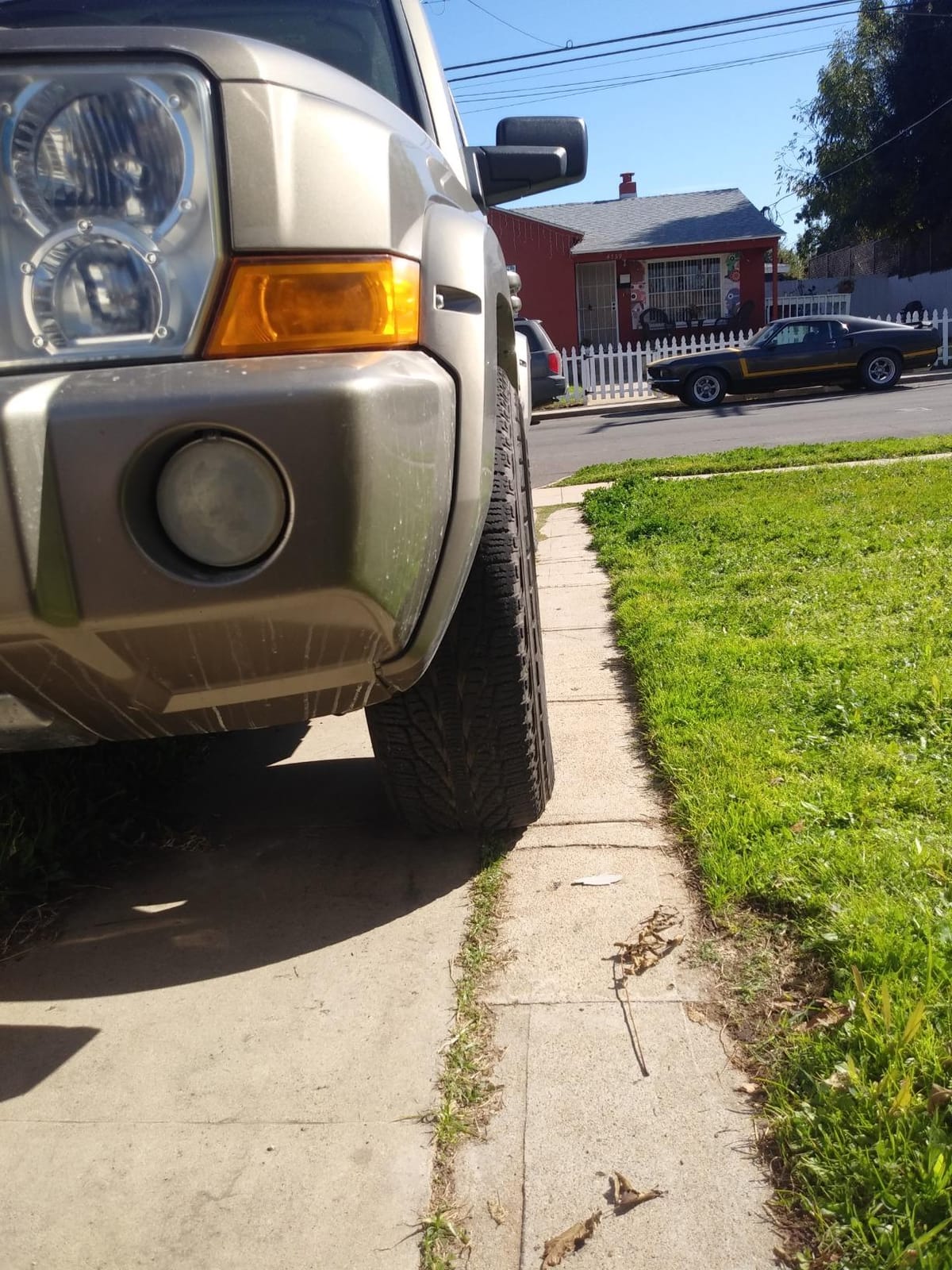
At 4.7 from around 400 ratings with about 85 percent five-star, this has the highest five-star share in the entire roundup, which tells you the star rating here is not being propped up by a wide band of middling scores. Owners praise the exact fit on JK and XK platforms and report that 1.5 inch is exactly enough to clear the sway bar and fill the fender gap with factory rims.
At 10.5 pounds it is among the lightest 5×5 kits here, and the studs are preinstalled so there is no hardware to sort before the truck goes on the stands. One owner reports improved ride smoothness after a year of use.
What you should know before you buy
It is a pair. That is the single most common misunderstanding in the reviews, and it means ordering one kit does not space a whole vehicle. Read the quantity before you check out.
At 1.5 inch on factory rims the visual change is genuinely subtle, and some owners describe a slightly darty steering feel afterwards, which is the steering geometry responding to a wider track rather than a hardware fault. If the appearance matters to you, this may not deliver it.
Who should skip it
Skip it if you need spacers for a TJ or an XJ, because the 5×5 pattern does not apply. Skip it if you want a large visual change on a factory-height JK, because 1.5 inch with factory rims reads as a fitment change rather than a stance change, and 2 inch is the more dramatic option.
10. KSP 2 Inch 5×5 Wheel Spacers – Thickest Hub Ring for Modern Jeeps
KSP 2inch 5×5 Wheel Spacers for Gladiator JT 2020-2026, 5x127mm Hubcentric Spacer fit Wrangler JL/JLU 2018-2026, 5mm Hub Spacer with 71.5mm Hub bore M14x1.5 Stud Work on Grand Cherokee
- Thickness: 2 in (50.8mm)
- Pattern: 5x5 (5x127mm)
- Bore: 71.5mm
- Studs: M14x1.5
Pros
- 5mm reinforced hub ring instead of the typical 3mm face
- CNC tolerance of plus or minus 0.1mm on forged 6061-T6
- Broadest modern Jeep coverage including JT and JL and WK2 and WL
- Grade 10.9 studs designed to deform rather than snap
- Thread-locking nuts and step-by-step guides included
Cons
- Heaviest set in the roundup at 19.27 pounds
- Requires extended lug nuts to clamp the wheel
- Newer listing with a smaller review base than established kits
Direct answer: a 2 inch (50.8mm), 5×5 (5x127mm), 71.5mm bore kit with M14x1.5 studs, made for the 2020-2026 Gladiator JT, the 2018-2026 Wrangler JL and JLU, the 2011-2023 Grand Cherokee WK2, the 2022-2026 WL and the 2011-2026 Dodge Durango.
The engineering claim here is specific and worth checking against your own priorities. The hub ring is 5mm thick where a typical spacer uses a 3mm face, and the manufacturer positions that as a stiffer hub connection with less vibration. For a 2 inch spacer on a modern Jeep, hub face stiffness is a real consideration rather than a marketing line.
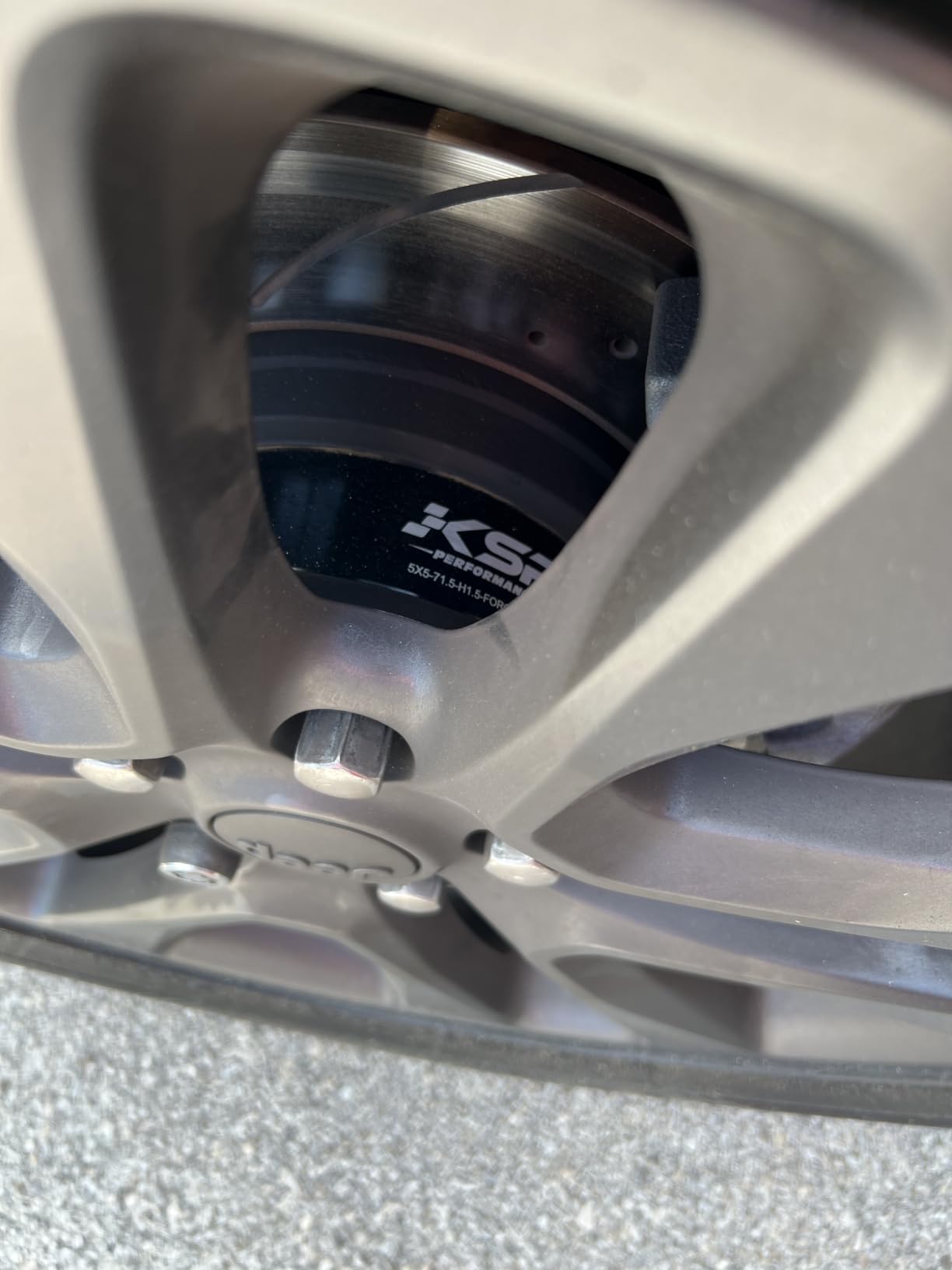
The body is forged 6061-T6 aluminum CNC machined to plus or minus 0.1mm with a black anodized coating, and the studs are Grade 10.9 hardened, chosen again for the deform-before-snapping behavior. Fitment coverage across the JT, JL, WK2 and WL is the broadest modern-platform coverage of any kit here.
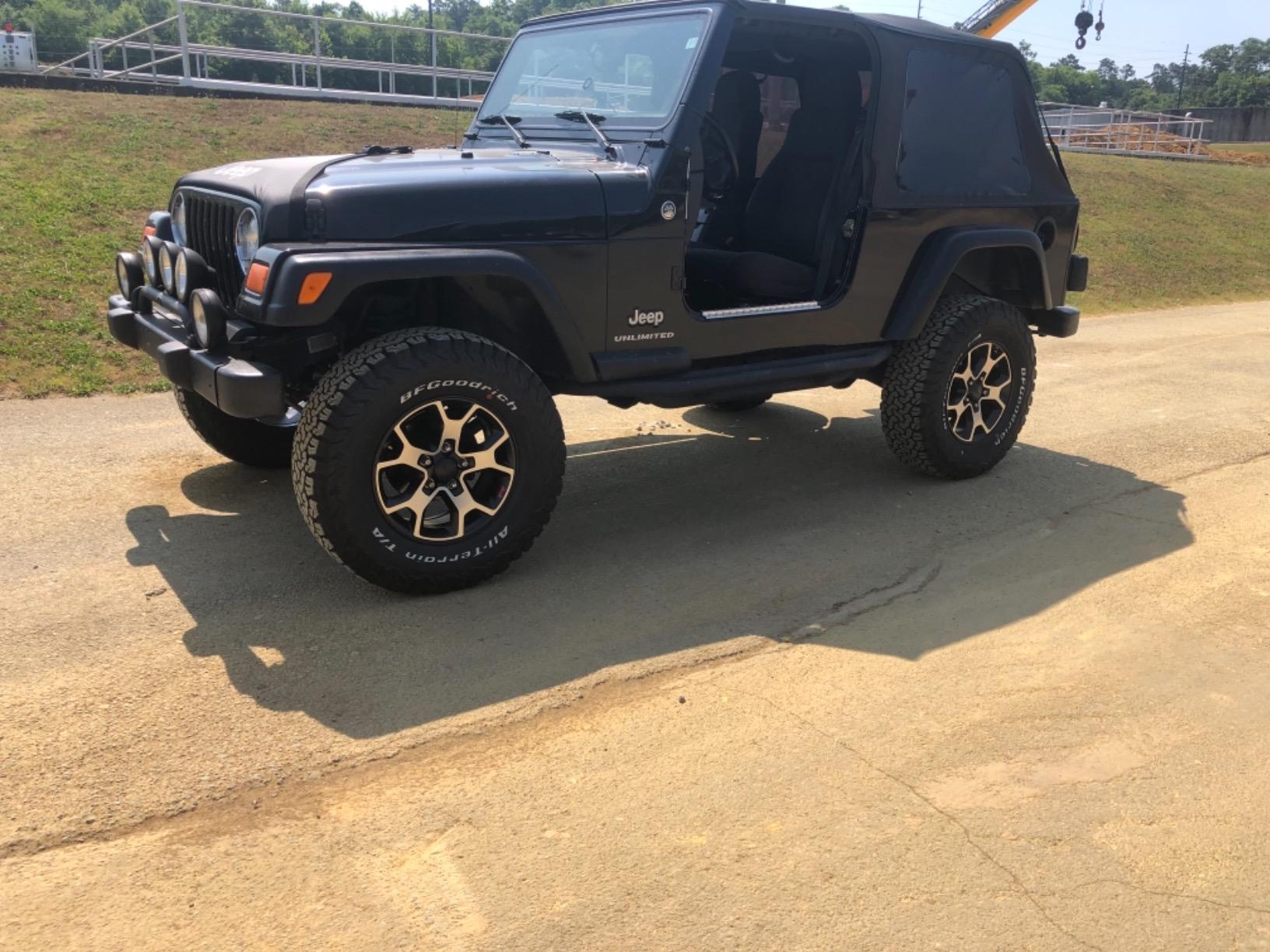
At 4.5 from around 400 ratings with about 77 percent five-star, the review base is newer than the established kits, and the volume is growing quickly. At 19.27 pounds it is the heaviest set in this roundup, which is the honest cost of putting 2 inches of forged aluminum between your hub and your wheel.
What you should know before you buy
Extended lug nuts are required for full clamping, and the kit includes thread-locking nuts for that reason. If you plan to reuse the lug nuts from your existing wheels, verify their length before you assume the wheel will clamp properly.
Two inch on a modern Jeep puts the most sideways force on your wheel bearings of any kit here. Check fender clearance with the wheels turned to full lock, and be honest about whether your tire size and lift height actually need 2 inches rather than 1.5.
Who should skip it
Skip it if you drive mostly city streets, because this much unsprung mass on cracked pavement is felt on every expansion joint. Skip it if your build is a JK, TJ or ZJ, since the M14x1.5 thread rules all of those out.
11. Rough Country 1.5 Inch 5×4.5 Spacers – Lightest Pick for TJ and XJ
Rough Country 1.5″ Wheel Spacers for 97-06 Jeep Wrangler TJ | 84-01 XJ – 1090RED
- Thickness: 1.5 inch
- Pattern: 5x4.5 (5x114.3mm)
- Preinstalled studs and no drilling
- 6061-T6 aluminum
Pros
- Lightest kit in the roundup at 8.58 pounds
- Correct clearance for steering and control arms at full lock
- Reported vibration-free at highway speed on a TJ
- Preinstalled studs mean no drilling and a fast install
- Lifetime replacement from an established brand
Cons
- Studs may be too short for full engagement on aluminum wheels
- Threadlocker is not included and must be bought separately
- One reviewer reports slight wheel wobble over small bumps
Direct answer: a 1.5 inch, 5×4.5 (5×114.3mm) spacer in machined 6061-T6 aluminum with preinstalled studs and no drilling required, fitting the 1997-2006 Wrangler TJ and the 1984-2001 Cherokee XJ. Warranty is Rough Country’s lifetime replacement. Threadlocker is not included.
Full-lock clearance is what this kit is genuinely good at, and it is the number one thing TJ and XJ owners ask about. On a leaf-sprung Jeep the axle articulates and the tire moves inboard at full steering lock, and this kit is repeatedly praised for clearing the steering and control arms in exactly that position.
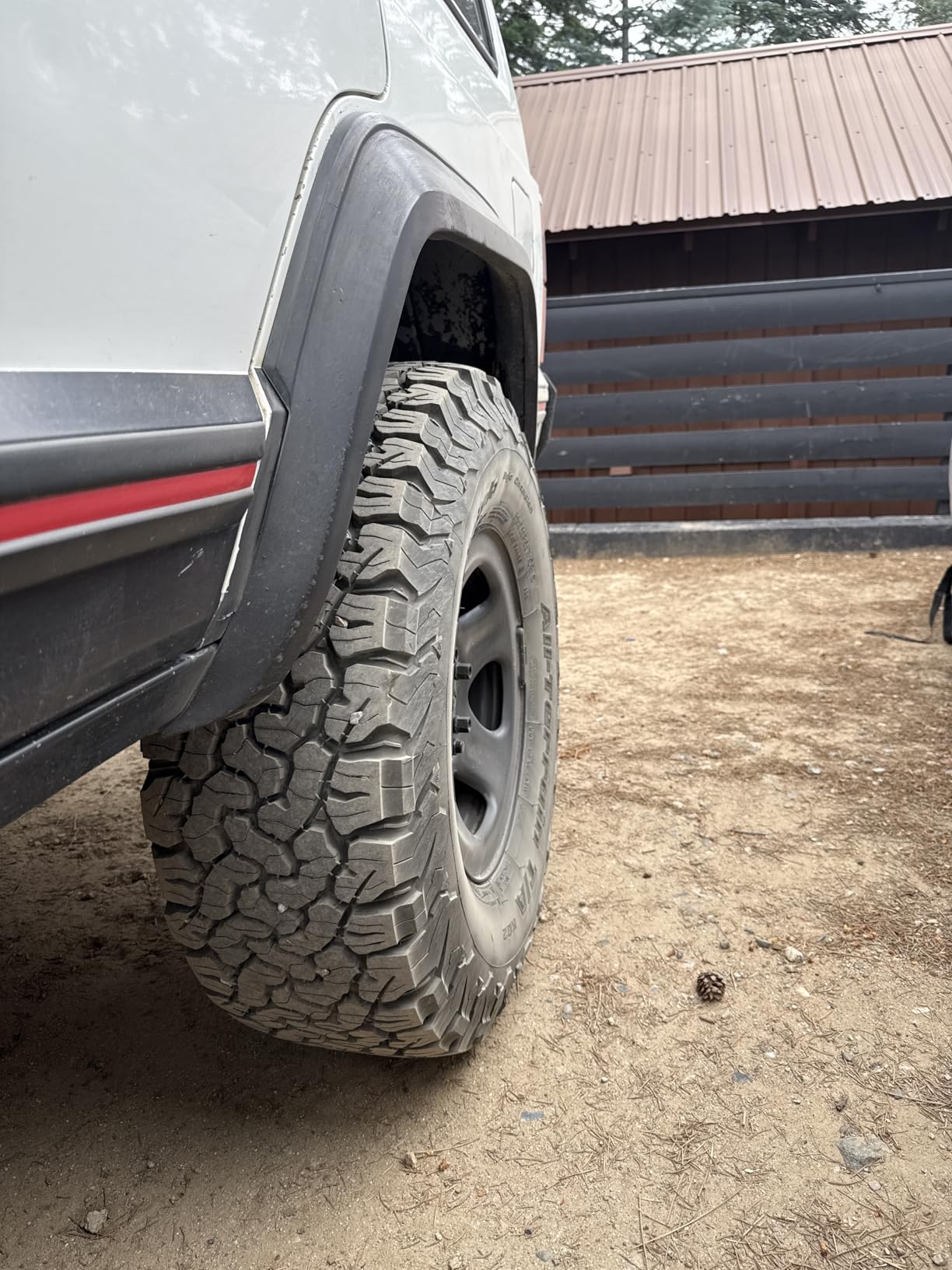
At 8.58 pounds it is the lightest set in this roundup, and weight matters more on an older leaf-sprung Jeep than on a modern one. The body is 6061-T6 aluminum with a machined, corrosion-resistant finish, and one owner reported no vibration at all at highway speed on a TJ.
At 4.5 from around 280 ratings with about 79 percent five-star, the rating is good but the volume is modest, so treat the review data as directional rather than conclusive. The lifetime replacement backing is what carries the confidence here.
What you should know before you buy
Stud length is the repeated caveat, and it is a dimensional issue rather than a quality issue. These spacers are dimensioned around the thinner mounting face typical of steel wheels, so if you run aluminum wheels you may need longer studs to get full engagement. One owner reports slight wheel wobble over small bumps, which is the same symptom an under-engaged stud produces.
Buy threadlocker separately before the install, since it is not in the box and the re-torque schedule assumes the studs have something holding them together.
Who should skip it
Skip it if you are on a JK, JL or Gladiator, because the pattern and thread are both wrong. Skip it if you are looking for a dramatic stance change, because 1.5 inch on a factory-height TJ is a clearance fix rather than a visual one, and if appearance is the goal you will be disappointed.
12. ECCPP 1.5 Inch 5×5 Hubcentric Spacers – Longest-Running Listing
ECCPP 4PCS 1.5″ Hubcentric Wheel spacers 5×5 to 5×5 for 07-17 for Wrangler
- Thickness: 1.5 inch
- Pattern: 5x5 (5x127mm)
- Bore: 71.5mm
- Studs: 1/2-20 at Grade 10.9
Pros
- Listing dates to 2015 with a stable 4.5 rating
- Forged 6061-T6 billet with CNC machining and anodizing
- Threadlocker glue included in the box
- Hub-centric design centres the wheel to resist vibration
- Grade 10.9 studs rated to 1000MPa tensile strength
Cons
- Listed fitment covers 2007-2015 Wrangler while the title says 07-17
- Lowest five-star share here at about 75 percent
- Seller asks buyers to email if only 2 of 4 arrive
Direct answer: a 1.5 inch, 5×5 (5x127mm), 71.5mm bore, 1/2-20 kit with Grade 10.9 studs rated to 1000MPa, a published install torque of 75 to 85 ft-lb, and threadlocker included. Listed fitment is the 2007-2015 Wrangler, the 2006-2010 Commander and the 1999-2010 Grand Cherokee.
What earns it a place is longevity and completeness. The listing has been live since 2015 with a stable rating, which means the fitment, the machining and the seller have all been tested by a long accumulation of buyers rather than by a burst of early reviews.
The body is forged 6061-T6 billet aluminum, CNC machined with an anodized coating, and the hub-centric design is described by reviewers as centering the wheel to resist impact loads and eliminate vibration. The included threadlocker and the published 75 to 85 ft-lb figure mean the install is fully specified out of the box.
At 4.5 from around 260 ratings with about 75 percent five-star, this has the lowest five-star share in the roundup, which makes it the least uniformly rated of the twelve. That is a useful signal rather than a disqualifier: it tells you where the complaints concentrate.
What you should know before you buy
Verify your model year, because the listed fitment says 2007-2015 Wrangler while the title says 07-17, and that gap is exactly the kind of detail that produces a return shipment. The listed shipping weight of 16.81 pounds is also on the heavy side for a 1.5 inch set of four.
The seller instructs buyers to email them if only 2 of the 4 spacers arrive, which is an unusual thing to see in a listing and points to occasional incomplete fulfillment. Count the parts on arrival.
Who should skip it
Skip it if you are buying for a JL or Gladiator, because the thread is wrong for the modern platforms. Skip it if a warranty matters to you, because the coverage here is the thinnest of the group and the lowest five-star share suggests you will be relying on the seller more than on the product.
Frequently Asked Questions
Are wheel spacers safe for Jeeps?
Yes, when they are true hub-centric units matched to your generation’s bolt pattern, stud thread and hub bore, installed with a torque wrench and re-torqued on schedule. Problems come from lug-centric designs, oversized bores such as 80.5mm and 82.5mm on a Jeep hub, and studs that do not protrude far enough to clamp the wheel properly.
What size wheel spacers do I need for my Jeep?
For most Jeeps, 1.5 inch is the right answer. It clears the sway bar and inner fender lip on a factory-height suspension, stays inside the fender line and keeps added bearing load manageable. One inch is rarely worth it because the clearance gain is small. Two inch is justified when running 33s or larger on a lifted Jeep or 31s with a 2 to 3 inch lift.
What bolt pattern and stud thread does my Jeep Wrangler use?
Wrangler YJ, TJ, Cherokee XJ, Grand Cherokee ZJ, Comanche MJ and Liberty KJ or KK use the 5×4.5 pattern (5×114.3mm) with 1/2-20 studs. Wrangler JK and JK Unlimited, Grand Cherokee WJ and WK, and Commander XK use the 5×5 pattern (5x127mm) with 1/2-20 studs. Wrangler JL and JLU, Gladiator JT, Grand Cherokee WK2 and WL use 5×5 with M14x1.5 studs.
Should I buy hub-centric or lug-centric wheel spacers, and do they cause vibration?
Buy hub-centric, and check that the bore matches the hub. A 71.5mm bore is a true pilot on a Jeep hub. Bores of 80.5mm and 82.5mm are oversized and do not centre the wheel, which is the most common cause of the vibration that appears between 40 and 60 miles per hour and fades above it.
What torque should I use to install wheel spacers on a Jeep?
Use the figure your spacer manufacturer publishes. The common figures in this category are 75 to 85 ft-lb for most 1.5 inch 5×4.5 and 5×5 kits and 85 to 90 ft-lb for the heavier M14x1.5 kits on modern platforms. Hand-thread the spacer until it seats with no wobble, tighten in a star pattern, and never finish-torque with an impact gun.
Do I need an alignment after installing wheel spacers, and do they need re-torquing?
Re-torque after 50 to 100 miles, then check every 3,000 to 5,000 miles and after any off-road impact. An alignment is usually unnecessary after 1.5 inch on an otherwise factory-spec Jeep, but two inch or more, or a spacer on a lifted Jeep, can change camber enough to wear tires unevenly.
Conclusion: Match the Spacer to Your Generation First
Start with the fitment table above, not with a brand name. If you are on a 5×4.5 Jeep with 1/2-20 studs, your realistic options are the 1.5 inch Richeer, FLYCLE and Rough Country kits for a modest clearance fix, or the 2 inch dynofit when you genuinely need the extra room. If you are on a JK or WK with 5×5, the OMT and KSP 1.5 inch kits are the strongest all-round choices, with dynofit close behind on machining precision.
If you are on a JL, JLU or Gladiator, the thread is M14x1.5 and the field narrows to the Richeer 1.5 inch kit or the KSP 2 inch kit with its 5mm reinforced hub ring. The OMT 5×5 kit is our editor’s choice overall because it has the deepest review history in the category and a true 71.5mm bore, but it is a 1/2-20 product and will not fit a JL.
Whichever one you choose, the install is the part that decides whether it works: measure stud protrusion, clean the hub, hand-seat the spacer, use threadlocker, torque with a wrench, and re-check after 100 miles. Do those five things and the best wheel spacers for Jeeps are a genuinely boring part you never think about again.