
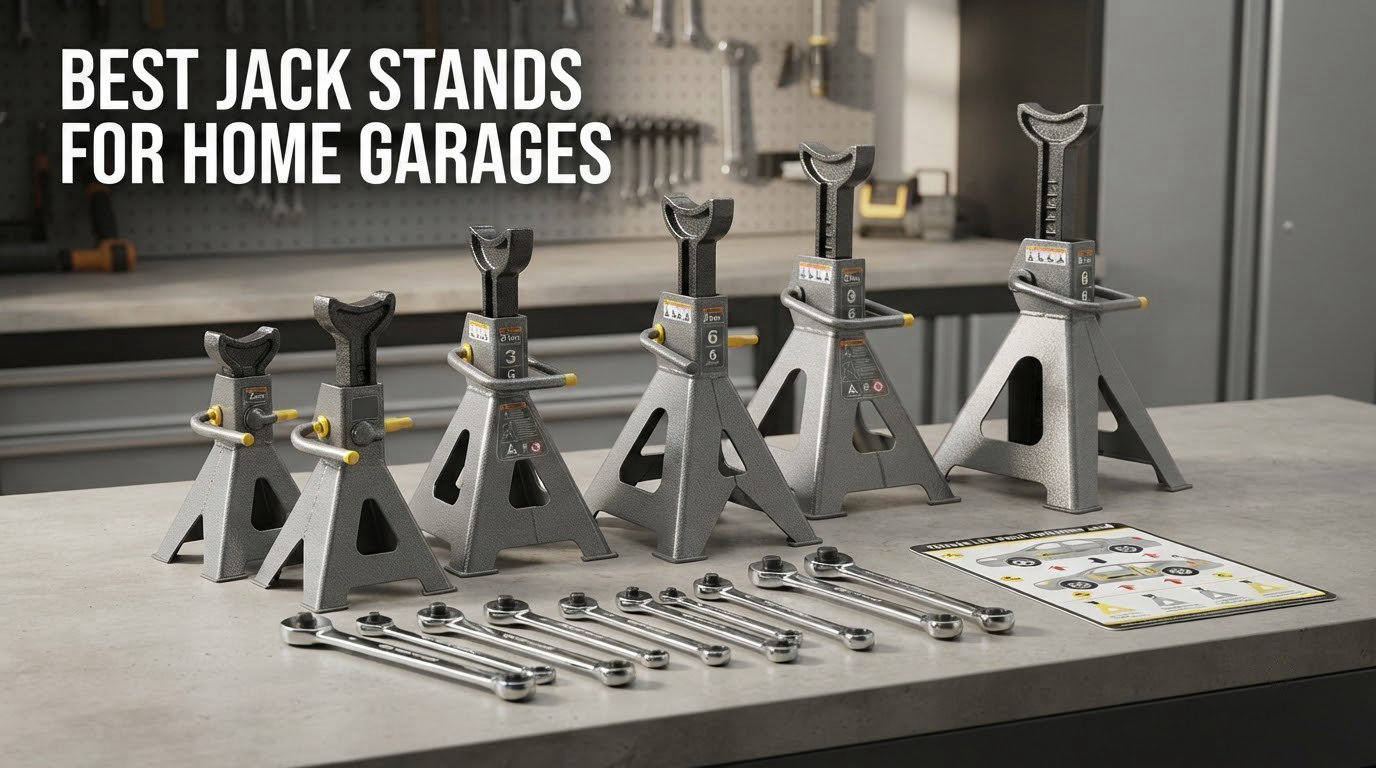
The best jack stands for home garages are 3 ton stands for sedans and crossovers, and 6 ton stands for trucks, SUVs and anything lifted. Look for a ratcheting or double-locking design, an ASME PASE or ANSI/PALD rating, and a base wide enough for the surface you park on. Height matters as much as tonnage, and most of the wrong purchases come from ignoring it.
A floor jack lifts a vehicle. Jack stands hold it. That distinction is the whole reason these exist: your jack gets the car off the ground, and the stands take over the moment you lower the vehicle onto them. Get that step wrong, and the car comes down on whatever was holding it before, which is a very short sentence for a very serious outcome.
We assembled this list by working through the full retail data on ten stands that cover the garage jobs people do most, then reading what owners report back after years of living with them. We did not load-test these, so treat this as curated rather than lab-tested, and we say so plainly because you should know which one you are reading. Ratings, review counts, heights, capacities and weight figures below come straight from the manufacturer listings and the review history behind them.
Two things shaped the picks more than anything else. The first is height: owners repeatedly describe buying 3 ton stands that were too short to get a creeper under a pickup or minivan, and solving it with stacked blocks. The second is the confusing tonnage labeling, where some brands rate a stand on its own and some rate the pair, with no industry standard to arbitrate. Both topics get their own sections below.
Whichever stands you land on, the rules in the safety section are not optional. A jack stand is the last mechanical thing between you and a dropped vehicle, and no rating on a label survives being placed on a slope, on gravel, or on a foot that has sunk into soft asphalt.
Table of Contents
- Top 3 Picks Best Jack Stands for Home Garages (October 2026)
- All 10 Jack Stands Compared in 2026
- 1. Amazon Basics Steel Jack Stands, 3 Ton Pair: Best Overall for Most Home Garages
- 2. Pro-Lift Heavy Duty 6 Ton Jack Stands: Best for Trucks and Heavy Vehicles
- 3. BIG RED Torin T43002A, 3 Ton Double Locking: Best Value Double-Locking Pair
- 4. VEVOR 6 Ton Double Locking Jack Stands: Best Heavy-Duty Value at 6 Tons
- 5. YELLOW JACKET 3 Ton Double Locking: Best Visibility in a Dark Garage
- 6. TONDA 3 Ton Extra Tall Jack Stands: Best Extra Height for Lifted Trucks
- 7. TCE 6 Ton Double Locking Steel Jack Stands: Best Wide Base and Longest Warranty
- 8. Omega Lift 32068, 6 Ton Double Locking: Best for Trucks and Heavy Equipment
- 9. ROADTEK 3 Ton Double Locking Jack Stands: Best Seamless Base and Single-Hand Carry
- 10. ESCO 3 Ton Performance Shorty Low Profile: Best Low-Profile Design
- What Size Jack Stands Do You Need?
- Pin-Style vs Ratcheting vs Double-Locking Stands
- Jack Stand Height vs Floor Jack Lift Height
- How to Use Jack Stands Safely
- How to Check If Your Jack Stands Were Recalled
- How to Choose the Right Jack Stands
- Frequently Asked Questions
- Final Verdict: The Best Jack Stands for Home Garages in 2026
Top 3 Picks Best Jack Stands for Home Garages (October 2026)
These three cover the widest range of home garage work. The first is the one most people should buy, the second is the one to buy if you own anything with a truck bed, and the third is the value pick that has quietly outlasted a lot of more expensive sets.

Amazon Basics 3 Ton Pair
- Self-locking ratchet
- ASME PASE-2014 rated
- 16.34 inch max height
- Keyless adjustment

Pro-Lift 6 Ton Double Lock
- Double locking pins
- 6 ton per stand
- 16 to 23.5 inch range
- ANSI/PALD standards

BIG RED Torin 3 Ton Pair
- Double locking support pin
- Sawtooth ratchet bar
- 11.25 to 16.75 inch range
- Wide pyramid base
As an Amazon Associate we earn from qualifying purchases. CERTAIN CONTENT THAT APPEARS ON THIS SITE COMES FROM AMAZON. THIS CONTENT IS PROVIDED 'AS IS' AND IS SUBJECT TO CHANGE OR REMOVAL AT ANY TIME.
All 10 Jack Stands Compared in 2026
All ten picks in one table, with the specs that actually decide whether a stand fits your garage. Capacity is per stand unless the listing says otherwise, and we flag the labeling confusion later in the sizing section.
| Product | Specifications | Action |
|---|---|---|
|
Amazon Basics Steel Jack Stands, 3 Ton Pair
|
|
Check Latest Price |
|
Pro-Lift Heavy Duty 6 Ton Double Locking Pair
|
|
Check Latest Price |
|
BIG RED Torin T43002A, 3 Ton Double Locking Pair
|
|
Check Latest Price |
 VEVOR 6 Ton Double Locking Jack Stands, 2 Pack
|
|
Check Latest Price |
 YELLOW JACKET 3 Ton Double Locking, Large Foot Base
|
|
Check Latest Price |
 TONDA 3 Ton Extra Tall Jack Stands, 1 Pair
|
|
Check Latest Price |
 TCE 6 Ton Double Locking Steel Jack Stands, 2 Pack
|
|
Check Latest Price |
 Omega Lift 32068, 6 Ton Double Locking Pair
|
|
Check Latest Price |
 ROADTEK 3 Ton Double Locking Jack Stands, 1 Pair
|
|
Check Latest Price |
 ESCO 3 Ton Performance Shorty Low Profile
|
|
Check Latest Price |
We earn from qualifying purchases. CERTAIN CONTENT THAT APPEARS ON THIS SITE COMES FROM AMAZON. THIS CONTENT IS PROVIDED 'AS IS' AND IS SUBJECT TO CHANGE OR REMOVAL AT ANY TIME.
1. Amazon Basics Steel Jack Stands, 3 Ton Pair: Best Overall for Most Home Garages
Amazon Basics Steel Jack Auto Stands, 3 Ton (2.7 metric Ton) Capacity, Easy to Use, Adjustable Height, 6,000 lb, 1 Pair, Black and Red(For Sedans and Urban SUVs)
- 3 ton per stand
- Self-locking ratchet
- ASME PASE-2014 rated
- 16.34 in max height
Pros
- 3 ton 6000 lb per stand
- Self-locking ratchet needs no key
- ASME PASE-2014 rated
- Rustproof coated steel frame
- Easily read capacity marking
Cons
- 3 ton rating suits cars not heavy trucks
- No separate secondary safety pin
This is the set most home mechanics should end up with, and the reason is the review count rather than any single feature. More than 13,500 ratings at 4.7 out of 5 is a track record you rarely see on a safety tool, and the pattern inside those reviews is consistent: people bought them for a sedan or a crossover, they adjusted them without a tool or a key, and they stopped thinking about them.
The mechanism is a self-locking ratchet, which means the stand engages its own load-bearing bar as you raise the column. There is no separate pin to drop through a hole, and nothing to lose track of when the stand is behind the tire in a dark garage. It also meets the ASME PASE-2014 standard for portable automotive service equipment, which is the certification most worth having stamped into the design.
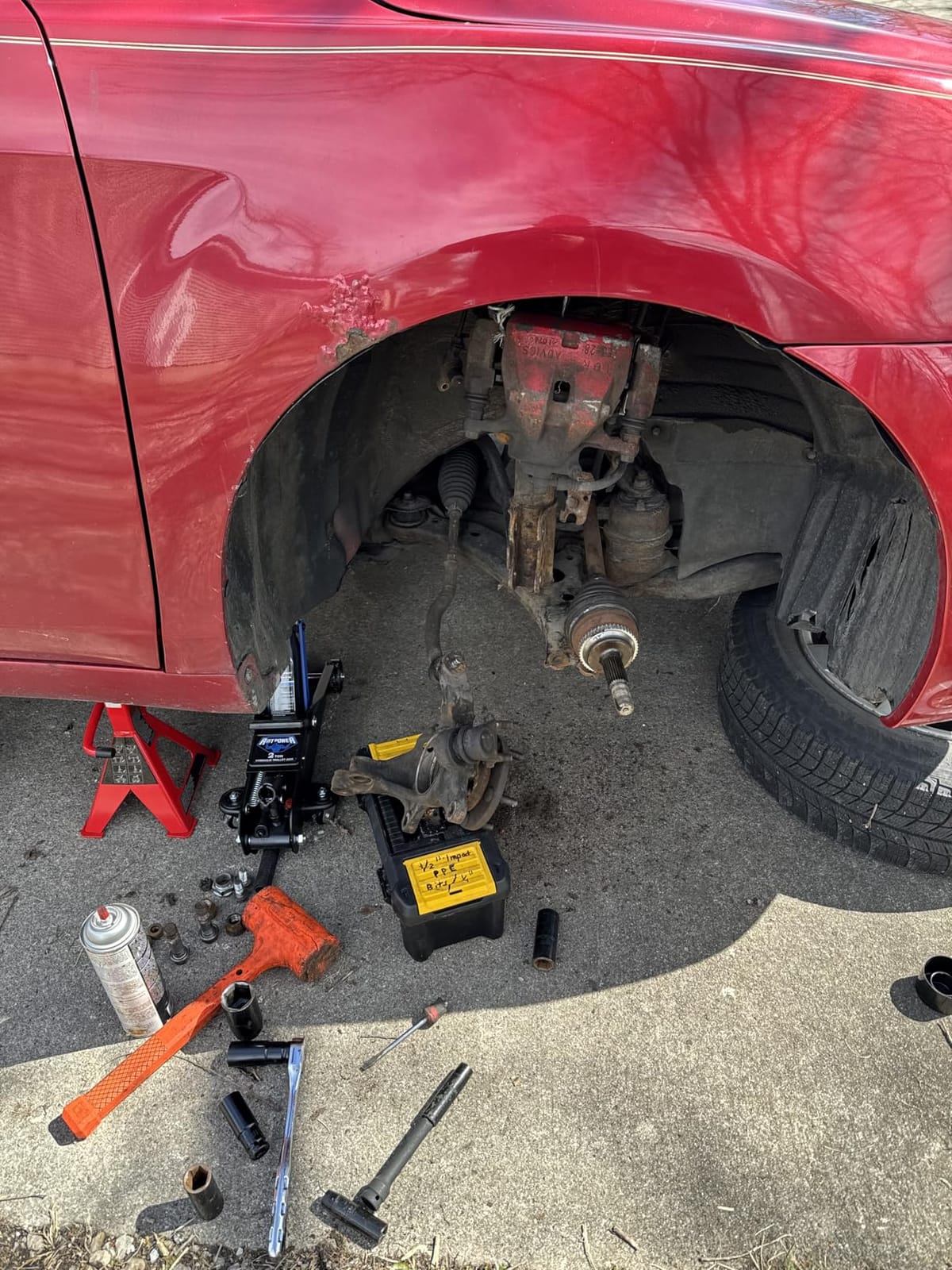
The height range is where you have to pay attention. Maximum lifting height is listed at 16.34 inches, with a minimum of 26.3 centimeters, and the whole pair weighs 5.7 kg. That is a compact footprint, which is genuinely useful in a one-car garage where the stands live in the corner between jobs.
The honest limitation is the 3 ton rating. Owners say plainly that it is built for sedans and urban SUVs, not full-size trucks or anything lifted. The listing also does not include a separate secondary safety pin, so your entire load path is the single ratchet, a different risk profile than the double-locking sets later in this list.
Check the lift point height before you buy this pair
At a 16.34 inch maximum, this pair works well for a compact car, a midsize sedan or a crossover. It gets tight on a taller SUV where you need real underbody clearance for a creeper, and it will not reach a lifted truck at all. Measure the distance from the ground to your lift point before you order.
Is a single ratchet enough for a home garage?
For most people, yes, because the failure mode people worry about is a stand set too high, and a self-locking ratchet does not slip when a stand is overloaded or tilted. If your work involves frequent heavy-vehicle lifts, the Pro-Lift and BIG RED sets below add a second mechanical stop. If you mostly change oil and do brake work, the simpler mechanism here is a feature.
2. Pro-Lift Heavy Duty 6 Ton Jack Stands: Best for Trucks and Heavy Vehicles
Pro-Lift Heavy Duty 6 Ton Jack Stands Pair – Double Locking Pins – Handle Lock and Mobility Pin for Auto Repair Shop with Extra Safety
- 6 ton per stand
- Handle lock plus mobility pin
- 16 to 23.5 in range
- Meets ANSI/PALD
Pros
- 6 ton per stand
- Two independent locks
- Cast ductile iron ratchet bar
- Meets or exceeds ANSI/PALD
- Smooth rise while locks release
Cons
- 26.4 pounds for the pair
- 16 inch minimum is tall for low cars
This is the set for anyone whose weekend involves a truck, a full-size SUV or a trailer tongue. It holds 4.8 out of 5 across more than 6,700 reviews, and 86 percent of those are five-star, which puts it ahead of nearly everything else in this list on owner satisfaction.
What separates it is the double locking system. A handle lock holds the ratchet bar in position, and a separate mobility pin adds a second mechanical stop that has nothing to do with the ratchet teeth. The construction is stamped steel with a cast ductile iron ratchet bar, and the manufacturer states it meets or exceeds ANSI/PALD standards for load rating.
The height range runs 16 inches to 23-1/2 inches, and that upper number is the reason experienced owners gravitate toward 6 ton stands even for smaller vehicles. It gets a truck or a tall crossover high enough that a creeper fits underneath with room to work, which is exactly the failure point people hit with shorter 3 ton sets.
The tradeoff is weight and minimum height. At 26.4 pounds for the pair, these are heavy to carry from the trunk to the front of the car, and the 16 inch floor means they cannot be placed under a low-clearance sedan. Owners in the forums keep both a 3 ton and a 6 ton pair for exactly that reason, reaching for the tall set only when the shorter one will not fit.
Why owners keep recommending 6 ton stands for small cars
The forum consensus is that 6 ton is the most versatile default, and not because anybody needs the tonnage on a sedan. It is the extra height range that makes the stand usable under trucks, vans and for creeper clearance.
When this pair is the wrong purchase
Skip it if your only vehicle is a low-clearance car, because 16 inches is well above the frame rail on a compact or a sports coupe and you will not be able to seat the saddle. At 26.4 pounds the pair is also heavy to carry repeatedly, so if you move your stands constantly, that weight shows up every time. For a single sedan in a small garage, the pair in the first section is the better fit.
3. BIG RED Torin T43002A, 3 Ton Double Locking: Best Value Double-Locking Pair
BIG RED T43002A Torin Steel Jack Stands: Double Locking, 3 Ton (6,000 lb) Capacity, Red, 1 Pair
- 3 ton per stand
- Removable locking support pin
- 11.25 to 16.75 in range
- 7.5 by 6.7 in base
Pros
- Double locking with removable support pin
- Forged iron sawtooth ratchet bar
- Wide pyramid foot base
- Large 3.35 in saddle
- Most affordable set here
Cons
- Ratchet teeth may need light filing
- Inspect welds on arrival
- No instruction booklet
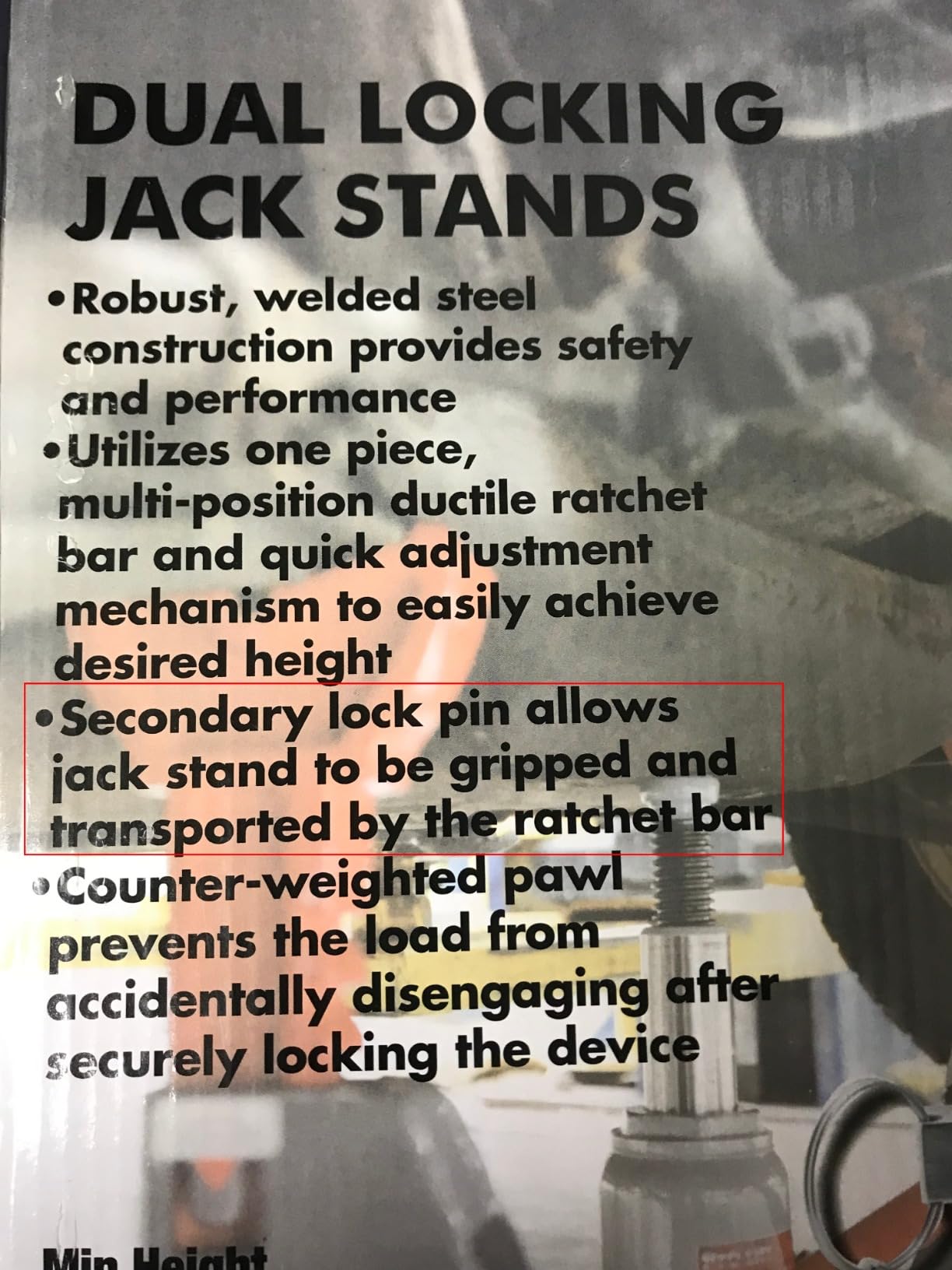
Torin builds these under the BIG RED name, and this pair is the value pick of the entire roundup. It is the most affordable set here, and it is also the only one at this level that includes a removable locking support pin as a second lock, which is a genuinely useful thing to find.
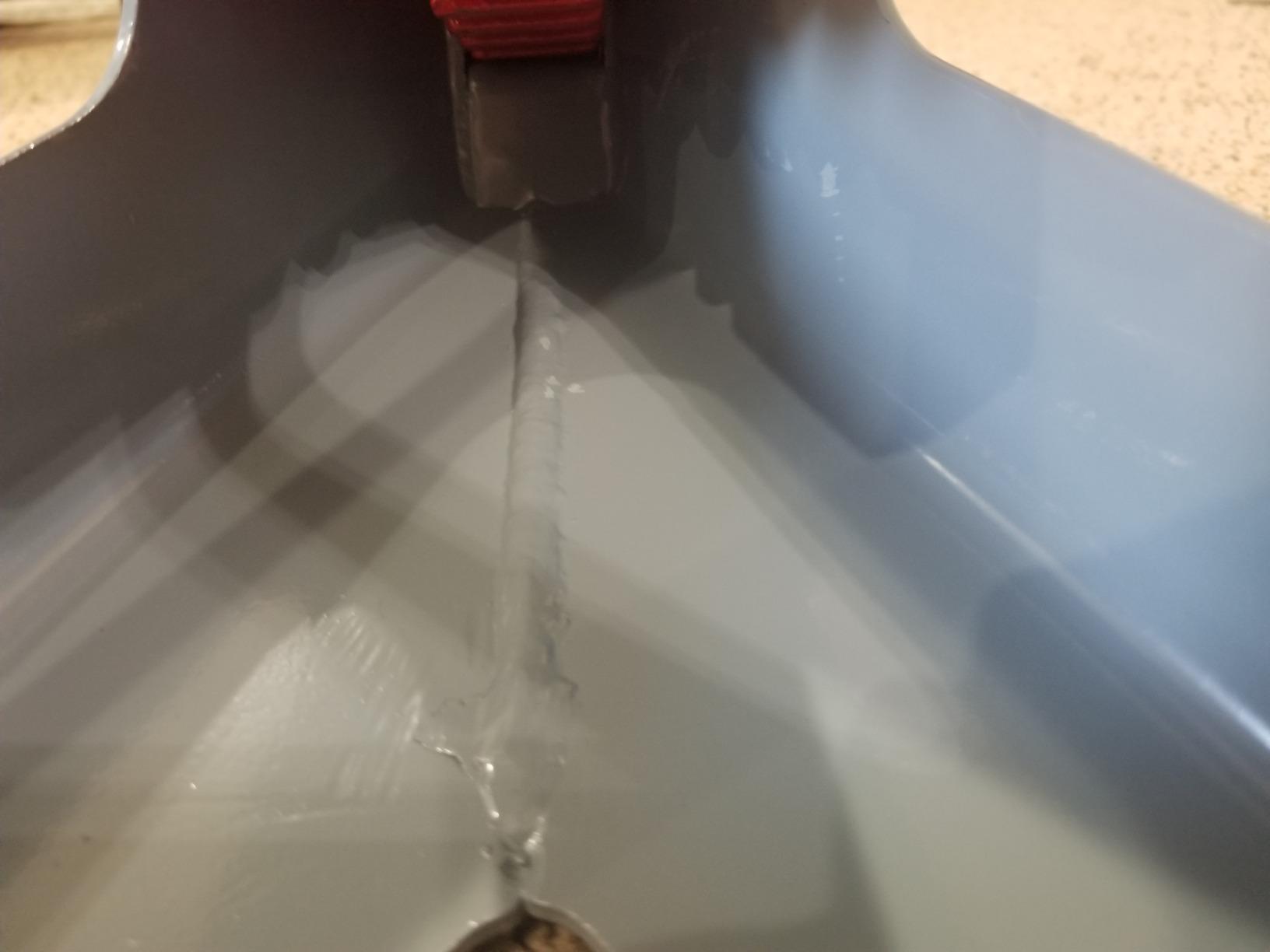
Owners rate it 4.7 out of 5 across more than 3,000 reviews, with 80 percent five-star feedback, and the praise lands on predictable places: the double locking design, the multi-position forged iron sawtooth ratchet bar that makes height changes quick, and the wide pyramid foot base at 7.5 by 6.7 inches. Several owners report switching to these after quality problems with other brands.
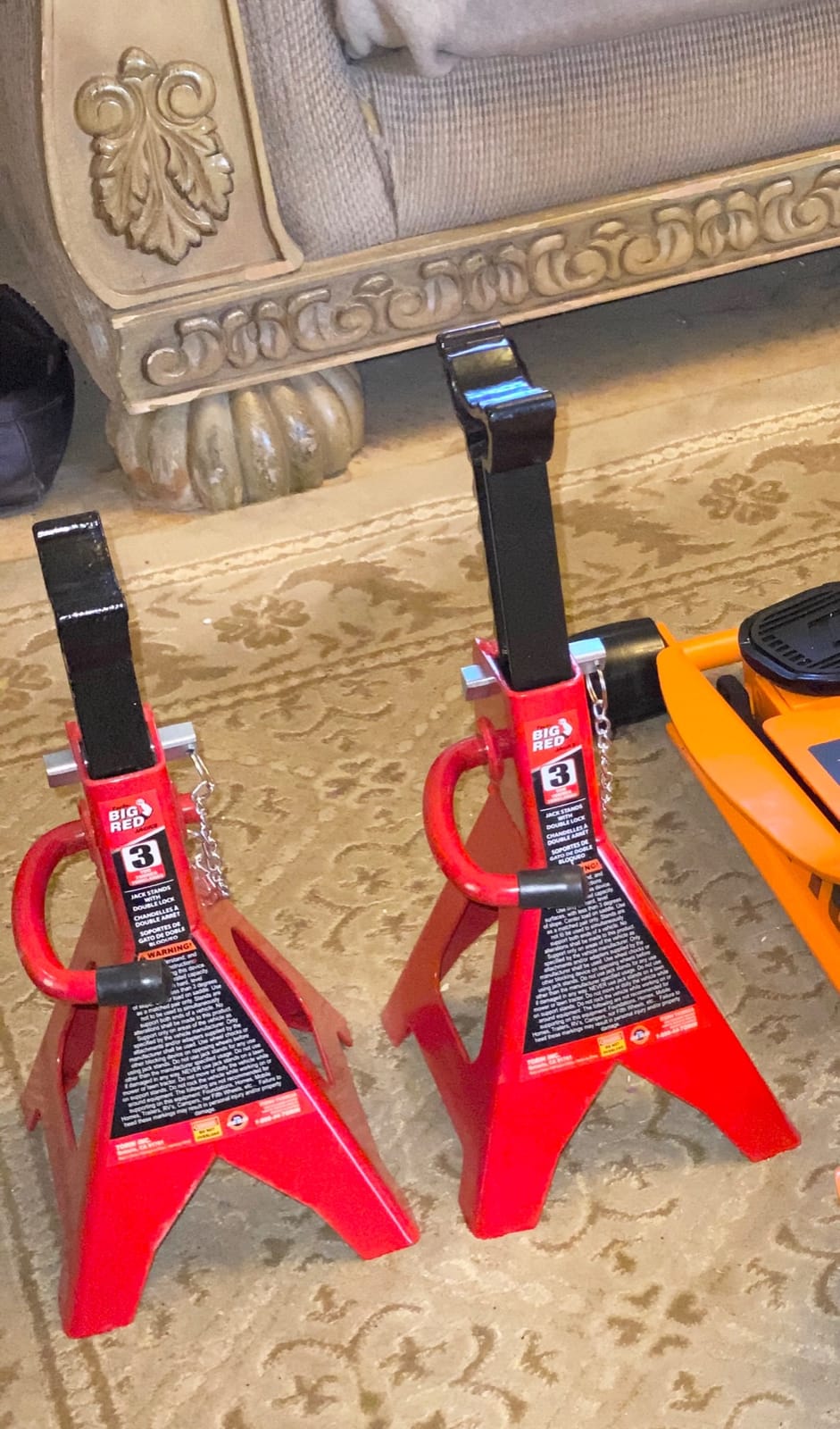
The lifting range is 11-1/4 inches to 16-3/4 inches, and the saddle diameter is 3.35 inches, which gives you a large contact surface rather than a small point. Pair weight is 14.9 pounds, lighter than the Pro-Lift set and closer to the middle of the group, and the manufacturer offers a limited 1-year warranty.
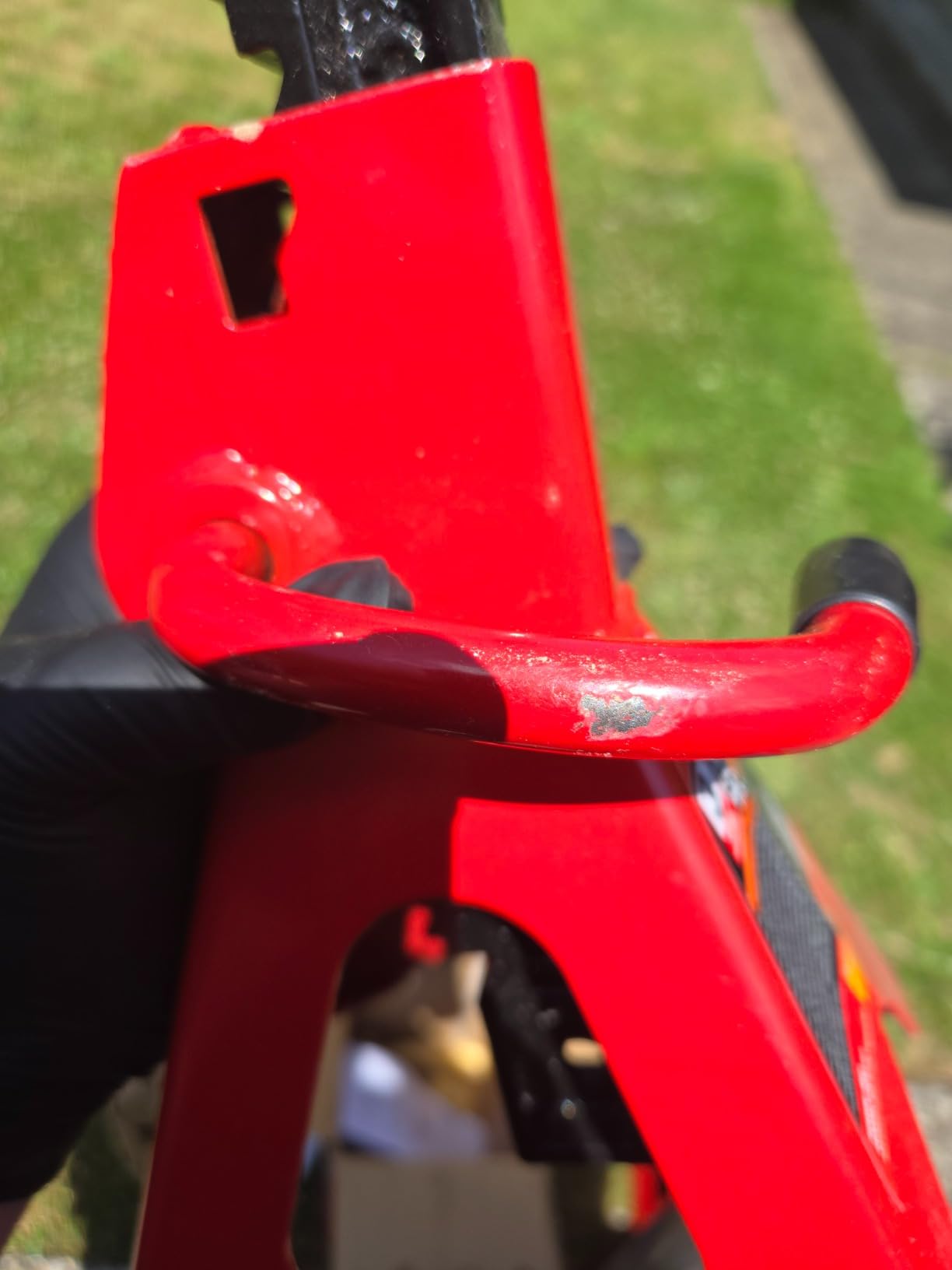
The criticism is quality control rather than design. A small number of owners needed light filing on the first ratchet teeth to seat them properly, and enough people mention weld finishing that it is worth inspecting the frame before the first use. That is a five-minute check and it is worth doing on any stand, this one especially.
Is BIG RED a Torin product and does the rebrand matter?
Yes, and enthusiasts know it. The manufacturer listed on the listing is Torin Shop Equipment, and the same company turns out stands sold under other retailer names. Owners report the practical difference shows up in warranty service rather than in the steel.
What to inspect before the first use
Run a finger along every weld on the column and the base, looking for porosity or cold joints, and cycle the ratchet through its full range checking that the bar drops into each notch without force. If the first tooth binds, a light file fixes it. The lack of an instruction booklet is a minor irritation rather than a safety problem.
4. VEVOR 6 Ton Double Locking Jack Stands: Best Heavy-Duty Value at 6 Tons
VEVOR Jack Stands 6t/13000lbs Capacity Car Jack Stands Double Locking 2 pcs
- 6 ton 13000 lb capacity
- 14.2 to 23 in range
- Handle lock plus safety pins
- Wide pyramid base
Pros
- 6 ton 13000 lb per stand
- Handle lock plus metal safety pins
- Load area about four times larger
- Notched saddle grips vehicle edges
- Reinforced base resists soft ground
Cons
- Paint blemishes on some stands
- Secondary pin can be a tight fit
- CE rather than US standard
Six tons of capacity at a fraction of what the domestic heavy-duty pairs charge, which is the entire reason to look here. VEVOR builds these from Q235 steel with a ductile iron ratchet bar. They rate 4.6 out of 5 across more than 1,600 reviews with 80 percent five-star feedback and only 3 percent one-star.
Owners describe a wide pyramid base with a triangular foot pad producing a load-bearing area roughly four times larger than a conventional stand, plus a reinforced bottom plate that resists sinking into asphalt or hard dirt. Several owners with decades of shop experience say the weld quality is better than what they have seen from long-established brands.
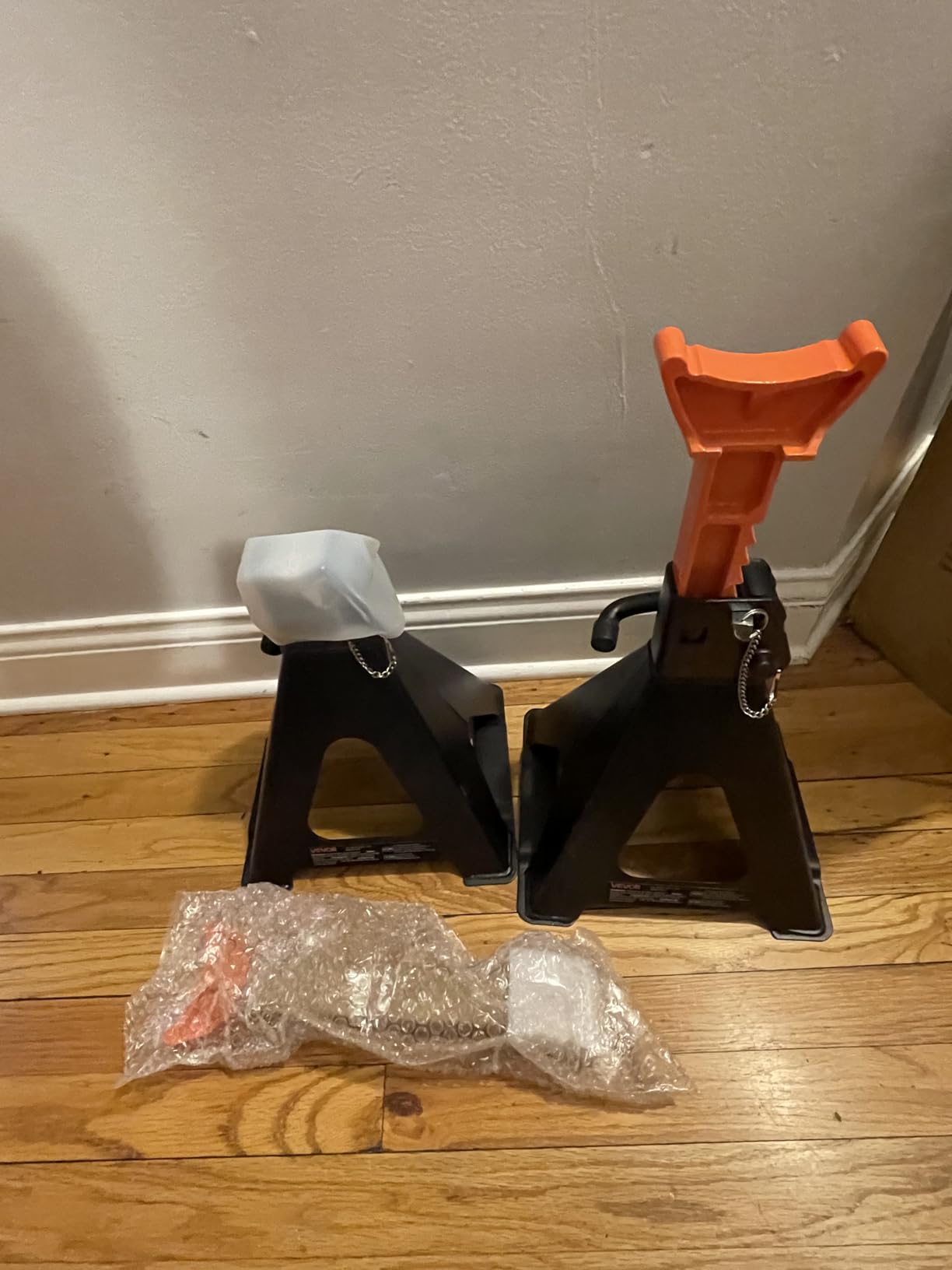
Height adjusts from 14.2 to 23 inches, a wide adjustment span for a 6 ton set and a good match for trucks, SUVs, UTVs and ATVs. The locking system combines a handle lock on the ratchet bar with wear-resistant metal safety pins, and the saddle top is notched so it grips the edge of a pinch weld or frame rail rather than sitting on it loosely.
Two things to know before buying. The manufacturer states the stands conform to CE standards rather than a US automotive safety standard, which is a different certification regime and one reason the manual lists no warranty. And the secondary pin length is a recurring minor complaint, with owners describing it as a tight fit that could be slightly longer.
Does CE rating mean the stands are not ASME certified?
It means they are not listed as ASME certified, and you should read them accordingly. CE conformity is a different framework and it does not carry the same load-test documentation that the ASME PASE-2014 or ANSI/PALD claims on the Pro-Lift, Amazon Basics and TCE sets do. If certification documentation matters to you, pick a set that states it.
Will these work on a driveway rather than concrete?
Better than most, per owners who use them on hard dirt and asphalt, and the reinforced bottom plate is the reason. The sharp pyramid foot is still a sharp foot, so a piece of plywood under each stand remains the sensible habit.
5. YELLOW JACKET 3 Ton Double Locking: Best Visibility in a Dark Garage
YELLOW JACKET Car Jack Stands 3 Ton with Double Locking and Large Foot Base for Lifting SUVS, Heavy Duty Steel, 6600 lb Capacity, 1 Pair, Yellow
- 3 ton 6600 lb capacity
- 10.9 to 16.6 in range
- Forged ductile iron bar
- Double locking
Pros
- 87 percent five-star feedback
- Double lock with ratchet bar and pins
- One-piece forged ductile iron bar
- Large saddle and pyramid base
- Handle doubles as a release lever
Cons
- Bright yellow finish is polarizing
- 3 ton ceiling for larger vehicles
A yellow stand is not for everyone, and the reviews make that clear. Beyond the finish, though, this is a well-built 3 ton pair with a 4.7 rating and 87 percent five-star feedback, so the people who like it are very satisfied with it.
The mechanical claim worth noting is the ratchet bar, forged from ductile iron in one piece rather than assembled. A one-piece bar has no weld to fail across the load path, and combined with the double safety mechanism of a handle-adjustment locking ratchet bar plus metal pins, it is a more conservative design than the price bracket suggests.
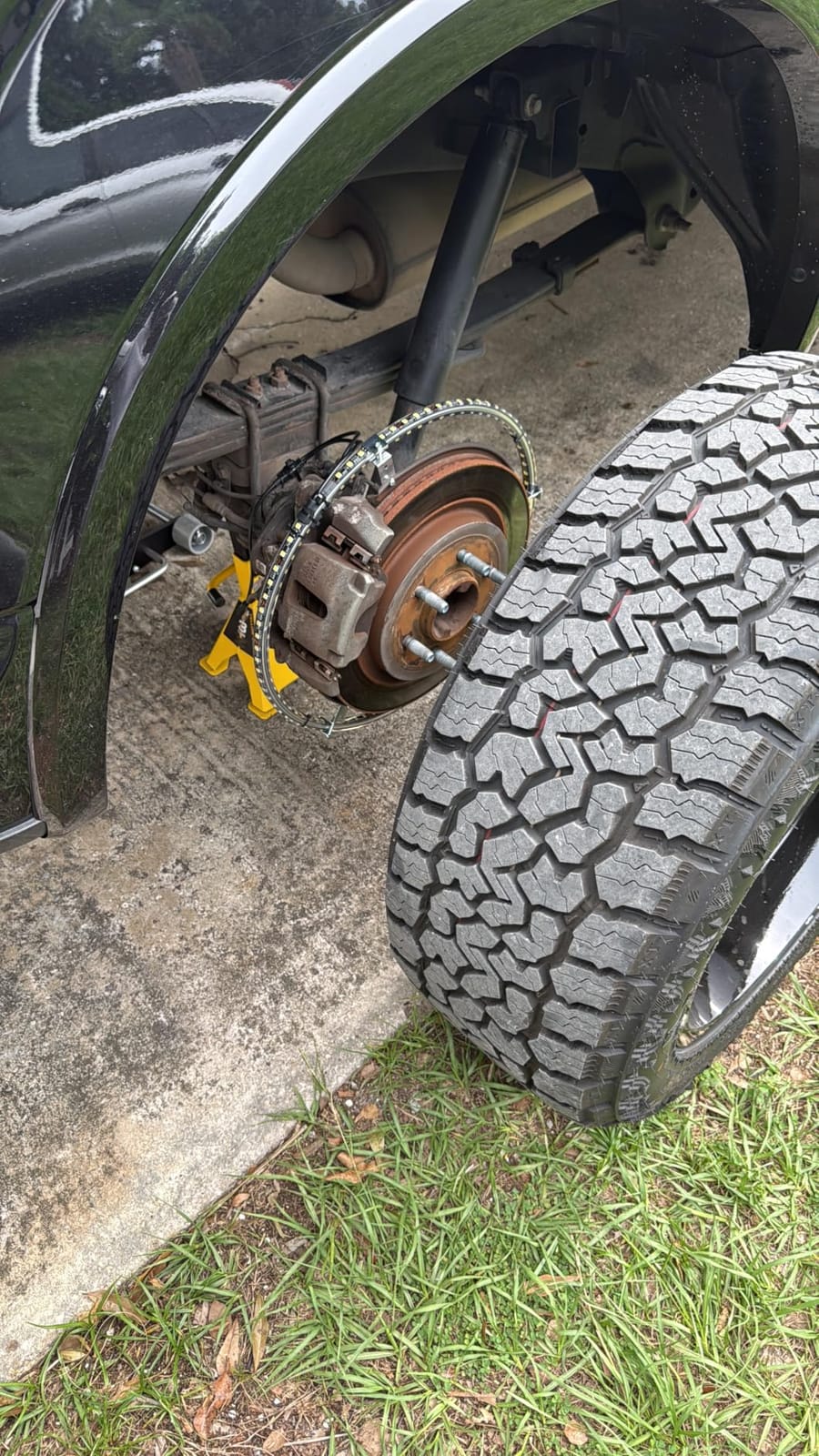
The lifting range runs 10-7/8 inches to 16-9/16 inches, which gives the pair a low floor and therefore a good fit for lower frame rails. The stamped steel welded frame design is standard for the category, and the listing states it meets US safety standards with a limited 1-year manufacturer warranty.
The handle doubles as a release lever for the saddle column, so you are not hunting for a separate pin to pull. Capacity tops out at 3 tons, 6,600 lb, and owners note that this is below what they want for larger SUVs and trucks, which is the expected ceiling for this size and the reason the 6 ton sets exist.
Is the yellow finish actually a safety feature?
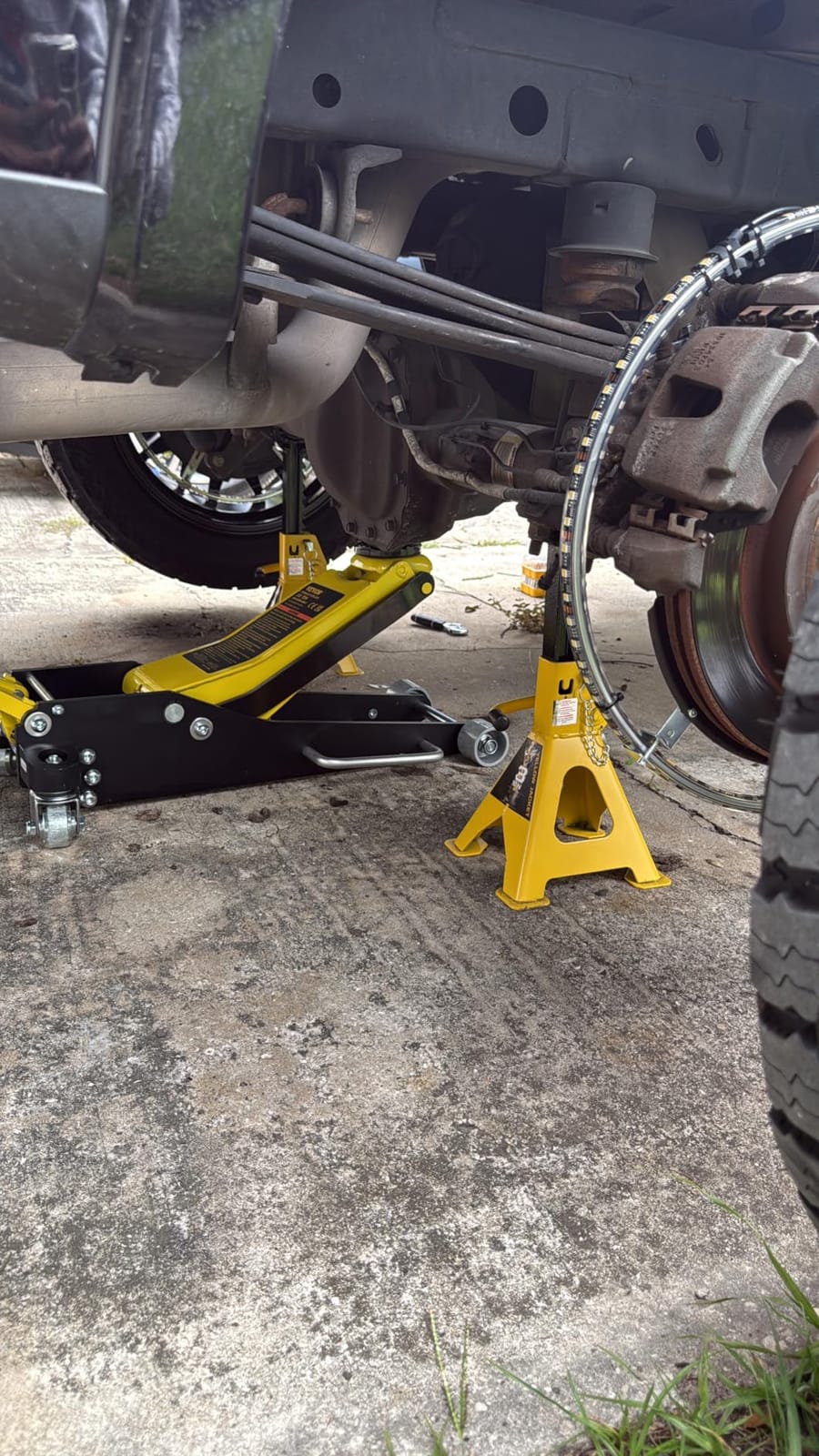
It helps, and owners treat it as a benefit rather than decoration. A stand you can see at a glance behind a wheel at night is one you are less likely to forget, and a high-visibility stand is easier to spot before the next job. Beyond visibility, the finish is cosmetic, and some buyers dislike it.
How does a 3 ton stand handle a compact SUV?
Comfortably, as long as you stay within the rating. A compact crossover typically lands well under the capacity of a 3 ton stand when supported at the pinch weld, and the 10-7/8 inch minimum height is low enough that the saddle seats properly. The point of the rating is the vehicle weight on the stands, not the vehicle plus tools and parts, so step up to 6 ton if you are near the ceiling on a larger vehicle.
6. TONDA 3 Ton Extra Tall Jack Stands: Best Extra Height for Lifted Trucks
TONDA Jack Stands 3 Ton, Extra Tall, 13.39-21.06 in, 1 Pair
- 3 ton capacity
- 13.39 to 21.06 in range
- Self-locking sawtooth bar
- 7.2 by 8.86 in base
Pros
- 13.39 to 21.06 in tall-adjusting range
- Self-locking ratchet engages as stand rises
- Large pyramid base and saddle
- Welded carbon steel frame
- Owners use it on lifted trucks
Cons
- 13.39 in minimum rules out low cars
- No secondary safety pin
Here is the set that solves the complaint from the top of this article. The height range is 13.39 to 21.06 inches, which means a single stand covers both a moderate lift point and full underbody clearance without stacking blocks.
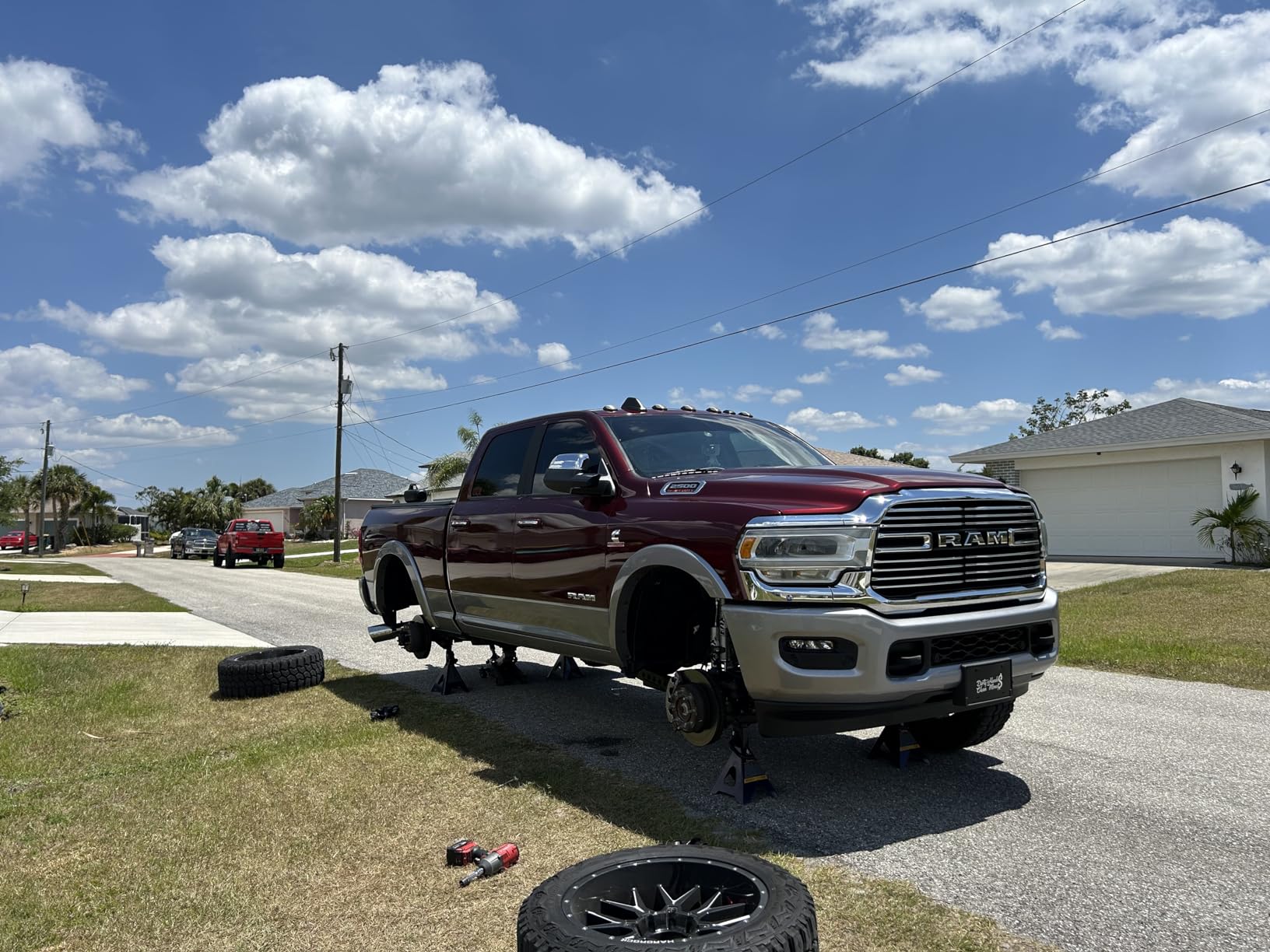
Owners rate it 4.6 out of 5 across 519 reviews with 83 percent five-star feedback, and the recurring comment is about vehicles rather than the product. Multiple reviewers use the pair on lifted trucks, F-series pickups and a Dodge Ram, situations where shorter stands simply do not reach the lift point.
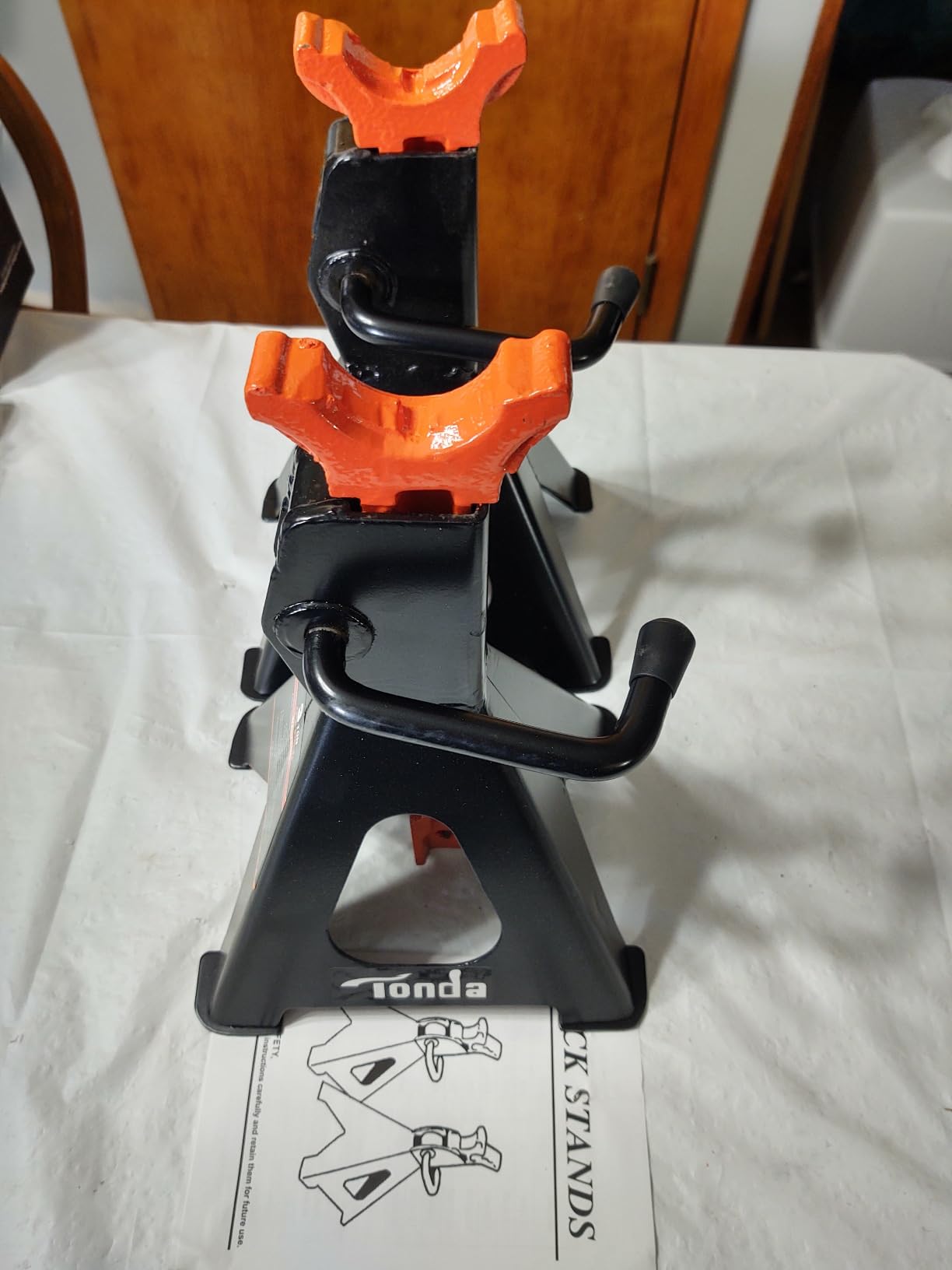
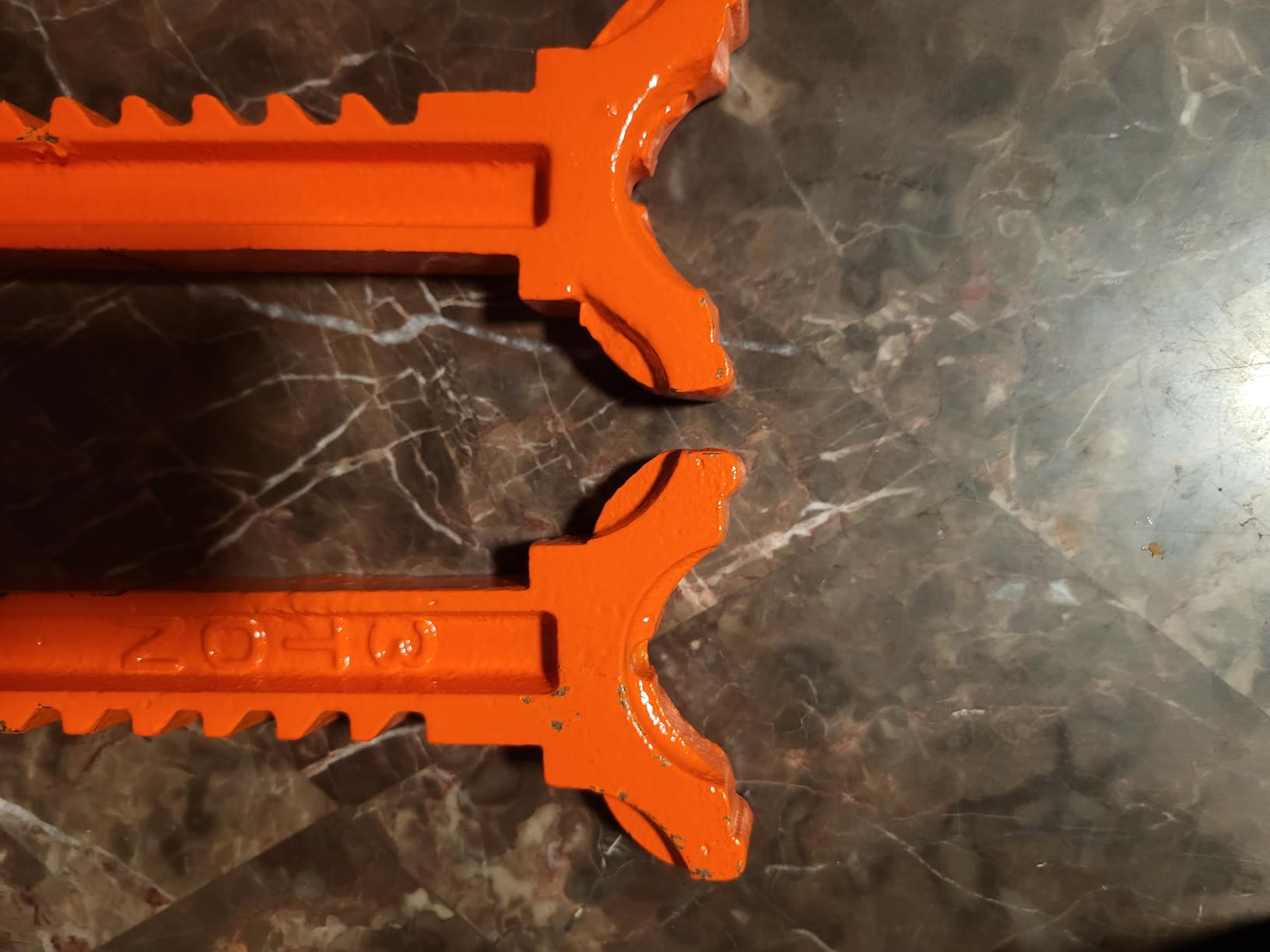
The sawtooth ratchet bar engages its own locking mechanism as the stand is raised, so there is no separate pin to manage. The base is a 7.2 by 8.86 inch pyramid style with a large saddle, and the frame is welded carbon steel with a protective coating on the cast iron ratchet bar. The listing positions the pair for SUVs, MPVs and UTVs and ATVs.
Understand the trade before you order. A 13.39 inch minimum height makes these unusable on low-clearance passenger cars, and the locking system is a single stage with no separate secondary safety pin. This is a tall-geometry stand for a tall vehicle, and it is not a universal replacement for a standard 3 ton pair.
Will these fit under a lifted truck?
That is exactly the use case owners report, and it is where the extra range pays off. A lifted truck’s frame rail sits high off the ground, so a standard 3 ton stand that tops out at 16 inches may not reach the pinch weld at all. These extend to 21 inches, which still leaves enough room under the truck for a creeper.
Why buy a tall 3 ton instead of a 6 ton?
Because the 6 ton stands in this roundup have minimum heights of 15-3/8 to 16 inches, which can be too tall to seat under a moderate-height lift point. A tall 3 ton covers the same high-clearance use case while still dropping low enough for a normal crossover, so it is the more flexible shape when your vehicle range is mixed.
7. TCE 6 Ton Double Locking Steel Jack Stands: Best Wide Base and Longest Warranty
TCE 6 Ton (12,000 LBs) Capacity Double Locking Steel Jack Stands, 2 Pack, Blue, AT46002AU
- 6 ton 12000 lb per stand
- 15.4 to 23.8 in range
- 10.8 by 9.4 in foot base
- ASME standards
Pros
- 10.8 by 9.4 in oversized foot base
- Meets ASME safety standards
- Limited 2-year warranty
- Large saddle surface
- Single-piece forged ratchet bar
Cons
- Heaviest pair here at 29.7 lb
- 15.4 in minimum excludes low cars
TCE builds a wide-base 6 ton stand, and on a surface that is not level concrete that width matters. The foot base measures 10-13/16 by 9-7/16 inches, and owners who work on soft ground cite it as the reason for choosing this set.
It rates 4.7 out of 5 from 387 reviews with 86 percent five-star feedback. Reviewers point to the double-lock design, the ASME safety standard compliance and the limited 2-year manufacturer warranty, which is longer than the 1-year norm the rest of the category uses.
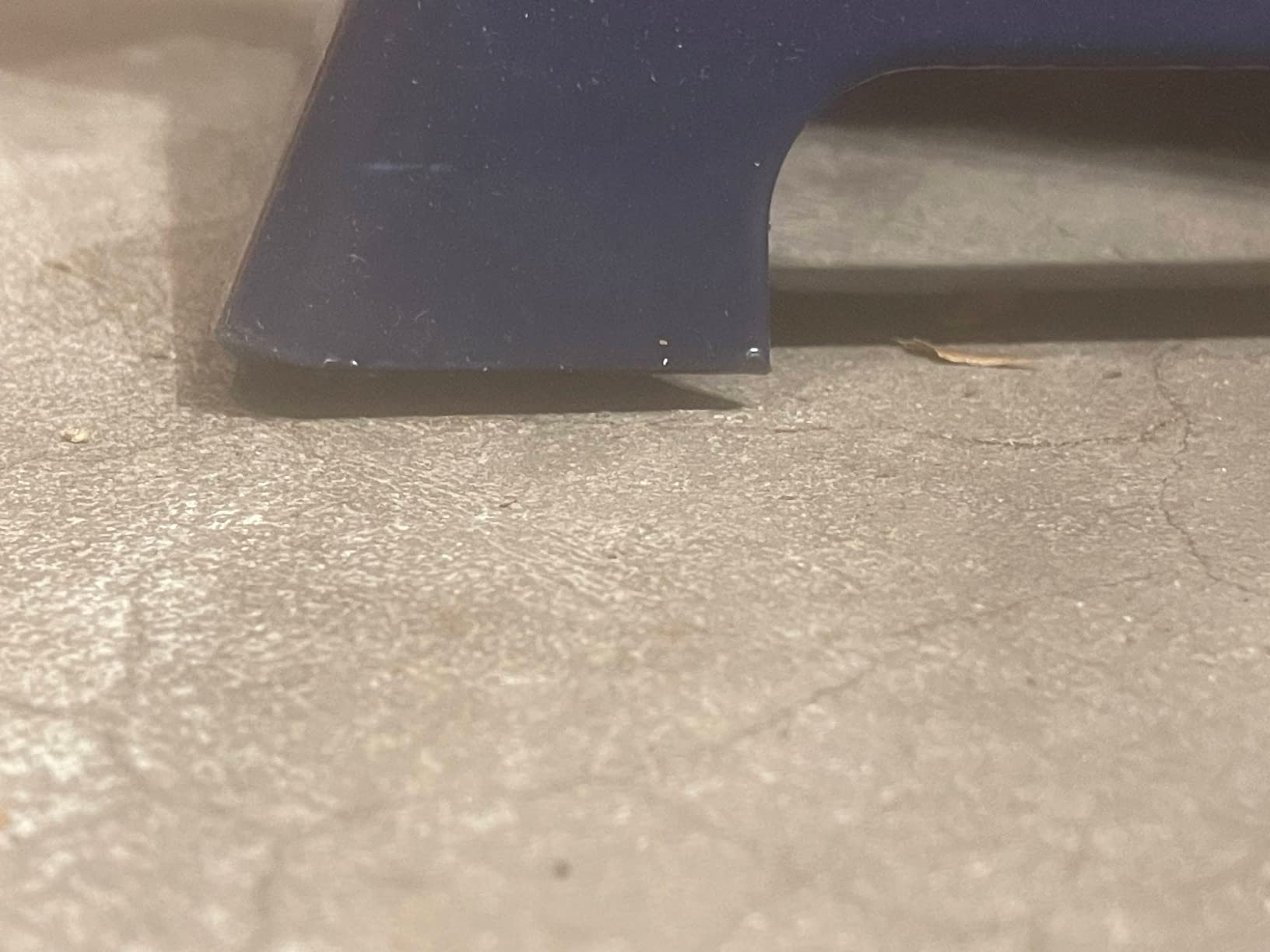
Height runs 15-3/8 inches to 23-13/16 inches, so it reaches slightly higher than most of the 6 ton sets here. The ratchet bar is a single piece, self-locking and multi-position forged iron, and the large saddle surface area improves contact with the frame rail or pinch weld where it sits.
Weight is the cost. At 29.7 pounds for the pair, this is the heaviest set in the roundup, and owners describe it as awkward to move around a garage. The 15-3/8 inch minimum height also rules out low-clearance vehicles, so this is a truck and SUV tool rather than a general-purpose one.
Is a 2-year warranty worth more than a lighter stand?
For a fixed tool that stays in one garage for a decade, a warranty you will probably never use is a tiebreaker, not a decider. Weight is what you feel every time you use them, and the Omega Lift 6 ton pair in this roundup is the lighter alternative with a similar range.
Do I need a wide base if my garage floor is smooth concrete?
On smooth, level concrete a standard base is fine, and the extra footprint buys you little. The wide base matters when the surface is imperfect, when you are working outside on gravel or packed dirt, or when a stand sits near a floor drain or expansion joint where contact is uneven. If you do any outdoor work, this is the pair to look at.
8. Omega Lift 32068, 6 Ton Double Locking: Best for Trucks and Heavy Equipment
Omega Lift 32068 Heavy Duty Jack Stands 6 Ton Pair – Double Locking Pins – Handle Lock and Mobility Pin for Auto Repair Shop with Extra Safety, Black
- 6 ton capacity
- 16 to 23.5 in range
- Handle lock plus mobility pin
- Meets ANSI/PALD
Pros
- 6 ton capacity across a wide range
- Double locking pins with large saddle
- Wide pyramid foot base
- Stamped steel welded frame design
- Owners report holding a dozer
Cons
- Locking peg is fiddly to seat
- Slot tolerances vary between units
This pair shares the Pro-Lift shape but comes with a shorter review history: 4.8 out of 5 from 176 reviews, 87 percent of them five-star. That is a small sample, so read the owner comments rather than the number alone.
What owners describe is a solidly built stamped steel stand with a welded frame design and a cast ductile iron multi-position sawtooth ratchet bar. The double locking pins combine a handle lock and a mobility pin with a large saddle surface, and the manufacturer states it meets or exceeds ANSI/PALD standards with a one-year warranty.
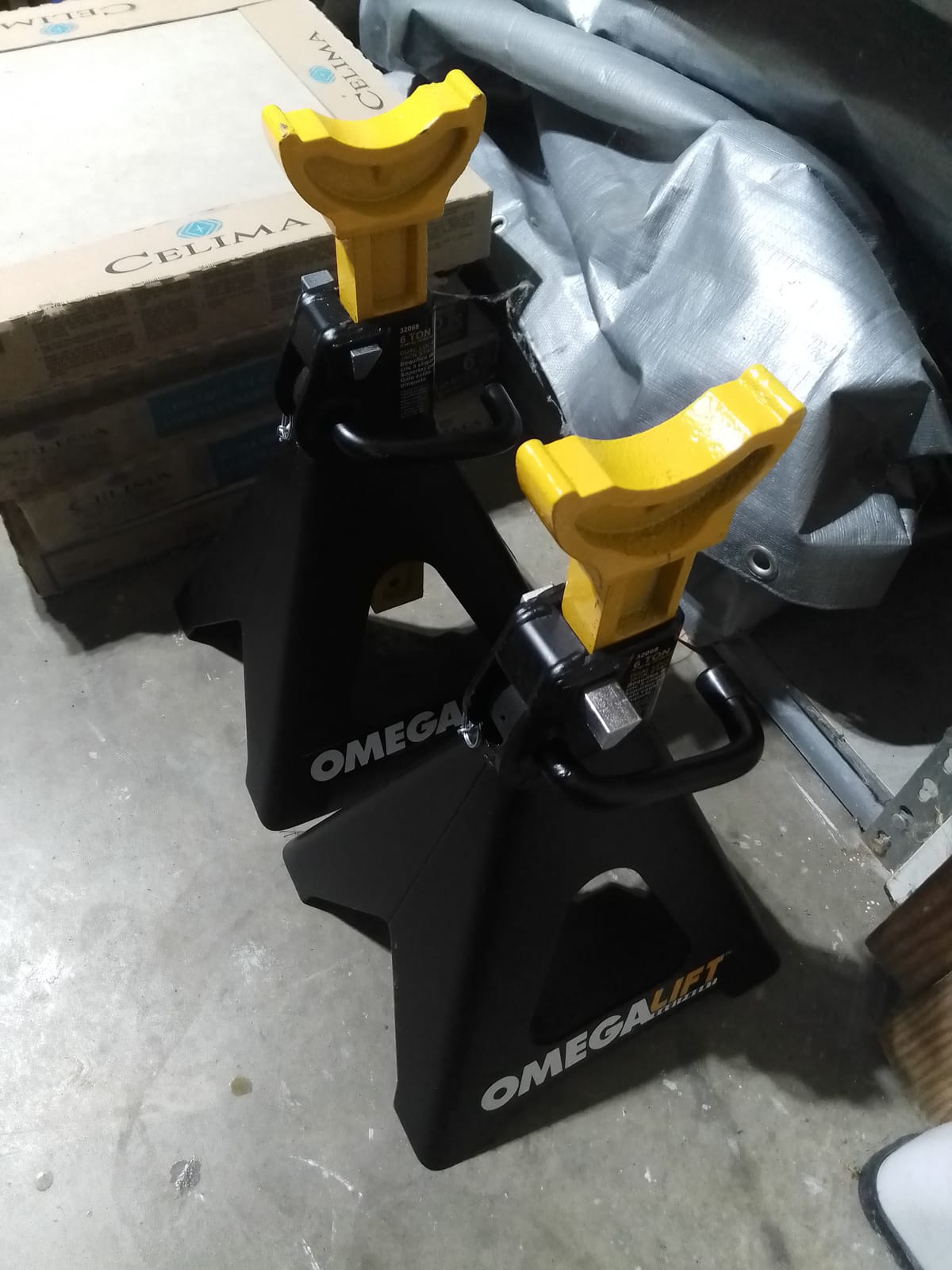
The 6 ton capacity across a 16 to 23-1/2 inch range is the profile owners use for trucks, Jeeps and equipment. One owner reports holding a 15,000 to 20,000 pound dozer and vintage trucks on these without issue, and others note they are easier to carry than heavier stands of the same capacity, at 27.5 pounds for the pair.
The recurring complaint is mechanical fiddliness. The locking peg can be difficult to seat through the slot during height adjustment, and a few owners report slot tolerances tight enough that the safety pin barely passes, while others on the same model find it loose. If your teeth are going into a pin hole twice a week, the stands with a smoother adjustment path may suit you better.
Are these stands heavy enough for farm and equipment work?
The 6 ton rating per stand, the welded stamped steel frame and the wide pyramid base are what owners cite for tractors, dozers and older trucks, and the ANSI/PALD claim is the certification you want on paper for that kind of work. Keep the load under the rating per stand and check the pin fit the first time you adjust them.
When should you skip this pair?
Skip it if the work is light or the vehicle is low. The 16 inch minimum height will not seat under a low-clearance car, and 27.5 pounds is meaningful to carry repeatedly for jobs that do not need the height. For a garage that mostly sees one low vehicle, a 3 ton pair handles the work with far less hassle.
9. ROADTEK 3 Ton Double Locking Jack Stands: Best Seamless Base and Single-Hand Carry
Jack Stands 3 Ton with Double Locking, Heavy-Duty Car Jack Stands, 1 Pair
- 3 ton per stand
- Seamless 7.85 in round base
- 11.3 to 16.6 in range
- Knob release
Pros
- Seamless alloy base with no welded joint
- Ratchet bar plus metal pin
- Knob release avoids sudden drops
- Concave saddle grips vehicle edges
- Rubber-padded handle carries both
Cons
- 11.25 in minimum height is tall
- 3 ton suits cars not heavy trucks
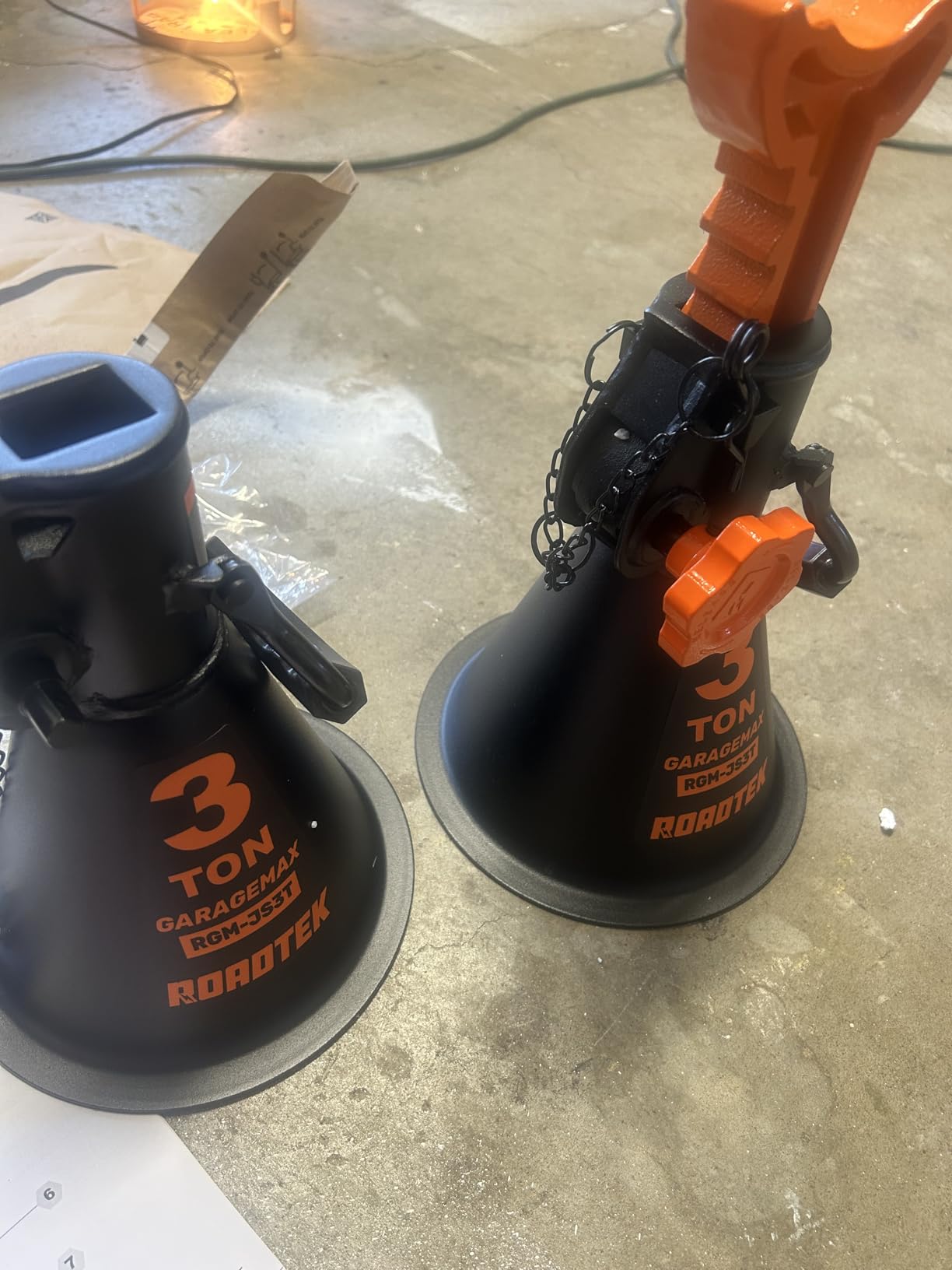
The base is the reason to look here. Instead of a stamped and welded pyramid, this stand uses a seamless 7.85 inch diameter round base in alloy steel, and the manufacturer is explicit that the design eliminates the welded joint that can fracture or deform. Owners pick up on exactly that point.
It holds 4.8 out of 5 from 156 reviews with a 90 percent five-star share. The second thing reviewers praise is the quick adjustment knob, which releases the stand without the sudden drop or hand pinching that a conventional release handle can cause. The package also includes Allen wrenches and a user manual.
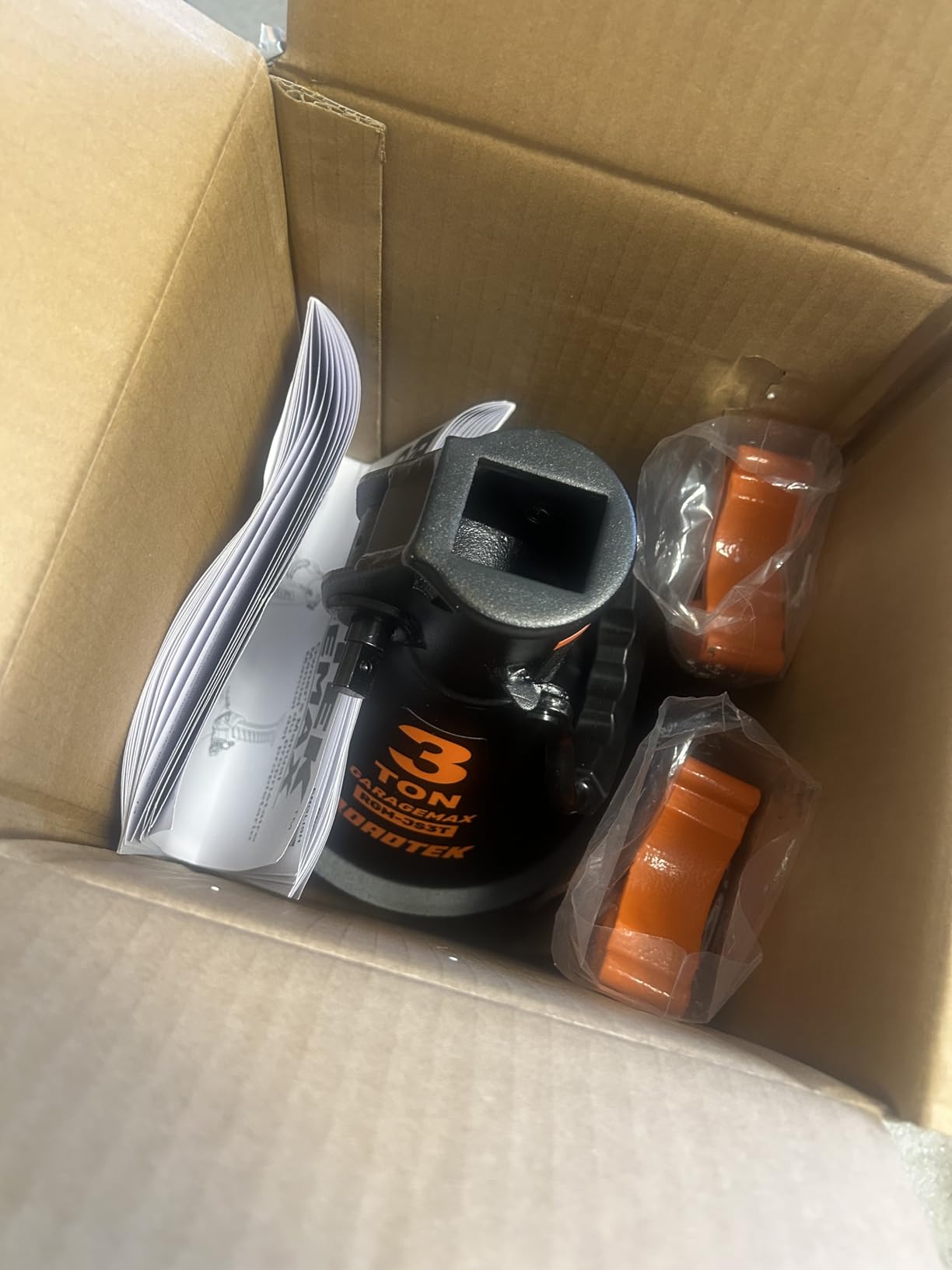
Locking is a self-locking ratchet bar with an integrated cast iron serrated bar plus a metal pin for double securing, and the ratchet has 10 levels for adjustment. The saddle surface is concave so it grips vehicle edges rather than letting a pinch weld slide, and the rubber-padded handle is sized so one person can carry both stands in a single hand.
Keep the limits in view. The adjustable height is 11.3 to 16.6 inches, and the 11.25 inch minimum is tall enough to be awkward on the lowest cars, so this is a low-ish stand, not a low-profile one. The 3 ton capacity suits cars and light SUVs, and the pair weighs 17.2 pounds with a one-year warranty.
Is a seamless base meaningfully safer than a welded one?
It removes a potential failure point rather than adding strength. A welded pyramid base is standard practice and most are fine, but the weld is the weakest point in the design and fatigue cracks start there. Eliminating it means the load travels through a single continuous piece of steel, which is a real structural difference rather than a marketing word.
Why does the knob release matter in practice?
Because most stands drop when you release them, and the stand landing on your hand or swinging unexpectedly is how people hurt themselves during setup. A controlled release means the column stops where you told it to. Owners also like that it is a deliberate action rather than something that happens because you lifted your hand too early, which removes a whole class of setup mistakes.
10. ESCO 3 Ton Performance Shorty Low Profile: Best Low-Profile Design
ESCO 3 Ton Performance Shorty Low Profile Jack Stands, 1 Pair
- 11 in minimum height
- 7 height positions
- 9.5 by 9.5 in base
- ASME tested
Pros
- 11 in minimum suits low-clearance cars
- Post and sleeve with no ratchet teeth
- Removable rubber saddle pads
- ASME tested at A2LA facility
- Anodized post resists corrosion
Cons
- Most expensive option here
- Only 7 height positions
- Not tall enough for trucks
This is the only stand here with no ratchet teeth at all, and that single design decision changes how it behaves over time. The post-and-sleeve design means there is no sawtooth bar to wear, no pawl to slip and no teeth to file.
ESCO is the most repeated long-term recommendation across owner forums, and its three-leg footprint is often cited as feeling more stable than a conventional pyramid base. This particular Shorty model rates 4.7 out of 5 from 147 reviews with 88 percent five-star feedback, and reviewers who accept the higher cost generally conclude it is worth paying.
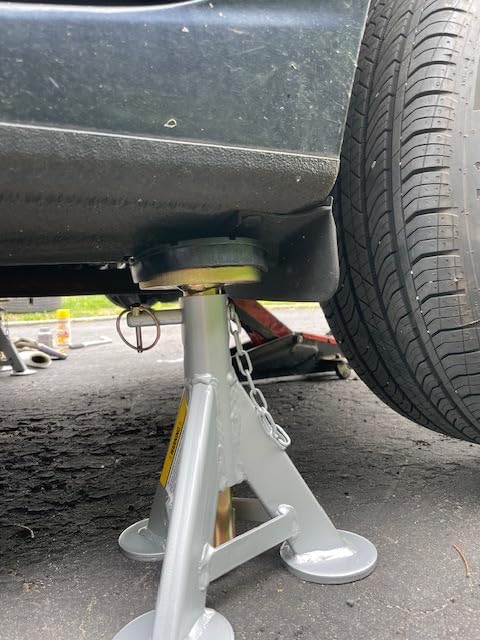
Minimum height is 11 inches and maximum is 17 inches across 7 adjustable positions, on a 9.5 by 9.5 inch base. The removable thick rubber saddle pads are a genuinely practical feature: they protect underbody paint and they work with pinch weld adapters on unibody cars, which is a problem for bare metal saddles on a modern unibody.
The certification detail is stronger than most. The listing states these were tested to ASME standards by an A2LA certified testing facility, which is a stronger documentation claim than self-reported compliance. Reviewers also note that play in the bar and sleeve disappears once the vehicle is loaded. The pair weighs 21 pounds with a 1-year manufacturer warranty.
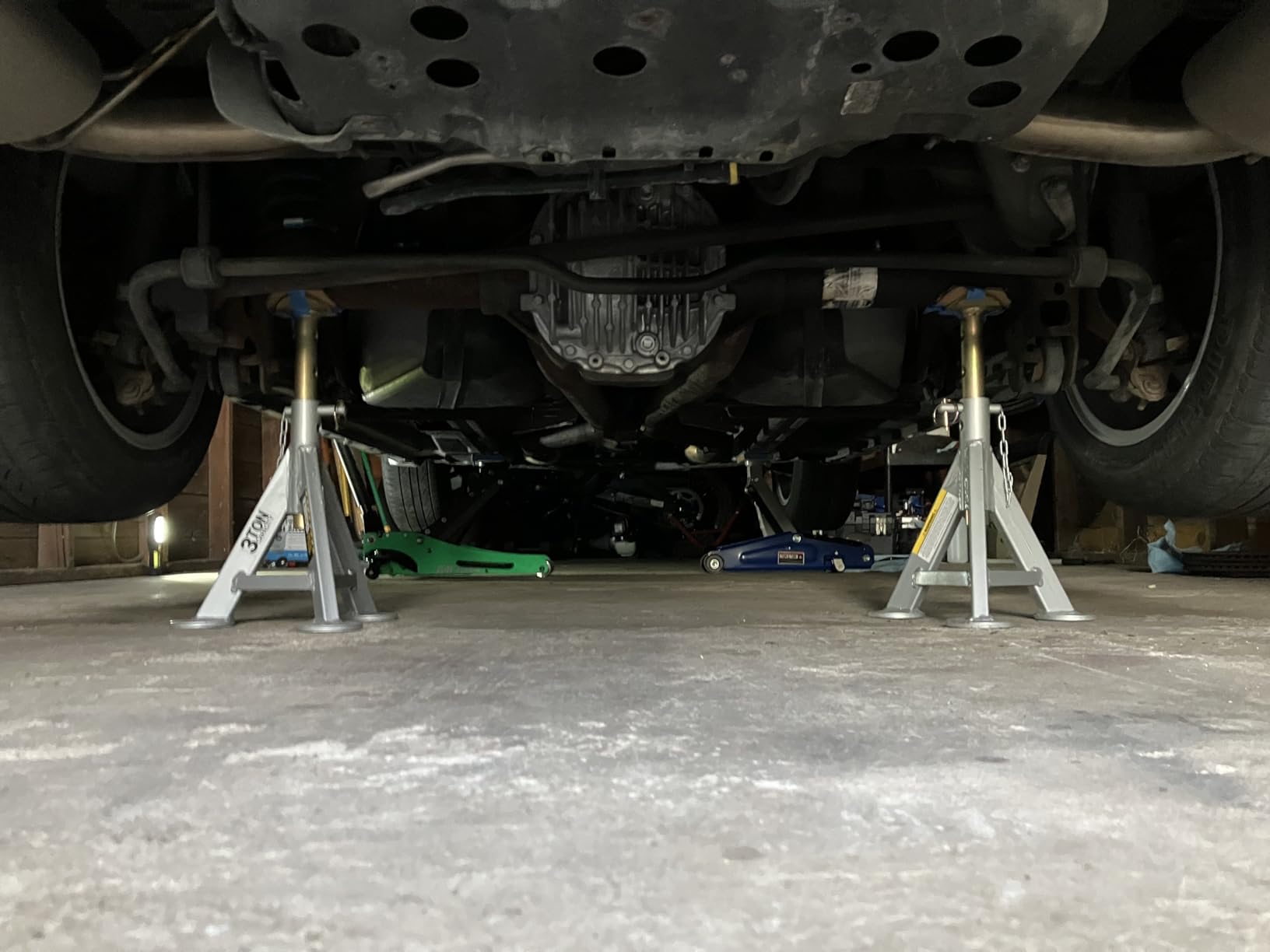
Are post-and-sleeve stands better than ratcheting stands?
For long-term ownership, many owners think so. A ratchet bar gives you finer height increments and more positions, but it is a wear surface and a place where a worn tooth can slip. A post and sleeve has a smaller adjustment range and no teeth to fail, so it stays predictable for a long time. If you adjust height constantly, the ratcheting sets give you more control.
Who should pay more for these, and who should not?
Pay more if you own a low-clearance unibody car, work on unibody panels where the removable rubber pads matter, and want a stand that will still be adjustable in ten years. Skip them if you own a truck or need real underbody clearance, because 17 inches is the maximum and the 3 ton rating is aimed at cars. There is also a small number of buyers who report a box missing pads or a pin, so confirm the contents before the first use.
What Size Jack Stands Do You Need?
A 3 ton stand is enough for most sedans, hatchbacks and crossovers. A 6 ton stand is the right call for full-size pickups, three-row SUVs, vans and anything lifted. The safer habit is to size up, because a stand rated above your vehicle costs you only carrying weight, while an undersized stand fails at the worst possible moment.
Most people get the tonnage question wrong in the same direction, overbuying capacity while underbuying height. Here is roughly how it maps:
Compact car, hatchback, subcompact sedan: 3 ton, minimum 10 to 11 inches. Height is rarely the issue.
Midsize sedan, full-size sedan: 3 ton. Clear a 16 inch maximum comfortably.
Compact or midsize crossover, small SUV: 3 ton works, and a tall-adjusting 3 ton gives you more room for a creeper.
Three-row SUV, minivan, full-size SUV: 6 ton. The extra height range is what actually makes the stand usable.
Half-ton pickup: 6 ton, and check your floor jack can place a stand at the height you need.
Full-size pickup, three-quarter ton, lifted truck: 6 ton minimum, often tall-adjusting. If you work on heavy equipment, that is where the 6 ton Pro-Lift and Omega Lift shapes earn their place.
A common rule of thumb is that a stand should be rated for at least half the vehicle’s weight, and many owners simply buy the next capacity up. The 6 ton stand is the most versatile default in the forums, not because anyone needs the tonnage on a sedan, but because the extra height range is what lets you get under trucks, vans and crossover frames at all.
Per-stand or per-pair: read the stamped rating
Tonnage labeling is not standardized, and this trips up more buyers than any other specification. Some brands rate each stand on its own, some rate the pair, and there is no industry rule forcing consistency. The same nominal 3 ton can therefore mean two stands that share a 6,000 pound rating or two stands that each carry 6,000 pounds.
Read the stamped or printed rating on the stand itself rather than the listing headline, and apply the per-stand figure as the limit for the load on that corner. When a listing says 6,000 lb, work out whether that is the pair or the single stand before you calculate headroom for your vehicle.
Pin-Style vs Ratcheting vs Double-Locking Stands
All three styles appear in this roundup, and the difference is how the load is actually held up. A correct mechanism used properly is safe, and a clever mechanism used carelessly is not.
Pin-style stands carry the load on a solid steel pin dropped through a hole in a notched post. The pin is the entire load path, which makes the mechanism simple to inspect and impossible to adjust under load. Enthusiasts point to this as the most auditable design because you can see the pin seated or you cannot.
Ratcheting stands carry the load on a toothed bar held by a spring-loaded pawl. The pawl ratchets up as you raise the column and resists lowering under load, which is what makes the Amazon Basics, VEVOR, YELLOW JACKET, TONDA, TCE and ROADTEK sets in this roundup fast to adjust. The failure concern is always the same: whether the pawl is fully engaged on the tooth, and whether a tooth is worn or damaged.
Double-locking stands combine a ratchet or handle lock with a separate mechanical stop, usually a metal pin that passes through the post independently of the ratchet teeth. The Pro-Lift, BIG RED, VEVOR, YELLOW JACKET, TCE, Omega Lift and ROADTEK sets all use some version of this. If the ratchet mechanism were to fail or be set incorrectly, the second pin is still there holding the column.
On the question of which stand is safest, the honest answer is that the double-locking designs give you the most margin, and that is why seven of our ten picks carry a second lock. But a correctly set single ratchet with nothing loose and nothing overloaded does not fail because it is single. What actually causes failures is standing on soft ground, using a stand above its rating, placing it on a pinch weld that was not meant for lifting, and setting both stands to different heights.
One enthusiast habit worth borrowing is replacing the factory lynch pin with a wire-lock clevis pin on pin-style stands, which makes the pin physically harder to pull by accident. If you own pin-style stands and lose a pin, replace it with a locking type rather than bending the original back into shape.
Jack Stand Height vs Floor Jack Lift Height
A 24 inch tall stand is useless if your floor jack only lifts 18 inches off the ground, because you cannot slide it under the lift point to set the height. This is the most expensive mistake in the category, and it is avoidable: the stand’s maximum height and your jack’s maximum lift height are two different numbers that people routinely confuse.
A low-profile floor jack may only give you a few inches of clearance under a vehicle with the saddle lowered. Check its rated maximum lift height with the saddle fully lowered, not the number on the box, which is usually the raised height.
Then measure what you are actually working with. Jack the vehicle up, put a straightedge across the lift point, and measure from the ground to that straightedge. That number plus an inch or two is the minimum height your stand needs to reach, and you should repeat at the other end of the vehicle.
This is the advice that appears repeatedly in the owner forums and in no editorial roundup we found: measure before you buy. It takes ten minutes with a tape measure and a floor jack, and it eliminates the single most common complaint about 3 ton stands being too short. Owners who learned this the hard way report stacking 4×4 blocks under a maxed-out stand just to get a creeper under a minivan, which adds a stack of loose lumber between your vehicle and the floor.
A reasonable rule is to buy the tallest stand your jack can actually place, within the capacity you need. That is why the tall 3 ton and the 6 ton sets dominate the recommendations here even for people with small cars.
How to Use Jack Stands Safely
These are the rules that matter more than any brand on this list. A stand rated correctly and placed correctly on the wrong surface will still fail, and the failure is not a slow lean. It is a vehicle coming down onto whatever is under it.
Always use at least two stands, on a matched pair of lift points. A single stand on a single corner is never a safe working position, regardless of rating. For anything beyond a quick single-corner lift, four stands at all four corners is the correct configuration. Place them at the manufacturer-designated lift points, which are typically a reinforced section of frame rail or a pinch weld with a sill reinforcement plate behind it. Not every pinch weld is reinforced, and a jack stand on an unreinforced sill will crush it.
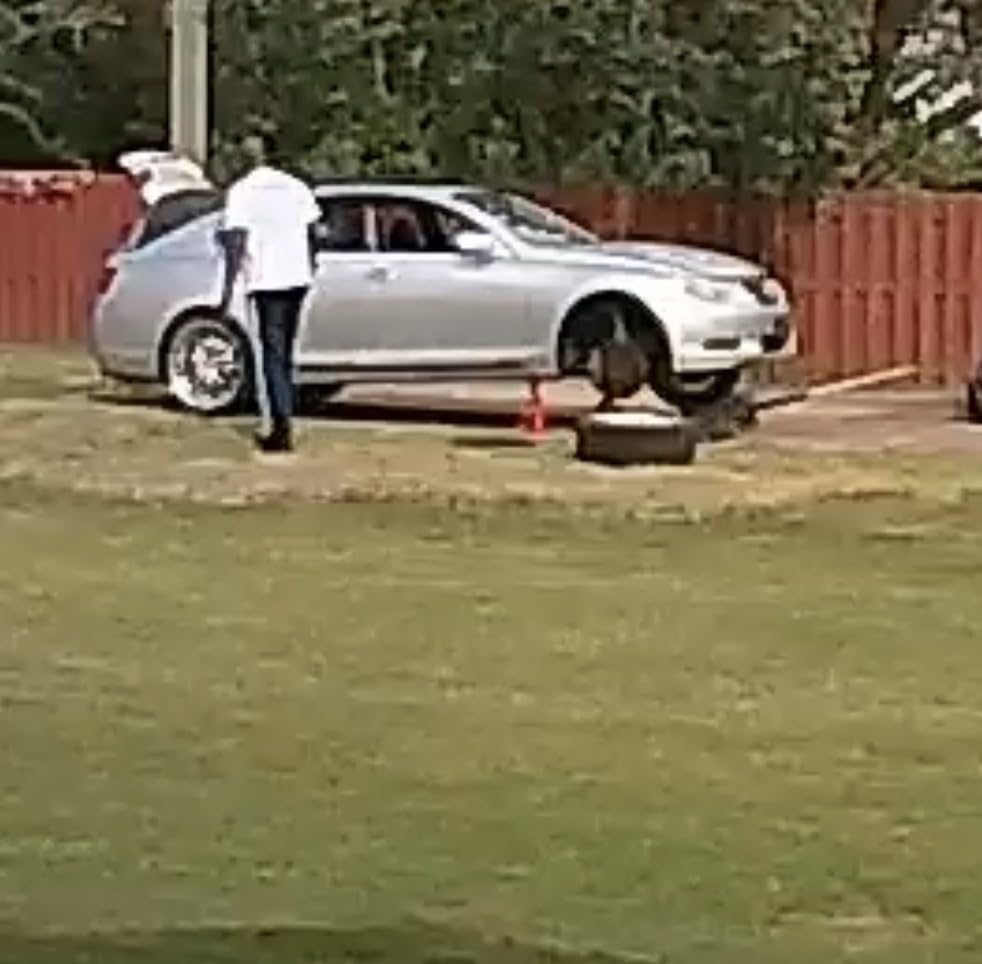
Put the stands on solid, level concrete. Asphalt, gravel, packed dirt and sloped driveways are the common denominators in stand failures. If that is all you have, set a piece of plywood or a dimensional lumber pad under each stand foot to spread the load, and treat that as a mitigation rather than an equivalent to a proper slab.
Chock the wheels, every time. Even in gear, even with the parking brake set. A vehicle on stands can creep, and chocking the diagonally opposite wheels stops that.
Lower the vehicle onto the stands until the column is fully seated and the lock is engaged, then lower the jack slowly. Keep the floor jack under the vehicle while the stands take the load. The jack should still be raising the vehicle gently against the stands, which confirms that the stands are carrying the weight.
The 3/4 rule is a related piece of guidance: never raise a vehicle on a floor jack past about three-quarters of the jack’s rated capacity, and never exceed the rating in any case. A floor jack at the top of its stroke on a vehicle it was not sized for is a common way to damage the jack, and many manufacturers void the warranty if the jack is used past that point.
A few more that matter: set both stands to the same height so the vehicle sits square, check the ratchet or pin is fully engaged at that height before you release the jack, and never get under a vehicle supported by a floor jack alone. If you cannot tell whether the lock is engaged, do not guess. Back the vehicle down, check it, and re-lift.
For long jobs, a pair of axle stands or the wide-base sets can help keep the vehicle level on a floor that is not perfectly flat, and four stands are better than two whenever the manufacturer approves the extra lift points.
How to Check If Your Jack Stands Were Recalled
Not all Harbor Freight jack stands are recalled. The recall covered a specific run of 3 ton ratcheting stands rather than every stand the company has ever sold, and the same stands were sold under many retailer labels, so buyers often cannot tell whether the set in their garage is one of the affected pairs.
To check, work through these steps:
Find the model number. It is stamped or printed on the label attached to the column or the base of each stand. Match it character for character, including any suffix letters.
Look at the date and lot information. Recalls are usually scoped to a production run, and the date code on the label is how you tell whether your stands fall inside it.
Check the retailer or manufacturer recall page directly. Enter the model number into the official recall lookup rather than relying on a general search result, because the affected and unaffected lists get updated and republished.
Contact the seller with the model number in hand. If the set came from a third-party retailer, both the retailer and the original manufacturer keep recall records, and either one can confirm.
Replace rather than repair. If your stands are in an affected range, the fix is a new set. A stand that was involved in a recall has a known defect in its load path, and repairing it does not restore the original rating.
The reported defect in that recall was a ratchet that could fail to lock, allowing the stand to drop. That is the failure mode people find hardest to reason about, because the stand looks correct, feels correct, and the problem only appears under load. A stand that is easy to verify is worth the ten minutes it takes.
That instinct applies to any brand, not just one. Before you put a vehicle on an unfamiliar set, cycle the mechanism through its full range under hand pressure, look for a pawl that does not seat cleanly, and check that the rated capacity is stamped somewhere you can read it. If none of that is legible, that is a reason to pick a different set from this list.
How to Choose the Right Jack Stands
Work down this list in order and you will pick correctly for almost any garage. Capacity first, height second, and the rest in the order below.
1. Capacity. Match the stand rating to your heaviest vehicle, and size up when you are close to the limit. Remember that the rating may be per stand or per pair, so read the stamp. If your work spans cars, a crossover and a truck, buy for the truck.
2. Height range. Confirm both the minimum and maximum fit your lift points, and confirm your floor jack can place the stand at the heights you need. This is where most returns and most disappointments come from, and it takes ten minutes to check before you buy.
3. Base size and shape. A wider footprint resists tipping and spreads load on softer surfaces. The wide pyramid bases in this roundup run from about 6.7 by 7.5 inches up to nearly 11 by 9.4 inches, and the seamless round base is an alternative approach to the same problem.
4. Locking mechanism. Decide between pin, ratchet and double-locking based on how much you adjust height and how heavy the vehicles are. Double-locking costs little and removes one class of failure, so it is the safer default if you are undecided.
5. Steel, welds and hardware. Look for a solid steel frame, welds you can inspect before first use, and a forged or one-piece ratchet bar rather than a welded assembly. Check every stand regardless of brand, and confirm all pins and hardware are in the box.
6. Saddle design. A large saddle spreads the load and reduces point loading on the pinch weld. A concave or notched saddle grips the edge of the frame rail instead of letting it slide. Removable rubber saddle pads protect underbody paint, which matters on unibody cars where the metal is thin.
7. Certification and warranty. ASME PASE-2014 for portable automotive service equipment, or ANSI/PALD, is the certification worth having stated explicitly. The Amazon Basics, TCE and ESCO sets in this roundup make a documented claim; the VEVOR set states CE conformity, which is a different framework. A 2-year warranty is the longest offered here, and 1-year is the category norm.
Two smaller decisions round out the picture. Aluminum versus steel matters less than most people expect, because steel stands are the default and are not the weak link in the designs reviewed here. And four stands beat two whenever the manufacturer approves the extra lift points, because four points of contact cannot rock.
Frequently Asked Questions
Should I get a 3 ton or 6 ton jack stand?
A 3 ton stand covers most sedans, hatchbacks and crossovers. A 6 ton stand is the right choice for full-size pickups, three-row SUVs, vans and lifted vehicles. Many owners buy 6 ton stands for small cars anyway, because the taller adjustment range is what actually gets a creeper underneath, not the extra tonnage. Size up when you are near the limit, and check whether the rating is stamped per stand or per pair.
Which jack stand is the safest?
There is no single safest design, but double-locking stands give the most margin, because a separate pin holds the column even if the ratchet mechanism is not fully engaged. Beyond the mechanism, the safety factors that actually prevent failures are: solid level concrete, manufacturer-designated lift points, chocked wheels, at least two stands at matching heights, and staying under the stamped load rating.
Are all Harbor Freight jack stands recalled?
No. The recall covered a specific run of 3 ton ratcheting stands, and the same stands were sold under several retailer labels, which is why buyers are unsure which models were affected. Find the model number stamped on the column or base label, check the date code, then enter the model number into the official recall lookup for the retailer or manufacturer. If your set falls in the affected range, replace it rather than repairing it.
Are torin jack stands any good?
Owners rate the BIG RED Torin 3 ton pair at 4.7 out of 5 across more than 3,000 reviews, with the double locking support pin, the forged sawtooth ratchet bar and the wide pyramid base as the most praised features. The recurring criticisms are occasional units needing light filing on the first ratchet teeth, and weld finishing that some buyers inspect on arrival. The same parent company also produces stands sold under other retailer names.
How tall should my jack stands be?
Tall enough to reach your lift points with clearance for a creeper, and no taller than your floor jack can physically place. Measure the distance from the ground to the lift point with the vehicle jacked up, and confirm your jack’s rated maximum lift height with the saddle fully lowered, since the number on the box is usually the raised height. For a truck or SUV, look for stands that extend past 20 inches.
What is the 3/4 rule for floor jacks?
The 3/4 rule means never raise a vehicle on a floor jack beyond about three-quarters of the jack’s rated capacity, and never exceed the rating at all. Exceeding it can damage the jack, and many manufacturers void the warranty when the jack is used past that point. It also leaves headroom for the load of a person and tools, which is the reason the guidance exists.
Can you use jack stands on an asphalt driveway?
It is possible but not ideal, because sharp stand feet sink into soft asphalt and the surface is rarely level. Put a piece of plywood or a dimensional lumber pad under each stand foot to distribute the load, and use a wide-base design with a larger footprint. Level concrete is the correct surface, and padding is a mitigation rather than an equivalent. Owners of wide-base stands also report that they resist sinking into hard dirt better than conventional feet.
Final Verdict: The Best Jack Stands for Home Garages in 2026
For most people, the Amazon Basics 3 ton pair is the right answer. A self-locking ratchet removes the pin to lose, the ASME PASE-2014 rating is documented, and more than 13,000 reviews make it the least speculative purchase here. If you own a truck or a three-row SUV, step up to the Pro-Lift 6 ton pair and accept the 26 pounds, because the 16 to 23-1/2 inch range is what you are actually buying.
The rest of the list covers specific gaps. The BIG RED Torin pair is the most affordable route to double locking. The TONDA pair is the answer to tall lift points on a lifted truck. The ESCO Shorty is for low-clearance unibody cars where the removable rubber pads matter more than price. The TCE and VEVOR pairs cover wide bases and heavy equipment. The ROADTEK pair covers low-ish cars with a seamless base. The YELLOW JACKET and Omega Lift sets round out the double-locking options.
Whatever you choose, measure your lift points before the stands arrive, put them on level concrete, and set both to the same height. That preparation does more for your safety than any badge on this list.
We updated this roundup for 2026, and the full specifications and current review history for every pick are one button away above.