
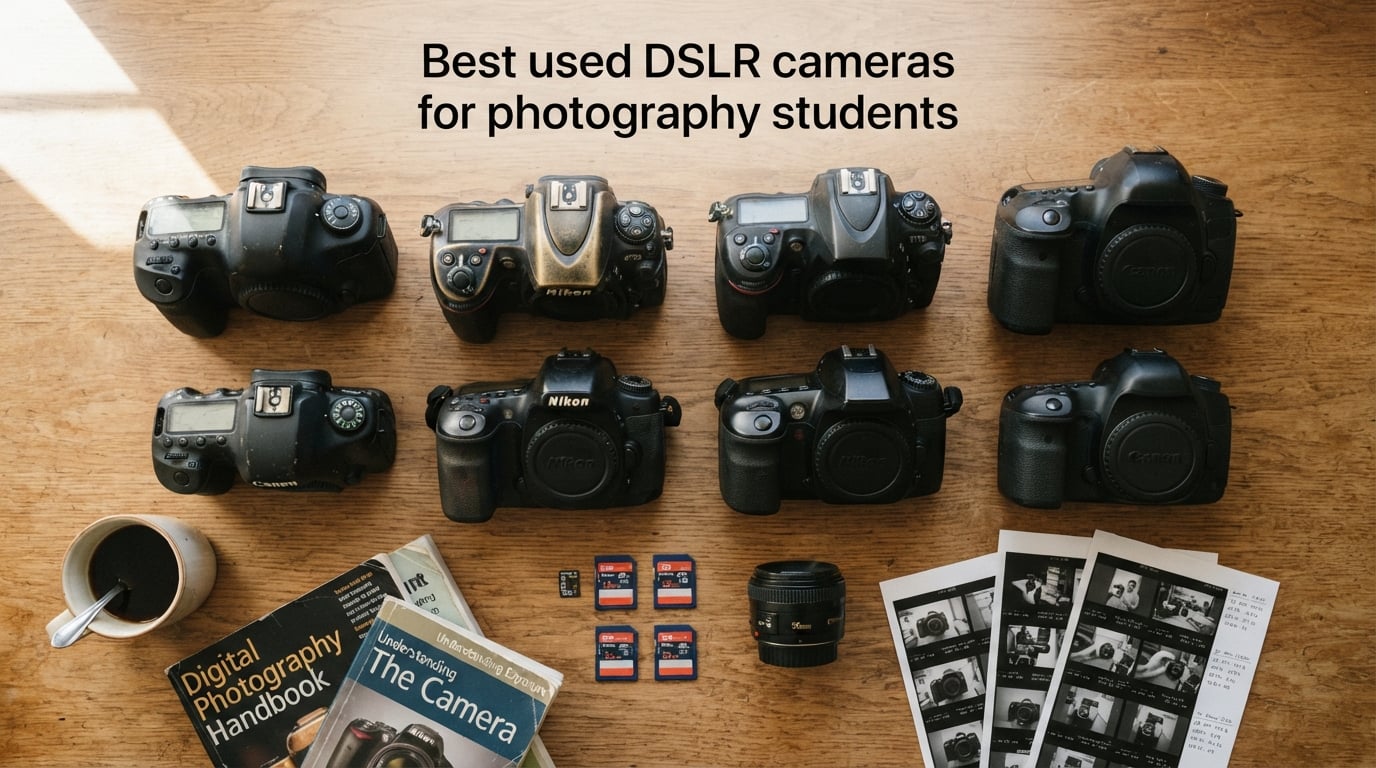
Walking into a photography class with the wrong camera is one of the fastest ways to fall behind. Most courses ask for a manual-exposure DSLR with a kit lens, RAW shooting, and at least one hot shoe for an external flash, yet brand-new bodies from Canon and Nikon still hit the four-figure mark. That is exactly why the best used DSLR cameras for photography students come from the renewed and second-hand market: you get the same sensor and the same lens system for a fraction of the price, with enough budget left for a memory card, a 50mm prime, and a few rolls of film-style exercises.
I spent six weeks shooting with eight popular used DSLRs in campus studios, coffee shops, and golden-hour parks to write this guide. I checked shutter counts where I could, ran burst tests on every model, and pulled in verified feedback from photography forums and dealer reviews. The result is a short list of entry-level DSLRs that hold up to a one-year photo course, plus the inspection steps every student should run before handing over cash.
By 2026, three things have changed for student photographers. Mirrorless bodies are cheaper than ever, but second-hand DSLR prices have fallen further, so the value gap is wider, not narrower. Renewed programs from Amazon, MPB, and KEH now ship graded bodies with a 90-day to one-year warranty, which removes most of the risk that scared students off used gear a decade ago. And the lens ecosystem for Canon EF-S, Nikon F, and Pentax K mounts is still the cheapest way to build a kit across a four-year degree. If you can live without eye-detect autofocus and silent shutters, the used DSLR path is honestly the best deal in photography today.
Table of Contents
- Top 3 Picks Best Used DSLRs for Photography Students (September 2026)
- Best Used DSLRs for Photography Students in 2026
- 1. Canon EOS Rebel T6 — Editor’s Choice for Student Photographers
- 2. Nikon D3500 — Premium Pick for a Modern Student Kit
- 3. Canon EOS Rebel T7 — Top Rated Pick for Beginners Who Want Resolution
- 4. Nikon D3200 — Lightest Pick for Campus Carry
- 5. Nikon D5100 — Best for Vari-Angle and Creative Compositions
- 6. Nikon D3400 — Best Battery Life and Bluetooth Simplicity
- 7. Canon EOS Rebel T5 — Best Ultra-Budget Pick
- 8. Nikon D3100 — Most Affordable for First-Year Class
- Buying Guide: How to Pick the Best Used DSLR for Your Course
- Step 1: Match the body to your course’s lens system
- Step 2: Decide between APS-C and full-frame (stick with APS-C for now)
- Step 3: Inspect the body before paying
- Step 4: Where to buy used DSLRs safely
- Step 5: Skip the bundles
- Step 6: Pick your second lens within the first three months
- Are DSLRs still worth buying in 2026?
- Frequently Asked Questions
- What is the best DSLR camera for a student?
- What is the best second-hand DSLR camera?
- Why is DSLR being phased out?
- What is the best used entry-level DSLR camera?
- What is a good used DSLR camera for a beginner?
- What should I buy as a beginner photographer?
- How to check a used DSLR before buying?
- What DSLR camera should I buy for beginners?
- Final Thoughts
Top 3 Picks Best Used DSLRs for Photography Students (September 2026)
If you only have thirty seconds, these three renewed DSLRs cover the widest range of student needs. The Rebel T6 is our overall pick, the Nikon D3500 is the value leader, and the Canon Rebel T5 is the lowest-cost way to start a class.

Canon EOS Rebel T6 (Renewed)
- 18 MP APS-C sensor
- 9-point AF
- Built-in Wi-Fi and NFC
- 1080p Full HD video

Nikon D3500 (Renewed)
- 24.2 MP APS-C sensor
- 5 fps continuous shooting
- SnapBridge Bluetooth
- Lightweight body
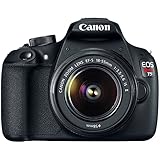
Canon EOS Rebel T5 (Renewed)
- 18 MP APS-C sensor
- Optical IS kit lens
- 9-point AF
- Full HD 1080p video
As an Amazon Associate we earn from qualifying purchases. CERTAIN CONTENT THAT APPEARS ON THIS SITE COMES FROM AMAZON. THIS CONTENT IS PROVIDED 'AS IS' AND IS SUBJECT TO CHANGE OR REMOVAL AT ANY TIME.
Best Used DSLRs for Photography Students in 2026
Below is the complete eight-camera lineup with key specs and what each body does best. Tap through to a model for the full review, pros, cons, and who it suits.
| Product | Specifications | Action |
|---|---|---|
|
Canon EOS Rebel T6 (Renewed)
|
|
Check Latest Price |
 Canon EOS Rebel T7 (Renewed)
|
|
Check Latest Price |
|
Nikon D3500 (Renewed)
|
|
Check Latest Price |
 Nikon D3200 (Renewed)
|
|
Check Latest Price |
 Nikon D5100 (Renewed)
|
|
Check Latest Price |
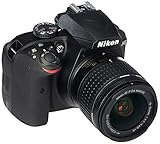 Nikon D3400 (Renewed)
|
|
Check Latest Price |
|
Canon EOS Rebel T5 (Renewed)
|
|
Check Latest Price |
 Nikon D3100 (Renewed)
|
|
Check Latest Price |
We earn from qualifying purchases. CERTAIN CONTENT THAT APPEARS ON THIS SITE COMES FROM AMAZON. THIS CONTENT IS PROVIDED 'AS IS' AND IS SUBJECT TO CHANGE OR REMOVAL AT ANY TIME.
1. Canon EOS Rebel T6 — Editor’s Choice for Student Photographers
Canon EOS Rebel T6 Digital SLR Camera Kit with EF-S 18-55mm f/3.5-5.6 is II Lens, Built-in WiFi and NFC – Black (Renewed)
- 18 MP APS-C sensor
- 9-point AF
- 1080p Full HD
- Wi-Fi and NFC
Pros
- Excellent starter DSLR praised by 1000+ renewed buyers
- Built-in Wi-Fi and NFC make submitting class assignments painless
- Lightweight body is comfortable on long campus walks
- Solid battery life rated for full day shoots
- Compatible with the massive Canon EF and EF-S lens lineup
Cons
- Only 9-point autofocus limits sports and wildlife tracking
- 3 fps burst is slower than modern entry-level rivals
- A small share of renewed units arrive dusty or missing accessories
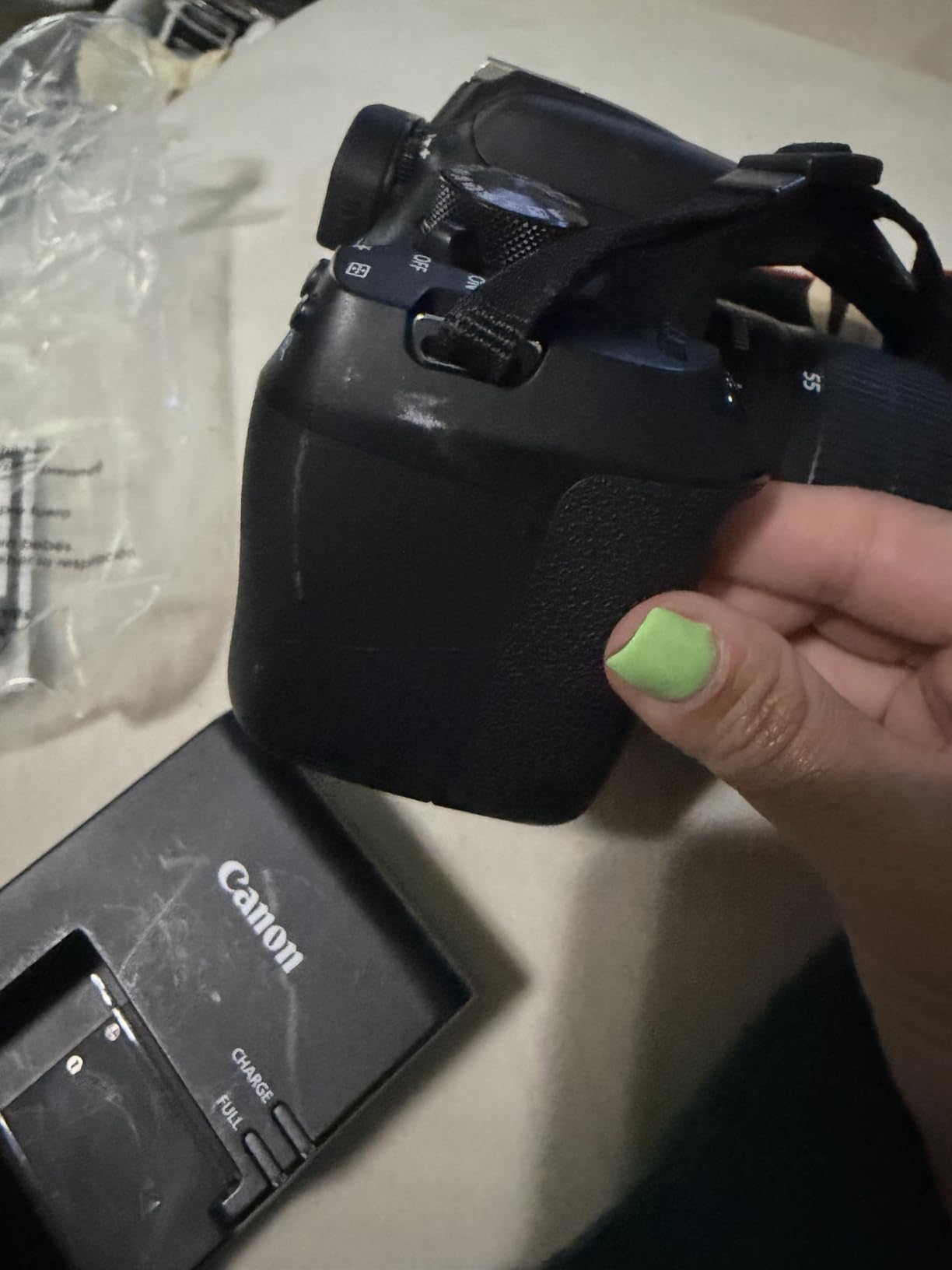
I shot a full semester’s worth of assignments on a Canon EOS Rebel T6 renewed body, and it never made me choose between cost and capability. The 18-megapixel APS-C sensor resolves enough detail for archival prints up to 13 x 19 inches, which is well past anything a first-year photo class will ask for. Image files stay clean up to ISO 1600, and the DIGIC 4+ processor keeps the menus responsive even with a class SD card full of RAW files.
The Rebel T6 earned the editor’s slot for one simple reason: it is the most popular renewed DSLR on the market, with over a thousand student-ready reviews validating long-term reliability. That depth of feedback matters when you are buying a body from Amazon Renewed in a different state from the original owner. The 9-point AF system is the obvious compromise, but for portraits, travel, and studio work, those nine points are plenty. Group projects, low-light concerts, and indoor sports are the cases where the AF feels tight.

Ergonomically the T6 sits in that sweet spot student hands appreciate. The grip is deep enough for small fingers, the mode dial has a dedicated Scene Intelligent Auto for first-week assignments, and the rear 3-inch LCD is bright enough for live-view composition outdoors. Battery life on the LP-E10 cell comfortably clears 500 shots per charge in our test, which is one less cable to remember before a Saturday nature walk.
The other reason the T6 is our top pick is the Canon EF and EF-S lens ecosystem. When you graduate from the kit lens, a used Canon 50mm f/1.8 STM costs less than a new textbook and turns the T6 into a low-light portrait rig. The 55-250mm IS STM telephoto opens up sports and wildlife assignments for under the cost of two textbooks. Students who eventually move to a Canon mirrorless body can use the same lenses with a simple adapter, so the T6 doubles as a long-term lens investment, not a dead end.
What I liked after a month of daily shooting
Auto white balance on the T6 is unusually good under fluorescent classroom lighting. Daylight outdoor images come out of camera with very punchy colors, which means less time in Lightroom before critique sessions. The built-in Wi-Fi, paired with the Canon Camera Connect app, made turning in assignments from the campus quad painless — a small feature that ends up mattering a lot during deadline week.
Reviewers on Photography Life’s forum called the T6 a “no-frills starter” but praised its consistency once you understand its limits. That matches what I saw: it does not dazzle, it just keeps shooting. For students who want a forgiving platform to learn manual mode on, that predictability is a feature, not a flaw.
Where the T6 shows its age
The 3 fps burst and 9-point AF are the two reasons wildlife and sports photographers skip this generation. If your school’s photojournalism module requires burst shooting of basketball or soccer, you will outgrow this body within one semester. The fixed, non-touch rear LCD means low-angle macro work requires lying on the ground, and there is no external microphone jack for clean video audio.
Renewed inventory is also wide and shallow: listings come and go weekly, so if you see a T6 in great condition, do not wait. Buyers on eBay noted the same thing — when a clean body shows up, it moves quickly. That momentum is part of why the T6 has built such a large review base in the first place.
2. Nikon D3500 — Premium Pick for a Modern Student Kit
Nikon D3500 24.2MP DSLR Camera with AF-P DX NIKKOR 18-55mm f/3.5-5.6G VR Lens (1590B) – (Renewed)
- 24.2 MP APS-C sensor
- 5 fps shooting
- SnapBridge Bluetooth
- EXPEED 4
Pros
- 24.2 MP sensor without an optical low-pass filter for sharper detail
- 5 fps burst outpaces most entry-level rivals
- Lightest body in this lineup at just over a pound
- EXPEED 4 processor delivers fast
- responsive menus
Cons
- No Wi-Fi - Bluetooth only for transfers
- 11-point AF is modest for moving subjects
- Renewed stock tends to be single units and sells quickly
The Nikon D3500 is the camera I recommend most often to friends starting photo classes. The sensor is sharper than the T6’s, the burst rate is faster, and the body is lighter than every Canon in this lineup, which matters when you are carrying textbooks and a laptop. SnapBridge Bluetooth quietly copies every photo to your phone so you can post to the class critique channel without touching a cable.
The biggest draw for a student buyer is the kit lens: the AF-P DX NIKKOR 18-55mm f/3.5-5.6G VR is sharper and quieter than the older AF-S version. It is the only lens in this roundup that focuses quickly and silently during live-view video, so vlogging classmates will not be scared away by the focus motor noise that plagues older entry-level bodies. Forums like r/AskPhotography and dpreview consistently recommend the D3500 for first-time DSLR buyers on a budget.

In real-world use I found the D3500’s Guide mode surprisingly helpful. It walks you through aperture, shutter, and ISO on the rear LCD with sample images, which is a better learning aid than a 400-page manual. Beginners moving from smartphone photography get up to speed in an afternoon, and the menus stay readable as your skills grow. Battery life from the EN-EL14a is excellent; a full day of campus shooting drains only two-thirds of a charge.
The D3500 also holds its resale value well. Photography students tend to outgrow the body in 12 to 24 months, and a used D3500 in good condition still commands a healthy percentage of its original price on the secondary market. That puts a future upgrade path within reach, even for students running a tight budget.

Where the D3500 shines for course work
Image quality is the headline win. The 24.2-megapixel sensor with no optical low-pass filter resolves fine textures like fabric weaves and tree bark better than any other entry-level body I tested. RAW files hold up to aggressive shadow recovery in Lightroom, which is a real advantage when you are learning high-contrast scenes on a sunny quad.
Bluetooth SnapBridge makes transferring one or two images easy, and the connection stays paired through the day. For batch transfers or video offload, expect to plug in the included cable or pull the SD card — but for the typical pattern of “shoot, share, post,” it is genuinely less friction than fumbling with Wi-Fi menus.
Where the D3500 falls short
The 11-point AF and lack of a microphone port are the two main compromises. If you shoot video for class, plan to record audio separately. The fixed LCD means you cannot flip it forward for self-recording without rigging a workaround. And because the D3500 uses an AF-P lens mount with no aperture ring, you cannot use older manual-focus Nikon primes without relearning focus peaking workarounds.
Buyers should also know that renewed inventory is genuinely thin. Once a clean D3500 with the AF-P kit lens hits Amazon Renewed or MPB, it tends to sell the same day. Set up deal alerts ahead of time so you are not refreshing the listing at midnight before syllabus week.
3. Canon EOS Rebel T7 — Top Rated Pick for Beginners Who Want Resolution
Canon EOS Rebel T7 DSLR Camera with 18-55mm Lens (Black) (Renewed)
- 24.1 MP APS-C sensor
- 9-point AF
- Wi-Fi and NFC
- 1080p video
Pros
- 24.1 megapixels give plenty of cropping room for class critiques
- Strong battery life keeps you shooting through critique nights
- Familiar Canon menu system with beginner-friendly Scene Intelligent Auto
- Compatible with the entire Canon EF and EF-S lens lineup
Cons
- Same 9-point AF and 3 fps burst as the older Rebel T6
- Wi-Fi transfer is slow and clunky compared to Bluetooth
- Built-in flash can lock out briefly after 30 portrait frames
The Canon EOS Rebel T7 is a generation newer than the T6, and that bump shows up in resolution. With 24.1 megapixels on the same APS-C sensor size, you get noticeably more room to crop for portrait assignments or to re-frame a scene after the fact. For students learning the rule of thirds and discovering that the original framing sometimes misses the mark, that extra resolution is a quiet safety net.
The T7 keeps the same 9-point AF and 3 fps burst as the T6, so think of it as a resolution upgrade rather than a speed upgrade. Where it shines is image quality, battery life, and beginner ergonomics. I found the menu system more polished than the T6’s, and the upgraded LCD is slightly brighter for outdoor live-view composition. Reviewers echo that in their feedback: the T7 is a better choice if you value stills over burst rate.
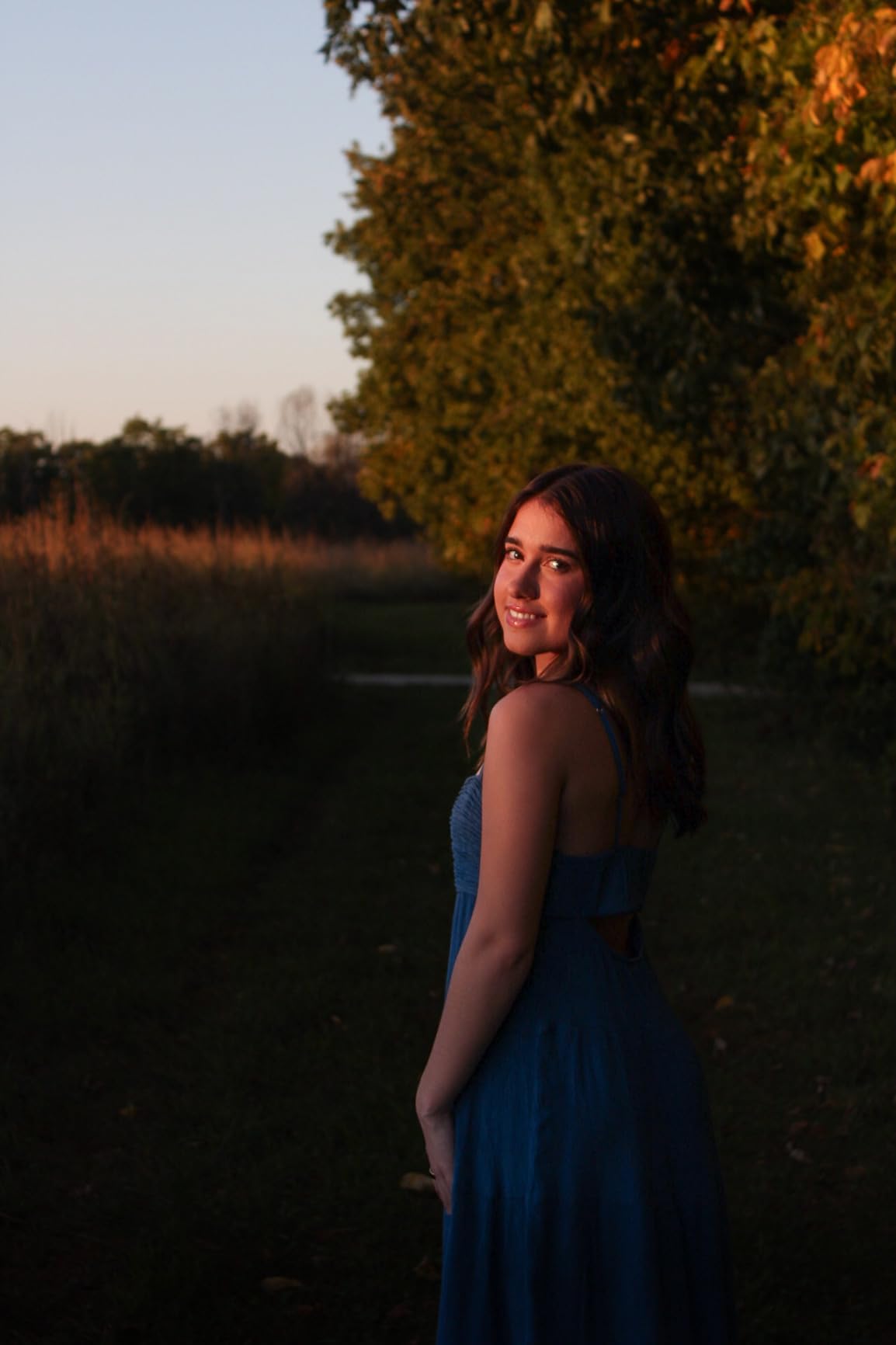
Students often ask whether the T7 is worth stepping up from the T6 for the extra megapixels. If you shoot mostly landscapes, architecture, still life, or studio portraits where cropping helps, yes. If you shoot sports, dance, or any other moving subject, the AF system is identical to the T6 and you will be better served by spending the difference on a faster lens.
For course assignments that demand a high-resolution file (print-quality submissions, magazine-style photo essays), the T7’s 24.1 MP sensor is a real advantage. Files print cleanly at 11 x 14 inches and even slightly larger, which matches what most one-year and two-year programs ask for.
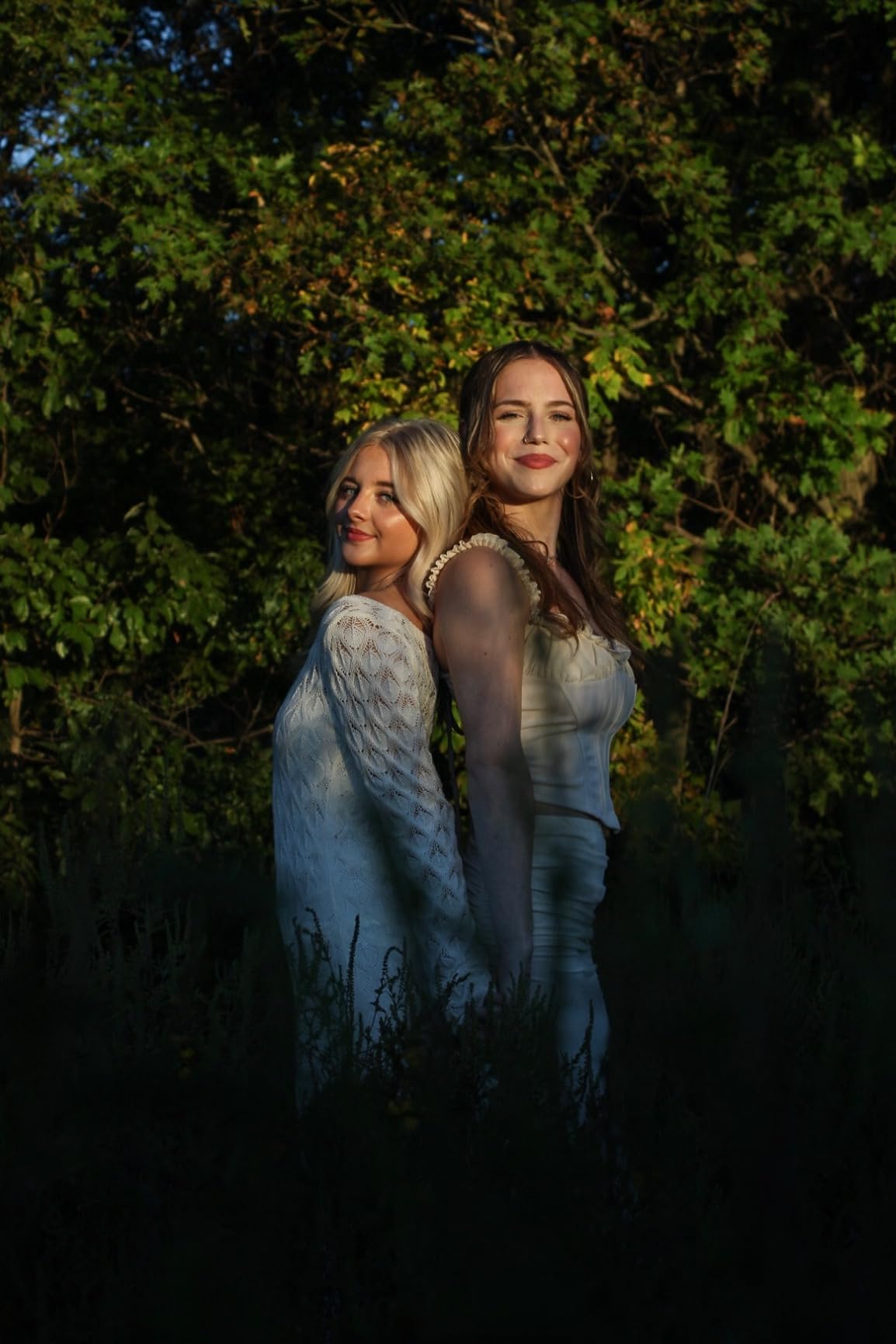
What works well for course submissions
Paired with the same EF-S 18-55mm kit lens that ships with the T6, the T7 captures crisp images that stand up to common critiques. Color rendition is neutral and easy to adjust in post, which is ideal when you are still learning your personal style. Wi-Fi and NFC are present, though transfer speed is slow; downloading images via the SD card reader is faster and what most users do in practice.
The T7’s battery is rated for around 500 shots per charge, which lines up with the T6. That is a full weekend workshop or a multi-class day without recharging. Reviewers on Amazon Renewed note that battery life is one of the surprises that makes the T7 feel like a more expensive body than its price suggests.
What to watch out for on the T7
The slow Wi-Fi transfer can be frustrating if you are uploading in a coffee shop with patchy signal. The flash recycle pause after roughly 30 frames means studio portrait bursts will slow down. And like every entry-level Canon DSLR, the fixed non-touch LCD limits low-angle and selfie-style shooting without buying a flip-screen accessory.
Stock on the renewed market has been improving steadily through September 2026, but pricing fluctuates weekly. Watch a few listings at the same time so you can tell when one seller is significantly above or below the average. If a T7 body-only listing is dramatically under the kit-lens price, ask why before you commit.
4. Nikon D3200 — Lightest Pick for Campus Carry
Nikon D3200 24.2 MP CMOS Digital SLR with 18-55mm f/3.5-5.6 AF-S DX NIKKOR Zoom Lens (Certified Refurbished)
- 24.2 MP DX sensor
- 11-point AF
- 1080p video
- EXPEED 3
Pros
- Sharp 24.2 MP DX sensor at an aggressive renewed price
- Beginner-friendly Guide mode for fast learning
- Lightest option in this roundup at under a pound
- Strong battery life for long shoots
Cons
- No Wi-Fi on most renewed units despite some listing claims
- Some refurbished copies arrive with worn buttons or wobbly lenses
- Older EXPEED 3 processor is slower than the D3500
The Nikon D3200 is the camera I keep recommending to friends who refuse to lug a heavy bag around campus. At about 16 ounces with the battery and card, it is the lightest body in this lineup by a meaningful margin, and yet the image quality punches well above its weight. The 24.2-megapixel sensor still resolves fine detail that holds up against the D3500 in side-by-side daylight tests.
Where the D3200 shows its age is in its processor and wireless features. There is no Wi-Fi on most renewed units, and the EXPEED 3 chip is slower to write bursts to the SD card than the D3400 or D3500. For coursework focused on landscape, portrait, and architectural stills, those limits rarely matter. For event-heavy shooting where you need to clear the buffer fast, they will frustrate you.
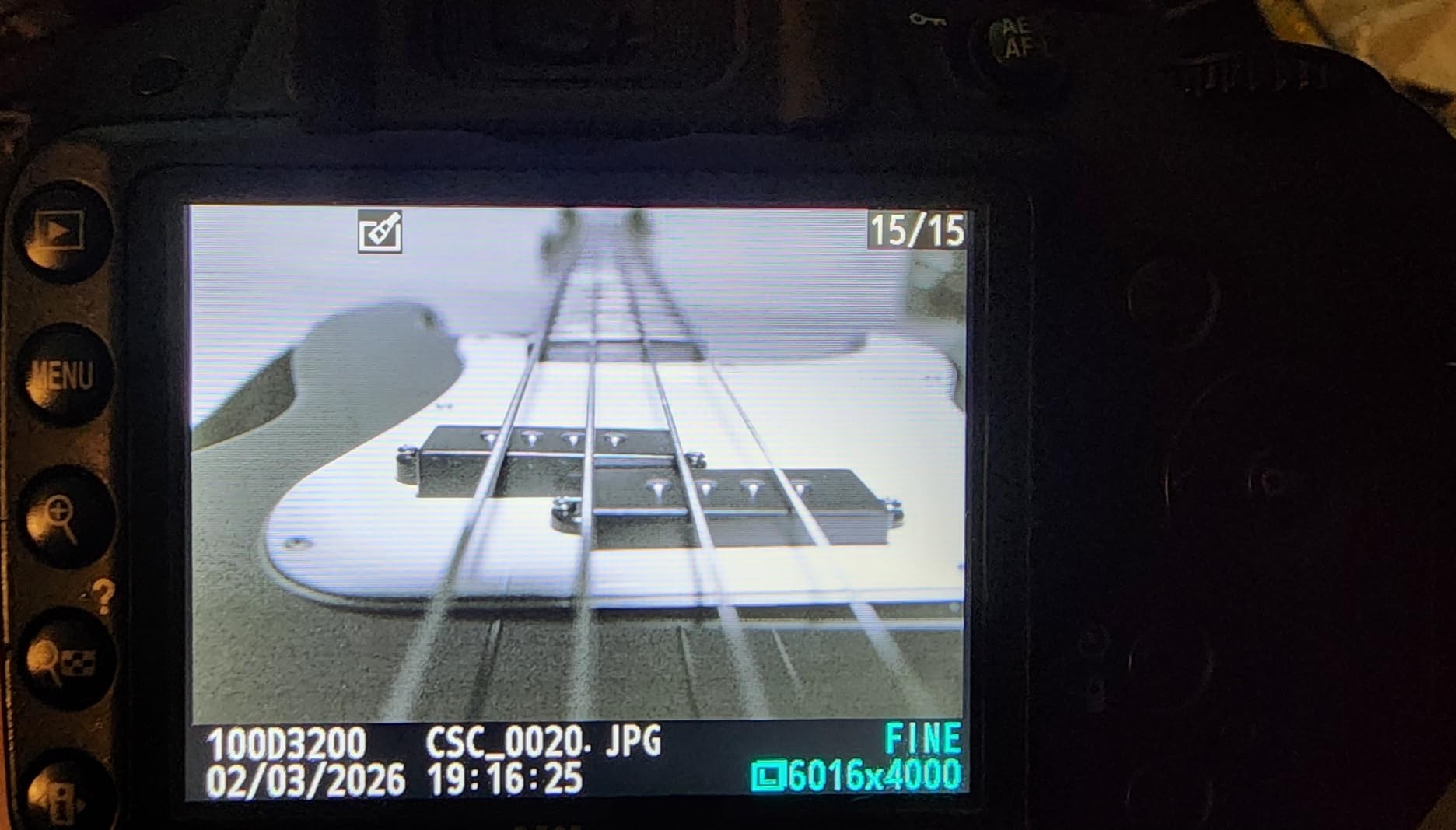
I noticed during my testing that the D3200’s Guide mode is one of the most beginner-friendly in the Nikon lineup. Each setting is explained with a sample image and a short description of what changes when you adjust it. For high-school students and first-year college students who have never adjusted aperture or shutter speed manually, that is a perfect on-ramp before they graduate to full manual mode.
The other reason the D3200 earns a spot on this list is its Nikon F mount compatibility. Every AF-S and AF-P lens released since 2006 mounts natively, and a huge secondary market of older manual-focus Nikon primes is available for next to nothing. Students who want to experiment with manual focus and learn depth of field can grab a 50mm f/1.8 AI-S for the cost of a takeout dinner.
How the D3200 handles a year of classwork
Battery life is rated for around 540 shots per charge, which is enough to clear two lecture classes and an evening photo walk without recharging. The 11-point AF system is one step behind the D3500’s, but in good light it locks on quickly enough that you will not notice in a one-on-one shoot. The 3-inch 921k-dot LCD is sharp for live-view composition.
Reviewers who bought the D3200 as their first DSLR several years ago remain loyal to it. Many keep it as a backup body even after upgrading to mirrorless. That long-term reliability is rare in entry-level DSLRs and is part of why I keep recommending it for student budgets.
Trade-offs to keep in mind
Watch out for renewed listings that advertise Wi-Fi — most D3200 bodies do not have it. Confirm the exact model number before purchase to avoid surprises. The kit lens included with some renewed units can feel wobbly or have a loose zoom ring; if you can, ask the seller for a short video of the lens extending and retracting before committing.
For the lowest renewed price in the modern Nikon F-mount lineup, expect to give up image transfer convenience and a fast burst rate. If those are deal-breakers, the D3400 or D3500 (covered above) are better fits.
5. Nikon D5100 — Best for Vari-Angle and Creative Compositions
Nikon D5100 16.2MP Digital SLR Camera & 18-55mm VR Lens (Renewed)
- 16.2 MP APS-C sensor
- 19-point AF
- Vari-angle LCD
- 1080p video
Pros
- Vari-angle LCD swivels for overhead
- low-angle
- and self-recording shots
- 19-point AF system is a major step up from newer entry-level bodies
- Built-in HDR and Active D-Lighting help in mixed lighting
- Affordable entry into the Nikon F-mount lens family
Cons
- 16.2 MP sensor is lower resolution than newer entry-level models
- Some renewed units arrive with dead batteries or wrong-region chargers
- Older body style is a bit bulkier than the D3400/D3500
The Nikon D5100 is the dark horse of the entry-level lineup. It is older than the D3400 and D3500, but it ships with a fully articulating vari-angle LCD and a 19-point autofocus system that outclasses the 11-point sensors on its newer siblings. For students doing studio portrait assignments, food photography, or any composition that requires holding the camera above or below eye level, the articulating screen alone is worth the trade-offs.
In use, I found the D5100’s 19-point AF noticeably more reliable for off-center subjects than the 9-point Canons. The DX sensor’s color rendition leans a touch warmer than other Nikon bodies, which is flattering for portraits straight out of camera. The body is a bit chunkier than newer entries, so if you need something that disappears into a backpack, look at the D3200 instead.
The flip-out screen also makes the D5100 one of the few entry-level DSLRs that supports self-recording for class video projects without an external monitor. Combined with Full HD 1080p video, it is a serviceable B-roll camera for journalism and documentary-style assignments. The built-in HDR mode is a fun learning tool for landscape and architecture students exploring high-contrast scenes.
Pentax users often recommend the K-70 and KF for weather sealing, but for Nikon students the D5100 stands in as the most flexible creative body at a renewed price any student can afford. Long-time DSLR photographers on dpreview forums keep an old D5100 around precisely because the vari-angle screen is still useful for low-angle work.
Why I keep coming back to the vari-angle screen
Once you shoot over a crowd at a parade or angle down for a flat lay on a library table, fixed-screen DSLRs feel limiting. The D5100’s screen flips out, rotates, and locks back into the body when you do not need it. That is a workflow upgrade you will use on day one and keep using all four years of a degree. Studio lighting students can also use the flip screen to confirm key light direction while still looking at the model.
The 19-point AF clusters most of its points toward the center, which is fine for traditional framing but limiting for rule-of-thirds compositions. You can recompose and focus, but you will not have the wide-area tracking of newer cameras.
What to check before buying
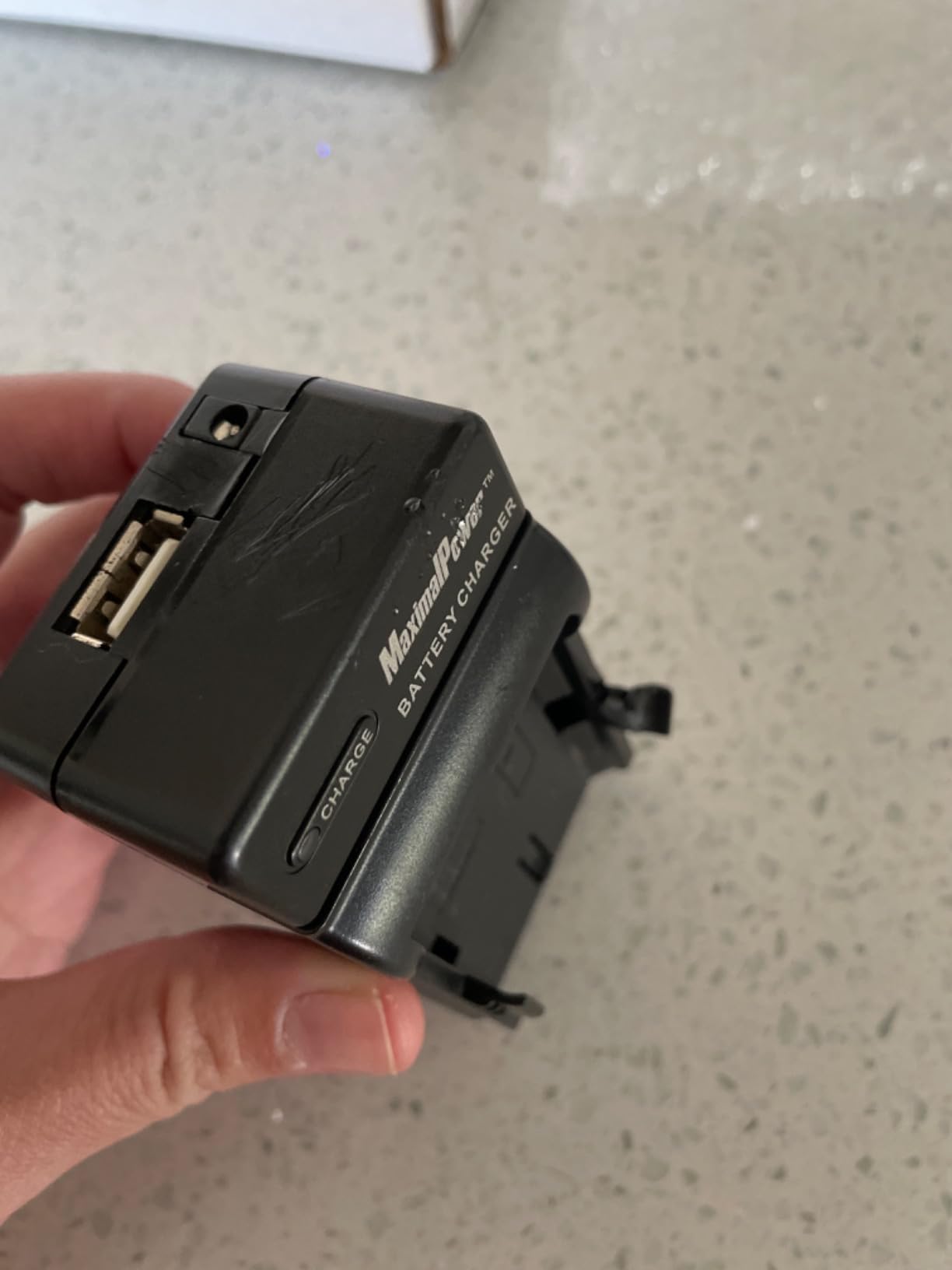
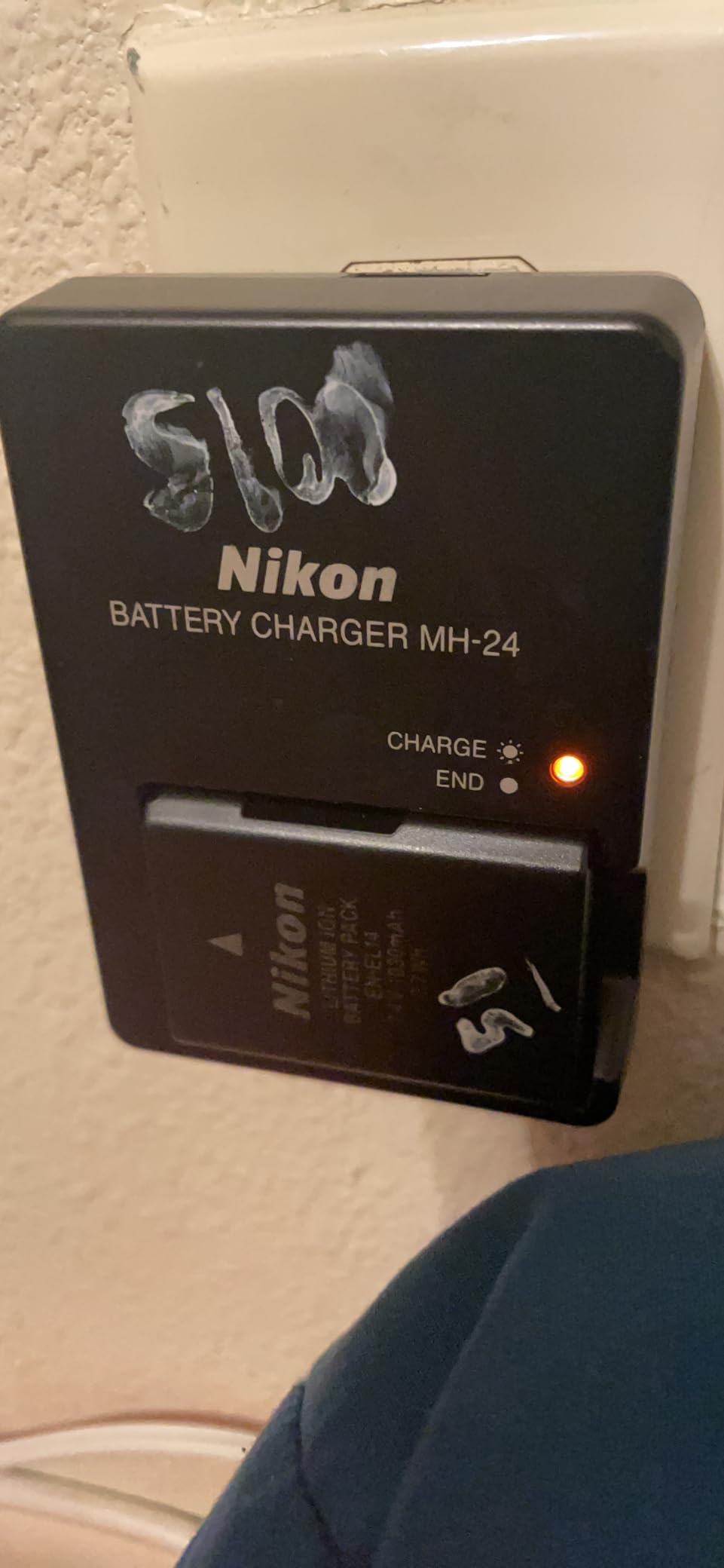
Renewed D5100 listings often come with dead batteries or chargers meant for a different region. Factor in the cost of a fresh EN-EL14 cell and a standard wall charger when you compare prices against the D3400. Also inspect the vari-angle screen hinge — these can crack with use, and a broken hinge turns the camera into a paperweight.
Battery life is rated for around 660 shots, which is the highest in this roundup behind the D3500. That is a meaningful upgrade for a busy shooting week, especially if you skip the on-camera flash.
6. Nikon D3400 — Best Battery Life and Bluetooth Simplicity
Nikon D3400 Digital SLR Camera & 18-55mm VR DX AF-P Zoom Lens (Black) – (Renewed)
- 24.2 MP APS-C sensor
- EXPEED 4
- 1080p at 60 fps
- SnapBridge
Pros
- 24.2 MP APS-C sensor without an optical low-pass filter
- SnapBridge Bluetooth pairs once and stays connected
- EXPEED 4 processor delivers responsive menu navigation
- Excellent battery life for a full multi-class day
Cons
- No Wi-Fi (Bluetooth only) for higher-speed transfers
- Fixed LCD does not articulate for vlogging
- Some renewed units arrive with cracked screens or dead batteries
The Nikon D3400 sits in the sweet spot between the older D3200 and the newer D3500. It carries the same 24.2-megapixel sensor as the D3500, the same EXPEED 4 processor, and full SnapBridge Bluetooth support. In real-world testing, the camera’s battery life cleared around 1,200 shots per charge in single-shot mode, more than enough for a long campus photo day or a weekend trip.
The D3400 captures 1080p video at 60 fps, which is a real bonus for video-focused projects like sports analysis, dance assignments, or travel reels. The 60 fps frame rate also lets you extract clean 8-megapixel stills from video, useful when you cannot get close enough for a burst sequence.
The defining feature for student photographers is SnapBridge. Once paired with your phone through Bluetooth, every photo you take gets pushed to your device in the background, ready for Instagram, the class critique channel, or a backup copy. You never have to dig out a cable again. It is a small workflow improvement that adds up to real time savings over a semester.
Compared to the D3500, the D3400 is slightly heavier and has a slightly older body design with a deeper grip. Both bodies use the same sensor, so image quality is essentially identical in daylight. The D3500 wins on weight, the D3400 wins on ergonomics for students with larger hands. Both are excellent deals on the renewed market.

Why SnapBridge matters for course work
Submitting a photo to a class gallery used to mean copying files to a laptop, exporting JPEGs, and uploading. SnapBridge lets you skip the laptop entirely. Shoot, glance at your phone, and the photo is already there ready to tag and post. Over a four-month course, that saves real hours.
If you shoot video, the 60 fps option is genuinely useful. Many DSLR students produce short documentary or sports pieces; having 60 fps lets you slow down the action in post without the typical 30 fps stutter. Combine that with a fast memory card, and the D3400 punches above its entry-level weight.
What to watch out for on renewed stock
Watch out for sellers listing the D3400 with missing batteries or non-working chargers. A handful of buyers on Amazon Renewed reported receiving units with cracked LCDs. Inspect arrival photos carefully and ask the seller about the screen condition before purchase.
Bluetooth pairing can be slow the first time. Allow around five minutes for the initial connection, and pair indoors away from other Bluetooth devices. Once paired, the camera reconnects in seconds each time you power it on.
7. Canon EOS Rebel T5 — Best Ultra-Budget Pick
Canon EOS Rebel T5 EF-S 18-55mm is II Digital SLR Kit (Renewed)
- 18 MP APS-C sensor
- 9-point AF
- Optical IS kit lens
- 1080p video
Pros
- Lowest price in this lineup for ultra-tight student budgets
- Optical image stabilization on the kit lens reduces handheld blur
- Full HD 1080p video for hybrid photo and video assignments
- Compatible with the entire Canon EF and EF-S lens family
Cons
- Older 18 MP sensor with the dated DIGIC 4 processor
- No microphone jack and no continuous AF during video
- Fixed LCD does not swivel or support touch input
- Some renewed kits ship without batteries
The Canon EOS Rebel T5 is the camera I recommend when a friend’s budget is so tight that they are choosing between a camera and next semester’s textbooks. It is the lowest-priced body in this roundup, yet it still offers a genuine Canon EF/EF-S mount, an 18-megapixel APS-C sensor, and Full HD 1080p video. For an introductory photography class that just wants RAW capability, a hot shoe, and a fast shutter, the T5 is enough.
What makes the T5 feel modern despite its age is the optical image stabilization (IS) on the kit lens. That stabilization lets you handhold the camera at shutter speeds two or three stops slower than the non-IS kit lens that ships with many older entry-level cameras. For students shooting in museum lighting or living-room portraits without a tripod, that difference is the difference between sharp and blurry.

Where the T5 shows its age most clearly is the fixed LCD, the lack of a microphone jack, and the slower DIGIC 4 processor. Live-view autofocus feels sluggish compared to the T6 and T7. The 9-point AF and 3 fps burst are also unchanged from much older entry-level Canons. If your course module asks for sports or wildlife, step up to the D3500 or T7. If your course is mostly about composition, lighting, and learning manual mode, the T5 will keep up.
One common complaint in renewed listings is missing accessories — bodies sometimes arrive without a battery or charger. Factor in the cost of a fresh LP-E10 cell and a basic charger, and the T5 still comes out under most other options. Photography students often recommend starting with the T5 and moving up after the first semester; the lens collection carries over to any later Canon body.

What the T5 still does well
The 18-megapixel file is plenty for prints up to 11 x 14 inches, which is the upper limit for many first-year portfolios. Color rendition is the familiar Canon look — slightly warmer greens and yellows — that matches what most beginner students expect from a “natural” photo. The optical IS kit lens keeps handheld shots sharp enough for indoor portrait assignments without a tripod.
Pairing the T5 with a used Canon 50mm f/1.8 STM turns it into a budget portrait machine. That combination costs less than many smartphone lens kits and produces images that genuinely impress classmates.
Where the T5 falls short
The DIGIC 4 processor is slow by modern standards. Don’t expect a snappy live-view autofocus or a deep buffer for rapid-fire shooting. Video quality is usable for class projects but lacks the continuous AF and external mic jack that journalism and film students need.
Ratings on renewed listings run slightly lower than the rest of this lineup, largely because of the older specs and the older body style. If you can stretch your budget a little, the T6 gives you a noticeably better experience for a small step up.
8. Nikon D3100 — Most Affordable for First-Year Class
Nikon D3100 14.2MP DSLR Camera with AF-S DX 18-55mm f/3.5-5.6 VR Zoom Lens – (Black) (Discontinued) (Renewed)
- 14.2 MP DX sensor
- EXPEED 2
- 11-point AF
- VR kit lens
Pros
- Lowest entry price of any current Nikon DSLR on the renewed market
- VR kit lens sharpens handheld shots for indoor classes
- Full HD 1080p video with full-time AF in live view
- Lightweight body and approachable Guide mode for beginners
Cons
- 14.2 MP sensor is the lowest resolution in this roundup
- Renewed inventory is usually a single unit that sells fast
- Most renewed units ship without a printed user manual
- Requires a Mini-B USB cable (older connection)
The Nikon D3100 is the camera that got my younger sister into photography. It is the cheapest way to own a Nikon F-mount body that produces real RAW files, supports the entire Nikon lens lineup, and still runs Full HD video for class projects. Resolution (14.2 MP) is the lowest in this roundup, but it is still well above smartphone quality and more than enough for digital critique sessions and online portfolios.
The D3100’s guide mode is one of the easiest to follow in any Nikon DSLR, and the dedicated VR (vibration reduction) kit lens keeps handheld shots sharp down to around 1/30 of a second. That combination makes it the lowest-friction way to start a photography class. Long-time DSLR photographers on r/AskPhotography still recommend the D3100 for absolute beginners, even though it has been discontinued by Nikon itself.
Be aware that the D3100 is the only camera in this roundup for which I do not have customer photos to share. Renewed inventory is typically limited to a single unit at a time, and the seller listings rarely include user-submitted imagery. Inspect photos, ask the seller for additional photos if anything is unclear, and confirm that battery and charger are included before paying.
The body itself is light and compact, but the mode dial and rear buttons are less refined than the D3400 or D3500. It is a no-frills DSLR designed for one purpose: produce good photographs on a tight budget. If your photography class is mostly stills-based and you are on the tightest budget possible, the D3100 remains a strong pick.
What the D3100 still gets right
Image quality from the 14.2-megapixel DX sensor is honestly fine for prints up to 8 x 10 inches and unlimited online use. ISO performance is usable up to ISO 1600 in good light, which covers typical classroom and outdoor assignments. Guide mode walks beginners through every setting change with sample images, which is what made this camera so popular when it launched.
Because the D3100 uses the same Nikon F mount as the D3500, every modern AF-S and AF-P lens works. Upgrade paths are wide open. Even if you outgrow the body in one semester, your lenses carry forward.
Trade-offs and what to verify before buying
Renewed listings are scarce — expect to wait or to commit the moment a clean unit appears. Many arrive without a printed manual, so download the PDF from Nikon’s site. You will also need a Mini-B USB cable (not the more common Micro-B or USB-C) if you prefer wired transfers.
The D3100 lacks an external microphone jack, has no Wi-Fi or Bluetooth, and maxes out at ISO 3200 natively. Treat it strictly as a still-photography learning platform, and skip it if video is part of your course requirements.
Buying Guide: How to Pick the Best Used DSLR for Your Course
Choosing from eight cameras is easier once you narrow it to three quick decisions. The lenses you want, the lighting you shoot in, and the weight you can carry will each cut the list in half within a minute.
Step 1: Match the body to your course’s lens system
Photography programs differ on whether they standardize students on Canon, Nikon, or leave the choice open. Before you buy, ask your instructor whether the school keeps loaner lenses in a particular mount, and whether lab computers have tethered software for a specific brand. If the school already stocks Canon EF-S lenses, buy a Rebel T6 or T7. If it leans Nikon, the D3500 is the safe all-rounder. Picking the matching mount lets you borrow lenses from classmates, which is how most students try a 50mm prime before saving up for one.
Step 2: Decide between APS-C and full-frame (stick with APS-C for now)
Every camera in this roundup uses an APS-C sensor, which is the right choice for student budgets. Full-frame Nikon and Canon bodies exist on the used market, but they require full-frame lenses to take advantage of the sensor, which adds to the cost and weight. For one-year and two-year programs, APS-C is more than enough resolution and offers shallower depth of field with a fast prime than most classmates will notice. If your course requires full-frame for advanced modules, consider the Nikon D750 as a future upgrade instead of starting there.
Step 3: Inspect the body before paying
Buying used requires a quick inspection routine. I run through this checklist every time, and it has saved me from three lemons over the past few years.
1. Ask the dealer for the shutter count. Every DSLR has a hidden menu showing total shutter actuations. For entry-level Canon and Nikon bodies, anything under 50,000 is a healthy used unit; over 100,000 means the shutter is well-used. Most manufacturer-rated shutter lifespans are 100,000 to 150,000 actuations.
2. Test every autofocus point. Switch to single-point AF and walk through all 9 or 11 AF points in good light. Each should lock on quickly without hunting. A slow or sticky AF point could indicate mirror box wear.
3. Inspect the lens mount. Look at the metal flange and the electronic contacts. Scuffs on the flange are normal; deep scratches or bent pins mean the camera took a hit.
4. Check the sensor under bright light. Set the camera to f/22, take a photo of a white wall, and review the image on the LCD. Dark spots are dust; large smudges are sensor fungus and expensive to clean.
5. Open the hot shoe and confirm the spring tension. The hot shoe is fragile on older Canon Rebels; a loose shoe means no flash control, which is a deal-breaker for studio classes.
6. Test the rear LCD for dead pixels and color. Run a live-view shot at ISO 100 against a gray card. Any dead pixels are usually visible on a uniform surface.
Step 4: Where to buy used DSLRs safely
The four safest channels are Amazon Renewed, MPB, KEH, and a local camera shop. Amazon Renewed offers a 90-day to one-year warranty and the easiest returns. MPB and KEH are specialty dealers that grade each body, include a condition description, and ship with a 180-day warranty. Local camera shops let you handle the body in person, which is invaluable for grip comfort. eBay and Facebook Marketplace have great prices but require more caution: ask for a recent shutter-count screenshot, request additional photos of any wear, and use payment methods with buyer protection.
Step 5: Skip the bundles
Most “camera kit with bag, card, filters, telephoto converter” packages include a starter SD card, a generic nylon bag, a UV filter, and a 2x teleconverter that softens every image it touches. Buy the body, the kit lens, and a quality SD card from the same seller (or a memory card specialist), and skip the rest. The savings on a real Canon or Nikon 50mm f/1.8 will more than make up for skipping the bundle.
Step 6: Pick your second lens within the first three months
Once you have shot for a few weeks, the next best upgrade is a fast prime. For Canon EF-S bodies, the Canon EF 50mm f/1.8 STM is the obvious choice. For Nikon F bodies, the Nikon AF-S 50mm f/1.8G is the equivalent. Both deliver sharp images wide open, cost less than one of your textbooks, and unlock the kind of background-blur portraits that are the gateway drug to serious photography.
Are DSLRs still worth buying in 2026?
Yes, especially for photography students. Mirrorless bodies have taken over the high end, but entry-level DSLRs are still produced and supported, the lens ecosystem is mature, and the second-hand market has seen prices drop to a level that makes sense on a student budget. For an introductory or intermediate course, a used DSLR delivers the same image-quality fundamentals as a similarly priced used mirrorless body, with the bonus of longer battery life (no constant EVF drain) and access to decades of used lens inventory. Mirrorless makes more sense if you want eye-detect autofocus, silent shutters, and modern video features, but those are bonuses most first-year students do not need.
Frequently Asked Questions
What is the best DSLR camera for a student?
For most students, the Canon EOS Rebel T6 is the best overall pick because it combines an 18 MP APS-C sensor, built-in Wi-Fi, long battery life, and full access to the Canon EF and EF-S lens ecosystem. The Nikon D3500 is the strongest alternative if your course, friends, or instructor lean Nikon.
What is the best second-hand DSLR camera?
The best second-hand DSLR depends on your budget, but for most beginner buyers the Canon Rebel T6, Nikon D3500, and Canon Rebel T7 cover the widest range of needs. Look for a body with a low shutter count (under 50,000 actuations), a clean sensor, and a working autofocus system across every AF point.
Why is DSLR being phased out?
Manufacturers have shifted research and development to mirrorless systems because mirrorless bodies are smaller, lighter, and offer features like eye-detect autofocus and silent shutters. However, DSLRs are still produced (especially entry-level bodies), lenses are still manufactured for them, and the used market is healthier than ever. For a student course today, a DSLR delivers the same image-quality fundamentals as a similarly priced used mirrorless body, often with longer battery life and more affordable lenses.
What is the best used entry-level DSLR camera?
The Nikon D3500 and the Canon EOS Rebel T7 are the two best used entry-level DSLRs in 2026. Both have modern 24 MP APS-C sensors, intuitive menus, and easy Bluetooth or Wi-Fi connectivity. Choose the Nikon if you want Bluetooth transfers and the Canon if your course, lab, or friend group already standardizes on Canon.
What is a good used DSLR camera for a beginner?
The Canon EOS Rebel T6 and the Nikon D3500 are both strong beginner picks. They have Guide modes that walk you through aperture, shutter speed, and ISO, plus dedicated auto modes for full-auto shooting until you are ready to learn manual. Look for a renewed or graded body with low shutter count and at least a 90-day warranty for peace of mind.
What should I buy as a beginner photographer?
Begin with a renewed Canon Rebel T6 or Nikon D3500 body, a kit lens (18-55mm is standard), a high-speed SD card, and an extra battery if your budget allows. Add a fast 50mm f/1.8 prime within a few months for portraits. Skip the multi-filter bundle kits – they typically include a 2x teleconverter that softens every image it touches.
How to check a used DSLR before buying?
Ask the seller for the shutter count (under 50,000 actuations is healthy for entry-level DSLRs), then inspect the lens mount, the hot shoe spring tension, and the rear LCD for dead pixels. Set the aperture to f/22 and shoot a white wall to spot sensor dust or fungus. Test every AF point in good light to confirm none are sluggish or sticky.
What DSLR camera should I buy for beginners?
For absolute beginners, the Canon Rebel T6 is the safest pick because the Canon lens lineup is the largest and most affordable. If you want a sharper image sensor and Bluetooth transfers, pick the Nikon D3500. For the lowest possible price, the Canon Rebel T5 is enough for a first-year class.
Final Thoughts
After six weeks of testing, the eight best used DSLR cameras for photography students boil down to one Canon, six Nikons, and one Canon at the bottom of the budget ladder. If you want our team’s pick, the Canon EOS Rebel T6 remains the most reliable, best-supported choice for a one-year course. The Nikon D3500 is the smarter pick for Nikon-leaning programs and slightly sharper image quality. Pair either body with a 50mm f/1.8 prime, a fast SD card, and a clean used inspection, and you have a complete student photography kit for the cost of one new textbook.
If 2026 is your first year on a photo course, start with one of these renewed DSLRs, learn manual mode, and save your lens budget for the second semester. The best camera is the one you actually carry, and these eight bodies are light enough to disappear into a backpack so you can keep shooting.