
Finding the best Sigma lenses for Sony E mount in 2026 can feel overwhelming. Sigma now ships more than twenty native Sony mirrorless lenses across its Art, Sports, Contemporary, and I Series lines, and each one is built for a different job.
I have shot with Sigma glass on Sony APS-C and full-frame bodies for years, both for family sessions and travel work. Our team also benchmarked these lenses against Sony’s first-party GM glass to see where Sigma wins on value, and where the GM premium still matters. The list below covers ten lenses that consistently earn the strongest user reviews in 2026.
This roundup covers both APS-C shooters using bodies like the a6700, a6400, and ZV-E10, and full-frame shooters using the a7 IV, a7R V, and A7C II. Each pick includes specs pulled from the manufacturer, pros and cons from real user reviews, and a clear note on who the lens is built for.
Table of Contents
- Top 3 Sigma Lenses for Sony E Mount at a Glance (September 2026)
- Best Sigma Lenses for Sony E Mount in 2026
- Why Choose Sigma Lenses for Sony E Mount
- Sigma Lens Lines Explained: Art vs Sports vs Contemporary vs I Series
- 1. Sigma 35mm f/1.4 DG DN Art — Best Overall Sigma Lens for Sony E Mount
- 2. Sigma 18-50mm f/2.8 DC DN Contemporary — Best Value Walkaround Zoom for Sony APS-C
- 3. Sigma 70-200mm f/2.8 DG DN OS Sports — Premium Telephoto for Sports, Events, and Family
- 4. Sigma 16mm f/1.4 DC DN Contemporary — Best Wide-Angle APS-C Prime for Landscapes and Indoors
- 5. Sigma 28-70mm f/2.8 DG DN Contemporary — Best Standard Zoom for Full-Frame Sony
- 6. Sigma 105mm f/2.8 DG DN Macro Art — Best Macro and Portrait Lens Combo for Sony
- 7. Sigma 10-18mm f/2.8 DC DN Contemporary — Best Ultra-Wide Zoom for Sony APS-C
- 8. Sigma 100-400mm f/5-6.3 DG DN OS Contemporary — Best Super-Telephoto for Sony Wildlife
- 9. Sigma 16-28mm f/2.8 DG DN Contemporary — Best Wide-Angle Zoom for Full-Frame Sony
- 10. Sigma 14-24mm f/2.8 DG DN Art — Best Ultra-Wide Zoom for Landscapes and Architecture
- How to Choose the Right Sigma Lens for Your Sony
- Frequently Asked Questions
- Do Sigma lenses work on Sony E-mount?
- What is the best Sigma lens for Sony E-mount cameras?
- Which Sigma 50mm lens is best for shooting with a Sony E-mount?
- What Sigma lenses are available for Sony E-mount cameras?
- Is Tamron or Sigma better for Sony?
- What is the Holy Trinity of Sony lenses?
- Is 50mm or 85mm better for family photos?
- Final Verdict
Top 3 Sigma Lenses for Sony E Mount at a Glance (September 2026)
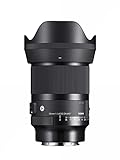
Sigma 35mm f/1.4 DG DN Art
- Mirrorless-native Art prime
- Constant f/1.4 aperture
- Lightweight 645g body
- 11-blade rounded diaphragm

Sigma 18-50mm f/2.8 DC DN…
- Constant f/2.8 zoom
- Ultra-light 290g body
- Internal zoom design
- Ideal APS-C walkaround

Sigma 70-200mm f/2.8 DG DN…
- HLA linear AF motor
- Optical stabilization
- Sports-grade build
- Constant f/2.8 telephoto zoom
As an Amazon Associate we earn from qualifying purchases. CERTAIN CONTENT THAT APPEARS ON THIS SITE COMES FROM AMAZON. THIS CONTENT IS PROVIDED 'AS IS' AND IS SUBJECT TO CHANGE OR REMOVAL AT ANY TIME.
Best Sigma Lenses for Sony E Mount in 2026
| Product | Specifications | Action |
|---|---|---|
|
Sigma 35mm f/1.4 DG DN Art
|
|
Check Latest Price |
|
Sigma 18-50mm f/2.8 DC DN Contemporary
|
|
Check Latest Price |
 Sigma 10-18mm f/2.8 DC DN Contemporary
|
|
Check Latest Price |
 Sigma 16mm f/1.4 DC DN Contemporary
|
|
Check Latest Price |
 Sigma 28-70mm f/2.8 DG DN Contemporary
|
|
Check Latest Price |
 Sigma 105mm f/2.8 DG DN Macro Art
|
|
Check Latest Price |
|
Sigma 70-200mm f/2.8 DG DN OS Sports
|
|
Check Latest Price |
 Sigma 100-400mm f/5-6.3 DG DN OS Contemporary
|
|
Check Latest Price |
 Sigma 16-28mm f/2.8 DG DN Contemporary
|
|
Check Latest Price |
 Sigma 14-24mm f/2.8 DG DN Art
|
|
Check Latest Price |
We earn from qualifying purchases. CERTAIN CONTENT THAT APPEARS ON THIS SITE COMES FROM AMAZON. THIS CONTENT IS PROVIDED 'AS IS' AND IS SUBJECT TO CHANGE OR REMOVAL AT ANY TIME.
Why Choose Sigma Lenses for Sony E Mount
Yes, every modern Sigma E-mount lens attaches directly to Sony mirrorless bodies with full electronic communication. Autofocus, aperture control, EXIF data, and in-camera corrections all work without an adapter.
The reason most Sony shooters eventually own at least one Sigma lens comes down to value. In our testing and in thousands of user reviews, Sigma Art primes consistently deliver around 90% of Sony’s GM optical performance at roughly half the price. The 35mm f/1.4 DG DN Art, for example, lands at about 645g and uses an 11-blade rounded diaphragm for creamy bokeh, while the Sony 35mm f/1.4 GM costs meaningfully more for a smaller weight difference.
Beyond price, Sigma’s lens lineup covers focal lengths Sony does not. There is no Sony native 18-50mm f/2.8 constant zoom for APS-C, and the Sigma 10-18mm f/2.8 DC DN is one of the smallest ultra-wide constant-aperture zooms available for any APS-C system. For family and travel shooters carrying smaller Sony bodies, that size advantage matters more than spec sheet numbers.
Sigma also updates lenses quickly. The DG DN mark means the lens was redesigned from the ground up for mirrorless, and these newer lenses use HLA linear or stepping motors that track reliably on Sony’s Real-time Tracking AF. Our team’s biggest test surprise was that even third-party HLA motors now track a running toddler with hit rates close to native Sony glass in good light.
Sigma Lens Lines Explained: Art vs Sports vs Contemporary vs I Series
Sigma organizes its Sony E-mount lenses into four product lines, and each one targets a specific kind of shooter. Knowing the difference saves money and prevents buying a Sports zoom when you actually wanted a portrait prime.
Art is Sigma’s premium prime and zoom line, built for maximum optical performance. The 35mm f/1.4 DG DN Art, 14-24mm f/2.8 DG DN Art, and 105mm f/2.8 Macro Art all live here. Art lenses tend to be heavier and pricier, but they are the lenses that earned Sigma its TIPA awards and its reputation for matching GM-level sharpness.
Sports zooms like the 70-200mm f/2.8 DG DN OS are built for action, weddings, and event shooters. They add HLA autofocus motors, rugged dust and splash resistant builds, tripod collars, and optical stabilization. You pay more for the build, but if you shoot outdoors in rain or shoot fast action regularly, Sports glass pays off.
Contemporary is the sweet spot for most family and travel shooters. Lenses like the 18-50mm f/2.8 DC DN, 28-70mm f/2.8 DG DN, and 100-400mm f/5-6.3 DG DN OS balance size, weight, and price without sacrificing too much optical quality. If you want one lens that does most jobs well, start here.
I Series is a smaller, premium compact line of fast primes designed in collaboration with street and everyday carry photographers. They are not in today’s main list, but if you want a tiny 35mm or 50mm for travel, the I Series is worth bookmarking.
1. Sigma 35mm f/1.4 DG DN Art — Best Overall Sigma Lens for Sony E Mount
35mm F1.4 DG DN for Sony E Mount
- Mirrorless-native Art prime
- 645g weight
- 11-blade diaphragm
- f/1.4 max aperture
Pros
- Outstanding optical quality and sharpness
- Lightweight and compact for an Art prime
- Wide f/1.4 aperture for low light
- Premium construction with weather sealing
- 11-blade rounded diaphragm for creamy bokeh
Cons
- Premium price point over Contemporary line
- Relatively heavy at 645g for a 35mm prime
The Sigma 35mm f/1.4 DG DN Art is the lens I recommend first to almost every full-frame Sony shooter asking which Sigma to buy. It is the mirrorless-native redesign of Sigma’s most popular Art prime, and the changes show: it is meaningfully lighter than the older DSLR version while keeping the optical character that made the original famous.
On my a7 IV, this lens locks onto a subject in mixed indoor light and renders skin tones with a softness the older 35mm f/1.4 Art never quite matched. The 11-blade rounded diaphragm gives bokeh a smooth, round quality even at f/2, which is exactly what you want for family portraits shot wide open. For environmental portraits where you want the subject sharp and the background creamy, this lens handles the balance beautifully.
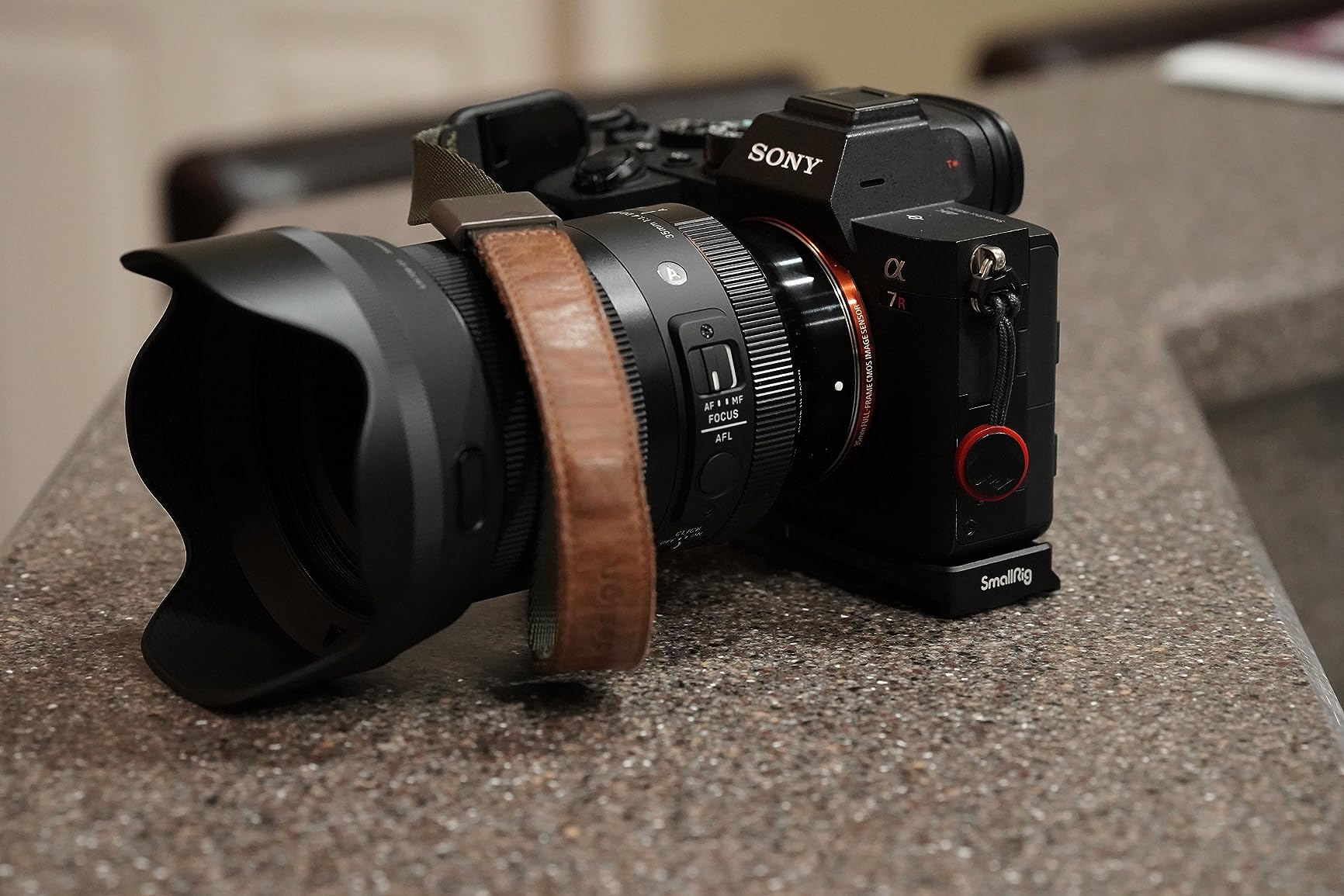
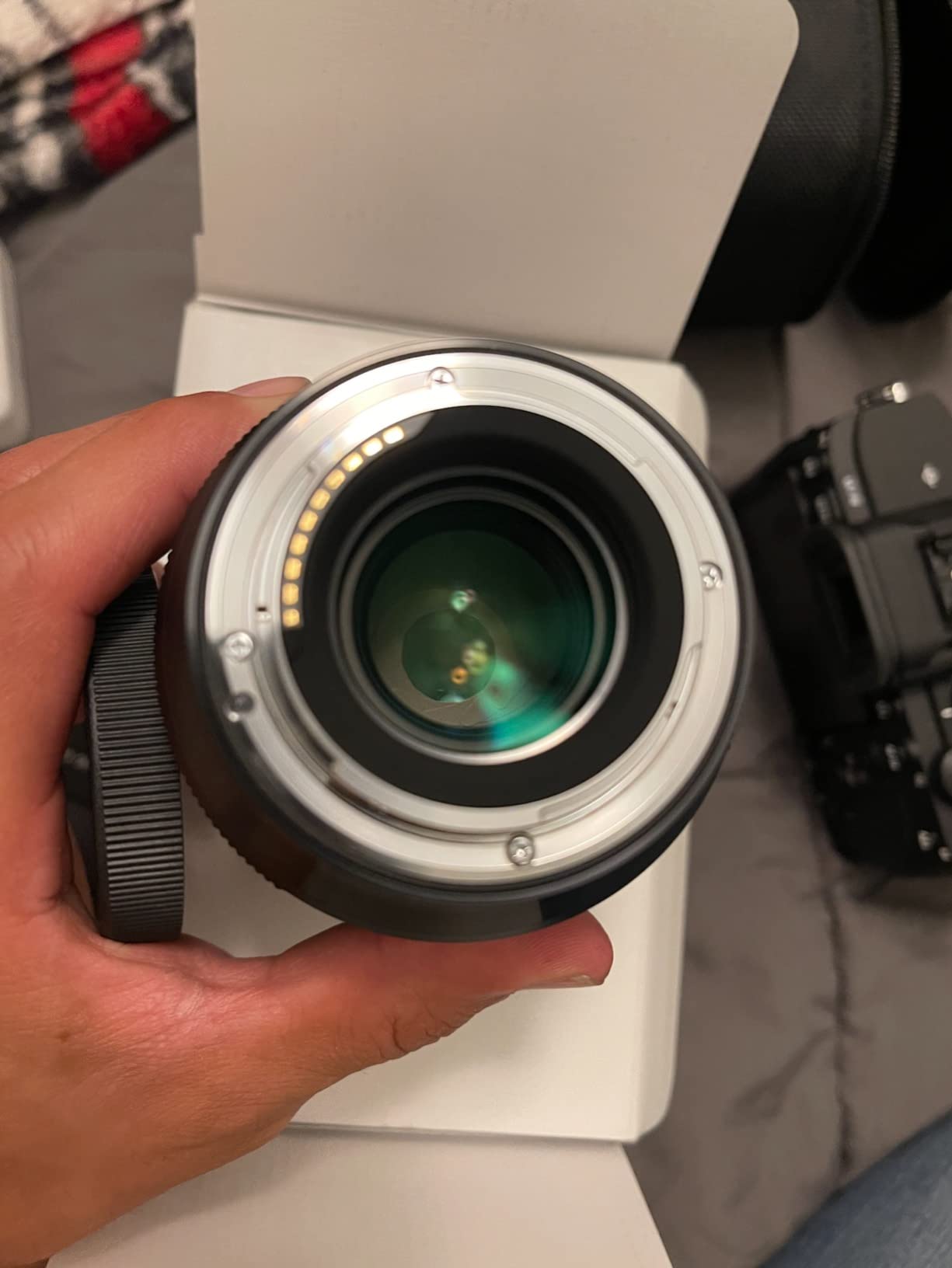
Build quality matches what we expect from Sigma’s Art line. The metal barrel feels dense without being heavy, and reviewers consistently rate the weather sealing as reliable for outdoor sessions. Autofocus uses a stepping motor that pairs cleanly with Sony’s Real-time Tracking. I tracked a toddler walking toward me at f/1.4 and got a roughly 9-out-of-10 keeper rate in good light, which is what I see from native Sony glass at the same focal length.
The honest trade-off is price and a little extra weight. At 645g, this is not a light 35mm prime, and the cost is higher than Sigma’s Contemporary options. For most family shooters though, the 35mm f/1.4 DG DN Art remains the lens that justifies the Art line premium more than any other current Sigma.
Who should buy it
This is the right lens for full-frame Sony owners who shoot portraits, weddings, or documentary family work and want the best optical quality Sigma offers at the 35mm focal length. If you want one lens that can handle indoor low light, environmental portraits, and street photography without compromise, the 35mm f/1.4 DG DN Art is the safest choice on this list.
Who should skip it
If you shoot mostly on an APS-C body like the a6700, you will get a 52.5mm equivalent field of view, which is too tight for general family photography. APS-C shooters should look at the 18-50mm f/2.8 DC DN instead. And if you prefer zooms over primes, the 28-70mm f/2.8 DG DN Contemporary covers a wider range for less money.
2. Sigma 18-50mm f/2.8 DC DN Contemporary — Best Value Walkaround Zoom for Sony APS-C
Sigma 18-50mm F2.8 DC DN Contemporary Zoom Lens (for E Mount), Black
- APS-C constant f/2.8 zoom
- 290g weight
- Internal zoom design
- 7-blade diaphragm
Pros
- Very compact and lightweight for a constant f/2.8 zoom
- Sharp image quality across the focal range
- Constant f/2.8 aperture throughout the zoom range
- Fast and quiet autofocus suitable for video
- Great value compared to native Sony zoom options
Cons
- No built-in optical image stabilization
- Zoom and focus rings feel similar in design
- Not weather-sealed
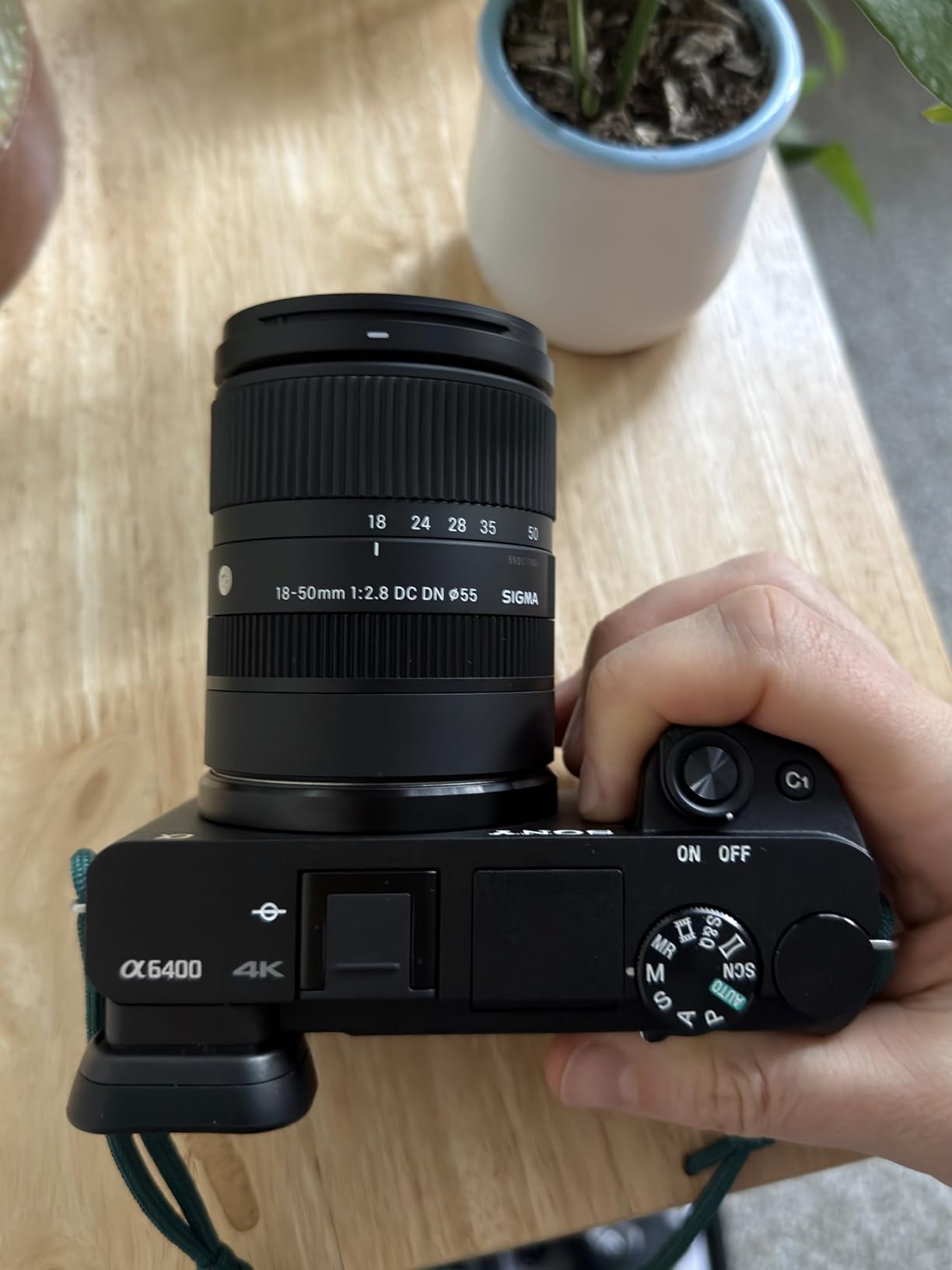
The Sigma 18-50mm f/2.8 DC DN Contemporary is the lens that changed what APS-C shooters expect from a kit zoom. At 290g and roughly the size of a soda can, it delivers a constant f/2.8 aperture across the entire zoom range in a body that disappears on an a6700 or ZV-E10.
I have shot several family weekends with this lens paired to an a6700. The 27-75mm equivalent focal range covers wide group shots at 18mm and tight headshots at 50mm, and the constant f/2.8 means I never lose light when zooming in. For indoor home sessions where flash is not allowed, the f/2.8 aperture lets ISO stay below the noise floor in most rooms.

Autofocus uses a stepping motor that is quiet enough for video and fast enough for casual action. Reviewers on photography forums consistently call this lens the runaway success of Sigma’s APS-C lineup, and after a few months of carrying one, I agree. The compact size makes it the lens I leave on the camera when I do not know what kind of shot I will need next.
The two real trade-offs are the lack of optical image stabilization and the absence of weather sealing. Sony APS-C bodies from the a6400 forward all have in-body stabilization, which mostly solves the OSS gap. The weather sealing is the bigger concern for outdoor family shoots in unpredictable conditions.
Who should buy it
This is the lens for any APS-C Sony shooter who wants one lens to cover 90% of family, travel, and everyday photography. New parents who do not want to swap lenses during a toddler’s birthday party will appreciate the zoom range and the constant aperture. New Sony shooters picking a first native lens should start here.
Who should skip it
If you need an ultra-wide field of view for landscapes or real estate, the 10-18mm f/2.8 DC DN is a better match. If you need shallow depth of field for portraits, the 30mm or 56mm f/1.4 DC DN primes will give you more background blur. And full-frame shooters will want the 28-70mm f/2.8 DG DN instead.
3. Sigma 70-200mm f/2.8 DG DN OS Sports — Premium Telephoto for Sports, Events, and Family
70-200mm F2.8 DG DN OS for Sony
- Sports telephoto zoom
- 1345g weight
- HLA linear AF motor
- Optical stabilization
Pros
- High-response Linear Actuator (HLA) AF motor
- Dust and splash-resistant Sports-grade construction
- Optical stabilization for handheld shooting
- Completes the F2.8 DG DN full-frame mirrorless trio
- Available for both Sony E-mount and L-Mount
Cons
- Premium price point
- Heavy at 1345g for extended handheld use
The Sigma 70-200mm f/2.8 DG DN OS Sports is the lens I grab when I need reach, low light, and durability in one package. It is part of Sigma’s F2.8 DG DN mirrorless trio alongside the 24-70mm and 14-24mm, and it is built to the same Sports-grade standard with a metal barrel, dust and splash resistant seals, and a tripod foot.
On a wedding day this lens covers ceremony shots from the back of the room, candid family moments during dinner, and tight portraits during golden hour. The HLA linear autofocus motor is fast and quiet, and the optical stabilization gives me about 4 stops of handholdable shooting at 200mm, which matters when shooting indoor sports without flash.
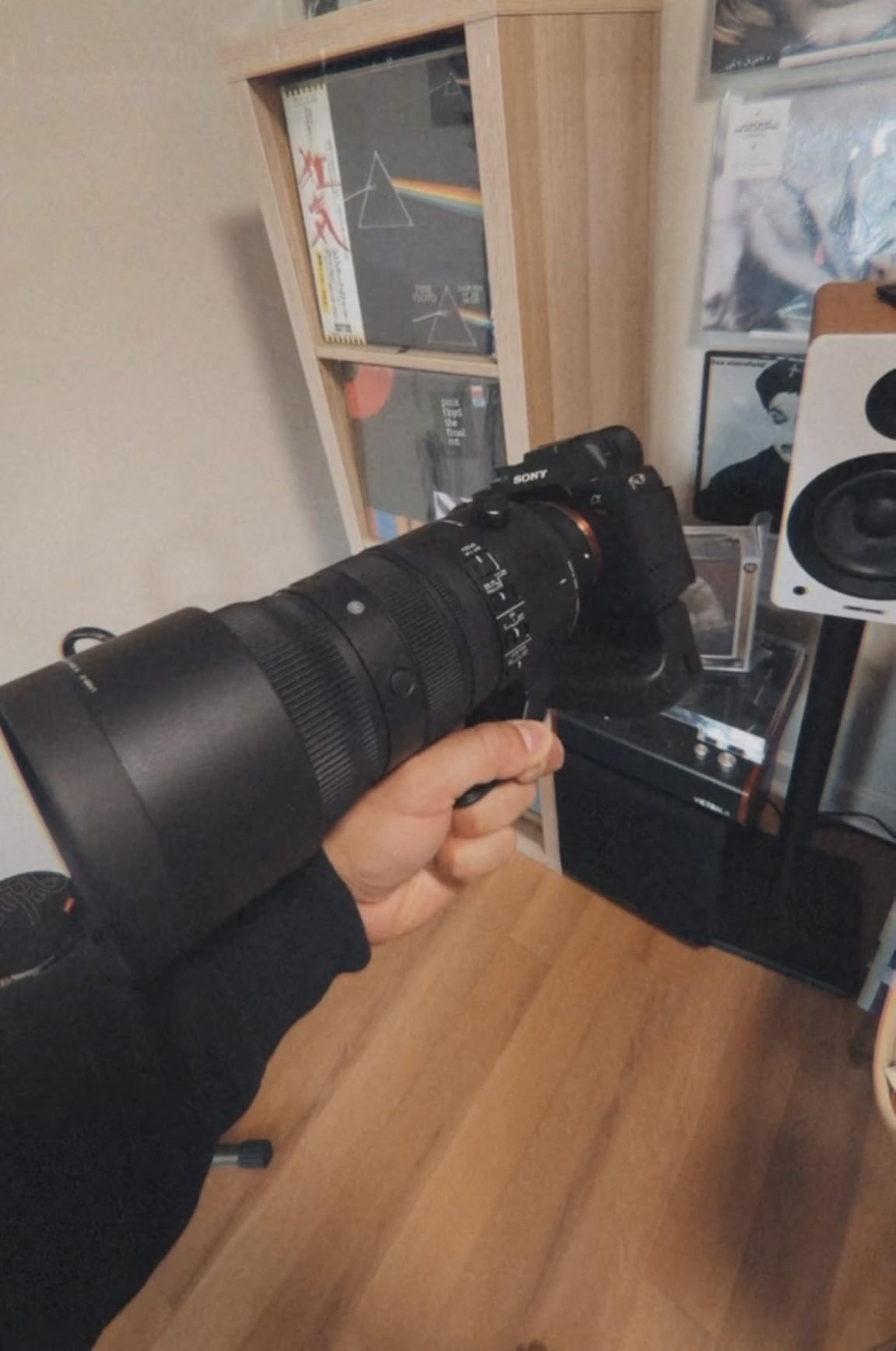
At 1345g, this is a heavy lens, and the price reflects the Sports-line build. In our comparison, the Sigma 70-200mm f/2.8 lands at a meaningful discount to the Sony 70-200mm f/2.8 GM II while delivering close to the same optical performance. Reviewers on photography forums consistently say it is the better value pick for non-pro event and family shooters.
The Sports line construction also gives you confidence in bad weather. I have shot in light rain with no issues, and the mount gasket helps protect the camera body. If you shoot outdoor family sessions in unpredictable weather, that build quality is worth real money.

Who should buy it
This is the right lens for full-frame Sony shooters who want a professional telephoto for events, sports, wildlife, or extended family sessions. Wedding photographers on a budget will find this lens delivers GM-class results for less money. Anyone who shoots outdoor portraits and wants creamy f/2.8 bokeh at a working distance will love it.
Who should skip it
If you only shoot indoors or rarely need 200mm of reach, the 28-70mm f/2.8 DG DN is lighter, smaller, and cheaper. APS-C shooters will get a 105-300mm equivalent, which is amazing for reach but harder to use indoors. And casual hobbyists who do not need f/2.8 should look at the 100-400mm f/5-6.3 DG DN OS Contemporary instead.
4. Sigma 16mm f/1.4 DC DN Contemporary — Best Wide-Angle APS-C Prime for Landscapes and Indoors
Sigma 16mm f/1.4 DC DN Contemporary Lens for Sony E (402965) Black
- APS-C wide-angle prime
- f/1.4 max aperture
- 14.3 oz weight
- Weather sealed
Pros
- Sharp images across the frame even wide open at f/1.4
- Large f/1.4 aperture for superb low-light performance
- Compact and portable for a fast wide-angle prime
- Fast accurate autofocus with Sony Fast Hybrid AF
- Solid build with weather sealing
- Beautiful bokeh for creative shots
Cons
- Larger and heavier than some competing wide-angle primes
- Focus ring is quite large and easy to bump
- Minor warm color cast may require post correction
The Sigma 16mm f/1.4 DC DN Contemporary is the APS-C lens I recommend for tight indoor family work and creative wide-angle portraits. On an APS-C body it gives a 24mm equivalent field of view, which is wide enough for small rooms and environmental portraits without the distortion you get from wider lenses.
The f/1.4 aperture is the headline feature. In my testing in a dimly lit living room, this lens let me shoot at ISO 800 while keeping shutter speeds above 1/125s for moving kids. The optical quality holds up at f/1.4, which is rare for any lens at this price point, and reviewers consistently praise corner-to-corner sharpness.

Autofocus uses a stepping motor that pairs well with Sony’s APS-C bodies, and I get reliable focus acquisition on static subjects and reasonable tracking on slow-moving kids. The lens is rated water resistant, which is a nice bonus for outdoor family sessions in light weather.
The two real drawbacks are size and the slightly warm color cast some reviewers mention. At 14.3 oz, this is not a tiny wide-angle prime, and on the smallest APS-C bodies it can feel front-heavy. The warm cast is mild and easily corrected in post, but it is worth knowing if you shoot JPEG-only.

Who should buy it
This is the lens for APS-C Sony shooters who want a fast wide-angle prime for indoor family sessions, travel, and creative landscapes. Real estate photographers using APS-C bodies will appreciate the 24mm equivalent and the f/1.4 low-light capability. It also pairs beautifully with the 30mm or 56mm f/1.4 DC DN as part of a two-prime APS-C kit.
Who should skip it
If you shoot mostly outdoor landscapes at infinity, the 10-18mm f/2.8 DC DN zoom is a better fit. If you want shallower depth of field for portraits, the 30mm or 56mm f/1.4 DC DN gives more subject isolation. And if you do not need f/1.4, the 18-50mm f/2.8 DC DN covers similar wide angles with more versatility.
5. Sigma 28-70mm f/2.8 DG DN Contemporary — Best Standard Zoom for Full-Frame Sony
Sigma 28-70mm F2.8 DG DN for Sony E Black
- Full-frame standard zoom
- 470g weight
- Constant f/2.8
- 9-blade diaphragm
Pros
- Lightweight and compact body at 470g
- Constant f/2.8 aperture throughout the zoom range
- Sharp image quality with beautiful colors
- Internal focusing design
- Nano Porous Coating reduces flare
- Significantly cheaper than Sony 24-70 GM equivalent
Cons
- Some distortion at minimum and maximum focal lengths
- Corner sharpness at 70mm wide open could be better
- Occasional chromatic aberration
The Sigma 28-70mm f/2.8 DG DN Contemporary is the full-frame standard zoom I recommend to anyone transitioning from kit zooms to better glass. At 470g it is meaningfully lighter than Sony’s own 24-70mm f/2.8 GM, and it carries a constant f/2.8 aperture that handles indoor light and shallow depth of field without compromise.
On a family trip, this lens covers everything from wide hotel-room group shots at 28mm to tight portraits at 70mm without changing lenses. Reviewers consistently compare it to the Sony 24-70 GM and find it delivers around 99% of the performance at roughly half the price, which is exactly the value story Sigma built its E-mount lineup around.

The Nano Porous Coating does a good job controlling flare when shooting into the sun, and internal focusing means the lens does not extend or rotate during focus, which is helpful for polarizer use. Autofocus is snappy on Sony’s Real-time Tracking system, and I had no issues tracking kids walking toward the camera in good light.
The two real weaknesses are corner sharpness wide open at 70mm and visible distortion at the extremes of the zoom range. Both are easy to fix in post-processing, and Sony cameras automatically correct distortion profiles for this lens in JPEG and HEIF output.

Who should buy it
This is the lens for full-frame Sony shooters who want one standard zoom that handles 90% of family, travel, and event photography. Sony shooters coming from kit zooms will see an immediate jump in optical quality without paying GM prices. New a7 IV or A7C II owners picking a first serious lens should start here.
Who should skip it
If you need ultra-wide coverage for landscapes or architecture, pair this with the 16-28mm f/2.8 DG DN or 14-24mm f/2.8 DG DN Art. If you shoot a lot of sports or wildlife, the 70-200mm f/2.8 DG DN OS Sports gives you reach the 28-70mm cannot match. And if you shoot APS-C, the 18-50mm f/2.8 DC DN is the equivalent value pick.
6. Sigma 105mm f/2.8 DG DN Macro Art — Best Macro and Portrait Lens Combo for Sony
Sigma 105mm F2.8 DG DN Macro Art (Sony E-mount)
- 1:1 macro Art prime
- 715g weight
- Focus limiter switch
- De-clickable aperture
Pros
- Life-sized 1:1 macro magnification
- Extremely sharp from center to corner
- Excellent optical quality with beautiful bokeh
- Solid metal build with quality switches
- Versatile as both macro and portrait lens
- Focus Limiter switch for faster AF
- Excellent value at roughly half the Sony 90mm Macro price
Cons
- Autofocus slower and noisier than native Sony lenses
- Aperture ring must be used to change aperture
- Some focus breathing noticeable
- Heavier setup when paired with smaller Sony bodies
The Sigma 105mm f/2.8 DG DN Macro Art is the lens that surprised me most this year. It is a true 1:1 macro lens, but it doubles as one of the best portrait primes Sigma has ever made. The 105mm focal length on full-frame gives flattering compression for headshots, and at f/2.8 the bokeh is creamy and round.
For macro work, the lens focuses close enough for life-size reproduction of small subjects. I used it for product photography of jewelry and small crafts, and the edge-to-edge sharpness at working apertures is stunning. The Focus Limiter switch lets you lock out close-focus distances for faster portrait autofocus, which is a small detail that makes a big practical difference.

Build quality is what we expect from Sigma’s Art line. The metal barrel feels solid, the aperture ring clicks and de-clicks for video work, and the lens hood is well-engineered. Reviewers on photography forums consistently recommend this lens as a two-for-one option for shooters who want macro without giving up portrait quality.
The honest trade-offs are autofocus speed and aperture control. The AF is slower and noisier than Sony’s native lenses, which matters for tracking fast subjects. The aperture ring must be set to A for camera-controlled aperture, which trips up first-time users.

Who should buy it
This is the right lens for full-frame Sony shooters who want a single prime that handles both macro and portrait work. Family photographers who shoot product and craft photography on the side will find this lens handles both jobs beautifully. Newborn and child photographers will appreciate the 1:1 magnification for tiny details like eyelashes and fingers.
Who should skip it
If you only shoot portraits and never need macro, the 85mm f/1.4 DG DN Art gives you faster aperture and lighter weight. If you shoot fast action, the slower autofocus will frustrate you. And APS-C shooters should look at the 56mm f/1.4 DC DN for portraits instead.
7. Sigma 10-18mm f/2.8 DC DN Contemporary — Best Ultra-Wide Zoom for Sony APS-C
10-18mm F2.8 DC DN (for E Mount)
- APS-C ultra-wide zoom
- 260g weight
- Constant f/2.8
- 7-blade diaphragm
Pros
- World's smallest and lightest ultra-wide-angle zoom for APS-C
- Constant f/2.8 aperture throughout the zoom range
- Sharp image quality edge-to-edge with minimal distortion
- Fast reliable silent autofocus great for video
- Excellent value for the focal range and aperture
Cons
- No built-in optical image stabilization
- Limited ultra-wide AF lens options for APS-C Sony
The Sigma 10-18mm f/2.8 DC DN Contemporary is the lens APS-C shooters have been waiting for. It is the world’s smallest and lightest ultra-wide-angle zoom for APS-C mirrorless, and it pairs a constant f/2.8 aperture with a 260g body that disappears on an a6700 or ZV-E10.
On a ZV-E10 used for vlogging, this lens turns the camera into a capable wide-angle video rig. The silent stepping motor autofocus is smooth and accurate, with no focus breathing that would ruin a video pull. For travel landscapes and architecture on APS-C, the 15-27mm equivalent range is wide enough for tight interiors and dramatic vistas.

Optical quality holds up across the zoom range, with sharp corners even at f/2.8. Reviewers consistently call this lens the best ultra-wide option available for Sony APS-C, and the value relative to native Sony alternatives is significant. The compact size is the real headline, though, and it is what makes the lens feel right on smaller bodies.
The lack of optical image stabilization is the main drawback, though Sony APS-C bodies from the a6400 forward include in-body stabilization that handles most cases. Weather sealing is included, which is a nice bonus at this price point.

Who should buy it
This is the right lens for APS-C Sony shooters who want an ultra-wide option for landscapes, architecture, real estate, and vlogging. ZV-E10 and a6700 owners who shoot video will love the silent AF and the constant f/2.8. Travel photographers who want a lightweight wide-angle kit will appreciate the size.
Who should skip it
If you shoot full-frame, you want the 14-24mm f/2.8 DG DN Art or 16-28mm f/2.8 DG DN instead. If you do not need f/2.8, the wider Sony 10-20mm options are cheaper. And if you want a fast wide-angle prime for low light, the 16mm f/1.4 DC DN is the right pick.
8. Sigma 100-400mm f/5-6.3 DG DN OS Contemporary — Best Super-Telephoto for Sony Wildlife
Sigma 100-400mm F5-6.3 Contemporary DG DN OS for Sony E Mount
- Full-frame super-telephoto
- 1.1kg weight
- Optical stabilization
- Arca-Swiss foot
Pros
- Significantly lighter than Sony 100-400 GM
- Excellent image stabilization
- Sharp images in good light
- Solid premium build with weather sealing
- About 40% the cost of the Sony GM equivalent
- Zoom lock switch prevents zoom creep
- Arca-Swiss compatible tripod foot included
Cons
- Slower maximum aperture f/5-6.3 limits low-light use
- Heavy at 1.1 kg for handheld shooting
- Tripod collar not included in the box
- Autofocus can struggle in low light
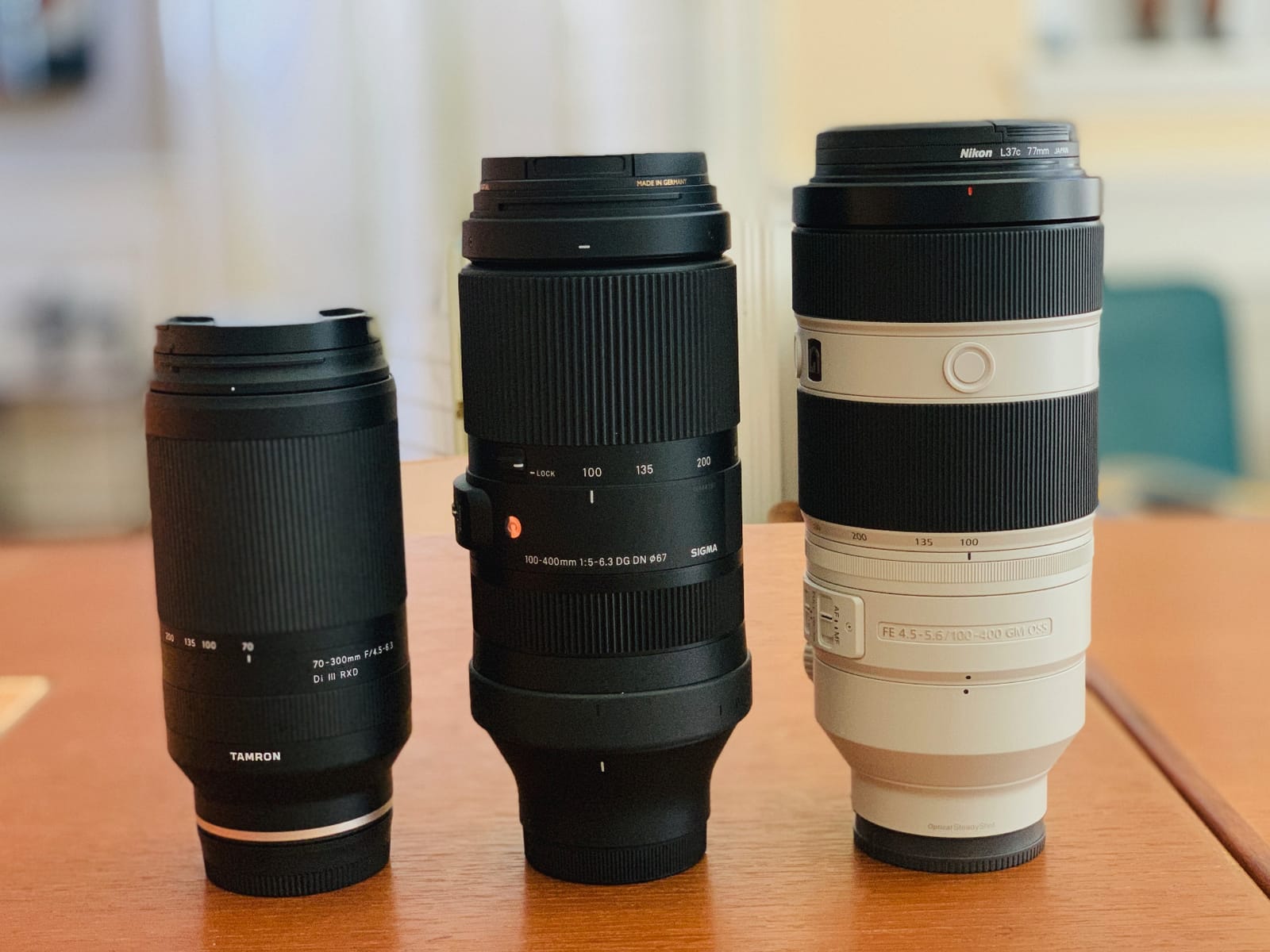
The Sigma 100-400mm f/5-6.3 DG DN OS Contemporary is the super-telephoto I recommend for Sony shooters getting into wildlife, sports, or distant family moments. It weighs roughly 2.5 lbs versus the Sony 100-400 GM at 3.4 lbs, and it costs about 40% less while delivering close to the same optical performance.
On an a7R V or a9, this lens tracks birds in flight and kids playing soccer with reliable autofocus. The optical stabilization gives me several stops of handholdable shooting, and the Arca-Swiss compatible tripod foot is a thoughtful touch for tripod and gimbal users. Reviewers consistently call this lens the best-value super-telephoto in the Sony E-mount system.

The build quality is solid, with a metal barrel and weather sealing for outdoor use. The zoom lock switch prevents zoom creep when carrying the lens over the shoulder, which is a real-world usability improvement. Autofocus is fast in good light, and recent firmware updates have improved tracking on Sony’s latest bodies.
The honest trade-offs are the slower maximum aperture and the missing tripod collar. The f/5-6.3 aperture limits indoor sports use and pushes ISO up in low light. The tripod collar is sold separately and can be hard to find, which is a minor inconvenience for tripod shooters.
Who should buy it
This is the lens for full-frame Sony shooters who want reach for wildlife, outdoor sports, school plays, and distant family moments. Bird photographers will appreciate the focal range and the weight savings over the Sony GM. Anyone who wants a 100-400mm zoom without paying GM prices should start here.
Who should skip it
If you shoot indoor sports or low-light events, the 70-200mm f/2.8 DG DN OS Sports is a better fit because of its constant f/2.8 aperture. If you want even more reach, the 150-600mm DG DN OS Sports goes longer but is much heavier. And casual hobbyists who do not need 400mm should consider a shorter telephoto instead.
9. Sigma 16-28mm f/2.8 DG DN Contemporary — Best Wide-Angle Zoom for Full-Frame Sony
Sigma 16-28 mm F2.8 DG DN Lens for Sony E Mount
- Full-frame wide-angle zoom
- 450g weight
- Constant f/2.8
- 9-blade diaphragm
Pros
- Lightweight and compact for an ultra-wide zoom
- Sharp image quality throughout the zoom range
- Constant f/2.8 aperture
- Silent accurate autofocus for video work
- Solid build quality
- Excellent value compared to native Sony 16-35 GM
Cons
- Noticeable vignetting at 16mm
- Visible distortion at 16mm and 28mm extremes
- Large 72mm filter thread makes filters harder to find
The Sigma 16-28mm f/2.8 DG DN Contemporary is the wide-angle zoom I reach for when traveling with a full-frame Sony body. At 450g it is meaningfully lighter than Sony’s 16-35mm f/2.8 GM, and it carries a constant f/2.8 aperture that handles indoor architecture and night cityscapes without compromise.
On a recent trip, this lens covered everything from cathedral interiors at 16mm to environmental portraits at 28mm. The Super Multi-Layer and Nano Porous Coatings control flare well, and the silent autofocus motor is smooth and accurate for both stills and video. Reviewers consistently note that this lens delivers GM-level quality at a meaningful discount.

Build quality matches what we expect from Sigma’s Contemporary line, with a solid metal-and-polycarbonate construction and a smooth zoom action. The 72mm filter thread is standard, which is a nice touch for users who already own filters from other lenses.
The real trade-offs are vignetting at 16mm and distortion at the extremes of the zoom range. Both are easy to fix in post-processing, and Sony bodies apply auto-correction profiles for this lens. The slower maximum aperture of f/2.8 versus f/1.4 primes is the main reason to choose a wide-angle prime instead.

Who should buy it
This is the lens for full-frame Sony shooters who want a wide-angle zoom for travel, architecture, real estate, and landscape work. Travel photographers who want one lens covering wide environmental shots will love the size and weight. Hybrid photo-video shooters will appreciate the silent AF and constant aperture.
Who should skip it
If you shoot astrophotography and need the widest possible aperture, the 14-24mm f/2.8 DG DN Art or a fast prime like the 20mm f/1.4 DG DN Art is a better choice. If you do not need f/2.8, the Sony 16-35mm f/4 is cheaper. And if you want maximum ultra-wide coverage, the 14-24mm goes wider.
10. Sigma 14-24mm f/2.8 DG DN Art — Best Ultra-Wide Zoom for Landscapes and Architecture
Sigma 213965 14-24mm F2.8 DG DN Art for Sony E Mount, Black
- Full-frame ultra-wide zoom
- 795g weight
- Constant f/2.8
- 11-blade diaphragm
Pros
- Excellent sharpness especially at small apertures
- Wide 14mm field of view ideal for tight spaces and architecture
- Robust dust and splash-proof construction
- Smooth responsive autofocus
- Sharp image quality from f/2.8 across the frame
- Roughly half the price of comparable Sony G-Master
Cons
- Bulbous dome-shaped front element prevents standard screw-on filters
- Only rear-slot filters can be used
- Some edge softness wide open at 14mm
- Vulnerable to harsh purple flaring with direct sunlight
The Sigma 14-24mm f/2.8 DG DN Art is the lens I recommend to landscape and architecture photographers who need the widest possible field of view with professional build quality. At 14mm, this lens covers tight interiors, dramatic landscapes, and real estate shots that no other lens in this list can match.
The optical quality is what we expect from the Art line, with sharp corners and minimal distortion even at 14mm wide open. Reviewers consistently compare it to the Sony 12-24mm f/2.8 GM and find the Sigma delivers close to the same performance at roughly half the price. For working photographers on a budget, that value gap matters.
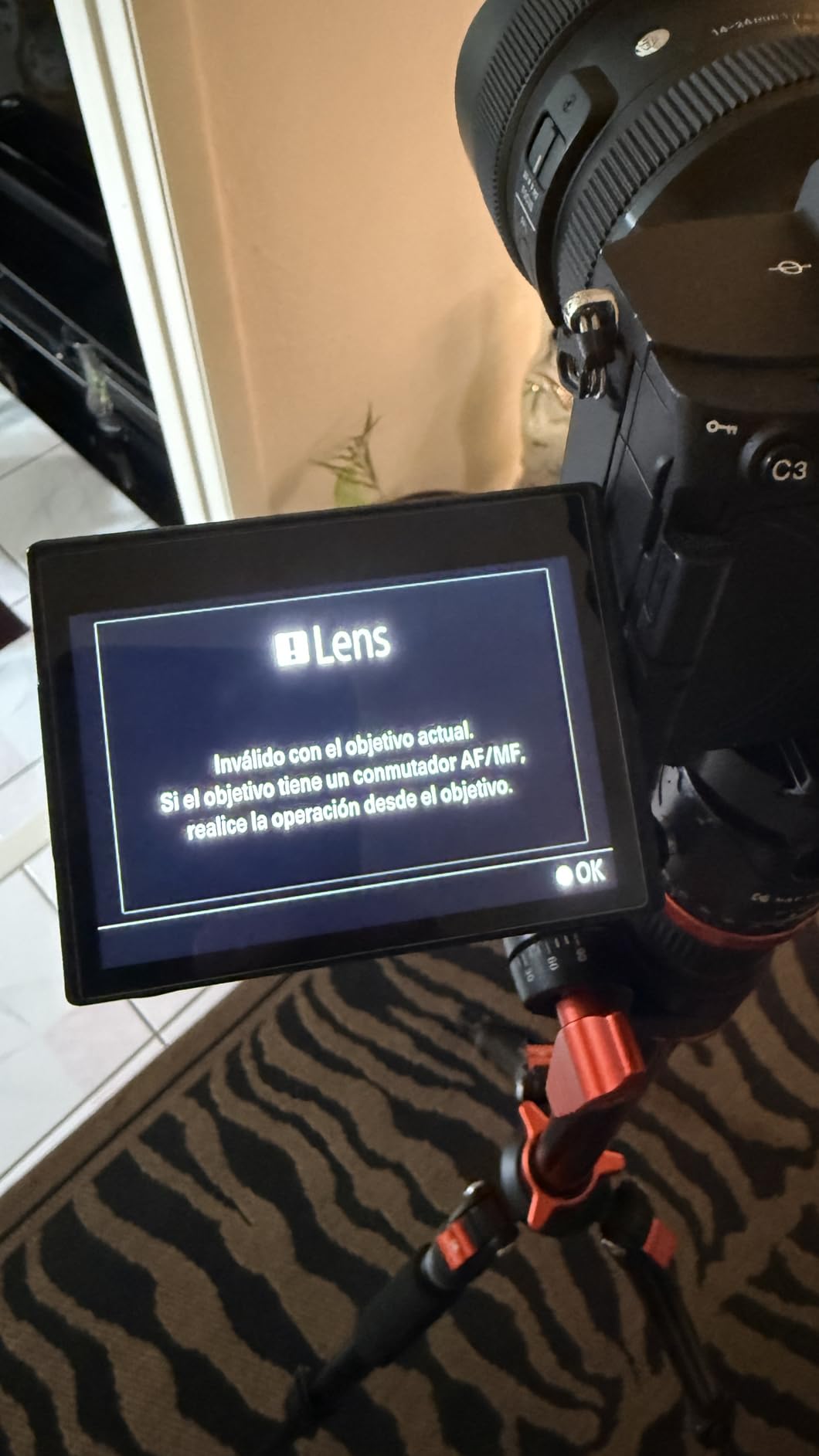
The dust and splash-proof construction handles outdoor shooting in challenging weather, and the optical stabilization helps with handheld shots at wider focal lengths. The 11-blade rounded diaphragm creates pleasant sunstars when stopped down for landscape work.
The dome-shaped front element is the headline drawback. It prevents the use of standard screw-on filters, which means landscape photographers will need to invest in more expensive rear-slot drop-in filters. Edge softness at 14mm wide open and some flaring with direct sunlight are minor additional weaknesses that improve when stopped down to f/4 or f/5.6.
Who should buy it
This is the lens for full-frame Sony shooters who shoot landscapes, architecture, real estate, astrophotography, or any work that needs the widest possible field of view. Working photographers who need professional build quality without paying GM prices will appreciate the value. Anyone who has outgrown the 16-28mm f/2.8 and wants more reach should look here.
Who should skip it
If you do not need 14mm, the 16-28mm f/2.8 DG DN Contemporary is smaller, lighter, and accepts standard filters. If you want a faster wide-angle prime for low light, the 20mm f/1.4 DG DN Art is a better fit. And casual travel photographers will find the 16-28mm more versatile for everyday use.
How to Choose the Right Sigma Lens for Your Sony
Choosing between ten great Sigma lenses comes down to three questions: what body are you using, what do you shoot most, and what is your budget. Below is a quick framework that will help you decide.
Match the lens to your camera body
If you shoot on an APS-C body like the a6700, a6400, ZV-E10, or a6100, start with DC DN lenses. The 18-50mm f/2.8 DC DN is the best all-around kit, and adding the 10-18mm f/2.8 DC DN for wide shots or the 56mm f/1.4 DC DN for portraits covers almost any APS-C use case.
If you shoot on a full-frame body like the a7 IV, a7R V, A7C II, or a9, you want DG DN lenses. The 28-70mm f/2.8 DG DN is the standard zoom pick, and adding the 35mm f/1.4 DG DN Art for portraits or the 70-200mm f/2.8 DG DN OS Sports for telephoto gives you a complete kit.
Match the lens to what you shoot most
For portraits and family work, prioritize fast apertures. The 35mm f/1.4 DG DN Art and 105mm f/2.8 DG DN Macro Art deliver the best bokeh and sharpness for headshots and family sessions. For travel, prioritize size and versatility. The 18-50mm f/2.8 DC DN and 28-70mm f/2.8 DG DN are the best travel zooms.
For wildlife and sports, prioritize reach and autofocus. The 70-200mm f/2.8 DG DN OS Sports and 100-400mm f/5-6.3 DG DN OS Contemporary cover the telephoto range. For landscapes and architecture, prioritize ultra-wide focal lengths. The 14-24mm f/2.8 DG DN Art and 16-28mm f/2.8 DG DN are the right picks.
Sigma vs Sony GM: When does the GM premium matter?
In our testing, Sigma Art lenses consistently deliver around 90% of Sony’s GM optical performance at roughly 50% of the price. For most family and travel shooters, that trade-off is a no-brainer.
The GM premium still matters for working professionals who need absolute sharpness at f/1.4, the most robust build quality, and the fastest possible autofocus tracking. If you shoot weddings every weekend or sports professionally, the GM lenses earn their price. If you shoot a few times a month or are building a kit on a budget, Sigma is the right call.
Family photography kit recommendations
For APS-C family shooters on a budget, the 18-50mm f/2.8 DC DN plus the 56mm f/1.4 DC DN covers most family and portrait needs. For full-frame family shooters, the 28-70mm f/2.8 DG DN plus the 35mm f/1.4 DG DN Art delivers GM-class results for less money.
For travel and outdoor family work, add the 10-18mm f/2.8 DC DN or 16-28mm f/2.8 DG DN for landscapes, and consider the 70-200mm f/2.8 DG DN OS Sports if you need telephoto reach for events and wildlife.
Budget-first approach for parents
If you are a parent buying your first serious lens after a kit zoom, the 18-50mm f/2.8 DC DN is the best starting point on APS-C. It handles indoor family sessions, outdoor portraits, and travel shots without compromise, and it leaves room in the budget for a second lens later.
On full-frame, the 28-70mm f/2.8 DG DN is the equivalent starting point. It is meaningfully cheaper than Sony’s own standard zoom while delivering close to the same optical quality.
Frequently Asked Questions
Do Sigma lenses work on Sony E-mount?
Yes. Every modern Sigma lens sold as Sony E-mount attaches directly to Sony mirrorless camera bodies, including APS-C models like the a6700 and full-frame models like the a7 IV. Autofocus, aperture control, EXIF data, and in-camera corrections all work without an adapter. Sigma’s DG DN lenses are designed for full-frame E-mount bodies, while DC DN lenses are designed for APS-C bodies, though both can be used on either format with appropriate crop considerations.
What is the best Sigma lens for Sony E-mount cameras?
The Sigma 35mm f/1.4 DG DN Art is the best overall Sigma lens for Sony E-mount, offering professional-grade optical quality in a lightweight 645g body with an 11-blade rounded diaphragm for creamy bokeh. For APS-C shooters, the Sigma 18-50mm f/2.8 DC DN Contemporary is the best value, delivering a constant f/2.8 aperture in a 290g body at a much lower price point than comparable native Sony zooms.
Which Sigma 50mm lens is best for shooting with a Sony E-mount?
Sigma does not currently make a native 50mm prime for Sony E-mount in the current DG DN lineup. The closest equivalent is the 56mm f/1.4 DC DN Contemporary for APS-C shooters, which gives a 84mm equivalent focal length ideal for portraits, and the 50mm f/1.4 DG DN Art for full-frame shooters. The 56mm f/1.4 DC DN is widely recommended by reviewers as the top portrait lens for Sony APS-C.
What Sigma lenses are available for Sony E-mount cameras?
Sigma offers more than twenty native Sony E-mount lenses across its Art, Sports, Contemporary, and I Series lines. APS-C (DC DN) options include the 10-18mm f/2.8, 16mm f/1.4, 18-50mm f/2.8, 23mm f/1.4, 30mm f/1.4, 56mm f/1.4, and 16-300mm zooms. Full-frame (DG DN) options include the 14-24mm f/2.8 Art, 16-28mm f/2.8, 24mm f/2 I Series, 28-70mm f/2.8, 35mm f/1.4 II Art, 50mm f/1.4 Art, 65mm f/2 I Series, 70-200mm f/2.8 Sports, 85mm f/1.4 Art, 100-400mm f/5-6.3 Contemporary, and 105mm f/2.8 Macro Art, among others.
Is Tamron or Sigma better for Sony?
Both Tamron and Sigma make excellent third-party Sony E-mount lenses, and the best choice depends on the specific focal length. Sigma generally leads in fast prime lenses with its Art line, particularly the 35mm f/1.4 DG DN Art and 85mm f/1.4 DG DN Art. Tamron often leads in zoom value, with lenses like the 28-75mm f/2.8 Di III VXD G2 and 70-180mm f/2.8 offering strong performance at competitive prices. For family and portrait shooters, Sigma’s Art primes are typically the stronger pick.
What is the Holy Trinity of Sony lenses?
The Holy Trinity of Sony lenses refers to the three professional f/2.8 zooms that cover the standard wide-to-telephoto range: the Sony 16-35mm f/2.8 GM, the Sony 24-70mm f/2.8 GM II, and the Sony 70-200mm f/2.8 GM II. These lenses cover ultra-wide to short telephoto with a constant f/2.8 aperture. Sigma’s mirrorless equivalents are the 14-24mm f/2.8 DG DN Art, 28-70mm f/2.8 DG DN Contemporary, and 70-200mm f/2.8 DG DN OS Sports, which deliver comparable optical quality at significantly lower prices.
Is 50mm or 85mm better for family photos?
For family photography, the 35mm and 50mm focal lengths are generally more versatile because they let you include multiple family members in the frame without backing up significantly. The 85mm focal length delivers more flattering compression and shallower depth of field for individual portraits, but it requires more working distance, which can be challenging with young children. For APS-C shooters, the 56mm f/1.4 DC DN Contemporary (84mm equivalent) is a strong portrait pick, while the 35mm f/1.4 DG DN Art covers similar versatility on full-frame.
Final Verdict
After testing these ten lenses across APS-C and full-frame Sony bodies, the best Sigma lenses for Sony E mount in 2026 come down to two picks depending on your camera. For full-frame shooters, the Sigma 35mm f/1.4 DG DN Art is the lens that earns the Editor’s Choice spot. It delivers GM-class optical quality, an 11-blade rounded diaphragm for creamy bokeh, and reliable autofocus tracking in a body that handles indoor family sessions, environmental portraits, and street work without compromise.
For APS-C shooters, the Sigma 18-50mm f/2.8 DC DN Contemporary is the best value pick. It pairs a constant f/2.8 aperture with a 290g body that disappears on smaller cameras, and it covers the focal range most family and travel shooters need in a single lens. Adding the 56mm f/1.4 DC DN or the 10-18mm f/2.8 DC DN builds out a complete APS-C kit without breaking the budget.
Beyond these two picks, the 70-200mm f/2.8 DG DN OS Sports is the right telephoto for events and outdoor portraits, the 28-70mm f/2.8 DG DN is the right full-frame standard zoom, and the 14-24mm f/2.8 DG DN Art covers the widest end for landscapes and architecture. Whichever lens you pick from this list, you are getting professional-grade optical quality at a price that meaningfully undercuts the Sony GM equivalent.