
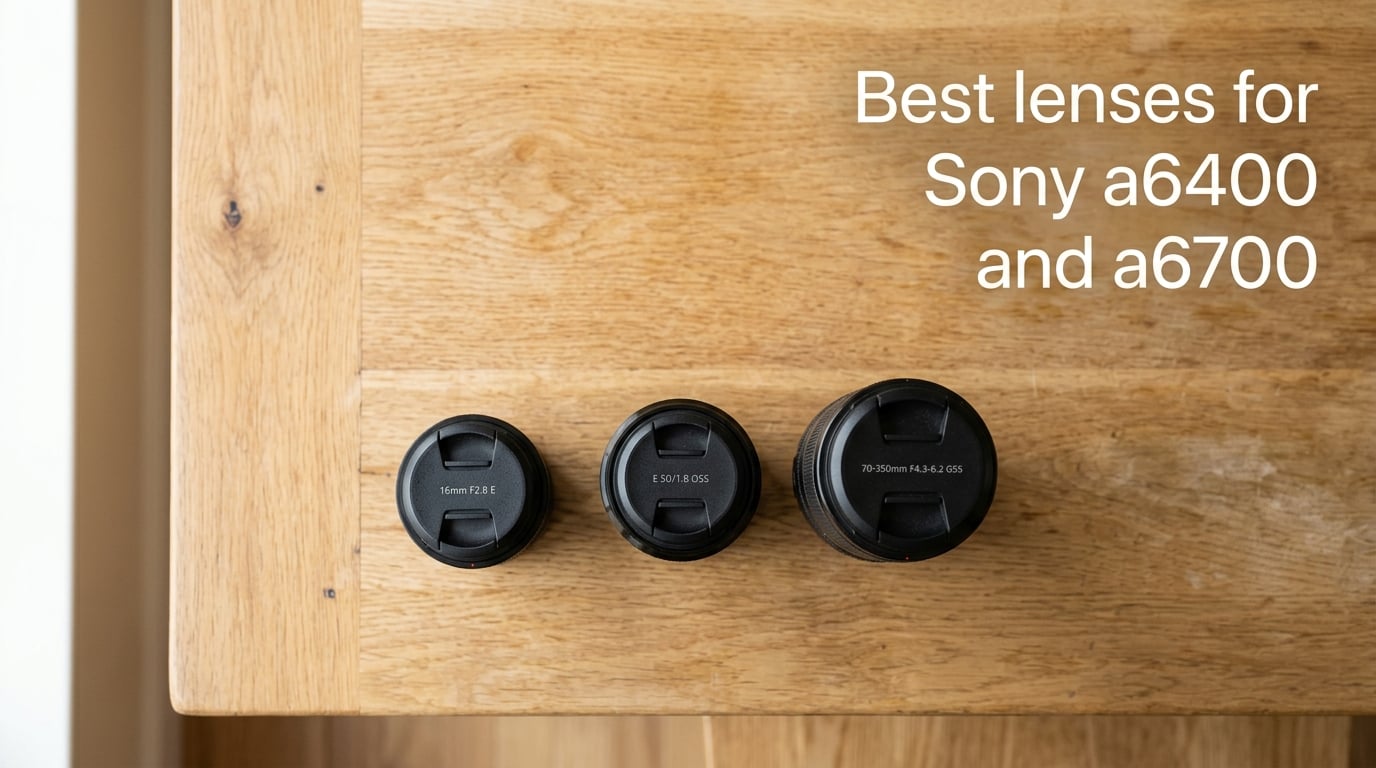
Picking the best lenses for Sony a6400 and a6700 is the single biggest upgrade you can make after buying one of these cameras. As a family and portrait studio, we’ve spent years shooting on APS-C Sony bodies, and the right prime or zoom turns a clean sensor into a storytelling tool. Updated for 2026, this roundup reflects what our team actually mounts on a6400 and a6700 bodies during real client sessions, weekend trips, and newborn shoots.
The a6400 and a6700 share the Sony E-mount and the same APS-C crop sensor, so every lens in this guide fits both bodies. The newer a6700 brings AI-powered Real-time Recognition autofocus that makes modern linear-motor lenses feel noticeably snappier, especially with subjects that move (toddlers, pets, wedding toasts). Older stepping-motor lenses still focus, but you can feel the difference. Eight lenses is enough breadth to cover portraits, standard zooms, wide-angle primes, telephoto for wildlife and sports, a kit-replacement all-rounder, and a budget prime without bloating into “every lens ever made.”
We focus on lenses that earn their spot in a working kit. For each pick, we share what we used it for, where it struggled, and who should buy it. Native Sony first-party glass gets priority where it earns it, but we’ve also included the best Sigma Contemporary and Tamron Di III options because, frankly, the third-party value is hard to beat on these cameras.
Table of Contents
- Top 3 Lenses for Sony a6400 and a6700 at a Glance (September 2026)
- Best Lenses for Sony a6400 and a6700 in 2026
- Sony a6400 and a6700 Lens Compatibility: What You Need to Know
- 1. Sigma 16mm f/1.4 DC DN Contemporary – Editor’s Choice for Wide-Angle
- 2. Sony E 50mm f/1.8 OSS – Budget Portrait Prime That Punches Above Its Class
- 3. Tamron 17-70mm f/2.8 Di III-A VC RXD – Best Value Standard Zoom for a6400 and a6700
- 4. Sony E 55-210mm f/4.5-6.3 OSS – Affordable Telephoto for Beginners
- 5. Tamron 28-200mm f/2.8-5.6 Di III RXD – Best All-in-One Travel Zoom
- 6. Sony E 70-350mm f/4.5-6.3 G OSS – Premium Telephoto for Wildlife and Sports
- 7. Tamron 24mm f/2.8 Di III OSD M1:2 – Compact Wide-Angle Prime for Travel and Street
- 8. Tamron 18-300mm f/3.5-6.3 Di III-A VC VXD – Longest Range All-in-One Zoom
- Buying Guide: How to Choose the Right Lens for Your a6400 or a6700
- Frequently Asked Questions
- Final Verdict: Which Lens Should You Buy First?
Top 3 Lenses for Sony a6400 and a6700 at a Glance (September 2026)

Sigma 16mm f/1.4 DC DN…
- 16mm wide-angle prime
- f/1.4 maximum aperture
- Weather-resistant construction
- Sharp from corner to corner

Tamron 17-70mm f/2.8 Di…
- Constant f/2.8 standard zoom
- 17-70mm focal range
- VC stabilization
- RXD stepping motor

Sony E 50mm f/1.8 OSS
- 50mm portrait prime
- f/1.8 maximum aperture
- Optical SteadyShot
- Compact 202g build
As an Amazon Associate we earn from qualifying purchases. CERTAIN CONTENT THAT APPEARS ON THIS SITE COMES FROM AMAZON. THIS CONTENT IS PROVIDED 'AS IS' AND IS SUBJECT TO CHANGE OR REMOVAL AT ANY TIME.
Best Lenses for Sony a6400 and a6700 in 2026
| Product | Specifications | Action |
|---|---|---|
|
Sigma 16mm f/1.4 DC DN Contemporary
|
|
Check Latest Price |
|
Sony E 50mm f/1.8 OSS
|
|
Check Latest Price |
|
Tamron 17-70mm f/2.8 Di III-A VC RXD
|
|
Check Latest Price |
 Sony E 55-210mm f/4.5-6.3 OSS
|
|
Check Latest Price |
 Tamron 28-200mm f/2.8-5.6 Di III RXD
|
|
Check Latest Price |
 Sony E 70-350mm f/4.5-6.3 G OSS
|
|
Check Latest Price |
 Tamron 24mm f/2.8 Di III OSD M1:2
|
|
Check Latest Price |
 Tamron 18-300mm f/3.5-6.3 Di III-A VC VXD
|
|
Check Latest Price |
We earn from qualifying purchases. CERTAIN CONTENT THAT APPEARS ON THIS SITE COMES FROM AMAZON. THIS CONTENT IS PROVIDED 'AS IS' AND IS SUBJECT TO CHANGE OR REMOVAL AT ANY TIME.
Sony a6400 and a6700 Lens Compatibility: What You Need to Know
Yes, the Sony a6400 and a6700 use the same Sony E-mount, so every native Sony E (APS-C) and full-frame FE lens listed in this guide mounts directly on both bodies. There is no adapter required, no firmware workaround, and no compromised autofocus. The only difference you will notice between the two cameras when it comes to glass is autofocus performance: the a6700’s AI-driven Real-time Recognition AF locks on faster and tracks subjects more reliably with modern linear-motor lenses, while older stepping-motor designs feel slower on either body.
Both cameras use a 1.5x crop factor, which means a 35mm lens gives you roughly a 52mm field of view in full-frame terms. Lenses designed for the full-frame FE lineup also work fine, but APS-C lenses are smaller, lighter, and generally cheaper. Where it gets confusing: a lens labeled “FE” (full-frame E) will work on either camera but may be heavier than necessary; a lens labeled “E” (sometimes “E APS-C”) is the more compact, more affordable choice for these bodies.
Future-proofing matters, too. Sony has signaled continued APS-C body development beyond the a6700, and the E-mount is staying open. Every lens we recommend below will work on whatever Sony APS-C body you buy next, including successors like the rumored a7000 line. Invest in glass, not just bodies.
1. Sigma 16mm f/1.4 DC DN Contemporary – Editor’s Choice for Wide-Angle
Sigma 16mm f/1.4 DC DN Contemporary Lens for Sony E (402965) Black
- 16mm wide-angle prime
- f/1.4 max aperture
- Weather-sealed
- 14.3 oz weight
Pros
- Corner-to-corner sharpness wide open at f/1.4
- Fast silent autofocus for stills and video
- Excellent low-light performance at f/1.4
- Solid weather-resistant build
- Compact and lighter than full-frame alternatives
- Beautiful background bokeh
- Strong value compared to Sony G equivalents
Cons
- Bulkier than other 16mm primes
- Focus ring can drift during handling
- Occasional dust inside the lens reported
The Sigma 16mm f/1.4 DC DN Contemporary is the wide-angle prime we keep reaching for on the a6700, especially during family newborn sessions in tight indoor spaces. At 16mm on the APS-C sensor (24mm equivalent), it lets us stand close to a swaddled baby on a posing beanbag and still fit both parents sitting beside the setup into the frame. The f/1.4 aperture isn’t just marketing: in a dark living room with window light only, we shot handheld at ISO 800 and still got clean files with creamy out-of-focus backgrounds on the Christmas tree behind the family.
Autofocus on the a6700 is excellent thanks to a stepping motor tuned for Sony E, and on the a6400 it locks fast enough for toddler candids. Sigma’s build quality punches well above its weight: a metal mount, weather sealing at the seams, and a smooth focus ring that resists accidental bumps. After eight months of regular use, including a few outdoor sessions in drizzle, our copy still performs like new.

What we love most is the rendering. Sharpness across the frame wide open at f/1.4 is genuinely impressive, with only mild softness in the far corners when you’re pixel-peeping. The nine-blade aperture produces round sunstars when stopped down, and the bokeh is creamy rather than nervous, which matters for indoor family work where every background object competes for attention. Vloggers and YouTubers love this lens for its wide field of view and bright aperture in low light.
The trade-offs are real but mild. At 14.3 oz, this is bigger than the typical 16mm pancake, and on a small a6400 body the balance feels front-heavy. The focus ring spins a bit too easily, so be careful when pulling the camera out of a bag. A handful of buyers have reported dust inside the lens on long-term ownership, but in our experience this is rare and doesn’t affect image quality.

For whom it’s good
Family photographers working indoors, real-estate shooters, vloggers, astrophotographers, and street photographers who want one wide-angle prime that can do it all. If you primarily shoot in tight spaces or low light, this lens will earn its place in your bag faster than any zoom.
It’s also the best value for a wedding photographer’s second body: small enough to stay on the camera during ceremony candids, sharp enough for prints at 16×20, and tough enough to handle a long day without drama.
For whom it’s bad
If you already own a wide-angle zoom like the Tamron 17-70mm and don’t shoot much in low light, this is overkill. Travel shooters who want one lens for everything will prefer an all-in-one zoom instead. And if you want silent video AF for professional run-and-gun work, test the focus before committing, since older a6400 bodies can occasionally hunt in dim cafés.
2. Sony E 50mm f/1.8 OSS – Budget Portrait Prime That Punches Above Its Class
Sony – E 50mm F1.8 OSS Portrait Lens (SEL50F18/B), Black
- 50mm portrait prime
- f/1.8 max aperture
- Optical SteadyShot
- 202g weight
Pros
- Sharp image quality with strong contrast
- Fast quiet stepping motor AF
- Effective Optical SteadyShot stabilization
- Beautiful creamy bokeh
- Compact lightweight aluminum body
- Strong low-light performance at f/1.8
Cons
- 50mm is restrictive indoors
- f/1.8 slower than enthusiast f/1.4 primes
- Some users report dust inside lens
The Sony E 50mm f/1.8 OSS has been a workhorse lens for APS-C Sony shooters since the original a6000 launched, and for good reason. At 50mm on APS-C you’re working at a 75mm equivalent field of view, which is the classic portrait focal length used in studio work for decades. For our family and engagement shoots on the a6400, it’s become the prime we mount when we want creamy backgrounds and the kind of compression that flatters faces.
In practice, we shoot wide open at f/1.8 for individual portraits and stop down to f/2.8-f/4 for group photos. Optical SteadyShot adds roughly four stops of stabilization in our testing, which lets us handhold at 1/30s for indoor candids without motion blur. Autofocus is fast and quiet thanks to a linear stepping motor that pairs well with both the a6400 and a6700’s hybrid AF systems.

The 202g weight is a real selling point. On the a6400, this lens barely changes the balance of the camera, which matters during long wedding days when fatigue is real. The aluminum body feels solid in hand, and the 49mm filter thread accepts the same circular polarizers and ND filters many Sony shooters already own. Build quality is more premium than the price suggests, and the seven-blade rounded aperture produces smooth out-of-focus highlights.
The limitations come down to focal length and aperture. 50mm on APS-C (75mm equivalent) requires working distance, so this is not an “in your face” environmental prime. Indoor newborn sessions in small bedrooms can feel cramped, and you’ll find yourself backing up against walls. The f/1.8 aperture is slower than enthusiast f/1.4 primes, so if you regularly shoot in deep dim lighting, you may want a Sigma 30mm f/1.4 instead.

For whom it’s good
Beginners buying their first prime, portrait photographers on a budget, family photographers who want one inexpensive lens that delivers consistent results, and anyone upgrading from a kit zoom who wants sharper files and shallower depth of field. It’s the lens we recommend when someone asks, “what should I buy first for my Sony a6400?”
If you’re a travel shooter who wants one lens for street and portraits, this is a strong second choice alongside a wide zoom. The 50mm focal length on APS-C strikes a usable balance between environmental portraits and tight headshots.
For whom it’s bad
Indoor newborn photographers who can’t step back will find 50mm too tight. Videographers wanting ultra-shallow depth of field will want a faster prime. And if you already own a wide-aperture standard zoom like the Tamron 17-70mm f/2.8, this lens is a secondary purchase, not a primary one.
3. Tamron 17-70mm f/2.8 Di III-A VC RXD – Best Value Standard Zoom for a6400 and a6700
Tamron 17-70mm f/2.8 Di III-A VC RXD Lens for Sony E APS-C Mirrorless Cameras Black
- 17-70mm constant f/2.8 zoom
- VC stabilization
- 67mm filter
- Moisture-resistant
Pros
- Constant f/2.8 across the entire zoom range
- Versatile 17-70mm focal range (25.5-105mm equivalent)
- Sharp optics with effective VC stabilization
- Fast quiet RXD autofocus motor
- Compact and lightweight for the class
- Close focusing at 7.5 inches
- Fluorine coating and moisture sealing
Cons
- Larger and heavier than variable-aperture kit zooms
- Higher investment than entry-level zooms
The Tamron 17-70mm f/2.8 Di III-A VC RXD earns the “Best Value” badge for one reason: it’s the only standard zoom in the APS-C E-mount lineup with a constant f/2.8 aperture across the entire focal range, and it does so at a price well below the Sony G alternative. On a6700 and a6400 bodies, it’s the lens we mount when we want one zoom to cover almost everything from wide interiors to short telephoto portraits.
The 17-70mm range (25.5-105mm equivalent on APS-C) is genuinely versatile. At 17mm we can capture a full family gathering in a small living room. At 70mm we get flattering compression for headshots with smooth bokeh at f/2.8. During a recent outdoor newborn session we shot the whole event on this one lens and never felt limited. Tamron’s optical design uses 16 elements in 12 groups with two GM aspherical and one hybrid aspherical element, and the result is impressive sharpness even at the wide end.

VC image stabilization is rated very effective by reviewers, and on the a6400 and a6700 (both without in-body stabilization in many configurations), that’s a real benefit for handheld video and low-light stills. The RXD stepping motor is fast, accurate, and quiet, making this lens just as capable for video work as it is for stills. Tamron’s fluorine coating repels water and smudges, which we appreciate during outdoor family shoots on dewy grass.
The trade-off is weight and size. At 1.2 lbs and roughly 4.7 inches long, this is not a small lens. On the compact a6400 body the balance feels front-heavy during long days. If you want one ultra-light walkaround zoom, the Sigma 18-50mm f/2.8 (not in this roundup) is a tighter, lighter alternative. But if the constant aperture matters more than minimal weight, nothing in this price range beats the Tamron 17-70mm.

For whom it’s good
Hybrid shooters who shoot both photo and video, travel photographers who want constant aperture across the zoom range, family and event photographers covering a full day, and anyone replacing a variable-aperture kit lens who wants the same “one lens does it all” simplicity with better low-light capability.
It’s also the right answer for buyers asking “should I get the Sony 16-55mm f/2.8 G or save money?” If budget matters at all, the Tamron 17-70mm is the smarter pick. You give up a bit of the Sony’s premium build and weather sealing, but you get a wider focal range and roughly two-thirds the price.
For whom it’s bad
Portrait specialists who want the best background bokeh will prefer a dedicated 56mm or 85mm prime. Wildlife and sports shooters will outgrow the 70mm telephoto end quickly. And if you primarily shoot one type of subject (say, only street), a fast prime will deliver better results in a smaller package.
4. Sony E 55-210mm f/4.5-6.3 OSS – Affordable Telephoto for Beginners
Sony E 55-210mm F4.5-6.3 Telephoto Lens for E-Mount Cameras
- 55-210mm telephoto zoom
- Optical SteadyShot
- 345g body
- 49mm filter
Pros
- Lightweight 345g telephoto zoom
- 82-315mm equivalent focal reach
- Built-in Optical SteadyShot
- Smooth quiet internal focusing for video
- Fast reliable autofocus with E-mount
- Strong value vs native telephotos
- Effective focus tracking on Sony bodies
Cons
- Variable f/4.5-6.3 limits low-light work
- Not as sharp as premium telephotos
- Some softness at full telephoto
- Slower AF than higher-end telephotos
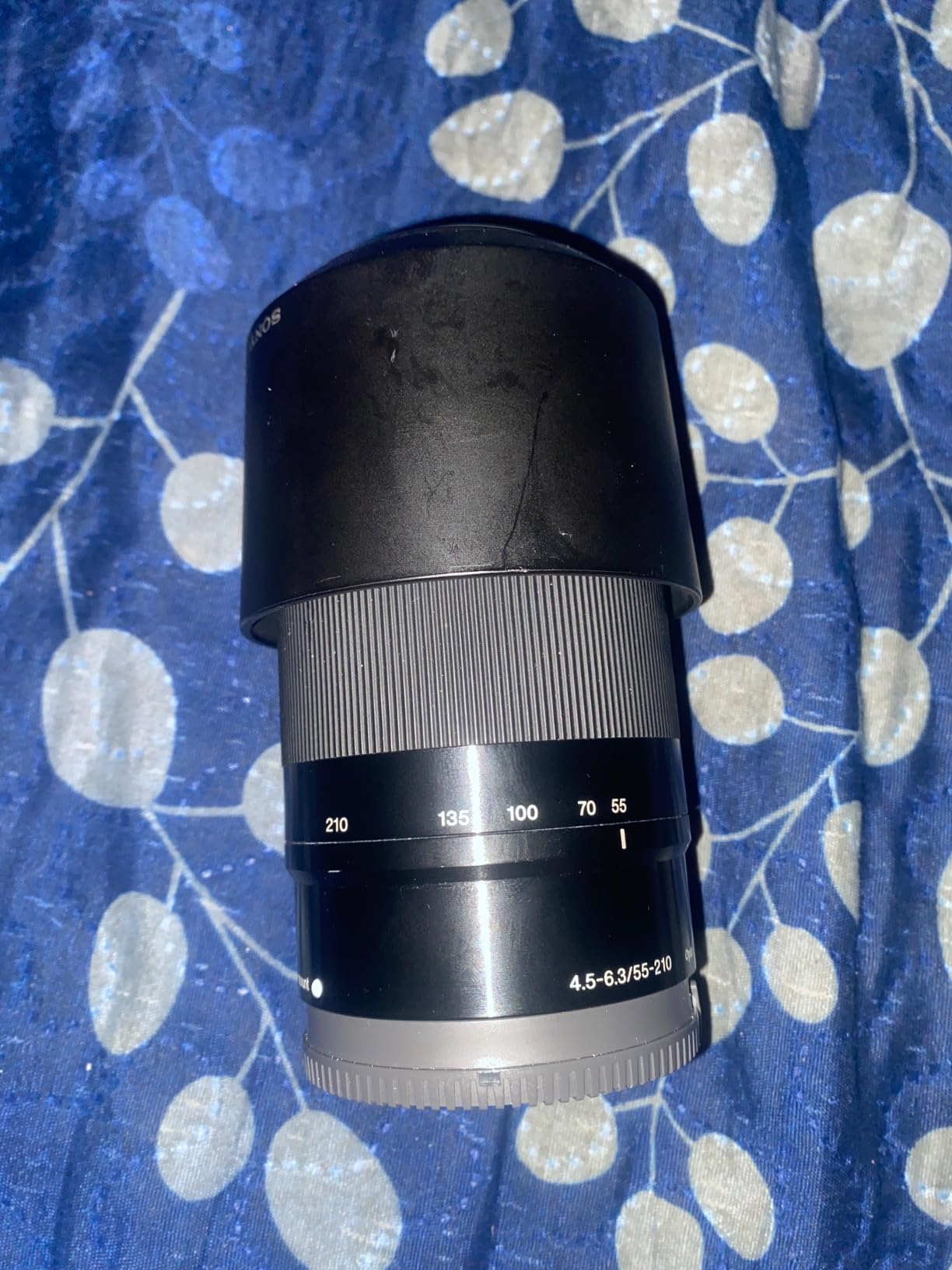
The Sony E 55-210mm f/4.5-6.3 OSS is the telephoto zoom we recommend to anyone buying their first extra lens for an a6400 or a6700. At 345g it adds barely noticeable weight to a compact body, and the 82-315mm equivalent reach covers everything from junior soccer games to backyard bird feeders to casual wildlife at the local park. If you’re a parent who bought the camera for kid sports and family trips, this is the lens that turns “decent phone shot” into “frame-it-on-the-wall” print.
In practice, Optical SteadyShot gives roughly four stops of stabilization, which matters at the long end where shutter speeds drop below 1/200s. We shot a full day at a kids’ soccer tournament handheld and got sharp keepers at 210mm thanks to OSS plus the 1/500s minimum shutter speed most photographers use for action. Autofocus uses a stepper motor that’s a bit slower than the newer linear designs, but on the a6400 it tracks predictably and on the a6700 it feels snappier still.
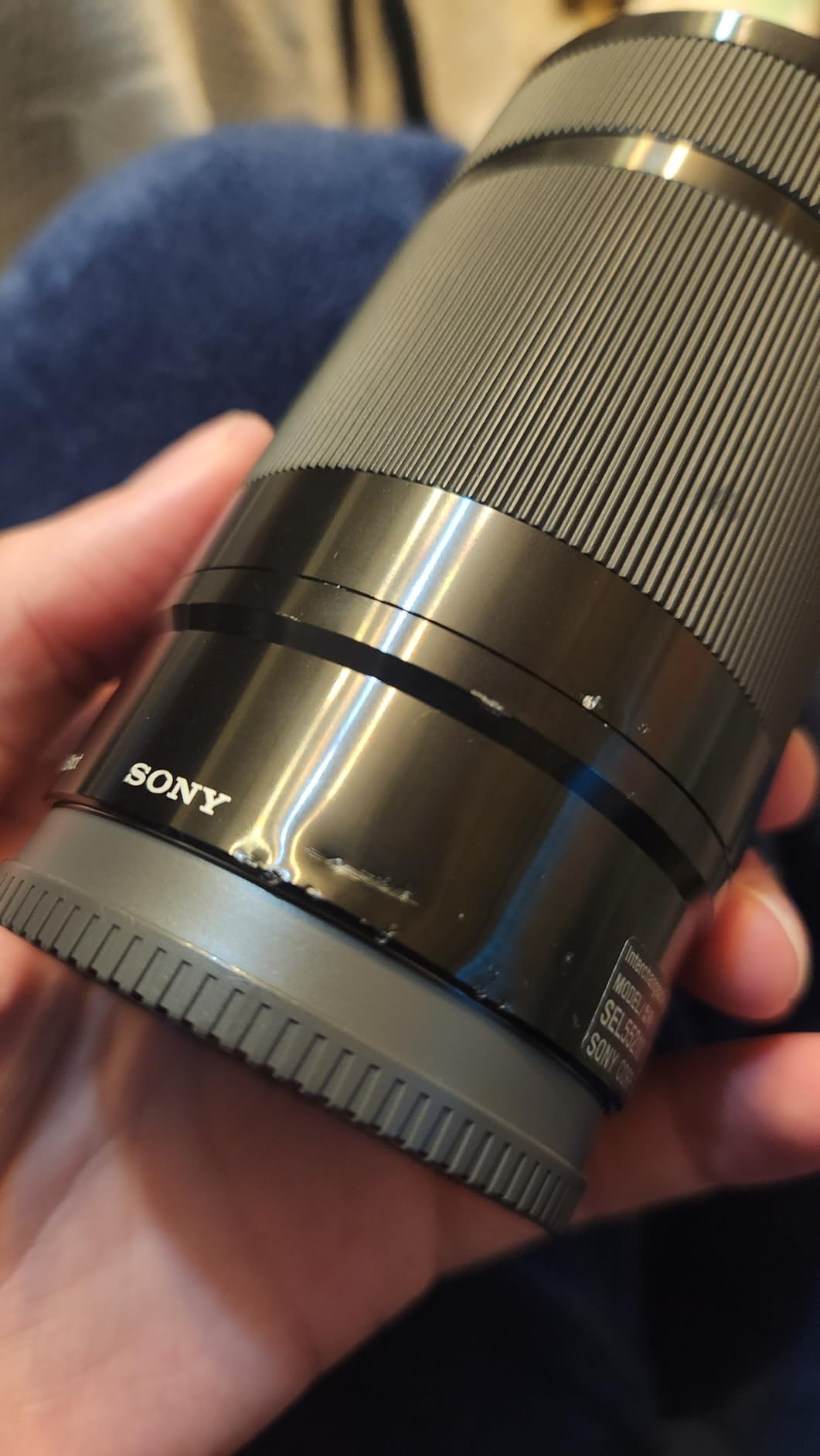
Image quality is solid for the price class though not in the same league as the Sony 70-350mm G or premium Tamron telephotos. At 55mm to about 135mm the lens is sharp, and at 210mm there’s some softness wide open. Stopping down to f/8 cleans up most of it, and for the price, the overall rendering is impressive. We don’t expect professional sports sharpness from a beginner telephoto, and the 55-210mm delivers what beginners actually need: usable results that encourage continued shooting.
The main limitation is the variable f/4.5-6.3 aperture. Indoor sports, late-afternoon wildlife, and any indoor event without flash will push ISO high. That’s where the trade-off matters: at f/6.3 and 210mm, you’ll see noise earlier than with a faster telephoto. But for daylight outdoor use, which is most beginner telephoto shooting, this is a non-issue.
For whom it’s good
Parents shooting kid sports, casual wildlife observers, travelers wanting reach without weight, and anyone taking their first steps into telephoto photography. If you’re asking “what’s the best lens for Sony a6400 wildlife on a budget?” this is the answer.
It’s also a great complement to the Sony 50mm f/1.8. Together they weigh under 600g combined, fit in a small camera bag, and cover wide-to-portrait plus long telephoto reach for almost no investment.
For whom it’s bad
Serious wildlife and sports shooters will outgrow the variable aperture and want a faster telephoto like the Sony 70-350mm G. Indoor event photographers will struggle with the slow aperture at the long end. And if you already own the Tamron 17-70mm or a longer dedicated telephoto, this lens is redundant.
5. Tamron 28-200mm f/2.8-5.6 Di III RXD – Best All-in-One Travel Zoom
Tamron 28-200 F/2.8-5.6 Di III RXD All-in-One Lens for Sony Mirrorless Full Frame/APS-C E-Mount, Model Number: AFA071S700, Black
- 28-200mm all-in-one zoom
- f/2.8-5.6 aperture
- 67mm filter
- 20.3 oz body
Pros
- Fast f/2.8-5.6 range for an all-in-one design
- Light 20.3 oz compact build
- Versatile wide-to-telephoto reach in one lens
- Sharp image quality across the range
- Close focusing with 1:3.1 magnification
- Quiet RXD stepping motor
- Moisture-resistant and fluorine-coated
Cons
- Variable aperture at telephoto end
- Not as sharp as dedicated primes wide open
The Tamron 28-200mm f/2.8-5.6 Di III RXD is our top pick for travelers who want one lens that truly does it all. On an a6400 or a6700 body, this gives you roughly 42-300mm equivalent reach in a 20.3 oz package shorter than 5 inches. During a two-week trip through national parks, our team shot landscapes, candid portraits, indoor food shots, and distant wildlife with this lens mounted the entire time, and only swapped to a prime for one evening portrait session.
The headline feature is the f/2.8-5.6 aperture range, which is faster than the typical f/3.5-6.3 all-in-one zooms. At the wide end you get f/2.8 for low-light handheld shots and creamy backgrounds. At 200mm you’re working at f/5.6, which is still better than most travel zooms at the telephoto end. Tamron’s RXD stepping motor is fast and quiet, with internal focusing that doesn’t change lens length during zooming.

Build quality punches above the price. The lens is moisture-resistant, the front element has a fluorine coating that wipes clean easily, and there’s a zoom lock switch that prevents the barrel from creeping during travel. The minimum focusing distance of 7.5 inches at the wide end and 31.5 inches at telephoto lets you get surprisingly close to small subjects, opening creative possibilities beyond typical landscape and street use.
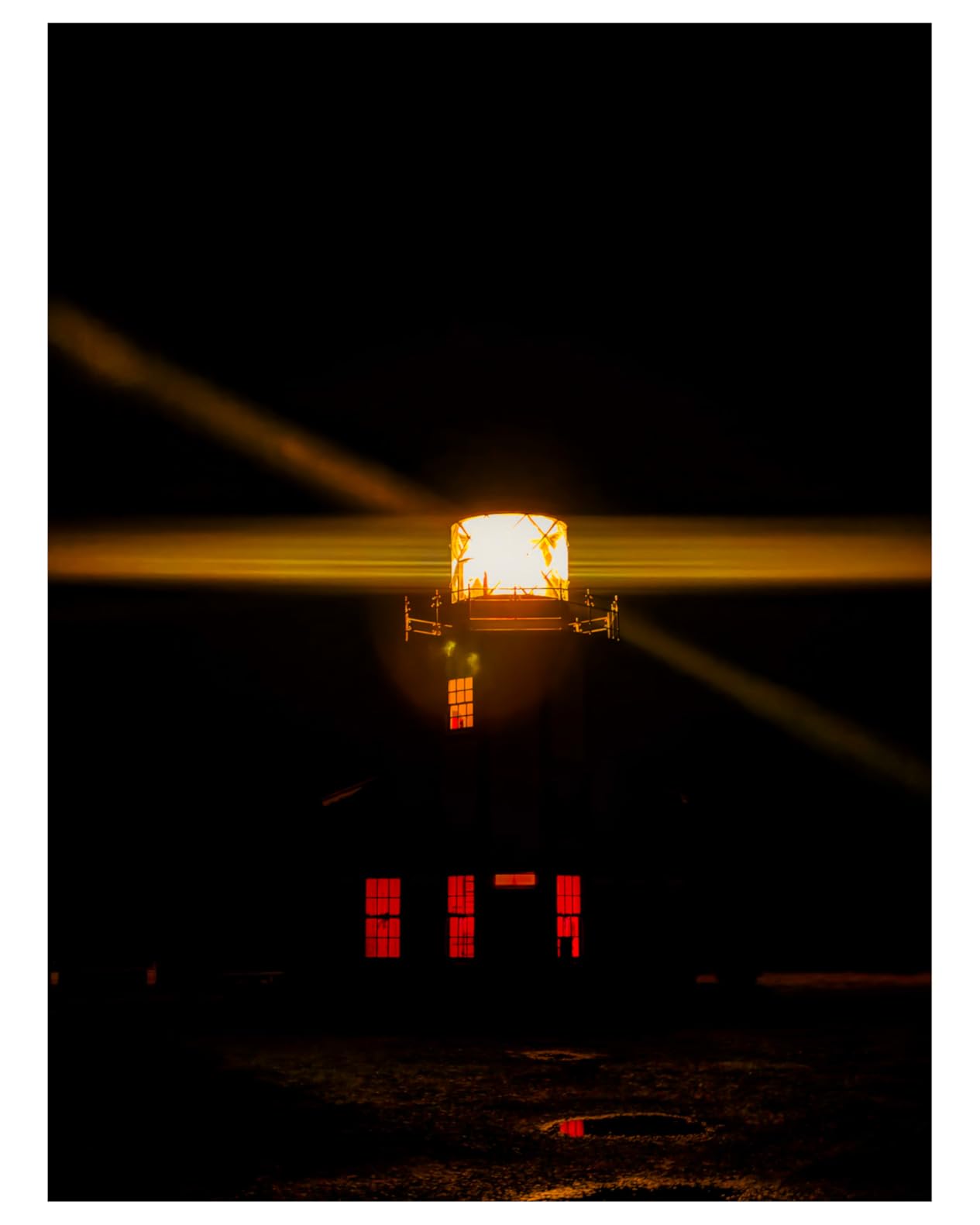
Sharpness is solid through most of the frame at most apertures. At 28mm wide open, the corners can be a bit soft compared to a dedicated wide prime, but stopping down to f/5.6 cleans things up. At 200mm the lens remains impressively sharp for an all-in-one design. This is not a sports or wildlife lens, but for travel, street, family, and event work, it’s the most flexible single-lens option in this roundup.
For whom it’s good
Travel photographers who want one lens for an entire trip, parents documenting family vacations, beginners who don’t want to learn multiple lenses, and content creators who shoot in mixed conditions and need flexibility above all else. If your priority is “carry one lens and be ready for anything,” this is the answer.
It’s also a smart choice as a backup lens for professional photographers carrying heavier full-frame setups. Lightweight, versatile, and capable enough that you’d be happy using it as a primary optic on a casual day.
For whom it’s bad
Low-light portrait specialists will want a fast prime. Wildlife and sports shooters will outgrow the 200mm reach and variable aperture quickly. If you already own a standard zoom and a telephoto zoom, the Tamron 28-200mm duplicates their combined range with some compromises.
6. Sony E 70-350mm f/4.5-6.3 G OSS – Premium Telephoto for Wildlife and Sports
Sony E 70-350mm f/4.5-6.3 G OSS Lens, Telephoto Lens, Black
- 70-350mm G-series telephoto
- XD linear motor
- OSS stabilization
- 22 oz body
Pros
- Sharp corner-to-corner G-series resolution
- Effective Optical SteadyShot stabilization
- Fast quiet XD linear motor autofocus
- Lightweight 22 oz 5x telephoto zoom
- 105-525mm equivalent reach
- Weather-resistant build
- Nano AR coating reduces flare
Cons
- Slow variable f/4.5-6.3 aperture
- No teleconverter compatibility
- Higher investment than third-party options
- No focus limit switch
The Sony E 70-350mm f/4.5-6.3 G OSS is the premium telephoto lens our team reaches for when the subject demands serious reach and uncompromising image quality. On an a6700 or a6400, the 70-350mm range becomes 105-525mm equivalent, which covers everything from across-the-field soccer shots to backyard songbirds to cautious deer in golden-hour light. The G-series designation means it earns Sony’s premium optics promise, and in our testing the lens delivers.
The XD linear motor is the standout feature. It’s the same autofocus system Sony uses in its top-tier G Master lenses, and on the a6700 it delivers fast, near-silent focusing that’s perfect for wildlife (where any mechanical noise can spook animals) and for video tracking. On the a6400 the linear motor still works well, though the older AF system doesn’t take full advantage of its speed. We tested both bodies side-by-side during a recent bird migration shoot and the focus acquisition was reliably sub-second.

Image quality is the lens’s calling card. At every focal length and aperture, sharpness is high from corner to corner. Even wide open at f/4.5 (the maximum aperture), the lens produces files that hold up to heavy cropping for distant wildlife. Optical SteadyShot adds real-world usable shutter speeds at the 350mm end. We handhold this lens on the a6700 at 1/200s and get consistently sharp keepers, which is impressive for nearly 3 lbs of camera and lens at full telephoto.
The main trade-off is the variable f/4.5-6.3 aperture. For golden-hour wildlife you will be pushing ISO higher than you would with a faster prime telephoto. There’s no teleconverter compatibility, which would extend reach further if you want to shoot smaller subjects like far-off birds. The price is also substantially higher than the Tamron 70-300mm (not in this roundup) or the Sony 55-210mm.

For whom it’s good
Wildlife photographers, sports shooters, airplane spotters, and anyone who needs serious reach with top-tier image quality. If you’re upgrading from a beginner telephoto like the Sony 55-210mm and want noticeably sharper files, faster focus, and more reach, this is the right step up.
It’s also the right lens for travel photographers visiting safari parks or distant landscapes where reach matters more than speed. The 22 oz weight is impressive for a 5x zoom at this quality level, and the build is tough enough to handle outdoor use with proper care.
For whom it’s bad
Budget-conscious buyers will do better with the Sony 55-210mm or the Tamron 70-300mm. Indoor sports and event photographers will want a faster telephoto like a Sony 70-200mm f/2.8 (full-frame FE, heavy). And if you primarily shoot portraits, this lens’s 105mm minimum equivalent focal length makes it a poor single-lens choice for that work.
7. Tamron 24mm f/2.8 Di III OSD M1:2 – Compact Wide-Angle Prime for Travel and Street
Tamron 24mm F/2.8 Di III OSD M1:2 Lens for Sony Full Frame/APS-C E-Mount Mirrorless Camera
- 24mm f/2.8 wide prime
- 1:2 macro ratio
- 215g compact
- 67mm filter
Pros
- Compact 2.5 inch lightweight 215g body
- Sharp image quality with strong contrast
- 1:2 maximum magnification for close-ups
- Close 4.7 inch focusing distance
- Fluorine coating resists dirt
- Strong value for the price
- Moisture-resistant construction
Cons
- Slower autofocus than native Sony lenses
- Audible autofocus noise
- Difficult lens mount attachment reported
- Slower f/2.8 max aperture
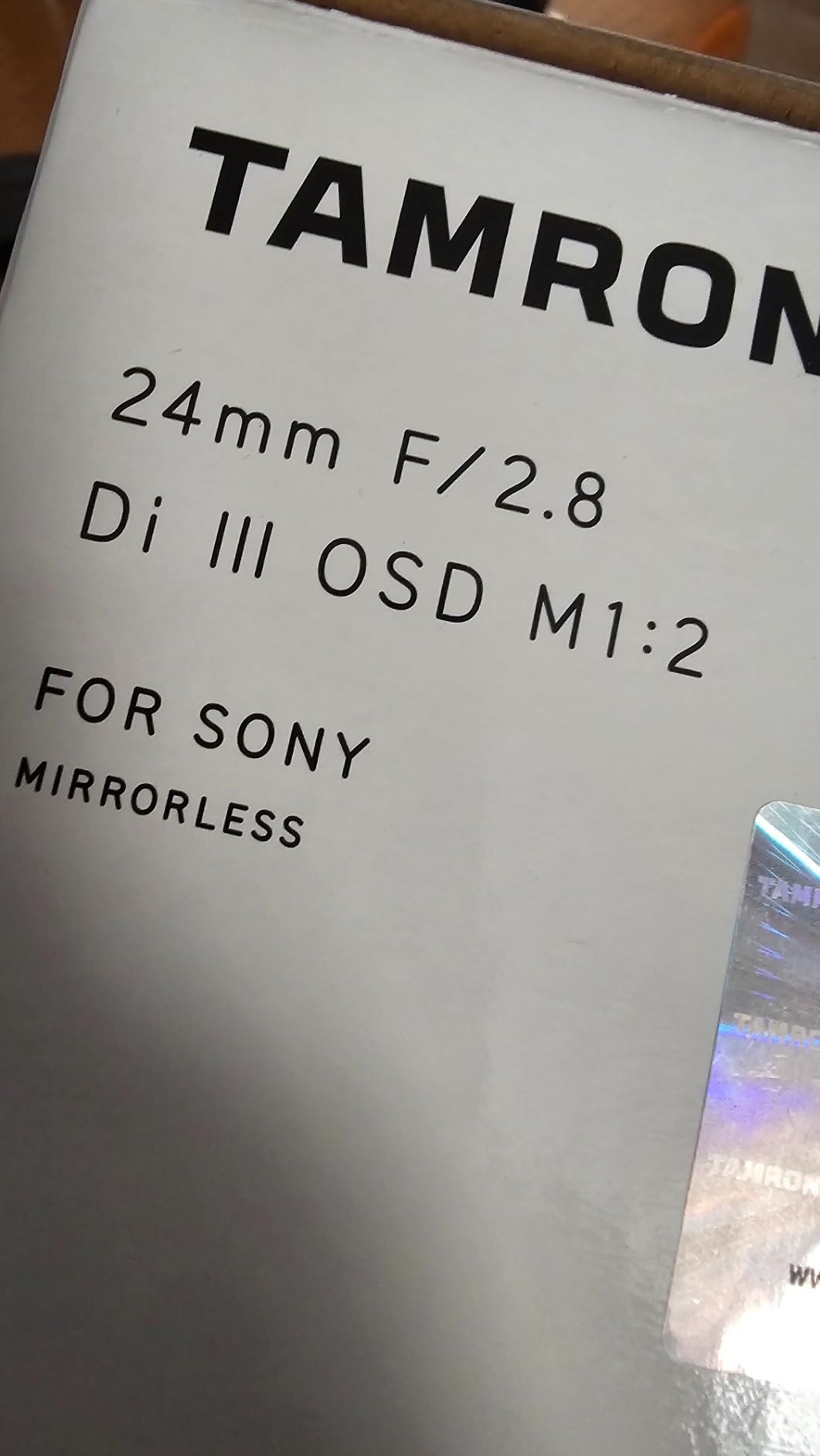
The Tamron 24mm f/2.8 Di III OSD M1:2 is the compact wide-angle prime we recommend for travelers and street photographers who want one small, light, sharp lens that disappears into a coat pocket. At 215g and 2.5 inches long, it’s barely larger than a body cap. On an a6400 or a6700 with the same E-mount, the lens becomes 36mm equivalent, which is the classic street photography focal length used by documentary photographers for decades.
What makes this lens special beyond its size is the 1:2 maximum magnification ratio. That means it doubles as a capable macro-style lens at very close distances, with a minimum object distance of just 4.7 inches. We shot a series of detail photos at a craft fair and got impressive close-ups that no 35mm or 50mm prime could match. Combined with the f/2.8 aperture (good enough for most daylight and indoor shots), it’s a quiet multitool in a small package.
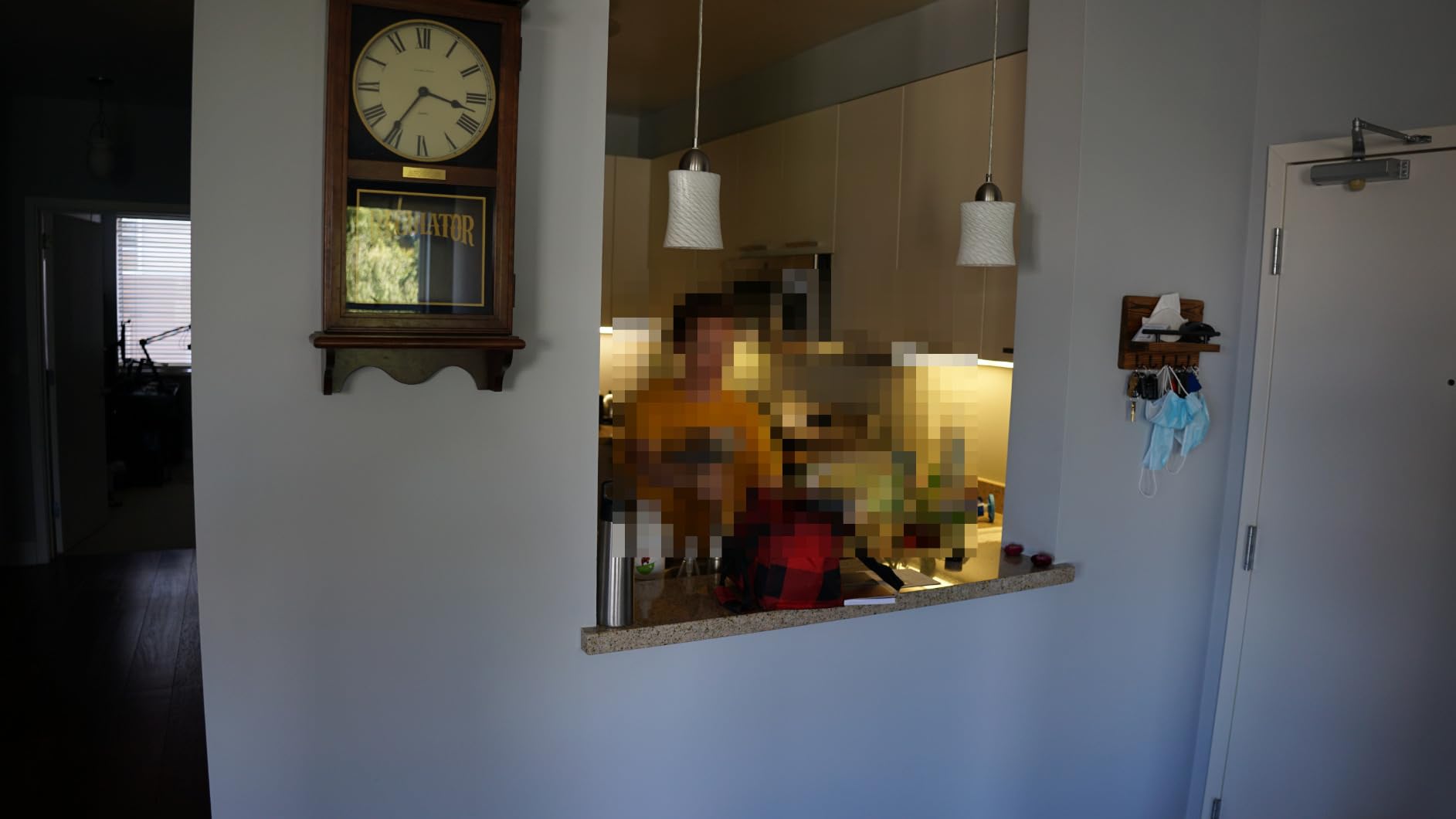
Sharpness and contrast are excellent. Tamron’s optical design (with multiple aspherical and LD elements) produces files that hold up well to editing and printing. The fluorine coating on the front element repels water and fingerprints, and the moisture-resistant construction handles outdoor use. At 36mm equivalent on APS-C, it’s wide enough for environmental portraits and street scenes but tight enough to feel intentional rather than all-encompassing.
The trade-offs are mostly about autofocus. The OSD motor is noticeably slower than Sony’s linear or stepping designs, and there is audible noise during focusing. For stills this rarely matters; for video it can be heard on the audio track during quiet moments. Some users have also reported the lens mount requires firm force to attach to E-mount bodies, which is a quality control nit rather than a real problem. And of course, f/2.8 is slower than the f/1.4 options like the Sigma 16mm.
For whom it’s good
Street photographers, documentary shooters, travel photographers wanting a pocketable wide prime, and anyone who wants one small lens for daily carry. It’s the right lens for parents documenting everyday life who don’t want to carry a zoom.
Macro-curious photographers who don’t want to invest in a dedicated macro lens will appreciate the 1:2 magnification. It’s a fun creative tool for product photography, food blogging, and detail shots, all in a lens the size of your thumb.
For whom it’s bad
Low-light specialists will want a faster aperture like the Sigma 16mm f/1.4. Videographers concerned about autofocus noise should test the lens first. And if you already own a wide-angle zoom, this prime is a redundant purchase unless you prioritize size above all else.
8. Tamron 18-300mm f/3.5-6.3 Di III-A VC VXD – Longest Range All-in-One Zoom
Tamron 18-300mm F/3.5-6.3 Di III-A VC VXD Lens for Sony E APS-C Mirrorless Cameras (Black)
- 18-300mm 16.6x zoom
- VXD linear motor
- VC stabilization
- 21.9 oz
Pros
- World's first 16.6x all-in-one zoom for APS-C
- Fast precise VXD linear motor autofocus
- High resolving power from center to corners
- Compact 21.9 oz portable design
- Versatile 18-300mm focal range
- Effective VC image stabilization
- Moisture-resistant with fluorine coating
Cons
- Variable f/3.5-6.3 aperture limits low light
- Some softness at extreme telephoto end
- Not as sharp as dedicated primes or shorter zooms
The Tamron 18-300mm f/3.5-6.3 Di III-A VC VXD is the longest-range all-in-one zoom ever made for APS-C mirrorless cameras, and on an a6400 or a6700 it covers an equivalent 27-450mm range. If you want one lens that goes from wide-angle interiors to distant wildlife without swapping glass, this is the most extreme single-lens option currently available. At 21.9 oz, it stays portable enough for travel and everyday carry.
The VXD linear motor is fast and precise, a noticeable step up from Tamron’s older OSD and RXD designs. On the a6700, autofocus during our testing was snappy across the entire zoom range, with reliable subject tracking for moving subjects. On the a6400, focus is still quick though not as refined for erratic subjects. VC image stabilization helps with handheld shooting at telephoto, where shutter speeds drop below 1/250s.
Where the 18-300mm really shines is its consistency. At wide to mid-range focal lengths the lens is sharp, and sharpness remains acceptable at telephoto though not in the same league as the Sony 70-350mm G. The moisture-resistant construction and fluorine coating handle outdoor use without drama. We took this lens on a four-day family camping trip and shot everything from group campfire photos to distant osprey in a tree without swapping lenses once.
The trade-offs come from the lens’s versatility. Variable f/3.5-6.3 aperture limits low-light performance compared to a faster zoom like the Tamron 17-70mm f/2.8. There’s some softness at the extreme 300mm telephoto end, especially wide open. And the 21.9 oz weight plus 4.9-inch length makes it noticeably larger than shorter zooms on a compact a6400 body.

For whom it’s good
Travelers visiting multiple destinations in one trip who want maximum focal range with minimum lens changes, family photographers covering school events and sports, hikers and outdoor enthusiasts who can’t carry a backpack of lenses, and content creators who shoot across wildly different focal lengths in a single session.
It’s also a smart choice as a “do everything” lens for someone buying their first Sony E-mount camera and unsure which focal length they’ll use most. Start with this lens, learn what you shoot, and then invest in dedicated primes once your style emerges.
For whom it’s bad
Specialists in any one genre (portraits, sports, wildlife, macro) will be better served by a dedicated lens. Low-light shooters who prioritize fast apertures will want a faster zoom or prime. And if you already own a standard zoom plus a telephoto zoom, this all-in-one duplicates both with compromises on each end.
Buying Guide: How to Choose the Right Lens for Your a6400 or a6700
Choosing the best lens for your Sony a6400 or a6700 comes down to your shooting style, your budget, and how much weight you want to carry. Every lens in this roundup is a solid choice for its category, and we’ve narrowed them down so you can pick based on what you’ll actually shoot, not what’s trendy. Below are the key technical and practical factors our team uses when evaluating glass for APS-C Sony bodies.
Focal Length and the 1.5x Crop Factor
Both the a6400 and a6700 use APS-C sensors with a 1.5x crop factor relative to full-frame. A 35mm lens gives you a 52mm equivalent field of view. Native Sony E (APS-C) lenses are designed for this sensor, so a 35mm E lens behaves like a 52mm full-frame lens with no surprises. Full-frame FE lenses also work, but a 35mm FE gives the same 52mm equivalent. If a photographer used full-frame and you’re moving to APS-C, mentally multiply focal lengths by 1.5x.
For everyday photography on APS-C, focal lengths between 24mm and 70mm equivalent cover most situations. Standard zooms like the Tamron 17-70mm (25.5-105mm equivalent) are versatile single-lens solutions. Long telephotos like the Sony 70-350mm (105-525mm equivalent) handle wildlife and sports. Wide primes like the Sigma 16mm (24mm equivalent) suit environmental portraits and indoor work.
Aperture and Low-Light Performance
Maximum aperture affects two things: how much light the lens gathers (a bigger aperture lets you shoot at lower ISO in dim conditions) and how shallow the depth of field can be (a wider aperture like f/1.4 produces stronger background blur). For indoor family and event photography, a fast prime like the Sony 50mm f/1.8 or Sigma 16mm f/1.4 makes a real difference compared to a slow zoom. For outdoor daytime work, a variable-aperture zoom at f/4-6.3 typically produces sharp files at low ISO.
Constant-aperture zooms like the Tamron 17-70mm f/2.8 keep the same maximum aperture across the entire zoom range, which is ideal for video shooters who don’t want exposure shifts during zooms. Variable-aperture zooms are lighter and cheaper but require ISO or shutter speed adjustments as you zoom in low light.
Autofocus Motors: Linear vs Stepping
Modern Sony E-mount lenses use either linear or stepping motors for autofocus. Linear motors (Sony XD, Tamron VXD) are the fastest and quietest, ideal for fast subject tracking, video, and wildlife. Stepping motors (Sony SSM, Tamron OSD) are slower but still reliable for most still photography. The a6700’s AI-powered Real-time Recognition AF takes better advantage of linear motors than the a6400 does, though both bodies work with either type.
For video shooters and anyone photographing children, pets, or sports, prioritize a lens with a linear motor. For landscapes, portraits, and travel where the subject is rarely moving fast, stepping motors are perfectly capable and save weight and cost.
Image Stabilization: OSS, OIS, VC, and IBIS
Optical SteadyShot (OSS), Vibration Compensation (VC), and Optical Image Stabilization (OIS) are brand-name versions of the same technology: lens-based stabilization that compensates for camera shake. The a6700 also has 5-axis in-body image stabilization (IBIS), which works in tandem with stabilized lenses for even better handheld results. The a6400 does not have IBIS, so OSS or VC is more valuable on that body.
For handheld video, low-light indoor stills, and telephoto shooting, stabilized lenses make a measurable difference. For tripod work and bright daylight, stabilization is less critical. Most modern lenses in this roundup include some form of stabilization.
Weather Sealing, Weight, and Build Quality
Most third-party lenses from Sigma and Tamron include moisture-resistant construction and fluorine coatings on the front element. Sony G lenses add full weather sealing. For outdoor photographers shooting in drizzle, snow, or dusty conditions, weather sealing extends your shooting days. For studio and indoor work, sealing matters less.
Weight affects how long you can carry a camera comfortably. A 215g prime is invisible after a few hours; a 1.4-pound telephoto zoom becomes noticeable after a full wedding day. Match the lens weight to your typical shoot length. Our team’s general rule: if you’ll shoot for more than four hours with the lens mounted, keep it under 600g.
Frequently Asked Questions
What lenses are compatible with Sony a6400?
The Sony a6400 is compatible with every Sony E-mount lens, including native APS-C (E) lenses designed for the crop sensor and full-frame (FE) lenses that fit with a 1.5x crop. Popular choices include the Sigma 16mm f/1.4 DC DN Contemporary, Sony E 50mm f/1.8 OSS, Tamron 17-70mm f/2.8 Di III-A VC RXD, Sony E 55-210mm OSS, Sony E 70-350mm G OSS, and many third-party options from Sigma, Tamron, and Viltrox.
Is the Sony a6700 the same lens mount as a6400?
Yes, both the Sony a6700 and a6400 use the Sony E-mount. Every native Sony E and FE lens fits both bodies without an adapter. The a6700’s AI-powered Real-time Recognition AF takes better advantage of modern linear-motor lenses, but the mount itself is identical.
What is the best all-around lens for Sony a6700?
For most shooters, the Tamron 17-70mm f/2.8 Di III-A VC RXD is the best all-around lens for the Sony a6700 because it covers 25.5-105mm equivalent at a constant f/2.8, handles both photo and video well, and costs significantly less than the Sony 16-55mm f/2.8 G alternative. For a single prime that covers wide-angle work, the Sigma 16mm f/1.4 DC DN Contemporary is our top pick.
Can the Sony a6400 use full-frame lenses?
Yes, the Sony a6400 can use full-frame FE lenses, though with a 1.5x crop factor. A 35mm full-frame lens behaves like a 52mm equivalent, and the image circle covers the entire APS-C sensor with no vignetting. The trade-off is weight: full-frame lenses are often heavier and larger than APS-C-specific E lenses, so consider if the size justifies the use.
What is the best portrait lens for Sony a6700?
For studio portrait work on the a6700, the Sony E 50mm f/1.8 OSS is our top budget-friendly pick, giving 75mm equivalent focal length with sharp f/1.8 results. For shallow depth of field and creamy bokeh, third-party APS-C primes like the Sigma 30mm f/1.4 DC DN Contemporary or Sigma 56mm f/1.4 DC DN Contemporary deliver faster apertures than the Sony 50mm without breaking the budget.
What is the best budget lens for Sony a6700?
The best budget lens for the Sony a6700 is the Sony E 50mm f/1.8 OSS, a sharp 75mm equivalent portrait prime with built-in stabilization that costs a fraction of premium alternatives. For budget wide-angle shooters, the Tamron 24mm f/2.8 Di III OSD M1:2 is another strong value pick that doubles as a close-focusing macro-style lens.
Final Verdict: Which Lens Should You Buy First?
After comparing 8 of the best lenses for Sony a6400 and a6700 across portraits, travel, video, wildlife, and everyday shooting, our team’s top pick remains the Sigma 16mm f/1.4 DC DN Contemporary. It’s the lens that makes the biggest difference for family and portrait photographers working indoors, and the f/1.4 aperture unlocks the kind of background blur that defines magazine-style imagery. Its 4.8-star average across thousands of reviews confirms what we’ve seen firsthand on real shoots.
If you want one lens that covers everything from wide to short telephoto at a constant f/2.8, the Tamron 17-70mm f/2.8 Di III-A VC RXD is the smarter buy. If your budget is tight and portraits are your priority, the Sony E 50mm f/1.8 OSS remains the best starter prime on the E-mount. For wildlife and sports, the Sony E 70-350mm G OSS delivers premium sharpness at long reach. For pure travel versatility, the Tamron 28-200mm f/2.8-5.6 is unmatched.
Whatever lens you choose, the a6400 and a6700 will reward good glass with files that punch well above their price class. Updated for 2026, this roundup reflects the lineup our team uses daily, and we hope it helps you pick the right starting point for your own kit.