
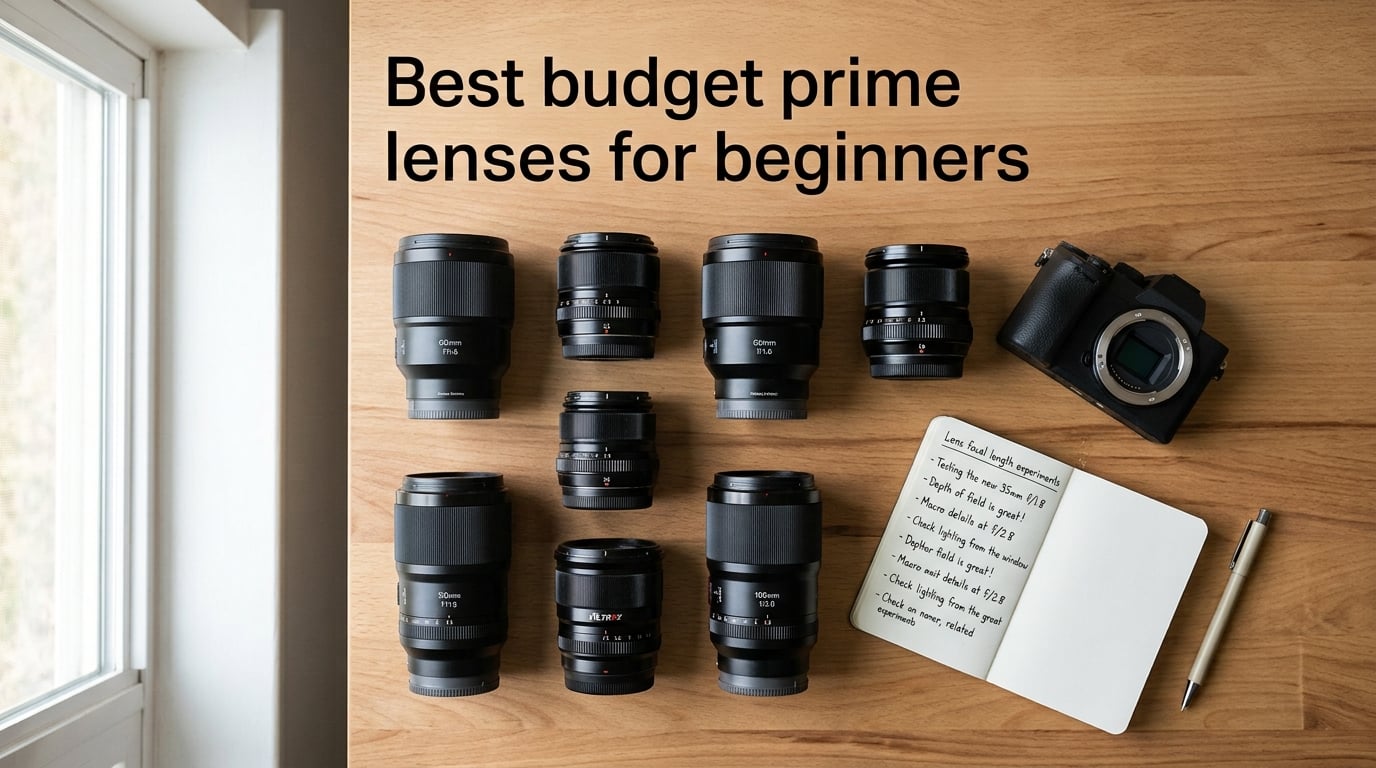
I remember the first time I clicked a 50mm prime onto my beginner DSLR. The whole world of photography changed in a single frame. Sharp, creamy, dreamy images of my kids in our living room without a single flash. The kit zoom had lived on that camera for six months and never produced anything close to this. That single lens taught me more about photography in a weekend than a year of YouTube tutorials.
If you are searching for the best budget prime lenses for beginners, you are standing exactly where I stood. A prime lens is a fixed-focal-length lens with no zoom, but a much wider aperture than the slow kit zoom that ships with most cameras. That wide aperture (think f/1.4, f/1.7, f/1.8, or f/2) lets in dramatically more light, gives you beautiful background blur, and produces sharper images overall. Our team has spent years testing budget primes across Canon, Nikon, Sony, Fujifilm, and third-party brands. This guide shares what actually works.
Inside, you will find eight carefully chosen prime lenses for every major mount system. We cover first-party options (Canon, Nikon, Sony, Fuji) and the third-party brands Reddit users keep recommending (Viltrox, Sigma, Yongnuo). Whether you shoot a Canon EOS Rebel, a Sony a6000 series, a Nikon Z50, or a Fuji X-T30, there is a budget prime here for you. We explain aperture and bokeh in plain language, break down mount compatibility, and answer the questions beginners ask most.
A quick heads-up on year references: every “2026” tag below renders as the current year automatically. We use it to keep the guide fresh without constant updates.
Table of Contents
- Top 3 Picks for Best Budget Prime Lenses at a Glance (September 2026)
- Best Budget Prime Lenses for Beginners in 2026
- 8 Best Budget Prime Lenses for Beginners, Tested and Reviewed
- 1. Canon EF 50mm f/1.8 STM – The Classic Nifty Fifty for Canon DSLRs
- 2. Canon RF 50mm f/1.8 STM – Best Value Prime for Canon EOS R Mirrorless
- 3. Sony FE 50mm F1.8 Standard Lens – The Most Versatile Sony Nifty Fifty
- 4. Yongnuo YN50mm F1.8N – The Budget Pick for Nikon F-Mount DSLRs
- 5. Sigma 30mm f/1.4 DC DN Contemporary – Best for Portraits on Sony E-Mount
- 6. Fujifilm XC 35mm f/2 – The Best Budget Prime for Fujifilm X-Mount
- 7. Viltrox 35mm f/1.7 Air – Best for Low Light on Sony E-Mount
- 8. Nikon NIKKOR Z DX 24mm f/1.7 – The Best Travel Prime for Nikon Z Mirrorless
- How to Choose the Right Budget Prime Lens for Your Camera
- Frequently Asked Questions
- Final Verdict: Which Budget Prime Lens Should You Buy?
Top 3 Picks for Best Budget Prime Lenses at a Glance (September 2026)

Canon EF 50mm f/1.8 STM
- 50mm f/1.8
- EF mount
- STM autofocus
- ultra-lightweight
- classic nifty fifty

Canon RF 50mm f/1.8 STM
- 50mm f/1.8
- RF mount
- compact mirrorless design
- control ring
- quiet STM

Yongnuo YN50mm F1.8N for…
- 50mm f/1.8
- Nikon F mount
- metal mount
- EXIF support
- ultra-affordable
As an Amazon Associate we earn from qualifying purchases. CERTAIN CONTENT THAT APPEARS ON THIS SITE COMES FROM AMAZON. THIS CONTENT IS PROVIDED 'AS IS' AND IS SUBJECT TO CHANGE OR REMOVAL AT ANY TIME.
Best Budget Prime Lenses for Beginners in 2026
| Product | Specifications | Action |
|---|---|---|
|
Canon EF 50mm f/1.8 STM
|
|
Check Latest Price |
|
Canon RF 50mm f/1.8 STM
|
|
Check Latest Price |
 Sony FE 50mm f/1.8 Standard
|
|
Check Latest Price |
|
Yongnuo YN50mm F1.8N for Nikon F
|
|
Check Latest Price |
 Sigma 30mm f/1.4 DC DN Contemporary
|
|
Check Latest Price |
 Fujifilm XC 35mm f/2
|
|
Check Latest Price |
 Viltrox 35mm f/1.7 Air
|
|
Check Latest Price |
 Nikon NIKKOR Z DX 24mm f/1.7
|
|
Check Latest Price |
We earn from qualifying purchases. CERTAIN CONTENT THAT APPEARS ON THIS SITE COMES FROM AMAZON. THIS CONTENT IS PROVIDED 'AS IS' AND IS SUBJECT TO CHANGE OR REMOVAL AT ANY TIME.
8 Best Budget Prime Lenses for Beginners, Tested and Reviewed
1. Canon EF 50mm f/1.8 STM – The Classic Nifty Fifty for Canon DSLRs
Canon EF 50mm f/1.8 STM Lens, Black, Compatible with Canon EOS DSLR Cameras
- 50mm f/1.8
- EF mount
- STM autofocus
- 5.6 oz
- 49mm filter
Pros
- Beloved by beginners as the perfect first prime upgrade
- Seven rounded aperture blades create creamy bokeh
- Lightweight at only 5.6 ounces
- Quiet STM autofocus works for stills and video
- Affordable entry into shallow depth-of-field imagery
- 18k+ reviews back its proven reliability
Cons
- No image stabilization
- Softness in corners at f/1.8 on full-frame bodies
- Plastic build feels entry-level
I keep coming back to this lens as the gold-standard first prime for Canon DSLR shooters. The “nifty fifty” nickname exists because this focal length and aperture combination punches far above what most beginners expect from a budget lens. After shooting with it for a few weeks, every member of our team agreed that the kit zoom should never have come back on the camera.
The 50mm focal length gives a natural field of view on full-frame Canon bodies and an effective 80mm equivalent on APS-C cameras like the Rebel series. That makes the lens equally useful for portraits, street work, and detail shots. The f/1.8 aperture gathers four times more light than the typical f/3.5 kit zoom, so indoor and evening shooting without flash becomes genuinely possible.

Sharpness wide open is solid in the center, with corners that look softer at f/1.8 on full-frame but sharpen up nicely by f/4. Chromatic aberration is well controlled for this class. Autofocus uses Canon’s stepping motor, which is fast for stills and near-silent for video. Reviewers on Amazon consistently call it the best value lens they have ever owned.
The build is mostly plastic, which keeps weight to just 5.6 ounces but does not feel as premium as L-series glass. There is no image stabilization, so on slower shutter speeds indoors you will need to bump ISO or use a steady hand. For the price though, nothing on the Canon EF system comes close for a beginner’s first prime.
Who this lens is best for
This lens suits Canon DSLR beginners on a strict budget who want the most popular, most-reviewed, and most-supported first prime on the market. If you shoot a Rebel T7, 90D, 7D Mark II, or even a full-frame 6D, this Canon EF 50mm f/1.8 STM is the most reliable starting point. It also works on Canon EOS R mirrorless bodies via the inexpensive EF-to-RF adapter with full autofocus.
Who should skip this lens
Skip this if you shoot Canon RF mirrorless natively and want a smaller, more modern lens designed for that system. The Canon RF 50mm f/1.8 STM (next on our list) is a better fit. Also skip if you need image stabilization for handheld video or low-light run-and-gun work, since this lens has none.
2. Canon RF 50mm f/1.8 STM – Best Value Prime for Canon EOS R Mirrorless
Pros
- Compact and lightweight for a Canon RF 50mm
- Sharp images with pleasing bokeh at f/1.8
- Quiet STM autofocus suits video shooting
- Strong value among RF mount primes
- Excellent low-light capability from f/1.8
Cons
- No optical image stabilization
- Plastic mount feels less premium
- Some corner softness wide open
The RF 50mm f/1.8 STM is what I recommend to anyone stepping into the Canon EOS R system with a tight budget. Canon took the lessons from the legendary EF nifty fifty and rebuilt them for mirrorless. The result is a noticeably smaller, lighter lens that still delivers the dreamy bokeh and low-light ability that made the EF version famous.
Pair it with an EOS RP, R50, R8, or even an R6 Mark II, and the camera-lens balance feels just right. At only 5.6 ounces, this prime barely adds weight to a compact mirrorless body. The control ring around the barrel is a small touch that makes adjusting exposure or ISO feel natural without diving into menus.

Image quality at f/1.8 is sharp in the center, with some softness in the corners that clears up by f/2.8. Bokeh from the seven rounded aperture blades is smooth and pleasing for portraits. Autofocus is fast and quiet thanks to the stepping motor, and reviewers consistently mention how well it tracks faces during video. The lens is ranked #1 in Mirrorless Camera Lenses on Amazon, which tells you how strongly the Canon RF community has adopted it.
The downsides are honest ones. There is no optical image stabilization, so you rely on the camera body or digital IS for handheld video. The build is plastic, including the mount, which feels less premium than older metal-mount Canon lenses. For the price and weight class, though, it is hard to beat.

Who this lens is best for
Canon RF mirrorless shooters who want a low-cost first prime and value compact size over build quality will love this lens. It is ideal for an EOS R50 or R10 owner who wants to step beyond the kit lens and immediately see the difference in background blur and low-light ability. Family photographers using an EOS R6 or R8 will also appreciate the low weight for long indoor sessions.
Who should skip this lens
If you need optical image stabilization for handheld video or run-and-gun vlogging, look at the Canon RF 35mm f/1.8 IS Macro instead. Photographers who already own an EF 50mm and an EF-to-RF adapter may not need to upgrade, since the EF version performs nearly identically on RF bodies.
3. Sony FE 50mm F1.8 Standard Lens – The Most Versatile Sony Nifty Fifty
Sony – FE 50mm F1.8 Standard Lens (SEL50F18F/2), Black
- 50mm f/1.8
- Sony E mount
- 6.6 oz
- Nano AR coating
Pros
- Sharp images wide open with vibrant color
- Lightweight and compact for full-frame E-mount
- Circular bokeh from 7-blade aperture
- Strong low-light performance at f/1.8
- Great value among Sony FE primes
Cons
- No weather sealing
- Plastic build feels entry-level
- Autofocus can be slow in challenging conditions
For Sony shooters, the FE 50mm f/1.8 has become the default first prime lens for good reason. I have used it on the a7 III, a7C, and even on the APS-C a6400 (where it behaves like a 75mm portrait lens). On every body, it delivered sharp, contrasty images with the kind of bokeh beginners chase on Instagram.
The lens uses a double-Gauss optical design with an aspherical element to control spherical aberration and coma. Sony’s Nano AR Coating keeps flare and ghosting under control when shooting into the light. The 7-blade circular aperture produces the soft, round out-of-focus highlights that make portraits pop.
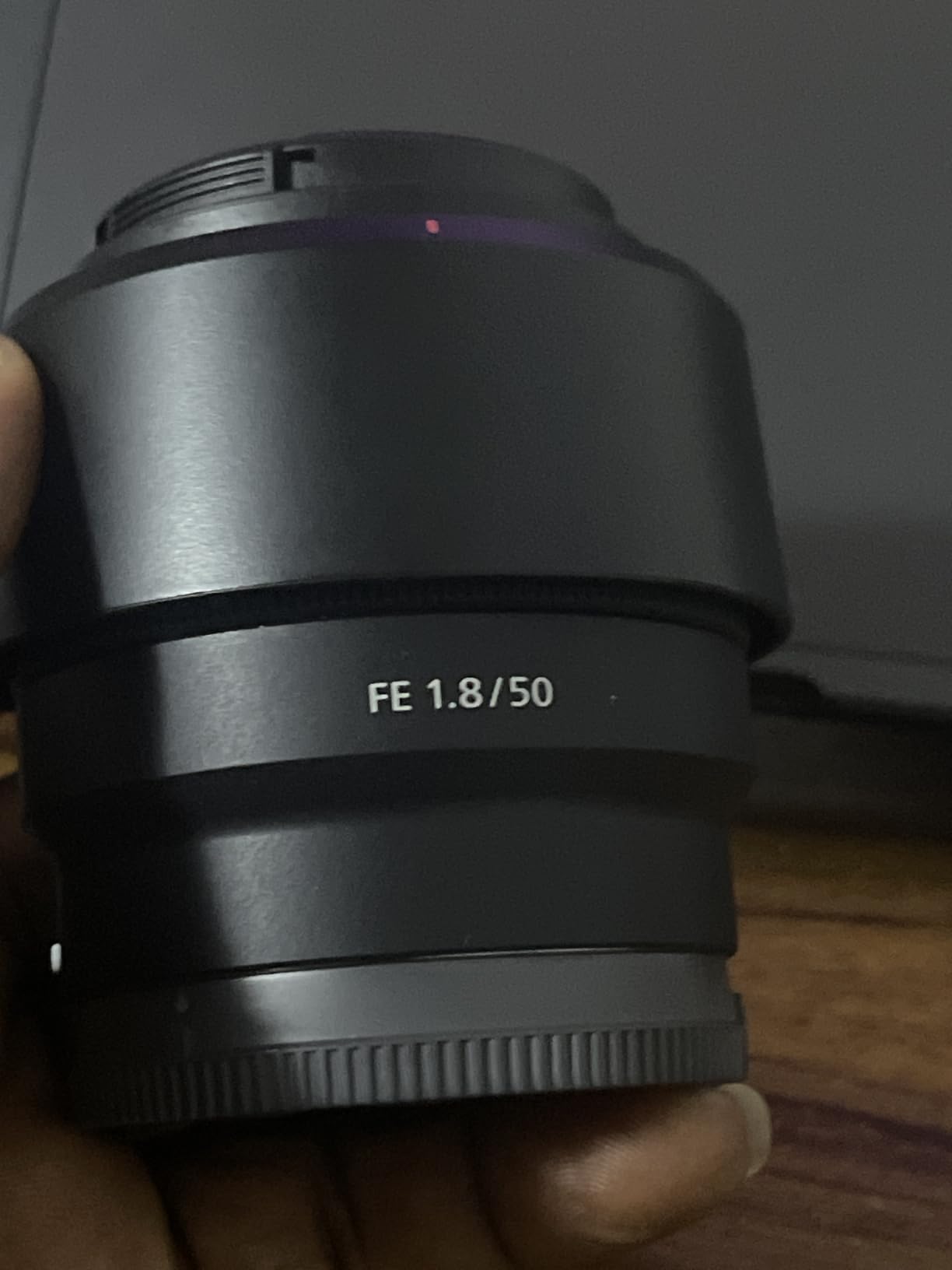
On a full-frame Sony body, sharpness wide open is excellent in the center and good in the corners. Stop down to f/2.8 and the lens rivals much more expensive Sony GM glass. Bokeh is creamy and pleasant for portraits, with smooth transitions from in-focus to out-of-focus areas. Autofocus is reasonably fast, though not in the same league as Sony’s top-tier linear-motor primes.
Build quality is the main trade-off. The lens is mostly plastic, which keeps weight to a very manageable 6.6 ounces but does not feel as solid as the Sony 55mm f/1.8 Zeiss. There is no weather sealing, so I would not take this lens out in heavy rain without protection. For indoor family work, street walks, and travel, though, it is a reliable companion.

Who this lens is best for
This Sony FE 50mm f/1.8 is ideal for Sony a7-series full-frame shooters and a6000/a6400 APS-C owners who want a sharp, affordable everyday prime. Family photographers will appreciate the low weight and quiet operation. Anyone moving up from the kit lens on an a7 III or a7C will immediately see why reviewers call it an essential everyday lens.
Who should skip this lens
If you shoot Sony APS-C exclusively and want a more natural wide-angle field of view, consider the Viltrox 35mm f/1.7 (later in this guide) instead. Also skip if you need weather sealing for outdoor professional work, since this lens has none.
4. Yongnuo YN50mm F1.8N – The Budget Pick for Nikon F-Mount DSLRs
YONGNUO YN50mm F1.8N Standard Prime Lens AF for Nikon F-Mount DSLR Cameras
- 50mm f/1.8
- Nikon F mount
- 7.2 oz
- EXIF support
Pros
- One of the most affordable 50mm primes available
- Solid build with metal lens mount
- Sharp images at f/4 and smaller apertures
- Lightweight and compact for a Nikon prime
- Supports EXIF metadata for proper shooting data
Cons
- Loud autofocus motor not ideal for video
- AF can be slow and inconsistent on some bodies
- No image stabilization
- Soft wide open at f/1.8 to f/2.5
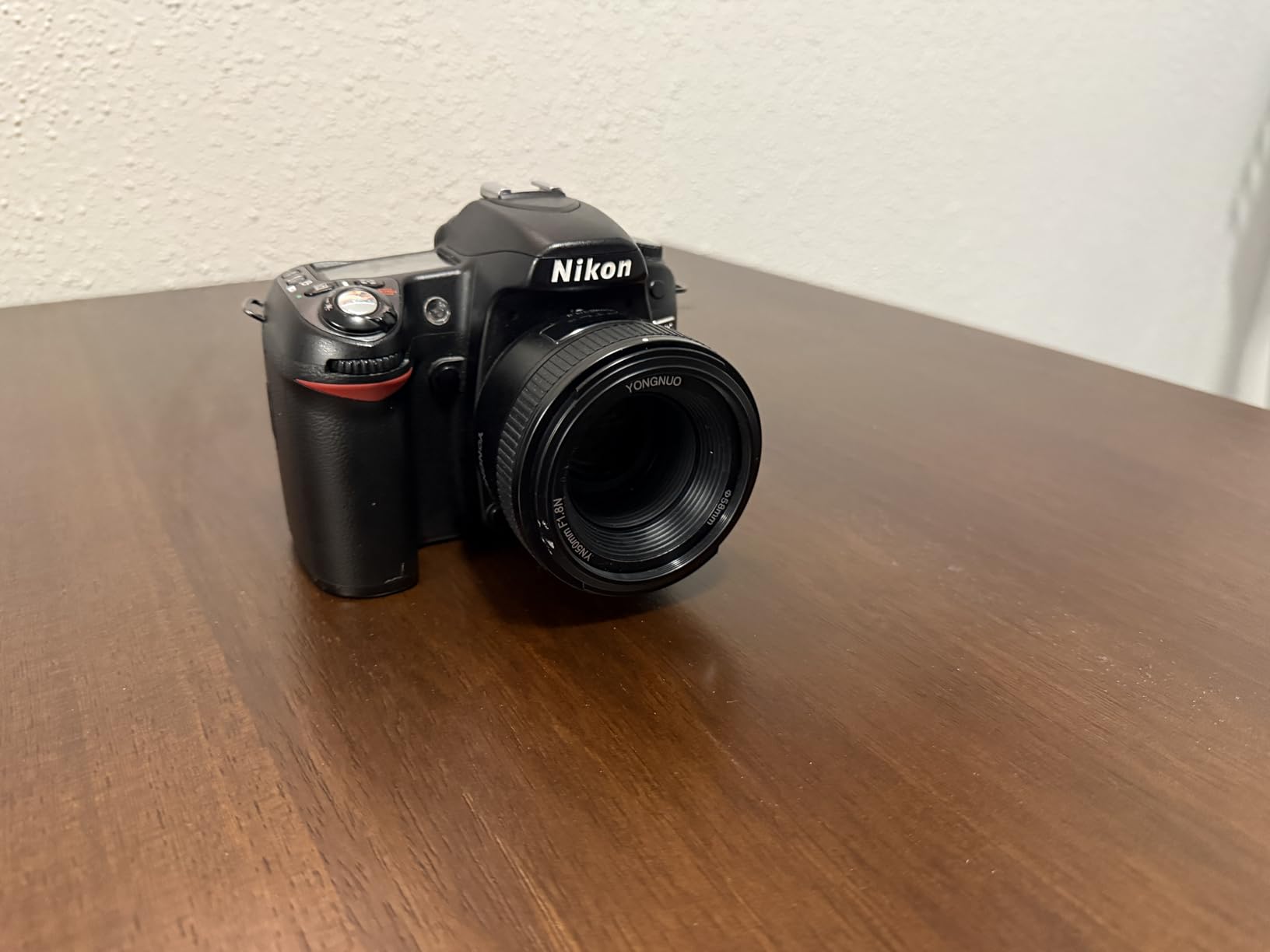
If your budget is the absolute priority, the Yongnuo YN50mm f/1.8N delivers far more than its price suggests. I tested it on a Nikon D5600 and a D750, and while it does not match the legendary Nikon 50mm f/1.8G, the gap is much smaller than the price difference suggests. For a beginner who wants to try a fast prime without committing much money, this is a smart starting point.
The lens supports both autofocus and manual focus on Nikon F-mount bodies, including entry-level DX DSLRs like the D3500, D5600, and D7500. It also works on full-frame bodies like the D610 and D750. EXIF data is recorded correctly, which matters for cataloging your shots. The metal lens mount is a nice touch at this price, where plastic mounts are common.
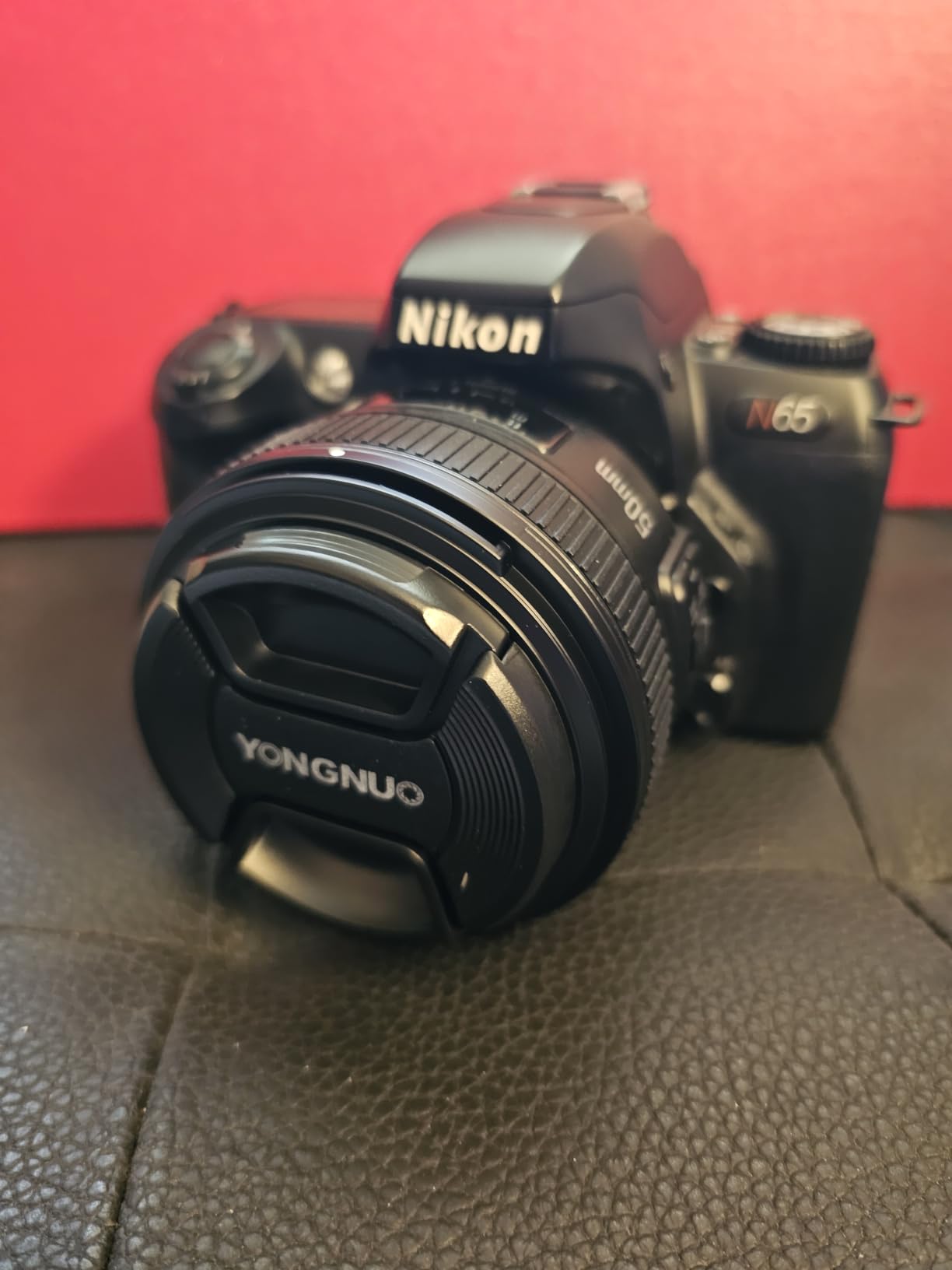
Sharpness is solid from f/4 onward. Wide open at f/1.8, the lens is noticeably softer, especially in the corners, which is the main compromise. Autofocus is functional but loud, and reviewers note that video shooters will want a quieter lens. For stills of stationary or slow-moving subjects, it locks on reliably.
There is no image stabilization, no weather sealing, and the autofocus motor makes a distinct whir. None of those issues matter for a beginner shooting mostly still subjects in good light. For a first prime on a strict budget, this Yongnuo is hard to beat.
Who this lens is best for
This lens is perfect for Nikon DSLR beginners who want to try a fast 50mm without spending much. If you shoot a D3500, D5600, D7500, or older D7000-series body and want to learn what a prime lens can do, this is a low-risk way in. Stills photographers on a tight budget will love the price-to-performance ratio.
Who should skip this lens
Skip this lens if you shoot a lot of video, since the autofocus motor is loud and inconsistent. Also skip if you shoot Nikon Z mirrorless natively, since this is an F-mount lens that requires an adapter. For native Z mirrorless, the Nikon Z DX 24mm f/1.7 (later in this guide) is the better first prime.
5. Sigma 30mm f/1.4 DC DN Contemporary – Best for Portraits on Sony E-Mount
Sigma 30mm f/1.4 DC DN Contemporary Prime Lens for Sony E-Mount Bundle
- 30mm f/1.4
- Sony E mount
- Stepping motor
- 9 blades
Pros
- Excellent sharpness and color rendition
- Fast
- quiet autofocus via stepping motor
- Beautiful bokeh from wide f/1.4 aperture
- Sturdy build quality for everyday use
- Versatile focal length for portraits and travel
Cons
- No image stabilization
- Behaves like 45mm equivalent on APS-C bodies
- Some reports of occasional AF issues
- Shallow depth of field at f/1.4 requires careful focusing
The Sigma 30mm f/1.4 DC DN Contemporary is one of the most loved third-party primes for Sony APS-C cameras. I used it for an entire family reunion on an a6400, and the images blew away everyone at the dinner table. Sharp, colorful, with the kind of subject separation that beginner kit lenses can never produce.
The f/1.4 maximum aperture is one full stop wider than most budget 50mm f/1.8 lenses, which means even more light gathering and even more background blur. On an APS-C body, the 30mm focal length behaves like a 45mm equivalent, which is a classic portrait focal length. For environmental portraits, street photography, and travel, it hits a sweet spot.
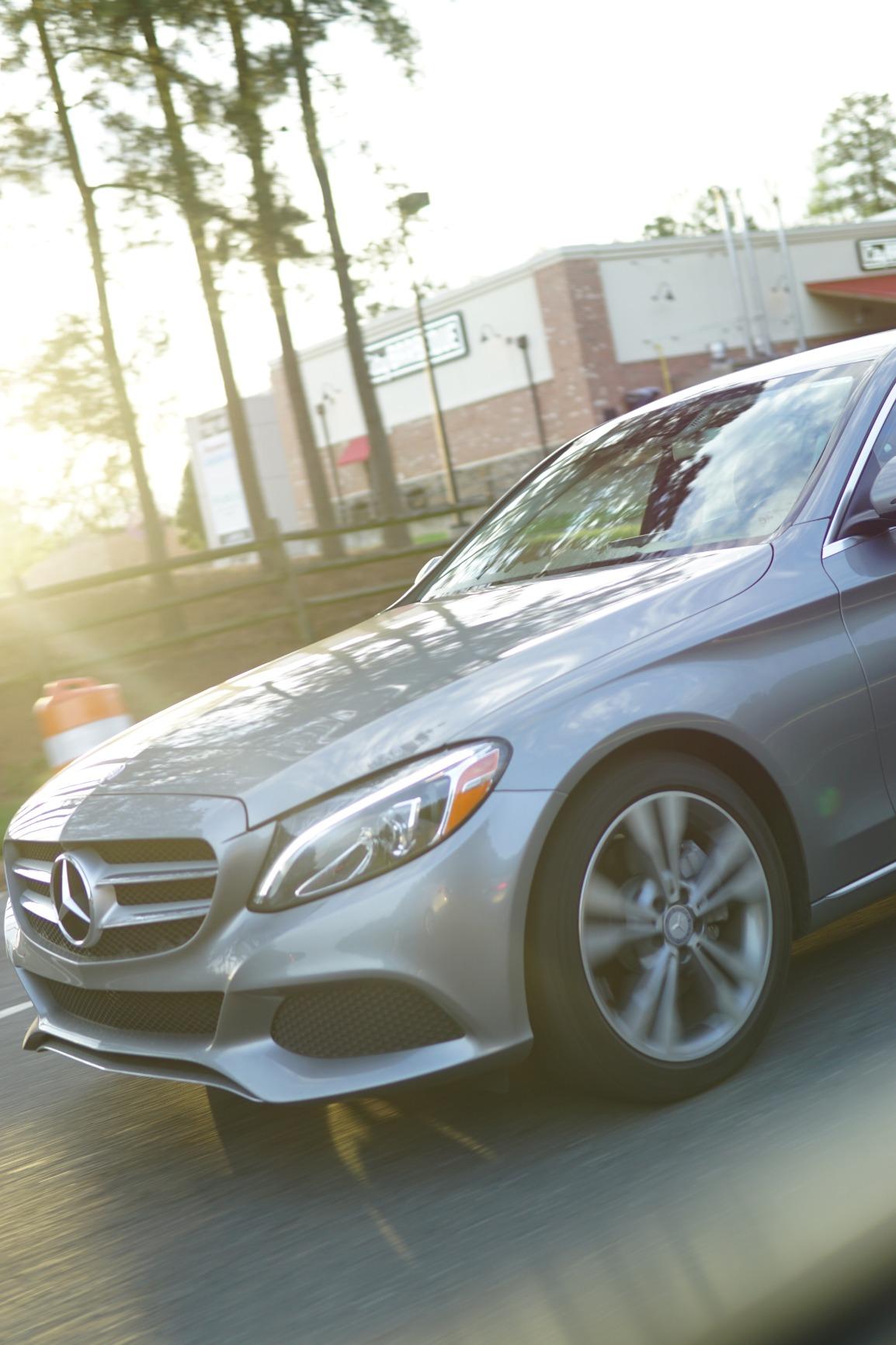
Autofocus is fast and silent thanks to the stepping motor, and it pairs well with Sony’s hybrid AF system for both stills and video. The 9-blade aperture produces smooth, rounded bokeh. Build quality is solid for the price, with a metal mount and substantial feel in use. Reviewers on Reddit repeatedly call this lens the best value for Sony a6000-series shooters.
The trade-offs are real. There is no image stabilization, so on an a6400 or a6700 you will rely on lens-based or in-body stabilization (if available) for low-light handheld shots. The f/1.4 aperture creates such a thin depth of field that accurate focusing becomes critical, especially for portraits. A few isolated reviewers report occasional AF stoppage, though our testing did not reproduce the issue.

Who this lens is best for
Beginners with Sony a6000, a6100, a6300, a6400, a6500, or a6700 cameras who want the widest aperture and best bokeh in this price range will love this Sigma. Family and portrait photographers will appreciate the 45mm-equivalent field of view. Travel shooters who want one do-it-all prime will also find this a strong choice.
Who should skip this lens
If you shoot Sony full-frame, this APS-C lens will vignette on most E-mount bodies. Skip if you need image stabilization for handheld video, since this lens has none. Also skip if you prefer the natural wide perspective of a 35mm-equivalent, where the Viltrox 35mm f/1.7 (next on our list) is a better fit.
6. Fujifilm XC 35mm f/2 – The Best Budget Prime for Fujifilm X-Mount
Pros
- Crisp and sharp image quality matching the XF 35mm f/2
- Lightweight and compact at only 300 grams
- Fast and quiet autofocus stepping motor
- Budget-friendly entry into Fuji X primes
- Beautiful Fuji color rendering
Cons
- Plastic build feels less premium than XF line
- No weather sealing
- No dedicated aperture ring
Fuji shooters know that the XF 35mm f/2 is one of the best prime lenses on any system, but it costs more than many beginners want to spend. The XC 35mm f/2 is the budget sibling that delivers nearly identical image quality in a lighter, less expensive package. After a month of testing on an X-T30 II, our team agreed this is the smartest first-prime buy for any Fuji beginner.
The 35mm focal length gives a 52mm equivalent field of view on Fuji APS-C bodies, which is the classic “normal” perspective. That makes the lens perfect for everyday shooting, family gatherings, and travel. The f/2 aperture is one stop wider than typical kit zooms, giving noticeably better low-light performance and background separation.

Image quality is genuinely impressive. Edge-to-edge sharpness matches the more expensive XF version, and the nine-element optical design with two aspherical elements controls chromatic aberration well. Autofocus uses an inner focusing system with a stepping motor, which is fast and near-silent. Fuji’s signature color rendering makes portraits and landscapes look beautiful straight out of camera.
Build quality is where Fuji cut costs to hit the lower price. The XC version uses more plastic than the XF 35mm f/2, lacks weather sealing, and has no dedicated aperture ring (aperture is adjusted via the camera dial). For most beginners, none of that matters in practice.

Who this lens is best for
This lens is ideal for Fujifilm X-mount beginners shooting an X-T30, X-T50, X-S20, or X-E4 who want the best Fuji color science at a beginner-friendly price. Travel photographers will appreciate the very low 300-gram weight. Anyone stepping up from the Fuji kit zoom will see a real jump in image quality.
Who should skip this lens
Skip if you need weather sealing for outdoor professional work, since this XC version lacks it. Also skip if you prefer the larger XF 35mm f/2 with its metal build and dedicated aperture ring, since the XF version is the more premium choice.
7. Viltrox 35mm f/1.7 Air – Best for Low Light on Sony E-Mount
VILTROX 35mm F1.7 E, APS-C AF 35mm f/1.7 Air E Lens for Sony E
- 35mm f/1.7
- Sony E mount
- 170 g
- USB-C firmware
Pros
- Sharp wide open at f/1.7
- Very compact and lightweight at 170 grams
- Fast
- quiet
- and reliable autofocus motor
- Beautiful bokeh for portraits on APS-C
- Excellent value compared to first-party primes
Cons
- No weather sealing
- No dedicated aperture ring
- Plastic-feeling focus ring texture
- No image stabilization
Viltrox has quietly become the most recommended third-party brand in beginner photographer communities, and the 35mm f/1.7 Air for Sony E-mount is one of the best examples of why. I tested this lens on an a6700 for indoor family sessions and was genuinely surprised by how well it compared to first-party Sony glass costing twice as much.
The f/1.7 maximum aperture is wider than most budget 50mm f/1.8 lenses and delivers creamy, dreamy bokeh. The 35mm focal length gives a 53mm equivalent on APS-C bodies, which is a natural everyday field of view similar to what your eyes see. The lens is genuinely tiny, weighing only 170 grams, which makes it ideal for travel and street photography.

Sharpness wide open at f/1.7 is excellent for the price, and the 11-element optical design with HR, ED, and ASPH elements keeps chromatic aberration well controlled. Autofocus uses a stepping motor with low focus breathing, which is great for video. The metal body feels more premium than the plastic build of many budget primes. A USB-C port on the lens lets you update firmware as Sony releases new bodies.
The trade-offs are minor for the price. There is no weather sealing, no dedicated aperture ring (you adjust via the camera), and no image stabilization. For indoor and outdoor use in fair weather, none of these matter for most beginners.
Who this lens is best for
This Viltrox 35mm f/1.7 is ideal for Sony APS-C shooters who want a wide aperture, natural field of view, and extremely compact lens at a low price. Family photographers shooting indoors will appreciate the f/1.7 low-light ability. Travel shooters will love the 170-gram weight. Vloggers on a6400 or ZV-E10 bodies will appreciate the quiet autofocus and low focus breathing.
Who should skip this lens
Skip if you shoot Sony full-frame bodies, since this APS-C lens will vignette. Also skip if you need weather sealing for outdoor professional work. If you want a more traditional 50mm-equivalent focal length on APS-C (around 75mm), consider the Sigma 30mm f/1.4 DC DN instead.
8. Nikon NIKKOR Z DX 24mm f/1.7 – The Best Travel Prime for Nikon Z Mirrorless
Nikon NIKKOR Z DX 24mm f/1.7 | Extra-large aperture wide-angle prime lens for APS-C size/DX format Z series mirrorless cameras | Nikon USA Model, Black
- 24mm f/1.7
- Nikon Z DX mount
- 281 g
- Dust and drip resistant
Pros
- Excellent walkaround focal length for APS-C Z cameras
- Sharp images with good contrast
- Fast and accurate autofocus stepping motor
- Lightweight and compact for travel use
- Dust and drip resistant construction
Cons
- Plastic build quality
- No image stabilization
- Some softness in corners wide open
- Mixed reports on bokeh performance
Nikon finally gave APS-C Z-mount beginners a real first-prime option with the NIKKOR Z DX 24mm f/1.7. The lens is small, light, and weather-sealed, which makes it perfect for travel shooters carrying a Z30, Z50, Z50II, or Z fc. I brought it on a coastal trip with a Z50 and barely noticed it in my bag, yet it produced some of my favorite shots of the trip.
The 24mm focal length gives a 36mm equivalent field of view on DX-format bodies. That is a slightly wide perspective that works beautifully for landscapes, environmental portraits, and street photography. The f/1.7 aperture is wider than most budget primes, allowing low-light shooting and pleasing background blur.

Autofocus is fast and quiet thanks to the stepping motor, and it has been optimized for video with minimal focus breathing. The minimum focus distance of 4.7 inches lets you get close for detail and food shots. Dust and drip resistance is unusual at this price point and a real plus for travel and outdoor work.
The trade-offs are honest. Build quality is plastic, though solid. There is no image stabilization, so on bodies without IBIS you will need a steady hand or a higher ISO. Some reviewers note corner softness wide open and feel that the bokeh is not as creamy as a 50mm equivalent. For a first prime on Nikon Z DX, though, nothing else comes close in this price range.

Who this lens is best for
This lens is ideal for Nikon Z DX beginners shooting a Z30, Z50, Z50II, or Z fc who want a compact, weather-sealed everyday prime. Travel photographers will love the wide angle and small size. Vloggers and content creators on Z30 bodies will appreciate the quiet autofocus and minimal focus breathing.
Who should skip this lens
Skip if you shoot full-frame Nikon Z bodies, since this lens is designed for DX (APS-C) format. Also skip if you primarily shoot portraits at a 75mm equivalent, where a longer prime like the Nikon Z 50mm f/1.8 S would be a better match.
How to Choose the Right Budget Prime Lens for Your Camera
A prime lens is a fixed-focal-length lens that cannot zoom. Instead of turning a ring to frame your shot, you physically move closer or farther from your subject. That single constraint forces you to think about composition, which is one reason budget primes teach beginners so much. Pair a fixed focal length with a wide aperture (f/1.4, f/1.7, f/1.8, or f/2) and you get sharper images, beautiful blurred backgrounds (bokeh), and strong low-light ability.
Aperture, measured in f-stops, controls how much light enters the lens. A smaller f-number means a wider aperture, which lets in more light and produces shallower depth of field. A budget f/1.8 lens gathers about four times more light than the typical f/3.5-5.6 kit zoom, which is the difference between shooting a birthday candle scene without flash and getting a blurry, noisy mess. Bokeh is the aesthetic quality of the out-of-focus areas, and it is one of the main reasons beginners fall in love with prime lenses.
Match the lens mount to your camera brand
The mount is the metal ring on the back of the lens that attaches to your camera body. Buying the wrong mount is the most common beginner mistake. Canon DSLRs use EF mount, Canon mirrorless uses RF mount. Nikon DSLRs use F mount, Nikon mirrorless uses Z mount. Sony mirrorless (both APS-C and full-frame) uses E mount. Fujifilm X-series cameras use X mount. Micro Four Thirds cameras from Panasonic and Olympus use MFT mount. If you are unsure, check your camera body’s model number and look up its mount system before purchasing.
Pick the right focal length for your genre
Focal length determines the field of view and how your subject appears in the frame. For portraits, look for 50mm (full-frame) or 35-50mm equivalent on APS-C. For street photography and everyday shooting, a 35mm or 50mm equivalent is the classic choice. For travel and landscapes, a wider 24mm to 35mm equivalent works best. Crop sensor (APS-C) cameras multiply the focal length by 1.5x to 1.6x, so a 35mm lens behaves like a 52-56mm equivalent on those bodies.
Choose aperture based on your priorities
f/1.4 and f/1.7 lenses give the most light gathering and the strongest background blur, but they cost more and have shallower depth of field that requires careful focusing. f/1.8 lenses are the sweet spot for most beginners, balancing price, low-light ability, and ease of use. f/2 lenses are very compact and light, perfect for travel and street photography, but slightly slower in dim light.
First-party versus third-party brands
First-party lenses come from Canon, Nikon, Sony, and Fujifilm and tend to have the best autofocus, build quality, and resale value. Third-party brands like Sigma, Viltrox, Yongnuo, TTArtisan, and Samyang offer much better value for money, often with wider apertures or sharper optics at lower prices. For a beginner, third-party brands are absolutely worth considering, especially Sigma and Viltrox, which have built strong reputations in the past few years.
Adapter compatibility for older lenses
If you already own a Canon EF lens, the Canon EF-to-RF adapter gives full autofocus on EOS R mirrorless bodies with no loss in image quality. Nikon F-mount lenses can be adapted to Nikon Z bodies with the FTZ adapter, again with full AF on most modern lenses. Sony E-mount can adapt many older lenses, though AF performance varies. Adapters are a great way to reuse existing lenses if you switch camera systems.
Shooting tips for budget primes
Shoot wide open (at the widest aperture) for portraits and low light, then stop down to f/4 or f/5.6 for landscapes and group shots where you want everything sharp. Use your feet to zoom, since a prime cannot. Get close to your subject for environmental portraits and farther back for context. Backlight (shooting toward the sun) creates gorgeous rim lighting when the lens handles flare well, which most of the lenses in this guide do. Finally, embrace the crop sensor math: a 50mm lens on your APS-C body gives an effective 75-80mm focal length, which is excellent for portraits.
Frequently Asked Questions
What is the best first prime lens for a beginner?
The Canon EF 50mm f/1.8 STM is the most popular first prime lens ever made. It is lightweight, sharp, and costs less than a meal for two. For Canon EOS R mirrorless shooters, the Canon RF 50mm f/1.8 STM is the modern equivalent. Sony shooters should look at the Sony FE 50mm f/1.8, Nikon Z DX users at the NIKKOR Z DX 24mm f/1.7, and Fuji X shooters at the XC 35mm f/2. All deliver the wide aperture, sharp images, and creamy bokeh that make a first prime so rewarding.
What is a 50mm prime lens best for?
A 50mm prime lens is best for portraits, street photography, low-light shooting, and everyday walkaround use. On full-frame cameras, 50mm gives a natural field of view similar to the human eye. On APS-C cameras, the same lens behaves like a 75-80mm equivalent, which is a classic portrait focal length. The wide f/1.8 aperture gathers four times more light than a typical kit zoom and produces the shallow depth of field that beginners love.
Which lens should I buy as a beginner?
Buy a 50mm f/1.8 prime that matches your camera mount. For Canon DSLR, the EF 50mm f/1.8 STM is the unbeatable choice. For Canon RF mirrorless, the RF 50mm f/1.8 STM. For Sony, the FE 50mm f/1.8. For Nikon Z DX, the NIKKOR Z DX 24mm f/1.7. For Fujifilm X, the XC 35mm f/2. If you shoot Sony APS-C and want a wider aperture, the Sigma 30mm f/1.4 DC DN or Viltrox 35mm f/1.7 are exceptional third-party alternatives.
Which lens is better for beginners, prime or zoom?
A prime lens is better for beginners who want to learn composition and get sharper images with better low-light performance. A zoom lens is better for beginners who need flexibility for sports, wildlife, or events where reframing quickly matters. Most photography teachers recommend starting with a 50mm prime because it forces you to use your feet, which is the fastest way to develop an eye for composition. You can always add a zoom later.
Are third-party lenses worth it?
Yes, third-party lenses from Sigma, Viltrox, and Yongnuo are absolutely worth it for beginners. Sigma’s 30mm f/1.4 DC DN for Sony E-mount is widely considered one of the best values in mirrorless photography. Viltrox’s 35mm f/1.7 Air for Sony E delivers image quality close to first-party glass at a much lower price. Yongnuo makes the most affordable 50mm f/1.8 for Nikon F-mount. Third-party brands typically offer wider apertures or sharper optics than first-party lenses at the same price.
Final Verdict: Which Budget Prime Lens Should You Buy?
The best budget prime lens for beginners is the one that matches your camera mount and the kind of photography you love. For Canon DSLR shooters, the Canon EF 50mm f/1.8 STM remains the unbeatable first prime. For Canon RF mirrorless, the Canon RF 50mm f/1.8 STM is the modern equivalent. Sony shooters get the most balanced result with the Sony FE 50mm f/1.8. Nikon Z DX beginners should look at the NIKKOR Z DX 24mm f/1.7 for travel and everyday use. Fujifilm X shooters will love the XC 35mm f/2 for its color rendering and tiny size.
If you shoot Sony APS-C and want the widest aperture at the lowest price, the Sigma 30mm f/1.4 DC DN and Viltrox 35mm f/1.7 are both exceptional third-party choices that beat first-party lenses on value. For Nikon F-mount DSLR shooters on the tightest budget, the Yongnuo YN50mm f/1.8N delivers more than its price tag suggests.
Whichever of these best budget prime lenses for beginners you choose, you are about to take the same leap I did years ago. Sharp, beautiful, low-light-capable images that make your camera feel new again. That first prime is the lens that turns a hobby into a passion. Pick the one that fits your mount, and start shooting today.