
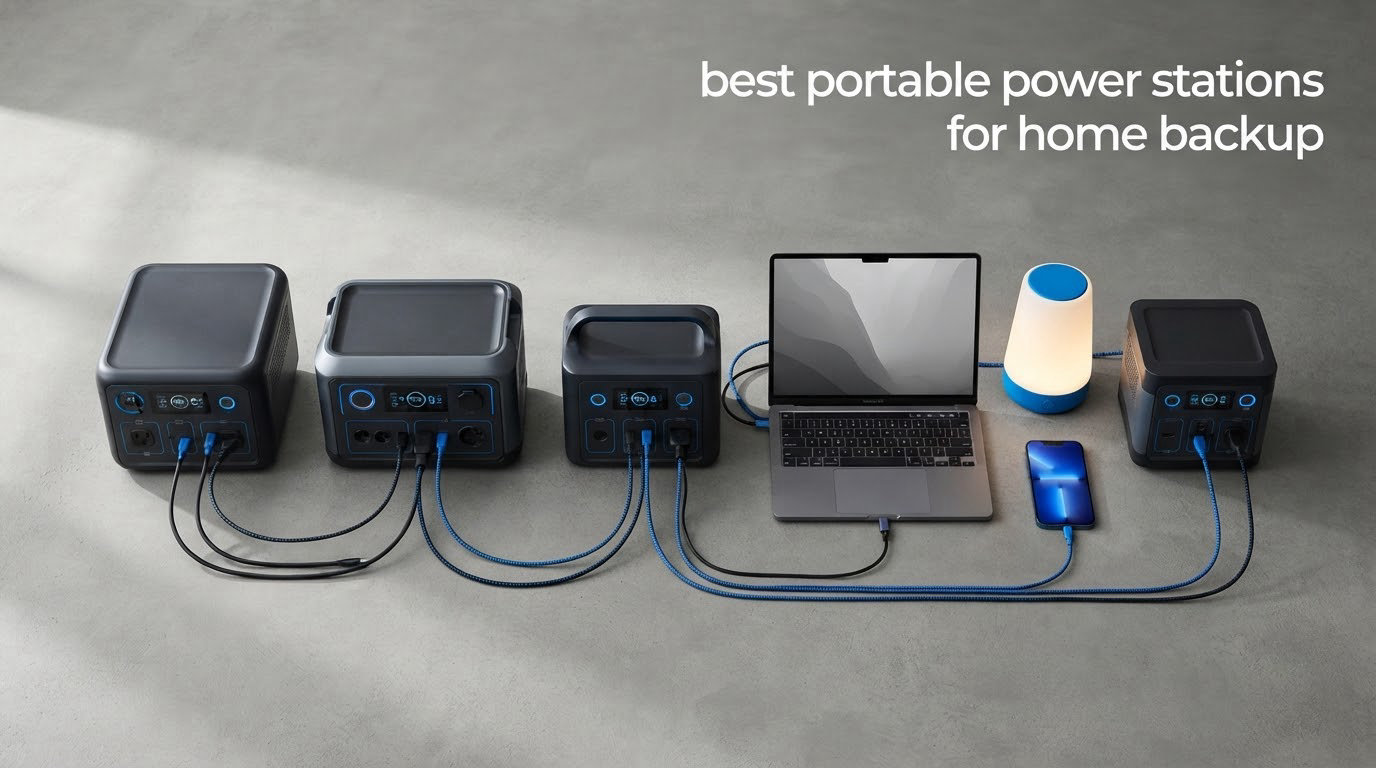
The two units I keep coming back to for a house backup are the Jackery Explorer 1000 v2 and the BLUETTI AC180. The Jackery wins on owner history and weight, the BLUETTI wins on watts per watt-hour, and both do something a gas generator cannot: sit in a hallway and run silently, indoors, with no fuel to store.
That is the whole appeal of the best portable power stations for home backup. A portable power station is a rechargeable lithium battery with a built-in inverter, so it delivers ordinary 120V household current from a wall outlet, a car, or solar panels. When the grid drops, UPS mode can hand power over in under 10 to 20 milliseconds, which most routers, laptops, network gear and medical devices never notice.
What it will not do is quietly run your house. A plug-in station powers the things you plug into it: the refrigerator, the internet, a lamp, a freezer, a sump pump on its own circuit. Anything beyond that needs either expansion batteries, a transfer switch, or a permanently installed system. I size each pick below against real appliance loads, flag where runtime math gets brutal, and tell you exactly which unit fits which kind of outage.
Table of Contents
- Top 3 Picks for Best Portable Power Stations for Home Backup (October 2026)
- Best Portable Power Stations for Home Backup in 2026
- 1. Jackery Explorer 1000 v2 – The Most Proven 1kWh Unit for Fridge-and-Wifi Backup
- 2. BLUETTI AC180 – More Usable Watts From a Similar Battery
- 3. Anker SOLIX C1000 Gen 2 – Sub-10ms UPS for Medical and Office Gear
- 4. EcoFlow DELTA 2 Max – The Unit That Grows From 2kWh to 6kWh
- 5. EcoFlow Delta 3 Classic – 1800W With a Sub-10ms Handoff and a Big Display
- 6. EcoFlow DELTA Pro – 3600Wh and 3600W for Long Storms
- 7. Anker SOLIX S2000 – Built Specifically for Long Refrigerator Runs
- 8. Anker SOLIX F3800 – 240V Output and Direct EV Charging
- 9. Jackery HomePower 3600 Plus – Plug-and-Play Transfer Switch Setup
- 10. PECRON F3000LFP – 13 Ports and a 1600W Solar Input
- How to Size a Portable Power Station for Home Backup in 2026
- Step 1: separate capacity from output
- Step 2: list the loads, then check the duty cycle
- Step 3: match surge to your motor loads
- Step 4: check UPS speed if you have sensitive equipment
- Step 5: decide on expansion before you buy
- What a plug-in station cannot do
- Battery chemistry, noise and the maintenance habit
- Frequently Asked Questions
- Which Portable Power Station Fits Your Outage
Top 3 Picks for Best Portable Power Stations for Home Backup (October 2026)

Jackery Explorer 1000 v2
- 1070Wh with 1500W output and 3000W surge
- 4000-cycle LFP battery
- 23.8 lb
- 7 outlets

BLUETTI AC180
- 1152Wh with 1800W output and 2700W peak
- 20 ms UPS mode
- 500W solar input
- 5-year warranty

Anker SOLIX C1000 Gen 2
- 1024Wh with 2000W output and 3000W peak
- Under 10 ms UPS switchover
- 49-minute full recharge
- 10 output ports
As an Amazon Associate we earn from qualifying purchases. CERTAIN CONTENT THAT APPEARS ON THIS SITE COMES FROM AMAZON. THIS CONTENT IS PROVIDED 'AS IS' AND IS SUBJECT TO CHANGE OR REMOVAL AT ANY TIME.
Best Portable Power Stations for Home Backup in 2026
Every unit below stores lithium iron phosphate cells and delivers pure sine wave AC. The differences that actually change your experience are usable capacity after inverter losses, continuous and surge output, how fast the battery refills, and whether you can grow the system later. The full comparison table sits above the individual reviews; the short version is that the 1kWh units cover a short outage of essentials and the 3kWh-plus units cover a weekend storm.
| Product | Specifications | Action |
|---|---|---|
|
Jackery Explorer 1000 v2
|
|
Check Latest Price |
|
BLUETTI AC180
|
|
Check Latest Price |
|
Anker SOLIX C1000 Gen 2
|
|
Check Latest Price |
 EcoFlow DELTA 2 Max
|
|
Check Latest Price |
 EcoFlow Delta 3 Classic
|
|
Check Latest Price |
 EcoFlow DELTA Pro 3600Wh
|
|
Check Latest Price |
 Anker SOLIX S2000
|
|
Check Latest Price |
 Anker SOLIX F3800 Transfer Kit
|
|
Check Latest Price |
 Jackery HomePower 3600 Plus
|
|
Check Latest Price |
 PECRON F3000LFP
|
|
Check Latest Price |
We earn from qualifying purchases. CERTAIN CONTENT THAT APPEARS ON THIS SITE COMES FROM AMAZON. THIS CONTENT IS PROVIDED 'AS IS' AND IS SUBJECT TO CHANGE OR REMOVAL AT ANY TIME.
1. Jackery Explorer 1000 v2 – The Most Proven 1kWh Unit for Fridge-and-Wifi Backup
Jackery Explorer 1000 v2 Portable Power Station,1070Wh,1500W
- 1070Wh capacity
- 1500W AC output with 3000W surge
- 23.8 lb with 7 outlets
- 4000-cycle LFP battery
Pros
- Most owner reviews in this group at 4.7 stars
- One-hour emergency charging from the app
- Quiet 30 dB overnight charging mode
- Pure sine wave AC on three outlets
- Light enough at 23.8 lb to move between rooms
Cons
- Solar input locked to Jackery-branded panels
- Solar panel sold separately
- About 70% capacity retained at end of life
This is the unit I recommend to someone whose real goal is to keep the fridge cold, the router alive, and a couple of lamps on through a six to twelve hour outage. With 1070Wh of storage, 1500W of continuous AC output and 3000W of surge, it has more headroom than most people assume a one-kilowatt-hour box can deliver.
The charging side is where it stands out. Jackery supports a one-hour emergency charge through the app, and the default setting is 1.7 hours to protect long-term battery health. That is a meaningful difference when the storm knocks power out the evening before you expect it: you can top the unit up in the time it takes to make coffee, if you accept a slightly faster wear cycle. A quiet charging mode rated at 30 dB means you can run it overnight in a bedroom without the fan becoming the loudest thing in the room.
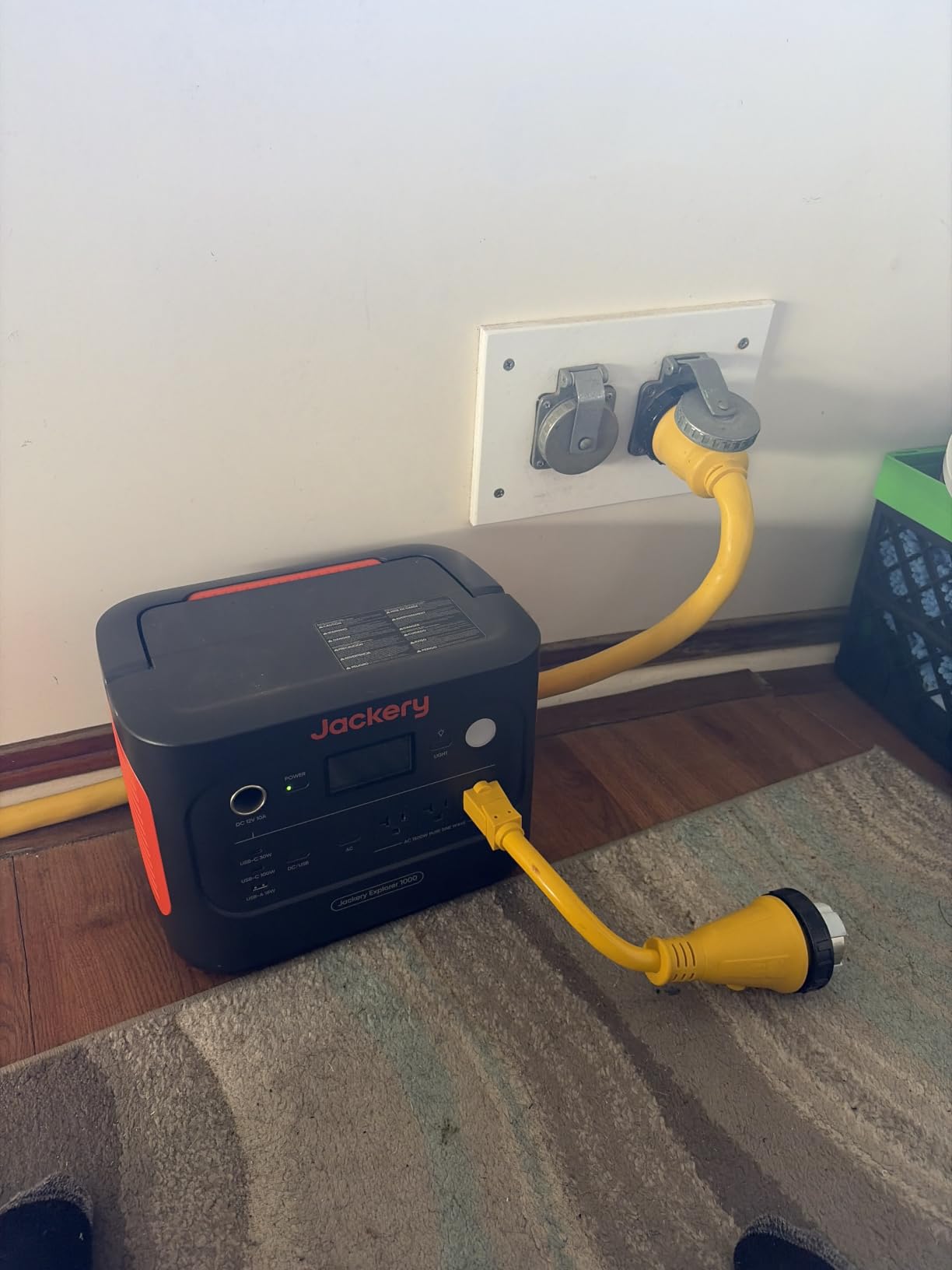
Owners use it exactly the way I would expect. The most common pattern in the reviews is a refrigerator plus a few essentials, with pure sine wave output and a 100W USB-C port handling phones and laptops at the same time. Seven outlets in total covers three AC sockets, USB-A, USB-C and a DC car port, so nothing needs a power strip.
The battery spec is the sleeper advantage. The LFP pack is rated for 4000 cycles and a claimed ten-year lifespan, which means a unit that sits in a closet for a decade of occasional emergencies is not quietly deteriorating the way a cheaper NMC pack would. Buyers who want one station to last through successive storms rather than replace it every few years should weight that number heavily.
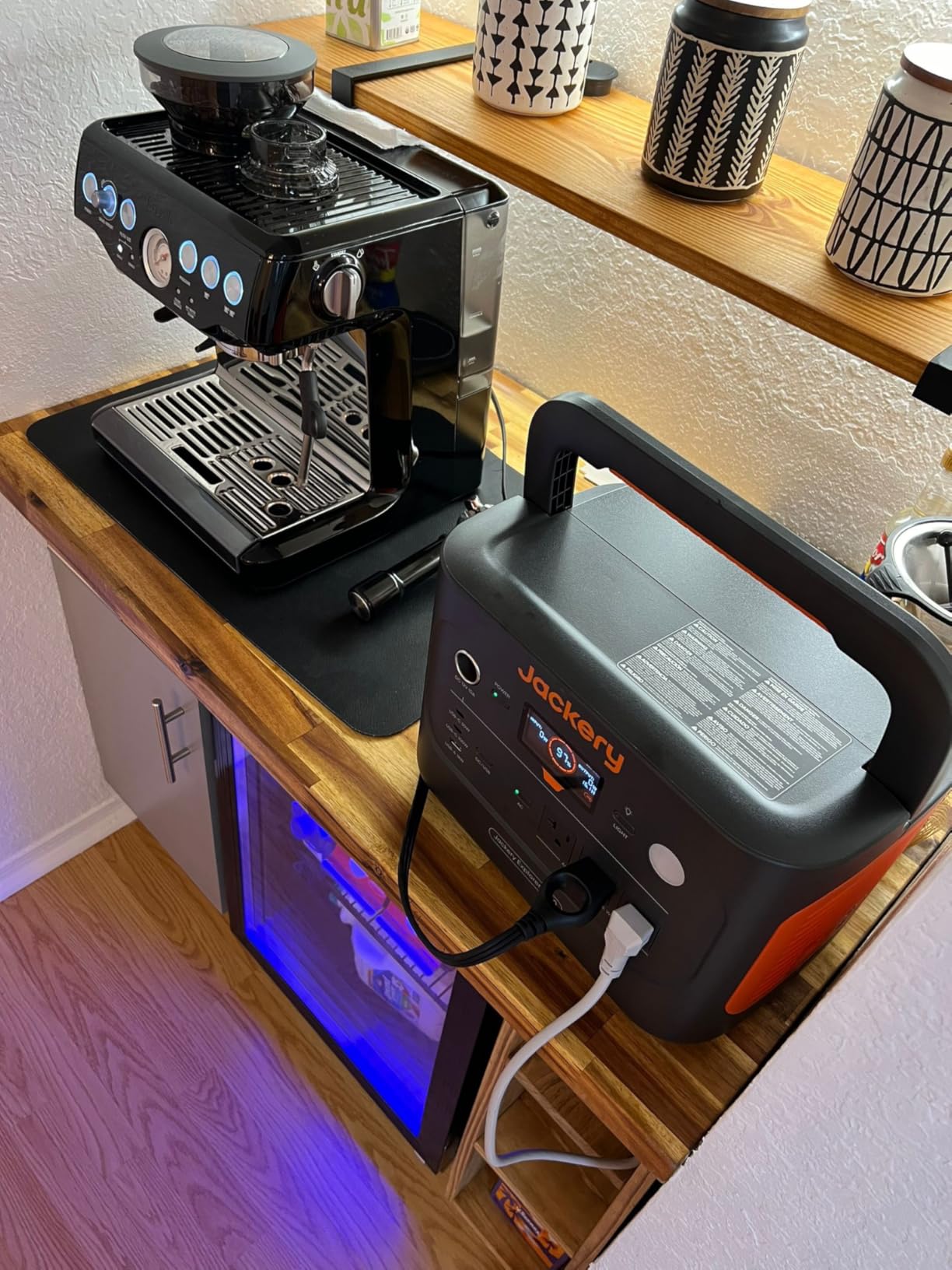
How much a 1070Wh station really buys you
Plan on roughly 750 to 850Wh of usable energy after inverter overhead and the reserve most units hold back. That is a refrigerator cycling on and off for a day, or a router, a lamp and a laptop for a full work week. It is not a space heater, and it is not a window air conditioner, for either of which the wattage alone will exhaust it in a couple of hours.
One more thing worth knowing: the AC inverter itself draws power while the station sits there, so a station powering nothing still ages. The review pattern here is clean on this point, with owners reporting no degradation complaints, but the practical advice is to top it up every few months rather than letting it sit empty.
Who should look past this one
If your outage plan involves a sump pump, a well pump, or anything with a large motor compressor, this unit can technically start those loads and will run them briefly, but you are spending your margin. The 3000W surge is real and it works, though, so a 1/3 HP sump pump is within its comfort zone.
The solar limitation is the reason I would not call this a whole-outage answer. It charges only from Jackery-branded panels, and no panel is included in the box. Buyers planning a serious panel setup should look at the BLUETTI or EcoFlow options further down, where the solar input is higher and third-party panels are not excluded.
2. BLUETTI AC180 – More Usable Watts From a Similar Battery
BLUETTI AC180 Portable Power Station 1152Wh 1800W LiFePO4 Solar Generator
- 1152Wh LiFePO4 capacity
- 1800W continuous with 2700W peak
- 500W solar input
- 20 ms UPS transfer
Pros
- 1800W continuous from only 1152Wh
- App-toggled boost to 2700W for heavy loads
- 20 ms UPS keeps internet gear alive
- 500W solar input refills in about 3 hours
- Five-year warranty with strong service
Cons
- About 37 lb so it lives in one spot
- Top wireless charging pad often fails
- Inverter overhead cuts real runtime below rated watt-hours
Where the Jackery trades capacity for portability, the AC180 trades weight for capability. Its 1152Wh pack feeds 1800W of continuous output, and the app will boost that to 2700W for loads that need a moment of headroom. In a kitchen with a refrigerator, a microwave and a coffee maker, having that much inverter for that little battery is the difference between comfortable and rationing.
Recharge is fast for the class: a full charge in about an hour at 1440W AC input, and roughly 2.8 to 3.3 hours from a 500W solar panel in good sun. That 500W solar ceiling is a real advantage over the first pick if you intend to top the station up during a multi-day outage rather than treat it as a sealed reserve.
Reviewers describe it as the dependable middle ground. It carries a fridge, a modem, laptops and lights through outages without drama, and the 20 ms UPS handoff is fast enough that internet gear rides through a flicker without rebooting. Owners also single out BLUETTI’s service, including successful exchanges and firmware fixes, which matters when a machine is a ten-year asset.
Now the honest part. At about 37 pounds this is not a trunk-portable box in any meaningful sense, so pick a permanent home for it before the outage rather than during one. The LCD is bright and readable from across a garage, which is the kind of small thing that only matters when you are panicking.
Why 1800W from 1152Wh is the number to notice
Output is measured in watts, not watt-hours, and the two are unrelated. The AC180 is designed to deliver more instantaneous power than its stored energy would suggest, which is exactly what a home needs: a compressor starting, a microwave spinning, a Wi-Fi router rebooting, all at once. If your load list is heavy on motors and heating elements, wattage matters more than capacity.
The flip side is that 1800W burns through 1152Wh fast. A space heater on high will take this station down in well under two hours. Reserve the AC180 for appliances that cycle or draw modestly, and you will get a genuinely useful night of power.
Where the compromise bites
Two complaints come up repeatedly. The top-mounted wireless charging pad frequently fails to charge phones, so treat it as decoration and use a cable. And the inverter plus the 90% usable-capacity cap mean real runtime lands somewhere between 1000 and 1050Wh rather than the full 1152Wh, which matters if you are doing precise runtime math.
Some settings, including charging rate, can only be changed in the app, so download it and register the unit before you need it. Only one USB-C port is fitted, which becomes annoying on a desk with a laptop and two phones.
3. Anker SOLIX C1000 Gen 2 – Sub-10ms UPS for Medical and Office Gear
Anker SOLIX C1000 Gen 2 Portable Power Station
- 1024Wh capacity
- 2000W output with 3000W peak
- Under 10 ms UPS switchover
- 49-minute full recharge
Pros
- Fastest refill in the 1kWh class at 49 minutes
- Under 10 ms UPS protects CPAP and network gear
- 10 output ports for several devices at once
- Compact and 11% lighter than comparable models
- Time-of-use mode shifts usage off peak rates
Cons
- Not expandable unlike the previous generation
- Some microwaves show 15-20% harmonic distortion
- No protective case or cable storage included
If your outage concern is equipment that reacts badly to a two-millisecond gap in power, this is the pick. The stated UPS switchover is under 10 milliseconds, and owners specifically report running CPAP machines, laptops and a network rack straight through multi-day outages on this unit.
It is also the fastest thing here to refill. A full recharge in 49 minutes at 1600W with HyperFlash enabled in the app means the station is back to full before you have finished a work meeting. The 600W solar input is the highest in the 1kWh class in this roundup and recharges the unit in about 1.8 hours in strong sun.
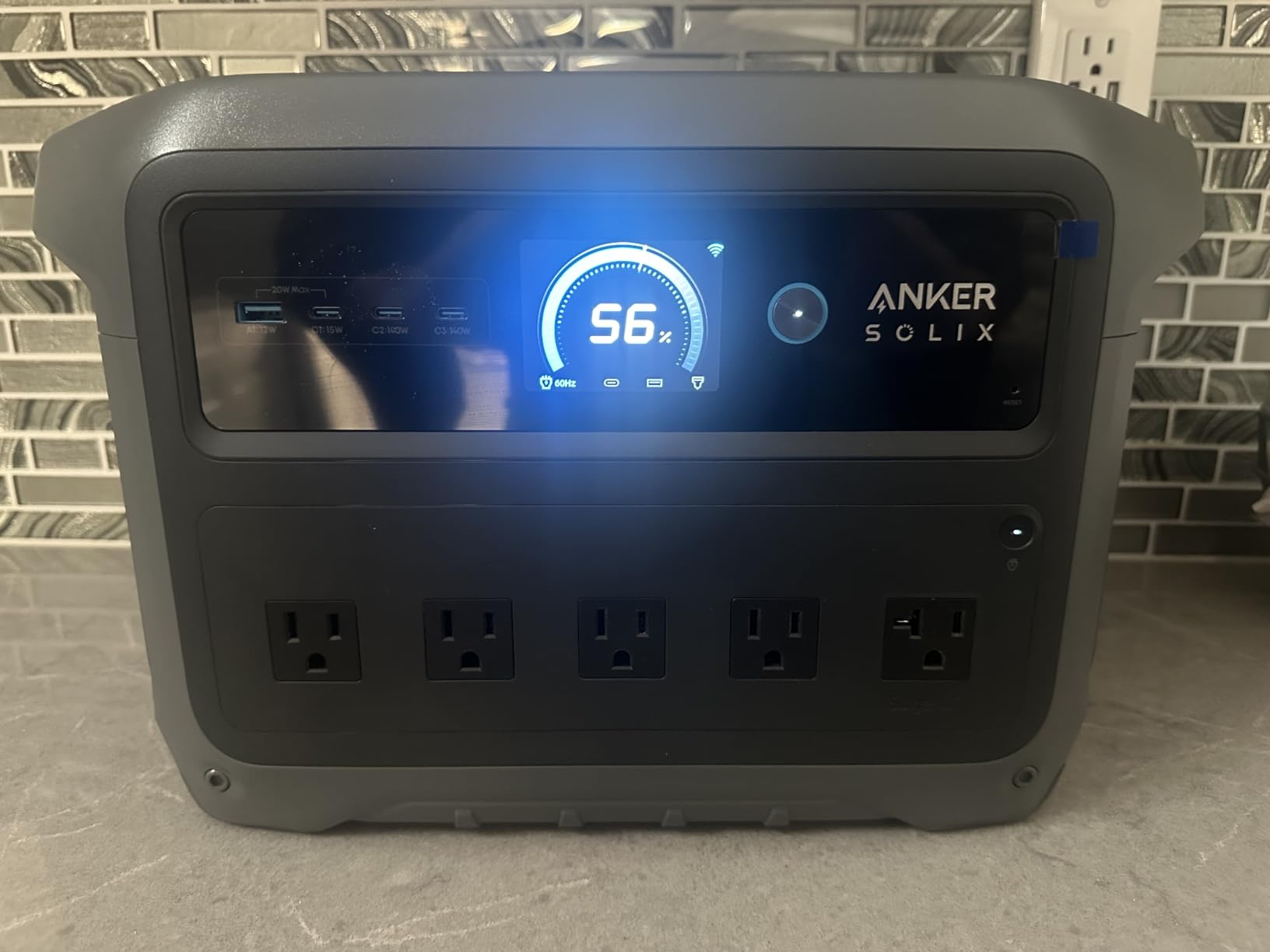
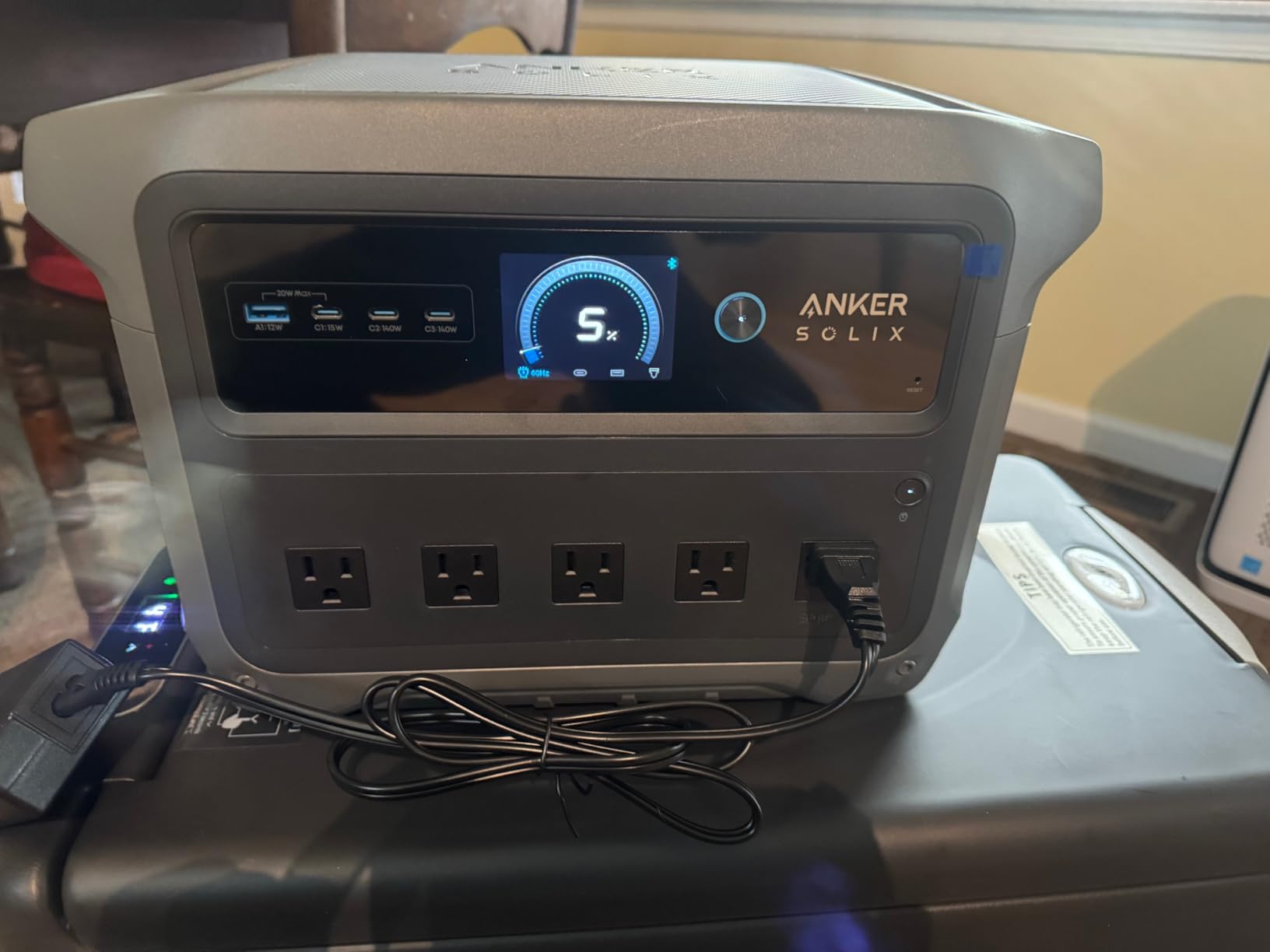
Port layout is generous: 10 output ports, which is more than any other 1kWh option here, so a router, a switch, a laptop and a phone can all be fed at once without a power strip. The LFP pack holds at least 80% capacity after 4000 cycles, and the five-year warranty matches BLUETTI.
One app feature deserves a mention because it quietly saves money in normal times. Time-of-use mode shifts charging and heavy draw away from peak electricity rates, so a station that sits on your wall all year can be a demand-charge management tool rather than just storm gear.
What under 10 ms switchover actually protects
Switchover time is the gap between grid power stopping and battery power arriving. A NAS, a desktop, a network switch or a CPAP machine can reboot or reset on a longer gap. Under 10 ms is inside the tolerance of essentially all of that gear, which is why the C1000 Gen 2 shows up in reviews as an unattended UPS rather than an emergency-only box.
The practical implication is placement. Put this one near the equipment it protects, not in the garage. A 10 ms handoff across a long extension cord is still a handoff across a long extension cord.
When to skip it
The loss of expandability is the real trade-off. The first generation C1000 accepted extra battery capacity and this one does not, so if you are planning to grow toward weekend-long outages, this is a dead end. That is a strange place for Anker to have gone given the rest of the lineup grew.
Second, some owners measured 15 to 20% harmonic distortion on microwave loads. That is enough to bother sensitive equipment running on the same circuit, so keep the microwave on its own line. No case or cable storage is included either, which is minor until you lose the cables.
4. EcoFlow DELTA 2 Max – The Unit That Grows From 2kWh to 6kWh
EF ECOFLOW Portable Power Station DELTA 2 Max 2048Wh, 2400W LiFePO4 Battery
- 2048Wh LFP capacity
- 2400W continuous with 3400W boost
- Expandable to 6kWh
- 15 outlets
Pros
- Expands to 6kWh with two smart extra batteries
- 2400W continuous handles most household appliances
- 80% charge in 43 minutes with solar and AC
- Quiet running from about 30 dB
- Built-in BMS tracks voltage and temperature
Cons
- 23 kg weight makes it a two-person lift
- Expansion batteries sold separately
- Only AC and car cables in the box
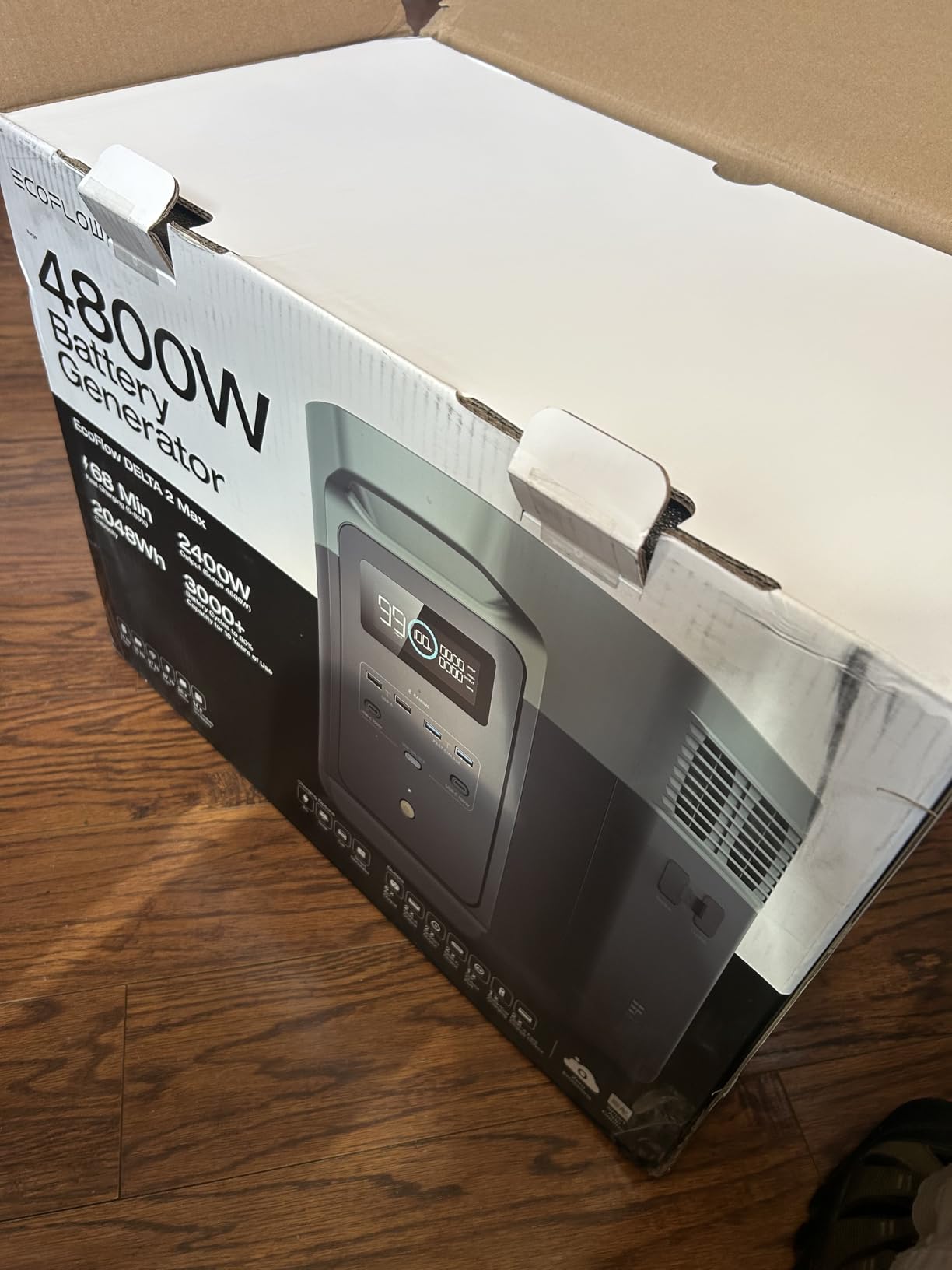
This is the buy for a household that is not sure yet. At 2048Wh it already covers a fridge, a freezer, internet and lights overnight, and the same unit accepts two extra smart batteries to reach 6kWh, which is weekend-storm territory. You can start at 2kWh and decide later whether the money is needed.
Output is generous for the class: 2400W continuous, 3400W with X-Boost, and 4800W of starting wattage for compressor loads. Fifteen outlets is more than any other pick here, which makes it the natural choice for a family that wants one box to run a network rack, several rooms of lighting and a couple of small appliances simultaneously.
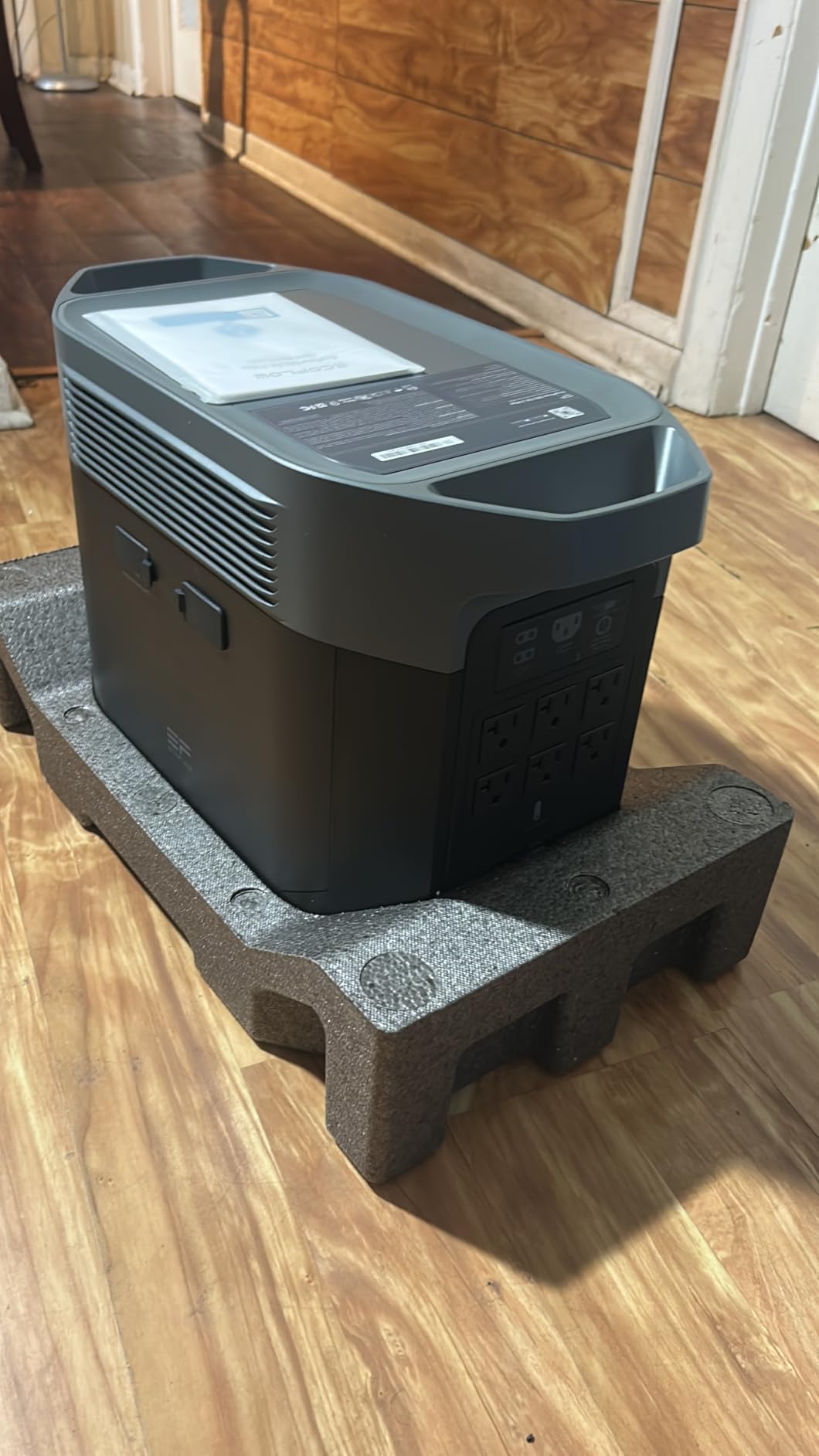
Recharge options are flexible too. It hits 80% in 43 minutes using combined solar and AC, or about 1.1 hours on AC alone. Reviewers consistently highlight the quiet operation starting near 30 dB, which is what allows it to live in a hallway or living area rather than being banished to a garage like a gas generator would be.
The 3000-cycle battery rating to 80% capacity, backed by a five-year service plan, is the weakest chemistry claim in this roundup. That is still thousands of cycles and many more than a typical household will use, but it is a step down from the 4000 and 10000-cycle figures on the Anker and Jackery units.
Why expandability is the decision that ages well
Outage needs are not static. A house gets a second fridge, someone brings home a CPAP machine, a child starts doing remote school during a storm week. A unit that cannot take extra batteries locks you into replacing the whole thing rather than adding to it, and that replacement is the expensive moment in a ten-year ownership cycle.
The DELTA 2 Max also handles the load types that kill smaller stations. A freezer compressor, a microwave, a washing machine spin cycle and a space heater at low setting will not trip it. That combination of headroom and growth is why it is our pick for anyone whose outage lasts longer than a night.
The weight problem, honestly
At 23 kg this is a two-person lift the first time. That single fact shapes where you can put it, and it should be installed rather than carried. If you live in a house where the garage, basement and kitchen are on different floors, a lighter 1kWh unit you can actually move will serve you better.
Also note that the extra batteries and cables are separate purchases. Budget for the full 6kWh system from the start, not just the base unit, if that is the plan.
5. EcoFlow Delta 3 Classic – 1800W With a Sub-10ms Handoff and a Big Display
EF ECOFLOW Portable Power Station Delta 3 Classic, 1024Wh 1800W AC
- 1024Wh capacity
- 1800W AC output with 3600W surge
- Under 10 ms UPS mode
- 0-80% charge in 45 minutes
Pros
- Sub-10 ms switchover acts as a hands-off UPS
- 45-minute 0-80% AC recharge
- 3600W surge handles compressor starts
- Clear front display with well-laid-out ports
- Bifacial-friendly 500W solar refill in about 2.5 hours
Cons
- Cannot expand with smart extra batteries
- 26.7 lb is heavy to carry
- Vehicle charging is slow
- Small number of DOA or opened units reported
The Delta 3 Classic is the one to buy when the fridge is the priority and the outage is measured in hours rather than days. Its 1800W output, boosted to 2600W with X-Boost, and 3600W of surge comfortably covers refrigerators, microwaves and laptops from a 1024Wh pack.
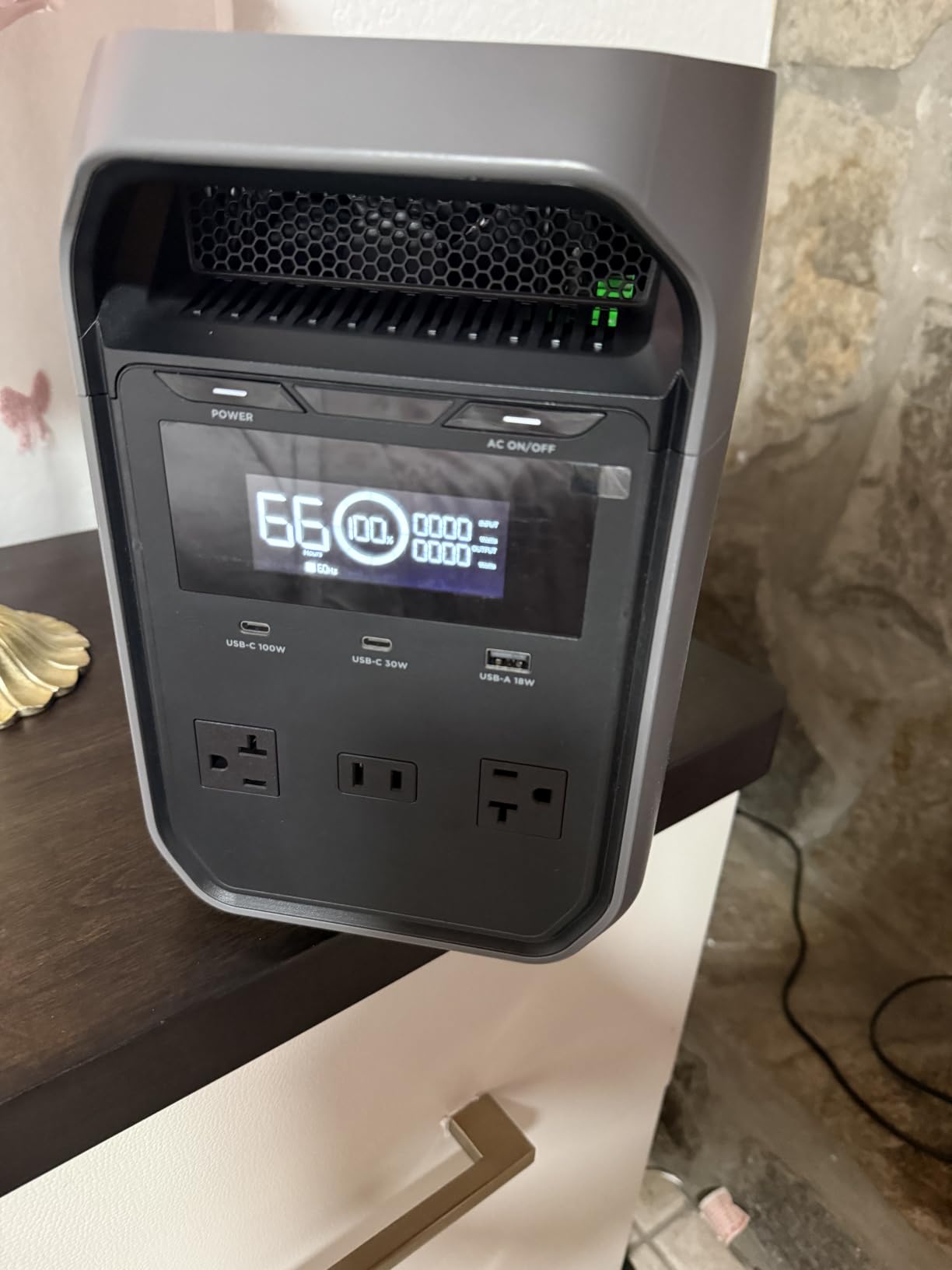
It is also, in practice, an always-on UPS. The under 10 ms switchover and the app’s scheduling and Storm Alert modes mean you can leave it plugged in permanently, running your network gear and a monitor off it, and only notice it when the grid fails. The front display is large and clear, which matters more than it sounds when you are reading state of charge in a dark hallway.
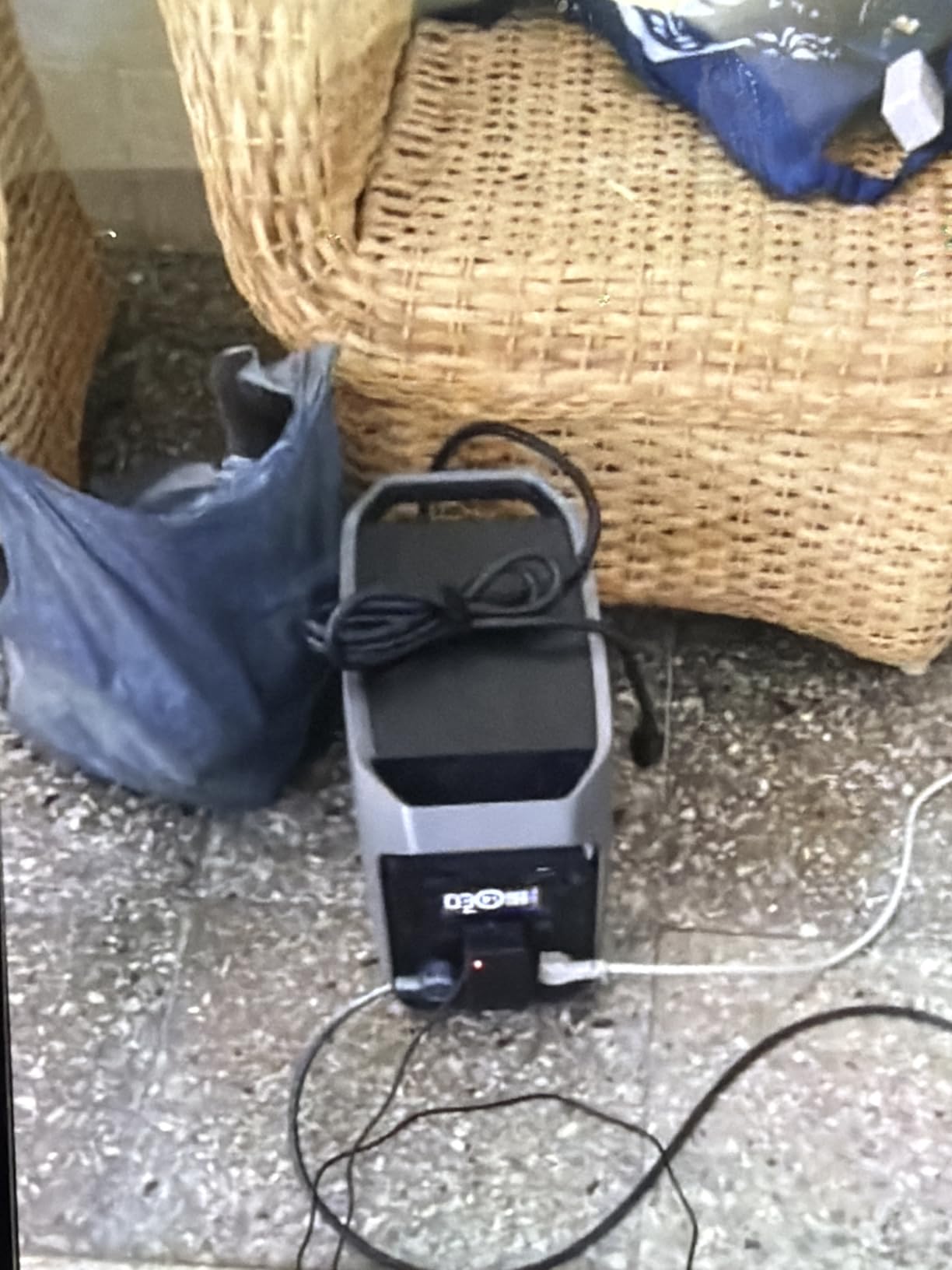
Charging is quick: 0 to 80% in 45 minutes with X-Stream AC charging, and roughly 2.5 hours from a 500W solar panel. The LiFePO4 cells are rated for 10+ years of daily use with an EV-grade CTC design and a smart battery management system, which is the strongest longevity claim on a 1kWh unit here.
For many households that longevity claim is the reason to pick it. If the station is going to sit plugged in running a network for a decade, cycle life matters more than peak output, because peak output is only exercised during the storm while cycle life is exercised every single day.
What you give up by not expanding
This unit does not accept the DELTA 2 or Delta 3 series smart extra batteries, so the 1024Wh is all the capacity you will ever have. That is fine for overnight outages and frustrating for a three-day grid failure, and it is worth being honest about before buying.
At 26.7 lb it is also the heaviest of the compact units in this roundup despite its small footprint, so treat it as a single-location install. Twelve-volt vehicle charging is slow next to wall or solar input, and a handful of buyers reported units arriving used or dead on arrival, so inspect the box on arrival and start a return immediately if anything is wrong.
6. EcoFlow DELTA Pro – 3600Wh and 3600W for Long Storms
EF ECOFLOW Portable Power Station 3600Wh DELTA Pro, 120V 3600W AC Output
- 3600Wh LFP capacity
- 3600W continuous, 7200W paired
- Expandable to 25kWh
- 15 output ports
Pros
- 3600Wh covers multi-day essential loads
- Expandable to 25kWh with batteries or smart generators
- Recharges in 1.8 hours on a 240V outlet
- Owners run fridge and furnace blowers for 15 hours
- Five charging paths including EV station
Cons
- 99 lb weight makes the handle mandatory
- 15 amp solar input ceiling slows panel charging
- Some units arrive partly depleted
When the forecast says the grid will be down for two or three days, capacity stops being a nice-to-have. The DELTA Pro stores 3600Wh and delivers 3600W continuously, 4500W with X-Boost, and 7200W when two of them are paired. That is the difference between recharging a phone and keeping a household functioning.
Owners describe exactly the scenario this unit is built for: a refrigerator, furnace blowers, lights, internet and computers through a 15-hour outage, quietly, with no fuel logistics. Several reviewers also pair it with a gas generator, running the station first and starting the generator only once the battery is low, which stretches fuel dramatically.
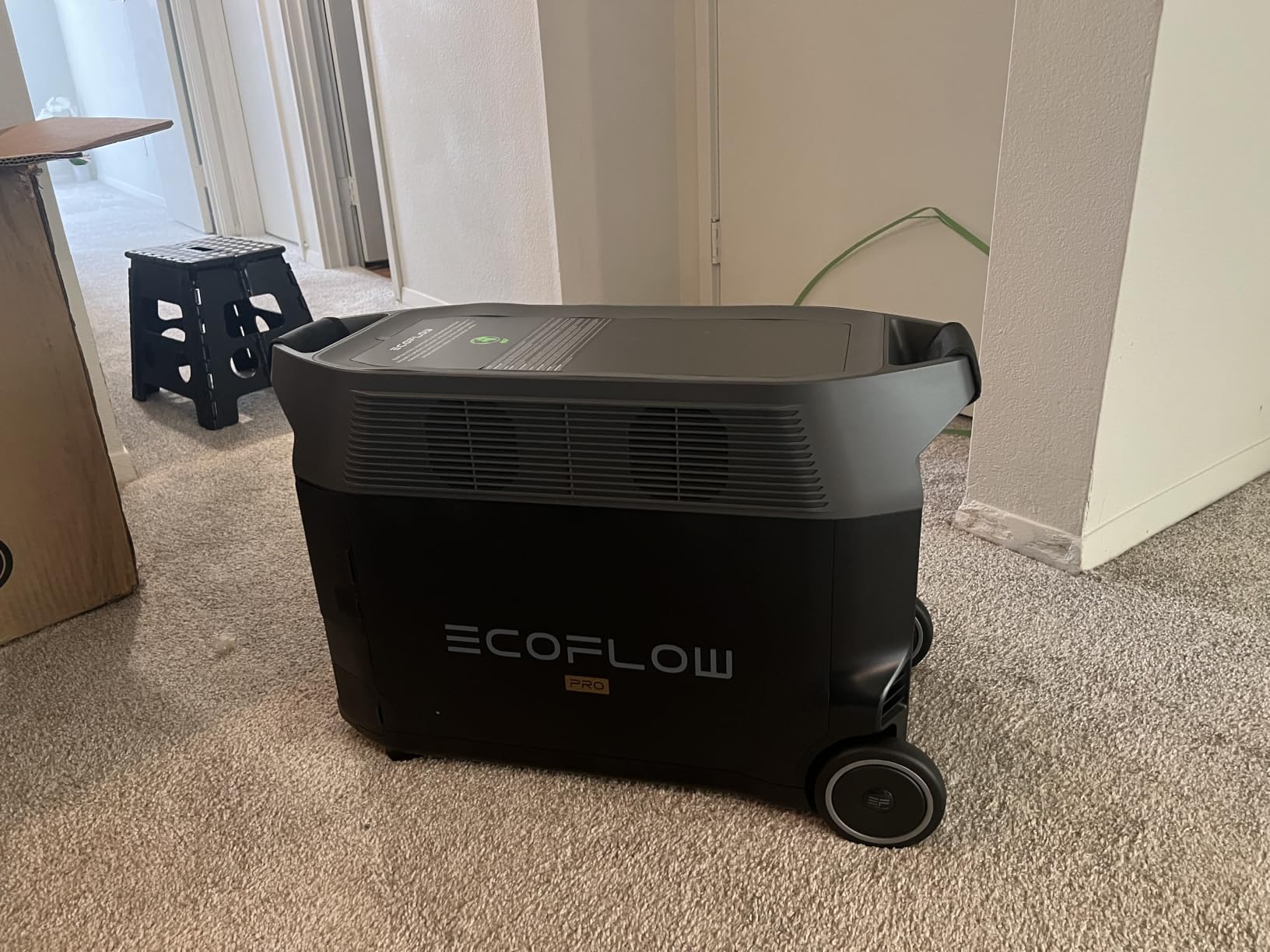
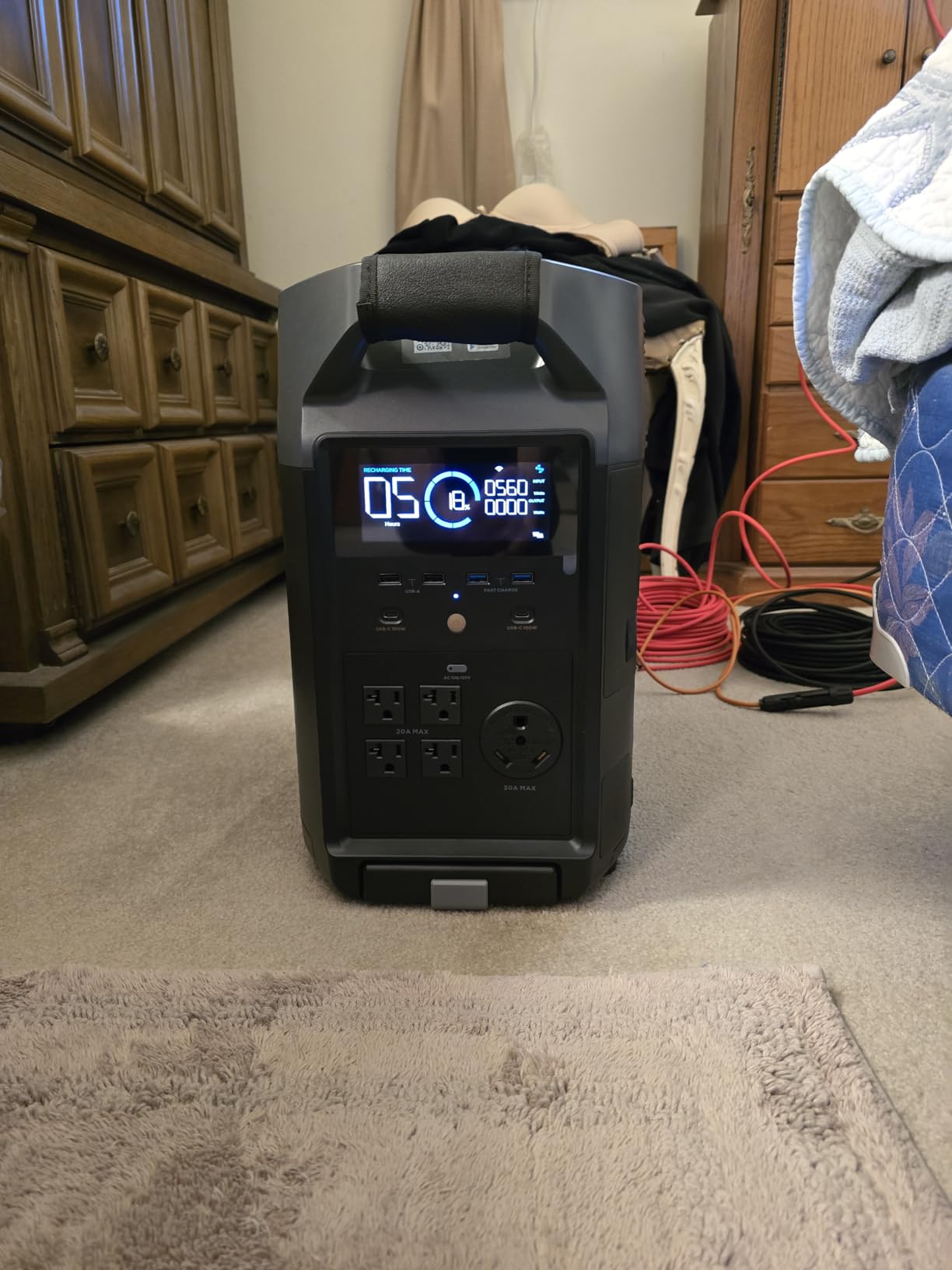
Fifteen output ports include 100W USB-C, five AC outlets, DC outlets, a car port and an Anderson port, so it can serve an entire floor. The five charging paths, including an EV station and a smart generator, make it the most flexible refill setup here, and it goes from empty to full in 1.8 hours on a 240V 3000W outlet or 2.7 hours on a standard 1800W wall.
Expansion is the headline: extra batteries or smart generators take it to 25kWh, which is genuine whole-home territory. The EcoFlow app reports charge, temperature and energy habits over Wi-Fi or Bluetooth, so you can see what an outage actually cost you.
What 3600Wh realistically keeps alive
Roughly 2900 to 3200Wh after inverter losses. That is a refrigerator and a freezer running for most of two days, or a week of router, lights, laptop and phone charging with a lot of headroom left over, or a window air conditioner for one comfortable evening. The capacity is real, but the appliance you pair with it decides the outcome.
Because the starting wattage is 7200W, motor loads and heating elements are not a problem at all. A space heater, a portable heater fan and a microwave can run at the same time, which no 1kWh unit in this list can manage without draining in an hour.
When 99 pounds is too much
At 99 lb the extendable handle is not a convenience, it is a requirement, and this is a one-place machine. If your backup plan depends on grabbing a station and carrying it to a neighbor’s house or up a flight of stairs, this is the wrong tool entirely and a 1kWh unit is the correct answer.
The 15 amp solar ceiling is the other real limitation, since a large panel array will not refill it quickly even in full sun. Some units also arrive partly depleted and can trip a breaker on the first outlet used for charging, so give it a full overnight charge on arrival before trusting it.
7. Anker SOLIX S2000 – Built Specifically for Long Refrigerator Runs
Anker SOLIX S2 Portable Power Station, 2,010Wh, 1,500W
- 2010Wh LiFePO4 capacity
- 1500W continuous with 3000W peak
- Up to 35 hours fridge runtime
- 314Ah cells rated 10000 cycles
Pros
- Roughly 35 hours of fridge runtime per charge
- 6W idle draw and 10% efficiency gains
- 314Ah cells rated for 10000 cycles
- 30% smaller than the category average
- Under 10 ms UPS with front and rear outlets
Cons
- No 12V DC port at all
- Cooling fan drones during 1200W charging
- Two carry edges rather than a real handle
- Strong burn-off odor on first charge
Everything about the S2000 is aimed at one job: keeping food cold for a long time. Its 2010Wh pack, low 6W idle draw and claimed efficiency improvements are what produce the roughly 35 hours of refrigerator runtime that owners report, and the reviews describe exactly that use across 12 to 30 hour outages.
It is also unusually efficient physically. At 35.7 lb and 8.2 by 11.1 by 12.7 inches it is 30% smaller than the category average, which means it can live in a hall closet or under a counter rather than demanding floor space in a garage. For a device whose only job is to run one or two appliances, that footprint discipline matters.
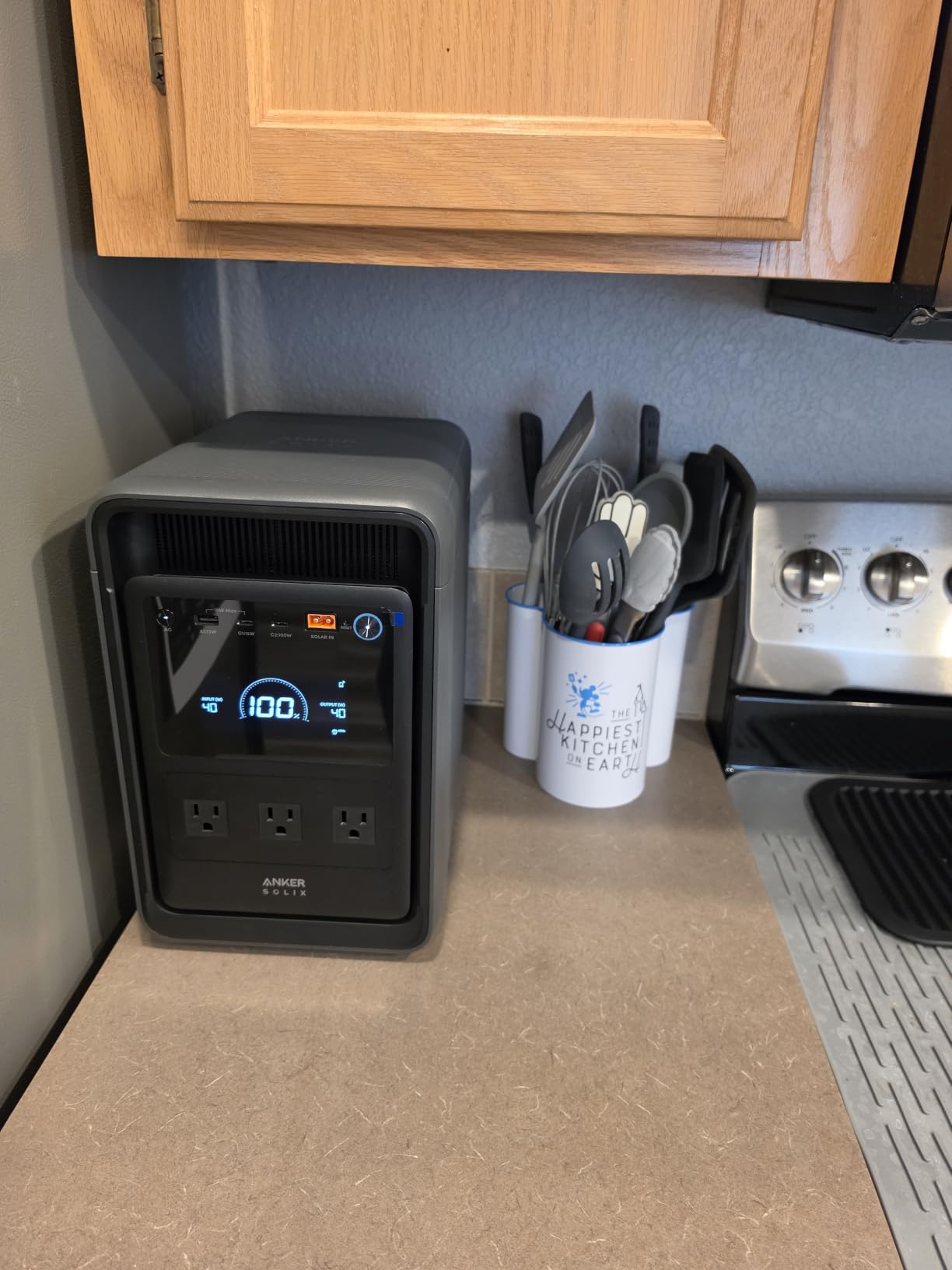
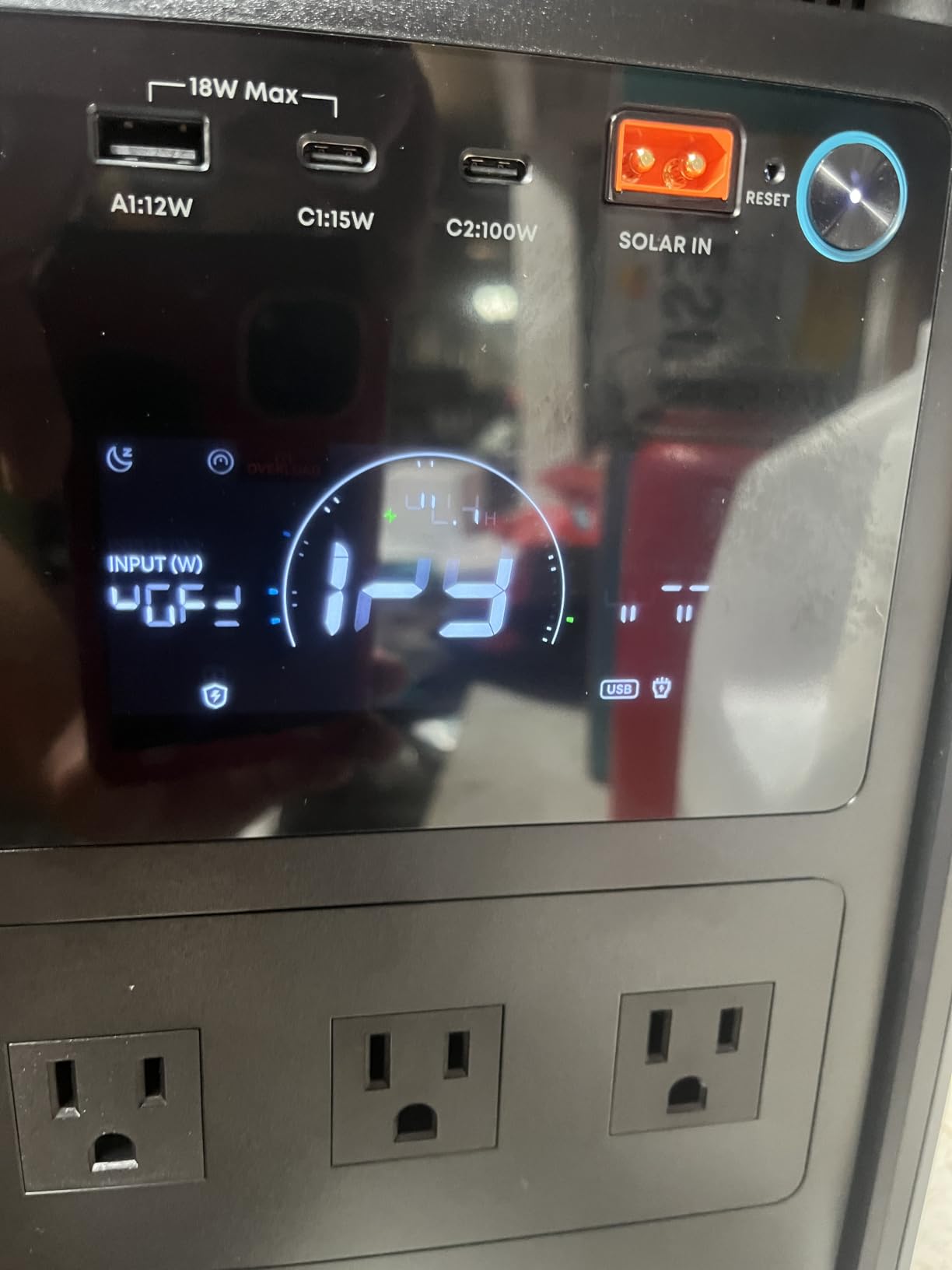
The 314Ah LFP cells are rated for 10000 cycles and a 15-year lifespan, the strongest longevity claim in this roundup. Combined with a five-year warranty, that makes it the unit most likely to still be in service when the tenth storm arrives. Six recharge paths including 400W solar, AC, generator, alternator and car outlet give you several ways to top it up depending on what is available.
Owners also report it running a sump pump through storms, and the 3000W peak covers the startup surge on a 1/3 HP pump comfortably. The app can set charge and discharge limits, which is the correct way to keep a battery parked at partial charge for emergency-only use.
Why idle draw decides fridge runtime
Fridge runtime is rarely about the compressor. A modern refrigerator averages far less than its label wattage because it cycles rather than runs continuously, and on top of that every station burns a few watts just running its inverter and display. The S2000’s 6W idle draw is the lowest figure in this roundup, and on a two-day outage that difference is measured in extra hours of food preservation.
This is the number to use when comparing runtime claims. Multiply your fridge’s average draw by 24, add roughly 5 to 10% for conversion losses, and divide into about 1800Wh of usable capacity. On those assumptions, a 1kWh unit lands closer to eight hours of fridge-plus-incidental-loads, not the day people hope for.
The compromises are real but small
There is no 12V DC port at all, so 12V accessories need an adapter, and that is the feature owners miss most. The cooling fan becomes noticeably droney during 1200W charging, which matters if the unit is in a bedroom, though it is quiet during normal discharge. The chassis has two carry edges rather than a proper handle, so 35.7 lb still takes two hands.
One reviewer reported a strong burn-off odor on the first charge that took hours to clear. That is a normal characteristic of a new lithium pack venting off manufacturing residue, but ventilate the room on that first charge.
8. Anker SOLIX F3800 – 240V Output and Direct EV Charging
Anker SOLIX F3800 Portable Power Station and Transfer Kit, 3840Wh, 6000W
- 3840Wh capacity
- 6000W dual-voltage 120V and 240V output
- Expands to 26.9kWh
- 132.3 lb stationary unit
Pros
- Dual 120V and 240V output for dryers and 240V appliances
- 12000W when two units are paired
- NEMA 14-50 port charges an EV directly
- RV power inlet support through L14-30 and 14-50
- Expands to 26.9kWh with six battery packs
Cons
- 132.3 lb so it is a fixed installation
- Smart Generator and battery packs cost extra
- Not a listed whole-home system like an installed generator
This is the closest any portable station gets to replacing an installed generator, and the reason is the 240V side of its output. A 6000W dual-voltage inverter can run a clothes dryer, a well pump or a small air conditioner, which no other unit in this list can do from a single box. Pair two and you reach 12000W.
The NEMA 14-50 port is the feature that changes the conversation for some households. It charges an electric vehicle directly at up to 6000W, and the same unit can feed an RV through L14-30 or 14-50 inlets. For someone whose real problem is getting a car off a dead battery or keeping a trailer alive in a heat wave, that is worth more than another 500Wh of capacity.
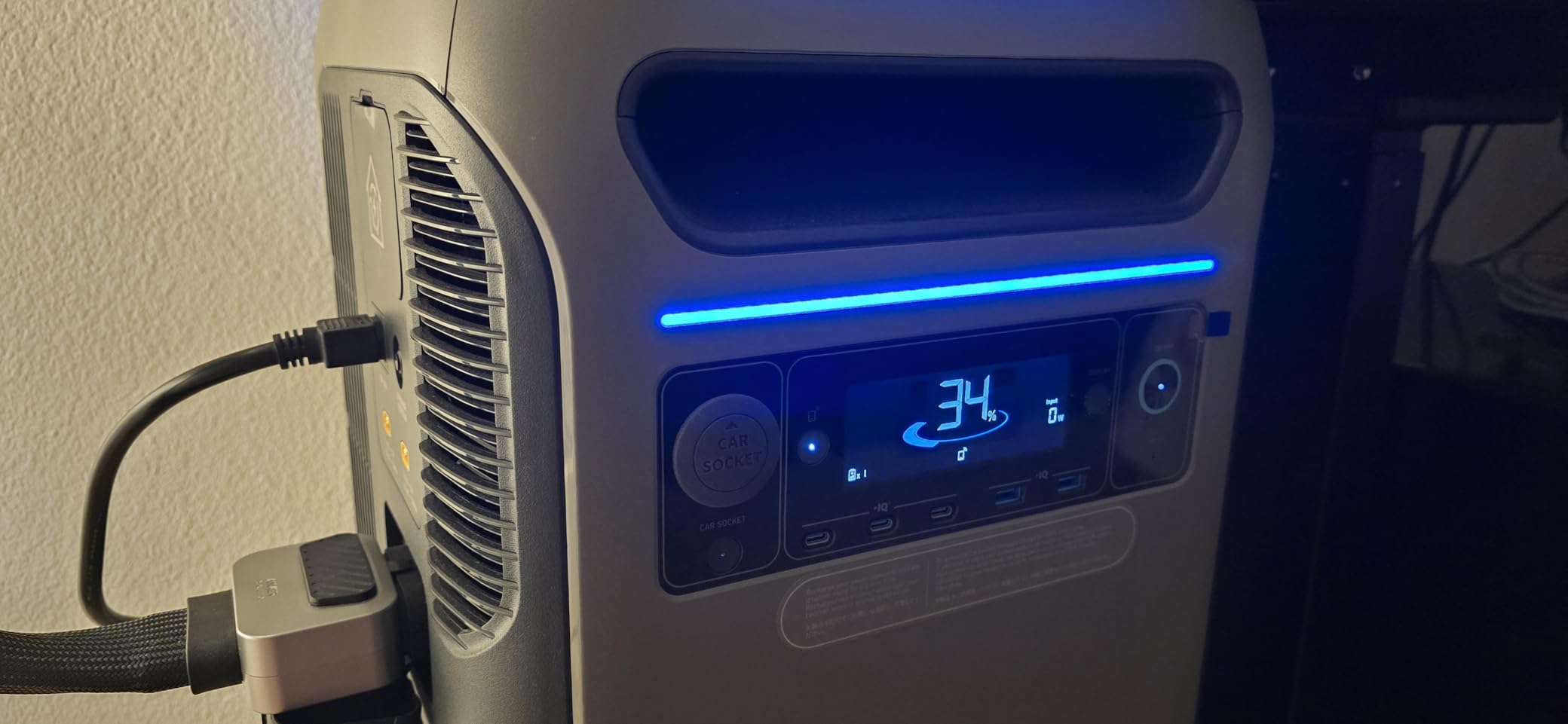
At 3840Wh expandable to 26.9kWh with six battery packs, it covers roughly a day of household use on its own. The kit includes a Smart Generator 5500, which lets a gas generator start and stop automatically as the battery depletes, so fuel runs only during the worst stretch.
Build quality is the other story here. EV-class LFP cells, Anker’s InfiniPower technology, smart temperature control and an impact-resistant design are aimed at a device that will sit in a garage for a decade. App monitoring over Wi-Fi or Bluetooth and a five-year warranty round out the package.
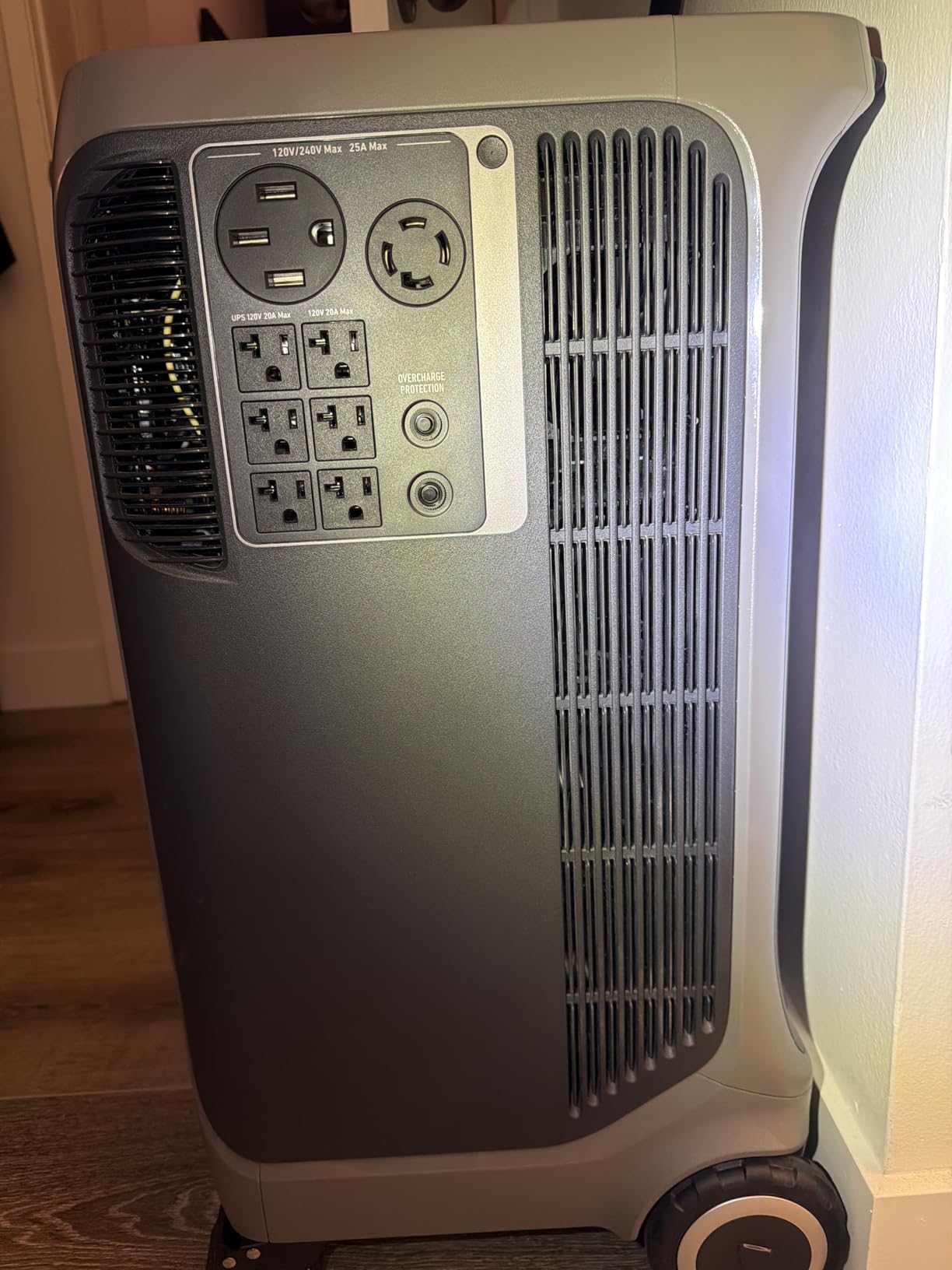
What 240V output changes about your plan
Most household backup lists stop at 120V, which is why a refrigerator, lights and a router are the usual survivors of a gas-generator outage. A dryer, a well pump, a 240V heat pump and most window air conditioners all need the other side of the split phase. A station with true 240V output can power those directly, and that single capability moves it from a supplement to a genuine replacement for many households.
The cost is permanence. At 132.3 lb, this does not get moved by anyone who has not changed their mind about moving it. Plan the location, the ventilation and the cable run before delivery.
Where it falls short of a real generator
It is not a listed whole-home system the way a permanently installed generator is, and it will not carry a 100A service. Accessories such as the Smart Generator and battery packs are additional purchases, and the 4.4 rating is the lowest in this roundup, which reflects a smaller owner base and a much higher complexity.
Buyers who want a weekend of quiet indoor power with zero fuel logistics will love it. Buyers who want to run a well pump and a dryer for a week straight should look at a properly sized installed system instead.
9. Jackery HomePower 3600 Plus – Plug-and-Play Transfer Switch Setup
Jackery HomePower 3600 Plus Power Station, 3584Wh, 3600W AC Output
- 3584Wh capacity
- 3600W output, 7200W in parallel
- 120V and 240V in parallel
- Operable down to -4 F
Pros
- 3600W output handles pumps and heaters
- 2 hour full recharge on hybrid AC and DC
- Ceramic membrane cells rated 6000 cycles
- Built-in wheels and telescopic handle
- Quiet enough to replace a gas generator indoors
Cons
- 77.2 lb even with the wheels
- Transfer switch and expansion batteries sold separately
- 120V and 240V at once needs a parallel kit
The HomePower 3600 Plus is the one unit in this roundup designed around home integration rather than camping portability. It stores 3584Wh, delivers 3600W, and pairs to 7200W with 120V and 240V available in parallel. Crucially, it is designed to plug into a manual transfer switch, so you can back up a hardwired circuit instead of only extension cords.
That distinction is the whole reason to buy this over a cheaper 3kWh box. A transfer switch isolates the generator or station from your panel and switches the house over, so lights, outlets and a furnace can run without dragging a cord through a window. The setup is plug-and-play and does not require an electrician, according to the manufacturer.
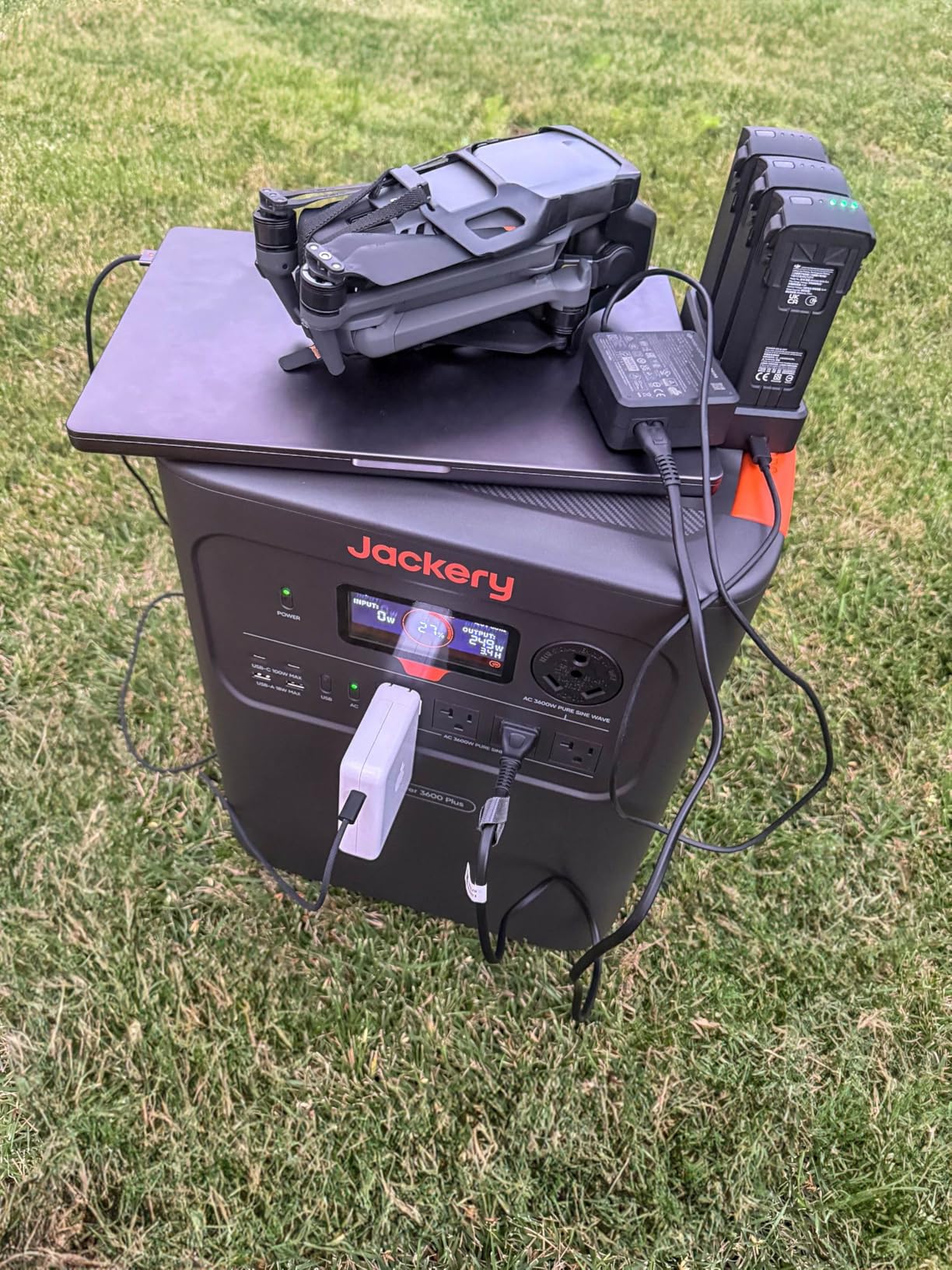
The charging spec is unusually good. Four paths, including a 2 hour full recharge on hybrid AC plus DC, 2.5 hours on AC alone, 4 hours on solar and 2.5 hours on a gas generator. Owners describe running a fridge, freezer, sump pump and well pump through extended outages, and several pair two of them for the full 7200W.
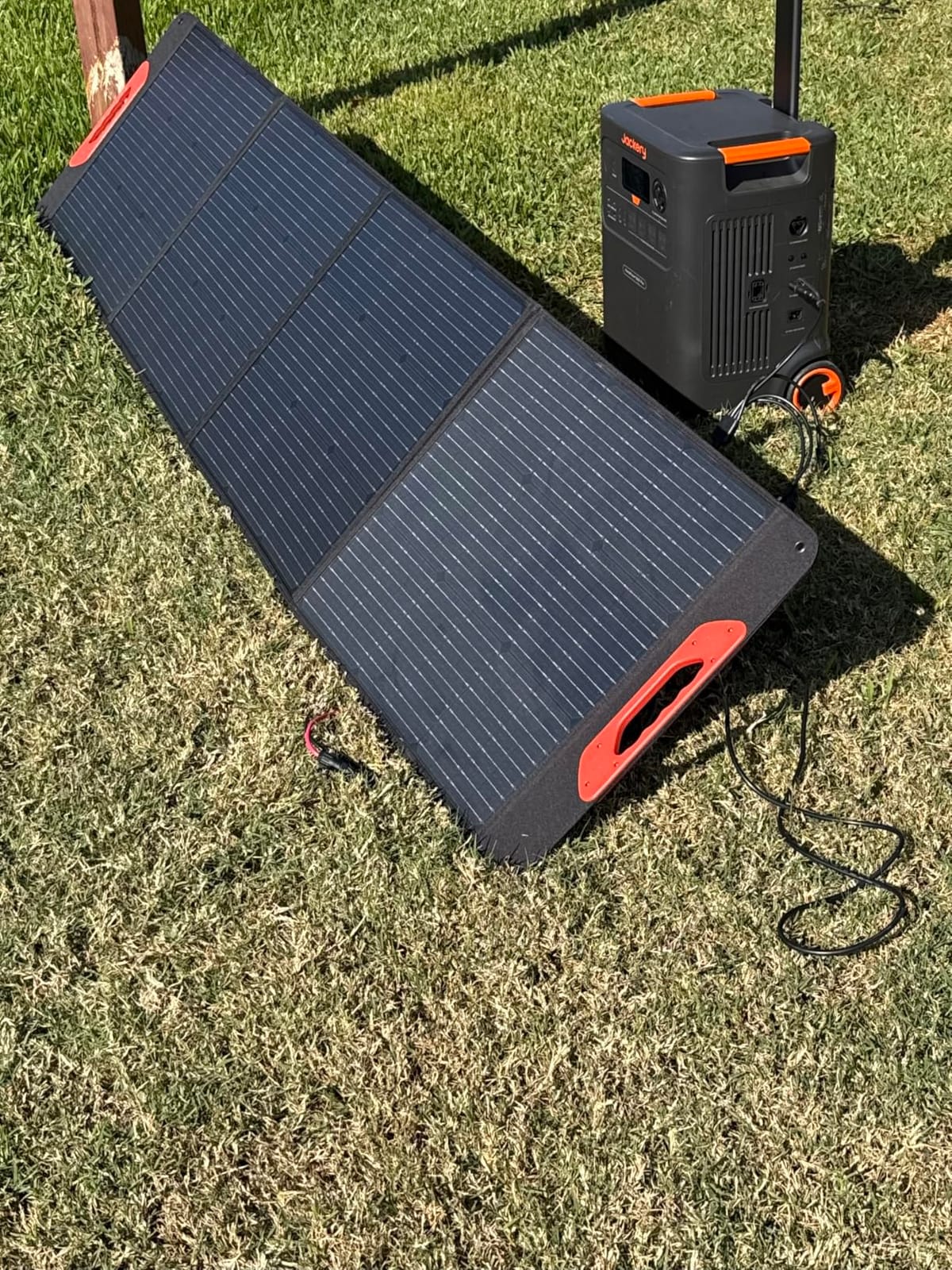
Winter performance is the differentiator. The ceramic membrane cells are tested to 302 degrees F, rated for 6000 cycles and a 10-year lifespan, and specified to work down to -4 F. For anyone whose outages are ice storms rather than summer thunderstorms, that is a real constraint that most competitor units do not address at all.
Why a transfer switch changes the scope of backup
Without a transfer switch, you power individual appliances by plugging them in, and you run extension cords for anything that is not right next to the station. That works, but every cord is a trip hazard in the dark and a limitation on what you can reach. With a transfer switch, the station feeds a chosen circuit or subpanel, and the rest of the house behaves normally.
This is the closest a portable station gets to installed backup without a permit and a hardwired battery. It is still a plug-in device, so the switch is a separate purchase, and you must have the switch correctly installed for the safety interlock to work as intended.
Honest limits
At 77.2 lb, the built-in wheels and telescopic handle make it a wheeled move rather than a carry, and the chassis is 34% smaller and 29.3% lighter than comparable 3.6kWh units without being light. Expansion batteries are sold separately, and getting 120V and 240V simultaneously requires pairing units or a parallel kit.
It also has the smallest owner base in this roundup at 191 reviews, so treat the early long-term reliability picture as less settled than the 1kWh units with thousands of reviews behind them.
10. PECRON F3000LFP – 13 Ports and a 1600W Solar Input
PECRON Portable Power Station F3000LFP, 3072Wh Solar Generator, 3600W LiFePO4 Battery Home Backup, Fast Charging Power Station Expand Capacity to 10752Wh, Solar Generators for Home Use, Camping, RV
- 3072Wh LiFePO4 capacity
- 3600W pure sine wave output
- Expandable to 10752Wh
- 1600W solar input
Pros
- 13 ports including six AC outlets
- Full recharge in two hours at 1800W AC
- 1600W solar input across a 25-120V range
- 8-20 ms UPS protects computers and devices
- Two-year plus three-year warranty and accessory bag
Cons
- Expansion battery needs a separately sold cascade cable
- 63.3 lb is heavy for a portable unit
- Far fewer owner reviews than the leading brands
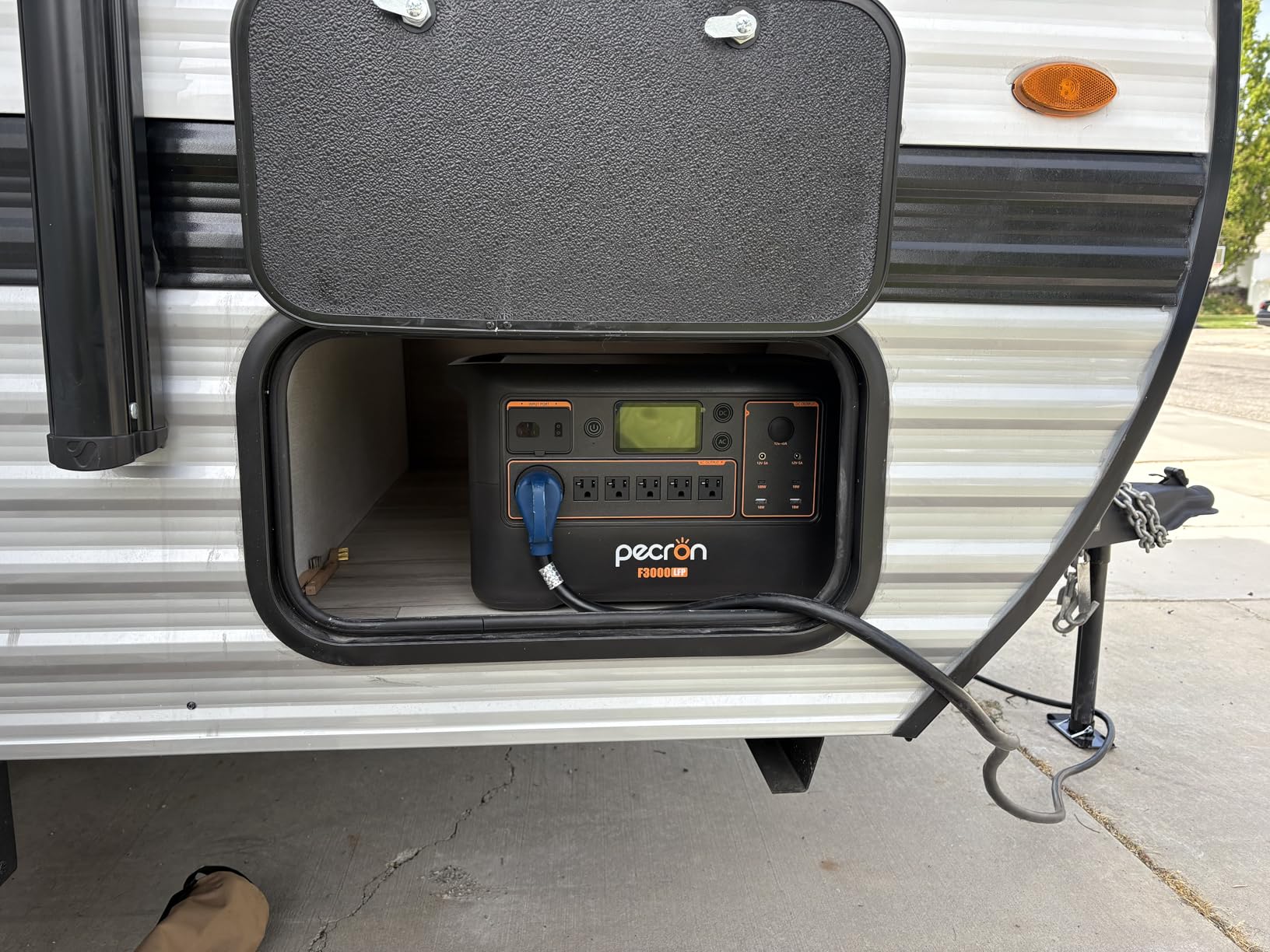
The F3000LFP competes in a bracket where most brands offer one or two outlets; this one offers thirteen, including six AC outlets, two 100W USB-C ports, two USB-A, a car port and two DC 5525 outputs. For a household running several rooms of lights, a network, and a lot of phones, that layout removes the need for power strips.
Output is 3600W of pure sine wave from a 3072Wh pack, expandable to 10752Wh, and it refills in two hours from an 1800W AC input. Owners highlight the capacity for running refrigerators and CPAP machines, and the 8 to 20 ms UPS handoff covers computers and medical devices adequately.
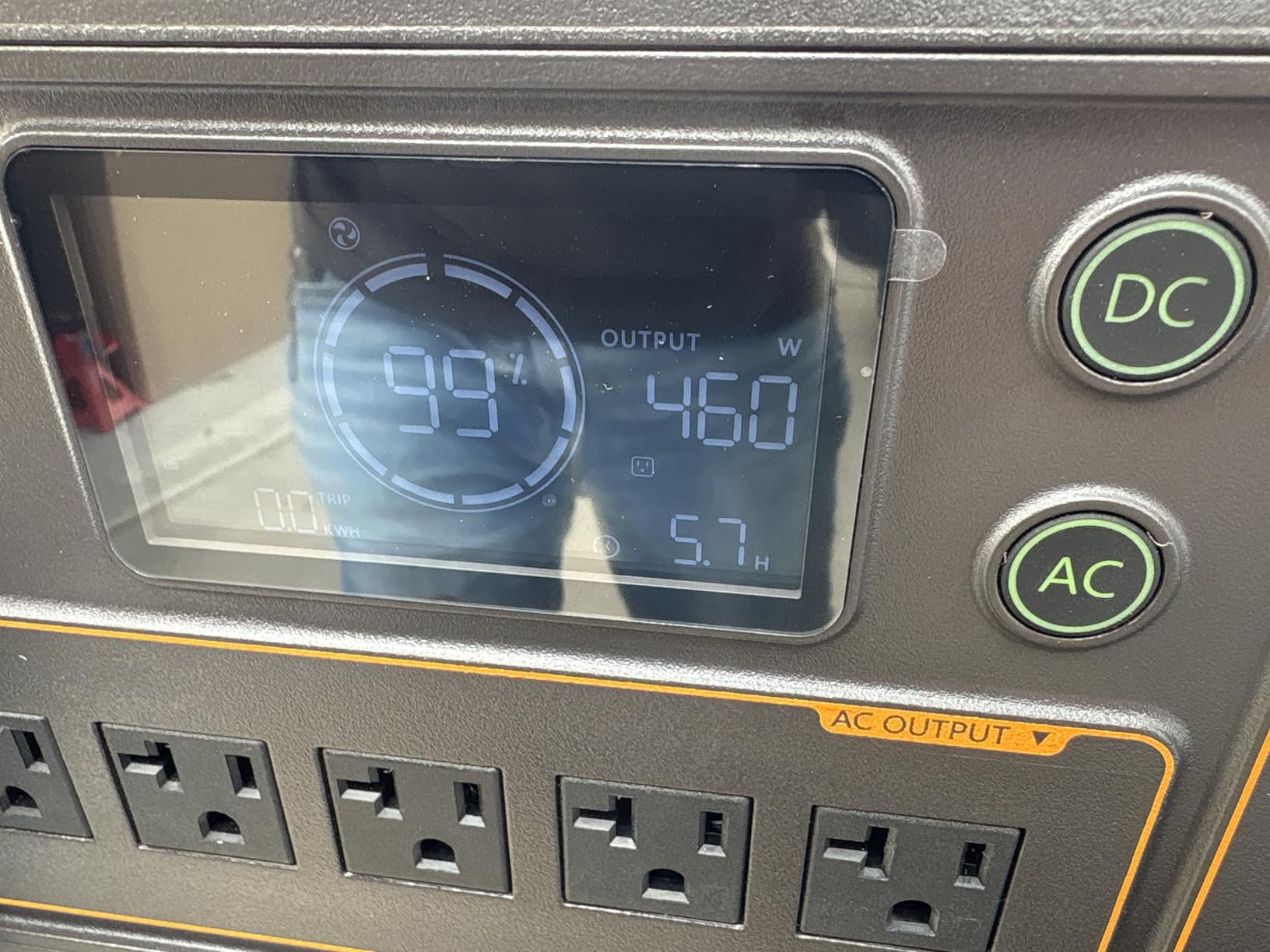
The solar input is the sleeper spec. Up to 1600W across a 25 to 120V range is the highest solar ceiling in this roundup, which means a large array can genuinely refill the station during a multi-day outage rather than dribbling in enough to slow the decline. For households that already own panels, that flexibility across a wide voltage window is genuinely useful.
App monitoring shows real-time power usage, which helps you find out what is actually draining the battery during an outage instead of guessing. The 2 plus 3 year warranty is more generous than it sounds, and an accessory bag is included in the box.
Solar input ceiling is the number most buyers ignore
Panels are rated at their peak wattage under laboratory conditions. Real output lands lower, and the station’s own input ceiling can be lower still, which is why a 500W panel on a unit capped at 300W will never fill the battery in a day. A 1600W ceiling gives you room to deploy a real array without changing hardware.
That said, panel wattage during an actual storm outage is a weaker proposition than it sounds. Cloud cover, rain and short winter days mean solar during a two-day storm is a top-up, not a lifeline. Plan on wall or generator charging as the primary recovery method.
What the smaller review base means
With 145 reviews, this is the least proven unit here, and long-term reliability data is thinner simply because fewer people own it. That is the honest trade for a port layout and solar ceiling that the bigger brands do not offer at this capacity.
Two practical notes. The EP3800 48V expansion battery requires a separately sold XT120-M cascade cable, so the expansion path costs more than the battery alone. And at 63.3 lb it is heavy for something sold as portable, so it belongs in a fixed spot.
How to Size a Portable Power Station for Home Backup in 2026
Sizing is where most buyers go wrong, and the reason is that they compare watt-hours to appliances instead of comparing them to hours. Here is the process I use, and it takes about ten minutes with a notebook.
Step 1: separate capacity from output
Watt-hours measure how much energy is stored, which determines how long you can run something. Watts measure how much power the inverter can deliver at one moment, which determines what you are allowed to plug in. A 2000W appliance on a 1024Wh station works for roughly half an hour, no matter how good the unit is.
Real usable capacity is roughly 85 to 90% of the nameplate figure once inverter conversion losses and the reserve most units hold back are accounted for. Do your arithmetic on the number after the nameplate, not before it.
Step 2: list the loads, then check the duty cycle
Write down each appliance and its label wattage. Then adjust for how much of the time it actually runs. A refrigerator labelled 200W might average 40 to 60W because the compressor cycles. A router runs at its full 15W continuously. A lamp is a flat number. This adjustment is where most runtime estimates go from fantasy to reality.
For a worked example, a typical essentials-only load of a refrigerator averaging 50W, a router and modem at 20W, and three LED lamps at 30W comes to about 100W continuous. That needs 2400Wh per day of storage, or roughly 2700Wh of nameplate capacity. Add a 25% buffer for cold starts and conversion losses and you are looking at a 3kWh class unit for a 24-hour outage on those three loads alone.
Add a freezer at another 50W average and the same calculation puts you past 4000Wh of usable capacity for a full day, which is exactly the range the 3.5 to 3.8kWh units and their expansion batteries cover.
Step 3: match surge to your motor loads
Compressors, pumps and anything with a motor draw a large spike for the first second or two. A refrigerator or freezer compressor can pull three to five times its running wattage at startup. A sump pump on a 1/3 HP motor can surge past 1000W.
The rule is simple: check the starting or surge rating of every motorised appliance on your list against the station’s peak output, not its continuous rating. The DELTA Pro’s 7200W starting wattage and the Delta 3 Classic’s 3600W surge both clear a fridge and a pump easily. A unit with thin surge margin is the single most common reason a station trips off in the middle of a storm, and it is a completely avoidable purchase mistake.
Step 4: check UPS speed if you have sensitive equipment
Under 10 ms is the target for a NAS, a network switch, a desktop or a CPAP machine. Twenty milliseconds is usually fine. Anything slower and sensitive equipment may reset, which defeats the point of a station that is supposed to be invisible.
The Anker SOLIX C1000 Gen 2, the EcoFlow Delta 3 Classic and the Anker SOLIX S2000 all advertise sub-10 ms handoffs. That is the class to buy if your outage plan involves electronics rather than only lights and a fridge.
Step 5: decide on expansion before you buy
Non-expandable units are cheaper today and limiting in year three. Check that the expansion batteries you might want are compatible with the exact model, and that the connection is a simple plug rather than a proprietary cable you have to source separately. The DELTA 2 Max growing to 6kWh and the DELTA Pro growing to 25kWh are the strongest growth paths here.
What a plug-in station cannot do
No unit on this list powers your entire house the way a permanently installed generator or a home battery system does. There is no 100A service, no hardwired whole-home coverage, and no utility interconnect. A transfer switch changes the picture by letting a station back up a chosen subpanel, which is the difference between powering three rooms and powering one outlet at a time.
Anyone who needs to run a well pump, a furnace, a 240V dryer and a refrigerator for a week straight should be pricing a professionally installed system instead, both for capacity and for insurance and permitting reasons.
Battery chemistry, noise and the maintenance habit
Every unit in this roundup uses lithium iron phosphate cells, which tolerate more charge cycles and deeper discharge than the older NMC chemistry without the same thermal risk. Cycle claims range from 3000 cycles at 80% capacity on the DELTA 2 Max to 10000 cycles on the Anker SOLIX S2000.
For a unit that only runs during emergencies, the maintenance habit matters more than the cycle rating. Top the station up every three months so it does not sit empty for years, and if you use the app’s charge and discharge limits, park it around 50 to 60% rather than 100% for long-term storage.
Noise is the other indoor factor. Several units in this list run quietly at idle, which is what allows them to sit in a hallway or bedroom. Fans become audible during fast charging, so if the unit lives in a sleeping area, plan its recharge for daytime.
Frequently Asked Questions
Can a portable power station power a house?
Not on its own. A portable power station powers the appliances you plug into it, and a 3 to 4kWh unit can keep a refrigerator, freezer, internet, lights and a furnace blower running for a full day. To back up a whole house you would need expansion batteries, a transfer switch feeding a subpanel, or a permanently installed system. A portable station is best understood as a very capable supplement, or a replacement for a small permanently installed generator.
How many hours will a portable power station last?
It depends on the load, not the brand. Multiply your combined continuous draw by the hours you need, add 25% for conversion losses and startup surges, then divide into roughly 85 to 90% of the nameplate watt-hours. A 100W essentials load on a 2048Wh unit is about 17 usable hours, and the same load on a 1070Wh unit is closer to 8. Refrigerators draw far less than their label wattage because they cycle, which is why they last much longer than the label suggests.
What is the best portable power station for home backup?
For most households the Jackery Explorer 1000 v2 is the best portable power station for home backup because it combines 1070Wh, 1500W of output, a 4000-cycle battery and 23.8 lb, with the largest owner review base in the category. If your outages run past a night, the EcoFlow DELTA 2 Max or the EcoFlow DELTA Pro give you the capacity to match, and the Anker SOLIX F3800 is the only pick here with true 240V output.
Is it worth buying a portable power station?
For most people in areas with frequent outages, yes, because it needs no fuel, starts instantly, runs silently indoors and needs no installation. The value depends on your load list. If you only need to keep a router, a monitor and a phone alive, a 1kWh unit covers several days. If you expect to run heating, a well pump or a dryer for days at a time, the money is better spent on an installed system.
Do portable power stations work in cold weather?
Only one unit in this roundup carries a stated low-temperature rating, and that is the Jackery HomePower 3600 Plus, whose ceramic membrane cells are specified to operate down to -4 F. For every other unit, the safe practice is to keep it indoors, in a heated room, during a winter outage and to let it reach room temperature before charging it. Keep it away from a garage door or an unheated porch.
Which Portable Power Station Fits Your Outage
Keep the fridge, the router and a few lights alive through a short outage, and the Jackery Explorer 1000 v2 is the pick with the deepest owner history behind it. Need more watts from a similar battery, or a 500W solar input, and the BLUETTI AC180 delivers. Protect a CPAP machine or a network rack and the sub-10 ms Anker SOLIX C1000 Gen 2 is the right box.
Outages that run for days call for more capacity: the EcoFlow DELTA 2 Max if you want to grow to 6kWh, the EcoFlow DELTA Pro if you want 3600Wh and expansion to 25kWh, and the Anker SOLIX S2000 if keeping food cold is the entire mission. For 240V appliances, EV charging or a transfer switch feeding a subpanel, the Anker SOLIX F3800 and the Jackery HomePower 3600 Plus are the two units here that go beyond extension cords.
Whichever you choose, write down your load list before the storm rather than during it, top the station up every three months so it never ages sitting empty, and keep it indoors and ventilated. That habit will do more for your backup than another 500Wh of capacity.