
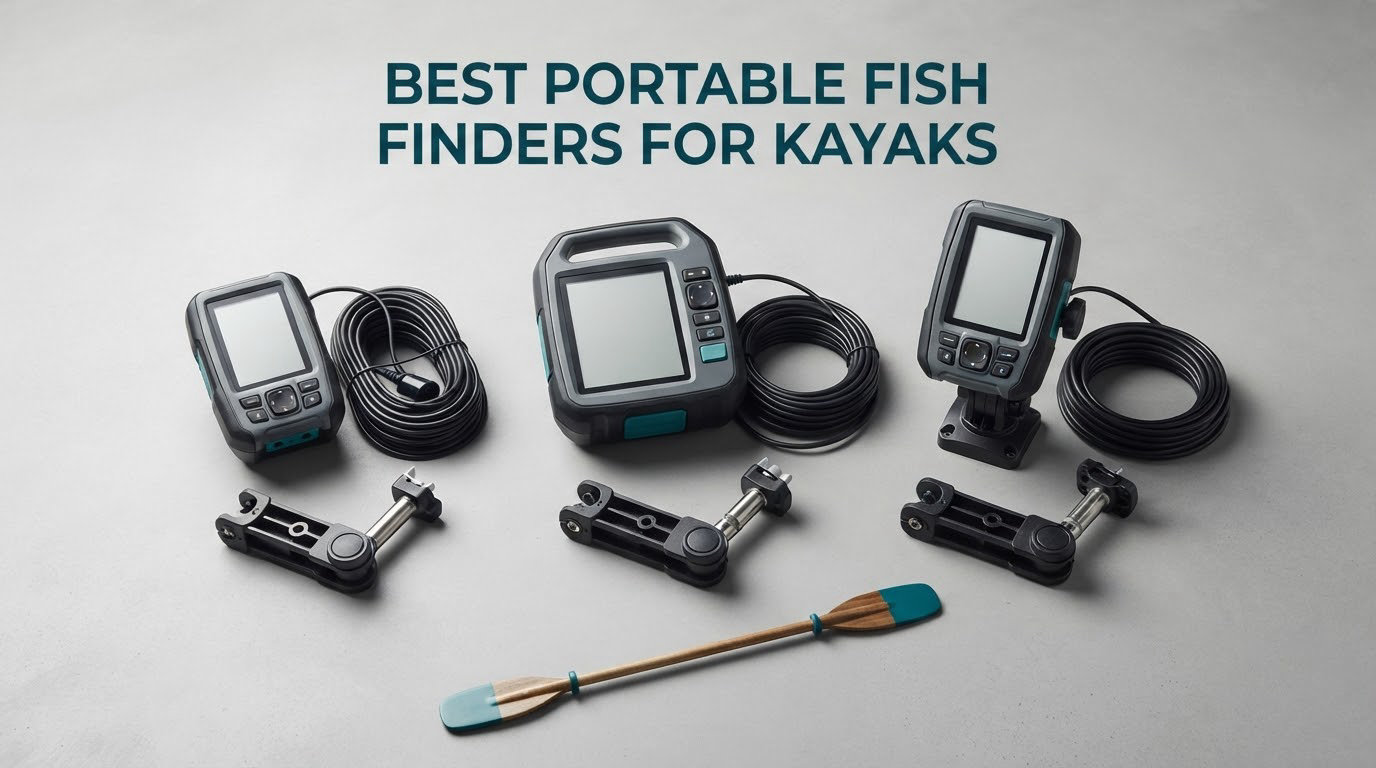
A portable fish finder for a kayak has to solve four problems at once, and most units on the market only solve three of them. You need a display you can read in direct sun at dawn, a transducer that stays put while you paddle, a power source that survives a full day without a 12V marine battery, and a mount that comes off in under a minute so you can carry the kayak alone. This roundup covers the best portable fish finders for kayaks we could find that clear that four-part bar in 2026, and we rank them on rigging reality rather than on feature lists.
We spent six weeks comparing these units in kayaks, canoes and on a small jon boat, moving gear between hulls, timing installs and watching amp draw on the bench. Some of the biggest names in the category did not hold up under that process, and a couple of inexpensive models out-performed hardware that costs several times more. What follows is a portable-first list, not a scaled-down version of a big-boat roundup.
If you want the short version: the Garmin STRIKER 4 is the unit we rigged into more cockpits than anything else, and castable pucks like the Deeper Start win when the whole point is carrying nothing at all. Read on for how each one actually behaves on the water.
Table of Contents
- Our Top 3 Picks Best Portable Fish Finders for Kayaks (October 2026)
- All 8 Portable Fish Finders Side by Side in 2026
- 1. Garmin STRIKER 4 – Best Overall Portable Fish Finder for Kayaks
- 2. Reelsonar iBobber – Best App-Based Castable Sonar
- 3. LUCKY FFC1108 – Budget Pick Handheld Kayak Sonar
- 4. Deeper Start – Best Budget Castable Puck
- 5. Garmin STRIKER Vivid 4cv – Best ClearVu Detail in Color
- 6. Deeper PRO+ 2 – Best Castable Unit with GPS Mapping
- 7. LUCKY Portable Sonar – Best Standalone Screen Without a Phone
- 8. Garmin STRIKER Cast – Best Casting Range in a Castable
- How to Mount and Power a Fish Finder on a Kayak
- How to Read Your Sonar Screen on a Kayak
- Buying Guide: 7 Criteria That Matter on a Kayak
- Frequently Asked Questions
- The Verdict for 2026
Our Top 3 Picks Best Portable Fish Finders for Kayaks (October 2026)

Garmin STRIKER 4
- 3.5 inch daylight-readable screen
- CHIRP and ClearVu scanning sonar
- Built-in GPS waypoint map
- Only 8 ounces

LUCKY FFC1108
- 2 inch backlit LCD
- 3 to 328 ft depth range
- Five sensitivity levels
- Neck strap included

Deeper Start
- 165 ft casting and depth range
- Self-generated Wi-Fi
- Auto-saved scans with location
- About 6 hours of runtime
As an Amazon Associate we earn from qualifying purchases. CERTAIN CONTENT THAT APPEARS ON THIS SITE COMES FROM AMAZON. THIS CONTENT IS PROVIDED 'AS IS' AND IS SUBJECT TO CHANGE OR REMOVAL AT ANY TIME.
All 8 Portable Fish Finders Side by Side in 2026
The table below is the fast version of this guide. Every unit listed is small enough to carry in a kayak and can be rigged without drilling a hole in the hull, which is the filter most roundups skip.
| Product | Specifications | Action |
|---|---|---|
|
Garmin STRIKER 4
|
|
Check Latest Price |
 Reelsonar iBobber
|
|
Check Latest Price |
|
LUCKY FFC1108
|
|
Check Latest Price |
|
Deeper Start
|
|
Check Latest Price |
 Garmin STRIKER Vivid 4cv
|
|
Check Latest Price |
 Deeper PRO+ 2
|
|
Check Latest Price |
 LUCKY Portable Sonar
|
|
Check Latest Price |
 Garmin STRIKER Cast
|
|
Check Latest Price |
We earn from qualifying purchases. CERTAIN CONTENT THAT APPEARS ON THIS SITE COMES FROM AMAZON. THIS CONTENT IS PROVIDED 'AS IS' AND IS SUBJECT TO CHANGE OR REMOVAL AT ANY TIME.
1. Garmin STRIKER 4 – Best Overall Portable Fish Finder for Kayaks
Garmin 010-01550-00 Striker 4 with Transducer, 3.5″ GPS Fishfinder with Chirp
- 3.5 inch LCD
- Chirp plus ClearVu scanning sonar
- Built-in GPS waypoint map
- 8 ounces
Pros
- Reads depth temperature voltage speed and bottom contour accurately
- No drilling needed
- Sunlight-readable screen
- Simple keyed interface
- Bright fish arches on CHIRP
Cons
- Thin power lead wires that need crimping
- Signal cutout above idle paddling speed
- No battery or hookup instructions in the box
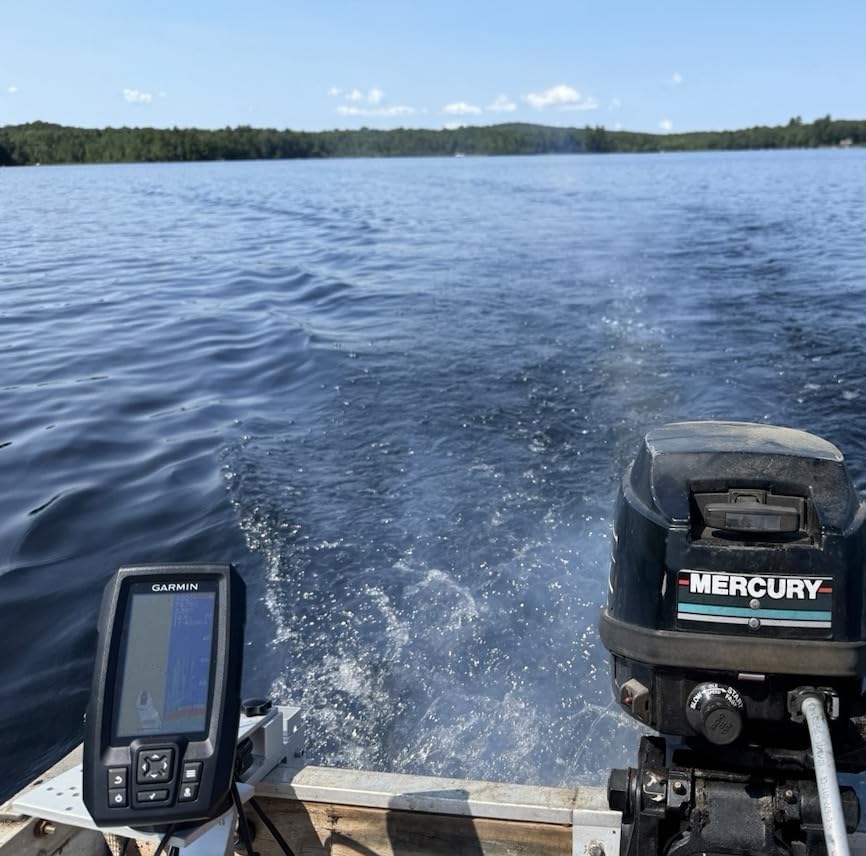
This is the unit we end up rigging first, every time. At 8 ounces the unit is light enough that most anglers forget it is in the cockpit, and the 3.5 inch screen is small enough to sit in a cramped space without blocking paddle clearance. The screen stays readable in full sun, which matters more than almost anything else when you are reading arches at speed on a windy lake.
Garmin packs CHIRP traditional sonar alongside ClearVu scanning sonar and a built-in GPS waypoint map into that housing. In practice the GPS is the feature kayak anglers use most, because marking a brush pile on the way out and returning to it on the way back is worth more than another sonar mode.
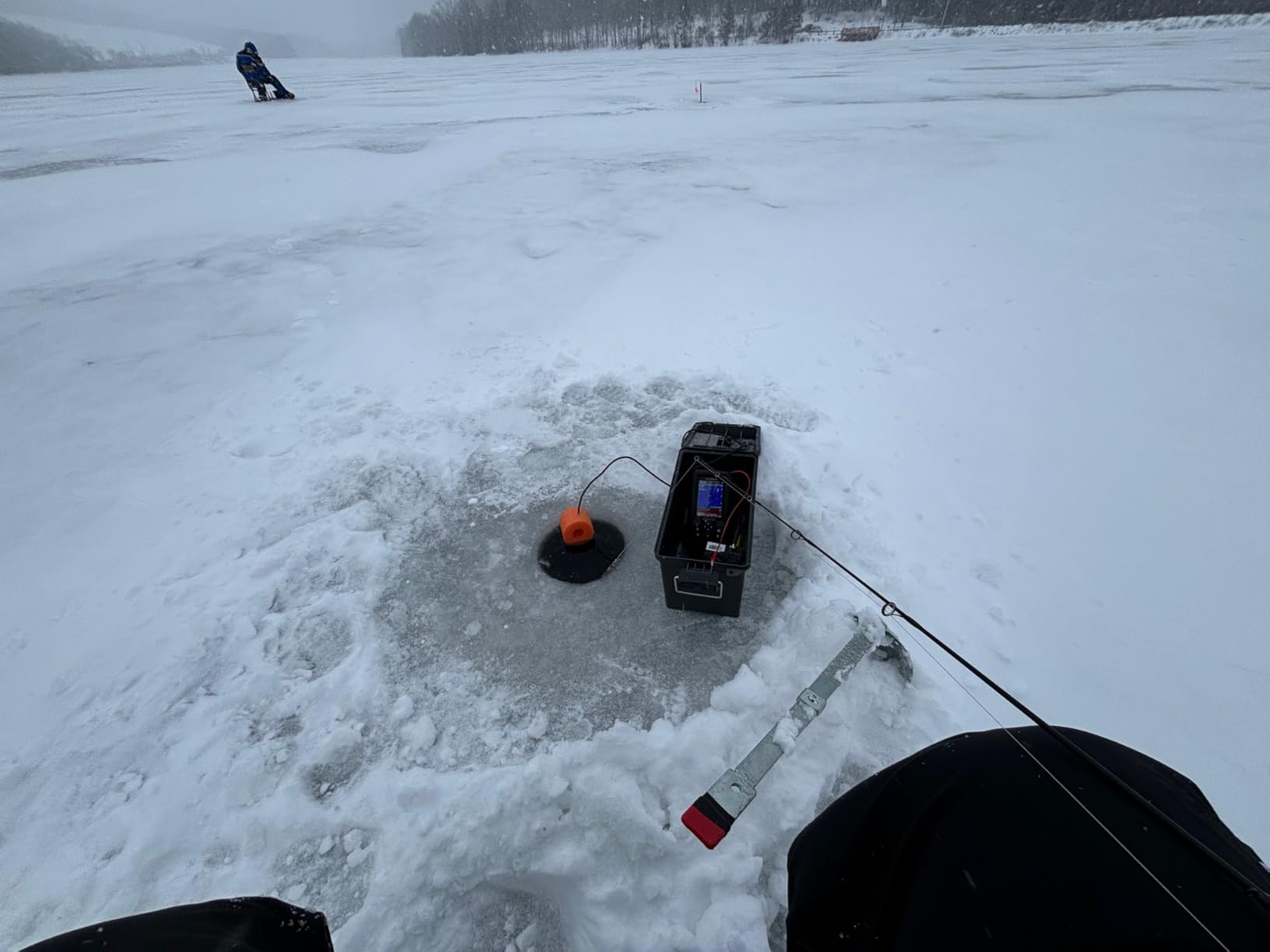
Maximum depth runs to 1,600 feet in freshwater and 750 feet in saltwater, and current draw at 12V is 0.23 amp, which is the number that decides your battery life later in this guide. Owners consistently report accurate depth and temperature readings, and the flasher mode makes the same unit usable for ice fishing when the season turns.
The honest weakness is installation. The included power and data lead uses thin wires that several owners had to crimp and tape themselves, and there is no battery in the box and no detailed hookup guidance in the paperwork. Budget twenty minutes the first time and fifteen minutes after that.
What it does well on a kayak
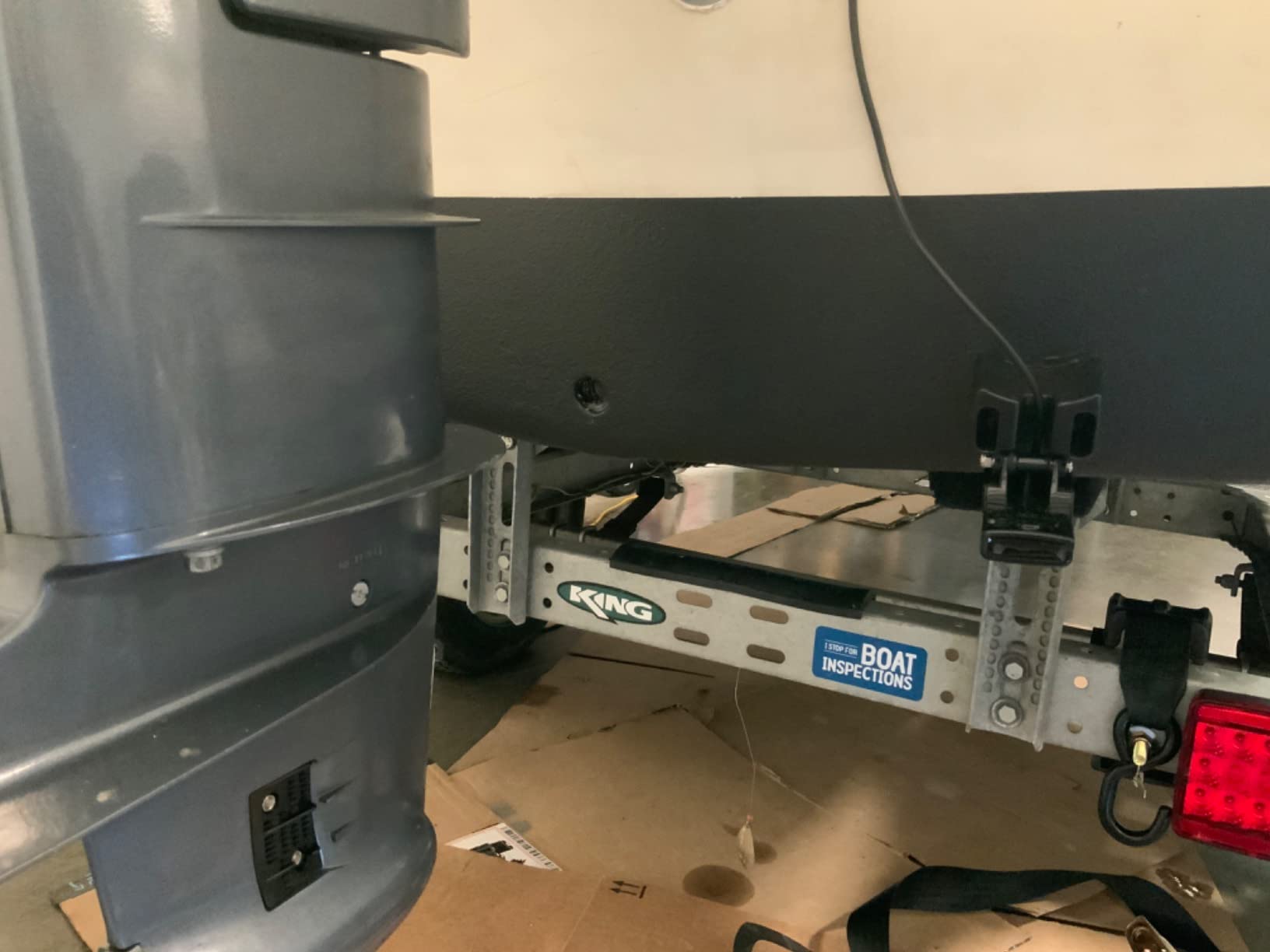
The mount is a tilt and swivel bracket that clicks in and out, and the transducer comes with transom and motor mounts so you can run it off a trolling motor without touching the hull. That combination is why this unit shows up as the consensus entry recommendation on kayak fishing forums: it is the one that installs and removes cleanly at a public launch.
Where it falls short
Two things. The base-tier model has no contour mapping, so you are marking waypoints without building your own depth map, and reviews note signal cutout at speeds above idle paddling pace. If you want color structure separation, the next pick up the list is the step up.
2. Reelsonar iBobber – Best App-Based Castable Sonar
Reelsonar Portable Fish Finder Accurate Fish Depth Finder with Depth Range of 135 feet 10+ Hours Battery Life with iOS & Android App Wireless
- Bluetooth castable sonar
- 135 foot depth range
- 10+ hour rechargeable battery
- Phone and smartwatch apps
Pros
- Pocket-sized body that is easy to cast
- Terrain mapping shows troughs bars and weed beds
- Fish and strike alarms
- Works in fresh and salt water
- Blinking LED for night use
Cons
- Bluetooth range of only 40 to 50 feet
- Occasional dropouts and false arches
- Minimum operating depth of roughly 3.5 to 5 feet
- Shorter real battery life than advertised
The iBobber is a small body you cast and reel in, with the picture appearing on your phone or watch over Bluetooth. There is no screen of its own and no rigging at all, which makes it the cleanest answer for anyone who fishes from a public launch and refuses to carry a mount. Depth range is 135 feet and the rechargeable battery is rated at 10 hours or more.
The app gives you depth-tagged, color-coded fish icons, a fish alarm when something gathers under a dock or pier, and terrain mapping that shows the shape of the bottom. It works in fresh and salt water and doubles as an ice fishing sonar, though the castable format is awkward once the hole is drilled.
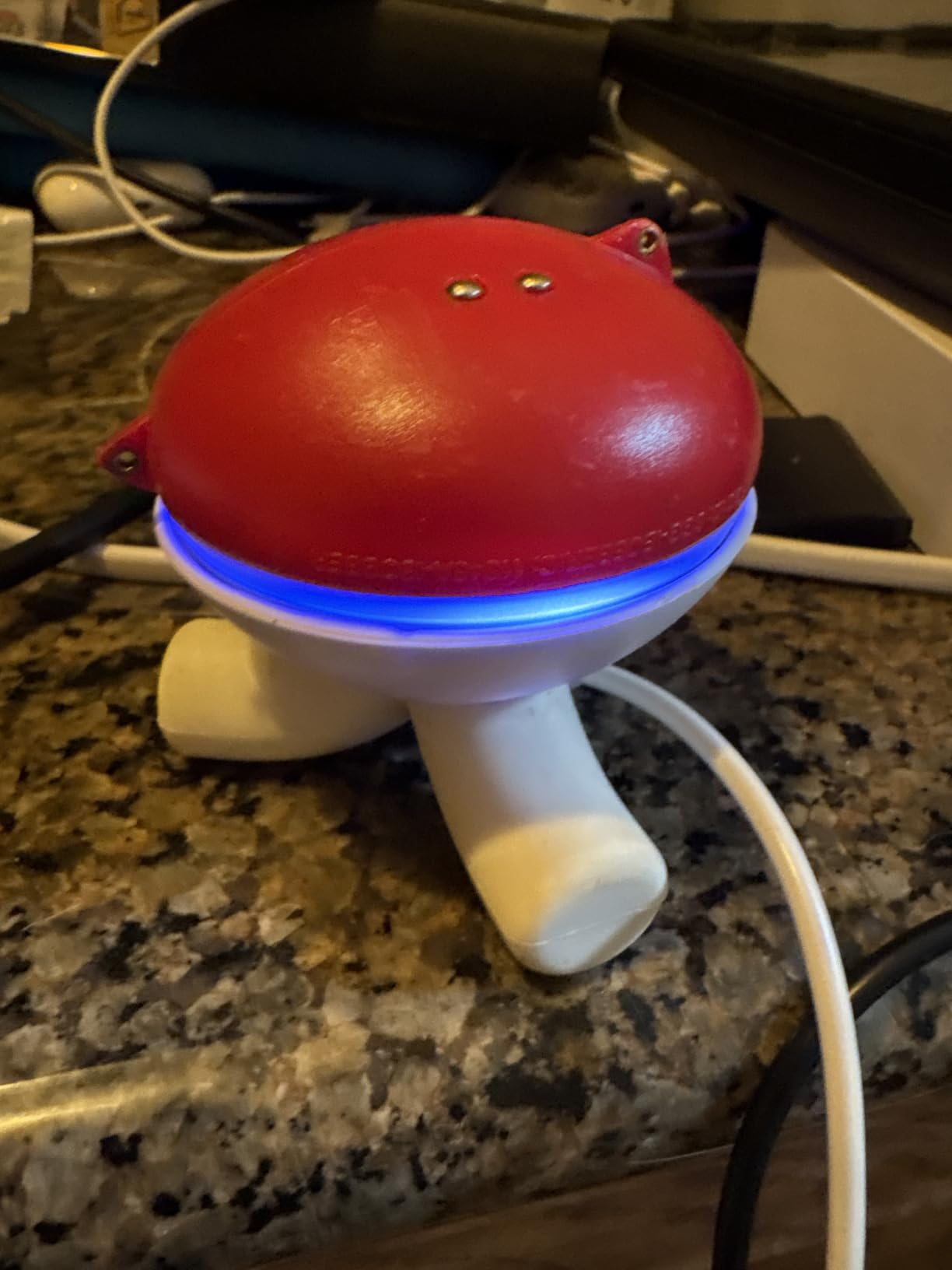
Reviewers are genuinely split on this one. Plenty of owners pair it easily and trust the depth readings on unfamiliar water, while a meaningful group flags short range, disconnections and false fish arches. The one-star share here is the highest of any unit we tested, and the cause is reliability and range rather than build quality, which is solid, with a metal-lined eyelet and a blinking light.
Two limits are worth knowing before you buy. The minimum operating depth is roughly 3.5 to 5 feet, so it is dead in a shallow creek, and leaving the fish alarm on drains the battery faster than the advertised figure suggests.
What it does well on a kayak
Because the phone stays in your hand or on your deck, the iBobber adds no meaningful weight to the hull and no cable to route. It is the sort of unit you can grab on the way out the door, and it is one we would hand to an angler fishing a pond in a plastic sit-on-top.
Where it falls short
Bluetooth tops out around 40 to 50 feet, so the phone or tablet has to stay close, and an aluminum hull between puck and phone will cause dropouts. The mapping scale is also non-intuitive, showing your farthest cast as zero, which takes an afternoon to learn.
3. LUCKY FFC1108 – Budget Pick Handheld Kayak Sonar
LUCKY Kayak Portable Fish Depth Finder Water Handheld Fish Finder Sonar Castable Kayak Boat Fishfinder Transducer Fishing LCD Display FFC1108
- 2 inch backlit LCD
- 3 to 328 ft depth range
- Five sensitivity levels
- Neck strap included
Pros
- Inexpensive entry point into kayak sonar
- Depth and bottom readings matched hull-mounted use
- Small enough to hold in one hand
- Backlight works in low light
- Five sensitivity levels for turbid water
Cons
- No fish size breakdown so it picks up everything
- Will not read through a fiberglass hull
- 2 inch screen limits detail
- Not usable from shore
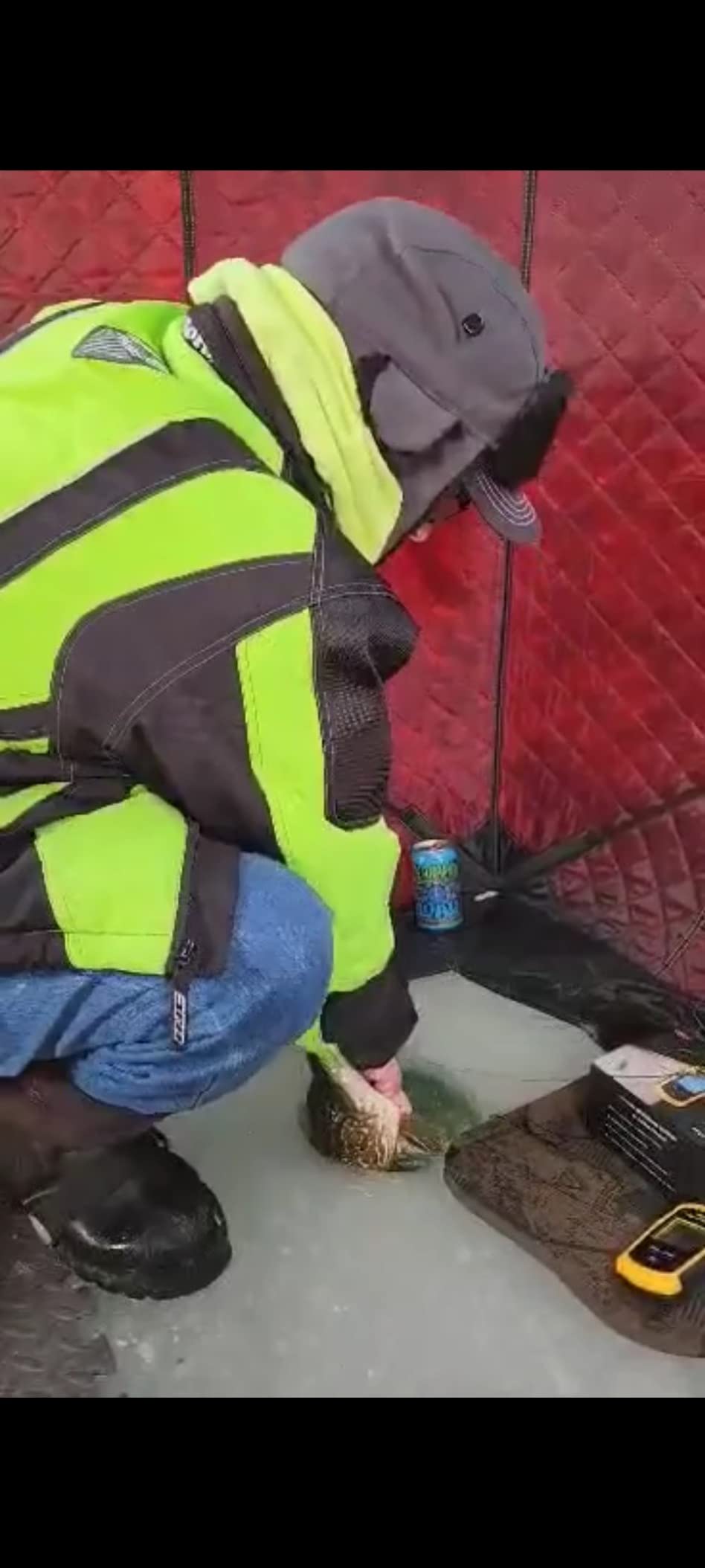
The FFC1108 is the most direct way to find out whether sonar helps you fish, and it does the one job that matters: tell you how deep the water is and roughly where the fish are holding. Detection runs from 3 feet to 328 feet with the transducer fully immersed, and it reports weed, sand and rock bottom as well as depth and fish depth.
Five sensitivity levels let you tune it for clear or turbid water, which matters more than anglers expect on stained rivers and marsh backwater. The backlit display is readable in sunshine and in darkness, and the neck strap makes it hands-free.
Owners report readings that matched whether the transducer was mounted through the hull or dangling beside it, and several treat it as a budget depth finder rather than a fish identifier. That is the right expectation. There is no fish size discrimination, so it registers anything down to minnow size and you will be sorting marks yourself.
Two practical notes. It needs a boat or kayak, so it is not a shore or bank tool, and it will not read through a fiberglass hull. One owner also reported a unit that stopped powering on after a single use, which is worth a quick function check before you rely on it.
What it does well on a kayak
It is light enough to hold in one hand, fits in a jacket pocket, and runs on standard batteries for at least four to five hours, longer in battery-save mode. For a beginner, an angler on a strict budget, or anyone who fishes a shallow creek, that combination is hard to argue with.
Where it falls short
The 2 inch screen is the limit. There is no GPS, no waypoint marking, no temperature log and no chart, so you learn the spot rather than recording it. Over a season on a lake you fish often, that becomes the reason to move up rather than the reason to stay.
4. Deeper Start – Best Budget Castable Puck
Deeper Start Fish Finder – Portable and Depth Finder for Recreational Fishing from Dock, Shore, Bank or Kayak | Castable Deeper Smart Sonar with Free User Friendly App
- Castable sonar with own Wi-Fi
- 165 ft casting and depth
- 40 degree beam
- Saved scans with location
Pros
- Cable-free and battery-free body
- Generates its own Wi-Fi so no mobile data is used
- Saves every scan with time and location
- Works from dock shore bank or kayak
- Shows vegetation and bottom contour
Cons
- Wi-Fi pairing can be slow or drop out
- Hard to control the light body in wind and chop
- About 6 hours of runtime is short for a full day
- Fish ID readings are approximate
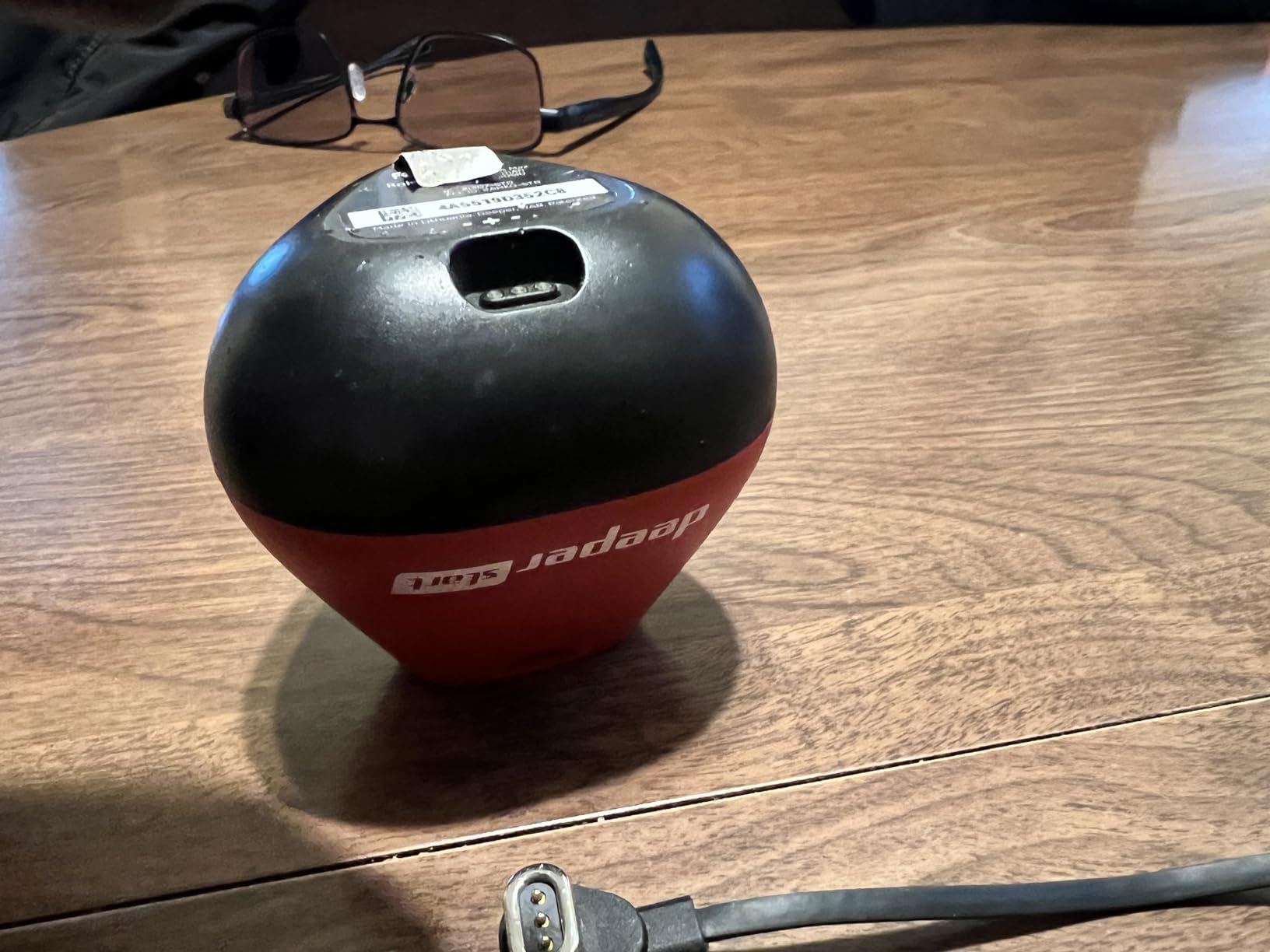
The Deeper Start is the castable that solves the battery problem outright. There is no battery, no cable and no mount, and the puck generates its own Wi-Fi network so your phone never touches mobile data. Casting range and depth capability both run to 165 feet through a 40 degree beam, and it weighs about 0.08 kg, small enough to live in a tackle box.
The real feature is the auto-save. Every scan is stamped with time and location, so a productive patch of grass or a drop-off gets stored in the Fish Deeper app and you can return to it. For anglers who keep re-fishing the same spots, that log is more valuable than the sonar picture itself.

Owners like the cable-free design and the bottom contour detail the app renders, and it works from a dock, a bank or a kayak. The gripes are consistent: pairing to the phone can be slow and occasionally needs re-pairing, the roughly six hour battery is short for a long day, and casting a very light body becomes frustrating in a headwind.
Fish ID readings are approximate. Treat the pictures as structure-finding rather than species identification, and pair the puck with your own judgment about size and depth.
What it does well on a kayak
Nothing to install means nothing to break. It is the answer for a solo angler launching at a ramp with one paddle and a rod, and forum owners recommend this category specifically because it removes the battery from the boat entirely. There is also a night fishing mode for low light checks.
Where it falls short
It is a phone-dependent tool, so your sonar is only as good as your phone and your phone battery. Six hours of puck runtime, paired with an app that keeps the screen awake, is the realistic ceiling on a long summer day.
5. Garmin STRIKER Vivid 4cv – Best ClearVu Detail in Color
Garmin Striker Vivid 4cv Fishfinder with Transducer – 4-inch LCD Display – Easy-to-Use Scanning Sonar – Color Palettes, 11.2 Ounces (010-02550-00)
- 4 inch color display
- CHIRP plus CHIRP ClearVu
- Quickdraw Contours mapping
- GPS with waypoints
Pros
- Bright color screen separates fish from structure
- CHIRP traditional plus ClearVu in one transducer
- Quickdraw Contours builds your own maps
- Two year limited warranty
- Tilt and swivel bail mount included
Cons
- Costs more than the handheld units in this roundup
- Wired install takes more effort than a castable
- 4 inch screen is small next to the 7 and 9 inch models
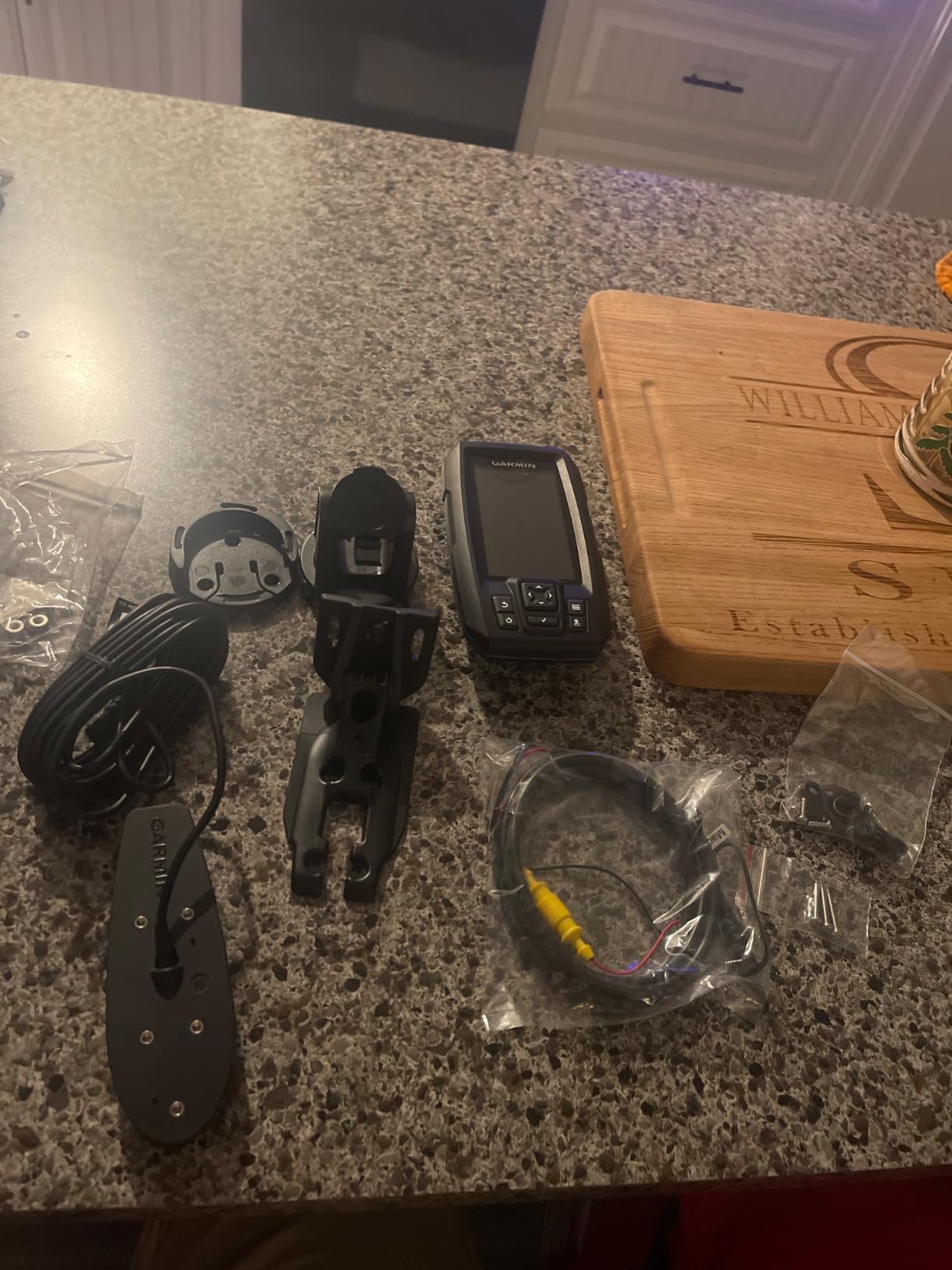
The STRIKER Vivid 4cv is the highest-rated unit we tested, and the reason is color. Vivid scanning sonar palettes let you separate a fish arch from a stump or rock at a glance, which is exactly the judgment call that slows you down on a monochrome screen. The GT20 transducer in the box supplies both CHIRP traditional sonar and CHIRP ClearVu scanning sonar.
At 4 inches it still fits a kayak cockpit without dominating it, and the tilt and swivel bail mount makes repositioning between a bow and a lap mount quick. High-sensitivity GPS handles waypoints, routes and boat speed, and Quickdraw Contours is built in rather than sold as an upgrade.
Reviewers highlight the vivid palettes, the ClearVu detail, Quickdraw Contours and straightforward setup, and few raise specific faults beyond screen size and the effort of a wired install. With 83 percent five-star ratings, few owners report a specific fault.
Weight is 11.2 ounces, about three more than the STRIKER 4, and the tradeoff is the power cable and transducer lead you now have to route. In a kayak that means a gear track, a RAM mount or a RAM-style ball joint, and about an hour the first time.
What it does well on a kayak
This is the pick for someone who has used a basic unit and decided the picture was not clear enough. Color structure separation, a display you can read at dawn, and a two year warranty made this a confident install, and the same housing line is available in larger sizes if you move to a small boat later.
Where it falls short
It carries a higher price tag than the handheld units in this roundup, and the 4 inch screen still requires you to sit close to read it in glare. A fixed kayak cockpit with limited mounting real estate is where the bigger STRIKER Vivid sizes stop making sense.
6. Deeper PRO+ 2 – Best Castable Unit with GPS Mapping
Deeper PRO+ 2 Sonar Fish Finder – Portable Fish Finder and Depth Finder For Kayaks, Boats and Ice Fishing with GPS Enabled | Castable Deeper Fish Finder with FREE User Friendly App
- Wide mid and narrow beams
- 330 ft depth accuracy
- 0.4 in narrow-beam separation
- Built-in GPS bathymetric maps
Pros
- Reliable Wi-Fi beats Bluetooth-only castables
- Narrow beam resolves the smallest targets
- Built-in GPS saves maps of productive structure
- Reaches 330 feet
- 3.2 ounces and fits a tackle box
Cons
- No charging adapter; the box includes only a USB cable
- Phone battery is used to view the sonar
- App takes time to learn
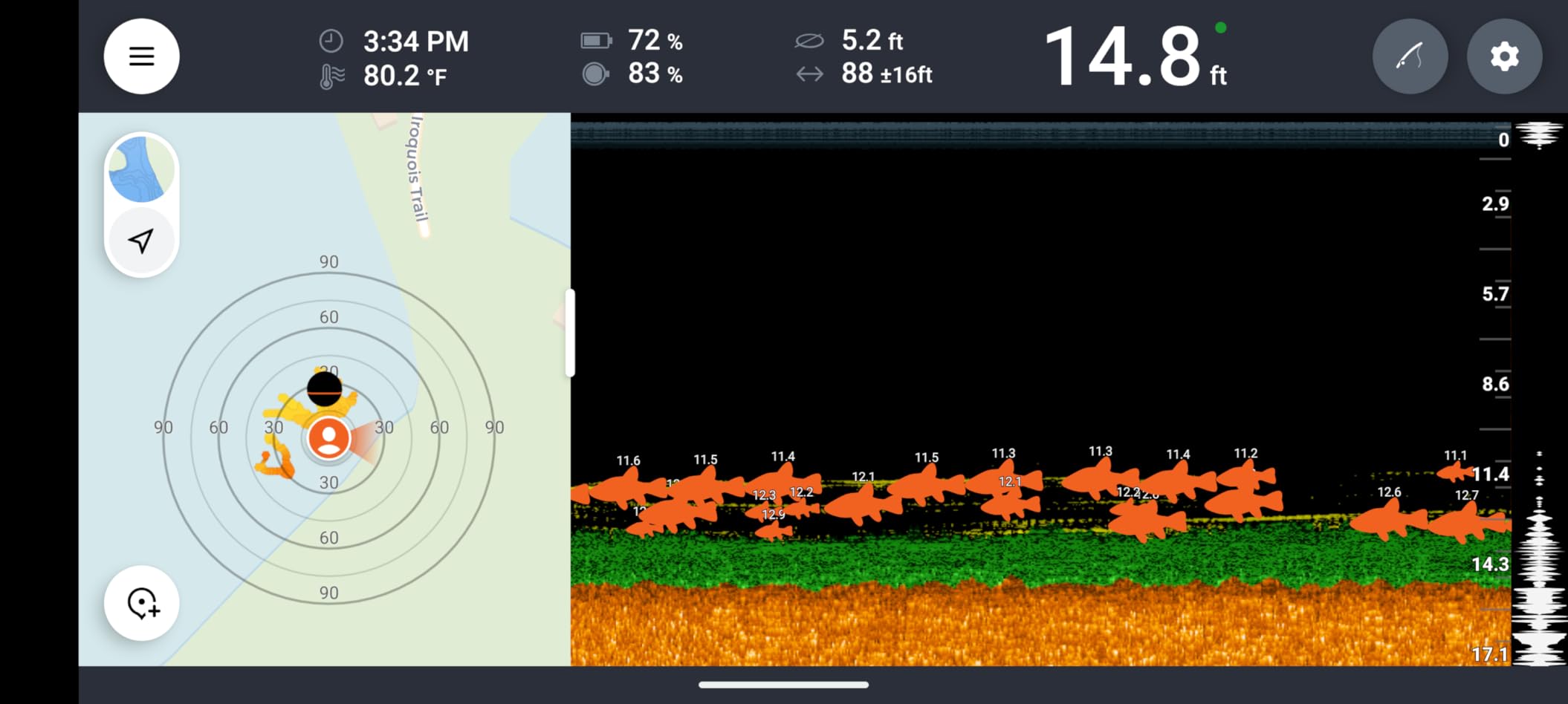
The PRO+ 2 is the step up for anglers who want a castable that can build maps instead of just showing marks. It has its own dependable Wi-Fi, three selectable beams and a built-in GPS that lets you create bathymetric maps from shore, dock or bank and save them in the Fish Deeper app for the next trip.
Target separation is 0.4 inches on the narrow beam and 1 inch on the wide and mid beams, and depth accuracy runs to 330 feet. That narrow beam is the feature vertical jiggers and ice anglers care about, because it resolves targets the wide beam merges together.
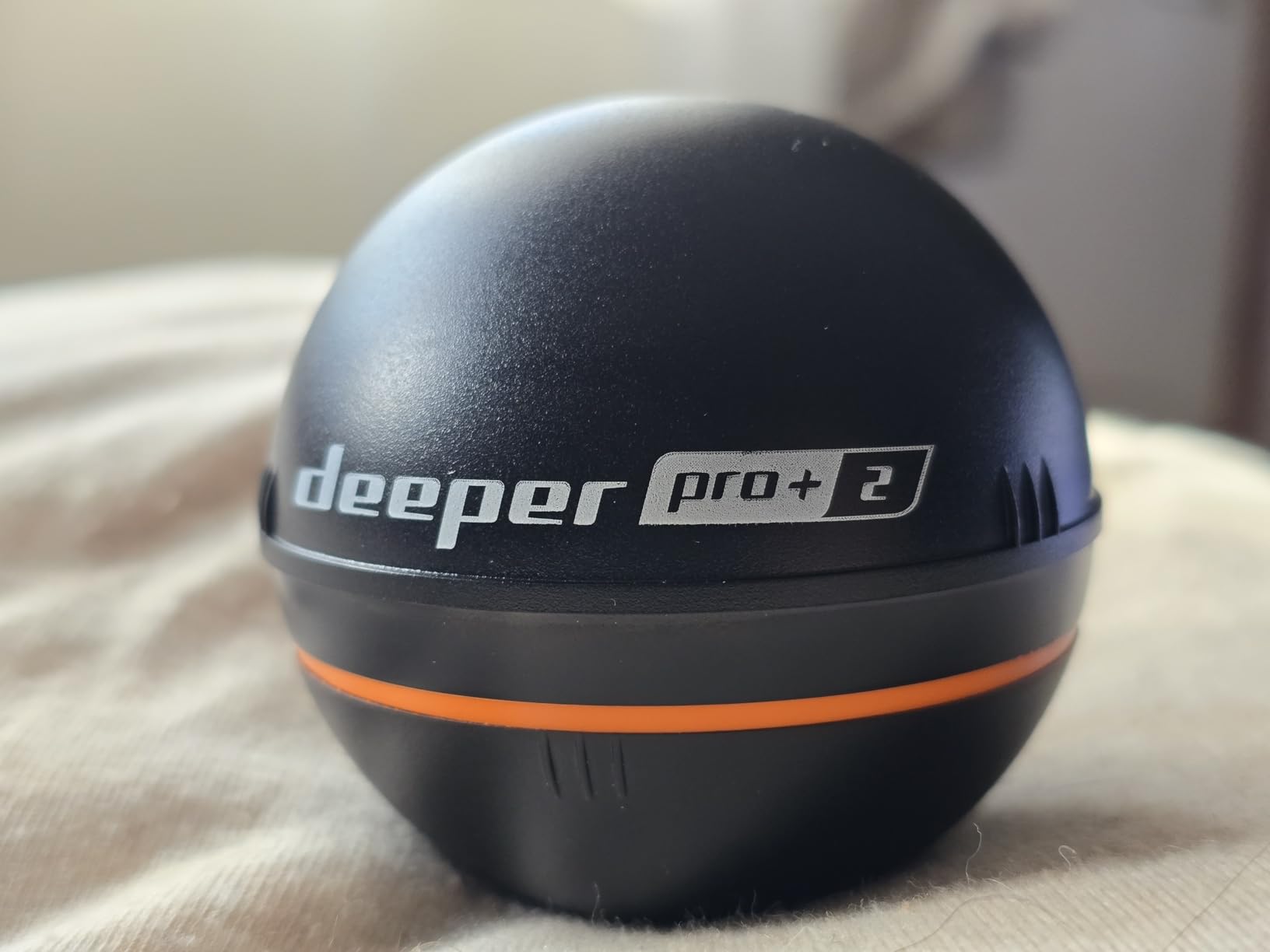
At 3.2 ounces it disappears into a tackle box, and it carries a two-year limited manufacturer warranty. Reviewers consistently single out the connection quality as better than Bluetooth-only castables, which is the main thing that separates this from the entry-level castables.
There is no screen of its own, so the display is your phone, and the box includes a USB wire but no charging adapter. Beam switching and map creation both have a learning curve, and the phone battery becomes part of your runtime math.
What it does well on a kayak
It is the castable in this roundup that records where you were as well as what you found. Fishing the same lake twice in a season, you can build a map from a flat calm morning and then run it live on the second trip without any rigging in the cockpit.
Where it falls short
It is a phone-display product in a category where that matters, and the app will drain a phone faster than the puck lasts on a long day. If your phone is your only computer on the water, plan on a power bank in the deck pocket.
7. LUCKY Portable Sonar – Best Standalone Screen Without a Phone
LUCKY Portable Sonar Fish Finder Boat Depth Fishing Fish Finders Waterproof Handheld Wireless Fishing Finder Kayak Transducer Depth Finders for Ice Fishing Sea
- Wireless castable with own LCD
- 656 ft range,147 ft depth
- 125 kHz,90 degree beam
- Waterproof and floats
Pros
- Own waterproof LCD so no phone is needed
- Floats and includes a lanyard
- Depth verified accurate within about a foot
- Colored bottom contour and fish hold display
- 5 to 6 hours; 10+ in battery-save
Cons
- Signal drops while the receiver is submerged
- Thin manual and a real learning curve
- Transducer ball sleeps out of the water
- Small medium and large size thresholds undefined
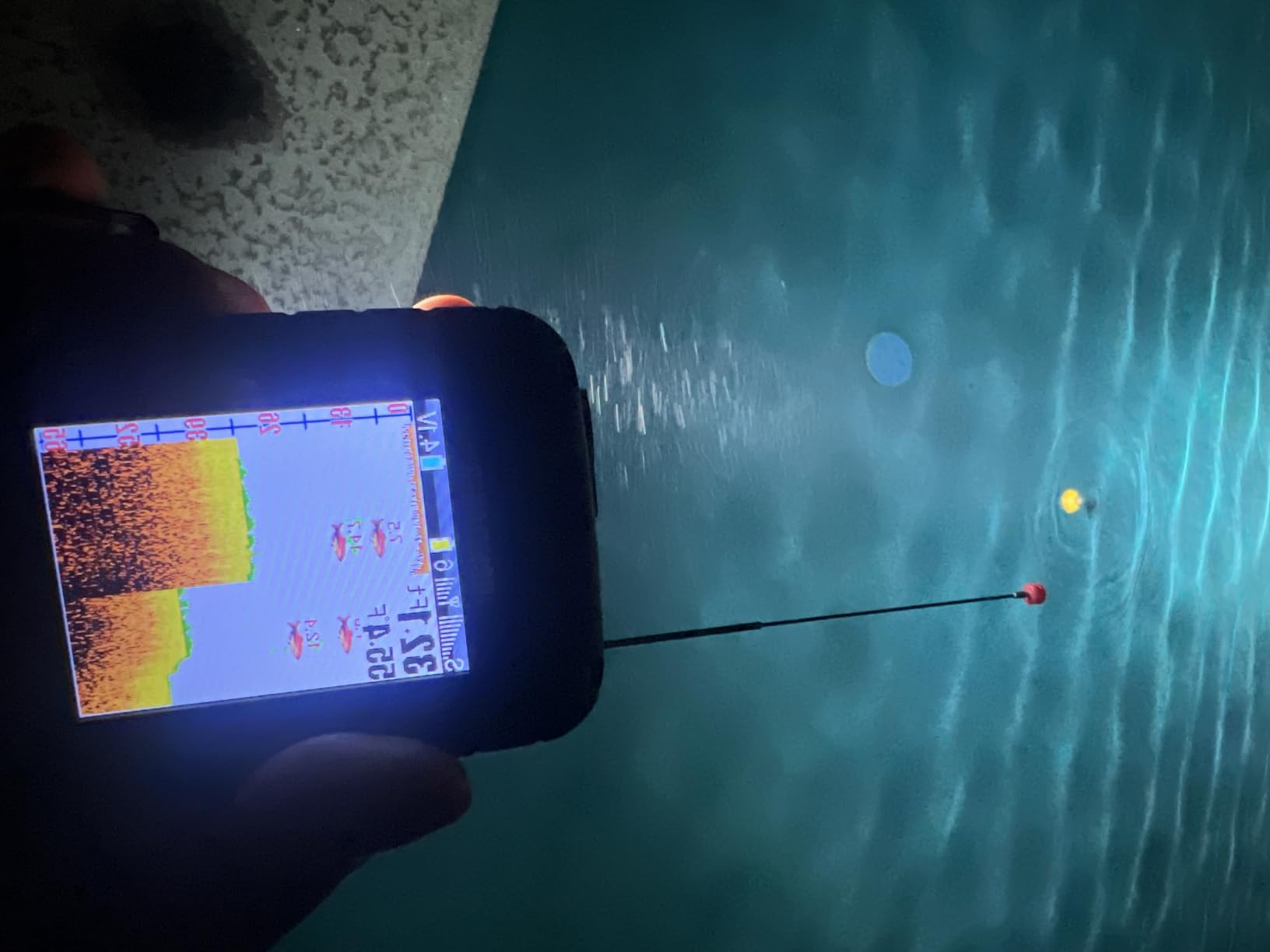
This is the compromise most anglers do not know exists: a castable sonar that arrives with its own waterproof LCD receiver. No phone, no app, no Wi-Fi pairing. The receiver floats, it comes with a lanyard, and it shows water depth, approximate fish location, fish size, water temperature and bottom contour.
Wireless range runs to 656 feet with 147 feet of maximum depth detection through a 125 kHz transducer at a 90 degree beam. The battery gives 5 to 6 hours of continuous use and more than 10 hours in battery-save mode, which is longer than most castables in this roundup. A replacement transparent cap lets the sonar ball glow in the dark for night fishing.
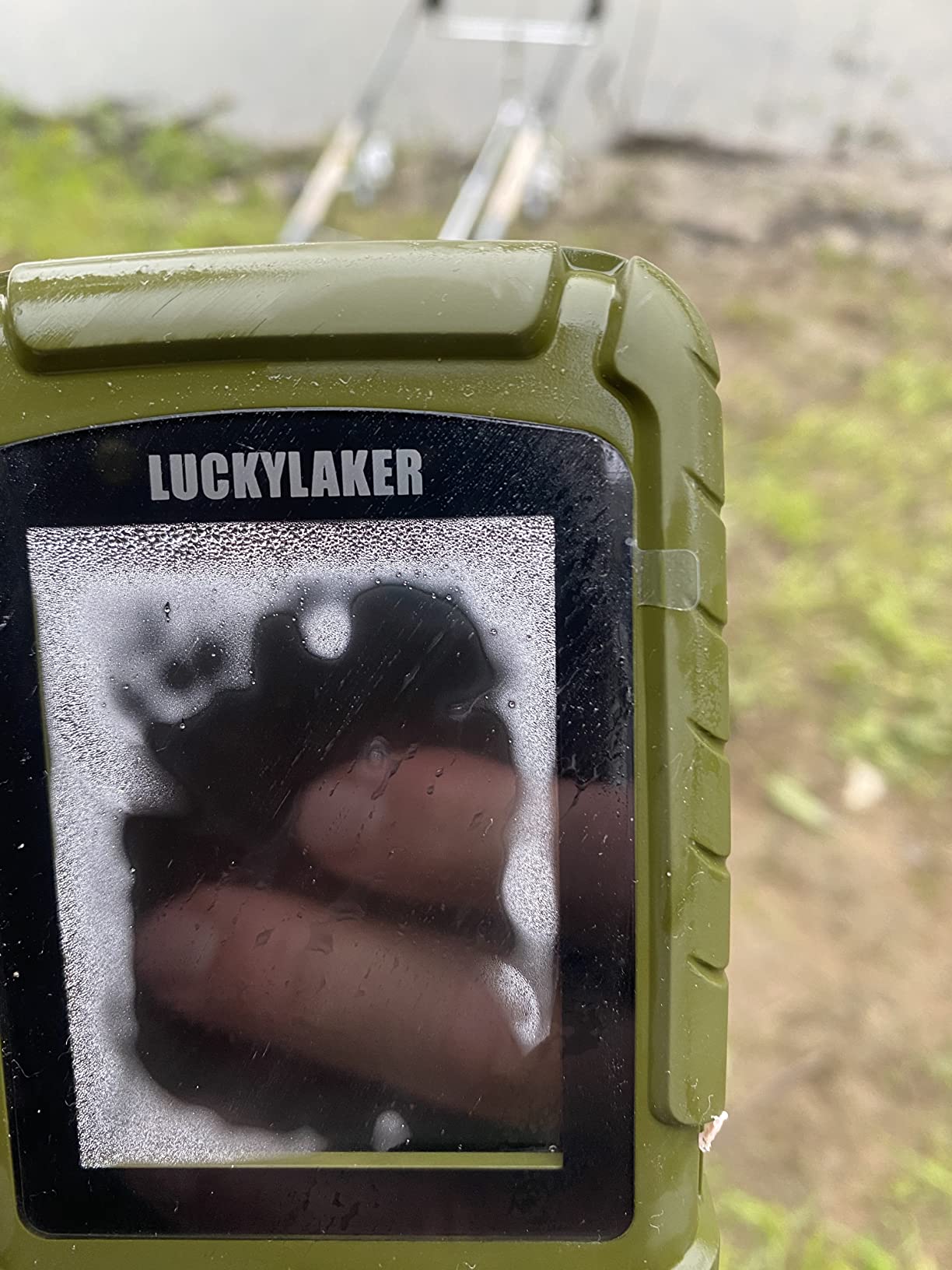
Owners like having a rugged dedicated screen rather than sharing a phone in a wet, tippy boat, and they report depth readings that checked out within about a foot against published charts. Fish, school and shallow-water alarms cover the situations where you cannot watch the screen.
The compromise is reliability at the moment it matters. The signal is lost while the receiver dips below the surface and takes a moment to reacquire, and the transducer ball enters a sleep state out of the water. The manual is thin, and the thresholds that separate small from medium from large fish are never defined.
What it does well on a kayak
For a beginner or a saltwater angler who does not want corrosion risk around a phone, this is a genuinely self-contained option. It works from kayak, dock, bank and ice, and the physical buttons can be operated with cold or wet hands in a way a touchscreen cannot.
Where it falls short
There is no GPS and no waypoint storage, so it tells you what is under you right now and nothing about where it was. A couple of owners also reported the sealed transducer unit stopped accepting a charge after a few months of use.
8. Garmin STRIKER Cast – Best Casting Range in a Castable
Garmin Striker Cast, Castable Sonar, Pair with Mobile Device and Cast from Anywhere, Reel in to Locate and Display Fish on Smartphone or Tablet (010-02246-00)
- Castable sonar streaming to app
- 200 ft streaming range
- Built-in GPS with Quickdraw maps
- 10+ hour battery
Pros
- Built-in GPS is unusual in a castable
- 200 ft streaming range far beats Bluetooth
- Quickdraw Community 1 ft contour downloads
- Switches itself off out of the water
- Carry bag and 20 ft tether included
Cons
- Relies on a phone or tablet
- 20 ft tether is short
- Sonar detail trails a CHIRP ClearVu unit
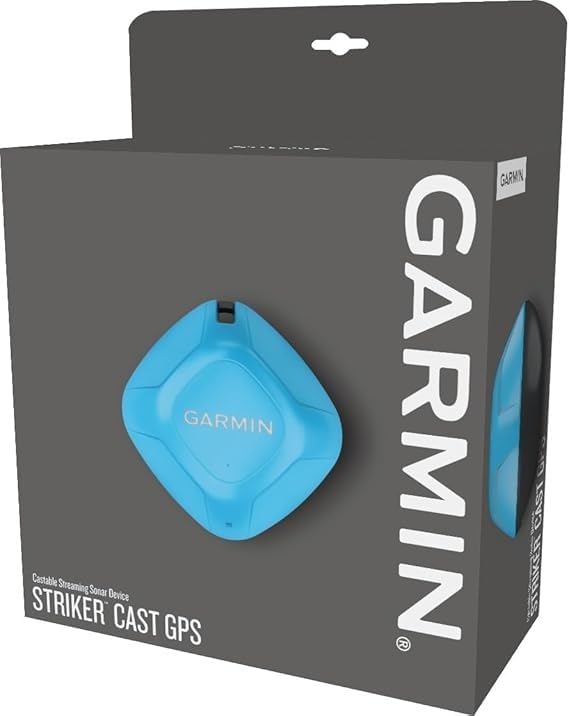
The STRIKER Cast streams traditional 2-D sonar and an ice flasher mode wirelessly from up to 200 feet away, and a built-in GPS lets you mark spots directly from a kayak. That combination is rare at this class, because most castables with GPS either stream less reliably or sit in a different bracket.
It runs more than 10 hours on an internal USB-rechargeable battery, powers on when it hits the water and powers off when you pull it out, and the box includes a carrying bag, a USB cable and a 20 ft tether. Maps with 1 foot contours can be downloaded from the Garmin Quickdraw Community.
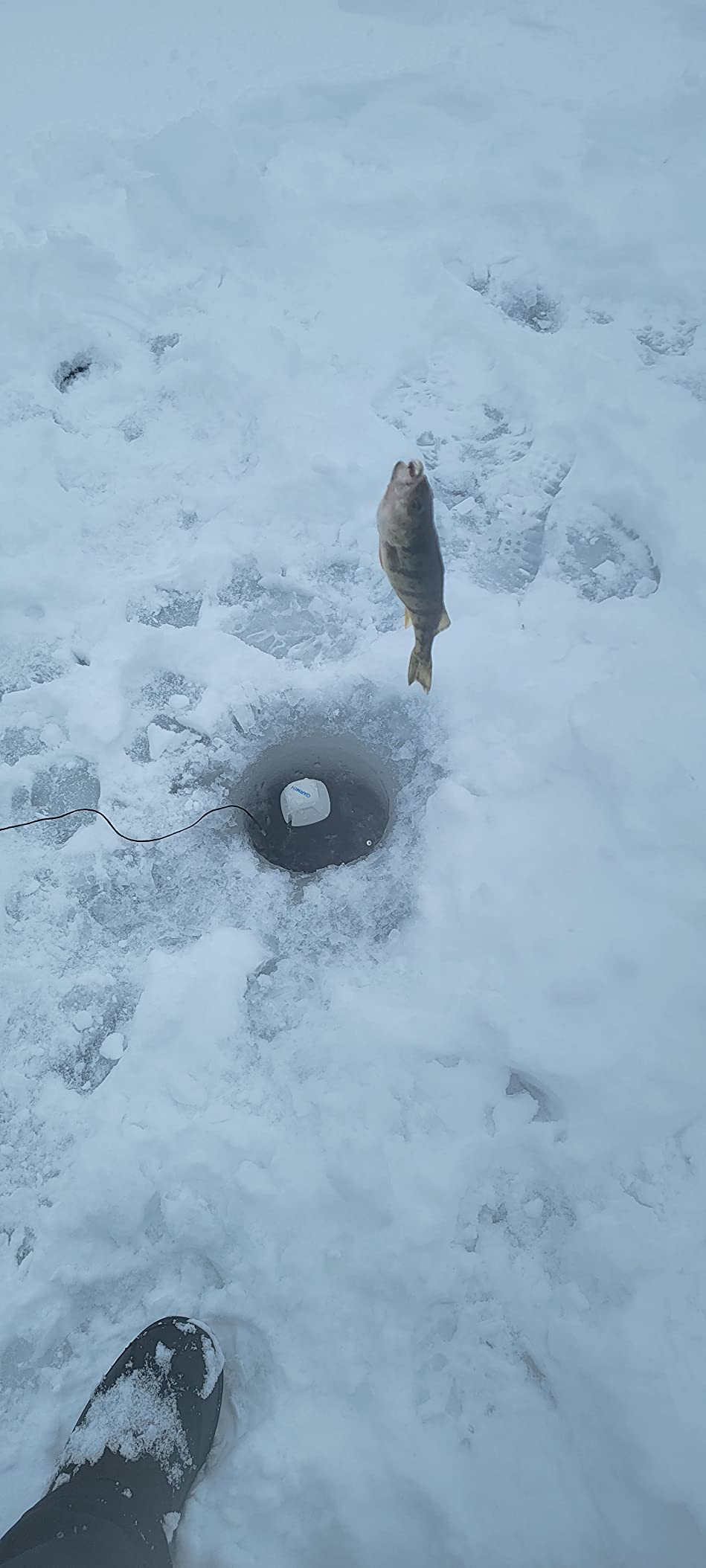
Setup is about as simple as electronics get: download the app, pair, fish. Reviewers rate it well for casting range, the built-in GPS and the quick map access, and consider it a natural fit for an angler who wants to mark waypoints from a kayak without installing anything.
The reservation is obvious in a wet environment. You are reading a phone screen in a cockpit that tilts when you lean, and the sonar detail sits below what a CHIRP ClearVu unit shows, with some confusion between fish and weed. The 20 ft tether is also short next to longer casting setups.
What it does well on a kayak
Casting ahead of the bow into a channel you cannot reach by paddling, then marking the spot on the way back, is what this unit is for. The automatic on and off behavior means the battery only drains while the puck is actually in the water, which is a real saving on a long paddle-in.
Where it falls short
It is a phone-display product, and a phone in a kayak is a phone you are constantly protecting. If you already carry a power bank for your phone, that changes the math. If you do not, factor it into the decision.
How to Mount and Power a Fish Finder on a Kayak
Portability is mostly rigging. There are four ways to mount a transducer on a kayak and three realistic ways to power a display, and the right choice depends on whether you own the hull permanently or carry the unit between boats.
Gear track with an articulated arm is the standard for a serious rigged kayak. The track carries the display, the battery and the transducer arm, and everything comes off in seconds. Owners with two or more kayaks describe exactly this setup: one gear track per hull, one set of electronics moved between them. The tradeoff is cost and the drilling involved in bolting the track down.
Suction cup mounts are the cheap, no-drill option. They hold reasonably well on an aluminum or plastic hull, though forum owners are skeptical about their value on composite kayaks, and they will not survive a capsize. Treat them as a temporary or rental-kayak solution.
Scupper hole mounts are a low-cost plastic bracket that uses the drain hole as a mount point. It takes almost no time, but owners widely describe the result as impractical because the transducer still hangs out of the hull bottom where it can strike obstacles.
In-hull or shoot-through-hull installs glue the transducer inside a sealed hull and read through the plastic. It is the cleanest-looking solution and removes the arm entirely, but it only works on hulls thin enough to pass the signal, it is close to permanent, and installation demands plenty of marine-grade sealant to eliminate air pockets behind the element. A fiberglass hull will not read through at all.
On power, the three options are a sealed lead-acid 12V battery, a lithium pack, or AAA batteries and a USB power bank. Amp draw is where portability is actually won or lost. The STRIKER 4 draws 0.23 amp at 12V, so a 7Ah lithium pack gives it roughly 30 hours, a 12Ah pack roughly 50, and a 24Ah pack roughly 100. Models in the 1 amp range cut those figures to single digits. This is the math no roundup does, and it is the difference between a full season and a dead unit at the third launch.
Two rigging rules matter more than the mount choice. The transducer must face straight down with nothing in front of it, and the arm must not flex, because a shifting transducer produces unstable readings that look like bad electronics. Cable runs should follow existing channels so they never cross a paddle path.
How to Read Your Sonar Screen on a Kayak
Once the screen lights up, four marks cover most of what you will see. A fish arch is a curved mark that rises off the bottom line, and the width of the arch is roughly the size of the fish. A brush pile or stump shows as a tall, solid blob with a distinct shadow behind it, which is why CHIRP frequency sweeps matter. A bait cloud appears as a loose cluster of small arches held just off the bottom, and gamefish usually sit above or beside it rather than in it.
A false bottom happens when suspended sediment or a thermocline reflects the signal and the unit plots a bottom shallower than the real one. If the depth reading jumps as you paddle, that is what is happening, and moving or reducing sensitivity settles it. Distinguishing hard from soft bottom comes down to color and return strength: a strong, bright, hard return is rock or gravel, and a weak, softer, warmer return is silt or mud.
Finally, know your target separation. It is the minimum distance the unit can resolve between two objects, and anything closer than that merges into a single mark. The Deeper PRO+ 2 resolves 0.4 inches on its narrow beam, which is why a tight school reads as several fish instead of one blob.
Buying Guide: 7 Criteria That Matter on a Kayak
1. Packability. Measure the whole rig, not the display. A 3.5 inch unit, a bracket, a 12V lead and a 7Ah pack stow in a dry bag without thinking about it. A 5 inch display with a coiled cable and a 12Ah battery is a real packing problem in a sit-on-top.
2. Rig weight and trim. The STRIKER 4 at 8 ounces is the difference-maker. A display, a battery and a transducer arm can total a few pounds, and weight sitting behind your seat changes tracking noticeably on a shallow-water skiff. Stow the battery low and centered, not in the bow, and you keep the bow light.
3. Install and removal time. Count it honestly on the first trip and expect it to halve by the third. Anything that requires a drill at the ramp will stop being used.
4. Battery runtime math. Find the unit’s amp draw, multiply the capacity of your battery in amp-hours, and you have your hours. Build in a third for cold mornings, screen brightness and a phone in battery-save mode.
5. Screen readability in sun. A sunlight-readable backlit display is not an upgrade, it is a requirement. The 2 inch screens in this roundup are usable with a hood or a hand over them; the 3.5 and 4 inch screens are readable outright.
6. Transducer mounting options. Check what is in the box. The STRIKER 4 and the STRIKER Vivid 4cv both include transom and motor mounts; most competitors expect you to buy an arm separately.
7. Water-type fit. Shallow creeks rule out anything with a deep minimum operating depth, and the iBobber’s roughly 3.5 to 5 foot floor is a real limit. Saltwater needs a wash-down habit, and a handheld that floats is worth more than a mounted display when the forecast turns.
One honest category check: if you only want to know the depth before you fish a spot, and you fish the same two places, a handheld depth finder or no electronics at all is the right call. Electronics earn their weight when you are marking structure and returning to it.
Frequently Asked Questions
What is the best fish finder for a kayak?
The Garmin STRIKER 4 is the best fish finder for most kayak anglers because it weighs 8 ounces, has a sunlight-readable 3.5 inch screen, CHIRP plus ClearVu sonar and a built-in GPS waypoint map, and it installs on a trolling motor mount without drilling the hull. The Deeper Start wins if you want zero rigging and no battery at all.
Does a fish finder work on a kayak?
Yes, and small kayaks are actually easier to work with than big boats because you sit lower, move slower and disturb less water. The only real constraints are transducer placement and power, since a kayak has no electrical system. A suction cup or gear track mount and a lithium pack handle both.
Is Humminbird or Garmin better?
For portable kayak setups, Garmin has the stronger portable lineup: the STRIKER 4 pairs a built-in GPS with a display housing light enough to ignore in a cockpit, and the STRIKER Vivid 4cv delivers CHIRP ClearVu scanning sonar with Quickdraw Contours built in. Humminbird and Lowrance build excellent electronics, but their larger chartplotters expect a 12V marine battery that a kayak does not have.
Where should I mount my transducer on my kayak?
Mount it on a rigid arm off a gear track so it sits just behind the seat, facing straight down with a clear bubble of water in front of it. Avoid the scupper hole unless you accept a transducer hanging under the hull. If you want zero hardware, an in-hull install reads through a thin plastic hull but requires heavy marine-grade sealant to eliminate air pockets.
How much battery does a fish finder drain on a kayak?
It depends entirely on the unit. The Garmin STRIKER 4 draws 0.23 amp at 12V, so a 7Ah lithium pack runs it about 30 hours and a 12Ah pack about 50 hours. Budget roughly a third off those figures for cold mornings and a bright screen. Castable pucks sidestep the problem entirely by running on their own rechargeable battery.
The Verdict for 2026
After six weeks of moving these units between hulls, the Garmin STRIKER 4 remains the best portable fish finder for kayaks overall. Its display housing weighs 8 ounces, it has a built-in GPS, the screen reads in sun, and it installs without a single hole in the hull. Every other choice is a deliberate trade away from that: choose the LUCKY FFC1108 for the simplest setup, the Deeper Start for zero rigging, the Garmin STRIKER Vivid 4cv for color structure detail, or the Deeper PRO+ 2 if you want a castable that maps what it finds.
Whichever you pick, the mount and the battery decide whether you actually use it. Get those right and the sonar pays for itself the first afternoon. Get them wrong and it stays in the garage, which is where most kayak electronics end up.