
The best marine batteries for trolling motors are 12V 100Ah LiFePO4 deep-cycle packs with a real battery management system, and the LiTime 12V 100Ah TM is the one we kept coming back to. It puts 1280Wh into a Group 31 case, weighs 22.2 lb, and reports state of charge over Bluetooth.
That is the short version. The long version is that a trolling motor can pull anywhere from 4 amps at speed 1 to more than 50 amps at full throttle, for eight to twenty hours, day after day. The battery you pick decides how long you fish, how much your boat weighs at the ramp, and how often you replace it. We spent weeks comparing the ten packs below on the four things that actually matter: usable amp hours, real weight, what the battery management system does, and what happens when you plug in the wrong charger.
Two rules came out of that work and they shape every pick below. First, never mix battery ages, brands or chemistries in one bank. Second, a 12V charger cannot charge a 24V or 36V lithium pack, and a lead-acid charger left on a lithium pack is how people cook a battery in their garage. Both of those mistakes are avoidable, and both are common.
We also filtered out a large slice of what shows up in shopping results. Several LiFePO4 packs in this category carry a 4.1 average with a heavy share of one-star reviews, and forum users on thehulltruth.com consistently advise buying from a domestic seller with a traceable brand rather than the cheapest anonymous import. Cheap lithium failures are a battery management system problem, not a chemistry problem. More on that in the buying guide.
Table of Contents
- Top 3 Best Marine Batteries for Trolling Motors (October 2026)
- All 10 Best Marine Batteries for Trolling Motors in 2026
- 1. LiTime 12V 100Ah TM LiFePO4 – Best Overall
- 2. OGRPHY 36V 100Ah All-in-One – Best 36V Setup
- 3. BtrPower 36V 50Ah LiFePO4 – Best Value 36V Pack
- 4. SUPER EMPOWER 12V 100Ah Group 24 – Best Drop-In Fit
- 5. DC HOUSE 12V 100Ah Bluetooth – Best Cell-Level Monitoring
- 6. LGECOLFP 24V 50Ah – Best 24V Setup
- 7. Rvpozwer 12V 100Ah Group 31 – Budget Pick
- 8. WEIZE Dual Purpose AGM Group 24M – Best Dual Purpose Battery
- 9. OPTIMA D31M BLUETOP Dual Purpose AGM – Best Proven AGM
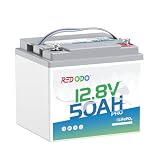
- 10. Redodo 12V 50Ah LiFePO4 – Best Lightweight Portable Pack
- How Long Does a 100Ah Battery Really Last?
- How to Pick the Right Marine Battery
- Match voltage to thrust before anything else
- LiFePO4, AGM or flooded lead acid: which chemistry fits
- Group size decides whether it physically fits
- What the BMS actually does for you
- Charger compatibility is where buyers lose money
- Cold weather and saltwater change the answer
- Never mix battery ages, brands or chemistries
- Frequently Asked Questions
- What type of marine battery is best for a Minn Kota trolling motor?
- What size battery is recommended for a 55lb thrust trolling motor?
- What is the longest-lasting trolling motor battery?
- How long will a 100Ah battery run a 55lb trolling motor?
- What is the best marine battery for a trolling motor?
- What is the best type of battery to use for a trolling motor?
- Will a lithium battery hurt my trolling motor?
- The Verdict: Which Marine Battery Should You Buy?
Top 3 Best Marine Batteries for Trolling Motors (October 2026)
The three below cover the most common setups. The LiTime is the all-round answer, the OGRPHY is the 36V all-in-one for big boats, and the BtrPower is the lighter 36V option when you want capacity without 63 lb on the deck.
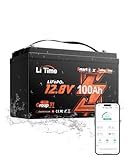
LiTime 12V 100Ah TM LiFePO4
- 1280Wh in a Group 31 case
- 22.2 lb
- IP65 and Bluetooth monitoring
- 4000 cycles at 100% depth of discharge

OGRPHY 36V 100Ah All-in-One
- 3.84kWh single pack
- 200A BMS with 1000A peak
- 63.5 lb
- Onboard charger included

BtrPower 36V 50Ah LiFePO4
- Sized for 100-120lb thrust motors
- 28 lb Group 31 footprint
- IP65 housing
- 5000+ rated cycles
As an Amazon Associate we earn from qualifying purchases. CERTAIN CONTENT THAT APPEARS ON THIS SITE COMES FROM AMAZON. THIS CONTENT IS PROVIDED 'AS IS' AND IS SUBJECT TO CHANGE OR REMOVAL AT ANY TIME.
All 10 Best Marine Batteries for Trolling Motors in 2026
Every battery in this roundup, with the decision that each one is actually best for. Read the reviews below before you buy, because two of these have caveats that matter more than the spec sheet.
| Product | Specifications | Action |
|---|---|---|
|
LiTime 12V 100Ah TM LiFePO4
|
|
Check Latest Price |
|
OGRPHY 36V 100Ah All-in-One
|
|
Check Latest Price |
|
BtrPower 36V 50Ah LiFePO4
|
|
Check Latest Price |
 SUPER EMPOWER 12V 100Ah Group 24
|
|
Check Latest Price |
 DC HOUSE 12V 100Ah Bluetooth
|
|
Check Latest Price |
 LGECOLFP 24V 50Ah
|
|
Check Latest Price |
 Rvpozwer 12V 100Ah Group 31
|
|
Check Latest Price |
 WEIZE Dual Purpose AGM Group 24M
|
|
Check Latest Price |
 OPTIMA D31M BLUETOP Dual Purpose AGM
|
|
Check Latest Price |
 Redodo 12V 50Ah LiFePO4
|
|
Check Latest Price |
We earn from qualifying purchases. CERTAIN CONTENT THAT APPEARS ON THIS SITE COMES FROM AMAZON. THIS CONTENT IS PROVIDED 'AS IS' AND IS SUBJECT TO CHANGE OR REMOVAL AT ANY TIME.
1. LiTime 12V 100Ah TM LiFePO4 – Best Overall
Litime 12V 100Ah Trolling Motor LiFePO4 Battery for Marine, Boat, Yacht
- 12.8V 100Ah, 1280Wh
- 22.2 lb Group 31 case
- IP65 and Bluetooth app
- 4000 cycles at full depth
Pros
- Half the weight of the AGM banks it replaces
- 1280Wh in a standard Group 31 footprint
- Bluetooth app with remote discharge cutoff
- Fast full charge from a portable power station
- Five-year warranty
Cons
- Needs a lithium or MPPT charger on first use
- Bluetooth app asks you to sign in repeatedly
- Not a starting battery
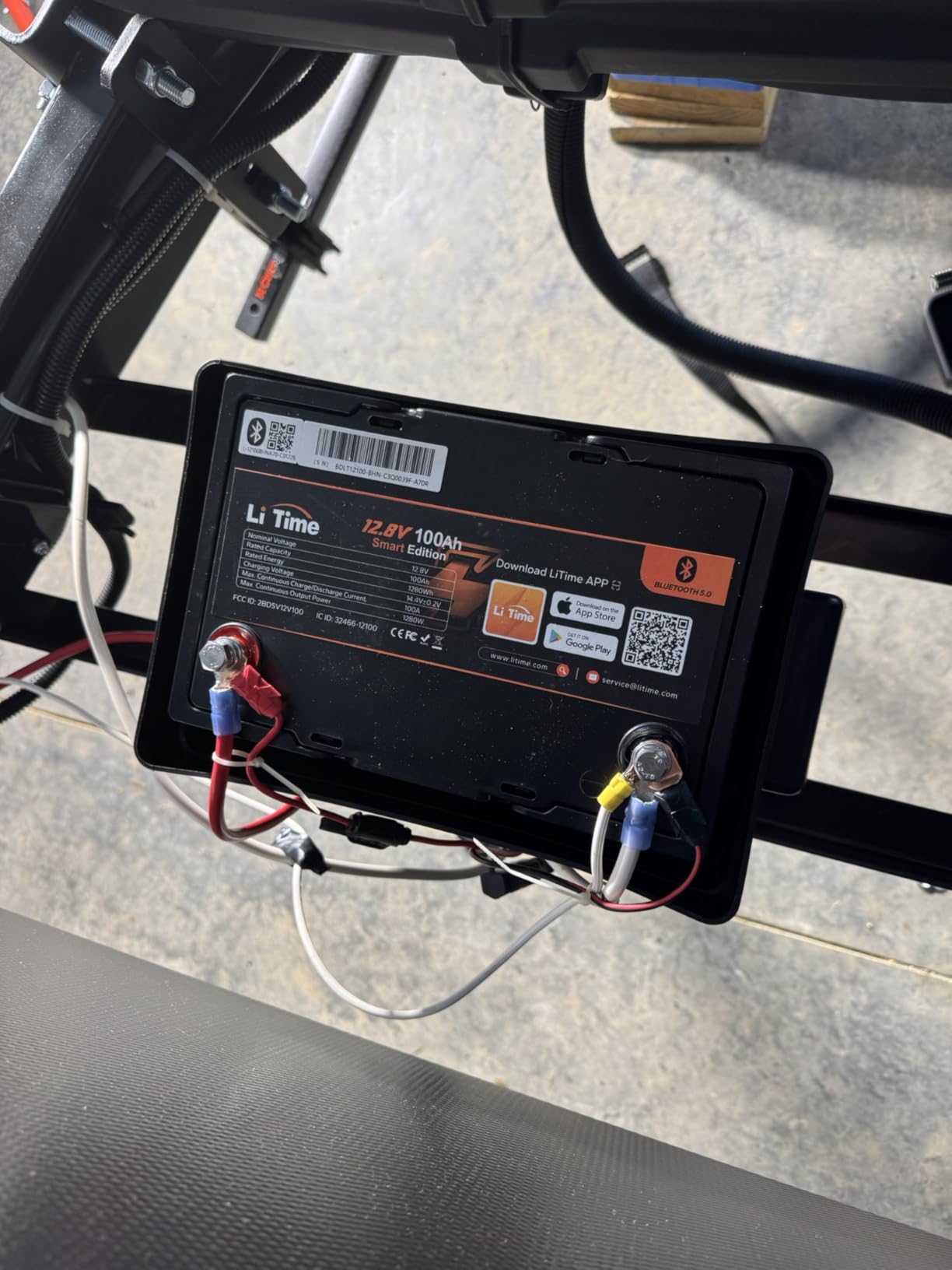
This is the pack we kept handing to friends who asked what to buy. The numbers are the least interesting part: 12.8V, 100Ah, 1280Wh, 13 by 6.77 by 8.5 inches, 22.2 lb. The interesting part is that it lands in a Group 31 footprint with terminal positions matching the OEM AGM it replaces, so the swap is a wire-off, wire-on job on most boats.
Owner reports in the reviews are consistent about the same two things. The first is weight. People replacing a bank of lead-acid with one of these report a boat that handles noticeably better at the launch ramp, which matters more than most spec sheets suggest. The second is the Bluetooth app, which shows state of charge per cell and lets you cut discharge remotely if something goes wrong with the wiring.
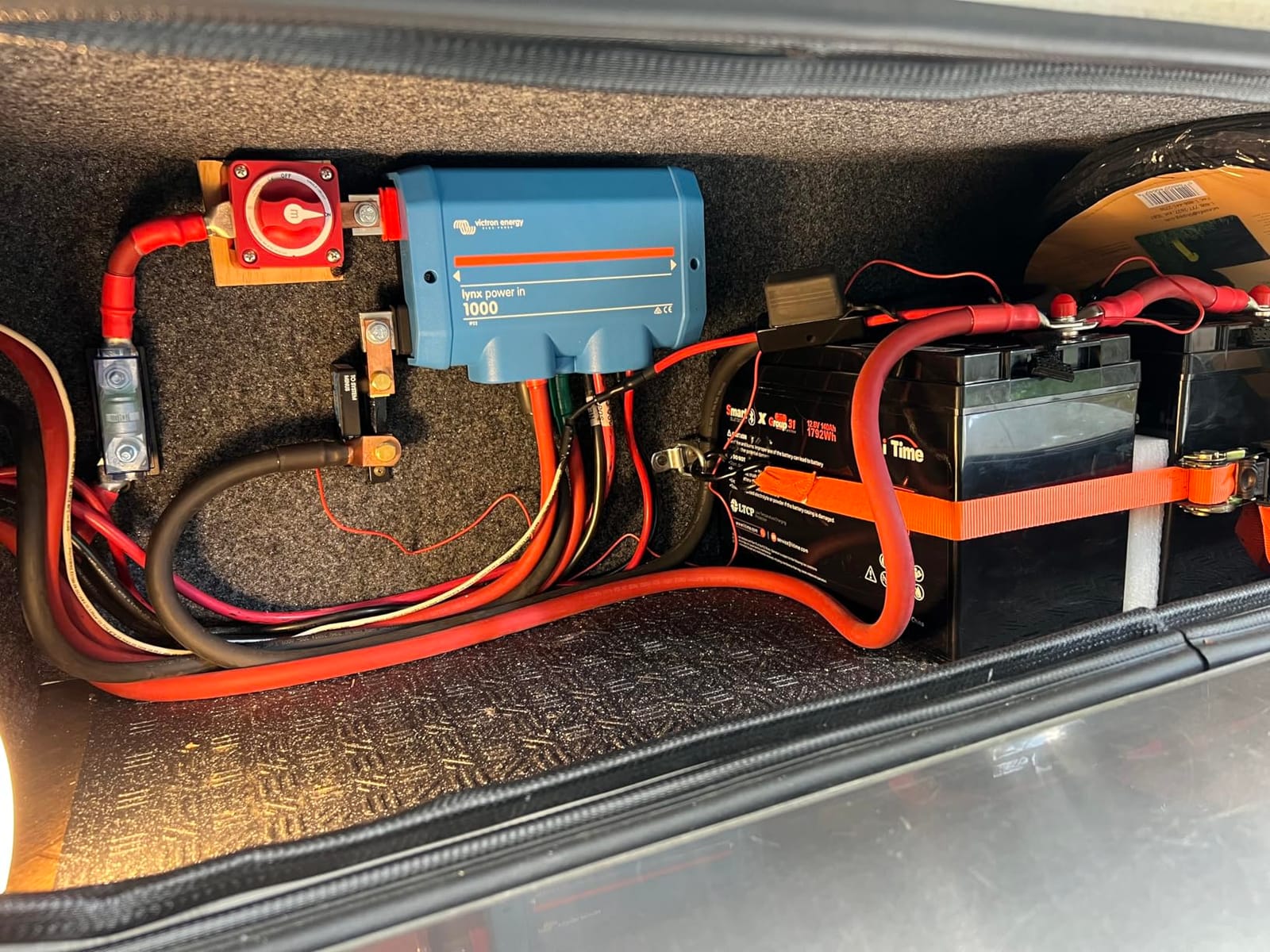
The cycle numbers are unusually well specified for this category: 4000 deep cycles at 100% depth of discharge, 6000 at 80%, and up to 15000 at 60%. That last figure is the one anglers who fish hard actually hit, since nobody runs a pack to zero. Low-temperature protection cuts charging below 32F and discharging below -4F, which matters from November through March in most of the country.
It is rated for trolling motors between 30 and 70 lb of thrust, and it expands to 4P4S for a 51.2V 400Ah system if you ever move up. The one install note: it is energy storage only, so it will not start an outboard, and it needs a lithium-activation or MPPT charger on first use or after it has been switched off.
What you give up versus the heavier packs
Nothing dramatic, but two real trade-offs. There is no cranking capability, so if your boat runs off a single bank you need a separate starting battery or a dedicated house bank. And the Bluetooth app asks you to sign in repeatedly, which several owners mention as a daily annoyance.
A small number of buyers report units arriving in sleep mode that had to be replaced by customer service. It is not a widespread pattern across 645 reviews, but it is worth knowing about before you wire it in on a Friday afternoon.
Who should buy this pack
Anyone running a 12V motor from 30 to 70 lb who wants a full-size Group 31 drop-in with monitoring built in. It handles the 55 lb motor that most anglers actually own, and it is the easiest upgrade path from a lead-acid bank without moving to a different voltage.
If you want to check the fit before you commit, the 13 by 6.77 by 8.5 inch case is standard Group 31, and the terminal layout follows the OEM pattern. Measure your box, check your hold-down bracket, and you are done.
2. OGRPHY 36V 100Ah All-in-One – Best 36V Setup
OGRPHY 36V Lithium Battery, 3.84KWh Golf Cart Batteries with 200A BMS, 25A Lifepo4 Battery with Charger, 1000A Peak Current Perfect for Golf Cart, Solar, Trolling Motor(100AH)
- 36V 100Ah, 3.84kWh
- 200A BMS, 1000A peak
- 63.5 lb single pack
- Bluetooth and LCD monitor
Pros
- One 63.5 lb pack replaces a six-battery lead-acid bank
- 200A continuous with 1000A peak discharge
- Bluetooth app plus a wired LCD state-of-charge monitor
- Onboard 38.4V 25A charger with 0V wake
- Five-year warranty with responsive support
Cons
- Tray hold-down brackets usually need modification
- Shunt-type voltage meters read wrong on a lithium profile
- A DC step-down converter is needed for 12V accessories
This is the pack the 36V crowd has been asking for: one box, 3.84kWh, and a charger in the box. The reason it exists is simple arithmetic. A conventional 36V lead-acid bank is six 6V golf cart batteries, and owners replacing one of those setups report dropping from roughly 360 lb of battery to 63.5 lb.
That weight change is not just a number on a ramp. Owners describe noticeably more torque and speed out of the hole, which on a big bass boat in current is the difference between getting up the ledge and drifting back down it. The discharge headroom is the other reason to like it: 200A continuous and 1000A peak for a three to five second burst, with 300A and 600A available for 32 seconds.
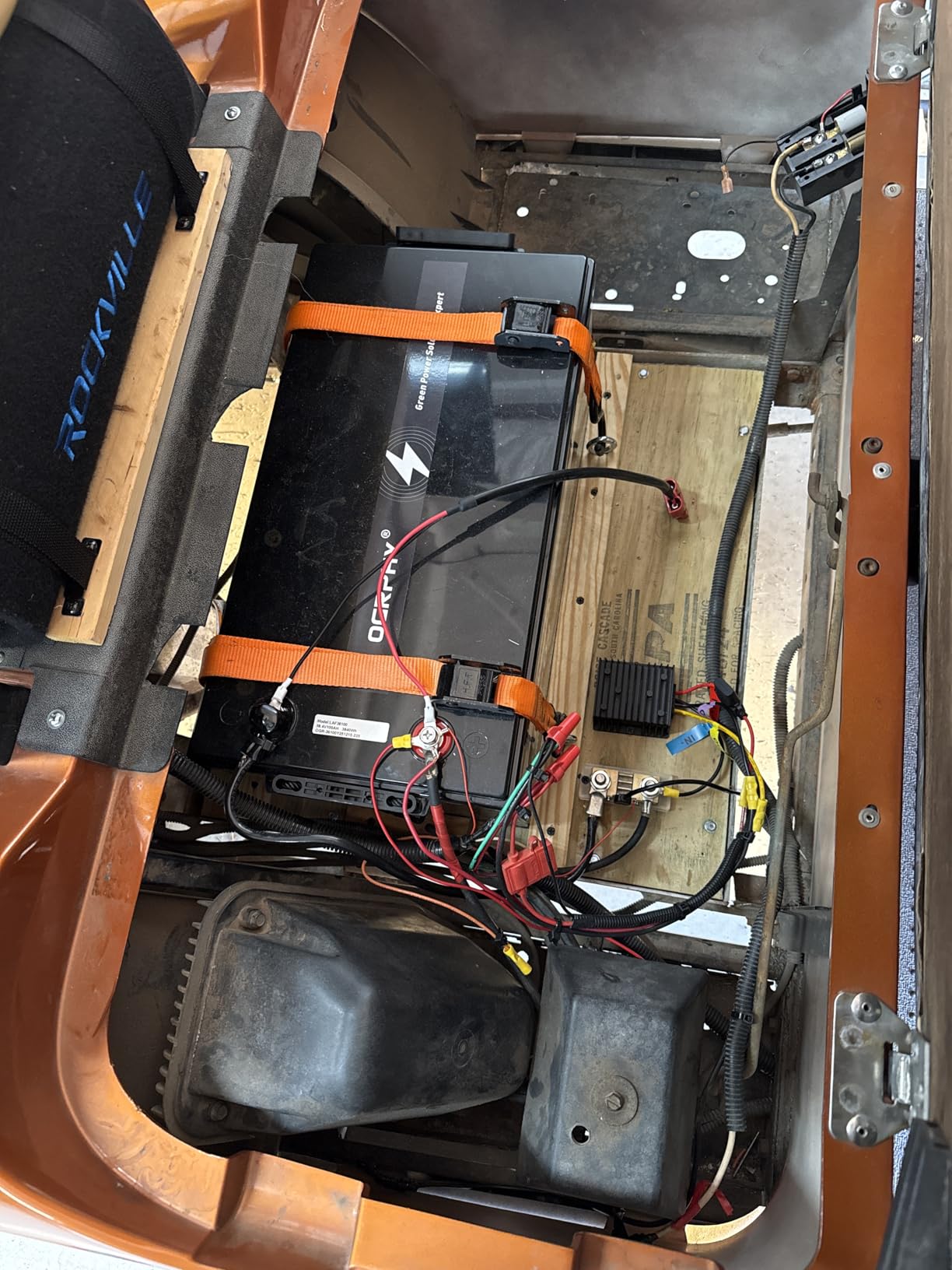
It ships with a 38.4V 25A onboard charger that has a 0V wake-up function, plus M8 terminals, an LCD monitor and a Bluetooth BMS app. Both monitoring options matter more here than on a 12V pack, because a 36V bank is more expensive to replace and harder to test with a multimeter on the boat.
The case measures 10.6 by 20.4 by 8.6 inches, which is wide. In a standard 36V tray it installs with minimal trimming according to owners, but the hold-down brackets almost always need modification, and the LCD display box needs an inline adapter and is not weather protected. Plan for a little rewiring.
Check your 12V accessory wiring first
This is the most common complaint and it catches people out. A 36V lithium pack will not power a 12V trolling motor accessory bus directly. If your fish finder, shallow anchor or bilge pump runs off the battery bank, you need a DC step-down converter, and that is an extra part and an extra hole in the hull.
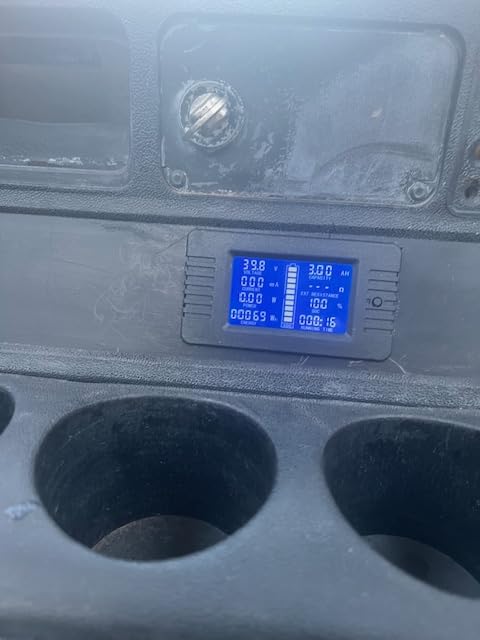
The second gotcha is the old shunt-style voltage meter still wired at the console. It reads high and misleading on a lithium charge profile, so a gauge that looked healthy on lead acid can read odd on this pack. The included LCD monitor is the better instrument.
Who should buy this pack
Big-boat owners on a 36V system who want one battery instead of six, who care about getting the boat light, and who have a bay that will take a 20.4 inch wide case. If you are on a 36V motor rated up to about 70 lb of thrust and you want headroom above that, the numbers here are generous.
Skip it if your boat is already wired for 12V accessories off the same bank and you do not want to add a converter. That is solvable, just not on the dock at 6am.
3. BtrPower 36V 50Ah LiFePO4 – Best Value 36V Pack
36V 50Ah LiFePO4 Bat tery,36 volt Trolling Motor Lit hiu m B attery
- 36V 50Ah, 38.4V nominal
- 28 lb Group 31 footprint
- IP65 housing
- 5000+ rated cycles
Pros
- Purpose-built for 36V motors rated 100-120lb
- About one third the weight of an equivalent lead-acid bank
- Grade A cells rated over 5000 deep cycles
- IP65 water and dust rating
- -20C to 60C operating range
Cons
- Shortest warranty in this group at one year
- 50A BMS is thin for the highest-thrust 36V motors
- No Bluetooth or app monitoring
The argument for this one is fit. At 6.7 by 12.8 by 8.4 inches it is a compact Group 31 design, and at 28 lb it is less than half the weight of the OGRPHY above while still delivering a full 36V. For a bass boat with a cramped forward compartment, that footprint is the deciding factor more often than raw capacity.
Capacity is 50Ah at 38.4V nominal, which is about 1.92kWh. The BMS handles 1.2C discharge, or 60A, and the cells are Grade A LiFePO4 rated over 5000 deep cycles. Owners report a direct replacement path from most 36V lead-acid or AGM banks, which is the reason this kind of pack exists at all.
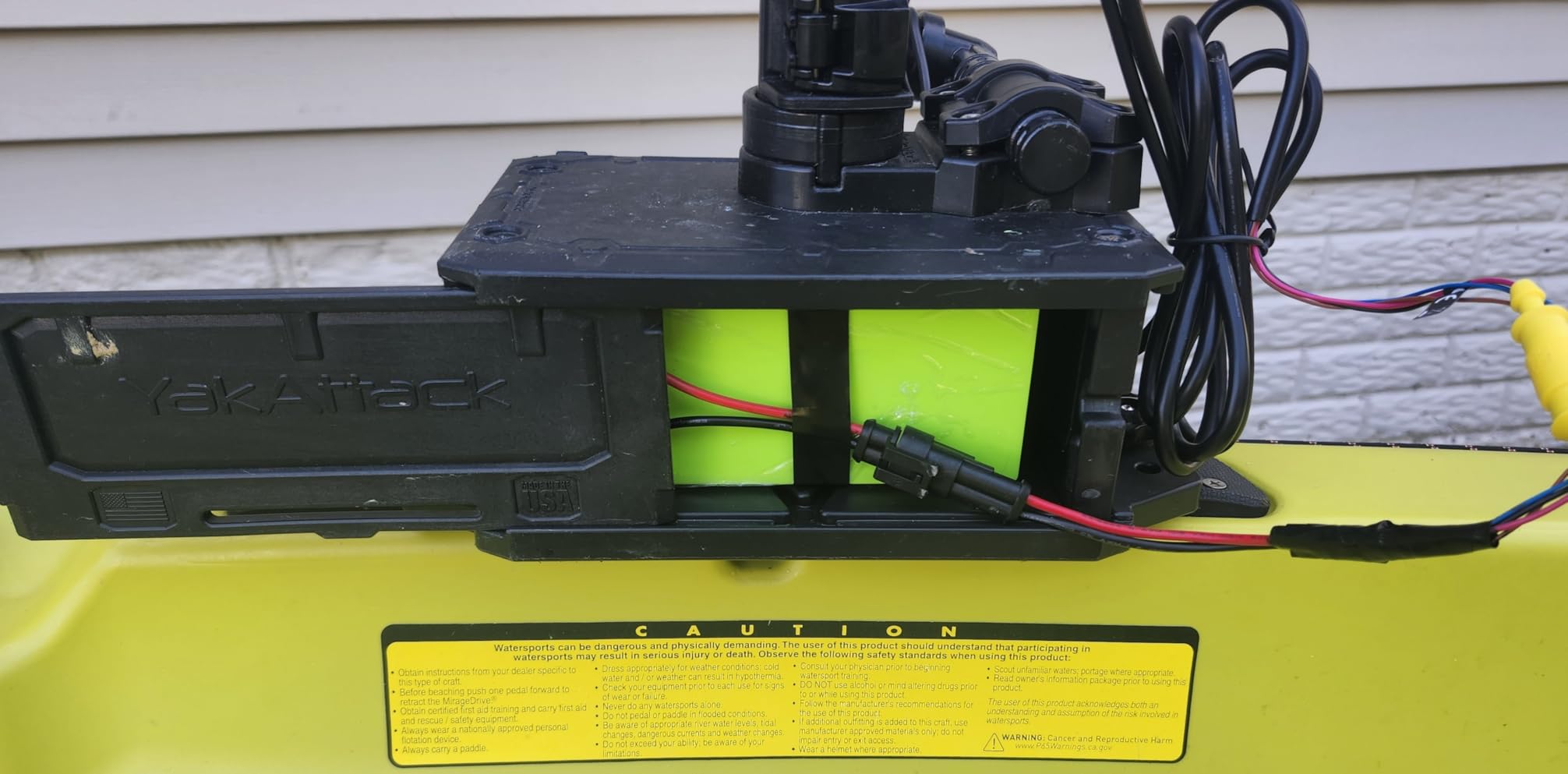
Here is the honest caveat, and it is the same one owners raise in the reviews. The 50A BMS is a real constraint on the largest 36V motors the listing targets. If you are pushing a 100 to 120 lb thrust motor through heavy current, a 60A capability can be the thing that ends your day. For a 36V motor in the 60 to 80 lb range, it is comfortable.
There is no Bluetooth here, and no app. You check state of charge with a meter, the way you did with lead acid. The warranty is one year, which is the shortest in this roundup and the single biggest reason we did not put it higher despite 395 reviews and a 4.5 average.
Where the 50A limit actually bites
Draw is a function of thrust and conditions. A 36V motor idling along at speed 3 in flat water might never ask for 30 amps. The same motor in a spring current, into a headwind, at speed 5 is a different animal entirely, and 60A of headroom is where the protection starts clipping.
If you fish big water, big current or push heavy structure, buy a pack with a higher-rated BMS. If you fish a lake in a boat with a tight compartment, the Group 31 footprint is worth the compromise.
Who should buy this pack
Owners of a 36V boat with limited battery space, on a moderate-thrust motor, who want lithium weight savings without the price and size of a 3.84kWh unit. The 28 lb figure is the number that convinces people, and it replaces a bank that is roughly three times heavier.
Buy the one-year warranty with your eyes open. A pack that fails in month fourteen is a real cost, and this is the pick in our list most likely to hand you that problem.
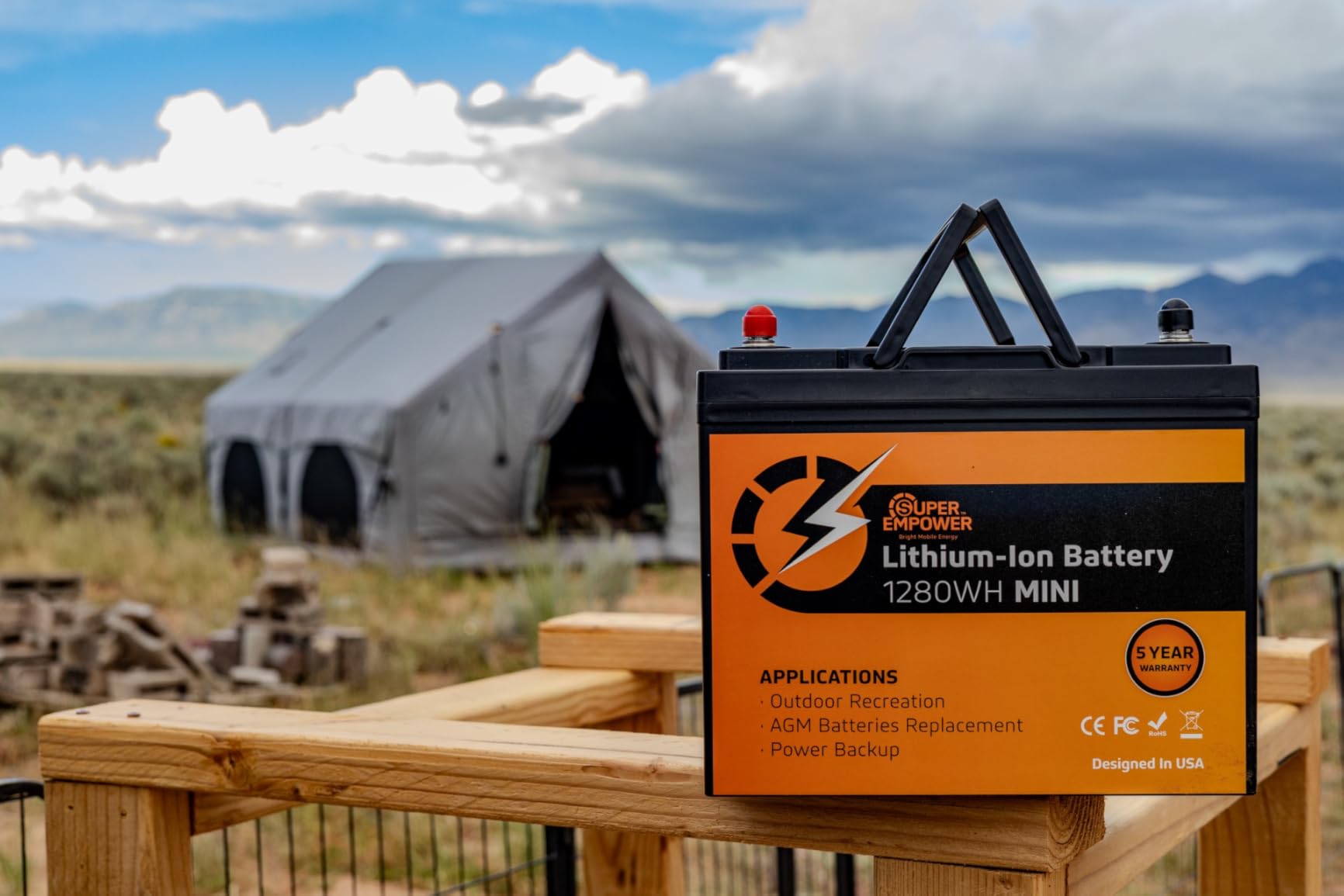
4. SUPER EMPOWER 12V 100Ah Group 24 – Best Drop-In Fit
12V 100Ah LiFePO4 Battery, Group 24 Deep Cycle for RVs & Trolling Motors
- 12.8V 100Ah in Group 24 case
- 21.6 lb
- 100A integrated BMS
- Fits standard marine boxes
Pros
- True BCI Group 24 drop-in with M8 terminals
- Light at 21.6 lb for a 100Ah pack
- Grade A cells with a 100A BMS covering five fault types
- Five-year warranty with 24-hour support response
- Expandable to 4S4P for larger systems
Cons
- Requires a dedicated lithium charger
- Energy storage only
- not for engine cranking
Everything in this roundup that is 100Ah is either a Group 31 or a near-Group 24. This one is the actual thing: 6.49 inches deep by 10.24 wide by 8.98 high, M8 terminals, listed as a BCI Group 24 replacement for lead acid, AGM or SLA. If your boat has a Group 24 box and a Group 24 will not fit, this is the answer.
Buyers highlight the easy swap and the low weight. At 21.6 lb it is one of the lighter 100Ah packs here, and the 100A integrated BMS covers overcharge, over-discharge, overcurrent, short circuit and thermal events. Internal resistance is listed at 40 milliohms, which is respectable for a pack at this capacity.
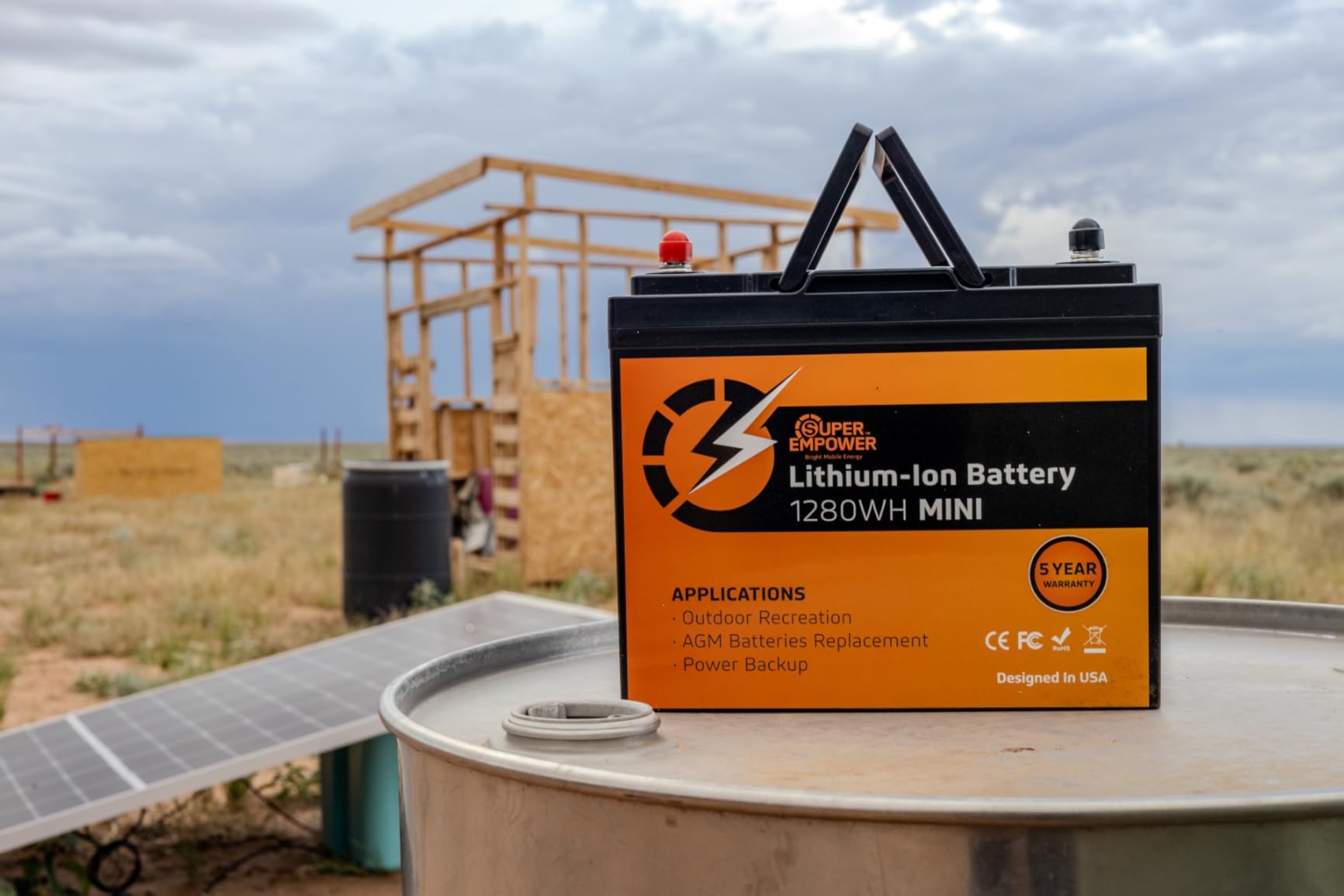
Cold-weather handling is handled with a three-stage cutoff: charging pauses below 32F, discharge stops at -4F, and it resumes above 41F. That last number is higher than most, which means you need to let the pack warm up before it will take a charge in deep winter. It is a protection feature, not a defect, but it surprises people the first time.
There are three supported charging paths: a 14.4 to 14.6V lithium charger, MPPT or PWM solar, or a generator feeding a DC-DC charger. Do not use a standard lead-acid charger. Expansion runs to 4S4P, so a 51.2V 400Ah configuration is possible if you ever outgrow the single pack.
When Group 24 sizing matters more than capacity
Jon boats, small angler inflatables and many older bass boats were built around Group 24 boxes with tight lids and specific hold-down geometry. A Group 31 in that space means a new box, new hold-downs, and possibly a lid that no longer seals.
This pack avoids that entirely. It also avoids the slightly-oversized problem you get with packs listed as near Group 24, where the case is a fraction of an inch too tall for the compartment. If your boat was built for Group 24, buy the Group 24.
Who should buy this pack
Boat owners with a Group 24 compartment, a 12V motor up to about 55 lb, and no interest in Bluetooth monitoring. The five-year warranty and 24-hour support response are the best service commitment among the non-Bluetooth 100Ah packs here.
It is also the pick for anyone replacing flooded batteries who wants a sealed pack with no water top-ups, without committing to a group size change. Just budget for a lithium-specific charger, because that is not optional.
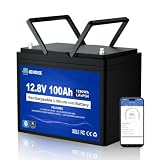
5. DC HOUSE 12V 100Ah Bluetooth – Best Cell-Level Monitoring
DC HOUSE 12V 100Ah Bluetooth LiFePO4 Trolling Motor Lithium Battery
- 12.8V 100Ah with Bluetooth 5.1
- 23.8 lb, near Group 24
- Cell-level telemetry
- UL certified cells
Pros
- Bluetooth 5.1 app reports state of charge to the individual cell
- Push notifications flag anomalies early
- Near Group 24 sizing fits most existing marine boxes
- UL and UN38.3 certified Class A cells
- Automatic cold-weather cutoffs
Cons
- Runs about 0.32 inches taller than a standard Group 24
- Three-year warranty is shorter than most here
- Requires a dedicated lithium battery charger
The LiTime and this one both have Bluetooth. The difference is depth. The DC HOUSE app reads voltage and current down to the individual cell and has a per-cell fault page, so a single weak cell shows up as a warning instead of as a surprise dead morning on the water.
Reviewers consistently single out that telemetry, and also the push notifications. The failure mode that ends most trolling batteries is not total death, it is one cell drifting low while the pack still reads 80 percent. An app that shows you the cell tells you the morning is going badly while you are still on the water and can still change your plan.
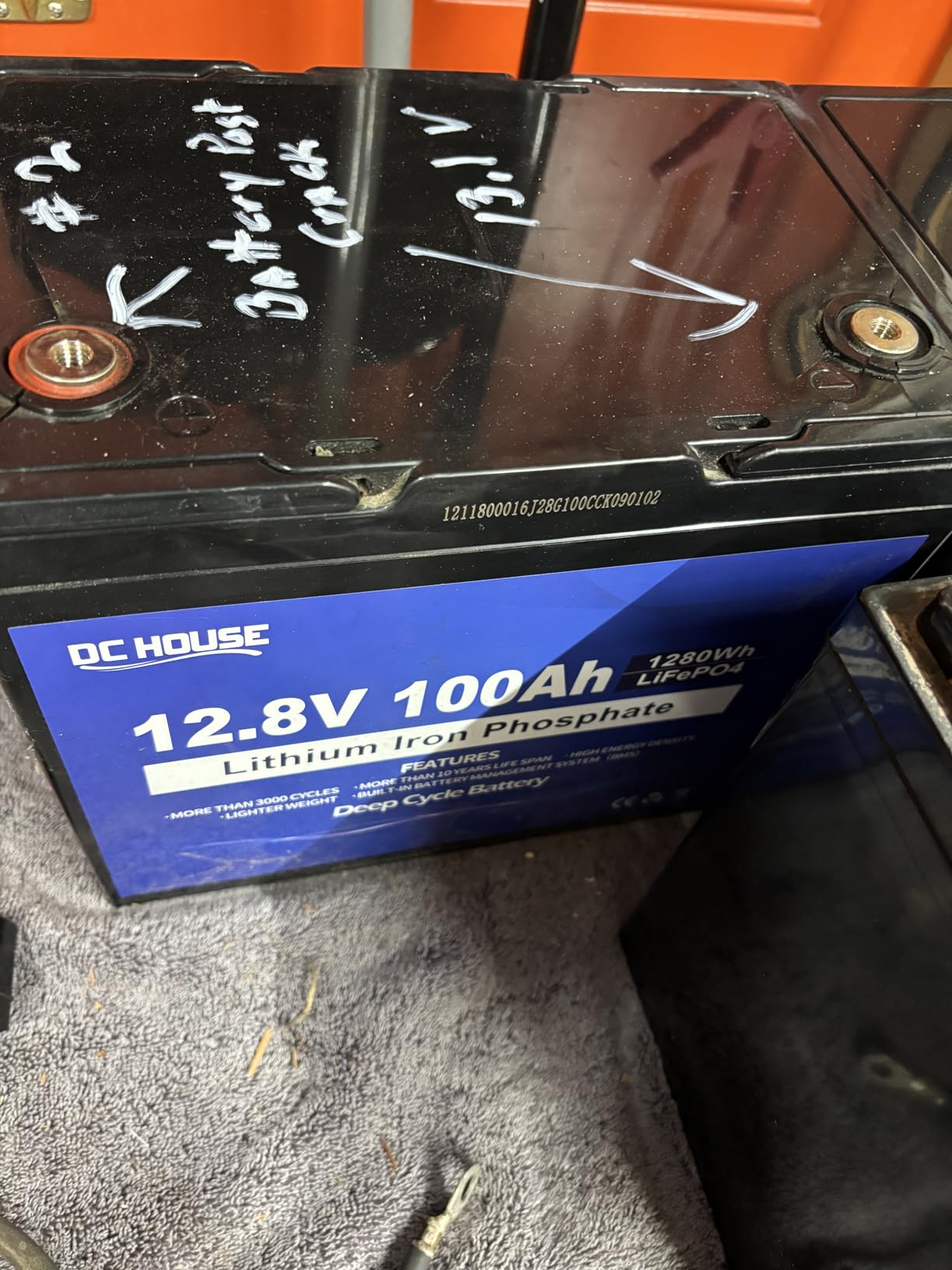
The cells are UL and UN38.3 certified, rated up to 15000 cycles, and the listing claims a 10-year service life. Temperature protection cuts charging below 19.4F, which is the highest charging cutoff of any pack in this list, and discharge below -4F with recovery at 32F. If you fish hard in January, that matters.
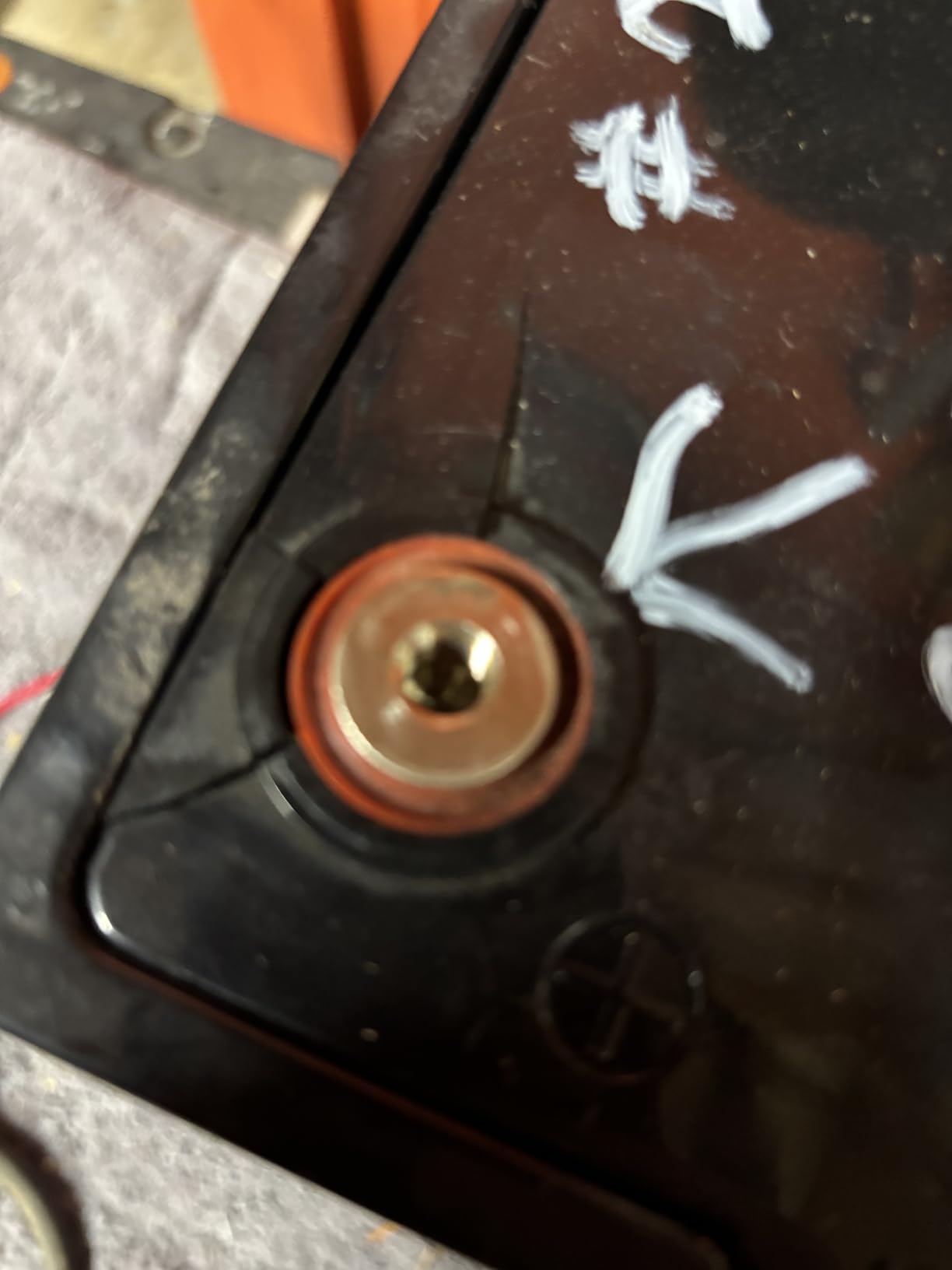
The case is 6.6 by 10.2 by 9.2 inches, which is near Group 24 but about 0.32 inches taller than standard. That is small enough to cause a real problem under a tight lid, so measure the clearance above the case before you order. Expansion is limited to 4 in series or 4 in parallel, eight batteries maximum, which is lower than some of the 4P4S designs here.
Why per-cell readings matter on a boat
A pack voltage reading is an average. A healthy average can hide a weak cell, and a weak cell is what limits how far you can actually discharge before the BMS cuts out. Per-cell telemetry turns an invisible problem into a phone notification while you are still on the water and can still change your plan.
It also helps with the age question. If you are adding a second pack to an existing bank, reading the cells on your old pack tells you whether it is still a matched partner or whether it should be replaced at the same time.
Who should buy this pack
Anglers who fish long days alone, run electronics heavy, or have been burned by a battery that read fine until it did not. It also suits anyone running solar on the boat, since the app makes it obvious whether the panels are actually keeping up.
The trade-off is the three-year warranty and the extra 0.32 inches of height. If your compartment is tight, the SUPER EMPOWER in the previous section is the cleaner fit. If you have clearance and want the data, this is the better instrument.
6. LGECOLFP 24V 50Ah – Best 24V Setup
24V 50Ah Trolling Motor Lithium Battery,Built-in 50A BMS,1280W Power Output,Deep Cycle Group LiFePO4 Battery Perfect for Trolling Motor, Marine, RV, Fishing Finder, Solar and Off Grid
- 24V 50Ah, 1280W output
- 50A continuous, 60A for 30 min
- IP65 Group 24 housing
- 4000+ cycles
Pros
- 24V cuts current draw and wiring cost over long cable runs
- About a third the weight of a comparable lead-acid bank
- Group 24-style dimensions with IP65 housing
- Handles 70-100lb thrust motors at 50A continuous
- Seller replaced a bad-cell unit promptly
Cons
- One owner reports failure after about five trips
- 12-month warranty is the shortest here
- Some packs arrive with weak or dead cells
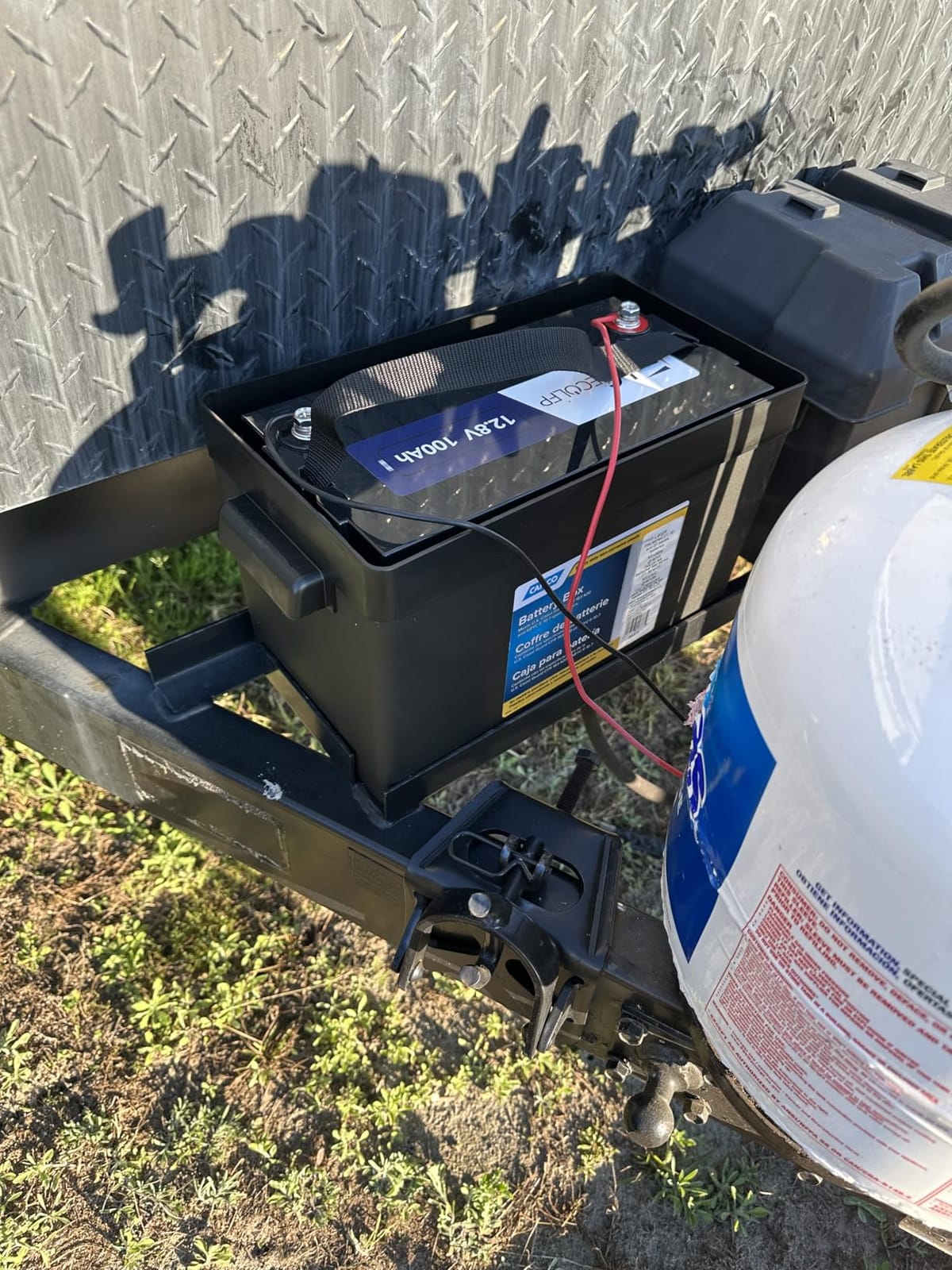
Twenty-four volts is the middle of the market and the least discussed. It is the answer for anyone with a 70 to 100 lb motor who does not want a 36V system. The electrical argument is simple: at the same power, a 24V pack draws half the current of a 12V pack, which means thinner cables, smaller breakers and less voltage drop over a long run forward to the bow.
This one is rated 25.6V nominal, 50Ah, 1280W output, with 50A continuous discharge and 60A for 30 minutes. Energy density is listed at 66.7Wh per pound. The housing is IP65 ABS in Group 24 BCI dimensions, 10.24 by 6.6 by 8.3 inches, rated over 4000 cycles, and it expands to 10.24kWh at a maximum of 4P2S.
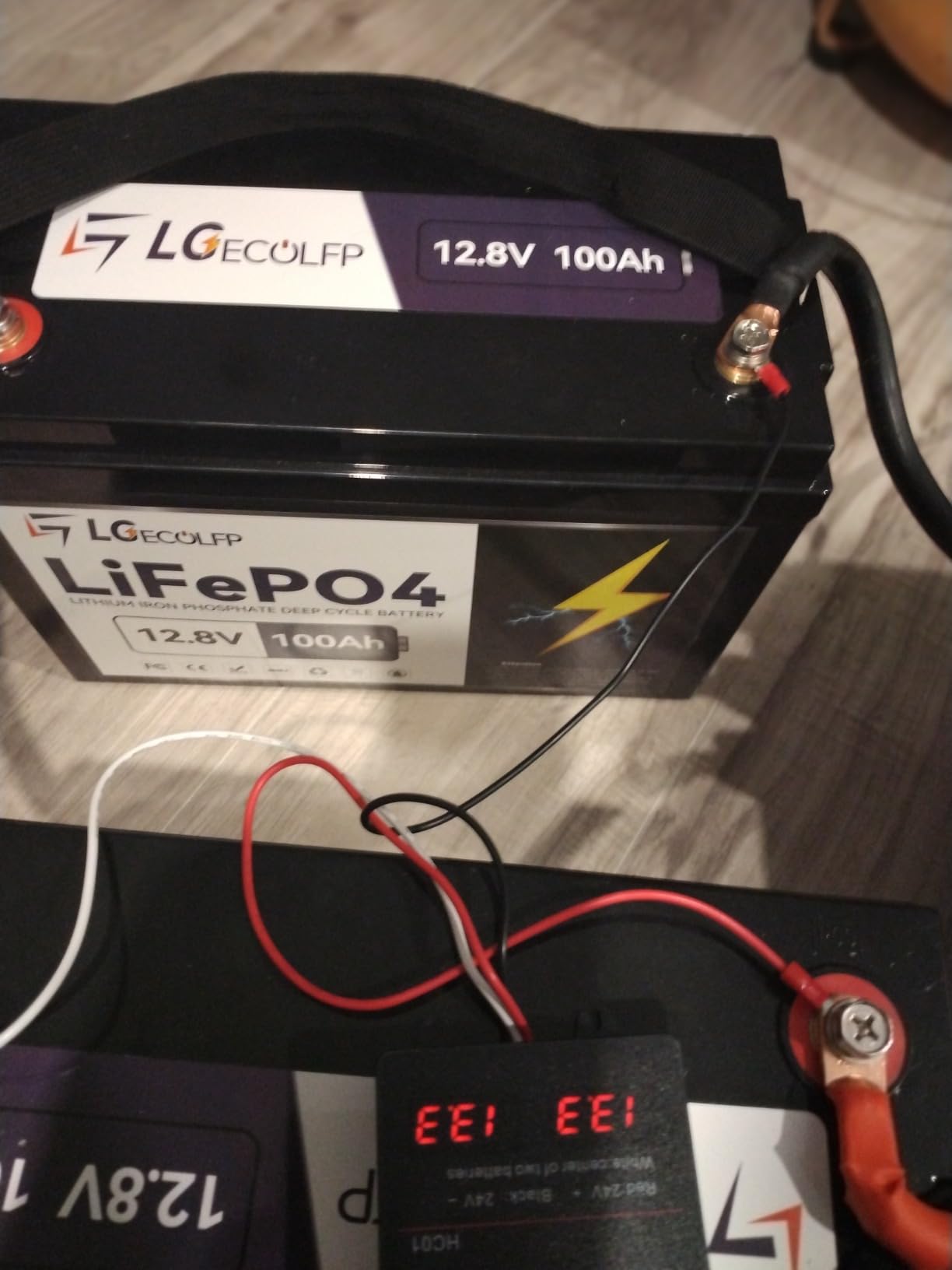
Owners like the combination of low weight and clean 24V output, and several mention responsive support, including a prompt replacement of a unit with a bad cell. That kind of service response is worth more than a slightly longer warranty, and it is the main reason this pack is here despite a 4.4 average across 167 reviews.
The warranty is the weak point: 12 months, with three months of free returns. One trolling motor owner reports the unit failed after about five trips and was outside the return window. Others mention packs arriving with weak or dead cells, which is a manufacturing consistency problem you should watch for in the first week.
When 24V beats 36V
Thirty-six volts exists for the heaviest motors and the worst conditions. If your motor is in the 70 to 100 lb range and you are on a lake or an inland river, a 24V pack is usually enough, and it halves the number of batteries you carry. The wiring savings show up most on a boat with a long forward run.
Two 12V packs in series would also give you 24V, but the 50A BMS on this unit means the whole bank is protected by one system rather than two that have to be matched. Fewer failure points, fewer cables to terminate in a wet compartment.
Who should buy this pack
Owners of a 24V motor in the 70 to 100 lb thrust class, and anyone moving up from two series 12V lead-acid batteries who wants to cut weight and cable size at the same time. The Group 24-style case makes it easier to mount than most 24V packs.
Test the pack hard in its first two weeks and keep the receipt. With a 12-month warranty, the early window is when a weak cell is worth catching.
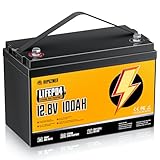
7. Rvpozwer 12V 100Ah Group 31 – Budget Pick
Rvpozwer 12V 100Ah LiFePO4 Lithium Battery Group 31 with Built-in 100A BMS
- 12.8V 100Ah Group 31 footprint
- 23 lb
- 120A smart BMS
- 4000 cycles at full depth
Pros
- Group 31 footprint fits standard marine boxes
- Grade A cells rated for 4000 cycles at full depth
- Expandable in series or parallel
- Wide -20C to 65C operating range
- Nylon handle aids handling
Cons
- 4.1 average with 17% one-star reviews
- Several buyers report capacity or durability complaints
- Listing describes the BMS inconsistently
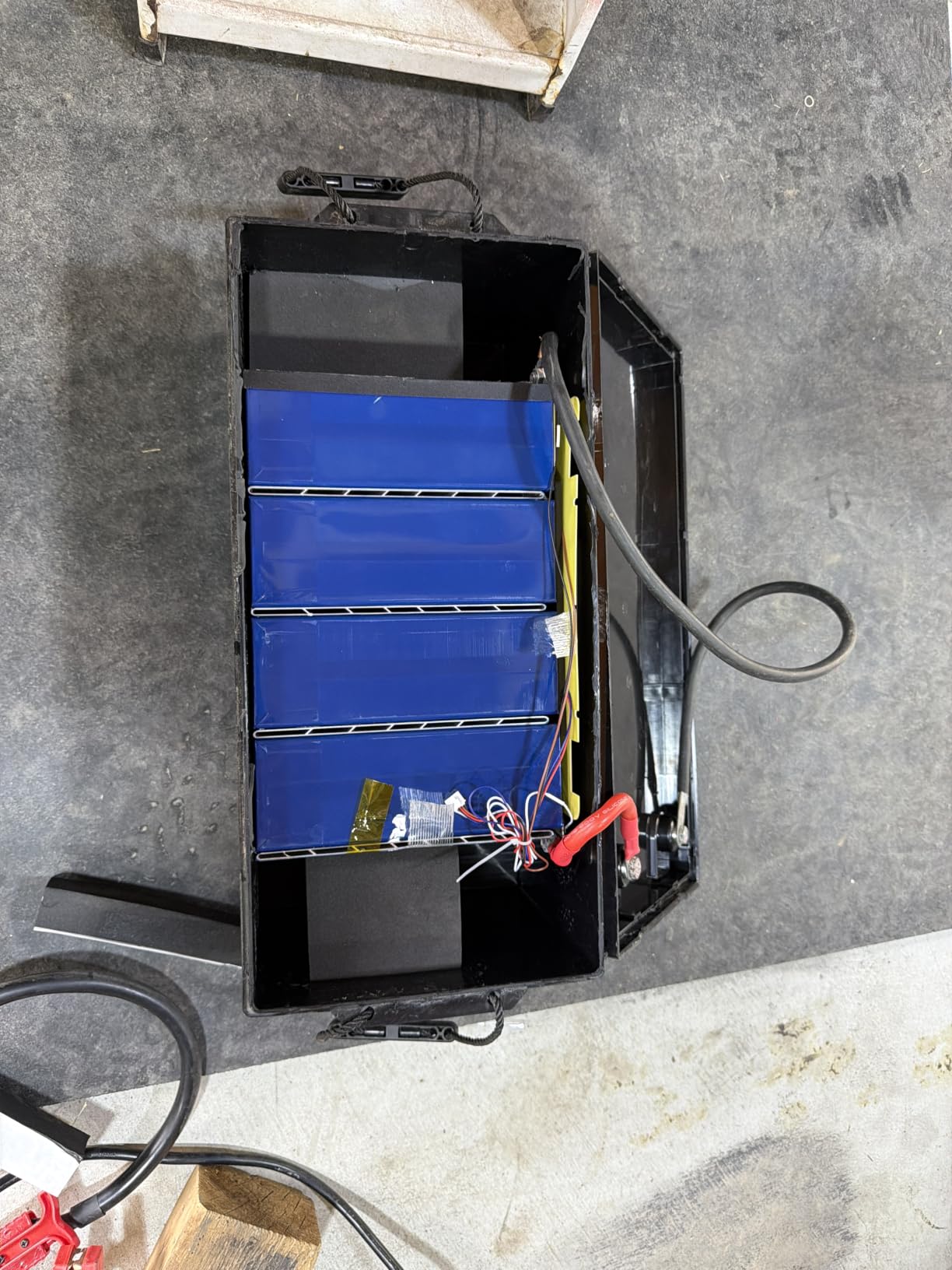
We included this one because the price gap between it and the 4.7-rated pack above is real, and because readers deserve to see the trade. It is a 12.8V 100Ah LiFePO4 in a Group 31 footprint, 12.99 by 6.77 by 8.46 inches, weighing 23 lb, with a smart BMS and Grade A cells rated for 4000 cycles at full depth of discharge.
The feature set is unremarkable in the right way. Operating range is -20C to 65C, which is the widest cold rating in this roundup. It expands in series up to 51.2V with four units or in parallel up to 400Ah. A nylon handle makes moving it around a deck easier than most packs at this weight.
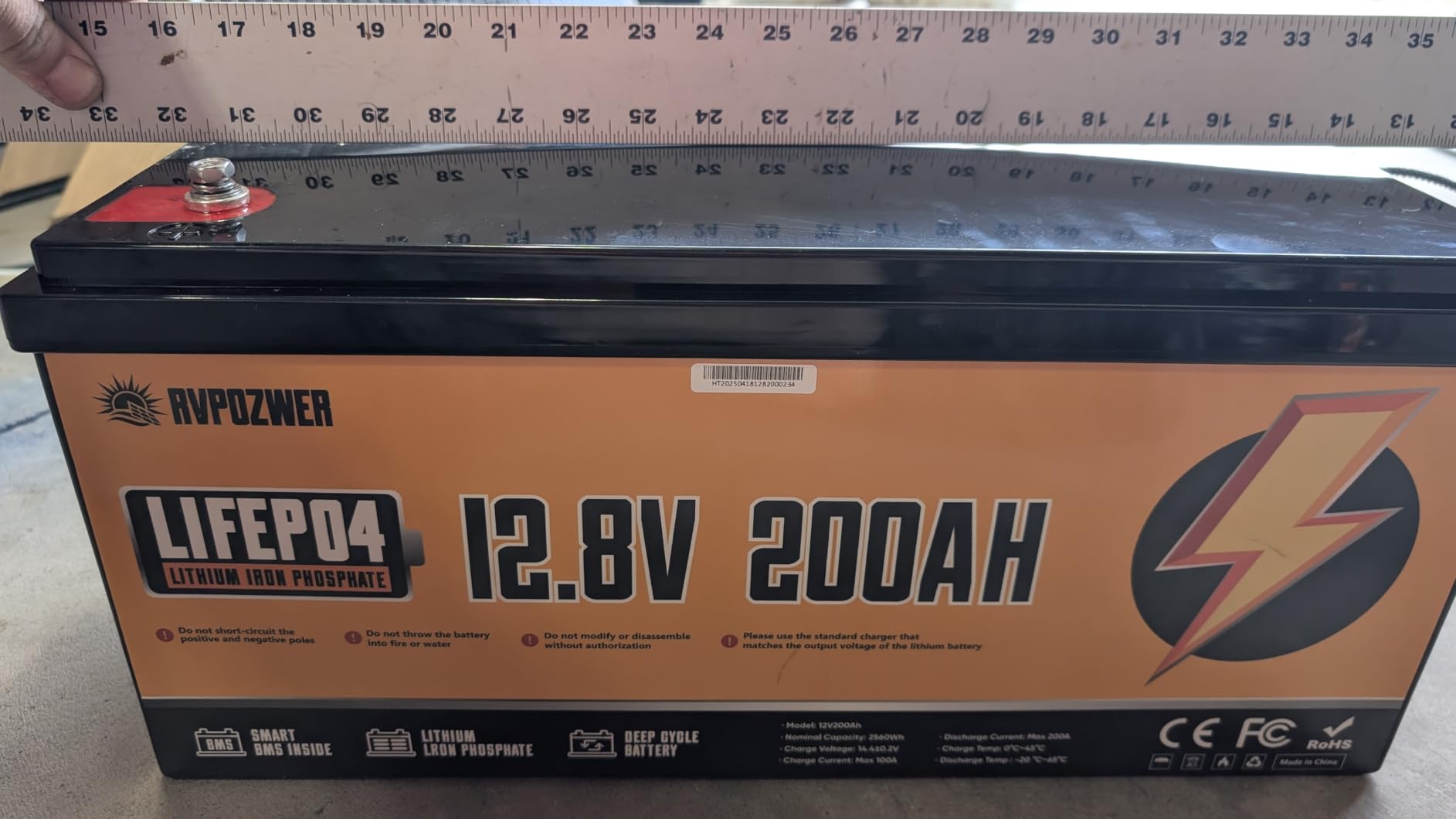
Then the reviews tell a different story than the feature list. The average is 4.1 across 422 reviews, the lowest here, with roughly 17% of reviews at one star. Buyers report real-world capacity that falls short of the label and durability problems, which is exactly the pattern that shows up when the battery management system is doing less than the listing implies.
There is also a documentation problem. The product details describe a 100A BMS while the bullet points describe a 120A smart BMS. On a pack this size, 100A versus 120A is the difference between a comfortable margin and a cutoff in heavy current. We would want that number confirmed before wiring it to a high-thrust motor.
How to tell a good lithium pack from a bad one
The specification that matters most is the cell grade and the BMS, and both are easy to check. Ask whether the cells are Grade A, ask what the continuous discharge rating is in amps, and ask what the warranty covers in years. A seller who cannot answer those three questions is selling you a case of cells and a printed circuit board.
Forum users on bassresource.com make the same point from a different angle: find a domestic seller with a traceable brand rather than the cheapest import. The 4.1 average here is not a chemistry verdict. It is a build-quality verdict.
Who should buy this pack
A buyer on a strict budget, in a Group 24 or Group 31 boat, running a moderate motor, who accepts a shorter service life and wants to spend as little as possible on a full-size lithium pack. The cycle rating and operating temperature range are genuinely good on paper.
If your fishing depends on the battery not letting you down at 6am, spend the difference and buy one of the 4.6-plus packs. This is the pick for a spare, a secondary bank, or a boat that fishes in fair weather.
8. WEIZE Dual Purpose AGM Group 24M – Best Dual Purpose Battery
Weize Dual Purpose AGM Battery BCI Group 24M, Starter & Deep Cycle 150RC 550CCA 12V 90AH Sealed Marine & RV Battery
- 12V 90Ah AGM Group 24M
- 550 CCA and 150 RC
- 50.7 lb
- Sealed and maintenance free
Pros
- Starts an engine and runs deep-cycle loads from one battery
- Sealed AGM design needs no water top-ups
- Low internal resistance and high output power
- 550 CCA and 150 minutes of reserve capacity
- Two-year warranty
Cons
- 50.7 lb is about twice the weight of a 100Ah lithium pack
- Only about half the usable depth of discharge of LiFePO4
- Loses capacity in cold weather faster than lithium
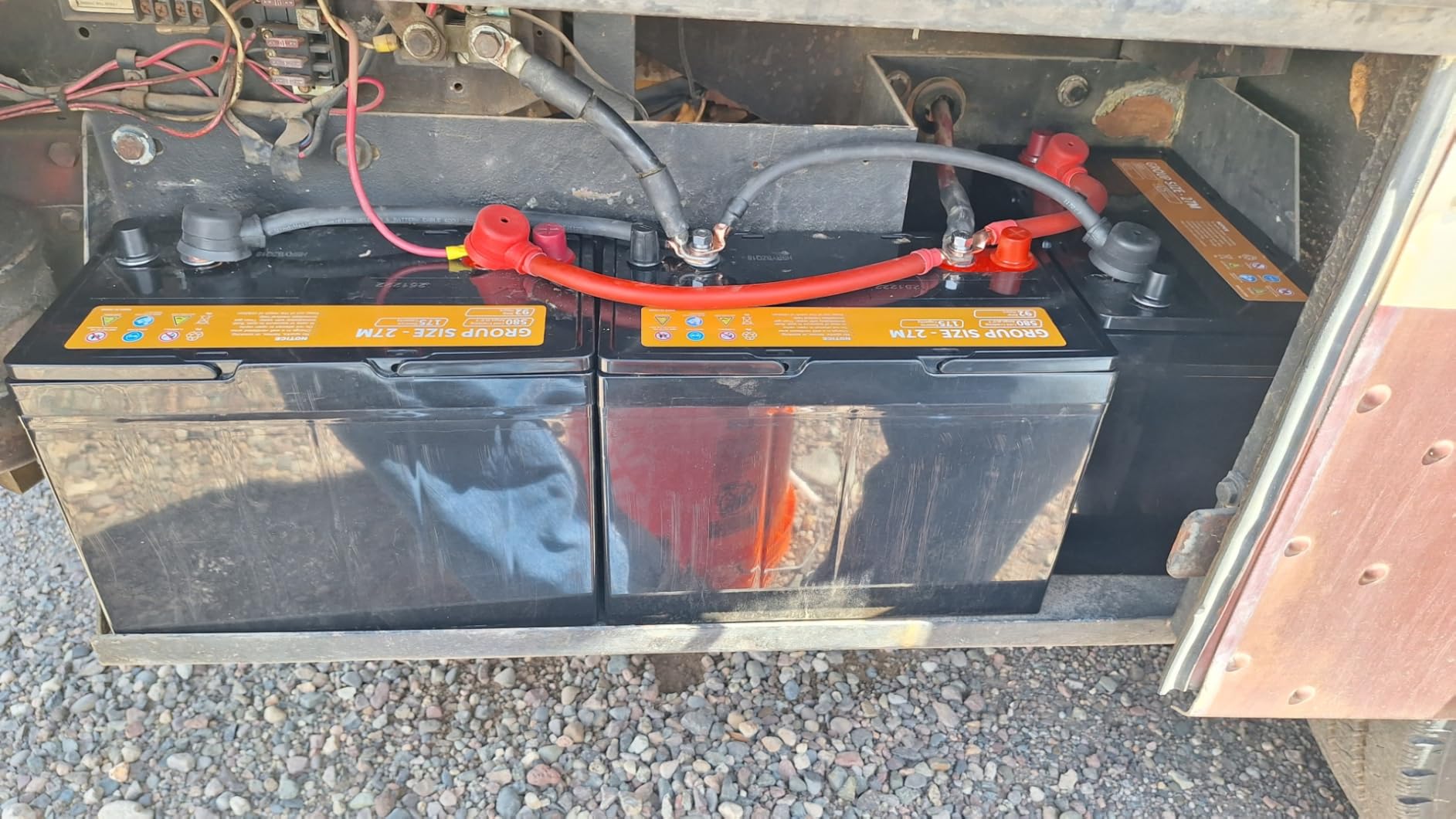
Most of the packs in this roundup are energy storage only. This one starts your engine too, and that changes who it is for. A Group 24M case at 6.61 by 10.24 by 8.19 inches, 12V 90Ah, 550 CCA and 150 minutes of reserve capacity covers a small outboard start and a full day of 55 lb thrust in one battery.
The AGM sealed design means no water top-ups, no vent hoses, and mounting in any position. The manufacturer claims 20 times the vibration resistance of flooded batteries and about twice the cycle life, with charging at a constant 14.4V, maximum 15.8A. Positive terminal on the left, negative on the right.
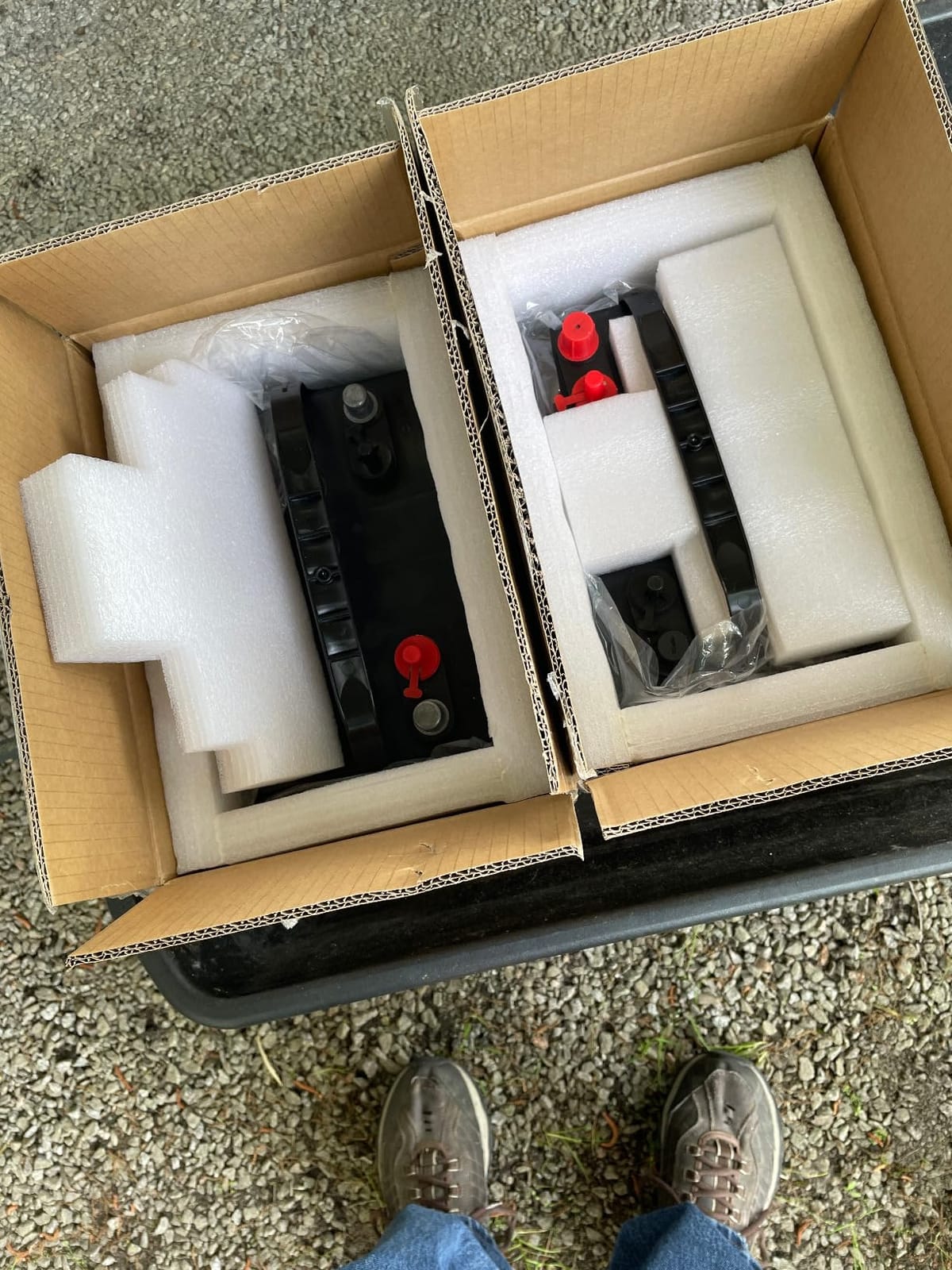
Buyers treat it as an affordable all-in-one starter and house battery for boats and RVs, and they like that one battery does both jobs. The consistent complaint is weight. At 50.7 lb, it is roughly twice what a 100Ah lithium pack weighs, and on a small boat that is a real difference in how the boat handles and how you launch it.
There is also the depth-of-discharge gap. Lead acid gives you about half its rated capacity before it is unhappy, so a 90Ah AGM is closer to 45Ah of usable energy. LiFePO4 delivers close to all of it. In cold weather, the gap widens, because AGM chemistry loses capacity in a way lithium does not.
The dual-purpose trade-off, honestly stated
Starting an engine is a hard, short burst of current, and deep cycling is a long, slow drain. Making one battery do both means compromise: thicker plates for cranking amps and less thin-plate surface for cycle life. A dedicated deep-cycle battery outlasts a dual-purpose one, but a dual-purpose battery is one battery instead of two.
If your boat has a starting battery and a house bank already, this is not the pack for you. If you are putting one battery in a small boat and want it to both turn the key and run the motor, nothing else in this list does that at 12V.
Who should buy this pack
Boat owners who need cranking and trolling from a single battery, who want a sealed maintenance-free pack, and who are not chasing the lowest weight. Bank-fishing boats, jon boats and pontoons with a single battery bay are the classic use.
For a boater who fishes in cold weather and cares about how long the battery lasts season to season, lithium is still the better long-term buy. This is the right choice when the budget matters more than service life.
9. OPTIMA D31M BLUETOP Dual Purpose AGM – Best Proven AGM
OPTIMA® Batteries D31M BLUETOP® Boat and RV Dual Purpose Sealed AGM Battery
- 12V dual purpose sealed AGM
- 900 CCA and MCA 1125
- 155 minutes reserve
- 59.8 lb SpiralCell
Pros
- SpiralCell design delivers strong power and cold-weather starting
- Owners report 14 years of service with boats still starting
- Dual purpose for deep cycle and starting
- No water additions and mounts in most positions
Cons
- Heaviest option in this roundup at 59.8 lb
- Needs a maintainer or tender during off-season storage
- Should not be discharged below about 12.00V
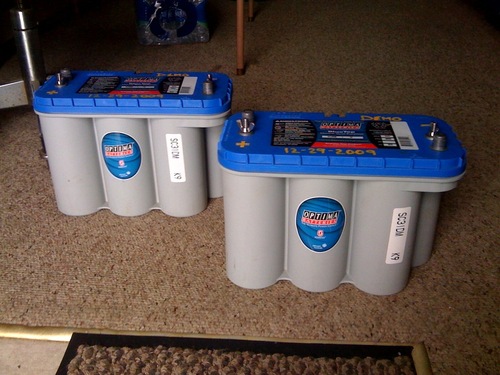
The 4.2 average does not reflect what owners say about this battery over time. Reviewers describe exceptional durability, including reports of 14 years of service with boats that still start. SpiralCell construction using 99.99% pure lead, dual SAE and 5/16 inch stainless stud posts, and 155 minutes of reserve capacity are the numbers behind that reputation.
Starting performance is its headline: 900 cold cranking amps and MCA 1125. The manufacturer claims fifteen times the vibration resistance of standard flooded batteries and up to three times the life. C20 capacity is 75Ah, which sounds modest next to a 100Ah lithium listing until you remember lead acid only gives you about half of that in real use.
Now the trade-offs, and at 59.8 lb this is the heaviest pack we tested against. It is a Group 31 case, 6.5 by 12.81 by 9.38 inches. On a boat where weight is the deciding factor, that is a real cost, and it is why we did not put an AGM pack at the top of this list.
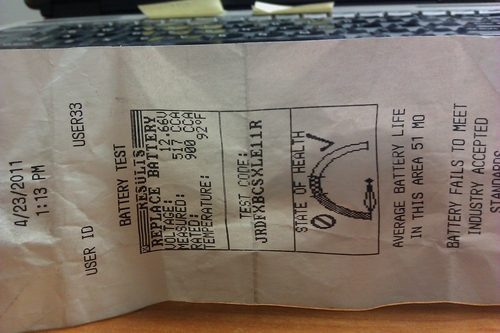
It also wants to be maintained. Lead acid needs a maintainer or tender during off-season storage, and the reviews are clear that cycle life drops sharply if it is discharged below about 12.00V. A minority of buyers report dead cells within roughly two years, and heavy units can arrive with cracked cell cases from insufficient packaging.
When proven longevity beats new chemistry
There are situations where an AGM with a decade of field reputation is the safer purchase. If your boat already has a Group 31 compartment wired for a dual purpose bank and you want zero learning curve, a battery people have been running for twenty years removes a variable.
It also handles cranking without a separate battery, in cold conditions, with no charger compatibility questions. A lead-acid charger charges lead acid. That simplicity has real value on a boat you trailer and use twice a month.
Who should buy this pack
Boat owners who want one sealed battery to start the engine and run the trolling motor, who fish in cold weather, and who would rather buy a proven lead-acid design than troubleshoot a lithium pack and its charger. The corrosion-resistant terminals and mount-anywhere case help in a saltwater environment.
Be honest about the weight. On a boat where you launch solo, 59.8 lb is a lot of lifting, and a lithium pack gives you the same job at roughly half the mass. The right answer depends on your boat, not on the spec sheet.
10. Redodo 12V 50Ah LiFePO4 – Best Lightweight Portable Pack
Redodo 12V 50Ah Trolling Motor LiFePO4 Battery, for Marine, RVs
- 12.8V 50Ah, 640Wh
- About 11.6 lb
- IP65 waterproof
- 2-hour charge on a 25A charger
Pros
- About 11.6 lb
- a fraction of the weight of comparable lead-acid
- Delivers usable energy comparable to a 12V 100Ah lead-acid
- 4000+ deep cycles at full depth of discharge
- Full charge in about 2 hours with a 25A charger
- IP65 waterproof and compact enough for a Group 29 box
- Five-year warranty with replacements under warranty
Cons
- Arrives deactivated and needs a lithium charger to wake it
- Bluetooth only on APP variants
- 50A BMS limits very high-thrust setups
- Cannot charge below 32F
At about 11.6 lb, this is the pack you can move with one hand. It is 12.8V 50Ah LiFePO4, 640Wh, 6.54 by 7.68 by 6.77 inches, with an integrated 50A BMS and a 640W maximum load. The claim is 4000+ deep cycles at 100% depth of discharge, a 10-year rated life, and a five-year warranty.
The useful comparison is against a 12V 100Ah lead-acid battery. Because lithium can be discharged much closer to full, 50Ah of LiFePO4 carries roughly the usable energy of 100Ah of lead acid at about a third of the weight. For a jon boat, a kayak, or an angler inflatable where every pound is real, that math decides it.
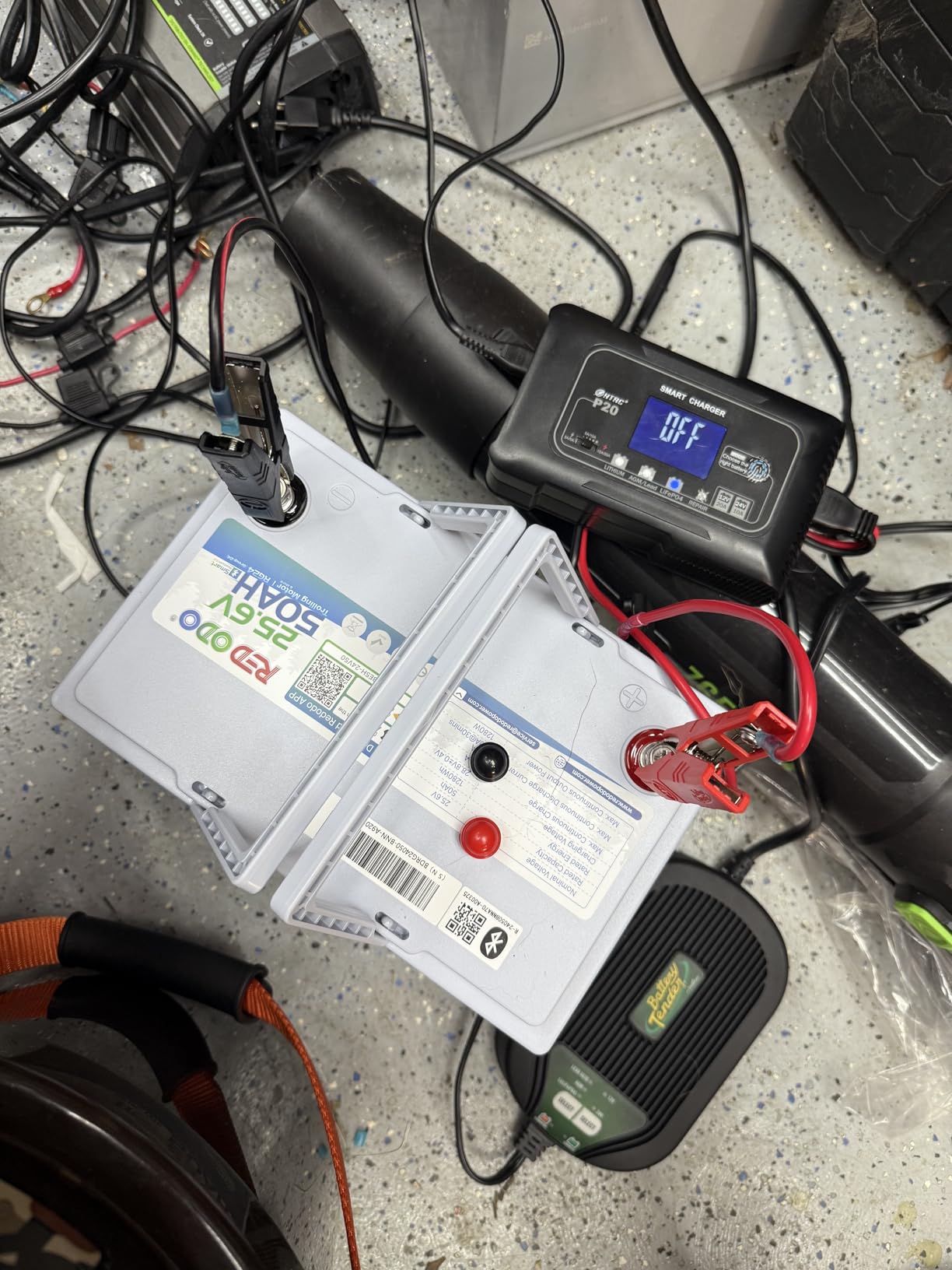
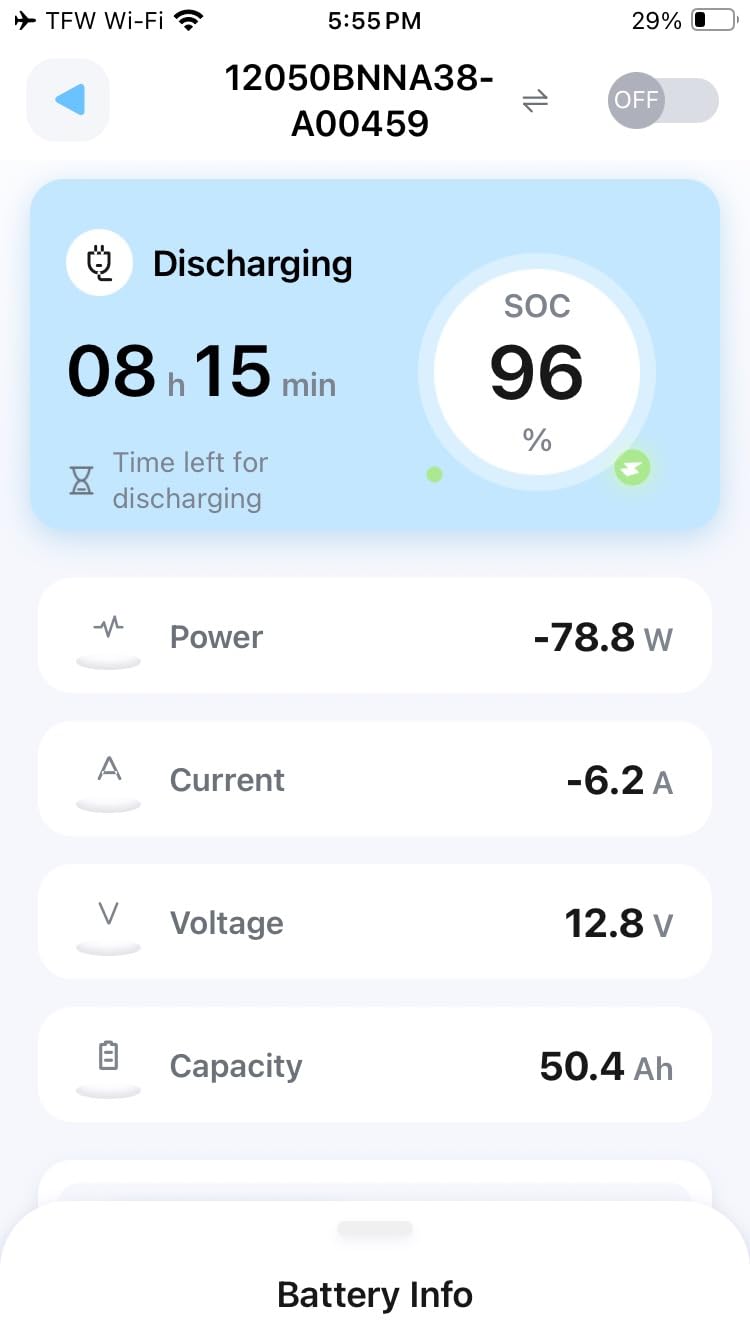
Charging speed is the underrated feature. A 0.5C, 25A charger brings it to full in about 2 hours, which means a lunch-break top-up between spots instead of an overnight wait. The housing is IP65, and owners confirm it fits a Group 29 box with foam padding, which is where most portable installs end up.
Two things to know before you order. The pack arrives deactivated and needs a lithium-specific charger to wake the BMS, so plan your first charge accordingly. And the Bluetooth app is only on the APP variants, not the standard portable model, so check which one you are buying if monitoring matters to you.
The two-battery swap that changes a small boat
Forum users on mbgforum.com run the same comparison for larger banks, concluding that a single 24V 60Ah lithium setup covers roughly the same number of fish trips as two additional 12V 100Ah AGM batteries. The same logic applies at half the scale: two of these 50Ah packs in parallel give you the range of a 100Ah lead-acid bank at about 23 lb.
That matters on a boat where you carry the battery to the ramp, or where the battery compartment has a weight limit. It is also the reason the 50A BMS matters less here than on a big 36V pack, because 50 amps is plenty for a 30 to 40 lb motor.
Who should buy this pack
Small-boat and portable setups, anglers who move batteries by hand, and anyone matching a 12V motor in the 30 to 45 lb class. The 2-hour charge capability makes it genuinely practical for all-day use rather than overnight-only use.
Do not buy it as a cranking battery, do not buy it in January without planning the charge cutoff, and do not buy it expecting Bluetooth unless you specifically order an APP variant. Otherwise it is the most travel-friendly battery in this roundup.
How Long Does a 100Ah Battery Really Last?
Runtime math is simple division, and it is where most sizing arguments are won or lost. Take the amp hour rating, divide it by the amps your motor actually draws, and you have hours. The variable is the second number, and nobody publishes it because it changes with speed, wind, current and boat load.
Here is what a 100Ah pack looks like at different draws, using a 12V motor at the low end of the range:
At 4 amps, the draw you get cruising at low speed on flat water: about 25 hours.
At 10 amps, a moderate trolling speed: about 10 hours.
At 20 amps, working hard in a current: about 5 hours.
At 30 amps, pushing into wind: about 3.3 hours.
At 40 amps, near full throttle: about 2.5 hours.
A recommendation that circulates on bassresource.com is that 100 to 120Ah gives about 4 hours at full power, which lines up with the 30 amp line above. That is a realistic number for a tournament day where you are moving constantly rather than idling.
Now the part that changes the answer between chemistries. Lead acid should not be taken below about 50% depth of discharge without damage, so a 100Ah AGM is really about 50Ah of usable energy and roughly half the runtime in the list above. LiFePO4 delivers close to its full rating, and the pack in our top pick is rated 4000 cycles at 100% depth of discharge. That is the entire argument for lithium in one line.
Two more factors change real-world runtime. GPS anchoring features like Spot-Lock and Anchor Lock draw more power in wind and current because the motor works harder to hold position. And a 36V pack does not give you three times the runtime of a 12V pack at the same amp hour rating, because the amp draw scales with voltage too. Compare watt hours, not amp hours, when you cross voltages.
For a 36V 100Ah pack, which is 3.84kWh, runtime at a given watt draw is roughly four times that of a 12V 100Ah pack. The 36V 50Ah packs are about half that again. The forum shorthand for this is fish trips per charge, and that is a more honest unit than any single number on a spec sheet.
How to Pick the Right Marine Battery
Match voltage to thrust before anything else, because it is the one decision you cannot change later. A 12V motor draws twice the current of a 24V motor for the same thrust, which means a 12V bank needs double the amp hours and bigger cables. Starting with the wrong voltage means new wiring, new battery boxes, and a new motor.
Match voltage to thrust before anything else
The mapping is straightforward. Twelve volts covers 30 to 55 lb of thrust, which is most trolling motors sold today. Twenty-four volts covers the 70 to 100 lb class. Thirty-six volts covers 100 to 125 lb, and it is also the voltage to consider if you fish heavy current at speed all day, because the lower current draw reduces cable heating and voltage drop.
Minn Kota, the manufacturer whose guidance ranks first for this query, suggests a 12V deep-cycle marine battery with at least 110Ah, usually Group 27 size or larger, for lead acid setups. That is the sizing bar to meet. If you run lithium, you can be more relaxed on the Ah figure because you can use more of the capacity, but staying near 100Ah keeps you in widely available packs.
LiFePO4, AGM or flooded lead acid: which chemistry fits
Three chemistries, three sets of trade-offs.
LiFePO4 is the default answer for most people. It is roughly half the weight of comparable lead acid for the same usable energy, holds a flat voltage curve down to near zero charge, tolerates a full 100% depth of discharge without damage, and charges far faster. Forum consensus, which the AI Overview above this query also cites from r/bassfishing, puts lithium as the modern choice with AGM still valued for lower upfront cost.
AGM is the sealed, maintenance-free middle option. It needs no water, resists vibration, and can be mounted anywhere, but it is heavy and it gives you only about half its rated capacity in real use. Cold weather hurts it more than it hurts lithium.
Flooded lead acid is the cheapest and the one we would steer most buyers away from. It needs water, it vents hydrogen, it needs to stay upright, and the general expectation in forum threads is two to three years of service. It makes sense on a cheap boat kept on a trailer and charged inside a garage, and not much else.
Dual purpose batteries sit across the lead acid side. They add thick plates for cranking amps, which costs some cycle life, and in exchange one battery does both jobs. Worth it on a single-battery boat, not worth it on a boat with a dedicated starting bank.
Group size decides whether it physically fits
Group 24, 27 and 31 are BCI physical case sizes, not chemistry. A Group 27 lead acid and a Group 27 lithium pack are not the same shape, which is the detail that catches people. Measure your compartment, including clearance under the lid, before you order anything.
For 36V setups, physical space is a genuine blocker that rarely gets discussed. A 36V bank is three 12V batteries or six 6V batteries, and the trays for those are large. A single all-in-one 36V pack like the OGRPHY is 20.4 inches wide, which may or may not clear your deck. Measure twice.
Also check the hold-down bracket. Lithium cases do not flex the way flooded cases do, and a bracket that relies on case compression may need modification, as owners of the all-in-one 36V packs report.
What the BMS actually does for you
The battery management system is the part of a lithium battery that separates a good pack from a dangerous one. It sits between the cells and the outside world and enforces limits on charge current, discharge current, cell voltage and temperature. When it works, a weak cell never gets overcharged and a hot cell never gets ignored.
Forum users almost always attribute lithium failures to battery management system quality rather than to the chemistry. Overheating, swelling and the fire reports that circulate online are overwhelmingly weak-BMS problems in no-name packs, not properties of LiFePO4. That is why we do not recommend anonymous packs regardless of how good the price looks.
Check three things: the continuous discharge rating in amps relative to your motor, the number of protections listed, and the warranty length in years. A pack with a 50A BMS driving a 100 lb thrust motor in current will hit its limit, and you want to know that before the boat is loaded.
Charger compatibility is where buyers lose money
Here is the trap. Most trolling motor chargers on boats, including plenty of the precision chargers sold as lithium-compatible, are 12V only. They cannot charge a 24V or 36V lithium bank. Buy a 36V pack and then plug in your existing 12V charger and nothing happens, or worse, something does happen that you did not intend.
The rules are simple. A 12V charger charges 12V lead acid or 12V lithium, and lithium needs a lithium profile with a 14.4 to 14.6V absorption stage. A 24V or 36V lithium bank needs a charger rated for that voltage and for LiFePO4, and the all-in-one packs that ship with a 38.4V charger are the reason that one is worth considering if you are going above 12V.
Two more charging notes. Lithium packs with a battery management system may arrive in sleep mode and need a lithium-activation or MPPT charger on first use, and several packs in this roundup carry a low-temperature charging cutoff between 19.4F and 32F, so charging stops in deep cold until they warm up. If you fish in January, leave the boat on a maintainer indoors rather than expecting an overnight charge.
Cold weather and saltwater change the answer
In cold weather, lithium holds up better than lead acid, which is one of the quieter advantages of the chemistry. AGM loses meaningful capacity as temperature drops, and flooded lead acid loses more. Every pack in this roundup except one cuts charging below 32F, and one cuts it below 19.4F, so plan charging around a warm cabin or a heated battery box.
In saltwater, enclosure rating and terminals decide how long a battery lasts. The packs with IP65 housings and corrosion-resistant terminals hold an edge over open flooded cells, and sealed AGM is inherently better suited to a salt spray environment than anything with vents. Rinse the terminals with fresh water regardless of chemistry, and keep the tray clean.
Never mix battery ages, brands or chemistries
This is the rule that causes the most expensive failures, and it is stated plainly in nearly every credible guide to trolling motor batteries. Do not mix a lithium battery with lead acid batteries in the same bank. Do not add a new battery to an old bank of a different age. Do not mix brands in a series bank.
Why it matters: batteries in series must share the same current, and they share the load according to their weakest cell and their age. A new battery pushes charge into an old one that cannot accept it, and the old one fails first. Then the new one works harder to compensate. The result is a bank that ages out together regardless of when each was bought.
When you replace one, replace the bank, or add capacity in parallel with matched new batteries. The same logic applies to the never-mix-old-and-new warning in reverse: replacing half a bank of lead acid with lithium halves your problems, because the chemistry mismatch is the worst possible pairing.
One more forum-cited worry worth clearing up: a trolling motor is designed to run on roughly 13V at most, so does lithium damage it? No, not when the pack is properly sized and matched. A 12V LiFePO4 pack charges to about 14.6V and rests near 13V, which is normal for a 12V charging system. The real risks are overcharging with the wrong charger and a mismatched bank, not the chemistry itself.
Frequently Asked Questions
What type of marine battery is best for a Minn Kota trolling motor?
A 12V deep-cycle LiFePO4 marine battery is the default answer for a Minn Kota trolling motor. Minn Kota guidance points to at least 110Ah in a Group 27 or larger case for lead acid, and lithium lets you use more of the rated capacity. For a 55 lb motor, a 12V 100Ah LiFePO4 pack in a Group 24 or Group 31 case fits the bill, and you will need a lithium-compatible charger because many precision trolling motor chargers are 12V lead acid only.
What size battery is recommended for a 55lb thrust trolling motor?
A 55 lb thrust motor is a 12V motor, and the usual recommendation is a 12V 100Ah deep-cycle battery in a Group 27 or larger case. Minn Kota suggests at least 110Ah for lead acid. With LiFePO4 you can discharge closer to the full rating, so 100Ah of lithium gives usable energy comparable to roughly 200Ah of lead acid. Expect about 4 hours at full power and around 10 hours at moderate trolling speed.
What is the longest-lasting trolling motor battery?
LiFePO4 is generally the longest-lasting chemistry, commonly rated at 4000 deep cycles at full depth of discharge and a 10-year rated life, with manufacturer warranties of three to five years. Flooded lead acid typically lasts 2 to 3 years and AGM up to about 4 years in real use. Cycle life only tells part of the story, though. Cell grade, battery management system quality and warranty length matter as much as the chemistry on the label.
How long will a 100Ah battery run a 55lb trolling motor?
Divide 100Ah by the amps the motor draws. At about 4 amps, that is roughly 25 hours. At 10 amps, about 10 hours. At 20 amps, about 5 hours. At 30 amps, about 3.3 hours, and at 40 amps near full throttle, about 2.5 hours. A realistic expectation of 4 hours at full power comes from forum testing. LiFePO4 delivers close to the full 100Ah, while lead acid realistically gives you about half of it.
What is the best marine battery for a trolling motor?
The best marine battery for a trolling motor is a 12V 100Ah LiFePO4 deep-cycle pack with a proper battery management system, in a case that fits your existing compartment. In our testing the LiTime 12V 100Ah TM stood out: 1280Wh in a Group 31 case at 22.2 lb, IP65 rated, with Bluetooth cell monitoring and 4000 rated cycles at full depth of discharge. If you run a 36V system, the OGRPHY 36V 100Ah all-in-one is the equivalent at that voltage.
What is the best type of battery to use for a trolling motor?
Use a deep-cycle battery, never a starting battery. Among deep-cycle options, LiFePO4 is the default for most anglers because it is about half the weight, holds a flat voltage curve, tolerates full depth of discharge and charges fastest. AGM is the reliable sealed lead-acid option for cold weather, dual-purpose cranking or lower upfront cost. Flooded lead acid is the cheapest but needs water, vents gas and generally lasts only 2 to 3 years.
Will a lithium battery hurt my trolling motor?
No, a properly sized lithium battery will not hurt a trolling motor. Motors are built for roughly 13V input, and a 12V LiFePO4 pack rests in that range and charges to about 14.6V, which is normal for any 12V charging system. The real risks are using a lead-acid charger on a lithium pack, and mixing voltages across a series bank. Match the charger to the chemistry and keep every battery in a bank the same age, brand and type.
The Verdict: Which Marine Battery Should You Buy?
The best marine batteries for trolling motors in 2026 come down to three picks. On a 12V motor up to about 70 lb of thrust, the LiTime 12V 100Ah TM is the one to buy: 1280Wh in a Group 31 case, 22.2 lb, IP65 rated, Bluetooth monitoring, and the highest rating of any pack we compared. If your boat is already built for Group 24, the SUPER EMPOWER is the clean drop-in instead.
On a 36V boat, the OGRPHY 36V 100Ah replaces six 6V lead-acid batteries with one 63.5 lb pack and comes with a charger, while the BtrPower 36V 50Ah is the lighter, tighter-fitting option if your compartment is cramped. On a small boat or a portable setup, the Redodo 12V 50Ah at about 11.6 lb is hard to argue with.
And if you would rather stay with lead acid, the WEIZE dual purpose AGM gives you cranking and deep cycle in one sealed battery for less money and more weight. Just budget for a shorter service life and a tender over winter.
Whichever one you pick, get three things right before it goes in the boat: match the voltage to the motor, buy a charger rated for that voltage and chemistry, and never mix battery ages or brands in one bank. Those three rules prevent more dead fishing days than any battery choice on this list. Updated for October 2026.