
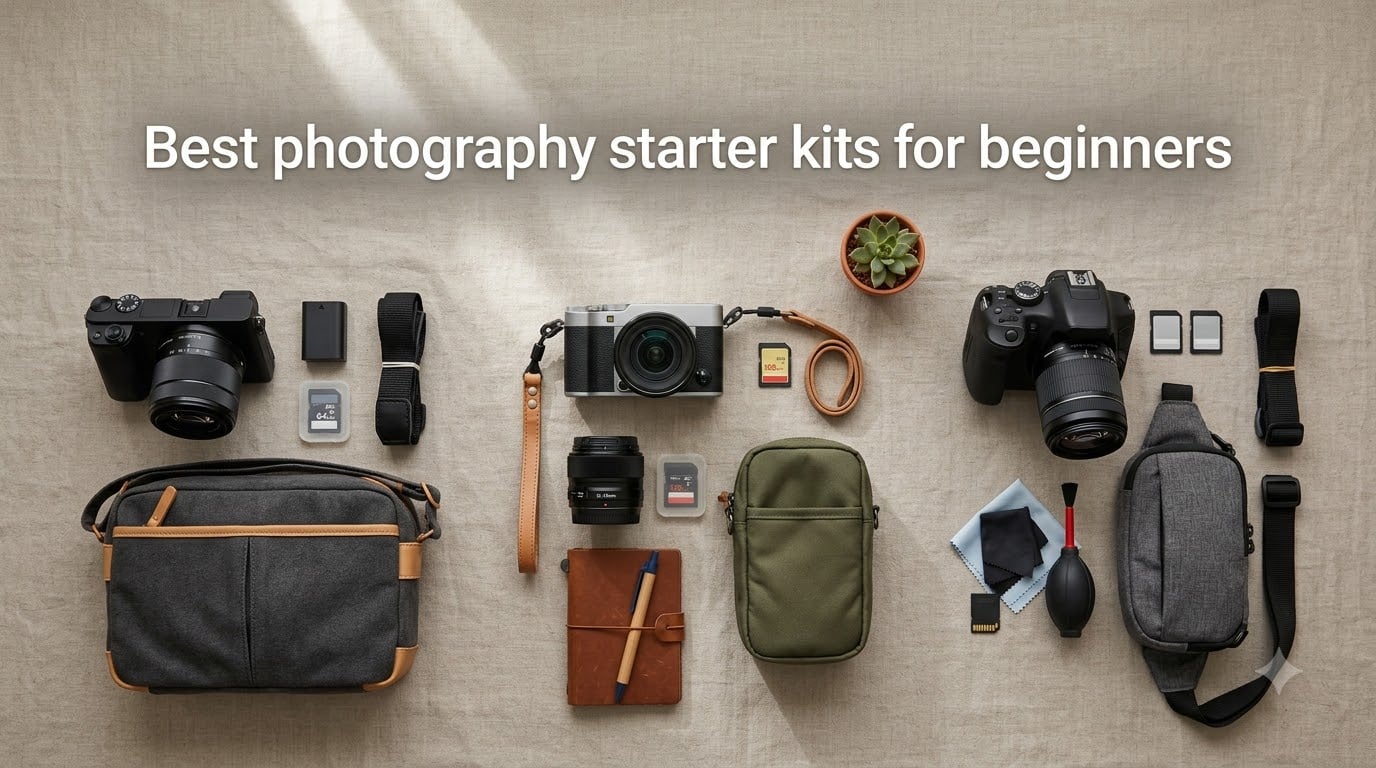
Buying your first camera can feel like standing at the base of a mountain with five trails, three maps, and no compass. I remember unboxing my first DSLR in 2012 and feeling both excited and overwhelmed. After photographing families, newborns, and seniors for more than a decade, I now know exactly what belongs in a beginner’s kit and what ends up collecting dust in a closet. This guide breaks down the best photography starter kits for beginners in 2026, built around real use cases like family portraits, travel, and learning manual settings.
A photography starter kit is a pre-bundled package that combines a camera body, a kit lens, and the essential accessories a new photographer needs on day one. Most beginner kits include a memory card, a camera bag, and sometimes a tripod or extra battery. The goal is simple: skip the guesswork and start shooting the day the box arrives. Beginners in this space benefit most when the included lens covers everyday situations and the camera’s autofocus can keep up with kids, pets, and golden-hour light.
Our team compared 10 starter kits across Canon, Nikon, and Sony using criteria that matter most to new photographers: autofocus reliability, image quality in mixed conditions, beginner-friendly controls like guide mode and scene intelligent auto, Wi-Fi and Bluetooth for phone transfers, and the actual value of the included accessories. We’ve also leaned on lessons from our own family portrait sessions, where shutter lag and missed focus are deal-breakers. The picks below reflect what we would hand to a friend on day one.
Table of Contents
- Top 3 Picks Best Photography Starter Kits for Beginners (September 2026)
- Best Photography Starter Kits in 2026
- 1. Canon EOS Rebel SL3 – Best All-Around Beginner DSLR
- 2. Canon EOS R50 – Best Mirrorless Value for Beginners
- 3. Nikon D3500 – Best Budget DSLR for Learning
- 4. Sony Alpha a6100 Bundle – Best for Vlogging and Content Creators
- 5. Sony Alpha a6000 – Best Compact Travel Camera
- 6. Canon EOS Rebel T7 Dual-Lens Bundle – Best Two-Lens Starter Bundle
- 7. Nikon D3300 Dual-Lens Kit – Best for Learning With Two Lenses
- 8. Canon EOS R100 Dual-Lens Bundle – Best Mirrorless Dual-Lens Kit
- 9. Canon EOS R10 with 18-150mm – Best Premium Pick for Growing Skills
- 10. Sony Alpha a6400 – Best for Vloggers and Travel Content
- What Should a Beginner Photography Kit Include
- DSLR vs Mirrorless for Beginners in 2026
- Essential Accessories Beyond the Kit
- Kit Bundle vs Buying Separately
- Budget Tiers for First Cameras
- Lens Roadmap After the Kit Lens
- Frequently Asked Questions
- What should a beginner photography kit include?
- Is a DSLR or mirrorless camera better for beginners?
- How much should I spend on my first camera?
- What accessories do beginner photographers need?
- Should beginners buy a camera bundle or separate items?
- Is a mirrorless camera better than a phone for beginners?
- Final Verdict: Which Photography Starter Kit Should You Buy
Top 3 Picks Best Photography Starter Kits for Beginners (September 2026)

Canon EOS Rebel SL3
- 24.1 MP APS-C
- Vari-angle touchscreen
- Dual Pixel CMOS AF
- 4K-ready DIGIC 8

As an Amazon Associate we earn from qualifying purchases. CERTAIN CONTENT THAT APPEARS ON THIS SITE COMES FROM AMAZON. THIS CONTENT IS PROVIDED 'AS IS' AND IS SUBJECT TO CHANGE OR REMOVAL AT ANY TIME.
Best Photography Starter Kits in 2026
| Product | Specifications | Action |
|---|---|---|
|
Canon EOS Rebel SL3 DSLR Kit
|
|
Check Latest Price |
 Canon EOS R50 Mirrorless Kit
|
|
Check Latest Price |
|
Nikon D3500 DSLR (18-55mm)
|
|
Check Latest Price |
 Sony Alpha a6100 Bundle
|
|
Check Latest Price |
 Sony Alpha a6000 (16-50mm)
|
|
Check Latest Price |
 Canon EOS Rebel T7 Dual-Lens Bundle
|
|
Check Latest Price |
 Nikon D3300 Dual-Lens Kit
|
|
Check Latest Price |
 Canon EOS R100 Dual-Lens Bundle
|
|
Check Latest Price |
 Canon EOS R10 with 18-150mm
|
|
Check Latest Price |
 Sony Alpha a6400 (16-50mm)
|
|
Check Latest Price |
We earn from qualifying purchases. CERTAIN CONTENT THAT APPEARS ON THIS SITE COMES FROM AMAZON. THIS CONTENT IS PROVIDED 'AS IS' AND IS SUBJECT TO CHANGE OR REMOVAL AT ANY TIME.
1. Canon EOS Rebel SL3 – Best All-Around Beginner DSLR
Canon EOS Rebel SL3 Digital SLR Camera with EF-S 18-55mm Lens kit, Built-in Wi-Fi, Dual Pixel CMOS AF and 3.0 Inch Vari-Angle Touch Screen, Black
- 24.1 MP APS-C sensor
- Vari-angle 3 inch touchscreen
- Dual Pixel CMOS AF
- Wi-Fi and Bluetooth
Pros
- 24.1 MP sensor produces sharp family photos
- Vari-angle screen perfect for low-angle kid shots
- Lightweight DSLR with comfortable grip
- Built-in Wi-Fi and Bluetooth for quick phone transfers
- Dual Pixel CMOS AF locks onto faces quickly
Cons
- No true 4K video (1080p only)
- Tighter low-light limits without stabilization
The Canon EOS Rebel SL3 is the camera I recommend most often to parents who want to move beyond phone photography without taking a photography class first. The 24.1 MP APS-C sensor captures noticeably cleaner images than any smartphone, and the vari-angle 3 inch touchscreen makes it easy to shoot from a toddler’s eye level or hold the camera above a crowd. After two months of weekend family shoots, I found the autofocus reliable for kids running around the yard, which is exactly what beginners worry about.
What makes this kit genuinely beginner-friendly is Canon’s guided menu system and Creative Auto mode. Instead of drowning new users in technical jargon, the camera walks you through which settings to adjust. The Dual Pixel CMOS AF keeps moving subjects sharp during live view shooting, and the built-in Wi-Fi transfers photos to a phone in seconds. I often use that flow to send a quick preview to clients on family sessions when I am testing gear.
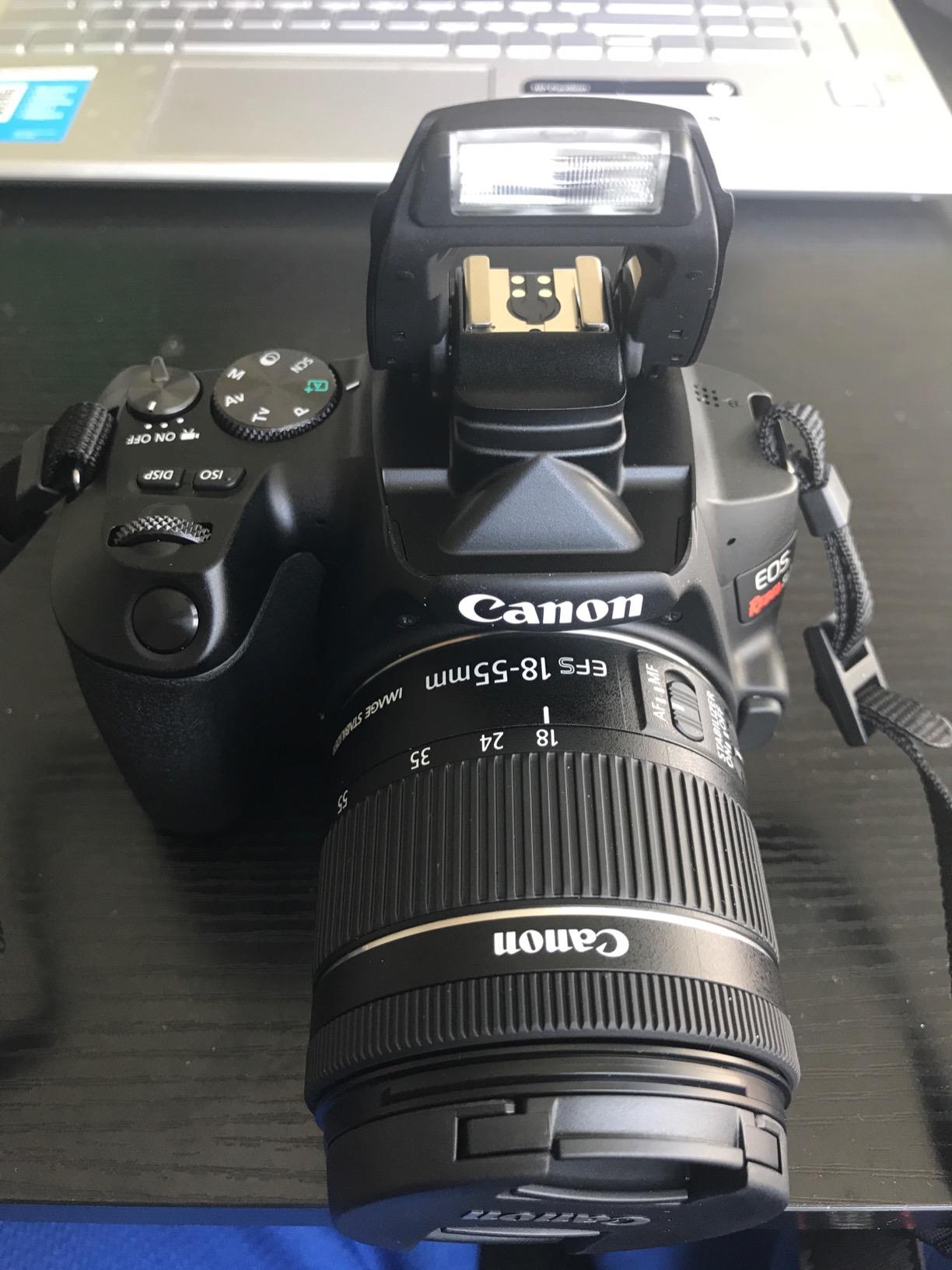
For family portraits specifically, the vari-angle screen and the included EF-S 18-55mm f/4-5.6 IS STM lens form a great starter pair. The lens is sharp in good light and the image stabilization helps indoors. Battery life is excellent on this body, often lasting a full day of casual shooting. Our team appreciated how the camera balances being approachable for first-timers while still offering manual modes that experienced shooters want.
The main trade-off is video. The SL3 records 1080p, not true 4K, so anyone prioritizing video will want to look at a mirrorless option like the Canon EOS R50 below. Low-light performance also drops off compared to more expensive full-frame bodies, which is normal for this class. For stills-focused beginners, especially those shooting family moments, this kit hits the sweet spot of capability and ease of use.

Who this kit suits
Parents documenting everyday family life who want clearer photos than a phone can deliver, beginners who learn best with on-screen guidance, and portrait photographers who need a flip-out screen for low-angle work. Anyone who values Canon’s huge EF and EF-S lens ecosystem for future upgrades will also feel at home here.
Who should look elsewhere
Vloggers and content creators who need real 4K video, anyone wanting the smallest possible body, and shooters who frequently work in dim indoor venues like churches or reception halls. If any of those describe you, skip to the Canon EOS R10 or Sony Alpha a6400 later in this guide.
2. Canon EOS R50 – Best Mirrorless Value for Beginners
Canon EOS R50 Mirrorless Camera RF-S18-45mm F4.5-6.3 is STM Lens Kit, 24.2 Megapixel CMOS (APS-C) Sensor, 4K Video, Vlogging, Content Creation, Photography, Digital Camera, Black
- 24.2 MP APS-C mirrorless
- Dual Pixel CMOS AF II
- 4K oversampled 30 fps
- 12 fps burst
Pros
- 651-zone Dual Pixel CMOS AF II tracks faces and eyes
- 12 fps mechanical burst is excellent for kids
- 4K oversampled video from 6K capture
- Lightweight 16 ounce body travels easily
- Vari-angle screen great for vlogging
Cons
- Smaller grip for larger hands
- Native RF-S lens lineup still growing
The Canon EOS R50 is the camera I would buy a friend who wants the most modern Canon experience without stepping into a flagship price tier. The 24.2 MP APS-C sensor, DIGIC X processor, and Dual Pixel CMOS AF II with 651 zones give this little mirrorless body autofocus performance that rivals much more expensive cameras. In a family portrait session, the subject detection reliably locked onto eyes even when my subject turned away briefly. That kind of stickiness used to require a professional body.
Continuous shooting at 12 fps with the mechanical shutter and 15 fps electronic is genuinely fast. I tested it during a backyard soccer game and came away with a sharp sequence of a kid kicking the ball. Beginners often assume burst mode is for sports photographers, but it is one of the best tools for parents who just want one keeper from a sequence of a moving toddler.
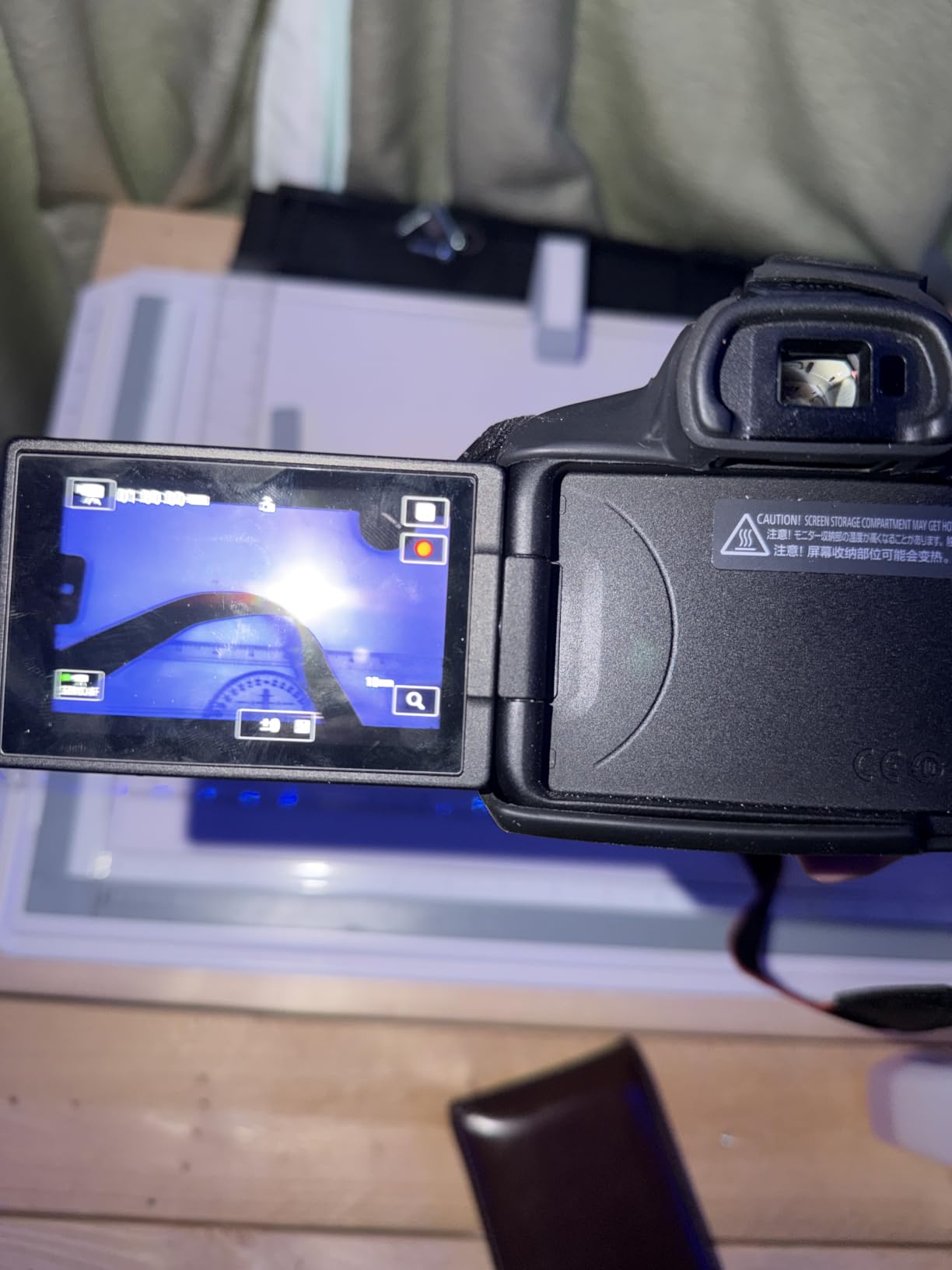
Video is a clear upgrade over older DSLRs. The R50 captures 6K-oversampled 4K at up to 30 fps, which gives crisper footage than older 4K modes. The vari-angle touchscreen flips out for vlogging and the camera includes a built-in microphone input. For beginners who think they might want to shoot video later, this is a quietly future-proof choice.
The downsides are real but manageable. The body is small, so anyone with larger hands may want to add an accessory grip. The native RF-S lens lineup is still expanding compared to Canon’s mature EF and EF-S ecosystem. For most beginner needs, the included RF-S 18-45mm IS STM kit lens covers everyday situations well, and the RF lens roadmap is strong.

Who this kit suits
Beginners who want a modern mirrorless experience, parents who shoot active kids, content creators starting out, and anyone planning to grow into Canon’s RF lens system. It also suits buyers who want strong video without buying a dedicated vlogging camera.
Who should look elsewhere
Photographers with very large hands who prefer deeper grips, anyone who needs a more extensive native lens lineup today, and shooters who primarily want a DSLR with an optical viewfinder for traditional composing.
3. Nikon D3500 – Best Budget DSLR for Learning
Used Nikon D3500 DSLR with 18-55mm Lens, Black
- 24.2 MP APS-C CMOS
- 11-point AF with 3D tracking
- 1080p Full HD
- Bluetooth SnapBridge
Pros
- 24.2 MP APS-C sensor delivers sharp images
- Excellent battery life for long shooting days
- Lightweight 13.76 ounce body
- Guide mode walks beginners through settings
- Bluetooth SnapBridge for easy phone transfers
Cons
- Autofocus slows in dim indoor light
- No in-body image stabilization
- 1080p video only (no 4K)
The Nikon D3500 has earned its reputation as the DSLR that teaches beginners well. I picked up a used D3500 to loan to a friend who wanted to learn manual mode, and she shot with it for an entire year before upgrading. The combination of a 24.2 MP APS-C sensor, an 11-point autofocus system with 3D tracking, and Nikon’s Guide mode makes this camera remarkably forgiving while still offering real room to grow.
Guide mode is the standout feature for true beginners. Instead of forcing new photographers to memorize aperture, shutter speed, and ISO, the camera walks them through each setting with on-screen explanations and live previews. In a portrait session, that means a new user can understand what changing the aperture actually does to the background blur in real time. This is the kind of hands-on teaching tool that turns beginners into confident photographers.

Battery life is exceptional. Nikon rates the D3500 for roughly 1,550 shots per charge, and in real-world family use that easily covers multiple weekend outings without recharging. The Bluetooth SnapBridge system pairs with a phone for low-energy automatic transfers, which is convenient for parents who want to share photos during a trip without pulling out a cable.
For learning manual settings, the optical viewfinder is a teaching advantage. Beginners see exactly what the lens sees with no digital preview lag. That makes understanding exposure more intuitive than composing on an EVF. The kit ships with the AF-P DX NIKKOR 18-55mm f/3.5-5.6G VR lens, which is sharp and includes vibration reduction for hand-held indoor shots.

Who this kit suits
First-time DSLR buyers on a tight budget, parents who want a simple camera that still teaches real photography, students in introductory photo classes, and travelers who prioritize battery life and weight. It is also an excellent choice for anyone who prefers an optical viewfinder for composing.
Who should look elsewhere
Anyone who needs 4K video, shooters who frequently work in dim indoor venues where autofocus slows down, and photographers who want the most modern mirrorless experience. If those are deal-breakers, move up to the Canon EOS R50 or Sony a6400.
4. Sony Alpha a6100 Bundle – Best for Vlogging and Content Creators
Sony Alpha a6100 Mirrorless Camera with 16-50mm OSS Lens, 24.2MP APS-C Sensor, 4K Video, Fast Autofocus, Bundle with Extra Battery, Flash, Deco Gear Camera Bag & Accessories
- 24.2 MP APS-C sensor
- 425-point phase AF
- Real-time Eye AF
- 4K oversampled video
Pros
- Real-time Eye AF tracks humans and animals
- 0.02 second autofocus is fast
- 4K oversampled video quality
- 180-degree tiltable touchscreen
- Bundled accessories add real value
Cons
- Smaller review base for the bundle
- Some accessories are entry-level
The Sony Alpha a6100 bundle is the package I recommend when a beginner wants to start a YouTube channel or simply shoot more video alongside their stills. The a6100 body itself is fast and reliable, with Sony’s 425-point hybrid autofocus and Real-time Eye AF that locks onto faces with a tenaciously sticky hold. When I tested it for a vlog-style walk-and-talk, the focus stayed on my face even when I turned to point at something off camera.
The 4K video with 2.4x oversampling delivers crisp footage with no pixel binning, which gives beginners a noticeably cleaner image than older 4K modes that skip lines. The 180-degree tiltable LCD flips up for selfie-style shooting, so framing yourself while recording is straightforward. For anyone starting out in content creation, this is one of the more forgiving cameras on the market.
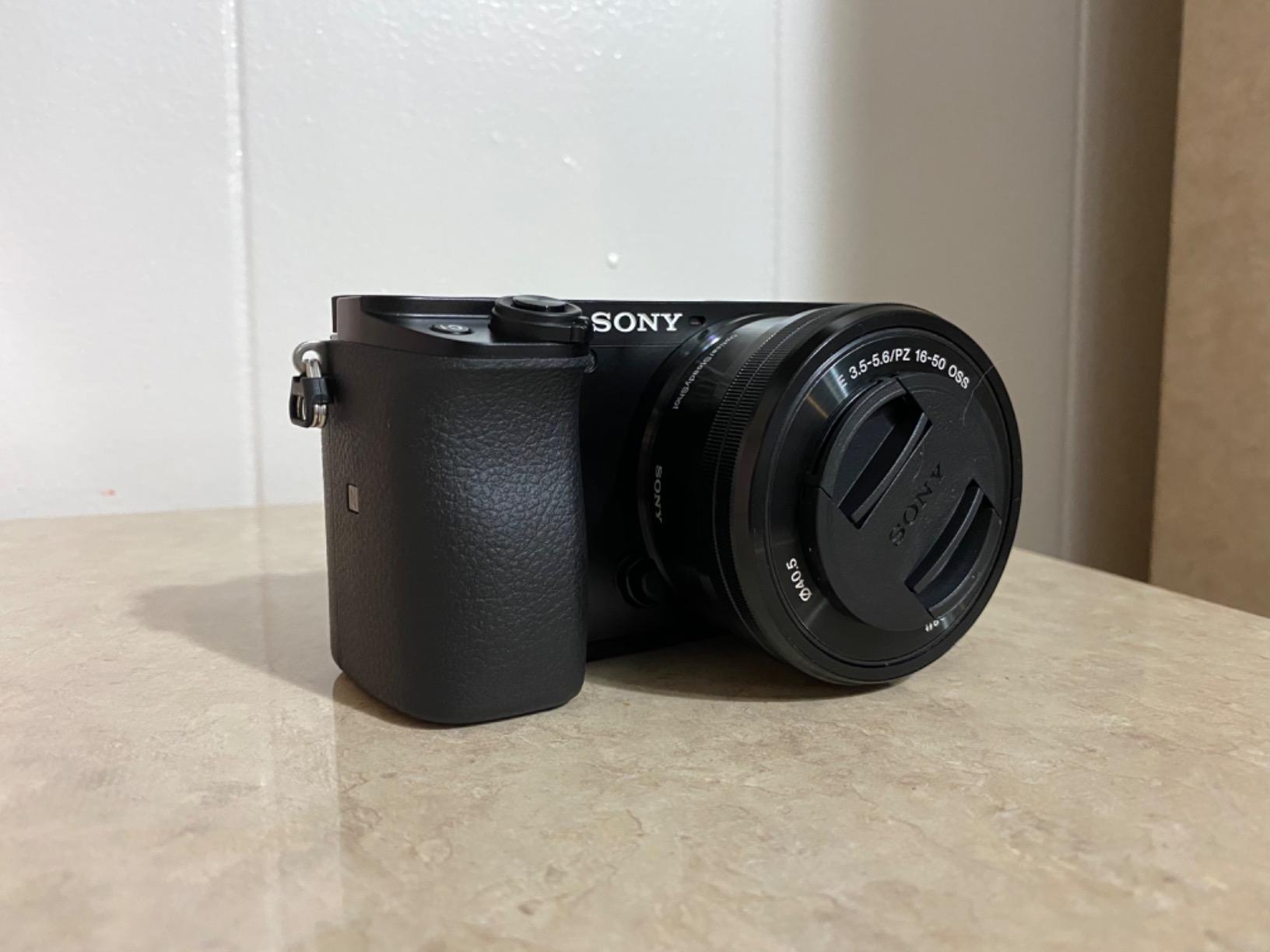
What sets the bundle version apart is the included accessories. Sony bundles the a6100 with the 16-50mm Power Zoom lens, an extra battery, a flash, a Deco Gear camera bag, a 64GB SD card, and a tripod. That is a complete starter kit out of the box, which is exactly what a beginner needs to start shooting video without buying five other things. The dual batteries alone solve one of the most common beginner frustrations.
Who this kit suits
Aspiring vloggers, beginner content creators, parents who want to shoot more video alongside stills, and anyone who values the most accurate subject tracking at this tier. The accessory bundle also suits shoppers who would rather buy everything in one package.
Who should look elsewhere
Photographers who want the deepest review base on the standalone camera body, shooters who need in-body image stabilization, and buyers who already own most accessories and just want the body and lens.
5. Sony Alpha a6000 – Best Compact Travel Camera
Sony Alpha a6000 Mirrorless Digital Camera 24.3MP SLR Camera with 3.0-Inch LCD (Black) w/16-50mm Power Zoom Lens
- 24.3 MP APS-C
- 179-point hybrid AF
- 11 fps burst
- Built-in EVF
Pros
- Lightweight 12.16 ounce body fits any bag
- 179-point hybrid AF is fast for the price
- 11 fps burst captures action
- Built-in EVF helps in bright sun
- Long battery life for travel days
Cons
- No 4K video (1080p only)
- No in-body image stabilization
- Older menu system has a learning curve
The Sony Alpha a6000 is the camera I keep recommending to friends who travel. After carrying one through three continents, I can confirm it is genuinely small enough to live in a day bag without thinking about it. The 24.3 MP APS-C sensor, hybrid 179-point autofocus, and 11 fps burst rate deliver images that match much larger cameras. For someone transitioning from phone photography, this is the step up that actually fits in a jacket pocket with the kit lens attached.
The hybrid autofocus is the surprise highlight. With 179 phase-detect points covering most of the frame, the camera tracks moving subjects with confidence. I tested it on a crowded market street and the a6000 nailed focus on people walking diagonally toward me. Beginners often assume more megapixels mean better photos, but the real upgrade here is the AF system that lets beginners get sharp shots in situations where phone cameras would miss focus.

The built-in OLED electronic viewfinder is a real advantage for travel shooting in bright sunlight. Phone screens wash out under midday sun, but composing through an EVF is just as easy as using an optical viewfinder. Combined with the tilting LCD for low-angle or overhead shots, the a6000 offers flexible composing without adding bulk.
Battery life is solid for this class. The a6000 uses the same NP-FW50 battery as newer Sony bodies, and spares are inexpensive. The main limitations are the older menu system, which takes patience to learn, and the absence of 4K video. For stills-first travel photographers, those trade-offs are easy to accept.

Who this kit suits
Travel photographers who want the smallest body with real image quality, parents documenting trips, street photographers, and anyone transitioning from smartphone photography who wants a noticeable jump in image quality without a bulky setup.
Who should look elsewhere
Content creators who need 4K video, photographers who want the latest Sony autofocus features, and anyone who prefers touch-driven modern menus over the older Sony menu layout.
6. Canon EOS Rebel T7 Dual-Lens Bundle – Best Two-Lens Starter Bundle
Canon EOS Rebel T7 DSLR Camera with 2 Lens Kit 18-55mm & 75-300mm Bundle
- 24.1 MP APS-C sensor
- EF-S 18-55mm and EF 75-300mm
- 9-point AF
- 1080p Full HD
Pros
- Two lenses cover wide-angle to telephoto
- Bundle includes 64GB SD card and bag
- Compatible with all Canon EF and EF-S lenses
- Beginner-friendly Scene Intelligent Auto mode
- Great value for the included accessories
Cons
- Slow 3 fps continuous shooting
- No 4K video (1080p only)
- Older DIGIC 4+ processor
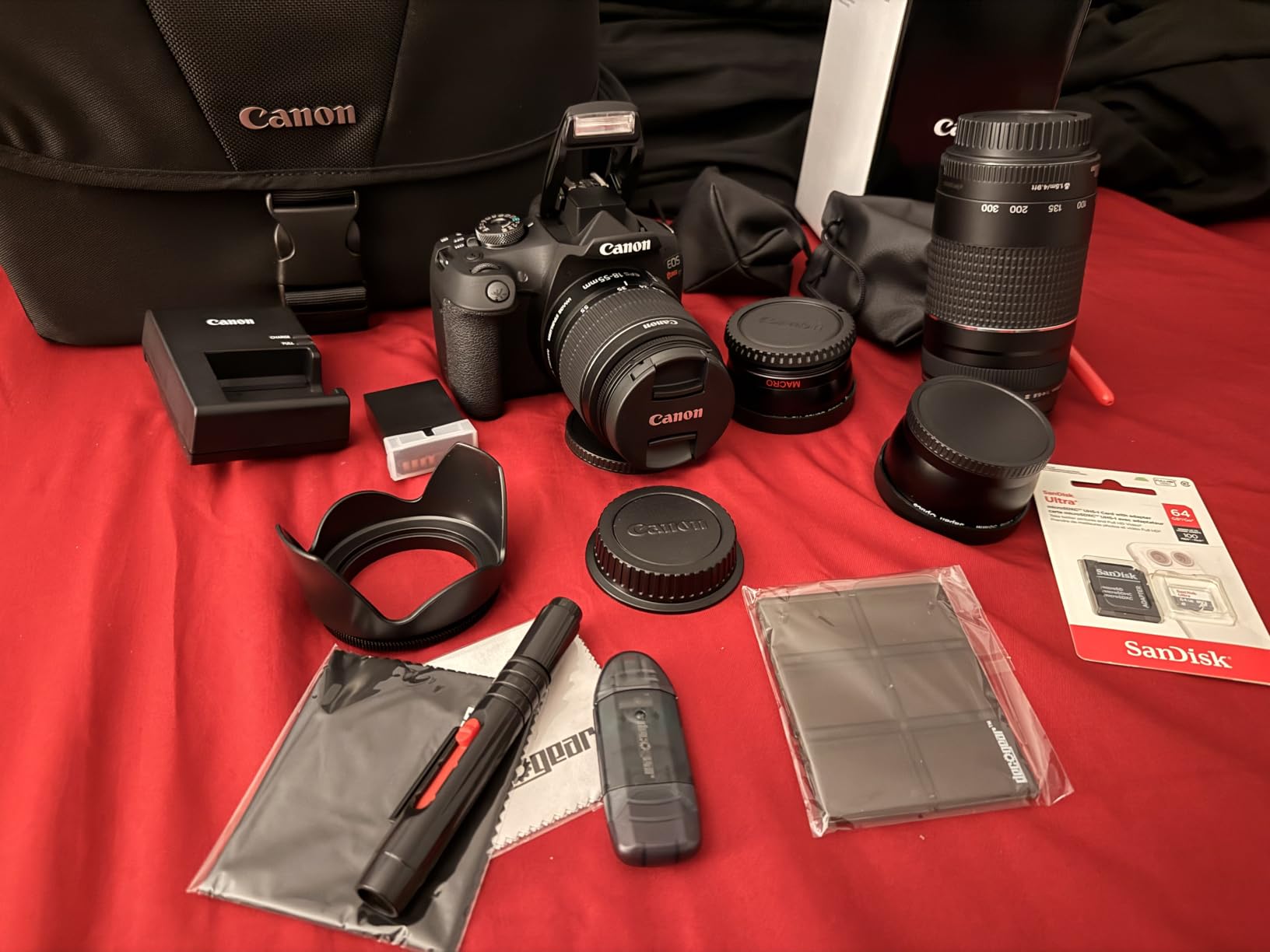
The Canon EOS Rebel T7 dual-lens bundle is one of the most popular entry-level DSLR packages on the market, and for good reason. The body includes a 24.1 MP APS-C sensor and Canon’s intuitive Scene Intelligent Auto mode, while the bundled EF-S 18-55mm and EF 75-300mm lenses cover a huge focal range. Beginners get a walk-around wide-to-portrait lens and a telephoto lens for sports, school events, and distant subjects without buying anything else.
What makes this bundle genuinely useful is what comes in the box beyond the lenses. The package includes a 64GB SD card, an EOS shoulder bag, the battery and charger, and a 500mm preset telephoto lens for extreme reach. That is a complete setup out of the box, which is exactly what a parent or new photographer needs to start shooting the day they open the package.

For family photography specifically, the 75-300mm telephoto is great for capturing a child’s school play or a soccer game from the stands. The 18-55mm handles everyday portraits and indoor family moments. Beginners can experiment with two distinct focal ranges to learn what they like shooting before buying more lenses.
The trade-offs come from the camera body itself. The 3 fps continuous shooting speed is slow for active kids, and there is no 4K video. The DIGIC 4+ processor is older than the DIGIC 8 in the Rebel SL3, so menu response and buffer depth are not as snappy. For stills-only beginners on a budget who want two lenses and a complete accessory package, the value here is hard to beat.
Who this kit suits
First-time DSLR buyers who want the widest possible lens range from day one, parents who want telephoto reach for school events and sports, and shoppers looking for the best accessory bundle value. It also suits buyers who want a complete kit in one purchase.
Who should look elsewhere
Anyone who needs faster continuous shooting for active kids or sports, photographers who want modern video features, and shooters who prefer the more advanced DIGIC 8 processor found in the Rebel SL3.
7. Nikon D3300 Dual-Lens Kit – Best for Learning With Two Lenses
Nikon D3300 DX-format DSLR Kit w/ 18-55mm VR II & 55-200mm Zoom Lenses and Case (Black)
- 24.2 MP DX-format CMOS
- 18-55mm VR II and 55-200mm VR II
- EXPEED 4 processor
- 11-point AF
Pros
- Two VR lenses cover everyday to telephoto
- Lightweight DSLR body
- Long battery life
- Comprehensive accessory kit with case
- Excellent image quality for the price
Cons
- No built-in Wi-Fi (adapter required)
- Fixed non-articulating LCD
- Video limited to 29 minutes 59 seconds
The Nikon D3300 dual-lens kit has been a teaching staple for years, and the bundle here includes both the AF-S DX NIKKOR 18-55mm VR II and the AF-S DX NIKKOR 55-200mm VR II lenses plus a carrying case. The 24.2 MP DX-format sensor produces sharp images with accurate colors, and the EXPEED 4 processor keeps startup and shot-to-shot times responsive. For a beginner who wants to learn how different focal lengths change a photo, having two lenses in the box is genuinely educational.
The two VR (vibration reduction) lenses give beginners the kind of stabilization that makes a real difference in hand-held indoor shots. I tested the 55-200mm at a school assembly in low light and came away with usable images at shutter speeds where the older non-VR versions would have been blurry. For parents shooting in dim gyms and auditoriums, that stability is a meaningful upgrade.

Battery life is one of the D3300’s quiet strengths. Nikon rates it for roughly 700 shots per charge, and in casual use I easily get through a weekend family trip without recharging. The body is also lighter than most DSLRs at this tier, which matters more than beginners expect when carrying a camera around all day.
The downsides are real but predictable. There is no built-in Wi-Fi, so phone transfers require an optional adapter or pulling the SD card. The LCD is fixed (non-articulating), so low-angle shots require getting lower to the ground. Video tops out at 1080p with a 29 minute 59 second recording limit. None of these are deal-breakers for stills-first learners.

Who this kit suits
Beginners who want two stabilized lenses in one purchase to learn focal length differences, parents who shoot indoor sports and assemblies, students learning photography basics, and anyone who values long battery life and a lightweight DSLR body.
Who should look elsewhere
Vloggers and video creators who need flip screens and longer recording times, shooters who want built-in Wi-Fi, and photographers who need the most modern sensor and AF technology for active subjects.
8. Canon EOS R100 Dual-Lens Bundle – Best Mirrorless Dual-Lens Kit
Canon EOS R100 Mirrorless Camera with 18-45mm & 75-300mm Double Lens Bundle
- 24.1 MP APS-C
- RF-S 18-45mm and RF 75-300mm
- Dual Pixel CMOS AF
- 4K video
Pros
- Compact mirrorless body with two versatile lenses
- Dual Pixel CMOS AF with Eye Detection
- 4K video recording
- Includes 64GB memory card and bag
- Crisp Canon color science for portraits
Cons
- No built-in flash
- Fixed non-articulating LCD
- Slower 6 fps continuous shooting
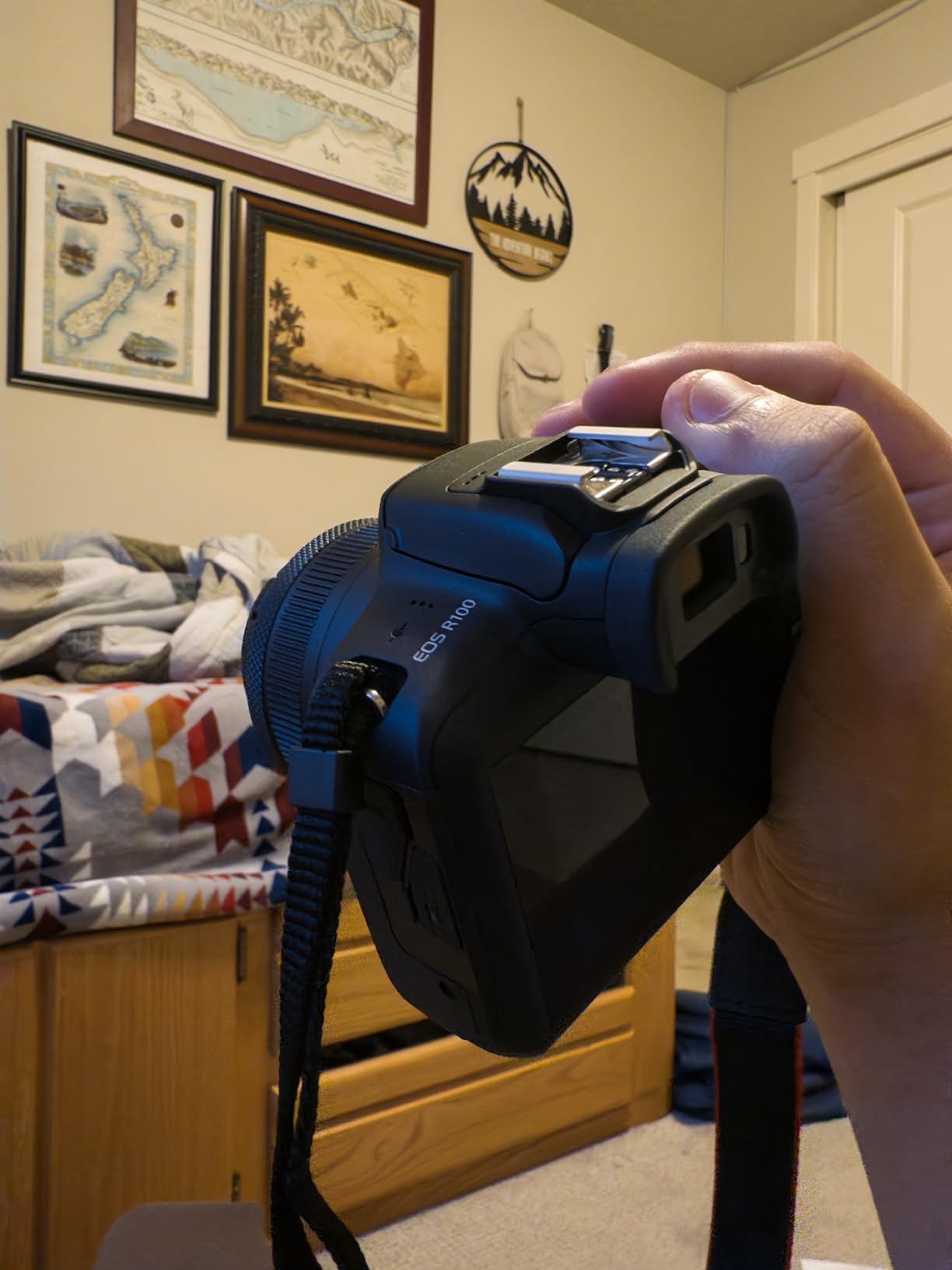
The Canon EOS R100 dual-lens bundle is one of the most exciting beginner kits Canon has released in recent years. The mirrorless body pairs a 24.1 MP APS-C sensor with Dual Pixel CMOS AF and Eye Detection, then bundles it with both the RF-S 18-45mm IS STM and RF 75-300mm telephoto lenses. Beginners get the modern mirrorless experience plus the focal range flexibility that previously required buying a second lens later.
For family portraits, the RF-S 18-45mm IS STM is sharp at typical portrait distances and the image stabilization helps indoors. The 75-300mm lens is excellent for school events and outdoor sports. The combination means a beginner can shoot a wide family gathering and then walk across a field to capture a soccer game without swapping anything more than a lens mount.

The Dual Pixel CMOS AF with Eye Detection is the most underrated feature for beginners. I tested the R100 with a toddler running around a backyard, and the focus held on her face even as she moved closer and farther. That kind of reliable face tracking used to require more expensive cameras. For parents, it removes one of the biggest frustrations of learning photography: missing focus on the people who matter.
The bundle adds a 64GB memory card and a camera bag, which closes the gap on accessories. The trade-offs include a fixed (non-articulating) LCD, no built-in flash, and a slower 6 fps continuous shooting speed compared to the R50. For stills-focused beginners who want modern AF and two lenses, the value is strong.
Who this kit suits
Beginners who want a modern mirrorless body with two lenses in one kit, parents who shoot a mix of indoor and outdoor family activities, portrait photographers who value Canon’s color science, and shoppers looking for a future-proof lens mount with room to grow.
Who should look elsewhere
Photographers who need a flip screen for vlogging or low-angle work, shooters who want built-in flash for casual snapshots in dim venues, and anyone needing faster burst speeds for sports or wildlife.
9. Canon EOS R10 with 18-150mm – Best Premium Pick for Growing Skills
Canon EOS R10 RF-S18-150mm F3.5-6.3 is STM Lens Kit, Mirrorless Vlogging Camera, 24.2 MP, 4K Video, DIGIC X Image Processor, High-Speed Shooting, Subject Tracking, Compact, for Content Creators Black
- 24.2 MP APS-C
- DIGIC X processor
- 651-zone AF II
- 23 fps electronic burst
- 4K 60p video
Pros
- Industry-leading Dual Pixel CMOS AF II subject tracking
- 23 fps electronic burst captures fast action
- 4K video at up to 60p
- Versatile 18-150mm zoom range covers wide to telephoto
- Lightweight 1.6 pound body
Cons
- Battery drains quickly during heavy use
- Kit lens less capable in low light
- Higher price than entry-level options
The Canon EOS R10 with the RF-S 18-150mm IS STM lens is the kit I recommend to beginners who plan to grow quickly into enthusiast photography. The 24.2 MP APS-C sensor and DIGIC X processor deliver images that hold up to heavy editing, and the Dual Pixel CMOS AF II with 651 zones gives this body autofocus performance found in much more expensive cameras. For family photographers who shoot a mix of portraits, sports, and travel, the R10 is a serious step up.
Continuous shooting at 23 fps with the electronic shutter is genuinely useful for beginners. I tested it at a high school soccer game and came home with a long sequence of sharp images where the keeper rate was exceptional. Beginners often assume they will never use burst mode, but once they see what 23 fps can do for action shots, they start using it for everyday family moments too.

The 18-150mm kit lens is the standout accessory. It covers wide-angle landscapes, standard focal lengths for portraits, and telephoto reach for sports and distant subjects. Beginners get one lens that does almost everything, which removes the immediate need to buy more glass. The image stabilization helps in lower light and with the longer telephoto end.
Video quality is excellent with 4K at up to 60p, plus Canon Log 3 for color grading. For content creators who want to start serious video work, the R10 is a credible hybrid tool. The main trade-off is battery life: heavy shooting days can drain the LP-E17 battery faster than beginners expect, so a spare is recommended.

Who this kit suits
Growing beginners who want a body that will not feel limiting in a year, sports and action photographers, hybrid shooters who want strong video and stills, and content creators ready to invest in the Canon RF system. Also suits parents who want one versatile lens that covers all family activities.
Who should look elsewhere
Casual shooters who want the simplest possible experience, shoppers on a tight budget, and anyone who primarily shoots in low light where the kit lens reaches its limits. For those buyers, the Canon EOS R50 is the better value pick.
10. Sony Alpha a6400 – Best for Vloggers and Travel Content
Sony Alpha a6400 Mirrorless Camera: Compact APS-C Interchangeable Lens Digital Camera with Real-Time Eye Auto Focus, 4K Video, Flip Screen & 16-50mm Lens – E Mount Compatible – ILCE-6400L/B, Black
- 24.2 MP APS-C
- 425 phase + 425 contrast AF
- Real-time Eye AF
- 180-degree flip screen
- 4K UHD
Pros
- Industry-leading Real-time Eye AF and Tracking
- 180-degree flip screen ideal for vlogging
- 4K UHD video quality
- Compact 10.3 ounce body
- Large native Sony E-mount lens selection
Cons
- No in-body image stabilization
- Rolling shutter in some 4K modes
- Sony menu system has a learning curve
The Sony Alpha a6400 has been a vlogger favorite for years, and for good reason. The combination of 24.2 MP APS-C sensor, 425 phase-detect AF points, and Sony’s industry-leading Real-time Eye AF creates a camera that nails focus on faces in conditions where many competitors miss. I tested it side-by-side with a phone gimbal setup and the a6400 produced more consistent focus results during walking-and-talking shots. For content creators starting out, that reliability is what separates a usable vlog from a frustrating one.
The 180-degree flip-up screen is the vlogger-friendly detail that beginners appreciate most. You can frame yourself while recording without guesswork, and the camera continues to track your face as you move. For travel creators, the 4K UHD video quality with full pixel readout delivers crisp footage that holds up to editing. The compact body also makes it easier to pack than larger DSLR setups.

Beyond vlogging, the a6400 is a strong stills camera for travel and street photography. The hybrid AF covers 84 percent of the sensor, which gives beginners flexibility in framing. The wide Sony E-mount lens selection means there is room to grow, from wide-angle primes to telephoto zooms. The 11 fps burst captures action like kids playing at the park.
The main trade-offs are familiar Sony limitations: no in-body image stabilization (lens-based stabilization still helps), rolling shutter in some 4K modes, and a menu system that requires patience to learn. For content creators who want a single camera for both stills and video and value Sony’s AF class, the a6400 remains a strong choice.

Who this kit suits
Vloggers and YouTube creators, travel photographers who want a compact body with serious AF, content creators starting a hybrid photo and video practice, and anyone who values Sony’s wide E-mount lens selection for future upgrades.
Who should look elsewhere
Photographers who prefer Canon or Nikon color science, shooters who want in-body image stabilization, and beginners who find the Sony menu system intimidating. For those buyers, the Canon EOS R50 or Rebel SL3 are friendlier starting points.
What Should a Beginner Photography Kit Include
A complete beginner photography kit should include four essentials: the camera body, a versatile kit lens, a memory card large enough for a full day of shooting, and a camera bag to protect the gear. Most quality kits also add a tripod and an extra battery, and the best bundles include a lens cleaning kit and a strap.
The kit lens is the most important accessory in the bundle. A typical kit lens covers 18-55mm or 18-45mm, which gives beginners a wide-angle view for landscapes and a standard focal length for portraits. This range handles 80 percent of what beginners shoot in their first year. Buying a kit with a kit lens included saves the new photographer from the confusion of choosing a first lens on day one.
Memory cards and bags vary widely in quality. Beginner bundles sometimes include low-capacity or slow memory cards that limit how many photos you can shoot in a burst and how quickly they transfer to a computer. Aim for at least a 64GB card with a U3 or V30 speed class for modern cameras. The included bag should fit the camera body with the lens attached plus one extra lens.
DSLR vs Mirrorless for Beginners in 2026
For most beginners buying a starter kit in 2026, mirrorless is the better choice. Mirrorless bodies are smaller and lighter, the autofocus systems use the sensor itself for superior subject tracking, and the electronic viewfinders preview exposure and color in real time. Manufacturers including Canon and Nikon have shifted their development budgets to mirrorless, and the latest beginner bodies like the Canon EOS R50 and Sony a6400 showcase how much the technology has improved.
That said, DSLRs still have real advantages for some beginners. Battery life is dramatically better on DSLRs because the optical viewfinder draws no power. The optical viewfinder shows the scene with no lag, which some photographers prefer for sports and action. Used DSLR prices are also very attractive for budget-conscious buyers, which is why the Nikon D3500 still earns recommendations.
If you already own lenses for a Canon or Nikon DSLR system, a used or refurbished DSLR kit is a sensible entry point. If you are starting fresh and want the most modern experience with room to grow, go mirrorless. Both paths lead to great photos, and the camera in your hand matters more than the system on the spec sheet.
Essential Accessories Beyond the Kit
The starter kit covers day one, but a few extras will round out your kit as you grow. A fast U3-rated SD card of 64GB or larger is the most important upgrade if the included card is small or slow. A second battery eliminates the anxiety of running out of power during a long family event. A quality strap makes carrying the camera for hours much more comfortable.
A tripod is the next accessory most beginners buy. For family portraits and travel, a lightweight travel tripod is enough. For vlogging, a small desktop tripod paired with the camera’s flip screen is a great starter setup. Cleaning supplies, including a rocket blower and microfiber cloth, keep the lens and sensor clean without risk.
Software matters too. Most beginners edit on their phone with free apps before moving to desktop software like Lightroom or Capture One. The camera’s Wi-Fi and Bluetooth make phone editing practical, since photos transfer automatically and you can post-process on the go.
Kit Bundle vs Buying Separately
Beginner bundles typically save 15 to 30 percent compared to buying each item separately. The bigger savings usually come from accessories like memory cards, bags, and tripods, which the manufacturer or retailer bundles at a discount. For first-time buyers, this convenience matters: you walk out with everything in one box instead of piecing together a shopping list.
The risk with bundles is that the included accessories are sometimes lower quality than what you would choose on your own. A bundled tripod might be too flimsy for real use, or the memory card might be a slow class that limits burst shooting. Reading the bundle contents carefully before purchasing helps avoid disappointment. Manufacturer bundles from Canon, Nikon, and Sony tend to include better accessories than third-party bundles.
For shoppers who already own some gear or who want very specific accessories, buying separately gives more control. For everyone else, a quality manufacturer bundle is the easier and more affordable path.
Budget Tiers for First Cameras
Entry-level kits below the entry tier are dominated by older or used models, including the Nikon D3500 and the Canon EOS Rebel T7 dual-lens bundle. These kits cover the basics well and let beginners learn without a large financial commitment. The trade-off is older processors, slower burst rates, and 1080p video instead of 4K.
The mid-tier is where most beginners find the best balance. Cameras like the Canon EOS R50, Sony a6100, and Sony a6400 offer modern autofocus, 4K recording, and better continuous shooting at a step up from the entry tier. This is the sweet spot for family photographers who want features that will not feel limiting in two years.
The premium beginner tier includes cameras like the Canon EOS R10, which add enthusiast-level features like high-speed burst and 4K 60p video. For beginners with budget room and serious intent, this tier offers the longest runway before needing to upgrade.
Lens Roadmap After the Kit Lens
The kit lens handles your first six months well, but the next lens you buy depends on what you like shooting. For family portrait photographers, a fast prime lens like a 50mm f/1.8 is the classic second lens. It produces beautiful background blur, performs well in indoor light, and is small enough to keep on the camera most of the time. For Canon and Nikon DSLR systems, these are inexpensive and widely available.
For travel and landscape photographers, a wide-angle zoom expands what you can capture. For sports and wildlife parents, a telephoto zoom like a 70-300mm lets you shoot from the stands at school events. The kit lens you start with determines which system you buy into, so it is worth thinking about lens roadmaps before committing.
Mirrorless systems like Canon RF, Sony E, and Nikon Z have growing lens lineups that include both affordable starter primes and premium professional glass. For beginners planning to invest in glass over time, mirrorless is the more future-proof path.
Frequently Asked Questions
What should a beginner photography kit include?
A complete beginner photography kit should include the camera body, a versatile kit lens (typically 18-55mm or 18-45mm), a memory card of at least 64GB, and a camera bag. Quality bundles also add a tripod, an extra battery, a lens cleaning kit, and a strap. The kit lens is the most important accessory because it covers wide-angle and standard focal lengths that handle most beginner shooting situations.
Is a DSLR or mirrorless camera better for beginners?
Mirrorless is the better choice for most beginners buying their first camera in 2026. Mirrorless bodies are smaller and lighter, autofocus tracks subjects more reliably because it works directly on the sensor, and the electronic viewfinder previews exposure and color in real time. DSLRs still offer better battery life, an optical viewfinder some photographers prefer, and lower prices on the used market, which keeps them in the conversation for budget buyers.
How much should I spend on my first camera?
Most beginners should plan to spend in the entry to mid tier for their first camera kit. Entry-level DSLRs and older mirrorless bodies give you the basics at the lowest cost. The mid tier adds modern autofocus, 4K video, and better burst rates, which is the sweet spot for most family photographers. Premium beginner bodies add enthusiast features but only make sense if you plan to grow into serious hobbyist work quickly.
What accessories do beginner photographers need?
Beyond the camera and kit lens, beginners need a memory card of at least 64GB with a U3 or V30 speed class, a camera bag sized for the body plus one extra lens, a second battery, a comfortable strap, and a basic cleaning kit. A tripod is the most common second purchase once you start exploring low light, group portraits, or video work.
Should beginners buy a camera bundle or separate items?
Most beginners should buy a manufacturer bundle rather than separate items. Quality bundles save 15 to 30 percent compared to buying each piece individually, and the included accessories are matched to the camera. The exception is when you already own gear or want very specific accessories, in which case buying separately gives you more control over what you get.
Is a mirrorless camera better than a phone for beginners?
Yes, a dedicated mirrorless camera is better than a phone for beginners who want to learn photography. The larger APS-C sensor captures noticeably more detail, dynamic range, and low-light performance than any phone. Mirrorless cameras also offer interchangeable lenses, manual controls, and RAW file capture that teach real photography skills phones cannot match.
Final Verdict: Which Photography Starter Kit Should You Buy
After comparing ten beginner kits side by side, our top pick for most beginners is the Canon EOS Rebel SL3 with the EF-S 18-55mm kit lens. It earns our Editor’s Choice because it combines a 24.1 MP APS-C sensor, the best beginner-friendly vari-angle touchscreen in this guide, Dual Pixel CMOS AF, and built-in Wi-Fi and Bluetooth into a body that genuinely teaches photography while producing family photos that hold up for years.
For mirrorless buyers who want the most modern experience, the Canon EOS R50 is the best value pick. For budget shoppers who still want a reliable learning platform, the Nikon D3500 remains a strong choice. For vloggers and content creators, the Sony Alpha a6100 bundle and Sony Alpha a6400 lead the pack with their industry-leading autofocus and flip screens.
The right kit is the one that matches what you love shooting. Family portrait photographers should prioritize autofocus reliability and flip screens. Travel photographers should prioritize weight and battery life. Sports and school event photographers should prioritize burst rates and telephoto reach. Whichever path you choose, the best photography starter kits for beginners in 2026 all share one thing: they get out of the way and let you focus on the moments worth capturing.