
Short answer: the Frabill Pro Thermal Tip-Up 1660 is the best ice fishing tip up for pike most anglers should buy. It carries a 4.5 out of 5 rating across 619 reviews, the largest owner base in this roundup, and its insulated body is the piece of engineering that actually matters on pike water, because it keeps a 10 inch hole from slushing over during a full day of sub-zero air temperatures.
Pike do not cooperate with a rod in your hand. They are ambush predators that hit a baitfish sideways, often lifting it a foot off the bottom instead of running with it, so a soft rod tip frequently registers nothing. A tip-up removes you from the equation entirely: the fish trips a mechanism, a flag pops, and you walk over and set the hook yourself.
That freedom is what lets you spread lines across a weed edge and cover twenty feet of water instead of two. Below I break down the ten best ice fishing tip ups for pike we could justify, plus how to rig them, how deep to set them, and where the hardware actually fails in the cold.
Table of Contents
- Top 3 Best Ice Fishing Tip Ups for Pike (October 2026)
- Best Ice Fishing Tip Ups for Pike in 2026
- 1. Frabill Pro Thermal Tip-Up 1660 – Best Overall for Pike
- 2. Beaver Dam The Original Tip-Up – Best for Big Pike
- 3. Celsius 3 Pack Tip-Up with Tackle – Best Budget Multi-Hole Spread
- 4. HT Polar Tip-Up with 200 Yard Spool – Best Ready-to-Go Spool
- 5. Bullnose Original Blue Tip Down – Best Light Bite Detection
- 6. Bullnose Big Red Tip Down – Best for Heavy Line and Big Reels
- Bullnose Products Big RED Ice Fishing Tip Down-Tip Up- Sensitive to The Slightest Fish Bites- Used for Both Larger Reels and Heavier Line as Well as Smaller Reels and Lighter Line.
- Why would a pike angler choose the Big Red over a spool tip-up?
- Is the Big Red frame durable enough for a whole season of slush?
- 7. Ifish Pro Ice Fishing Tip-Up – Best Trigger Control
- 8. Clam Arctic Warrior 8840 – Best for Fighting the Fish on a Rod
- 9. Sullivan Tip Drop 4 Pack – Best Night Visibility
- 10. Finicky Fooler Ice Fishing Tip Up Rod – Best Packable Rod for a Tip-Down
- How to Choose a Tip-Up for Pike
- How to Rig a Tip-Up for Northern Pike
- Depth and Spread Tactics by Season
- Frequently Asked Questions
- Final Verdict
Top 3 Best Ice Fishing Tip Ups for Pike (October 2026)

Frabill Pro Thermal Tip-Up…
- Insulated body
- 10 inch hole cover
- Dual trip settings
- Bucket portable

Beaver Dam The Original Tip-Up
- 23 inch pine base
- Aluminum tube bearings
- Freeze-proof lube
Celsius 3 Pack Tip-Up with…
- Three tips per kit
- Compact nylon build
- Lightweight at 1.3 pounds
As an Amazon Associate we earn from qualifying purchases. CERTAIN CONTENT THAT APPEARS ON THIS SITE COMES FROM AMAZON. THIS CONTENT IS PROVIDED 'AS IS' AND IS SUBJECT TO CHANGE OR REMOVAL AT ANY TIME.
Best Ice Fishing Tip Ups for Pike in 2026
Two hardware families show up in this list. Spool tip-ups hold your line on a drum below the ice and pop a spring flag. Tip-downs clamp a rod and tip it over when the rod moves. Pike anglers often run one of each at the same hole.
| Product | Specifications | Action |
|---|---|---|
|
Frabill Pro Thermal Tip-Up 1660
|
|
Check Latest Price |
|
Celsius 3 Pack Tip-Up with Tackle
|
|
Check Latest Price |
|
Beaver Dam The Original Tip-Up
|
|
Check Latest Price |
 Bullnose Original Blue Tip Down
|
|
Check Latest Price |
 Ifish Pro Ice Fishing Tip-Up
|
|
Check Latest Price |
 Bullnose Big Red Tip Down
|
|
Check Latest Price |
 Sullivan Tip Drop 4 Pack
|
|
Check Latest Price |
 Clam Arctic Warrior 8840
|
|
Check Latest Price |
 HT Polar Tip-Up 200 Yard Spool
|
|
Check Latest Price |
 Finicky Fooler Ice Fishing Tip Up rod
|
|
Check Latest Price |
We earn from qualifying purchases. CERTAIN CONTENT THAT APPEARS ON THIS SITE COMES FROM AMAZON. THIS CONTENT IS PROVIDED 'AS IS' AND IS SUBJECT TO CHANGE OR REMOVAL AT ANY TIME.
1. Frabill Pro Thermal Tip-Up 1660 – Best Overall for Pike
Frabill Pro Thermal Original Tip-Up, Multi, One Size (1660)
- Insulated body covering a 10 inch hole
- Pre-lubed shaft-in-shaft spindle
- Dual light and heavy trip settings
- Fits a 5 to 6 gallon bucket
Pros
- Insulated body keeps the hole from freezing over in deep cold
- Fits a 10 inch auger hole and floats in the hole
- Compacts into a 5 to 6 gallon bucket for moving between holes
- Dual trip settings for light or heavy bites
- Shaft-in-shaft spindle can be re-greased for many seasons
Cons
- Flag can pop in high wind and cause false triggers
- Plastic flag arm is fragile at deep cold temperatures
- Pivot mechanism can ice up after repeated dip-and-lift use
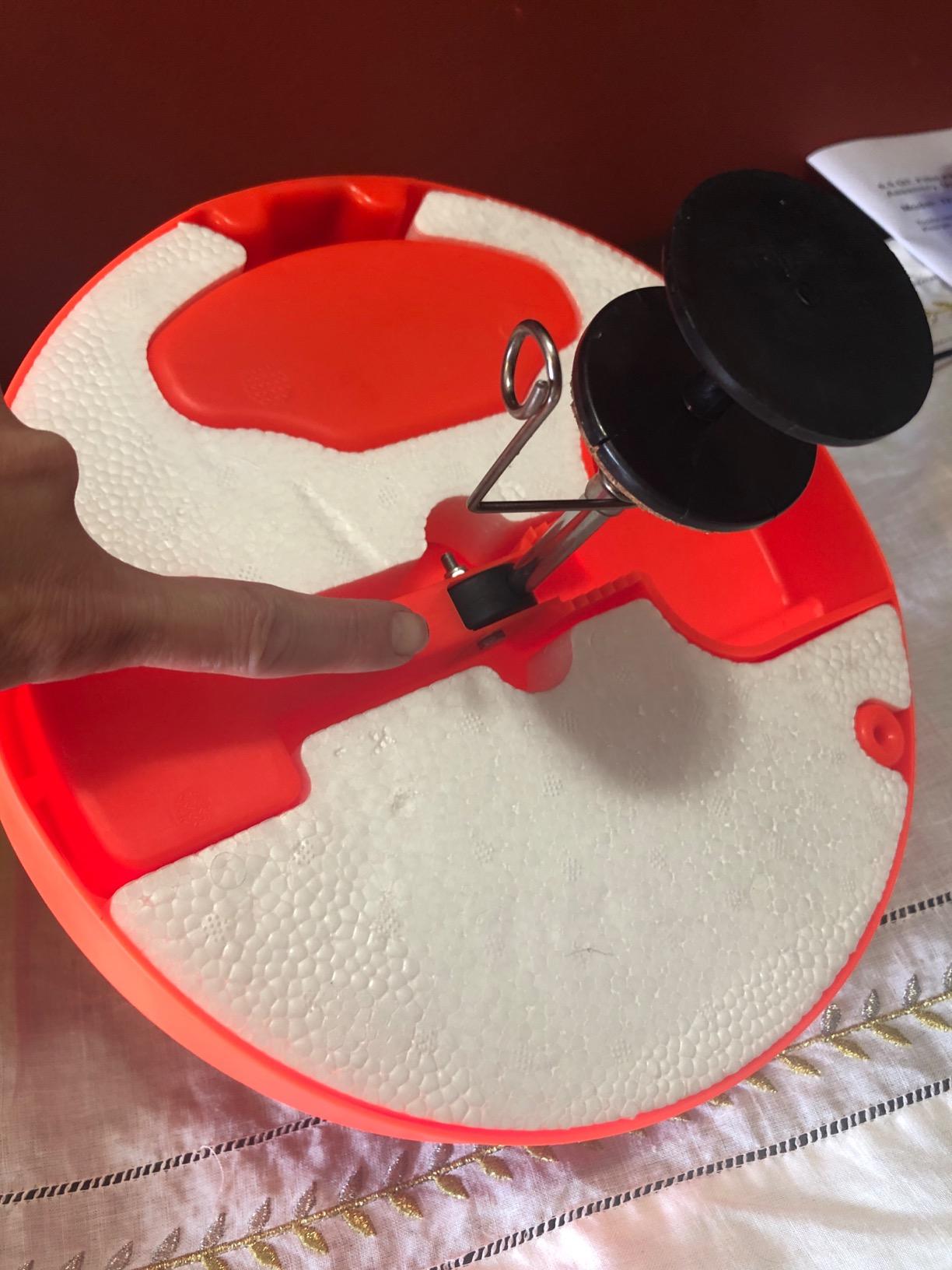
This is the one I keep coming back to. The 1660 is the model number, the Pro Thermal is the insulating body, and the shaft-in-shaft spindle is pre-lubed with Sub-Zero low-temp grease so you can re-grease it between seasons instead of replacing the whole tip. Owners routinely report multiple seasons of service out of the same body.
What makes it the pike pick specifically is the 10 inch insulated cover. Pike water tends to be stained, weedy and full of suspended silt, so a bare drilled hole slushes over fast. The cover floats in the hole rather than sitting on the rim, which means you are not bridging across the auger lip and stressing the ice.
Multiple owners report landing northern pike and bass on this tip, which is a good sanity check for a device whose job is detecting a strike rather than playing the fish. When the flag pops you pick up the line, feel for weight, and set the hook with your hands, so the fish never has time to swallow a baitfish whole.
The dual trip settings are the underused feature here. Set it light for walleye and perch, set it heavy when you are targeting pike on a long drop, because a pike lifting a bait at fifteen feet produces a very different pull than a small fish tapping a bait two feet under the ice.
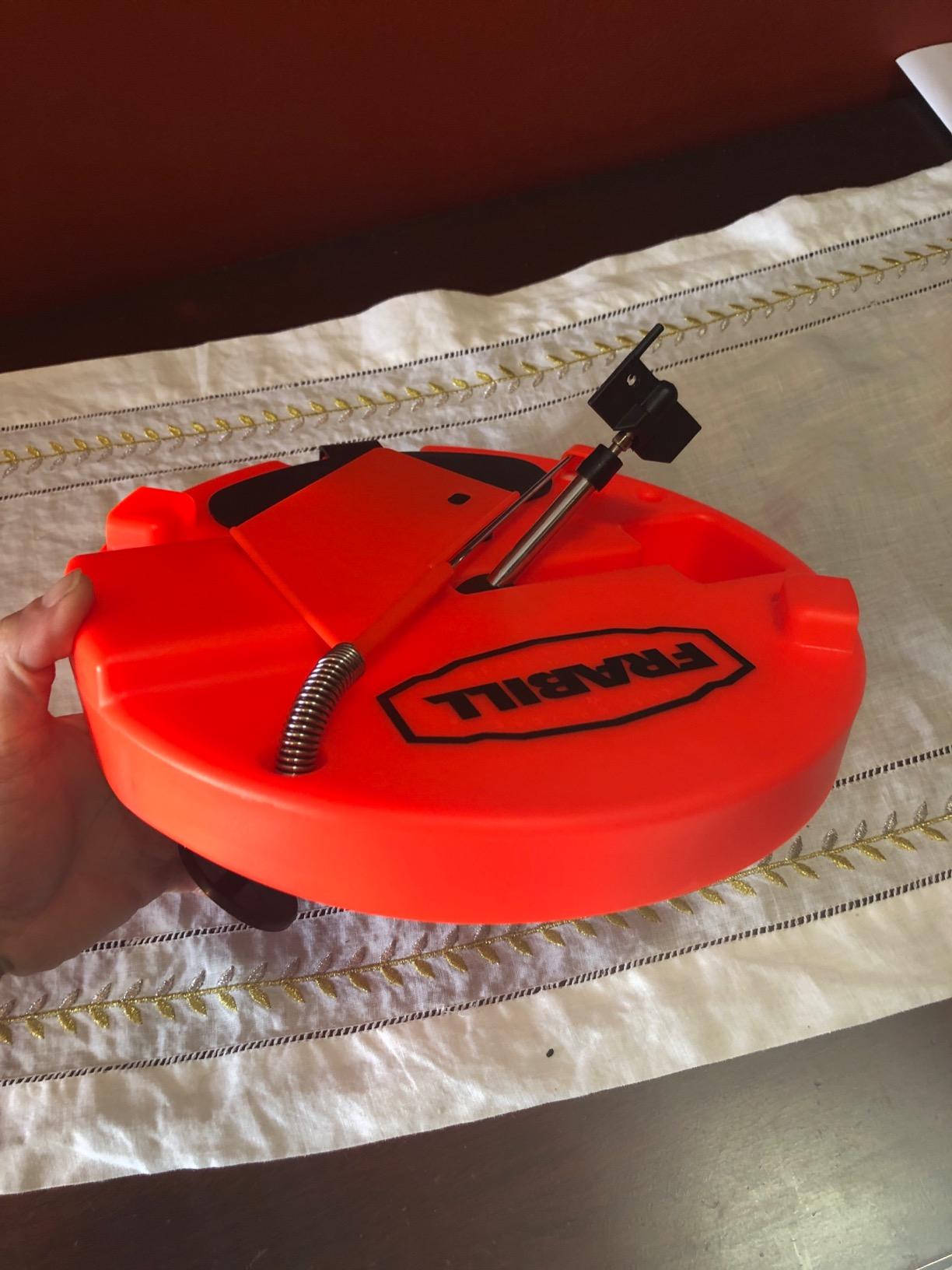
Carrying it is easy. At 1.3 pounds for the whole set, moving six tips down the lake is a matter of two trips rather than a sled load, and that matters more on a long day than any single mechanism refinement.
Is the Frabill 1660 insulated enough for a full day in deep cold?
Yes. The insulated body is the specific design feature for this, and the pre-lubed spindle is what keeps the mechanism from seizing rather than the hole from freezing. It is not a magic solution, but it holds up far better in sustained cold than an uninsulated plastic body.
Will the Frabill 1660 trip on a sideways pike strike?
It will trip on a sideways pike strike if you use the heavy position for pike work. Set to the light setting, a pike can lift a bait and drop it without running, which fires the flag on an empty hook. The adjustable trip is how you tune around that, not more line tension.
2. Beaver Dam The Original Tip-Up – Best for Big Pike
Beaver Dam BDTP-RD Rail Tip- Ups Red Ruler Rail Tip- Ups,Red/Red
- 23 inch pine base for stability
- Aluminum tube bearings
- Freeze-proof lubricant
- Ruler-style depth markings
Pros
- 23 inch pine base gives strong stability over a wide hole
- Aluminum tube bearings produce smooth and consistent action
- Freeze-proof lubricant keeps the mechanism working in cold weather
- Reviewers describe it as a buy-it-once multi-season tool
Cons
- Longer frame takes more room in a sled or bucket than a compact tip
- Rail-style design needs a free line to hang from
Beaver Dam is the name forum anglers repeat when durability comes up, and on the Alaska Outdoors Forums the Arctic Fisherman line in particular is described as rugged, working in any temperature, and built to last a lifetime. This The Original shares that pine-and-bearing philosophy.
The 23 inch pine base is the feature that matters for pike. A big fish pulling hard on a short frame will rock it, and a rocking frame changes the line angle and can cause a trip without a bite. Wide base, wide hole, no drama.
The aluminum tube bearings are the second half of the story. Frozen or gritty plastic pivots are the single most common complaint across this whole category, and bearings are how the Beaver Dam avoids that failure mode. Freeze-proof lubricant on top of that closes the loop.
The trade-off is honest: a 23 inch frame is a bulky object. If you are moving between holes on foot or squeezing gear into a five gallon bucket, this is one of the least convenient picks in the roundup. If you drill once, set a spread, and stay put, that bulk is a fair trade.
Does the Beaver Dam Original stay stable when a big pike runs?
Better than the compact tips in this list, because the 23 inch pine base spreads the load instead of letting the frame rock. Owners who switched to it for bigger fish generally went back for the same reason.
Is the Beaver Dam Original too bulky for a moving ice-fishing spread?
It is the bulkiest option here. It fits in a large sled and stows in a bigger bucket, but it will not collapse flat like the steel tip-downs do. Plan your transport before you buy a set of six.
3. Celsius 3 Pack Tip-Up with Tackle – Best Budget Multi-Hole Spread
Celsius Multi 3 Pack Tip-Up with Tackle, One Size
- Three tip-ups plus tackle in one kit
- Compact nylon construction
- One size fits all
- 1.3 pounds for the set
Pros
- Three tip-ups in one kit covers multiple holes per angler
- Compact and lightweight build with a nylon outer material
- Low weight makes a full spread easy to carry between holes
Cons
- Rating distribution is the most mixed in the roundup
- Plastic construction is less durable in sustained extreme cold
- Ruler-style depth markings rather than a shaped spool bail
The Celsius kit exists to solve a simple problem: most states let you run five to eight lines per angler, and nobody should start by buying eight tips one at a time. This is the box that gets a beginner spreading water on day one.
At 1.3 pounds for the set, it is genuinely easy to carry, and the compact build fits a small bucket without the bulk problem the Beaver Dam has. For a first season, that practicality matters more than refinement.
Be aware of what you are getting. The 4.0 average is the lowest in this roundup, and the review distribution carries a real tail of one and two star feedback compared to the rest of the lineup. Owners also mention ruler-style depth markings rather than a shaped spool bail, which is a refinement difference, not a functional one.
My read is that this is a bulk tool, not a premium rig. Use it on secondary holes and exploratory spread lines. If you find a pike pattern, move that hole to an insulated or wooden tip before you settle in for a long session.
Can you really run a full legal spread with one Celsius kit?
A three pack covers half of a typical five to eight line limit, so one kit plus a second is what most northern pike anglers end up with. The light weight is what makes moving the whole set down the lake practical.
How long does the plastic Celsius body hold up in hard cold?
It is the least cold-hardened body here. It will work, but it is the pick most likely to feel the effects of a season of slush and freezing temperatures, so expect to inspect the trip mechanism and spool shaft more often than you would a metal or insulated frame.
4. HT Polar Tip-Up with 200 Yard Spool – Best Ready-to-Go Spool
HT Enterprise Polar Tip-Up with 200 Yard Spool
- 200 yards of pre-spooled wire line
- Sub-zero freeze-resistant trip shaft
- Wind-free trip wire
- Built-in ruler and spool handle
Pros
- Pre-loaded 200 yard spool removes the need to spool line yourself
- Trip shaft and trip wire are designed to stay free in sub-zero cold
- Ruler depth markings built into the body
- Reviewers report landing a 21 lb northern pike on it
Cons
- Flag is short and hard to see in deep snow
- Fixed 12 lb test wire limits heavier species setups
- 200 yards is a modest spool for long-distance targeting
The HT Polar is the pick if you want zero work at the hole. The 200 yard spool comes pre-wound with wire line, the spool handle is included, and the ruler is built into the body, so you are not spooling line in the wind with frozen fingers.
The design detail worth noting is the wind-free trip wire. Wind is the number one cause of false trips on exposed ice, and a trip wire rather than a broad plastic arm reacts to line pull instead of air movement. Forum users who fish open, windy pike lakes specifically praise the HT line for handling uneven snow and ice around the hole.
One owner reports landing a 21 lb northern pike on this rig, which tells you more than any spec sheet about what a wire-spool design can do with a big fish.
The limitation is real and it is the line. Twelve pound test wire is a light leader for a fish that can reach twenty pounds, so this is a pattern-finder rather than a trophy rig. The short flag is the other issue, since a low profile disappears in a snow drift when you are standing back at the shelter.
Can the HT Polar handle a big pike on 12 lb wire?
It has landed one, but treat that as the ceiling rather than the expectation. Twelve pound test is fine for weed-edge fish and for pattern location, and thin for sustained pressure from a fish in the twenty pound range. Move your trophy holes to heavier line.
Is the wind-free trip wire worth it on open ice?
It is the reason this tip is popular in exposed pike country. Broad plastic flags pop in a gust, and a wind-free design responds to line tension instead, which on a windy flat is the difference between a usable tip and a tip you ignore.
5. Bullnose Original Blue Tip Down – Best Light Bite Detection
Bullnose Products Original Blue Ice Fishing Tip Down-Tip Up- Sensitive to The Slightest Fish Bites- Fits Most Spinning Reels and Some Smaller Straight-Line Reels.
- Rocking motion sensitive to slight takes
- Steel frame, 9 by 4.5 by 8 inch open
- Fits most spinning reels
- Clip fits a standard 3/4 inch handle
Pros
- Steel frame is sturdier than plastic tip-ups and holds up on hard ice
- Highly sensitive rocking motion registers light takes a spool tip can miss
- Fits most spinning reels and some smaller straight-line reels
- Frame collapses flat for transport
Cons
- Fishing rod is not included
- Clip will not fit ultralight or oversized grips
- Relies on the rod and reel being balanced to trip reliably
This is a tip-down, not a spool tip, and that difference is the whole point. Instead of watching a flag spring upward, a rod sits in a clip and the whole frame rocks. That rocking motion is extremely sensitive to small takes, which is exactly how a pike often presents a bait.
The steel frame is a meaningful upgrade over plastic bodies. It is the failure mode anglers complain about most in cheap tips, a cracked body or a pivot gone gritty with slush, and steel simply does not do that. The 9 inch frame also collapses flat, which solves the transport bulk problem better than anything else here.
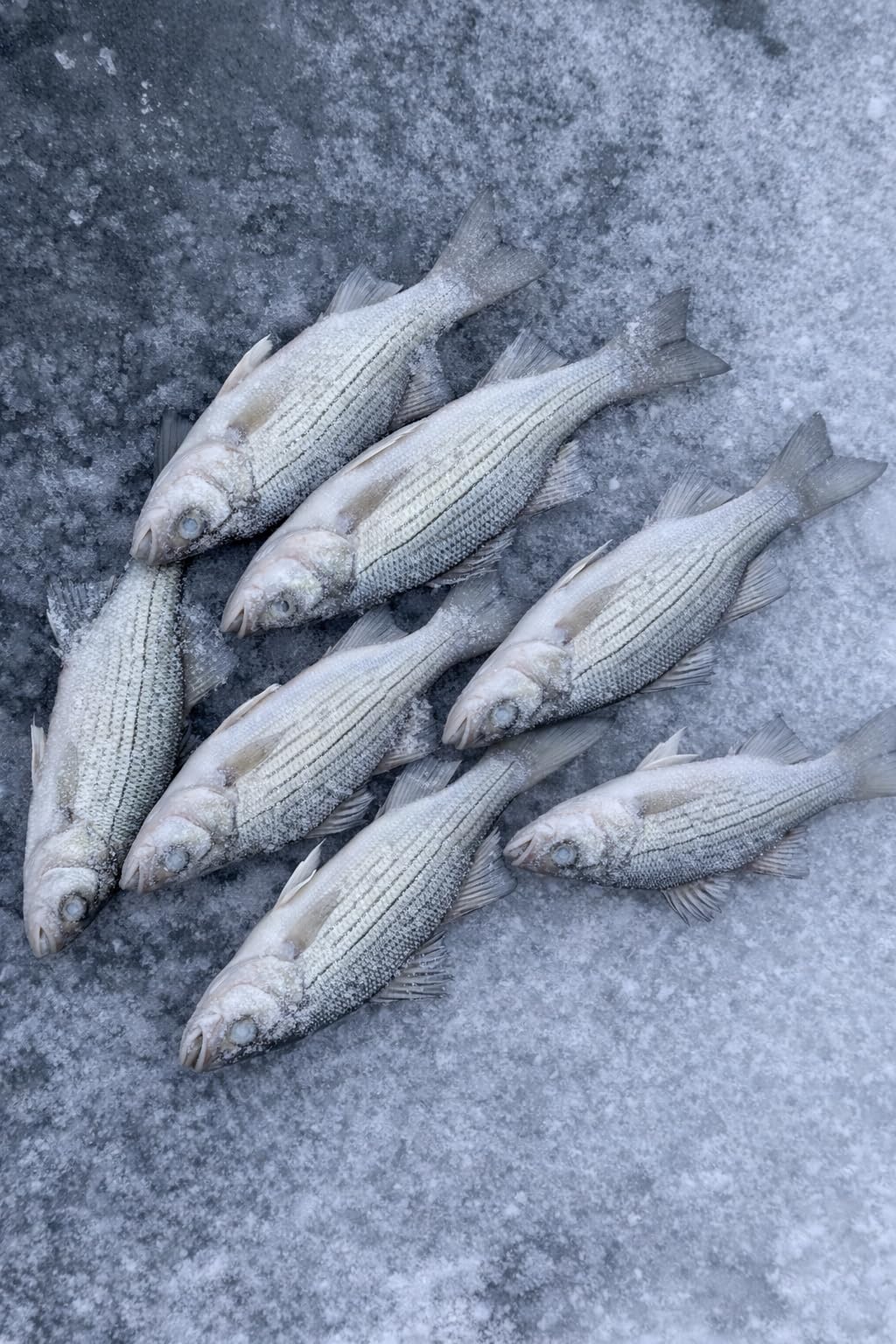
Sizing matters. This is the smaller of the two Bullnose frames and it fits most spinning reels and some smaller straight-line reels. If you are running heavy braid for pike, the taller Big Red is the right frame, not this one.
You are buying a mechanism, not a rod. The rod clip fits a standard 3/4 inch handle, so ultralight grips and oversized cork handles will not seat properly, and the frame only trips when the rod and reel are balanced on it. Budget ten minutes with the first setup.
Is a tip-down better than a spool tip-up for pike?
For detection, often yes. A rocking frame picks up light line movement that a spring flag can miss, and a pike that lifts a bait without running still moves the rod. For durability in slush, steel beats plastic. The cost is that you now own a rod per hole.
Does the Original Blue handle heavy braid for pike?
Not as well as the taller frame. This one is built for most spinning reels and lighter line, and it is the sibling Big Red that is sized for larger reels and heavier line. Match the frame to your line test rather than to your fish.
6. Bullnose Big Red Tip Down – Best for Heavy Line and Big Reels
Bullnose Products Big RED Ice Fishing Tip Down-Tip Up- Sensitive to The Slightest Fish Bites- Used for Both Larger Reels and Heavier Line as Well as Smaller Reels and Lighter Line.
- 12 by 4.5 by 10.5 inch open steel frame
- Sized for larger reels and heavier line
- Sensitive rocking motion
- Collapses for transport
Pros
- Taller frame handles larger reels and heavier line which suits pike fishing
- Sensitive rocking motion trips on subtle takes
- Alloy steel and metal construction holds up in cold and hard conditions
- Frame collapses for transport between holes
Cons
- Fishing rod is not included
- Clip is sized for a standard 3/4 inch rod handle only
- Larger open frame takes more space in a sled
The Big Red is the same mechanism as the Original Blue, scaled up: a 12 inch long, 10.5 inch tall open frame in alloy steel and metal. If you are running 30 to 50 pound Dacron on the spool for big pike, this is the frame that geometry supports.
The 4.6 rating here sits alongside the Beaver Dam and the HT Polar, and the review set is consistent about the same thing, a sensitive rocking action that registers subtle takes rather than only dramatic runs.
It is also the setup-sensitive option. You are balancing a heavy rod and a loaded reel on an open frame, and reviewers repeatedly say the flag only trips once the balance is dialled in. That is a ten minute job per hole, once, and then it runs all day.
Big pike anglers running a spread of these should plan transport carefully. A tall open frame does not nest the way a collapsing spool tip does, so it is one of the bulkier options in a sled even though it folds down when you remove the rod.
Why would a pike angler choose the Big Red over a spool tip-up?
Two reasons. The taller frame carries heavier line and bigger reels without the balance problem, and a rocking frame picks up line movement that a spring-loaded flag can miss. You give up the spool of line and gain sensitivity on subtle takes.
Is the Big Red frame durable enough for a whole season of slush?
The alloy steel and metal construction is the reason. Slush that turns a plastic pivot to grit does very little to a steel frame, and the recurring complaints on this product are about the rod clip size and setup balance rather than the frame failing.
7. Ifish Pro Ice Fishing Tip-Up – Best Trigger Control
Ifish Pro Ice Fishing Tip-Up
- Light, medium and heavy trigger settings
- 12 inch base, 14 inch tall 3D flag
- Fits up to a 46 inch rod
- Spare triggers and slip stops included
Pros
- Three trigger sensitivity settings match different line and species
- 14 inch three-dimensional flag is easy to see from a distance
- Folding rod holder locks flat for transport
- Wide 12 inch base gives good stability on the ice
Cons
- Rod holding arm feels cheap and flimsy
- Some owners report the flag failing to trip under load
- Setup and balance take practice to dial in
The Ifish Pro is a tip-down with the widest adjustment range in the roundup, offering light, medium and heavy trigger settings rather than the usual two. That third position is what makes it the pick for pike, because you can leave it on light for walleye and dial it up when you switch a hole over to pike.
The flag is the other headline. At 14 inches tall and three dimensional, it is one of the most visible flags available, and on a spread of six holes that visibility is worth as much as the mechanism. Anglers from northern Minnesota use this one and it holds up over years of use.
Two real weaknesses show up in the reviews. The rod holding arm is described as flimsy relative to the rest of the build, and a few owners report the flag failing to trip even when line movement was visible on a fish finder. Treat the trigger as something you test, not something you assume.
Spare triggers and slip stops are included, which is a quietly thoughtful detail. Triggers are the part that grit and ice damage first, so having replacements in the box saves a trip home mid-season.
Why do three trigger settings matter for pike anglers?
Because pike and walleye on the same spread produce completely different line loads. A single setting forces a compromise, and the compromise is usually a flag that either false-trips on a lift or misses a real take. Light, medium and heavy lets you match the species per hole.
Is the 14 inch flag worth it on a big spread?
Yes, that is the feature to buy it for. A short flag buried in a snow drift is a flag you will walk past, and on a six hole spread you are checking all six. The 12 inch base underneath also keeps the frame steady when a fish pulls hard.
8. Clam Arctic Warrior 8840 – Best for Fighting the Fish on a Rod
Clam Arctic Warrior Ice Fishing Tip-Up Rod Holder 8840
- Arm releases the rod on a strike
- Tool-free fold-out setup
- Cold-resistant metal frame
- Folds flat for transport
Pros
- Lets you set the hook and fight the fish on a normal ice rod
- Metal frame is heavy enough to withstand wind on open ice
- Folds flat and is light to carry
- Owners report better results with a baitcaster than a spinning reel
Cons
- Velcro straps holding the bracket can let the rod slip
- Rod and reel must be balanced for reliable triggering
- Setup diagrams have been reported as hard to follow
The Arctic Warrior takes a different approach from every other pick here. The arm holds your rod and releases it on a strike, so instead of grabbing a line you pick up a rod and fight the fish. Several owners report it replaced their spool tip-ups entirely for exactly that reason.
The metal frame is heavy enough to sit in wind on open ice, which matters on a lake with nothing to shelter a spread. It folds flat with no tools required and is light to carry, so the transport problem that plagues bulkier tips is largely solved.
Owners also report that the setup takes tuning, and the tuning advice is consistent. Balance matters, and baitcaster owners report noticeably better results than spinning reel owners because a touch of spool drag helps the arm release cleanly.
Two practical warnings from reviews. The Velcro straps that hold the bracket to the rod can let a loaded rod slip or rotate, so check them after you set a spread. And a few owners have reported surface rust on arrival, so inspect the frame before the season starts.
Is fighting a pike on a rod better than hand-lining a tip-up?
For most anglers it is the more exciting option and some prefer it. Hand-lining a tip-up means setting the hook with a bare line and then controlling a fish with your gloves on, which is effective but not graceful. A rod gives you drag and leverage. The tradeoff is more equipment per hole.
What does it take to get the Arctic Warrior to trip reliably?
Balance the rod and reel on the arm, tighten the Velcro straps, and test the release with a hand pull before you trust it. Baitcaster setups work better than spinning reels because the drag gives a cleaner release. Spend the setup time at the first hole of the day and it runs fine after that.
9. Sullivan Tip Drop 4 Pack – Best Night Visibility
Sullivan Tip Drop (Blue)
- Lighted tube for night visibility
- Adjustable sensitivity
- Sold as a 4 count pack
- 6 bright color options
Pros
- Lighted tube makes the tip-down easy to see at night
- Adjustable sensitivity works with different rod and reel combinations
- Simple to set up and stow in a bucket for travel
- Tough build that holds up in the coldest temperatures
Cons
- Small loose parts are easy to lose in the ice
- Straight rod holder needs re-balancing at every setup
- No printed instructions included
The Sullivan is the only pick here with a lighted tube built in, and that is the whole reason to own one. If you fish after dark, which a lot of pike anglers do on hard water where the fish feed at odd hours, a glowing tip is worth more than a taller flag.
You also get a four pack, so one order sets four holes, and the adjustable sensitivity handles the range of rod and reel combinations a tip-down sees. Owners consistently describe the build as durable in cold temperatures.
It is primarily a perch and panfish tool that works fine for pike on pattern. Keep expectations in proportion: at 4.3 stars it sits in the middle of this lineup, and the review set is small.
The recurring gripe is the straight rod holder section, which needs re-balancing at every setup and can tip over in a light breeze. The small loose parts are a real issue too, since they end up in the slush if a rod gets yanked. No printed instructions means the first setup takes a few minutes longer than it should.
Does the lighted tube actually help on a night pike spread?
It is the feature that makes the difference after dark. A conventional flag needs a headlamp pointed at it, and a headlamp pointed at a flag is a headlamp you are not pointing at the ice. A lit tube shows up from a shelter without either.
Is this the right tip for big pike?
It works, but the straight rod holder and the small loose parts are not ideal for a spread built around heavy fish and heavy line. Use it on walleye and panfish holes and on pike pattern holes, and put a frame rated for heavy braid on the holes where big fish are showing.
10. Finicky Fooler Ice Fishing Tip Up Rod – Best Packable Rod for a Tip-Down
Finicky Fooler Ice Fishing Tip Up
- Medium-power fast action
- 16 ounces with a cork handle
- Listed for trout, walleye and perch
- Built to pair with a tip-down
Pros
- Medium-power fast action suits the rod and reel setups anglers pair with a tip-down
- Light at 16 ounces for packable run-and-gun ice fishing
- Cork handle stays warm and grippy in cold conditions
Cons
- Listed target species skew toward trout
- walleye and perch rather than pike
- Smaller review base than the other picks
- Rod holder is not included
To be straight about what this is: it is an ice rod, not a tip-up mechanism. It exists because every tip-down in this roundup needs a rod clipped into it, and the Bullnose and Clam frames all ship without one.
A medium-power fast action rod is the right power band for the job. It has enough backbone to pull a pike off the structure without being so stiff that you cannot feel the take, and fast action means the tip registers the bite before the frame ever rocks.
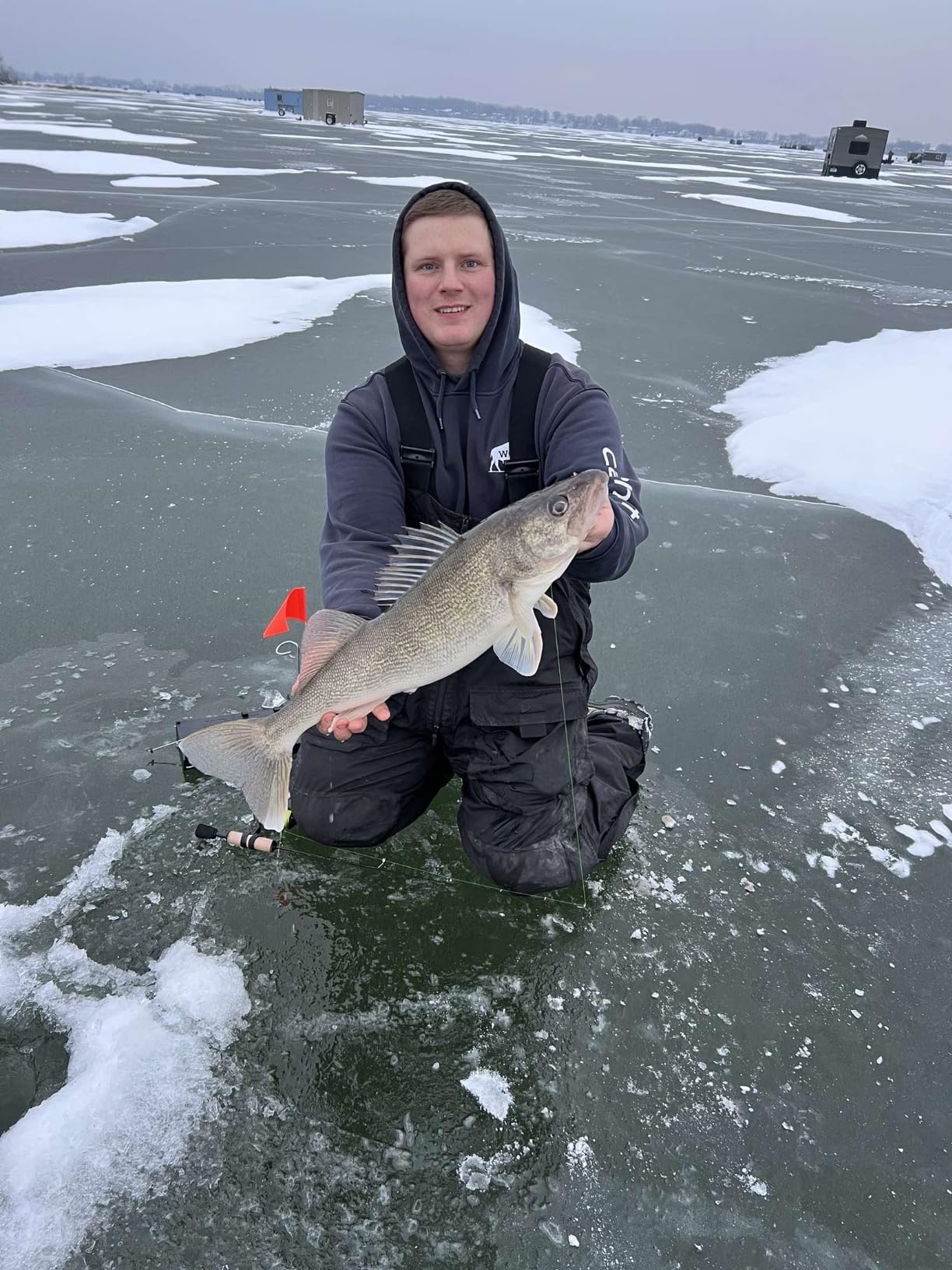
At 16 ounces with a cork handle, it packs flat and the cork stays grippy with cold wet hands, which is a real consideration at eight in the morning. This is a rod for an angler moving between holes on foot, not for someone with a permanent shelter.
Two caveats. The listed target species are trout, walleye and perch rather than pike, though a medium-power rod has the backbone to handle a pike. And with 43 reviews, the 4.6 rating rests on a much smaller owner base than anything else here, so treat it as a strong showing rather than a proven one.
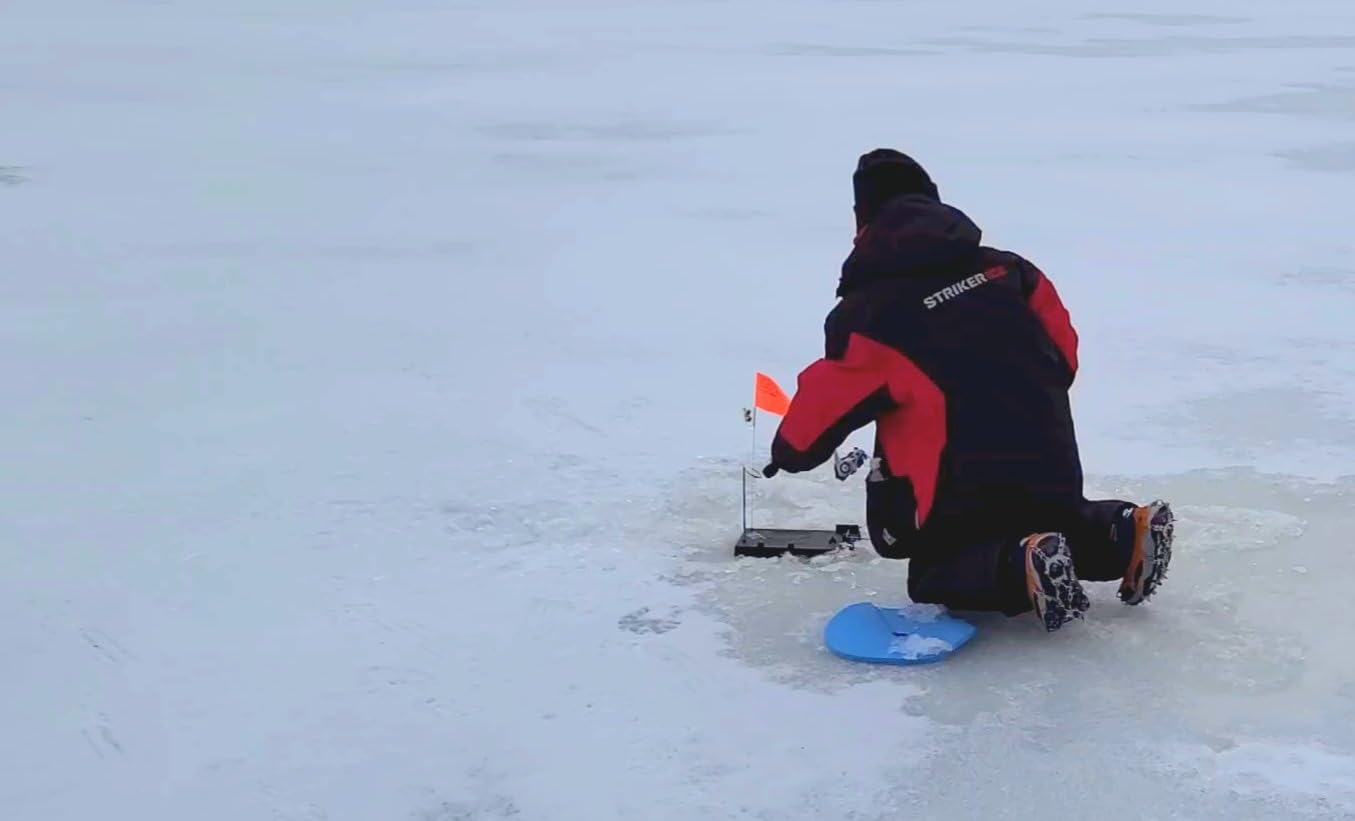
Rods and reels are the hidden cost here. A rod-holder spread needs one combo per hole, which is why a tip-down setup costs more per hole than a spool tip-up no matter which brand you pick.
Do I need one of these for a tip-down spread?
Yes, if you are running tip-downs. Each tip-down needs its own rod and reel, and a six hole rod-holder spread means six rod and reel combos. This is the cost people forget when they price out a tip-down setup, and it is why spool tip-ups look cheaper per hole.
Is a medium-power rod strong enough for pike?
Yes for fish hooked through the mouth on a quick-strike rig, which is the standard pike setup. The rod is not the weak link in that system, the leader and the hookset are. Just confirm the frame you are clipping it into is sized for the reel and line you plan to run.
How to Choose a Tip-Up for Pike
Start by picking a family. A spool tip-up holds your line and pops a spring flag, and it needs nothing but a bucket of line. A tip-down clamps a rod and tips when the rod moves, and it needs a rod and reel at every hole. Spool tips win on simplicity and on pike depth, because the line can run twenty feet down. Tip-downs win on sensitivity and on the fact that you fight the fish on a rod.
Trip adjustability is the second filter. Pike lift bait instead of running with it, so a tip that fires on any movement produces false trips. Pick something with a heavy setting, like the Frabill 1660 with its dual trip settings or the Ifish Pro with its light, medium and heavy triggers, and set it for the size of fish you expect.
Flag visibility decides whether you notice the strike. Snow buries short flags fast, and a lit tube solves the problem entirely. Anything under ten inches tall in a location with snow cover is a tip you will eventually walk past.
Hole covers matter more on pike water than anglers expect. Stained, weedy water slushes over a bare hole quickly, and a cover that sits in the hole rather than on the rim keeps the hole open and keeps slush out of your line.
Line test is the one people get wrong. Ten pound is not enough for pike. Run 30 to 50 pound Dacron or braid on the spool, a barrel swivel, and a 12 to 18 inch leader of 20 to 30 pound fluorocarbon or wire, finished with a quick-strike tandem treble. Anglers on forums run everything from 10 pound to 50 pound mono with no consensus, so match your line to the biggest fish you realistically expect to hook.
How many to buy comes down to your state limit, which is commonly five to eight lines per angler in northern pike states. Buy to the limit rather than beyond it. A tight spread of six tips across a weed edge outperforms a loose cluster of ten over the same hole.
How to Rig a Tip-Up for Northern Pike
Run 30 to 50 pound Dacron or braid from the tip-up spool. Dacron unspools cleaner and cuts the hole less than plastic coated lines, and it stays manageable at depth in cold water.
Tie a barrel swivel at the end of the mainline. This is where the leader connects and it keeps the line from twisting, which matters on a long drop where twist will pull the bait off the hook.
Add a 12 to 18 inch leader of 20 to 30 pound fluorocarbon or a wire leader. Anglers on r/IceFishing run 20 pound fluorocarbon with large octopus hooks for a different, heavier approach, and Great Lakes Fisherman regulars use a number 2 treble. The leader length matters more than the debate over material, because it keeps the mainline out of a pike mouth where it can cut you.
Build the quick-strike rig with two treble hooks spaced 3 to 4 inches apart, one at the nose and one behind it. Pike take baitfish crosswise, and the tandem rig gives them two points of contact. Use number 6 or number 8 trebles, and tie them with a Palomar on the front hook and a snell on the back.
Set the bait just below the top of the head. Pike eyes point upward, so a bait riding level with the head sits in the strike zone. Hook the bait through the nose on the forward hook and through the body on the rear hook, and leave the bait swimming straight rather than across the hole.
Bait selection matters as much as the rig. Large dead frozen baits outperform live bait for big pike in the experience of experienced anglers, with smelt, cisco, herring and shad in the six to thirteen inch range all working. A live sucker minnow adds bonus walleye catches where it is legal.
Finally, set the trip so the flag moves before the pike can drop the bait. That means enough tension to trip on a lift and not so much that a sideways nudge fires it. Test each tip with a hand pull after you set it, and reset anything that fires too easily.
Depth and Spread Tactics by Season
Early ice, pike hold shallow over weed flats, generally four to eight feet, and they are aggressive and curious. Run a spread across a weed edge rather than a line down the edge, so each hole reads a different depth contour.
Mid-winter, they drop to structure, generally ten to twenty feet over rock and reef breaks. This is where a long drop on braid or Dacron earns its keep, and where false trips from lifting bait become the main problem. Set triggers heavy.
Late ice, pike move back up shallow over whatever green weed is left, again four to eight feet. Big fish are often caught in this window because the ones that survived the winter are the ones holding tight to structure. Creek arms and tributary mouths pay off here.
Spread tip-ups in a line perpendicular to structure, which is the standard trophy pike setup. Each hole then covers a different depth and a different contour, and you cover twenty feet of water instead of two.
Run one active jigging rod alongside the spread. Tip-ups are passive coverage, not an excuse to stop working, and pike that refuse the static bait often respond to a moving one.
Frequently Asked Questions
What are the best tip-ups for ice fishing?
The best tip-ups for pike and walleye fall into two families. Spool tip-ups like the Frabill Pro Thermal 1660 hold line below the ice and pop a spring flag. Tip-downs like the Bullnose Big Red and Clam Arctic Warrior clamp a rod and tip when it moves, giving you more sensitivity. Spool tips suit deep drops and simplicity; tip-downs suit anglers who want to fight the fish on a rod.
How deep should I set a tip up for pike?
Depth depends on the season. Early ice, set tip-ups four to eight feet over shallow weed flats. Mid-winter, drop them ten to twenty feet over rock and reef structure where pike hold tight. Late ice, bring them back up to four to eight feet over the last green weed available. Pike are also often found a foot off the bottom to a foot under the ice.
What is the best bait for ice fishing for pike?
Large dead frozen baits outperform live bait for big pike. Smelt, cisco, herring, and shad in the six to thirteen inch range all work well, and frozen dead bait keeps its shape on the hook better than a soft live fish. Live sucker minnows are a good second choice where they are legal because they also catch walleye.
Is 10lb line enough for pike?
No. Ten pound test is light for a fish that can reach twenty pounds. Run 30 to 50 pound Dacron or braid on the tip-up spool, add a barrel swivel, and finish with a 12 to 18 inch leader of 20 to 30 pound fluorocarbon or wire. The leader also keeps line away from a pike mouth where it could cut you.
How many tip ups can I fish at once?
Most northern states allow between five and eight tip-ups per angler, and the limit varies by state and by water. Buy to your legal limit rather than beyond it, and spread the tips as far apart as regulations allow. A tight spread of six tips across a weed edge catches more fish than a loose cluster of ten over the same hole.
Final Verdict
The Frabill Pro Thermal Tip-Up 1660 is the best ice fishing tip up for pike because it solves the two things that actually break tip-ups on pike water, an insulated 10 inch hole cover that resists slushing and a dual trip setting you can move to a heavy position for a fish that lifts bait instead of running it.
Buy the Beaver Dam The Original for big fish and long days, the Celsius three pack to get a spread running on a budget, and the HT Polar if you want line already on the spool. Run a rod-holder tip-down at your best hole if you want sensitivity, and pair it with one of the mid-power ice rods that ship separately from those frames.
Whatever you choose, set the trip heavy, spread perpendicular to structure, and check the ice before you drill. That is 2026, and the tips still work the same way next year if you re-grease the spindle.