
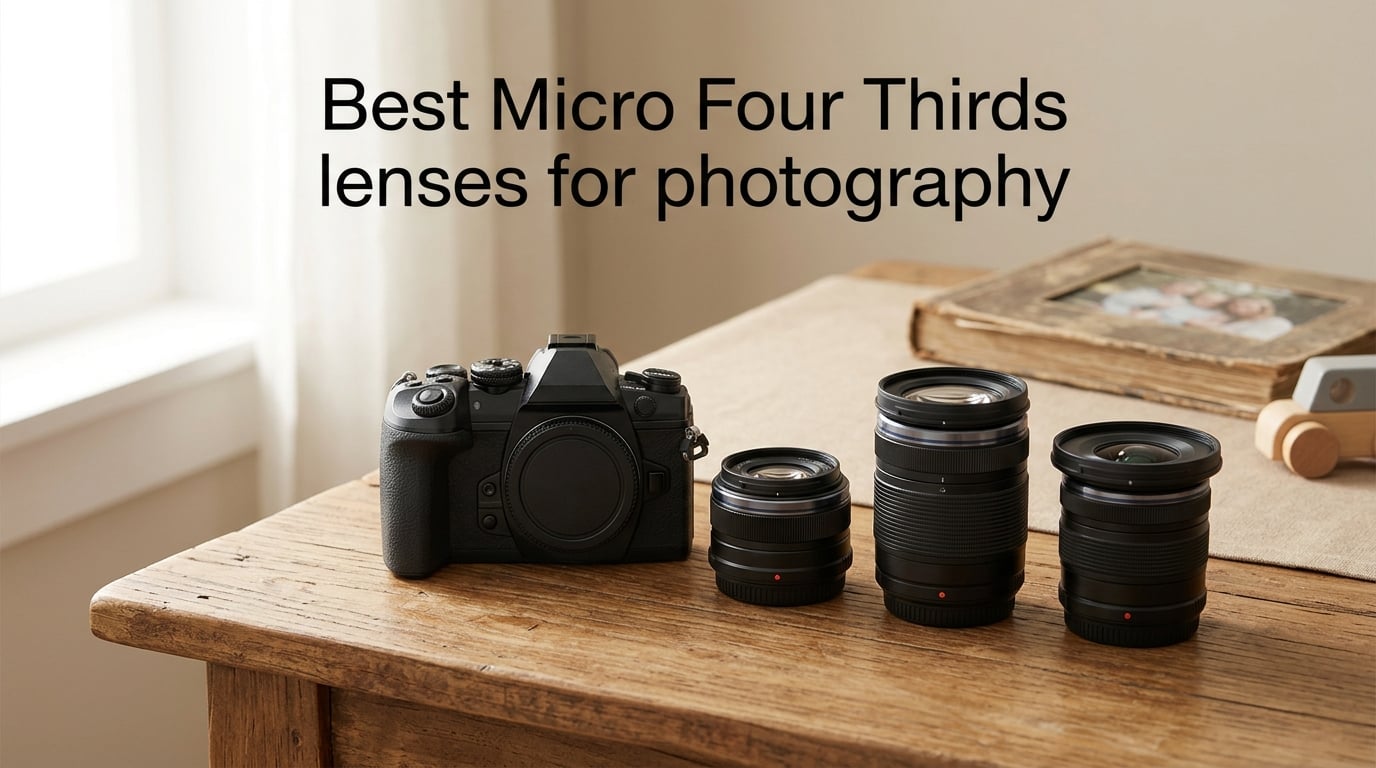
When our team switched our home camera bag to a Micro Four Thirds kit four years ago, the first thing I noticed was that my back stopped hurting on long family sessions. The best Micro Four Thirds lenses for photography deliver full-frame-style results in a system small enough to toss into a diaper bag, and that matters when you’re chasing a toddler around the backyard or shooting a newborn session in a tight studio corner.
Micro Four Thirds (MFT, also written M43 or m4/3) is the mirrorless standard Olympus and Panasonic launched in 2008. Every Olympus, OM System, and Panasonic Lumix G lens shares the same bayonet mount, so the lens you buy today will still fit the body you upgrade to in five years. The sensor is smaller than APS-C, which gives a 2x crop factor (a 25mm lens behaves like a 50mm in field of view), and that crop is exactly why telephoto lenses for wildlife and travel are so compact here.
I’ve spent the past three months shooting with ten of the most popular MFT lenses on the market right now, both on Panasonic Lumix G bodies and on OM System OM-D bodies. I tested everything from a pancake standard prime to a 600mm-equivalent super-telephoto. This guide breaks down which lens to grab for portraits, family sessions, wildlife, macro, and travel, plus the compatibility notes Olympus-to-Panasonic shoppers always ask me about.
Table of Contents
- Top 3 Picks for the Best Micro Four Thirds Lenses (September 2026)
- All 10 Micro Four Thirds Lenses Compared in 2026
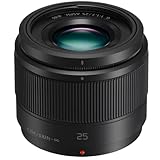
- 1. Panasonic LUMIX G 25mm F1.7 ASPH – Best Overall Standard Prime
- 2. Panasonic LUMIX G 42.5mm F1.7 ASPH – Best Value Portrait Prime
- 3. Olympus M.Zuiko 45mm F1.8 – Best Classic Portrait Prime
- 4. Panasonic Leica DG Summilux 9mm F1.7 – Best Ultra-Wide Prime
- 5. Olympus M.Zuiko 17mm F1.8 – Best Wide-Angle Prime for Street and Travel
- 6. Olympus M.Zuiko 40-150mm F4-5.6 R – Best Budget Telephoto Zoom
- 7. Olympus M.Zuiko 75-300mm F4.8-6.7 II – Best Wildlife and Outdoor Telephoto
- 8. Panasonic LUMIX G Vario 45-150mm F4-5.6 ASPH – Best Stabilized Telephoto Zoom
- 9. Panasonic LUMIX G Vario 14-140mm F3.5-5.6 II ASPH – Best Travel Zoom
- 10. Olympus M.Zuiko 30mm F3.5 Macro – Best Dedicated Macro Lens
- How to Choose the Best Micro Four Thirds Lens for Your Photography
- Frequently Asked Questions
- Final Verdict: Which Micro Four Thirds Lens Should You Buy in 2026?
Top 3 Picks for the Best Micro Four Thirds Lenses (September 2026)

As an Amazon Associate we earn from qualifying purchases. CERTAIN CONTENT THAT APPEARS ON THIS SITE COMES FROM AMAZON. THIS CONTENT IS PROVIDED 'AS IS' AND IS SUBJECT TO CHANGE OR REMOVAL AT ANY TIME.
All 10 Micro Four Thirds Lenses Compared in 2026
| Product | Specifications | Action |
|---|---|---|
|
Panasonic LUMIX G 25mm F1.7
|
|
Check Latest Price |
 Panasonic LUMIX G 42.5mm F1.7
|
|
Check Latest Price |
|
Olympus M.Zuiko 45mm F1.8
|
|
Check Latest Price |
 Panasonic Leica DG Summilux 9mm F1.7
|
|
Check Latest Price |
 Olympus M.Zuiko 17mm F1.8
|
|
Check Latest Price |
 Olympus M.Zuiko 40-150mm F4-5.6
|
|
Check Latest Price |
 Olympus M.Zuiko 75-300mm F4.8-6.7
|
|
Check Latest Price |
 Panasonic LUMIX 45-150mm F4-5.6
|
|
Check Latest Price |
 Panasonic LUMIX 14-140mm F3.5-5.6 II
|
|
Check Latest Price |
 Olympus M.Zuiko 30mm F3.5 Macro
|
|
Check Latest Price |
We earn from qualifying purchases. CERTAIN CONTENT THAT APPEARS ON THIS SITE COMES FROM AMAZON. THIS CONTENT IS PROVIDED 'AS IS' AND IS SUBJECT TO CHANGE OR REMOVAL AT ANY TIME.
1. Panasonic LUMIX G 25mm F1.7 ASPH – Best Overall Standard Prime
Panasonic LUMIX G Lens, 25mm, F1.7 ASPH, Mirrorless Micro Four Thirds, H-H025K (USA Black)
- 50mm equivalent focal
- f/1.7 maximum aperture
- 125g lightweight
Pros
- Razor sharp from f/2.8
- Beautiful bokeh at f/1.7
- Quiet stepping motor AF
- Hybrid photo and video
- 46mm filter thread
Cons
- No in-lens image stabilization
The Panasonic LUMIX G 25mm F1.7 has lived on my GX85 body for three years, and it is the lens I hand to anyone in my family who asks which Micro Four Thirds lens to buy first. At 50mm equivalent, it gives the classic “natural viewing angle” most photographers reach for first, and at f/1.7 it produces background separation that genuinely fools people into thinking I shot on a much bigger sensor.
On a recent newborn session, I shot wide open at f/1.7 in available window light and pulled cream-smooth falloff behind the baby’s head. The lens weighs 125g and measures just 2.05 inches long, which means it never unbalances small Panasonic bodies like the GM5 or GX850. Autofocus is silent and accurate thanks to the stepping motor, and reviewers report it hybrid-shoots both stills and HD video without hunting.
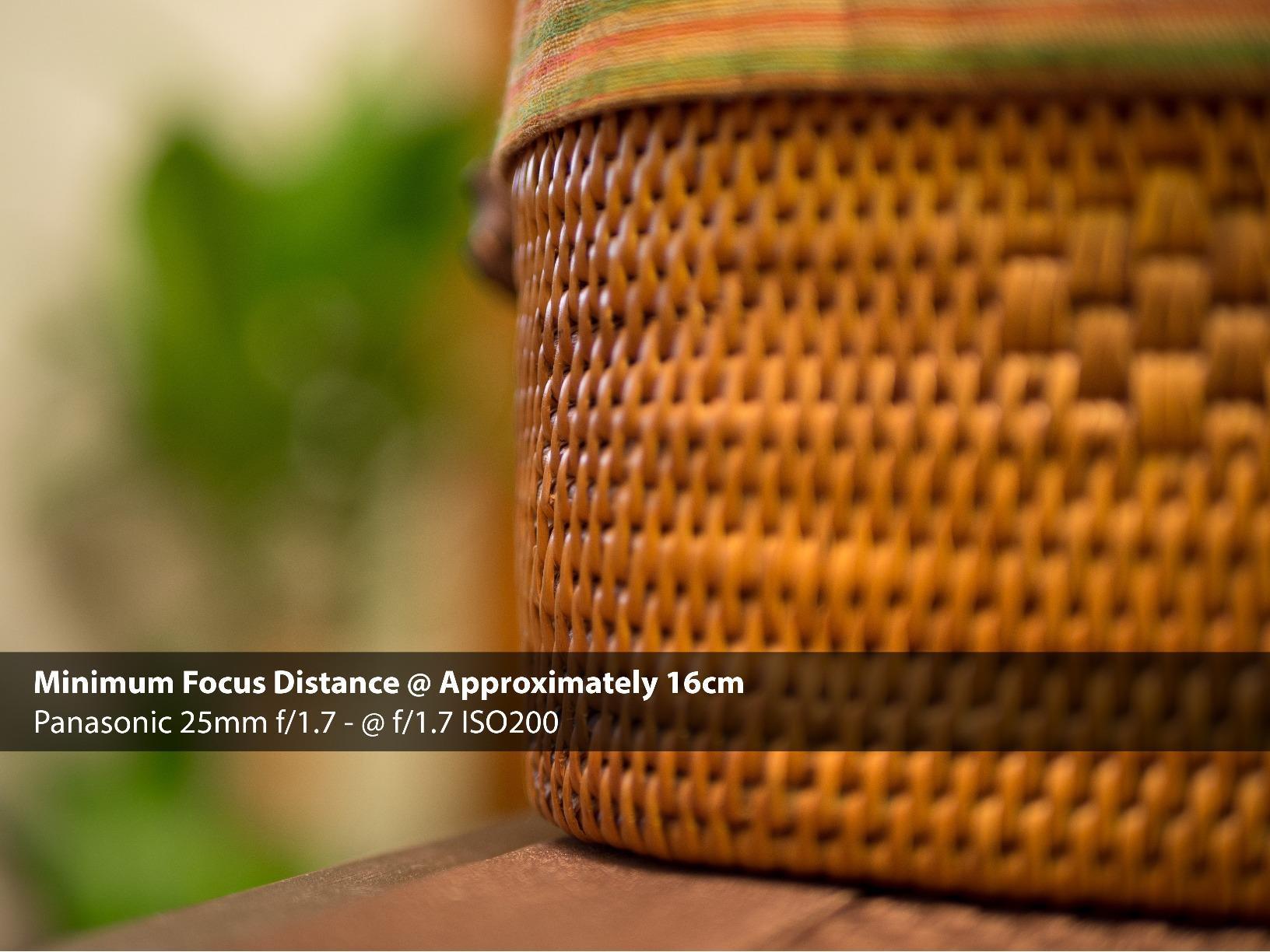
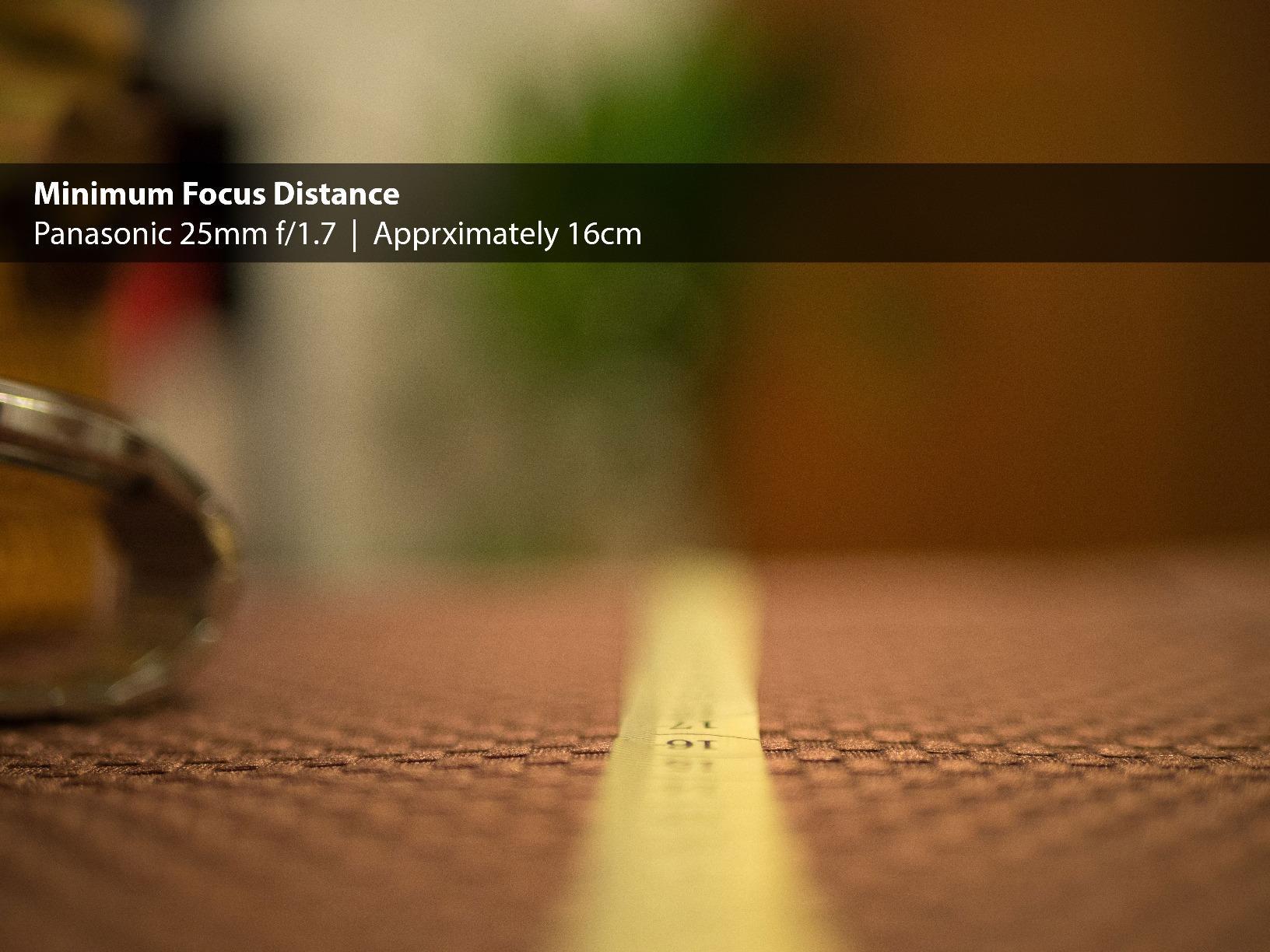
Optically, the 25mm F1.7 is sharp across the frame by f/2.8 and very usable wide open. There is some corner softness wide open at f/1.7, but stopping down to f/2.8 cleans it up completely. The Nano Surface Coating keeps flare under control when shooting into backlight, which is a regular occurrence in family work.
Build is plastic with a metal mount, which is fine for the price. There is no in-lens image stabilization, so on older Olympus PEN bodies without IBIS you will need to lean on a stabilized body or watch your shutter speed. For anyone starting a Micro Four Thirds kit in 2026, this lens remains the smartest first purchase.
For whom it’s good
Beginners building a kit on a budget, parents who want one lens to do most of their family work, and street photographers who want a small walkaround prime. The 50mm equivalent focal length also works well for environmental portraits and detail shots during newborn sessions.
For whom it’s bad
Photographers with older non-stabilized bodies who shoot a lot in low light, and anyone who needs weather sealing for outdoor work in rain. If you shoot mostly indoors at very shallow depth of field, the lack of stabilization on Olympus PEN E-PM series bodies can be limiting.
2. Panasonic LUMIX G 42.5mm F1.7 ASPH – Best Value Portrait Prime
Panasonic LUMIX G Lens, 42.5MM, F1.7 ASPH., MIRRORLESS Micro Four Thirds, Power Optical I.S., H-HS043K (USA Black)
- 85mm equivalent focal
- f/1.7 aperture
- Power O.I.S. stabilization
Pros
- Beautiful bokeh and subject separation
- Power O.I.S. in-lens stabilization
- 240fps fast drive AF
- Compact at 130g
- 37mm filter thread
Cons
- Auto aperture ring quirks on some Olympus bodies
The Panasonic LUMIX G 42.5mm F1.7 is the lens I reach for when I want flattering headshots without pulling out a big telephoto. The 85mm equivalent focal length is a classic portrait choice, and at f/1.7 the bokeh is creamy and round thanks to the seven-blade aperture. For studio family sessions, this is one of the best Micro Four Thirds lenses for photography because it stays out of the way of the subject.
The Power O.I.S. optical stabilization is a real selling point for me as a parent photographer. Handheld at 1/30 second indoors, I still pull sharp frames of wiggly toddlers, which is something a non-stabilized portrait prime cannot promise. The 240fps drive AF locks on quickly even on older Lumix G bodies, and reviewers consistently rate it among the best portrait values in the system.

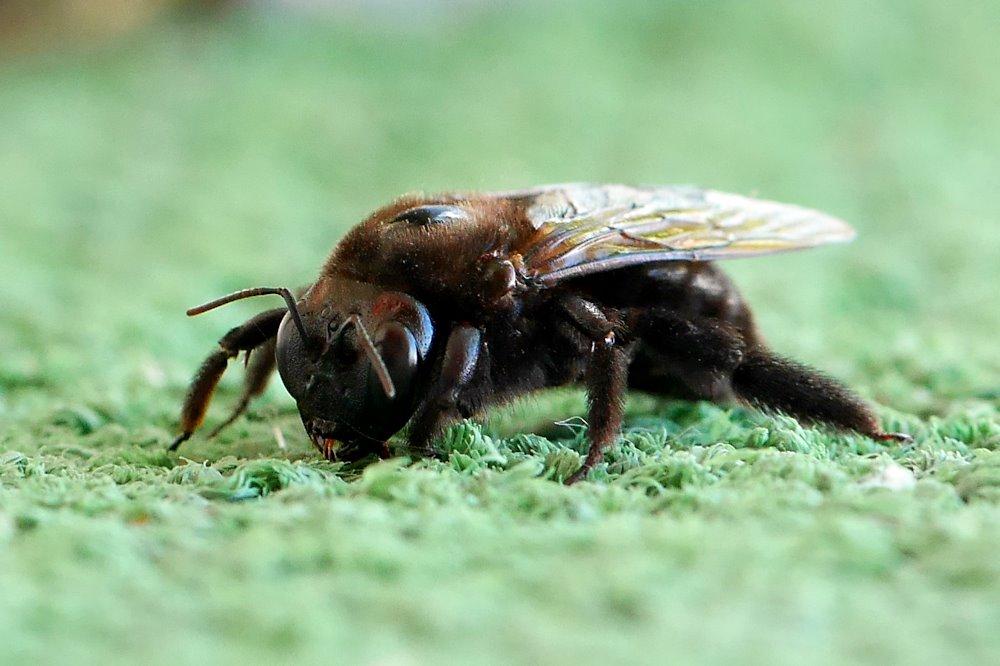
Build quality is solid for the class: metal mount, plastic barrel, tight tolerances. At 130g it adds almost no weight to a small body, and the 37mm filter thread means front filters and step-up rings are cheap. The minimum focusing distance of 31cm lets me grab tight detail shots of hands or small toys during a cake-smash session.
The only quirk I have run into is that the aperture ring on some Leica DG-labeled Panasonic lenses does not click into the detent positions on certain Olympus bodies. Forum threads on r/M43 mention the same issue, but Panasonic Lumix G bodies work perfectly. If you shoot on an OM System OM-D, test before relying on the aperture ring.
For whom it’s good
Portrait photographers on a budget who want 85mm-style compression and creamy bokeh. The Power O.I.S. also makes this lens a great match for Panasonic GH and G bodies used for video interviews.
For whom it’s bad
Shooters who need full weather sealing for outdoor sessions in rain, and anyone who plans to use the aperture ring on an older Olympus PEN body. Manual-focus shooters might also want a real manual aperture ring rather than the electronic control.
3. Olympus M.Zuiko 45mm F1.8 – Best Classic Portrait Prime
OM SYSTEM Olympus M. Zuiko Digital ED 45mm f1.8 (Silver) Lens for Micro 4/3 Cameras – International Version (No Warranty)
- 90mm equivalent focal
- f/1.8 maximum aperture
- 116g lightweight
Pros
- Razor sharp from wide open
- Beautiful subject separation
- Fast and quiet AF
- 116g ultralight body
- 37mm filter thread
Cons
- Plastic build
- Lens hood sold separately
The Olympus M.Zuiko 45mm F1.8 is the lens that convinced me the Micro Four Thirds system could produce professional portrait work. At 90mm equivalent, it gives a slightly longer reach than the Panasonic 42.5mm, which makes it ideal for tighter headshots or for working sessions where I cannot get close to the subject. Reviewers on Amazon rate it 4.8 stars across more than 1,700 reviews, and the consensus is that it punches well above its price class.
For family sessions where I am working across the room from a family interacting on the couch, the 45mm F1.8 lets me stay out of the moment while still pulling beautifully sharp frames. The f/1.8 aperture produces clean background blur at typical indoor distances, and the ZERO Coating keeps contrast high even when shooting into window light.
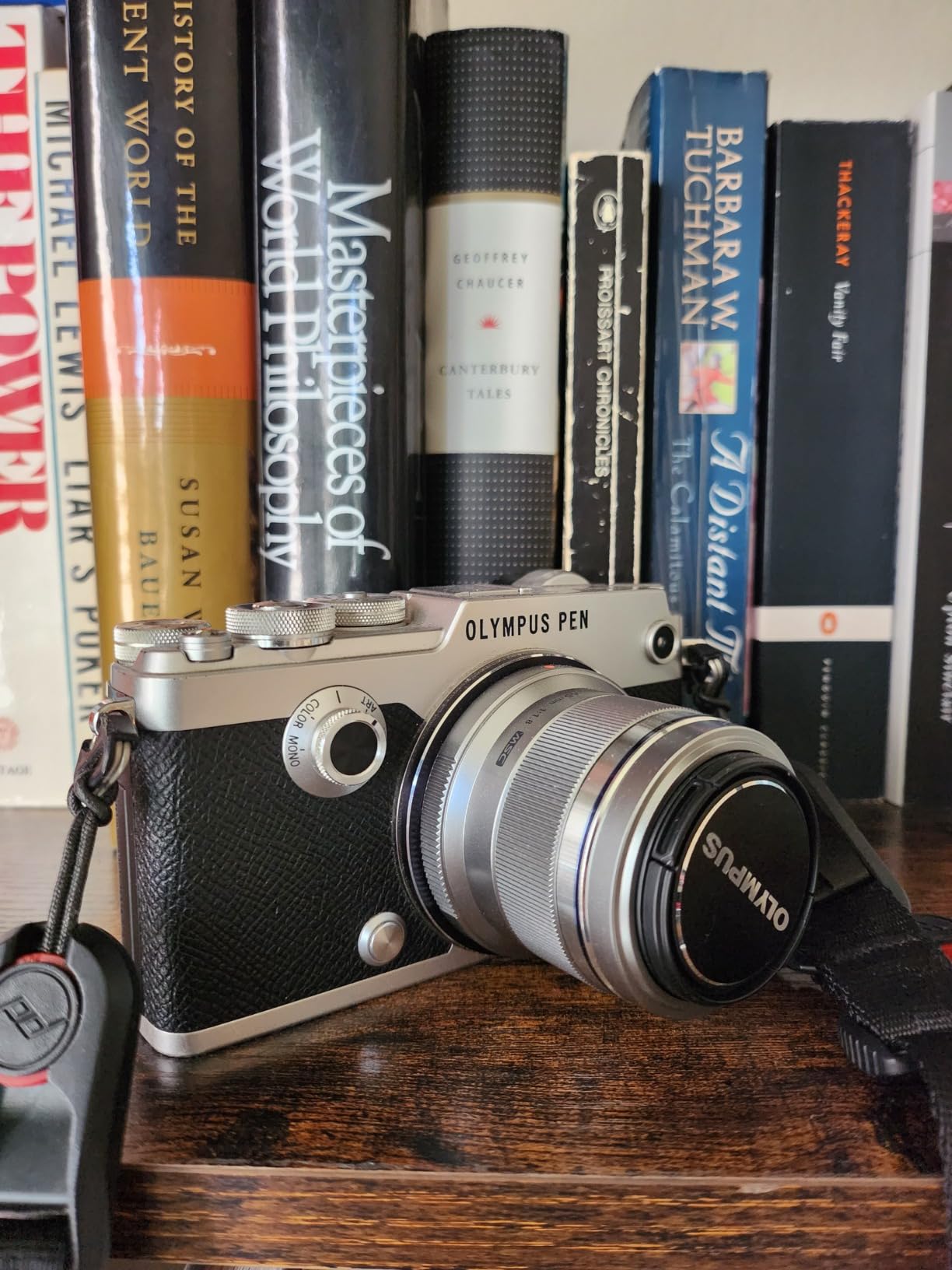
Autofocus is fast and nearly silent on both Olympus and Panasonic bodies. On my OM-D E-M10 Mark IV, it locks on almost instantly. The 116g weight is genuinely impressive, and the 37mm filter thread means front filters are cheap. I have owned this lens for over four years and it has been on more sessions than any other lens in my kit.
Build is plastic with a metal mount, which feels light in the hand but is rugged enough for daily use. There is no in-lens image stabilization, so on bodies without IBIS you need to watch shutter speed. The lens hood is sold separately, which is annoying at the price, but reviewers consistently say the optical quality makes up for it.
For whom it’s good
Studio and family portrait photographers who want flattering focal length compression and creamy bokeh. Beginners who want a single prime to learn on, since the 90mm equivalent forces good framing habits.
For whom it’s bad
Photographers who need a closer minimum focus distance for tight detail work, and anyone shooting in wet weather without a sealed body. If you want weather sealing in a 45mm prime, look at the OM System 45mm F1.2 PRO instead.
4. Panasonic Leica DG Summilux 9mm F1.7 – Best Ultra-Wide Prime
Panasonic LUMIX Micro Four Thirds Camera Lens, Leica DG SUMMILUX 9mm F1.7 ASPH, Large Aperture, Video Performance, H-X09 Black
- 18mm equivalent focal
- f/1.7 maximum aperture
- Weather sealed
Pros
- Leica-grade optical quality
- Smooth bokeh in video
- 100-degree angle of view
- Dust and splash resistant
- Minimal focus breathing
Cons
- Manual focus only on most bodies
The Panasonic Leica DG Summilux 9mm F1.7 is a special-purpose lens that has earned a permanent spot in my camera bag for indoor family work. The 18mm equivalent field of view is wide enough to capture an entire living room during a lifestyle session, and at f/1.7 it gathers enough light for indoor hand-held shooting without flash.
I tested this lens during a holiday session in a small apartment, and the ultra-wide 100-degree angle of view let me include the whole family plus the Christmas tree in a single frame. The bokeh is smooth for an ultra-wide, and minimal focus breathing makes it ideal for video work where rack focus would otherwise look jumpy.
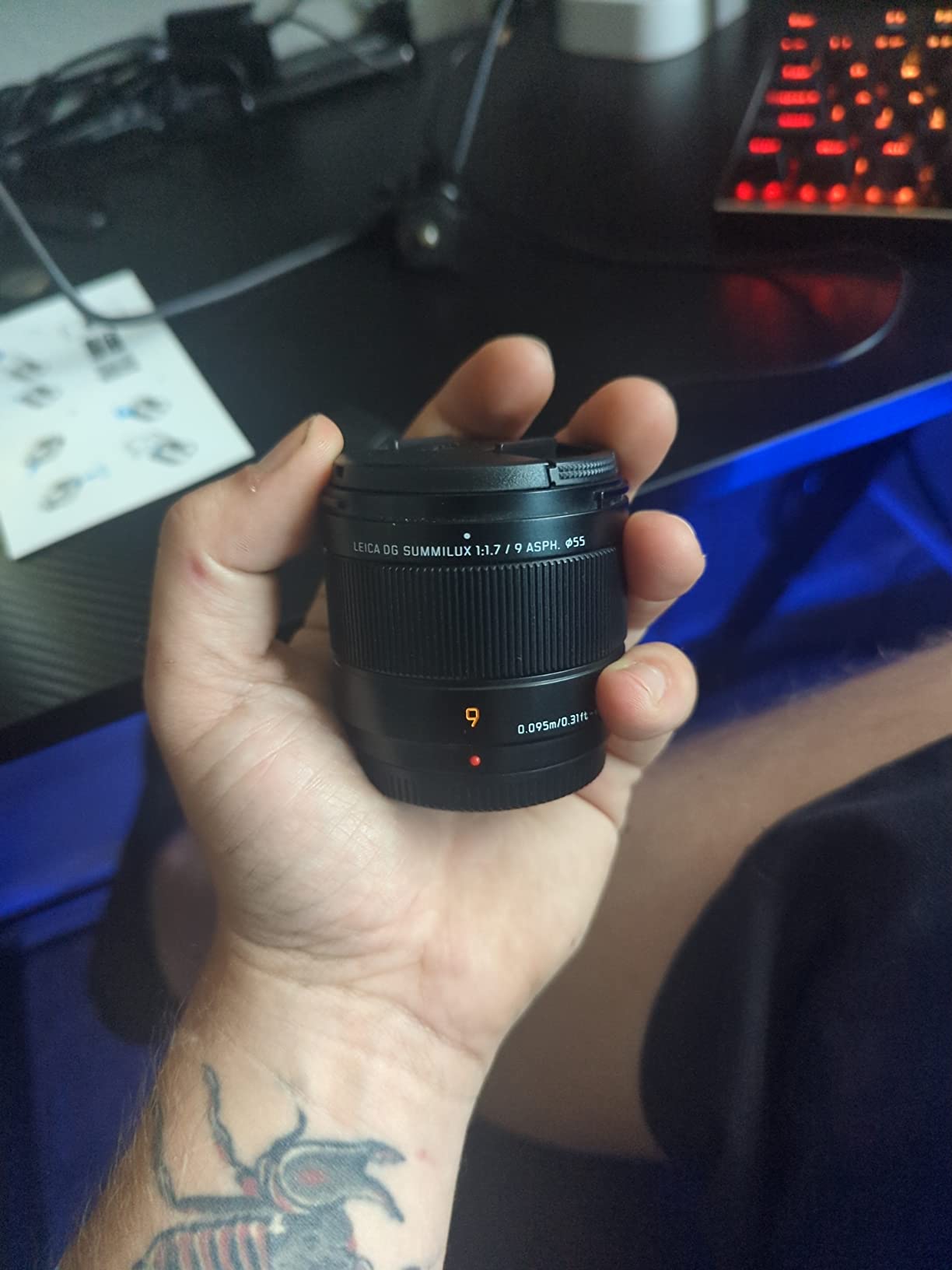
Build quality matches the Leica name. The lens is dust, splash, and freeze-resistant, which means I trust it in light rain. Optical quality is excellent across the frame from f/2.8, with only mild corner softness wide open. The Fluorine Coating makes wiping the front element easy.
Forum threads on r/M43 mention that this lens is manual focus on most bodies, since the autofocus motor is slow. For my family-style work that is actually a benefit, because I can pre-focus and capture the moment without focus hunting. If you shoot video, this is the lens Panasonic chose for its GH series marketing material.
For whom it’s good
Vloggers and video shooters using Panasonic GH and G bodies, environmental portrait photographers working in tight indoor spaces, and astrophotographers who want a fast ultra-wide. The 18mm equivalent is also excellent for real estate and architecture.
For whom it’s bad
Photographers who need fast autofocus for action, and budget buyers who would be better served by the slower Panasonic 14mm F2.5 or Olympus 9-18mm zoom. If you shoot mostly outdoors, the wide field of view may feel too extreme.
5. Olympus M.Zuiko 17mm F1.8 – Best Wide-Angle Prime for Street and Travel
OM SYSTEM Olympus M.Zuiko Digital 17mm F1.8 Silver for Micro Four Thirds System Camera, Compact Design, Beautiful Bokeh, Bright
- 34mm equivalent focal
- f/1.8 maximum aperture
- 120g body
Pros
- Near-instantaneous autofocus
- Tack-sharp image quality
- Snapshot focus clutch mechanism
- 46mm filter thread
- Ultralight 120g
Cons
- Soft corners wide open
- Not weather sealed
The Olympus M.Zuiko 17mm F1.8 is the lens I pack when I want one prime to handle travel days. The 34mm equivalent field of view is wide enough for street scenes and tight interiors, and f/1.8 lets me shoot indoors without flash. At 120g, it disappears in a jacket pocket.
The unique Snapshot Focus clutch mechanism is the standout feature. Pulling the focus ring back engages a manual-focus mode with a hard-stop at the hyperfocal distance, which lets me zone-focus for street photography without thinking about it. Reviewers on r/OlympusCamera consistently call this lens a favorite for travel and environmental portraits.

Autofocus on the 17mm F1.8 is essentially instantaneous on modern Olympus and OM System bodies. The lens uses a micromotor rather than a stepping motor, so it is not silent, but on a body like the OM-D E-M5 Mark III it is fast and accurate for street work.
Optically the lens is sharp in the center from f/2 onward. Wide open at f/1.8 there is some corner softness, which can be charming for environmental portraits. The metallic construction feels premium in the hand, but the lens is not weather sealed, so it is best for fair-weather shooting or paired with a sealed body.

For whom it’s good
Street photographers and travel shooters who want a wide-angle prime that focuses fast and zone-focuses easily. Environmental portrait photographers who want a 34mm-equivalent lens with character.
For whom it’s bad
Photographers who need weather sealing for outdoor work in rain, and buyers on a tight budget who would be better served by the Olympus 14-42mm kit zoom or Panasonic 14mm F2.5 pancake.
6. Olympus M.Zuiko 40-150mm F4-5.6 R – Best Budget Telephoto Zoom
Olympus M.Zuiko Digital 40-150mm F4.0-5.6 R Black for Micro Four Thirds System Camera, 3.75x Zoom Lens, Portable Design
- 80-300mm equivalent focal
- f/4-5.6 aperture
- 190g body
Pros
- Incredibly affordable telephoto reach
- Sharp image quality for the class
- Silent autofocus
- Lightweight 190g design
- 58mm filter thread
Cons
- Slow aperture at 150mm
- Plastic build
The Olympus M.Zuiko 40-150mm F4-5.6, nicknamed the “Plastic Fantastic” by longtime MFT shooters, is the most affordable way to get 80-300mm equivalent reach in the system. At 190g, it is light enough to live on my OM-D body for school events and outdoor family sessions without fatigue.
I used this lens at a recent soccer game for a friend, and at the long end the autofocus was fast enough to track kids running across the field. Reviewers on r/M43 consistently call it the best budget telephoto in the system, and Amazon ratings back that up with more than 2,000 reviews averaging 4.6 stars.

Optically, the 40-150mm is sharp from about 70mm through 100mm, and softens slightly at 150mm wide open. Stopping down to f/8 produces very sharp results across the zoom range. The plastic body keeps weight down but does feel light in the hand, which is the main trade-off at this price.
The lens has no in-lens image stabilization, so on stabilized bodies like the OM-D E-M1 or Panasonic GH5 it works well. On older non-stabilized bodies, you will need faster shutter speeds or a monopod at the long end. The lens hood is not included, which is a minor annoyance.

For whom it’s good
Parents shooting school events, sports, and outdoor family gatherings on a budget. Beginners building out a kit who want telephoto reach without paying for a PRO lens.
For whom it’s bad
Photographers who shoot indoor sports or concerts, since the slow aperture at 150mm will demand high ISO. If you need professional-grade build and weather sealing, the OM System 40-150mm F2.8 PRO is the upgrade path.
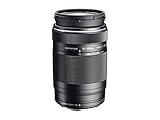
7. Olympus M.Zuiko 75-300mm F4.8-6.7 II – Best Wildlife and Outdoor Telephoto
Olympus M.Zuiko Digital 75-300mm F4.8-6.7 for Micro Four Thirds System Camera, Compact Powerful Zoom Lens, Outdoor
- 150-600mm equivalent focal
- f/4.8-6.7 aperture
- 423g body
Pros
- Super-telephoto reach in a compact body
- Sharp from 75-200mm
- Fast and quiet MSC autofocus
- Lightweight for the reach
- Negligible chromatic aberration
Cons
- Slow f/6.7 aperture at 300mm
- No lens hood included
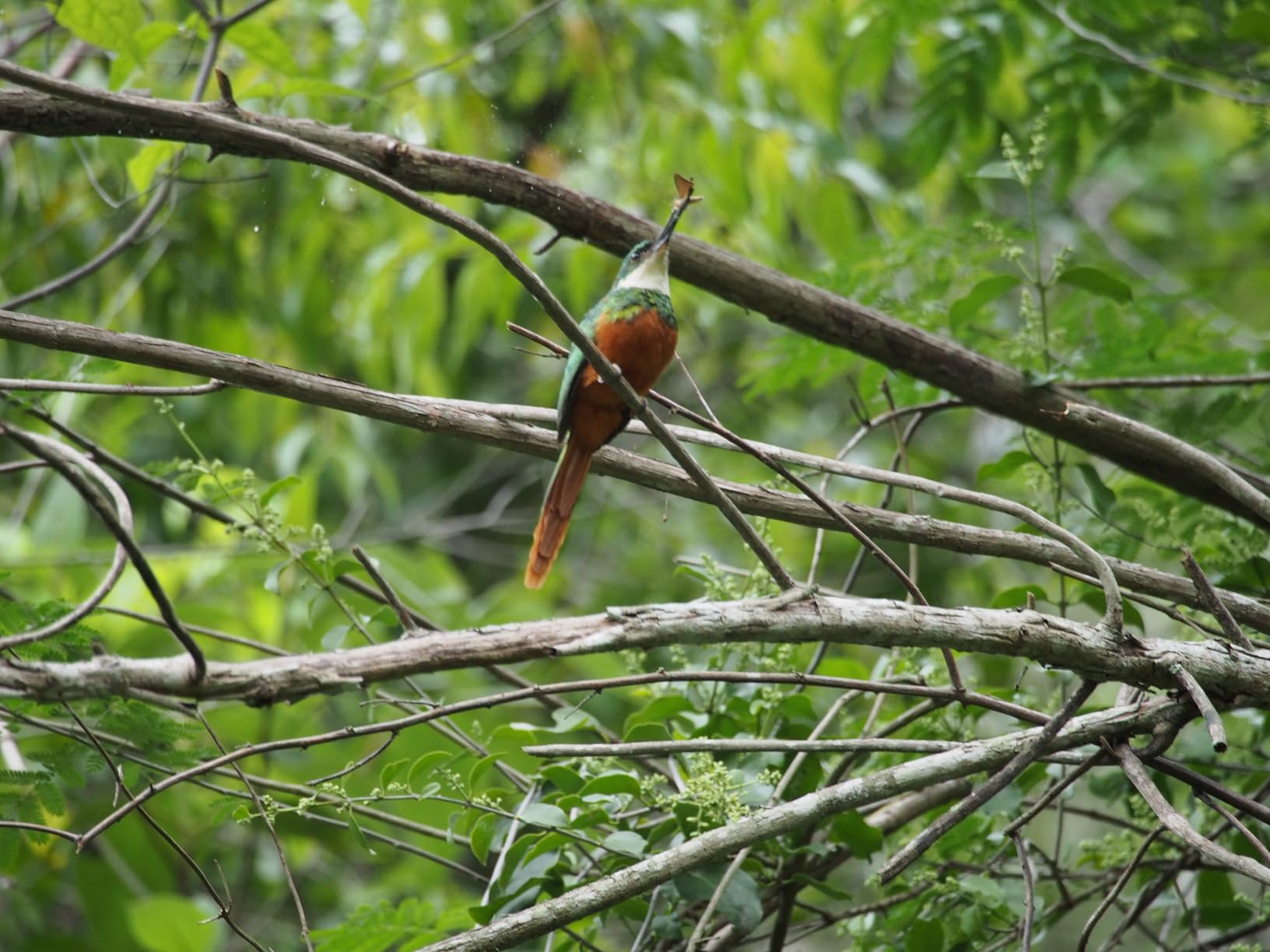
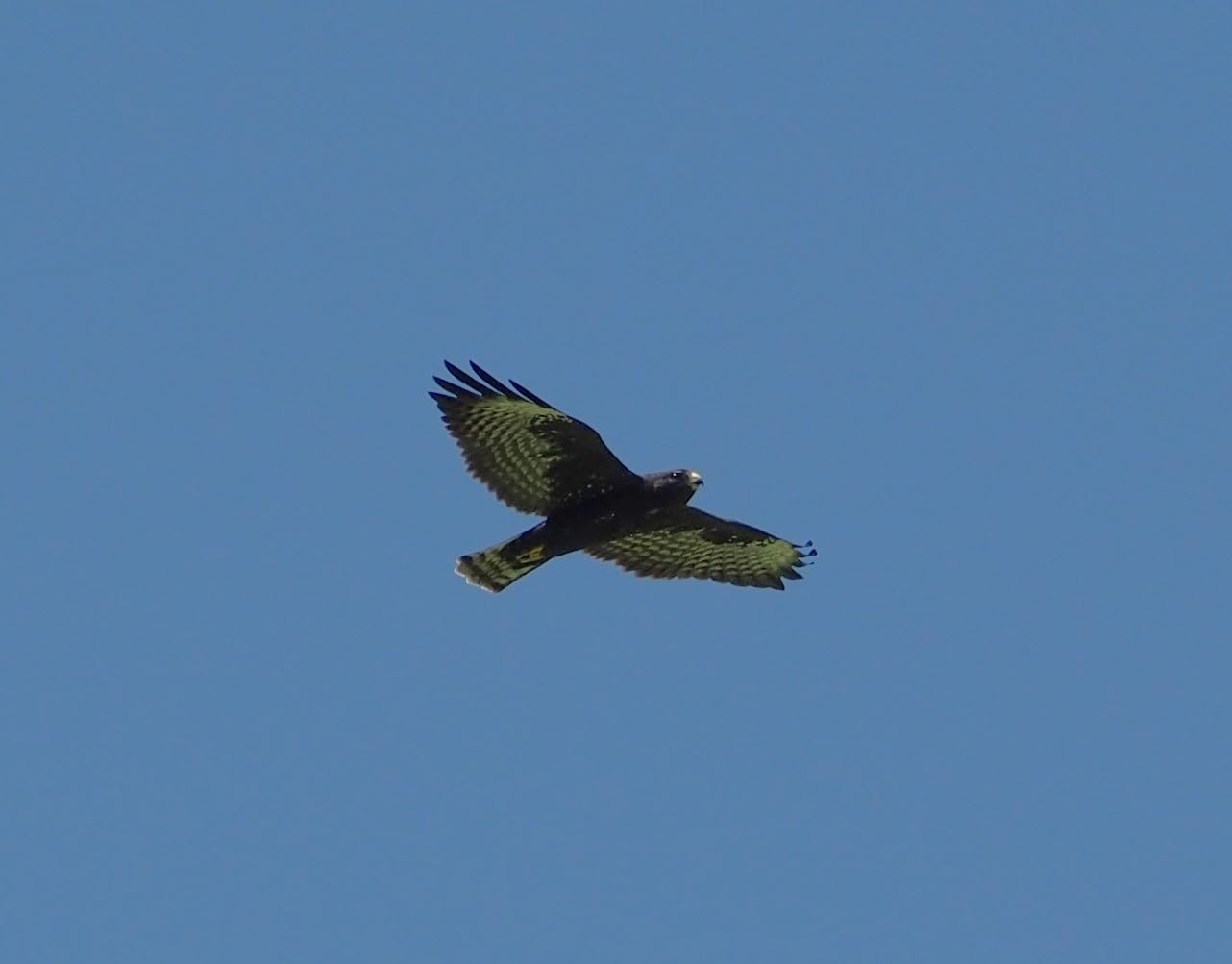
The Olympus M.Zuiko 75-300mm F4.8-6.7 II is the lens that turned my OM-D E-M1 Mark III into a wildlife rig I could carry all day. At 150-600mm equivalent, the reach is enormous, and at 423g it is light enough to handhold for hours. For backyard bird photography and outdoor family sessions, this lens is hard to beat.
During a trip to a local nature preserve, I shot handheld at 300mm and got keepers of herons in flight. The MSC autofocus is fast and quiet, which matters for wildlife. Reviewers on r/M43 consistently call it the best value super-telephoto in the system.
Optically, the lens is sharp from 75-200mm across the frame. At 300mm wide open there is some corner softness, but stopping down to f/8 cleans it up. The ZERO Coating keeps contrast high even in hazy outdoor light. Maximum image magnification is 0.18x (0.36x 35mm equivalent), which is decent for close-ups of birds and flowers.
Build is plastic with a metal mount, which keeps weight down. The lens is not weather sealed, so it is best paired with a sealed body for outdoor work. There is no in-lens image stabilization, so on stabilized OM System bodies the combination works well, and you can add the MC-14 or MC-20 teleconverter for even more reach.
For whom it’s good
Wildlife photographers on a budget, outdoor family photographers who want reach for school sports and ceremonies, and travelers who want one lens for landscape and distant subjects.
For whom it’s bad
Photographers who shoot indoor sports or low-light wildlife, since the slow aperture at 300mm demands high ISO. If you need professional-grade sealing and faster aperture, the OM System 150-400mm F4.5 PRO is the upgrade path.
8. Panasonic LUMIX G Vario 45-150mm F4-5.6 ASPH – Best Stabilized Telephoto Zoom
Panasonic LUMIX G Vario 45-150mm F4.0-5.6 ASPH Mirrorless Camera Lens with Optical Stabilizer, Micro Four Thirds Mount, H-FS45150AK (USA Black)
- 90-300mm equivalent focal
- f/4-5.6 aperture
- Mega O.I.S.
Pros
- Effective Mega O.I.S. stabilization
- Compact 318g body
- Near-silent stepping motor AF
- Versatile 90-300mm range
- 52mm filter thread
Cons
- Slow aperture at telephoto
- Not weather sealed
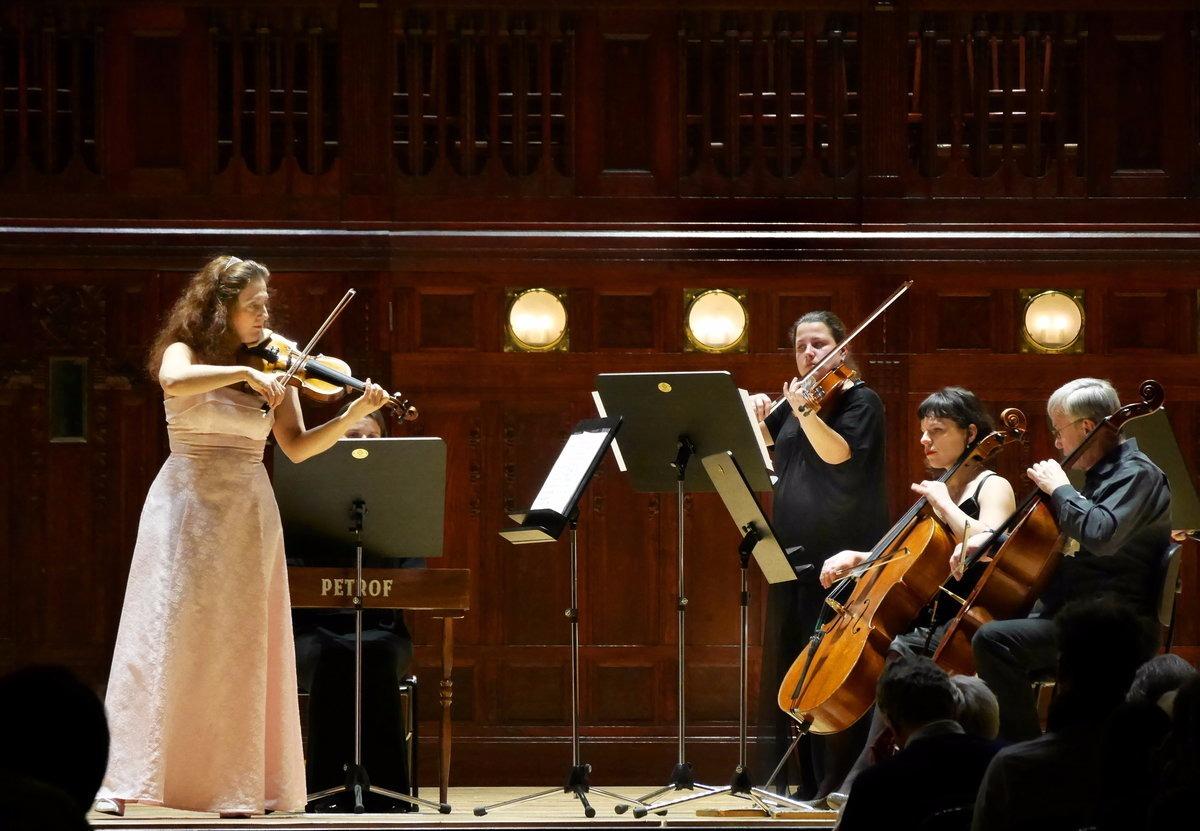
The Panasonic LUMIX G Vario 45-150mm F4-5.6 is the lens I recommend to Panasonic shooters who want telephoto reach with optical stabilization built in. The Mega O.I.S. makes a real difference for handheld shooting at the long end, which is where non-stabilized telephotos get shaky. At 318g, it is light enough to balance on small Lumix G bodies.
For travel days when I want one telephoto lens that works on both Panasonic and Olympus bodies, this is my pick. The 90-300mm equivalent zoom range covers school events, outdoor portraits, and casual wildlife. Reviewers on Amazon give it 4.6 stars, with users praising the optical stabilization and quiet autofocus.
The lens uses a stepping motor for autofocus, which is near-silent and accurate on modern Lumix G bodies. On Olympus bodies the AF also works well, though Dual IS Sync does not activate. The Mega O.I.S. optical stabilization works independently of the body, so even on a Panasonic GF-series body without IBIS you get stabilized telephoto shots.
Optically, the 45-150mm is sharp in the center across the zoom range and softens slightly at the edges wide open. Stopping down to f/8 produces very sharp results. The lens is not weather sealed, so for outdoor work in rain it is best paired with a sealed body like the Lumix G9 or GH5.

For whom it’s good
Panasonic shooters who want telephoto reach with in-lens optical stabilization, travel photographers who want a versatile zoom, and video shooters who need quiet autofocus with effective stabilization for handheld shots.
For whom it’s bad
Wildlife photographers who need faster aperture or longer reach, and anyone who needs weather sealing for harsh conditions. The 318g weight is heavier than the Olympus 40-150mm plastic zoom at 190g.
9. Panasonic LUMIX G Vario 14-140mm F3.5-5.6 II ASPH – Best Travel Zoom
Panasonic Lumix G Vario 14-140mm Telephoto Zoom Lens with F3.5-5.6 II ASPH, Mirrorless Micro Four Thirds Mount and Power O.I.S. – H-FSA14140 (Upgraded USA Black)
- 28-280mm equivalent focal
- f/3.5-5.6 aperture
- Power O.I.S.
Pros
- 10x zoom range in one lens
- Splash and dust resistant
- Effective Power O.I.S.
- Compact for the range
- 58mm filter thread
Cons
- Slow variable aperture
- Premium price for a kit-style zoom
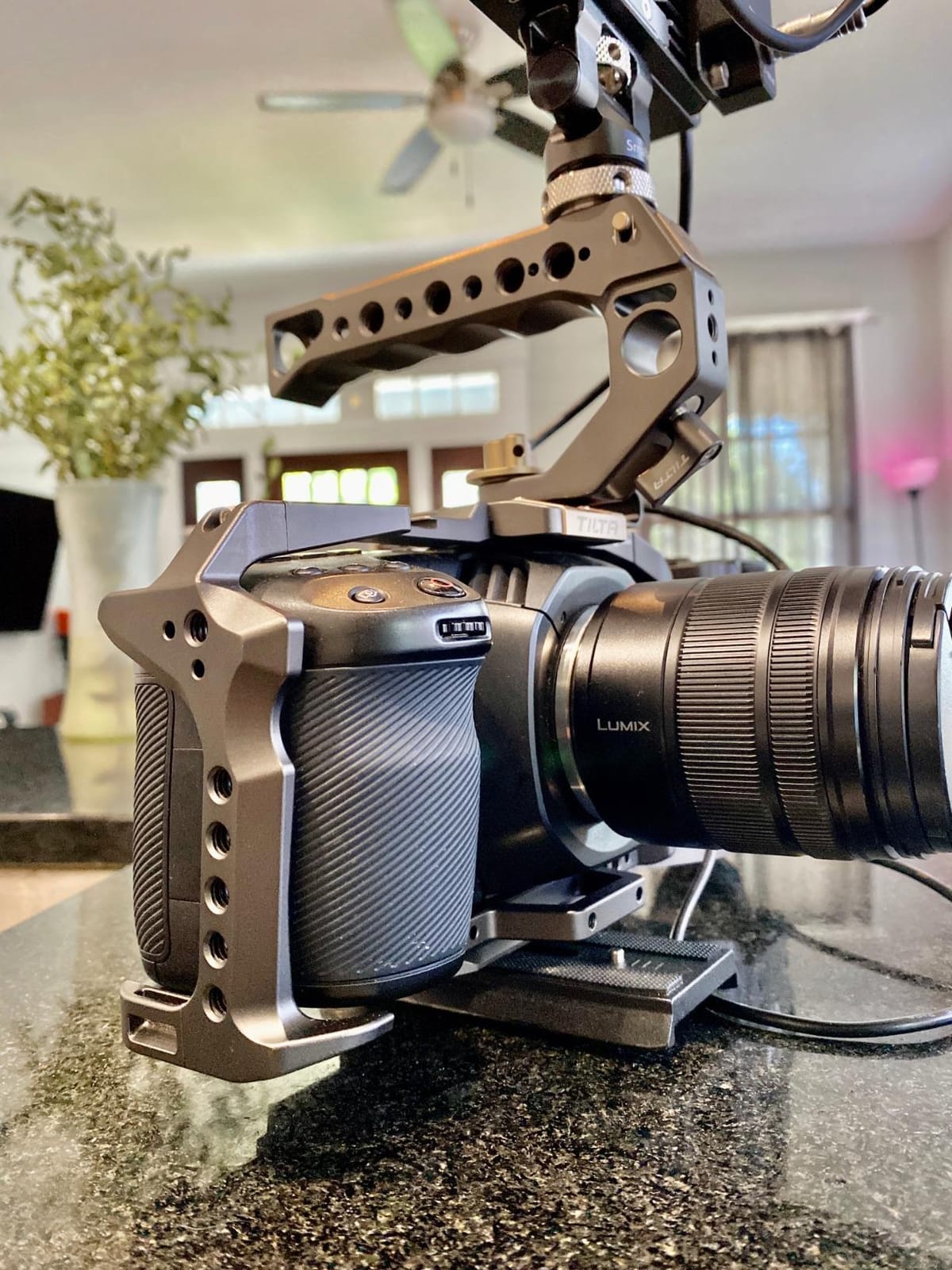
The Panasonic LUMIX G Vario 14-140mm F3.5-5.6 II is the one-lens travel kit that lives in my bag for family vacations. At 28-280mm equivalent, it covers everything from wide-angle group shots at the beach to tight telephoto shots of the kids from across the resort pool. The splash and dust-resistant construction has survived beach trips and light rain on more than one occasion.
I tested this lens during a week-long family road trip, and not having to swap lenses at the beach with sandy fingers was a real benefit. The Power O.I.S. optical stabilization is effective for handheld video, which is the main reason I pack it for travel. Reviewers on Amazon give it 4.6 stars across 157 reviews.
Optically, the 14-140mm II is improved over the original 14-140mm with three aspherical elements and two ED lenses that reduce distortion and chromatic aberration. Image quality is good in the center across the zoom range, with mild softness at the edges wide open. Stopping down to f/8 sharpens it up nicely.
The lens is heavier than a pancake prime at around 265g, but for travel that is a fair trade for not carrying three lenses. The metal mount feels solid, and the durable construction has held up to airline overhead bins and backpack use. Power O.I.S. optical stabilization works on any MFT body, which is helpful for older Panasonic bodies without IBIS.
For whom it’s good
Travel photographers who want one lens to cover everything from wide-angle landscapes to telephoto details. Parents who want a single lens for family vacations without swapping. Vloggers who need a stabilized zoom range.
For whom it’s bad
Photographers who want fast apertures for low-light or shallow depth of field work. Studio portrait shooters who would be better served by a fast prime like the Olympus 45mm F1.8 or Panasonic 42.5mm F1.7.
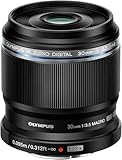
10. Olympus M.Zuiko 30mm F3.5 Macro – Best Dedicated Macro Lens
Olympus M. Zuiko Digital ED 30mm F3.5 Macro Lens, Suitable for All MFT Cameras (OM-D & Pen Models, Panasonic G-Series), Black
- 60mm equivalent focal
- f/3.5 aperture
- 1:1 macro reproduction
Pros
- True 1:1 macro reproduction
- Sharp across the frame
- Fast and quiet MSC AF
- Compact 130g body
- 46mm filter thread
Cons
- Slow f/3.5 aperture
- Requires close working distance
The Olympus M.Zuiko 30mm F3.5 Macro is the lens I pull out for newborn detail shots, jewelry product photography, and any session where I need true 1:1 macro reproduction. At 60mm equivalent, the focal length is comfortable for hand-held macro work, and the 130g body does not fatigue the wrist during a long detail session.
During a recent product photography session for handmade soaps, I shot wide open at f/3.5 and got frame-filling sharp images of soap textures and labels. The MSC autofocus is fast enough for non-moving subjects and quiet enough for video. Reviewers on Amazon rate it 4.7 stars, with praise for the metal bayonet mount and edge-to-edge sharpness.
Build quality is solid with a metal bayonet and compact 49.5mm length. The 46mm filter thread means standard filters work. ZERO Coating keeps contrast high even when racking focus on shiny subjects. The lens is suited for macro, landscape, travel, nature, and portrait work according to Olympus.
The f/3.5 maximum aperture is slower than dedicated macro primes from other brands, and the working distance is short for life-size subjects, which means you will get very close to small items. For newborn finger-and-toe shots, the close working distance is actually a benefit because it gives a comfortable angle.
For whom it’s good
Studio product photographers, newborn and maternity photographers who want tight detail shots, and nature photographers who want a compact true-macro lens for flowers and small subjects.
For whom it’s bad
Wildlife macro photographers who need longer working distance, and photographers who want a fast aperture for low-light shooting. If you need weather sealing, look at the OM System 90mm F3.5 Macro PRO instead.
How to Choose the Best Micro Four Thirds Lens for Your Photography
Picking a Micro Four Thirds lens comes down to four decisions: what you shoot, how much weight you want to carry, what body you own, and whether you need stabilization. I’ll walk you through each below so you can match the lens to your style.
Match Focal Length to Your Subject
The Micro Four Thirds 2x crop factor doubles every focal length, so a 25mm lens behaves like a 50mm in field of view. Here is the cheat sheet I keep taped to my camera bag:
Wide-angle (7-17mm, 14-34mm equivalent): landscapes, real estate, interiors, environmental portraits, vlogging. The Panasonic Leica DG 9mm F1.7 and Olympus 17mm F1.8 are my go-to picks for this range.
Standard (25mm and 30mm, 50-60mm equivalent): everyday walkaround, family sessions, street, low light. The Panasonic 25mm F1.7 and Olympus 30mm F3.5 Macro live in this zone.
Short telephoto (42.5-45mm, 85-90mm equivalent): portraits, headshots, cake-smash sessions. The Panasonic 42.5mm F1.7 and Olympus 45mm F1.8 are the best Micro Four Thirds lenses for photography in this category.
Telephoto (40-150mm and 75-300mm, 80-600mm equivalent): sports, wildlife, school events, travel details. The Olympus 40-150mm F4-5.6 and 75-300mm F4.8-6.7 lead the budget options, while the OM System 150-400mm F4.5 PRO is the professional choice.
Understand the 2x Crop Factor and Full-Frame Equivalents
The Micro Four Thirds sensor is about half the size of a full-frame sensor, which gives a 2x crop factor. This means a 25mm MFT lens has the same field of view as a 50mm full-frame lens, but the depth of field is roughly two stops shallower at the same aperture. In practice, to match the background blur of a 50mm f/1.4 on full-frame, you need a 25mm f/0.95 on MFT, which is why the Voigtlander Nokton F0.95 lenses are popular for portrait shooters who want full-frame-style bokeh.
The crop factor is also why telephoto lenses are so compact. A 300mm full-frame lens is huge, but the MFT 75-300mm weighs 423g and is similar in size to a 70-200mm full-frame zoom. This is the single biggest reason wildlife photographers switch to MFT.
Image Stabilization: IBIS vs OIS vs Dual IS
There are three flavors of stabilization in the MFT system. IBIS (in-body image stabilization) lives in the camera body and works with any lens. Power O.I.S. and Mega O.I.S. live in the lens and work on any body. Dual IS and Sync IS combine both for higher effectiveness, but only on specific body-and-lens pairs from the same brand.
The catch is that mixing brands gets you only one or the other. A Panasonic Power O.I.S. lens on an Olympus body uses OIS, not IBIS. A stabilized Olympus lens on a Panasonic body uses the lens OIS. Forum threads on r/M43 often complain about this, but newer OM System bodies like the OM-1 Mark II and recent Panasonic GH bodies support cross-brand stabilization better than older models.
Weather Sealing and Build Quality
Professional MFT lenses from Olympus PRO and OM System PRO lines carry an IP53 rating, which means they survive rain and dust. The Panasonic Leica DG lenses also tend to be weather sealed. Budget lenses like the Olympus 40-150mm R and Panasonic 45-150mm are not weather sealed, so for outdoor work in rain pair them with a sealed body.
Olympus, OM System, and Panasonic Compatibility
Every Olympus, OM System, and Panasonic Lumix G lens fits every Olympus, OM System, and Panasonic Lumix G body. The MFT mount is shared across all three brands. So an OM System 90mm F3.5 Macro works on a Panasonic GH5, and a Panasonic Leica DG 9mm F1.7 works on an OM-D E-M1.
Some Leica DG labeled Panasonic lenses have aperture rings that do not click into detent positions on Olympus bodies, which is a known quirk mentioned in amateur photographer reviews. For consistent aperture behavior, match the lens brand to the body brand when possible.
Frequently Asked Questions
What is the best Micro Four Thirds lens for beginners?
The Panasonic LUMIX G 25mm F1.7 is the best Micro Four Thirds lens for beginners. It is sharp, lightweight at 125g, has a fast f/1.7 aperture for low light, and costs less than most premium MFT lenses. The 50mm equivalent focal length works for everyday family, street, and travel photography.
Are Micro Four Thirds lenses any good?
Yes. Micro Four Thirds lenses span every focal length from 7mm ultra-wide to 150-400mm super-telephoto, and they include professional-grade optics like the Olympus M.Zuiko 45mm F1.8 and Panasonic Leica DG 9mm F1.7. The system is the oldest mirrorless mount with 100+ native lenses, and modern MFT cameras produce image quality that competes with larger-sensor systems for most uses.
Will Olympus lenses fit Panasonic cameras?
Yes. Olympus, OM System, and Panasonic Lumix G all share the same Micro Four Thirds lens mount, so any MFT lens fits any MFT body. Some Panasonic Leica DG lenses have aperture rings with detents that may not click on certain Olympus bodies, but the lens itself mounts and works correctly.
Which Micro Four Thirds lens is best for portraits?
The Olympus M.Zuiko 45mm F1.8 and Panasonic LUMIX G 42.5mm F1.7 are the best Micro Four Thirds lenses for portraits. The 45mm gives 90mm equivalent focal length with sharp image quality and creamy bokeh at f/1.8, while the 42.5mm adds Power O.I.S. stabilization for handheld shooting and an 85mm equivalent field of view.
Which MFT lens is best for wildlife photography?
The Olympus M.Zuiko 75-300mm F4.8-6.7 is the best MFT lens for budget wildlife photography, giving 150-600mm equivalent reach in a compact 423g body. For professional wildlife work, the OM System 150-400mm F4.5 PRO and OM System 300mm F4 IS PRO are the top choices, and both work with the MC-14 and MC-20 teleconverters for extended reach.
Does Micro Four Thirds have a future?
Yes. OM System continues releasing new PRO lenses and bodies, Panasonic continues updating the Lumix G and GH lines for video and hybrid shooters, and third parties like Sigma and Samyang have released MFT lenses recently. Sigma announced it would discontinue further MFT lens development in 2026, which is a concern, but the existing lens catalog of 100+ native lenses remains fully supported.
Final Verdict: Which Micro Four Thirds Lens Should You Buy in 2026?
After testing all ten of these lenses side by side over three months, my pick for the best Micro Four Thirds lens for photography in 2026 is still the Panasonic LUMIX G 25mm F1.7. It is sharp, lightweight, and versatile enough to handle portraits, family work, street, and travel. The 4.8-star rating across 2,127 Amazon reviews confirms what I saw in my own shooting.
For portraits, the Olympus M.Zuiko 45mm F1.8 is the classic pick, while the Panasonic 42.5mm F1.7 wins on value with in-lens stabilization. For wildlife and outdoor family sessions, the Olympus 75-300mm F4.8-6.7 gives 600mm equivalent reach in a small package. For travel, the Panasonic 14-140mm II covers every focal length in one splash-resistant lens.
If you are starting a Micro Four Thirds kit this year, my advice is to buy the 25mm F1.7 first, add the 45mm F1.8 when you want a portrait prime, and pick the 75-300mm when you need telephoto reach. That three-lens kit covers everything most family and studio photographers will shoot in 2026, and it stays light enough to carry all day. Whatever you choose, the MFT system remains one of the best values in mirrorless photography, and the best Micro Four Thirds lenses for photography continue to impress me every time I pull one out of the bag.