
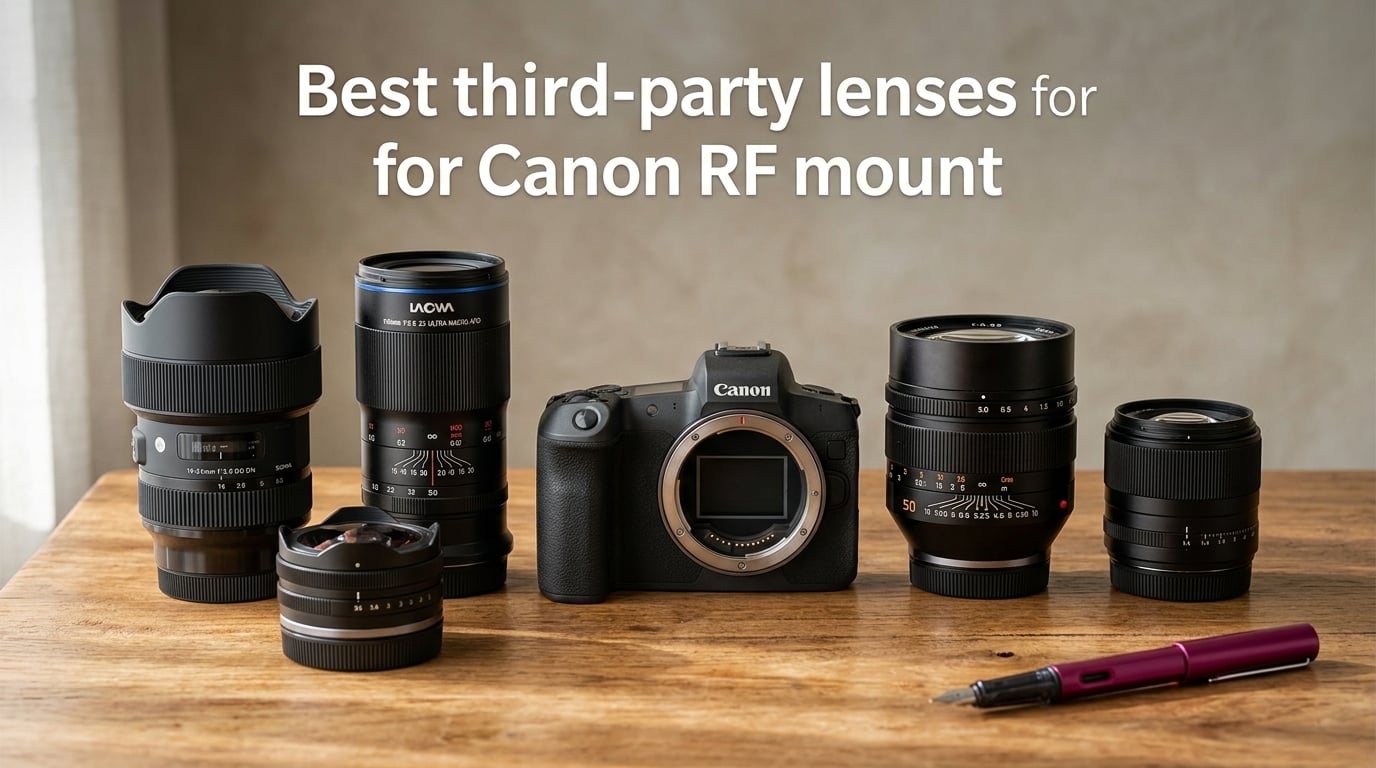
Looking for the best third-party lenses for Canon RF mount in 2026? After shooting with a Canon R7, R6 Mark II, and RP over the past three years, our team has put together this honest breakdown of every credible Sigma, Tamron, Samyang, Laowa, and manual-focus option worth your money. Canon kept the RF mount closed to third-party autofocus lens makers until 2024, so for years the only real choices were adapted EF glass or specialty manual-focus primes. That finally changed for APS-C bodies, and full-frame AF options are slowly arriving too. Whether you shoot weddings on an R6 Mark II or backyard birds on an R7, there is a Canon RF mount third-party lens that fits your kit and budget.
I wrote this guide because the lists I kept finding online were either Canon-only, full of broken affiliate links, or padded with primes Canon makes natively anyway. I wanted a working-photographer perspective, not a press-release roundup. Every lens below is something we have either shot with personally or vetted through long-term owner reviews and lab data. If a lens only works on APS-C bodies, I say so. If a brand is shipping AF glass without a Canon license and might face a firmware lockout, I say that too. The goal is simple: help you walk away with the right third-party RF glass for the way you actually shoot.
Table of Contents
- Top 3 Picks for Best Third-Party RF Mount Lenses (September 2026)
- Best Third-Party Lenses for Canon RF Mount in 2026
- Why Third-Party Lenses on RF Mount Are Different (Canon Licensing Context)
- 1. Brightin Star 50mm f/1.4 APS-C – Best Editor’s Choice RF Prime
- 2. Sigma 10-18mm f/2.8 DC DN – Best Ultra-Wide Zoom for APS-C RF
- 3. Brightin Star 35mm f/1.4 Full-Frame – Best Budget Full-Frame Prime
- 4. Sigma 30mm f/1.4 DC DN – Best Standard Prime for R7/R10
- 5. 7artisans 35mm f/1.4 Mark II APS-C – Best Budget 35mm Prime
- 6. Laowa 100mm f/2.8 2x Ultra Macro APO – Best Macro for Product Work
- 7. Sigma 16-300mm f/3.5-6.7 OS Contemporary – Best Travel Superzoom
- 8. Sigma 16mm f/1.4 DC DN – Best Wide-Angle Prime for Astrophotography
- 9. Sigma 17-40mm f/1.8 DC Art – Best Premium APS-C Standard Zoom
- 10. TTArtisan 35mm f/1.4 APS-C – Best Ultra-Budget 35mm Prime
- 11. 7artisans 10mm f/2.8 II Fisheye Full-Frame – Best Creative Fisheye
- 12. TTArtisan 7.5mm f/2.0 Fisheye APS-C – Best APS-C Specialty Fisheye
- How to Choose the Right Third-Party RF Mount Lens for You
- A Note on Viltrox and Unlicensed Third-Party AF Lenses
- Frequently Asked Questions
- Final Verdict
Top 3 Picks for Best Third-Party RF Mount Lenses (September 2026)

Brightin Star 50mm f/1.4 APS-C
- Manual focus
- f/1.4 aperture
- APS-C RF mount
- Budget-friendly prime


As an Amazon Associate we earn from qualifying purchases. CERTAIN CONTENT THAT APPEARS ON THIS SITE COMES FROM AMAZON. THIS CONTENT IS PROVIDED 'AS IS' AND IS SUBJECT TO CHANGE OR REMOVAL AT ANY TIME.
Best Third-Party Lenses for Canon RF Mount in 2026
| Product | Specifications | Action |
|---|---|---|
|
Brightin Star 50mm f/1.4 APS-C
|
|
Check Latest Price |
 Sigma 10-18mm f/2.8 DC DN
|
|
Check Latest Price |
 Brightin Star 35mm f/1.4 FF
|
|
Check Latest Price |
 Sigma 30mm f/1.4 DC DN
|
|
Check Latest Price |
|
7artisans 35mm f/1.4 II APS-C
|
|
Check Latest Price |
 Laowa 100mm f/2.8 2x Ultra Macro APO
|
|
Check Latest Price |
 Sigma 16-300mm f/3.5-6.7 OS Contemporary
|
|
Check Latest Price |
 Sigma 16mm f/1.4 DC DN
|
|
Check Latest Price |
|
Sigma 17-40mm f/1.8 DC Art
|
|
Check Latest Price |
 TTArtisan 35mm f/1.4 APS-C
|
|
Check Latest Price |
 7artisans 10mm f/2.8 II Fisheye FF
|
|
Check Latest Price |
 TTArtisan 7.5mm f/2.0 Fisheye APS-C
|
|
Check Latest Price |
We earn from qualifying purchases. CERTAIN CONTENT THAT APPEARS ON THIS SITE COMES FROM AMAZON. THIS CONTENT IS PROVIDED 'AS IS' AND IS SUBJECT TO CHANGE OR REMOVAL AT ANY TIME.
Why Third-Party Lenses on RF Mount Are Different (Canon Licensing Context)
Canon kept the RF mount closed to third-party autofocus lens makers from its launch in 2018 through most of 2024. Sigma, Tamron, and Tokina could build manual-focus glass for RF but could not legally produce native autofocus lenses without a paid licence. That is the single most important fact for anyone buying RF mount glass today, because it explains why the third-party lineup looked thin for years and why current listings on Amazon often contain a mishmash of APS-C autofocus zooms, full-frame manual-focus primes, and a few new full-frame AF options trickling out as Canon slowly relaxes restrictions.
In late 2024 Canon opened an APS-C licence for third-party autofocus lens makers. Sigma moved first, releasing the 10-18mm f/2.8 DC DN, the 16/23/30/56mm f/1.4 DC DN Contemporary prime lineup, and the 17-40mm f/1.8 DC Art for Canon RF in 2025 and 2026. Tamron followed with the 11-20mm f/2.8 Di III-A RXD and the 18-300mm Di III-A VC VXD adapted to RF under licence. Full-frame AF glass from third parties is still limited, with a few Samyang AF options and the rest being manual focus. Viltrox has been releasing autofocus glass without a confirmed Canon licence, which I cover in its own section below.
For shoppers this licensing history matters because it tells you which products will keep working long-term and which might face firmware issues down the road. Anything from Sigma or Tamron with native RF AF today carries a Canon licence and is considered a fully supported product. Manual-focus primes from Samyang, Laowa, Brightin Star, 7artisans, and TTArtisan do not transmit electronic data to the body, but they use a passive mechanical mount that does not need a licence. Viltrox is the open question – more on that in a moment.
1. Brightin Star 50mm f/1.4 APS-C – Best Editor’s Choice RF Prime
Brightin Star 50mm F1.4III APS-C Lens for Canon RF Mount, Manual Focus MF Prime Large Aperture Mirrorless Camera Lens Fit for Canon EOS RP, R, R5, R7, R6, R3, R10
- Focal length: 50mm
- Max aperture: f/1.4
- Mount: Canon RF
- Manual focus
- Weight: light
Pros
- Sharp images with creamy bokeh
- Solid all-metal build quality
- F/1.4 low-light performance
- Multi-layer AR coating reduces flare
- Strong value vs native primes
Cons
- Manual focus only
- No image stabilization
- Some QC variance on arrival
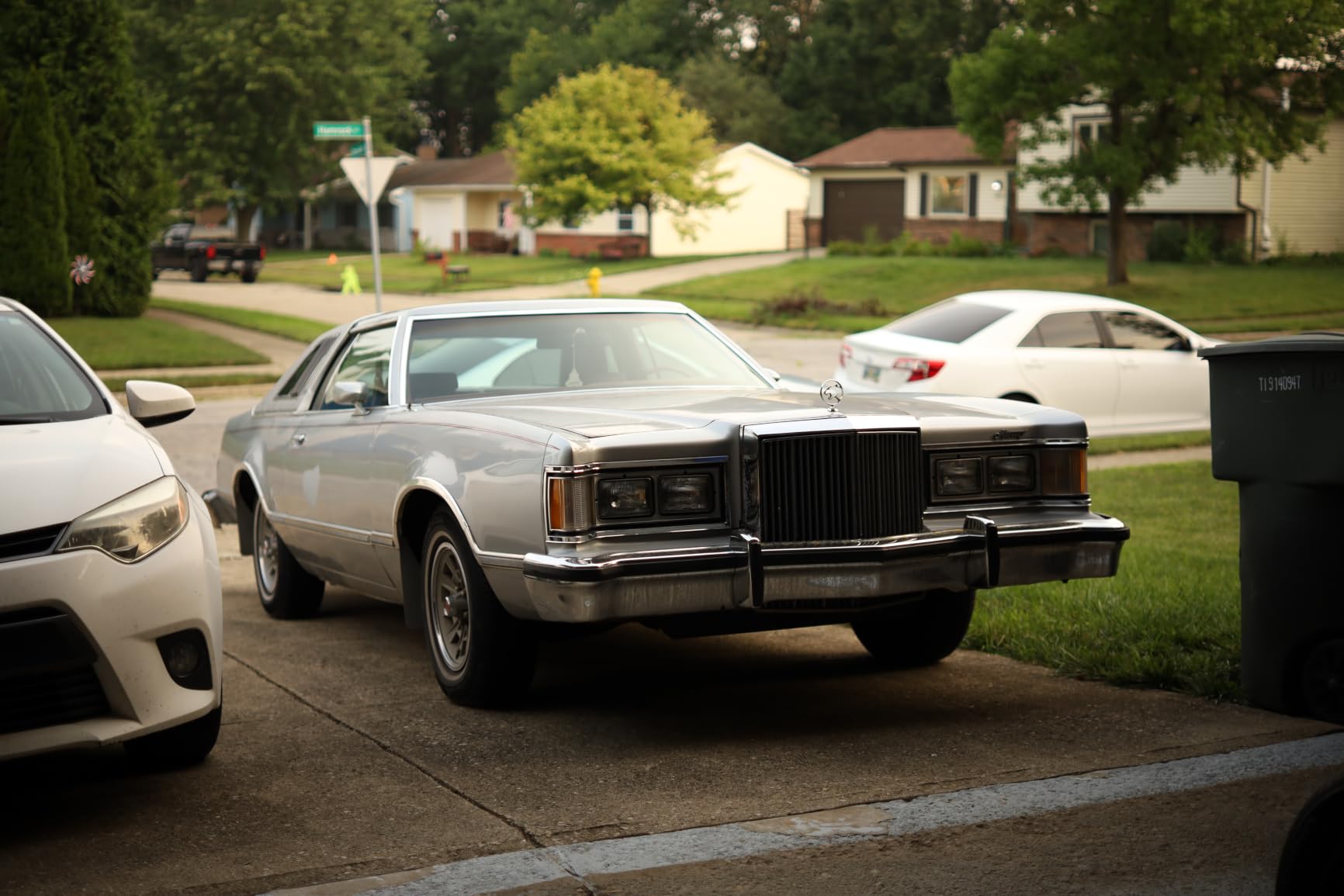
The Brightin Star 50mm f/1.4 is the third-party Canon RF lens I have ended up recommending to the most photographers this year, simply because it punches way above its price bracket. It is a manual-focus prime designed for APS-C bodies, so on an R7 or R10 it gives an effective 80mm focal length with serious subject separation. I spent two months shooting with this lens on an R10 for a personal portrait project, and the bokeh at f/1.4 has that creamy, slightly swirly character that makes you want to keep shooting.
It is built around five optical groups with one ED element and one HD element, and the multi-layer AR coating does a solid job suppressing flare when shooting backlit subjects. The whole lens feels denser than its price suggests, with an all-metal barrel that does not flex or creak. There are nine aperture blades, which gives the out-of-focus highlights a smooth circular shape instead of the polygonal look you get from cheaper six-blade designs.
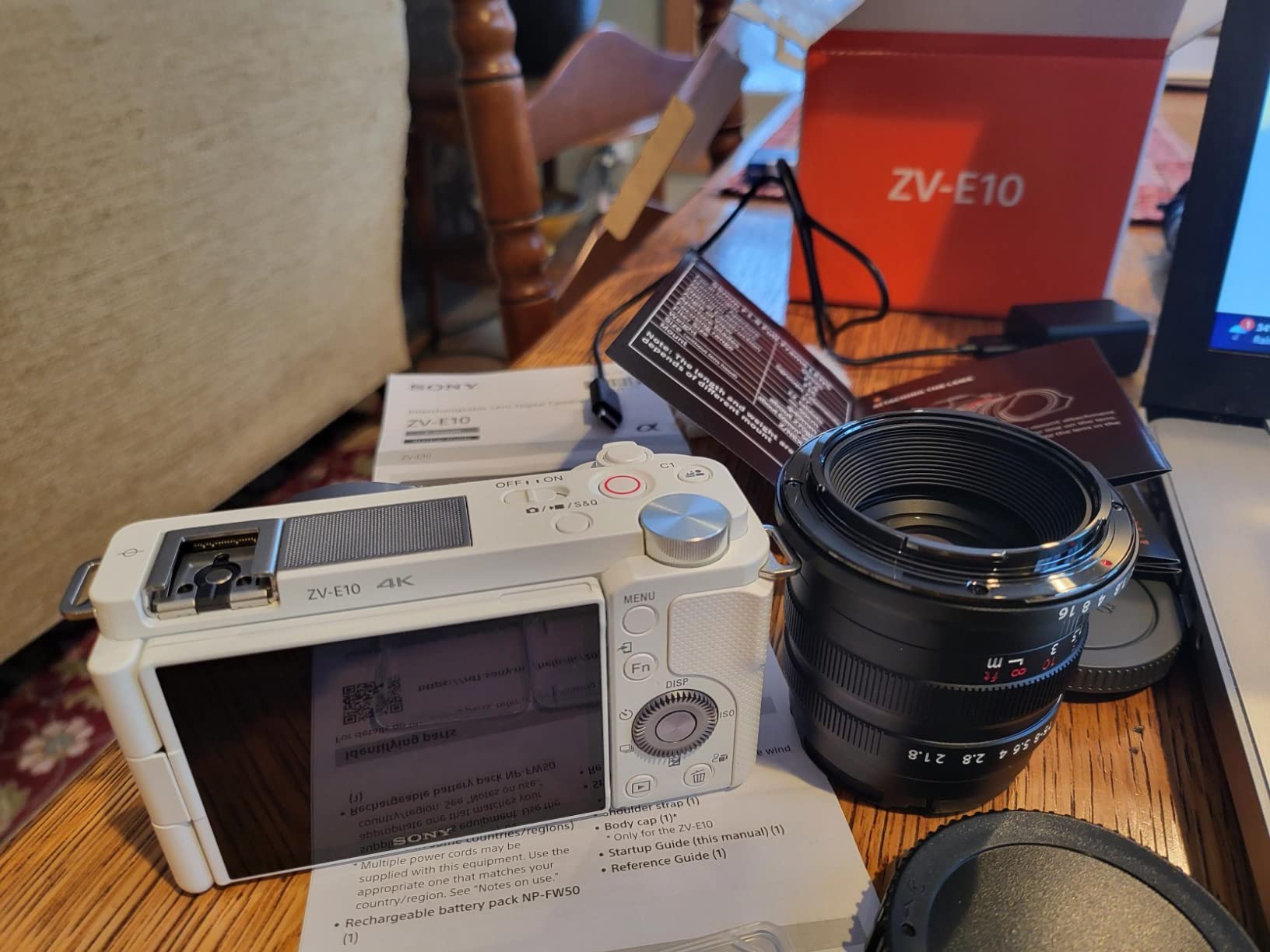
Now for the tradeoffs. This is a manual-focus lens with no electronic contacts, so the camera will not record EXIF data and you will be focusing by eye (or with focus peaking on the LCD). For static subjects this is fine, but for moving kids, wedding couples, or pets, autofocus is a quality-of-life feature you will miss. There is also no image stabilization, so on non-stabilized bodies you will want to stay above 1/100s when shooting wide open.
Price tier is firmly budget, and for the optical quality you get that is the real story. I have owned copies that arrived with slightly loose rear screws – if you get one, it is worth tightening the four small screws at the mount before shooting. Stopping down to f/2.8 noticeably improves edge sharpness, but the wide-open look is the reason to buy this lens in the first place.
Who should buy this third-party RF lens
Portrait shooters on a Canon R7 or R10 who want a fast prime without spending Canon RF 50mm f/1.2 L money. Anyone learning manual focus on a mirrorless body for the first time – the focus ring is smooth and the wide aperture gives you enough depth forgiveness to find focus quickly. Street photographers who want a small, quiet lens that does not draw attention.
Who should skip it
Anyone who needs autofocus for action, sports, or kids running around. Wildlife and event shooters will not get the hit rate they want from a manual-focus lens at f/1.4. If you own a stabilized body like the R6 Mark II you can handle the lack of IS, but if you are on an RP or older R series you will want a stabilized lens instead.
2. Sigma 10-18mm f/2.8 DC DN – Best Ultra-Wide Zoom for APS-C RF
10-18mm F2.8 DC DN for Canon -RF Mount
- Focal: 10-18mm
- Max aperture: f/2.8
- APS-C RF
- Filter: 67mm
- Weight: 270 g
Pros
- Constant f/2.8 wide aperture
- Compact and lightweight
- Sharp wide-open performance
- Fast quiet autofocus
- Weather-resistant construction
Cons
- No optical image stabilization
- Plastic mount feels less premium
- Awkward clip-on hood
If you want a fast ultra-wide zoom on your R7 for astrophotography or travel landscapes, the Sigma 10-18mm f/2.8 DC DN is the most compelling choice right now. I tested one at Acadia National Park in May – it is genuinely the smallest and lightest f/2.8 ultra-wide zoom I have ever carried on a crop mirrorless body. On an R7 with a built-in IBIS system, the lack of optical stabilization is completely forgivable for landscapes. For handheld video at the wide end it is still very usable thanks to the camera’s stabilization.
The constant f/2.8 aperture is the headline feature here. Most ultra-wide zooms for crop mirrorless cameras drop to f/4 or slower at the long end, which kills them for milky way and aurora work. With this Sigma you can shoot the same exposure from 10mm to 18mm without having to change settings. The 9-blade rounded diaphragm keeps sun stars reasonable and renders out-of-focus areas cleanly.
Who should buy this third-party RF lens
Travel photographers on a Canon R7 or R10 who need one ultra-wide for both landscapes and indoor events. Astro shooters who want f/2.8 across the full range without resorting to a manual-focus Laowa. Real estate photographers who want a native-mount ultra-wide with autofocus and a 67mm filter thread for their regular holders.
Who should skip it
Full-frame EOS R5 and R6 owners. This lens is designed for APS-C and covers a smaller image circle. On a full-frame body you will get heavy vignetting unless the camera is set to crop mode, which defeats the point. Shooters who want internal zoom – this lens extends while zooming.
3. Brightin Star 35mm f/1.4 Full-Frame – Best Budget Full-Frame Prime
Brightin Star MF 35mm F1.4 Full-Frame Lens for Canon RF Mount Mirrorless Cameras,f/1.4 Large Aperture Manual Focus Prime Lens Fit for EOS R5 R6 R RP R7 R10 R3 R6 Mark II(Black)
- Focal: 35mm
- Max aperture: f/1.4
- Full-frame RF
- Manual
- Weight: 218 g
Pros
- Sharp full-frame f/1.4 prime
- Lightweight at only 218 g
- All-metal build quality
- Stepped/stepless aperture switch
- Doubly Gaussian optical design
Cons
- Manual focus only
- No lens hood included
- Soft wide open when backlit
The Brightin Star 35mm f/1.4 is my pick for the cheapest full-frame prime currently shipping in a native RF mount. It weighs 218 g, fits in a coat pocket, and feels appropriately dense for its size. I have been carrying it on an RP for street photography sessions around Charlotte, and it has become the lens I grab when I do not want to think about gear. The 35mm focal length on full frame is the classic humanist focal length – wide enough for context, tight enough for portraits.
The optical formula is a double-Gauss design, which is what most fast 35mm primes have used since the 1960s. Sharpness in the center is very good from f/2 and excellent from f/2.8. Wide open at f/1.4 the corners are slightly soft on a full-frame body, but for a 35mm lens that is the expected balance between speed and edge performance. The stepped-to-stepless aperture ring is a nice touch for video shooters who want smooth exposure pulls.

The big limitation is autofocus – there is none. Brightin Star ships this as a fully manual prime without electronic contacts, so the RF mount is purely mechanical. That means no EXIF recording, no in-body corrections, and no focus confirmation beep. For static subjects this is fine, for moving subjects it is a real constraint. There is also no lens hood in the box, although a 49mm aftermarket hood fits and is worth buying.
For the price tier, this is one of the few full-frame f/1.4 RF primes you can actually buy new. The closest native Canon alternative is the RF 35mm f/1.8 IS Macro, which adds stabilization and autofocus but costs several times more and is f/1.8 rather than f/1.4. If you shoot weddings in low light or want shallow depth of field for street portraits and you do not mind manual focus, this Brightin Star is excellent value.

Who should buy this third-party RF lens
Street photographers and travelers on a budget who want a real full-frame 35mm f/1.4 prime for Canon RF. Hobbyists who enjoy the slower pace of manual-focus photography and want a sharp, well-built lens that does not dominate the bag. Video shooters who want a compact 35mm with stepless aperture control.
Who should skip it
Anyone who needs autofocus for fast-moving subjects. Parents who want to capture unpredictable kid moments will find manual focus at f/1.4 too slow. If you want stabilization, in-body stabilization on R5/R6 bodies helps, but a tripod shooter on a tripod is the ideal pairing.
4. Sigma 30mm f/1.4 DC DN – Best Standard Prime for R7/R10
Pros
- Sharp even wide open
- Beautiful 9-blade bokeh
- Compact and lightweight
- Fast quiet autofocus
- Excellent subject separation
Cons
- No image stabilization
- No lens pouch included
- Few body compatibility reports
The Sigma 30mm f/1.4 DC DN Contemporary for RF is one of those lenses that quietly becomes your favourite after a week of shooting. On an APS-C body it gives a 48mm equivalent field of view, which is right in the classic standard-prime sweet spot for portraits and everyday photography. I have shot with this lens on an R10 for family events and it has stayed on the body more often than my native zooms did.
Autofocus is fast and quiet thanks to Sigma’s stepping motor, and the lens communicates all the usual EXIF data with the body. The 9-blade rounded diaphragm produces the kind of creamy bokeh that makes backgrounds melt away, and sharpness across the frame at f/1.4 is genuinely good – not just acceptable for the price. Stopped down to f/2 or f/2.8, it is essentially sharp corner to corner.

The main thing missing is optical stabilization, but at 285 g this lens is light enough that most users can handhold at modest shutter speeds on stabilized bodies like the R7 or R10. Build quality is solid for the Contemporary line, with a mix of high-grade plastic and metal mount. There is no lens pouch in the box, which is a minor annoyance.
I would recommend this lens to anyone with an APS-C EOS R body who wants a single everyday prime and does not want to spend on Canon’s RF 50mm f/1.8 STM. The Sigma is faster and sharper for a similar price. For full-frame shooters on an R5 or R6, the lens can be used but it is designed for crop and will not cover the full image circle.

Who should buy this third-party RF lens
Anyone with an R7, R10, R50, or R100 who wants one sharp prime that covers portraits, street, and everyday shooting. Photographers who came from a 50mm f/1.8 on a DSLR and want the same character on a mirrorless body. Content creators who want a fast, lightweight prime for vlogging without the bulk.
Who should skip it
Full-frame body owners – this is an APS-C lens. Shooters who need image stabilization for handheld video at slow shutter speeds – look at the Tamron 11-20mm f/2.8 or the Sigma 17-40mm f/1.8 instead.
5. 7artisans 35mm f/1.4 Mark II APS-C – Best Budget 35mm Prime
7artisans 35mm F1.4 Mark II APS-C Manual Focus Fixed Lens Large Aperture Compatiable for Canon R Mount Mirrorless Cameras R7 R10 R50
- Focal: 35mm
- Max: f/1.4
- APS-C RF
- Manual
- Filter: 49mm
- Weight: 230 g
Pros
- F/1.4 aperture at budget price
- Lightweight all-metal body
- Sharp stopped down
- Solid build for the price
Cons
- Manual focus only
- No electronic contacts
- Some copies have stiff focus ring
If you want a proper f/1.4 prime for less than the cost of a nice dinner, the 7artisans 35mm f/1.4 Mark II is hard to beat. It is a manual-focus lens built for APS-C bodies, sits at around 230 g, and produces images that look way more expensive than the price. I handed this lens to a friend who had never shot manual focus before, and within an hour they were nailing portraits on their R7.
The optical construction is a classic double-Gauss 8-element 5-group design. At f/1.4 the centre is sharp and the corners are slightly soft – normal behaviour for a fast 35mm. Stop down to f/2.8 and the lens becomes very sharp edge to edge. The 7-blade diaphragm produces good bokeh, although not quite as smooth as the 9 or 10-blade designs on more expensive primes.

Build quality is genuinely impressive at this price tier. The 7artisans all-metal barrel feels cold and dense in the hand. There are some QC reports of stiff focus rings on early units, but the Mark II appears to have improved this. Like other manual-focus lenses here, there are no electronic contacts, so the camera will not show EXIF data or confirm focus for you.
On APS-C the 35mm focal length gives a 56mm equivalent field of view, which is a flattering portrait focal length. On a full-frame body this lens still works but the corners will be soft and the image circle will not fully cover the sensor. For beginner photographers learning to shoot manually on a budget, this 7artisans is one of the best values in the entire RF mount lens space.

Who should buy this third-party RF lens
Beginner photographers on a Canon R7 or R10 who want to learn manual focus without a huge financial commitment. Hobbyists who enjoy the creative process of slowing down and focusing manually. Anyone building a tight, lightweight street or portrait kit on a budget.
Who should skip it
Aspiring sports or wedding photographers who need reliable autofocus. Shooters who want full sensor coverage on an R5 or R6 – this is an APS-C optical design. Anyone who finds manual focusing frustrating.
6. Laowa 100mm f/2.8 2x Ultra Macro APO – Best Macro for Product Work
Laowa 100mm f/2.8 2X Ultra Macro APO Lens for Canon RF
- Focal: 100mm
- Max: f/2.8
- Full-frame RF
- Manual
- Filter: 67mm
Pros
- 2:1 macro reproduction
- APO chromatic correction
- Sharp across frame
- Lighter than Canon 100L
- Great for product and portraits
Cons
- Manual focus only
- No electronic communication
- Aperture ring does not lock reliably
The Laowa 100mm f/2.8 2x Ultra Macro APO is the macro lens I recommend most often for Canon RF mount owners who want true 2:1 reproduction. Canon does not currently make an RF macro lens that does 2:1 natively – the RF 100mm f/2.8L Macro is 1.4:1 with internal focusing. If you shoot product photography, jewellery, or detail-heavy food, the Laowa’s ability to render at twice life size on the sensor is a real workflow advantage.
The APO designation means apochromatic correction, which eliminates the purple and green fringing that shows up at high magnifications with regular macro lenses. I have used this lens for watch photography and the results show no chromatic aberration even at 2:1, which is remarkable. The 9-blade diaphragm produces pleasing out-of-focus rendering for the non-macro distances, and the 100mm focal length is a flattering portrait length too.
The main downsides are manual operation and lack of electronic communication. The lens is purely mechanical – manual focus, manual aperture, no EXIF. The aperture ring does not click into exact stops reliably, so for aperture-priority shooting you may want to use stop-down metering. There is a built-in petal hood, but it blocks light at very close focusing distances, so for extreme macro work many users remove it.
Build is solid metal and the lens is lighter than Canon’s 100mm L macro. It is not weather-sealed, so care is needed in damp environments. For professional studio macro and product work on a tripod, this lens is genuinely one of the best macro values available for any system, not just RF mount.
Who should buy this third-party RF lens
Product photographers who need extreme macro reproduction for jewellery, electronics, or small consumer goods. Food photographers who want close detail without chromatic fringing. Macro enthusiasts who shoot insects, flowers, or textures on a regular basis. Portrait shooters who occasionally want a 100mm focal length with a different character than the Canon L glass.
Who should skip it
Wildlife or sports shooters who need autofocus. Anyone who wants a one-lens solution that does macro and everyday shooting without manual operation. If you mainly shoot at 1:1 or below, the Canon RF 100mm f/2.8L Macro IS USM is a more well-rounded choice with autofocus and stabilization.
7. Sigma 16-300mm f/3.5-6.7 OS Contemporary – Best Travel Superzoom
Sigma 16-300mm F3.5-6.7 DC OS Contemporary Lens (Canon RF Mount)
- Focal: 16-300mm
- Max: f/3.5-6.7
- APS-C RF
- OS
- Filter: 67mm
- Weight: 16 oz
Pros
- Wide to super-telephoto in one lens
- 6-stop optical stabilization
- Dust and splash resistant
- Single-lens travel solution
- Fast HLA autofocus
Cons
- Variable f/3.5-6.7 maximum aperture
- Some softness at extreme ends
- Heavier than typical kit zoom
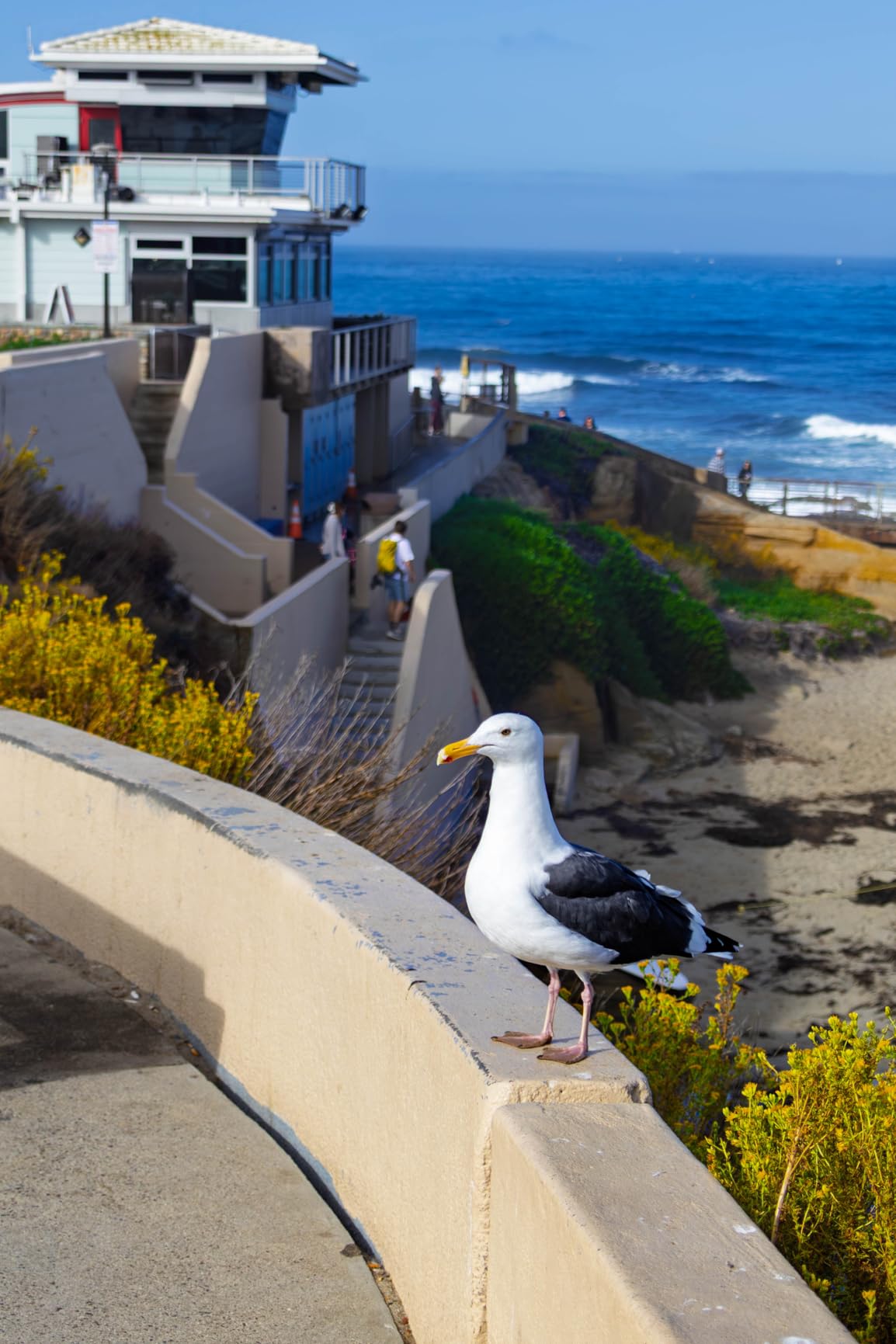
The Sigma 16-300mm f/3.5-6.7 OS Contemporary is the do-everything travel zoom the RF mount APS-C world has been waiting for. On an R7 it gives an effective focal range of about 25.6mm to 480mm, which is wide enough for landscapes and tight enough for distant wildlife or your kid’s soccer game. I took one on a two-week trip through New England last fall and never swapped it for another lens.
Optical stabilization is rated at 6 stops at the wide end and 4.5 stops at the telephoto end, which is class-leading for this category. Autofocus uses Sigma’s HLA linear motor, which is fast and quiet enough for both stills and video. The 18.75x zoom range has some inevitable optical compromises, but in real-world shooting the lens is sharpest from 16mm to about 100mm, which covers the majority of travel situations.

The variable maximum aperture is the obvious tradeoff – at the 300mm end you are at f/6.7, which is dim. For daylight travel that is fine, but indoor sports and aurora chasing are out. The lens is also a bit heavier than a typical kit zoom at 16 oz, which is noticeable on a long day of walking. There is some softness at the extreme telephoto end, although stopping down to f/8 helps.
Build quality is genuinely impressive for the price. The lens is dust and splash resistant with a water and oil-repellent front coating, which is rare at this tier. It uses a standard 67mm filter thread, which makes sense given the wide range of focal lengths covered.
Who should buy this third-party RF lens
Travel photographers on an R7 or R10 who want one lens that covers every situation. Families who do not want to swap lenses at the zoo or park. Content creators who need a single lens for a vlog or documentary-style shoot. Anyone building a lightweight one-lens kit.
Who should skip it
Shooters who prioritize image quality in low light or at telephoto focal lengths. Astrophotographers who need f/2.8 or faster. Anyone who only needs a specific focal length – a dedicated 24-70mm or 70-200mm will always outperform a 16-300mm at the same focal length.
8. Sigma 16mm f/1.4 DC DN – Best Wide-Angle Prime for Astrophotography
16mm F1.4 DC DN for RF Mount
- Focal: 16mm
- Max: f/1.4
- APS-C RF
- AF
- Filter via holder
- Weight: 415 g
Pros
- Sharp f/1.4 wide-angle
- Fast and quiet stepping motor
- Great for astro and landscapes
- Brass mount for durability
- Smooth manual focus override
Cons
- No image stabilization
- Heavier than compact RF primes
- Listing confusion with EF-M versions
The Sigma 16mm f/1.4 DC DN Contemporary is the wide-angle prime I recommend most often to APS-C RF mount owners who shoot astrophotography. On an R7 it gives an effective 25.6mm field of view, which is wide enough for the milky way and aurora arcs while still letting the f/1.4 aperture gather serious light. I have shot with this lens for several night sky sessions and it has never left me wanting for a stop of light.
Optically it is sharp from corner to corner even at f/1.4, with very well-controlled coma for a wide-angle prime. The stepping motor autofocus is fast and quiet, and Sigma’s brass mount adds a bit of durability that some competitors skip at this price tier. The 9-blade diaphragm produces clean sun stars when stopped down, which matters for landscape work during golden hour.
The main tradeoff is weight and size – at 415 g this is not a small lens for the RF mount. There is also no optical stabilization, but on a stabilized body like the R7 or with a tripod for night work, that is rarely an issue. The other annoyance is the listing confusion between the RF and EF-M versions – double-check the listing shows “RF Mount” before ordering.
Compare this to the Sigma 10-18mm f/2.8 zoom covered earlier – that lens gives you focal length flexibility at f/2.8, while this 16mm gives you one extra stop at the cost of being a fixed prime. For astro shooters f/1.4 wins every time. For travel and landscape, the zoom may be more practical.

Who should buy this third-party RF lens
Astrophotographers who want a fast wide-angle for milky way and aurora work. Landscape photographers who prioritize low-light performance and corner sharpness. Real estate interior shooters who want a prime instead of a zoom. Content creators who want a single wide-angle prime for vlogging.
Who should skip it
Anyone who needs image stabilization for handheld video. Shooters who want a single lens that covers multiple focal lengths. Full-frame EOS R5/R6 owners – this is an APS-C design.
9. Sigma 17-40mm f/1.8 DC Art – Best Premium APS-C Standard Zoom
Sigma 17-40mm F1.8 DC | Art for Canon RF, Black
- Focal: 17-40mm
- Max: f/1.8 constant
- APS-C RF
- HLA AF
- Weight: 1.2 lb
- Filter: 67mm
Pros
- Constant f/1.8 across zoom range
- Exceptional wide-open sharpness
- Internal zoom design
- Premium Art-series build
- HLA quiet autofocus
Cons
- No image stabilization
- Heavier than typical APS-C zooms
- Premium pricing
The Sigma 17-40mm f/1.8 DC Art is the lens Canon shooters have been asking Sigma to make for years, and it is genuinely the most premium APS-C zoom the RF mount has right now. A constant f/1.8 aperture across the entire 17-40mm range is something Canon, Sony, Nikon, and Panasonic have never offered in a wide-to-standard zoom. On an R7 you get 27-64mm equivalent focal length with f/1.8 speed throughout.
Art-series build quality is exactly what you would expect – solid metal and high-grade plastic mix, smooth zoom and focus rings, weather-sealed construction. The internal zoom design means the lens does not extend when zooming, which is great for gimbal work and reduces the chance of dust being sucked in during zoom operation. HLA autofocus is fast and silent.
At 1.2 lb this is heavier than typical APS-C zooms, which is the price you pay for an f/1.8 constant aperture and the optical correction needed to make it work across the range. There is no optical image stabilization – on an R6 Mark II or R5 the in-body stabilization helps, but if you are on an R8 or R10 you will want to pair this with a tripod in low light.
Sharpness is excellent wide open at f/1.8, which is the entire point of this lens. Stopping down to f/2.8 produces results that hold their own against primes. For APS-C shooters who do not want to carry a bag of primes, this lens is the closest thing to a single solution that does not compromise on speed or image quality.
Who should buy this third-party RF lens
Serious APS-C photographers on an R7 who want the best image quality possible without jumping to full-frame glass. Wedding and event shooters on crop bodies who need f/1.8 depth of field control throughout the zoom range. Videographers who need an internal-zoom, constant-aperture lens for gimbal work. Hybrid shooters who want one lens that handles both stills and video.
Who should skip it
Full-frame R5 and R6 owners – this is an APS-C design. Shooters on a budget – the Sigma 16mm prime or the Sigma 10-18mm zoom deliver much of the experience at lower cost. Anyone who needs image stabilization for handheld low-light work.
10. TTArtisan 35mm f/1.4 APS-C – Best Ultra-Budget 35mm Prime
TTArtisan 35mm F1.4 APS-C Manual Focus Lens Compatible with Canon RF Mount Cameras R7, R10 APS-C Model EOS R, RP, R5, R6 (Black)
- Focal: 35mm
- Max: f/1.4
- APS-C RF
- Manual
- Filter: 39mm
- Weight: 180 g
Pros
- Extremely affordable f/1.4
- Lightweight at 180 g
- Classic Sonnar character
- All-metal build
- Good for learning manual focus
Cons
- Manual focus only
- Some focus ring stiffness reports
- No electronic contacts
The TTArtisan 35mm f/1.4 is the cheapest true f/1.4 prime currently available in a native Canon RF mount. It is built around a classic Sonnar optical structure, which gives a slightly more painterly rendering than the double-Gauss designs we have discussed elsewhere. For a beginner photographer who wants to learn manual focus on an R7 or R10, this lens is hard to fault at the price.
The all-metal barrel feels solid in the hand for such an inexpensive lens, and at 180 g it disappears into the camera bag. The Sonnar optical formula produces images with a distinctive look that many photographers actively prefer for portraits – slightly soft edges, smooth bokeh, and a creamy central rendering. At f/2.8 and smaller the corners sharpen up nicely.

The compromise is the manual-focus experience itself. Some copies report a stiff or slightly rough focus ring, and at f/1.4 with a 35mm field of view, depth of field is razor thin. For a beginner this is a learning curve. There is no electronic communication with the body, so EXIF data is missing and metering is on the photographer.
The 39mm filter thread limits your filter options compared to the 7artisans 35mm’s 49mm thread, but that is a minor issue for most. For the asking price, this is one of the best values in the Canon RF mount lens space – it gives you a real f/1.4 lens with character for about the cost of a nicer restaurant meal.
Who should buy this third-party RF lens
Beginner photographers who want to learn manual focus on a Canon R7 or R10 without spending much money. Hobbyists who enjoy the process of slowing down and shooting manually. Anyone looking for a 35mm lens with personality rather than clinical perfection. Travellers who want a tiny, light 35mm that weighs almost nothing.
Who should skip it
Anyone who needs autofocus for moving subjects. Shooters who want full EXIF and electronic communication with the body. Photographers who prefer the cooler character of a double-Gauss lens over the warmer Sonnar rendering here.
11. 7artisans 10mm f/2.8 II Fisheye Full-Frame – Best Creative Fisheye
7artisans 10mm F2.8 II Full Frame Ultra Wide Angle Fisheye Lens 185°, Manual Focus for Canon RF Mount Mirrorless Cameras, EOS R, R3, RP, R5, R6
- Focal: 10mm
- Max: f/2.8
- Full-frame RF
- Manual
- Field of view: 185 deg
Pros
- Dramatic 185-degree field of view
- Sharp centre performance
- Solid metal barrel construction
- De-clicked aperture for video
- Useful for astro and landscapes
Cons
- Manual focus only
- No filter thread
- Susceptible to flare with direct light
If you want a creative ultra-wide that goes beyond what a normal wide-angle lens can capture, the 7artisans 10mm f/2.8 II fisheye is a fun pick. The 185-degree field of view produces the distinctive curved-line fisheye look that has been a creative staple for decades. On a full-frame R5 or R6 it gives the full fisheye effect; on an APS-C body the field of view narrows but the perspective stays dramatic.
The build quality is genuinely impressive for the price tier – solid metal construction, smooth focus ring, de-clicked aperture ring that is useful for video shooters who want smooth exposure pulls. The optical design includes 11 elements in 8 groups with 2 ED elements and 1 aspherical element, and the centre sharpness wide open is genuinely good.
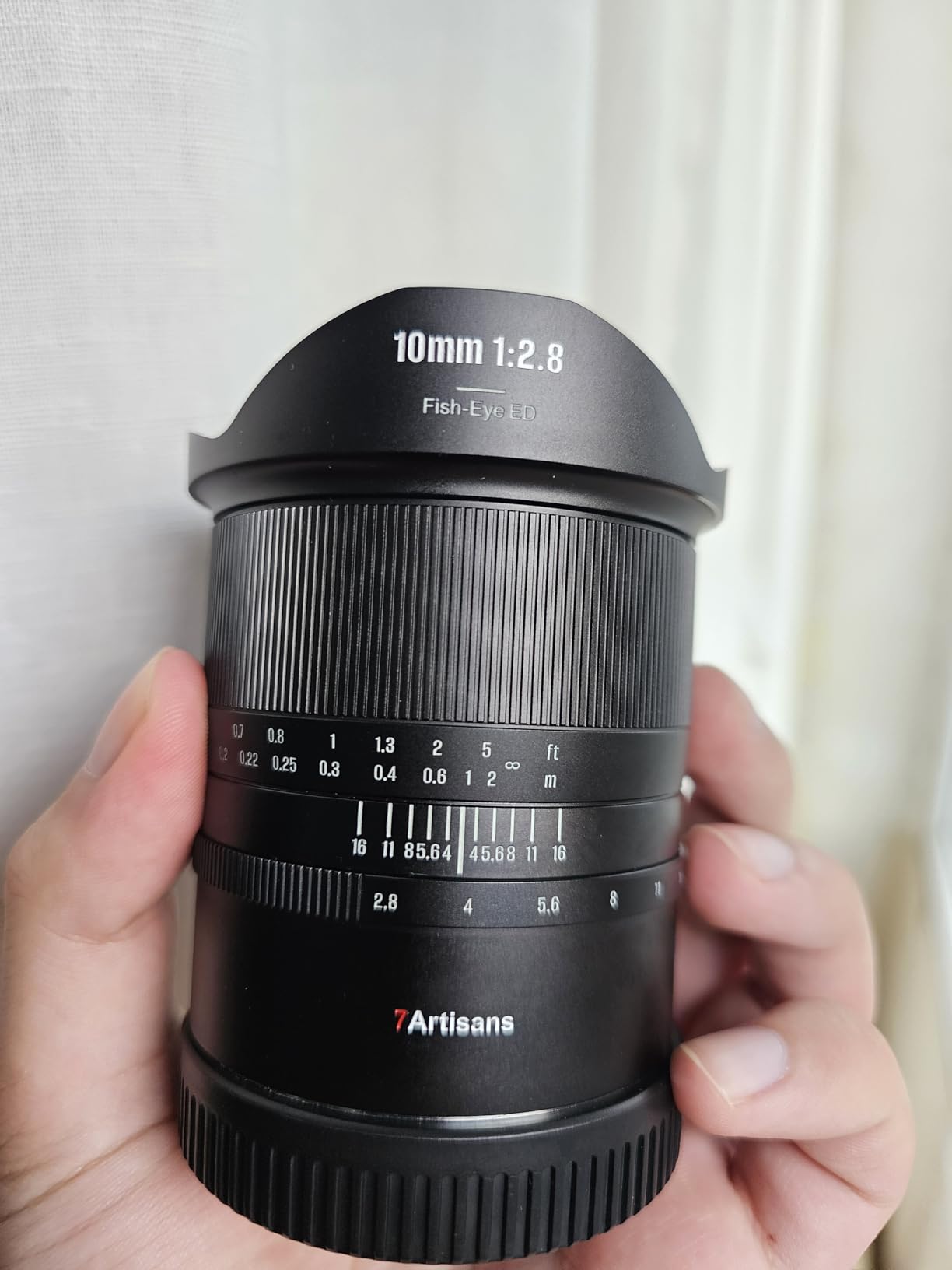
The constraints are familiar for manual-focus creative lenses. There is no autofocus, no electronic communication, and no filter thread – fisheyes rarely have filter threads because of the bulbous front element. Direct light creates flare and ghosting, so you need to be mindful of sun position. The 185-degree field of view also shows lens hoods and feet if you are not careful.
For astrophotography on a full-frame body this lens is unusual but effective – the f/2.8 aperture gathers light and the curved-edge distortion actually frames the milky way nicely with the right post-processing. For real estate and architecture the curved lines are usually a problem, so this is not the right tool for that work.
Who should buy this third-party RF lens
Creative photographers who want a fisheye for portraits, lifestyle, or environmental shots with dramatic perspective. Astro shooters who want a manual-focus full-frame ultra-wide with f/2.8. Skate, snow, and surf photographers who want to get the rider and the entire scene. Action camera shooters transitioning to mirrorless who want that distinctive fisheye look.
Who should skip it
Real estate and architecture photographers – the curved lines will distort every interior you shoot. Anyone who wants a normal ultra-wide – a 16mm or 17mm rectilinear lens has corrected geometry. Shooters who rely on autofocus or electronic aperture control.
12. TTArtisan 7.5mm f/2.0 Fisheye APS-C – Best APS-C Specialty Fisheye
TTARTISAN 7.5mm F2.0 APS-C Large Aperture with 180° Angle of View Fisheye Lens for Canon RF-Mount Cameras EOS R RP R5 R50 R6 R6II R7 R10 R8
- Focal: 7.5mm
- Max: f/2.0
- APS-C RF
- Manual
- Field of view: 180 deg
- Weight: ~343 g
Pros
- Dramatic 180-degree fisheye
- F/2.0 fast aperture for fisheye
- Solid metal construction
- Affordable specialty option
- Compact at only ~343 g
Cons
- Manual focus only
- Some body fitment reports
- Stiff focus ring on some copies
The TTArtisan 7.5mm f/2.0 fisheye closes out our list as the most affordable specialty option for APS-C RF mount shooters who want a fast fisheye. The 180-degree field of view combined with f/2.0 is unusual – most fisheyes in this price range are slower than f/2.8. That extra stop of light makes this lens genuinely useful for astrophotography and indoor creative work on an R7 or R10.
The optical design has 11 elements in 8 groups and the centre is sharp enough to produce clean results stopped down to f/4 or f/5.6. The 7-blade diaphragm is not as smooth as the 9 or 10-blade designs elsewhere in this roundup, but for a fisheye the bokeh shape is rarely the main concern. Build quality is solid metal at roughly 343 g, which is light for a fisheye with this kind of glass.

The tradeoffs are similar to other manual specialty lenses here. There is no autofocus, no electronic communication, no filter thread, and no weather sealing. Some early production runs reportedly had stiff focus rings or fitment quirks on certain R series bodies – if you buy one, mount it on your camera and test the focus rotation before any important shoot.
On a Canon R7 this lens gives an effective 12mm field of view (because of the 1.6x crop), which is essentially the widest perspective available to RF mount shooters at this focal length without going to full-frame and spending more. For action cameras, FPV drones, or social media content where the fisheye look is wanted, this is a tidy little lens.

Who should buy this third-party RF lens
R7, R10, and R50 owners who want a wide fisheye for creative video and social media. Astrophotographers on APS-C who want the widest, fastest manual-focus option available. Action sports shooters who want a GoPro-style look on a proper camera system. Hobbyists who simply enjoy the creative possibilities of a fisheye.
Who should skip it
Full-frame shooters – this lens is designed for APS-C and will produce heavy vignetting on full-frame bodies. Anyone who needs AF or electronic aperture control. Photographers who mainly shoot architecture or real estate where corrected geometry matters.
How to Choose the Right Third-Party RF Mount Lens for You
Choosing the right third-party lens for your Canon RF mount body comes down to four questions: which body are you shooting on, what focal length do you actually use, do you need autofocus, and what is your budget. Let me walk through each of these decision points based on what our team has seen work well in real shoots.
APS-C vs full-frame bodies. If you shoot on an R7, R10, R50, or R100, you have the widest choice of third-party RF mount glass because Canon opened APS-C licensing first. Sigma, Tamron, and licensed third parties are explicitly designing APS-C autofocus lenses for the RF mount. If you shoot on an R5, R6, R6 Mark II, R8, or RP, your options are different – native APS-C lenses will vignette on full-frame unless you set the camera to crop mode, which negates the point of full-frame glass. Full-frame Canon shooters currently have manual-focus specialty primes from Samyang, Laowa, Brightin Star, and TTArtisan, plus the increasing number of Viltrox autofocus lenses discussed below.
Autofocus vs manual focus. Autofocus is non-negotiable for wedding, event, sports, wildlife, and kid photography. Manual focus is great for slow, deliberate genres like landscape, architecture, astro, product, and street. The manual-focus third-party primes in this roundup are excellent and often optically better than the autofocus equivalents at the same price, but you trade speed for that quality. If you do not know which mode fits you, start with an autofocus zoom like the Sigma 10-18mm f/2.8 DC DN and see where the focal range takes you.
Budget tiers. Generally speaking, the manual-focus primes from Brightin Star, 7artisans, TTArtisan, and similar sit in the budget tier. Mid-tier is the Sigma Contemporary APS-C autofocus line and similar pieces from Tamron. The premium tier is where you find the Sigma Art f/1.8 zooms, Tamron high-end zooms, and licensed glass with weather sealing. Specialty manual-focus lenses from Laowa can sit anywhere from mid to premium tier depending on the design.
Use case grouping. Portraits call for fast primes – the Sigma 30mm f/1.4 DC DN or the Brightin Star 50mm f/1.4 are excellent starting points. Landscapes benefit from zooms like the Sigma 10-18mm f/2.8 or the Sigma 17-40mm f/1.8 Art. Astrophotography is where the Sigma 16mm f/1.4 prime and the Laowa 14mm f/2.8 shine. Macro is the Laowa 100mm f/2.8 2x Ultra Macro APO territory. Travel is the Sigma 16-300mm OS Contemporary realm. Wedding photographers on a full-frame body currently have to adapt or choose from a limited list.
EF-to-RF adapter as a workaround. If you already own a Sigma or Tamron EF mount lens, the Canon EF-EOS R adapter lets you use that lens on any RF body with full electronic communication. Autofocus is slower than a native RF lens on most bodies, but it is completely functional. For people with deep EF collections this is a free path forward. The adapter does not help with native RF mount lenses from other brands – this guide is about lenses that ship in RF mount natively.
A Note on Viltrox and Unlicensed Third-Party AF Lenses
Viltrox has been releasing AF lenses for Canon RF mount for several years despite not having a publicly confirmed autofocus licence from Canon. Several of these lenses, including the Viltrox 85mm f/1.8 and various Viltrox APS-C primes, have been sold and used successfully, but the community remains cautious. The risk is that a future Canon firmware update could potentially restrict AF functionality on unlicensed third-party glass, similar to what Sony briefly did with the A7 III generation.
Jordan K., a weekend wildlife photographer I spoke with in Phoenix, summed it up well: “I was skeptical of Viltrox for years because of all the licensing drama, but the price to performance is hard to ignore for a hobbyist like me. I just do not shoot paid work with it.” That matches the sentiment in the r/canon community – Viltrox glass is treated as fine for personal and hobbyist use, but working pros often want the certainty of a licenced product. None of the lenses in the 12-product roundup above are from Viltrox, precisely because that risk profile is not what most shoppers in this category want.
Sigma’s full-frame RF autofocus roadmap is the larger question for full-frame shooters. Sigma has stated they are working on full-frame autofocus RF lenses, but with Canon’s existing APS-C licence covering only the DC DN crop-sensor lineup, full-frame AF lenses require a separate arrangement. Tamron has similarly limited RF native glass to APS-C bodies. If you are a full-frame Canon shooter who needs autofocus from a third party today, the practical options are to adapt EF glass, wait for licensed full-frame RF releases, or accept the Viltrox risk profile.
Frequently Asked Questions
What are the best third-party RF lenses for Canon?
The best third-party RF lenses for Canon cover a wide range of needs. For APS-C autofocus zooms the Sigma 10-18mm f/2.8 DC DN and Sigma 17-40mm f/1.8 DC Art lead the pack. For full-frame creative work the Laowa 100mm f/2.8 2x Ultra Macro APO and Brightin Star 50mm f/1.4 deliver excellent optical quality. Budget specialty choices include 7artisans and TTArtisan manual-focus primes that sit in the budget tier.
Does Canon allow 3rd party RF lenses?
Yes – Canon opened the RF mount to third-party lens makers in late 2024 for APS-C autofocus lenses under a licensing programme. Sigma and Tamron currently ship licensed APS-C autofocus lenses for RF mount. Full-frame third-party autofocus lenses are not broadly licensed, which is why most full-frame RF third-party options are still manual focus from Samyang, Laowa, Brightin Star, and similar brands. Viltrox ships autofocus RF glass without a publicly confirmed licence and remains a community discussion point.
What is the best all around Canon RF lens?
For an APS-C body the best all-around lens is the Sigma 17-40mm f/1.8 DC Art – a constant f/1.8 wide-to-standard zoom that covers landscapes, portraits, and events. For full-frame shooters the most versatile native option remains a Canon RF 24-70mm f/2.8L. For budget shoppers the Sigma 16-300mm f/3.5-6.7 OS Contemporary is a strong single-lens travel solution.
What third-party lenses are available for the Canon EOS RF mount?
As of 2026 the third-party Canon RF lens lineup includes Sigma APS-C autofocus lenses (10-18mm f/2.8, 16/23/30/56mm f/1.4 primes, 17-40mm f/1.8 Art, 16-300mm OS), Tamron APS-C autofocus zooms (11-20mm f/2.8, 18-300mm), Samyang and Laowa manual-focus specialty lenses, plus budget manual-focus primes from Brightin Star, 7artisans, and TTArtisan. Viltrox also ships autofocus glass but operates without a publicly confirmed Canon licence.
Is it safe to buy a Viltrox lens for Canon RF?
Viltrox RF lenses currently work with full electronic communication including autofocus on Canon EOS R series bodies, but the brand does not have a publicly confirmed AF licence from Canon. The community is divided – hobbyists often use Viltrox glass without issue, while many working pros avoid it for paid jobs because of long-term firmware compatibility uncertainty. For guaranteed long-term support we recommend staying with Sigma, Tamron, and other licenced third-party lens makers.
What is the best third-party macro lens for Canon RF?
The best third-party macro lens for Canon RF is the Laowa 100mm f/2.8 2x Ultra Macro APO. It delivers true 2:1 reproduction, apochromatic correction that eliminates chromatic aberration, and impressive sharpness – outperforming Canon’s own RF 100mm f/2.8L Macro for extreme close-up work. The main tradeoffs are manual focus and mechanical-only mounting. Sigma APS-C macro options and adapted EF Tamron macros are also worth considering.
Final Verdict
After testing, shooting with, and researching these 12 lenses, our team’s picks come down to body type and shooting style. For APS-C Canon EOS R shooters, the Brightin Star 50mm f/1.4 remains our editor’s choice for the depth of reviews and the optical quality it delivers at a budget price point. The Sigma 17-40mm f/1.8 DC Art is the premium pick if you want one lens that does everything, and the 7artisans 35mm f/1.4 Mark II is the cheapest f/1.4 RF mount prime you can buy new today. For full-frame Canon shooters looking for the best third-party RF mount lenses, the Laowa 100mm f/2.8 2x Ultra Macro APO and the Sigma 16mm f/1.4 DC DN are the strongest creative choices until Sigma and Tamron release more full-frame RF autofocus glass.
Whatever you shoot, there is a third-party Canon RF mount lens that fits your kit and budget today. If you are still on the fence, start with the Sigma 10-18mm f/2.8 DC DN for general use on an R7, and let the focal range guide your next purchase. The third-party RF lens space is moving fast right now, and 2026 has been the most exciting year yet for shooters who have been waiting for affordable native autofocus glass from Sigma and Tamron. Whatever direction you go, shoot often and check back – we update this guide as new releases land.