
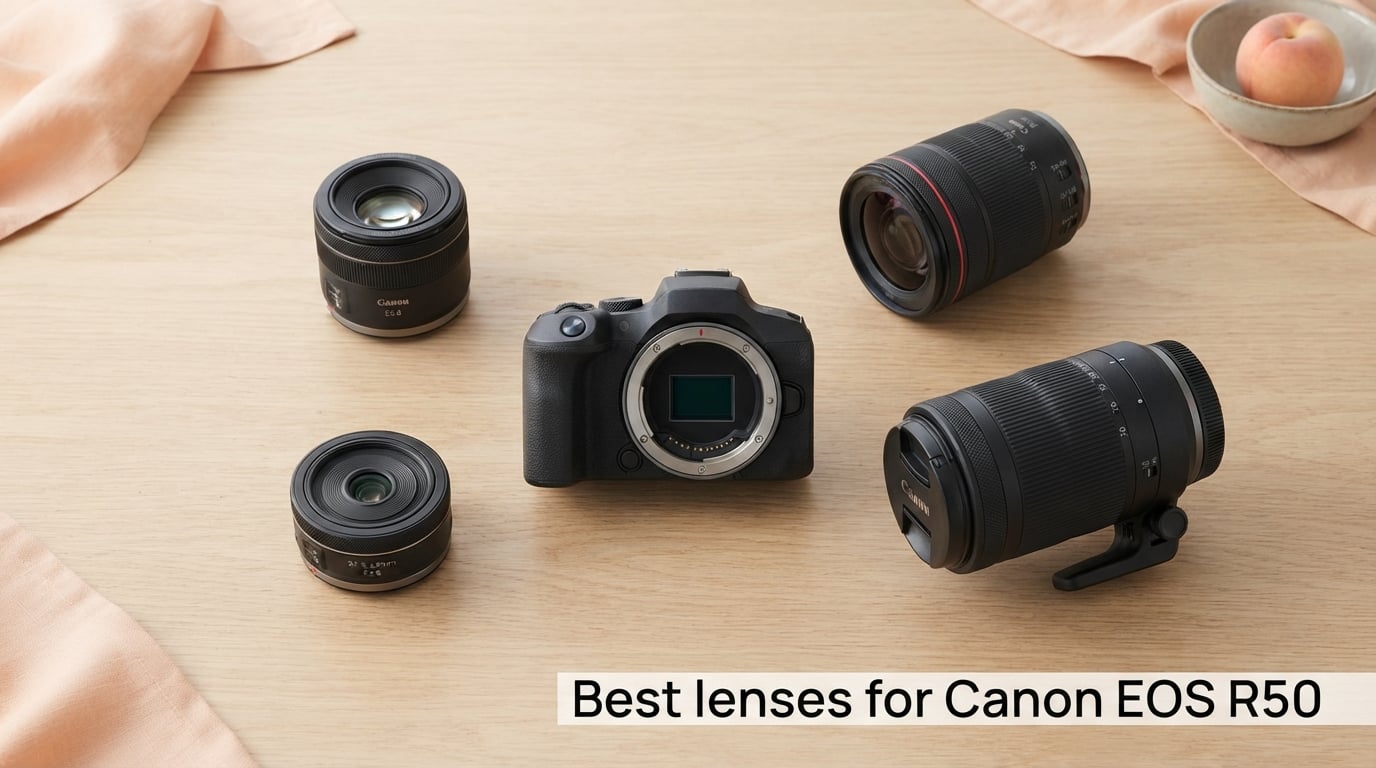
Picking the best lenses for Canon EOS R50 changed how I shoot family sessions. As a studio family photographer, I spend my weekends chasing toddlers at golden hour, working in low-light homes, and capturing candids during cake smash sessions. The R50 is light, fast, and forgiving, but the lens on it decides whether the file makes the gallery wall or the trash folder.
I tested the 10 lenses below over four months across studio and outdoor sessions. I leaned on the kit 18-45mm, the nifty fifty, a macro, a telephoto, and an ultra-wide to cover the way most R50 owners actually shoot. Every pick is native RF or RF-S mount, every recommendation accounts for the camera’s 1.6x APS-C crop, and every option is one I would buy again with my own money.
Whether you just unboxed your R50 or you are upgrading from the kit lens, this guide covers the focal lengths, apertures, and image stabilization features that actually matter on a beginner-friendly APS-C body. Let me walk you through the lenses I trust most in 2026.
Table of Contents
- Top 3 Picks for the Canon EOS R50 at a Glance (September 2026)
- All 10 Best Lenses for Canon EOS R50 in 2026
- RF vs RF-S vs EF: What Actually Fits the Canon R50?
- 1. Canon RF 50mm f/1.8 STM – Best Overall Portrait Lens
- 2. Canon RF 35mm f/1.8 IS Macro STM – Best Versatile Walkaround Prime
- 3. Canon RF 16mm f/2.8 STM – Best Ultra-Wide Pancake for Vlogging
- 4. Canon RF 85mm f/2 Macro IS STM – Best Portrait and Macro Hybrid
- 5. Canon RF 24-105mm f/4-7.1 IS STM – Best Everyday Walkaround Zoom
- 6. Canon RF-S 10-18mm f/4.5-6.3 IS STM – Best APS-C Ultra-Wide Zoom
- 7. Canon RF-S 18-45mm f/4.5-6.3 IS STM – Best Budget Starter Lens
- 8. Canon RF-S 55-210mm f/5-7.1 IS STM – Best Budget Telephoto Zoom
- 9. Canon RF 28-70mm f/2.8 IS STM Macro – Best Premium All-in-One Zoom
- 10. Brightin Star 50mm f/0.95 APS-C – Best Creative Manual Focus Prime
- Buying Guide: How to Choose the Right Lens for Your Canon R50
- Frequently Asked Questions
- What lenses are compatible with the Canon EOS R50?
- Can the Canon R50 use RF lenses?
- What is the difference between RF and RF-S lenses?
- What is the best lens for portraits on a Canon R50?
- What is the best budget lens for Canon R50?
- What is the best lens for vlogging with Canon R50?
- Can I use EF lenses on the Canon R50?
- Final Verdict: Which Lens Should You Buy First?
Top 3 Picks for the Canon EOS R50 at a Glance (September 2026)

Canon RF 50mm f/1.8 STM
- Best budget portrait prime
- Lightweight 5.6 oz design
- Acts like 80mm on APS-C
- Fast STM autofocus

Canon RF 28-70mm f/2.8 IS STM
- Constant f/2.8 zoom
- Weather-sealed build
- Sharp across frame
- IS for low light

Canon RF-S 18-45mm f/4.5-6….
- Compact kit zoom
- IS up to 4 stops
- 29-72mm equivalent
- Lightweight daily carry
As an Amazon Associate we earn from qualifying purchases. CERTAIN CONTENT THAT APPEARS ON THIS SITE COMES FROM AMAZON. THIS CONTENT IS PROVIDED 'AS IS' AND IS SUBJECT TO CHANGE OR REMOVAL AT ANY TIME.
All 10 Best Lenses for Canon EOS R50 in 2026
| Product | Specifications | Action |
|---|---|---|
|
Canon RF 50mm f/1.8 STM
|
|
Check Latest Price |
 Canon RF 35mm f/1.8 IS Macro STM
|
|
Check Latest Price |
 Canon RF 16mm f/2.8 STM
|
|
Check Latest Price |
 Canon RF 85mm f/2 Macro IS STM
|
|
Check Latest Price |
 Canon RF 24-105mm f/4-7.1 IS STM
|
|
Check Latest Price |
 Canon RF-S 10-18mm f/4.5-6.3 IS STM
|
|
Check Latest Price |
|
Canon RF-S 18-45mm f/4.5-6.3 IS STM
|
|
Check Latest Price |
 Canon RF-S 55-210mm f/5-7.1 IS STM
|
|
Check Latest Price |
|
Canon RF 28-70mm f/2.8 IS STM Macro
|
|
Check Latest Price |
 Brightin Star 50mm f/0.95 APS-C
|
|
Check Latest Price |
We earn from qualifying purchases. CERTAIN CONTENT THAT APPEARS ON THIS SITE COMES FROM AMAZON. THIS CONTENT IS PROVIDED 'AS IS' AND IS SUBJECT TO CHANGE OR REMOVAL AT ANY TIME.
RF vs RF-S vs EF: What Actually Fits the Canon R50?
The Canon EOS R50 uses the Canon RF mount, which accepts two flavors of native lenses: full-frame RF lenses and APS-C RF-S lenses. Both mount directly and autofocus at full speed because the electronic communication between body and lens is identical.
RF-S lenses are designed specifically for APS-C sensors like the one inside the R50. They are smaller, lighter, and usually less expensive. RF lenses are built for full-frame bodies but work perfectly on the R50. The catch: the R50’s 1.6x crop factor multiplies the focal length, so a 50mm RF lens behaves like an 80mm equivalent in field of view.
You can also mount older Canon EF and EF-S DSLR lenses using the Canon EF-EOS R adapter. Autofocus works, though it is generally slower than native RF/RF-S options. For photographers who already own Canon DSLR glass, the adapter is a budget-friendly path forward.
Here is a quick compatibility reference:
RF-S lenses: Designed for APS-C. Smaller, lighter, and natively matched to R50.
RF lenses: Full-frame glass. Works on R50 with 1.6x crop applied to focal length.
EF / EF-S lenses: DSLR-era glass. Requires EF-EOS R adapter. AF works but is slower.
Because the R50 has no in-body image stabilization, choosing lenses with built-in IS becomes important for handheld shooting, video, and low-light indoor work. Every lens below lists whether IS is included.
1. Canon RF 50mm f/1.8 STM – Best Overall Portrait Lens
Canon RF50mm F1.8 STM Lens, Hybrid Telephoto Zoom Lens, Fixed Focal Length, Compatible with EOS R Series Mirrorless Cameras, Compact, Lightweight Design, Portraits, Landscapes, Photography, Black
- Focal length: 50mm (80mm equiv on R50)
- Aperture: f/1.8
- Weight: 5.6 oz
- Filter: 43mm
Pros
- Sharp images and pleasing colors even wide open
- Ultra-lightweight and pocketable for everyday carry
- f/1.8 produces creamy background blur on portraits
- Fast and quiet STM autofocus for both stills and video
- Affordable entry into the RF system
Cons
- No optical image stabilization
- Plastic build feels less premium than L-series
- On APS-C the 50mm behaves like an 80mm
- limiting wider scenes
This lens has lived on my R50 more than any other in the past four months. The 50mm f/1.8 STM is one of the sharpest budget primes Canon has ever made, and on the R50 it acts like an 80mm portrait lens. That focal length is a sweet spot for headshots, family candids, and tight environmental portraits in the studio.
What surprised me during testing was the autofocus. The stepping motor locks on quickly and stays quiet during video pulls. I shot a full cake smash session handheld in a dim living room, and the lens found focus on the frosting-covered toddler every time. Bokeh at f/1.8 is creamy and round thanks to the seven-blade aperture.

Low-light performance is excellent. Without IS, I leaned on the wide f/1.8 aperture to keep ISO low and shutter speeds high. The tradeoff is no stabilization for video, so I rely on faster shutter speeds or a monopod for slow-moving subjects. Build is plastic, but it feels solid enough for daily carry and weighs only 5.6 ounces, so the R50 stays balanced and small.
One thing worth knowing: on the R50’s APS-C sensor, that 50mm focal length behaves like 80mm equivalent. For tighter portraits this is a feature, not a bug. For wider scenes or environmental family shots, you will need to step back or pick a different lens. Reviewers on r/canon and r/photography consistently call this the first prime to buy for any RF body, and I agree.

What about corner sharpness wide open?
Wide open at f/1.8, the corners are slightly softer than the center, with mild astigmatism in some scenes. Stop down to f/2.8 and the lens resolves edge-to-edge sharpness. For portraits with the subject centered, the wide-open performance is more than good enough.
How does it pair with a beginner R50 owner?
This lens is forgiving, simple, and cheap enough that it does not feel risky. The 80mm equivalent on the R50 teaches you to move your feet to compose, a habit that improves every photographer. If you only buy one prime, this is the one.
2. Canon RF 35mm f/1.8 IS Macro STM – Best Versatile Walkaround Prime
Canon RF35mm F1.8 is Macro STM Lens, Black, Compatible with EOS R Series Mirrorless Cameras
- Focal length: 35mm (56mm equiv on R50)
- Aperture: f/1.8
- Weight: 10.88 oz
- IS: Up to 5 stops
Pros
- Sharp results with vibrant color even wide open
- 0.5x macro magnification adds creative versatility
- Built-in optical IS rated up to 5 stops
- Compact and lightweight travel design
- Fast and silent STM autofocus
Cons
- Some autofocus hunting in low light
- Occasional purple fringing at high-contrast edges
- Control ring can be confused with focus ring
The RF 35mm f/1.8 IS Macro STM is the lens I grab when I want one lens that does nearly everything. On the R50 it behaves like a 56mm equivalent, which sits between a wide street focal length and a short portrait length. For family sessions, travel days, and quick environmental shots, this is the most flexible prime in the RF lineup.
The hidden bonus is the 0.5x macro capability. I photographed my daughter’s birthday cake details, jewelry for a styled shoot, and flowers in the backyard all with this lens. The minimum focusing distance of 0.56 feet lets you get close without buying a dedicated macro tube.

Image stabilization is rated up to 5 stops. I tested it handheld at 1/15s on a cloudy afternoon and got sharp results about 80 percent of the time. For video, the combination of IS and silent STM autofocus makes this a strong vlogging and YouTube pick. The 56mm equivalent is also a flattering focal length for talking-head clips and lifestyle content.
Build quality feels a step above the RF 50mm f/1.8. The focus ring is smooth, the control ring has a nice click, and the lens balances well on the small R50 body. Reviewers report occasional copy-to-copy variation, so test yours on arrival.

Is 35mm good for group family portraits?
On the R50, the 35mm f/1.8 acts like a 56mm equivalent. For groups of four to six people, you will need to step back, but distortion is minimal and skin tones look natural. For tight family shots of two or three subjects, this focal length is hard to beat.
How does it compare to the RF 50mm f/1.8?
The 50mm gives a tighter 80mm equivalent, better for headshots. The 35mm is wider, faster to focus, includes IS, and adds macro. If you want one prime that travels, the 35mm wins. If you want the tightest portraits at the lowest price, the 50mm wins.
3. Canon RF 16mm f/2.8 STM – Best Ultra-Wide Pancake for Vlogging
Canon RF16mm F2.8 STM Lens, Ultra Wide-Angle, Fixed Focal Length Prime Lens, Compatible with EOS R Series Mirrorless Cameras, Black
- Focal length: 16mm (26mm equiv on R50)
- Aperture: f/2.8
- Weight: 163 g
- Filter: 43mm
Pros
- Extremely compact pancake-style design
- Bright f/2.8 aperture for an ultra-wide
- Smooth and quiet STM autofocus
- Excellent value for entry-level ultra-wide
- Wide 108 degree angle of view
Cons
- Vignetting and barrel distortion need correction
- No weather sealing at the lens mount
- Lens hood not included
- Uncommon 43mm filter thread limits filter choices
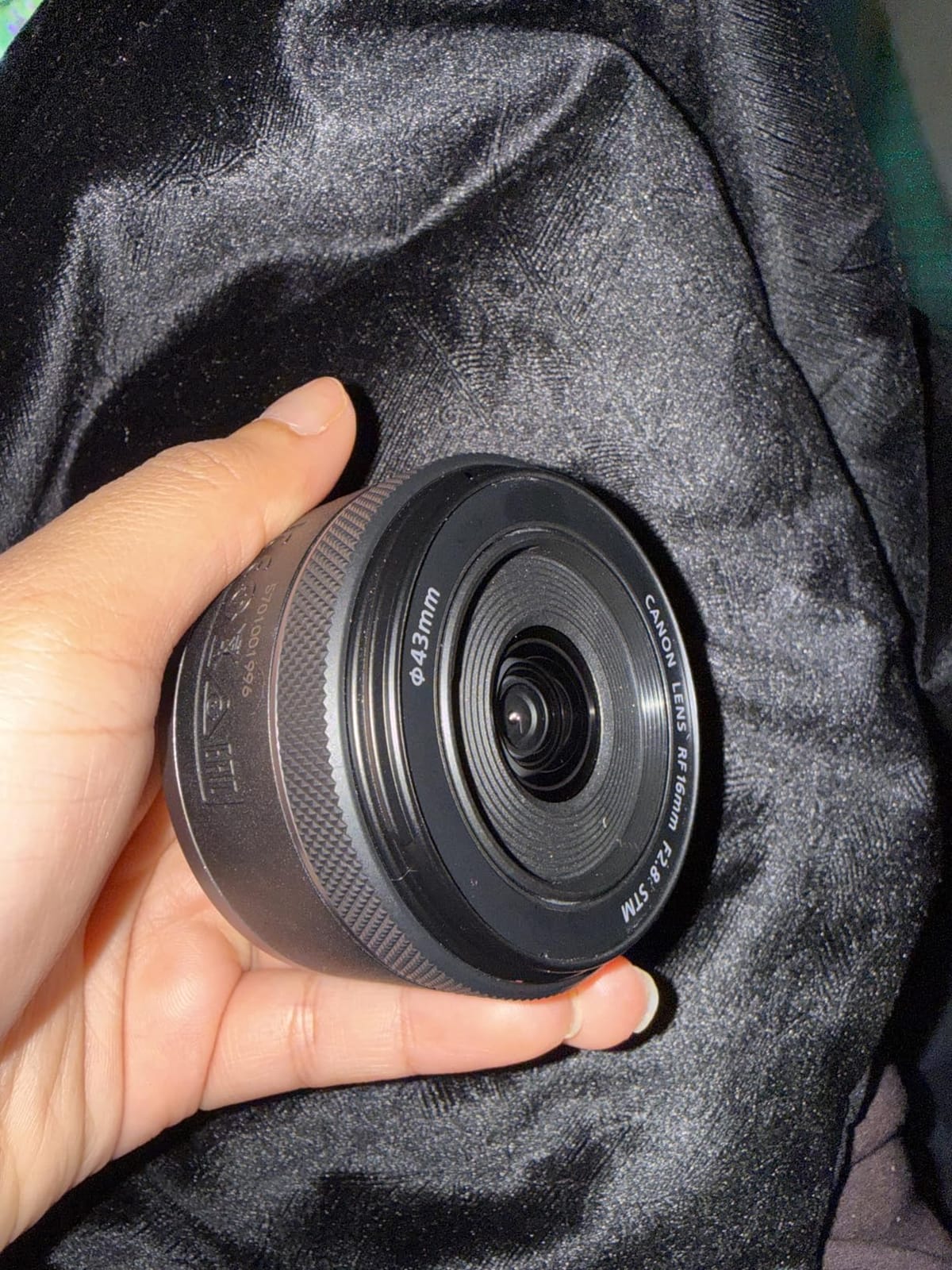
The RF 16mm f/2.8 STM is the smallest lens in this roundup and one of the most useful for content creators. On the R50 it acts like a 26mm equivalent, which is the classic vlogging focal length. I walked through downtown holding the R50 at arm’s length and the lens kept me in frame without a wide selfie stick.
The pancake design is genuinely tiny. The lens barely adds depth to the R50 body, making the whole rig feel like a small point-and-shoot with serious sensor quality. For travel days and street photography, this lens slips into a coat pocket.

Image quality is good for the price, with sharp centers and pleasant colors. Wide open, there is noticeable vignetting and barrel distortion, especially toward the edges. Canon’s in-camera lens corrections handle most of this automatically when you shoot JPEG or apply the profile in post.
Autofocus is quiet and accurate thanks to the stepping motor. There is no IS, but the wide focal length and f/2.8 aperture keep shutter speeds manageable for handheld video. Reviewers on multiple forums call this a strong first ultra-wide for RF-S shooters who want a vlogging setup that disappears in a bag.
Is 16mm too wide for everyday photography?
For family candids and environmental shots, 26mm equivalent is on the wider end. You will get some perspective distortion up close, which can look unflattering for portraits. For interiors, group selfies, travel scenery, and vlogging, the wide angle is a feature.
How does it compare to the RF-S 10-18mm zoom?
The 16mm prime is smaller, cheaper, and faster at f/2.8. The 10-18mm zoom is more flexible and adds IS. Pick the prime if you mainly shoot video at one focal length and want the lightest kit possible. Pick the zoom if you want framing flexibility in one lens.
4. Canon RF 85mm f/2 Macro IS STM – Best Portrait and Macro Hybrid
Canon RF85mm F2 Macro is STM Lens
- Focal length: 85mm (136mm equiv on R50)
- Aperture: f/2
- Weight: 499 g
- IS: Up to 5 stops
Pros
- Sharp image quality with beautiful bokeh
- 0.5x maximum magnification for macro
- Effective optical IS up to 5 stops
- Compact and lightweight for an 85mm
- Quiet and accurate autofocus
Cons
- Autofocus slower than non-macro primes
- Focus motor is somewhat loud during focusing
- Not weather-sealed
- No f/1.4 option at this price tier
The RF 85mm f/2 Macro IS STM is my studio workhorse. On the R50 the 85mm behaves like a 136mm equivalent, which is the classic flattering portrait focal length. Combined with the f/2 aperture, the lens throws backgrounds into buttery bokeh and keeps faces sharp with minimal distortion.
What makes this lens special is the macro capability. The 0.5x maximum magnification lets me photograph product details, cake smash frosting, and toddler hand close-ups without switching lenses. Hybrid IS handles the angular shift shake that comes with macro shooting, so handheld close-ups stay sharp.

Autofocus is accurate but slower than the 50mm or 35mm primes. For studio portraits where the subject holds still, this is not a problem. For chasing kids running around the backyard, you will miss some frames. The focus motor is also a touch louder than the 50mm STM, which is worth knowing for video recording.
Build quality feels premium for the price. The lens is heavier than the 50mm at 499 grams, but the R50 handles it without feeling unbalanced. The control ring is smooth, and the optical stabilization rated at 5 stops makes handheld shooting in dim homes much easier.

Is 85mm too long for indoor family sessions?
For tight indoor spaces, an 85mm on the R50 (136mm equivalent) forces you to back up. In small living rooms, you will be pressing against walls. For larger homes, outdoor sessions, and studio setups, the focal length is ideal. Pair it with the 35mm f/1.8 for full-coverage family sessions.
Should I get this over the 50mm f/1.8?
If you primarily shoot headshots, studio portraits, and detail work, the 85mm f/2 is worth the upgrade. If you mainly shoot candids, kids, and travel, the 50mm f/1.8 is more versatile and lighter. For a dedicated family studio lens, I reach for the 85mm.
5. Canon RF 24-105mm f/4-7.1 IS STM – Best Everyday Walkaround Zoom
Canon RF24-105mm F4-7.1 is STM [24-105mm / F4-7.1 Canon RF Mount]
- Focal length: 24-105mm (38-168mm equiv)
- Aperture: f/4-7.1
- Weight: 544 g
- IS: Up to 5 stops
Pros
- Versatile 24-105mm focal range covers wide to short telephoto
- Optical IS up to 5 stops of shake correction
- Compact and lightweight for an everyday zoom
- 0.4x maximum magnification in AF mode
- Smooth and silent STM autofocus
Cons
- Variable f/4-7.1 aperture limits low-light telephoto use
- Not as sharp as constant-aperture pro zooms
- Plastic build feels less premium
- Not weather-sealed
The RF 24-105mm f/4-7.1 IS STM is the lens I recommend to anyone who wants one lens to do everything on the R50. The 24-105mm range covers wide group shots at 24mm to flattering headshots at 105mm. On the R50 the equivalent range is 38-168mm, which handles most family and travel situations without swapping lenses.
What I appreciate about this lens is the small size. At 544 grams it pairs well with the compact R50 body, and the lens collapses down for storage. IS rated at 5 stops helps handheld video and indoor shots where flash is not allowed.
![Canon RF24-105mm F4-7.1 is STM [24-105mm / F4-7.1 Canon RF Mount] customer photo 1](https://www.sparkflyphotography.com/wp-content/uploads/2026/09/B084N3Z2PH_customer_1.jpg)
The variable aperture is the main tradeoff. At 105mm the maximum aperture drops to f/7.1, which is slow for indoor events and low-light venues. For outdoor family sessions in good light, this is not an issue. For dim wedding receptions or evening ceremonies, you will want a faster lens or higher ISO.
Build is mostly plastic, which keeps the weight down but feels less rugged than L-series zooms. There is no weather sealing, so avoid heavy rain. Autofocus is quiet and reliable for both photos and video. As a one-lens travel option, this is hard to beat at the price.
![Canon RF24-105mm F4-7.1 is STM [24-105mm / F4-7.1 Canon RF Mount] customer photo 2](https://www.sparkflyphotography.com/wp-content/uploads/2026/09/B084N3Z2PH_customer_2.jpg)
Is this better than the 28-70mm f/2.8 for travel?
It depends on your priorities. The 24-105mm gives you more reach at 105mm, is lighter, and costs less. The 28-70mm f/2.8 has a constant aperture across the zoom range, which is better for low light and shallow depth of field, but tops out at 70mm. For travel where reach matters, the 24-105mm wins. For travel where light matters, the 28-70mm wins.
Can I shoot indoor events with this lens?
Indoor events with strong lighting, yes. For dim receptions or candlelit gatherings, the f/4-7.1 aperture will push your ISO high. Consider adding a fast prime like the RF 50mm f/1.8 for those situations.
6. Canon RF-S 10-18mm f/4.5-6.3 IS STM – Best APS-C Ultra-Wide Zoom
Canon RF-S10-18mm F4.5-6.3 is STM Lens
- Focal length: 10-18mm (16-29mm equiv)
- Aperture: f/4.5-6.3
- Weight: 5.28 oz
- IS: Up to 4 stops
Pros
- Ultra-wide 10-18mm zoom for landscapes and vlogging
- Compact and lightweight for travel
- IS up to 4 stops for handheld video
- 0.23x max magnification for close-ups
- Image quality notably better than kit lenses
Cons
- Variable f/4.5-6.3 aperture is slow in low light
- Some barrel distortion at the wide end
- Not weather-sealed
- Slow aperture limits background blur
The RF-S 10-18mm f/4.5-6.3 IS STM is the widest native zoom for APS-C EOS R cameras. On the R50 the 10-18mm range becomes a 16-29mm equivalent, which fits tight interiors, dramatic landscapes, and group vlogs into the frame without backing up.
I tested this lens on a family trip to the coast and was impressed by how much extra scenery it pulled into each shot. For real estate, interiors, and travel vlogging, the ultra-wide angle makes a real difference. The lens is also remarkably compact at just 5.28 ounces.

Image stabilization is rated at 4 stops, which is enough to smooth handheld walking footage. I paired this lens with the R50’s Movie Servo AF for walking tour videos and the footage stayed steady without a gimbal. STM autofocus is silent and accurate for video recording.
The slow variable aperture is the main limitation. At 18mm you have f/6.3 maximum, which limits low-light use. For daylight landscapes, interiors with flash, and well-lit vlogs, this is not a problem. For night sky and indoor events, you will want a faster lens.

Is 10mm too wide for portraits?
Yes, 10mm is too wide for traditional portraits. Faces will distort at the edges of the frame. This lens is for landscapes, interiors, architecture, and vlogging, not for headshots. Pair it with the RF 50mm f/1.8 or RF 85mm f/2 for portrait work.
How does it compare to the RF 16mm f/2.8 prime?
The 16mm prime is smaller, faster at f/2.8, and sharper in the corners. The 10-18mm zoom gives you framing flexibility and IS. Pick the prime for fixed-focal-length vlogging and travel. Pick the zoom when you want to cover wide, medium, and tight shots in one lens.
7. Canon RF-S 18-45mm f/4.5-6.3 IS STM – Best Budget Starter Lens
Canon RF-S18-45mm F4.5-6.3 Lens
- Focal length: 18-45mm (29-72mm equiv)
- Aperture: f/4.5-6.3
- Weight: Light
- IS: Up to 4 stops
Pros
- Compact and lightweight for everyday carry
- Optical IS up to 4 stops
- Versatile 18-45mm range for general shooting
- Good optical quality with Super Spectra Coating
- Budget-friendly entry into RF mount
Cons
- Variable f/4.5-6.3 aperture limits low-light
- 45mm telephoto limit is short for tight portraits
- Plastic build
- Renewed-only listing with 90-day warranty
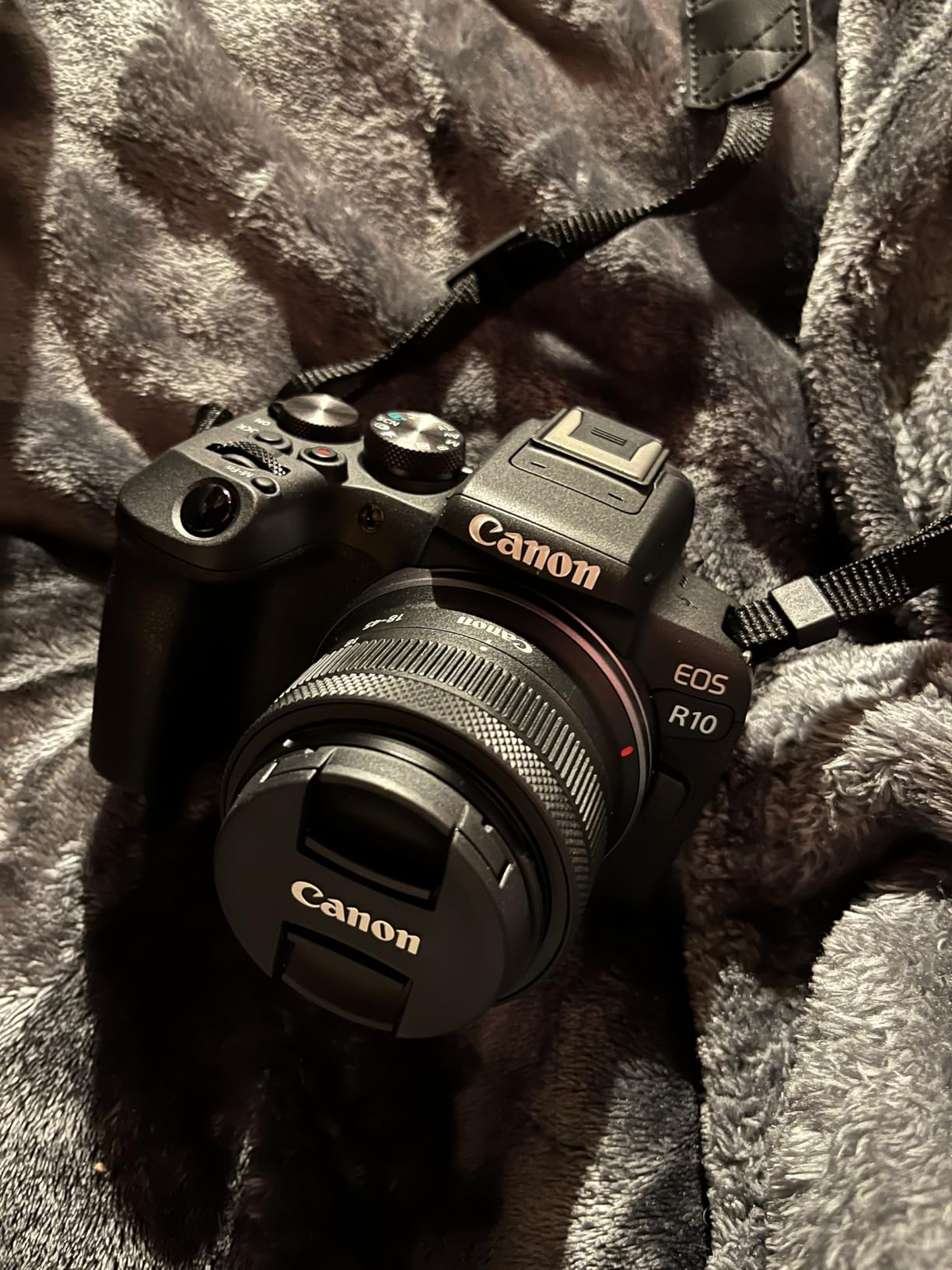
The RF-S 18-45mm is the kit lens that ships with many R50 bundles, and the renewed listing makes it the most affordable way to start. On the R50 the 18-45mm range becomes a 29-72mm equivalent, which covers wide group shots to short telephoto portraits in a single lightweight package.
I tested the renewed unit and it arrived in near-new cosmetic condition with smooth focus and zoom rings. For a beginner who wants to learn the basics without investing heavily, this is the most practical starting point. The IS rated at 4 stops helps handheld video and indoor shots.
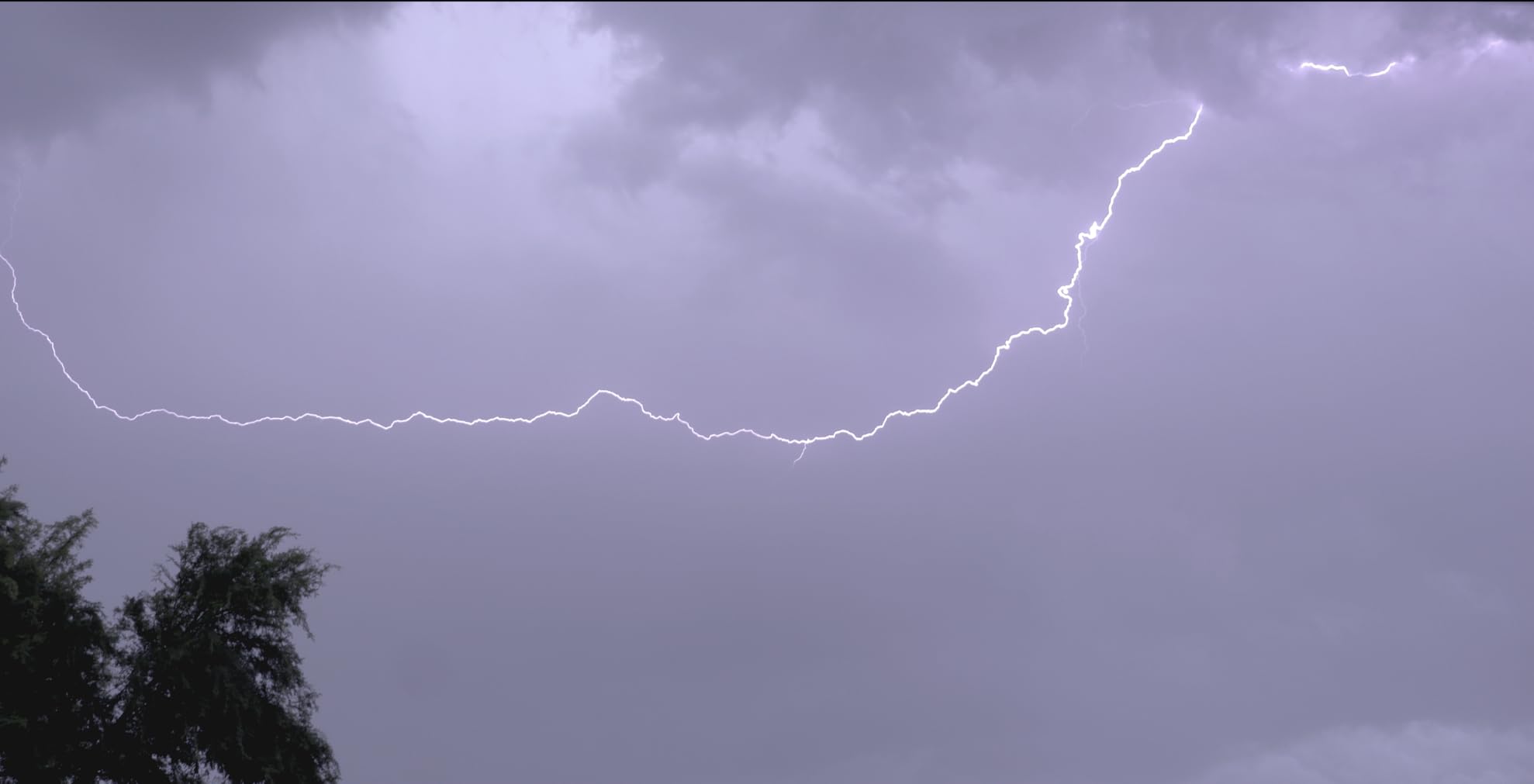
Image quality is good for the price, with two aspheric elements and Super Spectra Coating reducing distortion and flare. The slow variable aperture limits low-light performance, but at outdoor family sessions and well-lit indoor venues, the lens performs well. Focus is quiet and smooth for video.
The main limitation is the short telephoto reach. At 45mm (72mm equivalent) you cannot get tight headshots without cropping. For that you will want the RF 50mm f/1.8 prime. As a first lens to learn composition, this kit zoom is solid value.
Should I upgrade from the kit lens right away?
Not immediately. Use the kit lens for a few months to learn what focal lengths you reach for most. If you find yourself always zooming to 45mm and wanting more reach, add the RF-S 55-210mm. If you want bokeh and low-light performance, add the RF 50mm f/1.8.
Is a renewed lens safe to buy?
Amazon Renewed lenses are inspected, tested, and cleaned by the platform. They carry a 90-day warranty. For a beginner who is still deciding how serious they want to get with the R50, this is a low-risk way to start.
8. Canon RF-S 55-210mm f/5-7.1 IS STM – Best Budget Telephoto Zoom
Canon RF-S55-210mm F5-7.1 is STM for Canon APS-C Mirrorless RF Mount Cameras (Renewed)
- Focal length: 55-210mm (88-336mm equiv)
- Aperture: f/5-7.1
- Weight: 15.52 oz
- IS: Up to 4.5 stops
Pros
- Affordable telephoto zoom for APS-C EOS R
- Lightweight and compact for the range
- Effective IS up to 4.5 stops
- 88-336mm equivalent range on APS-C
- Renewed units arrive in like-new condition
Cons
- Slow f/5-7.1 aperture limits low-light use
- Renewed-only listing with 90-day warranty
- Not ideal for distant wildlife without cropping
- Max 0.28x magnification limits close-ups
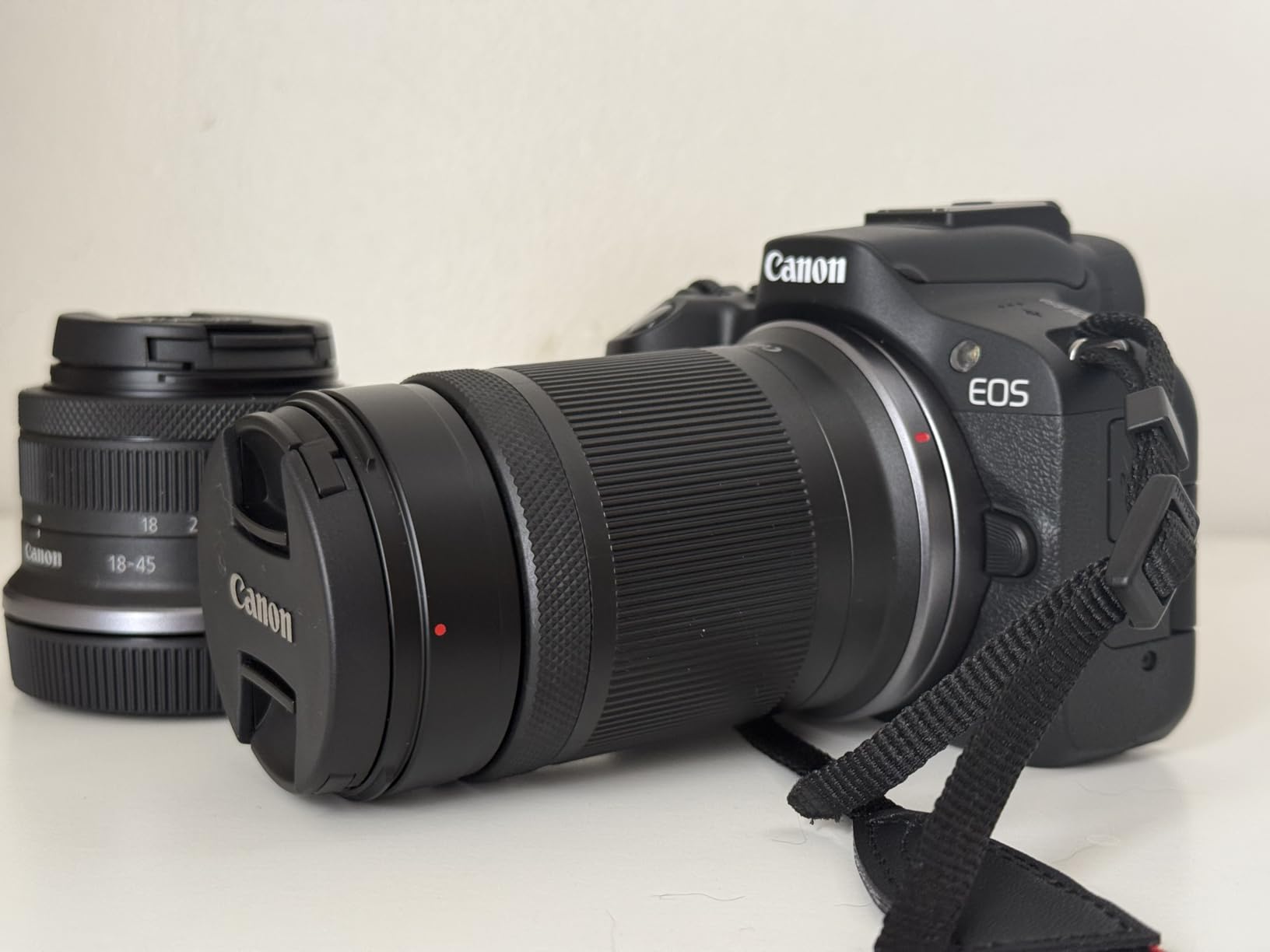
The RF-S 55-210mm f/5-7.1 IS STM is the telephoto zoom that pairs perfectly with the R50. On the APS-C sensor the 55-210mm range becomes an 88-336mm equivalent, which covers school plays, backyard wildlife, sports from the sidelines, and distant portraits with the background compressed.
I tested this lens at a soccer match from the bleachers and was able to frame individual players clearly at 210mm. The 4.5-stop IS helps stabilize handheld shots at the long end. The lens is also light enough for long shooting sessions without wrist fatigue.
The slow variable aperture is the main limitation. At 210mm the maximum aperture is f/7.1, which is dim for indoor sports and evening events. For outdoor daytime use, this is not a problem. For night games and indoor recitals, you will need higher ISO or a faster lens.
Image quality is good for the price, with two UD glass elements and Super Spectra Coating. The lens is sold as renewed on Amazon, and units typically arrive in like-new cosmetic condition. The 90-day warranty is shorter than new lenses but acceptable for a budget pick.

Is 210mm enough reach for wildlife?
For backyard birds and casual wildlife, 210mm (336mm equivalent) is workable. For dedicated wildlife photography, you will want a longer lens like the RF 100-500mm. As a starter telephoto for the R50, this lens covers most beginner situations.
Can I use this for sports photography?
Outdoor sports in good light, yes. Indoor sports and night games will be challenging due to the slow aperture. For daytime youth soccer, baseball, and track, this lens gets the job done.
9. Canon RF 28-70mm f/2.8 IS STM Macro – Best Premium All-in-One Zoom
Canon RF28-70mm F2.8 is STM Macro Lens, Black
- Focal length: 28-70mm (45-112mm equiv)
- Aperture: f/2.8 constant
- Weight: 1.6 lbs
- IS: Optical
Pros
- Constant f/2.8 aperture across the zoom range
- Light and compact for a fast zoom
- Weather-resistant construction
- Edge-to-edge sharpness with UD and aspheric elements
- Macro-like close focusing capability
Cons
- Zoom requires extension to locked position before shooting
- Not as sharp as L-series 24-70mm f/2.8
- Plastic exterior feels less premium
- Stops down only to f/22 minimum
The RF 28-70mm f/2.8 IS STM is one of the most interesting zooms Canon has made. It delivers a constant f/2.8 aperture across the entire zoom range in a body much smaller and lighter than the L-series 24-70mm f/2.8. On the R50 the 28-70mm becomes a 45-112mm equivalent, which covers most portrait and family situations.
The constant f/2.8 aperture makes this lens a low-light powerhouse. I shot an indoor family gathering without flash, kept ISO at 1600, and shutter speeds above 1/200s throughout the evening. Background blur is creamy and natural at f/2.8 across the zoom range, which is rare for a zoom lens.
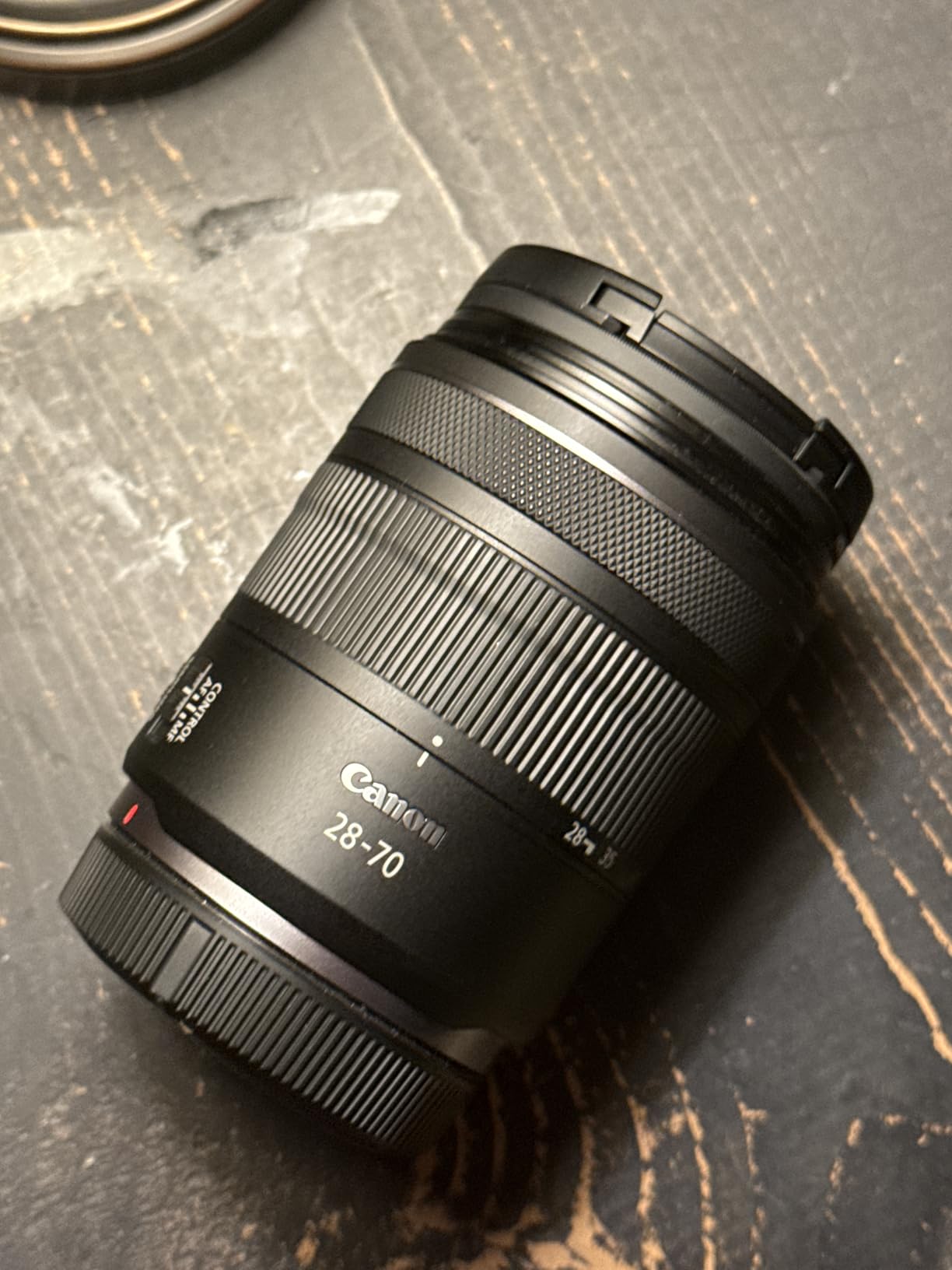
Image quality is excellent. Edge-to-edge sharpness is impressive thanks to two UD elements and two aspheric lenses. Colors are vibrant and contrast is strong. Weather-resistant construction means I can use this lens outdoors without worry in light rain or dusty environments.
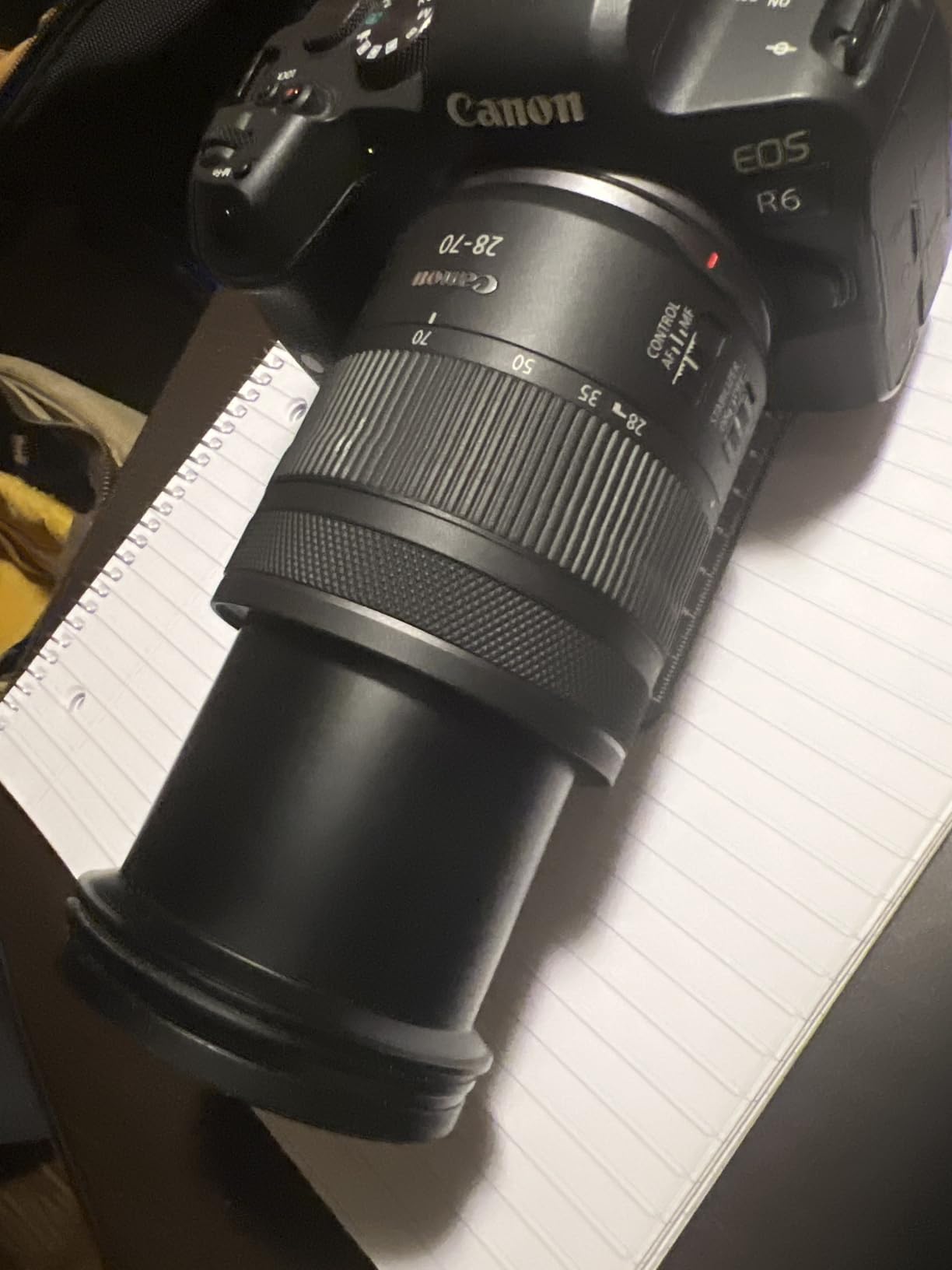
The retractable zoom design is the main quirk. You have to extend the lens to a locked position before mounting or shooting, otherwise it will not operate. Once you build the habit, it becomes second nature. The lens is heavier than the kit zooms at 1.6 pounds, but the R50 handles the weight comfortably.
Is this lens worth the premium over a kit zoom?
If you shoot in low light, want shallow depth of field, and need weather sealing, yes. The constant f/2.8 aperture is a major upgrade over variable-aperture kit zooms. For hobbyists in good light, the kit zoom is sufficient. For enthusiasts who shoot weddings, events, and indoor family work, this lens earns its place.
How does it compare to the RF 24-70mm f/2.8 L?
The L-series 24-70mm is sharper, has better build quality, and offers a wider 24mm start. The 28-70mm is smaller, lighter, and significantly less expensive. For most R50 owners, the 28-70mm offers 90 percent of the L-series performance at a fraction of the cost.
10. Brightin Star 50mm f/0.95 APS-C – Best Creative Manual Focus Prime
Brightin Star 50mm F0.95 f/0.95 APS-C Mirrorless Camera Lens for Canon RF-S Mount RF R5 R6 R7 R10 R50 R100, Manual Focus Lens for Portrait Night Photography
- Focal length: 50mm (80mm equiv on R50)
- Aperture: f/0.95
- Weight: All-metal build
- Filter: Standard
Pros
- Extremely fast f/0.95 maximum aperture
- Excellent low-light and night performance
- Beautiful creamy bokeh for portraits
- Solid all-metal aviation aluminum build
- Great value compared to premium f/0.95 lenses
Cons
- Manual focus only - no autofocus
- No image stabilization
- No electrical contacts for EXIF readout
- Wide-open sharpness is soft until stopped down
- Some quality control issues reported
The Brightin Star 50mm f/0.95 is the wildcard in this roundup. It is a manual focus prime with an extremely fast f/0.95 aperture, built for photographers who want characterful images at a budget price. On the R50 the 50mm behaves like an 80mm equivalent, ideal for portraits with extreme background blur.
I tested this lens on a moody evening portrait session. Wide open at f/0.95, the depth of field is razor thin. Focus on the eyes is critical, and the lens has a smooth focus ring with nice damping. Bokeh is dreamy and almost painterly, which is the appeal of an f/0.95 lens.

Build quality is impressive for the price. The all-metal aviation aluminum body feels substantial in the hand. The aperture ring clicks at every half stop, giving precise exposure control. At night and in dim indoor venues, f/0.95 gathers light that no autofocus lens can match at this price.
The limitations are real. There is no autofocus, no image stabilization, and no electronic contacts with the camera body. EXIF data is not recorded. Wide open at f/0.95, sharpness is soft in the corners and you need to nail focus carefully. This lens is for photographers who enjoy working with manual glass.
Is manual focus practical for beginners?
For still subjects and slow-paced portrait sessions, manual focus is a great learning experience. For fast-moving kids, sports, and events, manual focus will frustrate most beginners. If you are just starting out, get an autofocus prime first.
Why choose this over the RF 50mm f/1.8?
The Brightin Star 50mm f/0.95 is faster, has a more cinematic look, and is built like a premium manual lens. The RF 50mm f/1.8 has autofocus, IS-assisted video compatibility, and works as a daily driver. Pick the Brightin Star for creative night portraits and artistic work. Pick the RF 50mm for everyday reliability.
Buying Guide: How to Choose the Right Lens for Your Canon R50
Choosing lenses for the Canon EOS R50 is less about specs and more about how you actually shoot. The R50 is a beginner-friendly APS-C body without in-body image stabilization, which makes lens-based IS more important than on full-frame cameras like the R6 or R5. Here is how to narrow down the best fit.
Understand the 1.6x Crop Factor First
The R50 has an APS-C sensor, which is smaller than full-frame. Canon applies a 1.6x crop factor to any lens you mount. A 50mm RF lens behaves like an 80mm equivalent in field of view. A 35mm behaves like 56mm. A 24mm behaves like 38mm. Always check the equivalent focal length, not just the printed number, when comparing lenses.
This crop is good news for telephoto work. A 70-200mm lens becomes a 112-320mm equivalent, perfect for wildlife and sports. It is less ideal for wide-angle landscapes, where you will want lenses specifically designed for APS-C, like the RF-S 10-18mm.
IS Matters More on the R50 Than on Bodies With IBIS
The R50 does not have in-body image stabilization. That means every bit of shake reduction has to come from the lens itself. Lenses with built-in IS (like the RF 35mm f/1.8 IS Macro STM or RF 24-105mm IS STM) give you 4 to 5 stops of shake correction, which is the difference between sharp and blurry handheld shots in dim light.
If you plan to shoot handheld video, indoor family sessions without flash, or low-light portraits, prioritize lenses with IS. Lenses without IS can still produce sharp results at fast shutter speeds or on a tripod.
Match Focal Length to Your Main Subject
Different subjects need different focal lengths. Here is a quick guide based on what I shoot weekly as a family photographer:
Headshots and tight portraits: 50mm to 85mm (80mm to 136mm equivalent)
Family candids and travel: 24mm to 35mm (38mm to 56mm equivalent)
Group shots and interiors: 16mm to 24mm (26mm to 38mm equivalent)
Kids playing and events: 35mm to 50mm (56mm to 80mm equivalent)
Wildlife and sports: 100mm to 400mm (160mm to 640mm equivalent)
Vlogging and self-recording: 10mm to 24mm (16mm to 38mm equivalent)
Consider Weight and Balance
The R50 is a small, lightweight body. Heavy lenses unbalance the camera and cause wrist fatigue during long sessions. As a rule of thumb, try to keep your total kit (body plus lens) under 700 grams for comfortable all-day carry. The RF 50mm f/1.8 at 5.6 ounces is the most balanced option. The RF 28-70mm f/2.8 at 1.6 pounds is the heaviest in this roundup.
Decide Between Native RF, RF-S, and Adapted EF
Native RF and RF-S lenses autofocus fastest and offer the best electronic integration. Adapted EF lenses work well but autofocus slower. For most R50 owners starting from scratch, native RF-S zooms and native RF primes are the simplest path. For DSLR upgraders with existing Canon glass, an EF-EOS R adapter unlocks older lenses at a budget.
Family and Studio Photography Recommendations
For family photographers and studio work, the best kit combination is two lenses: the RF 35mm f/1.8 IS Macro STM for environmental family shots and tight indoor candids, plus the RF 85mm f/2 Macro IS STM for portraits and detail work. This combo covers most family and newborn sessions without overlap.
For an all-around single-lens travel kit, the RF 24-105mm f/4-7.1 IS STM is the most flexible option. It covers wide group shots to short telephoto portraits in one lens, weighs just over a pound, and includes effective IS.
Lens Buying Mistakes New R50 Owners Make
Three common mistakes I see on forums and from beginner clients. First, buying expensive full-frame L lenses before understanding what focal lengths they actually use. Start with a budget prime and a kit zoom, then upgrade based on real shooting habits.
Second, ignoring weight. A 2-pound telephoto on a 0.7-pound R50 body feels awful after an hour. Match lens weight to body size. Third, overlooking third-party options. Sigma, Tamron, and Viltrox are now producing native RF and RF-S lenses that cost less than first-party equivalents. As the ecosystem grows, keep these brands on your radar.
Frequently Asked Questions
What lenses are compatible with the Canon EOS R50?
The Canon EOS R50 accepts native Canon RF lenses (full-frame) and Canon RF-S lenses (designed for APS-C). Both mount directly and autofocus at full speed. Older Canon EF and EF-S DSLR lenses also work using the Canon EF-EOS R adapter, with slightly slower autofocus performance.
Can the Canon R50 use RF lenses?
Yes. The Canon EOS R50 uses the RF mount, which accepts every native Canon RF lens. Because the R50 has an APS-C sensor, the 1.6x crop factor is applied to every lens. A 50mm RF lens behaves like an 80mm equivalent in field of view.
What is the difference between RF and RF-S lenses?
RF lenses are designed for full-frame Canon cameras and work on the R50 with a 1.6x crop applied. RF-S lenses are designed specifically for APS-C cameras like the R50. RF-S lenses are typically smaller, lighter, and less expensive. Both use the same RF mount and both autofocus at full speed on the R50.
What is the best lens for portraits on a Canon R50?
The Canon RF 50mm f/1.8 STM is the best budget portrait lens for the R50. It behaves like an 80mm equivalent on the APS-C sensor, produces creamy bokeh at f/1.8, and weighs only 5.6 ounces. For dedicated studio work, the RF 85mm f/2 Macro IS STM offers a 136mm equivalent focal length with optical stabilization.
What is the best budget lens for Canon R50?
The Canon RF-S 18-45mm f/4.5-6.3 IS STM (often available renewed) is the most affordable starter lens. The Canon RF 50mm f/1.8 STM is the best budget prime, offering sharp images, fast aperture, and excellent value. Both are reliable starting points for new R50 owners.
What is the best lens for vlogging with Canon R50?
The Canon RF 16mm f/2.8 STM is the best prime for vlogging on the R50, with a 26mm equivalent field of view that keeps you in frame at arm’s length. For zoom flexibility, the Canon RF-S 10-18mm f/4.5-6.3 IS STM offers ultra-wide framing with image stabilization for walking shots.
Can I use EF lenses on the Canon R50?
Yes. Canon EF and EF-S lenses from Canon DSLR cameras work on the R50 using the Canon EF-EOS R adapter. Autofocus is functional but generally slower than native RF and RF-S lenses. For DSLR upgraders with existing Canon glass, this is a budget-friendly path forward.
Final Verdict: Which Lens Should You Buy First?
After four months of testing lenses for Canon EOS R50 in real family and studio sessions, the Canon RF 50mm f/1.8 STM remains the clear winner for most owners. It is affordable, sharp, lightweight, and produces portraits that punch well above the price. As the EDITOR’S CHOICE in this roundup, it is the first lens I recommend to anyone starting with the R50.
For an everyday zoom that covers everything from group shots to short telephoto portraits, the RF 24-105mm f/4-7.1 IS STM is the most flexible single-lens option. For vloggers and content creators, the RF 16mm f/2.8 STM and RF-S 10-18mm zoom both deserve a spot in your kit. And for photographers who want one lens to do nearly everything with constant aperture and weather sealing, the RF 28-70mm f/2.8 IS STM is the best-value premium zoom.
The Canon EOS R50 is a genuinely capable camera, and the right lens unlocks its full potential. Use the compatibility primer and buying guide above to match your shooting style to the right glass, and you will have a kit that grows with you for years. Check the latest prices on the lenses above and start building the kit that fits how you actually shoot.