
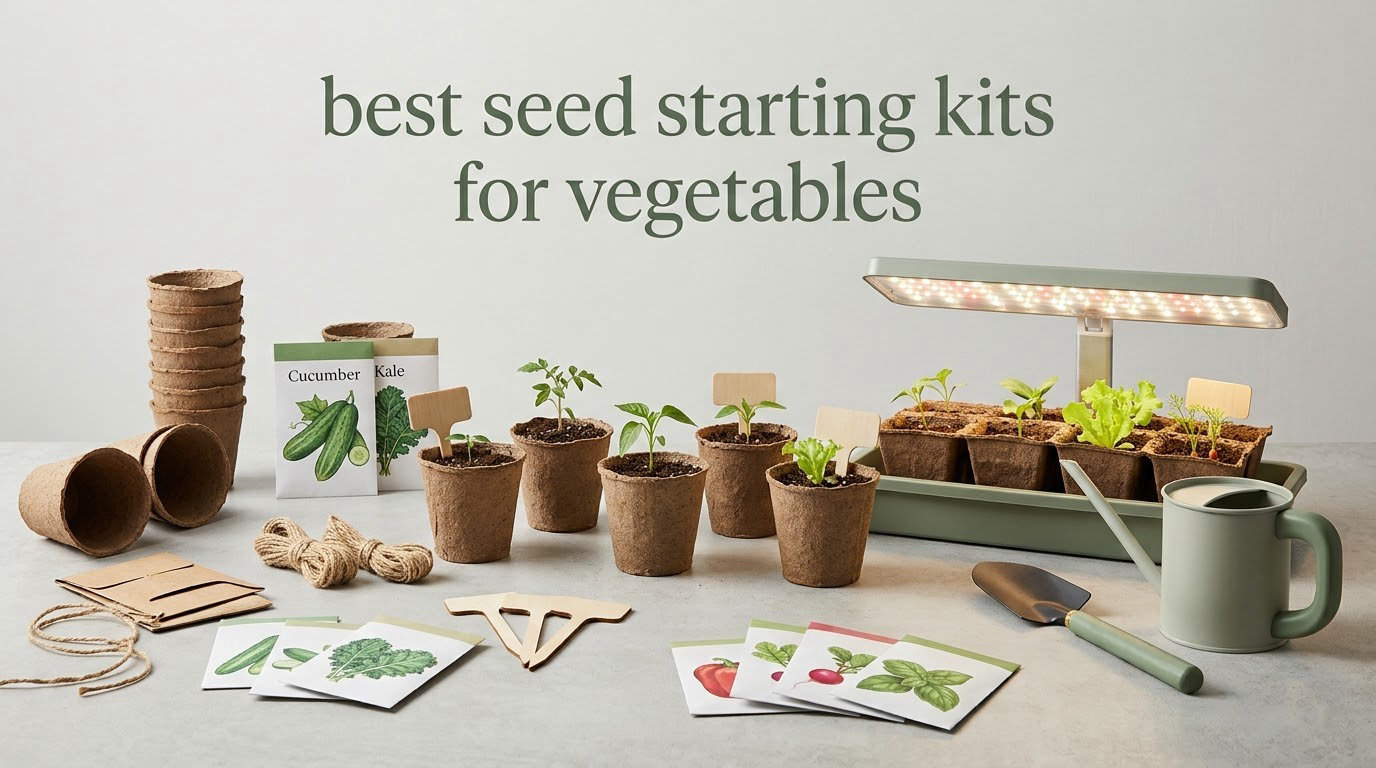
Starting vegetables indoors buys you a six to eight week head start on the season, and the right kit is what makes that head start possible without a garage full of separate parts. After going through twelve of the most-reviewed seed starting kits on the market, the Gardzen 5-Set Seed Starter Tray Kits wins as the best seed starting kit for most home vegetable gardeners: 200 cells across five vented-dome trays, real drainage holes, and the highest combination of rating and review volume in this group.
That said, “best” depends heavily on what you are sowing. A pepper grower needs bottom heat that a lettuce grower never touches. A windowsill gardener in a small apartment needs a footprint measured in inches, not the 16-inch-wide units that dominate the all-in-one category.
This guide covers all twelve kits in one place, states plainly what each one does not include, and maps each to the crops it actually suits. We updated it for 2026, and every rating and review count below comes straight from the current listing data rather than an estimate.
Table of Contents
- Top 3 Picks for Best Seed Starting Kits for Vegetables (October 2026)
- All 12 Best Seed Starting Kits at a Glance in 2026
- 1. Gardzen 5-Set Seed Starter Tray Kits – Best Overall for Vegetables
- 2. MIXC 10-Pack Seed Starter Tray Kit – Best Value for a Large Sowing
- 3. Burpee SuperSeed XL Windowsill Tray – Best for Small Spaces
- 4. Sondiko Seed Starter Tray with Grow Light and Heater – Best Premium All-in-One
- 5. YAUNGEL 6-Pack Seed Starting Kit with Grow Light – Best Budget Light Kit
- 6. Burpee 72-Cell Seed Starting Kit with Dome and Coir Pellets – Best True All-in-One
- 7. SOLIGT 60-Cell Kit with Grow Light and Heat Mat – Best for Tomatoes and Peppers
- 8. AC Infinity Humidity Dome Kit 5×8 with LED Bars and Heat Mat – Best for Cloning and Cuttings
- 9. Jiffy Seed Starting Tray Kit 36-Cell 2-Pack – Best for No-Mix Starts
- 10. Patigrow 120-Cell Self-Watering Kit with Grow Light – Best for Low-Maintenance Watering
- 11. BlumWay 80-Cell Seed Starter Tray with Grow Light – Best for Variety Trials
- 12. GROWFRIEND 40-Cell Kit with Grow Lights, Heat Mat and Extras – Best Extras in the Box
- How to Choose a Seed Starting Kit for Vegetables
- Are Seed Starting Kits Worth Buying?
- Frequently Asked Questions
- The Verdict for 2026
Top 3 Picks for Best Seed Starting Kits for Vegetables (October 2026)

Gardzen 5-Set Tray Kits
- 200 cells across 5 trays
- Dual air vents on each dome
- Drain holes and vented dome

MIXC 10-Pack Tray Kit
- 120 cells plus labels
- Drainage holes per tray
- Adjustable dome vents

Sondiko Heated Light Kit
- Heater adjustable 59F-104F
- Dual full-spectrum LED bars
- 40 deep cells
As an Amazon Associate we earn from qualifying purchases. CERTAIN CONTENT THAT APPEARS ON THIS SITE COMES FROM AMAZON. THIS CONTENT IS PROVIDED 'AS IS' AND IS SUBJECT TO CHANGE OR REMOVAL AT ANY TIME.
All 12 Best Seed Starting Kits at a Glance in 2026
The table below is the fastest way to narrow the field. It covers every kit in this roundup, with the number of growing cells, whether heat is built in, and whether a grow light is included.
| Product | Specifications | Action |
|---|---|---|
|
Gardzen 5-Set Tray Kits
|
|
Check Latest Price |
|
MIXC 10-Pack Tray Kit
|
|
Check Latest Price |
 Burpee XL Windowsill Tray
|
|
Check Latest Price |
|
Sondiko Heated Light Kit
|
|
Check Latest Price |
 YAUNGEL 6-Pack Light Kit
|
|
Check Latest Price |
 Burpee 72-Cell Kit
|
|
Check Latest Price |
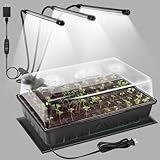 SOLIGT 60-Cell Kit
|
|
Check Latest Price |
 AC Infinity 5×8 Kit
|
|
Check Latest Price |
 Jiffy 36-Cell 2-Pack
|
|
Check Latest Price |
 Patigrow 120-Cell Kit
|
|
Check Latest Price |
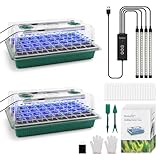 BlumWay 80-Cell 2-Pack
|
|
Check Latest Price |
 GROWFRIEND 40-Cell Kit
|
|
Check Latest Price |
We earn from qualifying purchases. CERTAIN CONTENT THAT APPEARS ON THIS SITE COMES FROM AMAZON. THIS CONTENT IS PROVIDED 'AS IS' AND IS SUBJECT TO CHANGE OR REMOVAL AT ANY TIME.
1. Gardzen 5-Set Seed Starter Tray Kits – Best Overall for Vegetables
Gardzen 5-Set Seed Starter Tray Kits, Durable Plant Germination Trays with Humidity Vented Domes and Bases, Ideal for Seed Starting, Indoor Gardening, and Greenhouse (Total 200 Cells)
- 200 cells total
- Vented dome per tray
- Drain holes
- 2.6 lb
- 9 x 14.5 x 1.85 in
Pros
- Dual air vents on every dome let you tune airflow as seeds emerge
- 200 cells across five trays handles a large multi-crop sowing in one round
- Drain holes and fit stickers keep overwatering and dome slippage in check
- Rated 4.5 across 8859 reviews with durable plastic owners reuse season after season
Cons
- No grow light or heating element
- trays are not self-watering and need manual watering
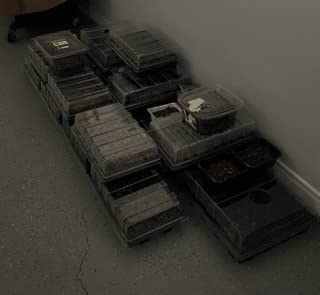
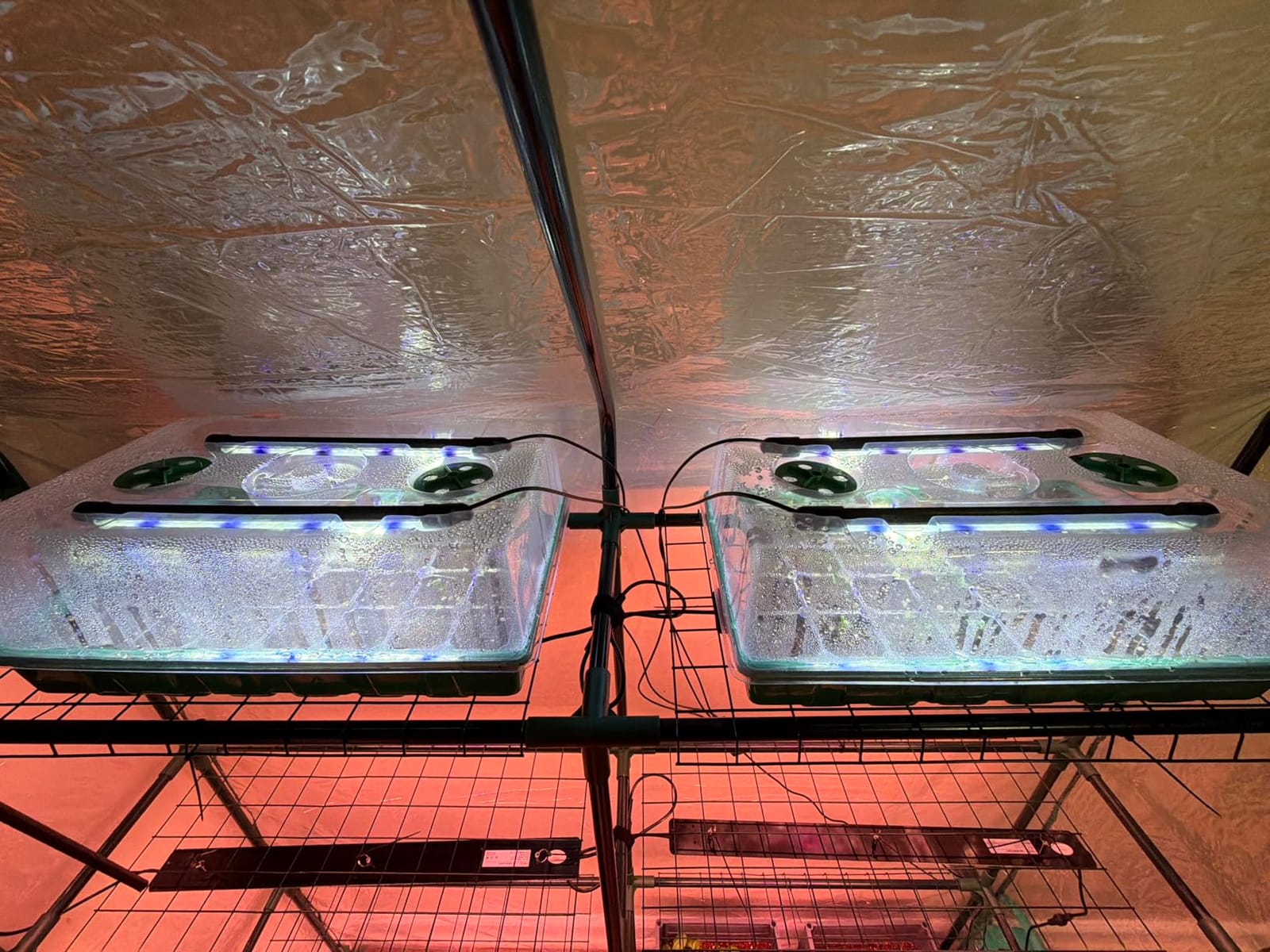
I have run two full vegetable cycles on these trays and they are the ones I come back to. Five trays of 40 cells is 200 starts in a single pass, which matters more than it sounds once you are sowing tomatoes, peppers, two brassica varieties and a herb tray in the same week.
The part that impressed me most is not the capacity, it is the ventilation. Each dome carries two air vents, and by the time brassicas are up I can crack them open and walk back a full week of the damping off losses that a sealed dome would have cost me.
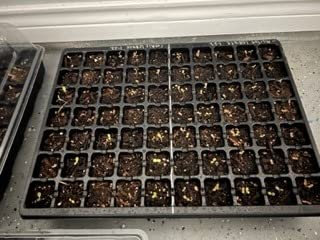
The fit stickers are a small detail that matters more than they sound. Without them the domes sit loose, and a loose dome loses exactly the humidity you are trying to trap in the first place. With them, the seal holds through a dry week of radiators running.
What is not in the box: seed starting medium, seeds, a grow light, a heat mat, or any kind of labels. You fill these cells yourself, which honestly suits me better since I want to control the mix.
Who these trays suit
These are the right pick for a gardener starting more than a dozen vegetable plants who wants a big sowing without buying ten separate trays. Brassicas, lettuce, cucurbits and herbs all take to a 40-cell tray at this spacing.
They are also the safest of the twelve on durability. Nothing in the spec sheet is disposable, and the plastic is thick enough that a drop does not end the tray.
Who these trays do not suit
If you grow tomatoes and peppers, you will want a heat mat underneath, and this kit does not include one. A cool basement in February is exactly the situation where peppers stall for three weeks.
Same story for light. If your only window faces north, you need a grow light and this kit will not solve that problem for you.
2. MIXC 10-Pack Seed Starter Tray Kit – Best Value for a Large Sowing
MIXC 10 Pack Seed Starter Tray, 120Cell Stater Kit with Humidity Dome Green
- 120 cells across 10 sets
- Vented domes
- Drainage holes
- 16 oz
- 7.28 x 5.67 x 6.5 in
Pros
- The most reviewed kit here with 11257 reviews at 4.4 stars
- Ten complete sets with bases and domes included
- Adjustable vents plus drainage holes in every tray
- Lightweight and easy to move between rooms
Cons
- No light or heating element
- Not self-watering
- Small cells mean early potting on for larger crops
This is the volume play. Ten trays, ten watertight bases, ten domes and plant labels, all for a small outlay, and with more than 11,000 reviews behind it there is a very large body of real-world feedback on how it holds up.
I use the smaller trays for lettuce, radish, kale and bean trials, where the cell size is genuinely the right size. The whole set stacks into a shelf footprint that a bigger rigid tray never would.
The listed size reads 12 cells per pack, which gives you the 120-cell total across the ten packs. Cells are on the small side, and forum gardeners burned by 36-cell trays for tomatoes will recognize the symptom: seedlings that hit the wall of the cell and stall before they are ready to go out.
What is not in the box: medium, seeds, heat, light, and any structure to stand them on. The plant labels are the only labelling you get, and you will want a marker for the date on each one.
Who these trays suit
Anyone sowing a large number of quick-germinating crops, or anyone who wants to run a germination test on several seed lots at once. Ten identical cells make a poor-man’s germination trial setup and I have used them exactly that way.
They also suit a renter or a small-space grower. At 16 ounces for the whole set, moving the full thing between rooms is trivial.
Who these trays do not suit
Do not start tomatoes or peppers in these cells and expect to transplant straight from them. The cell volume forces an early up-pot that costs you time exactly when you are trying to save it.
And if you want one unit to handle a whole crop class by itself, the many-tray format means you are constantly carrying pieces around rather than lifting a single tray.
3. Burpee SuperSeed XL Windowsill Tray – Best for Small Spaces
Burpee SuperSeed Windowsill Seed Starting Tray | 8 XL Cell | Seed Starter Tray | Reusable & Dishwasher Safe | Window Garden Starting Kit | Orange
- 8 XL silicone cells
- Window mount
- 5 x 3 x 11.5 in
- 7 oz
- Dishwasher safe
Pros
- Food-grade silicone cells flex and release seedlings with minimal root damage
- Deep XL cells hold more medium and dry out more slowly
- Window-mount format at 11.5 inches fits a standard sill
- Molded corner drainage slots and deep watering channels
Cons
- No humidity dome or cover included
- Thin bottom tray that can flex if dropped
- No seeds
- soil
- light or heat
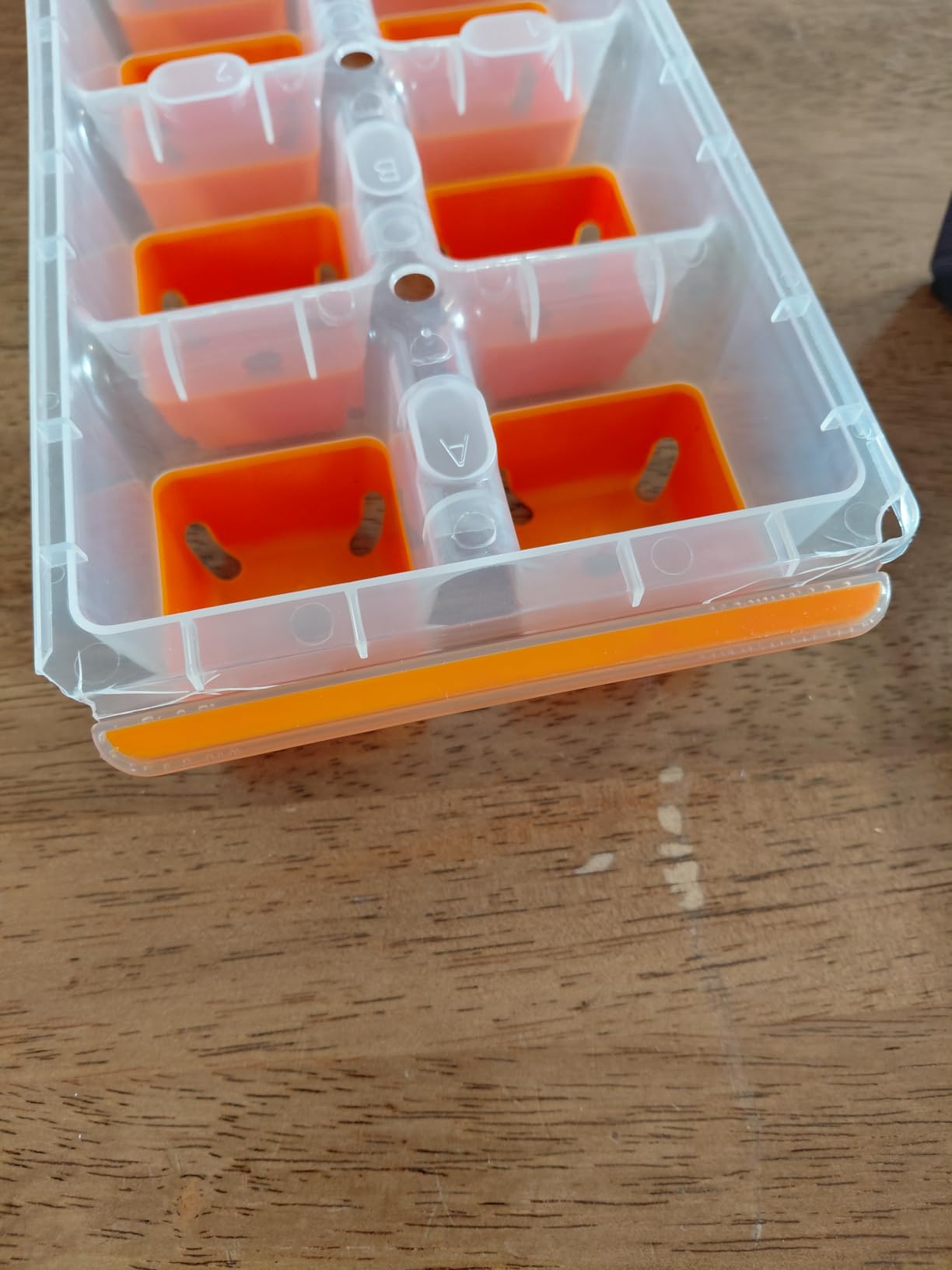
Eight cells is a small number, and that is the entire point. This is the only kit here designed around a single windowsill rather than a shelf, and for a household growing eight herb or pepper plants that is a feature rather than a limitation.
The silicone cells are what set it apart. When the time comes, you bend the cell and the seedling root ball comes out almost intact, which solves the single most common complaint I hear about plastic cell trays: seedlings that get torn up on the way out.
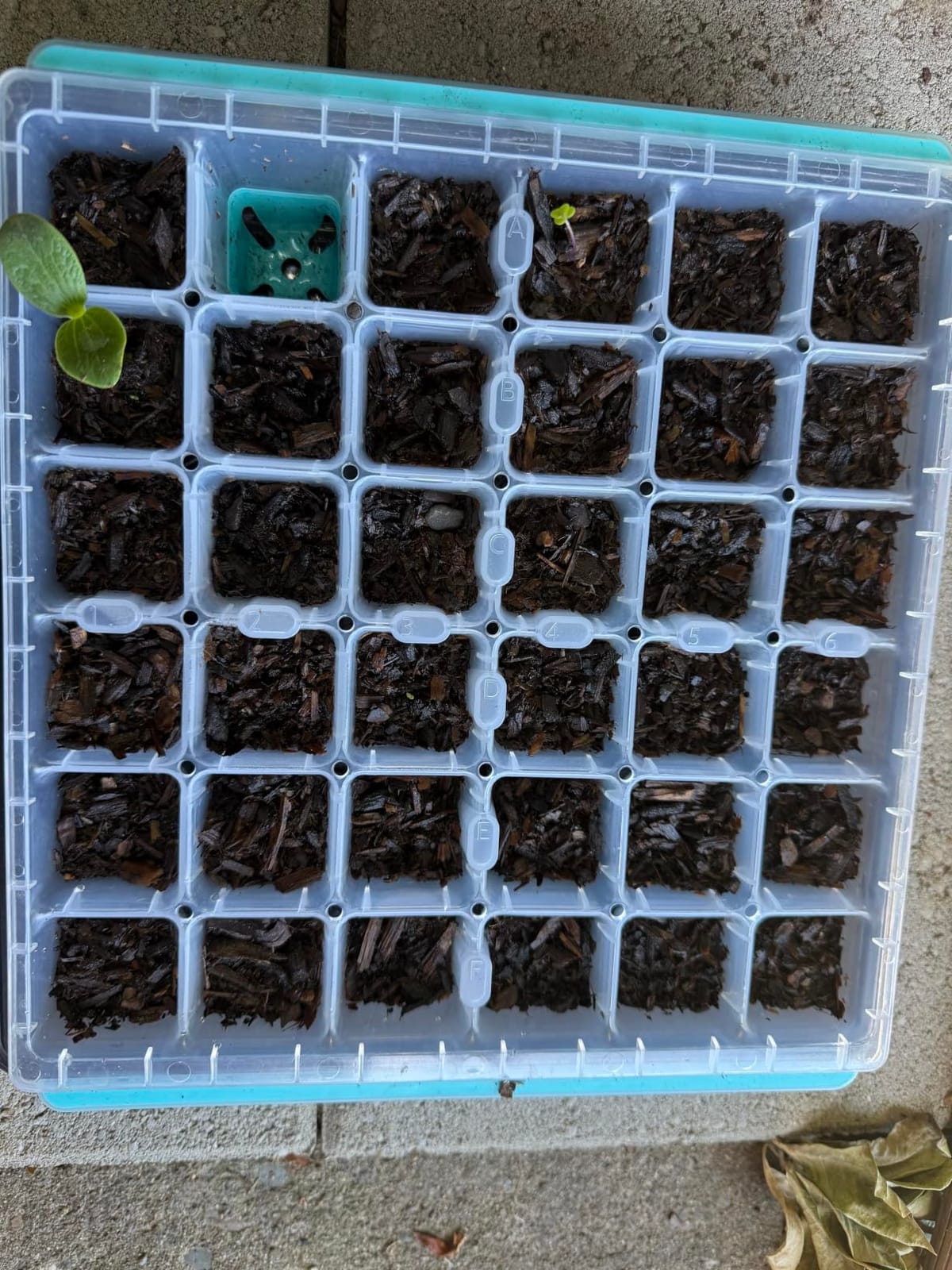
The alphanumeric row labels with the included Plant-o-Gram diagram are quietly excellent. When you have eight different basil varieties going, “the one in the back right” is not a record-keeping system.
What is not in the box: a dome. This is the most-raised missing component in the whole roundup. Reviewers improvise one from a clear bakery container, and that works better than you would expect for a windowsill setup in a heated room.
Who this tray suits
Apartment and balcony gardeners, anyone with one good south-facing window, and beginners who want a single object rather than a station. The raised edge contains water with no spills, which matters on a sill above a desk.
Top-shelf dishwasher safe means cleanup is genuinely quick, and the deep cells slow the drying that normally kills small-window setups.
Who this tray does not suit
Skip it if you want to sow a whole vegetable plan. Eight cells will not carry tomatoes, peppers and a brassica sowing at once, and there is no light or heat of any kind.
The bottom tray is thin. Treat it as a windowsill tool rather than something you carry across a garage to a potting bench.
4. Sondiko Seed Starter Tray with Grow Light and Heater – Best Premium All-in-One
Sondiko Seed Starter Tray with Grow Light, Heated Seed Starter Kit
- Heater 59F-104F
- Dual LED bars
- 40 deep cells
- 8 dome vents
- 16.53 x 4.72 x 11.02 in
Pros
- Built-in adjustable bottom heater removes the need for a separate heat mat
- Dual full-spectrum LED bars with adjustable height and five brightness levels
- 40 deep cells at 1.57 x 1.37 inches give roots real room
- Removable base doubles as a water reservoir
Cons
- LED output is dim once seedlings pass the early stage
- Timer operation is not clearly explained
- Awkward to reposition lights once the dome comes off
This is the one kit in the group that solves the whole problem in a single box: heat from below, light from above, humidity in between, and 40 cells deep enough to actually grow a tomato in. If you have a dedicated shelf and no patience for assembling four separate purchases, that is worth paying for.
The heater runs from 59 to 104 degrees Fahrenheit, and setting it in the low seventies before sowing peppers and eggplants is the single change that improved my germination rate more than any tray swap I have made.
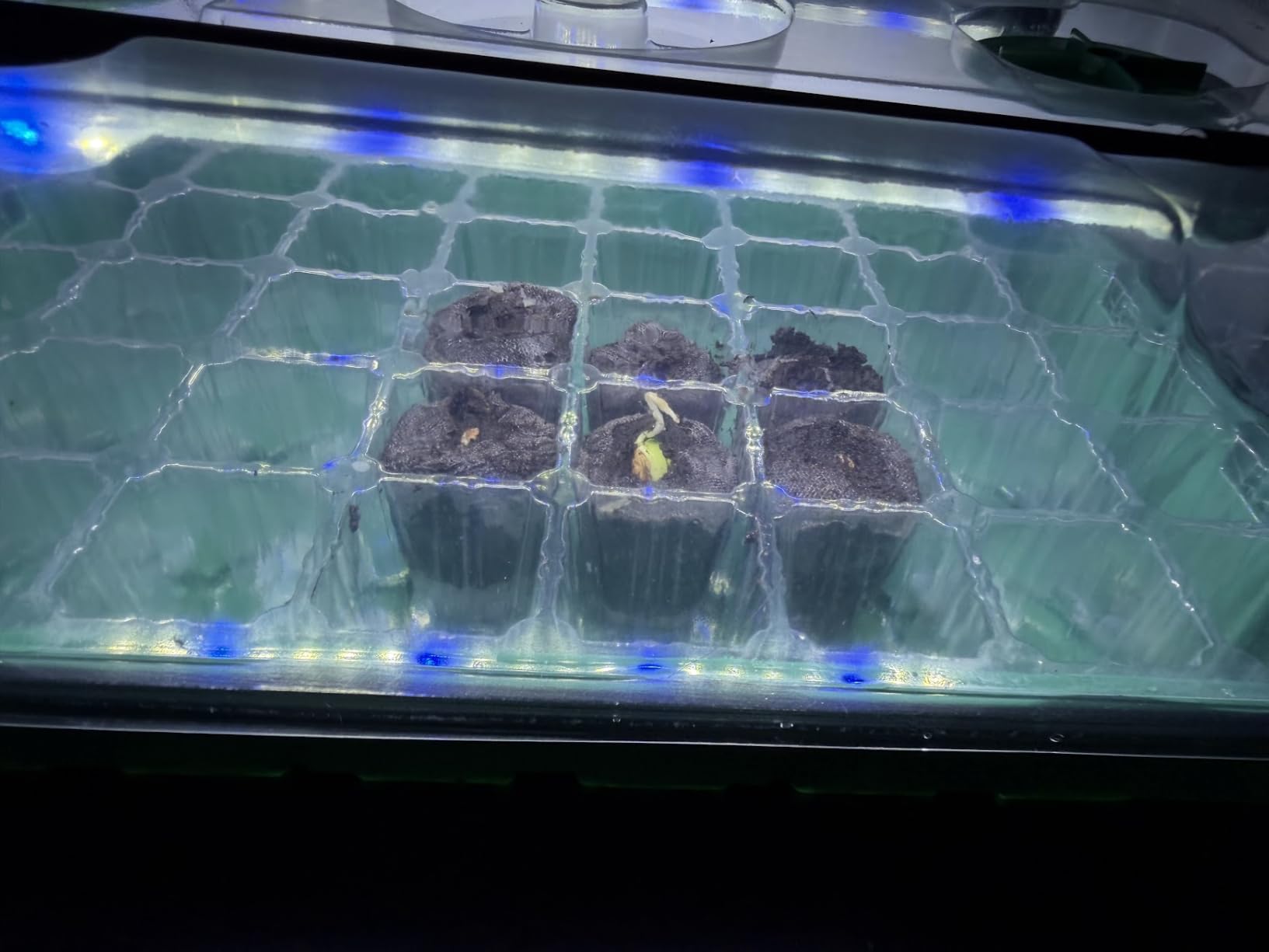
The cells are deeper than most, and the dome is raised to match, which means seedlings get vertical clearance before you have to intervene. That extra headroom is the difference between a tomato that up-pots once and one that needs handling twice.
What is not in the box: medium, seeds, and any timer explanation worth the name. The three auto-timer settings exist, but reviewers repeatedly describe working out the controls by trial.
Who this kit suits
Warm-season growers starting tomatoes, peppers and eggplants indoors who want a single plug-and-play unit. It also works for cuttings and clones thanks to the reservoir base.
If your space is a basement or a spare room with no natural light, having a bar light and a heater on the same footprint is a real saving in both shelf space and setup time.
Who this kit does not suit
It is not enough light for the whole run. Owners report strong results early and stretched seedlings later, so plan on a stronger light for the weeks before transplanting.
And it is thin, light plastic with limited rigidity. If you want a tray that survives being moved around a garden, this is not that.
5. YAUNGEL 6-Pack Seed Starting Kit with Grow Light – Best Budget Light Kit
YAUNGEL Seed Starter Tray with Grow Light, 6 Pack Seed Starter Kit with Timing Controller Adjustable Brightness, Thicken Seedling Starter Trays with Humidity Domes Heightened Lids, Gift Box
- 16 LEDs per tray
- Shared controller
- 4 timer settings
- Raised domes
- 5.6 x 5.5 x 7.2 in
Pros
- Six lit trays sharing one intelligent controller at a low entry point
- Four timer settings and adjustable brightness for different stages
- Adjustment window tunes humidity between 50 and 100 percent
- Taller domes give seedlings more vertical room
Cons
- Power plug not included in the package
- No heating element for warm-germinating seeds
- Small cell footprint limits batch size
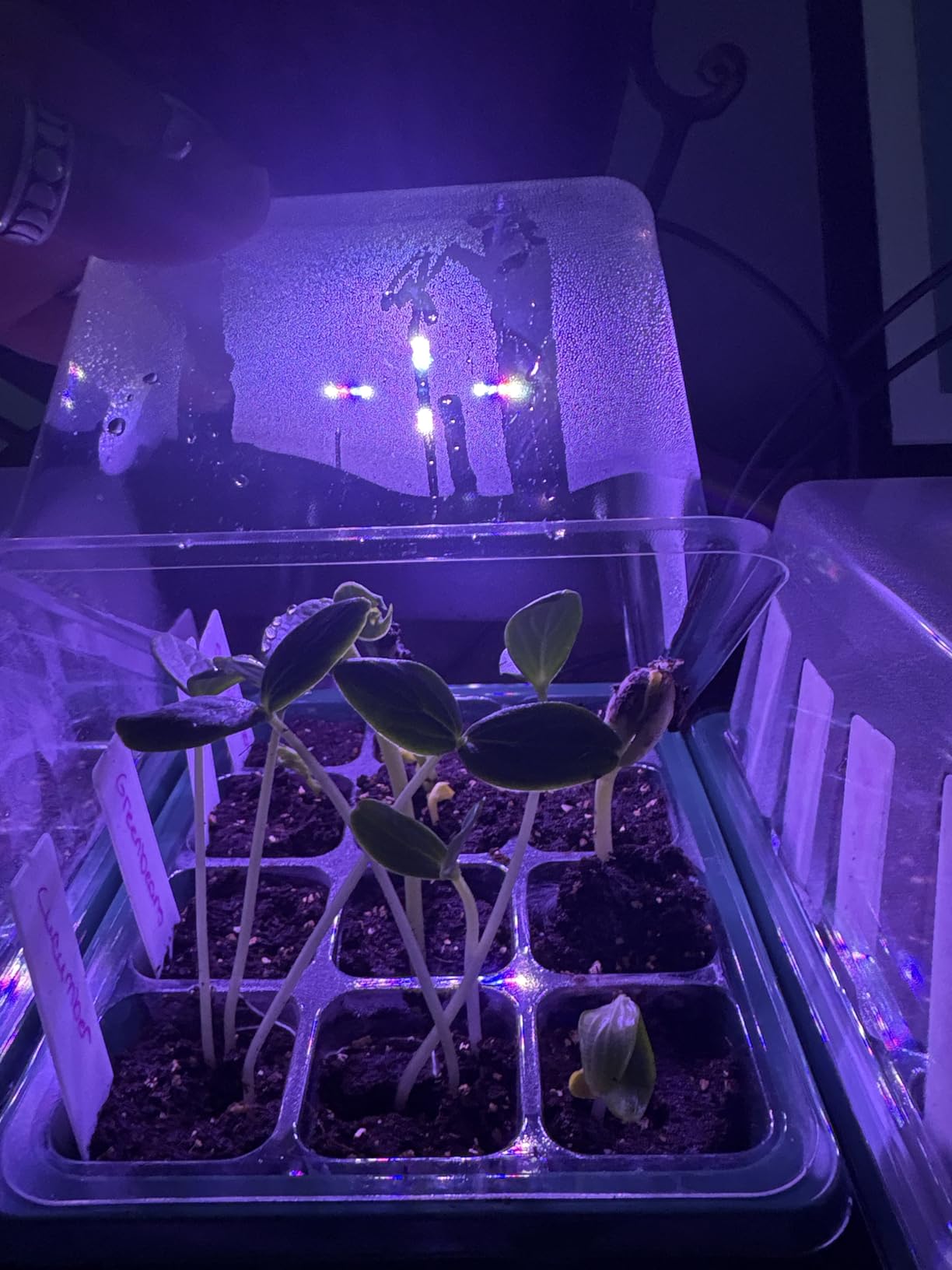
Six small trays, each with its own strip of 16 full-spectrum LEDs, all driven by one controller. That shared controller is the clever part: you set a schedule once and six trays follow it, which is far less fiddly than six separate timers.
I like the taller domes on this one. The extra vertical clearance lets a brassica or a lettuce run to a usable size before it needs the cover off, which shortens the vulnerable window right after emergence.
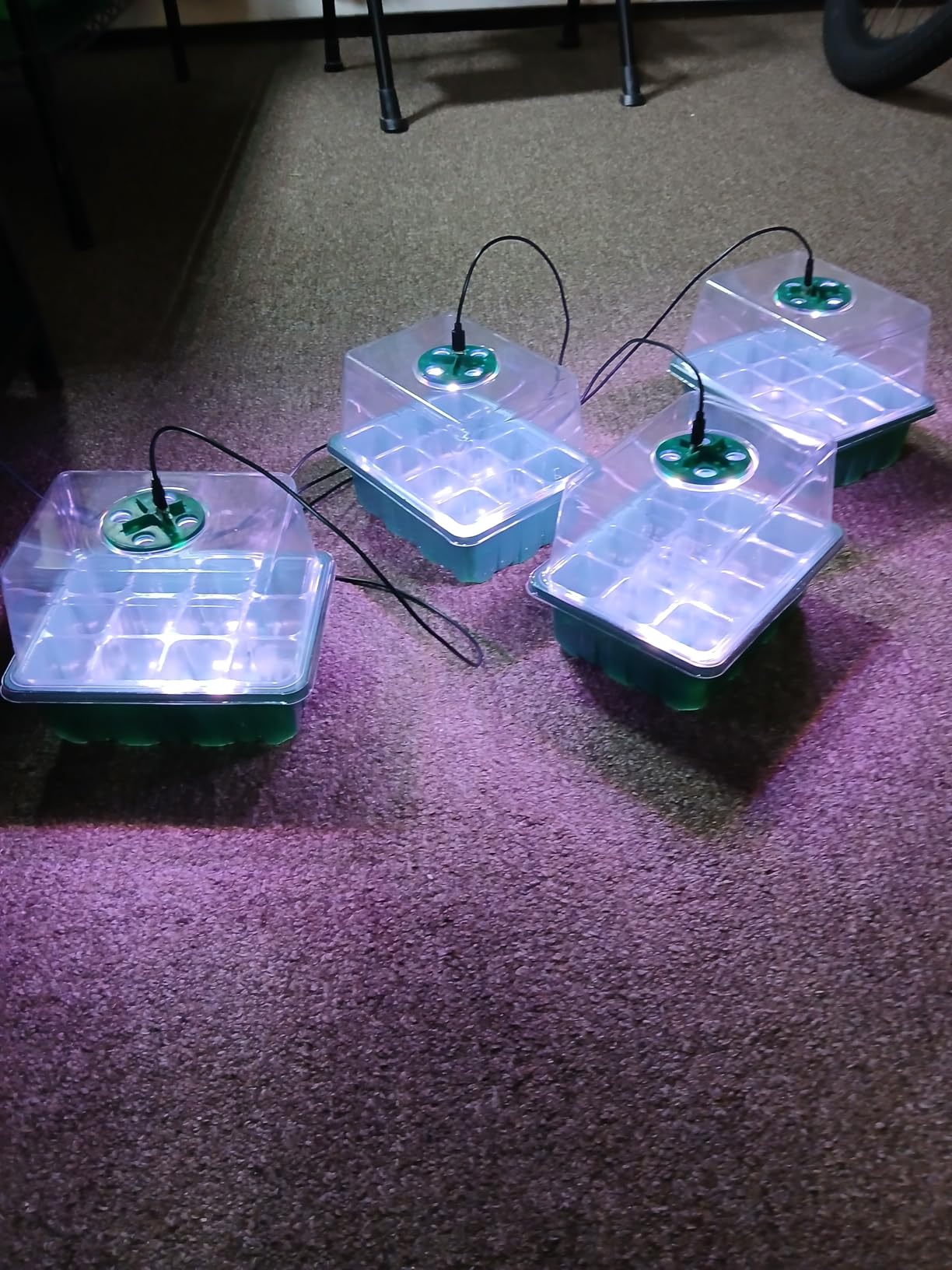
The humidity adjustment window lets you go from a near-sealed environment at sowing down to open air without swapping parts. On brassicas, cracking it earlier than I would have otherwise cut my losses noticeably.
What is not in the box: the power plug. You need to source that yourself before the lights run, and it is the most common practical complaint in the reviews. No heat function either.
Who this kit suits
Cool-season growers and first-year gardeners who want light from day one without buying a separate fixture. Lettuce, kale, chard and cilantro are the natural fit for this format.
It also suits anyone sowing across a windowsill or a bookcase, since each tray is small enough to move individually and you can spread them out to get even coverage.
Who this kit does not suit
Not for peppers, eggplants or tomatoes in a cold room, since there is no heating element. Add a mat underneath and this becomes a very capable starter.
The cell footprint is small, so treat the six trays as a diverse-variety tool rather than a bulk sowing tool.
6. Burpee 72-Cell Seed Starting Kit with Dome and Coir Pellets – Best True All-in-One
Burpee 72 Cell Seed Starting Kit with Greenhouse Dome and Coir Pellets
- 72 coir pellets
- 2 x 36-cell trays
- Reservoir tray
- Vented dome
- 10 x 20 x 5 in
Pros
- Only kit here that ships medium
- 72 coir pellets plus dome
- reservoir and markers in one box
- 1020 footprint fits standard shelving and racks
- Cells at 1.5 x 1.5 x 2 inches give workable root depth
Cons
- No grow light included
- Thin cell walls that flex when popping seedlings
- Coir pellets can break apart at transplant time
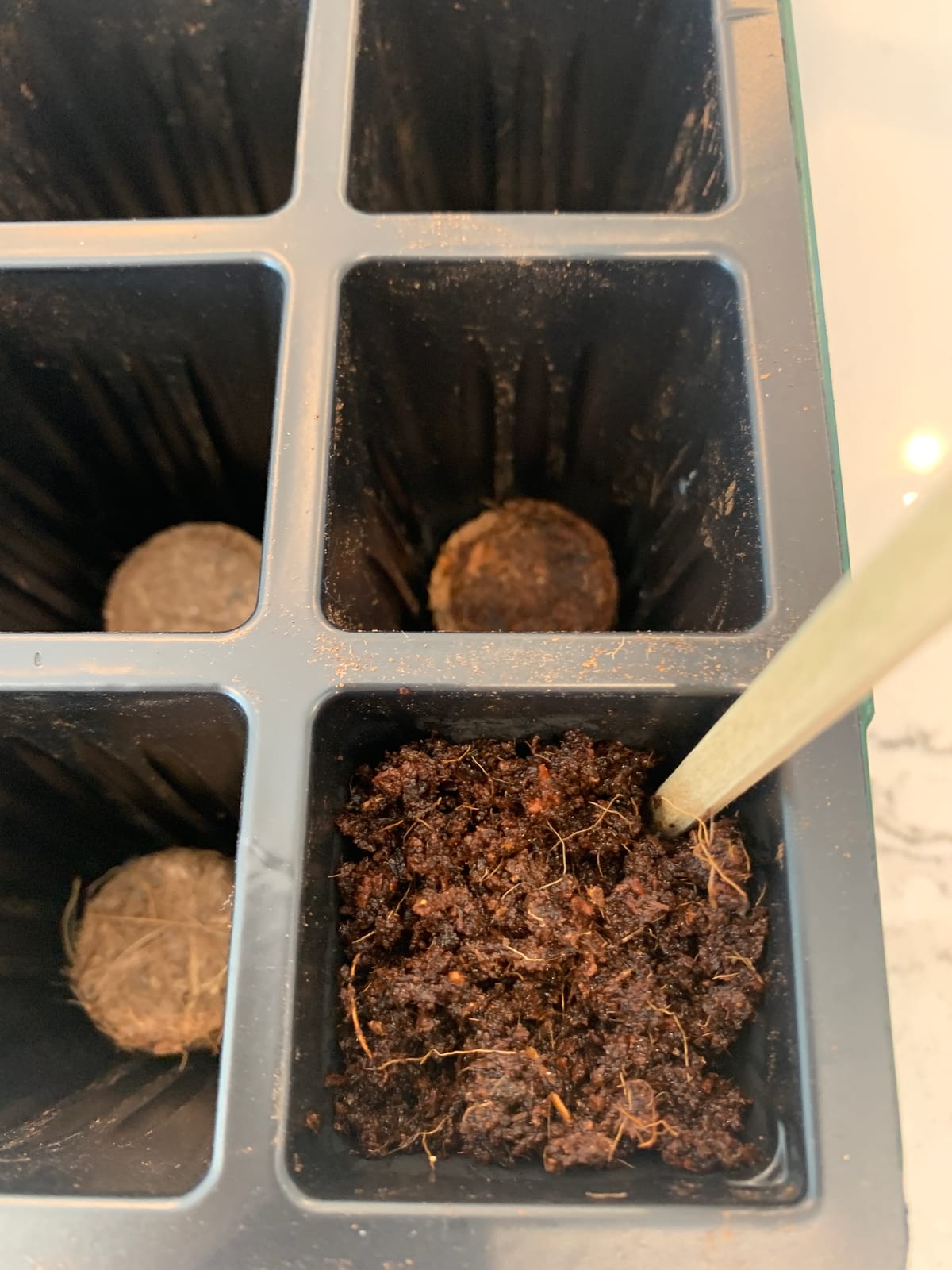
This is the only kit in the roundup that arrives with growing medium, and that single fact changes the experience for a first-timer. Seventy-two coir pellets, two 36-cell trays, a reservoir tray, a vented dome and six plant markers, ready to sow with nothing else in the shopping cart.
The 10 by 20 inch footprint is the industry-standard 1020 size, which is why it slots onto ordinary shelving without an adapter. That matters more than it sounds when you are building a station shelf by shelf.
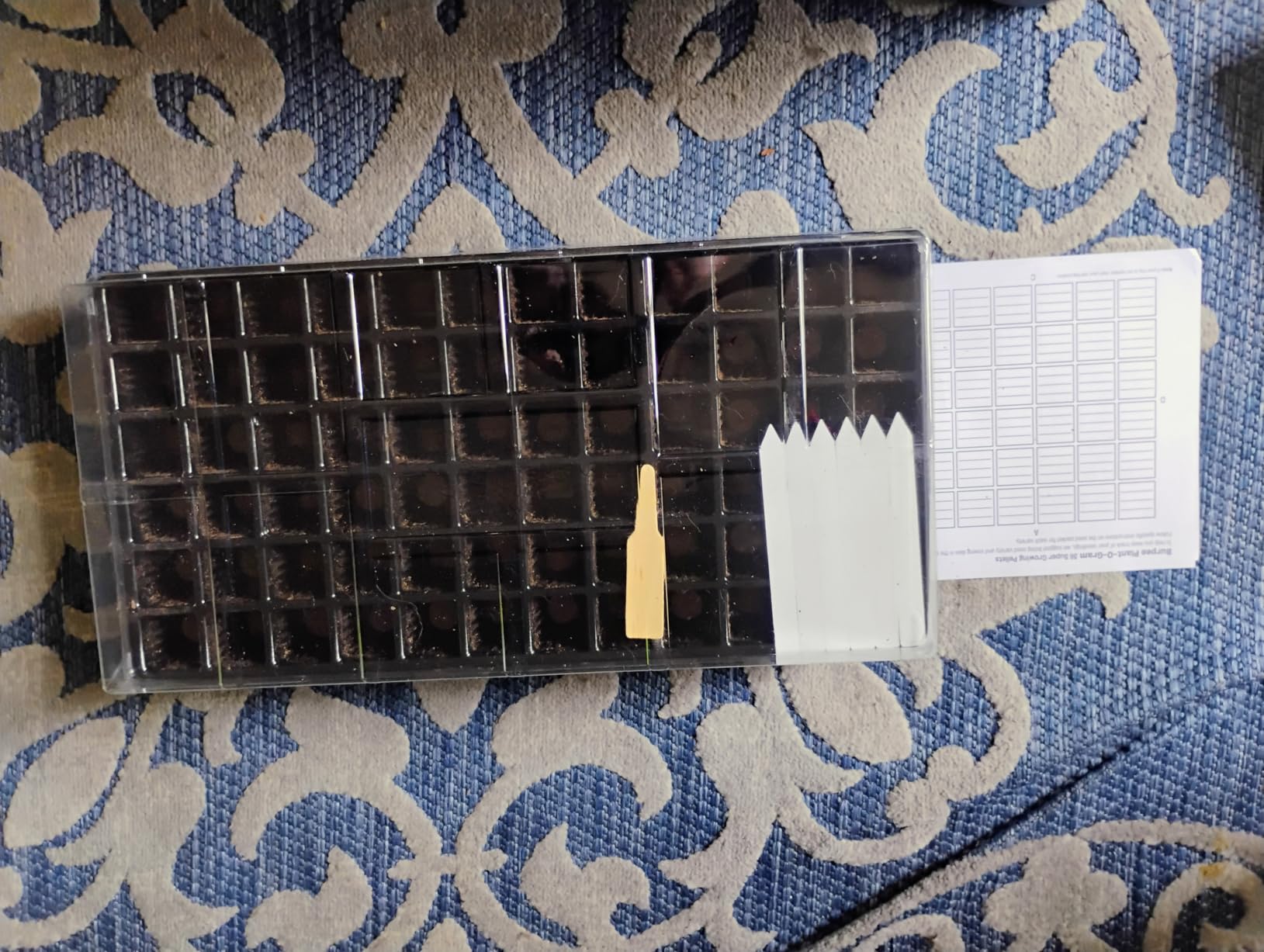
The bottom reservoir tray supports bottom watering, and combined with the coir that means far fewer top-watering passes. Reviewers commonly report sprouts in about 48 hours, which is quick for brassicas and lettuces.
What is not in the box: seeds and a grow light. The pellets are medium only, and you will need a separate light or a genuinely bright window.
Who this kit suits
First-season gardeners who want one purchase and no decisions, and anyone who prefers peat-free coir over peat-based mixes. The 1020 footprint also suits anyone already scaling up to a rack full of trays.
It works well for a broad mid-season sowing of lettuces, brassicas and beans, where the cell depth is a genuine match for the crop.
Who this kit does not suit
The dome is flimsy and often arrives partially crushed, and it does not latch in any wind, so keep it indoors. Several owners also substitute potting mix for the supplied pellets, which is a fair call if you want to skip the crumble at transplant time.
Skip it for warm-season crops unless you are adding heat, and skip it if you need anything larger than 72 plants in one round.
7. SOLIGT 60-Cell Kit with Grow Light and Heat Mat – Best for Tomatoes and Peppers
SOLIGT 60 Cell Seed Starter Tray Kit with Grow Light and Heat Mat
- 60 cells
- 11.5W 4500K light
- Waterproof heat mat
- 4.3 in dome
- 16.7 x 10.7 x 7 in
Pros
- Tray
- bottom tray
- dome
- grow light and heat mat in one package
- 11.5W 4500K light with 15 red and 111 white LEDs plus five brightness levels
- Flexible three-head gooseneck stays usable after the dome comes off
- Cells at 1.5 x 2.3 inches are deeper than most 60-cell trays
Cons
- Bulky at over 16 inches long and needs real tabletop space
- Heat mat is on and off rather than temperature controlled
- Light and mat together cost more if you only need one
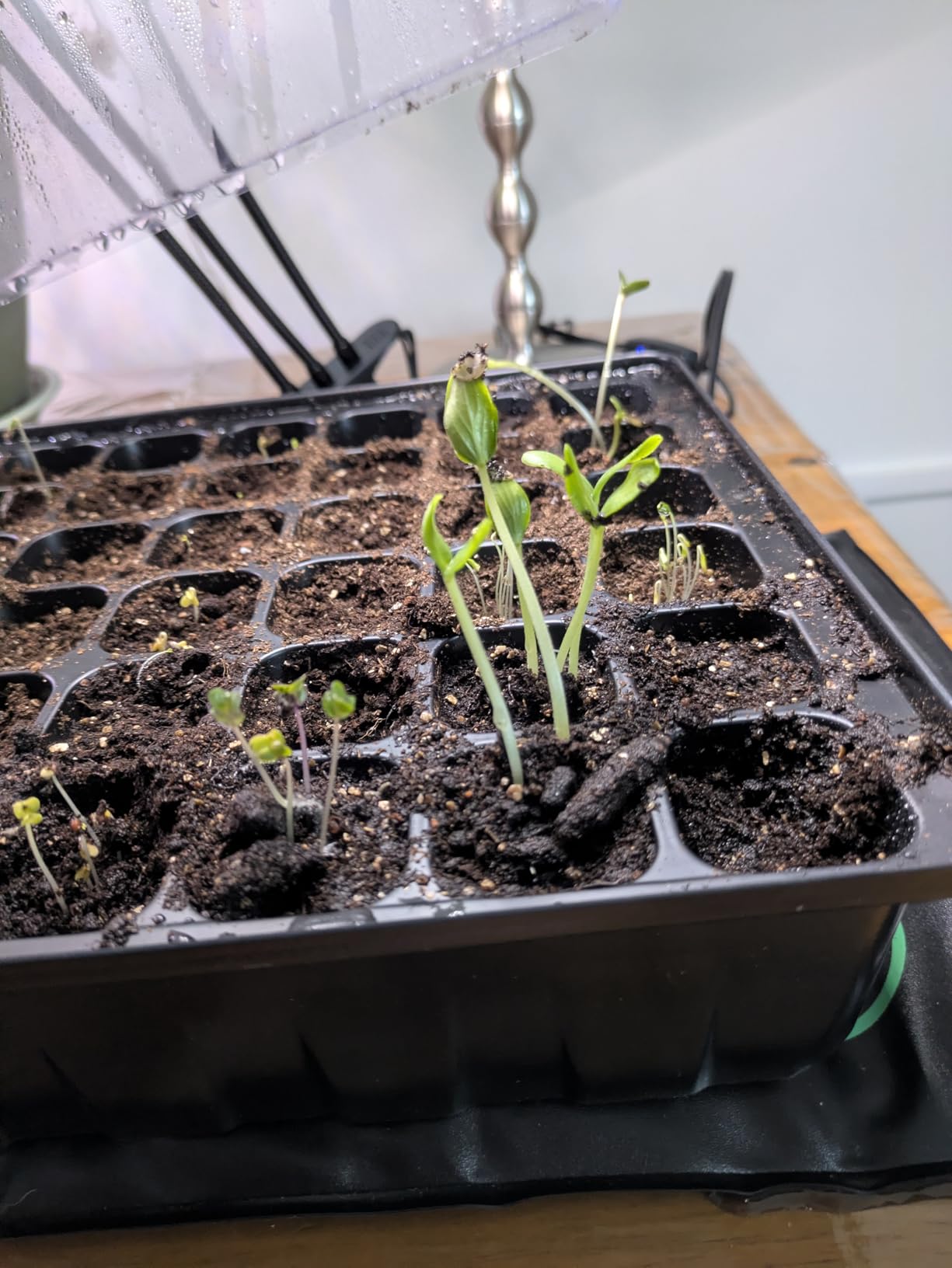
If your list is tomatoes, peppers and eggplants, this is the kit I would put on the shelf. It is the rare bundle where the parts actually match each other: a 60-cell tray deep enough for root development, a heat mat underneath it, a tall dome over the top, and a light on a gooseneck.
The gooseneck is the detail I would not buy without seeing it in person. Because the lamp head is on an arm rather than a fixed bar, you can raise it as seedlings grow and keep using it after the dome comes off, which solves the problem that frustrates owners of fixed-bar kits.
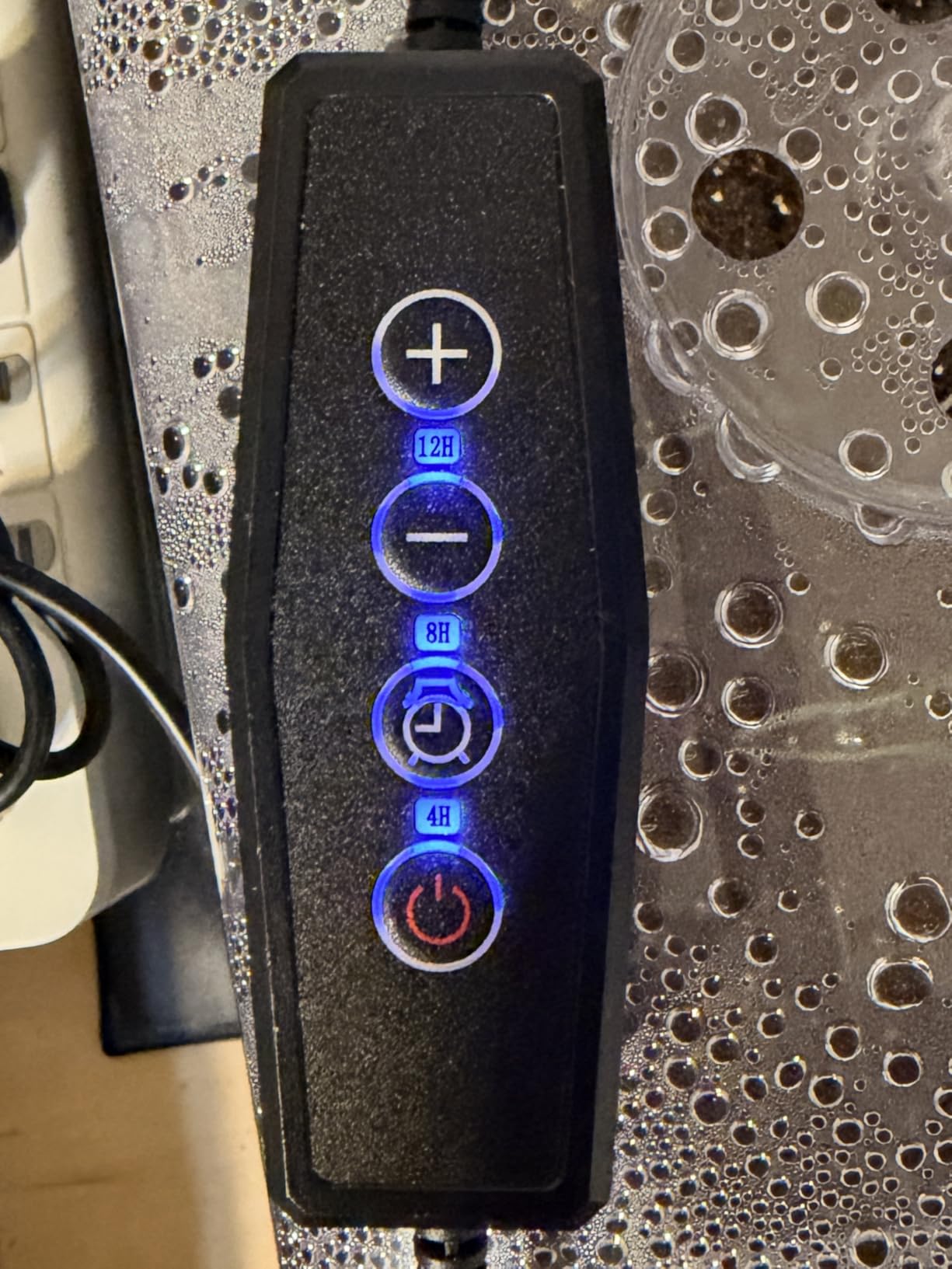
Cell depth at 2.3 inches is the second deepest here, behind the Sondiko, and that is what lets a pepper grow in the tray rather than needing an immediate up-pot. The dome at 4.3 inches is tall enough to keep humidity until a full canopy has formed.
What is not in the box: medium, seeds, and a thermostat. The heat mat runs on and off, so in a warm room you will need to unplug it once the medium is warm or you will cook the medium from below.
Who this kit suits
Warm-season growers in a cool basement or garage, and anyone who has one free shelf and wants a complete station on it. The generous cell depth makes it a good fit for peppers specifically, which are unforgiving about root restriction.
It is also a sensible first all-in-one because the light is bright enough to carry seedlings through their indoor run without a second purchase.
Who this kit does not suit
Small spaces. At over 16 inches long this needs a real tabletop, and it will not fit a bookcase or a windowsill.
Skip it if you only need one function. If you already own a good light, the mat and lamp together are more than you need to spend on a tray that exists anyway.
8. AC Infinity Humidity Dome Kit 5×8 with LED Bars and Heat Mat – Best for Cloning and Cuttings
AC Infinity Humidity Dome Kit 5×8 w/ LED Grow Lights & Seedling Heat Mat
- 3mm thick dome
- Samsung LM301H EVO LEDs
- Dial heat mat
- Up to 40 seedlings or clones
Pros
- Heavy-duty 3mm dome with a glossy finish for strong light penetration and controlled humidity
- Grow light bars use Samsung LM301H EVO diodes for efficient output
- Heat mat has an adjustable dial so you set warmth rather than guess
- Height extension panels let you grow on as plants get taller
Cons
- Most expensive kit in this group
- No light timer or app scheduling
- Fixed 5x8 format with capacity for around 40 seedlings
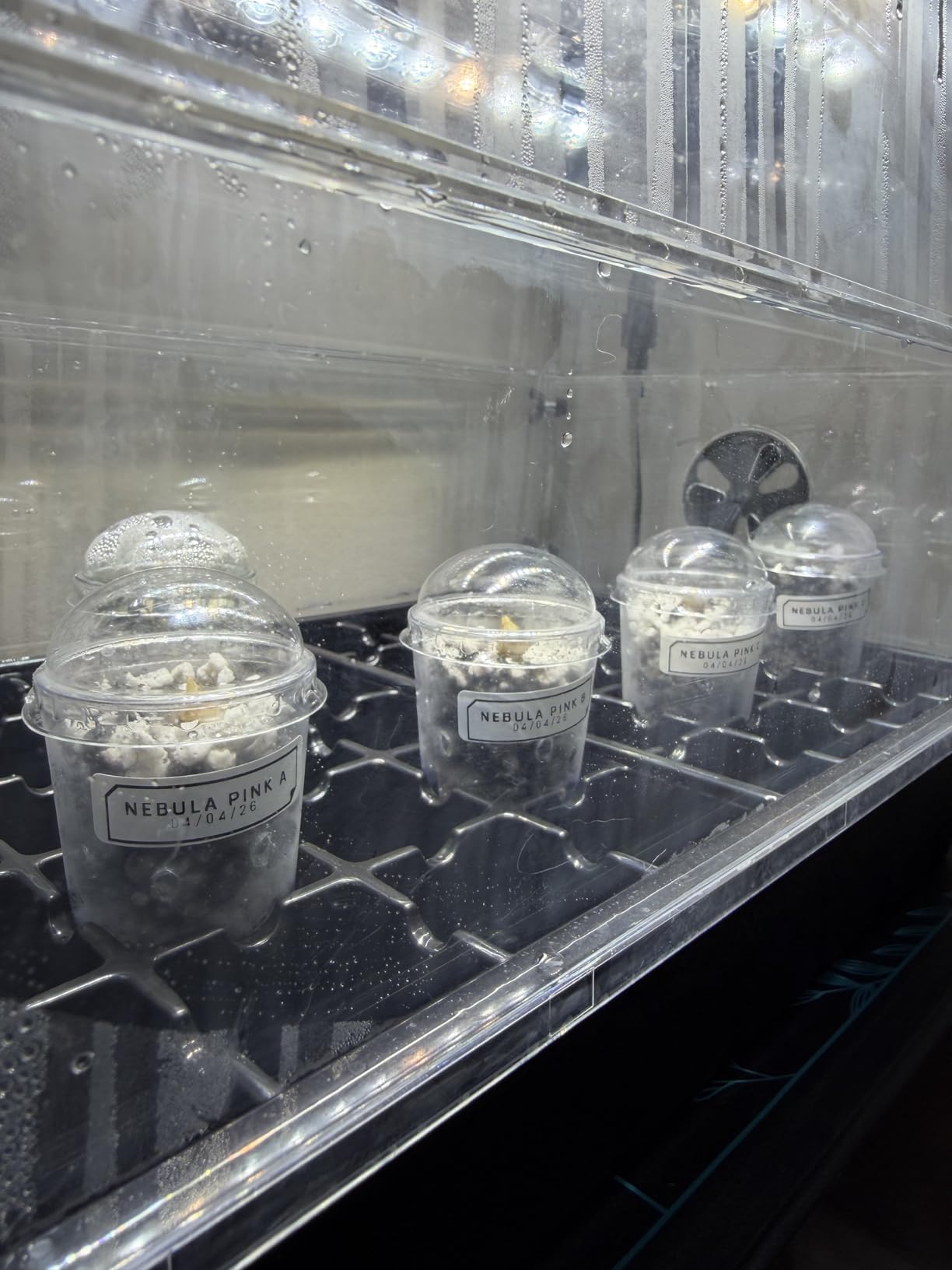
This is the most solidly built kit in the roundup, and the 3mm dome is the reason. Every other clear cover in this group is thin plastic that flexes and fogs, and a thicker dome holds humidity more consistently and passes more light through to the canopy.
It is also the one kit here designed as much for clones as for seeds. The drip trays, the height extension panels and the dial-controlled mat are the same parts a propagator uses for cuttings, so it does double duty if you are into both.
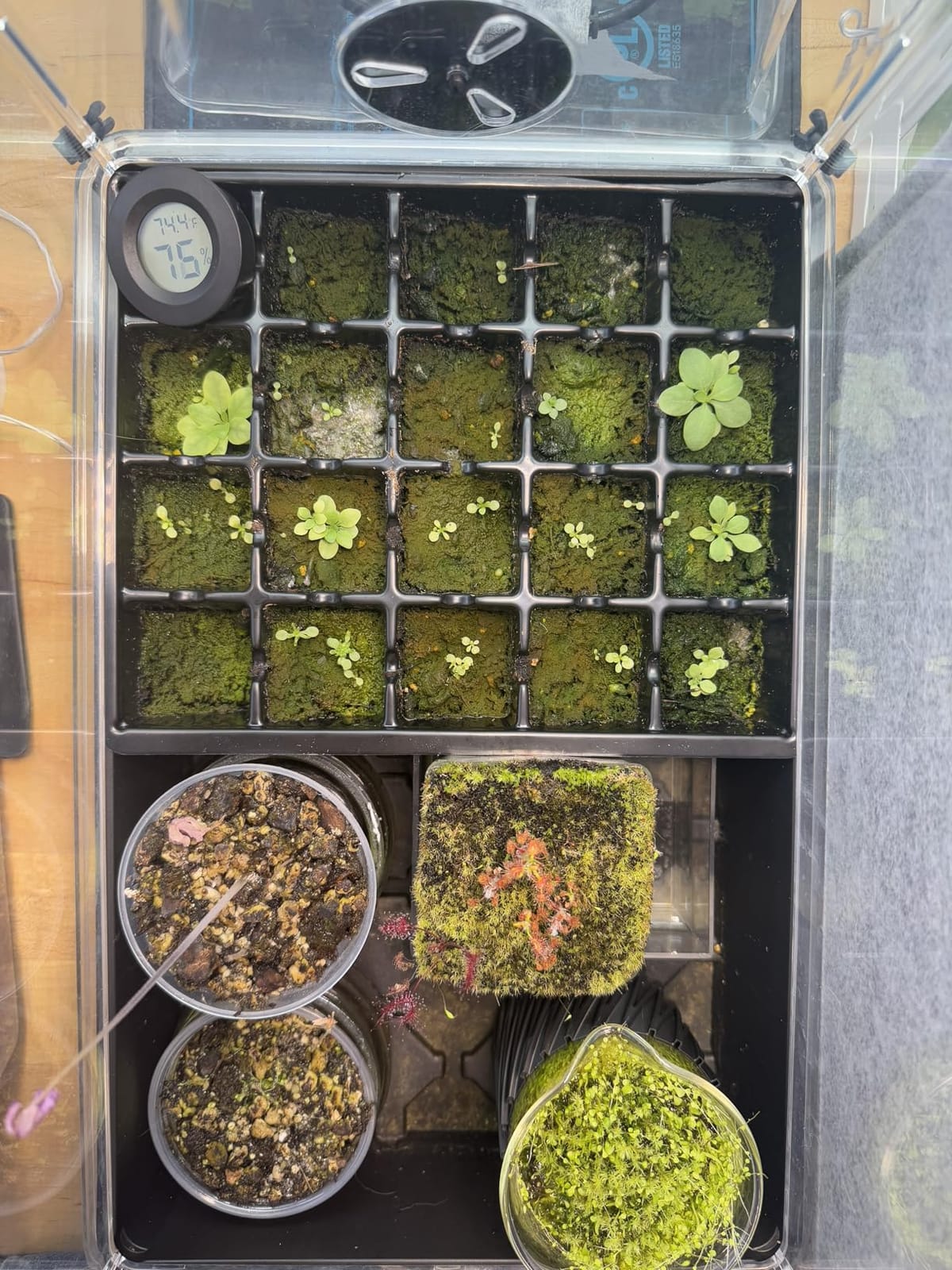
The heat mat dial is a genuine improvement on the fixed-temperature mats in cheaper kits. Dial control still is not a thermostat, but it gives you a usable middle setting instead of on and off.
What is not in the box: seeds, medium, and any timer. There is no scheduling on the light bars, so you are on a manual routine for the whole indoor run.
Who this kit suits
Serious propagators and anyone running both seed starting and cloning in the same high-humidity space. The build quality also makes it a good long-term buy if you keep trays across seasons.
If you value a component that lasts and dislike replacing cheap parts every year, the dome and trays here are the ones that survive that treatment.
Who this kit does not suit
Anyone sowing a large batch. Around 40 seedlings is the practical ceiling, which is less than the 60 and 72-cell kits handle comfortably, and the 5×8 format is fixed.
It is also the most expensive kit here, and beginners starting a dozen lettuce plants can spend that difference on medium and light and get a better result.
9. Jiffy Seed Starting Tray Kit 36-Cell 2-Pack – Best for No-Mix Starts
Jiffy Seed Starting Tray Kit – 36 Cell Germination Tray, Portable – 2 Pack, 72 Pellet
- 36 peat pellets per unit
- 72 pellets total
- Grooved base tray
- 11 x 11 x 4.25 in
- 2 packs
Pros
- Nothing to buy beyond seeds
- pellets expand in warm water in seconds
- Grooved base tray spreads water evenly across the bottom
- Compact 11 inch footprint suits a windowsill or a small shelf
- Sturdy base holds its shape with all pellets rehydrated
Cons
- Dome lid does not seat properly on the base and may need tape
- Thin and wobbly tray that needs careful handling
- Some users report fungus gnat larvae with the peat pellets
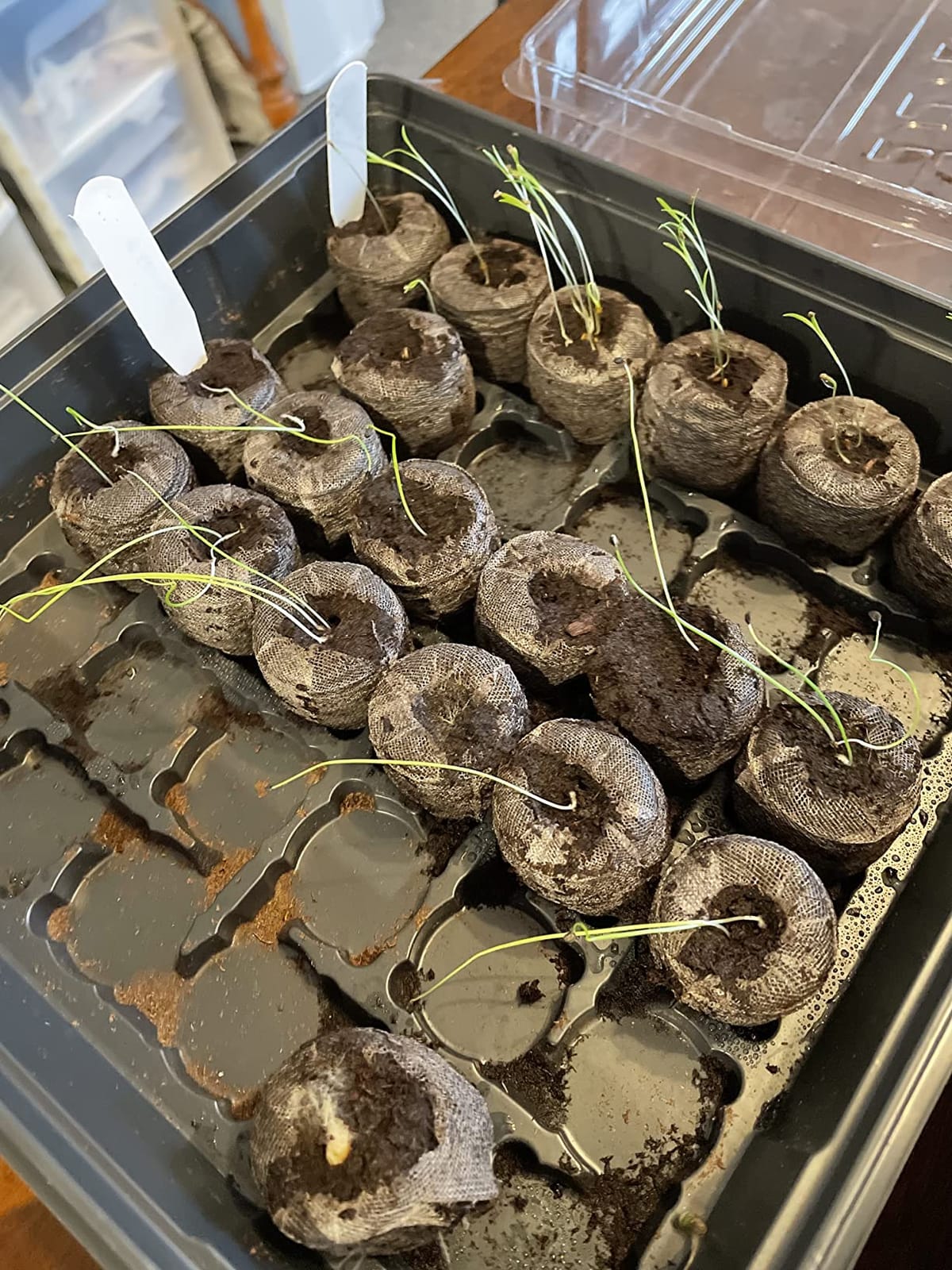
This is the fastest route from a bag of seeds to sprouts. Add warm water, wait a minute, sow, cover. No medium to buy, no mixing, no tray filling, and for a beginner that removes the single largest early-season source of failure.
The grooved base tray is the smart part. Water goes in at one end and tracks along the grooves so all 36 pellets wet evenly, which is how you avoid the usual pellet problem where three are damp and three are bone dry.
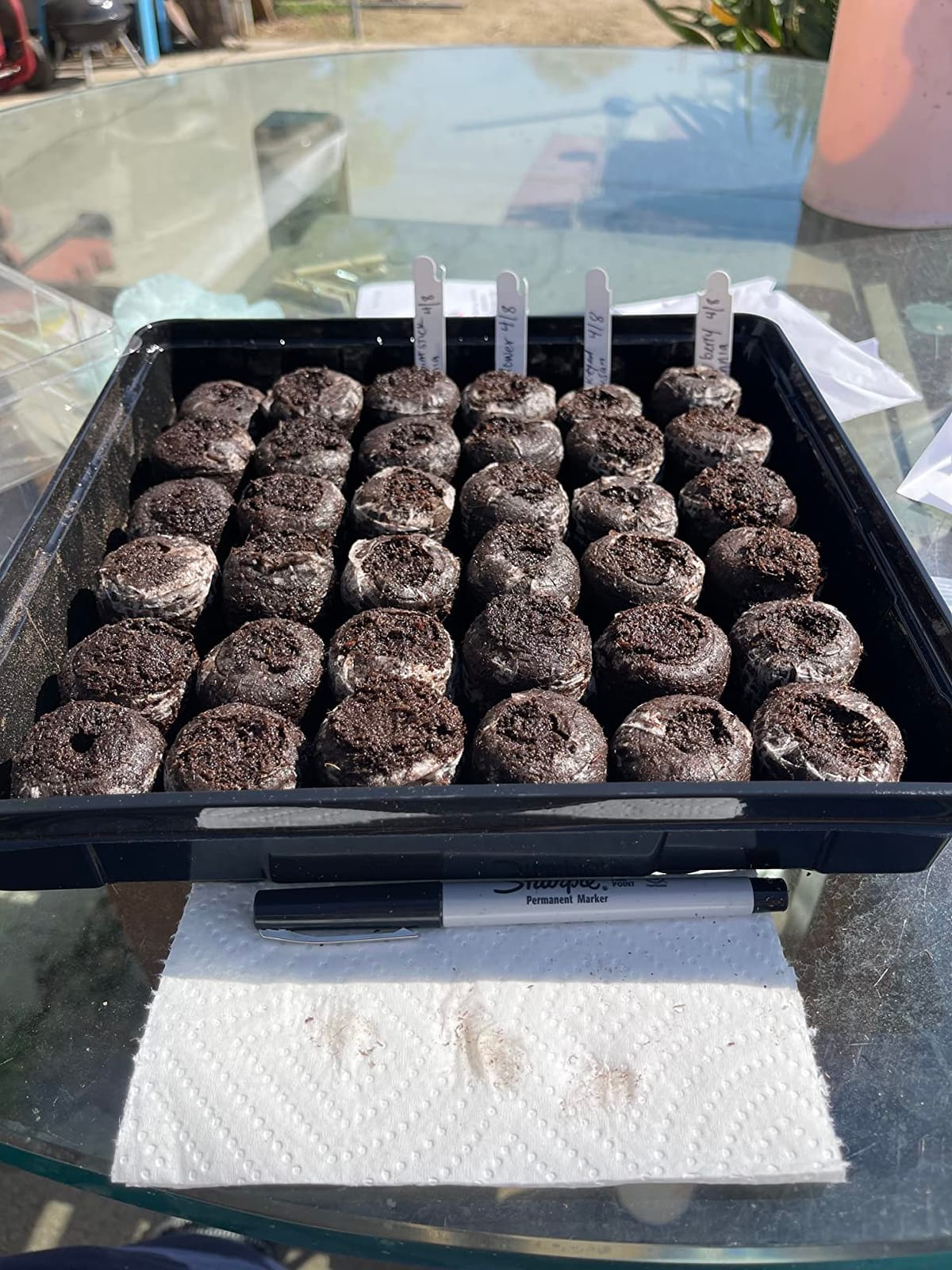
At 11 by 11 inches it is genuinely compact and stacks neatly with a second unit, so 72 pellets is a reasonable weekly sowing for a household garden rather than a token gesture.
What is not in the box: seeds, a light, a heat source, or a working seal on the dome. That last one is the big caveat, and more than one reviewer has had to tape the lid down.
Who this kit suits
Complete beginners, anyone with limited storage, and gardeners sowing a mix of quick crops where a no-fuss medium is worth more than control over the mix. Tomatoes, peppers, basil and zinnias all work from pellets.
It also suits a grow-through setup where the whole tray stays together and gets planted out, which saves a transplanting session entirely.
Who this kit does not suit
Experienced growers who want to control medium composition, and anyone on a peat-free path, since these are peat pellets. Forum consensus treats peat pellets as weak as a standalone system for crops that need a long indoor run.
There is also a reported association between the pellets and fungus gnat larvae. If you have gnat pressure in the house already, use tray and mix instead.
10. Patigrow 120-Cell Self-Watering Kit with Grow Light – Best for Low-Maintenance Watering
Patigrow 120-Cell Self-Watering Seed Starter Tray with Grow Light, Seed Starter Kit with 4.07” Humidity Dome, Indoor Seedling Starter Tray, Seed Starting Trays for Plant Germination, Seeds Growing
- 120 cells across 2 trays
- Capillary wick system
- 56 LED beads per tray
- 4.07 in domes
- BPA-free PET
Pros
- Self-watering capillary mats deliver steady moisture from sowing to transplanting
- 56 LED beads per tray with adjustable brightness and a timer
- 120 cells across two 60-cell trays with enlarged drainage holes
- Support stands
- controller
- labels and small tools included
Cons
- No side fill spout
- so refilling means lifting the tray
- LED bars are weaker than dedicated supplemental lighting
- Some users report wicks not reaching the medium
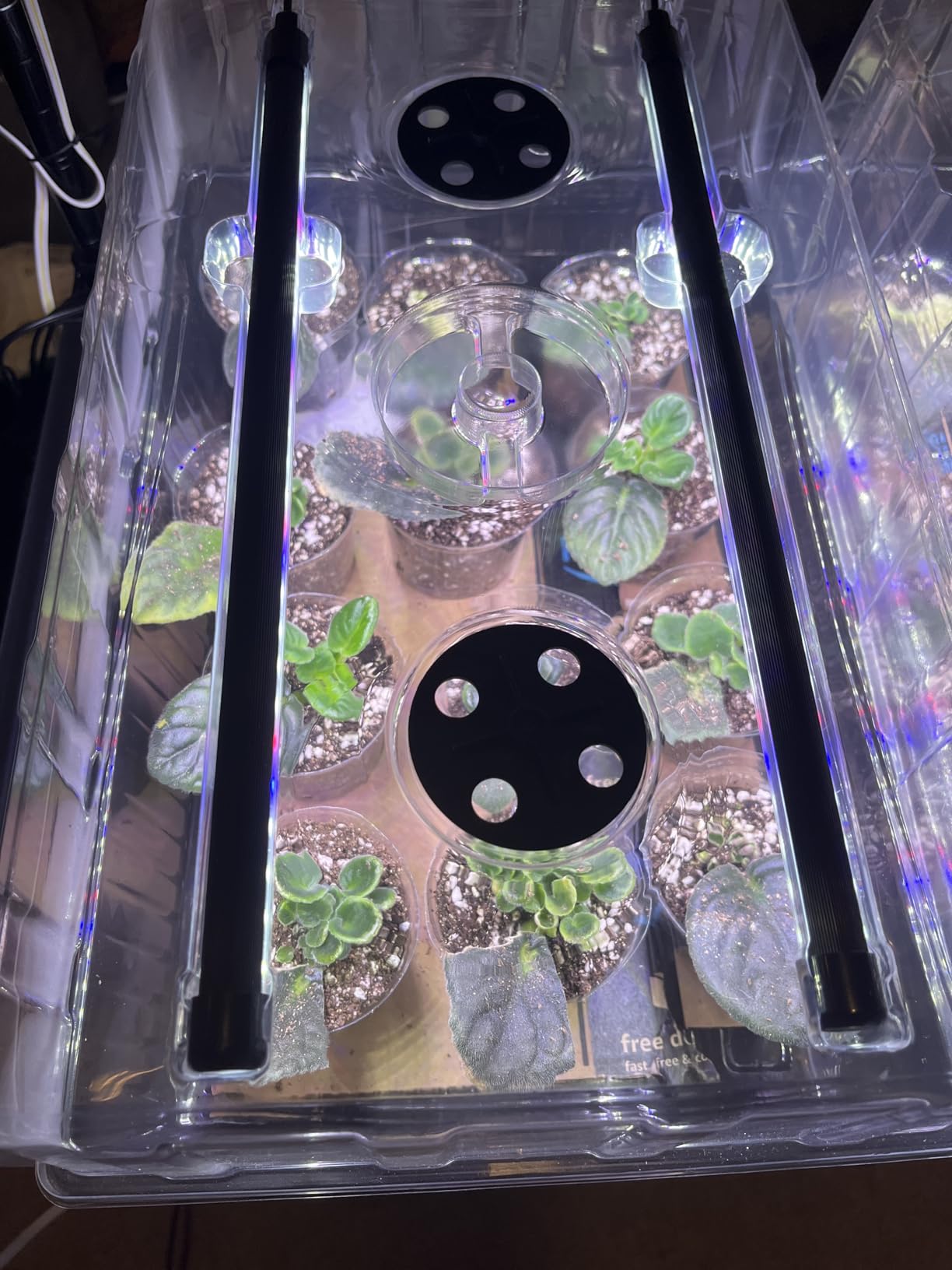
The self-watering system is the reason to look at this one. Capillary mats wick from a base reservoir up into the cells, so you are topping up a reservoir rather than trying to hit 120 tiny cells with a watering can twice a day.
With 120 cells across two 60-cell trays, this covers a serious sowing, and the included support stands let you raise the trays under the light bars for better airflow underneath.
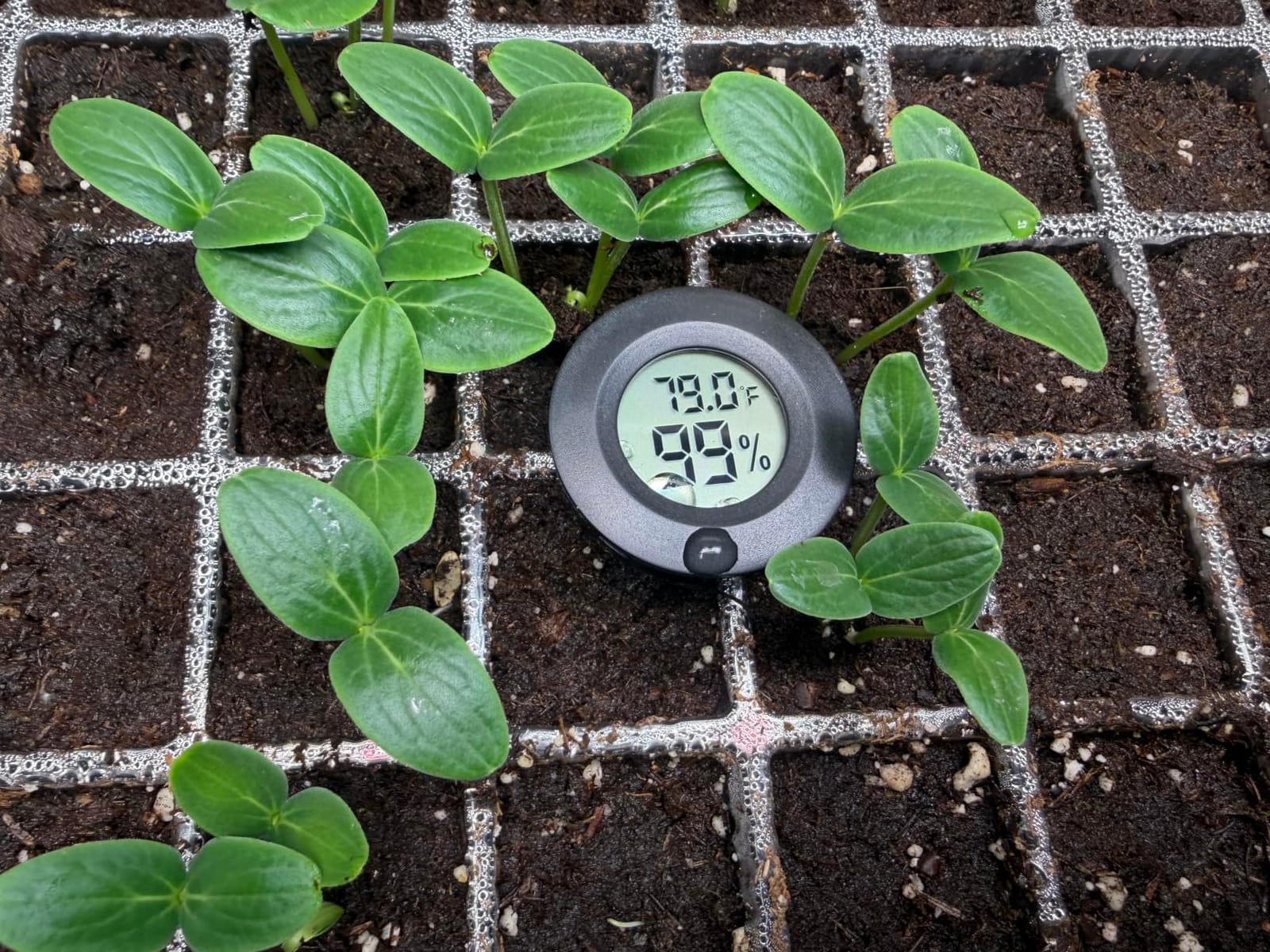
Owners report high germination rates and sturdy seedlings as a direct result of the steady moisture. For someone who forgets to water or waters erratically, that reliability is worth a lot.
What is not in the box: medium, seeds, and a heat source. There is no heating element, so peppers and eggplants still need a mat underneath in a cool room.
Who this kit suits
Gardeners traveling, working long hours, or simply forgetful about watering, and anyone sowing a large batch who wants consistency across a hundred-plus cells rather than spotty germination.
It is also a good pick for a self-watering deep-watering setup where you are managing trays on a timer or on a schedule you cannot control tightly.
Who this kit does not suit
There is no side fill spout, so every refill means lifting the tray off its stand. That is fine occasionally and irritating daily.
The LED bars are weak, and reviewers report leggy growth under them. Treat them as an early-stage light and add something stronger once true leaves appear, and note the PET dome and trays are breakable.
11. BlumWay 80-Cell Seed Starter Tray with Grow Light – Best for Variety Trials
BlumWay Seed Starter Tray with Grow Light, Humidity Dome, 2 Pack 80 Cells
- 80 cells across 2 trays
- 80 LED beads
- 3 modes and 5 brightness levels
- 1.96 in deep cells
- ABS
Pros
- 360-degree LED strips on the dome with 80 beads across the two trays
- Three lighting modes
- three timer settings and five brightness levels
- Deep 1.96 inch cells with 0.31 inch drainage holes
- Thickened ABS plastic described as anti-UV and corrosion resistant
Cons
- No heating element for warm-germinating seeds
- Timer status shown by LED colour rather than a display
- Light output may be short once seedlings are past sprouting
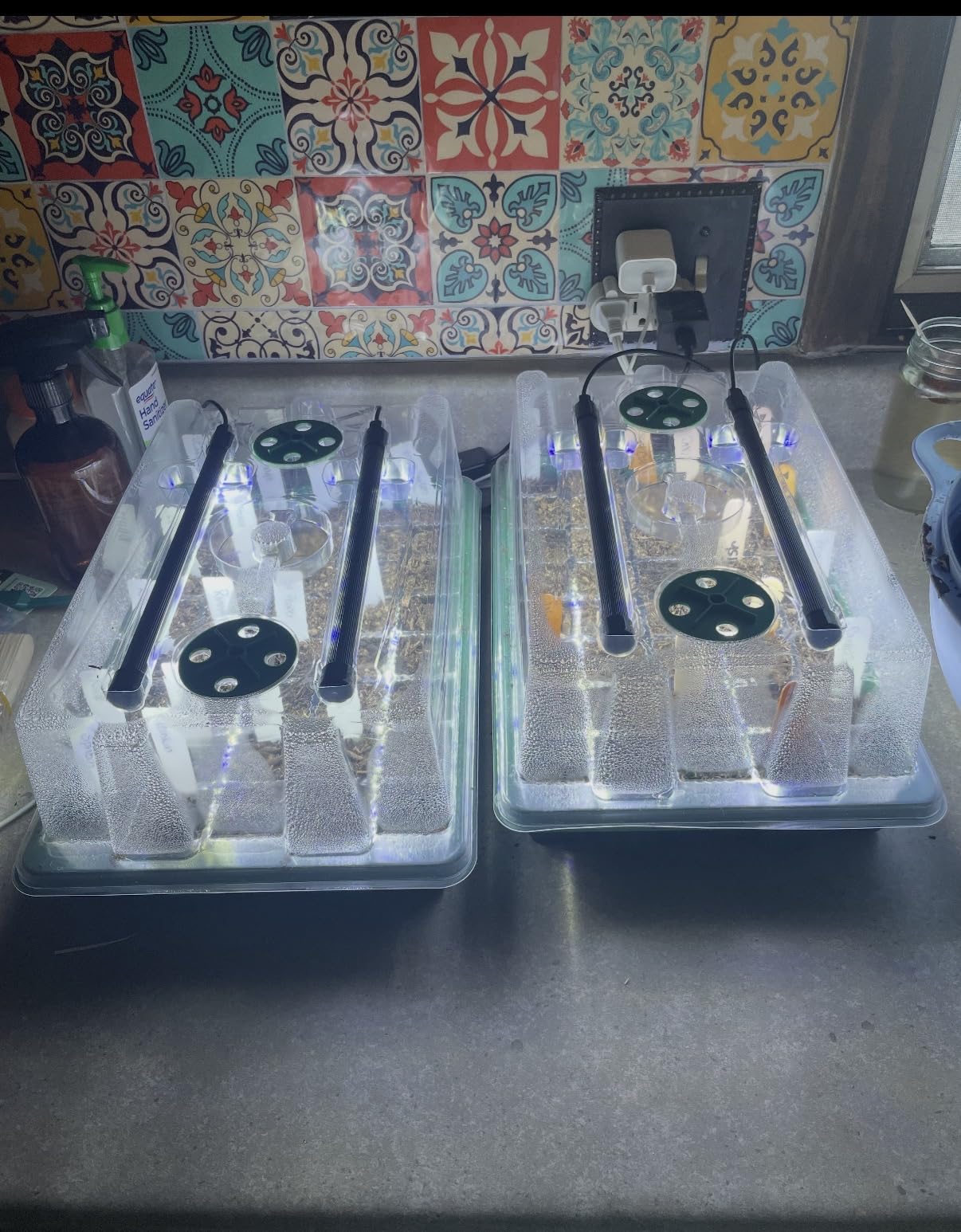
Eighty cells is a sweet spot for anyone running variety trials, and that is how I end up using this one. Sowing three or four cultivars of the same crop side by side under identical light and temperature is the only way to pick a winner for your actual microclimate.
The build quality is noticeably better than the light-equipped kits at a similar size. Thickened ABS with 360-degree strips on the dome means the light reaches the edges of the tray rather than just the centre, which matters when you are filling all 80 cells.
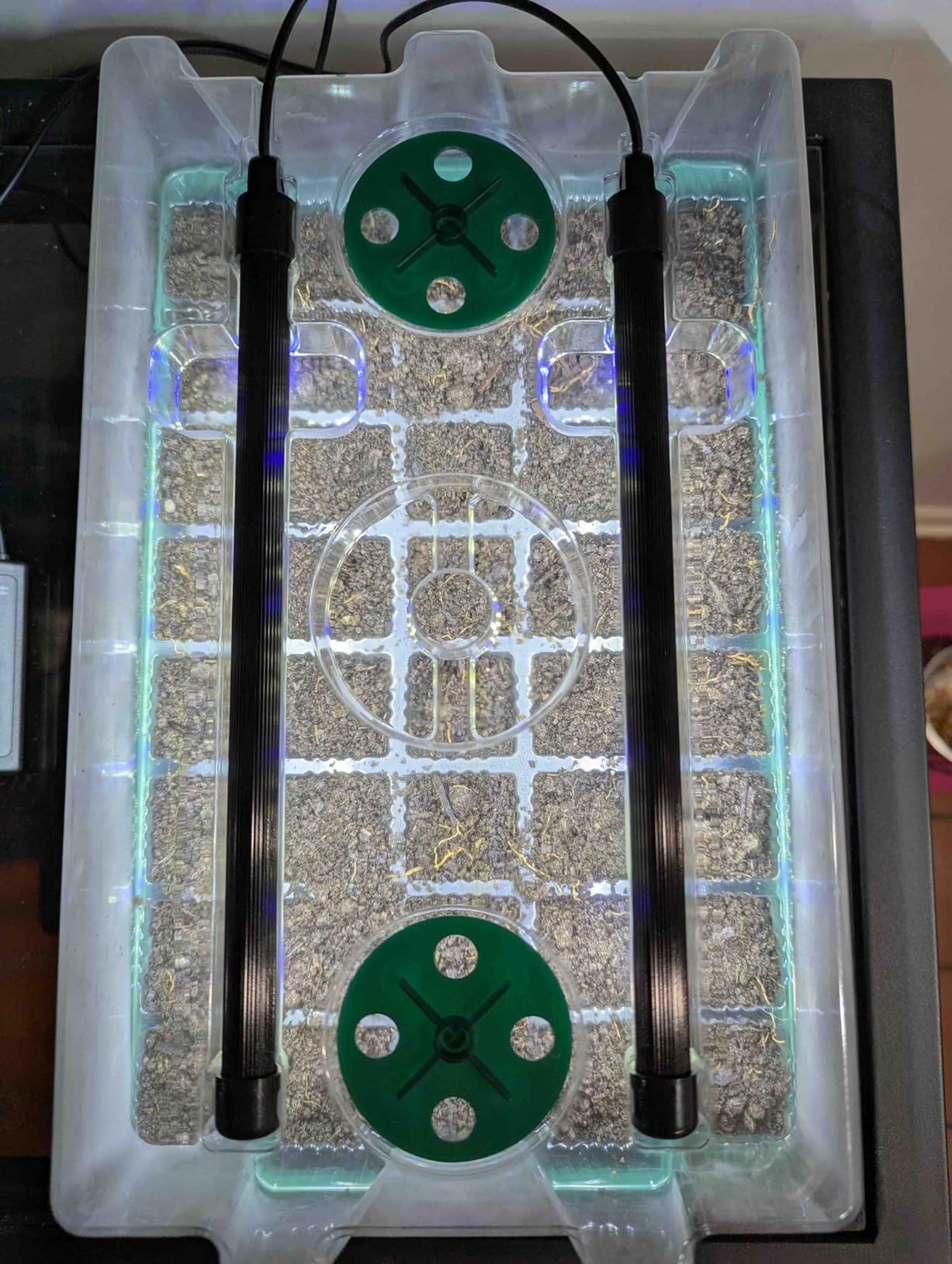
The three lighting modes let you shift output as plants change, and it runs from USB or the included plug-in adapter, so a laptop or a power bank is enough for a windowsill trial.
What is not in the box: medium, seeds, and heat. There is no heating function, and the timer shows its setting only through LED colour, which is hard to read in daylight.
Who this kit suits
Variety trials, comparison growing, and anyone splitting a sowing across two crops in a single session. The two-pack format also means you can run a warm crop and a cool crop on separate schedules.
It suits beginners too, because the taller dome and deep cells buy you time, and the ABS plastic tolerates being washed and reused.
Who this kit does not suit
Warm-season crops in a cool room, since there is no heat. Add a mat and it becomes a capable starter.
And plan on a stronger light later. The output is described as sufficient for sprouting rather than for a full indoor run, so a leggy correction is likely at the two-leaf stage.
12. GROWFRIEND 40-Cell Kit with Grow Lights, Heat Mat and Extras – Best Extras in the Box
GROWFRIEND Seed Starter Kit with Grow Lights & Heat Mat – 40-Cell Seed Starter Tray, Humidity Dome, Soil Moisture Meter & Sticky Gnat Traps – Indoor Greenhouse & Plant Propagation Station
- 40 cells
- Dual LED lights
- 10 x 20 in waterproof heat mat
- Vented dome
- Soil meter
Pros
- The most accessories in the box
- including a soil meter and sticky gnat traps
- 10 by 20 inch waterproof heat mat gives even soil warmth
- Dual LED lights with 16 white and 4 blue LEDs plus adjustable brightness
- Thick plastic tray described as reusable across seasons
- Vented dome reduces the mold risk that closed domes create
Cons
- Lowest average rating in this group at 4.1 with a 12 percent one-star share
- Only 40 cells
- the smallest capacity here
- No timer on the grow lights and no self-watering reservoir
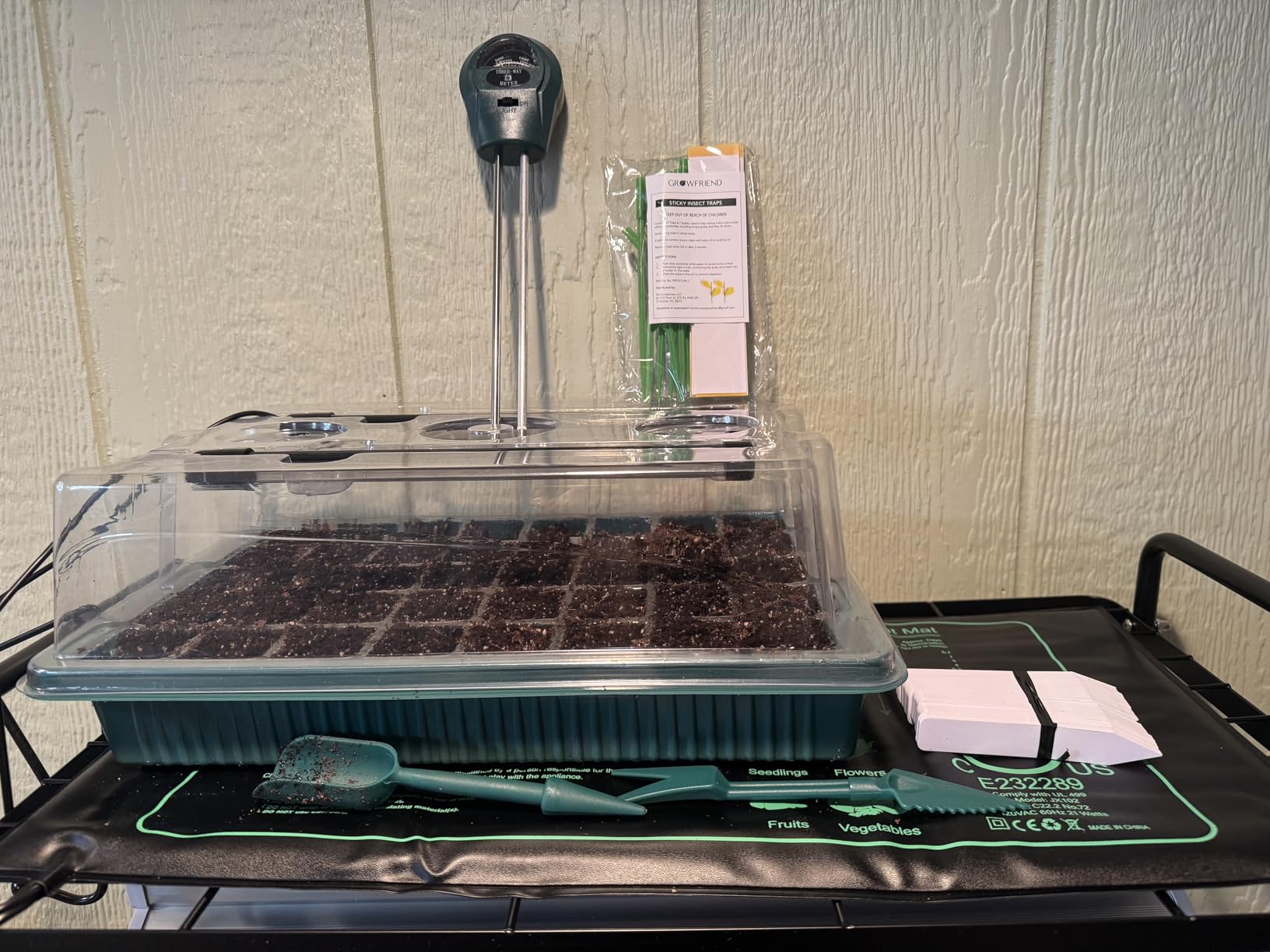
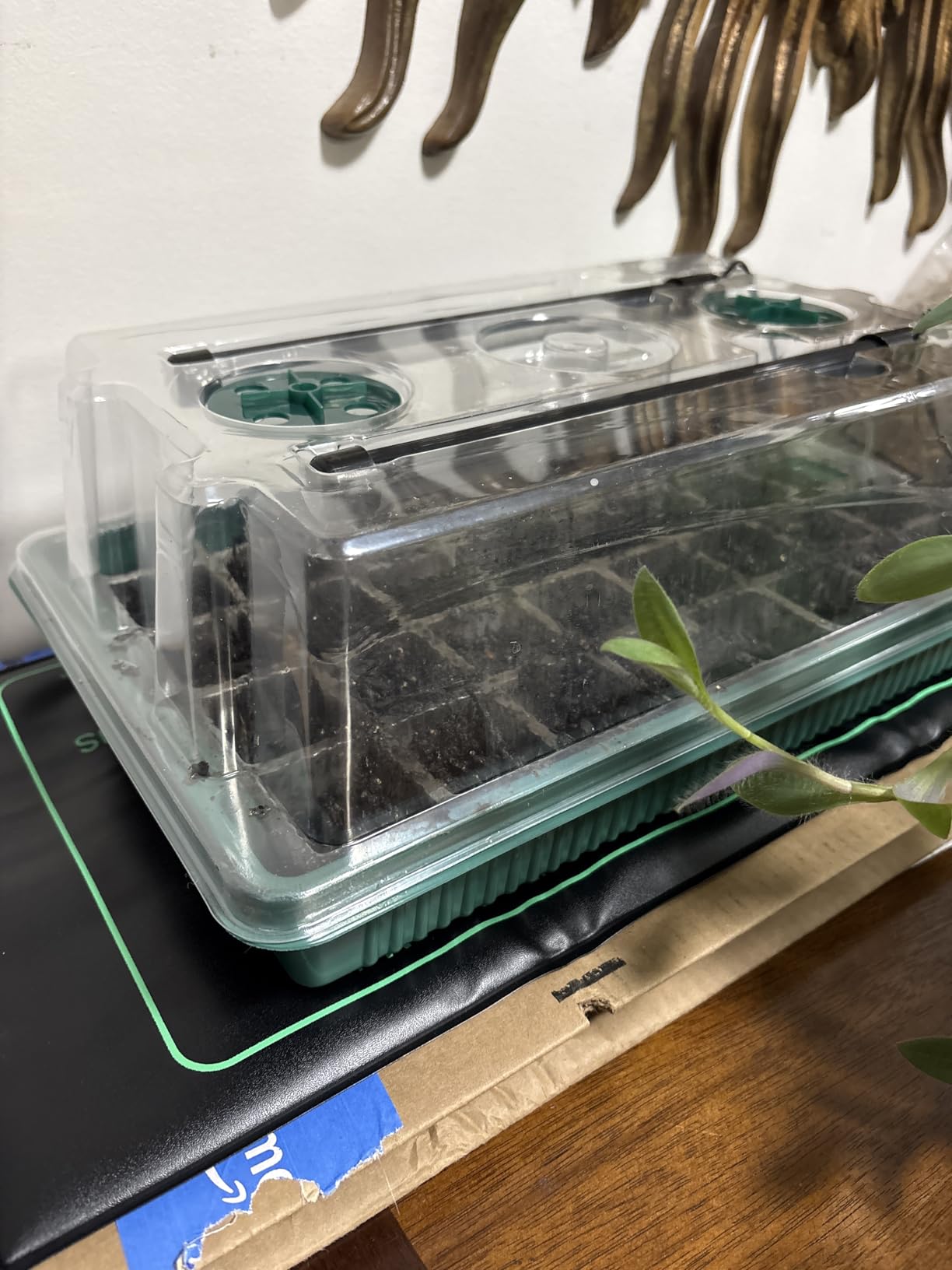
The bundled extras are the pitch here: a 40-cell tray, dual LED lights, a 10 by 20 inch waterproof heat mat, a vented dome, a three-in-one soil meter, sticky gnat traps and a gardening eBook. There is more in the box than any other kit at this size.
That inclusion list is genuinely useful for a first-timer, and the gnat traps and soil meter solve two problems that beginners usually hit before they know what they are.
It is also the lowest-rated kit here at 4.1, and the rating distribution carries a 12 percent one-star share. That does not disqualify it, but it is a signal to expect a rougher experience than the other eleven.
What is not in the box: medium, seeds, and a light timer. Without a timer you are switching the lights on and off by hand every day, which is the flaw owners mention most often.
Who this kit suits
First-time growers who want the widest box and do not mind a smaller tray. Forty cells is enough for a family sowing of brassicas, lettuce and a few peppers once heat is running underneath.
It also suits anyone who wants the heat mat and light together and would rather buy them bundled than assemble them.
Who this kit does not suit
Skip it for a large sowing. Forty cells is the smallest capacity in this roundup, and the 1-star share suggests some buyers were frustrated by exactly that.
There is no self-watering reservoir, so it needs manual watering, and the manual switching of the lights is a daily chore that other kits here handle for you.
How to Choose a Seed Starting Kit for Vegetables
Every kit in this roundup is trays, a dome, and in some cases a light and a mat. The differences that actually change your results are cell size, heat, light, and what you are left having to buy afterwards.
Match the cell size to your crops
Cell count is the number buyers misjudge most often. A 120-cell tray holds more plants but each cell is small, and a tomato that hits the cell wall three weeks before you are ready to transplant it will be root-bound and stunted.
Broadly, brassicas, lettuce and herbs are comfortable in small cells. Cucurbits want a larger cell from the start because they grow fast. Tomatoes and peppers need enough depth to build root mass before transplant, and the 2.3 inch cells here are the deepest option among the bundles.
A useful rule: if the seedling’s root ball is visibly circling the cell wall before your target transplant date, the cell is too small for that crop.
Decide whether you need bottom heat
Bottom heat matters for warm-germinating crops. Peppers, eggplants and tomatoes germinate faster and more evenly on a warm medium, and a mat is the cheapest way to even out a cold basement floor.
Cool-season crops are the opposite case. Lettuce, kale and radish germinate faster in a cool room, and a heat mat can push them into bolting or produce weak growth if it runs warm.
Only three kits here include any heating: the Sondiko with its adjustable 59 to 104 degree heater, the SOLIGT with an on and off mat, and the GROWFRIEND with a 10 by 20 inch mat. If you are growing peppers, those three are the shortlist.
Plan the light before you buy anything else
Not having a light plan from day one produces leggy seedlings that never fully recover, and it is the most repeated failure in forum discussions of this topic. A sunny windowsill works for some setups and fails for others, mostly depending on orientation and how far the sill is from the glass.
Any kit with a built-in light here is a starting light, not a finishing light. Owners of the dimmer units report strong sprouting followed by stretched growth, so budget on adding a stronger fixture for the last few weeks before transplanting.
What is almost never in the box
Medium, seeds, a light, and a heat source are the four things buyers most often assume are included and are not. Only the Burpee 72-Cell Kit ships actual growing medium, and only the Burpee XL Windowsill Tray omits a dome entirely.
Some kits also leave out a power plug, which is worth checking before you commit, and one entry in this roundup has no light timer at all.
Peat-free and reusability notes
Six of the twelve kits are described as reusable plastic, and reusability is the top decision factor in forum discussions of this category. If you keep trays across seasons, the per-plant cost falls every year, and the thick plastic options here hold up far better than thin single-use trays.
On the sustainability side, the Burpee 72-Cell Kit uses coconut coir rather than peat, which matters for gardeners avoiding peat. The Jiffy kits are peat-based, and the flexing silicone cells on the Burpee XL tray are the most reusability-friendly construction here because they are dishwasher safe.
Are Seed Starting Kits Worth Buying?
Yes for a first kit, and increasingly no as a second. The forum consensus is closer to “kits are largely just trays plus a dome” than it is to “kits are a bargain,” and the honest answer depends on which functions you still need.
If you are starting from nothing, a kit removes four or five separate decisions and one trip to the store. The Gardzen 5-Set, the Burpee 72-Cell and the SOLIGT bundle cover the main combinations of tray, dome, light and heat, and any of them will get you a full season without a second purchase.
Once you know what your crops need, building the station piece by piece is usually better value. A plain 1020 tray and a dome handle a large sowing for a fraction of what a bundled light-and-heat unit costs, and a dedicated light and a thermostat-controlled mat both last across many seasons rather than being tied to one kit’s footprint.
The pattern experienced gardeners describe is: buy one decent tray set now to get going, then replace the pieces you outgrow. Buy cheap plastic trays rather than a premium bundle, and put the difference into a grow light, because the light is the thing you cannot skip.
Judge cost per start, not sticker price. A kit that holds 200 cells, survives three seasons and pairs with the light you already own is cheaper per plant than a smaller unit you replace every year.
Frequently Asked Questions
What are some good seed starting kits for indoor growing?
The strongest general-purpose picks for indoor growing are the Gardzen 5-Set with 200 vented cells, the MIXC 10-Pack for high-volume sowing, and the SOLIGT 60-Cell for a complete tray, light and heat station. The first two are tray and dome sets that need a separate light and heat source, while the SOLIGT bundles all four functions in one box.
What is the best seed starter kit available?
The Gardzen 5-Set Seed Starter Tray Kits are the best overall choice for vegetables, with 200 cells across five trays, dual air vents on every dome, drain holes and a 4.5 star rating across 8859 reviews. For warm-season crops in a cold room, the SOLIGT 60-Cell kit is the better pick because it includes a heat mat and a grow light.
Are seed starting kits worth buying?
Worth it for a first kit, less so later. A kit saves four or five separate purchases and one trip to the store, which is why it works well for beginners. Once you know which crops you grow, buying a plain tray and dome separately and putting the difference into a grow light and a thermostat-controlled mat is usually better value across multiple seasons.
What veggie seeds should I start indoors?
Start warm-season crops such as tomatoes, peppers and eggplants indoors, usually six to eight weeks before your last frost date, and give them bottom heat. Start brassicas, lettuce and other cool-season greens indoors too but skip the heat mat, since they germinate best in a cool room. Cucurbits benefit from indoor starts because they establish faster in a large cell.
Do seed starting kits come with soil and seeds?
Almost never. The main exception in this roundup is the Burpee 72-Cell Seed Starting Kit, which includes 72 coconut coir pellets along with the dome and reservoir tray. No kit reviewed includes seeds, and only some include a grow light or a heat mat, so check the included components list before assuming a kit is a complete setup.
How long can seedlings stay in a seed starting kit?
Most vegetables are ready for hardening off and transplanting between four and eight weeks after sowing, depending on the crop and the cell size. Small cells in high-count trays force earlier up-potting, while deep cells in the SOLIGT and Sondiko kits let tomatoes and peppers stay in place longer. Seedlings that are circling the cell wall or going pale and stretched are signalling that they have outgrown it.
The Verdict for 2026
The best seed starting kits for vegetables split into three clear groups. The Gardzen 5-Set is the one to buy if you want a single dependable tray and dome system that handles a large sowing and survives multiple seasons.
For peppers and tomatoes in a cool room, add heat and go with the SOLIGT 60-Cell or the Sondiko heated unit. For a small apartment windowsill, the Burpee XL tray does more with eight cells than most kits do with eighty.
Whatever you choose, buy the medium and seeds separately, plan your light before you sow, and remove the dome at first sign of emergence. Those three habits matter more than any tray on this list.