
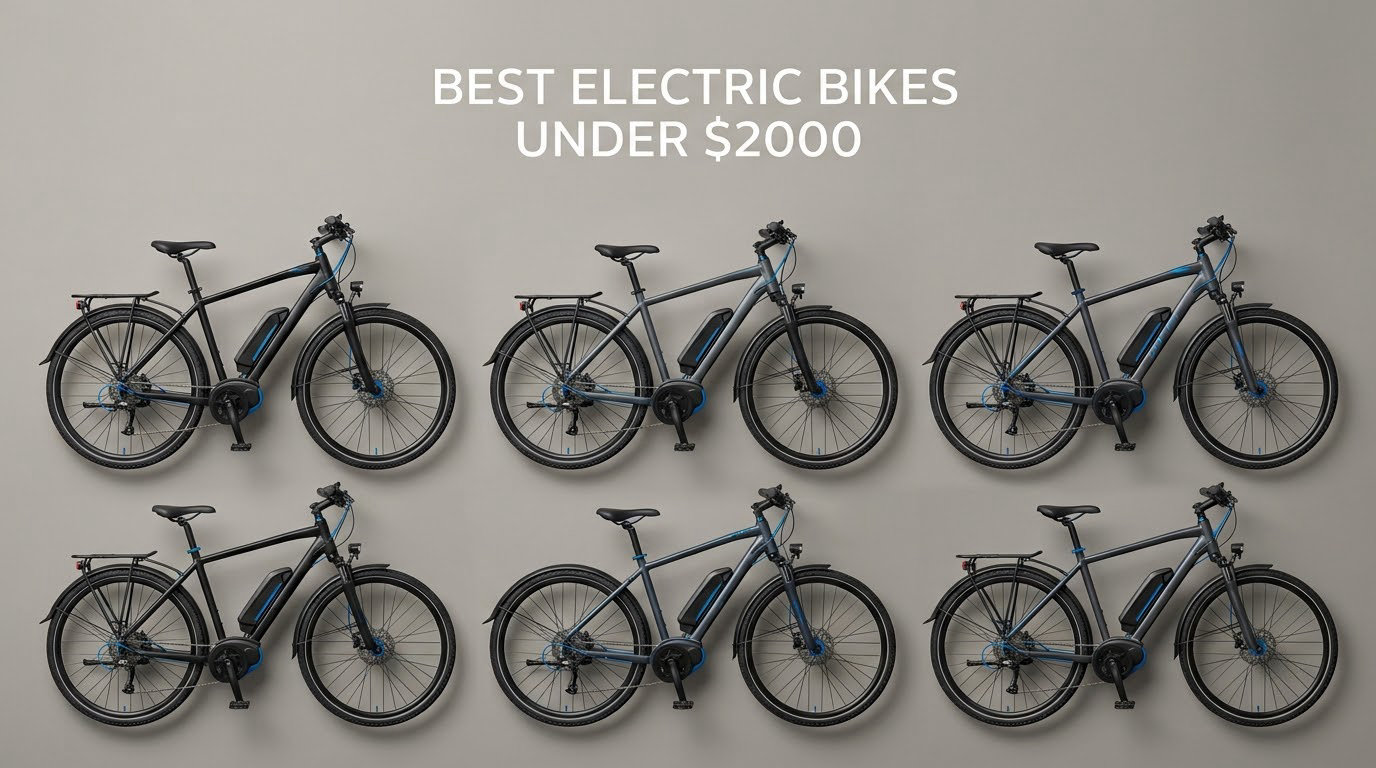
Two thousand dollars is the practical ceiling for buying an electric bike from a brand that actually answers a support email, ships a replacement battery, and stocks parts you can order five years from now. Below that line you start trading away serviceability, and above it you are paying for a mid-drive motor most commuters never feel. We spent October 2026 reading spec sheets, customer review patterns and warranty terms across ten of the most-reviewed affordable e-bikes on the market, and the short version is this: the best electric bikes under 2000 dollars are pedal-assist bikes with 500W to 750W hub motors, removable batteries, UL 2849 certification, and a 20 mph assist cap.
I also want to be straight about the ceiling. You will not find a real electric mountain bike here, and you will not find a Class 3 bike with a 28 mph assist from any of these brands. What you will find is the part of the market where a five to fifteen mile commute stops being a problem, hills stop being a reason to abandon a ride, and a bike can plausibly last a decade if you replace tires and brake pads.
This guide covers commuters, apartment dwellers, cargo haulers, beach and gravel riders, and anyone buying their first e-bike. Each pick has honest weaknesses listed, because a list of only pros tells you nothing. Specifications and warranty terms were verified in September 2026, and where customer measurements contradict a manufacturer claim, we say so.
Table of Contents
- Top 3 Picks for the Best Electric Bikes Under $2000 (October 2026)
- Best Electric Bikes Under $2000 in 2026
- What 2000 Dollars Gets You, and What It Does Not
- 1. Heybike Cityscape 2.0 – Best Overall E-Bike Under 2000 Dollars
- 2. Funhang EB-S1 – Best Fat Tire E-Bike Under 2000 Dollars
- 3. ANCHEER 27.5 Inch – Best Value E-Bike Under 2000 Dollars
- 4. isinwheel U7S – Best E-Bike for Cargo and Utility Riding
- 5. EUYBIKE Folding Fat Tire – Best for Apartments and Small Storage
- 6. Gotrax R1 – Best Folding E-Bike for Car-Free Commuting
- 7. Funhang EB-C2 – Best Step-Through E-Bike for Comfort
- 8. Gotrax Dolphin – Best E-Bike for First-Time and Older Riders
- 9. EUY CityRang 4.0 – Best for Speed and Long Mixed-Terrain Rides
- 10. Jasion EB5 – Best Lightweight E-Bike for City Riding
- Electric Bike Brands to Avoid and the Red Flags That Give Them Away
- How to Choose an E-Bike Under 2000 Dollars
- Frequently Asked Questions
- Which E-Bike Under 2000 Dollars Should You Buy?
Top 3 Picks for the Best Electric Bikes Under $2000 (October 2026)
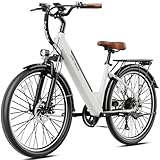
Heybike Cityscape 2.0
- 500W motor
- 1200W peak
- UL certified 468Wh battery
- Up to 50 miles of assist
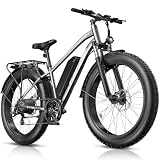
Funhang EB-S1 Fat Tire
- 500W motor with 66.6 N-m torque
- 26 x 4.0 inch fat tires
- 48V 13Ah battery

ANCHEER 27.5 Inch
- 750W peak motor
- 48V 499Wh battery
- 21-speed drivetrain
- UL 2849 SGS certified
As an Amazon Associate we earn from qualifying purchases. CERTAIN CONTENT THAT APPEARS ON THIS SITE COMES FROM AMAZON. THIS CONTENT IS PROVIDED 'AS IS' AND IS SUBJECT TO CHANGE OR REMOVAL AT ANY TIME.
Best Electric Bikes Under $2000 in 2026
| Product | Specifications | Action |
|---|---|---|
|
Heybike Cityscape 2.0
|
|
Check Latest Price |
|
Funhang EB-S1 Fat Tire
|
|
Check Latest Price |
|
ANCHEER 27.5 Inch
|
|
Check Latest Price |
 isinwheel U7S
|
|
Check Latest Price |
 EUYBIKE Folding Fat Tire
|
|
Check Latest Price |
 Gotrax R1 Folding
|
|
Check Latest Price |
 Funhang EB-C2 Step-Thru
|
|
Check Latest Price |
 Gotrax Dolphin
|
|
Check Latest Price |
 EUY CityRang 4.0
|
|
Check Latest Price |
 Jasion EB5
|
|
Check Latest Price |
We earn from qualifying purchases. CERTAIN CONTENT THAT APPEARS ON THIS SITE COMES FROM AMAZON. THIS CONTENT IS PROVIDED 'AS IS' AND IS SUBJECT TO CHANGE OR REMOVAL AT ANY TIME.
What 2000 Dollars Gets You, and What It Does Not
Here is the honest picture of this price band. The entry tier below it sells you a 500W hub motor, a small battery, mechanical disc brakes, and a warranty measured in months. Riders describe those bikes as fine for a first taste of electric assist and frustrating the moment a battery dies, because replacement packs are expensive relative to the bike.
The band these ten bikes occupy is different. Here you get an aluminum frame on some models, dual disc brakes on all of them, UL 2849 system certification on many, a warranty of at least a year, and battery capacities running from 280Wh to 960Wh. That combination is the difference between an e-bike you can keep and one you replace.
What you still cannot buy: a mid-drive motor from a major brand, a Class 3 bike with a 28 mph assist, hydraulic brakes across the range, or a genuine trail e-bike with proper suspension and wide handlebars. Real electric mountain bikes begin several thousand dollars higher, and we would rather tell you that than pad a list with bikes that cannot handle a trail.
One more limit worth stating plainly. The 20 mph assist cap on almost every bike here is a legal Class 2 limit, not a marketing decision. A handful of brands allow the controller to be reconfigured above that number, which we do not recommend: it voids warranty coverage in some states and puts you on the wrong side of local law.
1. Heybike Cityscape 2.0 – Best Overall E-Bike Under 2000 Dollars
Heybike Cityscape 2.0 Electric Commuter Bike for Adults – 468Wh Removable Battery, 26″ Wheels, Up to 50 Miles, 7-Speed, Front Suspension, UL Certified
- 500W motor with 1200W peak
- 468Wh UL certified removable battery
- Up to 50 miles assisted
- 26 inch tires, 7-speed, dual disc brakes
Pros
- Rack and full lighting package included
- UL certified battery and simple controls
- Comfortable cruiser geometry
- Easy learning curve for first-time owners
- Battery life supports weekly charging
Cons
- Noisy brakes with modest stopping power at higher speeds
- Display menu is fiddly and hard to read in daylight
- Large and heavy enough to need a ramp for transport
- Vague assembly instructions
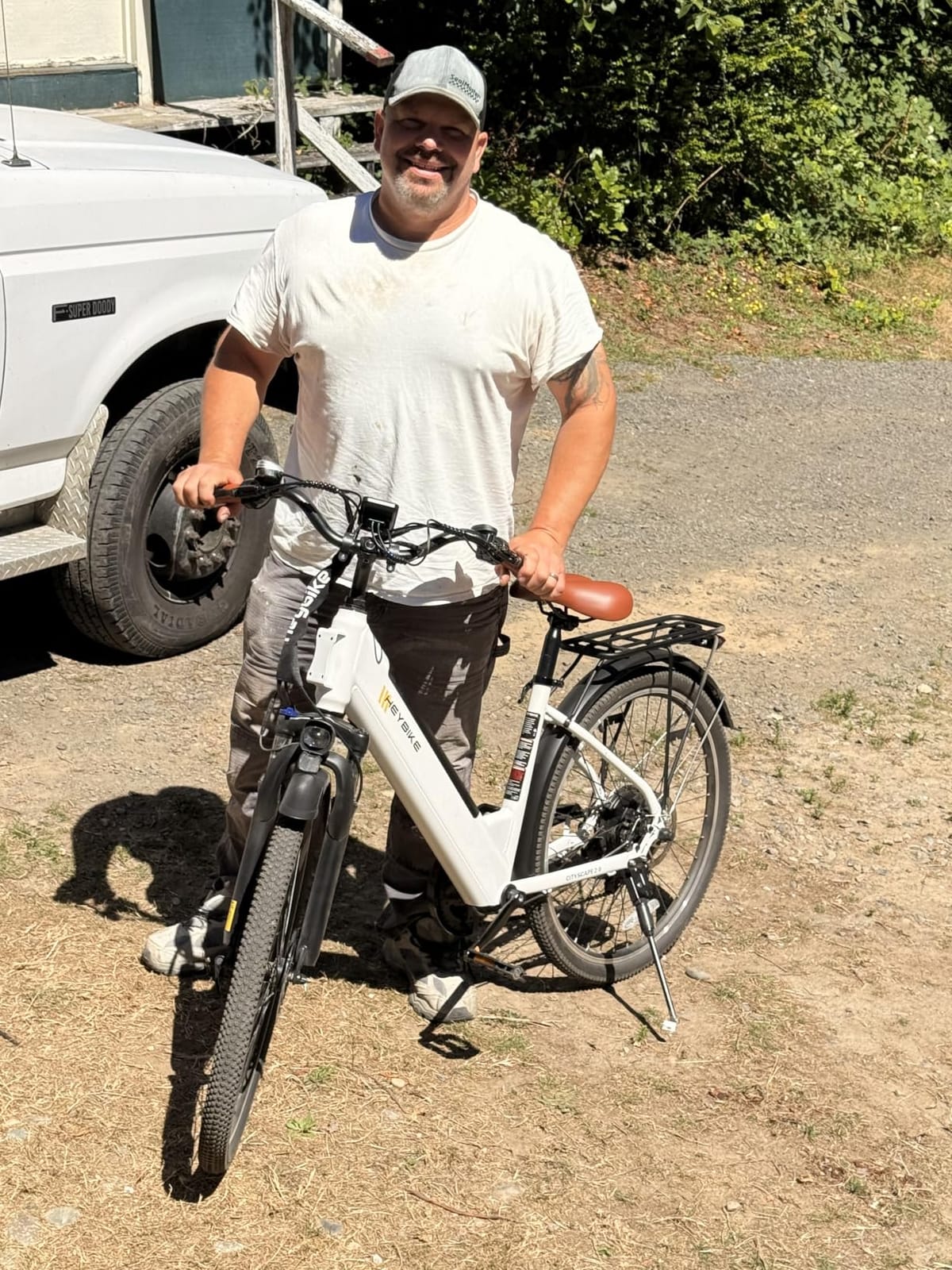
This is the bike I would put in the hands of a friend who had never ridden an e-bike. The Cityscape 2.0 does not chase a headline specification, it just assembles the right pieces: a 500W brushless motor with 1200W peak, a UL-certified 468Wh removable battery, 26 inch puncture-resistant tires, front suspension, and dual disc brakes.
What owners consistently praise is how unremarkable it is to ride. The cruiser geometry puts you in a relaxed position, the seat and handlebars both adjust, and the color LCD is bright. Several reviewers mention buying a second one for another family member, which tells you the learning curve is close to zero.
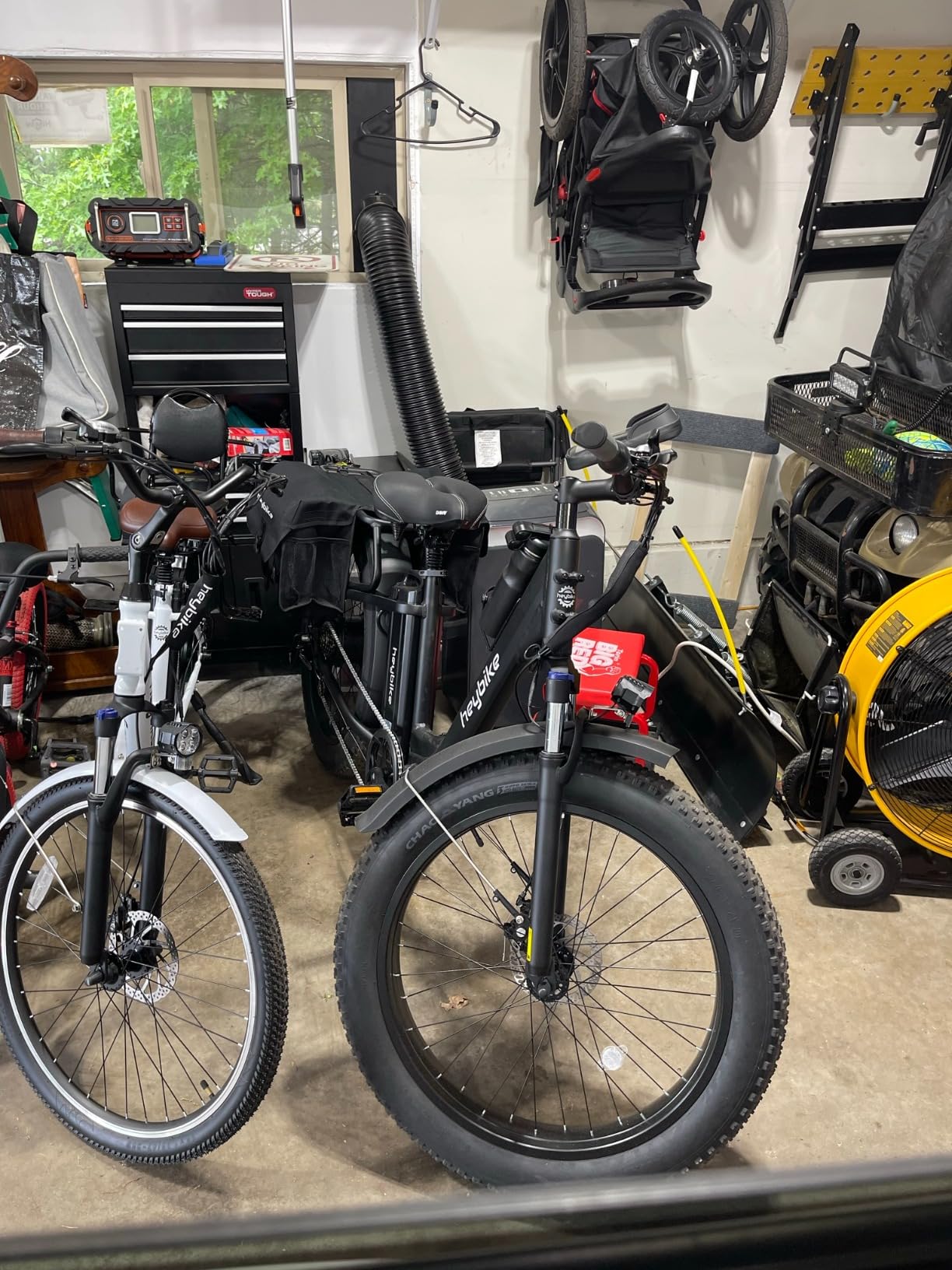
The battery is the part that makes the ownership math work. Reviewers report roughly 30 to 35 miles on throttle and 35 to 50 miles on pedal assist, with a weekly top-up being enough for most commuting patterns. It is IPX6 rated and removable, so it can live indoors or in a garage rather than being welded into the frame.
The honest weakness is braking. Owners report noisy brakes and stopping power that feels thin at 25 to 30 mph, which is faster than the 20 mph assist cap allows, but faster than many riders expect on a heavy bike with a battery. The display menu also frustrates people, and setup takes a few hours solo because the documentation is vague.
Is the Cityscape 2.0 right for a daily commute?
Yes, if your commute is on pavement and under roughly 15 miles each way. The included rear rack and headlight and taillight mean you can add a pannier and ride home after dark without buying extra parts. An assist bike is what turns a half-hour car trip into something you would rather do.
If your route involves gravel, potholes, or a climb that never levels out, keep reading. The seven-speed drivetrain cannot keep up with cruising at 21 mph, and a front suspension fork with no adjustment will not smooth out a bad road. For those routes, the fat tire picks further down handle more ground for less money.
Who should skip the Cityscape 2.0?
Skip it if you plan to load it into a car regularly, carry it up stairs, or store it in a small apartment. It is a 26 inch cruiser, and reviewers consistently describe the size and weight as the main reason it needs a ramp to load into a truck.
Skip it too if you want to ride trails. This is a road and path bike with a suspension fork added for comfort, not a mountain bike. Riders expecting it to handle technical singletrack will be disappointed within the first outing, and that disappointment is a category mismatch, not a quality problem.
2. Funhang EB-S1 – Best Fat Tire E-Bike Under 2000 Dollars
Funhang Electric Bike for Adults, 1000W Peak Ebike, 20MPH 60Miles Electric Mountain Bike, 26″ Fat Tire Electric Bicycle with 48V 13AH Battery, Front Suspension,7 Speed, Rear Rack, UL 2849 Certified
- 500W motor with 66.6 N-m torque
- 26 x 4.0 inch anti-skid fat tires
- 48V 13Ah removable battery
- Rear rack and turn signals included
Pros
- Fat tires grip grass
- gravel
- sand and snow
- 4.5 rating with 79 percent five-star reviews
- 66.6 N-m torque handles steep hills
- Rack
- turn signals and lights included
- UL 2271 and UL 2849 certified
Cons
- 70 lb weight is punishing for smaller riders
- Stock saddle is uncomfortable
- Top gear too low to pedal above 15 mph
- Assembly instructions are thin
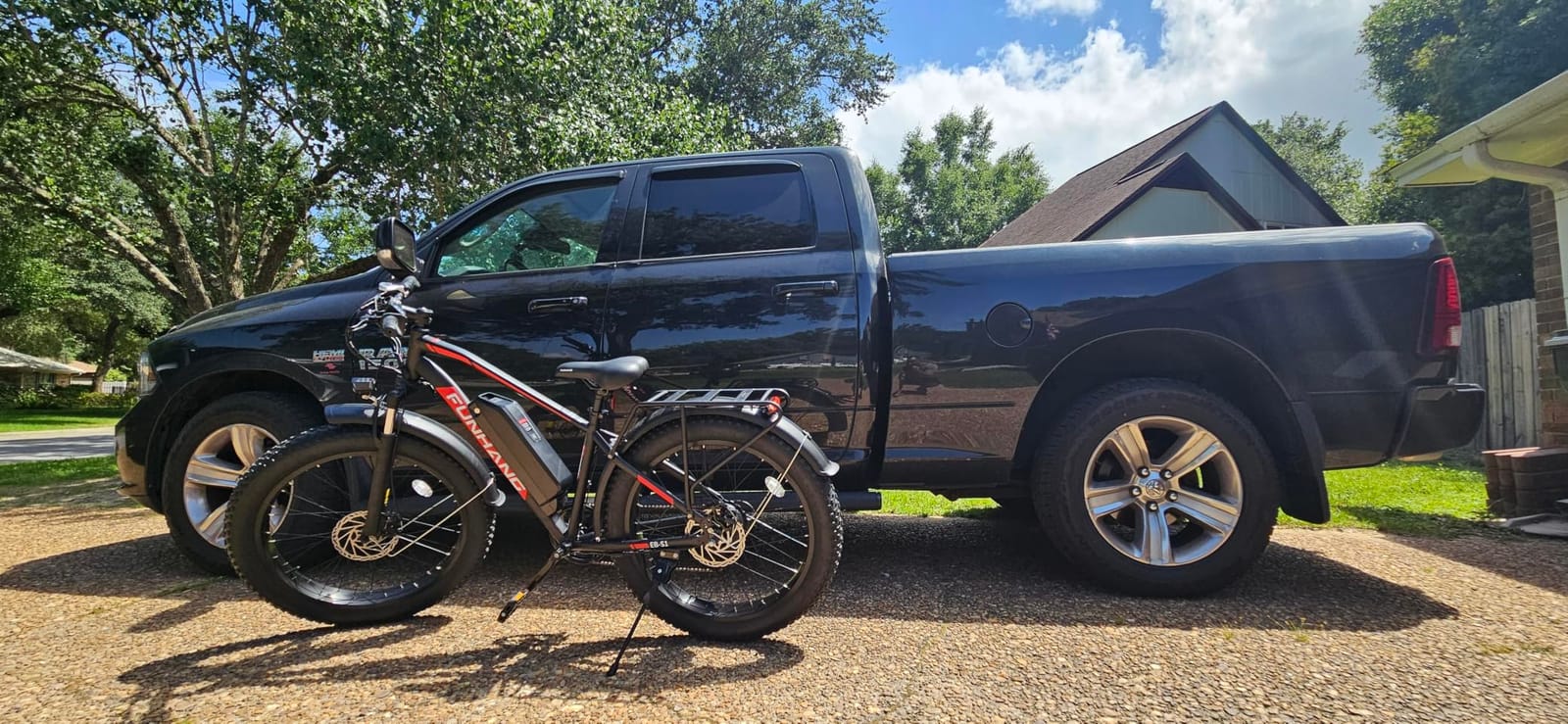
The EB-S1 carries a 4.5 rating with 79 percent of reviews at five stars, and the reason is tires. The 26 x 4.0 inch anti-skid fat tires change what surface counts as rideable, taking grass, gravel, sand and packed snow in stride where a 1.95 inch commuter tire would wash out.
Underneath the rubber is a 500W motor producing 66.6 N-m of torque, which is a genuinely useful number for hills. Riders report the assist flattening steep climbs, and the torque figure is the one spec you should actually compare across this list when climbing matters.
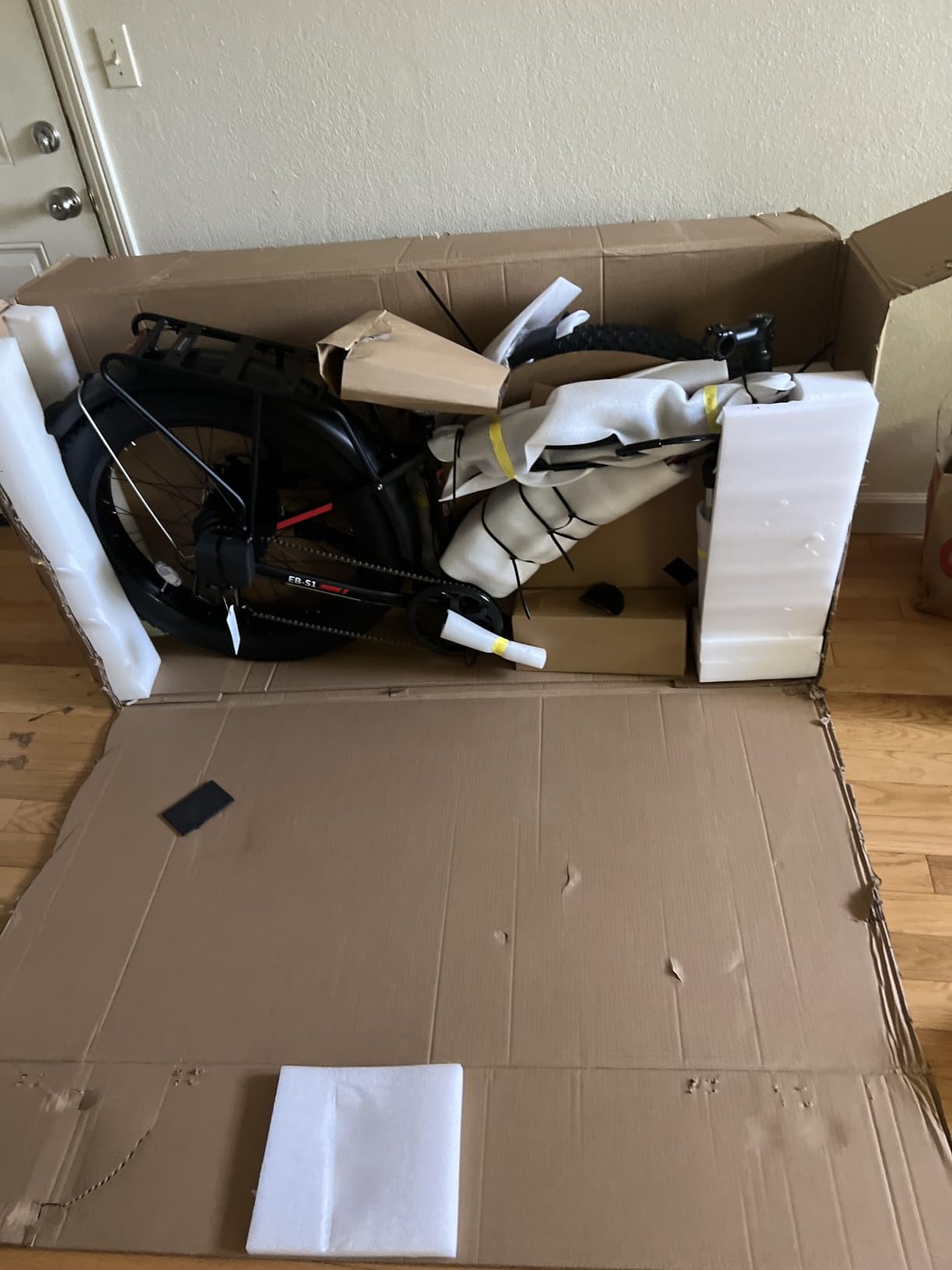
Battery capacity is 48V 13Ah, rated 30 to 35 miles on pure electric and 55 to 60 on pedal assist, with a 6.5 hour charge. Owners report the battery barely moving during long rides, which suggests the claim is closer to reality here than on some competitors.
The 70 lb weight is the price of those tires. It sits at the heavy end of this group, only the 71 lb EUY CityRang 4.0 is heavier, and smaller riders will feel it when maneuvering. The gear ratio also means pedaling for exercise above 15 mph is difficult, which some riders dislike after the novelty wears off.
Can the EB-S1 handle hills and loose ground?
Better than most of this list on hills and loose ground. The 66.6 N-m torque figure is the highest published torque in this roundup, and fat tires maintain traction on the loose surfaces where hub motors normally lose confidence. Gravel paths, sand, grass verges and snow are all within its comfort zone.
There is a limit. Seven-speed gearing and a 20 mph assist cap make it a hill and gravel bike, not a technical trail bike. Riders who want switchbacks, rock gardens or jumps need a real suspension fork and a proper dropper post, which live in a different and more expensive category.
Is the 70 lb weight a dealbreaker?
Only for a specific set of riders. If you live upstairs, plan to load the bike into a car regularly, or are a smaller rider who has to lift it over a curb, then yes. None of those situations suit a fat tire bike, and the folding picks below serve them better.
For everyone else, weight is manageable once you stop expecting to carry it. Owners cite sturdy construction, quick assembly, and a rack rated to 60 lb plus turn signals as the features that make it genuinely commute-ready rather than a recreational toy.
3. ANCHEER 27.5 Inch – Best Value E-Bike Under 2000 Dollars
ANCHEER Electric Bike for Adults, Peak 750W Ebike, 3 Hours Fast Charge, 60 Miles Electric Bicycle with 48V/499Wh Battery, 27.5 ” Hummmer Electric Mountain Bike with LCD Display, 21 Speed
- 500W motor with 750W peak
- 48V 499Wh battery, 3.5 hour fast charge
- 21-speed derailleur drivetrain
- UL 2849 certified by SGS
Pros
- Aluminum frame rare at this price
- 21-speed drivetrain gives real climbing gears
- 499Wh battery gives long range
- Lockable front suspension fork
- 27.5 inch tires still fit transit racks
Cons
- Narrow stock saddle is uncomfortable
- Replacement battery is costly relative to the bike
- Inconsistent controller and display quality control
- Charger runs very hot
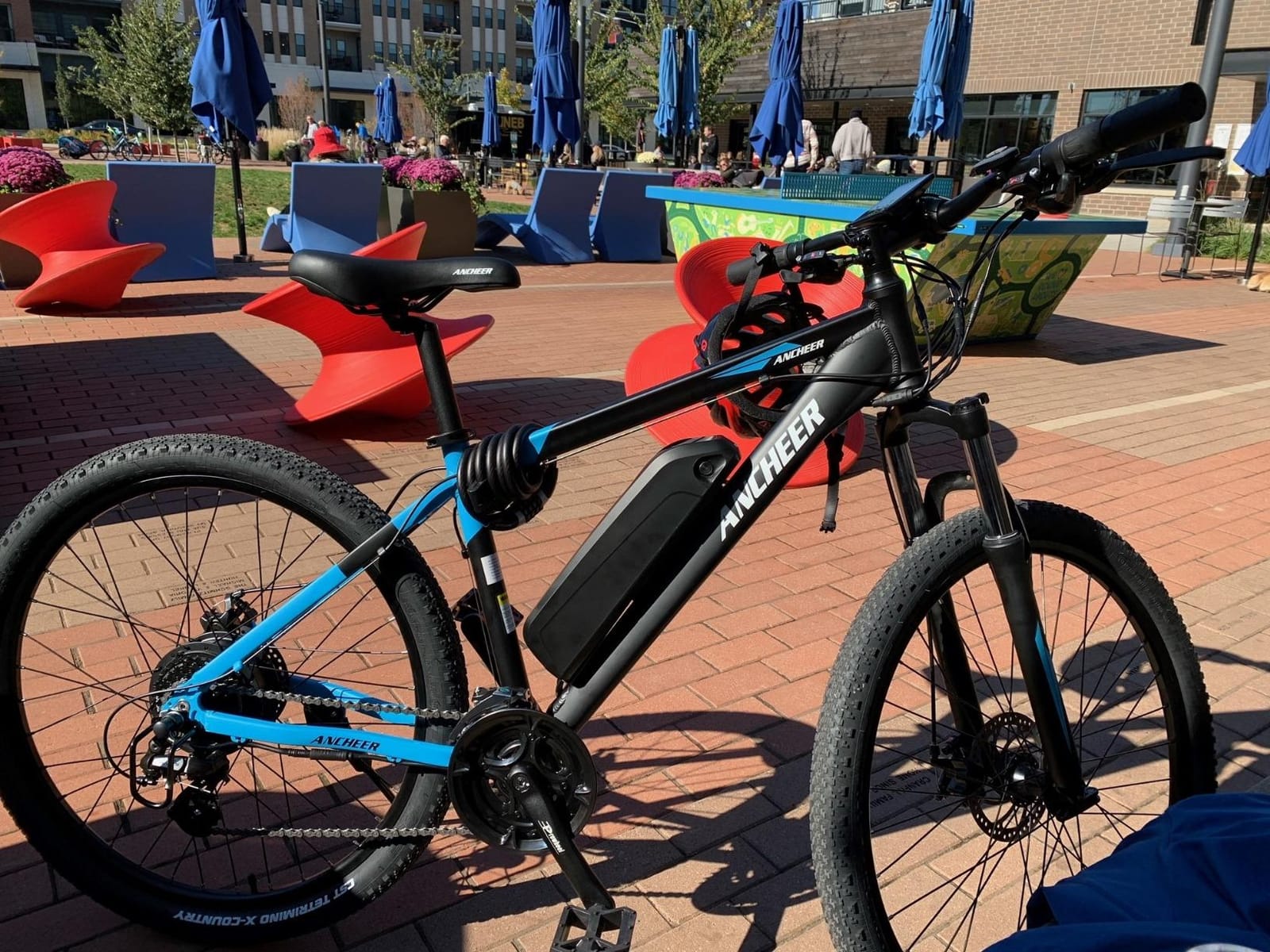
The ANCHEER is the specification anomaly in this list. An all-aluminum frame, a 21-speed derailleur drivetrain and a 499Wh battery at this price point is unusual, and long-term owners report thousands of miles with the frame, brakes and shifting still holding up.
The 21-speed drivetrain is the part that matters most for anyone dealing with hills. Seven-speed budget drivetrains force a compromise between climbing gears and top speed, while a 21-speed spread lets you pick the right gear and keep pedaling smoothly. For the price, nothing else here does that.
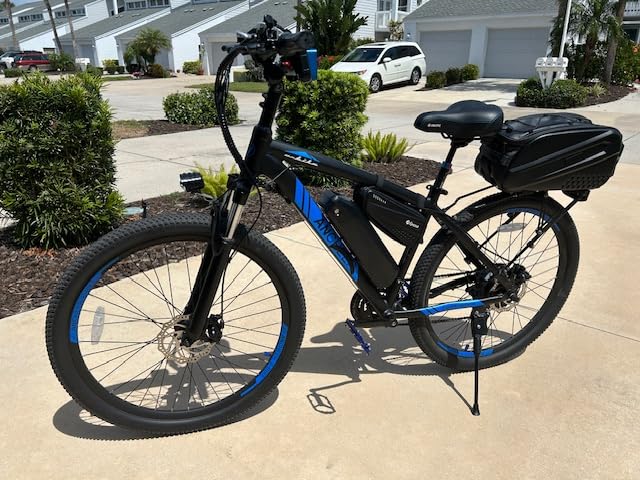
Charging is fast for the capacity. A 48V 10.4Ah pack rated 25 to 55 miles reaches full in about 3.5 hours, which means overnight charging covers a very long week of commuting. A lockable front suspension fork is also a genuine upgrade over most bikes in this class.
The compromises are real. Quality control on controllers and displays is inconsistent, with some arriving dead and others reporting error codes. Owners also flag an expensive replacement battery, a narrow saddle, and a charger that runs hot enough to notice.
Does the ANCHEER handle hills with a load?
Better than its 500W rating suggests, largely because of gearing. A wide gear range lets you drop into a low gear and keep the motor working in its efficient band rather than bogging down, which is the actual reason budget hub motors feel gutless on climbs.
Maximum recommended rider weight is 265 lb. Riders above 300 lb should look at the isinwheel U7S, which rates 330 lb. That distinction is small on paper and large in practice, because heavier riders plus a 500W hub motor is where owners start describing motors as gutless.
Who should buy the ANCHEER instead of a brand-name bike?
Buy it if your priorities are an aluminum frame, real climbing gears and long range, and if you are comfortable doing a little of your own troubleshooting. It ships 85 percent pre-assembled, so setup is manageable, and the UL 2849 SGS certification is a genuine mark against uncertified marketplace bikes.
Pass if you want a dealer to call. This is a direct purchase with a one-year warranty, so a warranty claim likely means shipping the component back. Riders who prioritize a local test ride and a service network should spend the same money at a brand sold through a physical retailer instead.
4. isinwheel U7S – Best E-Bike for Cargo and Utility Riding
isinwheel U7S E Bike for Adults Electric Bike with Dual Cargo Rack, 48V 1000W Peak Ebikes for Adults, 7 Speed Gear, 20/28 mph Step Thru Cruiser Electric Bicycles, 20″ × 3“ Fat Tire Ebike
- 750W motor with 1500W peak
- Front and rear cargo racks, 330 lb combined
- 48V 20Ah battery, up to 80 miles
- 20 inch wheels, step-thru frame
Pros
- Dual racks make it a real utility bike
- 330 lb combined payload rating
- Step-thru frame suits older and shorter riders
- Survived 200+ potholes and a car impact
- Knobby tires move from pavement to gravel
Cons
- Minimal suspension makes the ride harsh above 12 mph
- Brake pads wear quickly in hilly terrain
- Seat latch loosens over bumps
- Companion app fails verification
- Hardware needs frequent retightening
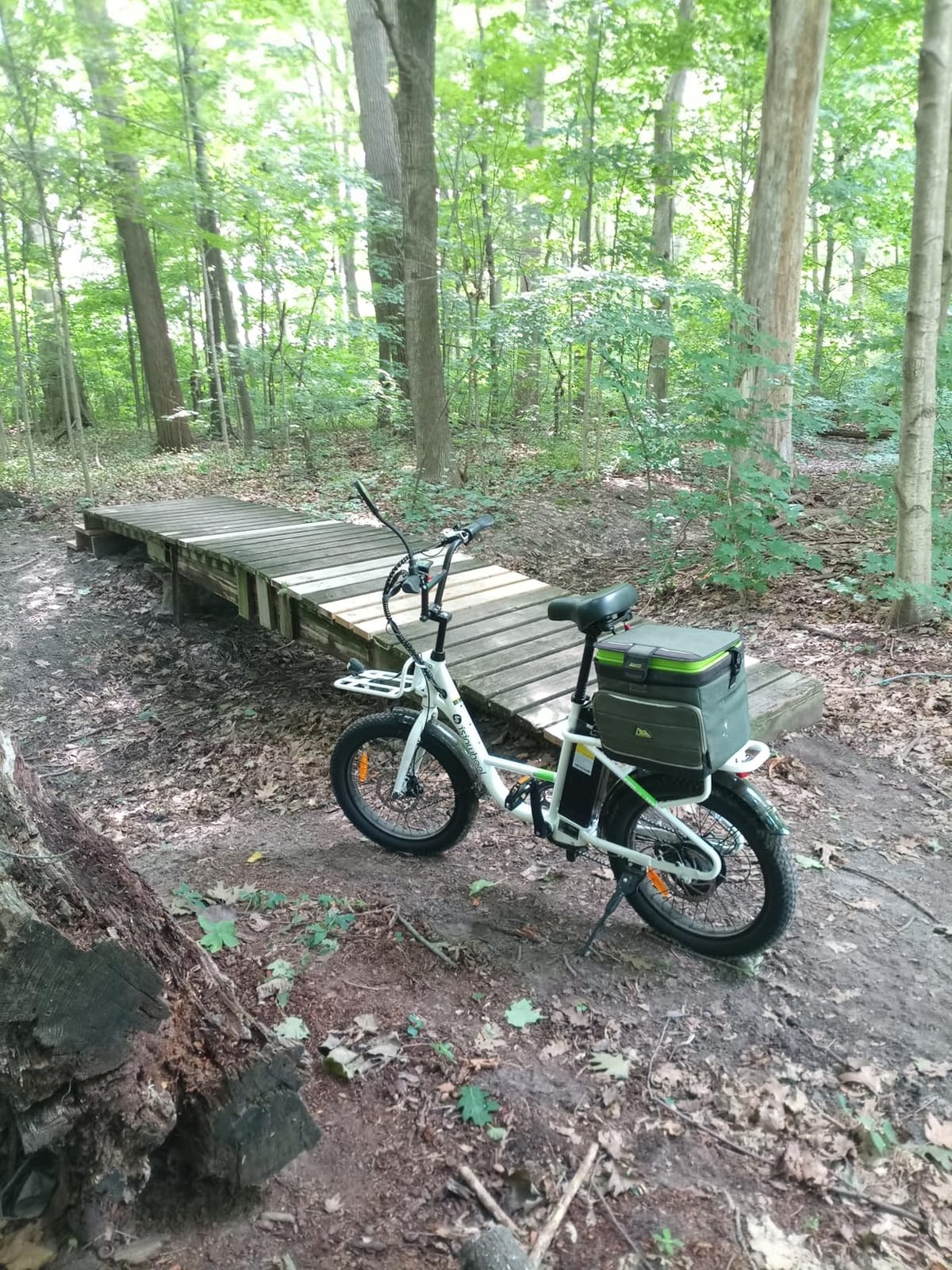
The U7S is the only bike here with racks at both ends, and that changes what it can carry. Groceries, a work bag, a small load of firewood, a delivery run: the front and rear racks rated to 330 lb combined turn a commuter into a utility vehicle.
Power comes from a 750W brushless motor with 1500W peak and a claimed 35 degree incline capability, paired with a 48V 20Ah removable battery rated up to 80 miles on pedal assist with a 3 to 4 hour recharge. Both numbers sit at the top of the range in this roundup, and this is the bike that uses them.
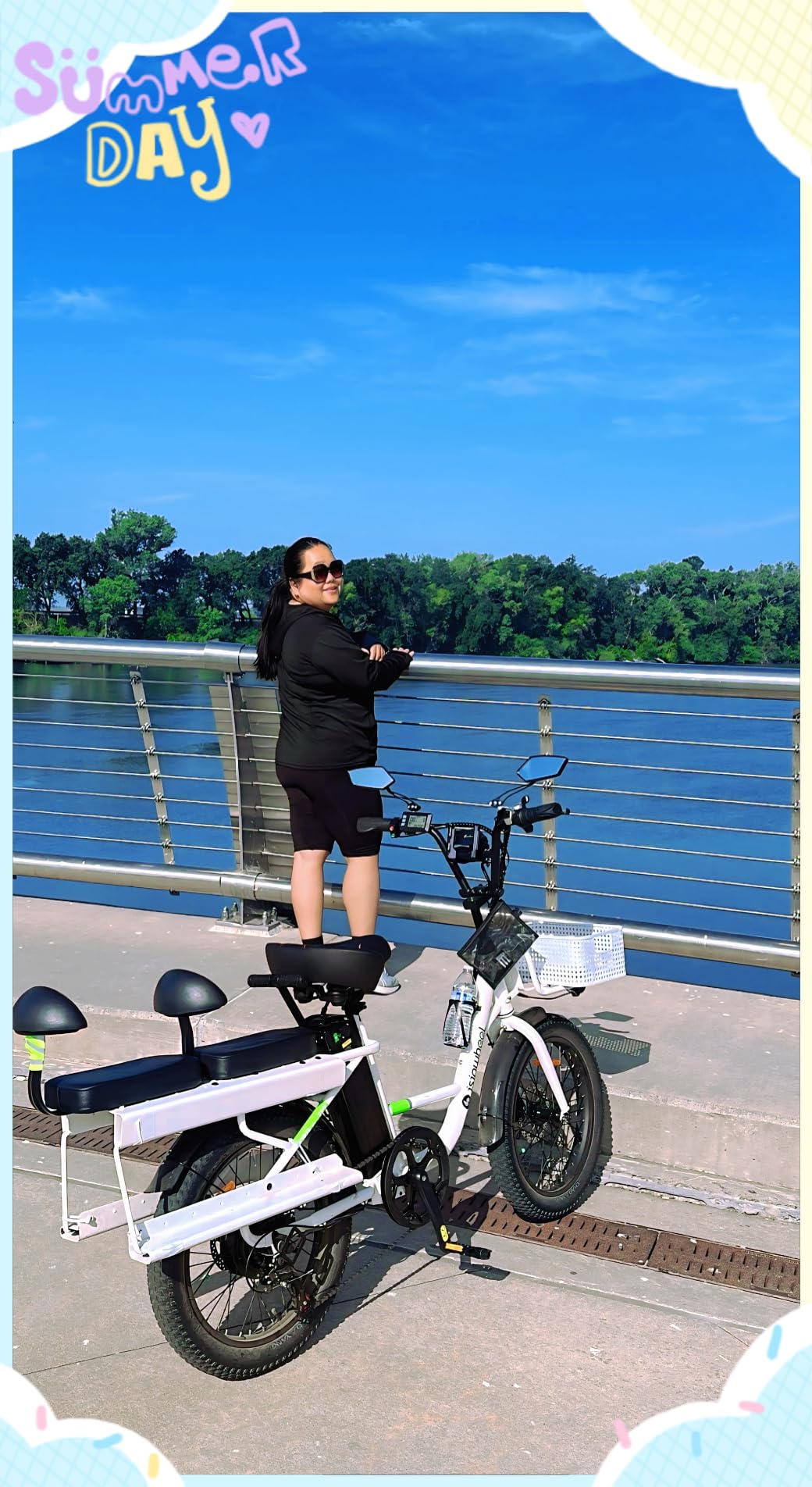
Durability reports are unusually specific. Owners describe the bike holding together through more than 200 potholes and even a car impact, and several mention responsive customer service that sent replacement parts and a replacement screen. That kind of feedback matters more than a spec sheet when you are three hundred miles from a dealer.
What they also report is a harsh ride above 12 mph from minimal suspension, brake pads that wear quickly in hills, a seat latch that loosens over bumps, and handlebar hardware that needs retightening. The companion app reportedly fails serial number verification, so treat it as decoration.
Can the U7S carry kids or a heavy load?
It is rated at 330 lb combined, which matches the highest figure in this group, and the step-thru frame makes mounting with a child seat or a heavy basket far easier than a high-step frame. Riders hauling groceries or running errands on rough streets will appreciate the 20 inch knobby tires.
Understand the trade. The 20 inch wheels and 330 lb rating describe a bike that moves cargo, not one that sprints. Rated assist speed is 20 mph, gearing is seven-speed, and the harsh ride above 12 mph is most noticeable when the bike is loaded and moving fast.
Is the adjustable speed limit setting a good idea?
The controller lets you adjust the cut-off through the display between P01 and P05 settings. We would leave it at the compliant 20 mph setting. Raising the assist cap above the Class 2 limit can void warranty coverage and is unlawful on many shared paths, and a heavier bike at that speed is a braking problem, not a speed problem.
The setting is genuinely useful in the other direction. Riders moving fully loaded on a bike path or walking the bike across a parking lot can dial the assist down rather than relying on the walk mode alone.
5. EUYBIKE Folding Fat Tire – Best for Apartments and Small Storage
Folding Electric Bike for Adults with 1000W Peak Motor, 48V 20AH Battery up to 80 Miles, 20″ Fat Tire All Terrain Ebike, Front Suspension City Commuter Step-Thru E Bike Pink White, UL Certified
- 750W motor with 1000W peak
- 48V 20Ah battery, 40 to 80 miles
- Folds to 40.2 x 17.7 x 31.5 inches
- 20 x 3 inch fat tires, front suspension
Pros
- 48V 20Ah battery is among the largest here
- Step-thru frame is easy for older riders to mount
- Folds flat for trunk and subway transport
- Plenty of climbing power
- Fast customer service response
Cons
- Carbon steel frame is heavy for a folding bike
- Small 20 inch wheels limit rough-terrain ability
- Saddle could be larger for taller riders
- Mode documentation is vague
- Some bikes arrived with a misaligned rear rack
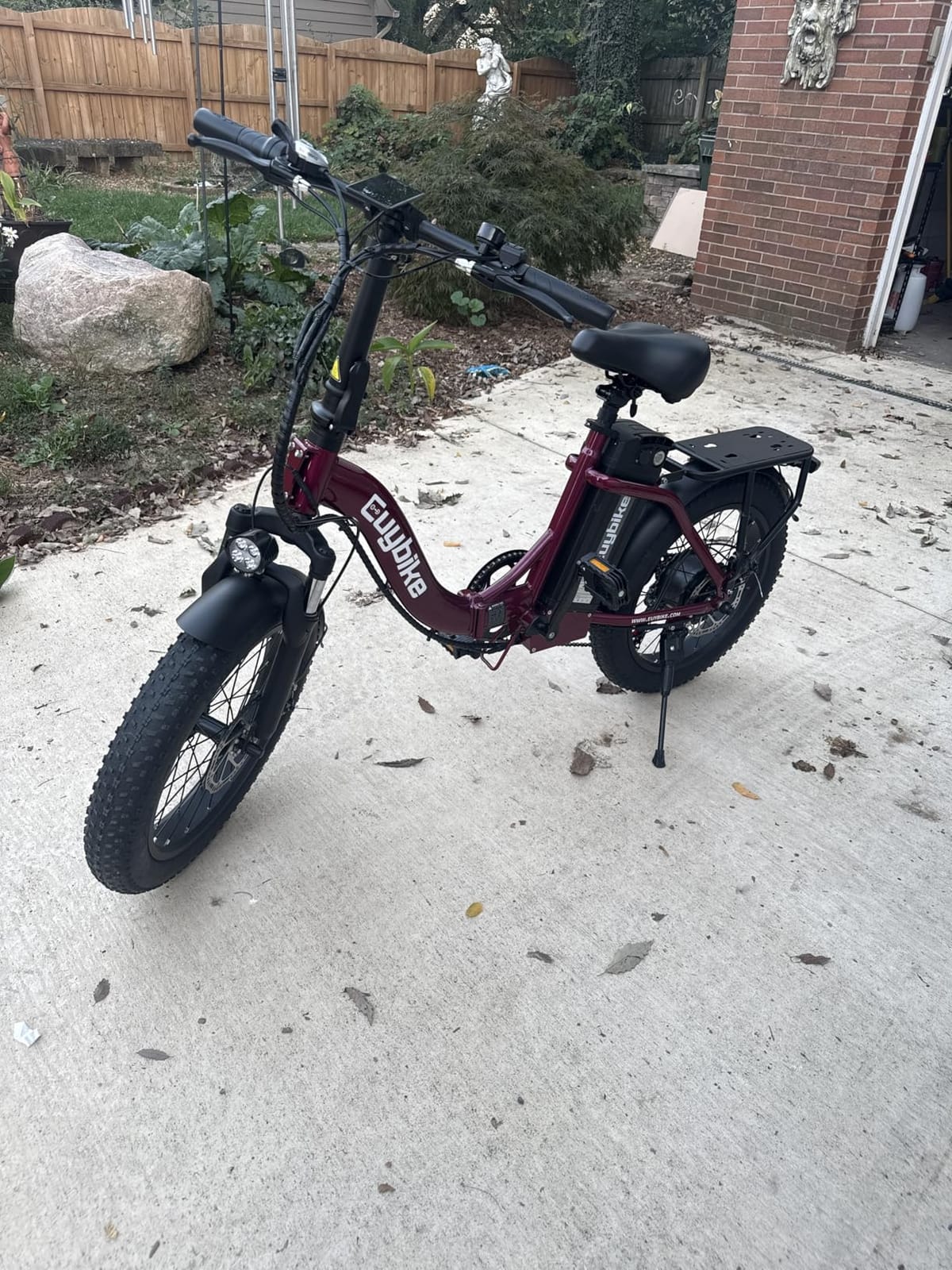
The EUYBIKE pairs a folding frame with fat tires, which nobody else in this roundup does. The frame folds to 40.2 x 17.7 x 31.5 inches and the step-thru design is padded, which owners repeatedly single out as comfortable for older riders.
It also carries a 48V 20Ah pack, the largest capacity in this roundup alongside the EUY CityRang 4.0. That gives 40 to 80 miles depending on how much you rely on the motor, roughly 40 miles on pure electric over a 4 to 6 hour charge. The 750W motor claims 1000W peak and a 30 degree climb capability.
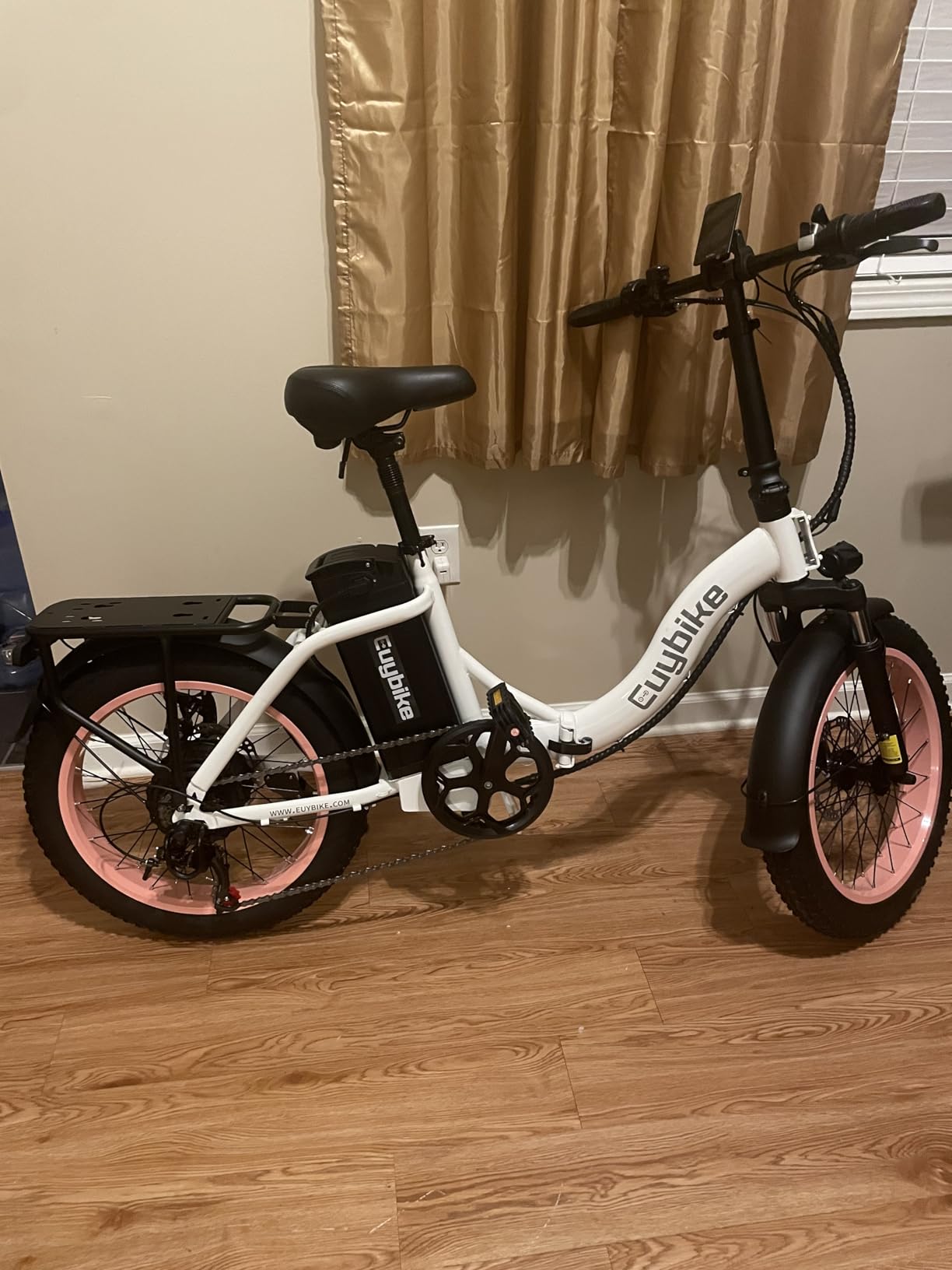
Rated at 4.6 with 72 percent five-star reviews, this is the highest scoring bike in the list. The recurring praise is for acceleration and climbing power, which owners of a folding bike rarely expect, and for quick customer service responses when something needs sorting.
The catch is weight and wheel size. At 65 lb in carbon steel rather than aluminum, it is heavy for a folding bike, and 20 inch wheels with 7-speed gearing limit what rough terrain it can absorb. Small 20 inch wheels also feel every crack in the pavement.
Will it fit in an apartment or a car trunk?
Yes, with a caveat about the weight. The folded dimensions fit a trunk, a closet or a corner of a subway car, but 65 lb is a lot to carry up a flight of stairs. If your storage is on a ground floor or you have a bike elevator, this is an easy yes. If not, the Gotrax R1 below is 20 lb lighter.
Owners also mention a misaligned rear rack on some bikes, so check the rack alignment during setup. It is a five-minute fix rather than a defect worth returning, but it should be checked before you load anything onto it.
Is 80 miles of claimed range realistic?
Treat it as the optimistic end of the range on pedal assist at low levels, and expect closer to the lower figure for a heavier rider, a headwind, or cold weather. Capacity is a real 20Ah pack, which is the physical fact underneath the number, and capacity is what determines whether the range claim is credible.
The same logic applies to every bike here. Riders above 300 lb should note that this bike’s rating is a better match than most on this list, and should plan on a shorter ride than a 175 lb rider at the same assist level.
6. Gotrax R1 – Best Folding E-Bike for Car-Free Commuting
Gotrax R1 20″ Folding Electric Bike with 40 Miles Range by 48V Battery, 20Mph Power by 350W, Weighs Only 45lbs, LCD Display & 5 Pedal-Assist Levels, Suitable for Leisure Riding&Commuting Black
- 350W rated motor with 500W peak
- 48V 7.8Ah 374Wh removable battery
- Folds to 37.4 x 17.7 x 27.5 inches
- 45 lbs, UL2849 certified
Pros
- Folds into a car trunk or the subway
- Aluminum frame feels solid rather than cheap
- Dual disc brakes are strong and responsive
- Pedal assist handles steep hills for a small motor
- Range exceeds advertised numbers for daily trips
Cons
- No suspension so bumps are felt directly
- Headlight is very dim for night riding
- Assembly manual is largely useless
- 45 lb is too heavy to carry up stairs
- Some bikes arrived missing hardware
The R1 weighs 45 lb, at the light end of this list, and the folded size of 37.4 x 17.7 x 27.5 inches is small enough for a train luggage rack. For a commuter who combines bike and transit, that combination is worth more than any motor specification.
The motor is small by design. A 350W rated motor with 500W peak sounds weak next to the 1000W peak numbers elsewhere, but reviewers report it handling steep hills well, largely because the bike weighs so little. The 374Wh battery delivers about 15.5 miles on pure electric and up to 25 on pedal assist.
It is also UL2849 certified with 365-day parts support, which matters more than the sticker does on a bike that people actually service. Maximum recommended rider weight is 264 lb, so this is not the pick for heavier riders.
Is the Gotrax R1 good for daily commuting?
For trips under about ten miles with a train or car connection, reviewers rate it highly, and the aluminum frame is singled out as feeling genuinely solid rather than thin. Battery life for a 5 to 7 mile daily ride exceeds the advertised numbers, which is the outcome most commuters care about.
Where it strains is speed and rough surfaces. With no suspension at all, sidewalk cracks and potholes arrive directly at the rider, and the 350W motor has little reserve once you are moving quickly with a headwind.
What should I know before buying a folding e-bike?
Three things. First, the hinge and latch need checking every few rides, because that is the joint every folding bike eventually complains about. Second, setup is the hardest part: the printed manual is largely useless and owners rely on the video walkthrough, so budget an evening.
Third, the key switch sits on the underside of the frame, which is secure and slightly annoying in equal measure. Riders who need a light they can rely on at night should plan to add one, because the headlight is very dim.
7. Funhang EB-C2 – Best Step-Through E-Bike for Comfort
Funhang Electric Bike for Adults, 1000W Peak Ebike, 50Miles Step Thru Electric Bicycle, 26″ Commuter E Bikes with 48V Built-in Removable Battery, Adjustable Stem, 7-Speed, UL 2849 Certified
- 500W motor with 1000W peak
- 48V 374.4Wh IPX5 removable battery
- 40 to 50 miles on pedal assist
- Rack and full fenders included
Pros
- Step-thru frame is easy to mount at any height
- Adjustable stem and seat fit a wide range of riders
- Fenders and rack make it practical in any weather
- Five modes and five assist levels
- UL 2271 and UL 2849 recognized by SGS
Cons
- 62.8 lb is heavy for the class
- 7-speed drivetrain limits climbing gears
- Steel frame adds weight against aluminum rivals
The EB-C2 is the most comfort-focused bike in this list. The step-thru frame plus an adjustable handlebar stem means riders from roughly 5 foot 3 to 6 foot 1 can get proper leg clearance, which removes the sizing frustration that trips up a lot of first-time e-bike buyers.
It is also the most practical for errands. Full-coverage fenders and a rear rack are in the box, along with a headlight, horn, LCD display, tool kit and kickstand, so the only thing missing is a basket. A 48V 374.4Wh IPX5 waterproof battery gives 40 to 50 miles on pedal assist.
Owners highlight five working modes, five pedal assist levels, and a smooth assist curve as the reasons it is easy to live with. Its 4.4 rating puts it in the top tier of this roundup, and it carries SGS recognition on both the UL 2271 battery and the UL 2849 system.
Who does a step-thru frame actually suit?
Anyone who cannot comfortably swing a leg over a high-step frame: older riders, riders returning after an injury, anyone in bulky clothing, and anyone wearing a skirt or long coat. It is also simply easier to stop and start at traffic lights with cargo on board.
The cost is stiffness. A step-thru frame has less structural rigidity than a diamond frame, so it is not the right choice for aggressive riding or for carrying very heavy loads on rough roads. It is the right choice for smooth pavement, which is where most riders actually spend their time.
What about the payload rating?
That rating is higher than most of this list, and it matters for a specific group of riders. Anyone above 250 lb will find the assist response and braking feel on a bike rated for 264 lb noticeably worse, so a higher payload rating puts this bike in the range worth looking at for them. The isinwheel U7S rates 330 lb and goes further still.
One mistake to clear up: the battery is described as removable, but it is built into the frame, so you are removing it for charging rather than to bring a spare battery on a long trip. If you ride far from home regularly, the Gotrax Dolphin below accepts a spare pack more easily.
8. Gotrax Dolphin – Best E-Bike for First-Time and Older Riders
Gotrax Dolphin 26″ Step -Thru Electric Bike for Adults, Max 30 Mile & 20Mph
- 350W rated motor with 500W peak
- 280.8Wh removable battery, 30+ mile assist range
- Step-thru aluminum and ABS frame
- UL2849 certified, 365-day warranty
Pros
- Step-thru frame suits a wide range of riders
- Aluminum frame keeps a 26 inch bike under 50 lb
- Dual disc brakes and front shock absorbers
- Three riding modes including walk assist
- Spare batteries supported for longer trips
Cons
- 280.8Wh battery is small for the class
- 350W motor feels underpowered on steep grades
- Vinyl saddle is uncomfortable over long rides
- Seven-speed drivetrain with a 20 mph cap
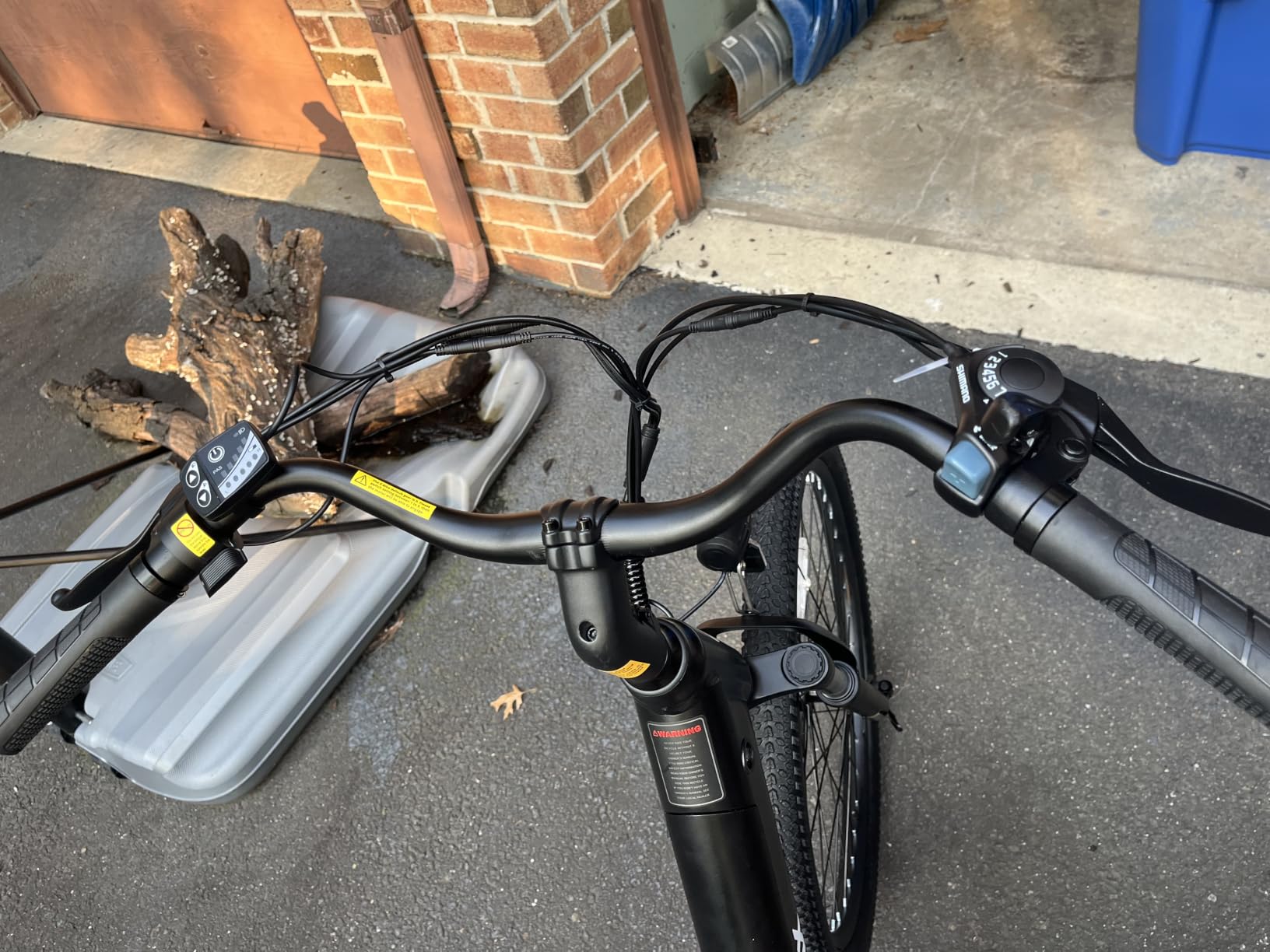
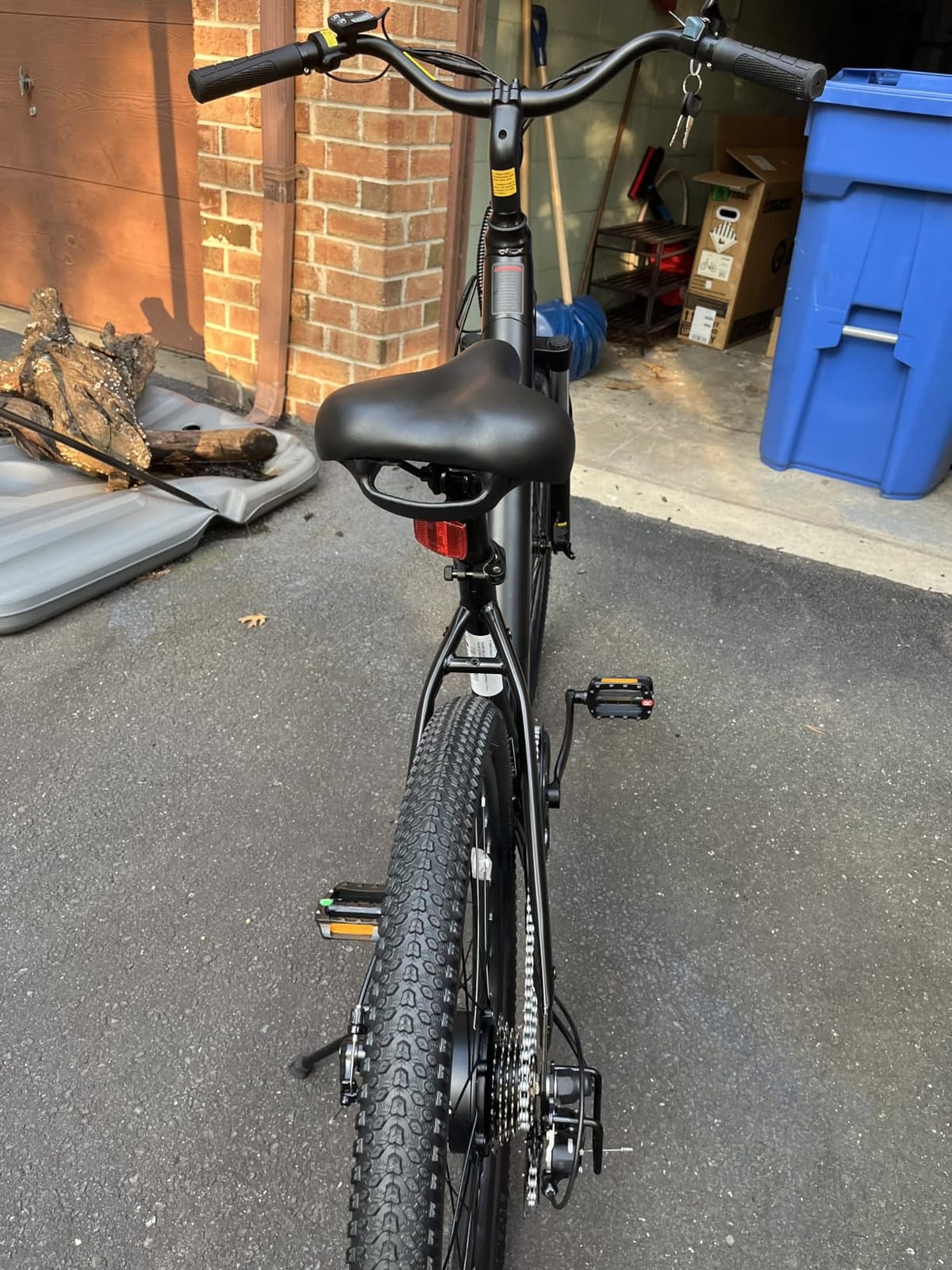
The Dolphin is a sensible first e-bike for an older rider or anyone who wants the least amount of fuss. The step-thru frame, height-adjustable saddle and ergonomic handlebars make it approachable, and the aluminum and ABS frame keeps a 26 inch bike to 49 lb.
It is the only bike in this list that explicitly supports a spare battery for extended travel, which changes long-trip planning in a way that no other spec does. The 280.8Wh pack itself gives 15.5 miles on pure electric and 30 or more on pedal assist, with a 5.5 hour charge.
It is also UL2849 certified with a 365-day warranty and 365-day part assurance, and it ships with a Shimano 7-speed drivetrain, which owners tend to notice after a few hundred miles.
Is the Dolphin powerful enough for hills?
It is fine for moderate hills and genuinely weak on steep grades, because the motor is 350W rated with 500W peak. That is the honest trade: a smaller battery and smaller motor make it lighter and more manageable, and a steeper climb is exactly where that saving shows up.
If your route climbs more than a few hundred feet, add a budget question to your decision. The Funhang EB-S1 with 66.6 N-m of torque handles the same hills without drama, and the Funhang EB-C2 adds comfort for longer climbs over rough pavement.
Why is it still a good first e-bike?
Because a bike that is too weak for your route is one you stop riding, and riders who start on a comfortable bike build a habit instead. The Dolphin is quiet, simple to operate, light to move, and rated to 264 lb, which covers a lot of first-time buyers.
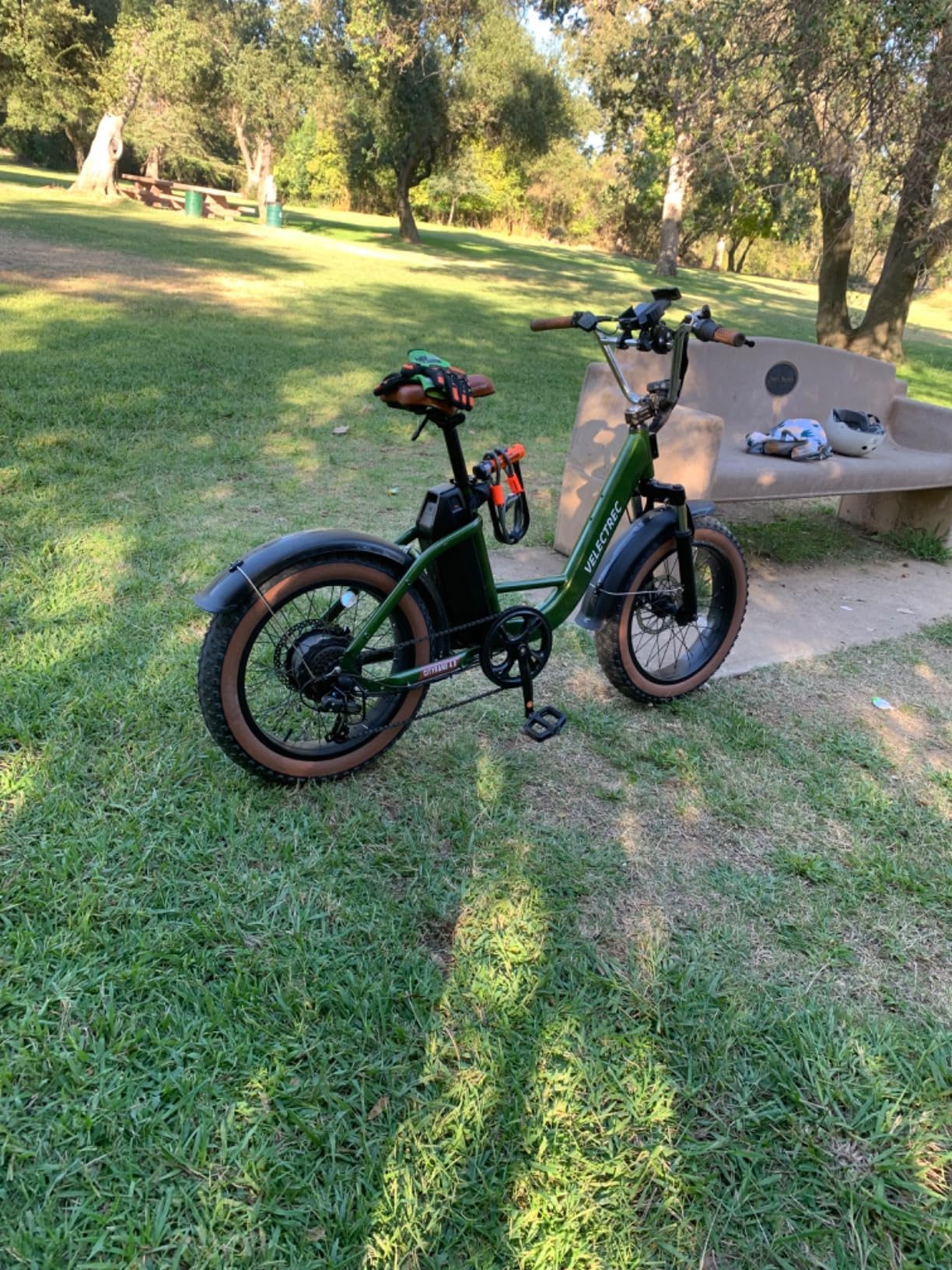
Its spare battery support is the feature most overlooked. Riders who want to ride a long route without worrying about a 5.5 hour charge in the middle of it can carry a second pack, which no other bike in this roundup supports as directly.
9. EUY CityRang 4.0 – Best for Speed and Long Mixed-Terrain Rides
EUY 1500W Peak Electric Bike for Adults, 48V 20Ah Removable Battery Max Range 70Miles Electric Bicycle, 20”×4.0″ Fat Tire Ebike,Fast Cargo Ebikes,Commute Mountain E-Bike UL Certified
- 750W motor with 1500W peak
- 48V 20Ah 960Wh battery
- 20 x 4.0 inch fat tires
- Dual front spring shock absorbers
Pros
- Dual front shocks smooth rough gravel and grass
- Fast 25 to 30 mph riding with good low-speed pedaling
- Rear rack is a solid accessory mount
- Seat adjustment fits riders from 5 foot 3 to 6 foot 2
- Generic battery pack replaces without proprietary tools
Cons
- Handlebars and stem can crack when tightened
- Speedometer reads roughly 28 percent high
- Brakes are adequate rather than strong
- 71 lb is the heaviest bike in this group
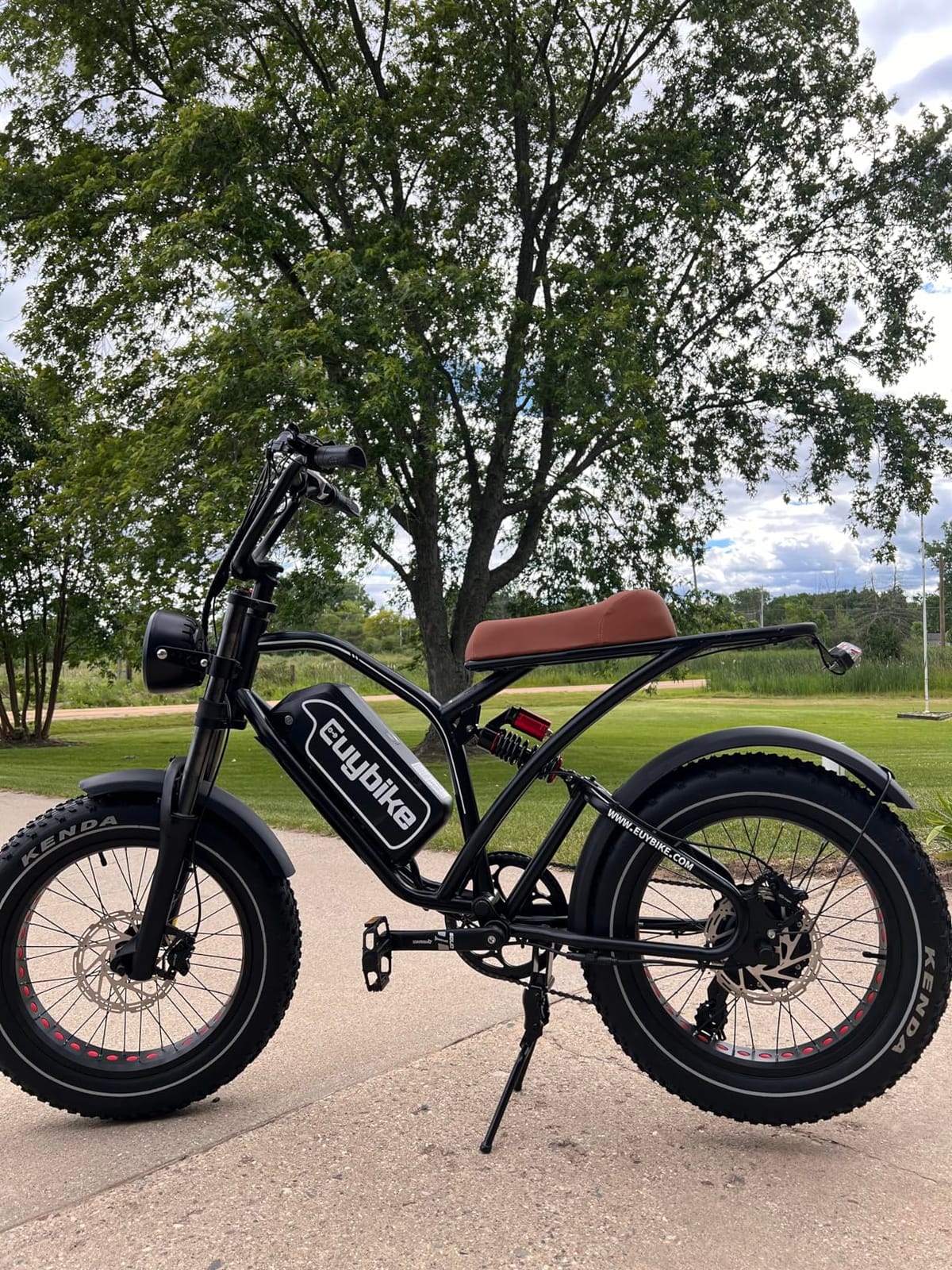
The CityRang 4.0 is the fastest bike here in practice, with riders reporting 25 to 30 mph and good low-speed pedaling on the lower assist levels. The 750W motor with 1500W peak and a 960Wh battery give it more energy on tap than anything else in this roundup.
The dual front spring shock absorbers are the quiet hero. Owners specifically praise them for smoothing out rough gravel and grass, which is where most fat tire bikes transmit every impact straight into the rider.
Here is the part that matters more than any specification: some detailed reviewers instrumented this bike and found the advertised 20Ah capacity, 1500W peak, 70-mile range and 30 mph top speed all overstated. That is exactly the kind of finding this guide is for, and it changes how you should read the table.
Also worth knowing: the speedometer reads roughly 28 percent high until the tire diameter is recalibrated in the display, and the headlight barely lights the road at speed. Owners like that the battery is a generic pack that can be replaced without proprietary tools, which is rare in this category.
Is it worth buying a bike whose claims run high?
It depends on what you are being sold. A fast bike with overestimated figures is still a fast bike; the motor and the mass of the battery are physically there. What fails is the assumption that the numbers on the listing are measurements.
Recalibrate the speedometer during setup and treat the 70 mile range figure as a ceiling rather than a plan. The 30 mph top speed also sits above the Class 2 assist limit that most of these bikes are certified to, which has legal consequences we cover below.
How does it compare to the Funhang EB-S1?
The EB-S1 is the safer overall buy: 66.6 N-m of published torque, and reviews that do not report instrumented discrepancies. The CityRang is faster, smoother over rough ground, and carries more battery.
If hills and verified figures matter most, take the Funhang. If long fast rides on gravel and grass matter most, and you are willing to set up the bike yourself, the CityRang rewards that willingness.
10. Jasion EB5 – Best Lightweight E-Bike for City Riding
Jasion EB5 Electric Bike for Adults 26″ tire with 1000W Peak Motor
- 1000W peak motor with 20 mph top speed
- 360Wh removable battery, 25 to 40 miles
- 49.6 lb carbon steel frame
- Four modes including a booster
Pros
- Lightweight at 49.6 lb for a bike this size
- Removable battery gives roughly 18 to 35 real miles
- Easy to move and assemble in about 15 to 30 minutes
- Booster mode helps on short steep pitches
- Largest owner base here with 2606 ratings
Cons
- Budget components wear faster
- Front fork is not lockable and feels flimsy
- Stock saddle is uncomfortable on long rides
- Adjustment screws need frequent retightening
- No official replacement battery offered
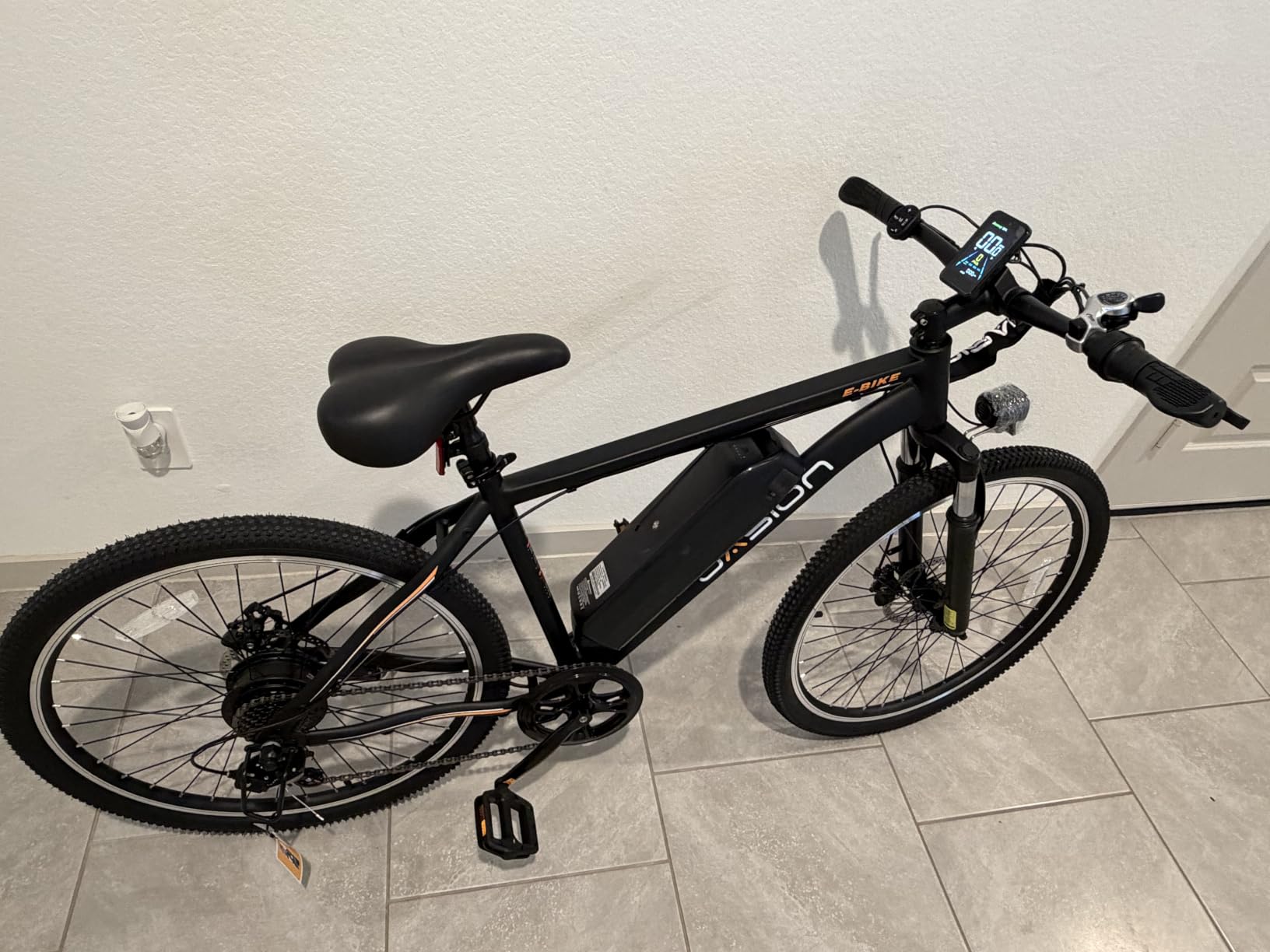
The EB5 is the most reviewed bike in this roundup by a wide margin, with more than 2600 ratings, which makes its review pattern unusually reliable and its low rating worth understanding. Owners describe it as a capable budget e-bike that flattens hills and commutes cheaply.
At 49.6 lb it is among the lightest bikes here, and that weight is the reason owners can move it, lift it, and assemble it in 15 to 30 minutes without help. A 1000W peak motor, a 360Wh removable battery giving 25 to 40 miles, and four riding modes including a booster round out the spec sheet.
The booster deserves a specific mention. It is a slow throttle-style push up a short pitch, useful when you are loaded or stopped at a light, and it is unusual to find a working mode like that on a bike at this level.
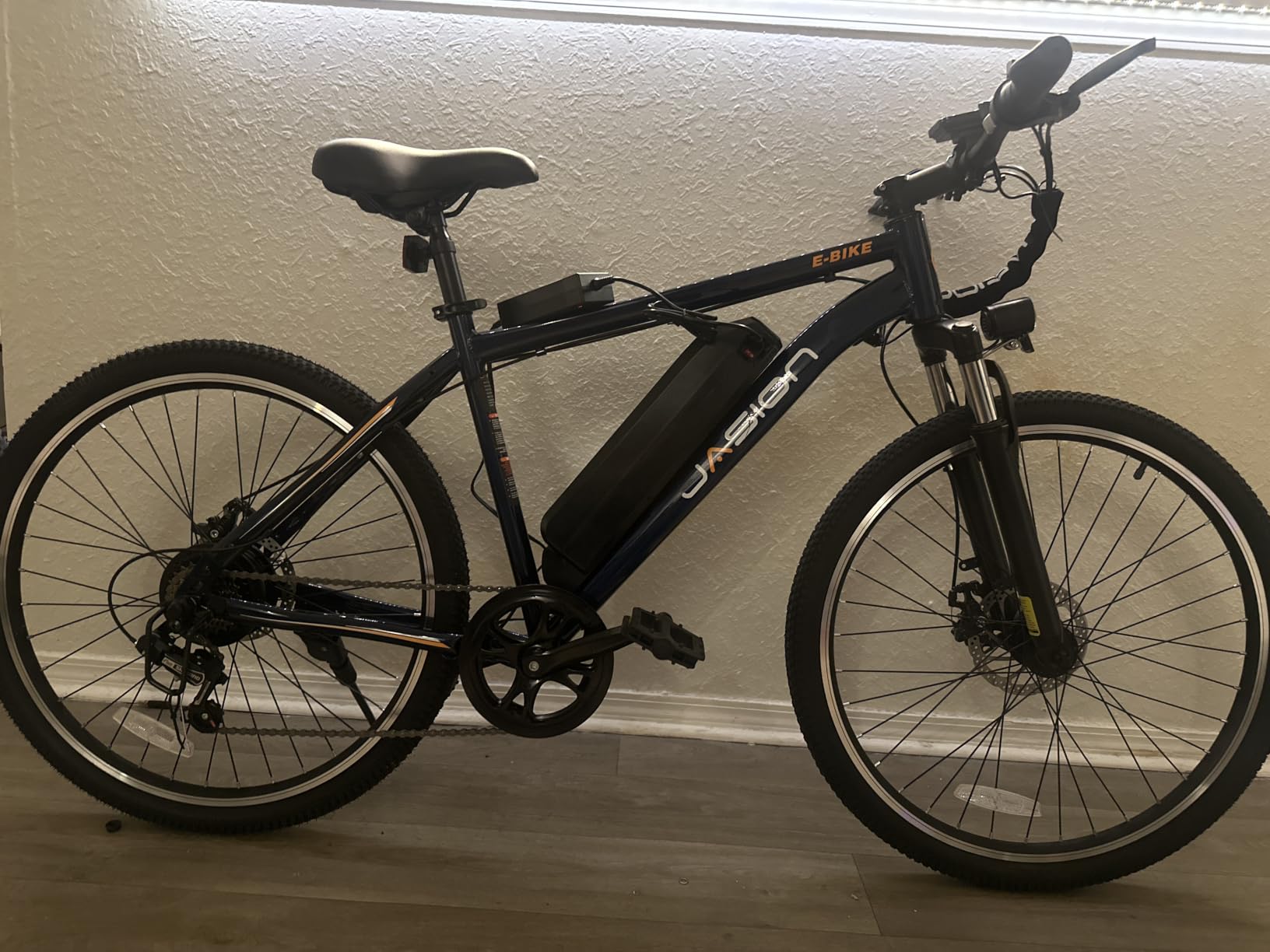
Its 4.1 rating is the lowest in this roundup, and the reason shows up in the 13 percent one-star share. Reviews repeatedly mention soft tires, spokes and adjustment screws loosening, a saddle that hurts on long daily rides, and an occasional battery or assist failure.
The biggest long-term concern is stated plainly in the reviews: no official replacement battery is offered. That single fact changes the ownership calculation more than any spec, because a dead pack ends the bike’s usefulness. Some buyers will accept that risk, and plenty clearly have.
Is the Jasion EB5 worth buying without a spare battery?
For a short-commute rider on a strict budget, sometimes yes. At 49.6 lb it is the easiest bike here to store and move, the booster mode solves an annoying problem, and more than 2600 owners have already tested whether it survives ordinary use.
For anyone planning a five-year ownership horizon, no. Every other bike in this roundup comes with a defined warranty and a battery replacement path, even where the pack is expensive. Absence of a replacement path is a different category of problem from an expensive one.
What maintenance should I expect?
Basic mechanical literacy, honestly. Owners report needing to retighten handlebar and brake adjustment screws, and replacing tires sooner than on a bike with better stock rubber. The pedal assist cadence sensor is also reported to cut out intermittently.
None of that is unusual for the category, and all of it is far cheaper than a new battery. Riders who already adjust brake levers and tighten bolts will find this bike straightforward. Riders who have never touched a bicycle should pick a bike with better stock components instead.
Electric Bike Brands to Avoid and the Red Flags That Give Them Away
The most common question in the forums for this price range is not which bike is fastest, but which bikes to stay away from. The answer is less about named brands and more about patterns, because the problem is structural: a bike assembled from parts no supplier stocks and supported by nobody with a phone number.
Here are the red flags, in the order they are easiest to check.
No UL 2849 listing. UL 2849 is the electrical system safety standard. A listing with no certification number, or a battery described as merely “explosion proof,” is telling you something.
Marketplace-only seller with no support contact. Forum regulars describe these bikes as junk because you cannot get parts for them. If there is no company website, no warranty document beyond a marketplace return window, and no way to reach a human, the bike is a disposable appliance.
No serviceable parts path. Ask whether a controller, display, charger, tire or brake pad can be bought separately. A brand that ships only complete motors and only from one warehouse forces every repair to be a freight shipment.
Peak wattage used as the headline number. A 1500W peak figure describes a few seconds of output, not what you ride on. Nominal or rated watts and torque are the numbers that predict climbing ability.
Range claims with no battery capacity in watt hours. Miles per charge without watt hours is unfalsifiable. Every bike here states its capacity.
No stated maximum rider weight or payload. If a listing omits it, assume the number is low.
Warranty language that names the wrong parties. A warranty of “one year” with no statement about who services it, and a limited warranty covering “specific parts” rather than the bike, is thin.
None of these rules out a good bike. The ANCHEER, the Jasion and the EUYBIKE in this list are all direct marketplace purchases from brands that are not household names, and all three have thousands of satisfied owners. The distinction is whether parts, certification and a support path exist, and that is checkable before you buy rather than after.
How to Choose an E-Bike Under 2000 Dollars
Class 1 vs Class 2 vs Class 3: how fast can an e-bike legally go?
Class 1 stops assist at 20 mph and usually has no throttle. Class 2 stops at 20 mph and allows a thumb throttle, which is why nearly every bike in this roundup is Class 2. Class 3 stops at 28 mph, allows a throttle, and is the fastest legal category in the US.
Class 3 is not available from any of these brands at this level, and that is a legal limit rather than a technical one. It also comes with restrictions: many states and cities bar Class 3 bikes from bike paths, and riders under 16 are prohibited in several. The fastest e-bike under 2000 dollars in this roundup will not assist above 20 mph in its compliant configuration, and riders tempted to reconfigure the controller should weigh the warranty and legal consequences first.
Hub motor or mid-drive: where the money should go
A rear hub motor is a wheel with a motor in it. It is simple, cheap, nearly maintenance-free, and it keeps working years later with a standard controller swap. A mid-drive sits at the crank, multiplies your gearing, and feels natural on climbs, but costs several times more and needs more service.
At this budget you will be choosing a hub motor, and that is not a compromise you need to feel bad about. The one thing to do is buy enough torque. The Funhang EB-S1 publishes 66.6 N-m, which is why we recommend it for hills, and the 500W motors with 7-speed drivetrains will feel sluggish on a steep grade with a load.
Battery and range: what the numbers actually mean
Capacity in watt hours is the real spec. Multiply volts by amp hours, then divide by roughly 15 to 20 watt hours per mile for a 250 lb rider on moderate assist. A 48V 13Ah pack is 624Wh, which works out to roughly 31 to 42 miles before conditions bite.
Three modifiers decide whether you get the number on the label. Rider weight is the biggest: the same ride costs meaningfully more energy for a 250 lb rider than a 175 lb one. Hills and cold weather add to that. And a throttle user will get a fraction of the pedal-assist figure, which is why the specs here list both numbers separately.
Where a battery is mounted also matters. A removable pack can live indoors and can be duplicated, which the Gotrax Dolphin supports directly. A pack built into the frame is convenient and less theft-prone, but you cannot carry a spare on a long trip.
Brakes, torque and the payload question
Every bike here has disc brakes, and none has hydraulic brakes at the top of the range. Mechanical discs are fine at 20 mph with dry pavement, which is where these bikes are certified to ride, and they are the first thing to upgrade later. The riders who complain most, on the Heybike and the EUY CityRang, are the ones riding faster than the assist cap.
Check the maximum rider weight before anything else. It ranges from 264 lb on the two Gotrax bikes to 330 lb on the isinwheel U7S. Forum threads about gutless motors are overwhelmingly about riders at the top of that range on bikes rated lower.
Where to buy and what support actually looks like
Every bike here is sold direct, which usually means the lowest price and the least hand-holding. The alternative is a brand sold through a physical retailer, where you can test ride before buying and where a first service is a short drive. Owners on the forums describe that test-ride access as the decisive factor when two similarly priced bikes were on the table.
What to check before you order: does the brand publish a parts list, is the battery a standard pack or a proprietary one, what does the warranty actually cover, and is there a phone number. Those four answers predict whether year three will be pleasant.
Frequently Asked Questions
What ebikes should I stay away from?
Stay away from bikes with no UL 2849 electrical certification, no serviceable parts path, and no reachable support contact. Marketplace-only sellers who list no company website, no warranty document and no parts list are the most common problem. Peak wattage used as the headline number and range claims with no watt hour capacity are secondary warning signs.
Which e-bike brand is most reliable?
Reliability at this level comes from warranty length, parts availability and whether the battery is a standard pack. Jasion, ANCHEER, EUYBIKE and EUY are all direct marketplace brands, yet each has a large owner base, which is itself a signal. Jasion specifically offers no official replacement battery, which is the one detail worth weighing most heavily against its large review count.
What is the fastest e-bike under 2000 dollars?
The fastest in this roundup in practice is the EUY CityRang 4.0, which riders report reaching 25 to 30 mph, though its own reviewers found the advertised top speed overstated. Legally, almost every bike here is a Class 2 model capped at 20 mph of assist, and reconfiguring the controller above that cap can void warranty coverage and break local path rules.
How far does a 2000 dollar e-bike really go on one charge?
Capacity in watt hours decides it, not the marketing. A 48V 13Ah pack is 624Wh, which works out to roughly 31 to 42 miles for a 250 lb rider on moderate assist. Claimed ranges in this roundup run from 15.5 miles on pure electric to 80 miles on pedal assist, and the higher figures assume a light rider on the lowest assist level in flat weather.
How do I choose an e-bike motor?
At this budget you are choosing between hub and mid-drive, and the choice is made for you by price. What you can control is torque, which predicts hill climbing ability. The Funhang EB-S1 publishes 66.6 N-m, and that figure matters more than wattage because advertised peak watts describe a few seconds of output rather than sustained climbing power.
Can I ride a Class 3 e-bike on a bike path?
Often not. Many states and cities restrict Class 3 bikes, which assist up to 28 mph, from bike paths and multi-use trails, and several prohibit riders under 16. Most bikes in this roundup are Class 2 with a 20 mph assist cap, which is the reason so many commuters choose this category over a faster one.
Which E-Bike Under 2000 Dollars Should You Buy?
Buy the Heybike Cityscape 2.0. It has the best balance of rating, review volume, certification and practical equipment in this roundup: a UL-certified 468Wh removable battery, a rack and full lighting, front suspension, and an owner base of more than 600 riders who mostly say the same thing, which is that it is easy to live with.
Change your mind in two situations. If your routes include gravel, sand, grass or serious hills, take the Funhang EB-S1, because 66.6 N-m of torque and 4.0 inch tires solve problems the Cityscape cannot. If you want the most machine for the money and are comfortable with a 21-speed drivetrain and an aluminum frame, take the ANCHEER, which is the value pick on raw specification.
Everything else in this list of the best electric bikes under 2000 dollars is a variation on those three ideas, matched to whether you need a folding frame, a cargo rack, a step-through, or a lighter bike. Check the UL 2849 listing, check the parts path, and check who answers the phone before you order. That three-minute check is worth more than any specification on the page.