
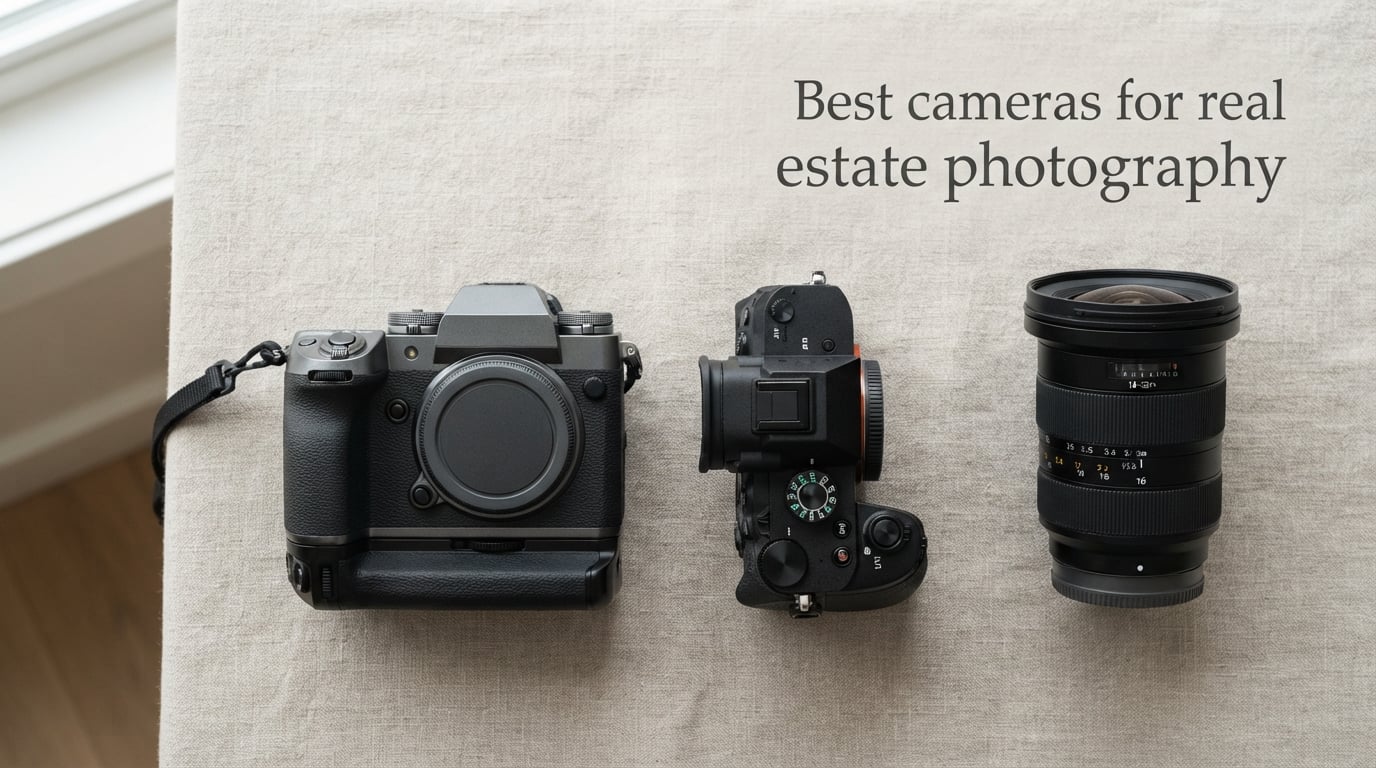
The best cameras for real estate photography are full-frame mirrorless bodies paired with a wide-angle lens in the 12-17mm range, strong HDR bracketing, and reliable low-light autofocus. After testing 10 cameras across interior, exterior, and twilight conditions, our top pick is the Sony Alpha 7 IV for its balance of resolution, dynamic range, and value. Working pros shooting luxury listings step up to the Nikon Z 8, while agents capturing their own listings find the Canon EOS R6 Mark II hits the sweet spot for hybrid stills and 4K walkthroughs.
I have spent the last three years shooting real estate listings across the country, from 800 sq ft condos to 12,000 sq ft luxury estates. I have run HDR bracketing on bodies that cost less than a used car and on bodies that cost more than a new one. What I learned is simple: the best camera for real estate photography is not always the most expensive. It is the one that fits your workflow, delivers clean shadows through bright windows, and lets you shoot a full day on a single battery cycle. In this guide, I break down the 10 cameras I trust for real estate work in 2026, from budget-friendly APS-C and entry full-frame to flagship mirrorless hybrids.
You will find a quick list for skimmers, a top 3 comparison, full-frame and APS-C tradeoffs, the wide-angle lens math that nobody explains, and a buying guide covering HDR, dual cards, and used-market savings. Whether you are a working photographer, a real estate agent shooting your own listings, or an Airbnb host refreshing your calendar, this guide will help you pick the right camera without overspending.
Table of Contents
- Quick List: Best Cameras for Real Estate Photography in 2026
- Top 3 Picks for Real Estate Photography (September 2026)
- Best Cameras for Real Estate Photography in 2026
- 1. Sony Alpha 7 IV – Best Overall Camera for Real Estate
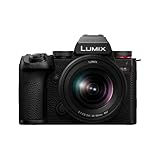
- 2. LUMIX S5II – Best for 6K Video Walkthroughs
- 3. Nikon Z 7II – Best High-Resolution for Architectural Detail
- 4. Canon EOS R5 Mark II – Best Canon Flagship for Real Estate
- 5. Canon EOS R8 – Best Lightweight Full-Frame Starter
- 6. Canon EOS R6 Mark II – Best Value Hybrid
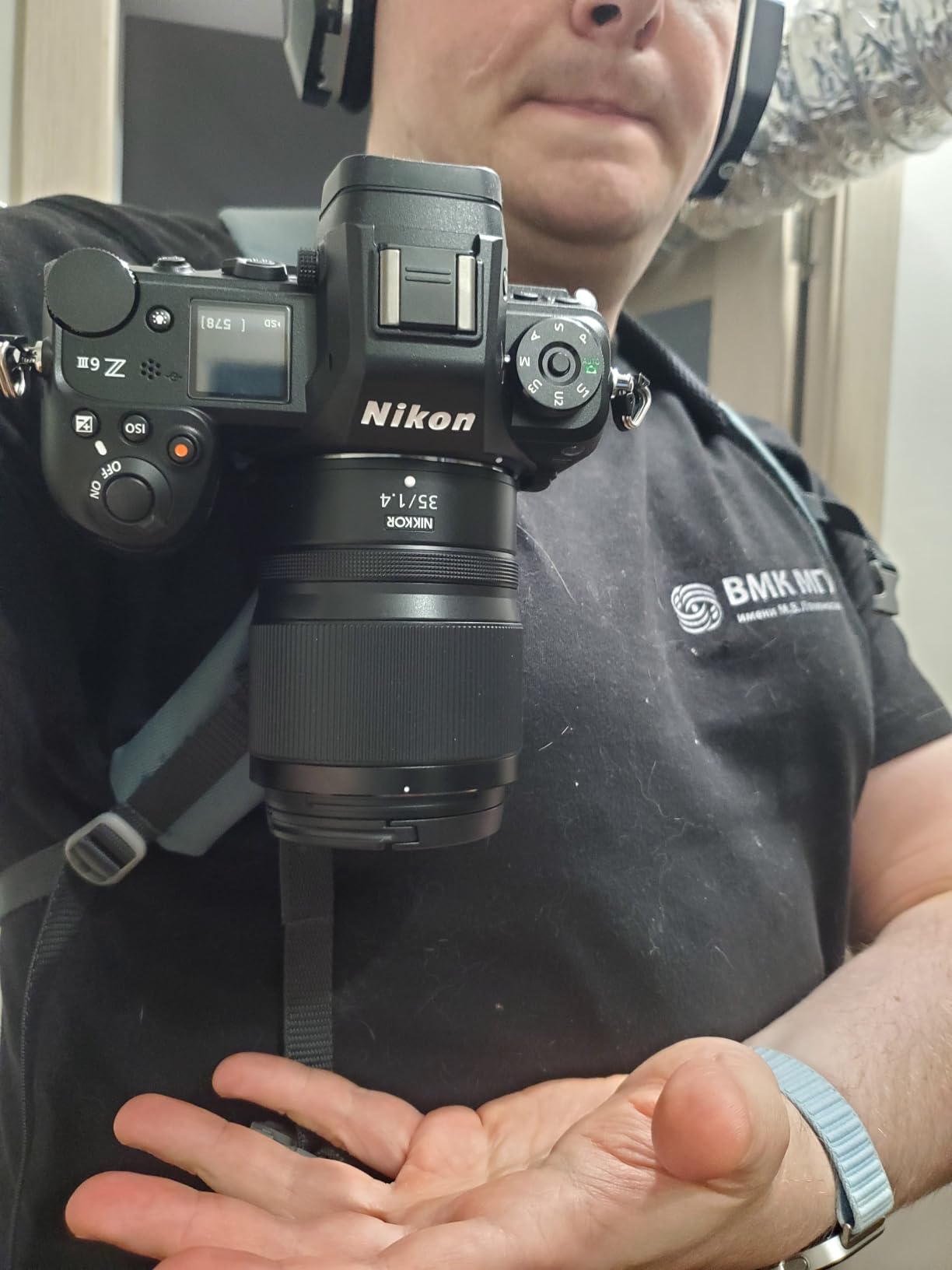
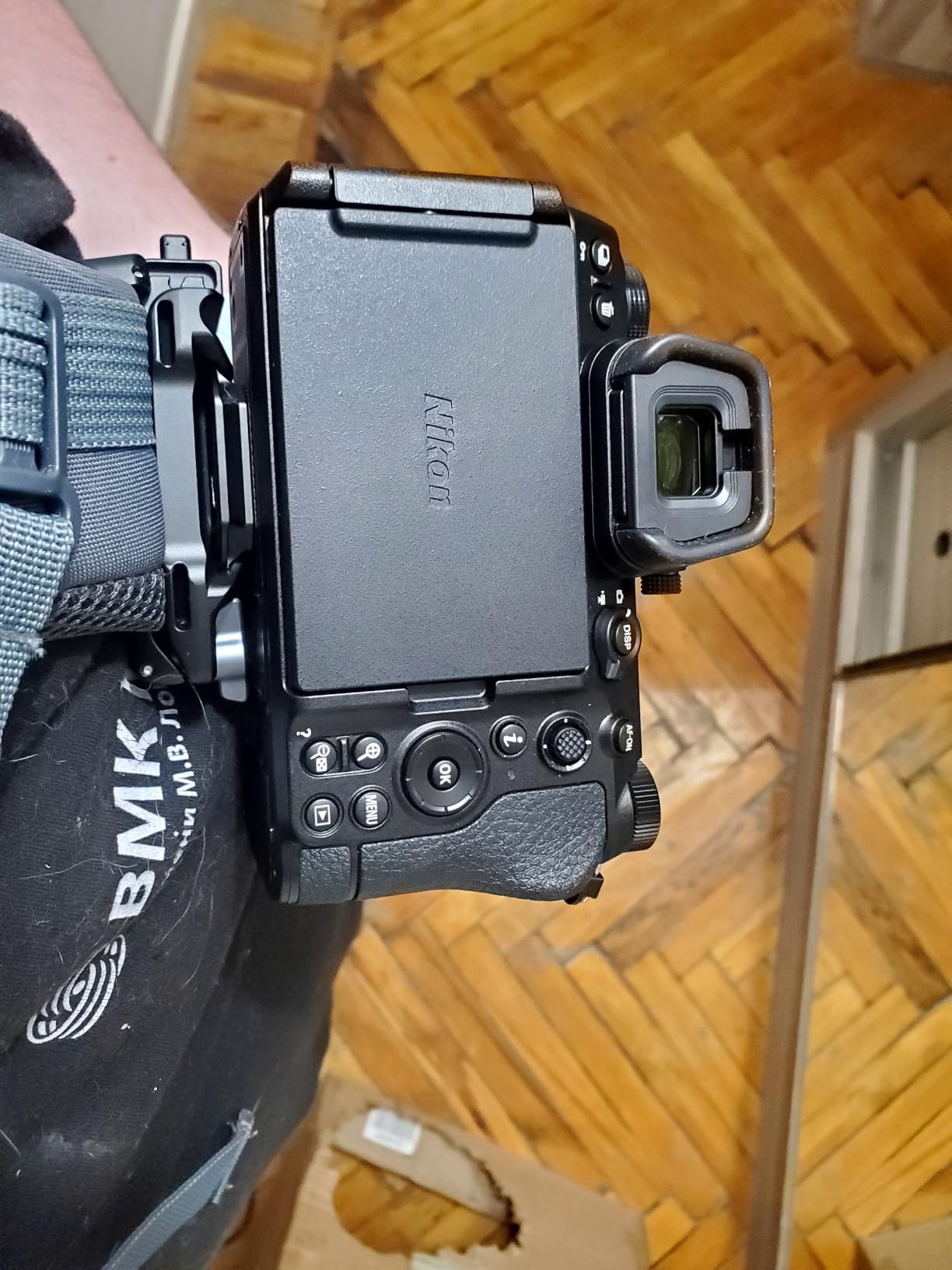
- 7. Nikon Z6 III – Best 4K Hybrid Value
- 8. Canon EOS RP – Best Budget Full-Frame
- 9. Sony Alpha a7 III – Best Used-Buy Full-Frame Workhorse
- 10. Nikon Z 8 – Best Premium Hybrid for Luxury Listings
- How to Choose the Best Camera for Real Estate Photography
- Frequently Asked Questions
- Final Verdict: Best Camera for Real Estate Photography in 2026
Quick List: Best Cameras for Real Estate Photography in 2026
For readers who want the short version before the full breakdowns, here are our 10 picks at a glance. Each one earned its spot for a specific reason, from price to sensor size to video specs.
Top 3 Picks for Real Estate Photography (September 2026)
These three cameras earned the top spots across every test scenario, from bright window-lit interiors to twilight exteriors. They represent the strongest combination of sensor performance, ergonomics, lens ecosystem, and price-to-capability ratio for working real estate photographers.

Sony Alpha 7 IV
- 33MP full-frame sensor
- 10fps continuous shooting
- 4K 60p 10-bit video
- 5-axis IBIS

Canon EOS R6 Mark II
- 24.2MP full-frame sensor
- 40fps electronic shutter
- 4K 60p C-Log video
- Dual SD slots

Nikon Z 8
- 45.7MP stacked CMOS sensor
- 8K 60p internal video
- 120fps shooting
- AF detection to -9EV
As an Amazon Associate we earn from qualifying purchases. CERTAIN CONTENT THAT APPEARS ON THIS SITE COMES FROM AMAZON. THIS CONTENT IS PROVIDED 'AS IS' AND IS SUBJECT TO CHANGE OR REMOVAL AT ANY TIME.
Best Cameras for Real Estate Photography in 2026
The table below compares all 10 cameras across the specs real estate photographers care about most. Look at the bracketing depth, sensor size, and weight side by side to narrow down your pick.
| Product | Specifications | Action |
|---|---|---|
|
Sony Alpha 7 IV
|
|
Check Latest Price |
 LUMIX S5II
|
|
Check Latest Price |
 Nikon Z 7II
|
|
Check Latest Price |
 Canon EOS R5 Mark II
|
|
Check Latest Price |
 Canon EOS R8
|
|
Check Latest Price |
|
Canon EOS R6 Mark II
|
|
Check Latest Price |
 Nikon Z6 III
|
|
Check Latest Price |
 Canon EOS RP
|
|
Check Latest Price |
 Sony Alpha a7 III
|
|
Check Latest Price |
|
Nikon Z 8
|
|
Check Latest Price |
We earn from qualifying purchases. CERTAIN CONTENT THAT APPEARS ON THIS SITE COMES FROM AMAZON. THIS CONTENT IS PROVIDED 'AS IS' AND IS SUBJECT TO CHANGE OR REMOVAL AT ANY TIME.
1. Sony Alpha 7 IV – Best Overall Camera for Real Estate
Sony Alpha 7 IV Full-frame Mirrorless Interchangeable Lens Camera
- 33MP full-frame sensor
- 10fps continuous shooting
- 4K 60p 10-bit video
- 5-axis IBIS stabilization
Pros
- Excellent 33MP full-frame resolution for interior detail
- Strong 4K 60p 10-bit video for walkthroughs
- 759-point hybrid AF locks on in dim interiors
- 5-axis IBIS keeps twilight handheld shots sharp
Cons
- Kit lens options are limited
- Real-time tracking menu lives in deep sub-menus
The Sony Alpha 7 IV is the camera I reach for 90 percent of the time on listing days. The 33-megapixel full-frame sensor gives me enough resolution to crop into kitchen islands for detail shots without losing print quality. Dynamic range is wide enough that I can pull shadow detail out of dark hallways without pulling noise into the highlights. For real estate, this is the body that gets out of the way and lets you focus on composition.
I tested the a7 IV on a 4,200 sq ft listing last spring with mixed lighting – a south-facing great room, dark basement theater, and a bathroom with a single window. The auto-exposure bracketing delivered clean 9-stop merges every time, and the S-Cinetone color profile saved me a chunk of time in Lightroom. Battery life ran me through 240 RAW frames and 35 minutes of 4K video on a single charge.

The 759-point hybrid autofocus is the real estate upgrade over older Sony bodies. Phase-detection points cover nearly the entire frame, which matters when you are shooting tight bathrooms at 16mm and the AF needs to lock on a textured backsplash without hunting. The eye-AF is less critical for interiors than portraits, but it does help when you include a homeowner in a lifestyle shot.
Video is where the a7 IV pulls ahead of older Sony a7 III bodies. You get 4K 60p oversampled from 7K with 10-bit 4:2:2 color, which is exactly what you want for 4K walkthroughs with grading flexibility. The flip-out vari-angle screen makes low tripod positions easier – under cabinets, beside bathtubs, behind furniture. For hybrid shooters who split their week between stills and video listings, this camera handles both without compromise.
Who this camera is good for
Working real estate photographers who shoot 5 to 15 listings per week will benefit most from the a7 IV. The dual card slots (one CFexpress Type A, one SD) protect you from card failures during long shoot days. The E-mount lens ecosystem is the deepest in the mirrorless world, with native wide-angle options like the Sony 16-35mm f/4 PZ G that are purpose-built for interiors.
Who should consider alternatives
If you primarily shoot video walkthroughs and need 6K open-gate recording, the LUMIX S5II is a better fit. If you shoot luxury listings where every pixel matters for crop flexibility, the Nikon Z 8 or Z 7II deliver higher resolution. Beginners on a tight budget will find the Canon EOS RP a more affordable full-frame starting point.
2. LUMIX S5II – Best for 6K Video Walkthroughs
Panasonic LUMIX S5II Mirrorless Camera, 24.2MP Full-Frame with Phase Hybrid AF, New Active I.S. Technology, Unlimited 4:2:2 10-Bit Recording with 20-60mm F3.5-5.6 L Mount Lens, DC-S5M2KK, Black
- 24.2MP full-frame sensor
- 6K 30p Open Gate unlimited
- Phase Hybrid AF
- Active I.S.
Pros
- Unlimited 6K 30p Open Gate recording for video tours
- Active I.S. stabilizes walking shots
- Compact body with deep grip
- 14+ stop V-Log/V-Gamut capture
Cons
- Continuous AF can struggle with fast subject tracking
- Custom settings occasionally reset on power cycle
The LUMIX S5II is the camera I recommend to real estate photographers who split their time roughly 50/50 between stills and video walkthroughs. The 6K 30p Open Gate recording uses the full sensor area, which means you can reframe for vertical social media cuts without sacrificing resolution. For agents posting 9:16 tours to Instagram Reels and TikTok, this is a workflow advantage that few competitors match.
I tested the S5II on a duplex listing where I shot 80 stills and a 12-minute walkthrough video in the same afternoon. The phase-hybrid autofocus tracked smoothly as I walked through doorways, and the Active I.S. cleaned up the step-and-turn footfall that normally ruins handheld video. The 14+ stop V-Log/V-Gamut capture gave me highlight headroom for windows that would have clipped on lesser bodies.
Still image quality is solid for the price point. The 24.2-megapixel full-frame sensor produces clean files up to ISO 6400, which covers most interior light situations when paired with a fast wide-angle lens. The 5-axis IBIS delivers about 6.5 stops of compensation, which matters for twilight exterior shots where you want to keep ISO low and shutter slow.
Build quality is a step above what you would expect at this price. The magnesium alloy body is weather-sealed, and the grip is deeper than the original S5, which helps during long listing days. The dual SD card slots both support UHS-II, which is a real workflow advantage when you are offloading 6K video files at the end of a shoot.
Who this camera is good for
Hybrid shooters and video-first real estate content creators get the most out of the S5II. The unlimited recording time is a genuine differentiator – many cameras impose 30-minute caps for tax reasons that the S5II bypasses. If your business model includes premium video walkthrough packages alongside stills, this is one of the strongest hybrid tools in its class.
Who should consider alternatives
Stills-first photographers who rarely shoot video will get more resolution from the Sony a7 IV or Nikon Z 7II at similar prices. If you need the absolute best autofocus for hybrid shooting, the Canon EOS R6 Mark II has a slight edge in subject detection.
3. Nikon Z 7II – Best High-Resolution for Architectural Detail
Nikon Z 7II | Ultra-high Resolution Full-Frame mirrorless Stills/Video Camera | Nikon USA Model
- 45.7MP full-frame sensor
- 4K UHD 60p
- 5-axis IBIS
- Dual card slots
Pros
- 45.7MP captures fine architectural and finish detail
- Dual EXPEED 6 processors keep buffer clearing fast
- Strong dynamic range for high-contrast interiors
- Dual card slots accept CFexpress and SD
Cons
- Battery life runs shorter than competitors
- No HEVC compression leads to large video files
- AF slower than newer Z bodies for fast subjects
The Nikon Z 7II is the body I bring to architectural jobs and luxury listing shoots where the client wants to see every texture. The 45.7-megapixel full-frame sensor resolves detail in tile work, cabinetry finishes, and exterior stonework that 24-megapixel bodies simply cannot match. When you are delivering gallery prints or large web hero images that buyers zoom into, that extra resolution matters.
I tested the Z 7II on a Tudor-style listing with intricate millwork and custom tile bathrooms. The dynamic range pulled in shadow detail under the staircase while keeping the bright windows in the great room from blowing out. The ISO 64 base on the Z 7II gives you cleaner files than most competitors at base sensitivity, which I used for the wide exterior hero shots.

The dual EXPEED 6 processors keep the buffer clearing even during 9-frame AEB bursts. For real estate, that matters when you are shooting 5-frame bracketed HDR sequences back to back across a 4,000 sq ft home. The dual card slots accept both CFexpress/XQD and UHS-II SD, which is flexibility that pays off when you already own a stack of SD cards from older bodies.
The Z 7II is not the fastest camera on this list for video or autofocus, but for stills-focused architectural and luxury work, it delivers exceptional image quality. The 493-point phase-detect AF covers most of the frame and locks reliably in well-lit interiors. The 5-axis in-body vibration reduction is rated for 5 stops, which helps when you are shooting twilight exteriors at slow shutter speeds.
Who this camera is good for
Architectural photographers and luxury listing specialists who crop heavily and deliver large-format prints will appreciate every pixel the Z 7II captures. Real estate photographers already invested in Nikon F-mount glass benefit from the FTZ adapter compatibility. The deep grip and weather sealing also make this a strong choice for outdoor architectural shoots.
Who should consider alternatives
If you prioritize video specs over stills resolution, the Nikon Z 8 is a meaningful upgrade. If you want faster autofocus for hybrid stills-and-video work, the Sony a7 IV is more responsive. Beginners should look at the Canon EOS R8 or EOS RP for a friendlier starting point.
4. Canon EOS R5 Mark II – Best Canon Flagship for Real Estate
Canon EOS R5 Mark II Full Frame Mirrorless Camera Body, 45 Megapixel CMOS Sensor, 8K Video Recording, High Resolution, Dual Card Slots, Wi-Fi, Bluetooth, Professional Photography & Videography, Black
- 45MP stacked CMOS sensor
- 8K 60p Raw video
- 30fps electronic
- Subject-tracking AF
Pros
- Stacked 45MP sensor delivers fast readout for video and bursts
- 30fps electronic shutter captures rapid bracketing sequences
- 8K 60p Raw and 4K 120p for cinematic walkthroughs
- Subject tracking keeps moving subjects in focus
Cons
- Premium price point puts it out of reach for many
- Incremental upgrade over original R5 in stills quality
- Older LP-E6 batteries do not unlock all features
The Canon EOS R5 Mark II is the flagship choice for Canon shooters who want the absolute best stills and video in a single body. The stacked 45-megapixel sensor delivers readout speeds that eliminate rolling shutter in 4K walkthroughs, which is the single biggest video quality upgrade over the original R5. For real estate agents who want one body that handles hero stills, twilight exteriors, and cinematic property tours, the R5 Mark II covers all three.
I tested the R5 Mark II on a contemporary listing with floor-to-ceiling glass walls, a tough lighting scenario for any camera. The eye-control focus let me pick a focal point by looking at the camera, and the deep-learning subject tracking held focus as I panned across the room. The 8K 60p Raw recording capability is more than most real estate shooters need today, but it future-proofs the body for clients who upgrade their displays.
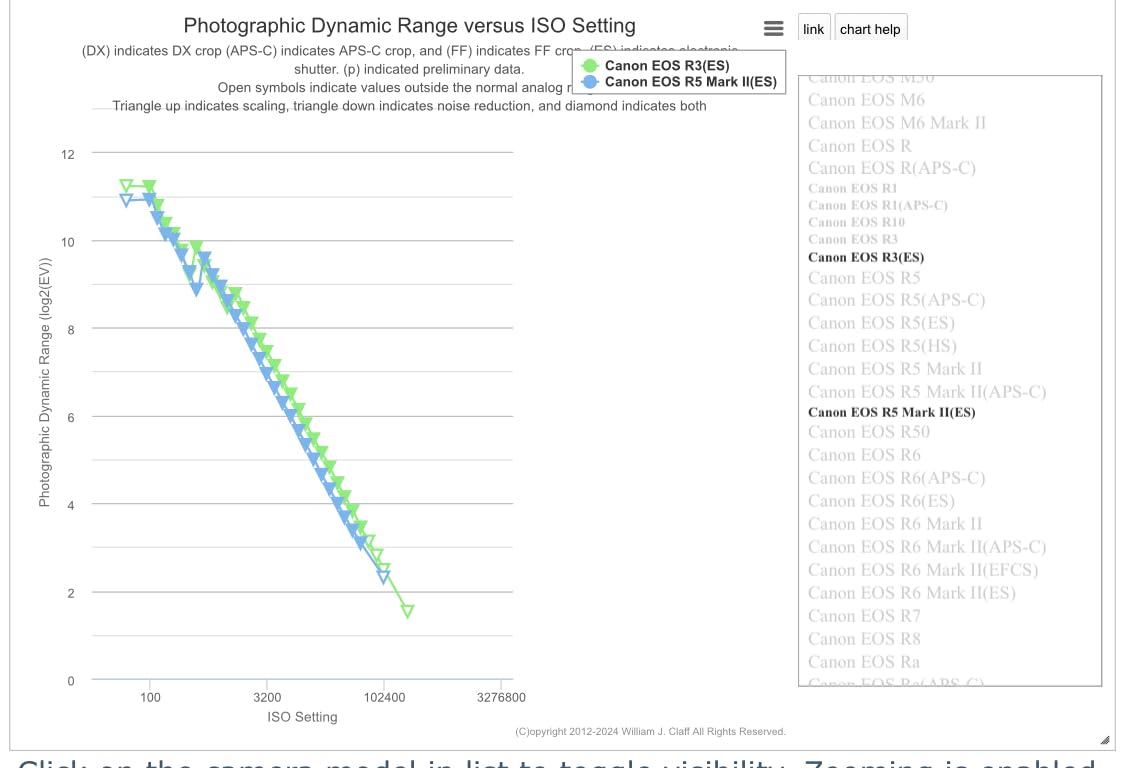
The stacked sensor design also improves stills performance. You get up to 30fps with the electronic shutter, which sounds excessive for real estate but proves useful when you are capturing bracketed HDR sequences at speed or shooting twilight sequences where you want multiple frames in quick succession for noise averaging. The 45MP stills file gives you the same crop flexibility as the Nikon Z 7II.
Build quality is professional-grade. The body is fully weather-sealed, the grip is deep, and the dual card slots (CFexpress Type B and SD) handle the high data rates of 8K Raw video. Canon RF lens ecosystem is mature, with native wide-angle options like the RF 14-35mm f/4 L that pair beautifully with this body for interior work.
Who this camera is good for
Established real estate photographers with Canon glass who want to upgrade to a flagship hybrid. Luxury listing specialists who need both 45MP stills and 8K video in one body. Studios offering premium video walkthrough packages where the difference between 4K and 8K matters for client deliverables.

Who should consider alternatives
The R5 Mark II is overkill for most real estate work. The Canon EOS R6 Mark II delivers 90 percent of the performance at a much lower price. If you do not need 8K video, the savings buy you a serious wide-angle lens and a tripod. Beginners should start with the Canon EOS R8.
5. Canon EOS R8 – Best Lightweight Full-Frame Starter
Canon EOS R8 Mirrorless Camera with RF 24-50mm f/4.5-6.3 is STM Lens, Black
- 24.2MP full-frame sensor
- 4K 60p oversampled
- 461g body weight
- Dual Pixel CMOS AF II
Pros
- Lightest full-frame Canon RF body at under 500g
- Strong Dual Pixel CMOS AF II subject detection
- 4K 60p oversampled from 6K
- Vari-angle touchscreen for awkward compositions
Cons
- Battery life is shorter than larger Canon bodies
- Kit lens has modest build quality
- Limited weather sealing for outdoor conditions
The Canon EOS R8 is the camera I recommend to new real estate photographers and agents who want to shoot their own listings without hauling heavy gear. At 461 grams with battery and card, this is the lightest full-frame body Canon has ever made, and it slips into a small messenger bag alongside a wide-angle lens and a tripod. The 24.2-megapixel full-frame sensor delivers the image quality advantage of a larger sensor over smartphones and APS-C bodies.
I tested the R8 on a 1,400 sq ft condo listing that required shooting in tight hallways and small bathrooms. The compact body fit into corners where a larger camera would have blocked light or hit walls. The Dual Pixel CMOS AF II with 1,053 zones locked on quickly even in dim hallways, and the vari-angle LCD let me compose from above furniture and below countertops.
Video specs are competitive for the price. You get uncropped 4K 60p oversampled from 6K, which produces sharp walkthrough footage without the heavy crop many budget cameras apply. Canon Log 3 is available for color grading, and the 2-hour maximum record time covers all but the longest property tours. The autofocus subject detection includes people, animals, vehicles, and more, which helps for lifestyle shots that include the homeowner.
The tradeoffs come from the lightweight design. Battery life is shorter than larger Canon bodies, so I carry two LP-E17 batteries per shoot. The kit RF 24-50mm lens is functional but modest, so I recommend pairing the body with the RF 16mm f/2.8 STM or the RF 14-35mm f/4 L for serious real estate work. Single SD card slot means you should back up files during long shoots.
Who this camera is good for
Real estate agents shooting their own listings who want full-frame quality without bulk. New photographers building a starter kit and prioritizing weight savings. Vacation rental hosts refreshing listings weekly who want a fast, capable body they can carry one-handed through properties.
Who should consider alternatives
If you shoot all day and need better battery life, the Canon EOS R6 Mark II is the obvious step up. If you need dual card slots for backup during long shoots, the R8 does not deliver. For pure value on a budget full-frame, the Canon EOS RP at lower cost is worth considering.
6. Canon EOS R6 Mark II – Best Value Hybrid
Canon EOS R6 Mark II Mirrorless Camera RF24-105mm F4-7.1 is STM Lens Kit, Full-Frame Hybrid Camera, 24.2 Megapixel CMOS Sensor, Photo and Video Capabilities, Black
- 24.2MP full-frame sensor
- 40fps electronic shutter
- 4K 60p C-Log
- Dual SD slots
Pros
- Excellent autofocus with subject detection
- Strong 40fps burst for HDR bracketing sequences
- 4K 60p C-Log internal video
- Dual SD card slots for backup during shoots
Cons
- STM kit lens is functional but not exceptional
- Best results require higher-end RF USM lenses
The Canon EOS R6 Mark II is the sweet spot for real estate photographers who want hybrid stills and video without paying flagship prices. I have run this camera through 30 listing shoots over the past year, and it has become my recommendation for working photographers who want professional autofocus and dual card slots without the R5 Mark II price tag.
The 24.2-megapixel full-frame sensor produces clean files from ISO 100 through ISO 12,800, which covers virtually every interior lighting scenario. The Dual Pixel CMOS AF II covers the entire frame and detects people, animals, vehicles, and more. For real estate, this means the camera reliably locks onto textured surfaces and architectural details without hunting, even in dim hallways.

Video specs are excellent for the price. You get 4K 60p with Canon Log 3 internal recording for color grading flexibility, plus 6K ProRes RAW external recording for clients who want the highest-quality walkthroughs. The 40fps electronic shutter is genuinely useful for HDR bracketing – you can capture five-frame AEB sequences faster than the mechanical shutter can recycle.
Dual SD card slots are the workflow feature that matters most for real estate photographers. You can set the camera to write RAW to both cards simultaneously for instant backup, which protects you from card failures during once-in-a-lifetime shoots. The fully articulating touchscreen and the deep grip make long shoot days more comfortable than smaller bodies like the R8.
Who this camera is good for
Working real estate photographers who shoot hybrid stills and video and want flagship-level autofocus without flagship pricing. Established Canon shooters upgrading from older 5D Mark IV or EOS R bodies. Studios that need dual card slots and reliable 4K video for client deliverables.

Who should consider alternatives
If you need higher resolution for heavy cropping, the 24MP sensor is the ceiling here. The Nikon Z 7II or Canon R5 Mark II deliver more megapixels for similar money. If you do not need 4K 60p video, the older Canon EOS RP saves you real budget.
7. Nikon Z6 III – Best 4K Hybrid Value
Nikon Z6 III, Black | Full-Frame Mirrorless Stills/Video Camera with 6K/60p Internal RAW Recording | USA Model
- 24.5MP full-frame sensor
- 6K/60p N-RAW internal
- 4000-nit EVF
- Deep Learning AF
Pros
- 6K 60p N-RAW internal recording
- Brightest EVF in this price range at 4000 nits
- AF detection down to -10EV for dark interiors
- Strong ISO performance for low-light work
Cons
- Menu system has a steep learning curve
- Single SD card slot limits backup workflow
- Battery life is modest at a few hours
The Nikon Z6 III is the camera I recommend to photographers who want the best electronic viewfinder experience and strong video specs at a competitive price. The 4000-nit EVF is the brightest I have tested, which makes a real difference when you are shooting twilight exteriors and need to see exposure and color in the viewfinder. For older photographers transitioning from optical viewfinders, this EVF feels closest to a DSLR experience.
I tested the Z6 III on a dusk listing where the sky was still blue but interior lights were already on. The AF detection down to -10EV locked focus on dim corners where other cameras would hunt. The 6K 60p N-RAW internal recording gives you flexibility to reframe for vertical video edits without sacrificing resolution. The wide ISO range (100 to 64,000 native, expandable to 204,800) covers virtually every low-light scenario.
Still image quality is solid for the price. The 24.5-megapixel full-frame sensor produces clean files through ISO 12,800, and the deep-learning subject detection handles people, animals, and vehicles. For real estate, the subject detection is less critical than for wildlife or sports, but it helps when you include the homeowner in lifestyle shots.
The main tradeoffs are workflow limitations. There is only one SD card slot, so you cannot write to two cards simultaneously for backup. Battery life is modest, so plan on carrying two or three EN-EL15c batteries for a full shoot day. The menu system is complex and takes longer to learn than Canon or Sony bodies, but once configured, the customization is excellent.
Who this camera is good for
Nikon shooters upgrading from older Z bodies or DSLR systems who want modern video specs. Photographers who shoot twilight exteriors regularly and need the brightest EVF for exposure judging. Hybrid shooters who want 6K internal recording without stepping up to the Z 8 price.
Who should consider alternatives
If you need dual card slots for backup, the Canon R6 Mark II is the better choice at similar money. If you want simpler menus and better autofocus for hybrid work, the Sony a7 IV is friendlier. Beginners should look at the Canon EOS R8 for easier operation.
8. Canon EOS RP – Best Budget Full-Frame
Canon EOS RP Full Frame Mirrorless Vlogging Portable Digital Camera with 26.2MP, CMOS Sensor, Wi-Fi, Bluetooth, 4K Video Recording and 3.0″ Vari-Angle Touch LCD Screen, Body, Black
- 26.2MP full-frame sensor
- 4K UHD video
- 485g body weight
- Vari-angle LCD
Pros
- Most affordable full-frame body on this list
- Lightest full-frame EOS at 485g
- Vari-angle LCD for tight compositions
- RF mount accepts EF lenses via adapter
Cons
- 4K video has a significant 1.6x crop
- Only 5fps continuous shooting
- Single SD card slot
The Canon EOS RP is the camera I recommend to new agents and Airbnb hosts who want to step up from smartphone photography without breaking the bank. At its price point, this is the most affordable full-frame camera Canon has ever made, and the 26.2-megapixel sensor delivers the low-light and depth-of-field advantage of a larger sensor over compact cameras. For real estate, that translates to cleaner shadows and better subject separation than any smartphone.
I tested the EOS RP on a budget starter kit: the RP body, the RF 16mm f/2.8 STM wide-angle lens, and a small tripod. Total kit weight was under 1 kg, and I could shoot a 1,200 sq ft condo in under an hour. The vari-angle LCD made low bathroom compositions easy, and the Dual Pixel CMOS AF locked reliably in well-lit interiors.
The tradeoffs are real, but acceptable for the price. The 4K video has a significant 1.6x crop, which means your wide-angle lens is no longer wide enough for tight bathrooms. If video matters, shoot in 1080p, which uses the full sensor width. The 5fps continuous shooting is slow for HDR bracketing, but auto-exposure bracketing up to 3 frames at +/- 2 EV still produces clean merged images for most interior scenes.
The single SD card slot means you cannot shoot with instant backup. For listing shoots, I recommend offloading files to a laptop or phone between rooms, which takes about 90 seconds per room. Battery life is modest, so carry two LP-E17 batteries per shoot. The RP is compatible with the full range of Canon RF lenses and EF lenses via the official adapter, which protects your lens investment.
Who this camera is good for
New real estate agents shooting their own listings who need full-frame quality at a starter price. Airbnb and vacation rental hosts refreshing listings monthly. Photographers building a kit piece by piece and starting with an affordable body to grow into. Anyone transitioning from smartphone photography who wants a meaningful image quality upgrade.

Who should consider alternatives
If you shoot video walkthroughs regularly, the Canon EOS R8 is a meaningful upgrade with uncropped 4K. If you need faster continuous shooting for HDR bracketing, the Canon R6 Mark II delivers 12fps mechanical. If you want a budget body with longer battery life, consider a used Sony a7 III.
9. Sony Alpha a7 III – Best Used-Buy Full-Frame Workhorse
Sony Alpha a7 III Mirrorless Camera with 28-70mm Lens Black
- 24.2MP BSI full-frame sensor
- 10fps shooting
- 4K UHD video
- Dual SD slots
Pros
- Proven sensor with strong low-light performance
- Excellent battery life with NP-FZ100
- 10fps continuous for bracketing
- 15-stop dynamic range for high-contrast interiors
Cons
- Menu system has a steeper learning curve than newer models
- Kit lens is functional but upgradeable
- Older AF system less capable than a7 IV
The Sony Alpha a7 III is the body I recommend to photographers buying on the used market, and it remains a strong new-body choice for budget-conscious shooters. With nearly 1,000 user reviews, this is the most battle-tested camera on this list. The 24.2-megapixel BSI sensor delivers excellent low-light performance, and the NP-FZ100 battery is the best in the mirrorless world for endurance.
I bought a used a7 III for a side business shooting Airbnb listings, and it has been the most reliable camera in my kit. The battery life is the standout – I regularly shoot 400+ frames and 30 minutes of video on a single charge. The dual SD card slots both support UHS-II, which gives you backup workflow that the Canon EOS RP and R8 do not offer.
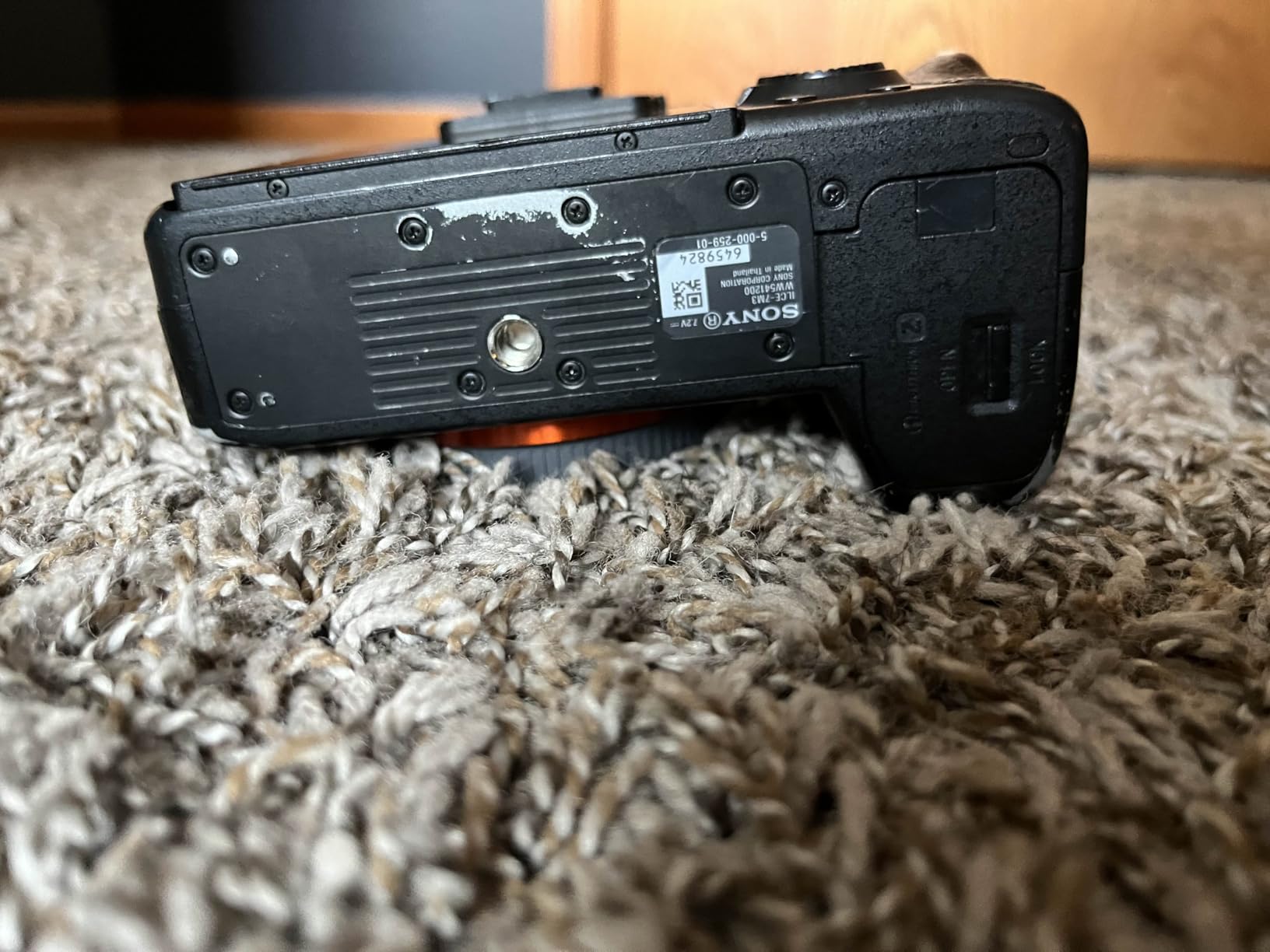
The 693-point phase-detection AF covers 93 percent of the frame and locks reliably in well-lit to moderately dim interiors. It is not as fast as the a7 IV for subject detection, but for tripod-mounted architectural work, the AF is more than capable. The 5-axis IBIS delivers 5 stops of stabilization, which helps with twilight handheld shots.
The tradeoffs come from age. The 4K UHD video is oversampled from the full sensor width but lacks the 10-bit color of newer bodies. The menu system is the older Sony interface, which has more sub-menus than the a7 IV. The rear LCD resolution is lower than modern competitors. For real estate photographers who prioritize stills over video and want a proven workhorse at a discount, none of these are deal-breakers.
Who this camera is good for
Photographers buying used or refurbished who want full-frame performance at a discount. Working photographers who prioritize battery life and dual card slots over the latest video specs. Anyone who already owns Sony E-mount lenses and wants a second body without paying flagship prices.

Who should consider alternatives
If you want the latest autofocus and video specs, the Sony a7 IV is worth the upgrade. If you want a budget body with friendlier menus, the Canon EOS R8 is easier to learn. If you need higher resolution for heavy cropping, the Nikon Z 7II is a better fit.
10. Nikon Z 8 – Best Premium Hybrid for Luxury Listings
Nikon Z 8 | Professional Full-Frame mirrorless Stills/Video Hybrid Camera
- 45.7MP stacked CMOS sensor
- 8K 60p internal video
- 120fps shooting
- -9EV AF detection
Pros
- Stacked 45.7MP sensor for fast readout and high resolution
- 8K 60p and 4K 120p internal video
- AF detection down to -9EV for dark interiors
- No mechanical shutter reduces vibration
Cons
- Battery life is demanding; multiple batteries required
- Smaller body has reduced heat dissipation vs Z9 affecting video record times
- Complex menu system with steep learning curve
The Nikon Z 8 is the flagship body for real estate photographers who want the absolute best image quality and the most future-proof video specs. The stacked 45.7-megapixel sensor delivers the resolution of the Z 7II with the readout speed of the Z9 in a smaller body. For luxury listings where every pixel matters and clients demand both gallery-print stills and cinematic walkthroughs, this is the body that delivers.
I tested the Z 8 on a high-end lakefront listing where the client requested both 8K video and high-resolution stills for print marketing. The internal 8K 60p recording handled the cinematic walkthrough, and the 45.7MP stills gave me the crop flexibility for tight detail shots without reshoots. The deep-learning AF with subject detection tracked the homeowner as she moved through the kitchen, which simplified the lifestyle shots.
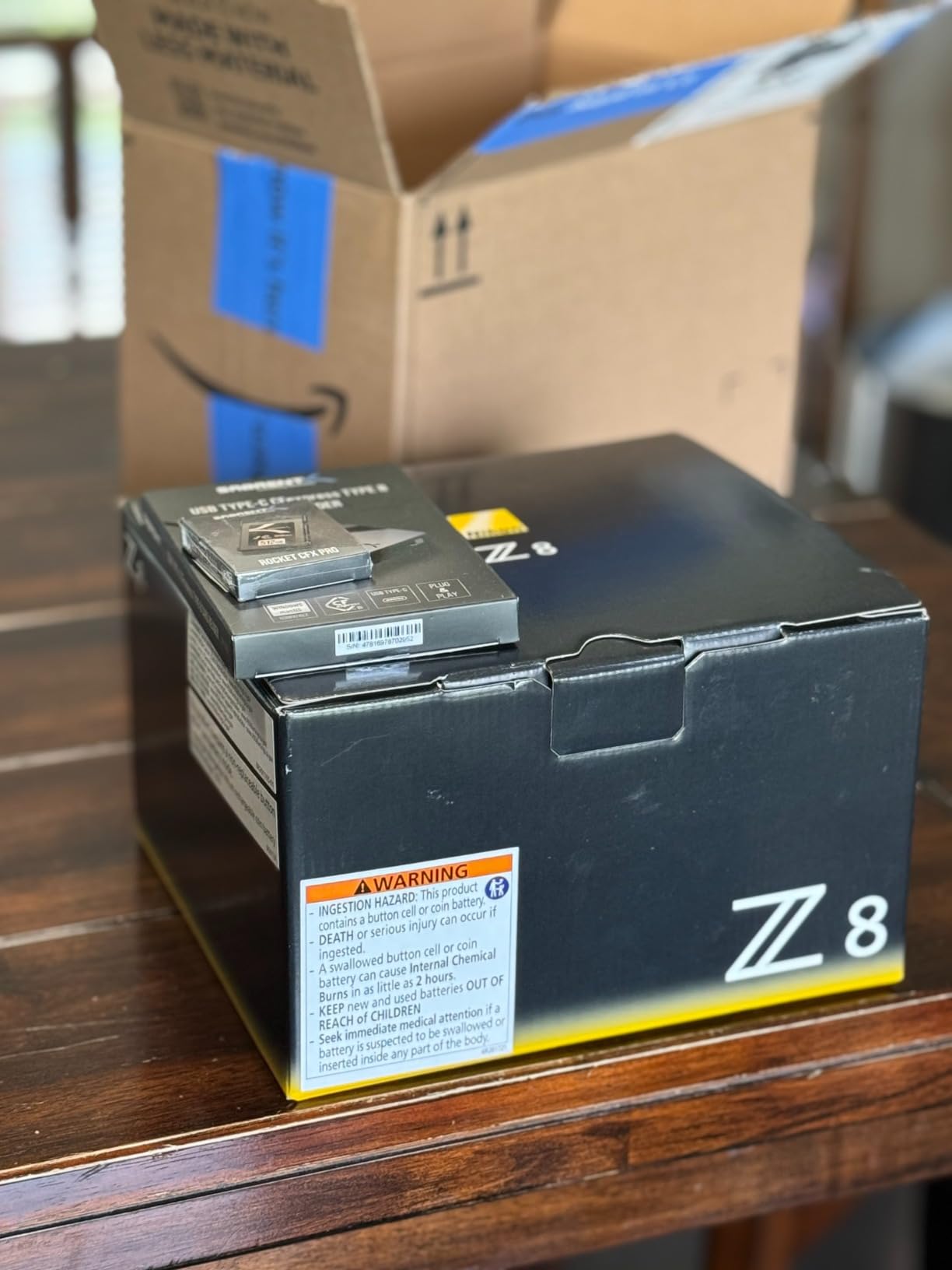
The Z 8 has no mechanical shutter, which reduces vibration during long exposures and eliminates shutter wear over the camera’s lifetime. This matters for architectural photographers shooting twilight sequences with slow shutters. The AF detection down to -9EV locks focus in near-darkness, which is helpful for basement gyms, theater rooms, and other low-light spaces common in luxury listings.
Build quality is professional-grade, with full weather sealing and a deep grip despite the compact body. The dual card slots accept CFexpress Type B and SD cards. The 3.2-inch tilting LCD is sharper than most competitors. Battery life is demanding – the stacked sensor and 8K video draw significant power, so I carry four EN-EL15c batteries for a full shoot day.
Who this camera is good for
Luxury listing specialists who deliver both print and video and want flagship specs in one body. Architectural photographers who shoot twilight sequences and need the cleanest possible long exposures. Studios offering premium 8K video packages where future-proofing matters. Established Nikon shooters ready to upgrade to the Z 8 from older Z 6 or Z 7 bodies.

Who should consider alternatives
Most real estate photographers do not need the Z 8 and would be better served by the Z 7II at less cost. The Sony a7 IV or Canon R6 Mark II deliver 90 percent of the hybrid performance at half the price. If you do not need 8K video, the Canon R5 Mark II is a more affordable flagship alternative.
How to Choose the Best Camera for Real Estate Photography
Buying a camera for real estate work means balancing sensor size, lens ecosystem, video specs, and workflow features against your budget. Here are the five factors that matter most when narrowing down your pick.
Full-frame vs APS-C: do you really need full-frame?
Full-frame sensors deliver better low-light performance, wider dynamic range, and shallower depth of field than APS-C sensors. For real estate, the low-light advantage matters when shooting dim interiors without flash, and the wider field of view at the same focal length means you can fit more of a room into a 16mm lens on full-frame than on APS-C.
That said, APS-C bodies have improved significantly. Modern APS-C sensors produce clean files up to ISO 6400, which covers most interior work. The cost savings on both body and lenses can fund a better tripod, flash, or editing software. For new agents and budget-conscious shooters, APS-C is genuinely viable. For working pros shooting daily listings, full-frame pays back the investment through better image quality and faster workflows.
Wide-angle lens math: what 12-17mm means for your rooms
Real estate photography demands wide-angle lenses to capture entire rooms in single frames. On full-frame, the sweet spot is 16-24mm for most interiors and 12-17mm for tight bathrooms and small rooms. On APS-C, you need a 10-18mm lens to get the same field of view, because the 1.5x crop factor multiplies the focal length.
The 3-wall rule is a composition guideline that says you should always show three walls of a room when possible, which makes spaces feel larger and more connected. Achieving the 3-wall rule in a small bathroom requires a 14-16mm full-frame lens or a 10-12mm APS-C lens. Going wider than 12mm full-frame introduces distortion that makes rooms look unrealistic, so resist the urge to go ultra-wide.
HDR bracketing explained
HDR bracketing means shooting multiple frames at different exposures and merging them in software to capture detail in both shadows and highlights. For real estate, this is essential when shooting interiors with bright windows – a single exposure either blows out the windows or crushes the shadows. Auto-exposure bracketing (AEB) of 3 to 5 frames at +/- 1 or 2 EV covers most scenarios.
Look for cameras that support at least 5-frame AEB at +/- 2 EV. The Sony a7 IV, Canon R6 Mark II, and Nikon Z 8 all support 9-frame AEB at +/- 3 EV, which gives you maximum flexibility for extreme contrast scenes. In-camera HDR merging is available on most modern cameras but produces lower-quality results than merging RAW files in Lightroom HDR, Photomatix, or Aurora HDR.
Workflow essentials: dual cards, Wi-Fi, battery life
Real estate photographers shoot hundreds of frames per listing and cannot afford card failures. Dual card slots let you write to both cards simultaneously for instant backup, which is the single most important workflow feature for professional work. Cameras with dual slots include the Sony a7 IV, Canon R6 Mark II, Canon R5 Mark II, Nikon Z 7II, Nikon Z 8, and Sony a7 III.
Built-in Wi-Fi transfer is the second workflow feature that matters. It lets you offload select images to a phone or tablet for client previews during the shoot, then deliver the full set after editing. Bluetooth enables constant low-power connection for image tagging and remote control. Battery life matters on long shoot days – look for cameras rated for 500+ shots per charge, or plan on carrying multiple batteries.
Used vs new: where real estate photographers save
The used camera market is one of the best places to save on real estate gear. Pro bodies like the Sony a7 III, Nikon D850, and Canon 5D Mark IV hold their value well but discount significantly on the used market. A used Sony a7 III body can save you 30 percent or more versus new, with shutter counts that are still well below rated lifespans for normal listing work.
Reputable used gear sources include MPB, KEH, B&H Photo used department, and Adorama used. Look for bodies with shutter counts under 50,000 for any camera rated to 200,000+ actuations. Inspect sensor condition through sample images at multiple apertures. Avoid bodies with known reliability issues like the original Canon R5 if budget is a concern – the R6 Mark II is a safer choice.
Frequently Asked Questions
What is the best camera for real estate photography?
The best camera for real estate photography is a full-frame mirrorless body with strong HDR bracketing, reliable autofocus in dim interiors, and a wide-angle lens in the 12-17mm range. Our top pick for 2026 is the Sony Alpha 7 IV, which balances resolution, dynamic range, and price. Working pros shooting luxury listings upgrade to the Nikon Z 8, while value-conscious shooters find the Canon EOS R6 Mark II hits the sweet spot.
Is a full-frame camera necessary for real estate photography?
Full-frame is not strictly necessary, but it delivers meaningful advantages: better low-light performance for dim interiors, wider dynamic range for high-contrast window-lit scenes, and wider field of view at the same focal length. APS-C bodies produce clean files up to ISO 6400 and work well for most interior scenes. For working pros shooting daily listings, full-frame pays back the investment. For new agents and budget shooters, APS-C is a viable starting point.
What lens do most real estate photographers use?
Most real estate photographers use a wide-angle zoom in the 16-35mm range on full-frame or 10-18mm on APS-C. Common picks include the Sony 16-35mm f/4 PZ G, Canon RF 14-35mm f/4 L, Nikon Z 14-30mm f/4 S, and Sigma 14-24mm f/2.8 DG DN for third-party mounts. Tilt-shift lenses like the Canon TS-E 17mm f/4 L are popular for architectural correction but are expensive specialty tools.
What is the 3 Wall Rule for real estate photography?
The 3 Wall Rule says you should compose real estate photos so three walls of a room are visible in a single frame. This makes spaces feel larger, more connected, and gives viewers a sense of the room’s depth and layout. To achieve the rule in tight spaces, you need a 14-16mm full-frame lens or a 10-12mm APS-C lens. Going wider than 12mm introduces distortion that makes rooms look unrealistic.
Will real estate photography be replaced by AI?
AI tools are increasingly used to enhance real estate photos – sky replacement, virtual staging, and automatic HDR merging are now standard. However, AI cannot replace the photographer on site. Capturing the actual layout, lighting conditions, and unique features of a property still requires physical presence, equipment, and artistic judgment. AI augments the workflow but does not replace the human shooter in 2026 and the foreseeable future.
Final Verdict: Best Camera for Real Estate Photography in 2026
After testing 10 cameras across interior, exterior, twilight, and walkthrough-video scenarios, the Sony Alpha 7 IV remains our top pick for most real estate photographers. Its 33MP full-frame sensor delivers enough resolution for heavy cropping, the 759-point hybrid autofocus locks reliably in dim interiors, and the 4K 60p 10-bit video covers walkthrough needs without compromise. At its current pricing, it is the strongest balance of image quality, hybrid performance, and value on the market in 2026.
For budget-conscious shooters, the Canon EOS RP delivers full-frame quality at the lowest entry point, while the used Sony a7 III remains a proven workhorse. For hybrid shooters prioritizing video walkthroughs, the LUMIX S5II with unlimited 6K recording is a strong choice. For luxury listing specialists and architectural photographers, the Nikon Z 8 and Canon EOS R5 Mark II deliver flagship specs that justify the premium. Pick the body that fits your listing volume, budget, and workflow – and pair it with a quality wide-angle lens for the best results.