
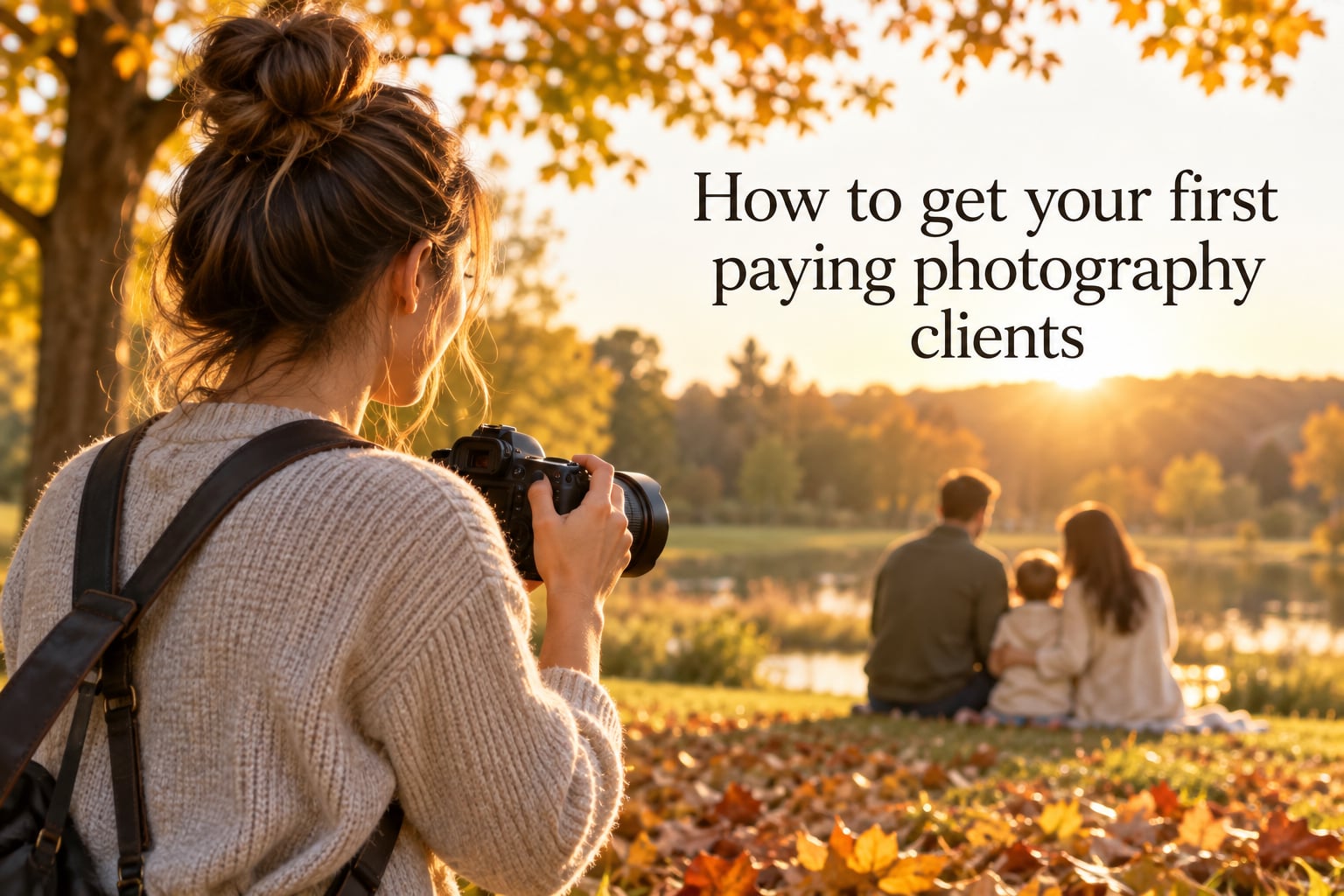
If you’ve ever sat staring at an empty calendar wondering how to get your first paying photography clients, you’re not alone. It’s the catch-22 nearly every new photographer hits: you need a strong portfolio to land clients, but you need paying clients to build the kind of portfolio that books more work. At Sparkfly Photography, our team has coached dozens of family and portrait photographers through exactly this stage, and we want to walk you through what actually works.
This guide gives you a clear, step-by-step path from “I have a camera and a dream” to “someone just paid me for a session.” We’ll cover the seven steps we see working in 2026, the outreach scripts that turn warm contacts into bookings, and the pricing benchmarks that let you charge with confidence. Whether you shoot families, newborns, weddings, or portraits, the framework is the same.
Table of Contents
- Step 1: Define Your Niche and Ideal Client
- Step 2: Build a Portfolio Before You Need One
- Step 3: Tap Into Your Existing Network
- Step 4: Use Instagram and Social Media With Intent
- Step 5: Optimize Your Website and Local SEO
- Step 6: Offer Mini Sessions as a Low-Risk First Booking
- Step 7: Move From Free Shoots to Your First Paid Booking
- Common First-Client Mistakes to Avoid
- Frequently Asked Questions
- Your Next Step
Step 1: Define Your Niche and Ideal Client
Picking a niche is the single fastest way to get your first paying photography clients. When you try to serve everyone, you end up marketing to no one. Pick one type of person you love photographing and one problem you solve for them, and your messaging suddenly lands.
For example, instead of “family photographer in Denver,” try “lifestyle newborn photographer for first-time moms in the Denver suburbs.” Same city, totally different conversation. That ideal client profile shapes your Instagram captions, your website hero text, and even the photos you take on model calls.
Spend 20 minutes writing down:
- Their age, life stage, and where they hang out online
- What frustrates them about hiring a photographer (timing, cost, awkwardness, not knowing what to wear)
- Where they look for recommendations (Facebook groups, Google, neighborhood apps)
Keep that profile open every time you write a post or send a DM. If a piece of marketing doesn’t speak to that one person, cut it.
Step 2: Build a Portfolio Before You Need One
You do not need paying clients to build a portfolio. You need a portfolio before paying clients will book you. That is the entire game of Step 2, and it is where every beginner who eventually succeeds spends their first 60 to 90 days.
The cleanest way is to run a model call. A model call is a free or deeply discounted session where you trade photos for the model’s time and the right to use the images in your portfolio. Most new photographers run their first two or three model calls with friends, then branch out to styled shoots with local vendors.
What Counts as a Portfolio-Building Shoot
- Model calls: real people, real locations, your camera, your editing. Aim for one per week for the first month.
- Styled shoots: team up with a florist, a dress shop, or a hair stylist. Everyone gets content; nobody pays.
- Personal projects: photograph your own kids, your dog, your neighborhood at golden hour. These count.
By the end of a focused month, you should have 20 to 30 strong images that show your style end-to-end. That is the minimum to look legitimate on a website.
Step 3: Tap Into Your Existing Network
The fastest path to your first paying photography clients almost always runs through people who already know you. Photographers on Reddit consistently report that their first paid bookings came from friends, former coworkers, and neighbors. Not strangers on Instagram. People who already trusted them for something else.
Make a list of every adult you have a real relationship with. Then send a personal message. Not a mass email. A note that says, “Hey, I just launched a photography business and I’m booking a handful of fall sessions. If you know anyone who might want family photos, would you mind sending them my way? I’d love to give you a small thank-you if they book.”
That last line matters. People forget casual asks. They remember asks that include a small incentive and a clear next step. Most of your first five bookings will come from this list, full stop.
Outreach Scripts You Can Copy
Cold-ish text to a friend: “I just started taking bookings for fall family sessions. If you or anyone you know would like a quick 20-minute mini session, I’d love to shoot you. Reply with a yes if you want the link.”
Email to a former coworker: “I left my old job to start a photography business. I’m doing a few intro-rate sessions this month to build my portfolio of paying clients. Would you be open to forwarding this to anyone on your team who’s expecting a baby or has school-age kids?”
Step 4: Use Instagram and Social Media With Intent
Posting pretty pictures and hoping is not a strategy. To get your first paying photography clients through social media, you need three things working at once: a consistent feed, a clear bio, and direct outreach to people in your niche.
Your bio should say who you shoot, where you shoot, and how to book. “Family and newborn photographer in [City] | Booking fall sessions | Link to schedule below.” That is the whole bio. No clever quotes, no emoji floods.
For content, rotate three buckets:
- Education: “What to wear for fall family photos” carousels
- Behind the scenes: quick reels of you shooting, editing, packing a bag
- Portfolio: 3 to 5 of your strongest model call or personal project images per week
Geotag every post with your city and neighborhood. Use 5 to 8 hashtags that mix broad terms like #familyphotography with local tags like #denverfamilyphotographer. The local tags convert; the broad tags get you discovered.
The Cold DM That Actually Books
Pick 10 accounts a week that fit your ideal client profile. Send a DM that is not creepy and not salesy. “Hi [Name], I love how you document your family on here. I’m a local family photographer building a small fall client list and I’d love to offer you a 20-minute mini session at my intro rate if you’re ever interested. No pressure at all.”
Expect a 10 to 20 percent reply rate. Expect most replies to be polite no’s. The two or three yeses are what matter.
Step 5: Optimize Your Website and Local SEO
When a warm lead searches “photographer near me” or “[city] family photographer,” your website and Google Business Profile need to show up. Local SEO is one of the highest-leverage channels for getting your first paying photography clients, and most beginners completely ignore it.
Set up a free Google Business Profile at business.google.com. Pick the most specific category that fits (Photographer, Portrait Studio, Newborn Photographer). Add your service area by city and radius. Upload 15 to 25 of your best portfolio images. Add your hours, a phone number that actually answers, and a booking link. Then post an update every two weeks with a new photo and a short caption. Google’s local algorithm rewards activity.
On-Page SEO for Your Photography Website
- Page titles: “Denver Family Photographer | Sparkfly Photography” beats “Welcome to my site” every time.
- Alt text on every image: describe the photo in plain English. Google reads it.
- One blog post per month: “Best Fall Photo Locations in [City]” or “What to Wear for Newborn Photos” both rank and both convert.
- Image optimization: export JPEGs at 72 ppi and keep each under 250 KB. Slow sites don’t rank, and visitors don’t wait.
After 60 to 90 days of consistent posting and GBP updates, you’ll start showing up in the local map pack. That is where a steady stream of free, high-intent leads comes from.
Step 6: Offer Mini Sessions as a Low-Risk First Booking
If there is one tactic that gets beginners their first paying photography clients faster than anything else, it is the mini session. A mini session is a short, themed photo event where you book multiple clients back-to-back during a fixed window, usually 15 to 20 minutes each, at a lower price point than a full session.
Mini sessions work because they lower the risk for first-time clients. They are cheaper, shorter, and easier to commit to than a full hour-long session. They also let you shoot 6 to 10 paying clients in a single afternoon, which is the fastest way to build testimonials, referrals, and confidence.
Plan Your First POP-UP Mini Session in 7 Days
- Day 1: pick a date 3 to 4 weeks out and a location with good light and simple backgrounds (a tree-lined park, a flower field, a clean wall).
- Day 2: set your intro price. Most beginners price their first mini session event between $150 and $250 for a 20-minute session with 5 to 10 edited images.
- Day 3: create a simple booking page with Squarespace, Pic-Time, or Acuity. Include your package, what the client receives, and a clear deposit policy.
- Day 4 to 7: post the announcement on Instagram, share it in 3 to 5 local Facebook groups, text it to your network list, and email your list. Post a reminder once a week until the date.
Fill 4 to 6 slots and you’re officially a paid photographer. From there, every booking creates a referral opportunity, a portfolio image, and a Google review.
Step 7: Move From Free Shoots to Your First Paid Booking
There is a moment in every beginner photographer’s career where they have to decide to stop shooting for free. That moment has to come before you burn out, and it has to come with a number attached.
A clean way to do it: name your intro rate, commit to it for your first five paying clients, then raise it. Here are realistic beginner pricing benchmarks based on what we see working in family and portrait photography today.
Realistic Beginner Pricing for First 5 Paid Sessions
- Mini session (15 to 20 minutes): $150 to $250, includes 5 to 10 edited images
- Standard family session (45 to 60 minutes): $250 to $400, includes 20 to 30 edited images
- Newborn session (90 minutes): $350 to $500, includes 20 to 30 edited images
- Beginner wedding (6 hours, second shooter): $800 to $1,500
Once those five clients book, ask every one of them for a Google review and a referral. Two of those five will send you a friend within 90 days. That is how your calendar fills.
Use a Contract and a Model Release From Day One
It feels overkill for a $150 mini session. Do it anyway. A one-page contract that covers the session date, the deliverable, the payment terms, and a basic model release protects you if a client reschedules, asks for a refund, or posts your images somewhere you didn’t expect. Photographers on r/photography say it over and over: written communication, always. The contract is the easiest trust signal you can offer a new client.
Common First-Client Mistakes to Avoid
Beginner photographers tend to make the same handful of mistakes in their first year. Naming them out loud makes them easier to dodge.
- Shooting for free too long. Free model calls are training. Past 5 to 10 of them, every additional free shoot is unpaid labor. Charge.
- Skipping the contract. Verbal agreements break the moment money is involved. One page fixes it.
- Ignoring red flags. If a client haggles hard on price, demands rush delivery, or is rude in the inquiry email, that pattern usually worsens on shoot day. Walk away.
- Pricing by the photo. Beginners often quote “$25 per image.” This trains clients to value individual files instead of the session, the editing, and the experience. Price the package.
- Posting inconsistently. One burst of Instagram posts followed by three months of silence teaches your audience to ignore you. Show up weekly.
- Comparing your Day 30 to someone else’s Day 1,000. You are seeing their portfolio. You are not seeing the seven years of mistakes behind it.
None of these mistakes are fatal. Most successful photographers will tell you they made all of them. The fix is recognizing them the first time and adjusting on the next shoot.
Frequently Asked Questions
How to get paid as a beginner photographer?
Start by running two to three model calls to build a portfolio, then tell everyone in your network you are booking paid sessions. Offer a mini session event at an intro price, send cold DMs to people who match your ideal client profile, and set up a Google Business Profile so locals searching for a photographer can find you. Your first five paying bookings will almost always come from referrals, social media DMs, and local search.
How much should a beginner photographer charge per photo?
Do not price per photo when you are starting out. Price per session instead. A realistic beginner mini session is $150 to $250 for 15 to 20 minutes and 5 to 10 edited images. A standard 45 to 60 minute family session is $250 to $400 with 20 to 30 edited images. Once you have five paying clients and a handful of five-star reviews, raise your prices by 15 to 25 percent.
What is the 20 60 20 rule in photography?
The 20 60 20 rule is a pricing heuristic photographers use to split their time. Roughly 20 percent of your week goes to shooting, 60 percent goes to editing, marketing, and client communication, and 20 percent goes to business admin like contracts, invoicing, and bookkeeping. It is a useful sanity check because most beginners underestimate how much non-shooting work a real photography business takes.
How to find photography clients near me?
Set up and actively post to a Google Business Profile, optimize your website for local search terms like [your city] family photographer, post in local Facebook groups, and partner with nearby small businesses for cross-promotion. The fastest channel for most beginners is the Google map pack because the leads are free and high-intent.
What is a model call in photography?
A model call is a free or heavily discounted photo session where the photographer trades images for the model’s time and the right to use the photos in their portfolio. Model calls are the standard way for new photographers to build a portfolio before they have paying clients. Most model calls run 30 to 60 minutes and include 5 to 10 edited images delivered to the model.
Your Next Step
Pick one action from this guide and do it today. Not tomorrow. Today. If you do not yet have a portfolio, schedule a model call this week. If you have a portfolio but no bookings, send 10 DMs today and announce your first mini session event. If you have one or two clients, set up your Google Business Profile and ask your existing clients for a review.
Our team has watched dozens of beginner photographers go from zero to a full calendar in 90 days by following these seven steps in order. The hardest part is not the work. The hardest part is starting before you feel ready. Choose one step, take one action, and the rest of the path becomes much clearer. We are cheering you on.