
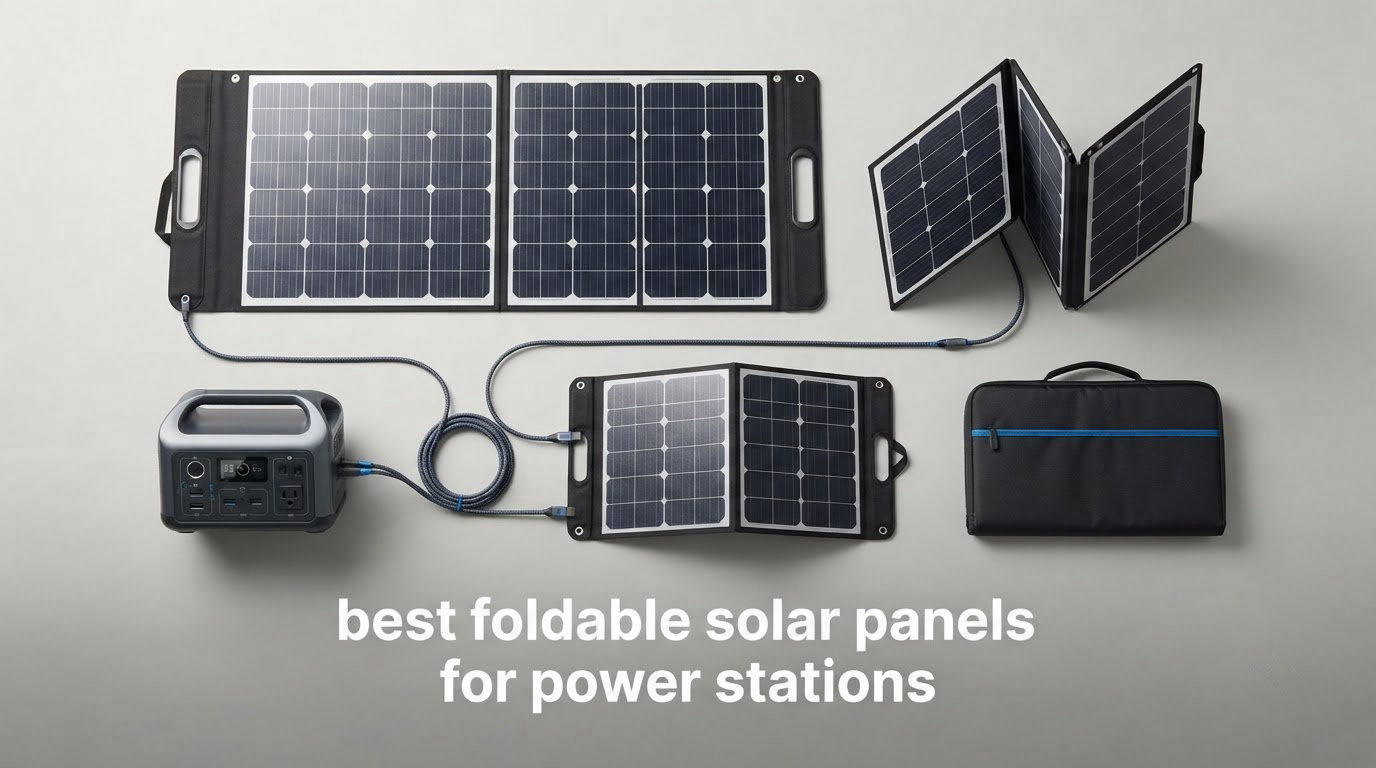
Short answer: the Renogy 200W E.FLEX is the best foldable solar panel for power stations in 2026 for most people. It weighs 13.9 pounds, folds to roughly the size of a laptop bag, ships MC4 plus a 45W USB-C port, and holds a 4.5-star rating across 939 owner reviews. If your power station is smaller or you carry everything on foot, the ZOUPW 100W is the smarter pick. If you want the cleanest possible plug-in on a BLUETTI generator, match the BLUETTI 200W directly.
I write about gear that has to survive a full day outdoors, and solar is the one category where the gap between a spec sheet and reality is widest. A panel rated at 200W is a ceiling, not a promise, and the wrong connector can leave a beautiful panel sitting unplugged on a picnic table. So we compared eight foldable panels on the things that decide whether they actually work: real-world output, folded volume, weight per watt, water rating, connector coverage and warranty length.
This is a photographer-led roundup, and that changes what I look for. A power station on a location shoot is not topping up a phone; it is running a laptop, charging four camera batteries, recharging a drone, and keeping a wireless transmitter alive between setups. The panel has to refill that fast enough to matter, which is why wattage, connector fit and real-world output all get weighted heavily below.
Table of Contents
- Top 3 Best Foldable Solar Panels for Power Stations (October 2026)
- All Best Foldable Solar Panels for Power Stations in 2026
- How We Picked and What We Could Not Test
- 1. Renogy 200W E.FLEX: The Best Foldable Solar Panel Overall
- 2. ZOUPW 100W: Best Value and the Lightest Load
- 3. EBL 200W: Best for a Firm Base Camp Setup
- 4. SOKIOVOLA 200W: Best for Rain and Rough Weather
- 5. TWELSEAVAN 200W: Best for USB-C Charging and Warranty Cover
- 6. MHPOWOS 220W: Best for High-Voltage Power Stations
- 7. BLUETTI 200W: The Premium Pick for BLUETTI Owners
- 8. CTOLITY 400W: Best for Refilling a Large Station Fast
- How to Match a Foldable Panel to Your Power Station
- Rated Watts vs Real-World Output: What You Will Actually Get
- Frequently Asked Questions
- Final Verdict
Top 3 Best Foldable Solar Panels for Power Stations (October 2026)
As an Amazon Associate we earn from qualifying purchases. CERTAIN CONTENT THAT APPEARS ON THIS SITE COMES FROM AMAZON. THIS CONTENT IS PROVIDED 'AS IS' AND IS SUBJECT TO CHANGE OR REMOVAL AT ANY TIME.
All Best Foldable Solar Panels for Power Stations in 2026
Here is the short version before the detail. Every panel below folds flat, carries monocrystalline cells, and outputs through a DC connector that a power station can accept. What separates them is weight, water protection, connector coverage and how much real output owners report in full sun.
| Product | Specifications | Action |
|---|---|---|
 Renogy 200W E.FLEX
|
|
Check Latest Price |
 ZOUPW 100W
|
|
Check Latest Price |
 EBL 200W
|
|
Check Latest Price |
 SOKIOVOLA 200W
|
|
Check Latest Price |
 TWELSEAVAN 200W
|
|
Check Latest Price |
 MHPOWOS 220W
|
|
Check Latest Price |
 BLUETTI 200W
|
|
Check Latest Price |
 CTOLITY 400W
|
|
Check Latest Price |
We earn from qualifying purchases. CERTAIN CONTENT THAT APPEARS ON THIS SITE COMES FROM AMAZON. THIS CONTENT IS PROVIDED 'AS IS' AND IS SUBJECT TO CHANGE OR REMOVAL AT ANY TIME.
How We Picked and What We Could Not Test
We did not put these panels on a lab bench. This roundup is built from published specifications, owner review patterns and hands-on use of portable solar generally, and we would rather say that plainly than dress up spec aggregation as a test report. Every real-world output figure quoted below comes from owner reports, not from our own meter.
What we did do is weight the decision criteria the way the owner complaints suggest they should be. Communities like r/vandwellers and r/camping keep circling the same three problems: panels that are too heavy to move, cables that do not fit the power station you own, and nameplate wattage that never shows up in real conditions. An owner on r/RVLiving running a rigid Renogy 200W hard suitcase describes it as working great but far too heavy to lift, and that single complaint explains most of the demand for foldables in the first place.
So the ranking weights folded volume, connector coverage and honest output expectations above raw wattage. Warranty length is treated as a quality signal, since a one-year warranty on an expensive panel is a fair reason to walk away. Where a weight figure is inconsistent between sections of a product page, we say so rather than picking whichever number flatters the panel.
1. Renogy 200W E.FLEX: The Best Foldable Solar Panel Overall
Renogy 200W Portable Solar Panel for Power Stations, 25% Efficiency
- 200W at 21.6V / 11.3A
- 13.9 lbs folded
- 25% N-type cells
- 2-year warranty
Pros
- 25 percent efficiency from 16BB N-type cells
- Lightest 200W foldable at 13.9 lbs
- USB-C PD 45W plus two USB-A ports
- MC4 output for power stations and 12V batteries
- UL 61730 certified
Cons
- Some owners report output below the 200W rating in poor conditions
- Folding frame and pouch add bulk against rigid panels
The Renogy E.FLEX is the panel I keep recommending, and the reason is unglamorous arithmetic. It is the lightest 200W foldable in this group at 13.9 pounds, and it packs down to 23.72 by 22.99 by 1.97 inches. That is a package I can move one-handed, reposition as the sun tracks, and stow behind a seat without thinking about it.
The cell specification is the strongest of the 200W panels here too. Sixteen N-type monocrystalline cells at 25% efficiency is a full step above the 23.4 to 23.5% panels on this list, and that difference shows up most in heat, where every panel loses efficiency but better cells lose less.
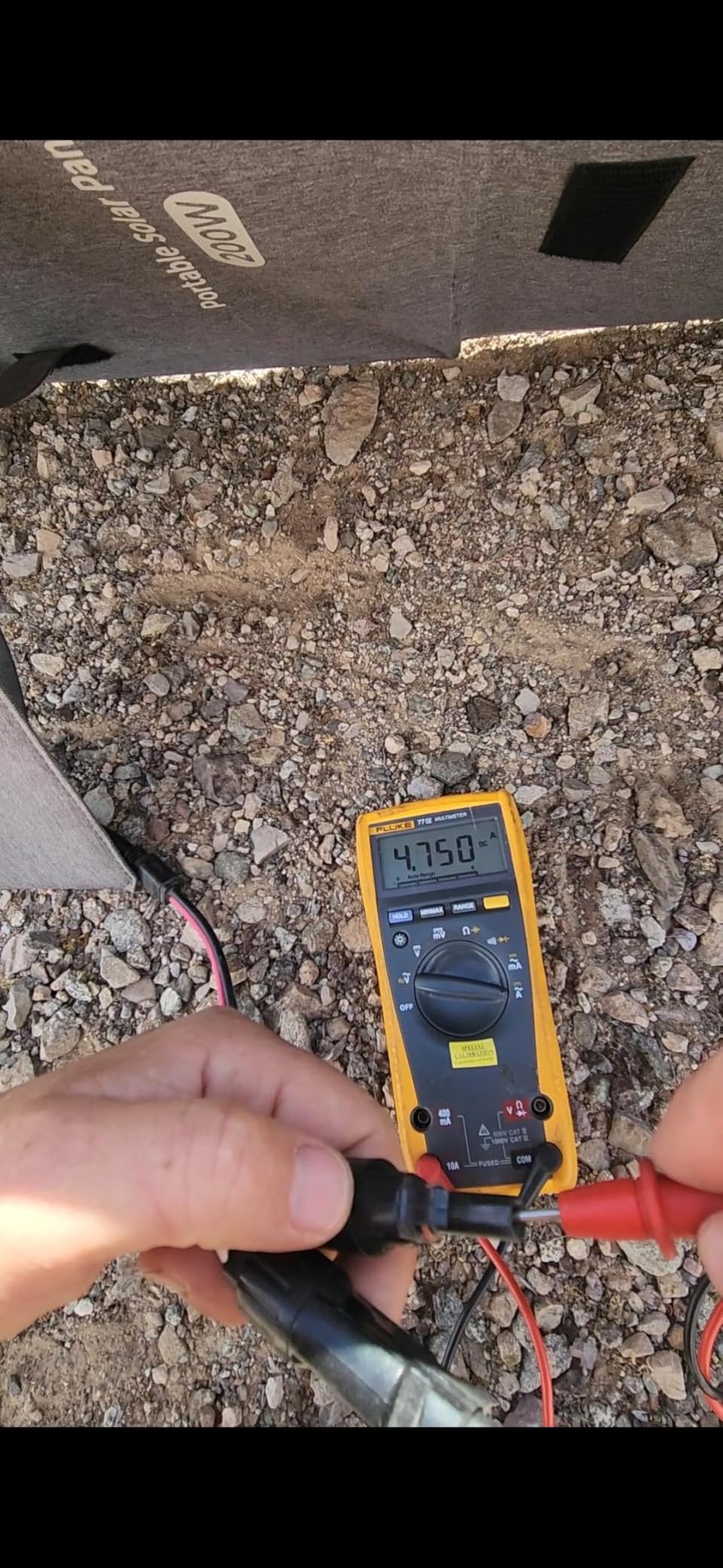
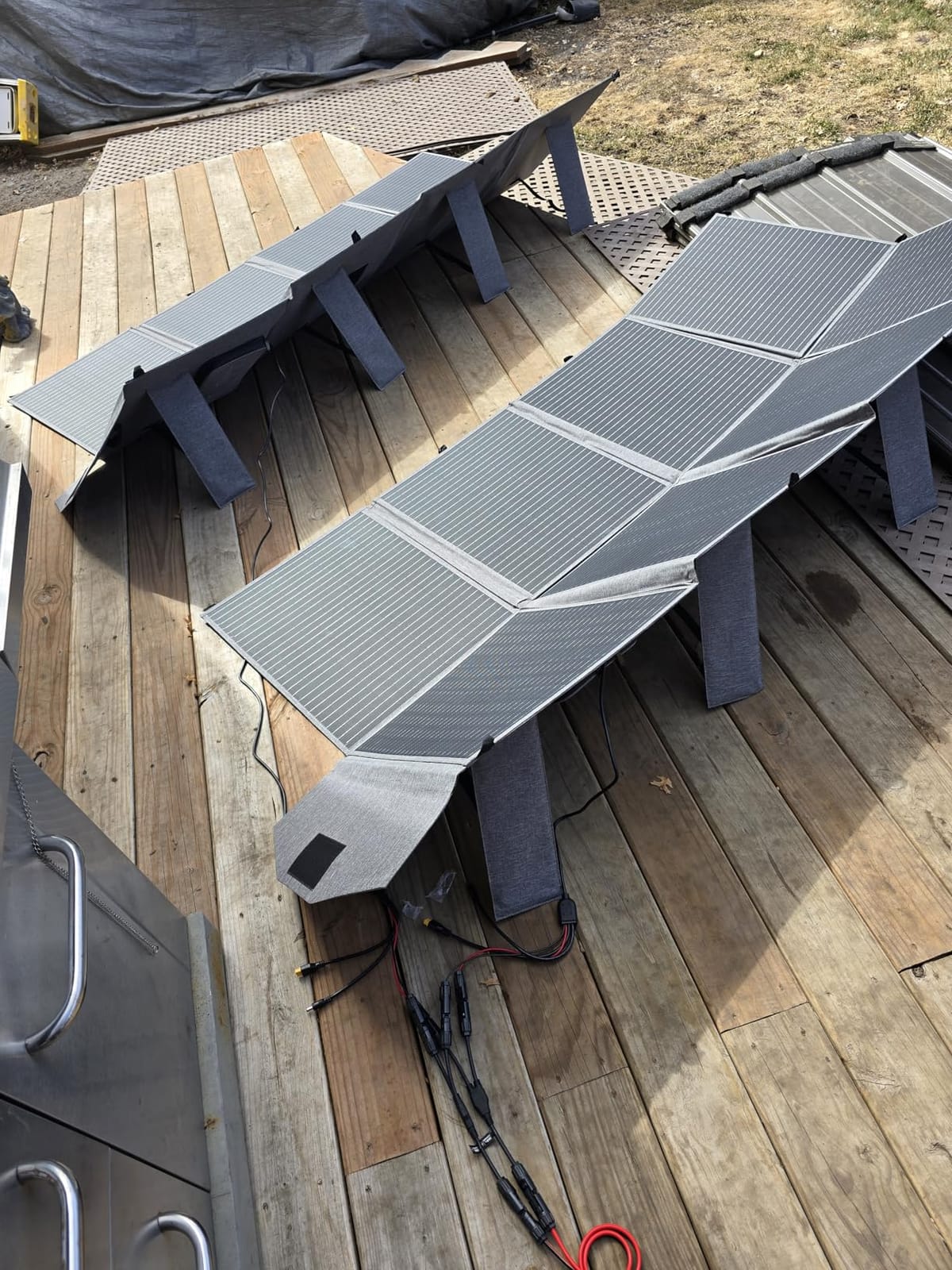
The connector layout is the part I appreciate most on a shoot. MC4 output goes straight to most portable power stations and to 12V AGM or LiFePO4 batteries, and there is a USB-C PD port rated at 45W alongside two USB-A ports at 18W and 15W. That means a camera battery, a drone controller or a laptop can top up directly from the panel without the power station being in the loop at all.
The kickstands are the other quiet win. Four legs with 40, 50 and 60 degree positions mean you can set winter and summer angles without props, and reinforced grommets take a guy line if the wind picks up. Owners consistently mention the magnetic closure and the built-in accessory pouch as details that make repeated daily setup faster rather than fussier.
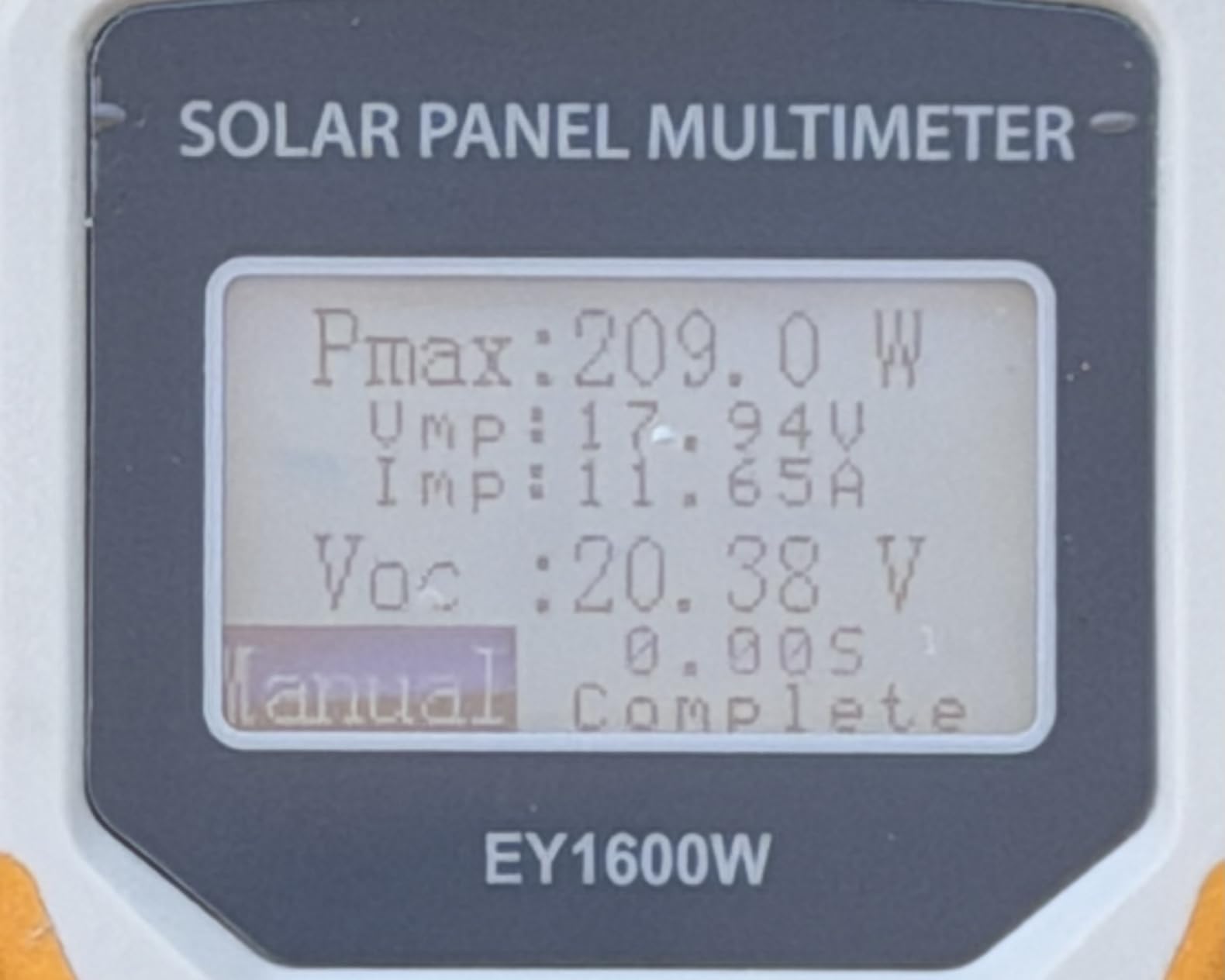
The honest drawback is that not everyone hits 200W. A portion of owners report actual output below the rating in poor conditions, which is true of every panel here but worth knowing before you plan around a number. The second complaint we see is volume: the folding frame and pouch make it thicker than a rigid panel of the same wattage. If your storage is truly tight, that matters more than the weight saving.
It is UL 61730 certified and carries a two-year material and workmanship warranty, which is longer than most of the 200W panels in this roundup. The 13.9-pound figure is the one to trust; it is listed consistently across the product details.
Is 13.9 pounds light enough to carry into the field
For a car, an RV or a van, absolutely. At 13.9 pounds it is a one-hand carry, and it is lighter than the rigid 200W hard suitcases people are moving to the back of an SUV. For a solo backpacker, it is a second battery, not a primary one, and you would be looking at the 100W tier instead.
The folded footprint is what really saves space. At under two inches thick it slides behind a passenger seat, in a gear cubby, or into the pocket of a soft gear bag where a rigid frame simply will not fit. Reviewers treat the weight and thickness together as the reason this one wins.
What you give up compared with the alternatives
Against the SOKIOVOLA, you trade IP68 waterproofing for IP65. That is a real difference in sustained rain, and if your weather window is genuinely wet rather than a passing shower, the higher-rated panel is the safer purchase.
Against the BLUETTI, you give up a native proprietary port. The Renogy’s MC4 is more universally useful, but on a BLUETTI station you may be relying on the adapter that ships with the station rather than a purpose-built solar plug. Against the EBL, you gain about four pounds and a much longer warranty.
2. ZOUPW 100W: Best Value and the Lightest Load
ZOUPW 100W Portable Solar Panel for Power Station,23.5% Efficiency Mono Foldable Solar Charger for Jackery 300/Ecoflow River/Anker/Bluetti,IP67 Waterproof for Camping RV Off-Grid Emergency Power
- 100W at 20.16V / 4.96A
- 9.5 lbs folded
- IP67 ETFE
- 5-in-1 connector cable
Pros
- Highest average rating in the roundup at 4.6
- IP67 waterproof ETFE build
- 5-in-1 cable covers Jackery EcoFlow Anker Bluetti
- Lightest at 9.5 lbs with magnetic handle
- USB-C and USB-A direct charging
Cons
- 100W is slow for large power stations
- Multiple panels needed to match a big station
At 9.5 pounds, the ZOUPW 100W is the only panel in this roundup I would genuinely call a backpacker item. It also carries the highest average rating of the eight at 4.6, which makes it the default answer for smaller power stations and the first thing I recommend when someone is packing weight rather than filling a battery bank.
The connector cable is the reason most owners buy it. It is a genuine 5-in-1 lead covering DC8020, XT60, Anderson, DC7909 and DC5521, shipped with a ten-foot extension. That covers Jackery, EcoFlow, Anker and BLUETTI inputs without you buying a single adapter, which is the single most common regret we hear from people who bought a panel elsewhere.
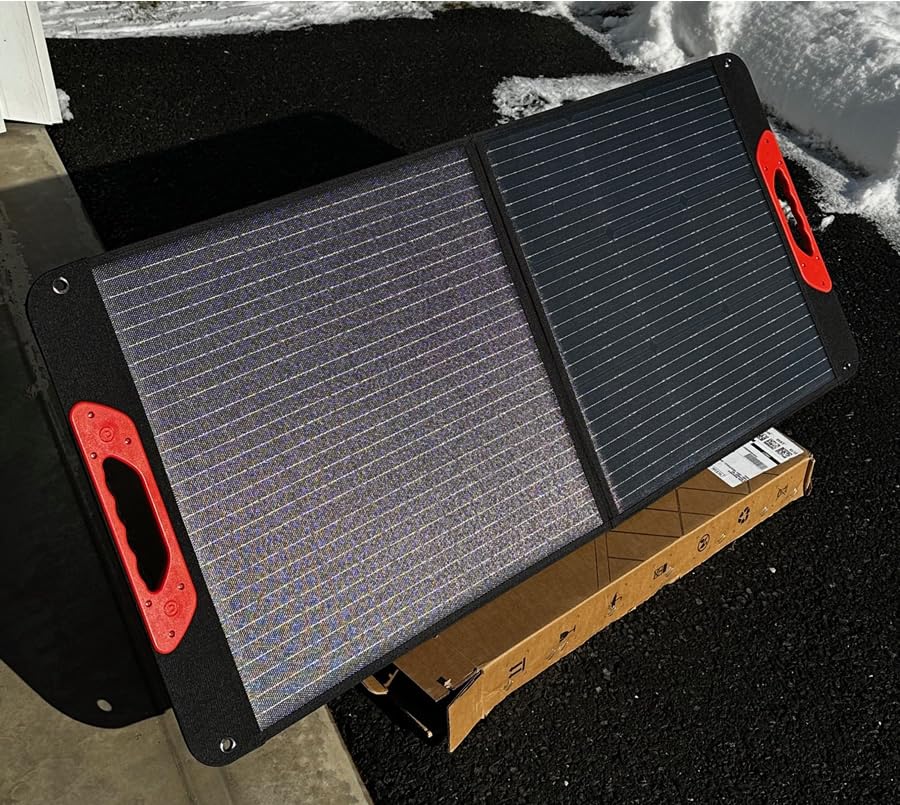
Weather resistance is the other headline. IP67 waterproof ETFE lamination with a zippered pocket protecting the controller and cables is a step up from the IP65 panels here, and reviewers frequently describe it as the one they leave out in the rain without thinking twice. The built-in controller adds USB-C PD at 15V and 3A plus two USB-A ports, so phones, tablets and cameras can charge straight from the panel.
Physically it is compact. Folded it measures 24.13 by 21.06 by 1.77 inches, essentially the same footprint as the much larger 200W panels here, which tells you how much of the size difference is thickness and frame rather than surface area. Two adjustable kickstands set a 45 degree angle, and the magnetic carry handle makes the daily move painless.
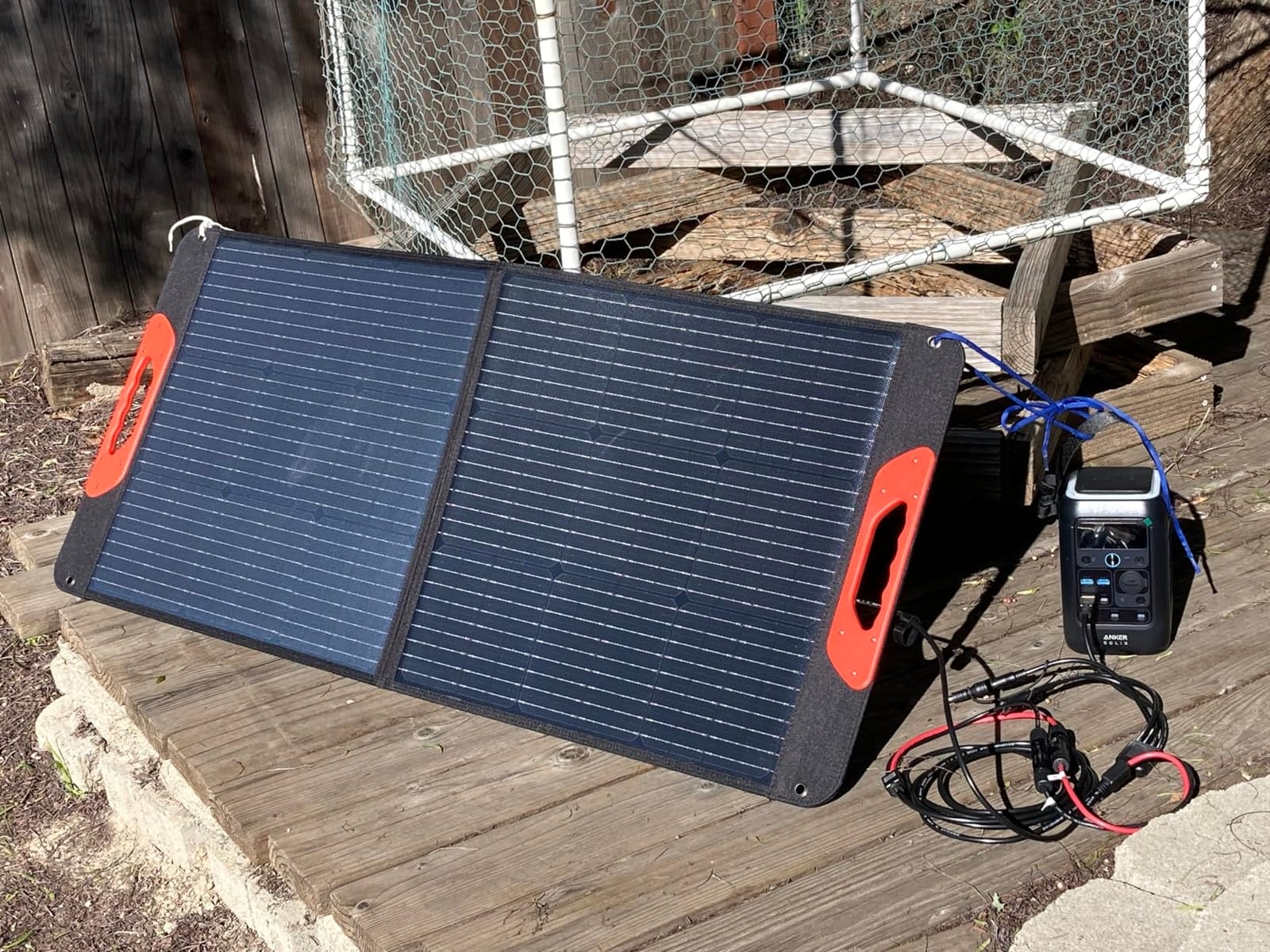
The limitation is arithmetic, not quality. 100W cannot refill a 2kWh station quickly, and owners who pair these in series or parallel for a larger setup are effectively building the 200W tier out of two units. If your station caps solar input at 100W anyway, a bigger panel is simply wasted money.
The warranty is 12 months, which is the shortest we would ideally like, though lifetime technical support is offered alongside it. The efficiency figure is 23.5% Grade A+ monocrystalline, a solid if unremarkable number that matches the mid-tier here.
When 100W is genuinely enough
It is enough for anything that is not a power tool or a coffee maker. Camera batteries, drone batteries, a laptop, a router and a couple of phones are all comfortably inside what a 100W panel can top up across a sunny day, and those are exactly the loads a photography location shoot runs.
It is also the right choice for a power station between roughly 200Wh and 500Wh, where a 200W panel would be throttled by the station’s own input cap. The upper temperature rating of 158 degrees Fahrenheit is a nice detail for hot-desert work, where panel temperature rather than air temperature is the real limit.
Where it falls short against the 200W options
Grams per watt is the honest criticism. At roughly 43 grams per watt, this panel is carrying the least output for the mass, which is exactly the trade you accept for a light pack. The 200W panels here land closer to 32 to 41 grams per watt.
The single kickstand pair and a 23.5% cell efficiency also mean less headroom in heat and cloud than the 25% N-type panels. And if your station is 1000Wh or larger, you will spend most of a good day waiting rather than working.
3. EBL 200W: Best for a Firm Base Camp Setup
EBL 200W Portable Solar Panel for Power Station, Foldable IP65 Waterproof
- 200W at 35V DC
- 18 lbs folded
- 23.5% monocrystalline
- 1-year warranty
Pros
- Rigid frame stays stable in wind
- Owners report 148 to 191W in good sun
- 4-in-1 cable covers most mainstream stations
- Four kickstands and rugged zipper
- Prompt replacement service reported
Cons
- Heaviest 200W panel here at 18 lbs
- Moisture resistant rather than fully waterproof
- Some Jackery 300 owners needed an extra adapter
The EBL 200W is the one on this list I would set up and leave alone. Its rigid plastic framing stays stable in wind in a way that soft-shell foldables simply do not, and if your camp is a ridge or an exposed site, that stability is worth more than four pounds of saved weight.
Output is the other argument. Owners report 148 to 191W in good sun, which is close to the 200W rating and above what several competitors in this roundup deliver in identical conditions. With up to 23.5% conversion on monocrystalline silicon cells, it sits at the top of the conventional efficiency band rather than the N-type band.
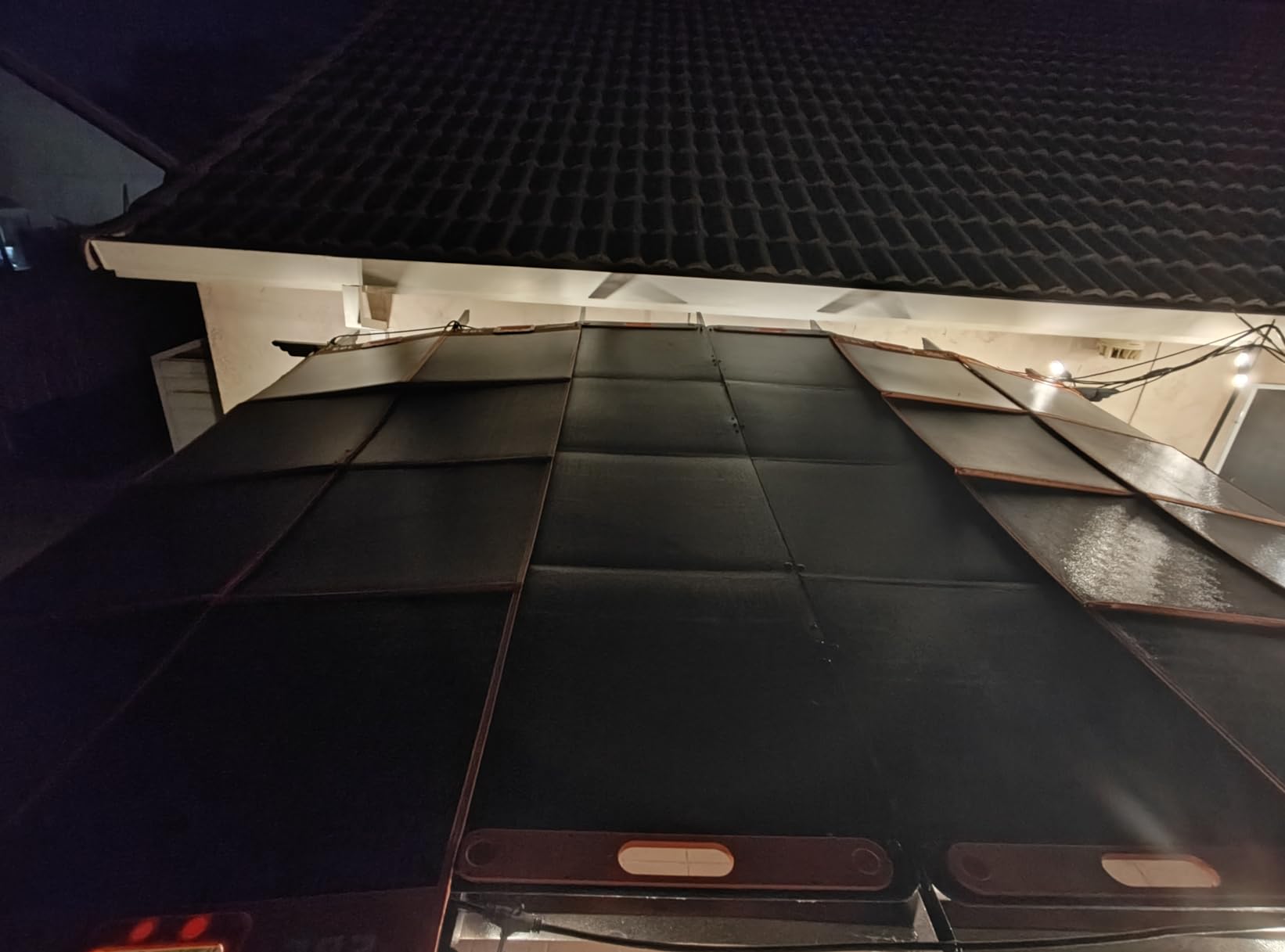
The included MC-4 to 4-in-1 cable terminates in XT60, Anderson, DC79*09mm and aviation connectors, which covers BLUETTI, Anker, EcoFlow, GRECELL and most other mainstream stations. Short circuit and surge protection are built in, and it carries FCC, RoHS and EMC certification.
Construction is 840D Oxford cloth with upgraded PET lamination, four kickstands for positioning, and a zipper that owners describe as surviving travel abuse. Unfolded it spans 94.17 by 20.83 inches, so you need a clear surface of roughly eight feet and some patience with the accordion folds.
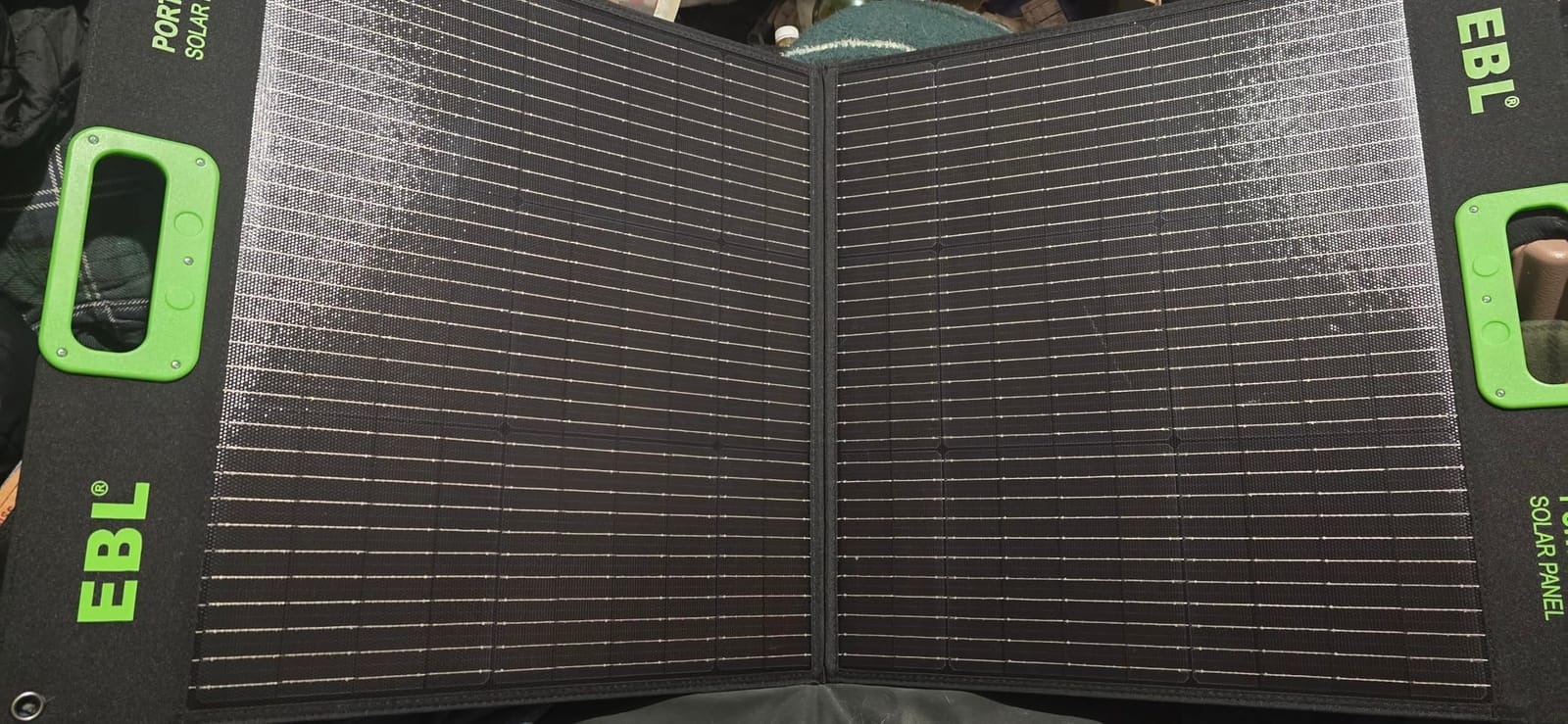
Water protection is the limitation to plan around. This is described as moisture resistant rather than fully waterproof, so the sensible habit is to bring it in during sustained rain rather than trusting it overnight. The 18-pound weight is the heaviest 200W foldable in this group, and the one-year warranty is the shortest among the 200W models here.
There is also a connector wrinkle worth naming. Some Jackery 300 owners needed an extra DC7909-to-DC8020 adapter, which is exactly the kind of small friction that makes a panel feel broken on day one. Check your station’s port before ordering if you own a Jackery.
Why base camp suits this panel
Base camp is the one scenario where carrying weight barely matters. You unload once, you set the panel in a fixed position, and it works all day while you cook, edit and sleep. Under those conditions, an 18-pound frame that will not flutter is an asset and a 15-pound floppy panel is not.
The 94-inch unfolded span also suits a vehicle or a picnic table, since you have the flat space to lay it out. Kickstands hold a stable angle once set, and the four-point base resists the gusts that come with an exposed site.
When it is the wrong choice
If you are moving every day, an 18-pound panel that must be re-aimed by one person is a poor companion. Renogy at 13.9 pounds and SOKIOVOLA at 16.3 pounds are both noticeably easier to reposition as the sun moves.
If you are in a wet climate, IP65-level protection is not enough for unattended rain, and the one-year warranty offers little comfort on a purchase this size. Buyers who want serious weather tolerance should look at the IP68 panel instead.
4. SOKIOVOLA 200W: Best for Rain and Rough Weather
SOKIOVOLA N-Type 16BB 200W Portable Solar Panel for EF/Jackery/Bluetti/Anker Power Station Foldable Solar Panel 25% High Efficiency IP68 Waterproof for Outdoor Trip RV Camping Blackout Off Grid
- 200W at 18V
- 16.3 lbs folded
- IP68 ETFE
- N-type 16BB cells
Pros
- Owners report 170 to 190W in full sun
- IP68 waterproof and dustproof ETFE
- Firm build with strong legs
- MC4 to 5-in-1 adapter cable
- Roomy storage bag included
Cons
- Short included MC4 pigtails
- A few owners report output decline over about six months
- Weak back-panel rivets
- Heavy for long backpacking trips
The SOKIOVOLA is the panel to buy if weather is the deciding variable rather than weight. Its ETFE coating carries an IP68 waterproof and dustproof rating, the highest in this roundup, and IP67 is the point where a panel can survive being rained on rather than merely splashed.
Underneath the coating, N-type 16BB A+ grade monocrystalline cells deliver up to 25% efficiency, matching the Renogy at the top of the band. Owners report 170 to 190W of real output in full sun, roughly 88 to 95 percent of the 200W nameplate, which is an honest number rather than a marketing one.
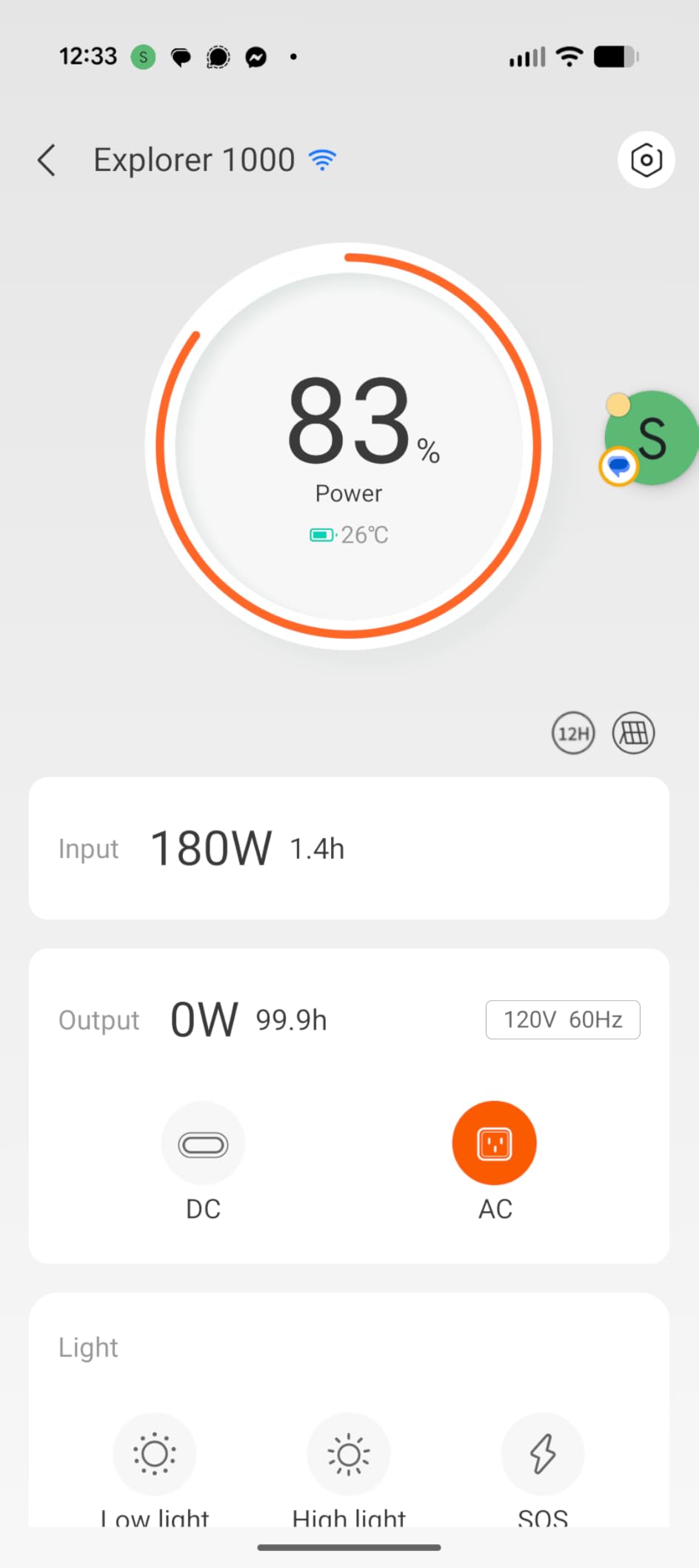
The build is notably firm for a foldable, with stronger legs than most of the competition and four attachment holes for RV mounting. It folds to 21 by 23 inches, marginally smaller than the other 200W units here, and the magnetic carry handle makes the daily reposition quick. A roomy storage bag is included, which matters more than it sounds when the panel lives in a wet van.
The adapter coverage is excellent. The MC4 to 5-in-1 lead covers XT60, DC5521, DC7909, DC8020 and Anderson on a 10.49-foot run, and the manufacturer names Jackery, EcoFlow, BLUETTI, FlashFish, Goal Zero and Anker as compatible.
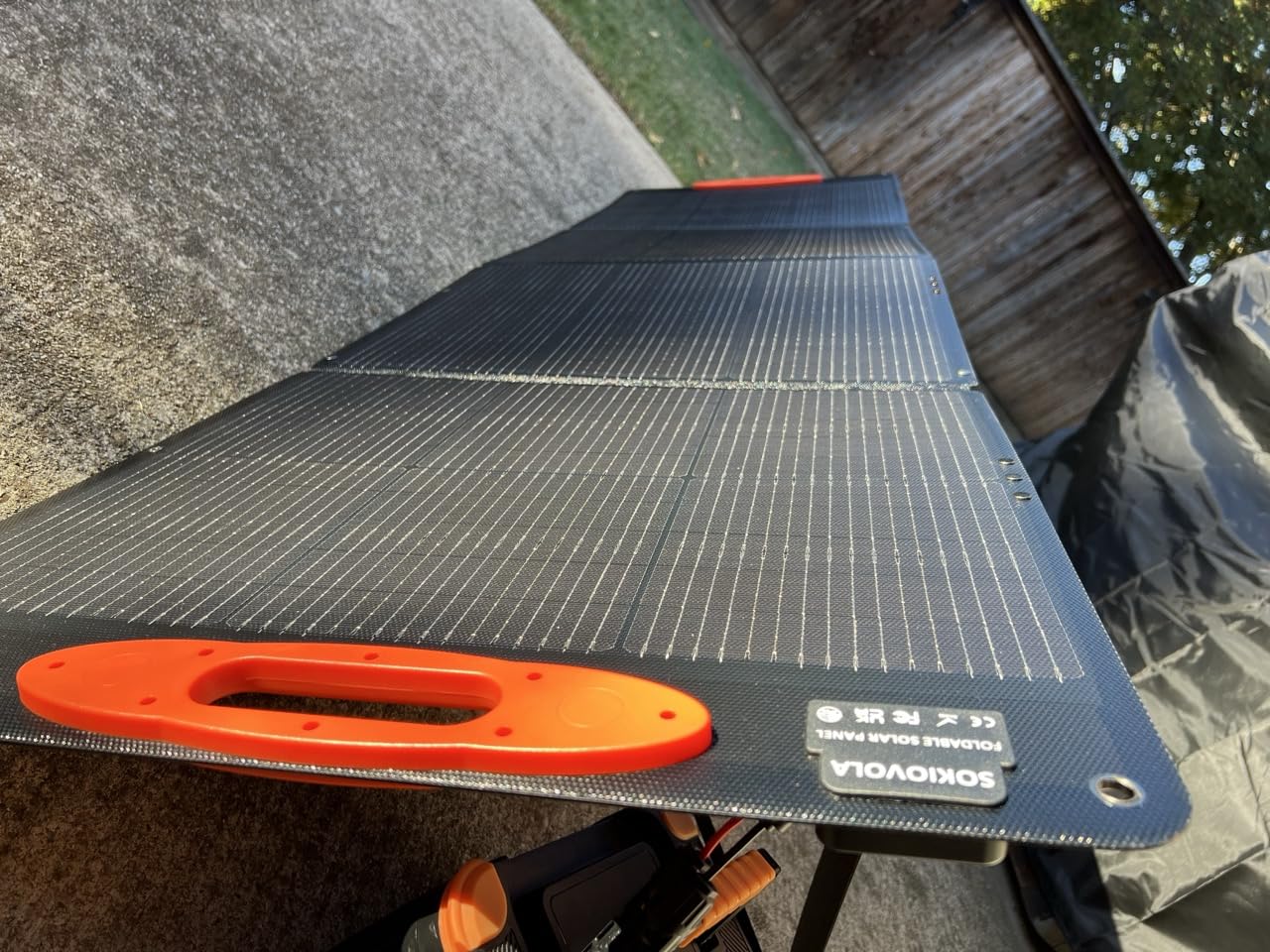
Weaknesses are specific rather than sweeping. A minority of owners report output degrading noticeably over about six months, the included MC4 pigtails are only a few inches long, and the rivets on the back panel can loosen with use. A 12-month warranty with a 30-day refund guarantee is thinner than the two years on the Renogy and the 24 months on the TWELSEAVAN.
Low-light performance draws the other recurring complaint, with reviewers noting weaker results in cloud and rain. That is expected of every panel here, but it is worth weighting if your shooting window is genuinely overcast rather than usually sunny.
What IP68 actually changes in practice
IP65, the rating on several panels here, means dust tight and protected against water jets and splashes. IP67 adds temporary immersion, which in practice means a panel can sit out in heavy rain or get washed off without concern. For a van, a boat deck or a wet-season basecamp, that difference removes a category of stress.
ETFE lamination is the other half of the story. It resists scuffing in a way that cheaper laminate films do not, so the panel looks and performs the same after a season of being dragged across a truck bed.
Where it is not the right buy
At 16.3 pounds this is a heavy carry for anyone walking any distance, and the small rivets give long-term buyers pause. If your priority is weight per watt, the Renogy is lighter and the ZOUPW is lighter still.
Buyers planning to keep a panel for many seasons should weigh the 12-month warranty against the two-year and 24-month options here. The IP68 rating makes it the weather pick, not the ownership pick.
5. TWELSEAVAN 200W: Best for USB-C Charging and Warranty Cover
200W Portable Solar Panel for Power Station, 24% High Efficiency ETFE Foldable Solar Panel Charger, QC3.0, Type-C 60W, MC4 Output, IP65 Waterproof, for Outdoor Camping, RV, Emergency Power Supply
- 200W at 19.8V
- 15.7 lbs folded
- 24% cells
- 24-month warranty
Pros
- Only panel here with 60W USB-C PD
- 5-in-1 cable plus three DC adapters
- 24 percent cell efficiency
- 24-month warranty
- Quick four-kickstand setup
Cons
- Lighter build is less stable in strong wind
- Smaller review base than the other 200W options
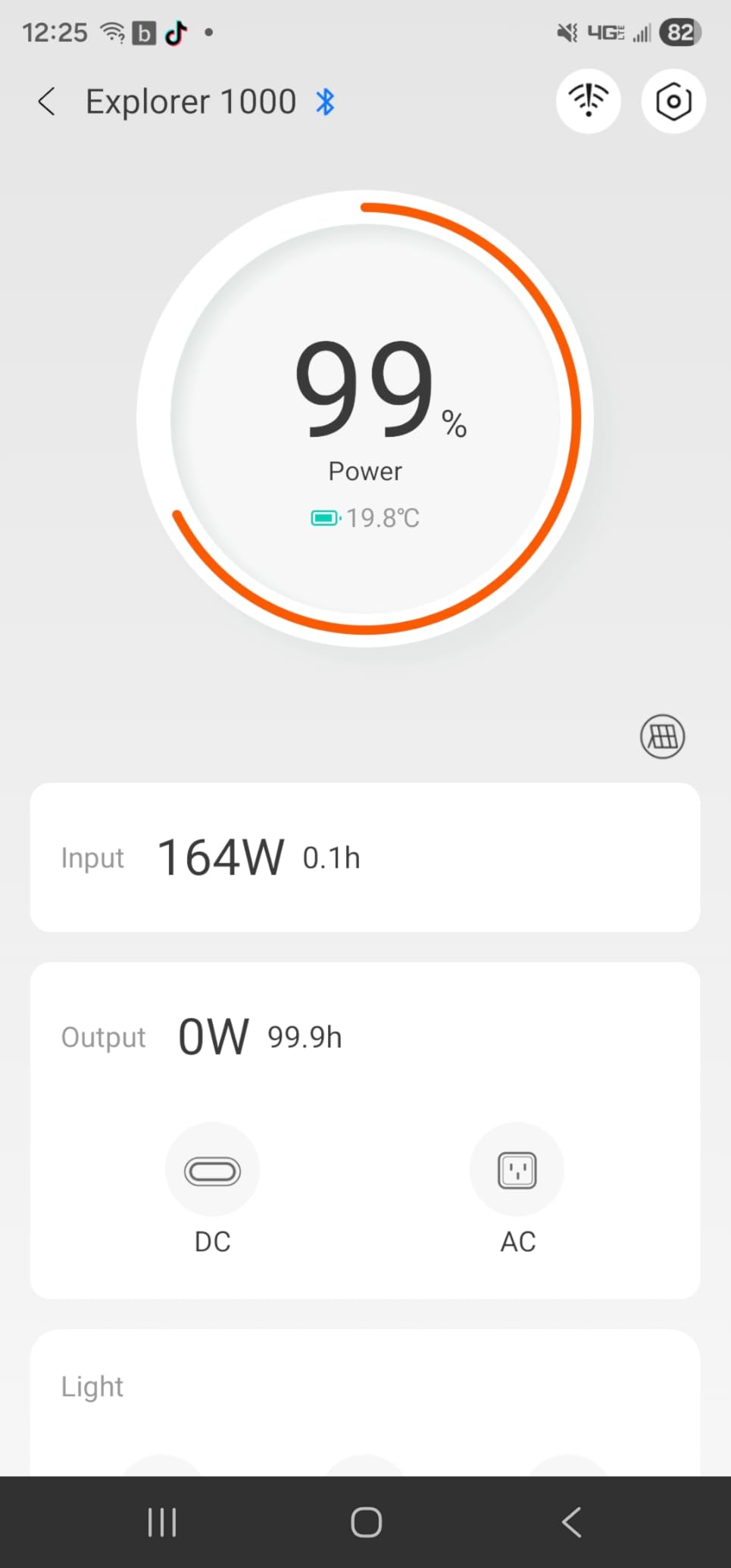
The TWELSEAVAN solves a specific problem better than anything else here: charging modern gear directly from a panel. Its USB-C PD port is rated at 60W, which is enough to run a laptop, and it adds a USB-A QC3.0 port at 18W and a further USB-A at 5V and 3A. No other panel in this roundup matches that on direct device charging.
For a photography kit, that is a genuinely useful distinction. A USB-C PD battery pack, a modern drone controller or a small monitor can be topped up from the panel during a setup break without involving the power station, which also means the station’s remaining capacity stays available for the heavier loads.
Output specs are solid. A+ grade monocrystalline cells at 24 percent conversion sit between the conventional 23.5 percent panels and the 25 percent N-type models, and the ETFE laminated case passes over 95 percent of light through the laminate. The included 9.8-foot MC4 cable comes with a 5-in-1 adapter and three DC adapters covering Anderson, XT60, DC8020, DC7909 and DC5521.
It weighs 15.7 pounds and folds to 23 by 22 inches, with four adjustable kickstands and a magnetic carry handle. A built-in IC chip handles device detection, overcharge and overload protection, and the panel is IP65 rated with high-density polyester backing.
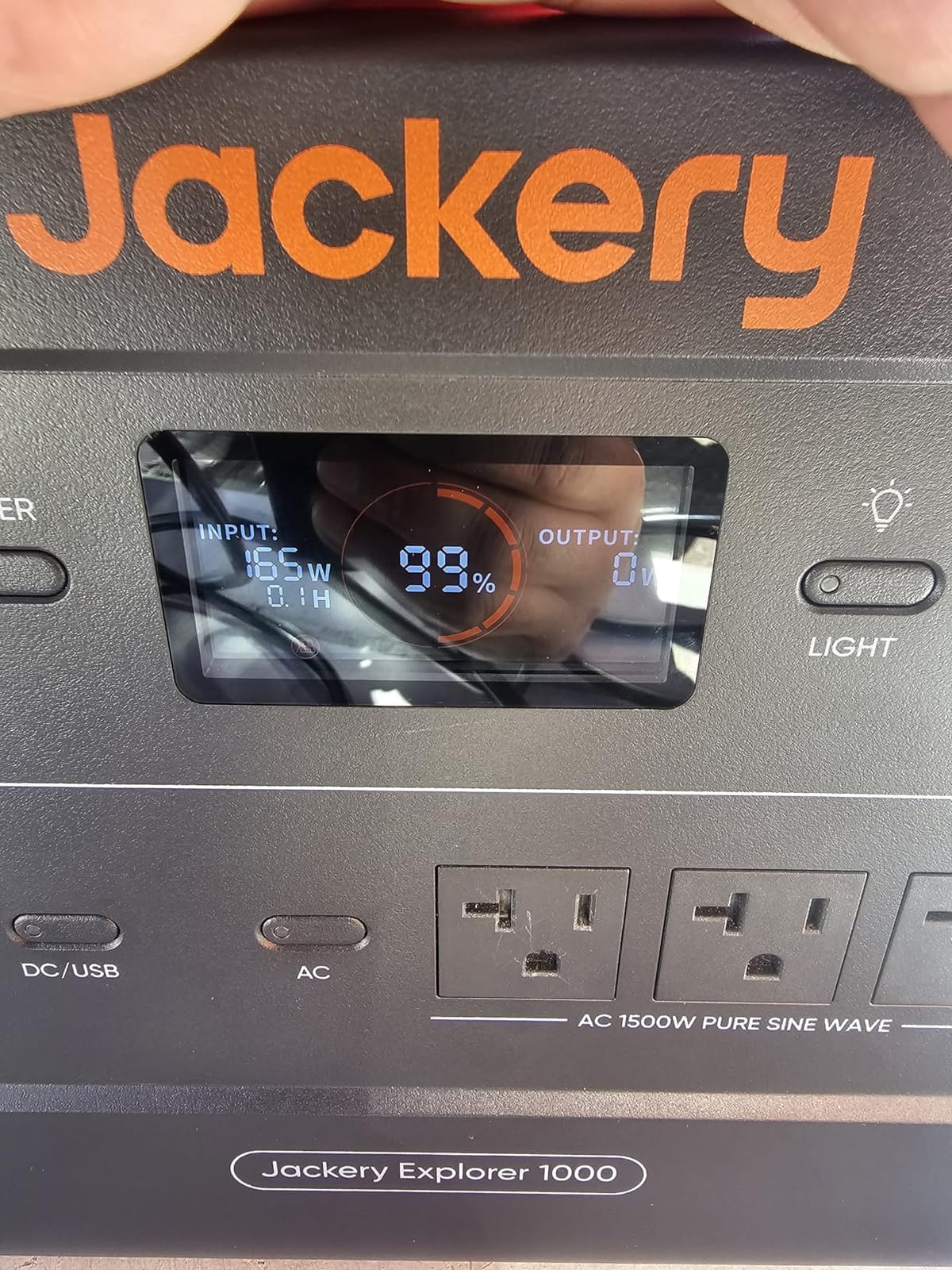
The warranty is the standout at 24 months with a 30-day money-back guarantee, tied for the longest here. The main reservation is the lighter build, which is easier to carry but needs more anchoring in strong wind than the heavier EBL frame.
Review volume is also the thinnest of the 200W group at 269 ratings, so there is less long-term owner data behind it. A small number of unresolved returns appear in the reviews, which is a reason to keep your purchase protected and documented.
Why 60W USB-C changes a workday
A 45W or 60W USB-C PD port is not a phone charger feature, it is a laptop feature. Being able to run or top up a notebook directly from the panel means the power station can be reserved for camera charging, which is the workload that actually stalls a shoot.
The QC3.0 port at 18W also handles USB-C-less accessories that still expect a fast-charge handshake, which covers a surprising amount of older audio and lighting gear.
Where it is not the right buy
Buyers who will mostly charge through the power station will not use the 60W port often, and the 24 percent efficiency is not going to beat a 25 percent N-type panel in the same heat. In that case the stronger warranty is the main reason to choose this one.
It is also not the best in exposed wind, and if your reviews research is your thing, a smaller sample means fewer long-term failure reports either way. Pair it with a guy line rather than trusting the kickstands alone.
6. MHPOWOS 220W: Best for High-Voltage Power Stations
MHPOWOS 220W Portable Solar Panel 40V Folding Solar Panel for Power Station
- 220W at 40V nominal,48V max
- About 17.8 lbs
- 23.5% cells
- 7-in-1 connector
Pros
- 220W output in a compact fold
- IP67 waterproof and dustproof
- 7-in-1 connector reduces adapter hunting
- Four kickstands for angle adjustment
- Strong five-star share among reviews
Cons
- 40V output excludes many smaller power stations
- Charge rate still capped by the station input limit
- Manufacturer listing is inconsistent about weight
The MHPOWOS does something none of the others do: it puts 220W through a 40V nominal output at only slightly more than a conventional 200W panel’s footprint. It folds to 23.5 by 21.25 by 2.3 inches, so you get 10 percent more wattage for marginally more thickness.
That extra voltage is the whole point, and also the whole risk. The manufacturer states plainly that 40V panels are not compatible with power stations that have a lower maximum input voltage, and reviewers echo this as the most common caution. Check your station’s solar input spec before anything else.
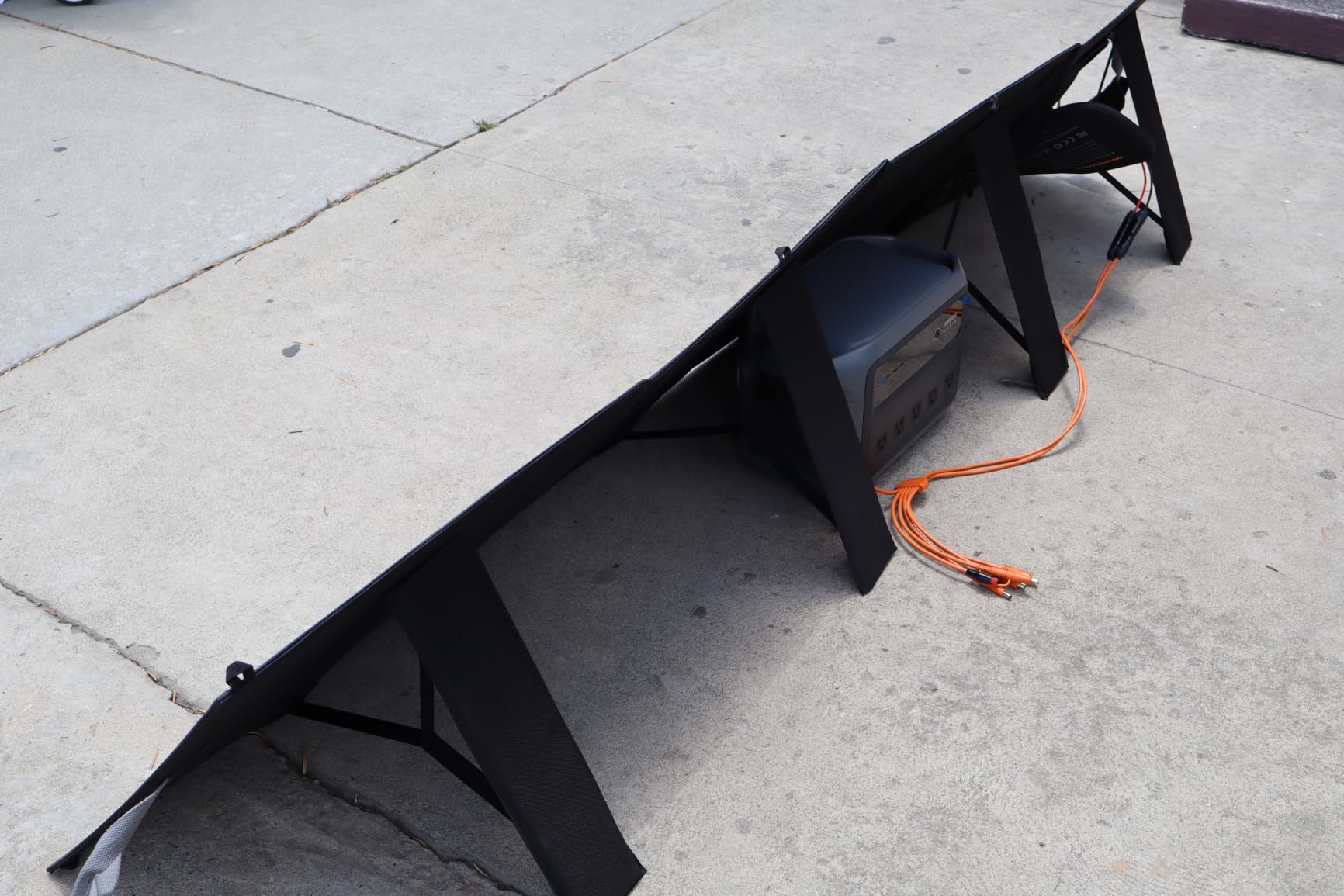
When the voltage does match, the payoff is speed. 220W of monocrystalline output at 23.5 percent efficiency moves charge into a high-voltage station faster than any other panel in this roundup short of the 400W, and the seven-in-one connector means fewer adapter decisions in the field.
Construction is IP67 waterproof and dustproof with four kickstands for angle adjustment and thickened carry handles. Efficiency and water rating are both solid, and the panel is compact enough that the 220W rating is not costing you meaningful pack volume.
Two practical warnings. First, the charge rate is still capped by whatever your power station accepts, so a 220W panel on a station capped at 200W gains you nothing. Second, the product listing is inconsistent about weight, showing 8.07 kg in one place and a different figure in the bullet points, so treat the packed weight as approximate at around 18 pounds.
At 261 reviews the owner sample is modest. Ratings are strong, but there is less long-term evidence here than on the higher-volume panels.
When a 40V panel is the right call
If your power station is a high-voltage unit that accepts 40V solar input, this is the most output you can get in a panel this size. Larger stations in the 2kWh and up range typically pair with 400W panels, and this is the compact option for anyone who refuses to carry one.
It is also a good second panel if you already own a high-voltage station and want to chain in parallel rather than double up on weight.
When it will frustrate you
If your station has a lower input voltage limit, this panel simply will not work as intended, and that is the most common complaint in the reviews. Smaller stations are the usual victims, so this is not a panel to buy on spec-sheet enthusiasm.
Also be careful with the weight figure and the station’s own watt cap. If either disappoints, the extra 20W over a standard 200W panel will not rescue the setup.
7. BLUETTI 200W: The Premium Pick for BLUETTI Owners
BLUETTI 200W Solar Panel for Solar Generator EB3A AC2A AC50B AC70 AC180 AC200L Elite 200 V2 AC300 AC500 B300K, Foldable Solar Charger with Adjustable Kickstands for RV, Camping, Blackout
- 200W at 26.1V
- About 16 lbs folded
- 23.4% cells
- 12-month warranty
Pros
- Largest review base here at over 1200 ratings
- Native BLUETTI solar connector
- ETFE coating resists scratches and splash
- Consistent 4.5-star owner feedback
- Adjustable kickstands
Cons
- Most expensive 200W option in this roundup
- Proprietary connector needs an adapter for other brands
- 23.4 percent efficiency below the 25 percent N-type panels
- Weight figure differs between page sections
The BLUETTI 200W is the most proven panel in this roundup, with over 1200 owner ratings and a steady 4.5-star average across EB3A, AC2A and AC-series use. If you want evidence rather than promises, this is the one with the deepest body of long-term owner feedback.
Its native solar connector gives the cleanest possible fit on a BLUETTI power station, no adapter and no negotiation about pin order. For a kit that is entirely BLUETTI, that is a small convenience that quietly removes a whole category of setup friction.
The panel itself is straightforward monocrystalline silicon at up to 23.4 percent efficiency, with an ETFE coating for scratch and water-splash resistance. It folds to 22.5 by 23.6 by 2.9 inches, which is slightly thicker than the Renogy at the same wattage, and adjustable kickstands handle the angle positioning.
Compatibility is the strong suit, with direct pairing named for BLUETTI EB3A, EB70S, AC2A, AC50B, AC70, AC180, AC200L, AC200MAX and AC300 stations. Owners consistently report reliable output and simple pairing, which is the sentence that appears most often in the reviews.
Two things give people pause. It is the most expensive 200W option here, and the proprietary connector means powering a non-BLUETTI station requires an adapter. The efficiency figure also sits below the 25 percent N-type panels, so in hot conditions you are giving up a little output for the ecosystem fit.
The weight is listed inconsistently, at 16.1 pounds in the specifications and 17.2 pounds in the features, so budget closer to the higher figure if you are packing to a limit. The warranty is 12 months, which is short given the price position.
When the ecosystem lock-in is worth it
If you already own BLUETTI equipment or intend to buy more, the native connector turns a two-minute cable check into plug and play. Across a growing BLUETTI kit that is a real convenience, and the review base shows the panel absorbing that role without drama.
There is also value in depth of ownership data. With 1200-plus ratings, you can read enough long-term reports to know how the panel ages, which is something a 269-review or 71-review panel simply cannot offer you.
When it is not worth the premium
Cross-brand users should skip it. MC4 panels with multi-adapter leads, like the Renogy or the SOKIOVOLA, will work with more of the stations you might buy next and cost meaningfully less for the same wattage.
It is also not the most efficient panel here, and it is not the lightest 200W option. You are buying the brand fit and the proven track record, not a specification advantage.
8. CTOLITY 400W: Best for Refilling a Large Station Fast
CTOLITY 400W Portable Solar Panel for Power Station, Foldable Solar Panels
- 400W at 40V DC
- 23 percent conversion
- IP65 Oxford cloth
- MC4 connection
Pros
- Highest rated wattage in the roundup
- Owners measure 300W or more into EcoFlow and Anker stations
- Auto-reboot chip handles shifting cloud
- Over-current and short-circuit protection
- Works with Jackery and EcoFlow stations
Cons
- Delivered output well below the 400W nameplate
- Heavy and awkward for one person to reposition
- Separate adapter pigtails rather than one main plug
- Basic kickstands
- Smallest review base here at 71 ratings
The CTOLITY is the only 400W foldable here, and it exists for one job: refilling a large power station quickly. Owners report 300W or more into EcoFlow and Anker stations, enough to bring a roughly 1kWh unit back up in a couple of hours of strong noon sun, which no 200W panel can do.
Connection is 40V DC over MC4, which is the modern standard on larger stations, and the included connector bundle covers Jackery and EcoFlow. The auto-reboot intelligent chip adapts to changing light conditions, which owners specifically like during broken cloud cover when cheaper panels need a manual reset.
Safety electronics include over-current, over-voltage and short-circuit protection, and the case is waterproof Oxford cloth with PET lamination at an IP65 rating. At 23 percent conversion the cell efficiency is the lowest of the group, which is normal for a 400W panel of this design and not necessarily a problem in practice.
Owners also like the fact that this is a single fast refill rather than a two-panel chore. If you have ever waited three days to rebuild a station with 200W panels, the difference is transformative.
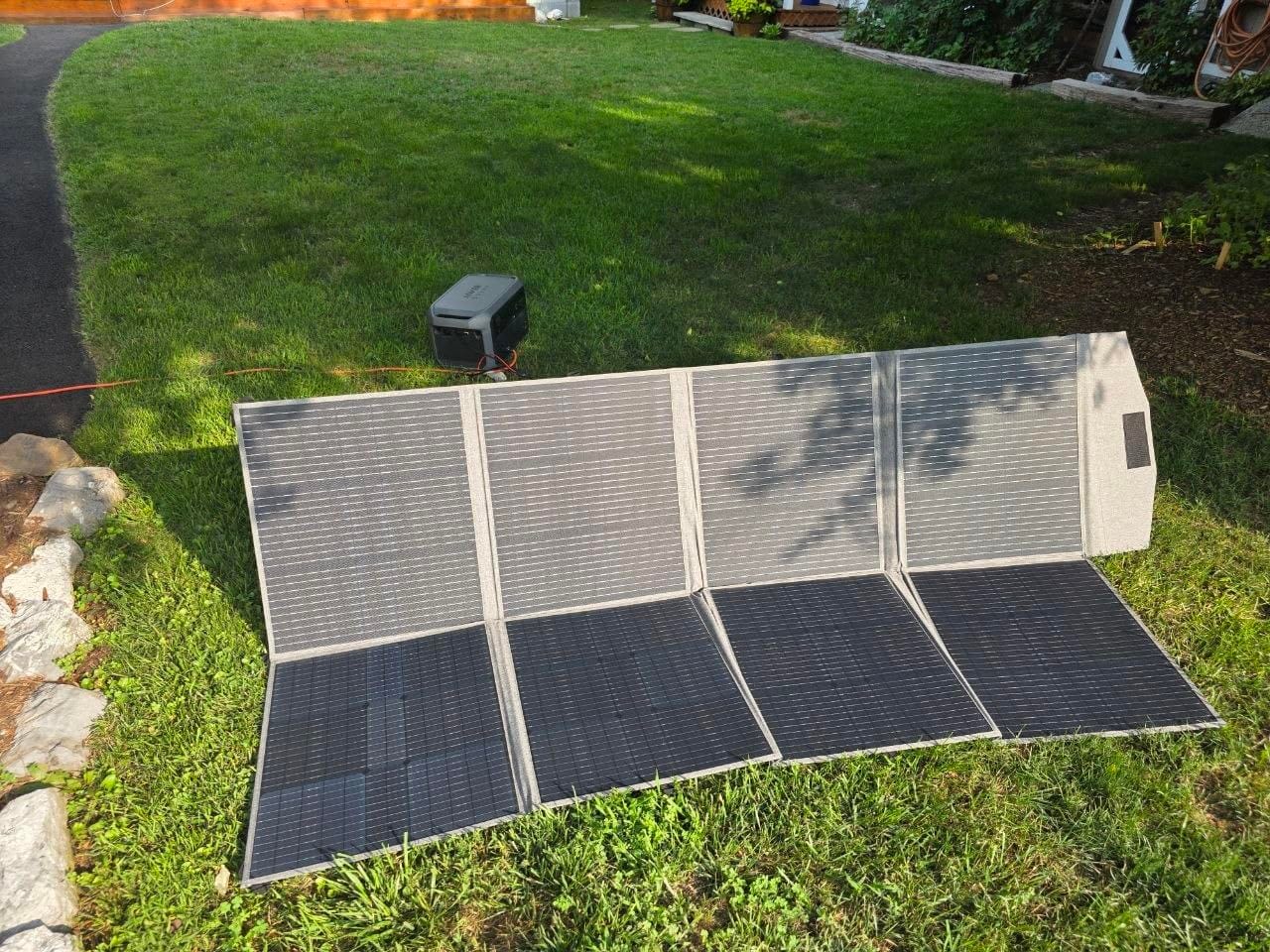
The compromise is honesty about the gap. Some owners see roughly 250W from a 400W nameplate, which is a wide enough spread that you should plan around the lower end rather than the label. Weight and dimensions are not stated on the product page, but owners consistently describe the panel as heavy and awkward for one person to reposition.
At 71 ratings this is the smallest review base in the roundup, so long-term data is thin. The kickstands are basic and may need a custom mount on uneven ground, and the separate adapter pigtails are a less tidy arrangement than one main plug.
When 400W is the right amount of solar
If your station is 2kWh or larger, 200W will feel like charging a phone. The math is straightforward: a 400W panel in good sun moves roughly four times the energy of a 200W panel, and that is the difference between topping up overnight and topping up during lunch.
It also makes sense for a home outage kit, a market stall or an overlanding build where the panel stays mounted and nobody is carrying it far. Once fixed in one spot, weight stops being a factor.
When you should buy two 200W panels instead
Portability is the deciding factor. Two 200W foldables are far easier to reposition, easier to stow and far less painful to move as the sun shifts, and reviewers note that flat-portability and a more stable surface often win back the output you lose.
Two panels also give you redundancy, and they can be angled independently for a meaningful gain in the middle of the day. If you move with your gear, choose the 200W tier. If you stay put, take the 400W.
How to Match a Foldable Panel to Your Power Station
Before you choose a panel, check your power station’s maximum solar input wattage and its input voltage. These are two different numbers and they cause two different problems: too many watts and the station simply throttles what arrives, and too many volts and the panel will not work with the station at all. A 200W panel on a station capped at 100W wastes half of itself every day.
Next, match the connector. MC4 is the most portable standard because adapters are cheap, while a proprietary port gives you the cleanest fit with one brand and a shopping problem with every other. If the panel ships a multi-adapter lead covering DC8020, XT60, Anderson, DC7909 and DC5521, you have effectively covered most of the market before you buy.
Then set a real output expectation. A useful working number is about 80 percent of rated watts in good conditions, and considerably less in heat or partial cloud. Budget for that when you plan your day, and treat the nameplate as a ceiling rather than a promise.
Finally, weigh grams per watt against your actual carrying capacity. The panels in this roundup land between roughly 32 and 43 grams per watt, which is the range most people can actually carry for a camping setup. Below 100W the figure worsens because the frame and controller dominate; above 300W it improves because the surface area does more of the work.
Rated Watts vs Real-World Output: What You Will Actually Get
Rated wattage is measured under laboratory conditions at a fixed irradiance and cell temperature. On a hot day, in partial shade, or with a panel that is not angled at the sun, you will see less. The roughly 33 percent rule that circulates in search results is a way of describing the gap between a nameplate number and a genuinely average day, and treating rated watts as a ceiling is the single most useful adjustment you can make.
Using 80 percent of rated output as a planning figure, here is roughly how long each tier takes to refill common power station sizes in good sun:
100W panel into a 500Wh station: about 6 hours
100W panel into a 1000Wh station: about 12 to 13 hours
200W panel into a 500Wh station: about 3 hours
200W panel into a 1000Wh station: about 6 hours
200W panel into a 2000Wh station: about 12 to 13 hours
220W panel into a 2000Wh station: about 11 to 12 hours
400W panel into a 2000Wh station: about 6 hours
Two habits make a real difference. Reposition the panel every couple of hours as the sun moves, which is the single biggest source of wasted generation and the one most people forget. And never place anything on an operating panel, even a light cloth, because shading a fraction of the surface can cut output far more than you would expect.
For a photography kit, the useful rule is simpler: treat the panel as a trickle charger for the whole day rather than a rescue. Start the day with a full station, top up batteries between setups, and you will rarely be the reason a shoot stalls.
Frequently Asked Questions
Are foldable solar panels any good?
Yes, for the job they are built for. Modern foldable panels use monocrystalline cells at 23 to 25 percent efficiency, and owner reports commonly land between 85 and 95 percent of rated output in strong sun. They will not replace a wall outlet or a rigid array, and they lose noticeably in heat and cloud, but for keeping a portable power station topped up away from a vehicle they are the most practical option available.
Which 200-watt foldable solar panel is the best?
The Renogy 200W E.FLEX is the strongest all-round choice, with 25 percent N-type cells, a 13.9-pound weight and MC4 plus 45W USB-C output. The SOKIOVOLA 200W is better if you need IP68 weather sealing, and the EBL 200W is better if wind stability matters more than weight. The BLUETTI 200W wins if you want the cleanest native fit on a BLUETTI station.
What is the 33% rule in solar panels?
It is shorthand for the gap between a panel’s rated wattage and what it produces under ordinary conditions. Rated watts assume ideal laboratory light at a controlled cell temperature. Expect closer to 80 percent of the rating in good real-world sun, and considerably less in heat or partial shade. Treating rated watts as a ceiling rather than a promise is the practical takeaway.
Can you charge a power station with solar while using it?
Many modern power stations support charge-while-using, which lets solar input come in while AC or USB outputs stay live. Support varies by model and by firmware version, so check the manual or the brand’s support page for your specific unit before you rely on it. Some cheaper stations will not accept solar input at all while an output is running, and they will simply stop charging.
How long does a 200W solar panel take to charge a 200Ah battery?
A 200Ah 12V battery stores about 2400Wh. At roughly 80 percent of the panel’s 200W rating, that is close to 160W of input, so a full refill takes around 15 hours of usable sunlight once you account for losses in the charge controller and battery chemistry. Expect closer to a full day of good sun rather than a single afternoon.
Is 200W solar enough for camping?
For most weekend camps, yes. A 200W panel refills a 500Wh station in about three hours of good sun and a 1000Wh station in around six, which comfortably covers phones, laptops, camera batteries and lighting. If you run a coffee maker, a power tool or a CPAP machine, or you are stationary through cloud cover, step up to the 400W tier or carry two 200W panels.
Final Verdict
The best foldable solar panel for power stations in 2026 is the Renogy 200W E.FLEX, because it is the rare panel that is light, efficient, universally connectable and well warranted at the same time. Go lighter with the ZOUPW 100W if weight rules your trip, tougher with the SOKIOVOLA if rain does, and faster with the CTOLITY 400W if your station is large enough to need it.
Whichever you choose, check the watt cap and the connector before you order, and plan your day around 80 percent of the rated output. Check the latest price for each panel below, and take the kit that fits the trip rather than the one with the biggest number on the box.