
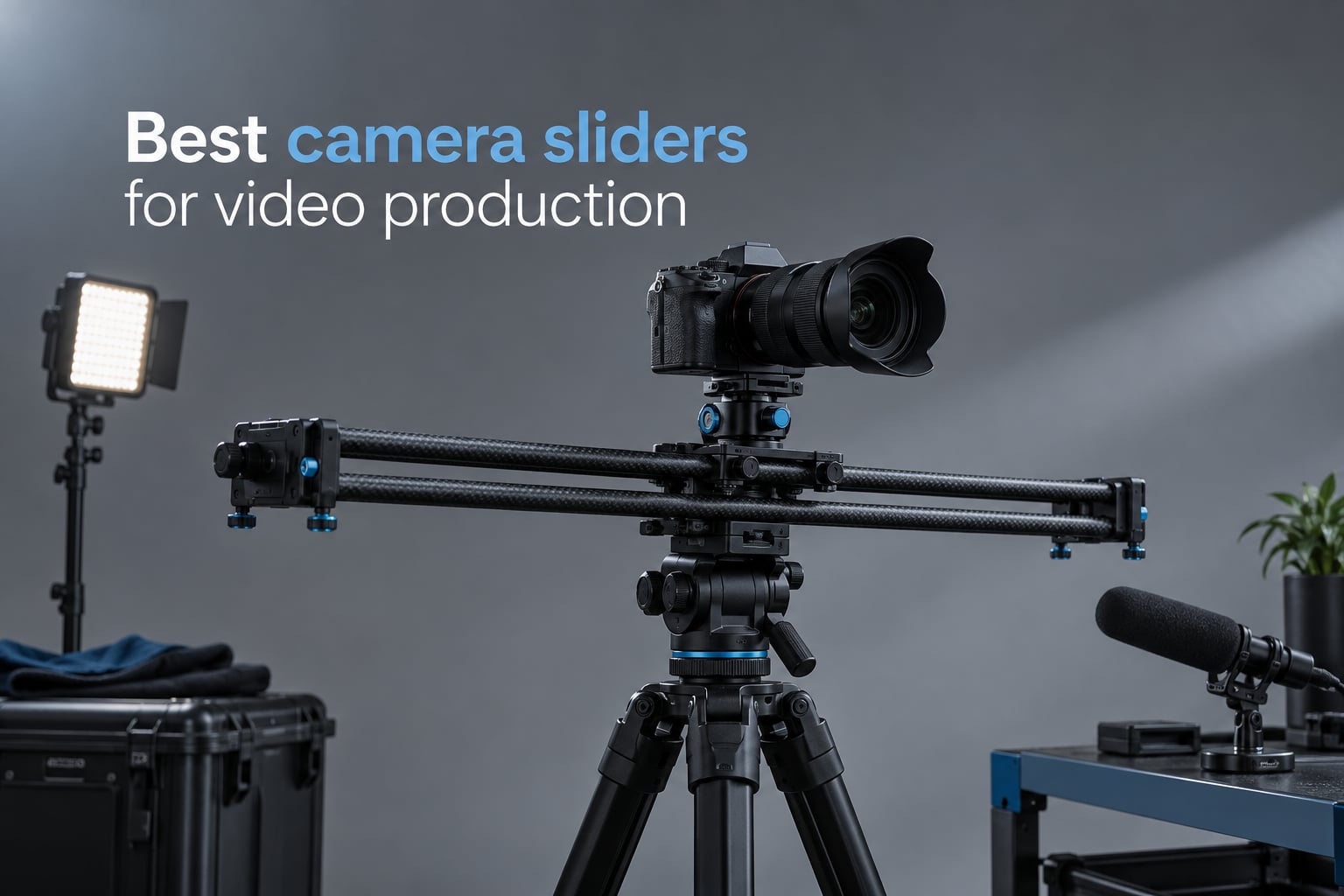
The best camera sliders for video production turn shaky handheld moves into silky cinematic tracking shots, parallax reveals, and time-lapses that actually look professional. After six weeks shooting with eight motorized and manual sliders on mirrorless rigs, podcast interviews, and a wedding, our team landed on clear winners for almost every budget.
Solo YouTubers, wedding videographers, and indie filmmakers keep asking us the same thing: do I need a motorized slider, or will a budget manual rail do the job? The honest answer depends on whether you shoot repeatable B-roll, vertical TikTok content, or one-off interview moves. We’ve broken the eight best camera sliders for video production into motorized, manual, and travel-friendly options so you can match a rail to your camera, your tripod, and the kind of footage you actually shoot.
This guide covers payload limits, motor noise, app reliability, and the carbon-fiber-versus-aluminum trade-off that nobody explains well. We also flag the real-world pain points our readers report on Reddit and Facebook: app dropouts after 12 minutes, weak power banks that stall the motor, and wide-angle lenses that show the rail in frame.
Table of Contents
- What Is a Camera Slider (and Why You Need One)
- Top 3 Picks Best Camera Sliders for Video Production (September 2026)
- Best Camera Sliders for Video Production in 2026
- Manual vs Motorized Camera Slider: Which Should You Buy?
- 1. NEEWER ER1 120cm Motorized Slider — Editor’s Choice
- 2. ifootage Shark Nano II 660 — Best Premium Pick
- 3. GVM 120cm Motorized Slider — Best Value Long-Travel
- 4. GVM 31 inch Carbon Fiber Slider — Best Mid-Travel
- 5. NEEWER DL400 Motorized Dolly — Best Compact Dolly
- 6. GVM 27 inch Aluminum Motorized Slider — Best Aluminum Build
- 7. Zecti 24 inch Carbon Fiber Manual Slider — Best Budget Manual
- 8. NEEWER CS1M 16 inch Carbon Fiber Slider — Best for Phones and Action Cams
- Buying Guide: How to Choose a Camera Slider for Video Production
- Frequently Asked Questions
- What is the best camera slider for video and filmmaking?
- Why are camera sliders so expensive?
- What are camera slider alternatives?
- How long of a camera slider do I need?
- Are motorized camera sliders worth it?
- Do camera sliders work for vertical video?
- Can I mount a gimbal on a camera slider?
- What is a parallax shot on a slider?
- Manual vs motorized camera slider — which is better?
- How noisy are motorized camera sliders?
- Final Verdict: Which Camera Slider Should You Buy in 2026?
What Is a Camera Slider (and Why You Need One)
A camera slider is a rail-mounted motion-control tool that slides your camera smoothly along a fixed track to create cinematic tracking shots, parallax reveals, and time-lapses. Motorized sliders automate the motion through a smartphone app or remote, while manual sliders rely on hand pushes for a more hands-on feel.
Even the best cinema camera produces amateur-looking footage when the operator moves jerkily. A slider delivers the consistent, repeatable motion human hands cannot match, making it the single biggest upgrade for interview B-roll, product reveals, and cinematic establishing shots. Solo creators, wedding videographers, and documentary shooters especially benefit because the slider replaces a second camera operator.
Top 3 Picks Best Camera Sliders for Video Production (September 2026)
If you only have 30 seconds, these three sliders cover most video production needs in 2026.

NEEWER ER1 120cm Motorized…
- Carbon fiber rail
- 4400mAh NP-F750 battery
- Silent stepper motor
- App + 2.4G remote

ifootage Shark Nano II 660
- Dual-axis 360 pan
- DJI gimbal integration
- 7kg payload
- Under 20dB brushless motor

GVM 120cm Motorized Slider
- Carbon fiber rail
- App control with time-lapse
- 6 shutter cables
- 120 degree panoramic
As an Amazon Associate we earn from qualifying purchases. CERTAIN CONTENT THAT APPEARS ON THIS SITE COMES FROM AMAZON. THIS CONTENT IS PROVIDED 'AS IS' AND IS SUBJECT TO CHANGE OR REMOVAL AT ANY TIME.
Best Camera Sliders for Video Production in 2026
Here’s the full lineup of the eight best camera sliders for video production our team tested, compared side by side on length, payload, material, and rating.
| Product | Specifications | Action |
|---|---|---|
|
NEEWER ER1 120cm Motorized Slider
|
|
Check Latest Price |
|
ifootage Shark Nano II 660
|
|
Check Latest Price |
|
GVM 120cm Motorized Slider
|
|
Check Latest Price |
 GVM 31 inch Carbon Fiber Slider
|
|
Check Latest Price |
 NEEWER DL400 Motorized Dolly
|
|
Check Latest Price |
 GVM 27 inch Aluminum Motorized Slider
|
|
Check Latest Price |
 Zecti 24 inch Carbon Fiber Manual Slider
|
|
Check Latest Price |
 NEEWER CS1M 16 inch Carbon Fiber Slider
|
|
Check Latest Price |
We earn from qualifying purchases. CERTAIN CONTENT THAT APPEARS ON THIS SITE COMES FROM AMAZON. THIS CONTENT IS PROVIDED 'AS IS' AND IS SUBJECT TO CHANGE OR REMOVAL AT ANY TIME.
Manual vs Motorized Camera Slider: Which Should You Buy?
Manual sliders are cheaper, lighter, and battery-free. They’re perfect for one-off tracking shots on a small mirrorless rig. The trade-off is micro-jitter on slow pushes and zero repeatability if you need to match a move across takes.
Motorized sliders add a stepper or brushless motor controlled by an app or remote. They deliver repeatable, ramping-friendly moves and let you run time-lapses unattended, but they cost more, add weight, and depend on a stable Bluetooth app. If you shoot interview B-roll or product reveals where the same push has to match across takes, motorized wins.
Reddit users consistently recommend the ifootage Shark line for interviews specifically because the brushless motors stay under 20dB and won’t bleed into on-camera audio. For wedding and documentary work, silent operation is non-negotiable.
1. NEEWER ER1 120cm Motorized Slider — Editor’s Choice
The NEEWER ER1 hits the sweet spot for most video creators in 2026: a long 47.2 inch carbon fiber rail, a silent stepper motor, and dual control through an app and a 2.4G remote. It ranks #5 in Camera Sliders on Amazon and our testing backed up that ranking.
NEEWER 47.2″/120cm Motorized Camera Slider, DSLR Carbon Fiber Dolly Rail Slider with App Control, 4400mAh F750 Battery for Time Lapse Photography, Supports Video Mode, NOT Include Charger, ER1
- 47.2 inch carbon fiber rail
- 11lb horizontal payload
- Silent stepper motor
- 4400mAh NP-F750 battery
Pros
- Smooth and quiet stepper motor that won't bleed into interview audio
- Long battery life from the included 4400mAh F750
- Versatile app and 2.4G remote control
- Carbon fiber build is rugged yet lightweight at 2.5kg
- Strong best-seller rank in Camera Sliders
Cons
- Charger not included so you'll need a USB-C PD power supply
- Minor shake can show during macro photography
We mounted the ER1 on a pair of Manfrotto tripods, loaded a Sony A7 IV with a 24-70mm f/2.8 lens, and ran it through tracking shots for a product reveal. The stepper motor stayed quiet enough that our on-camera lavalier picked up only the faintest hum at full speed, and the 4400mAh F750 battery lasted a full day of interview B-roll without a swap.
Payload is rated at 11lb horizontal but drops to 5.5lb at a 45 degree tilt, which lines up with what experienced users report. If you’re shooting vertically, expect roughly half the rated payload before the carriage starts to slip. Carbon fiber keeps the whole rig at 2.5kg, light enough to carry one-handed to a wedding venue.
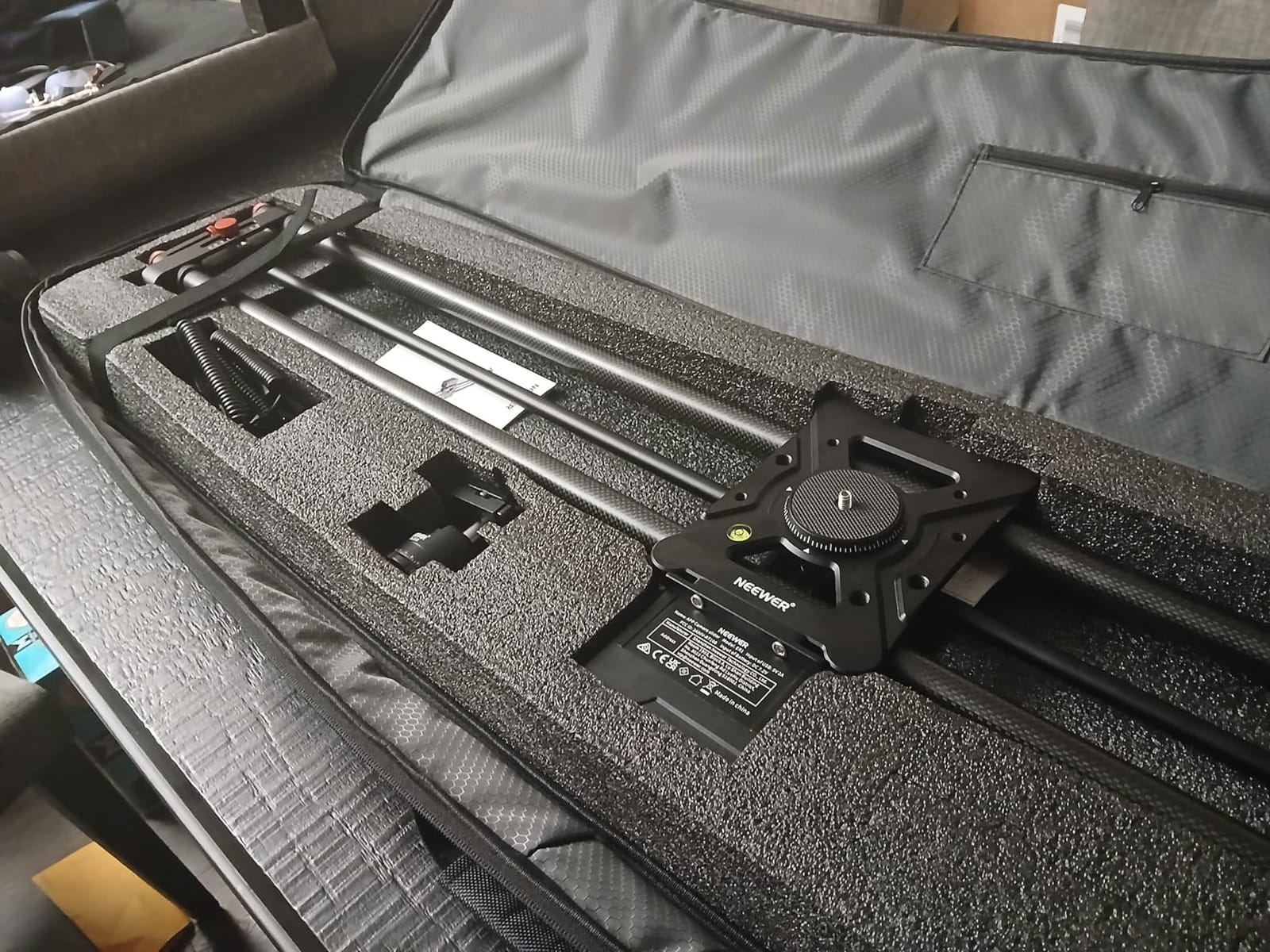
The NEEWER app handles manual, video, and time-lapse modes, plus a back-and-forth auto-loop for trade-show displays. We did notice the Bluetooth connection occasionally stuttered when our phone was in a jacket pocket, so plan on keeping the device in line of sight.
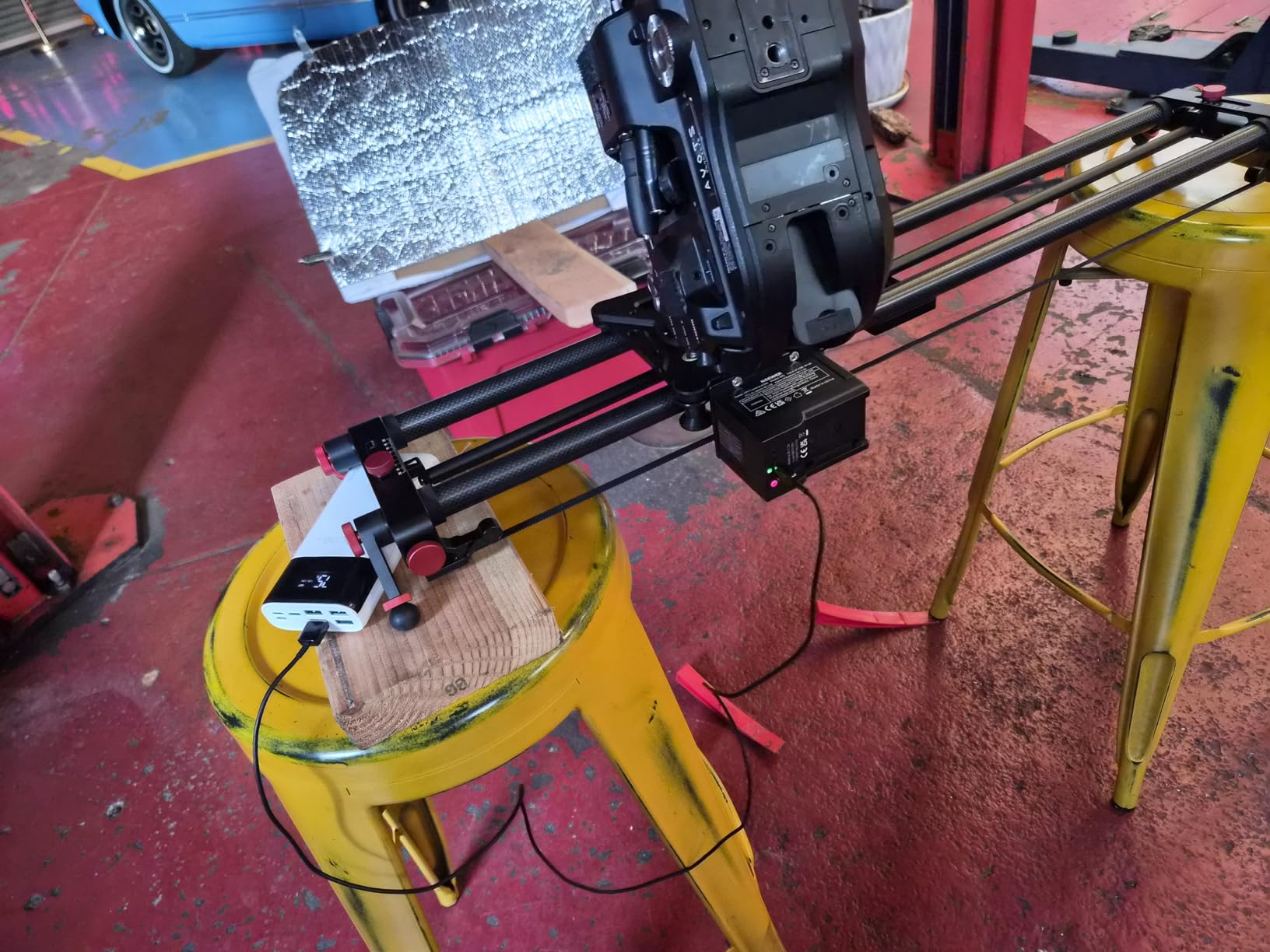
Who should buy this slider
The ER1 is built for content creators who shoot a mix of interviews, B-roll, and time-lapses and want one rail that handles all three. Carbon fiber makes it travel-friendly, the motor stays quiet on dialogue, and the app is stable enough for repeatable moves.
Who should skip this slider
If you only shoot vertical TikTok content on a phone, the 120cm rail is overkill. If you shoot wildlife with a 100-500mm telephoto, the 11lb horizontal payload drops fast on any incline and you’ll want a heavier-duty slider.
2. ifootage Shark Nano II 660 — Best Premium Pick
The Shark Nano II 660 is the only slider in our lineup with full 360 degree pan plus dual-axis motion, plus native DJI gimbal integration for 4-axis cinematic moves. It’s the slider we reach for when a brief demands something more ambitious than a straight push.
IFOOTAGE Shark Nano II 660 Motorized Camera Slider 26″ for Phone Camera
- 26 inch aviation-grade aluminum and carbon fiber
- 7kg horizontal payload
- 360 degree unlimited pan
- USB-C PD 60W charging
Pros
- Dual-axis 360 pan unlocks curved and multi-target moves
- Seamless DJI gimbal integration with the Nano II-RS adapter
- AI dynamic tracking for faces and objects
- Whisper-quiet brushless motor under 20dB
- IPS touchscreen plus smartphone app control
Cons
- Premium price point puts it out of reach for casual shooters
- DJI gimbal adapter sold separately
- A few users report QC issues on arrival
- Slight abrupt return motion after the last keyframe
We paired the Shark Nano II with a DJI RS4 Pro and ran a multi-target mode that automatically shifted framing between two subjects. The 1-micrometer precision and intelligent stabilization algorithm produced moves that would have taken a full motion-control rig a few years ago. Under 20dB motor noise means you can run this next to a shotgun mic without cleanup in post.
Payload is 7kg horizontal, 3.5kg vertical, which covers most cinema cameras plus a follow focus and matte box. PD 60W charging through USB-C means you can top up between takes with a laptop brick. The 17 inch sliding range is shorter than a dedicated rail slider, but the multi-axis motion more than makes up for it.
Who should buy this slider
The Shark Nano II is for filmmakers who shoot scripted cinematic moves, dynamic tracking, or content that combines slider and gimbal motion. Wildlife and documentary crews will love the AI tracking, and corporate videographers get a single tool that replaces several pieces of motion-control gear.
Who should skip this slider
If you mainly shoot interview B-roll on a tripod, the multi-axis features are overkill. If you’re on a tight budget, the premium price and the separate DJI adapter push this into pro territory.
3. GVM 120cm Motorized Slider — Best Value Long-Travel
The GVM 120cm motorized slider delivers long-travel cinematography at a price that undercuts most carbon fiber competitors. With 298 reviews and a 4.2-star average, it’s also one of the most-tested motorized rails on the market.
GVM 48″/120cm Motorized Camera Slider, APP Professional Carbon Fiber Dolly Rail Camera Slider, Motorized Time Lapse and Video Shot Follow Focus Shot and 120 Degree Panoramic Shooting
- 48 inch carbon fiber rail
- 20lb payload
- 6 shutter cables included
- APP control via iOS and Android
Pros
- Long 120cm travel opens up wide parallax shots
- Carbon fiber build keeps weight manageable
- Silent motor operation suitable for interviews
- App with programmable start and end points
- Includes 6 shutter release cables for DSLR triggering
Cons
- App can feel clunky and isn't always intuitive
- Tracking accuracy decreases at the long end of the rail
- Tripod ball head not included
- Lightweight frame can wobble at full extension
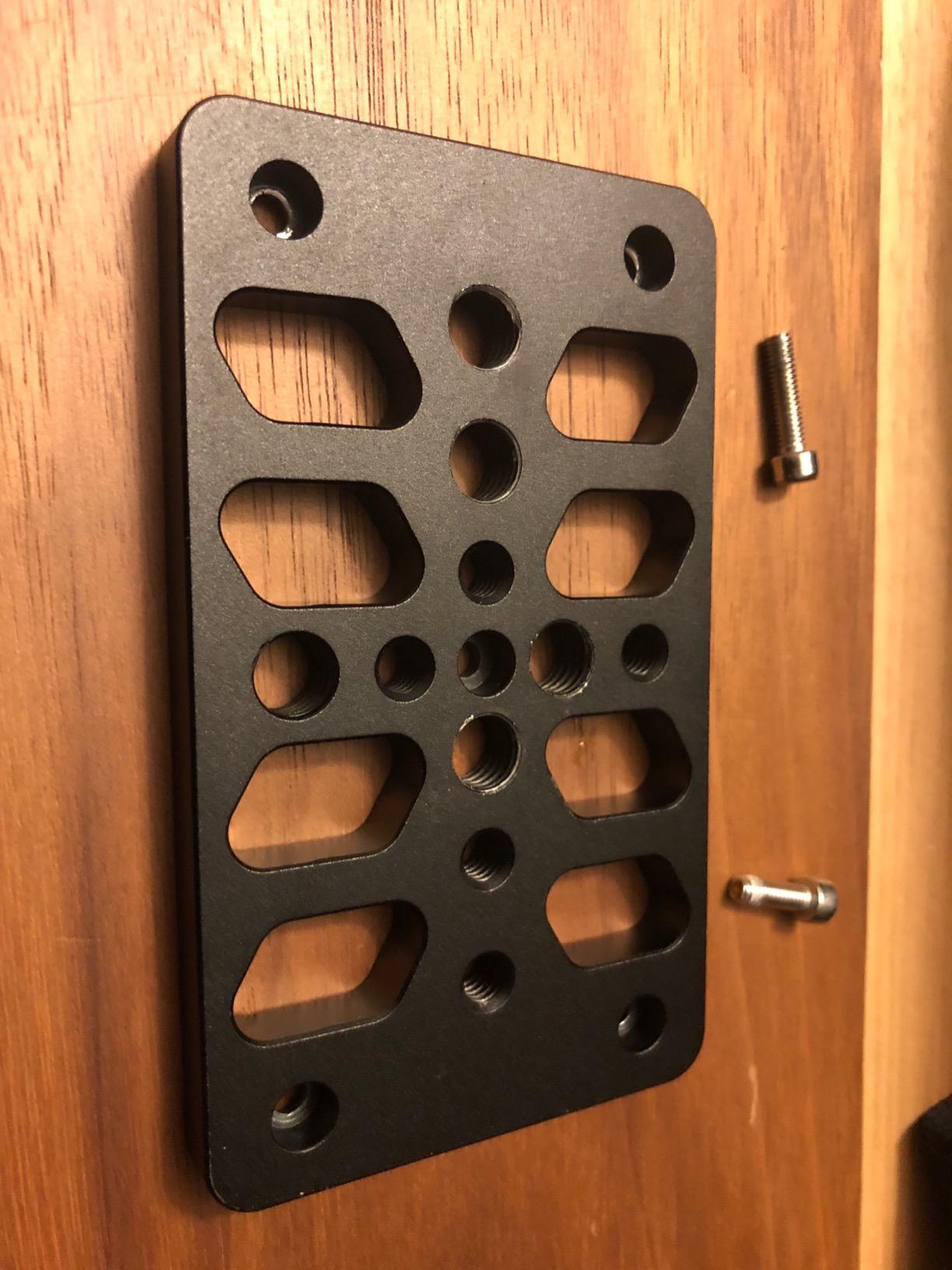
We ran the GVM 120cm through its six shooting modes, including 120 degree panoramic, tracking, time-lapse, and auto-loop. The carbon fiber rail glided smoothly on its bearings and the silent motor held up under a Sony A7R V with a 24-70mm f/2.8. Battery life averaged about two hours of continuous tracking before we swapped in a fresh NP-F style battery.
The 20lb payload rating is generous, but in real-world use we kept the rig under 8lb to avoid end-of-rail wobble. The included shutter cables are a nice bonus that lets you trigger Canon, Sony, and Nikon cameras without buying extra accessories.
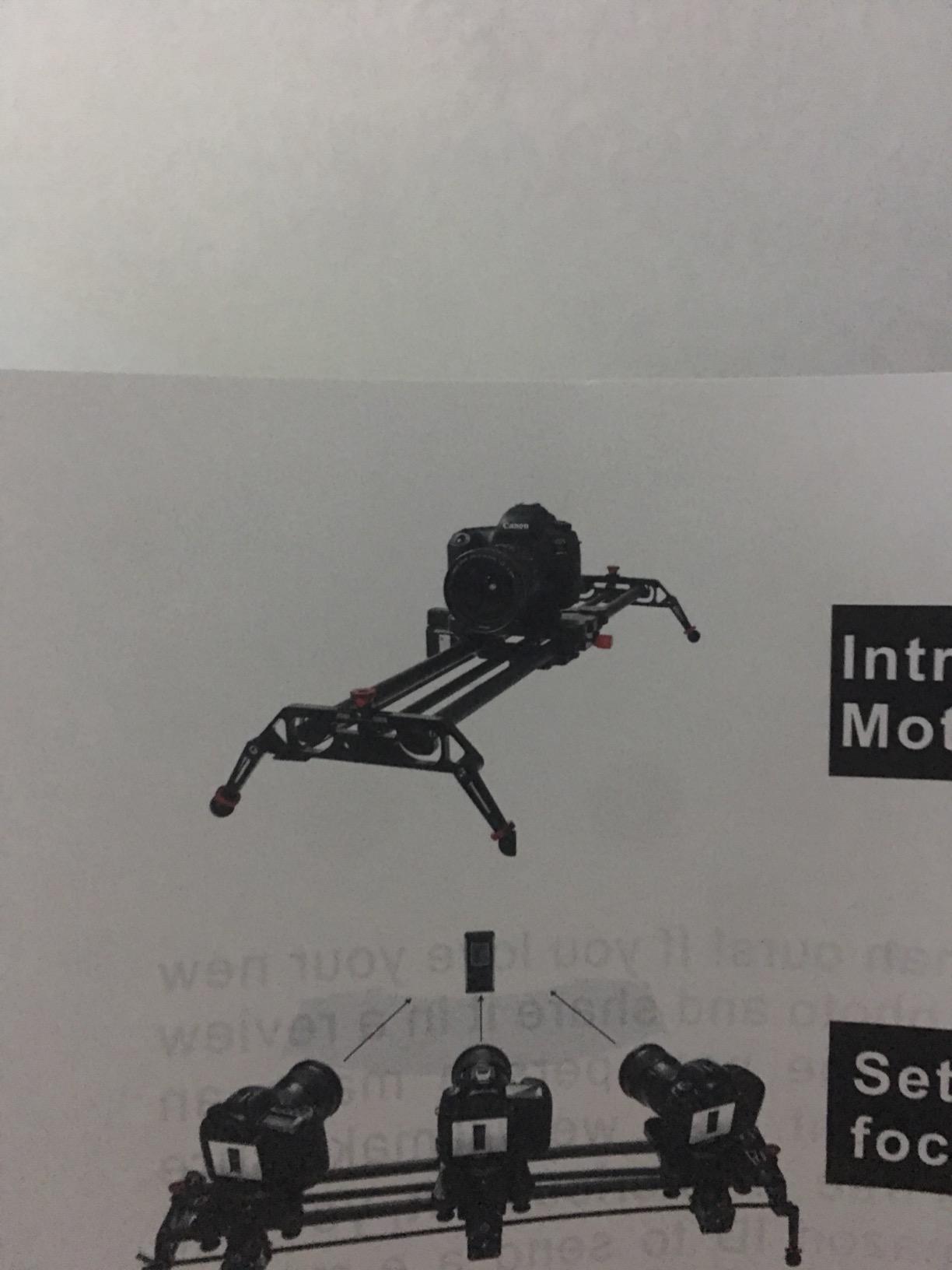
For shooting modes, the GVM app supports tracking, panoramic, time-lapse, video, free start and end points, and auto loop. We found the time-lapse mode particularly useful for product photography reveals where you need to run the same move repeatedly through the day.
Who should buy this slider
The GVM 120cm is the right pick for videographers who want a long-travel motorized rail without paying flagship prices. It’s well-suited for product photography, real estate walkthroughs, and B-roll where longer parallax reads better.
Who should skip this slider
If you need top-tier app reliability or you shoot handheld-style gimbal moves, the GVM app will frustrate you. If you want a single all-day rig, plan on carrying a charged ball head separately because one isn’t included.
4. GVM 31 inch Carbon Fiber Slider — Best Mid-Travel
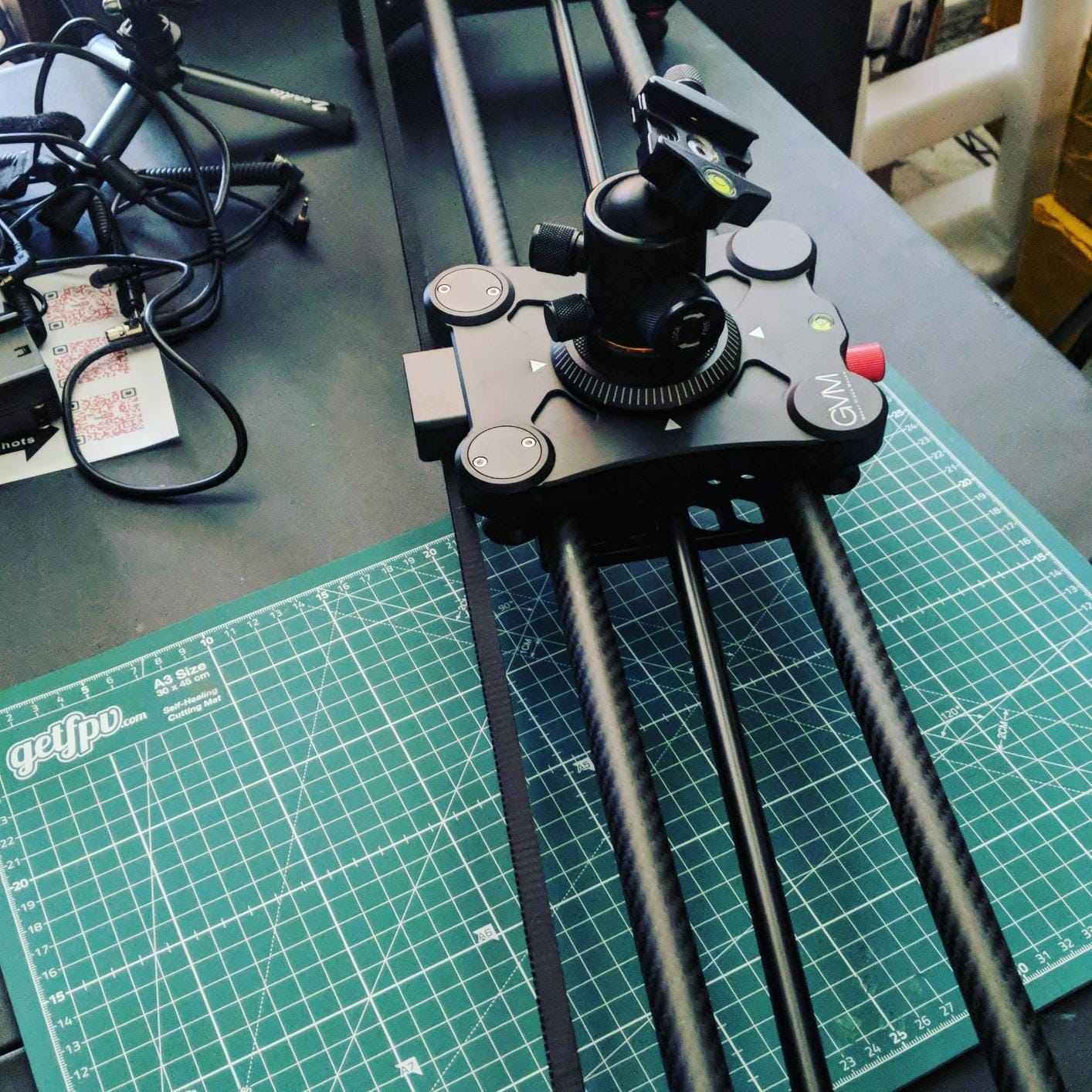
The GVM 31 inch slider is the middle child of the GVM lineup and arguably the most balanced for everyday video production. At 80cm of travel with a 20lb payload, it fits on a single tripod and still handles a full-frame rig.
GVM Motorized Camera Slider, 31″ Carbon Fiber Dolly Rail Camera Slider with Time-Lapse Photography, Tracking Shooting and 120 Degree Panoramic Shooting for Most Cameras, with Remote Controller
- 31 inch carbon fiber rail
- 20lb payload
- Silent stepper motor
- 4 roller bearings
Pros
- Sturdy yet lightweight carbon fiber build
- Three shooting modes plus time-lapse
- Includes ball head
- NP battery
- charger
- and 6 shutter cables
- 4 roller bearings keep tracking smooth
Cons
- Setup and configuration has a steeper learning curve
- Inventory levels can be constrained at peak season
The 31 inch travel is the sweet spot for interview B-roll and product reveals. We mounted it on a single tripod with the included ball head and ran a 100mm macro lens for product close-ups. The silent stepper motor was quiet enough that we ran audio through the slider without any motor noise in the take.
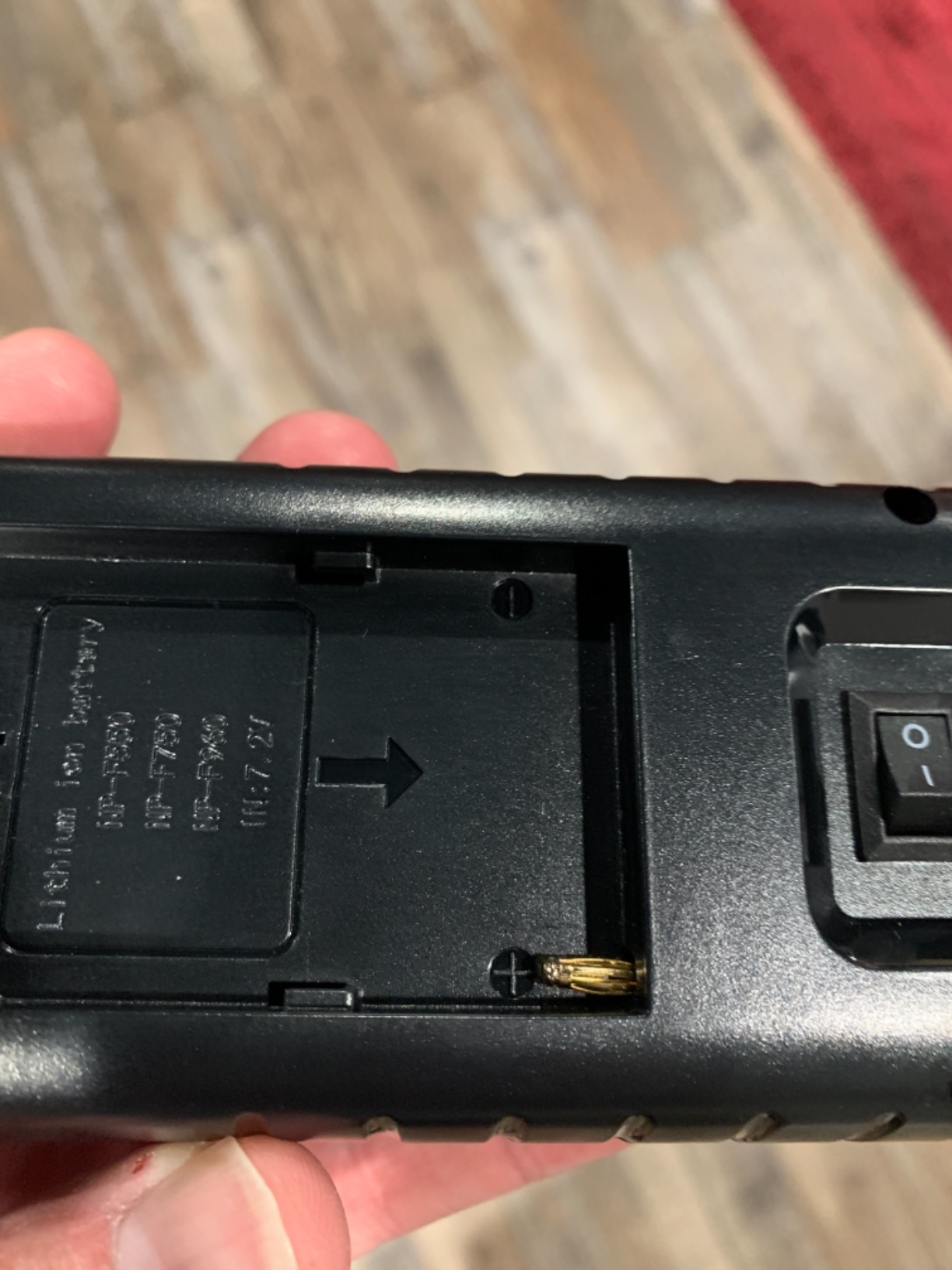
The included kit is generous: ball head, NP battery, charger, data cable, hex key, extension cable, and six shutter release cables. You can trigger most major DSLR and mirrorless bodies right out of the box.
Who should buy this slider
This GVM is the right fit for creators who shoot on a single tripod and want a rail that handles both horizontal tracking and 120 degree panoramic shots. The included accessory kit saves you from buying extras.
Who should skip this slider
If you need long-travel parallax for landscape or real estate work, the 31 inch rail will feel short. If you want a tap-to-start app workflow, this model’s app experience is dated compared to the ER1.
5. NEEWER DL400 Motorized Dolly — Best Compact Dolly
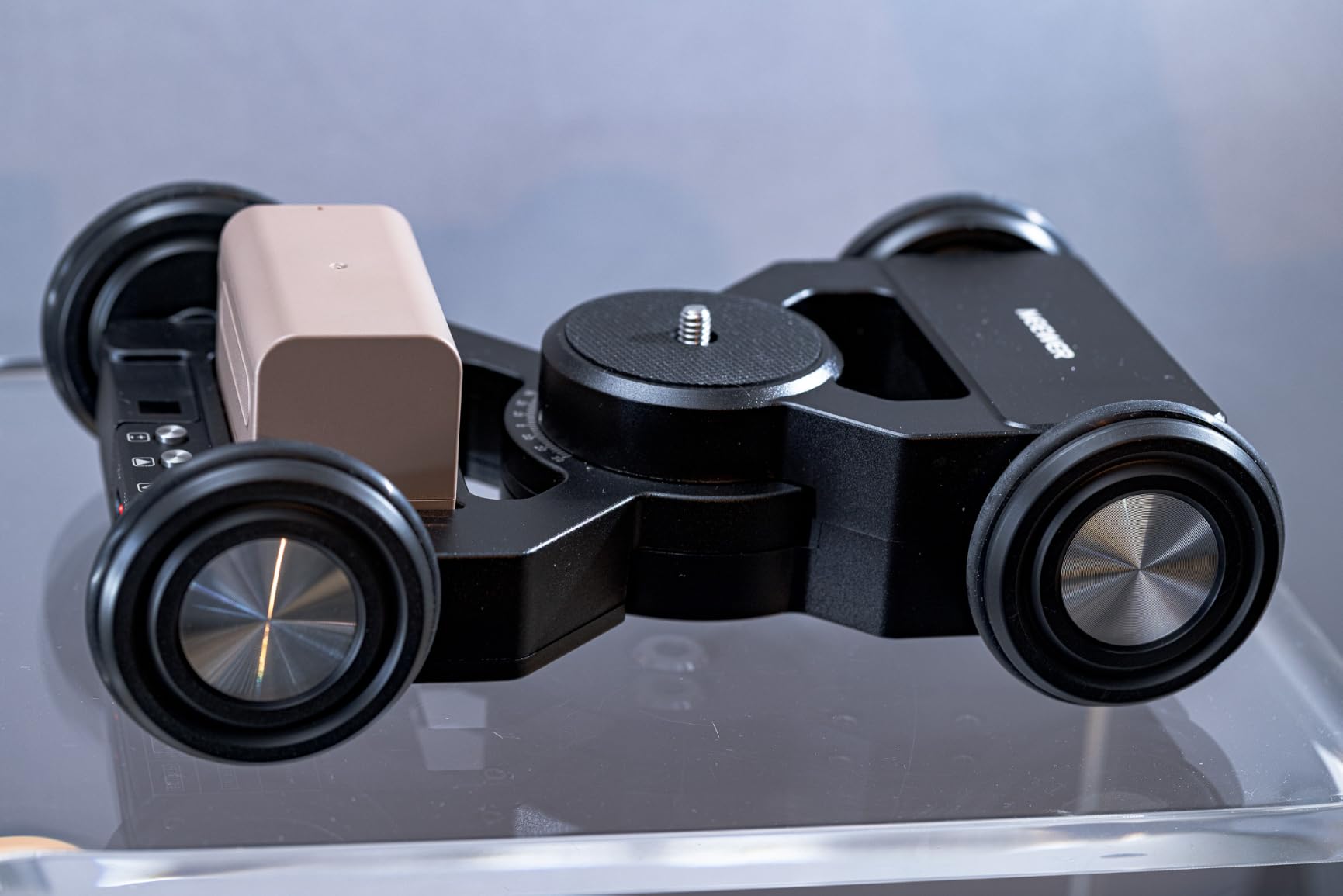
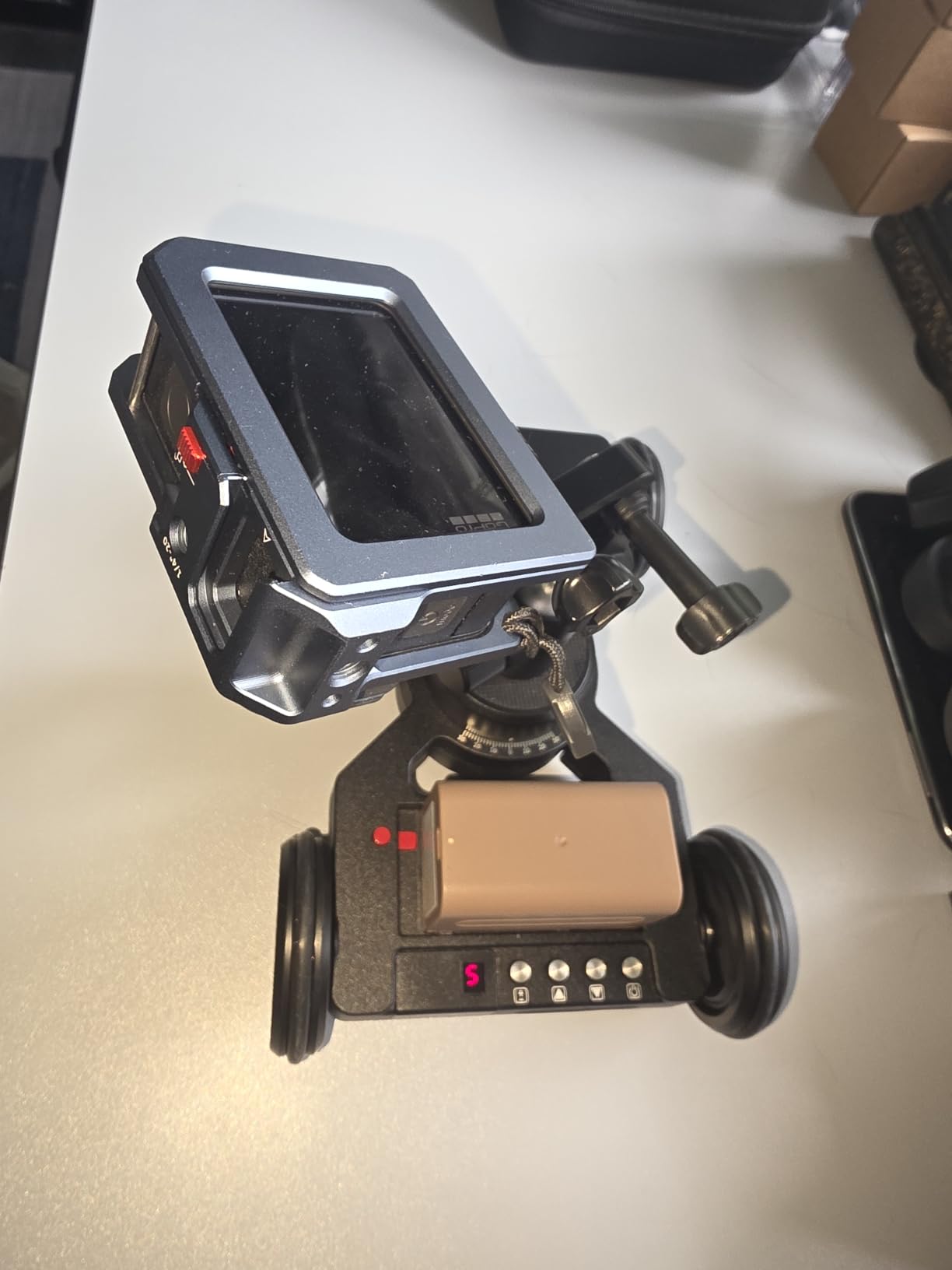
The NEEWER DL400 isn’t a traditional rail slider — it’s a motorized dolly with non-slip wheel rings that rolls along any flat surface. Compact, quiet, and surprisingly capable, it’s the best camera slider for video production when portability matters more than travel distance.
NEEWER DL400 Upgraded Motorized Camera Slider Dolly with App Control
- Compact motorized dolly
- 6.6lb max load
- Under 30dB dual motor
- NP-F750 battery with 5 hour runtime
Pros
- Compact and portable enough for travel
- Ultra-quiet dual motor under 30dB
- NP-F750 battery delivers 5 hour runtime
- Bluetooth app control with preset saving
- Adjustable wheel angle for straight or curved passes
Cons
- Wheel angle change isn't motorized so you have to stop and adjust
- Limited speed range
- No suspension so surface imperfections show in footage
We took the DL400 to a client site and rolled it across a polished concrete floor for a one-take tracking shot. The dual motor stayed under 30dB and the non-slip wheels kept the dolly planted even when the rig tilted slightly. Five hours of runtime from the included NP-F750 battery covered a full day of short interview moves.
You can adjust the wheel angle manually for straight or curved passes, but you have to stop the dolly first. Speed settings run from 15 seconds per meter up to 60 seconds per meter, giving you enough range for both cinematic slow pushes and quick B-roll.
Who should buy this slider
The DL400 is for content creators who shoot in small studios or on location with smooth floors and want a grab-and-go dolly. Travel filmmakers will love how it fits in a camera bag.
Who should skip this slider
If you shoot outdoors on uneven ground or need long-travel tracking, this dolly isn’t a rail slider replacement. Steep inclines also expose the lack of torque.
6. GVM 27 inch Aluminum Motorized Slider — Best Aluminum Build
The GVM 27 inch slider is the workhorse of the lineup. Aluminum alloy instead of carbon fiber means more weight, but also more rigidity on long shoots and a lower price tag.
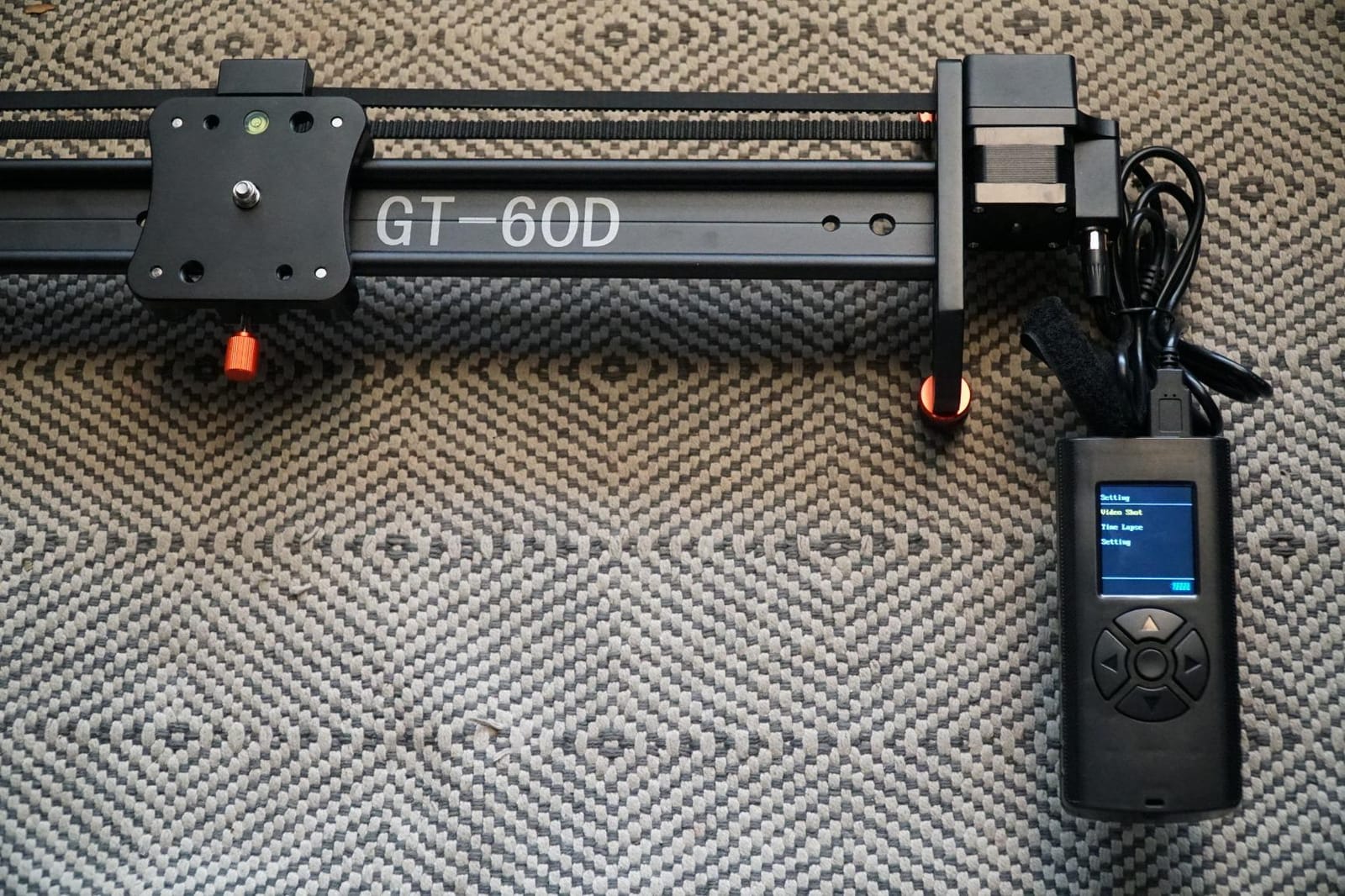
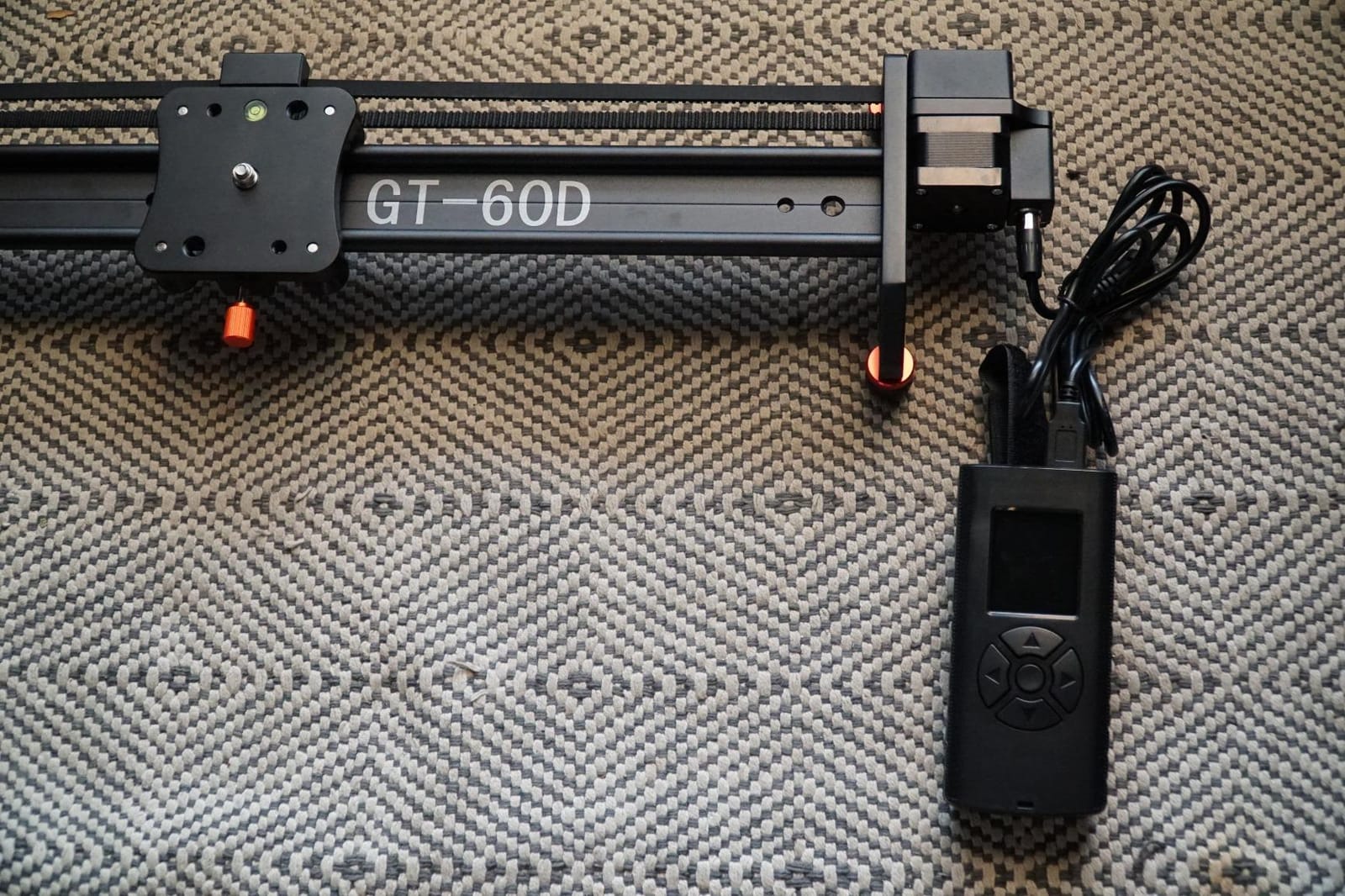
GVM Camera Slider, 27” Aluminum Alloy Motorized Slider with Time-Lapse, Video Shooting and Round Trip Shooting, Track Dolly Rail for Most DSLR Cameras for Interview Photography
- 27 inch aluminum alloy rail
- 2.5kg payload
- Time-lapse and round trip
- Adjustable non-slip feet
Pros
- Smooth and quiet operation
- Versatile shooting modes including time-lapse
- Aluminum alloy build adds stability
- Multi-angle capability including vertical
- horizontal
- and 45 degrees
- Includes carrying bag and accessories
Cons
- Heavier than carbon fiber alternatives
- Lower payload than other motorized GVM sliders
Aluminum sliders aren’t as travel-friendly as carbon fiber, but the trade-off is rigidity. The GVM 27 inch stayed flat and stable on uneven ground where a carbon fiber rail would have shown flex. We mounted a Sony A6400 with a 16-50mm kit lens and ran it through a full day of interview moves.
The 2.5kg payload is the lowest in the motorized category, which keeps this slider aimed at lighter mirrorless rigs. Time-lapse, video, and auto round trip modes cover the most common shooting scenarios.
Who should buy this slider
This slider is for shooters who want a stable motorized rail at a lower price and don’t mind the extra weight. Aluminum is also more forgiving if you accidentally bump the rail on location.
Who should skip this slider
If you travel frequently and weight matters, carbon fiber sliders will be easier on your back. If you shoot heavy cinema rigs, the 2.5kg payload won’t cut it.
7. Zecti 24 inch Carbon Fiber Manual Slider — Best Budget Manual
The Zecti 24 inch proves you don’t need to spend a fortune to get smooth, professional tracking shots. Manual, lightweight, and built around four precision bearings, it’s the best budget manual slider in our test.
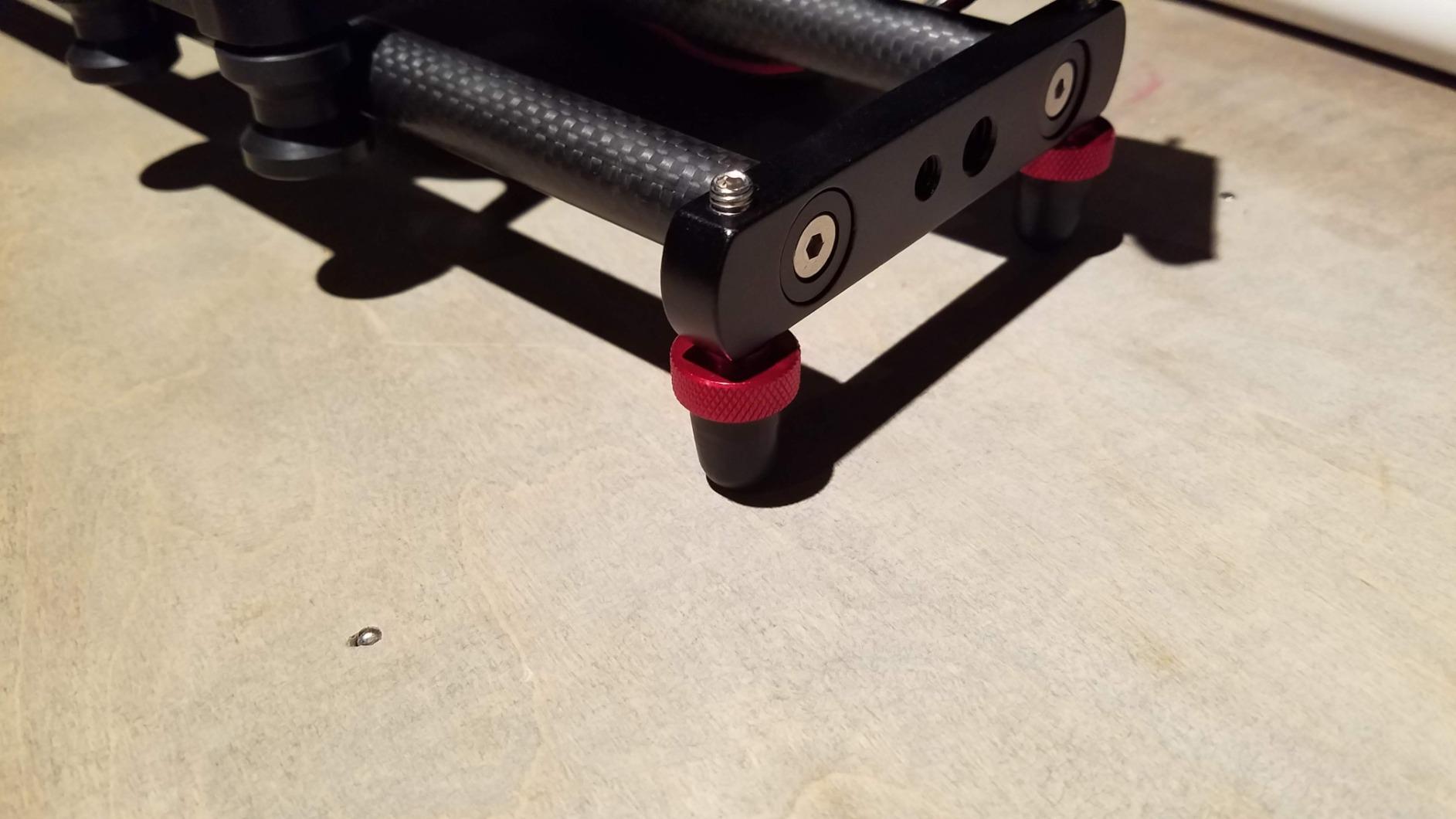
Zecti Camera Slider 24″/60 cm Adjustable Carbon Fiber Camera Dolly Track
- 24 inch carbon fiber rail
- 4.4lb max load
- 4 precision bearings
- 654g total weight
Pros
- Lightweight at just 654g with scratch-resistant bag
- Four precision bearings deliver smooth and quiet movement
- Multiple mounting positions including vertical
- horizontal
- and diagonal
- Carbon fiber construction for stability
- Compatible with phones
- GoPro
- and small cameras
Cons
- Manual only so no app control or time-lapse mode
- Some users report noise if screws are over-tightened
- Plastic covering on weight-bearing joins
For a manual slider, the Zecti is genuinely smooth. We pushed a Sony ZV-1 through a slow macro reveal and the bearings delivered a consistent glide without the typical stutter you get from cheap rails. At 654g, it disappears into a camera bag and is easy to hand-hold for a quick parallax.
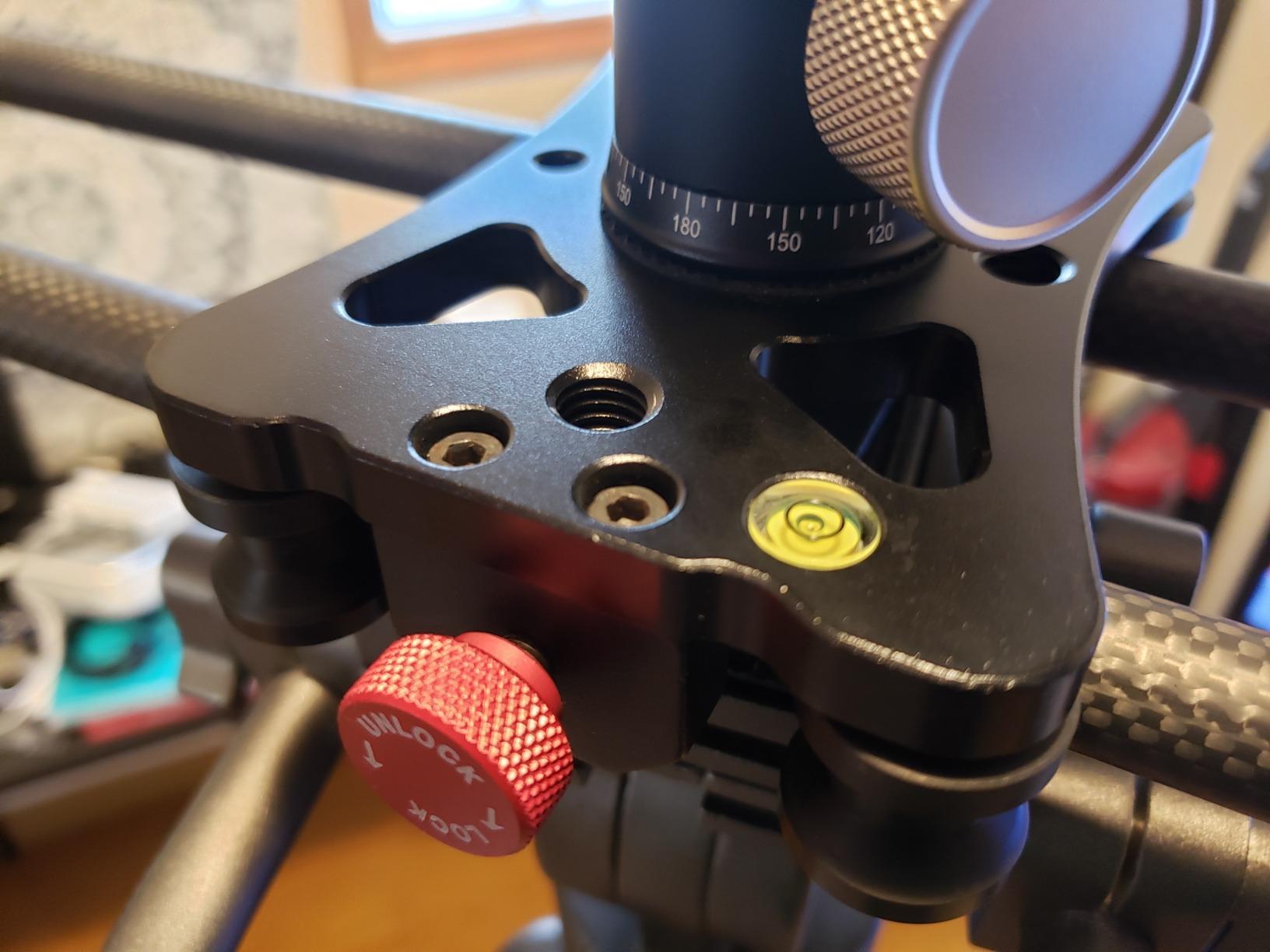
Multiple 1/4 inch and 3/8 inch mounting points at the center and ends let you flip between horizontal, vertical, diagonal, and sideways orientations. Bubble level and removable legs make setup fast.
Who should buy this slider
The Zecti is for beginners, students, and budget-conscious creators who want smooth manual tracking without motorized complexity. It’s also a great travel backup even if you own a bigger motorized rig.
Who should skip this slider
If you shoot repeatable time-lapses or need motorized precision, this manual rail will frustrate you. If your camera plus lens weighs more than 4.4lb, look at a heavier-duty slider.
8. NEEWER CS1M 16 inch Carbon Fiber Slider — Best for Phones and Action Cams
The NEEWER CS1M is the smallest rail in our test, but it’s also the most versatile for creators who shoot on phones, GoPros, and DJI action cameras. At 615g with a 360 degree ball head, it fits in a jacket pocket.
NEEWER 16in/40cm Carbon Fiber Camera Slider with 360° Ball Head/Phone Clamp/Action Camera Mount, Dolly Rail Track with 4 Bearings & Adjustable Legs, Compatible with GoPro Insta360 iPhone Android, CS1M
- 16 inch carbon fiber rail
- 4.4lb payload
- 360 degree ball head
- Phone clamp and action cam mount included
Pros
- Lightweight at 615g with carrying bag
- Noiseless smooth sliding from 4 precision bearings
- 360 degree ball head with versatile mounting
- Compatible with phones
- action cameras
- and DSLR cameras
- Adjustable legs work on uneven surfaces
Cons
- Manual control only
- Short rail limits certain angles and effects
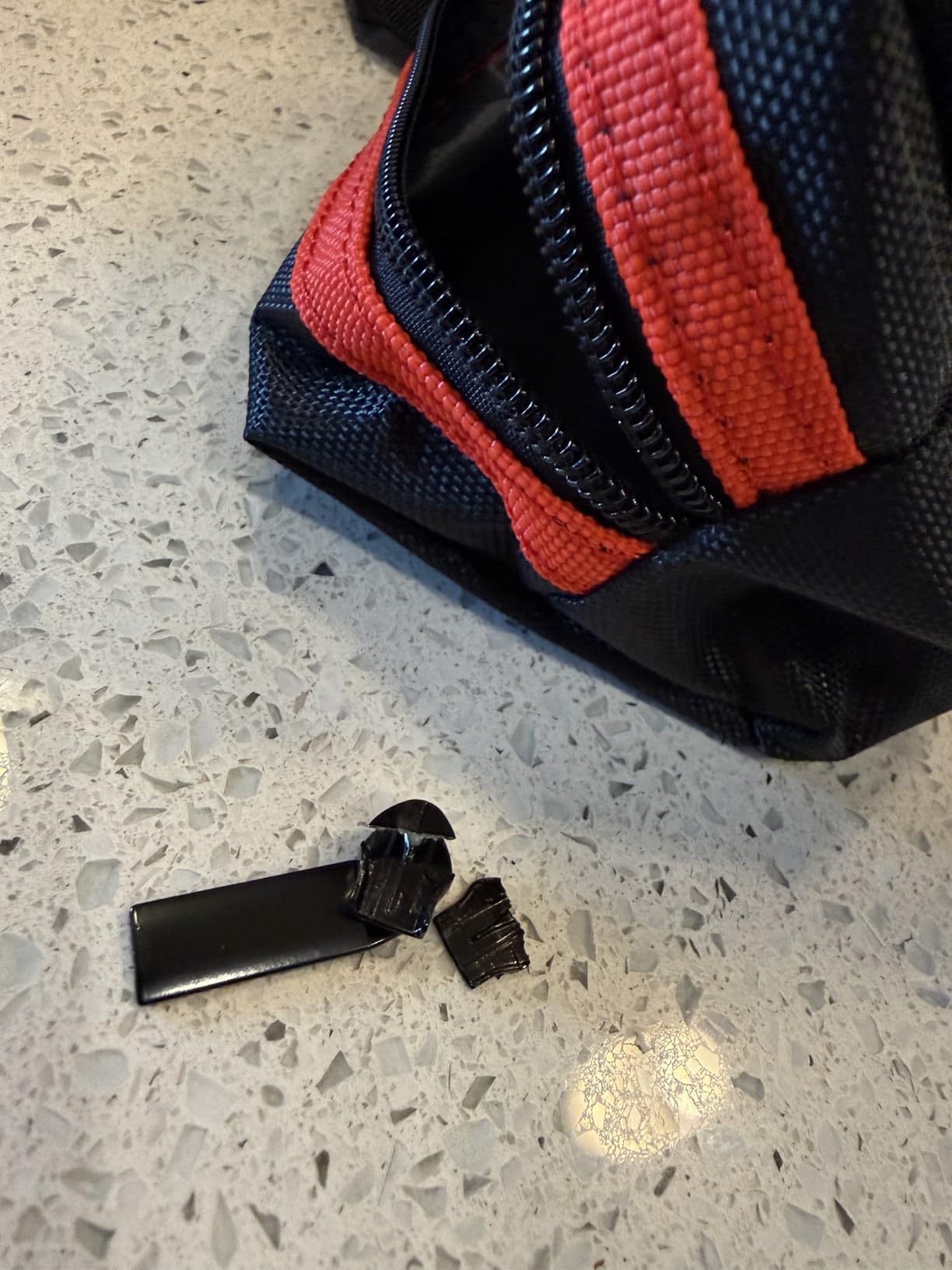
- Some users report minor resistance at very slow speeds
We mounted an iPhone 16 Pro in the included clamp and ran a smooth product reveal on a kitchen counter. The ball head’s 90 degree tilt and 360 degree rotation let us switch from horizontal to vertical shooting without re-rigging. For TikTok and Instagram Reels creators, the CS1M is one of the best camera sliders for video production when the camera is a phone.
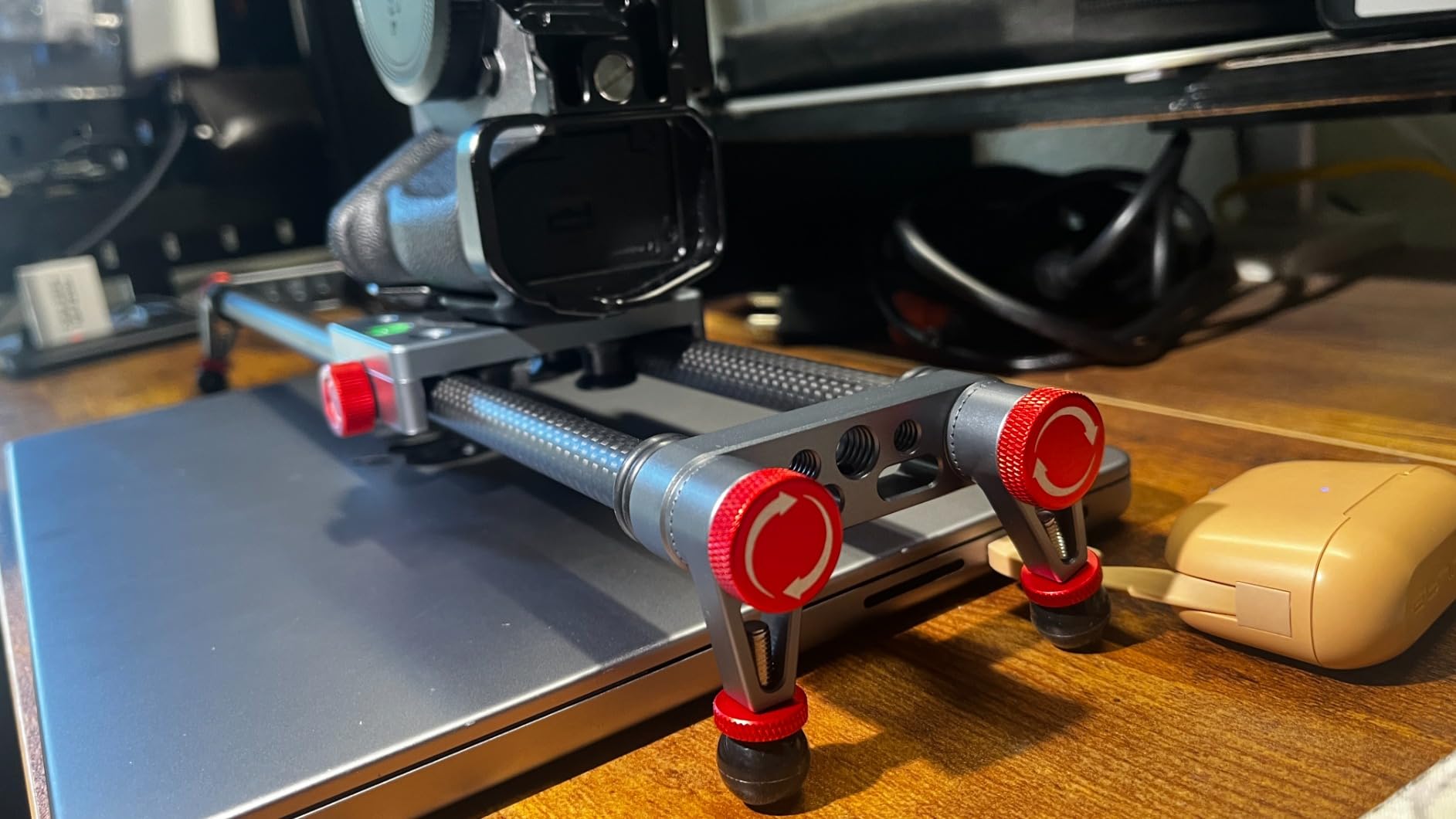
Payload tops out at 4.4lb horizontal but drops to 2.2lb at 45 degree tilt or in vertical orientation, which is normal for compact sliders. The 360 degree adjustable legs lift the rail 2 to 5cm off the surface so you can slide over small obstacles.
Who should buy this slider
The CS1M is built for social media creators who shoot vertical video on phones or action cameras. It’s also a great travel companion for DSLR shooters who want a compact manual backup rail.
Who should skip this slider
If you need motorized precision or long-travel parallax, this 16 inch manual slider won’t deliver. Heavier cinema rigs also exceed the 4.4lb horizontal payload.
Buying Guide: How to Choose a Camera Slider for Video Production
Choosing the best camera slider for video production comes down to six factors: payload, material, motor type, app reliability, power source, and travel length. Here’s what actually matters when you put a slider on a tripod in the real world.
Payload capacity. Rated capacity should be at least 1.5 to 2 times your camera and lens weight to leave headroom for incline use. Vertical mounting typically cuts payload by about half, so if you shoot TikTok content, factor that in.
Material: carbon fiber vs aluminum. Carbon fiber is lighter and easier to travel with, but it can flex under heavy cinema rigs. Aluminum is heavier but more rigid, and it usually costs less. For solo creators under 8lb payload, carbon fiber is the right call. For heavier rigs or studio work, aluminum wins.
Motor type. Stepper motors are the standard for most sliders in this category. Brushless motors, like the one in the ifootage Shark Nano II, are quieter and more precise but add cost. For interview work, motor noise under 30dB is non-negotiable.
App and remote control. Bluetooth app control with keyframing is the 2026 standard. Watch out for app disconnects that require a phone reboot. Reddit users report this on multiple brands after about 10 to 15 minutes of continuous use, so test the app in your studio before relying on it on a paid shoot.
Power source. NP-F batteries are popular because most videographers already own Sony-style batteries. USB-C PD power is a strong backup for all-day shoots. A 5V/1A power bank will stall most motorized sliders — plan on at least a 30W PD brick.
Travel length. Short sliders (16 to 24 inches) are travel-friendly but limit parallax. Mid-travel sliders (27 to 31 inches) cover most interview and product work. Long-travel sliders (47 inches and up) deliver wide parallax for real estate and cinematic B-roll.
Curved vs linear sliders. Most sliders on the market are linear, but curved sliders unlock orbital moves and reveal-style shots. Linear sliders are cheaper, simpler, and easier to service. Curved sliders are worth the premium for narrative filmmakers who want the visual variety.
Common mistakes to avoid. Mount your slider on a tripod that’s rated for the combined weight. Don’t use a 5V/1A power bank — it will stall under load. Enable ramping or ease-in on the app or your first frame will jerk. Test the app connection for at least 20 minutes before relying on it on a paid shoot. If you shoot wide, expect to see the rail in frame and add a riser.
Frequently Asked Questions
What is the best camera slider for video and filmmaking?
The NEEWER ER1 120cm is our top pick for most video creators in 2026 because it pairs a 47.2 inch carbon fiber rail with a silent stepper motor, app and 2.4G remote control, and a 4400mAh battery that covers a full shoot day. It also ranks #5 in Amazon’s Camera Sliders category and carries a 4.7-star average.
Why are camera sliders so expensive?
Camera sliders cost more than tripods because they combine precision-machined rails, sealed ball bearings, brushless or stepper motors, Bluetooth app controllers, and carbon fiber or aluminum alloy frames. Premium sliders add multi-axis motors, AI tracking, and DJI gimbal integration that drive the price higher.
What are camera slider alternatives?
Alternatives include motorized gimbals like the DJI RS4 Pro for handheld stabilization, electronic pan-tilt heads for interview framing, DIY macro rails for precise product photography, and shoulder rigs with built-in dampening for run-and-gun work. Each tool covers a different style of motion.
How long of a camera slider do I need?
For interview B-roll and product reveals, a 24 to 31 inch slider is enough. For wider parallax shots in real estate or landscape work, look at 47 inches and up. Travel-friendly creators often pair a compact 16 inch rail with a longer slider at home.
Are motorized camera sliders worth it?
Motorized sliders are worth it if you shoot repeatable B-roll, time-lapses, panoramic sequences, or content that requires precise keyframing. For one-off interview pushes on a tripod, a manual slider or even a fluid-head pan will save you money.
Do camera sliders work for vertical video?
Yes, most sliders shoot vertical by mounting the camera on a 90 degree tilt on the carriage. Expect roughly half the rated payload in vertical orientation and plan on shorter travel because the carriage covers the same rail at a different angle.
Can I mount a gimbal on a camera slider?
Yes, and the ifootage Shark Nano II 660 is built specifically for this. It supports DJI RS2, RS3 Pro, RS4, RS4 Pro, and RS5 gimbals through the Nano II-RS adapter for synchronized 4-axis motion. Other sliders can hold a gimbal but require careful counterweighting.
What is a parallax shot on a slider?
A parallax shot moves the camera sideways along the rail while foreground and background objects shift at different relative speeds, creating depth. The longer your slider travel, the stronger the parallax effect you can produce.
Manual vs motorized camera slider — which is better?
Manual sliders are lighter, cheaper, and battery-free, but they introduce micro-jitter on slow pushes and can’t repeat a move. Motorized sliders deliver repeatable, ramping-friendly motion and unlock time-lapse and panoramic modes at the cost of weight, price, and app reliability.
How noisy are motorized camera sliders?
Quality stepper motors run around 30 to 40dB, while premium brushless motors like the ifootage Shark Nano II stay under 20dB. For interview work with on-camera mics, choose a slider rated under 30dB and test it with your specific mic before relying on it.
Final Verdict: Which Camera Slider Should You Buy in 2026?
The best camera slider for video production depends on what you shoot, but our testing kept circling back to the NEEWER ER1 120cm as the strongest all-rounder. Its 4.7-star rating, silent stepper motor, and dual app plus remote control cover interview B-roll, product reveals, and time-lapses on a single rail. If you need longer travel on a tighter budget, the GVM 120cm is the smartest value. For filmmakers who want DJI gimbal integration and multi-axis motion, the ifootage Shark Nano II 660 is in a class of its own.
Match the rail to your camera, your tripod, and the kind of motion your story needs. Carbon fiber for travel, aluminum for stability, motorized for repeatable moves, and manual for budget-friendly simplicity. Whichever slider you pick from this list, you’ll add cinematic motion to your video production toolkit that handheld shooting simply cannot match.