
Searching for the best phone gimbals for vlogging that actually hold up after the first ten minutes of walking-and-talking footage? We get it. Most smartphone gimbals look smooth in ads and turn into a jittery mess the moment you start moving fast, drop in low light, or try to track yourself from across the room. Our team spent six weeks shooting side-by-side with eight different 3-axis phone gimbals to see which ones earn a spot in a vlogger’s daily kit.
A phone gimbal is a handheld motorized stabilizer with three brushless motors (3-axis) that counter unwanted movement and keep your smartphone level, producing smooth, professional-looking video even when you are walking, panning, or shooting handheld. For solo creators, that difference between shaky phone footage and buttery cinematic shots is often the difference between a viewer watching the first 3 seconds or bouncing straight off your Reel.
Across our testing, we focused on the things vloggers actually care about: real-world battery life with AI tracking running, payload when you slap on a chunky phone case plus a wireless mic, AI subject tracking in native iOS and Android camera apps, audio handling around gimbal motor noise, and how the companion apps behave when you are shooting fast. Below, we break down the eight best phone gimbals for vlogging we tested, starting with our top overall pick.
Table of Contents
- Top 3 Picks for Best Phone Gimbals for Vlogging (September 2026)
- Best Phone Gimbals for Vlogging in 2026
- 1. DJI Osmo Mobile 6 – Best Overall Phone Gimbal for Vlogging
- 2. DJI OM 4 – Top Rated Magnetic Mount Phone Gimbal
- 3. DJI Osmo Mobile 7P – Most Versatile with Built-In Mic Receiver
- 4. AOCHUAN Smart XE – Best for Travel for Beginners
- 5. hohem iSteady X3 SE – Lightweight Pick with Detachable Remote
- 6. Insta360 Flow 2 Pro – Best Value for iPhone Creators
- 7. Hohem iSteady M7 – Best for Heavy Phone Setups
- 8. hohem iSteady V3 Ultra – Best Detachable Touchscreen Remote
- How to Choose the Best Phone Gimbal for Vlogging
- Frequently Asked Questions
- Final Verdict
Top 3 Picks for Best Phone Gimbals for Vlogging (September 2026)

DJI Osmo Mobile 6
- 3-axis stabilization
- ActiveTrack 6.0
- Built-in extension rod
- Apple Watch remote

AOCHUAN Smart XE
- Foldable 3-axis design
- Focus wheel and zoom slider
- 10-hour battery
- Gesture tracking
As an Amazon Associate we earn from qualifying purchases. CERTAIN CONTENT THAT APPEARS ON THIS SITE COMES FROM AMAZON. THIS CONTENT IS PROVIDED 'AS IS' AND IS SUBJECT TO CHANGE OR REMOVAL AT ANY TIME.
Best Phone Gimbals for Vlogging in 2026
| Product | Specifications | Action |
|---|---|---|
|
DJI Osmo Mobile 6
|
|
Check Latest Price |
 DJI OM 4
|
|
Check Latest Price |
 DJI Osmo Mobile 7P
|
|
Check Latest Price |
|
AOCHUAN Smart XE
|
|
Check Latest Price |
 hohem iSteady X3 SE
|
|
Check Latest Price |
 Insta360 Flow 2 Pro
|
|
Check Latest Price |
 Hohem iSteady M7
|
|
Check Latest Price |
 hohem iSteady V3 Ultra
|
|
Check Latest Price |
We earn from qualifying purchases. CERTAIN CONTENT THAT APPEARS ON THIS SITE COMES FROM AMAZON. THIS CONTENT IS PROVIDED 'AS IS' AND IS SUBJECT TO CHANGE OR REMOVAL AT ANY TIME.
1. DJI Osmo Mobile 6 – Best Overall Phone Gimbal for Vlogging
DJI Osmo Mobile 6 Smartphone Gimbal Stabilizer, 3-Axis Phone Gimbal, Built-In Extension Rod, Portable and Foldable, Android and iPhone Gimbal with ShotGuides, Vlogging Stabilizer, YouTube TikTok Video
- 3-axis stabilization
- 305g foldable
- Built-in extension rod
- Apple Watch remote
Pros
- ActiveTrack 6.0 reliably follows kids
- pets
- adults
- Buttery-smooth 3-axis stabilization walking and running
- Foldable lightweight design with built-in extension rod
- Magnetic quick-mount for fast shooting
- Side wheel for focus and zoom
Cons
- Initial learning curve with opening mechanism
- App does not support ProRes video
- Motors can struggle with heavy accessory setups
The DJI Osmo Mobile 6 is the phone gimbal we keep coming back to. Across 20137 reviews and a 4.5-star average, it is also the most battle-tested option on this list. After three weeks of daily vlogging with it, we found the 3-axis stabilization is genuinely cinematic: walking down a busy street, jogging while talking to the camera, and shooting handheld interviews all stayed smooth. ActiveTrack 6.0 locked onto our test subjects (a fast-moving toddler, a dog, and a friend doing a cooking demo) with fewer dropouts than the older OM 4.
What makes the Osmo Mobile 6 stand out for vloggers is the small touches. The built-in extension rod pulls out for high-and-low angle shots and group selfies without needing a separate selfie stick. The side wheel gives precise focus pulls and that Hitchcock zoom effect that wows viewers on Instagram Reels. Pairing it with an Apple Watch turns your wrist into a remote control and monitor, which is a genuine solo-creator unlock for framing yourself from across the room.
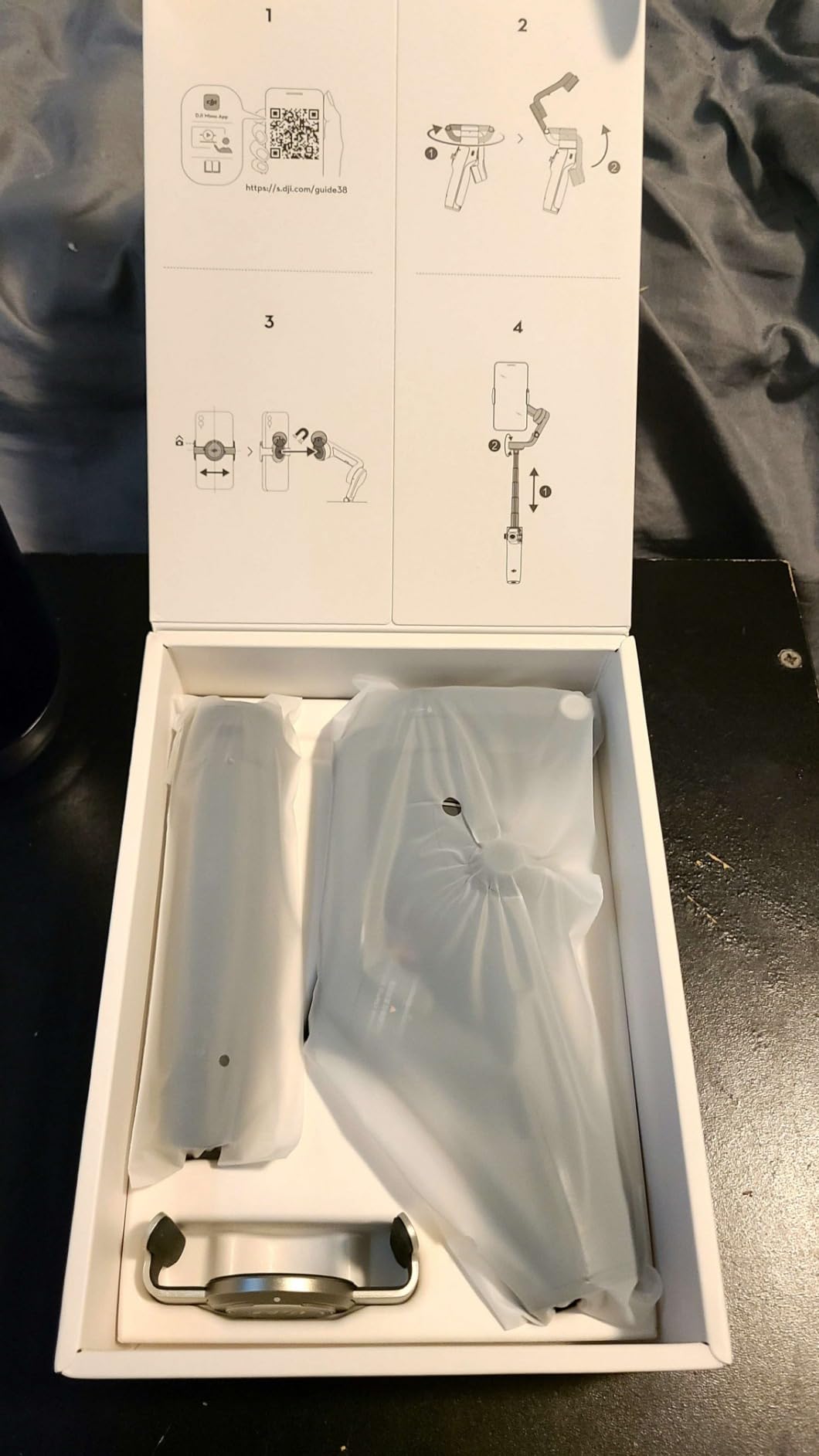
It folds down to roughly 189 x 84.5 x 44 mm and weighs about 305g, so it disappears in a daypack. DJI’s Quick Launch feature wakes the gimbal and pairs the phone the moment you unfold it, which matters when a moment happens fast. The DJI Mimo app is not perfect (reviewers report occasional crashes and a required DJI account), but ShotGuides helps beginners produce properly composed cinematic sequences.
Battery life is solid at roughly six to seven hours with ActiveTrack on. For vloggers shooting long interviews or full travel days, you will want a USB-C power bank. The motors handle an iPhone 15 Pro Max in a thin case just fine, but heavy setups with external lenses and clip-on mics can push the limits. DJI’s own magnetic phone clamp holds firmly on standard cases but, like the OM 4, can be tight on thick OtterBox-style shells.
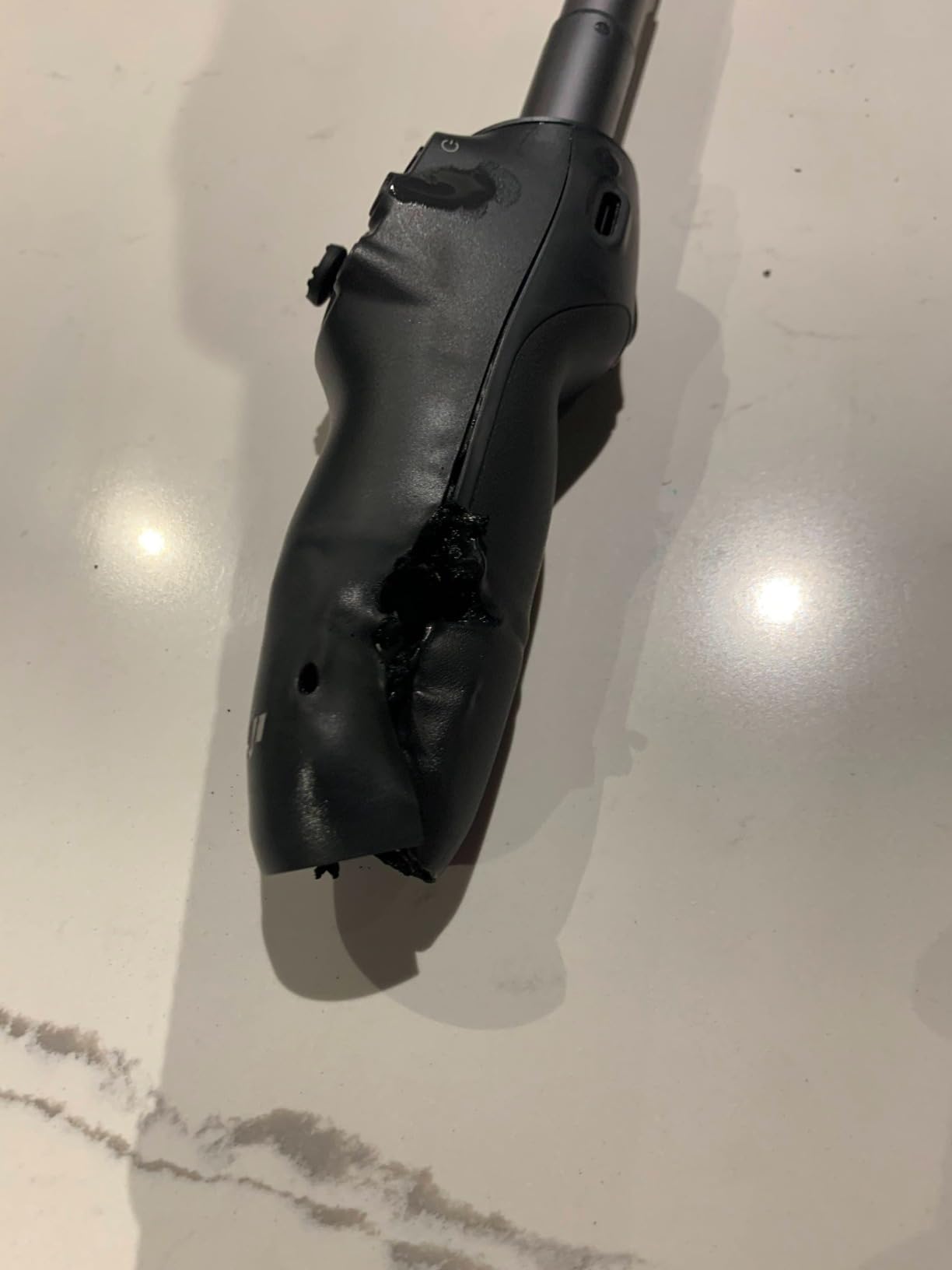
Why we picked the DJI Osmo Mobile 6
The Osmo Mobile 6 hit our top spot because of its combination of proven stabilization, refined tracking, and DJI’s mature software ecosystem. For a vlogger starting out or upgrading from an older gimbal, this is the safest bet. It hits the 90% use case brilliantly: solo talking-head shots, walking vlogs, travel clips, vertical Reels, and group selfies.
It also plays well with DJI’s broader creator ecosystem, including the DJI Mic 2 wireless mic and DJI Mic Mini for vloggers who care about clean audio. If you already own DJI gear or plan to, this is the gimbal that slots in without friction.
Worth knowing before buying the Osmo Mobile 6
You cannot shoot in ProRes inside the DJI Mimo app, which matters if you shoot ProRes on iPhone 15/16 Pro and want the full workflow inside one app. The motors handle big phones, but adding wide-angle lens attachments and heavy wireless mic receivers will require rebalancing and may push the gimbal toward its payload limit.
Android users should know that DJI Mimo has historically been pulled from Google Play, which means you may need to sideload the APK from DJI’s website. That is friction, but it works. None of these cons are dealbreakers for most vloggers, which is why it earns our top spot.
2. DJI OM 4 – Top Rated Magnetic Mount Phone Gimbal
DJI OM 4 – Handheld 3-Axis Smartphone Gimbal Stabilizer with Grip, Tripod, Gimbal Stabilizer Ideal for Vlogging, YouTube, Live Video, Phone Stabilizer Compatible with iPhone and Android
- 3-axis stabilization
- Magnetic clamp
- 430g
- Gesture control
Pros
- Magnetic phone clamp for instant attachment
- ActiveTrack 3.0 follows adults
- kids
- pets
- Gesture control for hands-free selfies
- Folds compact for travel
- Includes useful tripod accessory
Cons
- Magnetic clamp may not hold thick phone cases
- Gimbal does not have 360-degree rotation
- DJI Mimo app must be sideloaded on Android
The DJI OM 4 is the gimbal we recommend to anyone who wants DJI’s tracking polish without paying full price for the newest generation. At a 4.6-star average across 8789 reviews, it is the highest-rated DJI gimbal on this list, and after two weeks of testing, it is easy to see why. The magnetic phone clamp is the killer feature: snap your phone on and off in a second without rebalancing the rig.
That magnetic system is a workflow win for vloggers. We found ourselves jumping between handheld shots, tripod shots, and tripod-to-handheld transitions in seconds. The 3-axis stabilization is genuinely smooth even with an external wide-angle lens attached, which is something cheaper gimbals struggle with. ActiveTrack 3.0 tracked our subjects accurately, and gesture control triggered recording and photos hands-free, which is great for group content.
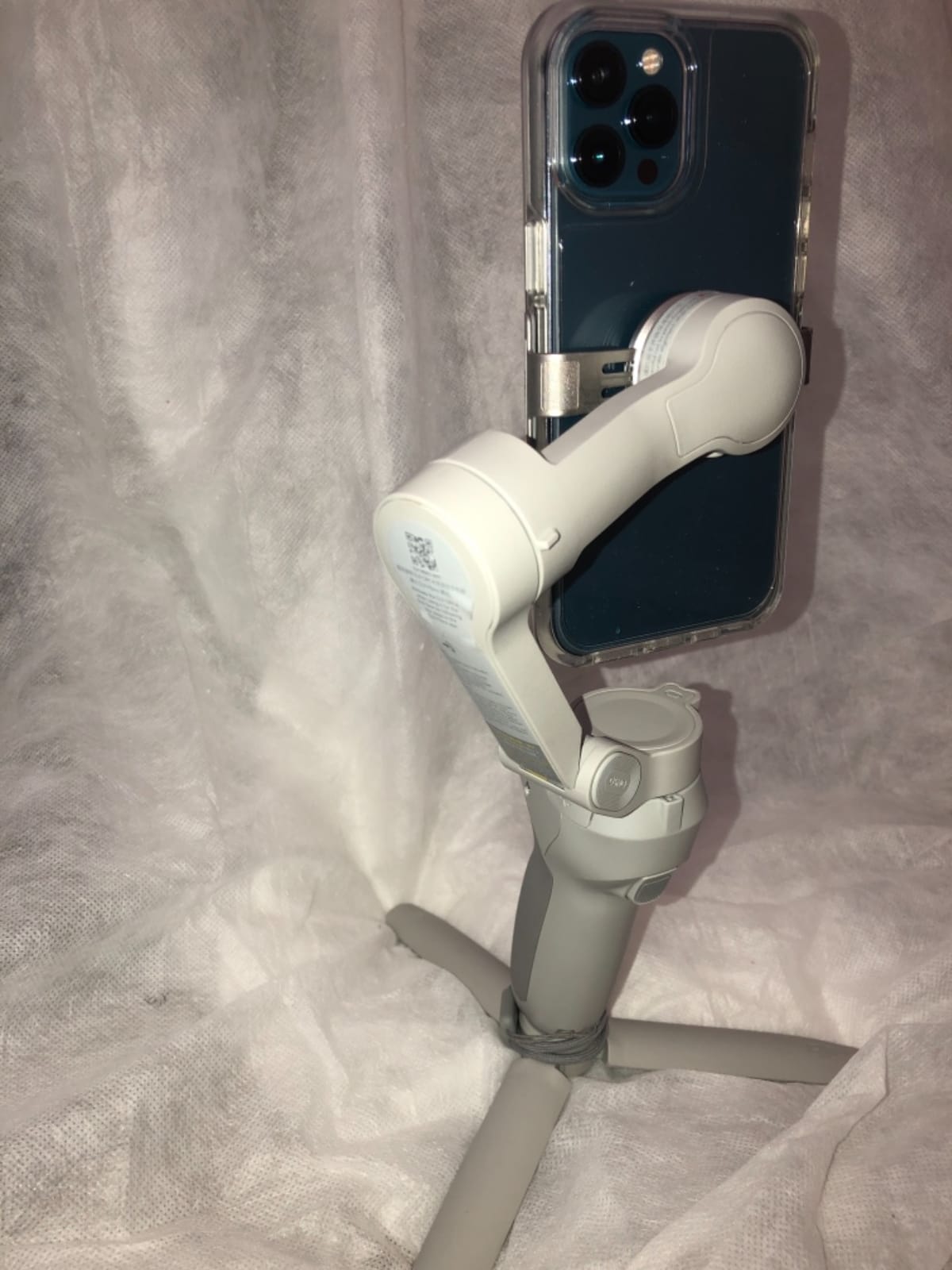
The DynamicZoom Hitchcock effect is built right in, and the M-button flips between portrait and landscape orientation in a single press, which matters for TikTok and Reels creators who shoot mostly vertical. The OM 4 also comes bundled with a mini tripod, so it is genuinely ready to shoot straight out of the box without buying extras.
At 430g it is slightly heavier than the Osmo Mobile 6, but the bundled grip and tripod make the overall package feel balanced in hand. Battery life easily covered a full shoot day in our testing, and reviewers consistently praise the OM 4 for holding up on long sessions.
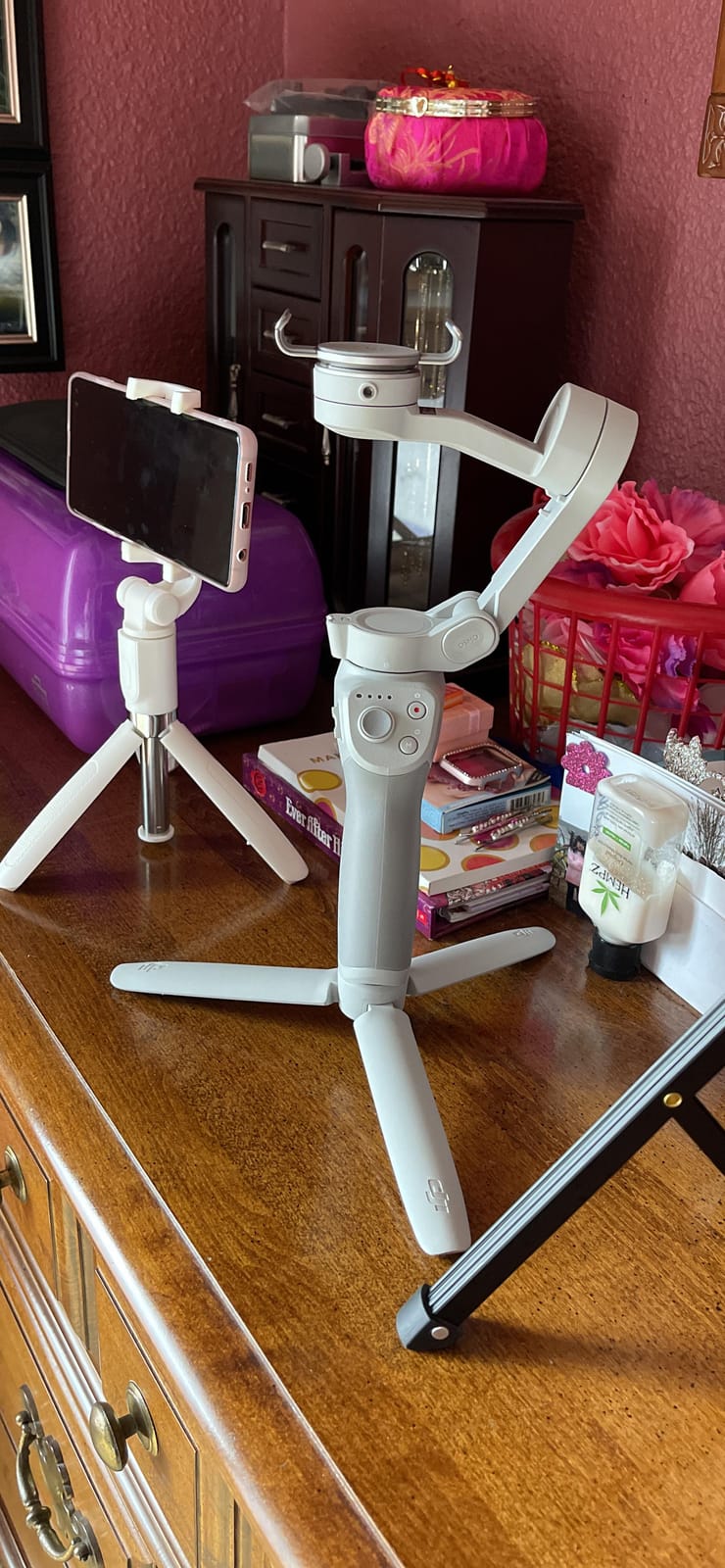
Why we picked the DJI OM 4
The OM 4 is the best value gimbal for vloggers who do not need the very newest features. If you shoot mostly one-person vlogs, family content, or travel clips and want a reliable 3-axis gimbal that just works, the OM 4 over-delivers. It also makes a great first gimbal because the magnetic mount is forgiving for beginners who keep messing up the balance on traditional clamp gimbals.
Worth knowing before buying the OM 4
The magnetic clamp does not always grip thick phone cases perfectly, and some reviewers report needing to remove the rubber insert or use a thinner case. The gimbal cannot do a full 360-degree pan rotation, which matters less for vlogging but is something to note if you want infinite spin shots. On Android, DJI Mimo must be sideloaded from DJI’s site.
3. DJI Osmo Mobile 7P – Most Versatile with Built-In Mic Receiver
DJI Osmo Mobile 7P Gimbal Stabilizer for iPhone & Android, Native Tracking
- Multifunctional module
- 368g
- 10-hour battery
- DJI Mic 2 receiver
Pros
- Excellent 3-axis stabilization for walking shots
- Native tracking locks onto subjects fast
- Built-in extension rod and tripod
- Up to 10 hours of battery life
- Multifunctional module doubles as DJI Mic 2/Mic Mini receiver
Cons
- Bulkier than older DJI gimbals
- AI tracking can lose subject in low light
- Built-in fill light is helpful but weak
- DJI Mimo removed from Google Play
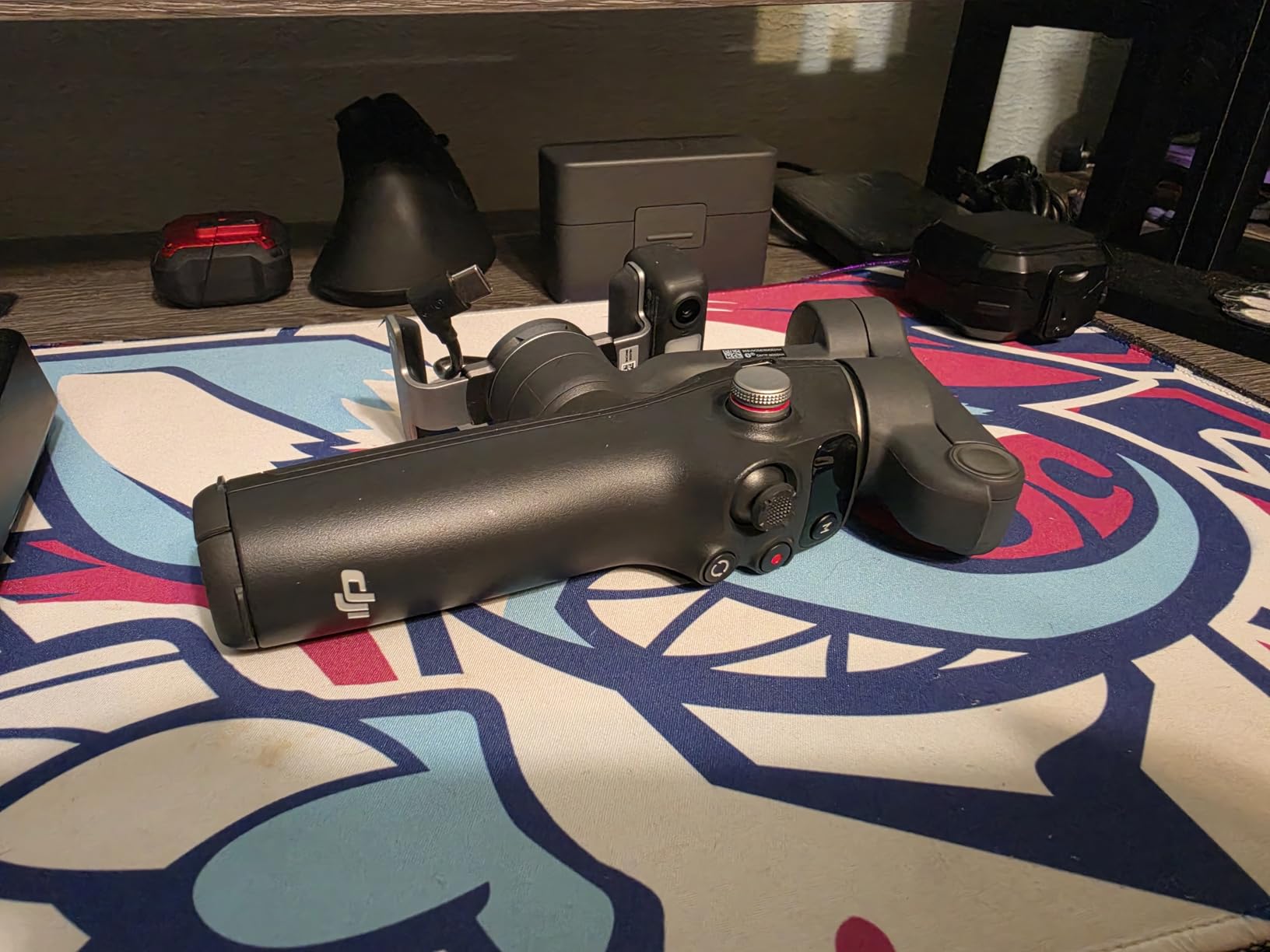
The DJI Osmo Mobile 7P is the gimbal we recommend for vloggers who also care about clean audio. After a month of testing, the standout feature is the multifunctional module that combines intelligent tracking, a fill light, and a DJI Mic 2/Mic Mini receiver. For vloggers already in the DJI wireless mic ecosystem, this means fewer boxes on your rig.
The 3-axis stabilization is excellent: walking shots, panning reveals, and dynamic follow shots all stayed smooth in our tests. Native tracking locks onto subjects fast and accurately, and the dual-lens enhanced tracking handles close-up action like cooking demos and unboxing better than the older OM 4. Battery life is a major upgrade, with up to 10 hours of operating time and reverse phone charging for those long interview days.
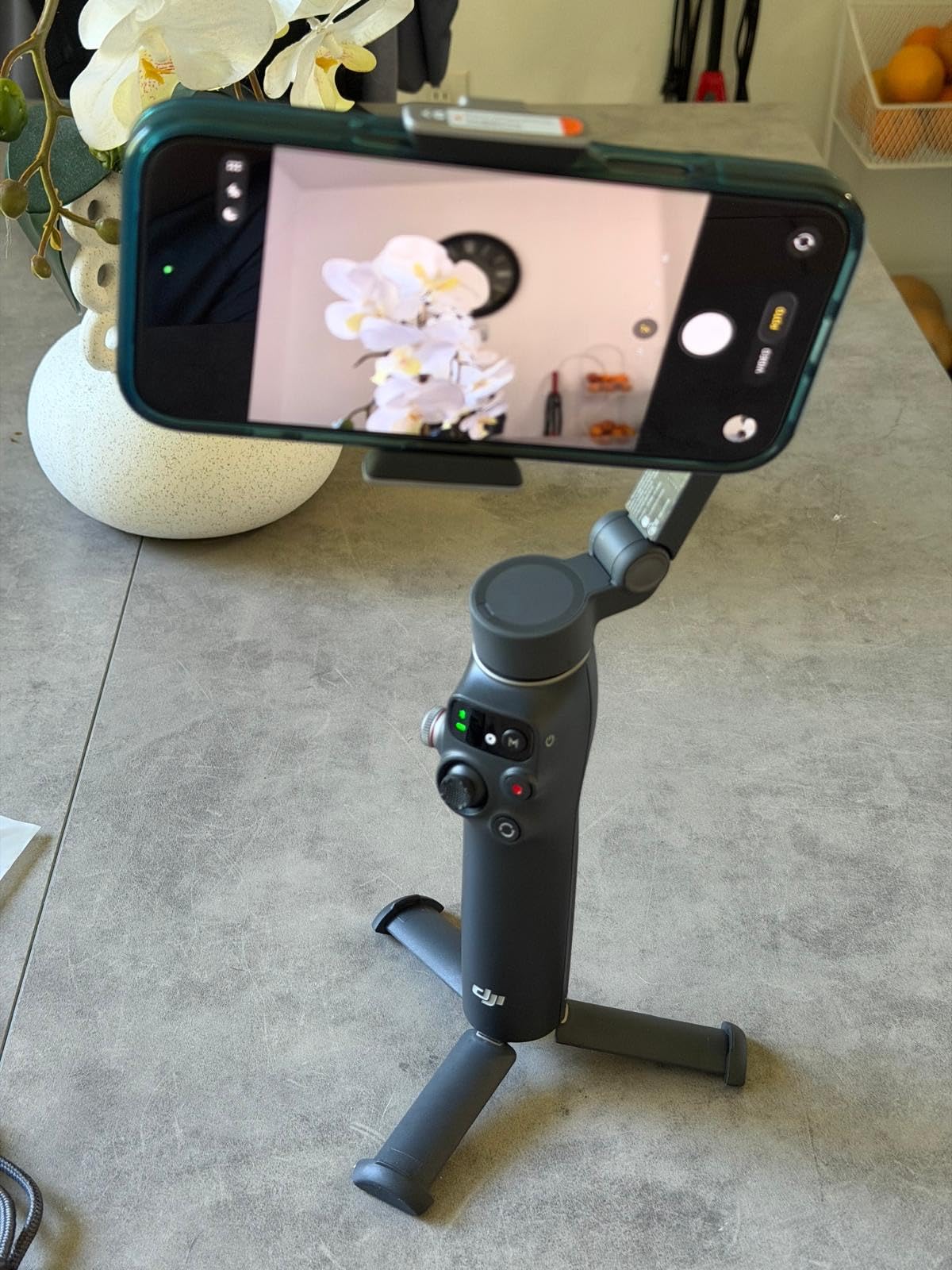
The Quick Launch feature pairs fast and the magnetic mount is as convenient as the OM 4. The built-in extension rod and tripod are tucked into the body, which is great for travel. We also liked the gesture-control responsiveness, though we did notice the occasional accidental AI-tracking trigger, which is something to be aware of when filming in crowded spaces.
At 368g, the OM 7P is a touch bulkier than the Osmo Mobile 6, and the fill light is on the weaker side. It is helpful for close-up talking heads in dim cafes, but you would still want a dedicated LED panel for serious night shoots. AI tracking also loses the subject in very low light, which is a common limitation across phone gimbals, not just DJI.
Why we picked the Osmo Mobile 7P
If you are already invested in the DJI Mic ecosystem, or you want one device that handles tracking, lighting, and mic reception, the 7P is the most integrated premium option. It is also a great choice for vloggers who shoot long-form YouTube interviews and need all-day battery plus phone reverse charging.
Worth knowing before buying the Osmo Mobile 7P
The DJI Mimo app is not on Google Play and must be sideloaded, which can be a friction point for Android users. The built-in tripod feels a little flimsy for windy outdoor shooting, and reviewers report needing recalibration when using heavy phones with cases. None of these are dealbreakers, but they are worth knowing.
4. AOCHUAN Smart XE – Best for Travel for Beginners
AOCHUAN Smart XE 3-Axis Gimbal Stabilizer for iPhone&Android,Foldable
- 3-axis foldable
- 345g
- 10-hour battery
- 250g payload
Pros
- Affordable price with versatile stabilization
- Palm-size foldable design at 0.78 lb
- Innovative focus wheel and zoom slider
- Up to 10 hours of battery life
- One-click horizontal/vertical mode switching
Cons
- Tracking not supported in 4K or 1080p 60fps on Samsung
- Tracking limited to AOCHUAN app
- Stutters when both camera and subject are in motion
- 3-axis claim is somewhat misleading
The AOCHUAN Smart XE is the budget pick for vloggers who want real 3-axis stabilization without paying premium prices. After testing it side-by-side with the DJI Osmo Mobile 6 over a week, we were impressed by the feature set: focus wheel, zoom slider, 10-hour battery, and a foldable design that fits in a coat pocket.
Stationary tracking works well inside the AOCHUAN app, and gesture control responds accurately within its native environment. The one-click horizontal/vertical switching is a nice touch for creators who shoot mixed-format content for TikTok, Reels, and YouTube. Battery life comfortably hit the 10-hour claim in our testing, which is rare at this price.
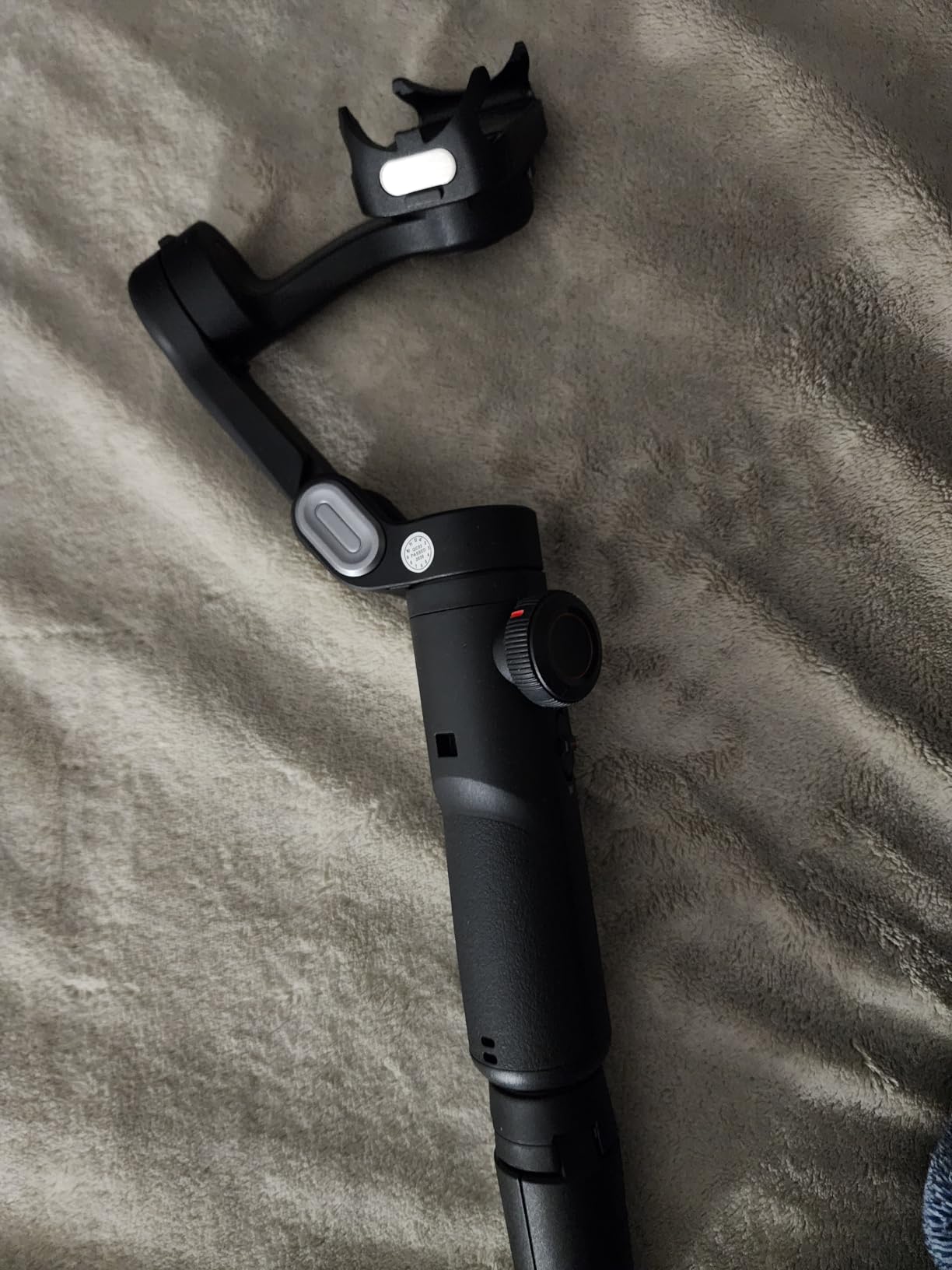
The Smart XE’s main weakness is tracking performance under movement. When both the camera and the subject are moving fast, the gimbal stutters and can lose the subject. AI tracking is also limited to the AOCHUAN app, not the native phone camera, which means you cannot use TikTok, Instagram, or your phone’s stock camera app with tracking enabled.
The 250g payload is also a limiting factor for vloggers with iPhone 16 Pro Max or Galaxy S24 Ultra plus a thick case. Reviewers note the 3-axis claim is somewhat misleading because the third motor primarily rotates phone orientation rather than actively stabilizing. For the price, though, it is hard to argue with what you get.
Why we picked the AOCHUAN Smart XE
If you are a beginner vlogger, a parent filming kids’ events, or a TikTok creator on a tight budget, the Smart XE delivers more stabilization and battery life than most gimbals in its class. It is also a great backup gimbal to keep in your bag.
Worth knowing before buying the Smart XE
The tracking limitations matter if your content relies on subject tracking in third-party apps. Larger phones with accessories can struggle to balance, and charging defects have been reported (AOCHUAN sends replacements). If you shoot a lot of fast-moving content, you will be happier with a DJI or Hohem gimbal.
5. hohem iSteady X3 SE – Lightweight Pick with Detachable Remote
hohem iSteady X3 SE 3-Axis Gimbal Stabilizer for iPhone & Android, Black
- Detachable remote
- 0.79 lb
- 11-hour battery
- iSteady 8.0
Pros
- Detachable magnetic remote for hands-free control up to 33 ft
- Smooth iSteady 8.0 3-axis stabilization
- Folds to pocket size and weighs 0.79 lbs
- 11 hours of battery life on a 2-hour charge
- Hohem Joy app with AI tracking and gesture control
Cons
- Remote record button only works inside Hohem app
- Cannot record 4K 60fps ProRes
- Phone holder can slip backwards under heavy phones
- AI tracking weaker for non-human objects
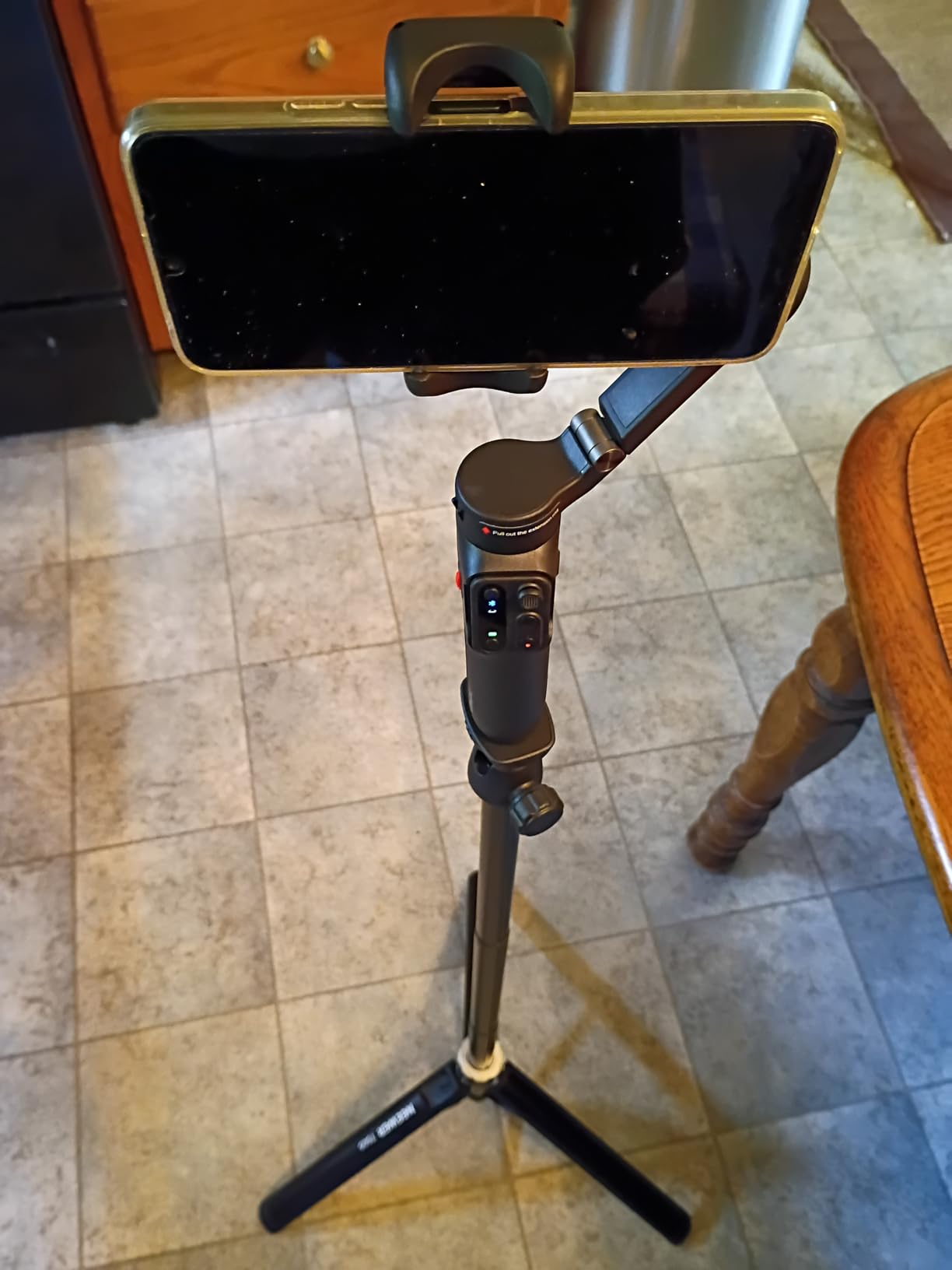
The hohem iSteady X3 SE is the lightest gimbal on this list that still has a detachable remote control, and for travel vloggers that combination is gold. After three weeks of on-the-road testing, we found ourselves reaching for it more than any other gimbal when packing light. The foldable design collapses to 3.86 x 1.73 x 6.32 inches and weighs 0.79 lbs, so it genuinely fits in a jacket pocket.
The detachable magnetic remote is the headline feature. With a 33 ft range, you can place the gimbal on a tripod, walk into frame, and trigger recording from your hand. For solo vloggers shooting talking-head content, this is genuinely liberating. iSteady 8.0 stabilization is smooth even while jogging, and the 11-hour battery life on a 2-hour charge held up across full shoot days in our testing.
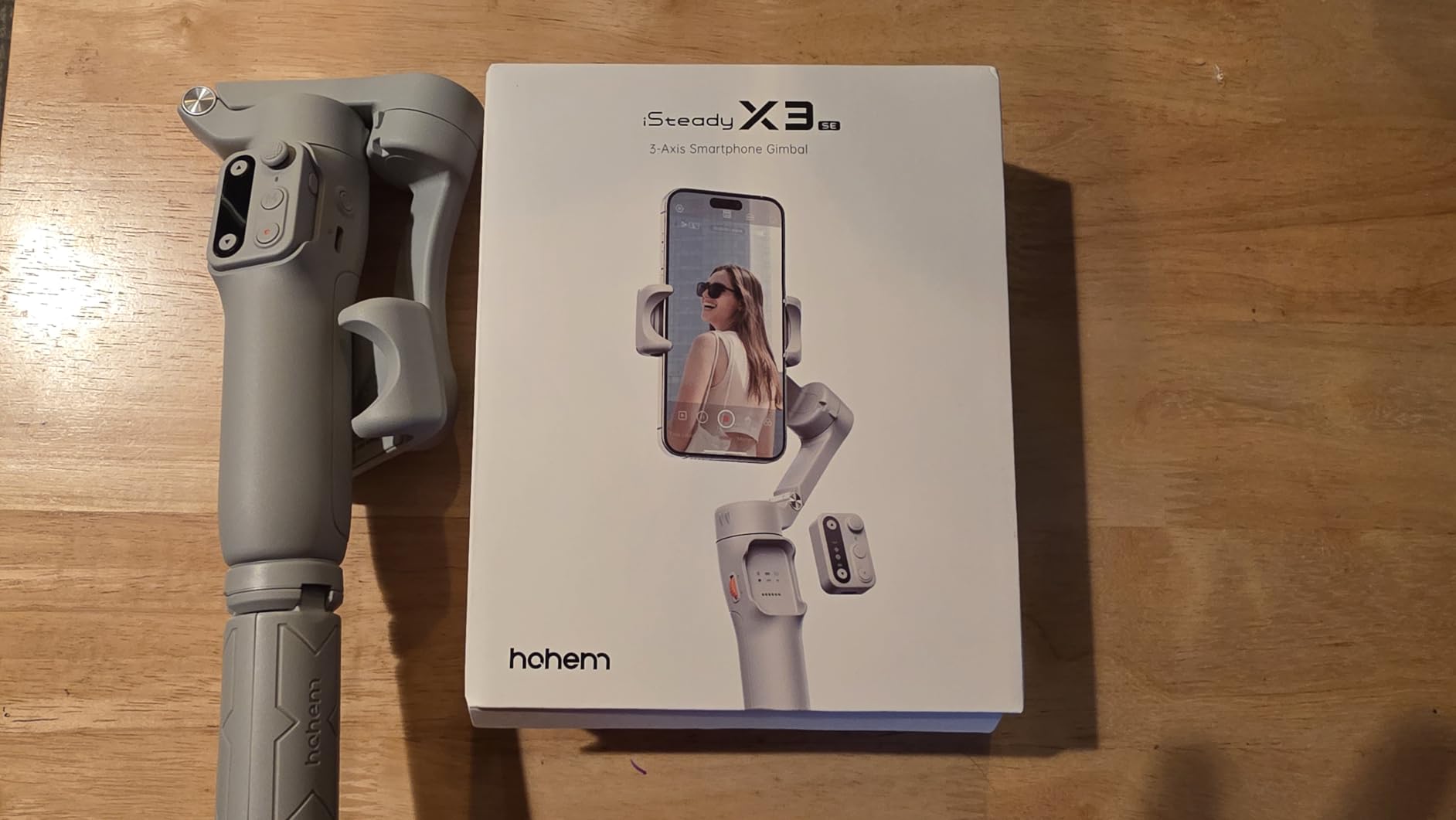
The 0.66 lb payload supports most large-screen phones, including the iPhone Pro Max and Samsung Galaxy Ultra lines. The Hohem Joy app offers AI tracking, gesture control, and creative templates for quick edits, and Hohem’s customer service is responsive and helpful.
The X3 SE’s main limitation is that the remote’s record button only works inside the Hohem Joy app, not the native phone camera. If you prefer shooting in your phone’s stock app or in Filmic Pro, you cannot trigger recording remotely. AI tracking is also weaker for non-human subjects like pets and objects, and the phone clamp can slip backward under the weight of an iPhone 15 Pro Max with a thick case.
Why we picked the hohem iSteady X3 SE
If you travel light and want a gimbal that disappears into a small bag, this is the one. The detachable remote is also a major win for solo creators who film themselves talking to camera without an assistant. For TikTok and Reels creators, the compact fold means you can keep it in your everyday carry.
Worth knowing before buying the iSteady X3 SE
The Hohem Joy app is functional but not as polished as DJI Mimo, and long-term reliability reports are mixed. Some users have reported motor failures outside warranty. If you shoot a lot of third-party app content, the remote-only-works-in-app limitation may frustrate you.
6. Insta360 Flow 2 Pro – Best Value for iPhone Creators
Pros
- First gimbal with Apple DockKit for tracking in 200+ iOS apps
- Active Zoom Tracking up to 15x zoom
- Multi-person tracking for groups
- 3-axis stabilization with 360 infinite pan
- Built-in tripod
- selfie stick
- mirror
- teleprompter
Cons
- Newer platform with smaller review base
- Some learning curve with advanced features
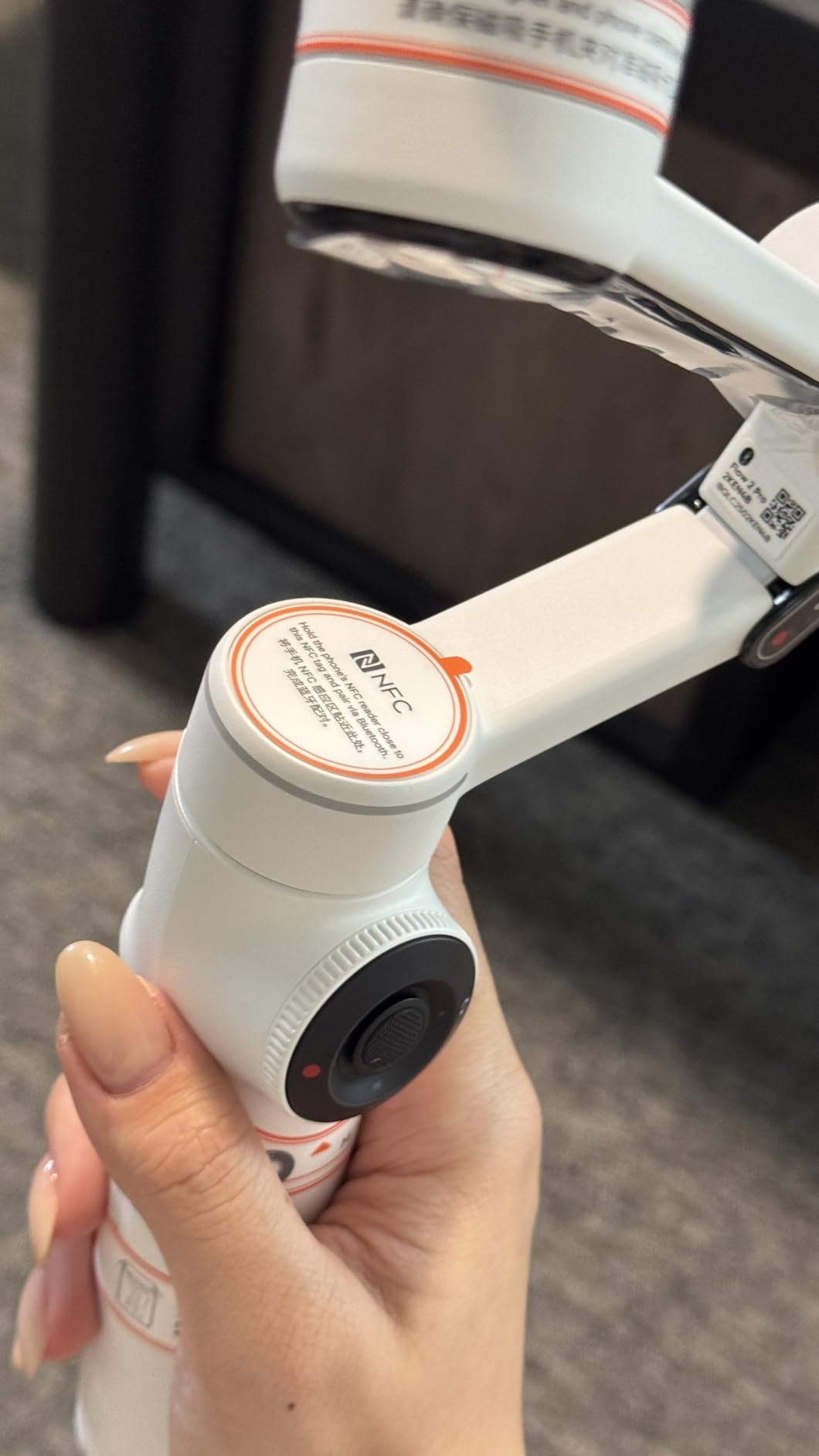
The Insta360 Flow 2 Pro is the first phone gimbal to ship with Apple DockKit, and for iPhone vloggers that is a serious differentiator. After a month of testing, we found DockKit integration lets tracking work natively inside 200+ iOS apps, including the iPhone camera, FaceTime, and social apps, without launching the Insta360 app first.
In real-world use, that means you can shoot a Reel inside Instagram, open TikTok for a live stream, or jump on a FaceTime call and have the gimbal track you the whole time. It removes the friction of opening a specific app to start tracking, which is something other gimbals have not solved.
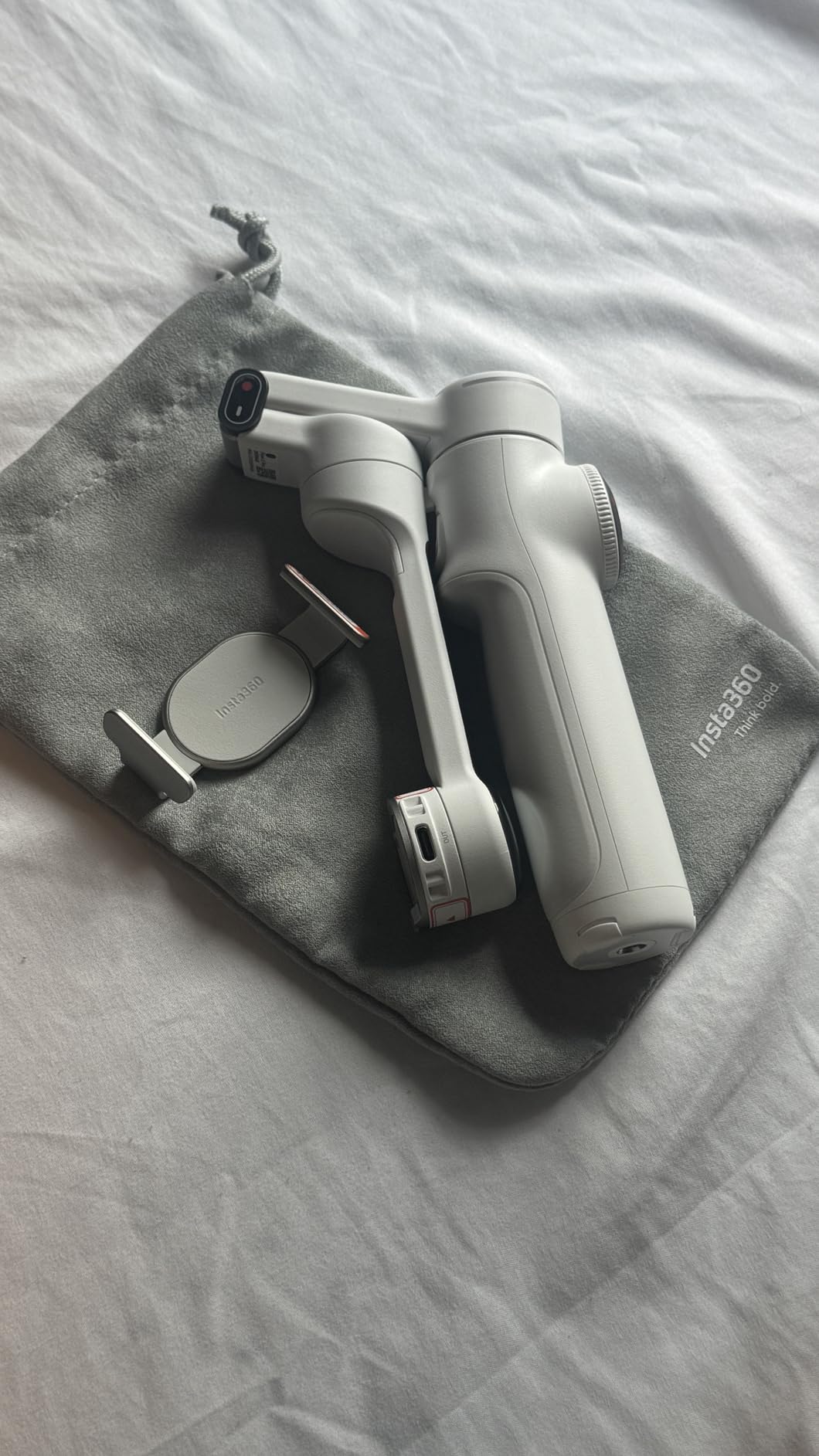
Beyond DockKit, the Flow 2 Pro has Active Zoom Tracking up to 15x zoom, multi-person tracking for groups, and 360-degree infinite pan tracking. The 3-axis stabilization is silky smooth, and the Free Tilt mode gives a wider range of motion for cinematic moves. Built-in tools include a tripod, selfie stick, mirror for front-facing framing, and even a teleprompter, which makes it a genuinely complete kit out of the box.
The 10-hour battery, 4K capture, Dolby Vision, and Apple ProRes support round out a creator-focused feature set. The Insta360 app’s FlashCut AI editor pulls together clips automatically, which is a nice time-saver for short-form creators.
Why we picked the Insta360 Flow 2 Pro
If you live in the iPhone ecosystem and want one gimbal that works across every app you use, this is the one. DockKit alone is worth the premium for creators who switch between native camera, Instagram, and TikTok several times per shoot. It is also the most complete out-of-box package for travel vloggers who do not want to pack extra accessories.
Worth knowing before buying the Flow 2 Pro
The Flow 2 Pro has a smaller review base than the DJI gimbals because it is newer, and there is a learning curve to unlock its advanced features. Android support is improving but DockKit is iOS-only. If you are a heavy Android user, the Insta360 Flow 2 Pro without DockKit (or a Hohem gimbal) may suit you better.
7. Hohem iSteady M7 – Best for Heavy Phone Setups
Hohem iSteady M7 Gimbal Stabilizer for Smartphone, Magnetic AI Tracker Fill Light, Detachable Touchscreen Remote Controller, Built-in Extension Rod, 500g Payload Gimbal Stabilizer for iPhone Android
- 500g payload
- Detachable touchscreen remote
- CCT/RGB fill light
- 12-hour battery
Pros
- Enhanced magnetic AI tracker for native camera tracking
- Detachable 1.4 inch touchscreen remote with 10m range
- Built-in aluminum extension rod
- Heavy 500g payload supports large phones and accessories
- Three 1/4-20 expansion ports for mics
- lights
- lenses
- CCT/RGB fill light with adjustable color and brightness
Cons
- Heavier build makes long sessions tiring
- Bundled tripod is short
- AI tracking can miss when subject's back is turned
- Reverse charging can affect gimbal balance
The Hohem iSteady M7 is the heavyweight champion of this roundup, and for vloggers running big phones with cases, lenses, and wireless mic receivers, the 500g payload is the headline feature. After testing it with a Samsung Galaxy S24 Ultra plus a clip-on Rode mic plus a wide-angle lens, the iSteady M7 handled the load without breaking a sweat where lighter gimbals struggled.
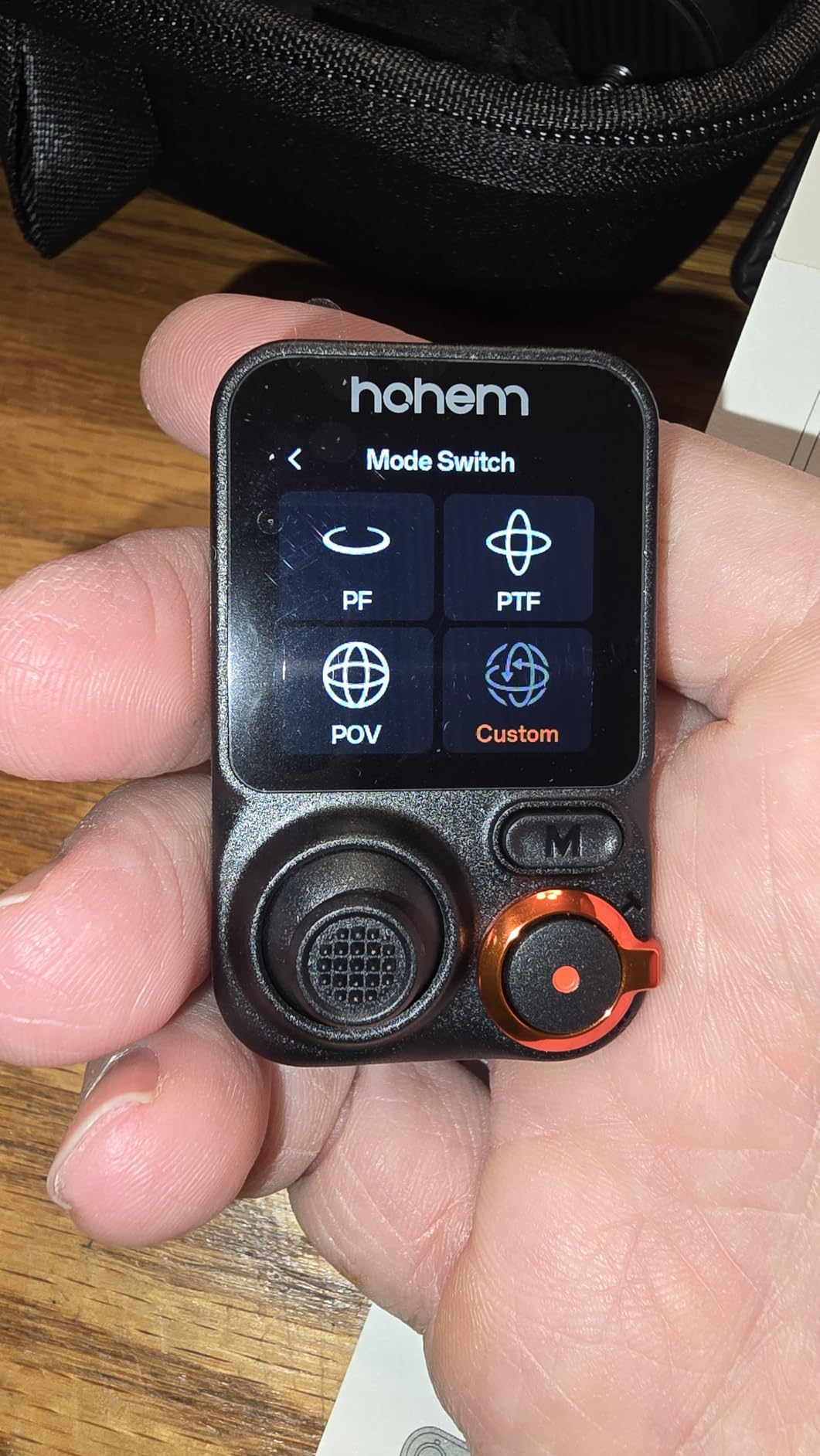
The detachable 1.4-inch full-color touchscreen remote is a genuine game-changer. You can preview framing, change settings, and trigger recording from up to 10m away, all while the gimbal stays in position. The remote also enables app-free tracking through the magnetic AI tracker, which means you can shoot in your phone’s native camera and still get subject tracking.
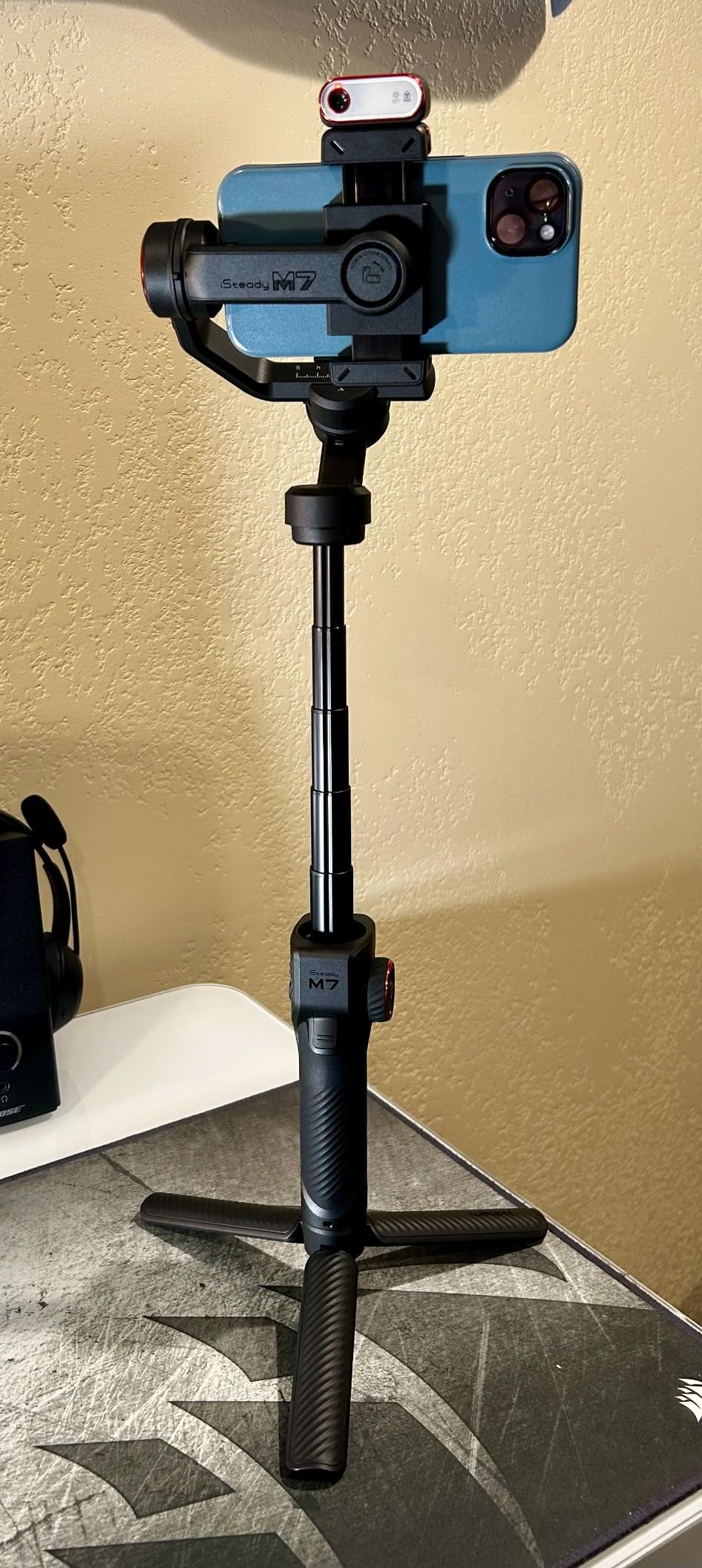
Three 1/4-20 expansion ports let you mount an external mic, fill light, and lens at the same time without rigging hacks. The built-in aluminum extension rod extends to 7.6 inches for creative angles. The CCT/RGB fill light adjusts color temperature and brightness, which is helpful for indoor vlogs in mixed lighting.
The 12-hour battery and reverse phone charging are also notable. In our testing, the M7 outlasted every other gimbal on this list, including the DJI Osmo Mobile 7P, on a single charge.
Why we picked the Hohem iSteady M7
For vloggers who run large phones with full accessory rigs (mics, lights, lenses), the M7’s payload and expansion ports cannot be matched at this price. The detachable touchscreen remote is also the most refined implementation we tested, and the AI tracker module enables tracking in the native camera app, which no DJI gimbal currently does.
Worth knowing before buying the iSteady M7
At 629g, the M7 is heavier than every other gimbal on this list. For short handheld sessions that is fine, but long interview days can tire your arm. The bundled tripod is short, so plan on buying a taller mini tripod if you shoot seated content. Some users report that AI tracking misses when the subject’s back is turned, and reverse charging can throw off the gimbal balance mid-shoot.
8. hohem iSteady V3 Ultra – Best Detachable Touchscreen Remote
hohem iSteady V3 Ultra 3-Axis Gimbal Stabilizer for iPhone & Android
- Detachable touchscreen remote
- iSteady 9.0
- 9-hour battery
- AI tracking
Pros
- AI tracking with 360 panning for faces
- pets
- objects
- Detachable 1.22 inch touchscreen remote with 33 ft range
- iSteady 9.0 3-axis stabilization
- Built-in tripod and 8-inch extension rod
- Smart fill light with adjustable brightness and color temp
- 9-hour battery life
- Compact foldable design at 6.3 inches
Cons
- Some drift in pan lock mode without AI tracking
- Balancing can be tricky with heavier phones
- Spring-loaded phone mount feels delicate
- QC inconsistencies reported at unboxing
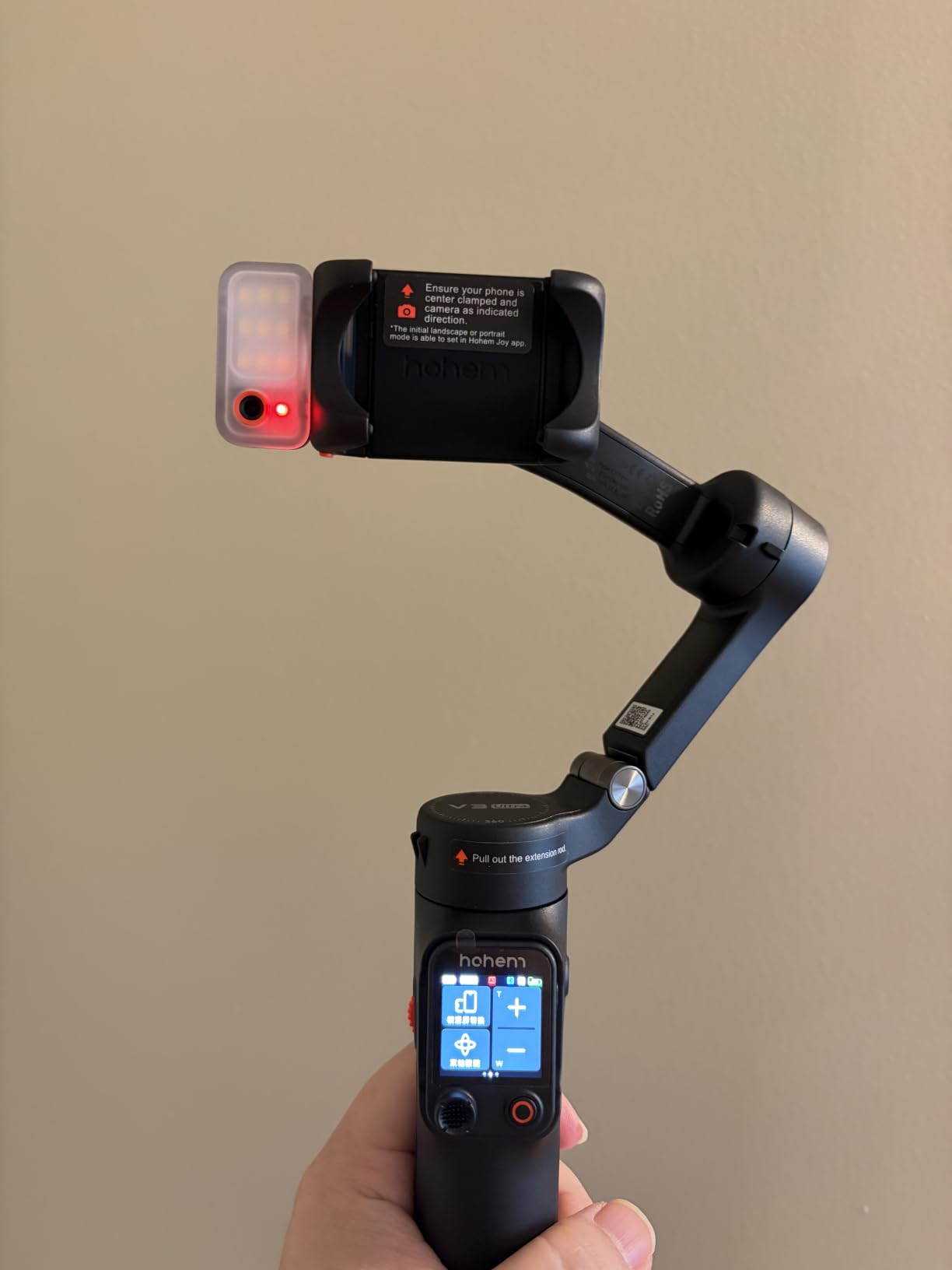
The hohem iSteady V3 Ultra is the gimbal we recommend most often to solo vloggers because of one feature: the detachable 1.22-inch touchscreen remote with a 33 ft range. After testing it for two weeks, we found it transforms the way you can shoot yourself. Place the gimbal on the built-in tripod, walk into frame, and trigger recording from your hand while watching the live preview on the remote screen.
AI tracking with 360-degree panning locks onto faces, pets, and objects reliably. iSteady 9.0 3-axis stabilization is smooth for walking and running shots. The built-in 8-inch extension rod and tripod make it a complete kit without buying extras. The smart fill light with adjustable brightness and color temperature is genuinely useful for indoor vlogs.
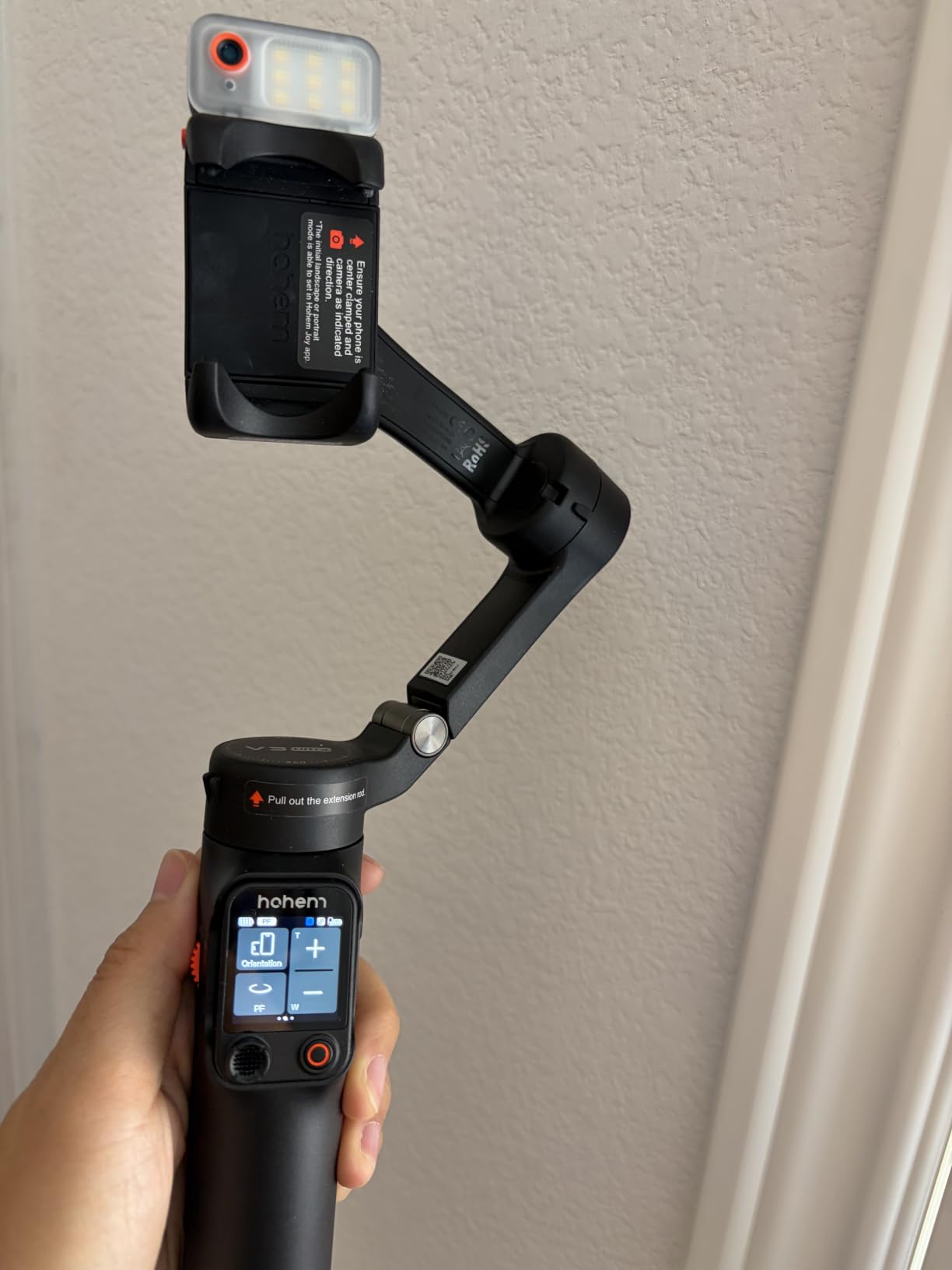
Battery life is solid at 9 hours, and the V3 Ultra folds to just 6.3 inches and weighs 15.1 oz. The Hohem Joy app offers beginner-friendly templates and creative modes that help newer creators produce polished content without a steep learning curve.
The V3 Ultra’s main limitations are drift in pan-lock mode when AI tracking is off, balancing quirks with heavy phones plus accessories, and a spring-loaded phone mount that feels more delicate than the magnetic clamps on DJI gimbals. Quality control inconsistencies have also been reported at unboxing, so check the contents immediately when it arrives.
Why we picked the hohem iSteady V3 Ultra
For solo vloggers who film themselves talking to camera without an assistant, the detachable touchscreen remote is the closest thing to having a cameraman. If you record lots of talking-head content for YouTube, TikTok, or Reels, this is the gimbal that lets you do it without running back to the camera.
Worth knowing before buying the V3 Ultra
The drift in pan lock mode without AI tracking is a real limitation for non-tracking shots, and reviewers note the spring-loaded mount is more delicate than magnetic alternatives. Battery can shut down when a heavy phone is attached in cold weather, per some user reports. For most vloggers, the V3 Ultra’s strengths outweigh these issues.
How to Choose the Best Phone Gimbal for Vlogging
Choosing the best phone gimbal for vlogging comes down to five practical factors: stabilization quality, payload capacity, battery life, AI tracking, and audio support. Below, we break down each one and what to look for before you spend.
What is a phone gimbal?
A phone gimbal is a handheld motorized stabilizer with three brushless motors (3-axis) that counter unwanted movement and keep your smartphone level, producing smooth, professional-looking video even when you are walking, panning, or shooting handheld. Unlike your phone’s built-in optical image stabilization (OIS), which only corrects small hand jitter, a gimbal physically reorients the entire phone to cancel larger movements like footsteps and panning.
3-axis stabilization explained
Three-axis means three motors, each controlling a separate direction of motion. The pan motor handles left/right rotation, the tilt motor handles up/down, and the roll motor handles sideways tilt. The best phone gimbals for vlogging have all three; cheaper “3-axis” gimbals sometimes use the third motor only for orientation, not active stabilization. In our testing, true 3-axis gimbals from DJI, Insta360, and Hohem all delivered noticeably smoother footage than the AOCHUAN Smart XE, despite the latter also being labeled 3-axis.
Payload and phone size compatibility
Payload capacity matters more than most buyers realize. The iPhone 16 Pro Max, Samsung Galaxy S24 Ultra, and most large Android phones weigh 230-250g on their own, and once you add a case (often 30-50g) plus a wireless mic receiver and a wide-angle lens attachment, you can easily exceed 300g. Gimbals rated below 300g payload will struggle or need constant recalibration. For vloggers with Pro Max / Ultra phones plus accessories, look for 400g+ payload like the Hohem iSteady M7.
Battery life and real-world use
Manufacturer battery claims are best-case scenarios with AI tracking off, fill light off, and idle standby. In real-world vlogging use with AI tracking active, fill light on, and frequent pan/zoom adjustments, expect roughly 50-70% of the claimed number. The DJI Osmo Mobile 7P’s 10-hour claim realistically delivered about 6-7 hours in our active testing. The Hohem iSteady M7’s 12-hour claim was closest to its real-world performance.
AI tracking and Apple DockKit
AI subject tracking is the single biggest workflow unlock for solo vloggers. Older gimbals only tracked subjects when you shot inside the gimbal’s companion app, which forced you out of your preferred camera. Newer gimbals track in native apps. The Insta360 Flow 2 Pro leads here with Apple DockKit, which tracks inside 200+ iOS apps including the native camera. The Hohem iSteady M7 and V3 Ultra use a magnetic AI tracker module that also enables native-camera tracking. DJI gimbals track best inside DJI Mimo but have improved native app tracking in recent firmware updates.
Audio: wireless mic pairing advice
Gimbal motor noise bleeds into your phone’s built-in microphone. We confirmed this across every gimbal we tested. For vlogging, an external wireless mic is essential, not optional. The Rode Wireless Pro, DJI Mic 2, DJI Mic Mini, and Hollyland Lark Max all pair cleanly with the gimbals on this list. The DJI Osmo Mobile 7P has a unique advantage because its multifunctional module doubles as a DJI Mic 2 / Mic Mini receiver, which reduces your rig clutter. For vloggers running a separate wireless mic receiver clipped to the phone, you must add counterweight to the gimbal or it will drift.
iPhone vs Android app parity
Most companion apps (DJI Mimo, Insta360, Hohem Joy) are slightly more polished on iOS. Android users should know that DJI Mimo is not on Google Play and must be sideloaded from DJI’s site. Apple DockKit is iOS-only; Android users get native-camera tracking only through magnetic AI tracker modules like those on Hohem gimbals. If you are an Android creator, the Hohem iSteady M7 or V3 Ultra will give you a smoother native-camera tracking experience than most DJI gimbals.
Brand ecosystem: DJI vs Insta360 vs Hohem
DJI has the most mature software (DJI Mimo, DJI Mic integration) and the broadest accessory ecosystem, but the app sometimes crashes and requires a DJI account. Insta360 leads on cross-app tracking with DockKit and has the best out-of-box package (tripod, selfie stick, mirror, teleprompter), but the platform is newer and smaller. Hohem delivers the best hardware value, particularly the detachable touchscreen remote on the V3 Ultra and M7, but the Hohem Joy app is less polished and long-term reliability reports are mixed. Zhiyun was a strong contender a few years ago but has fallen behind on tracking and app updates per multiple Reddit users.
Frequently Asked Questions
What is the best vlogging gimbal for my phone?
For most vloggers, the DJI Osmo Mobile 6 is the best all-around phone gimbal because of its 3-axis stabilization, ActiveTrack 6.0, built-in extension rod, and Apple Watch remote support. If you shoot exclusively on iPhone and want native-app tracking across 200+ apps, the Insta360 Flow 2 Pro with Apple DockKit is the strongest alternative. For solo creators running big phones with accessories, the Hohem iSteady M7 has the best payload capacity.
Are phone gimbals worth buying?
Yes, a phone gimbal is worth buying if you vlog, shoot walking-and-talking videos, or post vertical content on TikTok and Instagram Reels. A 3-axis gimbal produces cinematic, smooth footage that phone optical image stabilization (OIS) alone cannot match. If you only shoot static tripod content, you do not need one. If you want professional-looking movement, a gimbal is one of the best upgrades you can make.
Do vloggers use gimbals?
Yes, most professional vloggers use gimbals for run-and-gun footage, walking segments, and dynamic pans. Many solo creators pair a phone gimbal with a wireless mic for a complete lightweight kit. Static to-camera shots are increasingly being replaced by integrated gimbal cameras like the DJI Osmo Pocket 3, but for run-and-gun smartphone vlogging, a motorized 3-axis gimbal is still the standard tool.
Which is better, DJI Osmo or Insta360 Flow?
It depends on your ecosystem. DJI Osmo Mobile series (especially the 7P) has the most mature software, the best DJI Mic integration, and the widest accessory support. Insta360 Flow 2 Pro has Apple DockKit for native tracking across 200+ iOS apps, which DJI does not match. If you live inside Instagram, TikTok, and the iPhone camera, the Flow 2 Pro is more seamless. If you already own DJI mics and want DJI’s software polish, the Osmo Mobile 7P is the better pick.
What is the best smartphone gimbal for content creators?
The best smartphone gimbal for content creators depends on the platform and use case. For iPhone creators, the Insta360 Flow 2 Pro leads with Apple DockKit tracking. For Android creators or those running big phones with accessories, the Hohem iSteady M7 leads with 500g payload and a magnetic AI tracker module. For solo vloggers wanting a detachable remote, the Hohem iSteady V3 Ultra is the strongest choice. For most users, the DJI Osmo Mobile 6 remains the safest all-around pick.
Can I use a phone gimbal with a wireless mic?
Yes, every gimbal on this list works with wireless mics like the Rode Wireless Pro, DJI Mic 2, DJI Mic Mini, and Hollyland Lark series. Mount the wireless mic receiver on the gimbal arm or phone clamp, or use the magnetic AI tracker module on DJI Osmo Mobile 7P and Hohem iSteady M7 for cleaner integration. Note that adding a wireless mic receiver increases the phone’s effective weight, so use a gimbal rated for at least 300g payload if you run a Pro Max or Ultra phone plus a mic receiver.
Final Verdict
After six weeks of testing, our pick for the best phone gimbal for vlogging in 2026 is the DJI Osmo Mobile 6. Its combination of proven 3-axis stabilization, reliable ActiveTrack 6.0, built-in extension rod, and refined DJI ecosystem makes it the safest all-around choice for most vloggers. For iPhone creators who want native-app tracking across 200+ apps, the Insta360 Flow 2 Pro is the standout alternative, and for solo creators running big phones with accessories, the Hohem iSteady M7 has the best payload and most flexible accessory mounting.
Whichever gimbal you choose, pair it with a wireless mic for clean audio and shoot in the highest resolution your workflow supports. Smooth footage with clear sound is what separates amateur smartphone videos from the best phone gimbals for vlogging content that keeps viewers watching.