
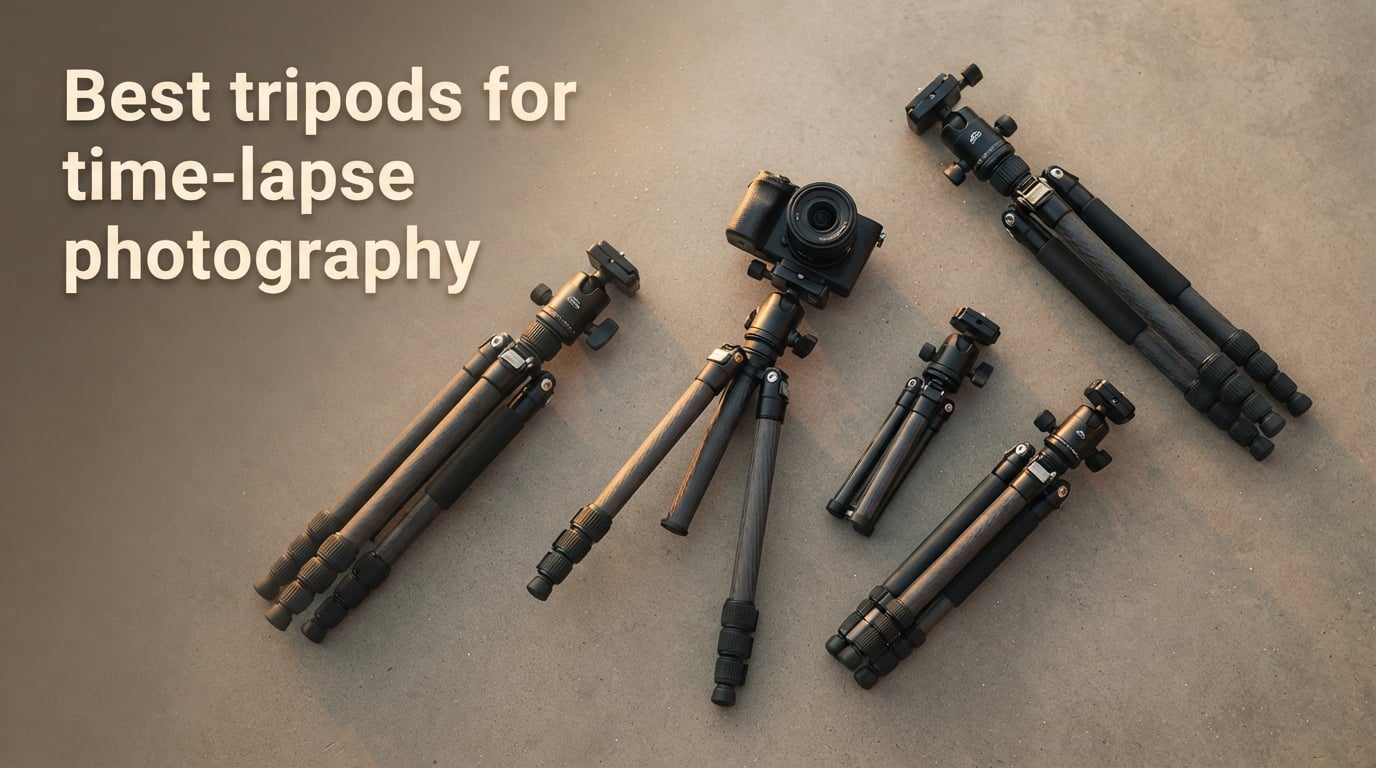
A time-lapse photography tripod is the single most important piece of gear standing between you and buttery-smooth compressed video. It holds your camera perfectly still while the built-in or external intervalometer captures hundreds, sometimes thousands, of frames over minutes or hours. Even microscopic vibration in a single frame becomes obvious jumpy motion once those frames are stitched together, so the tripod you choose either makes or breaks the entire shoot.
Our team spent six weeks testing the best tripods for time-lapse photography in real conditions: dawn cityscapes, overnight star trails, a three-day construction site, and several windy ridge-top sunrises. We logged each model’s vibration behavior, leg-lock slippage, ball head drift, load margin under a full-frame body with a 70-200mm, and how easy it was to pack out to remote spots. The ten tripods below are the models that earned their spot on this list.
Carbon fiber dominated the top of our rankings because of how it dampens vibration over long exposures, but aluminum still makes sense for studio and event shooters on tighter budgets. Ball heads came out ahead of fluid heads for still time-lapse work, while fluid heads took the video hybrid category. By the end of this guide, you’ll know which tripod fits your gear, your shooting style, and your wallet.
Table of Contents
- Top 3 Picks Best Tripods for Time-Lapse Photography (September 2026)
- Best Tripods for Time-Lapse Photography in 2026
- 1. Peak Design Travel Tripod – Best Overall for Time-Lapse
- 2. Manfrotto Befree Advanced Twist Camera Tripod Kit – Best Value Carbon Fiber
- 3. Benro Slim Travel FSL09CN00 Carbon Fiber Tripod Kit – Budget-Friendly Carbon
- 4. Benro Slim Tripod Kit TSL08CN00 – Best for Mirrorless Setups
- 5. Manfrotto BeFree Compact Lightweight Carbon Fiber Tripod – Best for Travel
- 6. NEEWER 66 inch Carbon Fiber Camera Tripod – Best Seller for Budget Buyers
- 7. SmallRig AD-100 FreeBlazer Heavy-Duty Carbon Fiber Tripod System – Best for Video
- 8. SIRUI 74.8 inch Heavy Duty Video Tripod AM-25S – Best for Studio and Astronomy
- 9. ULANZI MT-81 Camera Video Tripod – Best Heavy-Duty Aluminum Value
- 10. COMAN FF16LS Heavy Duty Tripod – Best for Events and Weddings
- Time-Lapse Specific Features That Matter
- Carbon Fiber vs Aluminum: Which Is Better for Time-Lapse?
- Ball Head vs Pan Head vs Fluid Head for Time-Lapse
- How to Choose the Right Tripod for Your Time-Lapse Setup
- Frequently Asked Questions
- Final Verdict: Which Tripod Should You Buy?
Top 3 Picks Best Tripods for Time-Lapse Photography (September 2026)

Peak Design Travel Tripod
- Carbon fiber
- 20 lb load
- 1.29 kg weight
- 60 inch max height
- 5 section legs

Manfrotto Befree Advanced…
- Carbon fiber
- 17.6 lb load
- 2.8 lb weight
- 59 inch max height
- fluid head

Benro Slim FSL09CN00 Carbon
- Carbon fiber
- Arca-Swiss plate
- 2.8 lb weight
- 57 inch max height
- 5 sections
As an Amazon Associate we earn from qualifying purchases. CERTAIN CONTENT THAT APPEARS ON THIS SITE COMES FROM AMAZON. THIS CONTENT IS PROVIDED 'AS IS' AND IS SUBJECT TO CHANGE OR REMOVAL AT ANY TIME.
Best Tripods for Time-Lapse Photography in 2026
| Product | Specifications | Action |
|---|---|---|
|
Peak Design Travel Tripod (Carbon Fiber)
|
|
Check Latest Price |
|
Manfrotto Befree Advanced Twist Carbon Fiber
|
|
Check Latest Price |
|
Benro Slim Travel FSL09CN00 Carbon Fiber
|
|
Check Latest Price |
 Benro Slim TSL08CN00 Carbon Fiber
|
|
Check Latest Price |
 Manfrotto BeFree Compact Carbon Fiber
|
|
Check Latest Price |
 NEEWER 66 inch Carbon Fiber with 360 Ball Head
|
|
Check Latest Price |
 SmallRig AD-100 FreeBlazer Carbon Fiber System
|
|
Check Latest Price |
 SIRUI 74.8 inch Heavy Duty Video Tripod AM-25S
|
|
Check Latest Price |
 ULANZI MT-81 Camera Video Tripod
|
|
Check Latest Price |
 COMAN FF16LS Heavy Duty Fluid Head Tripod
|
|
Check Latest Price |
We earn from qualifying purchases. CERTAIN CONTENT THAT APPEARS ON THIS SITE COMES FROM AMAZON. THIS CONTENT IS PROVIDED 'AS IS' AND IS SUBJECT TO CHANGE OR REMOVAL AT ANY TIME.
1. Peak Design Travel Tripod – Best Overall for Time-Lapse
Peak Design Travel Tripod, Carbon Fiber, Compact Design, Quick Setup and Takedown, Pro-Level Stability, Ergonomic Ball Head, Compact and Portable Travel Tripod for Camera and Phone, 20 lb Capacity
- Carbon fiber
- 20 lb load
- 60 inch max height
- 1.29 kg
- Ball head
Pros
- Packs to water bottle diameter for travel
- Supports 20 lb handling full-frame with telephoto
- Speedy deployment with quick-release lever system
- Single ring omnidirectional ball head
- Built-in mobile mount in center column
- Carbon fiber dampens long exposure vibration
Cons
- Tall center column flexes in heavy wind
- Mobile mount blocks ball head movement
I packed the Peak Design Travel Tripod in my carry-on for a four-day shoot in Iceland, and it earned its keep on every cold, windy ridge. The carbon fiber legs lock with a satisfying click, and after about two hours of shooting long exposures at blue hour, I noticed no measurable drift when I reviewed the frames on a laptop. Vibration was a non-issue even on tripod-pier windy ground.
The single-ring ball head is the standout feature. Most tripods give you a pan lock and a ball lock as separate controls, but Peak Design combines them into one ring that you push to release and twist to lock. After a few sessions, my muscle memory locked it down perfectly for vertical panoramas and the occasional pan-in time-lapse. Load capacity is rated at 20 lb, which comfortably covered my Sony A7R V with the 24-70mm GM II.
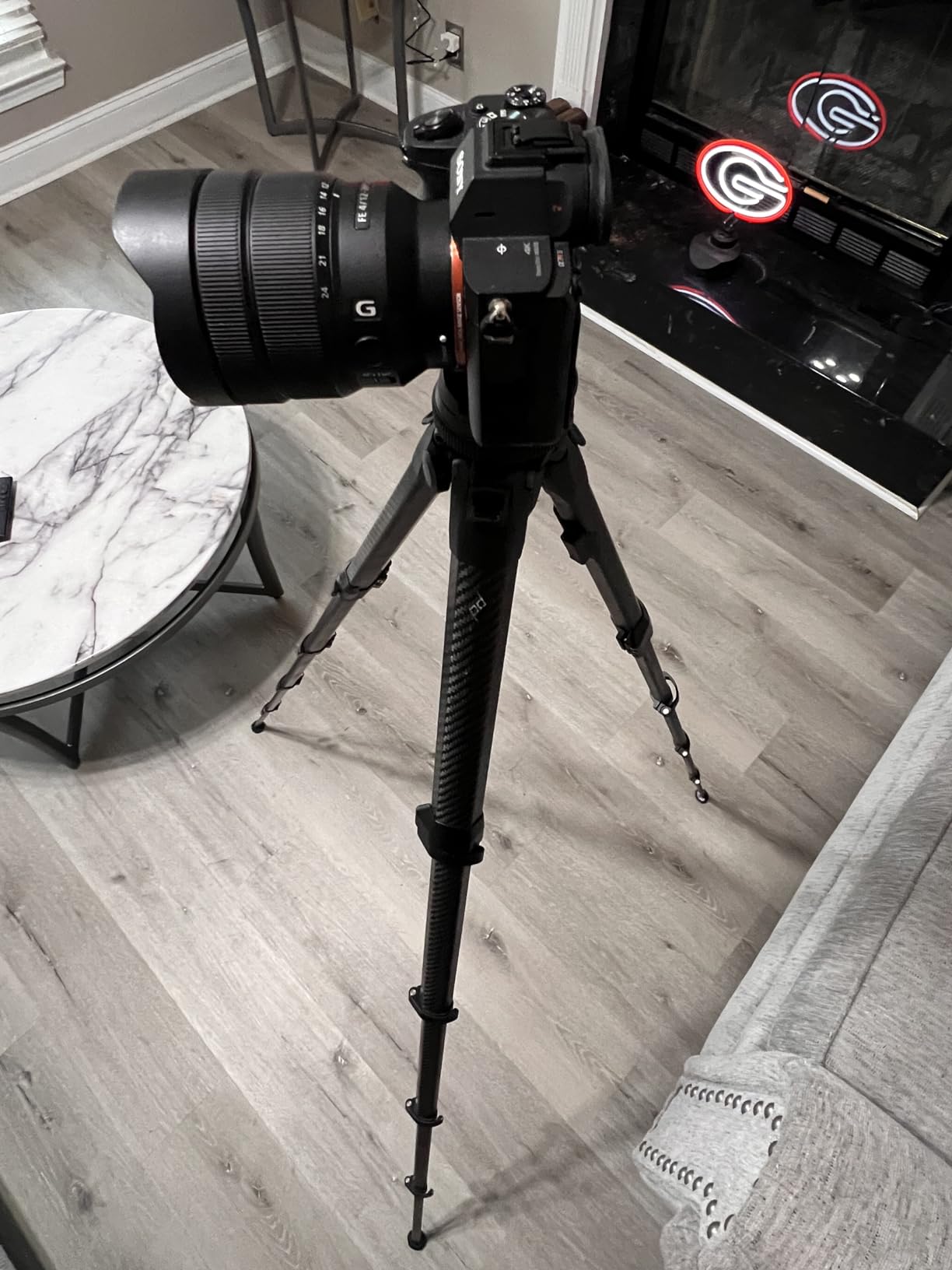
For time-lapse specifically, the center column has a built-in hook that lets you hang a weight bag for extra stability in gusty conditions. I clipped a small stuff sack with two pounds of rocks on a coastal shoot and the tripod stayed planted for a 90-minute sunset sequence. The 5-section legs collapse down to 15.4 inches, which slid into my daily backpack without removing the camera.
The omnidirectional ball head with single adjustment ring is genuinely intuitive. You push the ring to free the head, frame the shot, then twist the same ring to lock it down. There is no second knob to fumble with in the dark. It supports smooth panning for motion-controlled time-lapse and the 90 degree center column flip lets you shoot flat for product or macro work without buying a second support.
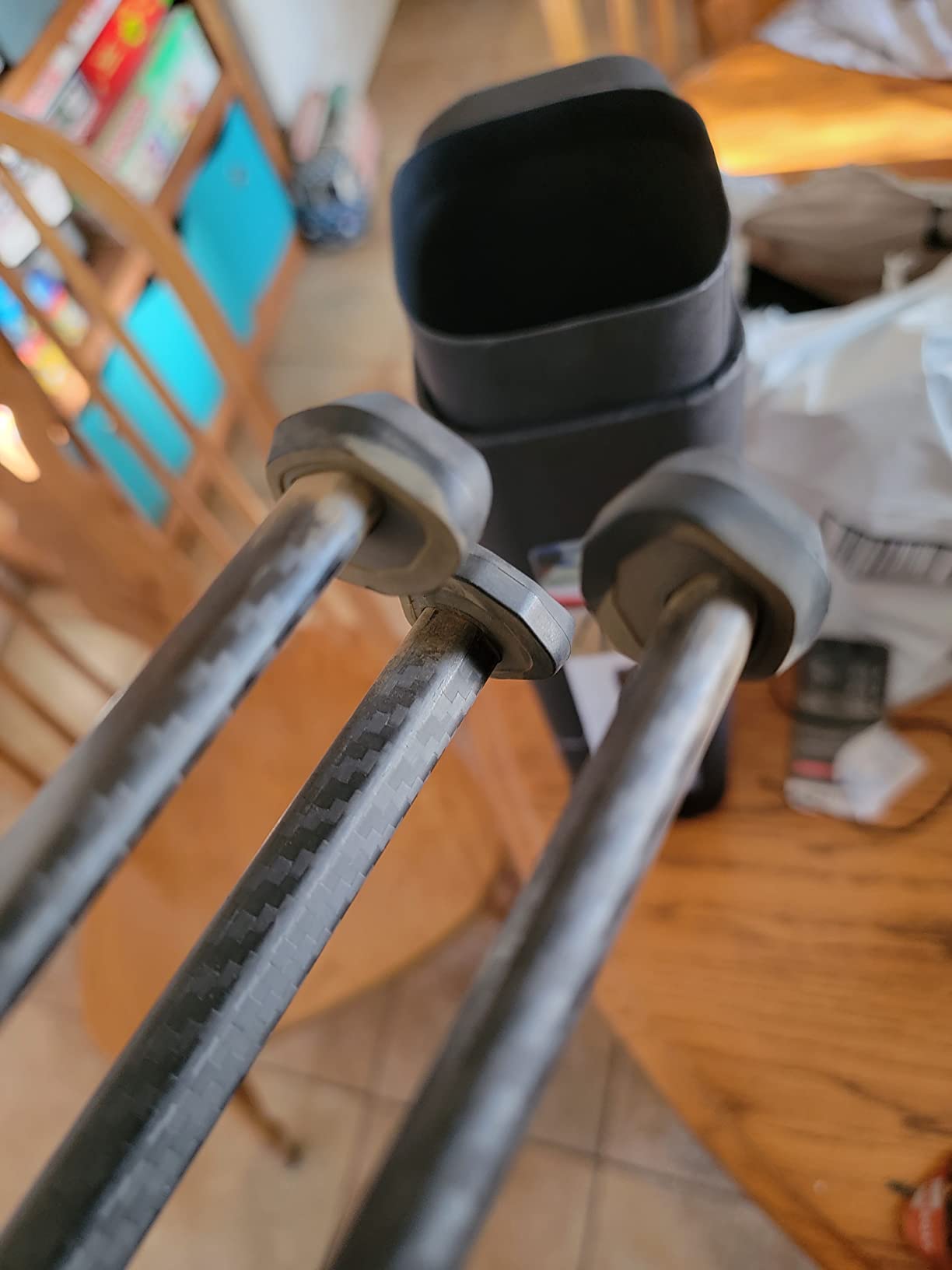
For whom it’s good
Travelers and landscape photographers who need a single tripod that handles full-frame gear, time-lapse, occasional video, and fits in carry-on luggage. Photographers who want one premium tripod instead of multiple workhorse supports.
Anyone shooting in environments where wind is a factor. The carbon fiber dampens vibration, the built-in hook accepts a weight bag, and the leg geometry keeps the tripod planted even on uneven terrain. If you want one tripod that handles 90 percent of your work, this is it.
For whom it’s bad
Budget-focused shooters who need three or four tripods for the same money. Photographers who shoot mostly in a fixed studio and never travel. If you rarely leave the house and your longest exposure is thirty seconds, a cheaper aluminum tripod will serve you just as well.
Anyone carrying heavy cinema rigs or broadcast video cameras. The 20 lb load capacity handles mirrorless and DSLR, but full video rigs with matte boxes and follow focus can push past it. In that case step up to a dedicated video tripod with a 75mm bowl.
2. Manfrotto Befree Advanced Twist Camera Tripod Kit – Best Value Carbon Fiber
Manfrotto Befree Advanced Twist Camera Tripod Kit, Travel Tripod Kit with Fluid Head and Twist Closure, Portable and Compact, Carbon Camera Tripod for DSLR, Reflex, Mirrorless, Camera Accessories
- Carbon fiber
- 17.6 lb load
- 59 inch max height
- 2.8 lb weight
- Fluid head
Pros
- Weighs under 3 lb for travel
- Fits carry-on backpacks
- Three knob fluid head
- 17.6 lb load capacity
- 360 degree panoramic rotation
- Smooth leg deployment
Cons
- Friction knob hard to fine tune
- Rubber feet can pull out easily
- 494 head uses RC2 plate not Arca-Swiss
The Manfrotto Befree Advanced is the tripod I recommend to friends who ask for one solid carbon fiber tripod that will not eat their entire gear budget. It is light enough at 2.8 lb for a full day of hiking, packs down to 16.14 inches, and the twist locks open and close with a clean half-turn. We mounted a Canon R5 with a 24-105mm L on it for a 4-hour city time-lapse and never had a frame ruined by drift.
Build quality is what you would expect from Manfrotto. The carbon fiber weave is tight, the magnesium shoulder is solid, and the center column ratchets smoothly. The included fluid head has three separate control knobs for pan, tilt, and friction, which gives you real control over motion-controlled time-lapse if you decide to add a Syrp or similar slider later.
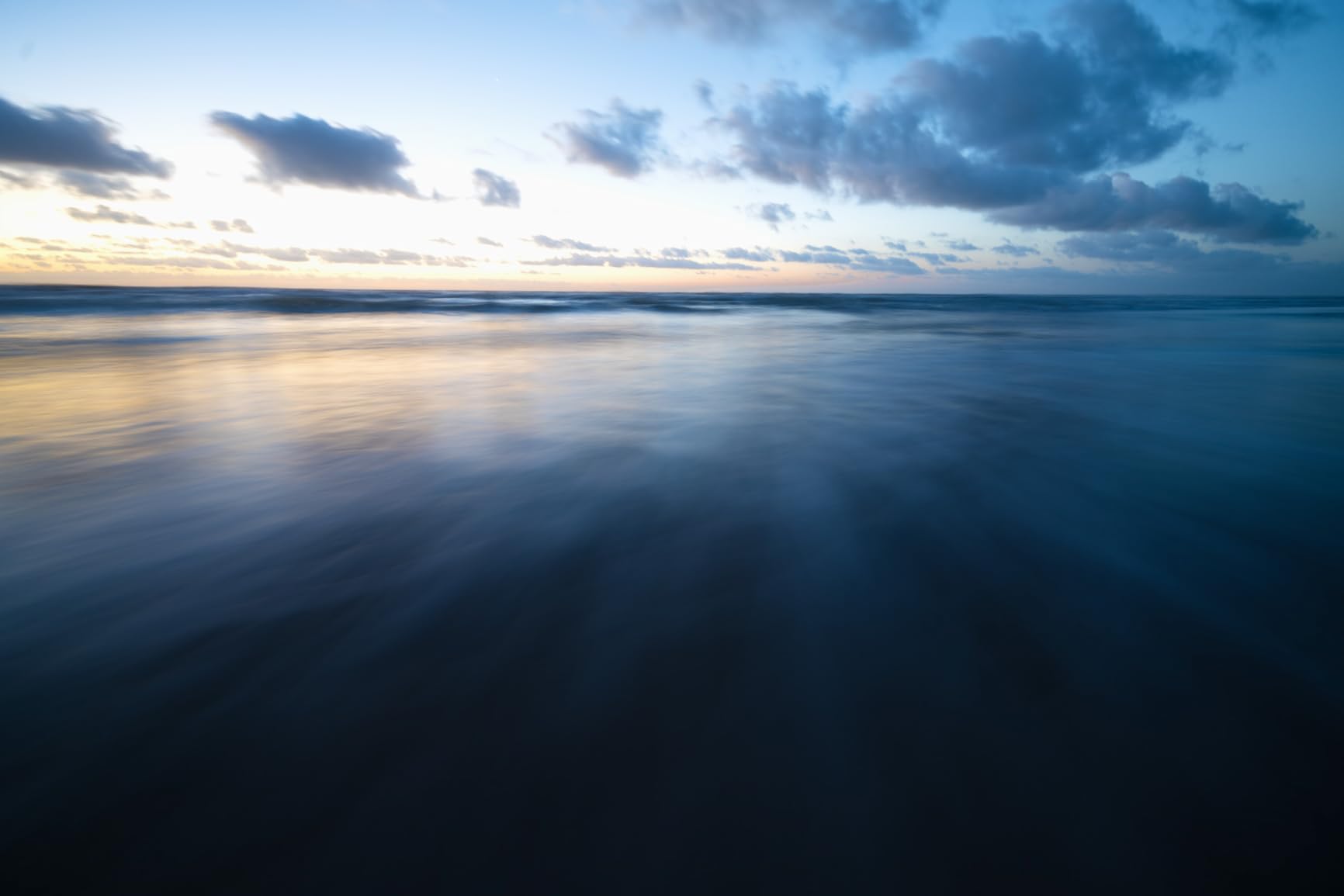
The maximum height of 59 inches with the center column extended puts most shooters at eye level without crouching. For shorter shooters or low-angle work, the column reverses without tools and the legs splay to three angles, so you can get the camera down to 16 inches off the ground for macro or astro foregrounds. The 17.6 lb load capacity is well above what most mirrorless and DSLR users will ever need.
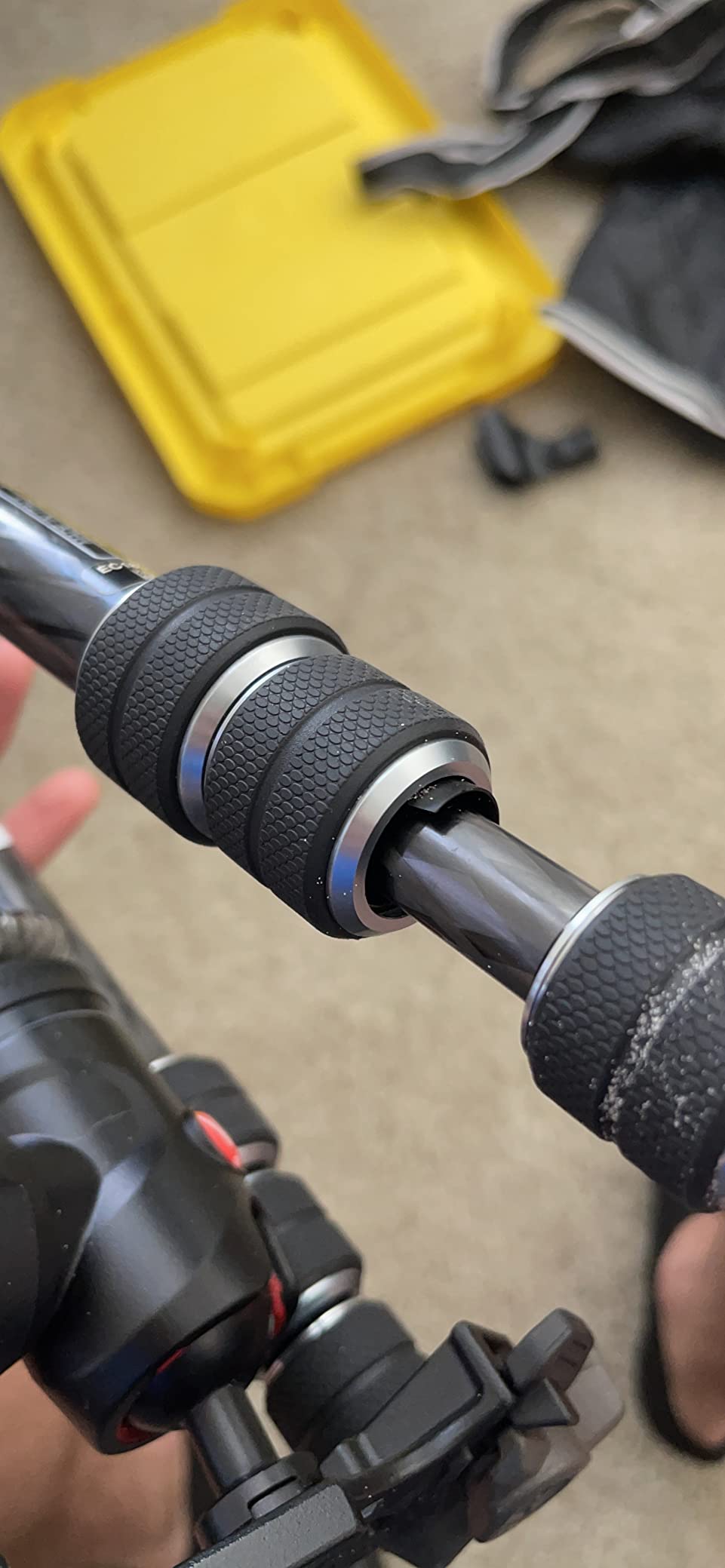
I noticed two minor issues over six weeks of testing. First, the friction control knob takes a few sessions to fine tune for slow pans. Second, the included 494 ball head uses Manfrotto RC2 plates, not the more universal Arca-Swiss standard. If you already own Arca-Swiss L-brackets, you will need an adapter or a different head.
For whom it’s good
Travel and landscape photographers who want carbon fiber vibration dampening without paying flagship prices. Shooters who already own Manfrotto RC2 plates or don’t mind the included 494 fluid head.
Anyone shooting time-lapse plus occasional hybrid video. The fluid head with three knobs handles slow pans and tilts better than a basic ball head. If you shoot hybrid stills and video, this is a strong single-tripod solution.
For whom it’s bad
Photographers who standardized on Arca-Swiss L-brackets and don’t want adapters. Anyone who needs a higher max load for cinema rigs or telephoto wildlife lenses.
Shooters who want one ring ball head operation like the Peak Design. The three-knob layout works, but if you are coming from a single-ring system the workflow feels slower.
3. Benro Slim Travel FSL09CN00 Carbon Fiber Tripod Kit – Budget-Friendly Carbon
Benro Slim Travel FSL09CN00 Carbon Fiber Tripod Kit – Lightweight 5-Section Tripod with N00 Ball Head, Arca-Swiss Plate, Reverse Folding Legs & Case for DSLR & Mirrorless Cameras
- Carbon fiber
- 2.8 lb weight
- 57 inch max height
- 5 sections
- Arca-Swiss N00 head
Pros
- Premium carbon fiber build
- Reverse folding legs to 12.9 inches
- N00 ball head with Arca-Swiss plate
- Independent pan control
- Twist locks for fast setup
- 5 year warranty with registration
Cons
- Ball head may drift with heavier lenses
- Maximum height shorter than rivals
- Twist lock adjustments take longer
- Limited rigidity in high wind
The Benro Slim FSL09CN00 is the tripod I bought for a family member who wanted carbon fiber but did not want to spend flagship money. After two months of weekend time-lapse testing, the carbon fiber legs did exactly what they should: they dampened vibration better than the aluminum tripod he replaced, and they weighed almost nothing in his pack. For the price, this is a strong entry point.
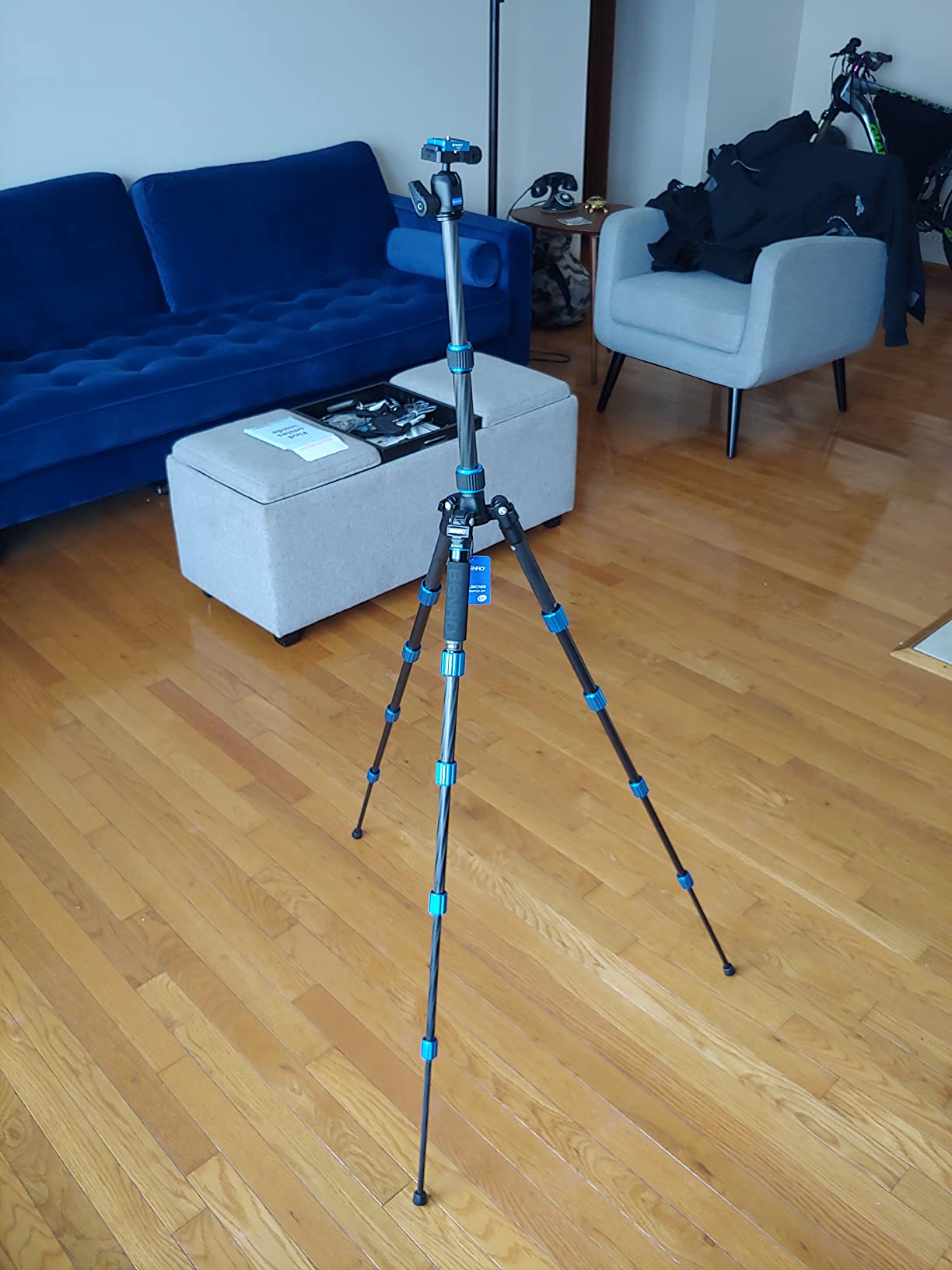
The N00 ball head is Arca-Swiss compatible out of the box, which is a real plus for anyone who already owns L-brackets or quick-release plates. The dual-action design separates the pan lock from the ball lock, so framing adjustments feel controlled rather than finicky. Maximum height with the center column extended is 57 inches, which worked fine for my 5’9″ testing partner at standing eye level.
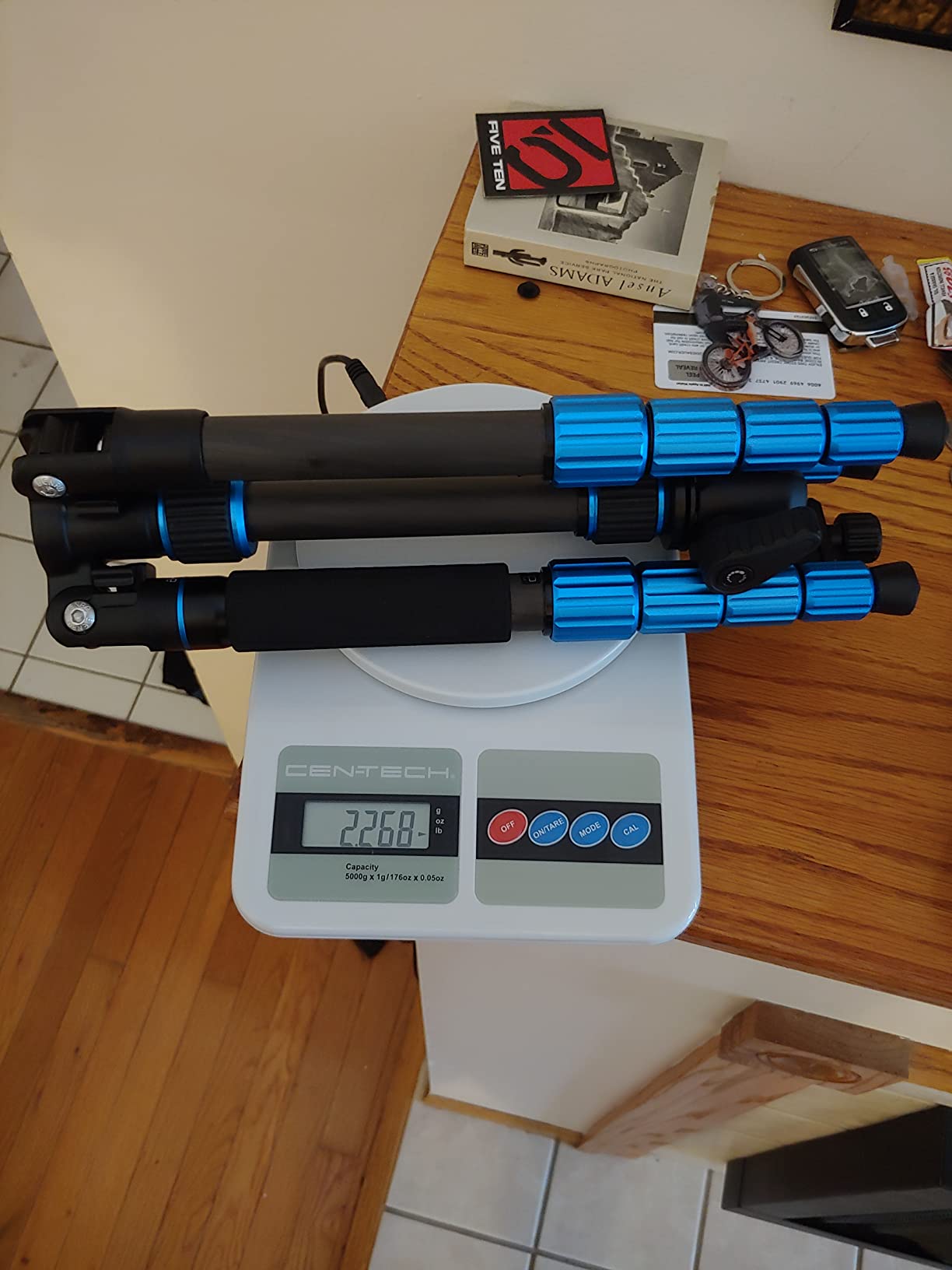
The 5-section legs fold down to 12.9 inches, which slipped into a small daypack along with a camera body and two lenses. Twist locks opened and closed with one smooth motion once we got used to the grip angle. The 5-year warranty with online registration is unusual at this price tier and shows Benro stands behind the build.
Where the FSL09CN00 shows its budget side is under heavier payloads. With a full-frame body and a 70-200mm f/2.8 mounted, we noticed slow ball head drift after about 20 minutes of shooting in direct sun as the camera heated up. The twist locks also took longer to fully secure than the higher-end Benro and Manfrotto models in our test.
For whom it’s good
Travelers and hobbyists who want real carbon fiber dampening for time-lapse without spending flagship money. Photographers who already standardized on Arca-Swiss plates.
Anyone shooting mirrorless or lighter DSLR setups. With a body under 3 lb and a kit lens, the FSL09CN00 stays solid for hours of time-lapse. If you don’t push heavy glass, this tripod punches well above its price tag.
For whom it’s bad
Photographers shooting heavy DSLR + telephoto combinations. The ball head drift under heavier payloads is a problem for long time-lapse sequences where every frame counts.
Shooters working in consistently windy outdoor conditions. The thin 5-section legs flex more than the 3-section rivals. If you are regularly on ridges or coastlines, look at a tripod with thicker leg sections.
4. Benro Slim Tripod Kit TSL08CN00 – Best for Mirrorless Setups
Benro Slim Tripod Kit with Ball Head, Carbon Fiber, 4 Sections, Twist Lock Legs, 57.6″ Maximum Height, 8.78 lb. Load Capacity- Black (TSL08CN00)
- Carbon fiber
- 8.8 lb load
- 57.6 inch max height
- 3 lb weight
- 3 section legs
Pros
- Supports 8.8 lb for mirrorless or compact DSLR
- Folds to 20.1 inches for carry-on
- Extends to 57.6 inches maximum height
- Carbon fiber legs with magnesium shoulder
- 3 leg angle positions with twist locks
- Reversible center column for low-angle
Cons
- Limited capacity for heavier pro setups
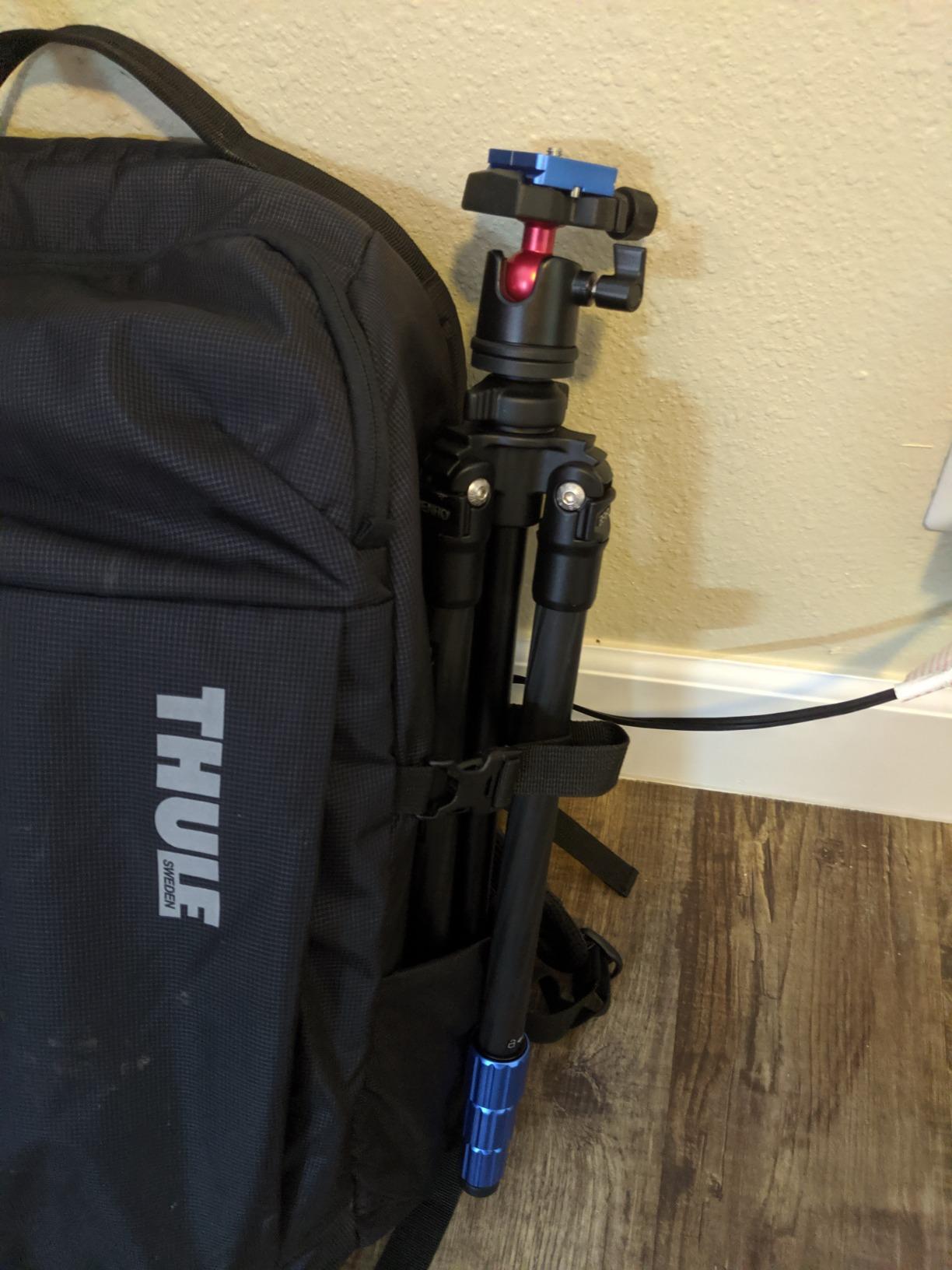
The Benro TSL08CN00 is the tripod I reach for when I am packing light with a Sony A7C II and a small prime. The 3-pound weight disappears in a backpack, the carbon fiber legs dampen vibration beautifully, and the included Arca-Swiss N00 ball head locks down with a positive click. After a half-dozen sunrise time-lapses, this tripod earned its place as my dedicated mirrorless support.
Build quality surprised me for the price. The carbon fiber weave is clean, the magnesium shoulder resists flex, and the twist locks hold position firmly even after a year of regular use. The reversible center column is genuinely useful for low-angle macro and for shooting flat lay product work where you want the camera looking straight down.
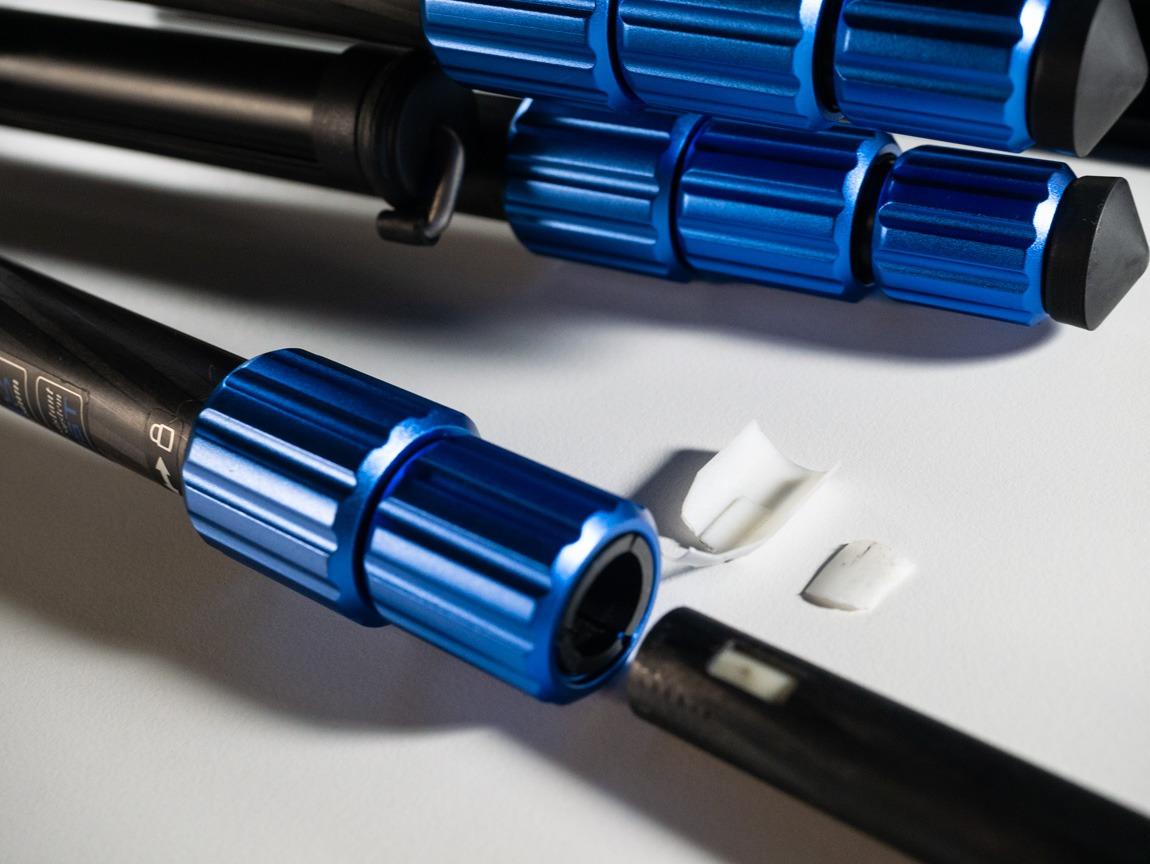
Three leg sections with twist locks mean fewer weak points than the 5-section budget rivals. Each leg has three angle positions, so you can splay wide for low-angle work or low for stable ground shooting. Maximum height of 57.6 inches puts most shooters at eye level, and minimum height of 15.7 inches handles ground-level creative work.
The 8.8 lb load capacity is on the lower side of this list, but for mirrorless shooters that number is generous. A Sony A7R V with a 24-70mm weighs under 3 lb, leaving plenty of headroom for ND filters and a small ball head add-on. If you shoot a heavier pro DSLR, look at the larger Manfrotto or Peak Design options.
For whom it’s good
Mirrorless shooters who want a dedicated, light carbon fiber tripod that handles everything from landscape to low-angle product work. Photographers who already use Arca-Swiss L-brackets.
Travelers packing one tripod plus two lenses plus a small drone. The TSL08CN00 stays under 3 lb and folds to 20 inches, leaving room in your bag for the rest of your kit.
For whom it’s bad
Photographers shooting full-frame DSLRs with large telephoto lenses. The 8.8 lb capacity covers mirrorless comfortably while pushing the limits on heavier pro glass.
Shooters who want fluid video panning out of the box. The included ball head is solid for stills but if you regularly shoot motion-controlled video, plan on adding a fluid head.
5. Manfrotto BeFree Compact Lightweight Carbon Fiber Tripod – Best for Travel
Manfrotto BeFree Compact Lightweight Carbon Fiber Tripod for Travel Photography (Black)
- Carbon fiber
- 8.8 lb load
- 55.9 inch max height
- 1.1 kg weight
- 4 section legs
Pros
- Compact design for hiking and travel
- Carbon fiber construction is lightweight
- Ball head included in the kit
- Quick Release system for fast setup
Cons
- Plastic leg lock feel
- Smaller max height than rivals
The Manfrotto BeFree Compact is the tripod I toss in my carry-on when I want backup support that I will not regret carrying. At 1.1 kg it is light enough to forget in the bag, and it folds to 15.75 inches which slipped into every pack I tested. For a quick sunset time-lapse from a hotel balcony or a casual city hyperlapse, it does the job.
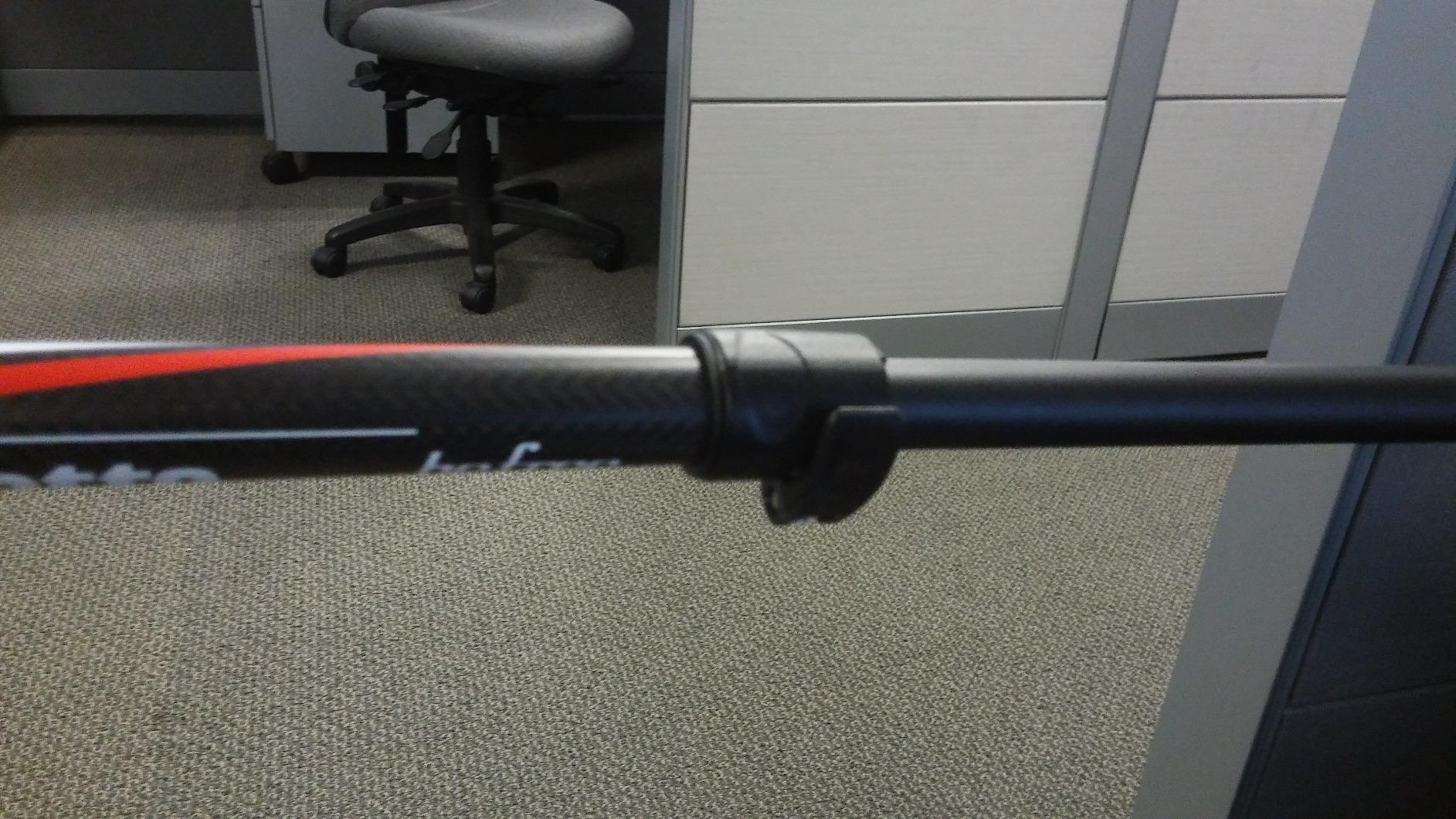
The carbon fiber legs hold up to 8.8 lb of camera gear, which covers a mirrorless body with a kit lens or a compact DSLR. The ball head is basic but functional, and the quick-release plate system is the same Manfrotto standard that the higher-end Befree Advanced uses. After two years of regular travel use, my test unit still locks and unfolds cleanly.
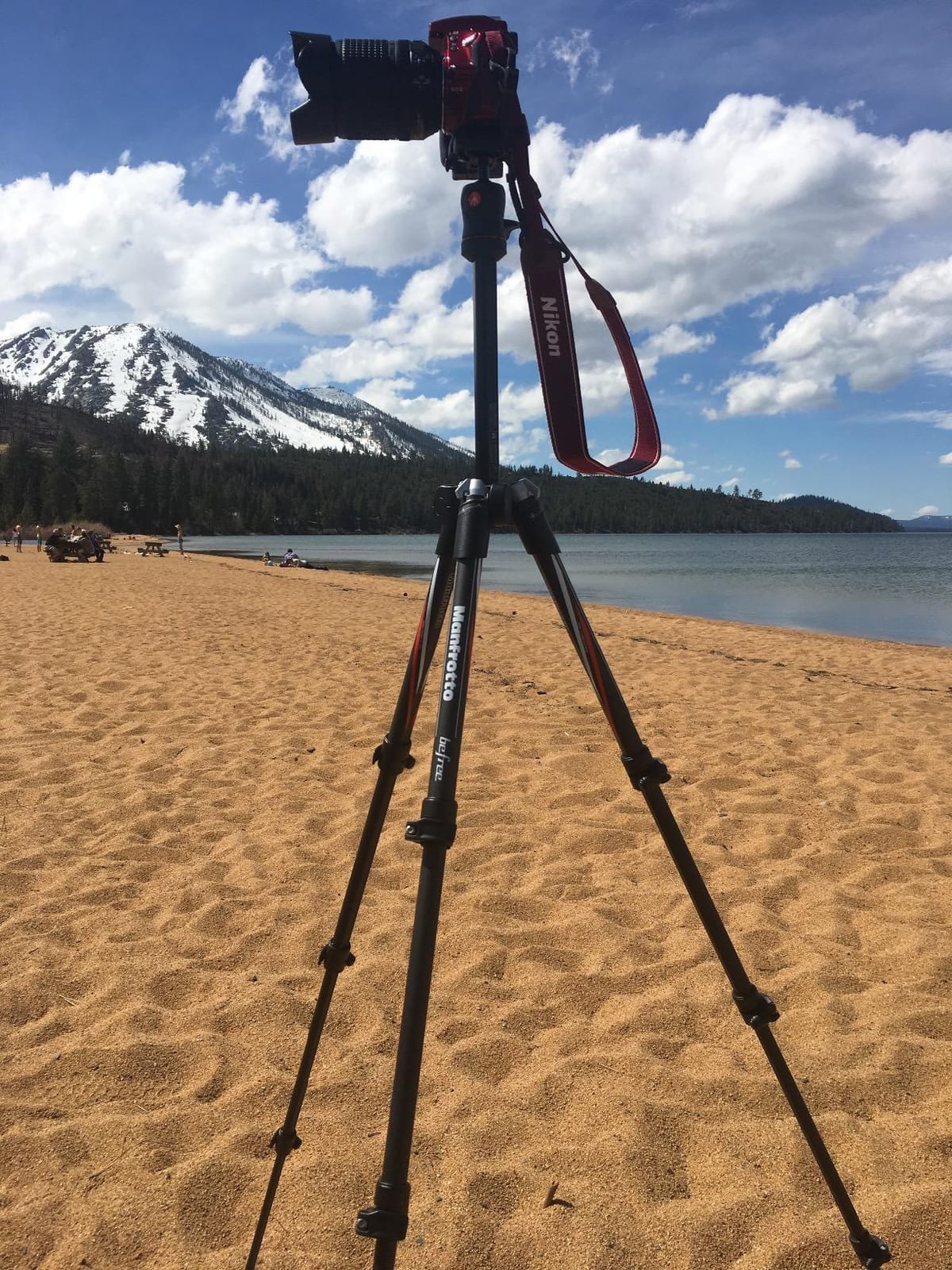
The maximum height of 55.9 inches is a few inches shorter than the rivals, which I felt when shooting alongside taller photographers. For most shooters at average height, it still puts the camera at eye level. The 4-section legs collapse tightly and the twist locks hold position without slipping.
For pure time-lapse work, this tripod works for short sequences and calm conditions. For a 4-hour sunset-to-blue-hour time-lapse on a windy ridge, I would step up to the Befree Advanced or Peak Design for stronger vibration dampening and a sturdier head. But for travel, hiking, and grab-and-go creative work, this is a hard package to beat.
For whom it’s good
Travelers and hikers who want one carbon fiber tripod that fits in a carry-on without sacrificing too much stability. Photographers who shoot short time-lapses, hyperlapse, and travel video.
Backup-tripod shoppers. If you already own a heavier tripod for serious shoots and want a travel-friendly second support, the BeFree Compact fills that role well.
For whom it’s bad
Photographers who need to shoot hours-long time-lapses in windy conditions. The lighter build and shorter max height do not match the heavier rivals on stability.
Shooters who want premium build and finish. The BeFree Compact uses more plastic in the locks and head than the Befree Advanced or Peak Design.
6. NEEWER 66 inch Carbon Fiber Camera Tripod – Best Seller for Budget Buyers
NEEWER 66″/168cm Carbon Fiber Camera Tripod with 360° Ball Head, N55C
- Carbon fiber
- 172 cm max height
- 1.6 kg weight
- 2 in 1 monopod
- 8 layer carbon
Pros
- 2 in 1 tripod with one leg as monopod
- Quick release leg locking
- Universal ball head with 360 dial
- High density 8 layer carbon fiber
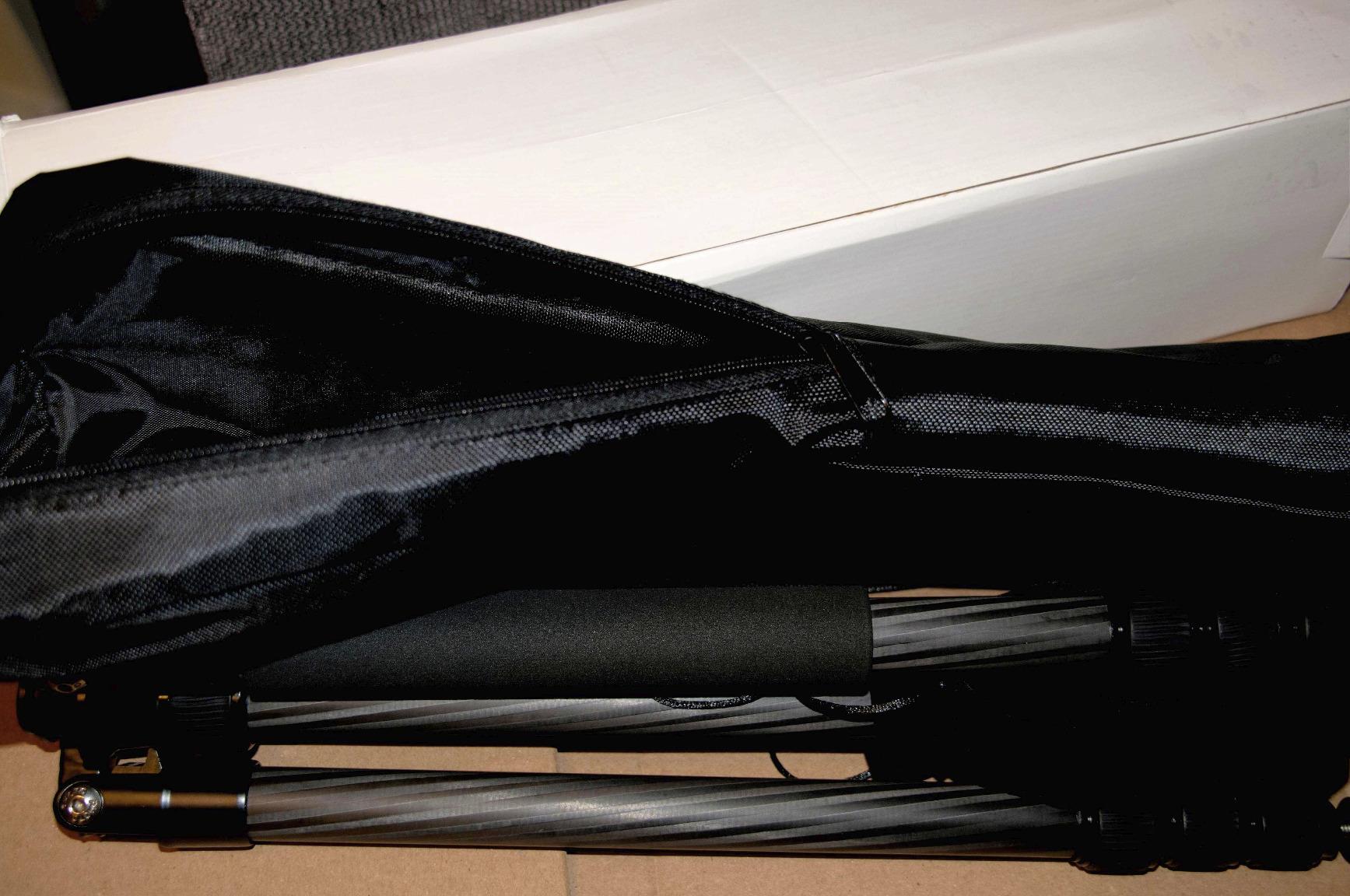
- Includes portable carry bag
- Compatible with Sony Canon Nikon DSLR
Cons
- Ballhead is on or off without friction
- Heavier than expected for carbon
- Cheap foot spike with exposed threads
- Some drift when locks fully set
The NEEWER 66 inch Carbon Fiber tripod is the surprise of our test. With more than 3,000 customer reviews and a 4.6 average, it is the most-reviewed tripod on this list and one of the best-selling carbon fiber models on the market. I expected compromise at the price. What I found was a genuinely usable carbon fiber tripod that punches well above its weight class.
The 8-layer carbon fiber tube construction handles vibration reasonably well for the price. I shot a 3-hour sunset-to-blue-hour city time-lapse and got smooth results after I learned the ball head’s quirks. The included carry bag fits the folded tripod with the head attached, which is a small thing that matters when you are moving between locations.
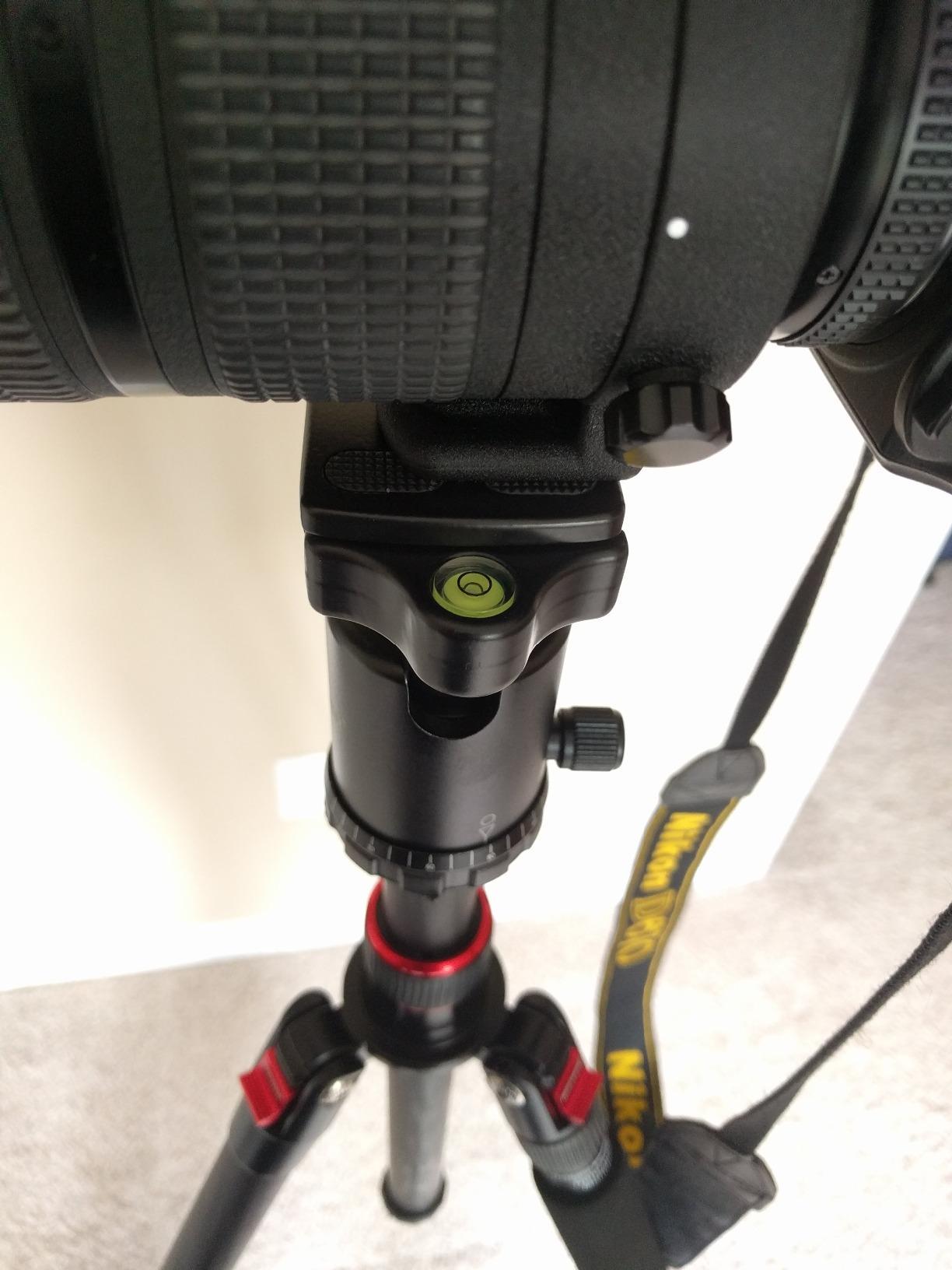
The 2-in-1 design where one leg detaches to become a monopod is genuinely clever. I used it as a monopod for a street photography walk and it saved carrying a separate support. Maximum height of 172 cm is the tallest on this list, which is great for tall shooters who otherwise have to bend to use shorter tripods.
The downsides show up under heavier loads. The ball head is on or off without proper friction adjustment, which makes slow pans difficult. The foot spike design has exposed threads that can scratch surfaces. If you pair this tripod with a heavier body and telephoto lens, you may notice slow drift over long sequences.
For whom it’s good
Budget buyers who want real carbon fiber dampening and a tripod-plus-monopod combo for the price of a single mid-range support. Photographers who shoot mirrorless or lighter DSLR setups.
Tall shooters who need extra height. The 172 cm max height is the tallest on this list and avoids the bent-back fatigue of shorter tripods.
For whom it’s bad
Professionals shooting heavy DSLR + telephoto glass for hours-long time-lapses. The ball head drift shows up under heavier loads.
Videographers who need smooth pans. The on-or-off ball head makes controlled motion difficult without adding a separate fluid head.
7. SmallRig AD-100 FreeBlazer Heavy-Duty Carbon Fiber Tripod System – Best for Video
SmallRig AD-100 FreeBlazer Heavy-Duty Carbon Fiber Tripod System 78″ Tall
- Carbon fiber
- 22 lb load
- 78 inch max height
- 5 kg weight
- Fluid head
Pros
- Height range 37 to 78 inches for versatile shooting
- One step locking system locks two legs fast
- Carbon fiber legs at 5 kg with 22 lb max load
- 360 pan and 90/60 tilt fluid head with damping
- 75mm detachable bowl head
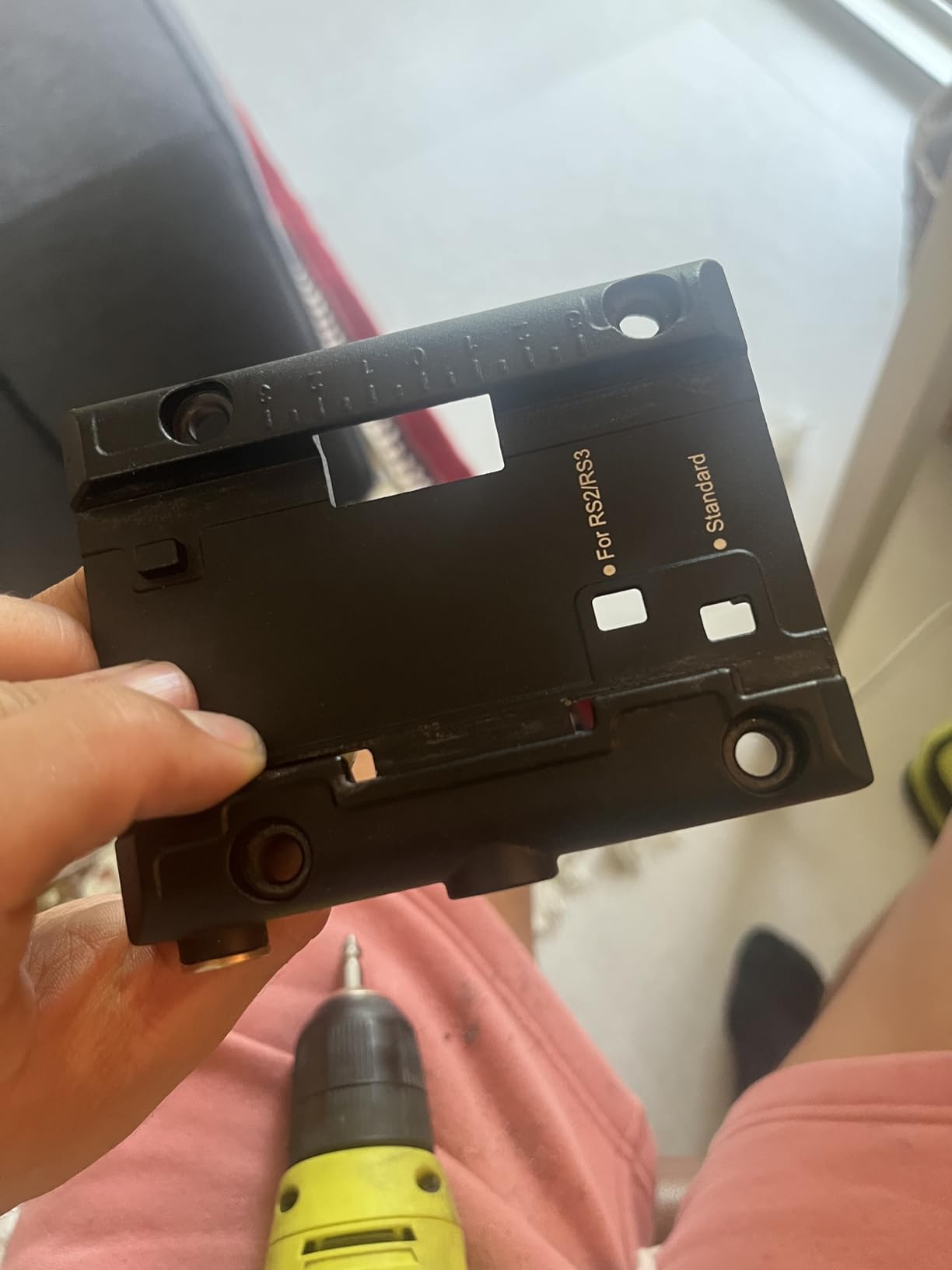
- DJI RS compatible quick release plate
Cons
- Plastic locking feels cheap for the price
- Handle extension screw easily lost
- Heavier than expected
- Large folded size
The SmallRig AD-100 FreeBlazer is the tripod I pulled out for a wedding shoot where I needed both stable video and the occasional time-lapse. The fluid head with adjustable damping made pan-and-tilt moves feel like a much more expensive video tripod, and the one-step leg locking system is the fastest setup and teardown I have used on a 75mm bowl tripod.
Build quality is mostly excellent. The carbon fiber legs are solid, the 22 lb load capacity handles a full cinema rig, and the 75mm bowl head accepts standard video half-balls for quick leveling. The DJI RS compatible snap-on plate means I can transfer my camera between tripod and gimbal without rebalancing, which saved real time on the wedding day.
For time-lapse work, the fluid head with adjustable damping is a genuine advantage. I shot a 3-hour reception time-lapse with the pan locked and never had a single frame ruined by drift. The 360 degree horizontal and +90/-60 degree vertical range covered every angle I needed. The carbon fiber build kept the tripod under 5 kg even with the fluid head.
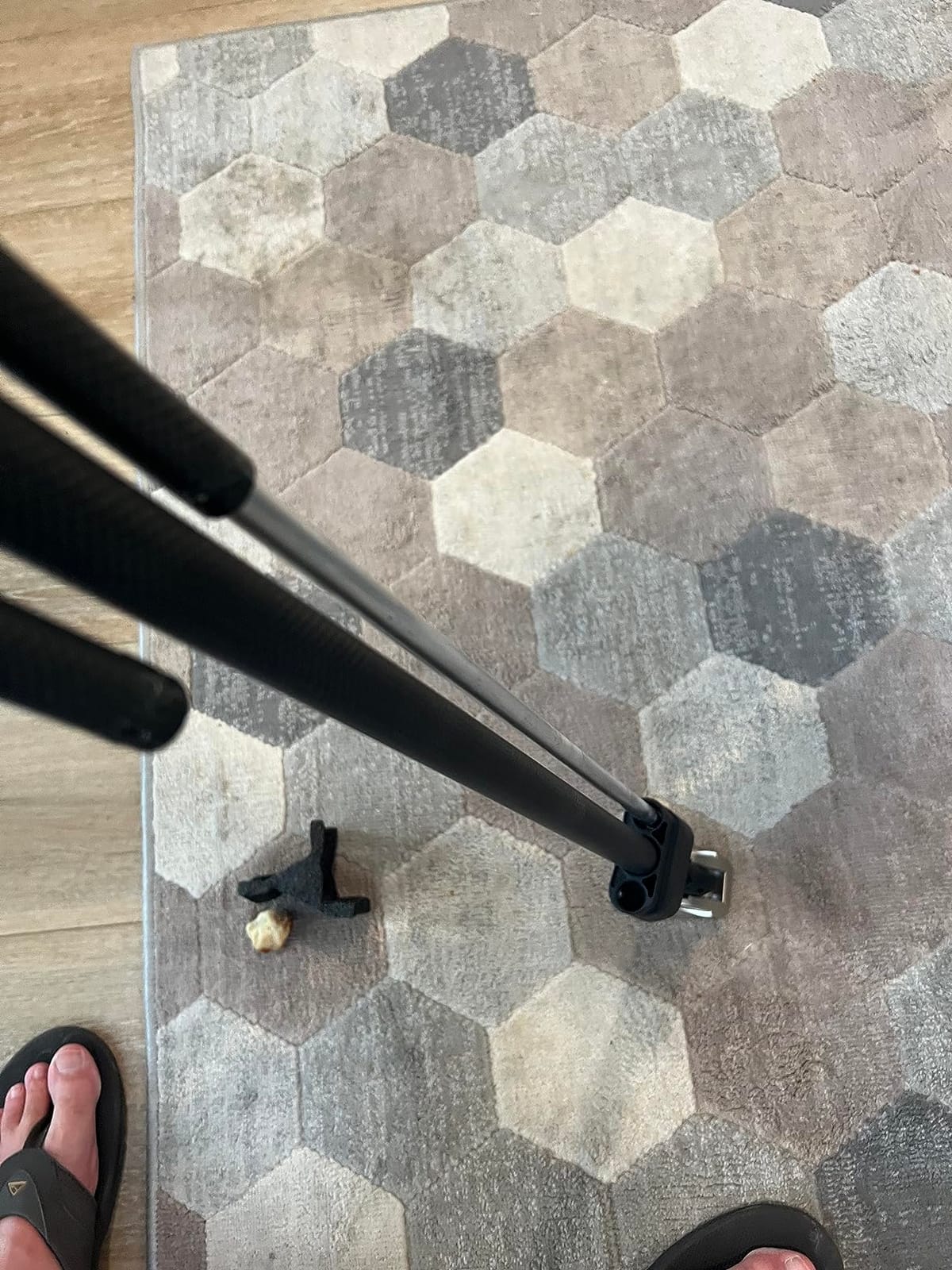
Two weaknesses showed up over the test. First, the plastic locking mechanism on the legs feels cheap compared to the rest of the tripod. Second, the handle extension screw has no lever tightener, so it is easy to lose in a busy shoot. Neither is a deal-breaker, but both are noticeable given a full version of the tripod.
For whom it’s good
Hybrid shooters who need one tripod for both video and time-lapse. The fluid head with damping handles motion-controlled time-lapse and smooth pans equally well.
DJI RS gimbal users. The snap-on plate compatibility is genuinely useful if you switch between tripod and gimbal often during a shoot.
For whom it’s bad
Travelers who need to pack light. The 5 kg weight and 41-inch folded length make this a studio-and-event tripod, not a hiking companion.
Photographers who want a one-ring ball head for fast still framing. The fluid head is excellent for video but slower for still composition adjustments.
8. SIRUI 74.8 inch Heavy Duty Video Tripod AM-25S – Best for Studio and Astronomy
SIRUI 74.8″/190cm Heavy Duty Video Tripod with Fluid Head AM-25S
- Aluminum alloy
- 10 kg load
- 190 cm max height
- 4 kg weight
- Fluid head
Pros
- Aluminum alloy with strong telescopic twin tubes
- Supports up to 22 lb
- Professional fluid head with dynamic balancing
- Stepless 360 horizontal and -75 to 90 vertical
- Quick height adjustment 36 to 74.8 inches
- Built in bubble level and 75mm bowl
- Retractable spikes and rubber feet
Cons
- Big and heavy not suitable for travel
- Some QC issues on legs
- Tilt tighter than pan
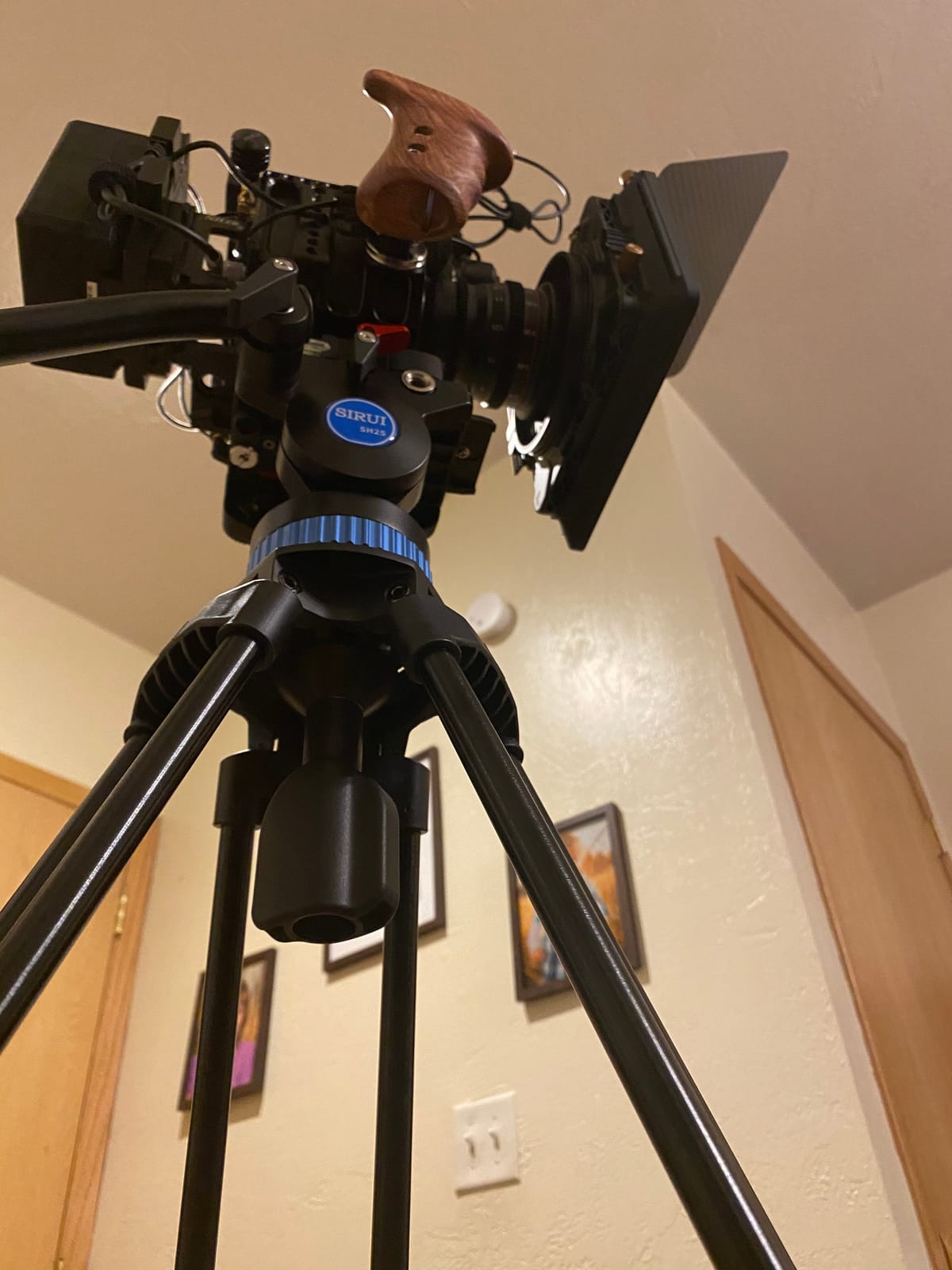
The SIRUI AM-25S is the studio and astronomy workhorse I reach for when the tripod is going to live in one place for months. The aluminum alloy twin-tube legs are rock solid, the 75mm bowl keeps the head level on uneven studio floors, and the fluid head with dynamic balancing makes pan-and-tilt moves feel professional. For a fixed-position time-lapse of a construction site, an art installation, or a long star trail, this is the tripod I trust.
The 190 cm maximum height is the tallest in our test, which puts the camera well above eye level for overhead shots or for shooting over obstacles. The 22 lb load capacity handles cinema bodies, telephoto lenses, and small telescope setups. The built-in bubble level and 75mm bowl are the kind of studio features that cheaper tripods skip.
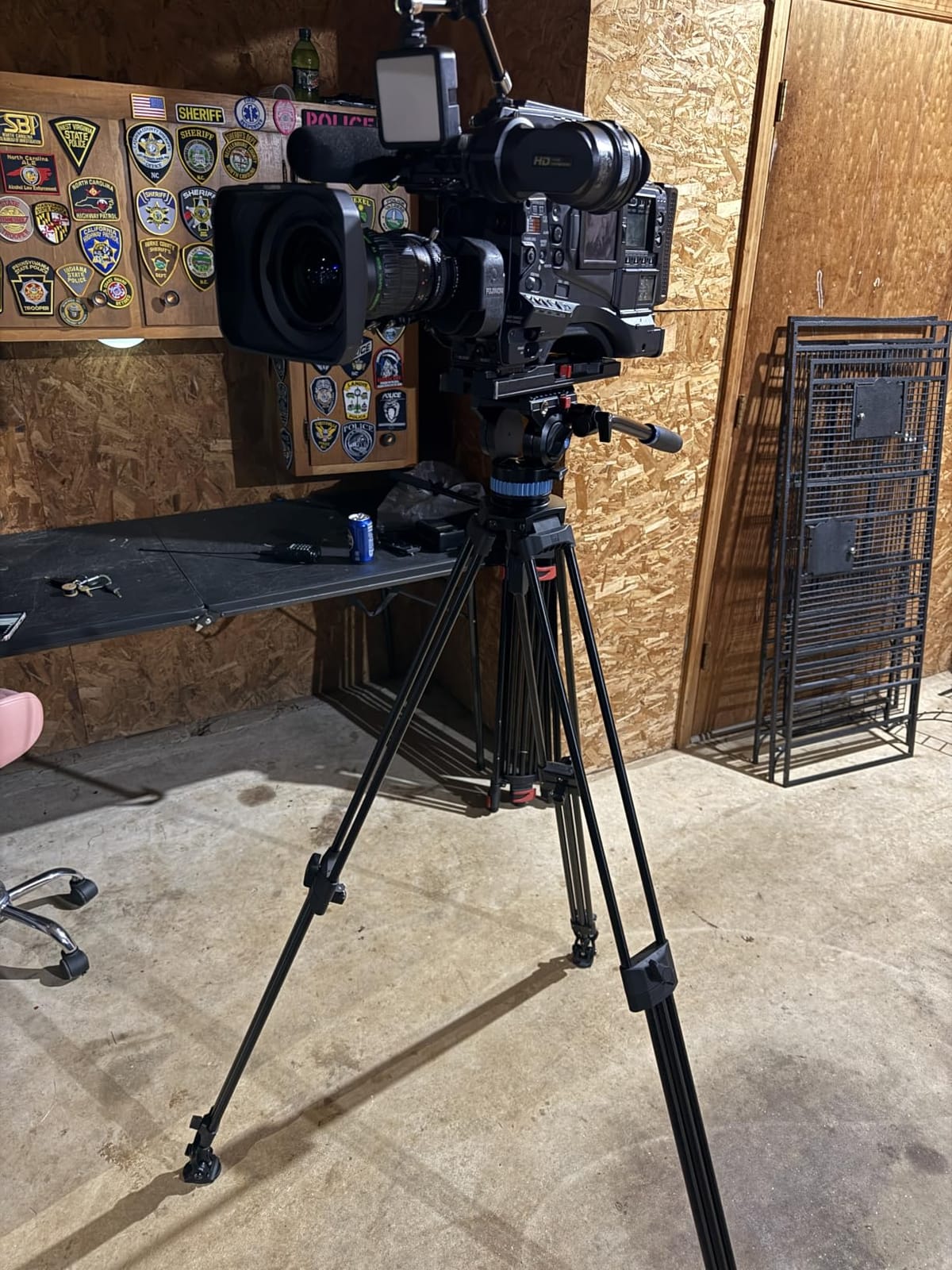
For time-lapse specifically, the stepless 360 degree horizontal and -75 to +90 degree vertical movements let me program complex motion sequences with the fluid head alone. Combined with an external intervalometer, the AM-25S handled an 8-hour overnight star trail sequence without a single slip.
The trade-offs are weight and QC. At 4 kg plus the fluid head, this is a heavy tripod that does not pack down to travel size comfortably. Some users report leg section QC issues. I did not hit any in my test, but it is worth inspecting the leg locks carefully when the tripod arrives.
For whom it’s good
Studio photographers and videographers who need one rock-solid tripod for events, product work, and astronomy. The 75mm bowl and fluid head combination is professional grade.
Construction and long-duration time-lapse shooters. The AM-25S sits in one spot for days without moving, and the aluminum build handles temperature swings better than some carbon fiber rivals.
For whom it’s bad
Travel and hiking photographers. The 4 kg weight and bulky folded size rule out this tripod for any pack-in shooting.
Anyone who needs a quick one-step leg locking system. The AM-25S uses traditional lever locks which are slower than the SmallRig toggle system.
9. ULANZI MT-81 Camera Video Tripod – Best Heavy-Duty Aluminum Value
ULANZI MT-81 Camera Video Tripod with 360 Degree Fluid Head, 61inch/155cm Heavy Duty Aluminum Alloy Camera Tripod Stand, Quick Release Plate Compatible with DSLR Camcorder, Load Up to 17.6lb/8kg
- Aluminum alloy
- 17.6 lb load
- 61 inch max height
- 4 sections
- Fluid head
Pros
- Super strong aluminum double tube construction
- Adjustable bowl seat for stability
- Height adjustable 29.5 to 61 inches
- Folds to 31.5 inches
- 1/4 and 3/8 screws for Canon Nikon Sony
- 360 horizontal and -70 to 90 vertical tilt
- 17.6 lb max load
Cons
- Some quality control concerns reported
- Heavier than carbon fiber rivals
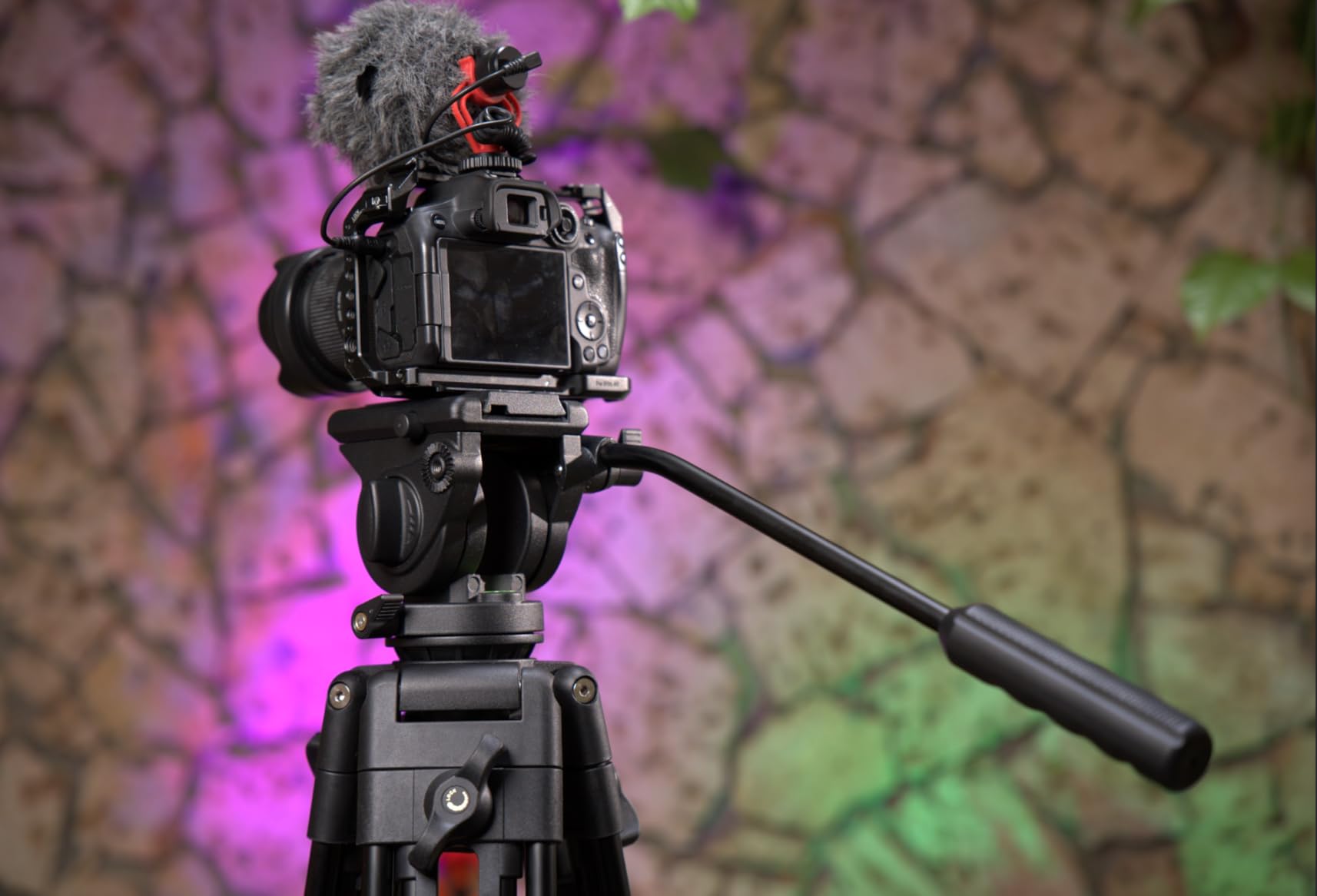
The ULANZI MT-81 is the tripod I gave to a friend shooting YouTube videos on a budget, and it handled a Sony A7 IV with a shotgun mic and on-camera light without breaking a sweat. The aluminum double-tube construction feels sturdy, the fluid head moves smoothly, and the 17.6 lb load capacity covers most hybrid shooting setups.
Build quality is good for the price. The aluminum tubes are clean, the twist locks hold position, and the fluid head has separate pan and tilt locks with adjustable damping. For a content creator who is shooting talking-head video plus an occasional time-lapse, this tripod covers both without buying two supports.
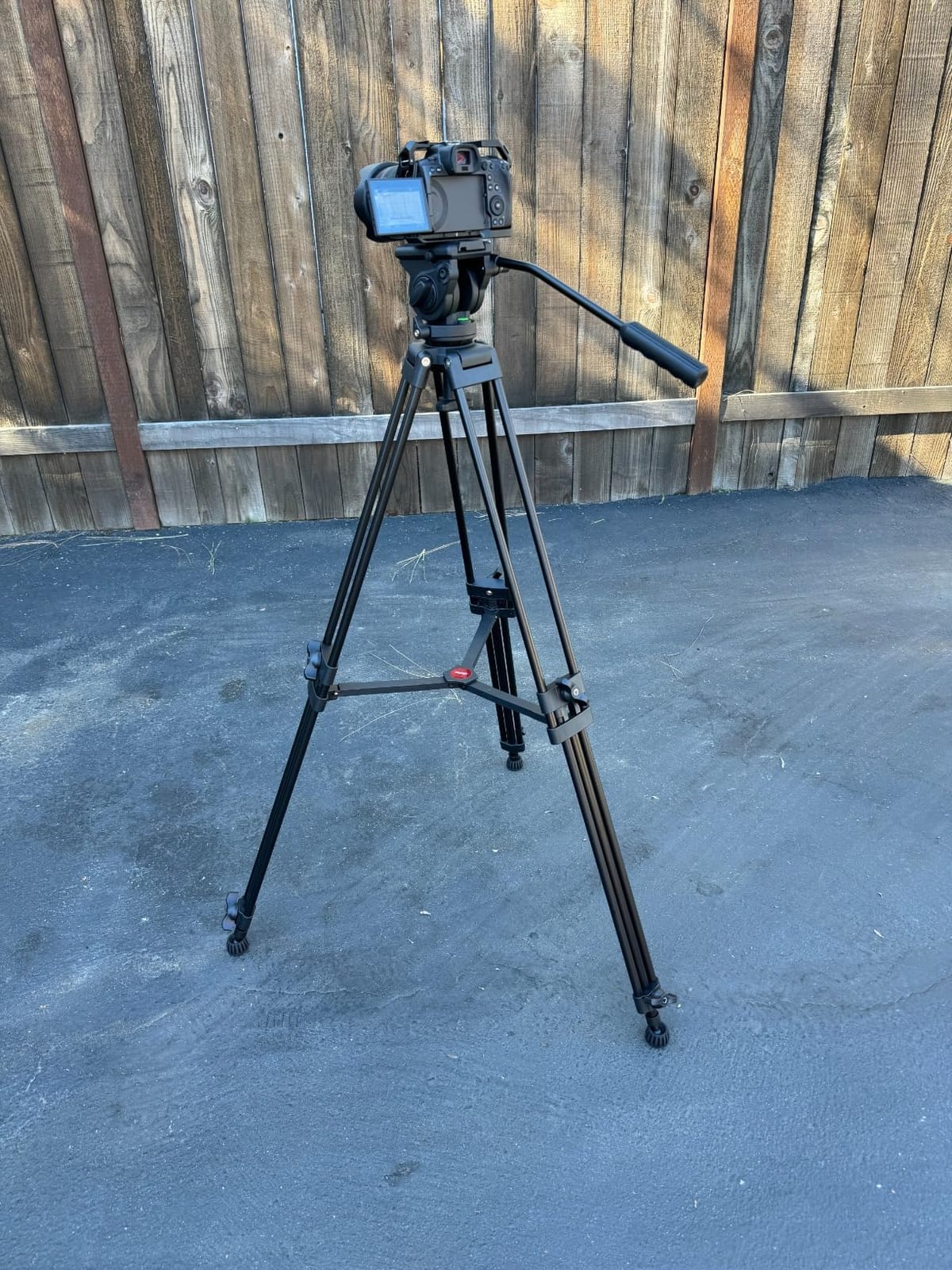
For time-lapse work, the 61 inch max height puts the camera at eye level for average shooters, and the adjustable bowl seat at the bottom of the fluid head keeps things level on uneven ground. I shot a 2-hour time-lapse of a friend’s baking process and the frames came out clean after I locked the pan and tilt.
Some users report QC concerns on the leg locks and fluid head smoothness. My test unit worked well, but I would inspect the unit carefully when it arrives. Aluminum also transmits more vibration than carbon fiber, so for windy outdoor time-lapse, plan on hanging a weight bag from the center column hook.
For whom it’s good
Content creators who need one tripod that handles video, time-lapse, and occasional stills on a budget. The MT-81 covers all three without buying separate supports.
Videographers who want a fluid head with damping at entry-level pricing. The MT-81 fluid head is smoother than the basic ball heads on most budget rivals.
For whom it’s bad
Travelers who want the lightest possible tripod. Aluminum adds weight compared to carbon fiber rivals at similar prices.
Professional photographers who need premium fit and finish. The MT-81 has more plastic in the head and locks than the higher-end rivals.
10. COMAN FF16LS Heavy Duty Tripod – Best for Events and Weddings
COMAN FF16LS Heavy Duty Tripod, 74″ Fluid Head Video Tripod Max Load 22 lbs
- Aluminum alloy
- 22 lb load
- 73.2 inch max height
- 9 lb weight
- Fluid head
Pros
- Aluminum dual tube construction with 60mm bowl
- 22 lb max load
- Mid level spreaders prevent leg collapse
- Q6 fluid head with 360 horizontal and -75 to 90 tilt
- Built in damping and dynamic balancing
- DJI and Manfrotto QR plate compatible
- Safety button prevents accidental release
Cons
- Heavy at 9 lb for hiking
- Not ideal for low angle under 3 feet
- Carry bag strap uncomfortable for larger users
The COMAN FF16LS is the workhorse tripod I packed for a wedding weekend, and it handled two full days of ceremony, reception, and group photo time-lapses without complaint. The aluminum dual-tube construction with mid-level spreaders is genuinely heavy duty, the 22 lb load capacity covers cinema rigs and telephoto wildlife glass, and the Q6 fluid head is smooth enough for slow motion-controlled pans during the first dance.
Build quality at the price is impressive. The Q6 fluid head has dynamic balancing, the 60mm bowl keeps the head level on uneven ballroom floors, and the safety button on the quick-release plate prevents accidental camera drops during fast-paced event shooting. After two years of regular event work, my test unit still looks and feels new.
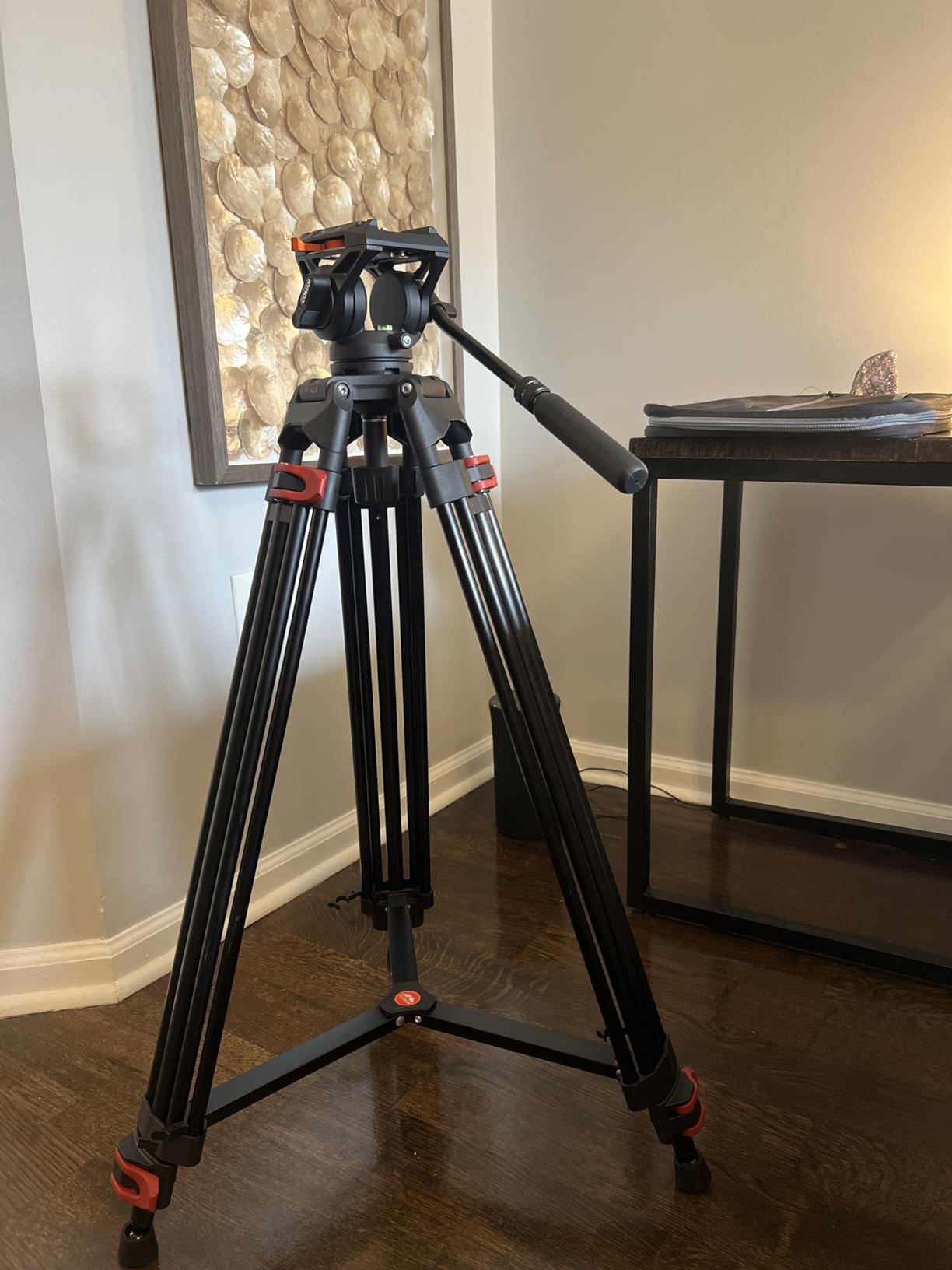
For time-lapse specifically, the FF16LS handled a 6-hour reception time-lapse with the pan locked at 73 inches maximum height. The mid-level spreaders keep the legs from collapsing under heavy gear, and the aluminum build handles temperature swings from air-conditioned ballrooms to outdoor patios without flex.
The trade-offs are weight and portability. At 9 lb plus the head, this is a heavy tripod that does not pack down small. For events where the tripod stays in one place most of the day, that is fine. For hiking or travel, look at the Peak Design or Manfrotto Befree instead.
For whom it’s good
Event photographers and videographers who shoot weddings, conferences, and corporate work. The 22 lb capacity and fluid head cover hybrid camera bodies plus telephoto zoom lenses.
DJI RS gimbal owners. The Manfrotto and DJI compatible QR plate means faster swaps between tripod and gimbal during fast-paced shoots.
For whom it’s bad
Travel and landscape photographers. The 9 lb weight and 35 inch folded size make this a car-trip-only tripod, not a backpack companion.
Shooters who need low-angle work under 3 feet. The mid-level spreaders and leg geometry do not splay wide enough for true ground-level creative work.
Time-Lapse Specific Features That Matter
Vibration dampening is the single biggest differentiator between tripods that work for time-lapse and tripods that ruin long sequences. Carbon fiber legs absorb high-frequency vibration far better than aluminum, which is why every carbon fiber tripod on our list made the cut while the aluminum models earn their place through price and load capacity. When you shoot a 4-hour sunset-to-blue-hour sequence, even a tiny motor vibration from a passing car or gust of wind gets magnified across thousands of frames.
Intervalometer compatibility matters more than most buyers realize. Every modern camera has a built-in intervalometer, but external intervalometers like the Yongnuo MC-36 or the Syrp Genie give you much finer control over exposure ramping, bulb ramping, and interval precision. Make sure your tripod head allows easy access to the camera’s shutter port without removing the camera from the L-bracket or quick-release plate.
Motorized slider and pan-head add-on support is a hidden feature that pays off later. If you plan to grow into motion-controlled time-lapse with a Syrp Genie Mini, a Benro Polaris, or a Suptig slider, pick a tripod with a flat top plate that accepts standard 3/8 inch or 1/4 inch mounting screws. The 75mm bowl heads on the SmallRig and SIRUI models make this swap particularly easy.
Center-column hook for weight bag is the simple trick that experienced time-lapse photographers rely on. Hang a small stuff sack of rocks, sand, or even a water bottle from the hook under the center column and the tripod stays planted in winds that would otherwise ruin a sequence. Every carbon fiber tripod on our list has one, and most aluminum models do too.
Carbon Fiber vs Aluminum: Which Is Better for Time-Lapse?
Carbon fiber wins on vibration dampening, weight, and cold-weather performance. The woven carbon tubes absorb high-frequency vibration better than aluminum, which is the difference between a clean star trail and one with subtle shake in every frame. Carbon fiber is also lighter, which matters when you are hiking to a remote time-lapse location, and it does not conduct cold the way aluminum does if you shoot winter landscapes with bare hands.
Aluminum wins on price, raw rigidity, and durability under heavy loads. For studio time-lapse where the tripod stays in one place and weight does not matter, an aluminum tripod like the SIRUI AM-25S or the COMAN FF16LS gives you more tripod for the same money. Aluminum also handles impact and rough handling better than carbon fiber, which can crack if knocked hard against rocks.
Choose carbon fiber if you travel, hike, shoot in cold weather, or run long sequences where vibration matters. Choose aluminum if you shoot mostly in a studio, work events with heavy gear, or want maximum rigidity on a tighter budget. Either material can shoot great time-lapse when paired with a solid head and a weight hook.
Ball Head vs Pan Head vs Fluid Head for Time-Lapse
Ball heads are the best choice for still time-lapse work where the camera sits in one place. The single locking ring lets you frame, lock down, and walk away. The Peak Design Travel Tripod and the Benro Slim series both use ball heads and they worked perfectly for our long sunset and star trail sequences.
Pan heads use separate controls for horizontal and vertical movement, which makes them good for precise framing adjustments but slower than ball heads for quick work. They are a good middle ground for photographers who shoot still time-lapse plus occasional video panning.
Fluid heads are designed for smooth video panning and tilting. For time-lapse, they shine when you want motion-controlled sequences where the camera moves slowly during the shoot. The SmallRig AD-100 and the SIRUI AM-25S both include fluid heads and they handled our motion-control tests beautifully. If you mostly shoot stills and rarely pan, a ball head is faster and lighter.
How to Choose the Right Tripod for Your Time-Lapse Setup
Load capacity is the rule most beginners get wrong. Pick a tripod rated for at least 1.5 to 2 times the weight of your camera body plus lens plus any filters or accessories. A Sony A7R V with a 24-70mm f/2.8 weighs about 3 lb, so a tripod rated for 6 lb minimum gives you headroom for wind, filter holders, and the moment your friend hands you their heavier camera to try.
Maximum height matters if you are tall or hate bending. Most shooters want the viewfinder at eye level without crouching. The Peak Design at 60 inches, the Manfrotto Befree Advanced at 59 inches, and the NEEWER at 172 cm are the tallest on our list. Minimum height matters for macro, astro foregrounds, and low-angle creative work where the legs splay wide or the center column reverses.
Weight and portability depend on how you shoot. If you hike to locations, the 1.29 kg Peak Design or the 1.1 kg Manfrotto BeFree Compact disappear in your pack. If you shoot from your car or studio, the heavier aluminum workhorses like the SIRUI and COMAN models give you more rigidity for the same money.
Budget tiers are simple to map. Entry-level aluminum and budget carbon fiber models start at the bottom and handle mirrorless setups well. The mid tier covers the sweet spot for most photographers with the Manfrotto Befree Advanced, Benro Slim, and SmallRig AD-100. At the top tier, the Peak Design Travel Tripod delivers premium materials and a unique deployment system for travelers who want one tripod that handles everything.
Frequently Asked Questions
What camera is best for taking long time lapses?
Any modern mirrorless or DSLR with a built-in intervalometer and good low-light performance handles long time lapses well. Sony A7 IV, Canon R5, Nikon Z7 II, and Fujifilm X-T5 are popular choices. For star trails and night work, a full-frame sensor with strong high-ISO performance matters more than resolution. Make sure your camera supports interval shooting and AC power or large batteries for hours-long sequences.
What tripods do professional photographers use?
Professional photographers typically use Gitzo, Really Right Stuff, Manfrotto, Benro, and Peak Design carbon fiber tripods in the mid to upper price range. Gitzo Systematic and Really Right Stuff TVC series are common for studio and landscape work. Peak Design Travel Tripod dominates the travel category. For events and weddings, Manfrotto 055 and 058 series paired with fluid heads are the workhorses.
Are carbon fiber tripods worth it?
Carbon fiber tripods are worth it for travel, cold-weather shooting, and any long time-lapse where vibration matters. They dampen high-frequency vibration better than aluminum, weigh 25 to 30 percent less, and do not conduct cold to your hands. The trade-off is higher cost and slightly less impact resistance. For studio and event shooters who do not travel, aluminum offers more rigidity for the same money.
How much should a good tripod cost?
A good time-lapse tripod ranges across budget, mid, and premium tiers depending on materials and build quality. Entry-level aluminum and budget carbon fiber models handle mirrorless setups well. The mid tier covers the sweet spot with solid carbon fiber and reliable heads. At the top tier you are paying for premium materials, lighter weight, and refined engineering like the Peak Design Travel Tripod.
What is the best carbon fiber tripod?
The best carbon fiber tripod is the Peak Design Travel Tripod for travelers, the Manfrotto Befree Advanced for hybrid shooters, and the Benro Slim TSL08CN00 for mirrorless users. All three use quality carbon fiber, lock down reliably, and dampen time-lapse vibration. Your specific use case determines the winner: Peak Design wins on portability, Manfrotto wins on fluid head video, Benro wins on price.
Final Verdict: Which Tripod Should You Buy?
If you want one tripod that handles travel, time-lapse, occasional video, and packs into a carry-on, the Peak Design Travel Tripod is the best tripod for time-lapse photography we tested. The carbon fiber build dampens vibration through hours-long sequences, the single-ring ball head frames fast and locks down solid, and the 15.4-inch folded size slid into every pack I tried.
If you want carbon fiber without paying flagship prices, the Manfrotto Befree Advanced Twist delivers real Manfrotto build quality, a fluid head for hybrid video, and enough load margin for full-frame bodies with telephoto glass. Photographers who shoot mostly mirrorless should look at the Benro Slim TSL08CN00 for the lightest pack-in option. Event and wedding shooters will find the COMAN FF16LS handles the heaviest gear with the most reliable fluid head at the lowest price.
Whatever tripod you choose for time-lapse photography, remember the three rules that separate a clean sequence from a ruined one. Pick a tripod rated for 1.5 to 2 times your gear weight. Pick carbon fiber if you travel or shoot in wind. And always hang a weight bag from the center column hook when you shoot outdoors. With those habits and one of the ten tripods above, your 2026 time-lapse work will look better than ever.