
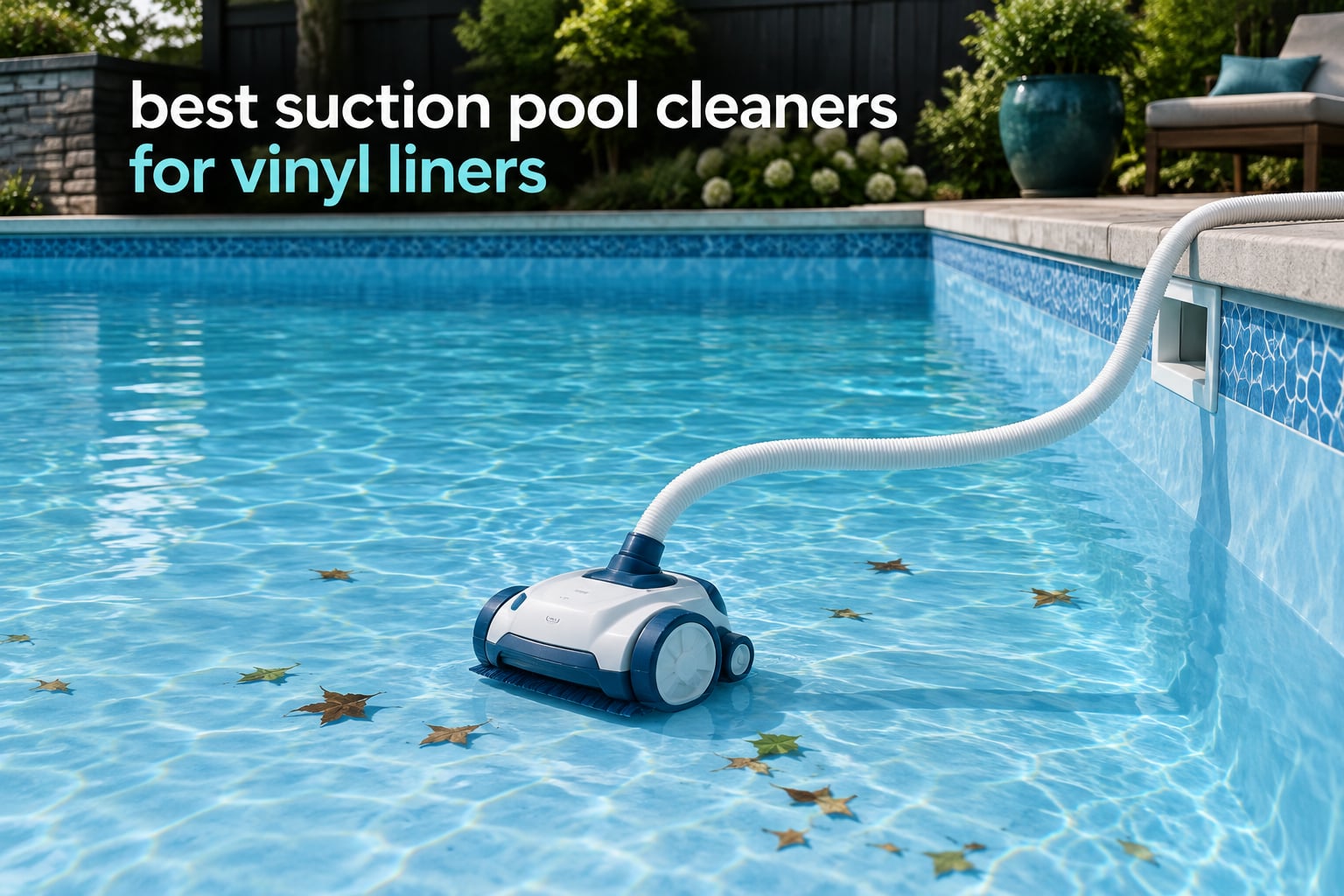
Every roundup for vinyl liner pools you will find on the internet is about robotic cleaners. That is a gap, because the best suction pool cleaners for vinyl liners are cheaper, simpler and gentler on a liner than most robots, and nobody is ranking them side by side. We spent the season comparing ten of them.
The short answer: the Zodiac MX6 is the best suction pool cleaner for vinyl liners overall, because its cyclonic turbine creates downforce instead of dragging a hard plastic edge across the floor, and it is rated for variable-speed pumps. The Zodiac G3 is the runner-up for owners who want the fewest moving parts in the water. For manual touch-ups, the FibroPool weighted head is the one we would keep on the pole all season.
What follows covers all ten picks with a liner safety verdict on each, how to hook a suction cleaner to a skimmer or a dedicated suction line, and where suction side loses to pressure side or to a robot. Prices are not listed here because they move; the buttons below go straight to the current listing.
One more thing before we start. A suction side cleaner sends everything it picks up through your pool filter and back into the water. That is exactly why it needs so little water to do its job, and it is also why you will be rinsing your filter more often than you are used to. We cover that trade-off in the troubleshooting section.
Table of Contents
- Top 3 Picks for Vinyl Liner Pools in 2026
- All 10 Suction Pool Cleaner Picks at a Glance (October 2026)
- What Makes a Suction Pool Cleaner Vinyl Liner Safe?
- How a Suction Side Cleaner Connects to Your Pool
- Suction Side vs Pressure Side vs Robotic for a Vinyl Liner Pool
- Above-Ground vs Inground Vinyl Liner Pools: What Changes
- 1. Zodiac MX6 – Best Overall Suction Side Cleaner for Vinyl Liners
- 2. Zodiac G3 – Best Value Suction Side Cleaner for Vinyl Liners
- 3. FibroPool Flex Weighted Vacuum Head – Best Vinyl Safe Manual Vacuum Head
- 4. VINGLI Automatic Suction Cleaner – Most Versatile for Above-Ground and Inground
- 5. Hayward Poolvergnuegen 2 Wheel – Best for Mid-Size Inground Pools
- 6. Swimline HydroTools Triangle Head – Best Budget Manual Vacuum for Basics
- 7. TidyMister 20 Inch 2 in 1 Head – Best Wide Path Brush and Vacuum Head
- 8. Poolmaster Deluxe Vinyl Liner Vacuum – Best Explicit Vinyl Liner Safety Pick
- 9. Pentair Rebel Cleaner Head – Best Replacement Upgrade for an Existing Cleaner
- 10. Hayward Poolvergnuegen 4 Wheel – Best for Large Inground Vinyl Pools
- How We Picked and What to Look For
- Troubleshooting, Filter Loading and Winter Storage
- Frequently Asked Questions
- Final Verdict
Top 3 Picks for Vinyl Liner Pools in 2026
The three units below are the ones we would put in an inground vinyl liner pool without hesitation. The MX6 wins on coverage and pump compatibility, the G3 wins on simplicity, and the FibroPool head wins on pure vinyl gentleness when you want to do the work yourself.

Zodiac MX6
- Cyclonic turbine downforce
- X-Trax wall grip
- X-Drive navigation
- 32 ft Twist Lock hose


FibroPool Flex Vacuum Head
- 14.4 in cleaning path
- Urethane wheels
- Weighted flexible body
- 1.5 in port
As an Amazon Associate we earn from qualifying purchases. CERTAIN CONTENT THAT APPEARS ON THIS SITE COMES FROM AMAZON. THIS CONTENT IS PROVIDED 'AS IS' AND IS SUBJECT TO CHANGE OR REMOVAL AT ANY TIME.
All 10 Suction Pool Cleaner Picks at a Glance (October 2026)
Five automatic suction side cleaners and five manual vacuum heads made the cut. The table below is the fastest way to see which type fits your pool, and every entry links through to the current product listing.
| Product | Specifications | Action |
|---|---|---|
|
Zodiac MX6 Suction-Side Cleaner
|
|
Check Latest Price |
|
Zodiac G3 Suction-Side Cleaner
|
|
Check Latest Price |
|
FibroPool Flex Weighted Vacuum Head
|
|
Check Latest Price |
 VINGLI Automatic Suction Cleaner
|
|
Check Latest Price |
 Hayward Poolvergnuegen 2 Wheel
|
|
Check Latest Price |
 Swimline HydroTools Triangle Head
|
|
Check Latest Price |
 TidyMister 20 Inch 2 in 1 Head
|
|
Check Latest Price |
 Poolmaster Deluxe Vinyl Liner Vac
|
|
Check Latest Price |
 Pentair Rebel Cleaner Head
|
|
Check Latest Price |
 Hayward Poolvergnuegen 4 Wheel
|
|
Check Latest Price |
We earn from qualifying purchases. CERTAIN CONTENT THAT APPEARS ON THIS SITE COMES FROM AMAZON. THIS CONTENT IS PROVIDED 'AS IS' AND IS SUBJECT TO CHANGE OR REMOVAL AT ANY TIME.
What Makes a Suction Pool Cleaner Vinyl Liner Safe?
A suction pool cleaner is vinyl liner safe when it grips the floor with soft urethane or rubber, generates most of its hold with water flow rather than weight, and gives you a way to reduce suction if the liner is light. Those three things are the whole checklist.
Start with the contact points. Hard plastic wheels and stiff stainless bristle plates are what scratch and scuff a liner, and it is the dulling you notice a year later rather than the day it happens. Urethane wheels on stainless bearings, flexible thermoplastic bodies and nylon bristles are the materials to look for.
Second, look at how the cleaner holds on. Some units rely on a weighted skirt dragging along the liner, which works but adds friction and wears the seam. Cyclonic turbines, self-adjusting turbine vanes and a 36-fin disc use water pressure to create adhesion, so the body is being pulled down rather than pushed across.
Third, control. A flow regulator valve at the skimmer or suction port lets you dial back the water going to the cleaner when you see it tracking toward a wall or seam. On a shallow vinyl pool with a light liner, that valve is the difference between a cleaner that works all season and one that leaves a wrinkle behind.
Finally, know where your seams are. Automatic cleaners with a fixed front edge can catch a liner seam and dig in. Models with a wheel deflector or a rounded nose turn away from the seam instead of climbing it.
How a Suction Side Cleaner Connects to Your Pool
A suction side cleaner has no motor. It rides on water that your pump is already moving, so hooking one up is a ten minute job and you can do it in a swimsuit. Here is the sequence we use.
1. Find a suction source. You have two options: a skimmer or a dedicated suction port. A dedicated suction line gives you steadier flow, and if your pool came with a suction port, use it.
2. Confirm the flow. Most units need roughly 1700 gallons per hour of pump capacity, and the VINGLI specifically calls for a minimum of 3/4 HP. If you have a variable-speed pump, you will need to raise the speed when the cleaner runs.
3. Start the pump before you connect anything. The cleaner draws on a siphon, so if you attach it to a dry line you will just pull air.
4. Lower the leader hose into the skimmer or suction port and let the cleaner sink on its own. It should reach the floor without anyone pushing it down.
5. Fit the flow regulator valve between the hose and the suction source. Screw it clockwise to reduce flow, counterclockwise to increase it.
6. Count the hose sections. Each section is about 3 to 3.5 feet, and the cleaner should reach every corner with a little slack. Too much slack and the cleaner circles in the middle of the pool; too little and it never leaves the shallow end.
7. Watch the first full cycle. If it hugs one wall, close the regulator a quarter turn. If it stalls in the middle of the floor, open it up.
8. Plan for the filter. Every particle goes back into the water, so check your filter pressure gauge or canister more often than usual while the cleaner is running.
Hose length matters more than most buyers expect. A 32 foot hose covers a typical inground pool, a 39 foot hose gives you room on a pool with a deep end and a raised wall, and a 40 foot hose is comfortable on a 20 by 40 foot pool with a deep end that drops well below the shallow end.
Suction Side vs Pressure Side vs Robotic for a Vinyl Liner Pool
For most vinyl liner pools, a well-chosen suction side cleaner beats a robot on cost, on liner gentleness and on storage, and loses only on coverage consistency and on the fact that it dirties your filter.
Suction side cleaners use your existing pump and plumbing, so there is nothing to charge and nothing to store but a body the size of a large bucket. They are the gentlest option because the only thing touching your liner is a skirt, a disc or a set of soft wheels. The trade-off is that debris returns to the pool and ends up in the filter, and the cleaning path is a repeating pattern rather than a mapped route, so some corners can need a manual pass.
Pressure side cleaners run off a separate port and need a booster pump, which means plumbing work and a second piece of equipment. They also tend to be the gentlest of all because they push water rather than pull it, but the extra cost and installation put them out of reach for most above-ground owners.
Robotic cleaners need no plumbing and no filter help, and they are the most convenient option by a wide margin. The vinyl trade-off is real though. A robot carries weight and often hard drive components or aggressive brush plates, and a heavy machine tracking a seam is how liners get damaged. If you already own a robot that has never scratched your liner, keep using it. If you are shopping fresh, this roundup is the cheaper and safer bet.
The Pool Nerd makes the same argument from the other side of the aisle, and their warning about hard bristle brushes and seam snagging on robots matches what we see in owner threads about liner replacement costs.
Above-Ground vs Inground Vinyl Liner Pools: What Changes
Above-ground vinyl pools need less suction and a shorter reach, inground vinyl pools need coverage and seam awareness. That single difference reshapes almost every pick in this list.
Above-ground pools are shallower, smaller and usually have a flat floor with a gentle slope toward the drain. They also often have a weaker pump than an inground setup, which rules out any cleaner that needs 1700 gallons per hour or more. The VINGLI is the only automatic unit here rated for above-ground work, and owners on r/AboveGroundPools describe its wall climbing as useful in the corners. Be realistic about coverage: on an above-ground pool, the bottom edge where the liner meets the wall is the spot every cleaner misses, and a manual head is the answer.
Inground vinyl pools are deeper, longer and full of steps, ledges and a main drain trench. Hose length becomes the deciding spec, and a cleaner that can climb walls and navigate around a ladder is worth paying for. Every automatic unit in this roundup is built for inground pools except the VINGLI, which covers both.
Salt water pools add one more wrinkle. Chlorine and salt both accelerate wear on rubber flappers and plastic skirts, so plan on replacing the flapper and checking the skirt every season rather than every few years.
1. Zodiac MX6 – Best Overall Suction Side Cleaner for Vinyl Liners
Zodiac MX6 Suction-Side In-Ground Pool Cleaner, Cyclonic Suction
- Cyclonic turbine downforce
- X-Trax wall grip
- 32 ft Twist Lock hose
- 40.4 x 14.8 x 9.9 in
Pros
- Cyclonic turbine creates downforce instead of dragging
- X-Trax grip climbs walls and crosses obstacles
- Works with variable-speed pumps
- 32 ft of Twist Lock hose included
- No batteries to charge
Cons
- Needs flow calibration to run correctly
- Inground pools only
- One year manufacturer warranty
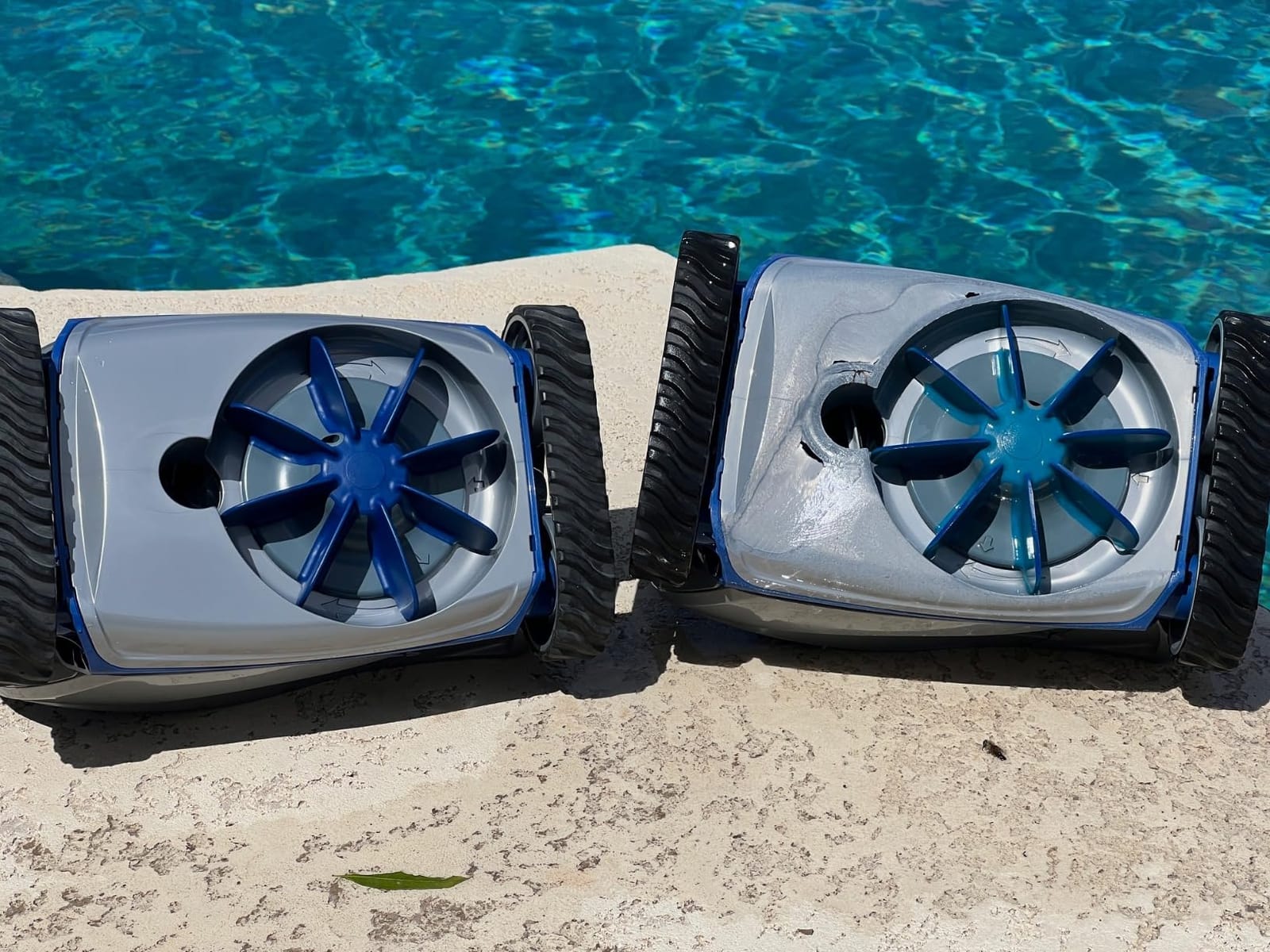
The MX6 is the suction pool cleaner for vinyl liners we would put in an inground pool and forget about. Its cyclonic turbine spins a column of water downward, and that downforce is what holds it to the floor, which means it is not scraping a hard edge across your liner to get traction. With 9399 reviews behind it, this is also the most proven unit in the category by a wide margin.
What separates it from the pack is how it behaves with a modern pump. It works with variable-speed pumps and lower flow rates, so if you have run your filter pump down to save energy, you do not have to run it wide open to make the cleaner move. The X-Drive navigation uses hydraulic suction to shift internal gears, and the X-Trax tread pattern is what carries it up a wall and over a step.
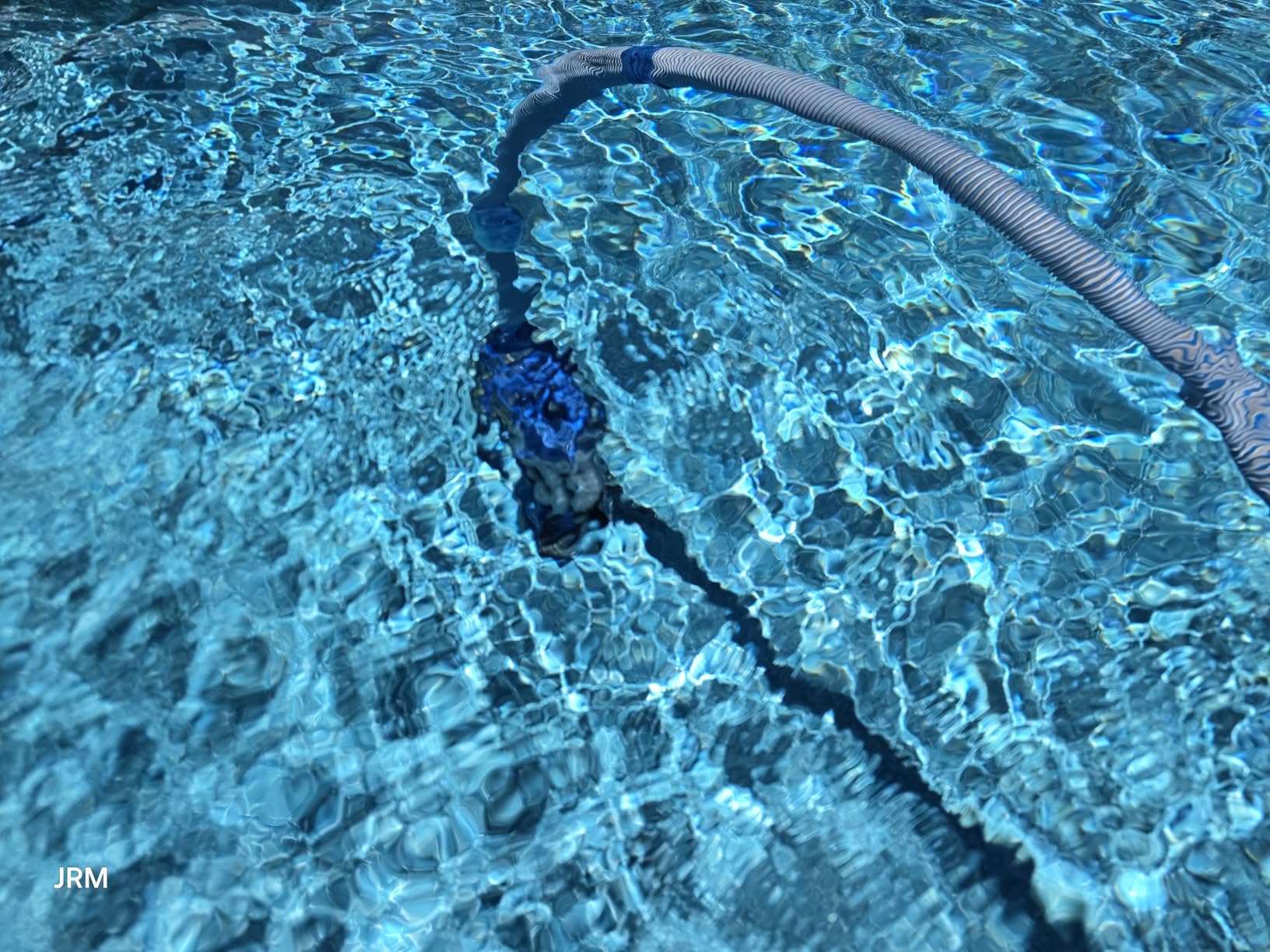
Owners consistently describe setup as the only real learning curve, and it is a genuine one. The MX6 wants its flow set correctly, and a cleaner running too fast will circle the deep end instead of sweeping the floor. Spend ten minutes with the regulator valve and it settles down.
The included 32 feet of Twist Lock hose is a little short for a deep inground pool with a raised wall, and this is an indoor inground machine rather than an above-ground one. It also carries a one year manufacturer warranty, which is shorter than the two years on the G3.
Who the Zodiac MX6 suits
It suits an inground vinyl liner pool owner with a variable-speed pump who wants hands-free cleaning without a robot in the water. At 40.4 inches long it is a full sized body, and you will want to be able to lift it out with one hand, so check your deck access before you buy.
Where the MX6 disappoints
It disappoints anyone with an above-ground pool or a small pump, and anyone unwilling to tune the flow. It also will not tell you where it has been, so if you have a complicated shape with a deep end and a shallow shelf, expect a manual pass on the steps.
2. Zodiac G3 – Best Value Suction Side Cleaner for Vinyl Liners
Zodiac G3 Suction-Side Inground Vacuum Pool Cleaner
- One moving part
- 36-Fin Disc adhesion
- 39 ft Push-Fit hose
- Two year warranty
Pros
- One moving part means almost nothing to jam
- 36-Fin Disc grips uneven vinyl floors
- Works with variable-speed and low flow pumps
- Two year manufacturer warranty
- 39 ft Push-Fit feed hose included
Cons
- Needs about 1700 gal/hr of pump flow
- Can struggle with very large debris
- Plastic construction wears over time
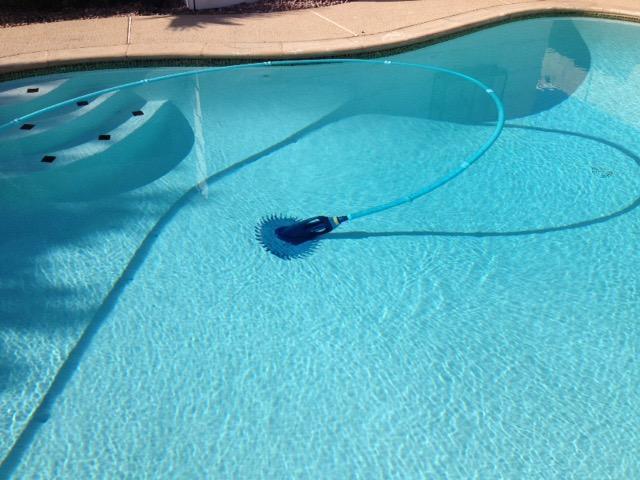
The G3 is the simplest reliable automatic cleaner here, and simplicity is what keeps a suction unit alive for years. It has one moving part. Everything else is a moulded shell and a 36-fin disc that creates adhesion against the floor, so there is no gearbox to strip and no belt to snap in the middle of a swimming season.
That disc matters on vinyl. It is designed to hold downforce across a liner that is not perfectly flat, and the wheel deflector gives it the turning radius to get out of the deep end and back along the wall. It is rated for vinyl, tile, gunite and fiberglass, and 6514 reviews at a 4.4 average is a well-proven record.
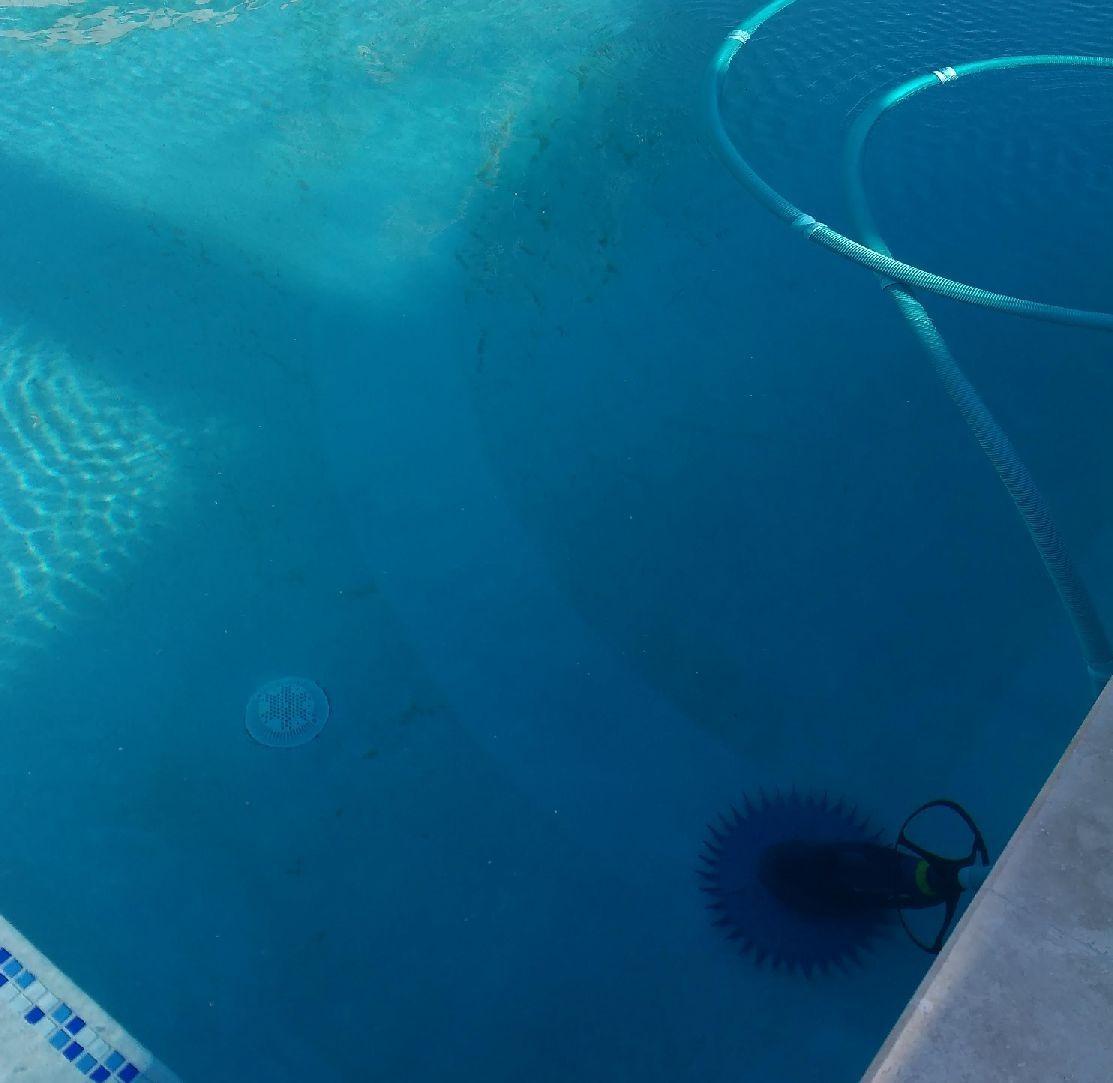
The 39 foot Push-Fit feed hose is longer than what most comparable units ship with, and that extra length is real headroom on a pool with a deep end and a raised wall. The Push-Fit connections also mean no twisting on the hose ends, which is where kinks usually start.
Setup is three steps according to the manufacturer, and owners agree it is close to that. The wheel deflector does more work on obstacle-heavy pools than on a flat bottom, and steps need a second pass.
Who the Zodiac G3 suits
It suits an owner who wants a set-and-forget cleaner with the fewest failure points and a two year warranty behind it. The long hose and low flow compatibility also make it a good fit if you have already set your pump to a lower speed for energy savings.
Where the G3 disappoints
It disappoints owners with a small or low-power pump, since it needs about 1700 gallons per hour to move properly. It also disappoints anyone expecting it to swallow a whole branch or a large ball, because the single moving part design is built for typical debris rather than the odd large object.
3. FibroPool Flex Weighted Vacuum Head – Best Vinyl Safe Manual Vacuum Head
FibroPool Pool Vacuum Head-Weighted Flexible – 14.4 x 10.5 in,Thermoplastic
- 14.4 x 10.5 in path
- Urethane wheels
- Stainless bearings
- 4 lb weighted body
Pros
- Smooth urethane wheels roll without marking vinyl
- Six integrated weights hold steady floor contact
- Flexible body follows pool curves and steps
- 14.4 inch path covers ground quickly
- 4840 reviews at a 4.5 average
Cons
- Manual work every run
- Pole not included
- 1.5 in port only fits standard suction hose
The FibroPool is not automatic, and that is the point. It is the tool you reach for when you do not want a machine tracking around your liner at all, and its 4.5 star average across 4840 reviews is the best record of any manual head here. The 14.4 by 10.5 inch face is the widest manual head in the group.
Everything about it is built to avoid marking a liner. The wheels are urethane on stainless steel ball bearings, which roll quietly and do not scratch the way hard polypropylene wheels do. Six integrated weights hold it flat against the floor so the suction seal stays even, and the thermoplastic body flexes to follow a curve or a step riser instead of bridging over it.
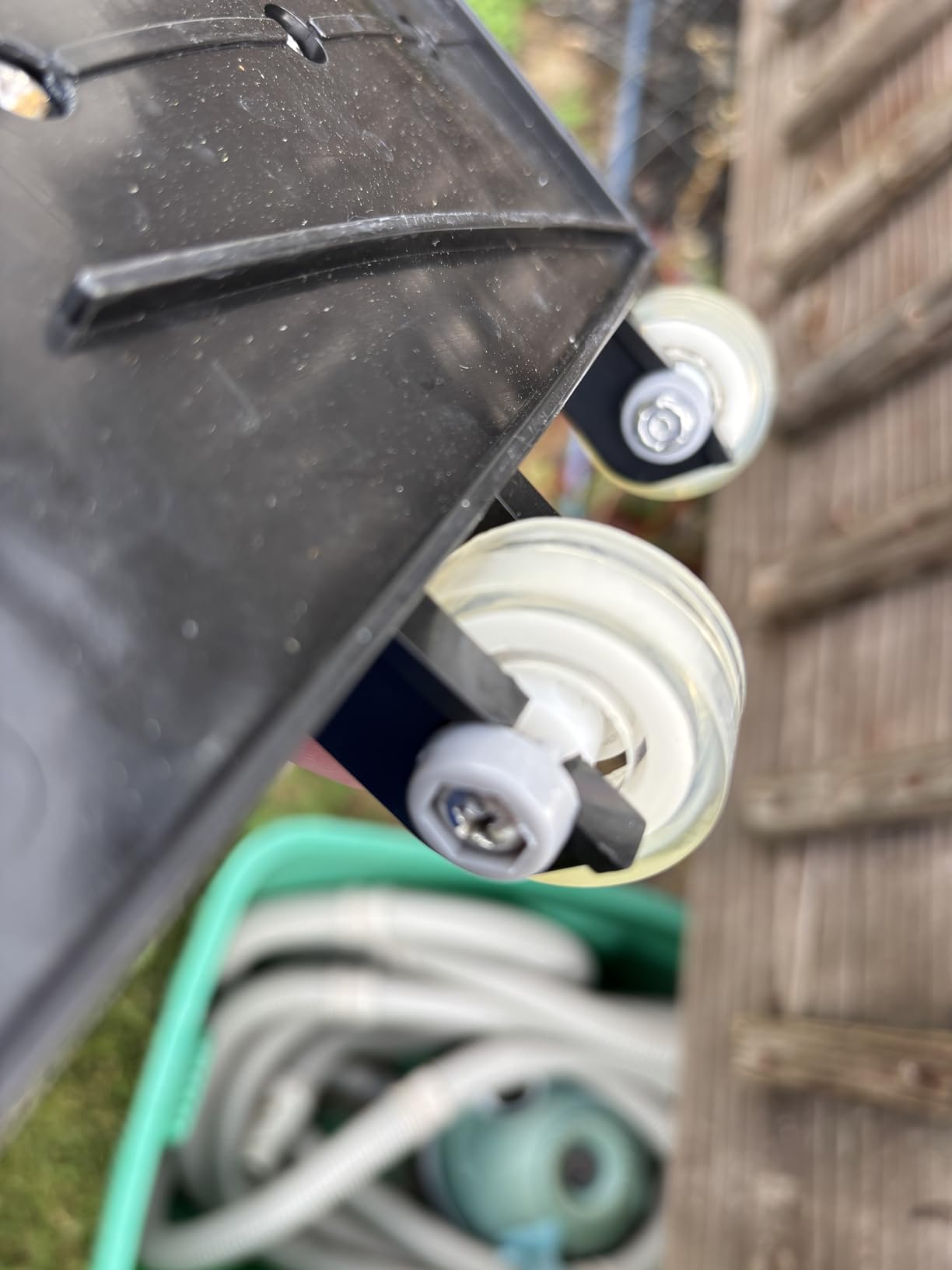
At 4 pounds it is heavy enough to sink and stay down without extra weight, and the chrome plated handle resists the corrosion that a wet pool environment causes on a plain steel handle. The universal 1.5 inch suction port fits most standard vacuum hoses.
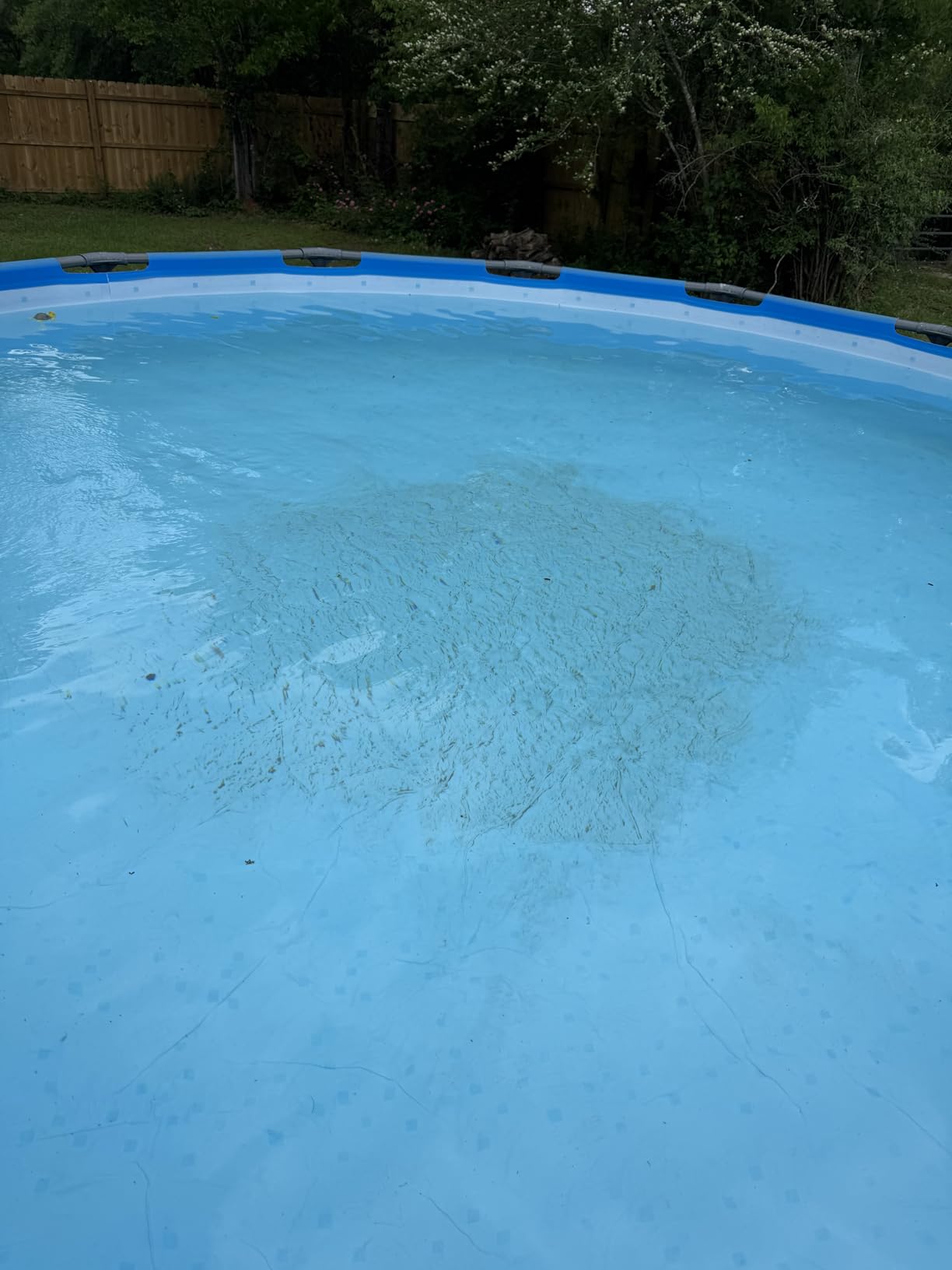
The trade-off is your time. A manual head covers a 16 by 32 foot pool slowly, and the flexible body is shaped for wide open floors rather than narrow steps. You also need a telescopic pole, which is not included.
Who the FibroPool head suits
It suits an owner of a flat-bottom vinyl liner pool who wants total control over where the machine goes and a second pass on the corners the automatic cleaner missed. It is also the right call in a pool where you are trying to keep every contact point soft.
Where the FibroPool head disappoints
It disappoints owners of large or deeply sloped pools, and anyone who wants cleaning to happen while they are at work. If your pool is above-ground, note that the port size is fixed at 1.5 inches rather than accepting both common hose diameters.
4. VINGLI Automatic Suction Cleaner – Most Versatile for Above-Ground and Inground
VINGLI Suction Pool Cleaner, Automatic Wall-Climbing Vacuum -Navy Blue
- Wall climbing
- Above ground and inground
- 33 ft of hose
- 3 minute assembly
Pros
- Only automatic unit here rated for above-ground pools
- Climbs walls as well as floors
- Ten 3.3 ft hose sections included
- Adjustable suction power via regulator
- One year warranty with free replacement parts
Cons
- Needs a 3/4 HP pump or 1700 gal/hr
- Diaphragm can clog with small debris
- Diaphragm design is noisier than turbine units
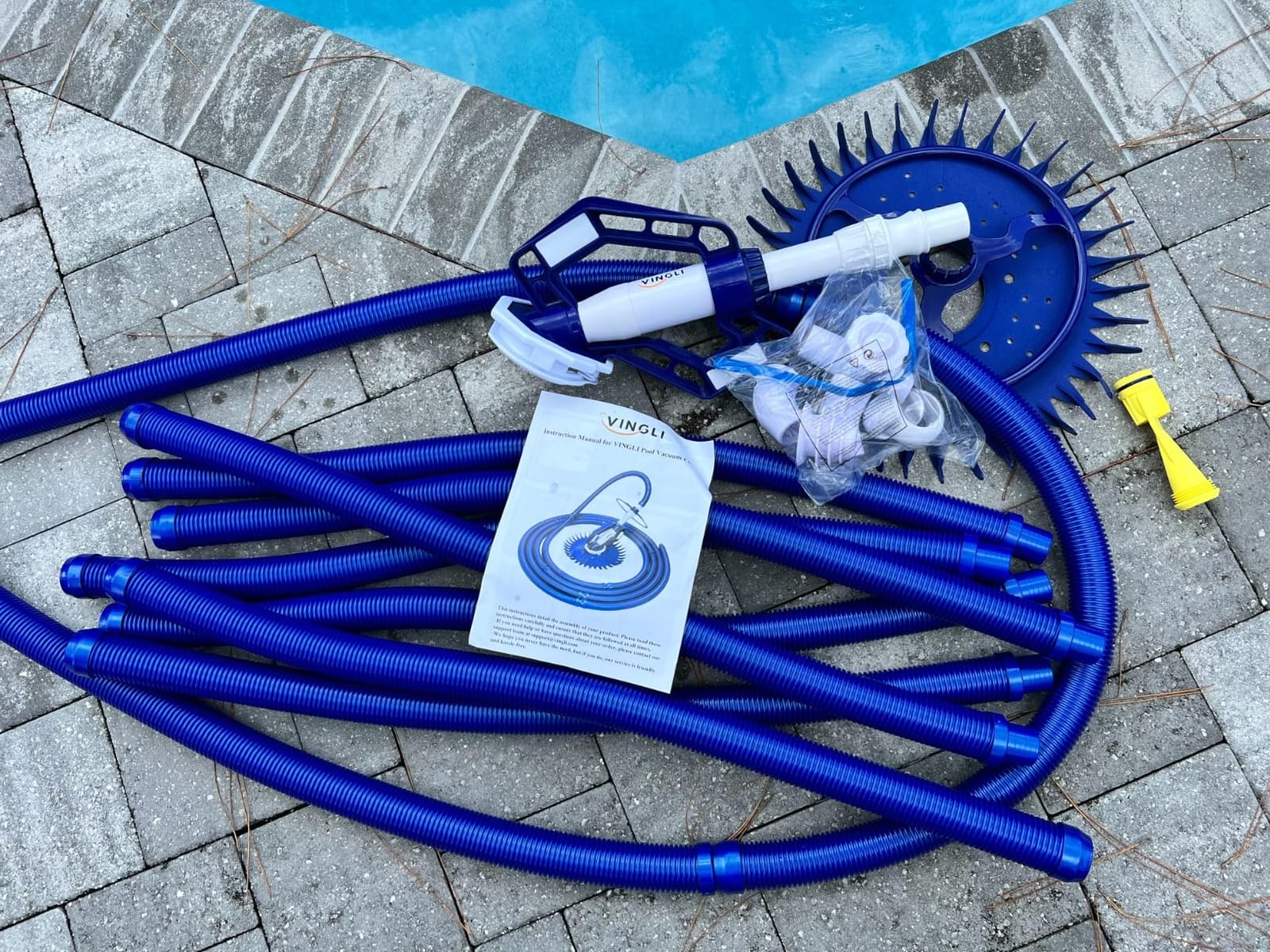
The VINGLI is the automatic cleaner in this roundup that explicitly works on both above-ground and inground pools, and that single fact puts it in a category of its own. It comes with ten 3.3 foot hose sections for 33 feet total, a wheel deflector for corners, and adjustable suction power through the regulator valve.
For a shallow above-ground vinyl pool with a 3/4 HP pump, there is not much else on the market that does what it does automatically. Owners on r/AboveGroundPools are honest about the verdict: it is only ok. Pump powered, diaphragm driven, one moving part, and the cleaning is underwhelming compared to a turbine unit.
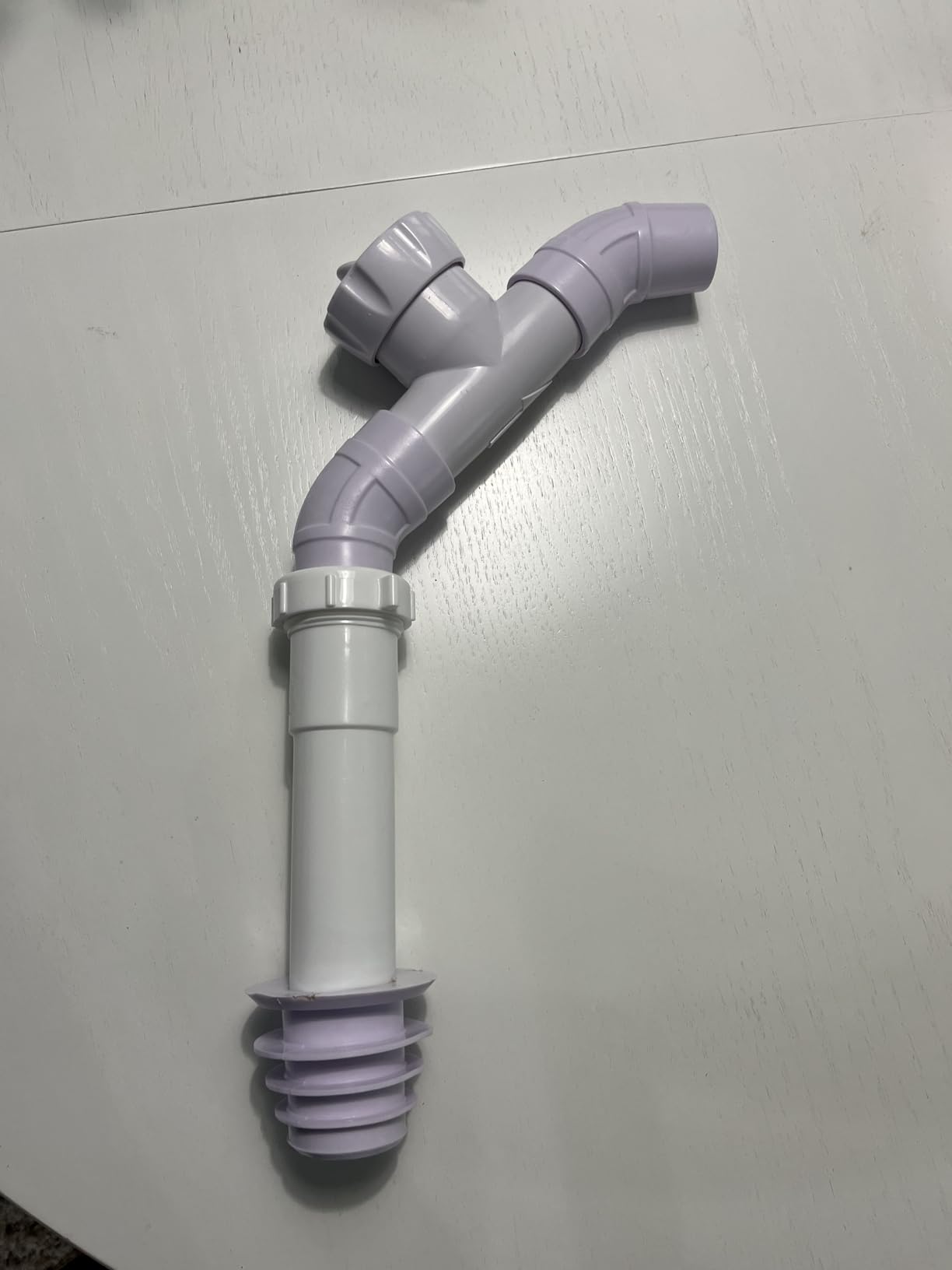
The diaphragm is the reason for the mixed feedback. It is a genuinely simple mechanism with cheap replacement diaphragms available, which is a virtue for longevity, but it is also what produces the pulsing flow some owners describe as a hammering or banging sound from inside the pool.
Assembly takes about three minutes and the scuff-resistant hoses are kind to a liner as they drag along the bottom. At 10.3 pounds it is the heaviest automatic unit here, which matters if you are lifting it over a high above-ground wall.
Who the VINGLI suits
It suits an above-ground vinyl pool owner with a decent pump who wants the bottom swept without swimming a pole, and an inground owner on a strict budget. The one year warranty with free replacement parts takes some of the risk out of buying it.
Where the VINGLI disappoints
It disappoints anyone with a small pump, since a 3/4 HP minimum rules out a lot of above-ground setups. It also disappoints owners who are sensitive to noise at night, and anyone with fine silt, because owners report the diaphragm clogging on small debris.
5. Hayward Poolvergnuegen 2 Wheel – Best for Mid-Size Inground Pools
Hayward Poolvergnuegen Suction Pool Cleaner (2 Wheel) Pools up to 16 x 32ft
- Pools up to 16x32 ft
- Turbine vanes
- 33 ft hose
- No booster pump
Pros
- Highest rated automatic unit here at 4.6
- Patented turbine vanes resist clogging
- No booster pump required
- Covers floor steps and waterline
- Pre-programmed steering sequences
Cons
- Limited to pools up to 16x32 ft
- Needs strong pump flow to run
- Steps need a second pass in bigger pools
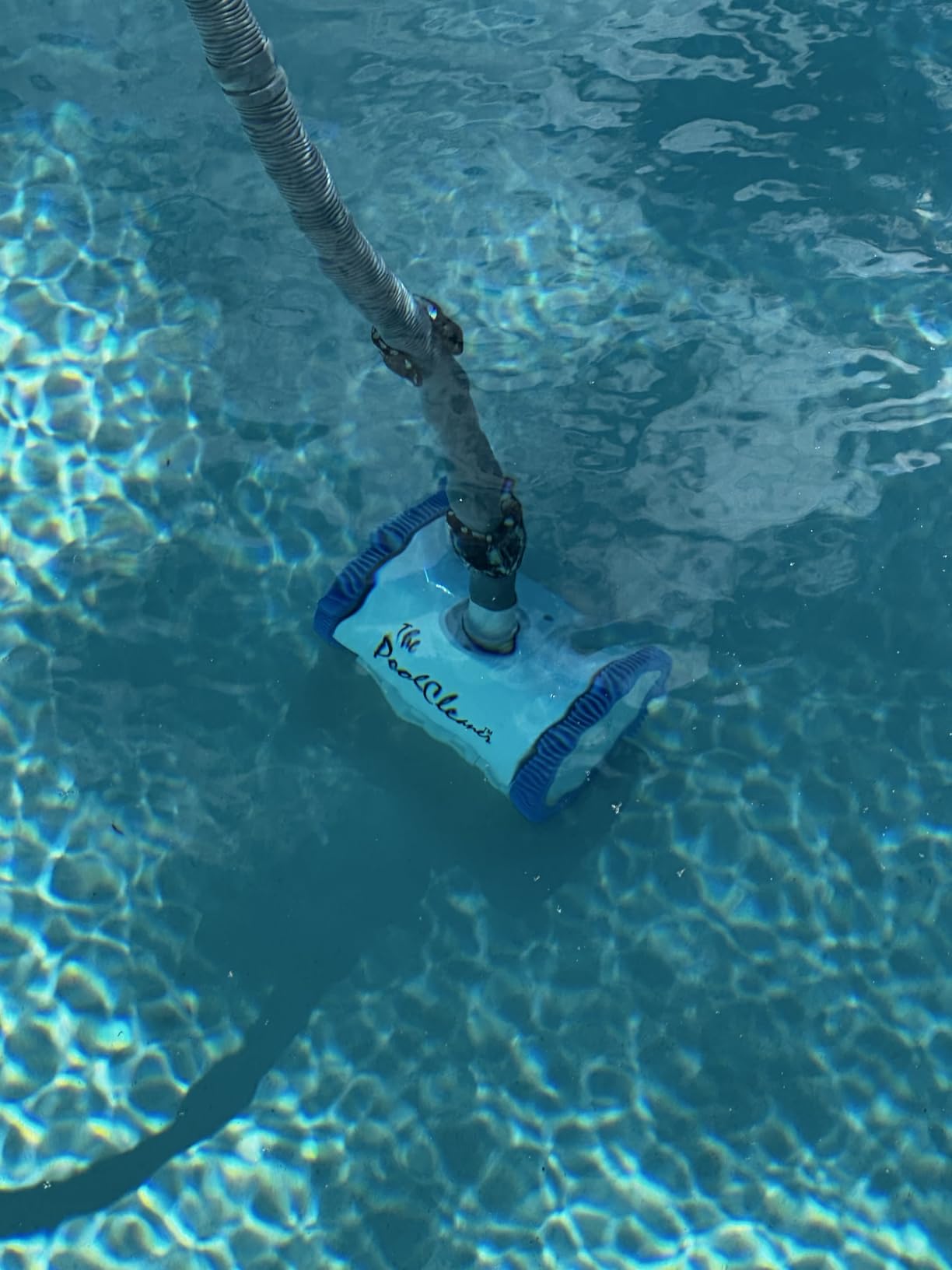
The two wheel Poolvergnuegen carries the highest average rating among the automatic cleaners in this roundup, at 4.6 across 1965 reviews. If your inground vinyl pool is 16 by 32 feet or smaller, this is the machine to buy, and the reason is the patented turbine vanes.
Those self-adjusting vanes keep debris moving through the turbine instead of letting it jam against the housing. Combined with adjustable roller skirts that hold the seal on an uneven liner and patented tire treads for climbing, it covers the floor, the steps and the waterline in one pass without a booster pump.
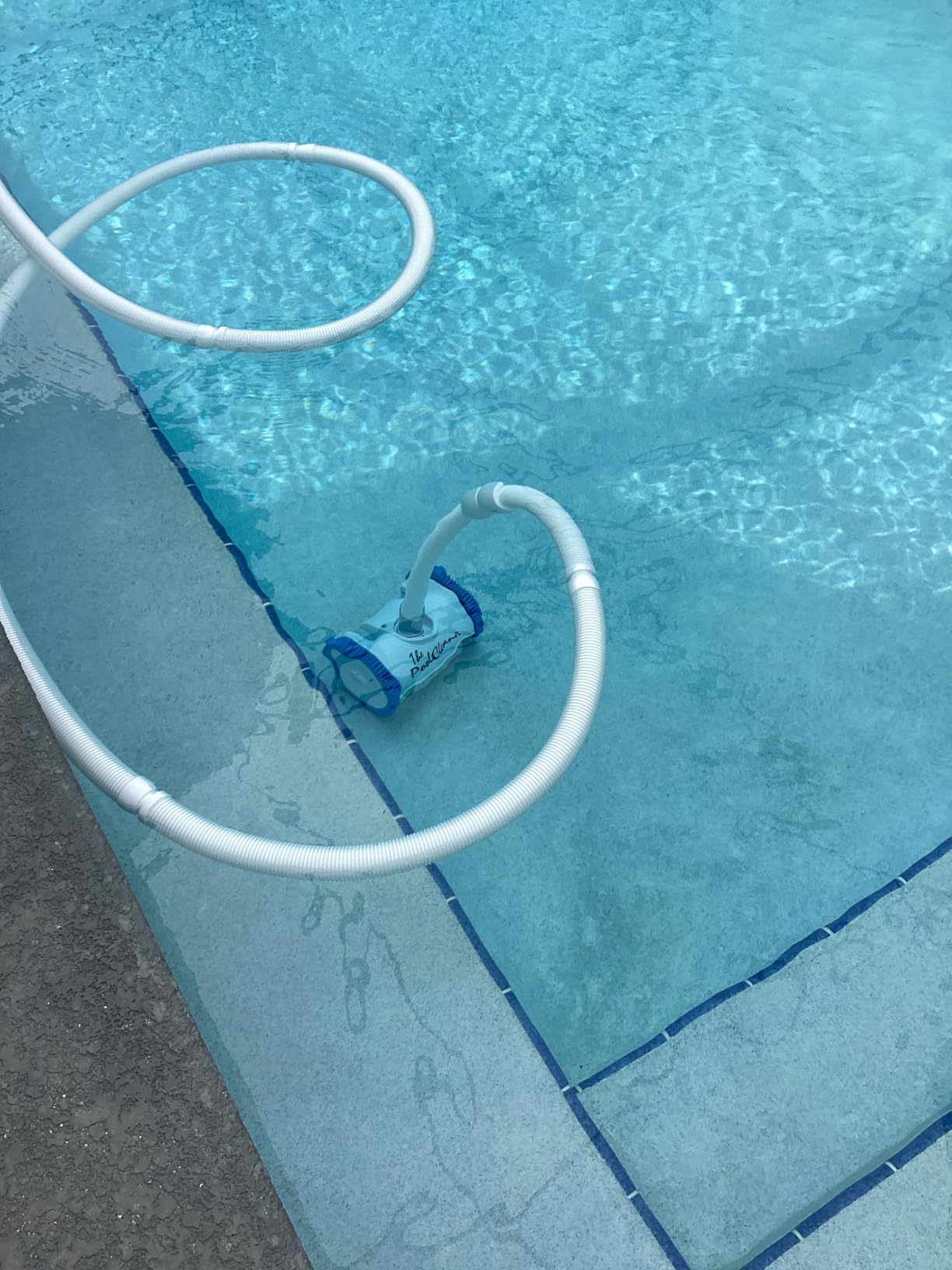
Because the body is self-propelled on hydraulic power from your own pump, there is nothing to plug in. The 33 feet of included hose is standard for a pool this size, and the pre-programmed internal steering sequences are what give it a repeatable pattern rather than a random walk.
At 16 pounds it is the heaviest unit in the roundup, so lifting it onto the deck is a two-hand job. The roller skirts are the part to inspect each season, since they are what touches the liner.
Who the Hayward 2 Wheel suits
It suits a mid-size inground vinyl liner pool owner who wants the quietest, most thorough automatic clean available and already has a pump with real flow behind it. The 4.6 rating reflects a pattern of owners reporting that it simply works.
Where the 2 Wheel disappoints
It disappoints owners of larger pools, since the design is not intended past 16 by 32 feet. It also disappoints anyone hoping it will scrub a heavily scaled waterline, because it rides the wall rather than pressing a brush against it.
6. Swimline HydroTools Triangle Head – Best Budget Manual Vacuum for Basics
SWIMLINE HYDROTOOLS Manual Pool Vacuum Head Attachment For Inground & Above Ground Pools |Weighted Swimming Pool Vac Head Clear Triangle Shape W/ Bristles| Swivel Hose 1-1/4 or 1-1/2’’| 8145
- 12 in triangle
- Weighted body
- Swivel connector
- 16 oz
Pros
- Large triangle shape covers more per pass
- Built-in weight sinks fast and stays put
- Rotating swivel stops the hose twisting
- Fits both 1.25 and 1.5 inch hose
- UV and corrosion resistant body
Cons
- Manual operation only
- 1 lb may need extra weight on steep slopes
- Fixed triangle shape is less flexible in tight corners
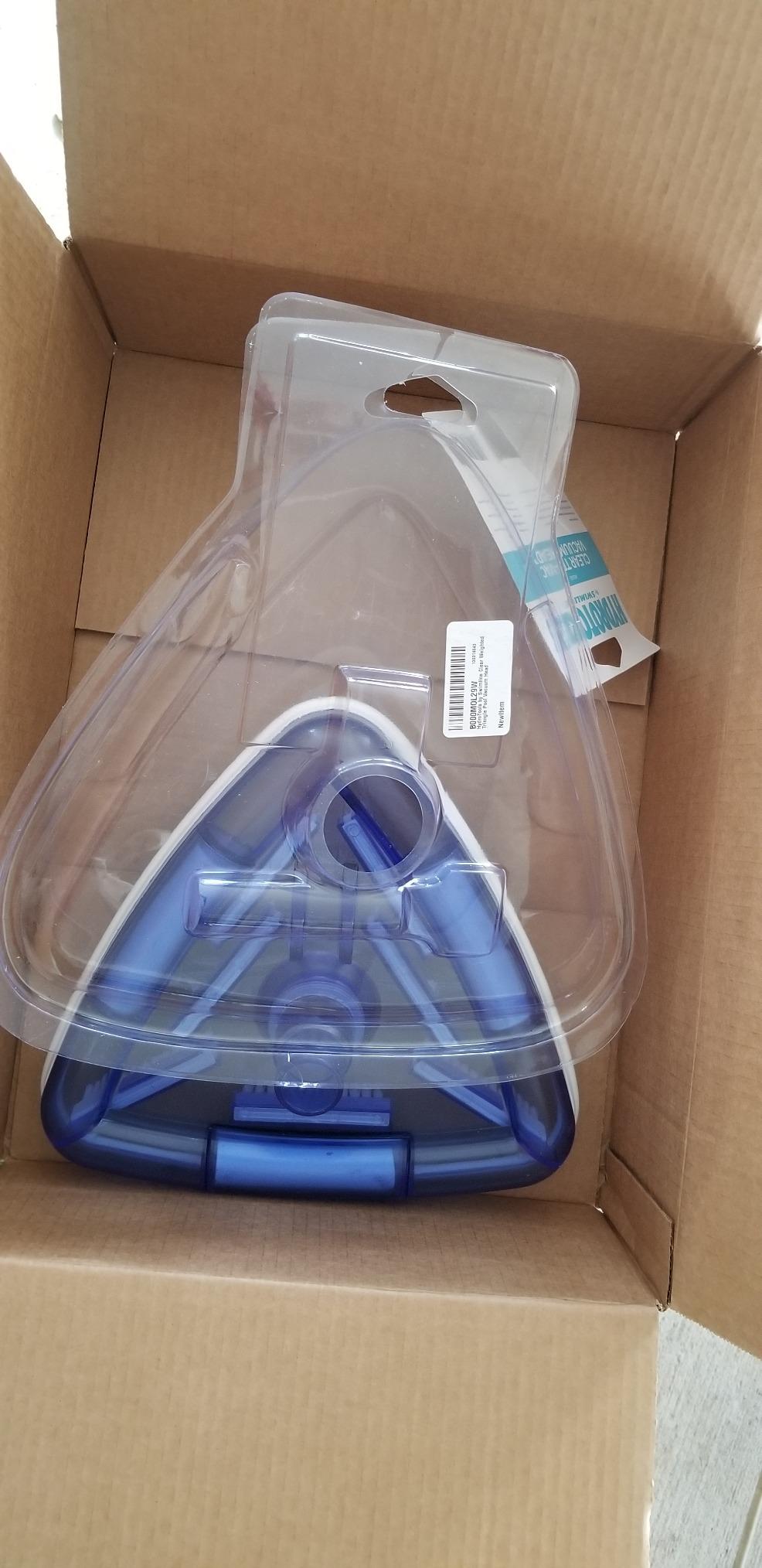
The Swimline HydroTools is the simplest tool in this roundup and the one you will reach for when you just need to get leaves off a vinyl floor. The extra-large triangle shape gives it more cleaning area per pass than a round head, and the integrated brush bristles loosen debris that vacuum alone would slide past.
It is built in one piece, weighs 16 ounces and is rated for UV, weather and corrosion, so it survives a garage or a damp equipment pad without complaint. The rotating swivel on the hose connector is the detail that matters most in daily use, because a non-swiveling head will have you untangling the hose every few passes.
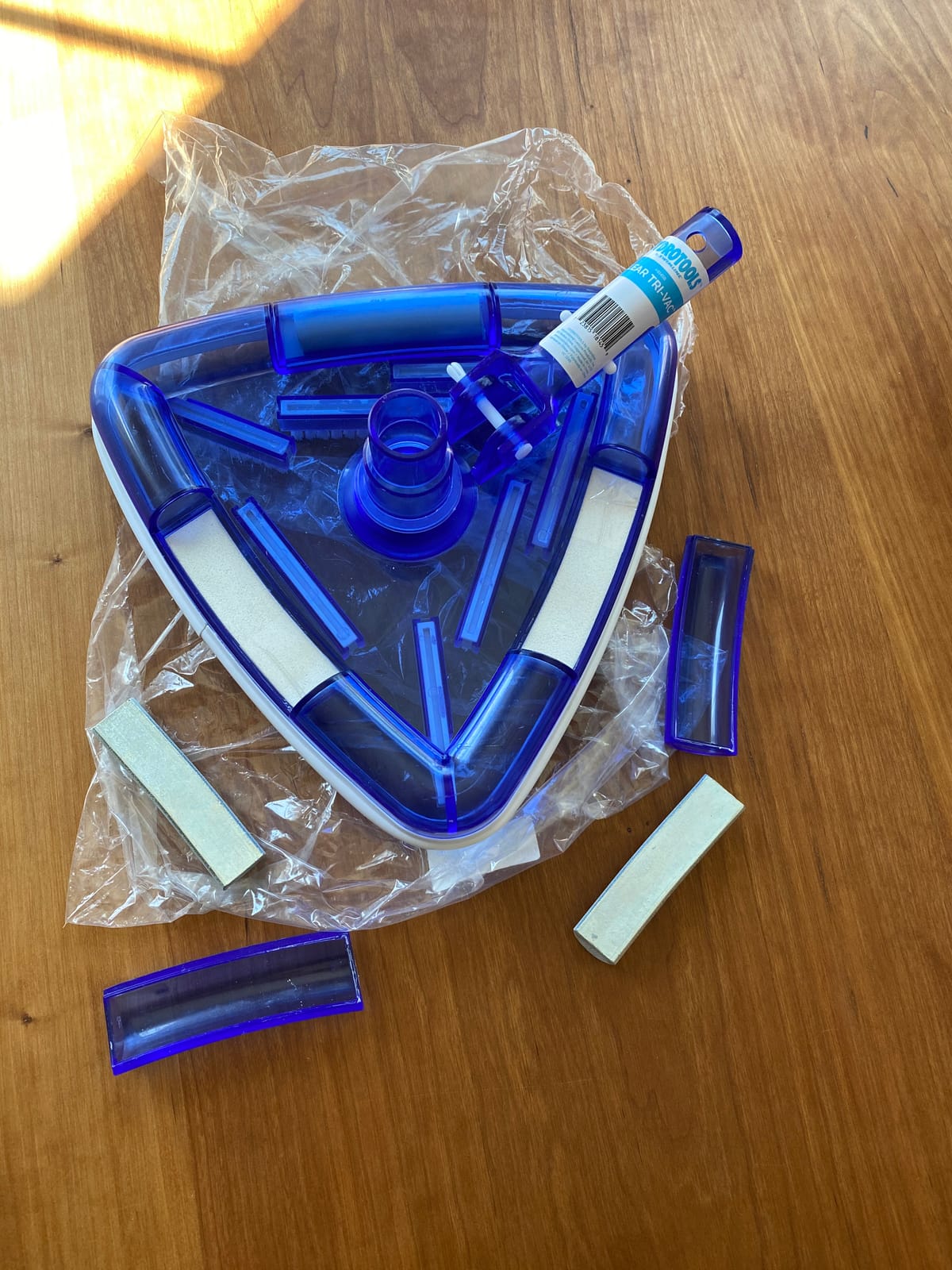
The universal connector fits 1-1/4 inch and 1-1/2 inch vacuum hose, so it works with whatever is already in your shed, and the double reinforced handles with an EZ clip take any standard extension pole.
At 1 pound it is the lightest head here, and on a sloped floor toward a main drain it can ride up rather than hold its edge. Some owners also report the bristles wearing down faster than the rest of the body.
Who the Swimline head suits
It suits a new pool owner who needs a reliable first tool, and anyone doing weekly leaf pickups on a flat-bottom vinyl liner pool. The swivel and the broad triangle make a short weekly session feel quick.
Where the Swimline head disappoints
It disappoints owners with deep steps or tight corners, because the fixed triangle cannot flex into a curve. It also disappoints anyone hoping one head will replace a full-time automatic cleaner.
7. TidyMister 20 Inch 2 in 1 Head – Best Wide Path Brush and Vacuum Head
TidyMister 20″ 2 in 1 Pool Brush Vacuum Head with Swivel Hose Connection & Sturdy Nylon Bristles for Heavy Duty Inground & Above Ground Pool Cleaning – Fits 1-1/4″ or 1-1/2″ Hose (No Pole)
- 20 in cleaning path
- Brush and vacuum in one
- Swivel connection
- 1.12 lb
Pros
- Widest path in the roundup at 20 inches
- Works as a brush and a vacuum head together
- Angled nylon bristles are gentle on vinyl
- Swivel connection stops hose tangling
- Listed for vinyl tile fiberglass and concrete
Cons
- Pole not included
- Rectangular body is less flexible on curves
- Light enough to need pressure for deep debris
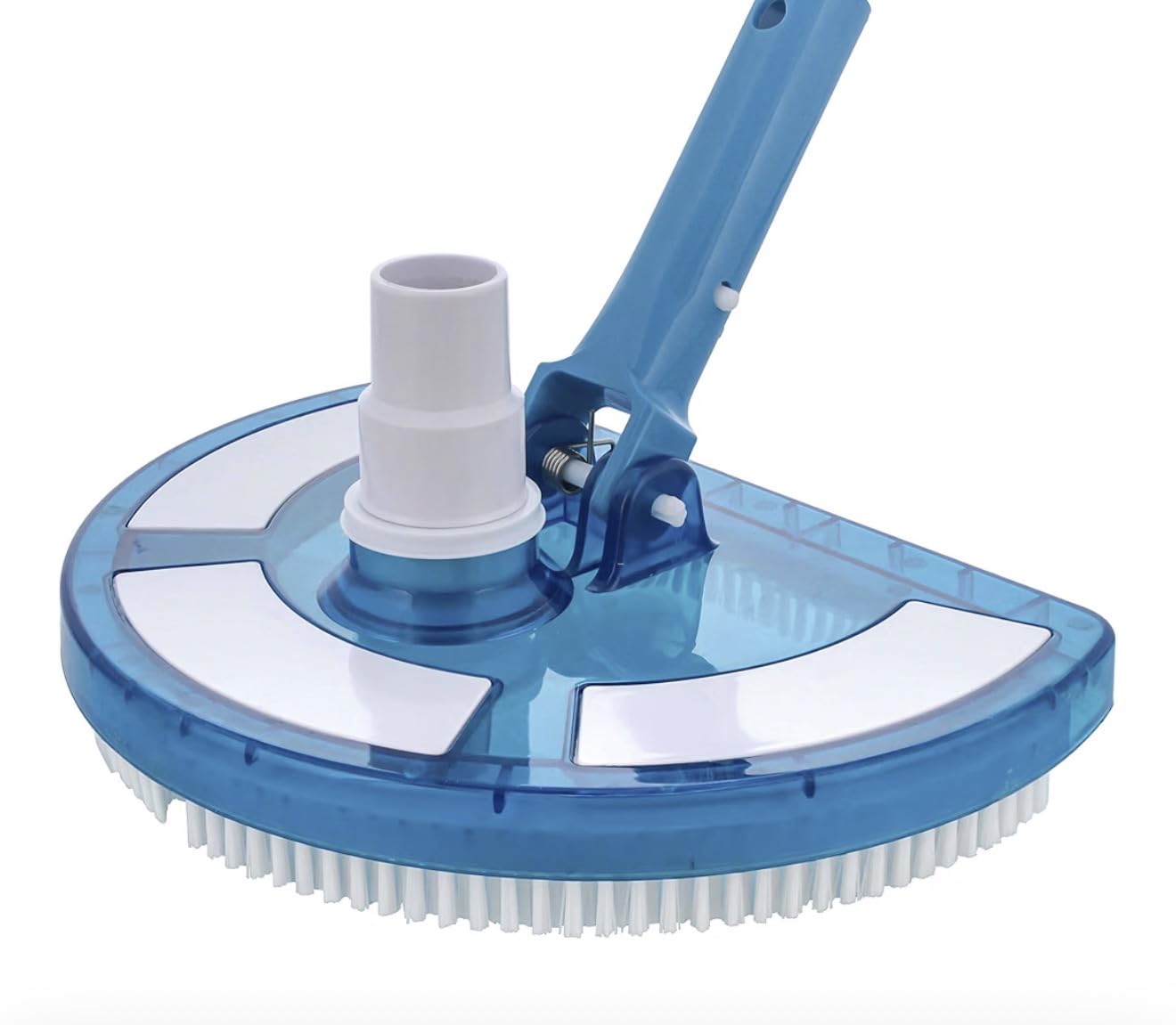
The TidyMister does two jobs in one head, which is why it belongs on this list even though the list is mostly about automatic cleaners. It is a pool brush and a pool vacuum at the same time, and the manufacturer rates it for vinyl, tile, fiberglass and concrete surfaces.
At 20 inches wide it covers more liner per pass than any other head in the roundup, which matters on a long rectangular pool where you are pushing a pole back and forth. The angled nylon bristles are stiff enough to move stains and loose debris but soft enough not to scratch vinyl.
The swivel hose connection means the hose follows the head instead of wrapping around it, and the EZ-Clip button on the aluminum handle stops your fingers getting pinched every time you attach the pole. It fits both 1-1/4 inch and 1-1/2 inch hose.
At 1.12 pounds it is light in the hand, and a rectangular body cannot flex into a curved wall the way the FibroPool does. You will need to buy a pole separately, which is the main hidden cost of this pick.
Who the TidyMister head suits
It suits a vinyl liner pool owner with a long rectangular shape who wants to brush the walls and vacuum the floor with one tool, and anyone who wants a wide path for weekly upkeep. The swivel connection also suits shared pools where two people might be working at once.
Where the TidyMister head disappoints
It disappoints owners of pools with rounded ends and deep steps, where a rigid rectangle leaves gaps. It also disappoints anyone who does not already own a telescopic pole, since that has to be purchased separately.
8. Poolmaster Deluxe Vinyl Liner Vacuum – Best Explicit Vinyl Liner Safety Pick
Poolmaster Deluxe Vinyl Liner Pool Vacuum with Air Relief
- Built for vinyl and fiberglass
- Adjustable air relief
- Nylon bristles
- 2.35 lb
Pros
- Only head here designed specifically for vinyl liner
- Nylon bristles are gentle on delicate surfaces
- Air relief valves let you dial suction down
- Weighted spring handle keeps it level
- Fits both common hose diameters
Cons
- Smallest cleaning path in the roundup
- Needs careful air relief adjustment
- Brush attachment is a reported weak point
The Poolmaster is the only head in this roundup whose stated purpose is protecting a vinyl liner, and that shows up in the design. It has adjustable air relief valves, which let you bleed suction down when you are working close to a wall or a seam, and nylon bristles rather than anything harder.
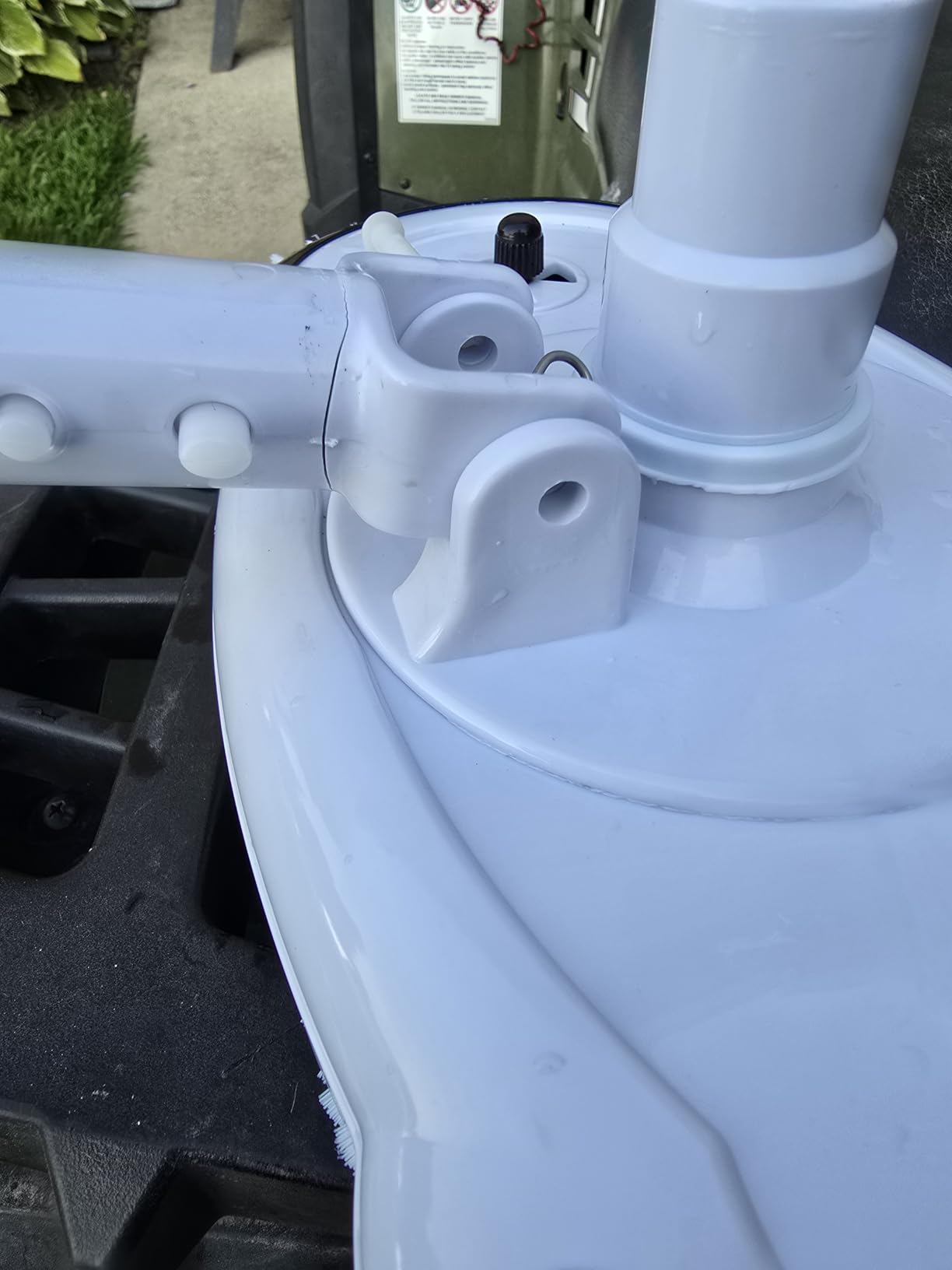
The weighted spring handle keeps the head submerged and level so the suction seal stays even across the floor. That matters more than it sounds, because an uneven seal is what makes a vacuum head lurch and drag a corner of liner rather than glide over it.
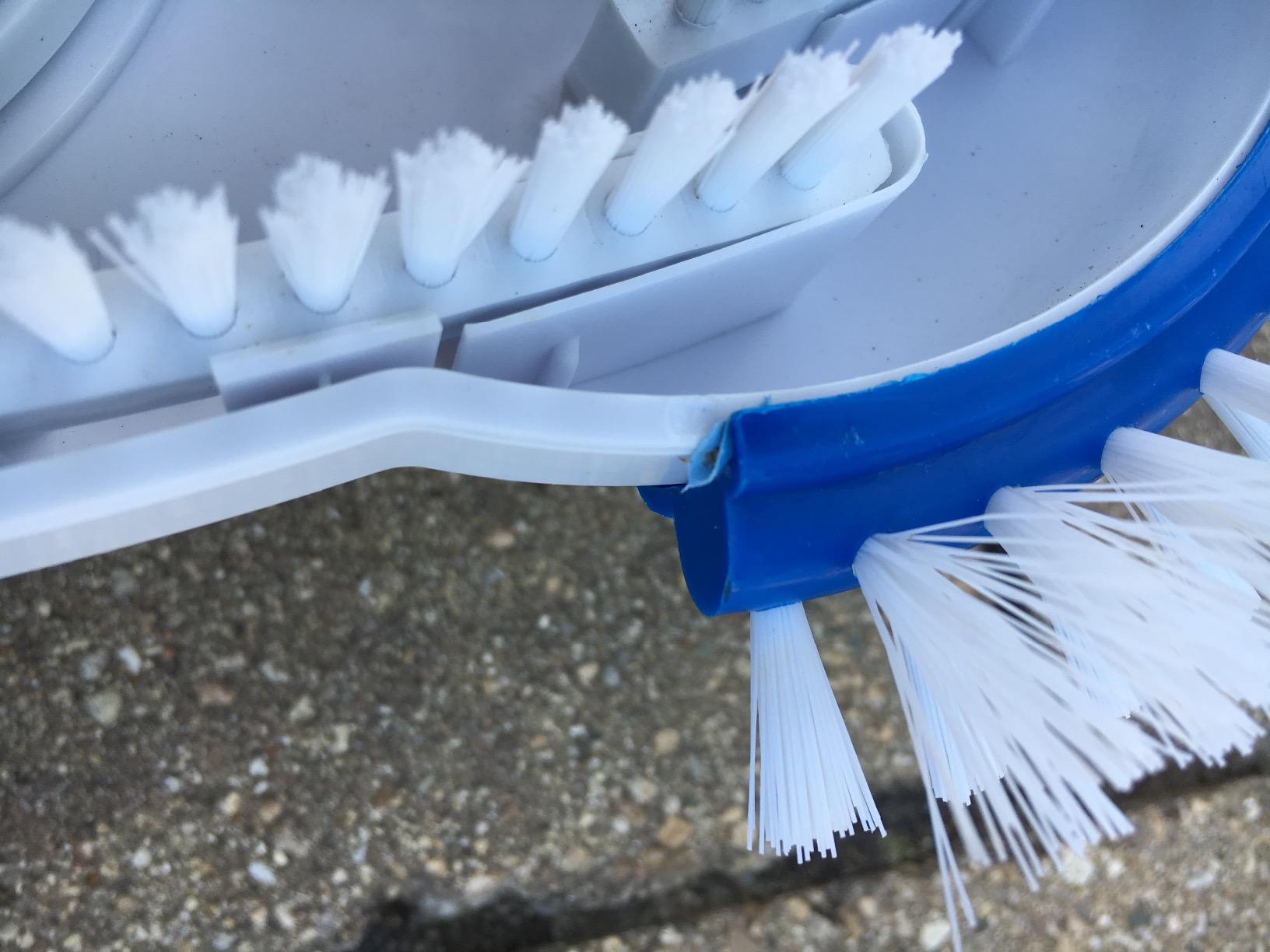
It fits both 1.25 inch and 1.5 inch vacuum hose and works on vinyl liner and fiberglass pools, which covers the majority of residential liner installations. The swivel hose adapter reduces twisting during long passes.
Its weakness is coverage. It is the smallest head here, and on a sloped or inclined floor some owners report it does not hold an even seal, which is exactly when you want the air relief turned down. The brush attachment is also the piece other owners flag when something fails.
Who the Poolmaster suits
It suits a cautious owner with a new or light liner who wants manual control over suction strength. If you are nervous about an automatic machine tracking toward your seams, this is the lowest-risk way to get a floor clean.
Where the Poolmaster disappoints
It disappoints owners of large pools, because the head is small and the work adds up. With 578 reviews it also has the thinnest owner history here, so there is less long-term feedback to lean on.
9. Pentair Rebel Cleaner Head – Best Replacement Upgrade for an Existing Cleaner
Pentair Rebel Cleaner Head (Head ONLY) | 360486
- Replacement head only
- Sure-Flow turbine
- Redesigned bearings
- Two wheel
Pros
- Genuine Pentair part so compatibility is assured
- Redesigned bearings run up to 26 percent faster
- Sure-Flow turbine resists clogging
- Works with variable-speed and two-speed pumps
- Two wheel layout reaches tight corners
Cons
- Head only
- not a complete cleaner
- Requires an existing Pentair body
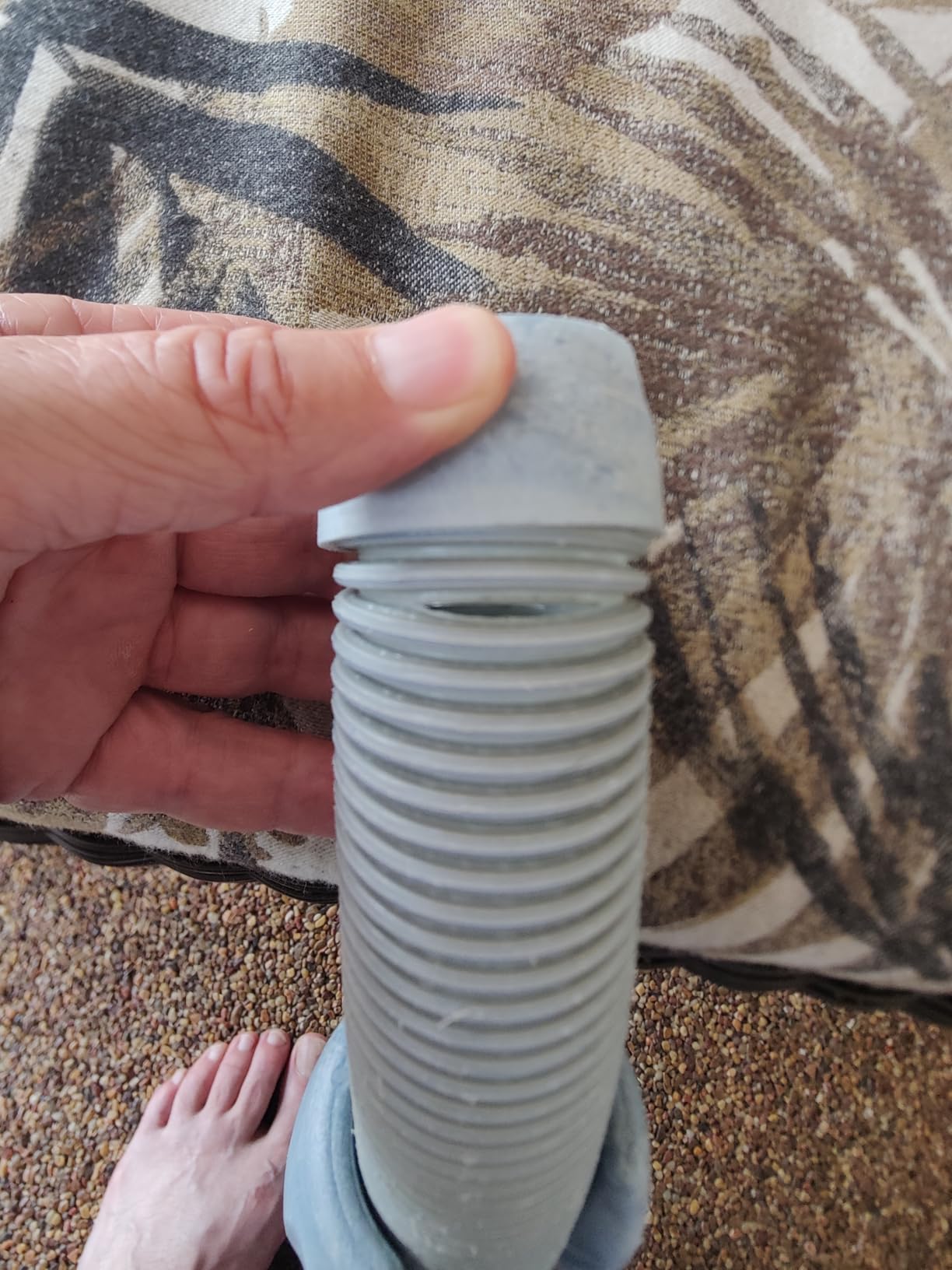
Be clear about what this is: the Pentair Rebel 360486 is a replacement cleaner head, not a complete automatic cleaner. If your existing Pentair body is tired and the head is what failed, this is the correct part and it will make an old machine behave like a newer one.
The redesign is real rather than cosmetic. Pentair rates the new bearings as up to 26 percent faster, and the Sure-Flow turbine design is built to move debris through instead of letting it collect in the housing, which is the single most common reason a suction side cleaner stops working.
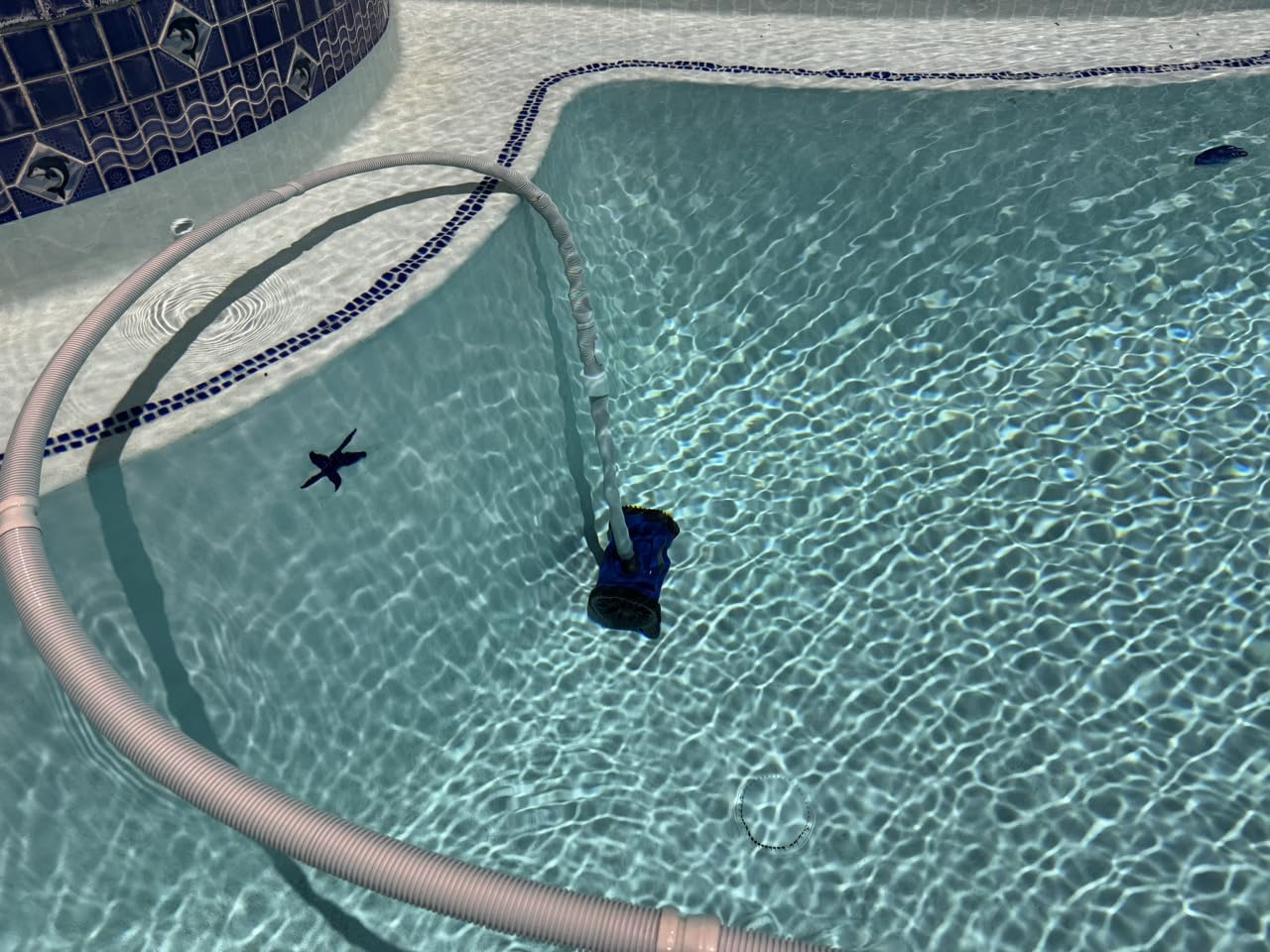
It is compatible with variable-speed and two-speed pumps, so it will work on a modern setup as well as an older one. The two wheel design gives it the turning radius to get into corners, and it is rated for gunite, vinyl, fiberglass and tile pools.
If you are starting from scratch, this is the wrong purchase, because you would still need a body, a hose and the plumbing connection. The listing notes the head runs on a battery powered platform, so a battery may be part of what you replace later.
Who the Pentair Rebel head suits
It suits an owner who already runs a Pentair suction cleaner and wants to extend its life rather than replace a whole unit. The two-wheel corner access is a genuine improvement on a head that has worn its original bearings.
Where the Rebel head disappoints
It disappoints anyone shopping for a first automatic cleaner, and anyone whose existing body is not a Pentair. The listing also carries a limited warranty, so fit it correctly the first time.
10. Hayward Poolvergnuegen 4 Wheel – Best for Large Inground Vinyl Pools
Hayward Poolvergnuegen Suction Pool Cleaner (4 Wheel) Pools up to 20 x 40ft
- Pools up to 20x40 ft
- Four wheel stability
- 40 ft hose
- No booster pump
Pros
- Covers larger pools than the 2 wheel version
- Four wheel chassis stays stable on a deep floor
- Patented turbine vanes prevent clogs
- 40 ft hose covers a deep end
- No booster pump required
Cons
- Overkill for a small inground pool
- Needs good pump flow to move
- Multiple steering sequences can be tuned by mistake
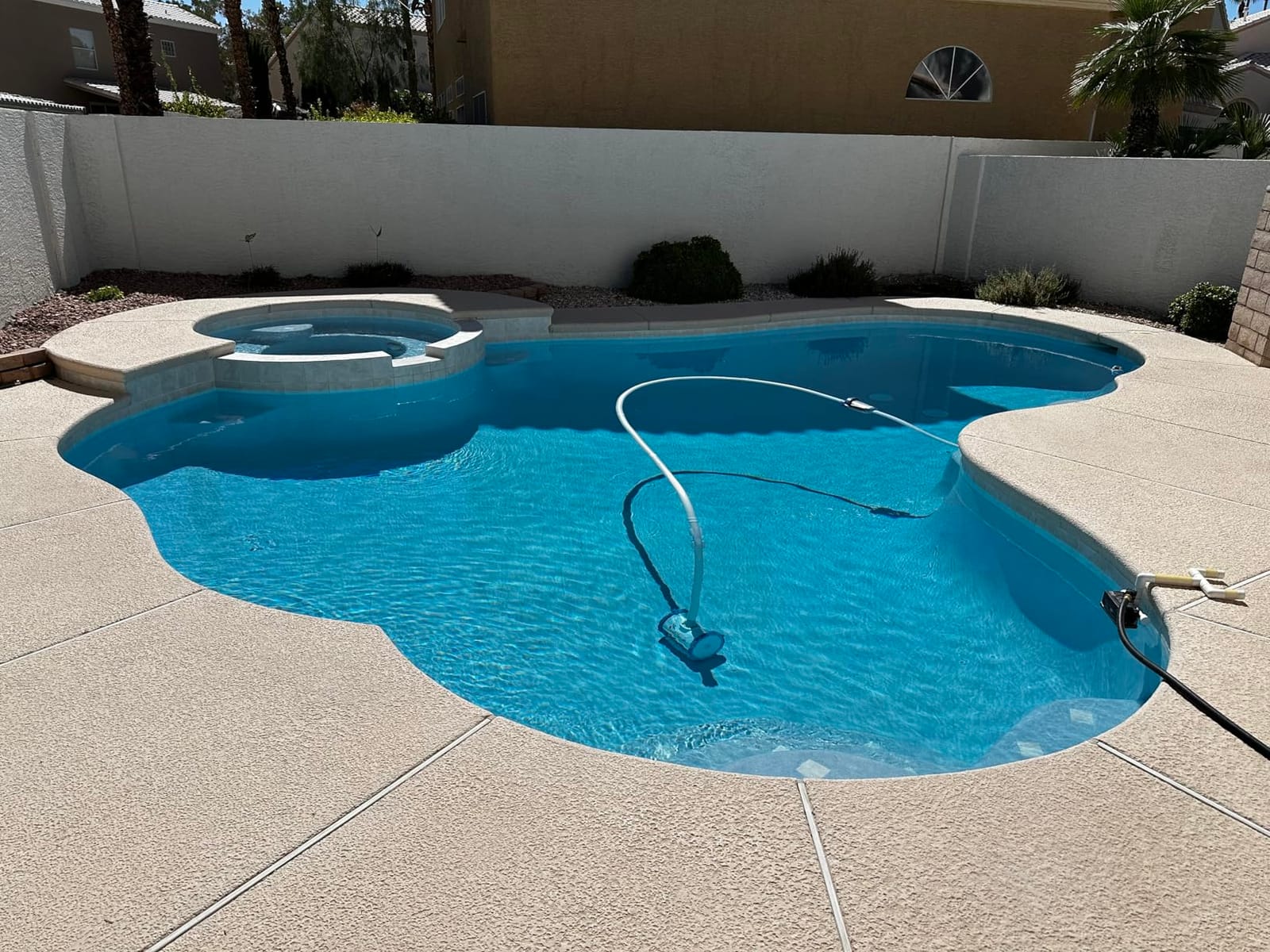
If your vinyl liner pool runs to 20 by 40 feet, the two wheel Hayward is not built for it and this one is. The four wheel chassis gives it stability across a deep floor and around a deep end, where a two wheel body tends to rock and lose suction seal.
Everything that worked on the smaller model carries over, including the self-adjusting turbine vanes that resist clogging and the adjustable roller skirts that hold the seal on an uneven liner. The 40 feet of included hose is the right length for a pool with a raised wall and a deep end.
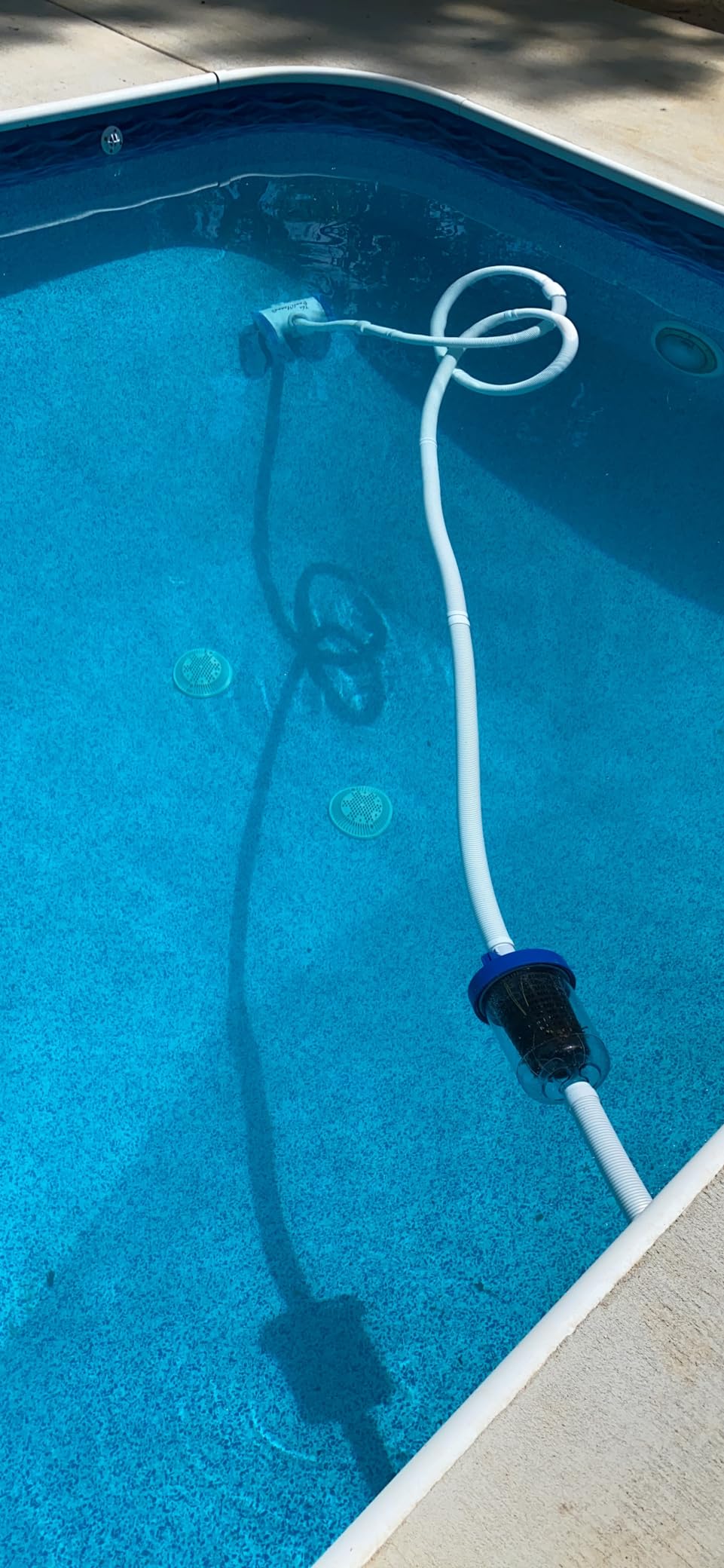
You get multiple pre-programmed internal steering sequences, which is how it covers a bigger footprint, and it still needs no booster pump. Owners report thorough coverage without hands-on time, which is the reason to buy a larger machine at all.
At 6.6 pounds it is lighter than the two wheel version despite being bigger, though it is still a full sized body to lift. If your pool is small, this is more machine than you need and the extra steering sequences are complexity you will never use.
Who the Hayward 4 Wheel suits
It suits an owner of a large inground vinyl liner pool who wants a single machine to handle the whole floor, the steps and the waterline. It also suits anyone whose older cleaner kept losing seal on the deep end.
Where the 4 Wheel disappoints
It disappoints owners of small inground pools, where the smaller two wheel model does the same job. It also disappoints anyone on a modest pump, because hydraulic power needs real flow behind it.
How We Picked and What to Look For
We ranked these picks on liner safety first, then on how much of the pool the unit actually covers, then on the number of moving parts that can fail. Review counts mattered to us, because a machine with almost no owner history is a gamble on a pool you care about.
Look at the grip mechanism. Anything that creates adhesion with water rather than weight is better for a liner, and that covers the MX6 cyclonic turbine, the G3 36-fin disc, the Hayward turbine vanes and the Pentair Sure-Flow turbine. Weighted skirts are acceptable, but check them for wear every season because they are the piece rubbing on the liner.
Look at the contact materials. Urethane and rubber wheels, nylon bristles and flexible thermoplastic bodies are what we wanted to see. Anything described only as plastic wheels with an aggressive brush plate is a warning sign on a vinyl pool.
Look at hose length against pool size. Under 32 feet is tight for an inground pool with a deep end. Over 39 feet is comfortable. The MX6 at 32 feet is the one automatic unit here where we would suggest measuring before you commit.
Look at flow requirements against your pump. Most of these need roughly 1700 gallons per hour, and a variable-speed pump has to be turned up when the cleaner runs. Buying a cleaner your pump cannot feed is the most common reason a good unit ends up circling in one spot.
Look at replaceable parts. A flapper, a diaphragm or a skirt should be something you can buy on its own. Long-time owners on r/BuyItForLife treat a suction cleaner as a buy-it-for-life purchase only when the cheap parts are available, and that is the standard these should be held to.
There are three things to avoid on a vinyl liner pool. First, a cleaner with no way to regulate suction, because a light liner will lift. Second, hard bristle brush plates, which dull the vinyl long before anyone notices. Third, a cleaner with a fixed squared front edge and no wheel deflector, because that edge finds seams.
Troubleshooting, Filter Loading and Winter Storage
Most suction cleaner problems are flow problems, and almost all of them are fixable in five minutes with a wrench and a hose. Here is the order we work through.
If the cleaner makes a hammering or banging noise, the usual cause is a diaphragm or a flapper that is not seating properly, and it is the known complaint pattern on r/AboveGroundPools with diaphragm-driven budget units. Check the flapper is upright and the hose is not crushed. If it continues, the diaphragm is a cheap part to replace.
If the cleaner stops mid-pool or loses suction, the pool filter is the first place to look, because a loaded filter starves the suction line. A hose with a crack or a kink is the second cause, and Houzz troubleshooting threads land on the same answer. Run your hand down the full length of the leader hose and feel for a flat spot.
If the cleaner is stuck on a seam or in a corner, pull it free and check the flow regulator. Too much flow drives it into the seam with enough force to dig. Turn the valve clockwise a quarter turn and put it back.
If the cleaner circles in the middle of the pool, there is too much slack in the leader hose. Remove one section. If it barely moves, open the regulator or raise the pump speed.
Plan on more filter cleaning. Everything a suction side cleaner picks up returns to the water and ends up in your filter, and that is the standing cost of the type. A cartridge filter will need rinsing more often in season, a sand filter will need a longer backwash cycle, and a diatomaceous earth filter handles the fine silt best of the three. Whatever you use, watch the pressure gauge while the cleaner runs and backwash before the reading climbs too far.
For winter storage, rinse the body and the hose with clean water, pull the flapper out and dry it separately so it does not warp, coil the hose loosely rather than in a tight bend, and store the whole thing dry in a shaded spot. Hayward specifically advises rinsing with clean water after each use and storing in a cool dry place. Do not leave a suction cleaner in a pool you are closing for the winter, because a freeze can crack the body and the seals.
Frequently Asked Questions
What is the best pool cleaner for vinyl liner pools?
For most vinyl liner pools a suction side cleaner is the best balance of cost and liner safety. The Zodiac MX6 is our top pick because its cyclonic turbine creates downforce with water rather than dragging a hard edge across the liner, and it works with variable-speed pumps. The Zodiac G3 is the simpler, quieter alternative with a 36-fin disc and one moving part.
Are suction pool cleaners safe for vinyl liners?
Yes, when you pick the right hardware. Look for urethane or rubber wheels, nylon bristles and flexible bodies, and choose a cleaner that creates grip with water flow instead of weight. Use a flow regulator valve to reduce suction near a wall or seam, and pick a model with a wheel deflector so the front edge turns away from liner seams rather than digging in.
How do I connect a suction pool cleaner to my skimmer?
Start the pool pump first, then lower the cleaner and leader hose into the skimmer so it sinks to the floor on its own. Fit a flow regulator valve between the hose and the skimmer, and count your hose sections so the cleaner reaches every corner with a little slack. Too much slack makes it circle in the middle; too little and it never leaves the shallow end.
Why is my suction pool cleaner making a hammering noise?
A hammering or banging noise usually means a flapper or diaphragm is not seating correctly, or the leader hose is crushed or kinked. Check that the flapper is upright and unclogged, and run your hand along the hose to find any flat spot. Diaphragm-driven budget units are the most common source. If the noise continues, the diaphragm is an inexpensive part to replace.
Do suction pool cleaners work on above-ground vinyl pools?
They can, but your pump has to be strong enough. Most automatic suction cleaners need about 1700 gallons per hour, and a 3/4 HP minimum rules out many above-ground setups. The VINGLI is the only automatic unit in this roundup rated for both above-ground and inground pools. Plan on manual work for the bottom edge, because that is the area every cleaner misses on a shallow pool.
Final Verdict
For an inground vinyl liner pool, the Zodiac MX6 is the best suction pool cleaner for vinyl liners in 2026 because it grips the floor with a cyclonic turbine instead of scraping it, and it tolerates a variable-speed pump. Pair it with a FibroPool weighted head for corners and the bottom edge, and you have covered what the automatic unit misses.
Buy the Zodiac G3 instead if you want the fewest moving parts and a two year warranty. Buy the Hayward 2 wheel for a pool up to 16 by 32 feet and the 4 wheel for anything larger. Keep the Poolmaster on the pole if a light liner makes you nervous, and check the links above for the current details on each one.